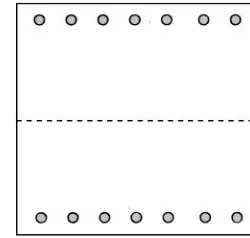
Figure 1 Multi-spotted 20;20 cm TLC plate. Jost W and Hauk HE (1983) Reversed-phase thin-layer
chromatography of nitrogen bases using alkyl sulphon-ates as ion-pair reagents. Journal of Chromatography 264: 91}98.
Kovacs-Hadady K (1996) A systematic study of the adsorp-tion of different ion-pairing reagents on reversed-phase layers. Journal of Planar Chromatography 9: 174}177.
Lepri L, Desideri PG and Heimler D (1978) Soap thin-layer chromatography of some primary aliphatic amines. Journal of Chromatography153: 77}82.
Ruane RJ, Wilson ID and Troke JA (1986) Normal- and reversed-phase ion-pair thin-layer chromatography with bifunctional (bolaform) bis(trimethylammonium) ion-pair reagents. Journal of Chromatography 368: 168}173.
Szepesi G, Gazdag M, Pap-Sziklay ZS and Vegh Z (1984) Optimisation of reversed-phase ion-pair chromatogra-phy by over-pressurized thin-layer chromatograchromatogra-phy. III. Over-pressurized thin-layer chromatography using 10-camphor sulphonic acid as ion-pair reagent. Chromatographia19: 422}430.
Tivert A-M and Backman A (1989) Journal of Planar Chromatography2: 472}473.
Tomkinson G, Wilson ID and Ruane RJ (1989) Reverse-phase ion-pair high performance thin-layer chromato-graphy of acids on a C-2 bonded silica gel.Journal of Planar Chromatography2: 224}227.
Wilson ID (1986) Ion-pair reversed-phase thin-layer chromatography of organic acids. Re-investigation of the effects of solvent pH on RF values. Journal of Chromatography354: 99}106.
Layers
F. Rabel, EM Science, Gibbstown, NJ, USA
Copyright^ 2000 Academic Press
Although many new tools, such as high performance liquid chromatography (HPLC) and capillary zone electrophoresis, have been developed for the analyti-cal laboratory, none can be used as quickly or inex-pensively as planar or thin-layer chromatography (TLC). This tool can be used as a complete analytical system (from initial separation toRnal quantitation) or as a stepping stone or aid for other analytical methods. It is one of the few analytical tools that requires no sample clean-up, saving time and money. Many samples can be applied and analysed at the same time on a single TLC plate. With the combina-torial chemistries now being used to develop new drugs, renewed interest in this high throughput tool has become apparent.
One distinct advantage, often overlooked, is that when using TLC for any screening or method devel-opment, it shows components at the origin that do not move and will over time contaminate other ana-lytical systems, such as an HPLC column. This poten-tial problem would not be apparent if optimizing solely on the HPLC system. Likewise, samples ap-plied after sample preparation would show whether or not sufRcient clean-up was actually accomplished with the sample preparation technique used. This can save countless hours of frustration that would devel-op long after the initial method was thought to be sufRcient for the analytical results needed.
Planar chromatography is also useful when opti-mizing a solid-phase extraction (SPE) method, when
many SPE tubes and extracting solvents will be tried. Up to 20 samples can be spotted on each side of a 20;20 cm TLC plate (Figure 1). Each side can be developed in 10}20 min to just 6}8 cm. A quick look under UV light or spray visualization can show the presence or absence of a compound of interest. This is certainly many times faster than doing the 40 samples on an HPLC system, one at time.
Samples from any fast TLC screening which are found to be positive for the component of interest can be conRrmed or further quantiRed with TLC by ap-plying standards and using densitometry or can be transferred to another analytical technique.
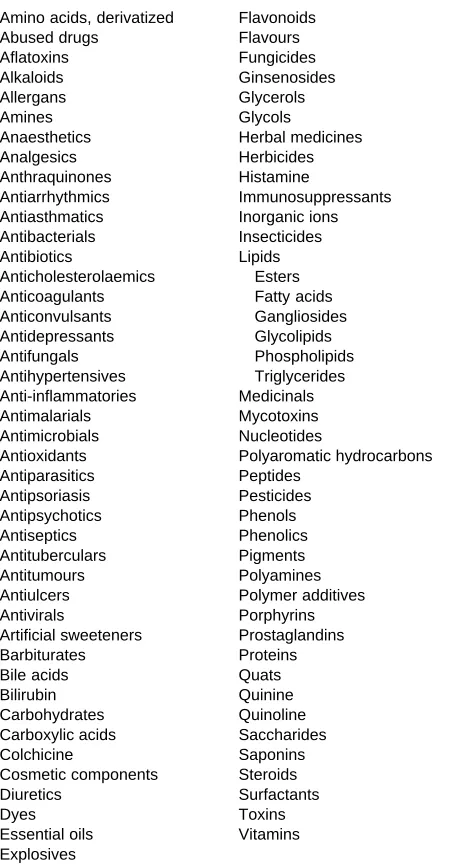
Table 1 Compounds and classes separated by silica gel TLC
Amino acids, derivatized Abused drugs
Aflatoxins Alkaloids Allergans Amines Anaesthetics Analgesics Anthraquinones Antiarrhythmics Antiasthmatics Antibacterials Antibiotics
Anticholesterolaemics Anticoagulants Anticonvulsants Antidepressants Antifungals Antihypertensives Anti-inflammatories Antimalarials Antimicrobials Antioxidants Antiparasitics Antipsoriasis Antipsychotics Antiseptics Antituberculars Antitumours Antiulcers Antivirals
Artificial sweeteners Barbiturates Bile acids Bilirubin Carbohydrates Carboxylic acids Colchicine
Cosmetic components Diuretics
Dyes Essential oils Explosives
Flavonoids Flavours Fungicides Ginsenosides Glycerols Glycols
Herbal medicines Herbicides Histamine
Immunosuppressants Inorganic ions Insecticides Lipids
Esters Fatty acids Gangliosides Glycolipids Phospholipids Triglycerides Medicinals Mycotoxins Nucleotides
Polyaromatic hydrocarbons Peptides
[image:2.568.51.276.273.707.2]Pesticides Phenols Phenolics Pigments Polyamines Polymer additives Porphyrins Prostaglandins Proteins Quats Quinine Quinoline Saccharides Saponins Steroids Surfactants Toxins Vitamins
Table 2 Relationship of silica gel pore size and surface area
Pore size Surface area
(nm) (m2g\1)
6 300
12 170
30 100
50 60
Figure 2 Possible silanol types on silica gel.
Silica Gel
Classical TLC began with silica gel layers and these continue to be the most used today. Silica gel can be used with any solvent system for a separation}from
nonpolar to polar, thus accounting for its versatility. Table 1shows a list of compounds and classes which can be separated on a silica gel layer.
The separation mode on a silica (or other oxide layer), when a mostly nonpolar mobile phase is used, is the adsorption mode. This mode separates the com-pounds according to general polarity classes, which is often a necessary initial step if dealing with a multi-component/multipolarity mixture.
The solvents for this mode also contain some polar modiRer to balance the selectivity of the silanol sites,
so selective elution is possible. The details for some of these solvent systems are found in other parts of this article in classical texts and in current literature.
The silica gel used for TLC was derived from the silica gel used for column chromatography, placed into a mortar and pestle and reground to a Rner particle size. Since the standard pore size for silica gel for column use was 6 nm, this became thede facto
standard for TLC. Other pore size silica gels are available (4, 8 and 10 nm), but these are not as widely used and so deRnite conclusions about their possible selectivity differences compared to the 6 nm material cannot be drawn. One difference that could be impor-tant is the difference in the surface area of these silicas, as can be seen in Table 2. As the pore size increases, the surface area decreases. With less surface area and wider pores, larger molecules, such as bi-opolymers, separate better.
Also very important in the use of silica gel is the type of silica generated in the manufacturing process. There can be different types of silanols present, as shown inFigure 2. The best synthetic method should produce the most homogeneous surface, so that there are no (or minimal) numbers of surface areas of increased binding (with geminal or vicinal silanols), but mostly free silanol sites. Such a silica gel would produce the most symmetrical bands on the plate, with little tailing evident.
There are two particle sizes of silica gels used to make TLC plates. The classical size range is 15}40m, which is currently used for most
20;20 cm plates. The newer size range is 3}8m
[image:2.568.296.508.628.699.2]are used, and gives more compact spots so the limits of detection are improved. The performance of the HPTLC plates can be further improved if the semi-automatic or semi-automatic devices (Camag, Desaga) are used for spotting and development. For the most part, however, the standard manual spotting techniques and the large volume developing chamber are used for both TLC and HPTLC for routine screening work.
The selectivity and activity of silica gel are deter-mined to a large degree by the amount of water held on to its surface. Generally, a plate is activated to drive off excess water by placing it in an oven at 1003C for 20}30 min. After cooling to room
temper-ature, however, it begins to re-adsorb the atmos-pheric humidity and rapidly hydrates again. This is not bad, since a completely dry silica would retain compounds too strongly and would need much stron-ger solvents to move the components.
Chemically Bonded Layers
An ever-expanding line of special phases, many de-velopedRrst for use in HPLC, are now available as a thin layer. Although their use is not widespread, there are many reasons for using them since they can be excellent scouting tools for HPLC or the reverse
}taking a HPLC method and using the solvent
sys-tems on the equivalent bonded layer can give a rapid screening tool. Thus, little method development is required, with the exception of some re-ratioing of the mobile-phase components on the thin-layer plate. The most commonly used HPLC phases are made of silica bonded with various-length alkyl chains, C18,
C8, C4, CN (cyanopropyl) or aromatic rings, e.g.
phenyl. All of these bonded phases are available on a TLC plate for reversed-phase chromatography. They are used as any TLC plate, but often need some organic component in the spotting solvent, since an entirely aqueous solution will not penetrate the bonded hydrophobic surface of some of these layers. The usual methanol}water, acetonitrile}water,
tet-rahydrofuran}water mobile phases or other
combina-tions of organic solvent}water with acids, bases or
buffers can be used. Some highly bonded layers from certain manufacturers need a higher percentage of organic solvent to work well, and to ensure that the layers will not lift away from the support. If a higher percentage of water needs to be used with such layers, the water portion can be made up of 0.5}1 mol L\1 NaCl to help the layer remain intact
through the development. Some manufacturers have produced reversed-phase layers that are compatible with solvents containing up to 100% water in the mobile phase.
Other polar bonded layers, like NH2
(amino-propyl), CN and Diol (propanediol) are often used as a substitute for silica gel with the same type of}
most-ly nonpolar}mobile phases, but they can also be
used with polar mobile phases to accomplish different separations and selectivities.
Aluminium Oxide (Alumina)
Although many metal oxides have been used for TLC, only aluminium oxide has found much use and is available from manufacturers as prepared plates. It can have a vastly different selectivity compared to silica gel since its surface is composed of positive and negative charge sites, with no equivalent to a silanol. Its activity is also very much tied, to the water content on its surface and it is also used with activation. Another difference in this sorbent compared to silica gel is the possibility of making it with a wide range of different pore sizes (6, 9 and 15 nm). Alumina can also be made with acidic, neutral or basic surface character, which provides a range of possibilities for use depending on the compounds being separated. Thus, with a basic layer, acidic components would not move at all, so selective separation (in this case, capture) can begin at the origin where the spotting is done. Thus, a completely different arsenal of analyti-cal tools can be found with these layers and in method development the different layers can be tried side by side to determine the effect of the different surface pHs.
The various-pH alumina layers have been used for separations of alkaloids, amines, antibiotics, lipid, nucleosides, pigments, polyaromatic hydrocarbons, steroids and surfactants. Many researchers seem to fear possible decomposition of components on alumina layers, but this is probably an unfounded myth, and would be just as possible on any high surface area exposed to an oxygen-containing atmos-phere and a laboratory withSuorescent lighting.
Cellulose
second direction with another solvent). Two-dimen-sional development gives a much better separation of the'20 amino acids which can be determined with this method. Some chiral separations have also been performed on cellulose layers, since it possesses a cry-stallinity that attracts one enantiomeric form more than the other. This chiral recognition can be en-hanced and improved by using derivatized celluloses as layers, e.g., acetylcellulose and benzylcellulose.
Polyamide
Polyamide is a sorbent made from the polymer nylon. As the name implies, it has amide linkages through-out the structure, allowing excellent hydrogen bond-ing to occur on the surface. It has found use in the separation of alkaloids, amino acid derivatives, anilines, antioxidants, catecholamines, dyes, indoles, lactones, nucleotides, -sides, -bases, pesticides, phen-ols, steroids, sugars, sulfonamides, thiamines or any organic structures with OH or COOH or CHO groups. The mobile phases used on such a layer are as varied as they are for silica gel. For instance, hexane}diethyl ether}acetic acid (1 : 1 : 0.1) has been used for barbiturate separations, benzene}ethyl acet-ate}formic acid (5 : 10 : 2) has been used for artiRcial
sweetener separations, and water}95% ethanol
(6 : 4) has been used for sulfonamide separations. There are a few references to its use (see Further Reading).
Kieselguhr (Diatomaceous Earth)
Kieselguhr or diatomaceous earth is an amorphous silica of fossil origin. Once mined and carefully cleaned, it can be used as a support for TLC. It has a very wide pore size, and very low surface activity compared to silica gel and other TLC sorbents. Be-cause of its inactivity, it is often impregnated with parafRn oil, silicone oil, or similar and used for rever-sed-phase partition chromatography. Some manufac-turers have a prepared TLC layer of a 1 : 1 mixture of silica gel and kieselguhr. It performs like a less active silica gel, with faster mobility of the solutes compared to a pure silica gel layer.
Ion Exchangers
A few ion exchangers derived from cellulose or resin-ous backbones are available for traditional ion ex-change separations. Obviously, these layers are used for separations of ionic compounds, from pharma-ceuticals to inorganic salts. These can be found with both weak and strong exchange sites. Ion exchange cellulose layers include diethylaminoethyl (DEAE,
a strongly basic anion exchanger), ECTEOLA (treat-ing alkali cellulose with epichlorohydrin and triethanolamine, a weakly basic anion exchanger), PEI (impregnating cellulose with polyethyleneimine, a strongly basic anion exchanger). The PEI cellulose is widely used to separate nucleic acid derivatives. The resinous layers include the SA (strongly acidic cation exchanger) or the SB (strongly basic anion ex-changer). Researchers with an interest in reading more about these and their possible separations should consult the texts in Further Reading.
Impregnated Layers
TLC layers with special properties can be made by adding reagents to the silica gel slurry when the plates are made, or after, by dipping the prepared TLC plate into reagent solutions, or predeveloping them with the reagent solution. Since the prepared layers of this type are limited, and might age if not used, they are prepared mostly by the latter two methods. After drying and activation, they are used in the normal manner.
The most often used impregnated layer is that made with a 1}5% solution of silver nitrate in
meth-anol. This impregnation allows geometriccis/transor C"C bonded isomers to be separated, usually with various lipid mixtures. If made by impregnation, they must be dried and stored in the dark, and wrapped in aluminium foil so that oxidation caused by light does not occur.
Other useful impregnated layers found in the litera-ture include 1% potassium oxalate aiding in the discrimination of polyphosphoinositides, 5}10%
magnesium acetate aiding in the separation of phos-pholipids, and 5% ammonium sulfate, which allows a TLC plate to be charred without spraying with sulfuric acid or other reagents. Whether this dry re-agent charring does as good a job for a particular class of compounds as other charring reagents should be investigated.
Pre-scored, Channelled,
Preconcen-tration Zone and Preparative Plates
Figure 3 Pre-scored TLC plates.
[image:5.568.91.229.569.697.2]Figure 4 Channelled TLC plate.
Figure 5 Progressive separation on a preconcentration zone plate.
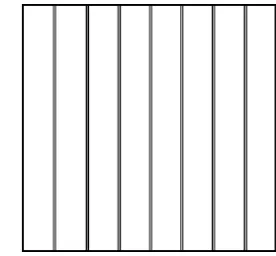
Figure 6 Streaked and developed preparative TLC plate. Other plates have channels placed on the layer
about 1 cm apart, 1}2 mm wide, to separate one lane
of silica gel from another (Figure 4). Originally it was used to give a blank lane for densitometry back-ground correction, but became widely used to keep samples separated when drugs of abuse testing was done in the 1960s. Now most initial drugs of abuse testing is done with EMIT (enzyme multiplied immunoassay technique) and radioimmunoassay techniques, with conRrmation by gas chromatogra-phy}mass spectrometry.
Preconcentration Zone
One of the most useful tools designed into a thin layer plate is the preconcentration or pre-spotting zone (Figure 5). This is a 2.5}4 cm area at the bottom of
a plate, composed of diatomaceous earth or wide-pore silica gel, to allow heavy loading or vertical (horizonal if doing preparative work) streaking of the sample. As the mobile phase passes though this special material, the sample does two things. If a cir-cular spot, it changes to a band (an oblong circle). If a dilute sample, it also concentrates itself in this band. In this portion of the plate, no separation occurs. The separation begins only after the band transfers from the preconcentration zone into the silica (or, in some cases, the RP18 or other bonded-phase) layer. This
reforming of the sample (from a spot to a band) gives a more efRcient separation, since the band is nar-rower along the direction of development.
Preparative Layers
These are thicker layers of any of the above sorbents to allow larger quantities of sample solutions to be applied. These layers are 0.5, 1 or 2 mm thick (com-pared to the usual analytical thickness of 0.25 mm). Usually the sample is applied to the plates as a streak by some automatic device. The thicker the layer, the more sample solution that can be applied (Figure 6). Such a plate is used in the traditional manner, but will generate greater heat of solvation if using a silica plate with a developing solvent with a polar modiRer. This will make spots or bands travel faster, and a re-adjustment of the solvent ratios may be necessary to reduce the band travel.
Binders
[image:5.568.334.474.569.697.2]visualiz-ation. If any layer is lost or weakened, then the separation accomplished is lost. A binder of some kind is added to the sorbent formulation when mak-ing up the thin-layer plates.
Classically, the binder used for silica gel layers was calcium sulfate hemihydrate (plaster of Paris) added between 10 and 15% by weight. After slurrying with water and being applied to the plate, it begins to form the dihydrate within a few minutes. This is called setting and the layer becomes semi-rigid as the water is chemically removed. After further drying, the binder effectively holds the slurry to the glass sup-port. This binder forms what is considered a soft layer, with only a slight resistance to abrasion. As a result, a silica gel G layer needs care in use so that the fragile layer is not damaged when spotting or being moved to and from the developing chamber. This plate is made commercially by only one manu-facturer in the USA, or by special order. Most often it is a binder formulation used by researchers making their own plates. Its main advantage is that any spots on such a layer are easily removed for subsequent work.
An alternative binder is a hydrated or fused silica gel, often designated H. A few per cent of this binder also gives a suitable soft-layer plate. This binder is most often used when interference by the calcium sulfate of a G-type of plate has to be eliminated.
Because of the fragile nature of the G and H bind-ers, most planar chromatographic plate manufac-turers use polymeric binders. Such polymer binders give a moderate to hard layer that withstands all handling done throughout the TLC process so the integrity of the layer is not harmed. Any damage to the surface done during activation, spotting or visual-ization can create artefacts and/or affect the results of the chromatography. These plates easily accommod-ate all stacking, shipping and user steps, and have the selectivity of the classical G-type plate.
The binders used are proprietary but are generally based on a water-soluble polymer such as polyvinyl alcohol (PVA) or polyvinyl pyrrolidone (PVP). These are added to the slurry in a few per cent by weight. They cross-link during drying and heating. They can be made stronger, generally, by reheating before use. This reheating or activation helps not only to dry the silica gel plates, but also to give better reproduci-bility. Just as important, too, is that the heating makes the binder work better under the conditions of development, even for a reversed-phase plate which is most often going into an organic/water-developing solvent.
Such harder layers are more convenient to use, allowing marking or writing on the top of the plate for identiRcation purposes. Some are more difRcult to
spot since the binder imparts some water resistance to the layer. By adding from 5 to 10% ethanol to any aqueous sample (or spray reagent for visualization) the viscosity of the aqueous solutions is dramatically decreased so that penetration into the layer is not a problem.
Often different binders are used on bonded silica gel layers since getting the nonpolar C18silica to stick
to a polar glass surface is more difRcult. Frequently, too, the bonded phase on a TLC plate is lighter (a smaller percentage by weight) than on the HPLC version to allow a greater solvent range (high or low water content) to be used.
These polymeric binders allowed alternative sup-ports such as aluminium and plastic (usually a poly-terphthlate) to be used as supports in addition to glass. With the correct percentage of binder, a certain amount ofSexing can be done without cracking or lifting of the layer from these supports. The advan-tage of these backing materials is that they can easily be cut for resizing or removal of the separated spot. Such plates also allow easy storage, whether stored in the original box or punched and inserted in aRle.
If trouble with a binder, such as lifting or bubbling, is observed, the binder may only need re-curing, i.e. reheating, to ensure greater cross-linking and strength. As mentioned above, it is recommended that all TLC plates } silica gel and bonded layers } be
heated not only to remove absorbed water but also to make the binder stronger for subsequent steps.
If extraction is to be done from a plate to recover the analyte, the plate should be predeveloped over-night in the solvent (or solvent combination) to be used for the extraction. This will remove un-polymerized binder so it will not wash out into the extract and possibly interfere with further work or characterization. To remove any portion of silica gel from a polymer-bound plate, Rrst wet the area by spraying with methanol}water (1 : 1) to soften the binder. It can then be removed with littleSaking or dusting.
Other types of layers that have been around for a number of years are the impregnated and incorpor-ated layers. With the impregnincorpor-ated layer, a Rbrous support such as cellulose Rlter paper or Rbreglass paper is impregnated with a silicate solution, treated and dried to form a type of silica gel or hydrated silica. It is very fast, but low resolution separation medium.
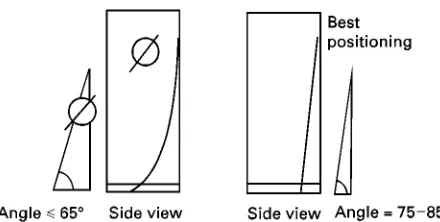
Figure 7 Positioning of flexible-backed TLC plates in a devel-oping chamber.
layers, but a percentage of the matrix plays no part in the separation.
Often cellulose, alumina and polyamide layers need no additional binders, since their physical prop-erties allow them to form a strong surface bond with the different supports. This can be a combination of hydrogen-bonding ability and Rbrous nature of the cellulose, the hydrogen-bonding ability of polyamide, and the particle size range of the alumina.
Supports
Most of the classical layers were prepared on glass since it was generally available and easily handled. It could be cut to any size and Camag and Desaga made special devices for holding the glass plates and dis-pensing the slurries. The glass had to have an espe-cially smooth surface and often the edges were smoothed to prevent cuts to the operator’s Rngers while the plates were handled. Any glass used to prepare the TLC plates must be carefully cleaned to remove any grease or oils that might prevent an even layer from being applied.
Pre-scored plates are discussed above, but any glass-supported plate can be cut by placing it face down on a sheet or two of paper towelling and scoring the glass with a carbide scribe (using a steady, hard motion). The plate is then lifted, held along the two edges with a paper towel, and broken, using a combination of bending (away from the score) and a pulling apart to break the plate. A Rnal step is to remove any loose silica (or other sorbent) from the newly cut edges with a paper towel. This prevents edge effects}faster movement of the solvent at any
rough, sorbent edges.
With special automated equipment, some manu-facturers began to use both aluminium and polyter-phthalate plastic supports. Generally, thinner layers were found to be optimal on theseSexible layers, but the separations are no different from that found on a glass plate since the other items such as the binder and silica gel are the same. Although most TLC plates sold today are still on glass, some researchers feel that the ability to cut to size or the removal of components after the separation is a distinct advantage. After cutting these plates with scissors or a sharp-bladed instrument, ‘edging’, discussed above, should be done. TheSexible layers can sag and should be stood in a chamber at a sharper angle (Figure 7) than a rigid glass plate. This is especially true if a chlorinated developing solvent is used. If one of the impregnated or incorporated layers discussed above is used, they require a special holding device or clamps to hang them in the developing chambers, as was used for paper chromatographic separations.
Fluorescent Indicators
Detection is a special problem which must be con-sidered when beginning a separation. Since most compounds are colourless, this might require considerable time toRnd the best reagents to spray on to a plate to visualize the components found in the sample. Such spray visualization might need a series of reagents to reveal the different species found in a complex mixture, such as with drugs of abuse.
One method used since the early days of TLC has been incorporation of a Suorescent indicator in the layer. A few per cent by weight of an inorganic salt such as manganese-activated zinc silicate, zinc cad-mium sulRde, and others can be used. When visualiz-ing a compound that can absorb the particular wavelength of light used to activate the Suorescent indicator, it will appear as a dark spot against the backgroundSuorescence of the plate. ThisSuorescent indicator is often activated with either 254 or 366 nm wavelength light. It thenSuoresces green, light blue or off-white. Other colours may be seen, too, but these are usually found when an organicSuorescent indicator is used. These latter indicators are often sprayed on after the plate is developed and dried, since they can move with many mobile phases that might be used for developing the plate.
The wavelength of the activation is usually stated after the F designation used by many manufacturers. One other item that might be important regarding Suorescent indicators is the fact that some might not be stable if exposed to strong acids like hydrochloric or sulfuric (i.e. mineral acids). Such strong acids can change the crystal structure of the inorganic salts and make them nonSuorescent. Usually this does not present problems since the Suorescent detection is tried as soon as the plate is dried, and before any other reagents are sprayed on to it for further detec-tion of other types of compounds}ones that would
Conclusions
Although a simple analytical tool, TLC continues to be an important screening and scouting method for almost all industries. The various TLC layers and supports discussed above are available worldwide and the large amount of literature available continues to show the versatility of this tool. These products allow the chromatographer a wide range of possibili-ties for attacking an analytical problem with some knowledge and the conRdence that success will be attained with a few plates and a few solvent systems.
See also: II/Chromatography: Thin-Layer (Planar): Preparative Thin-Layer (Planar) Chromatography.
III/ Impregnation Techniques: Thin-Layer (Planar) Chromatography. Silver Ion: Thin-Layer (Planar) Chromatography.
Further Reading
Fried B and Sherma J (1999)Thin Layer Chromatography, Techniques and Applications, 4th edn. New York, NY: Dekker.
Fried B and Sherma J (1996) Practical Thin Layer Chromatography}A Multidisciplinary Approach. Boca
Raton, FL: CRC Press.
Rabel F (1974)Polyamide Chromatography. In: Grushka E (ed.)Bonded Stationary Phases in Chromatography, pp. 113d137. Ann Arbor, MI: Ann Arbor Science
Publishers.
Stahl E (ed.) (1969)Thin Layer Chromatography, 2nd edn. New York, NY: Springer-Verlag.
Touchstone JC (1992)Practice of Thin Layer Chromato-graphy, 3rd edn. New York, NY: Wiley-Interscience.
Mass Spectrometry
W. E. Morden, LGC, Runcorn Research Centre,
Cheshire, UK
Copyright^ 2000 Academic Press
Introduction
Thin-layer chromatography (TLC) and high perfor-mance thin-layer chromatography (HPTLC), collec-tively often referred to as planar chromatography, in combination with in situ mass spectrometry (MS), provides a reliable means for the unequivocal identi-Rcation of substances separated by this type of chromatography. More speciRcally, the ability to ob-tain mass spectrometric information from the separ-ated analytes directly from the TLC/HPTLC sorbent obviates the need to recover the analytes of interest prior to analysis. Although TLC-MS is a useful method of separation and detection, it does have its limitations where complex matrices are encountered. However, tandem mass spectrometric (MS-MS) tech-niques can be used to enhance the mass spectral data by reducing the interference caused by coeluting analytes or general background noise generated by excipients on the plate.
Practical Considerations
Where the resolution of the separation is high, such as in capillary column chromatography, identiRcation of components based on retention time is a well-established practice. Planar chromatography as nor-mally practised does not achieve a separation efRciency equivalent to that obtained by column chromatography.
Consequently, the identiRcation of components sep-arated by planar methods based solely onRFvalues and UV or Suoresence properties will always leave a higher degree of uncertainty about the true identity of the compounds present. Positive identiRcation of unknowns has to be made by subjecting the analyte to a spectroscopic technique such as mass spectrometry. As with other methods of chromatography, the use of MS as a TLC/HPTLC detector involves the detec-tion and identiRcation of the analyte in the presence of interfering materials from the chromatographic mo-bile and stationary phases. An analyte separated by planar techniques will be presented to a mass spectro-meter along with the stationary phase, any organic phase modiRer present, binding agents and S uor-escent indicators. It is possible that residual solvents from the mobile phase, some of which may have high boiling points may be present. At best, the mass spectra obtained from a single spot taken from, for example, a silica gel HPTLC plate, will contain ions from the analyte with contributions from all these other compounds. When ionization is by fast atom bombardment (FAB) the situation is exacerbated by the formation of matrix and salt ions. Although useful information can be obtained from TLC/HPTLC-MS experiments, the information so obtained can be im-proved by using tandem mass spectrometric methods.
Mass Spectrometric Bene\ts of Planar Separations