RESEARCH ARTICLE
ALTERNATE METHIONINE SUPPLEMENTATION OPTION IN BROILERS: A FIELD STUDY
1
Vijay Kumar, M.,
2Ravikanth, K.,
2Shivi Maini and
2*Adarsh
1
Assistant Professor, Department of Veterinary Pharmacology and Toxicology, Veterinary College,
KVAFSU, Bidar (KS)-585401
2
Research and Development Division, Ayurvet Limited, Baddi, India
ARTICLE INFO ABSTRACT
Objective of the experimental trial was to study efficacy of herbal methionine supplement Methiorep for improving growth, performance & carcass traits in broilers. Trial was conducted on 200 day-old unsexed broiler chicks ( V e n c o b b ) , randomly allotted to two treatment groups, T0 & T1
comprising 100 chicks each. Group T0supplemented with commercial feed only (no over and above
Methionine- DLM supplementation was done) and in group T1commercial feed supplemented with
Methiorep (M/S Ayurvet Limited, India) @1.5 kg/tonne of feed. Statistical analysis of results showed that in group T1a significant (P<0.05) increase in mean final body weight (g) and LWG (g) was
observed in comparison to unsupplemented control group T0. FCR, dressing %, bursa weight (g) and
Spleen weight (g) parameters were significantly (P<0.05) improved in Methiorep supplemented T1
group in comparison to unsupplemented T0group suggesting efficacy of Methiorep in improving
poultry health and carcass traits. Colour of fresh meat was significantly better and desirable in Methiorep supplemented group as compared to control group. Cooked meat colour, flavour, juiciness, texture and overall acceptability of T1group was observed to be significantly better. Non-significantly
(P<0.05) different but numerically lower mortality occurred in Methiorep supplemented T1group as
compared to untreated control T0 group. The trial investigation revealed that over and above
supplementation of Methiorep (M/S Ayurvet Limited, India) @1.5kg/tonne of feed alongwith commercial ration in broilers helped in improving growth, performance, feed efficiency, carcass traits. The product was found to be safe for usage.
Copyright © 2014 Vijay Kumar et al. This is an open access article distributed under the Creative Commons Attribution License, which permits unrestricted use, distribution, and reproduction in any medium, provided the original work is properly cited.
INTRODUCTION
Feed additives are products used in animal nutrition to better the quality of feed and the quality of food from animal origin, or to improve the animals’ performance and health (EC., 2003). Essential amino acids like methionine cannot be synthesized by the bird and must therefore be fed in order to supply the building blocks needed in the synthesis of body proteins thereby supporting growth (Pesti., 2009). Synthetic methionine role in increasing body weight, carcass yield, over all health of poultry and in foetal development has been reported previously (Mack et al., 2004; Meirelles et al., 2003; Wu et al., 1998). But synthetic methionine is listed among the prohibited synthetic substances and its usage has been questioned in organic farming practices (Anonymous 1999). Synthetic (“pure”) amino acids are produced either synthetically or from genetically engineered sources and involve the use of highly toxic and hazardous chemicals such as hydrogen cyanide, ammonia, and mercaptaldehyde. Synthesis of DL-methionine, and DL-methionine hydroxy
*Corresponding author: Adarsh
Research and Development Division, Ayurvet Limited, Baddi, India.
analogs also result in significant pollution of the environment (Methionine 2001). More synthetic methionine in the diet is metabolized into highly toxic compounds like methyl propionate, thereby, adversely altering the performance of birds (Bender., 1975). Herbal preparations composed of single or multiple plant ingredients traditionally have been used for the health management in the poultry i.e tone up the liver, improves appetite, and increases disease resistance (Mwale et al., 2005; Okitoi et al., 2007; Prabakaran 2003). So the concept of herbal supplementation of methionine came in to existence. Herbal methionine as a source of active methionine has been claimed to be effective on performance, cost benefit ratio, meat and feather quality of broiler chicken (Halder et al., 2007; Kumari et al., 2012). The aim of the study is to evaluate efficacy of herbal alternate methionine supplement (Methiorep, M/S Ayurvet Limited, Baddi, India) in improving overall growth, productivity and performance in poultry birds.
MATERIALS AND METHODS
The research was carried out at a poultry house in Kamthana, Bidar (KA), India. 200 day-old unsexed broiler chicks ( V e n c o b b ) were randomly divided in to two treatment
ISSN: 0975-833X
International Journal of Current Research
Vol. 6, Issue, 09, pp.8819-8823, September, 2014
INTERNATIONAL JOURNAL OF CURRENT RESEARCH
Article History:
Received 21stJune, 2014
Received in revised form 04thJuly, 2014
Accepted 19thAugust, 2014
Published online 30thSeptember, 2014
Key words:
Methiorep,
Live Weight Gain (LWG), Feed Conversion Ratio (FCR), Bursa Weight.
RESEARCH ARTICLE
ALTERNATE METHIONINE SUPPLEMENTATION OPTION IN BROILERS: A FIELD STUDY
1
Vijay Kumar, M.,
2Ravikanth, K.,
2Shivi Maini and
2*Adarsh
1
Assistant Professor, Department of Veterinary Pharmacology and Toxicology, Veterinary College,
KVAFSU, Bidar (KS)-585401
2
Research and Development Division, Ayurvet Limited, Baddi, India
ARTICLE INFO ABSTRACT
Objective of the experimental trial was to study efficacy of herbal methionine supplement Methiorep for improving growth, performance & carcass traits in broilers. Trial was conducted on 200 day-old unsexed broiler chicks ( V e n c o b b ) , randomly allotted to two treatment groups, T0 & T1
comprising 100 chicks each. Group T0supplemented with commercial feed only (no over and above
Methionine- DLM supplementation was done) and in group T1commercial feed supplemented with
Methiorep (M/S Ayurvet Limited, India) @1.5 kg/tonne of feed. Statistical analysis of results showed that in group T1a significant (P<0.05) increase in mean final body weight (g) and LWG (g) was
observed in comparison to unsupplemented control group T0. FCR, dressing %, bursa weight (g) and
Spleen weight (g) parameters were significantly (P<0.05) improved in Methiorep supplemented T1
group in comparison to unsupplemented T0group suggesting efficacy of Methiorep in improving
poultry health and carcass traits. Colour of fresh meat was significantly better and desirable in Methiorep supplemented group as compared to control group. Cooked meat colour, flavour, juiciness, texture and overall acceptability of T1group was observed to be significantly better. Non-significantly
(P<0.05) different but numerically lower mortality occurred in Methiorep supplemented T1group as
compared to untreated control T0 group. The trial investigation revealed that over and above
supplementation of Methiorep (M/S Ayurvet Limited, India) @1.5kg/tonne of feed alongwith commercial ration in broilers helped in improving growth, performance, feed efficiency, carcass traits. The product was found to be safe for usage.
Copyright © 2014 Vijay Kumar et al. This is an open access article distributed under the Creative Commons Attribution License, which permits unrestricted use, distribution, and reproduction in any medium, provided the original work is properly cited.
INTRODUCTION
Feed additives are products used in animal nutrition to better the quality of feed and the quality of food from animal origin, or to improve the animals’ performance and health (EC., 2003). Essential amino acids like methionine cannot be synthesized by the bird and must therefore be fed in order to supply the building blocks needed in the synthesis of body proteins thereby supporting growth (Pesti., 2009). Synthetic methionine role in increasing body weight, carcass yield, over all health of poultry and in foetal development has been reported previously (Mack et al., 2004; Meirelles et al., 2003; Wu et al., 1998). But synthetic methionine is listed among the prohibited synthetic substances and its usage has been questioned in organic farming practices (Anonymous 1999). Synthetic (“pure”) amino acids are produced either synthetically or from genetically engineered sources and involve the use of highly toxic and hazardous chemicals such as hydrogen cyanide, ammonia, and mercaptaldehyde. Synthesis of DL-methionine, and DL-methionine hydroxy
*Corresponding author: Adarsh
Research and Development Division, Ayurvet Limited, Baddi, India.
analogs also result in significant pollution of the environment (Methionine 2001). More synthetic methionine in the diet is metabolized into highly toxic compounds like methyl propionate, thereby, adversely altering the performance of birds (Bender., 1975). Herbal preparations composed of single or multiple plant ingredients traditionally have been used for the health management in the poultry i.e tone up the liver, improves appetite, and increases disease resistance (Mwale et al., 2005; Okitoi et al., 2007; Prabakaran 2003). So the concept of herbal supplementation of methionine came in to existence. Herbal methionine as a source of active methionine has been claimed to be effective on performance, cost benefit ratio, meat and feather quality of broiler chicken (Halder et al., 2007; Kumari et al., 2012). The aim of the study is to evaluate efficacy of herbal alternate methionine supplement (Methiorep, M/S Ayurvet Limited, Baddi, India) in improving overall growth, productivity and performance in poultry birds.
MATERIALS AND METHODS
The research was carried out at a poultry house in Kamthana, Bidar (KA), India. 200 day-old unsexed broiler chicks ( V e n c o b b ) were randomly divided in to two treatment
ISSN: 0975-833X
International Journal of Current Research
Vol. 6, Issue, 09, pp.8819-8823, September, 2014
INTERNATIONAL JOURNAL OF CURRENT RESEARCH
Article History:
Received 21stJune, 2014
Received in revised form 04thJuly, 2014
Accepted 19thAugust, 2014
Published online 30thSeptember, 2014
Key words:
Methiorep,
Live Weight Gain (LWG), Feed Conversion Ratio (FCR), Bursa Weight.
RESEARCH ARTICLE
ALTERNATE METHIONINE SUPPLEMENTATION OPTION IN BROILERS: A FIELD STUDY
1
Vijay Kumar, M.,
2Ravikanth, K.,
2Shivi Maini and
2*Adarsh
1
Assistant Professor, Department of Veterinary Pharmacology and Toxicology, Veterinary College,
KVAFSU, Bidar (KS)-585401
2
Research and Development Division, Ayurvet Limited, Baddi, India
ARTICLE INFO ABSTRACT
Objective of the experimental trial was to study efficacy of herbal methionine supplement Methiorep for improving growth, performance & carcass traits in broilers. Trial was conducted on 200 day-old unsexed broiler chicks ( V e n c o b b ) , randomly allotted to two treatment groups, T0 & T1
comprising 100 chicks each. Group T0supplemented with commercial feed only (no over and above
Methionine- DLM supplementation was done) and in group T1commercial feed supplemented with
Methiorep (M/S Ayurvet Limited, India) @1.5 kg/tonne of feed. Statistical analysis of results showed that in group T1a significant (P<0.05) increase in mean final body weight (g) and LWG (g) was
observed in comparison to unsupplemented control group T0. FCR, dressing %, bursa weight (g) and
Spleen weight (g) parameters were significantly (P<0.05) improved in Methiorep supplemented T1
group in comparison to unsupplemented T0group suggesting efficacy of Methiorep in improving
poultry health and carcass traits. Colour of fresh meat was significantly better and desirable in Methiorep supplemented group as compared to control group. Cooked meat colour, flavour, juiciness, texture and overall acceptability of T1group was observed to be significantly better. Non-significantly
(P<0.05) different but numerically lower mortality occurred in Methiorep supplemented T1group as
compared to untreated control T0 group. The trial investigation revealed that over and above
supplementation of Methiorep (M/S Ayurvet Limited, India) @1.5kg/tonne of feed alongwith commercial ration in broilers helped in improving growth, performance, feed efficiency, carcass traits. The product was found to be safe for usage.
Copyright © 2014 Vijay Kumar et al. This is an open access article distributed under the Creative Commons Attribution License, which permits unrestricted use, distribution, and reproduction in any medium, provided the original work is properly cited.
INTRODUCTION
Feed additives are products used in animal nutrition to better the quality of feed and the quality of food from animal origin, or to improve the animals’ performance and health (EC., 2003). Essential amino acids like methionine cannot be synthesized by the bird and must therefore be fed in order to supply the building blocks needed in the synthesis of body proteins thereby supporting growth (Pesti., 2009). Synthetic methionine role in increasing body weight, carcass yield, over all health of poultry and in foetal development has been reported previously (Mack et al., 2004; Meirelles et al., 2003; Wu et al., 1998). But synthetic methionine is listed among the prohibited synthetic substances and its usage has been questioned in organic farming practices (Anonymous 1999). Synthetic (“pure”) amino acids are produced either synthetically or from genetically engineered sources and involve the use of highly toxic and hazardous chemicals such as hydrogen cyanide, ammonia, and mercaptaldehyde. Synthesis of DL-methionine, and DL-methionine hydroxy
*Corresponding author: Adarsh
Research and Development Division, Ayurvet Limited, Baddi, India.
analogs also result in significant pollution of the environment (Methionine 2001). More synthetic methionine in the diet is metabolized into highly toxic compounds like methyl propionate, thereby, adversely altering the performance of birds (Bender., 1975). Herbal preparations composed of single or multiple plant ingredients traditionally have been used for the health management in the poultry i.e tone up the liver, improves appetite, and increases disease resistance (Mwale et al., 2005; Okitoi et al., 2007; Prabakaran 2003). So the concept of herbal supplementation of methionine came in to existence. Herbal methionine as a source of active methionine has been claimed to be effective on performance, cost benefit ratio, meat and feather quality of broiler chicken (Halder et al., 2007; Kumari et al., 2012). The aim of the study is to evaluate efficacy of herbal alternate methionine supplement (Methiorep, M/S Ayurvet Limited, Baddi, India) in improving overall growth, productivity and performance in poultry birds.
MATERIALS AND METHODS
The research was carried out at a poultry house in Kamthana, Bidar (KA), India. 200 day-old unsexed broiler chicks ( V e n c o b b ) were randomly divided in to two treatment
ISSN: 0975-833X
International Journal of Current Research
Vol. 6, Issue, 09, pp.8819-8823, September, 2014
INTERNATIONAL JOURNAL OF CURRENT RESEARCH
Article History:
Received 21stJune, 2014
Received in revised form 04thJuly, 2014
Accepted 19thAugust, 2014
Published online 30thSeptember, 2014
Key words:
Methiorep,
groups, T0 and T1 comprising 100 chicks each. Group T0 supplemented with commercial feed only (Table1) (no over and above Methionine- DLM supplementation) and in group T1 commercial feed supplemented with Methiorep (M/S Ayurvet Limited, India) @ 1.5 kg/tonne of feed. The commercial feed is claimed to comprise Methionine 300g/100kg feed in starter ration and 500g/100kg feed in finisher ration as per NRC recommendations.
Table 1. Feed ration for broilers
Ingredients Starter phase (%) Finisher phase (%) Methionine (content)
Maize 49.00 50.00 0.98g
Soybean meal 18.50 15.00 1.32g
Groundnut cake 15.00 11.00 0.6g
Fishmeal 2.00 2.00 0.36g
Wheat offal 12.45 19.05 0.25g
Bone meal 2.00 2.00 0.13g
Salt 0.25 0.25
-Premix 0.25 0.25
-Methionine 0.30 0.5
-Lysine 0.25 0.20
[image:3.583.39.286.346.426.2]-100 100
Table 2A.Effect of Methiorep™ supplementation via feedfor 42 dayson LBW of broiler chicks
Body weights (g) T0(DLM) T1(DLM+MRP)
Day 0 36.36±0.11a 38.25±0.22b
Day 7 104.6±0.10a 107.21±0.26a
Day 14 297.9±0.08b 293.16±0.11a
Day 21 630.11±0.21a 681.96±0.16a
Day 28 919.13±0.16a 1116.96±0.12a
Day 35 1512.13±0.13a 1610.96±0.17a
Day 42 2008.13±0.12a 2170.96±0.10a
Different superscripts a, b in the same row indicate significant differences (P<0.05) between the treatment groups. Results are expressed as mean ± standard deviation.
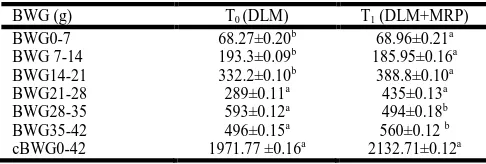
Table.2B Effect of Methiorep ™ supplementation via feedfor 42 dayson BWG of broiler chicks
BWG (g) T0(DLM) T1(DLM+MRP)
BWG0-7 68.27±0.20b 68.96±0.21a
BWG 7-14 193.3±0.09b 185.95±0.16a
BWG14-21 332.2±0.10b 388.8±0.10a
BWG21-28 289±0.11a 435±0.13a
BWG28-35 593±0.12a 494±0.18b
BWG35-42 496±0.15a 560±0.12b
cBWG0-42 1971.77 ±0.16a 2132.71±0.12a
BWG: body weight gain; BWGi-i+1: body weight gain calculated weekly; cBWG0-42: cumulated body weight gain calculated for a period of 42 days. Results are expressed as mean ± standard deviation. Different superscripts a, b in the same row indicate significant differences (P<0.05) between the treatment groups.
During the first three weeks of trial, the chicks were fed ad libitum with standard starter crumble feed and thereafter with finisher Crumble. Birds of all the groups were vaccinated with new castle disease (ND) vaccine on 7th and 21st and 31st day and with infectious bursal disease (IBD) vaccine on 14th day. Body Weight, feed consumption, feed conversion ratio, physical evaluation and mortality record The performance parameters were recorded at weekly intervals. The chickens were weighed individually on day 1, 7, 14, 21, 28, 35 and 42. Feed intake was recorded weekly and Feed Conversion Ratios
(FCR) were calculated (Tanweer et al., 2014). According to the recommendations for the euthanasia of experimental animals (Close et al., 1997; Farrell., 2006), the animals were sacrificed without stress via cervical dislocation. To minimize the stress to the broiler chickens, those that were expected to be slaughtered were selected 2 hr prior to sacrifice and moved to an isolated place out of the sight of the other broiler chickens. Immediately after cervical dislocation, the carotid arteries were cut and the chickens were bled for 100 seconds, after which they were placed in hot water (60ºC) for about 4 min. The feathers were then removed by passing through a rotary drum mechanical picker for 30 sec. After the blood, feathers, feet, heads (cut at the first cervical vertebra) and shanks were removed and evisceration was conducted, the whole carcasses were air-chilled (air flow of 6 m3s-1) and stored in a chilling room at 4ºC until the next day. The carcasses were weighed and deboned 24 hr after slaughter, and the breast muscle, thigh meat with skin, liver, gizzard, abdominal fat, spleen, bursa of fabricius and thymus were then removed and weighed. The weight of abdominal fat was determined by collecting all fat spreading to the ischium, around the cloaca, and into the neighboring abdominal muscles. The dressing percentage was calculated as the ratio of the carcass weight to the live weight. The weight of the breast muscle and thigh meat were expressed as their rates to the carcass weight and the relative weight of liver, gizzard, abdominal fat, spleen, bursa of fabricius, and thymus and are reported as the percentage of live weight. Mortality was recorded daily in each group (Oh et al., 2013).
Meat Colour Evaluation
The breast muscle was cut and exposed to air for 15 min at room temperature prior to color measurement. The meat color was then measured three times using white ceramic tile (L*=92.30; a*=0.32 and b*=.33 as standard). The meat colour was expressed as Hunter Values (L*=Lightness; a*=redness; b*=yellowness) (Hunter and Harold., 1987; Jiang et al., 2007; Kruk et al., 2014).
Statistical analysis
The data from the study were pooled and subjected to suitable statistical analysis. The data were represented as Mean±S.D. at P<0.05 level of significance as suggested by Steel (Steel et al., 1997)
RESULTS AND DISCUSSION
Body weight and weight gain
The weekly body weight and weight gain of broilers have been presented in table 2A and in table 2B. Statistical analysis of results showed that in group T1a significant (P<0.05) increase in mean final body weight (g) (2170.96±0.10a) was evident in comparison to unsupplemented control group T0 (2008.13±0.12a) (table 2A). LWG in Methiorep supplemented T1 group (2132.71±0.12ag) was observed to be significantly (P<0.05) higher by 160.94 g/bird in comparison to untreated control T0group (1971.77 ±0.16ag) as shown in table 2B. The results of the present trial are in accordance with the findings
[image:3.583.40.283.500.582.2]of Kalbande, Narayanswamy and PN Onu who reported that the chicks in herbal methionine group showed a significant (p<0.01) gain in body weight as compared to the chicks in control group and numerically higher weight gain as compared to the chicks in synthetic methionine group (Kalbande et al., 2009; Narayanswamy and Bhagwat., 2010; Onu et al., 2010). These studies showed that the herbal source of methionine can replace DL-methionine in the diet of commercial broiler chicks.
Table 3.Effect of Methiorep ™ supplementation via feedfor 42 dayson FCR of broiler chicks
FCR (g/g) T0(DLM) T1(DLM +MRP)
FCR 0-7 1.69± 0.02b 1.19± 0.12a
FCR 7-14 2.16± 0.22b 1.92± 0.22a
FCR14-21 1.91± 0.20ab 1.62± 0.16a
FCR21-28 2.68± 0.12ab 1.62± 0.20a
FCR28-35 1.64± 0.05b 1.78± 0.12b
FCR35-42 2.13± 0.07ab 1.71± 0.08b
cFCR0-42 2.01± 0.16b 1.79± 0.20a
[image:4.583.315.549.291.334.2]FCR: Food conversion ratio; FCRi-i+1:Food conversion ratio measured weekly; cFCR0-i: cumulated Food conversion ratio determined for a period of i days. Different superscripts a, b in the same row indicate significant differences (P<0.05) between the treatment groups. Results are expressed as mean ±standard deviation.
Table 4.Effect of Methiorep ™ supplementation via feedfor 42 days onthe carcass traits and Immune organ weights in broiler
chickens
Parameters T0(DLM) T1(DLM +MRP)
Slaughter weight (g) 2008.13±0.12a 2170.96±0.10a
Hot carcass weight (g) 1324.4 ± 14.2ab 1545.1 ± 28.6a
Carcass yield (%) 65.95 ± 0.8b 71.71 ± 0.8b
Spleen weight (g) 2.41±0.17a 3.72±0.84b
Spleen yield (%) 0.12± 0.01a 0.17 ± 0.03b
Bursa weight (g) 3.63 ± 0.43a 5.42 ± 0.84b
Bursa yield (%) 0.18 ± 0.01a 0.24 ± 0.03b
Organ yield was calculated by the following formula: 100 x organ weight / carcass weight. Different superscripts a, b in the same row indicate significant differences (P<0.05) between the treatment groups. Results are expressed as mean ±standard deviation.
Feed conversion ratio
Cumulative FCR of group T1 (1.79± 0.20a) was found to be significantly (P<0.05) better from the control group T0(2.01± 0.16b) as shown in table 3. The results are in accordance with the findings of Garcia Neto M, Garlich JD and Chattopadhyay who claimed an increase in FCR by methionine supplementation (Garcia et al., 2000; Garlich., 1985; Chattopadhyay et al., 2006).
Carcass traits and Immune organ weights
The effect of supplementation of Methiorep on carcass traits and visceral organs weight expressed as percent of live weight is presented in table 4. Carcass yield % was found to be significantly (P<0.05) higher in T1(71.71±0.8b) as compared to T0 group (65.95±0.8
b
). Significantly (P<0.05) improved bursa weight (g) was observed in T1 group (5.42±0.84b) in comparison to control T0 group (3.63±0.43a) suggesting efficacy of Methiorep in improving immunity. Spleen weight (g) was observed significantly (P<0.05) higher (3.72±0.84b) in
[image:4.583.41.284.378.460.2]Methiorep supplemented T1group in comparison to control T0 group (2.41±0.17a). The results are in accordance with Ojano-Dirain and Waldroup, who observed that a significant improvement (P<0.05) in dressing percentage and breast meat yield between the broilers fed NRC methionine level and those fed higher levels. Study showed that on Methionine supplementation there is an improvement in the carcass traits (Ojano-Dirain and Waldroup., 2002). Fresh meat colour, sensory evaluation of cooked chicken and mortality Color and odour of cooked poultry meat is important because consumers associate it with the product’s freshness, and they decide whether or not to buy the product based on their opinion of its attractiveness. Colour of fresh meat was significantly better and desirable in Methiorep supplemented group as compared to control group as shown in Table 5A. Flavour, juiciness of meat and other important organoleptic characteristic have been presented in table 5B.
Table 5A.Effect of Methiorep ™ supplementation viafeedfor 42 days onfresh Meat colour
Parameters T0(DLM) T1(DLM+MRP)
Lightness 56.32b 61.23a
Redness 3.16a 3.82ab
Yellowness 14.13a 17.27b
Different superscripts a, b in the same row indicate significant differences (P<0.05) between the treatment groups.
Table 5B.Effect of Methiorep ™ supplementation via feedfor 42 days onthe Sensory attributes of cooked Chicken using 8-point
hedonic scale
Parameters T0 (DLM) T1 (DLM+MRP)
Color/ Appearance 6.97a 7.17b
Flavour 6.84a 7.17b
Juiciness 6.76a 6.98b
Texture 7.11a 7.07a
Saltiness 7.02a 7.07a
Mouth Coating 6.47a 6.86a
Overall Acceptability 6.72a 7.03b
Different superscripts a, b in the same row indicate significant differences (P<0.05) between the treatment groups.
Table 6.Effect of Methiorep ™ supplementation via feedfor 42 days onthe mortality rates in broiler chickens
Parameters T0(DLM) T1(DLM+MRP)
Total No. of Birds in the group 100 100
No. of birds Died 7 6
Mortality percentage 7.00 6.00
[image:4.583.310.555.404.485.2] [image:4.583.310.554.552.595.2]relatively lower mortality in herbo methionine supplemented group in comparison to synthetic DL-methionine supplemented group.
Conclusion
On the bases of present investigation it can be concluded that herbal feed premix Methiorep can successfully replace synthetic DL methionine in feed as it has been proven to be effective in improving commercial broiler performance (growth, FCR, and livability parameters).
Acknowledgement
The author is thankful to Department of Veterinary Pharmacology and Toxicology, Veterinary College, KVAFSU, Bidar (KS), India for availing research facilities and Ayurvet Limited, Baddi, H.P., India for providing necessary samples and guidance.
REFERENCES
Anonymous 1999. EU council regulation 1804/1999 of Organic production of agricultural products and indications referring there to on agricultural products and food stuffs to include livestock products. Official J. European Committees. pp 22.
Bender, D.A. 1975. Amino acid metabolism. John Wiley and Sons. Ltd (1st Ed). New York, USA, 112-142.
Chattopadhyay, K., Mondal, M.K and Roy, B. 2006. Comparative Efficacy of DL-Methionine and Herbal Methionine on Performance of Broiler Chicken. Int. J. Poult. Sci., 5 (11): 1034-1039.
Close, B., Banister, K., Baumans, V., Bernoth, E.M., Bromage, N., Bunyan, J et al. 1997. Recommendations for euthanasia of experimental animals. Laboratory Animals., 31: 1-32.
EC, 2003. Regulation (EC) No 1831/2003 of European Union Register of Feed Additives pursuant to. 185th Edition: published on 12 May 2014.
Farrell, T.T. 2006. Slaughter of poultry. The Veterinary Record 158(3): 108.
Garcia Neto, M., Pesti, G.M. and Bakalli, R.I. 2000. Influence of dietary protein level on the broiler chicken's response to methionine and betaine supplements. Poult. Sci., 79(10):1478-1484.
Garlich, J.D. 1985. Response of broiler to DL- methionine hydroxy analogue-free acid, DLmethionine and L-methionine. Poult. Sci., 64: 1541-1584.
Halder, G. and Roy, B. 2007. Effect of Herbal or Synthetic Methionine on Performance, Cost Benefit Ratio, Meat and Feather Quality of Broiler Chicken. Int. J. Agri. Res., 2(12): 987-996.
Hunter, R.S and Harold, R. 1987. The measurement of appearance. Wiley (ed.), New York, 1-411.
Jiang, S.Q., Jiang, Z.Y., Lin, Y.C., Xi, P.B and Ma, X.Y. 2007. Effects of Soy Isoflavone on Performance, Meat Quality and Antioxidative Property of Male Broilers Fed Oxidized Fish Oil. Asian-Aust. J. Anim. Sci., 20(8):1252-1257.
Kalbande V.H, Ravikanth K, Maini S and Rekhe DS. Methionine supplementation options in poultry. IJPS., 2009; 8(6): 588- 91.
Keeton, J.T. 2006. Effects of fat and NaCl/phosphate levels on the chemical and sensory properties of pork patties. J. Food. Sci., 48 (3): 878-881.
Kruk, Z.A., Kim, H.J., Kim, Y.J., Rutley, D.L., Jung, S., Lee, S.K., and Jo C. 2014. Combined Effects of High Pressure Processing and Addition of Soy Sauce and Olive Oil on Safety and Quality Characteristics of Chicken Breast Meat. Asian-Aust. J. Anim. Sci., 27(2): 256–265.
Kumari, K., Tiwari, S.P., Nanda, S., Saxena, M.J., Ravikanth, K., and Maini, S. 2012. Studies on Comparative Efficacy of Herbal Amino Acid (Methiorep) Supplement with Synthetic Dl Methionine on Broiler Growth Performance and Carcass Quality Traits. Int. J. Sci. Res. Pub., 2 (8): 1-6.
Mack, S., Lemme, A., Irish, G., Tossenberger, J. 2004. Effects of dietary methionine on broiler flock uniformity. Proc. Aust. Poult. Sci. Sym., (16): 35-38.
Meirelles, H.T. Albuquerque, R., Borgatti. L.M.O. Souza, L.W.O. Meister, N.C. and Lima, F.R. 2003. Performance of broilers fed with different levels of methionine hydroxy analogue and DL-methionine. Rev. Bras. Cienc. Avic., 5 (1):1
Methionine., 2001. National Organic Standards Board Technical Advisory Panel Review for the USDA National Organic Program. Livestock., (1): 1-21.
Mwale, M., Bhebhe, E., Chimonyo, M. and Halimani, T.E. 2005. Use of Herbal Plants in Poultry Health Management in the Mushagashe Small-Scale Commercial Farming Area in Zimbabwe. Intern. J. Appl. Res. Ve.t Med., 3 (2): 163-170.
Narayanswamy, H.D., and Bhagwat, V.G. 2010. Evaluating the efficacy of methionine supplementation options in commercial broiler chickens. Poultry Line., 3: 5-7. Oh, P.S., Min, R.C., Sung, P.B and Jong, H. 2013. The meat
quality and growth performance in broiler chickens fed diet with cinnamon powder. J. Environ. Biol., 34: 127-133.
Ojano-Dirain, C.P and Waldroup, P.W. 2002. Evaluation of lysine, methionine and threonine needs of broilers three to six weeks of age under moderate temperature stress. Int. J. Poult. Sci., 1: 16-21.
Okitoi, L.O., Ondwasy, H.O., Siamba, D.N. and Nkurumah, D. 2007. Traditional herbal preparations for indigenous poultry health management in Western Kenya. Livestock Research for Rural Development., 19 (5): 1.
Onu, P.N., Ayo-Enwerm, M.C. and Ahaotu, E.O. 2010. Evaluation of carcass characteristics and cost effectiveness of broiler chicks fed synthetic lysine and methionine supplemented soyabean base diets. IJSN., 1(1): 22-26.
Pesti, G.M. 2009. Impact of dietary amino acid and crude protein levels in broiler feeds on biological performance. J. Appl. Poult. Res., 18 (3): 477-486.
Prabakaran, R. 2003. Good Practices in Planning and Management of Integrated Commercial Poultry Production in South Asia. In: Poultry feed formulation and preparation. Chapter 5, FAO, Rome, 37-52.
Steel, R.G., Torrieand, J.H and Dickey, D.A. 1997. Principles and procedures of statistics. B i o m e t e r i c a l A p p r o a c h ( ed), McGraw-Hill, New York, 1-666.
Tanweer, A.J., Chand, N., Khan, S., Qureshi, M.S., Akhtar, A., and Niamatullah, M. 2012. Effect of methanolic extract of Peganum Harmala on weight gain, feed conversion ratio, feed cost and gross return of broiler chicks. J. Anim. Plant Sci., 22 (2): 264-267.
Wu G., Pond, W.G., Ott, T., Bazer, F.W. 1998. Maternal dietary protein deficiency decreases amino acid concentrations in fetal plasma and allantoic fluid of pigs. J. Nutr., 128 (5): 894-902.