Multiplicative reasoning professional development
programme : evaluation
BOYLAN, Mark <http://orcid.org/0000-0002-8581-1886>, DEMACK, Sean <http://orcid.org/0000-0002-2953-1337>, WILLIS, Benjamin
<http://orcid.org/0000-0002-4346-0459>, STEVENS, Anna
0002-9450-890X>, ADAMS, Gill <http://orcid.org/0000-0003-2088-8708> and VERRIER, Diarmuid <http://orcid.org/0000-0002-4148-3948>
Available from Sheffield Hallam University Research Archive (SHURA) at:
http://shura.shu.ac.uk/12601/
This document is the author deposited version. You are advised to consult the publisher's version if you wish to cite from it.
Published version
BOYLAN, Mark, DEMACK, Sean, WILLIS, Benjamin, STEVENS, Anna, ADAMS, Gill and VERRIER, Diarmuid (2015). Multiplicative reasoning professional development programme : evaluation. Project Report. London, Department for Education.
Copyright and re-use policy
See http://shura.shu.ac.uk/information.html
Sheffield Hallam University Research Archive
Multiplicative reasoning
professional development
programme: evaluation
Research report
June 2015
Mark Boylan, Sean Demack, Ben Willis,
Anna Stevens, Gill Adams and Diarmuid
Verrier – Centre for Education and
Contents
List of figures v
List of tables v
Acknowledgements vi
Glossary vii
Executive Summary ix
The Multiplicative Reasoning Project ix
Evaluation ix
Headline findings in relation to research questions x
Discussion of results xv
Lessons for evaluation design xvi
Recommendations xvii
Conclusion xviii
1 Introduction 1
2. The evaluation methodology 5
2.1 Randomised Controlled Trial design and methodology 5
2.2 Process evaluation methodology and data collection 7
3 Impact analysis 9
3.1 Summary of the impact analysis 9
3.2 Analysis Approach and Variables Used 11
3.3 Analyses Conducted 13
4 Process evaluation findings 15
4.1 The project narrative: national and regional 15
4.1.2 Support of school and department leaders 16
4.1.3 School leaders/Head of Department views 17
4.2 School case studies 21
4.3 Participant views of the project 25
4.4 MRP materials 26
4.5 Use of materials 26
4.6 Participants views of the materials. 29
4.7 Engagement in professional development activities 30
4.8 Quality and effectiveness of professional development activities 32
4.9 Professional development impacts 33
4.10 Pupil impacts 39
4.11 School and departmental leaders support and views on the project 39
4.12 Organisational and network impacts 39
4.13 Control School Approach 40
5. Security of findings 41
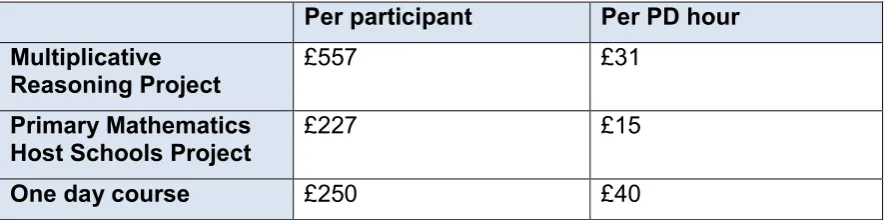
6. Cost effectiveness 43
7. Interpretation of results 45
7.1 Limitations 45
7.2 Possible explanations for the impact results 45
7.3 The MRP as an approach to professional development: improvements and
scalability 48
7.4 Lessons for evaluation design 49
8. Outcomes in relation to research questions 51
9. Recommendations and conclusion 56
9.2 Impact on teacher professional development 57
9.3 Impact on new approaches to PD in the school-led system 57
List of figures
Figure 1: MRP theory of Change ... 4
Figure 2: Departmental relationship with the MRP ... 16
List of tables
Table 1: Summarising effect sizes and directions for main analyses ... 10Table 2: Summarises the GL PiM outcome variables by year group ... 12
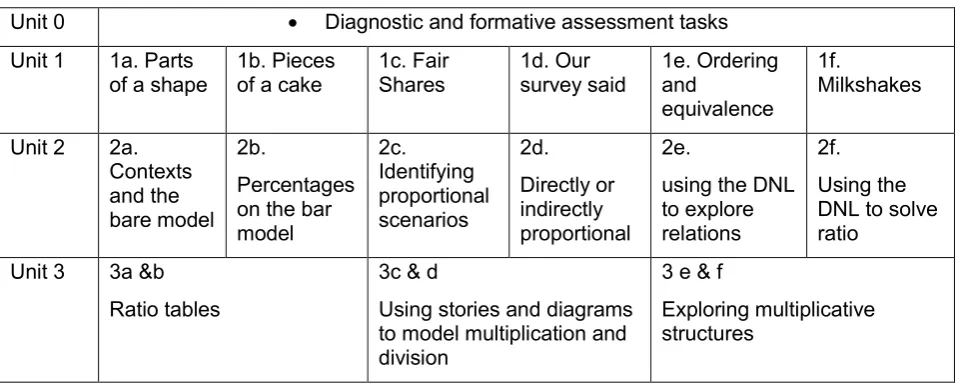
Table 3: MRP curriculum materials ... 26
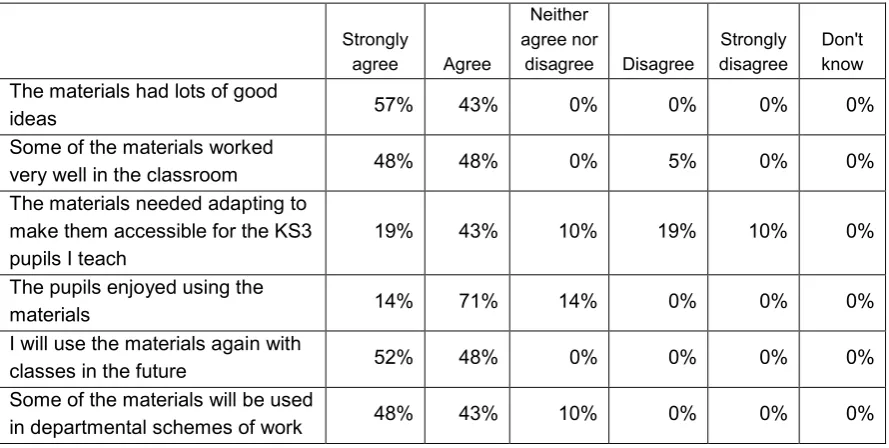
Table 4: Participants' views of materials, n=21 ... 29
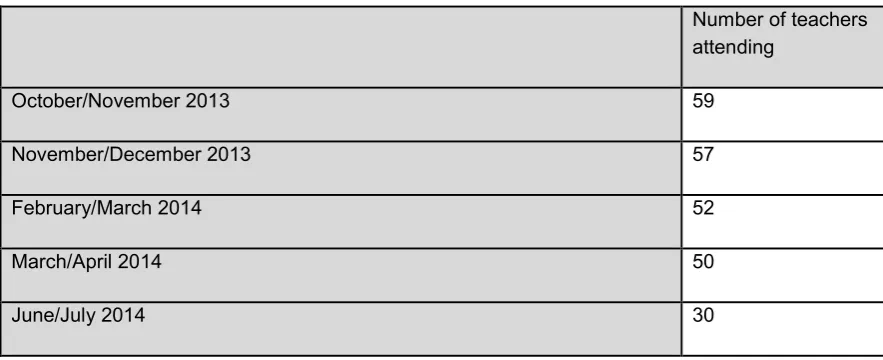
Table 5:Frequency of attendance ... 30
Table 6Numbers attending different events ... 31
Acknowledgements
The authors would like to thank:• the participants in the multiplicative reasoning project and school leaders and headteachers in the control schools
• the school examination officers and teachers in both intervention and control
schools who arranged for testing to be done
• Alderwood recruitment, Aspire People, Randstad Education and Vision for
Education for providing invigilators
• the invigilators who invigilated the tests
• the teachers and pupils who took part in case study interviews
• colleagues from DfE and NCETM, especially Jo O'Shea the project manager,
and Natasha Chippendale, Bob Maunder, Rob Tait and John Westwell
• Professor Andrew Izsák of the University of Georgia who analysed test items
in relation to the content of the multiplicative reasoning project
• CEIR colleagues who contributed to the project, data management and
Glossary
CDT - Core development team: The CDT comprised of NCETM national leads and curriculum developers
CRT - Clustered randomised trial
CT - Core teacher - teachers actively participating in the professional development events in intervention schools
DfE - Department for Education
DNL - Double Number Line a mathematical model used in the MRP project materials GLA - GL assessment, provided and marked the Progress in Mathematics Tests HoD - Head of Department
FSM: families with an income below a certain level are entitled to their children receiving free school meals. Used as a proxy measure of poverty.
KS2 - Key Stage 2: National curriculum phase in compulsory schooling in England, covering Years 3-6 (ages 7-11)
KS3 - Key Stage 3: National curriculum phase in compulsory schooling in England, covering Years 7-9 (ages 11-14)
KS4 - Key Stage 4: National curriculum phase in compulsory schooling in England, covering Years 10-11 (ages 14-16)
Lesson Study - collaborative approach to professional learning
Maths Hubs - Around 30 in total forming a national network, each hub is led by a teaching school and is intended to provide support to all schools in the area and lead on national projects
MDES - Minimum Detectable Effect Size (see Technical Report, Annexe E1) MEI - Mathematics in Education and Industry
MESH - Mathematics Education Strategic Hubs. Embryonic school led networks, three of which hosted the MRP regional TIME events. The MESH were a pilot for what become Maths Hubs.
MR - Multiplicative reasoning
MRP - Multiplicative Reasoning Project
NAG - National Advisory Group, advised DfE on the project
NCETM - The National Centre for Excellence in the Teaching of Mathematics
NDT - National Development Team, comprised of the CDT, PD leads and university researchers
NPD - National Pupil Database: database containing information on pupils in maintained schools in England, including attainment and pupil characteristics. OT - other teacher, teacher in an intervention school other than a core teacher PD Leads - Professional Development Leads, led the professional development events
PE - Process evaluation
TIME team - Teachers Improving Mathematics Education - name for the three regional groups of teachers involved in the project, and those working with them PD leads and university researchers
Executive Summary
1The Multiplicative Reasoning Project
The Multiplicative Reasoning Project (MRP) delivered by the National Centre for Excellence in the Teaching of Mathematics (NCETM) in 2013/14 focused on developing teachers' understanding and capacity to teach topics that involved multiplicative reasoning to Key Stage 3 (KS3) pupils. Multiplicative reasoning refers to the mathematical understanding and capability to solve problems arising from proportional situations often involving an understanding and application of fractions as well as decimals, percentages, ratios and proportions. The aspects of
multiplicative reasoning addressed in the NCETM project were proportional and fractional relationships. The teaching approaches encouraged were the use of mathematical models, visual approaches and problem solving strategies.
Approximately 60 teachers in 30 schools engaged in 3 regional professional development networks, led by professional development leaders, supported by university researchers. Specific project materials were created by a team of curriculum developers.
Evaluation
The impact of MRP on pupil outcomes was evaluated using a 3-level Clustered Randomised Control Trial (CRT) research design. The trial ran between October 2013 and June 2014 and involved 8,777 year 7 (Y7), year 8 (Y8) and year 9 (Y9) pupils (level 1) clustered into 418 Y7, Y8 and Y9 mathematics classes (level 2) clustered into 60 secondary schools. Approximately half the schools, teachers and pupils participated in the intervention and half formed a control group. Progress was compared between the two groups of pupils using Key Stage 2 (KS2) data as a base line and GL Assessment Progress in Mathematics Test (PiM) tests as an outcome measure. This is a measure of general mathematical attainment that is correlated with national tests.
Further analysis was completed specifically in relation to multiplicative reasoning. The GLA PiM tests were analysed and items related to the project materials were identified. Outcomes on these items in the intervention and control samples were analysed. In addition a fidelity analysis was carried out. Outcomes were considered
1 This report has an accompanying Technical Report which should be consulted for further detail on methodology and details of analysis.
for the sub-sample of pupils who had been taught by teachers who had fully
participated in the project, for example, by excluding pupils who had moved classes.
In addition, a process evaluation was conducted using a mixed methods approach of surveys, observations and interviews.
Please see the full report and the accompanying technical report for further details.
Headline findings in relation to research questions
Research Question 1What is the impact of the programme on pupil outcomes on both general
mathematical attainment as measured by GL assessment Progress in Mathematics (PiM) tests and on those items in the GL PiM associated specifically with
multiplicative reasoning?
During the timescale of the trial (13 October 2014 to May 2015) the programme did not have any statistically significant impacts on general mathematical attainment as measured by PiM tests or on items on the tests specifically associated with
multiplicative reasoning.
Research Question 2
What are the impacts (if any) on: pupils' relationships to mathematics; teacher beliefs and practice including on lesson planning; teacher knowledge of multiplicative
reasoning pedagogy; capacity of core teachers' to lead professional development?
The project had a positive impact on pupils' relationship with mathematics as
reported by teachers in surveys and interviews and pupils in focus group interviews.
A range of changes in teacher beliefs and practices were identified:
• thinking more deeply about mathematics prior to teaching
• using models when teaching MR and extending models to other areas
• developing questioning
• promoting independence
• focussing on student learning
• questioning assumptions
With regard to core teachers leading professional development, many participants shared materials with other members of their department. However, opportunities to lead more extended professional development activities were limited. Nevertheless approximately a quarter of participants involved another member of the department in the first Lesson Study activity. There was some evidence of development of leadership capacity and it appeared the project developed a desire to lead professional development in others.
Research Question 3:
How was the programme conducted and how did this differ from the planned programme in what way and why?
The programme was conducted as planned at national and regional levels involving collaboration between NCETM leads, curriculum developers, university researchers and professional development (PD) leads. At school level the programme was implemented by two core teachers in each school. Originally it was planned to have a stronger focus on core teachers leading PD in their own departments. During the recruitment phase this was judged by the NCETM and Department for Education (DfE) to be more appropriately something to be encouraged rather than required. There was a degree of loss of fidelity at regional level in relation to the extent to which materials were a resource to be drawn on or a recommended coherent curriculum. The extent to which teachers were able to fully participate in the programme depended on support in schools. In some schools the project was actively supported by senior and departmental leadership and there was a good fit with departmental approaches to mathematics teachers and/or strategic
developments in the subject. In other schools there were various issues that meant alignment was lower and this created constraints on implementation.
Research Question 4
What are the views of teachers/development teams on the programme including its effectiveness?
Participants responding to surveys or participating in interviews judged both the curriculum materials and professional development activities to be, on the whole, effective. Aspects of the professional development activities that were viewed positively were:
• discussion of lessons
• time to plan with the other core teacher • input on the pedagogical approach
Aspects of the materials and resources that were produced that were viewed positively were the variety of materials; the use of realistic contexts, and visual models.
Issues were raised for improvement such as having the materials in advance of the training events and having the events nearer to the participants’ schools. However, these may be related to the pilot nature of the project.
Research Question 5:
If/how was the programme effective and what lessons can be learnt for scalability?
The programme was effective as a curriculum design project and pilot project for teacher professional development. It did not meet the intention to impact on pupil attainment (which was measured by the GL PiM tests within the timespan of the project).
Given this, there is no rationale, in terms of an intention to impact on pupil attainment in the short term, for repeating the project in the same form and for the same
duration with a larger number of schools. With further development or refinement a similar approach might lead to impact on those aspects of pupil learning measured by PiM tests. One possibility would be to increase the project length to allow time for professional learning to impact on pupil learning and then to re-evaluate.
A project with all the features of the MRP may not be scalable. For example, a positive feature was the opportunity for face to face dialogue between teachers and curriculum developers. This may difficult to repeat at scale. However, support could be given to collaborative professional development communities based on the TIME model or different forms of teacher networks using specific curriculum materials in relation to MR or other areas of the curriculum. There are examples in both recent and medium term past of this being done successfully.
Features of the project that were found to be effective and are reproducible at scale in future projects are:
• teacher professional development focused on research-informed curriculum
materials
• teacher collaborative learning communities that draw on the expertise of teacher leaders, curriculum developer and researchers
teacher leaders, as a powerful and productive approach. Teachers interviewed also valued the different contributions.
The project aimed to address concerns about pupil understanding of multiplicative reasoning in KS3. Teachers found the models used in the projects as useful
approaches to teaching multiplicative reasoning. Given this, there is the potential to evaluate specific materials in a more focused way - for example using the bar model and ratio table. This would then allow for an assessment of whether these models should be adopted more widely.
The project materials were found to be a useful resource for KS3 and potentially KS2 curriculum. They were developed to be used as part of a professional development project, however, they have the potential to be adapted as a stand-alone resource or potentially with on-line or similar PD materials. This might follow the Bowland
approach2 or develop alternatives such as video presentation and discussion of
materials by developers or through webinars.
Research Question 6:
Are there any patterns of differences in effectiveness for particular groups of pupils, teachers, schools, or across the three TIME teams?
In relation to the impact analysis, there are no significant patterns of differences between particular groups of pupils, teachers, and schools or across the three TIME teams.
Analysis of qualitative data indicates that some of the materials were perceived to be particularly useful for younger or relatively low attaining pupils, with the bar model and ratio tables being accessible ways to develop multiplicative reasoning. Other materials were used with high attaining pupils or adapted for KS4. Teachers who worked in schools in which there was strong senior leadership or departmental support for the programme were able to engage more fully. The project appeared more successful where school cultures supported innovation and problem solving pedagogies.
Research Question 7:
What was delivered through the programme including: activities; quality and quantity of professional development; the reach (teachers and pupils) including beyond those directly involved and impacts on organisational capacity?
The programme delivered a total of 1,250 professional development (PD) days that were potentially accessible by participants. The quality of PD was judged to be high by participants. In addition, a set of curriculum resources and supporting
documentation were produced. Materials were organised into 'lessons' and ‘units’. Each lesson could take 2-3 hours of teaching time. Thus approximately 36-54 hours' worth of high quality research-informed curriculum materials were produced. These could potentially form the basis of a coherent KS3 curriculum strand in relation to multiplicative reasoning. Approximately 60 teachers attended PD events, with a further group of 15 teachers in schools participating in Lesson Study activity. In the majority of schools materials were shared with other teachers.
Approximately 3,400 KS3 pupils were taught in classes identified with nominated core teachers in intervention schools. Approximately 2,450 of these pupils were identified through an 'on-treatment’ analysis. These 2,450 pupils had experienced a minimum level of MRP curriculum materials and were taught by teachers who had engaged in PD activity. The other 950 pupils had only experienced one or the other. Additional pupils in KS2 and KS4 experienced some of the materials.
One aspect of the project was the hosting of TIME events by Maths Hubs and the contribution of these schools in providing professional development leaders. The project provided a focus for the Maths Hubs programme and provided lessons that have informed the Maths Hub programme. Teaching schools involved in the
programme have indicated they intended to provide further professional development on multiplicative reasoning.
The project also brought together curriculum developers working from different approaches to curriculum design.
Research Question 8: Was the programme cost effective?
Given the lack of evidence with regard to impact on pupil attainment as measured by PiM tests, a cost benefit analysis is not appropriate. As an alternative, a cost
effectiveness analysis based on a comparison of the MRP with other forms of professional development was undertaken.
Discussion of results
It is important to recognise limitations of the results of both the RCT and process evaluation. Schools involved in the project were not representative of the national population of schools and in the case of the process evaluation there is likely to be some sampling bias with those schools more favourable to the project being over represented.
A measured impact on pupil attainment using the PiM tests was not found, this may be due to a combination of:
• unobserved significant variables • attrition
• sensitivity/appropriateness of the test measures
• issues related to the theory of change and/or the intervention
Most significantly, in relation to the latter, were the complexity of the project and the short time scale in which it took place.
Despite the lack of impact on pupil attainment on the PiM tests, the MRP embodied an approach that drew on the evidence base of effective professional development as well as research on multiplicative reasoning.
Characteristics of the MRP that were important were:
• a focus on subject matter
• professional learning focused on student learning
• sustained duration
• collective participation of teachers from the same school
One additional area that could have been included was to directly address teachers' beliefs about mathematics and the teaching and learning of mathematics. Definitions or frameworks could have been introduced at the start of the project and, in
particular, the definition of multiplicative reasoning upon which the project was based could have been made explicit.
Important to the theory of change that underlay the project was the need to address teachers' understanding of multiplicative structures and MR pedagogy. There is the potential to develop further targeted interventions and professional development materials related to this. One approach to doing this would be to draw on
multiplicative reasoning knowledge3. This could lead to interventions that were
assessed by impact on teachers in the first instance as a pre-requisite for evaluating impact on pupils.
The regional collaborative communities were led by schools and hosted by Maths Hubs. The Maths Hubs pilot (initially known as MESH) has evolved into the Maths Hub programme and this has already been funded by the DfE. The MRP evaluation provides evidence that supports this decision. Maths Hubs involved in the project, as well as other teaching schools, recognised the potential of MRP model and materials as an approach to professional development in their hubs.
A design approach to curriculum development has potential to address other areas of concern in mathematics. In addition to the curriculum developers involved in MRP there are other recent and significant examples of curriculum design in mathematics in England4. The NCETM has a particular role as broker in relation to different
contributors to mathematics professional development, as evidenced by its approach in the MRP.
One of the effective features of the project, as identified by participants, was utilising the expertise of university-based developers and researchers. The Maths Hub programme aligns with this, with higher education institutions (HEIs) involved in strategic bodies within Hubs. The NCETM has also previously encouraged teacher innovators to draw on HEI expertise when awarding direct grants.
Lessons for evaluation design
There are lessons to be learnt for the approach to design evaluations of this type in current educational contexts, as well as in relation to practical matters. A key lesson is the importance of ensuring that any specific intervention has gone through a design and pilot stage, preferably with evidence of positive effect. Longer lead in times would help to ensure greater balance at the point of randomisation.
Longitudinal studies would allow for use of national test data rather than additional testing of pupils, so reducing the burden on schools. Trials lasting longer would also allow for impact over a longer period than nine months to be assessed.
3 For example the Diagnosing Teachers' Multiplicative Reasoning Project http://www.kaputcenter.umassd.edu/projects/dtmr/
4 For example, Bowland Mathematics, the Effecting Principled Improvement in Science and Mathematics project,the Cre8ate maths project, the NRich project; and the Nuffield applying mathematical processes.
More generally, the appropriateness of randomised controlled trials as an evaluation approach should be considered for complex PD interventions.
Recommendations
Improving pupils' multiplicative reasoning skills
The programme did not have any statistically significant impacts on general mathematical attainment as measured by PiM tests, within the timescales of the project. Given the evidence of previous studies that multiplicative reasoning can be improved through targeted intervention5, and the possibility that the lack of impact
was due to the timescale of the project, further development in this area is justified:
Recommendation 1: For the DfE to consider commissioning smaller scale quasi-experimental trials of specific MR materials or models, aiming for a more consistent approach to material use, with outcome measures designed specifically for the trial to measure MR knowledge, and to allow more time to detect impact
Recommendation 2: For the DfE to consider developing and evaluating
interventions that focus specifically on teachers' multiplicative reasoning knowledge and pedagogy using specific measures of impact that are suitable for this purpose.
Recommendation 3: For the DfE to consider lessons learnt for the use of RCT and similar methodologies in relation to: pilot and development prior to testing; early appointment of external evaluators to advise on intervention design; and longer lead in times to allow for greater balance at randomisation and a longer trial period.
Impact on teacher professional development
Teachers judged both the curriculum materials and activities to be, on the whole, effective in terms of their professional development, and useful in the classroom.
Recommendation 4: That the NCETM is encouraged to refine the MRP materials for use in KS3 and potentially KS2, providing guidance on how they could be used effectively, potentially with on-line PD activities.
Recommendation 5: For the NCETM to make available MRP materials and approaches to teaching MR through the Maths Hub network.
Impact on new approaches to PD in the school-led system
5Hodgen, J. et al. (2014)Improving students’ understanding of algebra and multiplicative reasoning: Did the ICCAMS
intervention work? Pope, S. (Ed.) Proceedings of the 8th British Congress of Mathematics Education 2014, 167-174
Participants were generally positive about the form of collaborative professional development with teacher leaders being key to delivery and focused on issues of concern to them.
Recommendation 6: For the DfE to support collaborative professional development with features of the MRP model and similar teacher-led professional development networks through the Maths Hub programme.
Recommendation 7: That the NCETM seeks further opportunities to engage
curriculum developers with Maths Hubs and other NCETM activities and potentially to develop future curriculum design projects that address the needs of teachers, schools and pupils.
Recommendation 8: For the NCETM to encourage HEI involvement in specific projects developed by Maths Hubs.
Conclusion
1 Introduction
The Multiplicative Reasoning Project (MRP) was commissioned by the Department for Education (DfE) to:
• improve teaching of mathematics at Key Stage 3 (KS3) in which only 38% of
lessons were recently rated as good or better by OFSTED and 12% inadequate6
• design professional development opportunities for less experienced and
non-specialist teachers who are often allocated to KS3 classes
• address the relative drop in rate of progress of English pupils compared to comparator nations with higher than average levels at end of primary school but lower than average at end of KS37
The particular focus on multiplicative reasoning follows from its importance within mathematics. The multiplicative nature of the reasoning used to solve problems arising from proportional situations often involves an understanding and application in different ways of fractions as well as decimals, percentages, ratios and proportions (see Technical Report Annex A and Annex C). Together these constitute a
significant part of the mathematics curriculum and, in addition, proportionality is connected to many other curriculum areas and has applications across other subjects. Pupils (and adults) often fail to move on from additive structures and this can lead to many misconceptions and errors in subsequent mathematical study.
The rationale for a project focus on multiplicative reasoning was informed by:
• the recognition for at least 30 years that pupils often fail to understand
fundamental concepts of multiplication and division, ratio, proportion and rates of change8
• the need to reverse the trend of declining understanding of multiplicative reasoning compared to pupils 30 years ago9
• a view that where techniques and methods are learnt they are often misapplied10
6 OFSTED (2012) Made to measure: messages from inspection evidence. OFSTED
7 Mullis I. et al. (2012). TIMSS 2011 International Results in Mathematics. International Association for
the Evaluation of Educational Achievement
8 Hart, K.M. (Ed) (1981), Children’s Understanding of Mathematics: 11-16, John Murray
9Brown, M. et al. (2010) Attitudes, gender and attainment: evidence from a large scale survey in
England. Paper presented at the 34th Conference of the International Group for the Psychology of Mathematics Education, Belo Horizonte, Brazil:
10 Watson, A., Jones, K. and Pratt, D. (2013), Key Ideas in Teaching Mathematics: Research Based
• an awareness that whilst attempts have been made to address these issues, through National Strategies and other initiatives, there has likely been little genuine progress11
• the belief that interventions with a coherent approach and using relevant models can increase pupils' understanding of multiplicative reasoning12
The MRP design drew on previous effective forms of professional development undertaken by the National Centre for Excellence in the Teaching of Mathematics (NCETM), such as Mathematics Knowledge Networks13 and the Primary
Mathematics Hosts Schools Project14.
The MRP was delivered by the NCETM in the academic year 2013/14. MRP was a professional development project, conducted as a one year pilot. It focused on developing teachers' understanding and capacity to teach topics that involved multiplicative reasoning to KS3 pupils. The aspects of multiplicative reasoning addressed were proportional and fractional relationships and the teaching
approaches encouraged were the use of mathematical models, visual approaches and problem solving strategies. Approximately 60 teachers in 30 schools engaged in three regional professional development networks, led by professional development leaders supported by university researchers. The programme delivered a total of 1,250 PD days that were potentially accessible by participants.
Specific project materials were created by a team of curriculum developers drawing on three different approaches to curriculum design. In addition to using these
materials, teachers engaged in lesson study and other collaborative professional learning activities. Approximately 36-54 hours' worth of high quality research-informed curriculum materials were produced.
The following were significant design features:
a) A focus on: making connections in mathematics where the underlying structure is multiplicative;deepening the understanding of the mathematics related to solving problems where the underlying structure is multiplicative;
11 Hodgen, J., Brown, M., Küchemann, D., & Coe, R. (2010). Mathematical attainment of English
secondary school students: a 30-year comparison. Paper presented at the British Educational Research Association (BERA) Annual Conference, University of Warwick.
12See Increasing Student Competence and Confidence In Algebra and Multiplicative
Structures (ICCAMs) project http://iccams-maths.org/
13 Gousetti, A., Potter J. and Selwyn N., 2011 Assessing the impact and sustainability of networks
stimulated and supported by the NCETM. London: Londonknowledgelab. Url
https://www.ncetm.org.uk/files/7979131/NCETM+Network+evaluation+report+(final)+amended+30061 1.pdf Accessed October 2012.
14 Boylan, M. & MacNamara, A. (2013). The evaluation of the NCETM primary mathematics host
schools project. CEIR
and exposing misconceptions that might underpin superficially understood procedures.
b) The use of curriculum materials that used visual images to support sense making by pupils and introducing a number of mathematical models related to multiplicative reasoning such as the bar model, the double number line and ratio tables.
c) The resources and accompanying professional development activities were created by a team of national experts to address the fundamental issues that pupils have with multiplicative reasoning and made explicit the research base in lesson commentaries.
d) The project drew on the evidence base on effective PD: a focus on pupil outcomes; sustained duration over a year with careful sequencing of learning experiences; addressing teacher subject knowledge; teachers and/or teacher leaders involved in the design and delivery of the PD supported by external expertise.
e) A collaborative approach at all levels: nationally between developers and PD leads, regionally in the TIME teams, and at school level between an
experienced and less experienced teacher in each department and encouragement for teachers to engage in wider collaboration in the department.
f) The use of strategies such as lesson study that had the potential to support teachers to lead departmental training in order that successful developments could become embedded more widely. The initial intention was for the project to be departmental wide.
g) Utilising a range of different forms of expertise, within different roles (see Technical Report Section 3.3.2). PD leads had different backgrounds including practicing teachers. The curriculum developers drew on different approaches to curriculum design and approaches to mathematics pedagogy. The project structure encouraged interaction between the roles.
h) School leadership through the use of teacher PD leaders and the Maths Hubs programme with Maths Hubs lead schools hosting the PD events.
i) An attempt to effect cultural change to move from PD as being something distinct to seeing PD as part of teachers' work.
j) Internal evaluation of the pilot by the project team that built on teacher
reflection on materials and learning that both support teacher development as well as providing feedback to the development team.
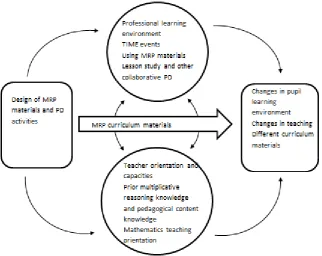
Figure 1: MRP theory of Change
The theoretical basis for the project supposed that improvements in pupils' MR capacity might lead to a more general improvement in mathematical attainment.
2. The evaluation methodology
The Centre for Education and Inclusion Research (CEIR) was appointed to externally evaluate the project using a randomised controlled trial (RCT)
methodology measuring impact on pupil outcomes and supported by a process evaluation.
2.1 Randomised Controlled Trial design and methodology
The impact of MRP on pupil outcomes was evaluated using a 3-level Clustered Randomised Control Trial (CRT) research design. The trial ran between October 2013 and June 2014 and involved 8,777 year 7 (Y7), year 8 (Y8) and year 9 (Y9) pupils (level 1) clustered into 418 Y7, Y8 and Y9 mathematics classes (level 2) clustered into 60 secondary schools.In October 2013, 30 schools were randomly selected to become the 'intervention group' and to receive the MRP and the remaining 30 schools formed a 'business as usual' control group. Randomisation was stratified by school level GCSE attainment and geographical region. Prior to randomisation, all 60 schools provided details on two core teachers of KS3 mathematics and the pupils within the Y7, Y8 and Y9 mathematics classes that these core teachers taught. Within each of the 30 intervention group schools, these two core mathematics teachers received the Multiplicative Reasoning Project PD programme.
At baseline, the intervention group had 4,367 pupils clustered into 182 Y7, Y8 and Y9 mathematics classes clustered into 30 secondary schools. The control group had 4,410 pupils clustered into 236 Y7, Y8 and Y9 mathematics classes clustered into 30 secondary schools. At this point, pupil details were extracted from the National Pupil Database (NPD) including their attainment in mathematics at Key Stage 2, gender, free School Meals (FSM) and Special Educational Needs (SEN) status. In addition to these pupil-level details, school-level details were also compiled using the 2012/13 Annual School Census. The trial concluded in June 2014 with participating pupils being assessed using the GL Progress in Mathematics 12 (Y7), 13 (Y8) or 14 (Y9) test.
The trial adhered to CONSORT best practice RCT guidelines15, was publically
registered16 prior to the collection of the PiM outcome data and adopted an 'intention
to treat' approach. 'Intention to treat' means that all participants who were present at
baseline (and prior to randomisation) are included in the final analyses: pupils remain in the study regardless of whether they actually experience any of the intervention. If an intervention is observed to have a statistically significant and positive impact under these conditions it provides the strongest evidence that this impact was a result of the intervention itself and that a similarly positive impact would be likely to occur if the programme was rolled out more widely.
The final data file included complete baseline and Progress in Mathematics (PiM) test outcome data for 6,565 pupils clustered into 349 Y7, Y8 and Y9 mathematics classes clustered into 58 secondary schools - an overall response rate of 75%.
At the design stage, a power analysis17 was undertaken and predicted that the
minimum detectable effect size (MDES) for the proposed design with an 80% statistical power was estimated at between (d=) 0.22 (for the combined Y7 to Y9 sample) and 0.26 (for the Y9 sample) standard deviations. The actual achieved MDES were higher and ranged between (d=) 0.29 (Y7 to Y9 combined) and 0.48 (Y9) standard deviations with a statistical power of 80%. The reason for this unanticipated lower sensitivity was the variance structure for the outcome PiM measures and not the 25% sample attrition. From the statistical models, the proportion of the PiM variance found to be clustered at the classroom level was greater than had been predicted (over 50% in many cases). This unanticipated class-level variance structure resulted in reducing the MDES that the trial could detect with a statistical power of 80% (d=0.22 predicted, 0.29 achieved). However, the achieved sensitivity remained within the same 'moderate' range as described by the Educational Endowment Foundation (EEF), and can roughly be converted into between 3 and 4 months progress at school18.
Variation can be observed at three hierarchical levels; school, class and individual pupil levels. Scores will differ between pupils and (average) scores will differ at both classroom and school levels. For each PiM measure, the proportion of overall variation that is found clustered at the classroom and school levels can be
calculated. The stronger the clustering effect at the class / school level, the greater the proportion of variation will be held there. In other words, the more similar pupils are within classes, pupils within schools and classes within schools, the higher the proportion of variation will be present at these higher levels. The strong clustering effect observed at the class level is likely to reflect ability group setting or streaming practices common in teaching KS3 mathematics.
17 See Technical Report section 5 and Annexe E for specific details on this power analysis.
18 Higgins, S., Katsipataki, M., Coleman, R., Henderson, P., Major, L.E., & Coe, R. (2014). The Sutton Trust-Education Endowment Foundation Teaching and Learning Toolkit . October 2014. London: Education Endowment Foundation.
A multilevel linear regression analysis approach was adopted to assess whether progress in mathematical attainment amongst pupils who were taught by one of the two core mathematics teachers in the 30 MRP intervention schools was significantly greater or less than pupils taught by one of the two core mathematics teachers in the 30 control schools.
A total of 12 PiM outcome variables were used; four relating to the overall
mathematics attainment and eight relating to three PiM subscales constructed from test items identified (by Professor Iszák) as being related specifically to multiplicative reasoning19.
The main analyses adopted an 'intention to treat' approach in which all pupils were included. A fidelity analysis was also conducted to explore whether engagement with MRP was statistically associated with higher PiM attainment. Following this fidelity analysis, the main analyses were repeated adopting an 'on treatment'
approach. Specifically, the original 'intention to treat' sample was reduced so that all control and intervention group pupils remained within the same class they were in at the start of the trial (i.e. October 2013) and were taught solely by a core mathematics teacher who was named at the start of the trial. Additionally, within the intervention group, the sample was reduced further so that all pupils were taught by a core teacher who attended at least 2 of the TIME event days and reported to use at least some of the MRP materials with their pupils.
This 'on treatment' sample equated to 5,253 pupils clustered into 269 Y7, Y8 and Y9 classes clustered into 56 secondary schools.
Opt-out consent was sought from pupils for participation in the RCT.
2.2 Process evaluation methodology and data collection
The process evaluation was conducted through data collection at national, regional and school level.National data collection activities were: telephone interviews (n=4) and on-going communication with key NCETM personnel, observation of an NDT meeting, and documentary analysis of NCETM documents and internal evaluation data.
Regional data collection activities were: telephone interviews with professional development leads (n=3); observation of TIME team events (n=4); analysis of
attendance data; and surveys of TIME team participants about school practices (125 over 3 TIME meetings).
School level data collection activities were:baseline data collection on applicationfor 66 schools (132 teachers) but 4 schools were excluded due to not meeting
necessary criteria for inclusion, meaning data on 8 teachers was not retained; visits to 9 schools and interviews with core teachers/other teachers (n=19), heads of department (n=8), senior leaders (n=5), and pupil focus group interviews containing a variety of abilities and gender (12 groups – with approximately 80 pupils in total).
Teacher level data collection included baseline data capture and exit surveys of intervention (n=21) and control school teachers' responses (n=17).
3 Impact analysis
This section provides a brief overview of the multilevel analyses of the PiM outcome variables that were used to quantitatively assess the impact of MRP in three
sections. The first section summarises the impact findings. The second summarises the analysis approach and variables used. Finally, this section explains the
statistical analyses conducted as part of the impact analyses and where to find them within the Technical Report.
For much more detail on the analyses summarised here please refer to the Technical Report (section 7) and to the Technical Annex (Annex E).
3.1 Summary of the impact analysis
For both the intention to treat and the on treatment analyses, the difference between the MRP intervention and control group pupils was found to not be statistically
significant. This leads to the overall conclusion that no statistical evidence has been found that the MRP teacher PD intervention had an impact on pupil outcomes in mathematics during the period of the trial (October 2013 to June 2014).
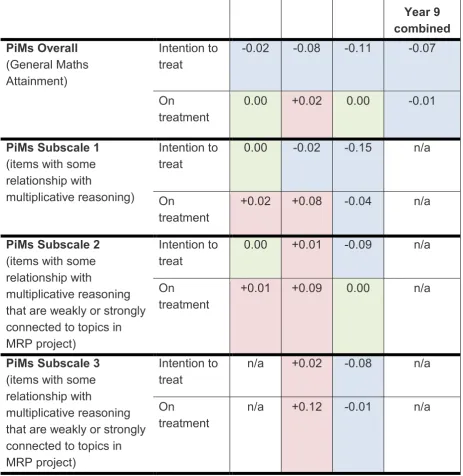
Table 1: Summarising effect sizes and directions for main analyses
MRP clustered RCT multilevel analyses summary Comparing intention to treat and on treatment findings
Effect sizes observed within the samples are shown to range from weakly positive (g=+ 0.12 in Y8 subscale 3, on treatment) through zero and on to weakly negative (g= - 0.15 in Y9 subscale 1, intention to treat) but across the whole of Table 1, none were found to be statistically significant.
Year 7 Year 8 Year 9 Year 7 to Year 9 combined PiMs Overall (General Maths Attainment) Intention to
treat -0.02 -0.08 -0.11 -0.07
On
treatment 0.00 +0.02 0.00 -0.01
PiMs Subscale 1
(items with some relationship with
multiplicative reasoning)
Intention to
treat 0.00 -0.02 -0.15 n/a
On
treatment +0.02 +0.08 -0.04 n/a
PiMs Subscale 2
(items with some relationship with
multiplicative reasoning that are weakly or strongly connected to topics in MRP project)
Intention to
treat 0.00 +0.01 -0.09 n/a
On
treatment +0.01 +0.09 0.00 n/a
PiMs Subscale 3
(items with some relationship with
multiplicative reasoning that are weakly or strongly connected to topics in MRP project)
Intention to
treat n/a +0.02 -0.08 n/a
On
The small effect sizes are all below the original predicted MDES estimates (0.22 to 0.26). Therefore, the higher than expected variance structure at the class-level has not impacted on the validity of these findings.
The maximum observed difference between the MRP intervention and control group pupils was observed to be an effect size below 0.15 which is a 'low' effect size that can be roughly converted to around two months of progress at school. These differences are simply too small to be able to validly conclude that the MRP had an impact on pupil mathematics outcomes during the short period of the trial.
3.2 Analysis Approach and Variables Used
A staged multilevel regression analysis approach20 was taken for the impact analysis
within the MRP evaluation. Three levels were included into the models; pupils (level 1) clustered into maths classes (level 2) which are clustered into secondary schools (level 3). Analyses were conducted using STATA and SPSS software and Excel was used to present these analyses.
The quantitative 'impact' of MRP focused on post-test (or outcome) measures from scores on the GL Assessment Progress in Mathematics (PIM) tests: PiM12 for Y7, PiM13 for Y8 and PiM14 for Y9 tests. The majority these tests took place in school on the 4th of June or within that week.
In addition to variables that identified each of the three hierarchical levels
(pupil<class<school), the key 'impact' explanatory variable was located at the school level - which distinguished pupils within MRP intervention schools from those within control schools.
Analyses of the baseline sample identified some imbalance between the MRP intervention and control group samples21 and so a further 5 school-level and 5
pupil-level explanatory variables were included into the model to help correct for this observed 'imbalance'.
To summarise, in addition to identifiers at the pupil, classroom and school levels, the following 11 explanatory variables were included into the multilevel models:
…at the pupil-level:
• KS2 Maths Attainment (Fine Point Score) - centred around the mean
20 See section 7.1.3 of the Technical Report for details on this 'staged' multilevel regression approach. 21 See section 7.2.2 of the Technical Report for details on this baseline imbalance.
• FSM status (1=FSM, 0=not FSM)
• gender (1=Female, 0=Male)
• SEN (1=SEN; 0=not SEN)
• age in months (only used for PiM subscale outcomes)22
…at the school-level:
• group (1=Intervention; 0=control)
• school GCSE attainment (taken from the 2011/12 school census; 1=above average, 0=below average)
• school admissions policy (selective = 1, not selective=0)
• school IDACI score (based on school postcode)
• school percentage of FSM (taken from the 2011/12 school census)
• school OFSTED rating (1= grade 1 or 2, 0=grade 3 or 4).
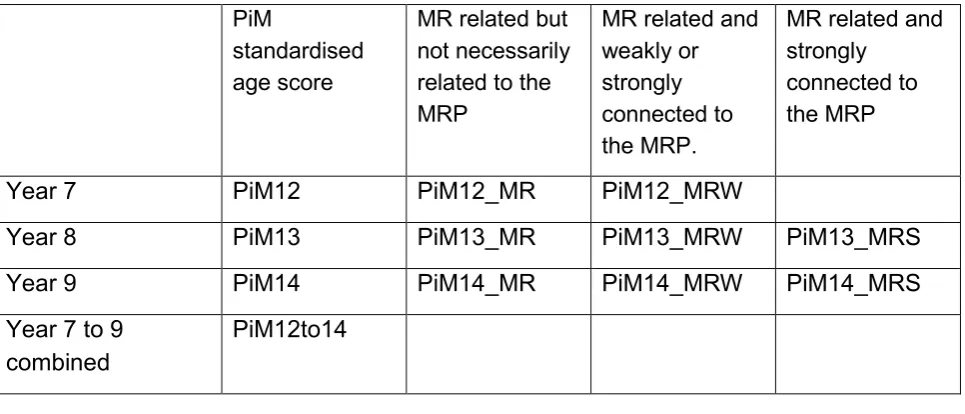
[image:31.595.69.552.477.684.2]The main post-test measure used was the standardised age score (SAS) calculated from the results of the PiM test. This measure is based on the underlying raw score so that it takes into account the age of pupils and allows the score to be compared to the national average. In addition to overall attainment in mathematics captured by the PiM SAS, three PiM subscales were used that focused on items within the PiM test that were identified as being related to multiplicative reasoning. Overall and across the three year groups, a total of 12 outcome variables were used as shown below in Table 2 below.
Table 2: Summarises the GL PiM outcome variables by year group
PiM
standardised age score
MR related but not necessarily related to the MRP
MR related and weakly or strongly connected to the MRP.
MR related and strongly
connected to the MRP
Year 7 PiM12 PiM12_MR PiM12_MRW
Year 8 PiM13 PiM13_MR PiM13_MRW PiM13_MRS
Year 9 PiM14 PiM14_MR PiM14_MRW PiM14_MRS
Year 7 to 9
combined PiM12to14
22 The overall PiM attainment measure was a 'standardised age score' that used age in months of pupils to help determine the eventual attainment whilst the three MRP focused subscales were based on raw attainment without age standardisation. Therefore, for the three MRP subscales, pupil age in months was included into the group of pupil-level explanatory variables.
Essentially, for the main impact analyses there are three key outcomes (PiM12, PiM13 and PiM14) with one additional combined outcome (PiM12 to14). In addition to this, subscales of the PiM test scores were created from specific PiM test items that were identified as being related to multiplicative reasoning. The derivation of these subscales drew on the work of Andrew Izsák in consultation with NCETM23.
No items on the PiM12 (Y7) paper were identified as being related to multiplicative reasoning that were also strongly connected to topics covered by MRP and so a PiM12_MRS outcome measure was not possible.
From the multilevel models, the coefficient of the 'group' variable was used to capture the statistical impact of the MRP programme on the 12 PiM outcome
measures. These coefficients were converted into effect size statistics (hedges g - as shown in Table 1 above) with 95% confidence intervals24.
3.3 Analyses Conducted
The impact analyses outlined in section 3.2 above were conducted using the 12 PiM post-test measures twice: first, adopting the CONSORT advised 'intention to treat' approach and second, adopting an 'on-treatment' approach25.
Prior to the multilevel impact analyses, descriptive analyses were undertaken at baseline and outcome26.
The decision to conduct an on-treatment analysis was taken following an analysis that explored trial fidelity. This fidelity analysis examined evidence of a relationship between engagement with MRP and attainment on the PiM post-test measures. Higher levels of engagement were found to be associated with higher attainment27.
Additionally, both intervention and control group samples were limited so that they contained pupils who remained within the same class and taught by the core KS3 maths teacher who was named prior to randomisation.
Whilst the 'intention to treat' approach results in a higher standard of evidence it is less likely to find a statistically significant impact. This is because this approach must include all pupils / teachers in the analyses regardless of whether they experience or
23 See Technical Report section 5.5.3 for more detail on this and Technical Report Annex D for the report by Professor Andrew Izsák on the PiM test items.
24 See Technical Report section 7.3, 7.4, 7.6 & 7.7 and Annex E for details on Hedges g effect sizes and how they were calculated.
25 These are outlined in section 2.1 above and in more detail in sections 7.1, 7.3 and 7.4 of the Technical Report and Annex E.
engaged with MRP. If an intervention is found to have a statistically significant impact under these conditions, it provides the best evidence that this is likely to happen if the intervention was rolled out more widely - because in reality pupils do move and engagement will be variable. The 'on treatment' approach does
compromise on the standard of evidence but in doing so results in a higher chance of identifying a statistically significant impact. The compromise does bring some practical advantages as the 'on treatment' analyses are not distorted by things such as pupil movement or teachers who did not use the MRP materials.
4 Process evaluation findings
4.1 The project narrative: national and regional
Schools were recruited by the NCETM, with 110 expressing an initial interest and 62 recruited to the trial. Following randomisation 30 schools worked in the three 'TIME Teams'. A core development team and a national development team worked
together to produce project materials.
Regional events involved discussion of issues in teaching multiplicative reasoning and research evidence, planning for teaching of MR using project materials and subsequent review and reflection and evaluation activities. TIME teams were led by PD leads who were, in most cases, currently teaching in schools. PD leads were supported by university researchers as well as the curriculum developers. The approach to professional development was flexible and responded to participant feedback. Activities included consideration of issues in relation to multiplicative reasoning, consideration and reflection on teaching materials, professional development on Lesson Study and time for joint planning.
Participants identified enabling features related to organisational aspects and
specific features of professional development. Organisational aspects were identified as: good communication from the NCETM; funds to pay for supply cover; and
involving two core teachers for mutual support and collaboration. Aspects of the professional development events/activities which enabled engagement and support realising objectives were identified as: the developers introducing material they had written; time for teachers to plan together; and using the same materials with
different groups, enabling the teachers to understand the materials and background ideas.
Constraining features at the national level identified in case studies or through other data collection activities were identified as: issues with the organisation of the project related to it being a pilot; a lack of overview at the start of the project about the
materials as a whole; not enough time in TIME meetings to look through materials and time only given at the end of the day; and the geographic spread of schools, noted by some participants as an inhibitor to networking.
4.1.1 School and departmental leaders - support and views
on the project
4.1.2 Support of school and department leaders
[image:35.595.69.526.212.648.2]At the March/April TIME session, teachers were asked to indicate how far they agreed with a set of statements about the MRP in their school.
Figure 2: Departmental relationship with the MRP
Respondents were generally positive about support for their involvement in the project and in terms of its integration into the school with nearly all (96%)
to how they had taught before (93%) whilst 79% stated that they were not familiar with the models and diagrams used in the MRP for teaching before the project. Fewer respondents (42%) agreed that senior leaders in the school were interested in what they were doing in the MRP whilst just over a third (35%) agreed that all of their department was involved in the MRP activities, with a similar proportion (31%)
indicating that it had influenced the teaching of others in their department.
4.1.3 School leaders/Head of Department views
Motivations for school's getting involved
Headteachers (HTs) and Heads of Department (HoDs) were generally receptive towards being involved in the project, typically acquiescing to a request from an enthused and proactive core teacher (CT) that had identified the project themselves. Schools primary motivation for involvement was to utilise an opportunity for some of their staff to receive high quality PD. One HT stated they were reassured about being involved because of the reputation of NCETM:
'It's [the MRP] something that has been thought through by a professional body. A respected body'. (A13, HT).
How readily school leaders and HoDs were to participate in the project was largely dependent on the extent to which the MRP complimented existing ways of working and/or aligned to the school's vision for the future. In the case of A46, the MRP linked to their ethos and overarching approach to maths in an especially meaningful manner. The following quotations evidence the amount of support CTs received from senior leaders to teach pupils lessons in a very deep and conceptually informed way - without undue pressures to account for short term progress.
Do stuff slowly, deeply, and actually understand it. Part of our philosophy for the last few years is just don’t think you’ve got to belt through the scheme of work. It’s much better to go more slowly, and this is what they’re doing in maths now, they will not move on unless children are getting an
understanding where they are. (A46, HT)
I just think in terms of how it’s changed my thinking, in that I’m convinced that we need to do more work on conception. That won’t necessarily reflect in levels initially, and I don’t know how we address that. I’m not concerned about it because if we explain that to HT he’ll be fine, but I can’t imagine that would be the same in every other school. (A46, HoD)
Practical arrangements
Senior leaders (SLs) were largely satisfied with the financial provision of the project to compensate for staff cover costs. However, some schools remained mindful of key teaching staff having significant chunks of time out of school. Ultimately this meant making a judgement about whether to fully commit to the project or not.
Although SLs were generally supportive and committed, there were isolated instances when sustained involvement was problematic. For example, 2 CTs explicitly mentioned difficulties in terms of convincing departmental heads to grant cover - in one instance permission to attend a TIME team event was withheld due to cover complications. One HoD (B36) lamented the amount of time required for TIME event attendance, particularly when the amount of travelling was taken into
consideration. Analysis of registration sheets confirm that attendance at the CTs at TIME events was variable and tended to tail off slightly over time.
Positive features of the MRP
SLs and HoDs were collectively able to isolate a range of valued features from the MRP that had had a demonstrable impact within the school. They were largely impressed by the quality of the lesson plans and materials themselves. A recurring theme was how the project had facilitated a far more reflective and questioning approach from the pupils towards mathematics, and prompted a desire amongst them to genuinely understand the concepts that led them to certain answers.
[Big focus on approaches to] engender understanding, rather than just mechanically solving problems. (A13, CT1/HoD)
When you do observations on maths and you investigate what is taking place in the classroom, the impact it is having on children just in terms of their ability to question themselves, reflect, converse with each other, develop their speaking and listening, develop their literacy… (B1, SL)
Increased dialogue and debate was also said to have been extended amongst the staff as well as the pupils. For example, the following HT outlines how the MRP had prompted greater discussion and understanding about what pupils did and did not understand amongst the staff.
What the project has actually done is spurred debate and dialogue and action with maths teachers. HoD used this as part of her department meetings – she’s used it with colleagues. There is in maths now a much deeper dialogue about what it is children do and don’t understand. (A46, HT)
learning. This was recognised as being quite a fundamental shift to what they would ordinarily be focusing on during lesson observations.
Probably the biggest difference has been through the lesson study, actually looking at lessons differently. As Head of Maths if I went into a lesson it’s are they teaching the curriculum? How are they teaching it? How effective is it? How is the teacher delivering it? But to go in and start looking at it in terms of how are the children learning and how effective is it, that’s a totally new slant on it, and it’s something that I’m trying to get the management team to
incorporate into their own lesson observations. (A13, CT2/HoD)
A further benefit identified by one HoD was that they felt that involvement in the project had provided a 'push' for them to improve teaching more widely, getting the department to work together to discuss student learning.
I think what this has kick-started almost is that debate on what makes a good lesson and trying to reflect on what the pupils have learnt, where – if
anywhere – there’s been that first misconception...it’s genuinely kick-started our ambition to share good practice and do it, not just talk about it. (B2, HoD)
Difficulties and areas that need refinement
Although predominately positive, HoDs and SLs also identified aspects of the project that they had reservations about or that they felt needed refinement. The case
studies picked up some concerns about the 'very wordy' (B1, CT1/HoD) nature of some of the materials. Certain senior staff made reference in a quite generic way about lessons being too long and that there was too much content to realistically cover. However, the HoD at school C37 conveyed some more specific concerns. For example they disliked the implications for a pupil that was absent for the introduction of a lesson that spanned a number of consecutive sessions.
I think our department in general is quite open to new ideas. […] We don’t like things to take more than one lesson. We don’t like tasks to be – not open-ended, because we like that – but we don’t like it to be that if somebody misses the start they are then behind for the next lesson. So they’ll [the MRP materials] probably need a lot of adjusting for us to include them in our scheme of work. (C37, HoD)
Fundamentally the school seemed to find the very flexible nature of the MRP
We try to appeal to all the different kinds of learning. I think from a free reign, this is your task, you’re going to do it for an hour, that’s something
completely different. We don’t normally let them go for that long on the same thing. I think to start with they did struggle with that amount of concentration, so to try and keep up the same thing for an hour. (C37, HoD).
A related anxiety to emerge was the perception that the very open nature of lessons could make certain groups of pupil i.e. the 'passive and compliant ones' vulnerable to not focusing sufficiently to permit them to achieve the intended learning objectives.
Occasionally it’s led to lessons where there are some really engaged students, but some of them can hide. It means that the passive compliant ones can sit quietly at the back doing nothing…I think there’s some work to be done there in terms of maximising it for every single student and not holding some back or pushing others forwards who don’t quite understand. (B36, HoD)
Finally, the HT from A13 highlighted the delicate balance needed to reconcile
between recognising the good features of the project and 'enthusiasm' of the CTs to the project; with their duty as HT to make a sound judgement on how much to incorporate the materials into next year's schemes of work. There was a strong sense that the HT wanted more extensive dialogue with the HoD before
incorporating large amounts of the MR materials into next year's schemes of work. One issue conveyed related to the fact the materials themselves needed some adaptation before they would be comfortable to roll them out further.
Needed refinement. The materials on the projector I felt weren't totally up to scratch that's a simple thing to resolve but at the time it was important for the kids - they weren't big enough for the kids to see and it was too woolly…the practicalities prevented I felt quality learning! Which sounds trivial but it's actually an important point. (A13, HT).
However of greater consequence, was the HT's desire to introduce MR material gradually to avoid overwhelming or putting off wider departmental staff not involved in the MRP. Their view was that while an important area, MR was one aspect of a 'very broad' subject meaning care was needed to ensure it did not come to dominate.
4.2 School case studies
Nine schools were visited as part of the evaluation and case studies developed. Case studies show variation in the level of engagement and support given by school and departmental leaders for the project. This had implications firstly for the
outcomes for individual teachers and secondly for the extent to which the project impacted on other teachers in the department.
Most participants reported support at a departmental level for the project. However the extent of this varied. Case study analysis indicates two broad patterns of
relationship between, firstly departmental support and existing practice and secondly teacher engagement. In six of schools there was broad alignment with departments and active integration. This provided an enabling environment. In three other schools there were issues that affected project implementation, influencing the potential for project aims to be met. This created a constraining environment. It should be noted that the case studies were not a representative sample and those with greater engagement in the project were over represented. These two sets of schools are now discussed; detailed case studies are provided in the separate Technical Report.
Enabling environments
In total there were six case study schools in which there was a close degree of alignment between departmental practices and/or intended approaches with the project aims and the teaching approach developed in the MRP.
In four case study schools - A13, A46, B1, and C828 - involvement in the project was
initiated by a HoD and was viewed as part of a strategy for professional development and improving teaching and learning. In two of these schools the Head of
Department was an active participant in the project as a core teacher. Reasons for involvement in these schools were strategic.
One case study school was one of the Maths Hubs and provided PD leadership. In another, mathematics practice was well developed and it was appointed as a Maths Hub during the lifetime of the project:
As a department we look for conceptual understanding through group work, through student talk and through developing ideas (A46, HoD)
In other schools MRP fitted with the direction in which departments were already moving:
28 The schools are referred to here by codes, A13, A43, A46, B1, B2, B36, C 8, C37 and C39. The letter of the code refers to the region.
We have been aware of the need to develop teaching approaches that engender understanding, rather than just mechanically solving problems. Anything that could help that, and the idea that if multiplicative reasoning unlocks attainment, then we wanted to be involved (A13, CT1/HoD)
In other cases one of the core teachers approached the head of department either after seeing an advert for the project or a direct approach from the local Maths Hubs hosts or PD lead.
In these schools, the professional development approach of MRP was aligned with existing practice - with some previous experience of Lesson Study or other
collaborative approaches. In a number of these schools there was a history of previous participation in research and development or similar projects within departments. There was also support from school leaders.
However, it should be noted that in these more favourable conditions the active involvement of the departments in the project was still limited during the lifetime of the project. There had been some sharing of materials and in one school all members of the department used a specific set of curriculum materials.
In summary, enabling features at school level included: positive school leadership and culture with support from school leaders; previous culture of research and innovation or similar projects; and a HoD involved as a core teacher.
Constraining environments
In three of the case study schools different forms of constraining environments were experienced that militated against the achievement of the project aims and
objectives.
School A43 joined the project after a PD leader approached one of the CTs in the project. At this school three teachers participated in the various TIME events. The original plan was for CT1 and CT2