©FUNPEC-RP www.funpecrp.com.br Genetics and Molecular Research 18 (4): gmr18292
other symptoms among HIV and AIDS patients
T.C. Nangammbi1, G.T. Moloro1, 2 and A. Samie2
1
Tshwane University of Technology, Department of Nature Conservation, South Africa
2
University of Venda, Department of Microbiology, South Africa
Corresponding author: T.C. Nangammbi E-mail: [email protected]
Genet. Mol. Res. 18 (4): gmr18292 Received February 28, 2019 Accepted October 07, 2019 Published November 30, 2019
DOI http://dx.doi.org/10.4238/gmr18292
ABSTRACT. Genetic polymorphism of cytokine genes has been shown to be associated with susceptibility to diseases. We investigated the frequency of the IL-7 receptor-α +510 CT SNP in
relation to pain and other symptoms among HIV and AIDS patients attended at various South African hospitals for treatment. Demographic as well as clinical data was obtained through structured interviews and patient files were consulted. A total of 107 mouth wash samples were obtained from volunteers, and DNA was extracted from these samples using the Qiagen protocol. Genotyping of the IL-7 receptor +510 CT SNP was conducted using sequence specific PCR. The CC and TC genotypes were the most common, while the TT genotype was rare (47.7, 45.8 and 6.5% respectively). The CC genotype was more common among patients who had body pain at the time they went for testing (χ2 = 4.75; P = 0.029) while the TC genotype was more common among those that did not have pain
(χ2 = 6.86; P = 0.009). The TC genotype was also more common
among patients who did not have genital sores (χ2 = 4.663; P =
©FUNPEC-RP www.funpecrp.com.br Genetics and Molecular Research 18 (4): gmr18292
genotype is protective of pain and genital sores. Further studies will be needed to confirm these hypotheses in larger populations.
Key words: Opportunistic infections; HIV; Interleukin-7 receptor; Genetic Polymorphism; Single Nucleotide Polymorphism; Limpopo province
INTRODUCTION
Interleukin-7 (IL-7) is a 25 kilo Dalton glycoprotein encoded by the IL-7 gene, which is involved in the regulation of lymphopoiesis. It is the most recently cloned bone marrow derived cytokine regulating T-cell homeostasis through a CD4 driven feedback loop (Gougeon and Chiodi, 2010). Thymic generation of T-lymphocytes with a wide variety of antigen receptor specificities is dependent upon IL-7 levels. While IL-7 functions to maintain proliferation and maturation of T-lymphocytes, IL-2 restores immune function during HIV-1 infection. Biological effects of IL-7 are mediated via the hematopoietic IL-7 receptor (IL-7R) complex (Noguchi et al., 1994).
The interleukin-7 receptor is a heterodimer protein expressed on the surface of cells, such as naïve and memory T-cells (Muegge et al., 1993). It consists of two different smaller protein chains, namely IL-7-specific-α chain (CD127), which binds IL-7 and thymic stromal lymphopoietin; and a common y-chain (CD132), commonly shared by many cytokines and is found to be a cofactor for V(D)J rearrangement of the T cell receptor beta (TCRß) during early T cell development (Muegge et al., 1993). Deficiency of a functional IL-7 receptor gene leads to a variety of health complications, including infections from opportunistic pathogens (Samie et al., 2014). Interleukin-7 receptor plays a critical role in the development of immune cells.
Several health complications are associated with Interleukin-7 receptor deficiency, they include T-cell acute lymphoblastic leukemia, T-cell lymphopenia, multiple sclerosis, rheumatoid arthritis, juvenile idiopathic arthritis, and severe combined immunodeficiency (O'Doherty et al., 2009). Reduced levels of lymphocytes (CD4+ cells and CD8+ cells) in HIV individuals can be associated with IL-7 receptor genetic polymorphism since the receptors are expressed by stromal cells (Vranjkovic et al., 2007). This could have an impact on the susceptibility of certain individuals to opportunistic infections. Therefore, polymorphism of the receptor can be associated with infection by different opportunistic infections (Migueles and Connors, 2010). Most HIV individuals are prone to multiple infections mostly due to impaired immune response (Smith et al., 2005). Manifestation of opportunistic infections in some HIV individuals of related genotypes can lead to early death, due to their higher susceptibility to common opportunistic infections (Migueles and Connors, 2010).
HIV is a lentivirus (a member of the Retrovirus family) that causes AIDS, a condition in humans in which gradual failure of the immune system allows life-threatening opportunistic infections and cancers to thrive (Weiss, 1993). With gene identification progressing rapidly, determination of the functional effects of haplotypes influencing disease susceptibility is the next major step in studies of diseases with complex genetics. Sequencing IL-7Rα has revealed the existence of four SNPs, namely; +510 CT, +1237 AG,
Genetics and Molecular Research 18 (4): gmr18292 ©FUNPEC-RP www.funpecrp.com.br
IL-7r gene +510 SNPis associated with pain among HIV/AIDS patients 3
play an important role in susceptibility to opportunistic infections (Kiryluk et al., 2007). The clinical implications of these factors are only beginning to be understood, though significant advances have led to an understanding of the interactions between genetics and host factors (Tang and Kaslow, 2003).
Occurrence of specific infections and their distribution in African populations is not clearly understood. It has been suggested that the genotype of individuals could play an important role in their susceptibility to different diseases, including infectious and non-infectious diseases (King and Aberg, 2008). Though much investigation has been done, very little data exist on the genetic polymorphism of the host genotypes and the occurrence of pain, particularly among HIV and AIDS patients in the African continent. Furthermore, the scientific literature on this topic is almost nonexistent in developing countries and very limited studies have been conducted in South Africa (Samie et al., 2014). Considering the importance of IL-7 in the human immune system, it has become interestingly important to observe genetic distribution in the local population in order to improve our understanding of the occurrence and potential prognosis of opportunistic infections among these patients. Here, we studied polymorphism of the IL-7R alpha gene at the +510 locus and its relation to pain and opportunistic infections among HIV and AIDS patients in the Limpopo Province, South Africa.
MATERIAL AND METHODS
Ethical considerations
Ethical approval was obtained from the University of Venda Research, health and ethical committee. Authorization to collect samples from the hospitals was obtained from the Department of Health, Limpopo, in Polokwane. Ethical clearance was also obtained from the ethical committees of the different hospitals where the study was conducted, which included Tshilidzini, Elim and Donald Frazer. Patients were informed about the study and those who agreed to take part were given a consent form to read and sign. All interviews were confidential and the aims of the study thoroughly explained to the patients.
Sample collection and processing
Mouth wash samples were collected from consenting participants (Cheng et al., 2005) and DNA was purified using the QIAamp blood mini kit from QIAGEN® following the instructions from the manufacturer. The eluates containing the DNA were stored in the freezer until further analysis. Data on the demographics of the patients as well as current and previous exposure to opportunistic infections was collected from the participants through the use of a structured questionnaire.
Sequence specific polymerase chain reaction (ssp-pcr)
©FUNPEC-RP www.funpecrp.com.br Genetics and Molecular Research 18 (4): gmr18292
which was the common primer, and IL7REx2R1g 5’-ATTTCAAATTCCAGATTGGTGG-3’; IL7REx2R2a 5’-TATTTCAAATTCCAGATTGGTGA-3’ as specific primers. The PCR products were analyzed using 2.5% agarose in TAE buffer stained with ethidium bromide and viewed under a UV-transilluminator.
Data analysis
Statistical Package for Social Science (SPSS, Inc., 2009, Chicago, IL, www.spss.com) version 24.01 was used to analyze the results, and differences were considered significant if the P-value was less than 0.05. The chi square test was used to determine potential differences in the distribution of the genotypes. Graphical representations and tables were prepared from the data.
RESULTS
Demographic information for the sample population
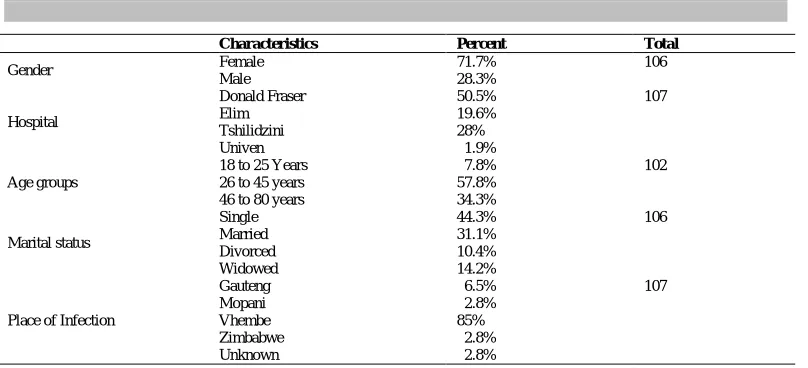
A total of 107 participants were recruited in the study (Table 1). Most of the patients were recruited from Donald Fraser Hospital. Most of the participants were females. The age of the participants varied from 18 to 80 years and most of the patients were aged between 26 and 45 years. Most of the study participants were single, while 10.4% were divorced. Most of the participants indicated that they got infected around Vhembe district. Other participants got infected from other areas such as Gauteng and Zimbabwe. These results are summarized in Table 1.
Table 1. Demographic characteristics of the study participants.
Characteristics Percent Total
Gender Female 71.7% 106
Male 28.3%
Hospital
Donald Fraser 50.5% 107
Elim 19.6%
Tshilidzini 28%
Univen 01.9%
Age groups
18 to 25 Years 07.8% 102
26 to 45 years 57.8%
46 to 80 years 34.3%
Marital status
Single 44.3% 106
Married 31.1%
Divorced 10.4%
Widowed 14.2%
Place of Infection
Gauteng 06.5% 107
Mopani 02.8%
Vhembe 85%
Zimbabwe 02.8%
Unknown 02.8%
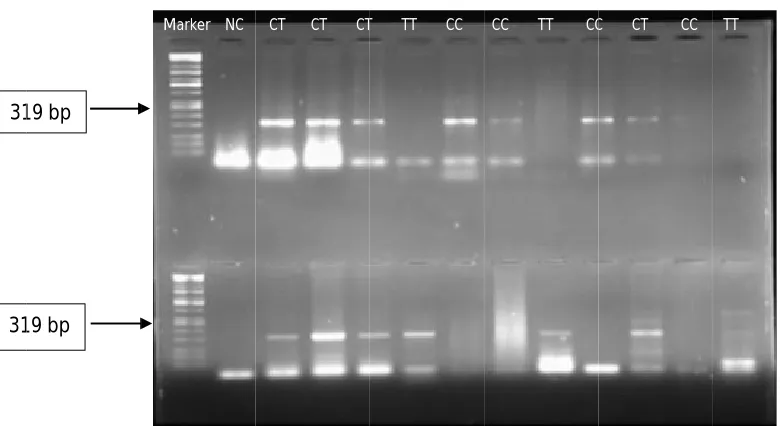
PCR amplification for the detection and identification of the +510 genotypes
Ge
Figure 1.
product of the +510 CT genotypes: NC = negative control.
General distribution
polymorphism in association with the patients’ infections
the TC and CC genotypes were the most common of the +510 C genotype was rare.
Figure 2.
HIV positive population.
319 bp
319 bp
Genetics and Molecular Research 18
IL
Figure 1. A representative
product of the +510 CT genotypes: NC = negative control.
General distribution
Analysis of the data showed significant differences in the polymorphism in association with the patients’ infections
the TC and CC genotypes were the most common of the +510 C genotype was rare.
Figure 2. Overall distribution of the different genotypes of the IL HIV positive population.
P
er
cen
t
319 bp 319 bpnetics and Molecular Research 18
IL-7r gene +510 SNPis associated with pain among HIV/AIDS patients
A representative sample of the UV
product of the +510 CT genotypes: NC = negative control.
General distribution of +510 CT genotypes
Analysis of the data showed significant differences in the polymorphism in association with the patients’ infections
the TC and CC genotypes were the most common of the +510 C genotype was rare.
Overall distribution of the different genotypes of the IL HIV positive population.
0
20
40
60
Marker NC CT CT
netics and Molecular Research 18 (4): gmr18292
7r gene +510 SNPis associated with pain among HIV/AIDS patients
of the UV-transilluminator product of the +510 CT genotypes: NC = negative control.
of +510 CT genotypes
Analysis of the data showed significant differences in the polymorphism in association with the patients’ infections
the TC and CC genotypes were the most common of the +510 C
Overall distribution of the different genotypes of the IL
47.7
CC
IL-7 receptor gene +510 genotypes
NC CT CT CT TT
7r gene +510 SNPis associated with pain among HIV/AIDS patients
transilluminator photos product of the +510 CT genotypes: NC = negative control.
of +510 CT genotypes
Analysis of the data showed significant differences in the polymorphism in association with the patients’ infections
the TC and CC genotypes were the most common of the +510 C
Overall distribution of the different genotypes of the IL-7 +510 CT polymorphism in the South African
45.8
TC
7 receptor gene +510 genotypes
T TT CC CC TT CC CT
©FUNPEC
7r gene +510 SNPis associated with pain among HIV/AIDS patients
photos taken after
Gel-Analysis of the data showed significant differences in the frequency
polymorphism in association with the patients’ infections (Figure 2). Analysis showed that the TC and CC genotypes were the most common of the +510 CT SNP
7 +510 CT polymorphism in the South African
45.8
TC
7 receptor gene +510 genotypes
CC CC TT CC CT
©FUNPEC-RP www.funpecrp.com.br
7r gene +510 SNPis associated with pain among HIV/AIDS patients
-electrophoresis of the PCR
frequency of the +510 CT . Analysis showed that T SNPs, while
7 +510 CT polymorphism in the South African
6.5
TT
7 receptor gene +510 genotypes
CC CC TT CC CT CC
www.funpecrp.com.br
5
0
electrophoresis of the PCR
of the +510 CT . Analysis showed that e the TT
7 +510 CT polymorphism in the South African
©FUNPEC-RP www.funpecrp.com.br Genetics and Molecular Research 18 (4): gmr18292
IL-7R gene polymorphism in relation to immunological characteristics of the
participants
The immunological and virological characteristics of the study participants were obtained from their files. In a total of 98 participants with records, 20 had a CD4 count lower than 50 cells/µL while 78 individuals had a CD4 count of above 50. Overall, more individuals with TT genotype had CD4 count lower than 50 cells/µL although the difference was not significant. Also, more participants with TT genotype had a CD4 count of between 50 and 200, which is an indication that the TT genotype could be more susceptible to infection because of lower CD4 counts. Among the 70 participants with CD4 count less than 300 cells/µL, 10% expressed the TT genotype of the +510 SNP; while 0% of the participants with CD4 count more than 300 cells/µL carried the TT genotype. However, there were differences in the distribution of these genotypes (Table 2). There was no significant difference in the distribution of the genotype according to the viral load of the participants, though those with TC genotypes tended to have higher viral loads.
Table 2. Genetic polymorphism of the IL-7 receptor at +510 position in relation to immunological and virological characteristics of the study participants.
Genotypes 510 CD4 count above 50 cells/µL
CD4 count less than 50 cells/µl
Total Statistics
(Chi square and p value)
Odds Ratio; 95% Confidence Interval
CC 38 (48.7%) 07 (35%) 45 (45.9%) χ2
=1.206 ;P=0.272 0.567; 0.204 – 1.573
TC 36 (46.2%) 10 (50%) 46 (46.9%) χ2
=0.095 ; P =0.758 1.167; 0.437 – 3.118
TT 04 (5.1%) 03 (15%) 07 (7.1%) χ2
=2.339 ; P =0.126 3.265; 0.668 – 15.96
78 20 98
CD4 count less than 50 or higher than 200 cells/µL
CD4 count between 50 and 200 cells/µL
CC 25 (41%) 020 (54.1%) 45 (45.9%) χ2
=1.584 ; P =0.208 1.694; 0.743 – 3.861
TC 30 (49.2%) 016 (43.2%) 46 (46.9%) χ2
=0.326 ; P =0.568 0.787; 0.346 – 1.790
TT 06 (9.8%) 001 (2.7%) 07 (7.1%) χ2=1.767 ; P =0.184 0.255; 0.029 – 2.204
61 037 98
CD4 Less than 300 cells/µL CD4 More than 300 cells/µL
CC 32 (45.7%) 013 (46.4%) 45 (45.9%) χ2=0.004 ; P =0.949 1.029; 0.427 – 2.479
TC 31 (44.3%) 015 (53.6%) 46 (46.9%) χ2
=0.692 ; P =0.405 1.452; 0.602 – 3.499
TT 07 (10%) 000 07 (7.1%) χ2
=3.015 ; P =0.082 0.692; 0.604 – 0.794
70 028 98
Viral load undetectable Viral load detectable (Above 25 viral copies/µL)
CC 07 (50%) 004 (40%) 11 (45.8%) χ2=0.235 ;p=0.628 0.667; 0.129 – 3.446
TC 06 (42.9%) 006 (60%) 12 (50%) χ2
=0.686 ;p=0.408 2.000; 0.384 – 10.41
TT 01 (7.1%) 000 01 (4.2%) χ2
=0.745 ;p=0.388 0.565; 0.395 – 0.809
14 010 24
IL-7R gene and occurrence of opportunistic infections
Genetics and Molecular Research 18 (4): gmr18292 ©FUNPEC-RP www.funpecrp.com.br
IL-7r gene +510 SNPis associated with pain among HIV/AIDS patients 7
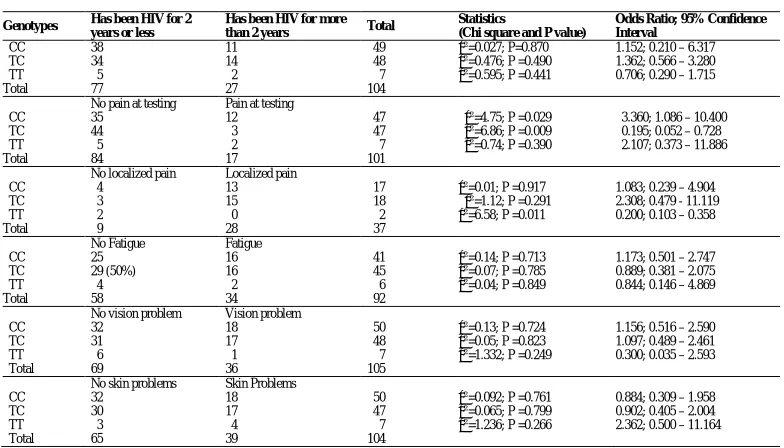
differences were significant (P < 0.05). Though the TT genotype appeared to be protective of localized pain, the difference was not significant. Other infections showed no significant differences among the genotypes (Table 3).
Table 3. Distribution of different genotypes of the +510 locus on the IL-7 receptor gene in relation to the general health conditions among HIV and AIDS patients.
Genotypes Has been HIV for 2 years or less
Has been HIV for more than 2 years Total
Statistics
(Chi square and P value)
Odds Ratio; 95% Confidence Interval
CC 38 11 049 χ2
=0.027; P=0.870 1.152; 0.210 – 6.317
TC 34 14 048 χ2=0.476; P =0.490 1.362; 0.566 – 3.280
TT 05 02 007 χ2
=0.595; P =0.441 0.706; 0.290 – 1.715
Total 77 27 104
No pain at testing Pain at testing
CC 35 12 047 χ2
=4.75; P =0.029 3.360; 1.086 – 10.400
TC 44 03 047 χ2
=6.86; P =0.009 0.195; 0.052 – 0.728
TT 05 02 007 χ2=0.74; P =0.390 2.107; 0.373 – 11.886
Total 84 17 101
No localized pain Localized pain
CC 04 13 017 χ2
=0.01; P =0.917 1.083; 0.239 – 4.904
TC 03 15 018 χ2=1.12; P =0.291 2.308; 0.479 - 11.119
TT 02 00 002 χ2
=6.58; P =0.011 0.200; 0.103 – 0.358
Total 09 28 037
No Fatigue Fatigue
CC 25 16 041 χ2=0.14; P =0.713 1.173; 0.501 – 2.747
TC 29 (50%) 16 045 χ2
=0.07; P =0.785 0.889; 0.381 – 2.075
TT 04 02 006 χ2
=0.04; P =0.849 0.844; 0.146 – 4.869
Total 58 34 092
No vision problem Vision problem
CC 32 18 050 χ2
=0.13; P =0.724 1.156; 0.516 – 2.590
TC 31 17 048 χ2=0.05; P =0.823 1.097; 0.489 – 2.461
TT 06 01 007 χ2
=1.332; P =0.249 0.300; 0.035 – 2.593
Total 69 36 105
No skin problems Skin Problems
CC 32 18 050 χ2
=0.092; P =0.761 0.884; 0.309 – 1.958
TC 30 17 047 χ2
=0.065; P =0.799 0.902; 0.405 – 2.004
TT 03 04 007 χ2
=1.236; P =0.266 2.362; 0.500 – 11.164
Total 65 39 104
Effects of the different genotypes of the +510 locus on the IL-7 Receptor gene
in relation to opportunistic infections among HIV and AIDS patients.
©FUNPEC-RP www.funpecrp.com.br Genetics and Molecular Research 18 (4): gmr18292
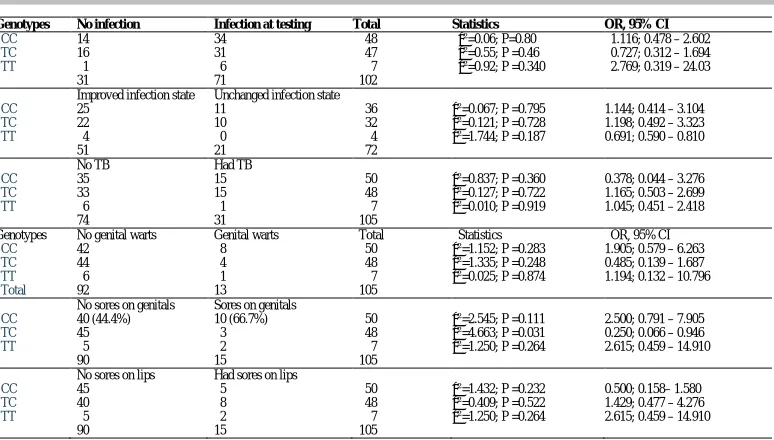
Table 4. Distribution of the different genotypes of the +510 locus on the IL-7 receptor gene in relation to opportunistic infections among HIV and AIDS patients.
Genotypes No infection Infection at testing Total Statistics OR, 95% CI
CC 14 34 048 χ2=0.06; P=0.80 1.116; 0.478 – 2.602
TC 16 31 047 χ2
=0.55; P =0.46 0.727; 0.312 – 1.694
TT 01 06 007 χ2
=0.92; P =0.340 2.769; 0.319 – 24.03
31 71 102
Improved infection state Unchanged infection state
CC 25 11 036 χ2
=0.067; P =0.795 1.144; 0.414 – 3.104
TC 22 10 032 χ2
=0.121; P =0.728 1.198; 0.492 – 3.323
TT 04 00 0v4 χ2=1.744; P =0.187 0.691; 0.590 – 0.810
51 21 072
No TB Had TB
CC 35 15 050 χ2
=0.837; P =0.360 0.378; 0.044 – 3.276
TC 33 15 048 χ2
=0.127; P =0.722 1.165; 0.503 – 2.699
TT 06 01 007 χ2
=0.010; P =0.919 1.045; 0.451 – 2.418
74 31 105
Genotypes No genital warts Genital warts Total Statistics OR, 95% CI
CC 42 08 050 χ2
=1.152; P =0.283 1.905; 0.579 – 6.263
TC 44 04 048 χ2
=1.335; P =0.248 0.485; 0.139 – 1.687
TT 06 01 007 χ2=0.025; P =0.874 1.194; 0.132 – 10.796
Total 92 13 105
No sores on genitals Sores on genitals
CC 40 (44.4%) 10 (66.7%) 050 χ2=2.545; P =0.111 2.500; 0.791 – 7.905
TC 45 03 048 χ2
=4.663; P =0.031 0.250; 0.066 – 0.946
TT 05 02 007 χ2
=1.250; P =0.264 2.615; 0.459 – 14.910
90 15 105
No sores on lips Had sores on lips
CC 45 05 050 χ2
=1.432; P =0.232 0.500; 0.158– 1.580
TC 40 08 048 χ2
=0.409; P =0.522 1.429; 0.477 – 4.276
TT 05 02 007 χ2=1.250; P =0.264 2.615; 0.459 – 14.910
90 15 105
DISCUSSION
HIV-1 infection is characterized by a progressive immunodeficiency, which is reflected by a steady decline of CD4+ T cells. Disease progression varies considerably from patient to patient. Although more than 99% of human DNA sequences are the same, variations in DNA sequence can have a major impact on how humans respond to disease as well as environmental factors such as bacteria, viruses, toxins, chemicals; drugs and other therapies. This makes SNPs valuable for biomedical research and for developing pharmaceutical products or medical diagnostics (Vranjkovic et al., 2007). Due to weak or impaired signaling for immune response, HIV individuals may die, mostly due to manifestation of opportunistic infections. The distribution of the +510 SNP in our study population was similar to that found in European populations although there was a lower representation of the TT genotype which was around 6.5% in our population compared to 11% in the study by Shamim et al. (2006).
S-Genetics and Molecular Research 18 (4): gmr18292 ©FUNPEC-RP www.funpecrp.com.br
IL-7r gene +510 SNPis associated with pain among HIV/AIDS patients 9
transferases genes was associated with normal CD4 counts (Kuleape et al., 2018). Our results suggest that the IL-7 receptor gene at +510 polymorphism affects the level of CD4 count among HIV positive patients however there is no data on the association with the serum level of IL-7 receptor itself. Shamim and colleagues have studied the impact of IL-7 receptor gene polymorphism among transplantation and allergy patients (Shamim et al., 2011). However there is no data available on the impact of the polymorphism on this gene as well as the level of the protein in the serum on the level of CD4 count. Studies on the transmembrane protein gene known as FAS and FAS ligand showed that polymorphism on this gene is associated with apoptosis of CD4 cells (Hermes et al., 2015). Indicating that a number of genes could be associated with the variation of CD4 counts among HIV and AIDS patients who have started ARV treatment.
Bodily pain is a general feeling that can results from different causes. These causes could include changes in the physiology as a consequence of infection or other diseases such as cancer. The sensation of general bodily pain are quite frequent among HIV and AIDS patients as well as the general population with huge cost to the governments in excess of 100 billion Dollars in the USA (Knezevic et al., 2018). The authors also suggested that pharmacogenomics could also be used in the improvement of pain management among patients and doing so will probably reduce cost and sufferings among such individuals. Several genes have been identified as contributing to pain modulations (Knezevic et al., 2018). IL-7 receptor gene polymorphism however have not been studied in relation to pain except for some pains that could be due to the hematopoietic cancer. In our study we found a statistically significant association between the IL-7 receptor alpha at +510 polymorphism and general bodily pain among HIV and AIDS patients. Other studies showed that opioid receptor genes were associated with Rheumatism pain (Olesen et al., 2018). Young et al. (2012) have indicated that although the determination of the genetics of pain is still in its infancy, it is clear that a number of genes play a critical role in determining pain sensitivity or susceptibility. For example, Salhi and colleagues have also associated cytokine genes as obvious candidates for the control of human susceptibility to infection and pain in general (Salhi et al., 2008). Therefore, the present study is a further contribution showing that IL-7 receptor gene is one of those associated to pain modulation. A study conducted in Iran stated that opportunistic infections of the skin and mucosa, malignancies, and certain systemic infections are of major significance in HIV infected patients (Foroughi et al., 2012). In our study a number of patients experienced dermatological infections. Most participants with TT genotype had skin infections. Although the difference was not statistically significant. It could be argued that the patients carrying this genotype might be susceptible to skin infections.
©FUNPEC-RP www.funpecrp.com.br Genetics and Molecular Research 18 (4): gmr18292
important to indicate that very few studies have investigated the potential association between IL-7 receptor gene polymorphism and disease evolution among HIV infected individuals. Other authors have however indicated that, the overall health status of HIV infected patients varies and has been shown to be affected by a certain number of cytokines such as IL-10 and IL-7 (Naicker et al., 2009; Vandergeeten et al., 2013). HIV infections are associated with several changes in cellular behavior that has been in some cases associated with the expression of receptors. In a study by Badzar et al. (2009), the expression of CD127 was linked to a reduction of T cells among HIV -infected individuals although this was not linked to the signaling of IL-7 receptor. Several studies have found association between different genetic polymorphism with diseases such as tuberculosis. In the present study, we did not find a significant association between the IL-7 receptor gene at +510 polymorphism and tuberculosis. However there was a significant association between the TC genotype and the absence of genital sores. Cobat et al. (2009) studied genetic variants controlling susceptibility to infection in 400 children and young adults in 128 families in the Western Cape, where TB is highly endemic. By using a genome-wide linkage search, they found that most of the subjects tested were likely to have been exposed to TB, but about 20% did not show delayed type hypersensitivity (DTH) in a skin antigen test, appearing to be naturally resistant to
infection by M. tuberculosis (Cobat et al., 2009). Elsewhere, a study by Inabo indicated
that nicotine inhibits the antibody forming cell response and lymphocyte proliferation, which can prevent the development of a protective immune response to opportunistic microbial pathogens (Inabo, 2005).
Sexually transmitted diseases (STDs) are very common in the general population and more so among HIV positive patients (Castro and Alcaide, 2016). The type of STDs included in this study are genital warts, sores on genitals and sores on the lips. These STDs were tested on patients who had no infection and those who had infection at testing. The results of the present study showed that TC genotype of the +510 SNP is protective of sores in the genitals. Similarly, Aydogan et al. (2014) had found that IL-6 gene at -174 SNP has an impact on genital warts. Most oral lesions
among HIV positive patients are caused by opportunistic pathogens such as Candida
spp or HSV, which manifest because of weakened immunity. Oral lesions give the participants difficulty to eat, swallow, taste food, and also affect the participants’ appetite. In this study, individual’s carrying the TT and TC genotypes at IL-7 receptor gene +510 SNP tended to have more sore on the mouth. Although the difference was not statistically significance. Dill et al. (2015) also found that polymorphism on IL-1B gene is associated with oral lesions.
Genetics and Molecular Research 18 (4): gmr18292 ©FUNPEC-RP www.funpecrp.com.br
IL-7r gene +510 SNPis associated with pain among HIV/AIDS patients 11
ACKNOWLEDGMENTS
We thank all the patients who participated in the study and the hospitals involved. The study was funded by the National Research Foundation of South Africa (NRF) and the Research and Publication committee of the University of Venda.
CONFLICTS OF INTEREST
The authors declare no conflict of interest.
REFERENCES
Aydogan K, Ozakin C, Saricaoglu H, Sigirli D, et al. (2014). Relationship between the interleukin-6-174 gene and mannose-binding lectin codon 54 gene polymorphisms and condyloma acuminatum. J. Eur. Acad. Dermatol. Venereol. 28(10): 1306-1312.
Bazdar DA, Kalinowska M and Sieg SF (2009). Interleukin-7 Receptor Signaling Is Deficient in CD4⁺ T Cells from HIV-Infected Persons and Is Inversely Associated with Aging. J. Infect. Dis. 199 (7): 1019-1028.
Castro JG and Alcaide ML (2016). High Rates of Sexually Transmitted Infections in HIV-Infected Patients Attending an STI Clinic. South Med. J. 109(1): 1-4.
Cheng JR, Guan SF, Wang XL, Han LH, et al. (2005). (Feasibility of genetic polymorphisms analysis using genomic DNA obtained from human buccal cells) – article in Chinese. Ai Zheng 24(7): 893-897.
Cobat A, Gallant CJ, Simkin L, Black GF, et al. (2009). Two loci control tuberculin skin test reactivity in an area hyperendemic for tuberculosis. Blood. 121(21): 4321-4329.
Dill A, Letra A, Chaves de Souza L, Yadlapati M, et al. (2015). Analysis of multiple cytokine polymorphisms in individuals with untreated deep carious lesions reveals IL1B (rs1143643) as a susceptibility factor for periapical lesion development. J. Endod. 41(2): 197-200.
Foroughi M, Koochak HE, Roosta N, Paydary K, et al. (2012). Prevalence of dermatologic manifestations among people living with HIV/AIDS in Imam Khomeini Hospital in Tehran, Iran. J. AIDS/HIV Res. 4(2): 56-59.
Gougeon ML and Chiodi F (2010). Impact of gamma-chain cytokines on T cell homeostasis in HIV-1 infection: therapeutic implications. J. Inter. Med. 267(5): 502-514.
Hermes RB, Santana BB, Lima SS, Neris MFR, et al. (2015). FAS -670 A/G polymorphism may be associated with the depletion of CD4(+) T lymphocytes in HIV-1 infection. Hum. Immunol. 76(10): 742-746.
Inabo HI (2005). The relationship between drug abuse and microbial infections. Afr. J. Biotechnol. 4(13): 1588-1590. King J and Aberg JA (2008). Clinical impact of patient population differences and genomic variation in efavirenz
therapy. AIDS. 22(14): 1709-1717.
Kiryluk K, Martino J and Gharavi A (2007). Genetic Susceptibility, HIV Infection, and the Kidney. Clin. J. Am. Soc. Nephrol. 2: S25-S35.
Knezevic NN, Tverdohleb T, Knezevic I and Candido KD (2018). The Role of Genetic Polymorphisms in Chronic Pain Patients. Int. J. Mol. Sci. 19(6): E1707.
Kuleape JA, Tagoe EA, Puplampu P, Bonney EY, et al. (2018). Homozygous deletion of both GSTM1 and GSTT1 genes is associated with higher CD4+ T cell counts in Ghanaian HIV patients. PLoS One. 13(5): e0195954. Migueles S and Connors M (2010). Long-term Non-progressive Disease among Untreated HIV-Infected Individuals:
Clinical Implications of Understanding Immune Control of HIV. JAMA. 304(2): 194-201.
Muegge K, Vila MP and Durum SK (1993). Interleukin-7: a cofactor for V(D)J rearrangement of the T cell receptor beta gene. Science. 261(5117): 93-95.
Naicker DD, Werner L, Kormuth E, Passmore J, et al., and the CAPRISA Acute Infection Study Team (2009). Interleukin-10 Promoter Polymorphisms Influence HIV-1 Susceptibility and Primary HIV-1 Pathogenesis. J. Infect. Dis. 200(3): 448-452.
Noguchi M, Nakamura Y and Russell SM (1994). Interleukin-2 receptor gamma chain: a functional component of the interleukin-7 receptor. Science. 262(5141): 1877-1880.
O'Doherty C, Alloza I, Rooney M and Vandenbroeck K (2009). IL-7Rα polymorphisms and chronic inflammatory
arthropathies. Tissue Antigen.s 74(5): 429-431.
Olesen AE, Nielsen LM, Feddersen S, Erlenwein J, et al. (2018). Association between Genetic Polymorphisms and Pain Sensitivity in Patients with Hip Osteoarthritis. Pain Pract. 18(5): 587-596.
©FUNPEC-RP www.funpecrp.com.br Genetics and Molecular Research 18 (4): gmr18292
Samie A, Moloro GT and Nangammbi TC (2014). Interleukin-7 Receptor Gene Polymorphism At +1237 Locus And Its Effect on Susceptibility to Opportunistic Infections among HIV and AIDS Patients in Limpopo Province, South Africa. Genet. Mol. Res. 13(4): 8757-8766.
Shamim Z, Ryder LP, Christensen IJ, Toubert A, et al. (2011). Prognostic significance of interleukin-7 receptor-α gene
polymorphisms in allogeneic stem-cell transplantation: a confirmatory study. Transplantation. 91(7): 731-736. Shamim Z, Ryder LP, Heilmann C, Madsen H, et al. (2006). Genetic polymorphisms in the genes encoding human
interleukin-7 receptor-α: prognostic significance in allogeneic stem cell transplantation. Bone Marrow Transplant. 37: 485-491.
Smith D, Richman D and Little S (2005). HIV Superinfection. J. Infect. Dis. 192(3): 438-444.
Tang J and Kaslow RA (2003). The impact of host genetics on HIV infection and disease progression in the era of highly active antiretroviral therapy. AIDS. 17: 51-60.
Vandergeeten C, Fromentin R, DaFonseca S, Lawani MB, et al. (2013). Interleukin-7 promotes HIV persistence during antiretroviral therapy. Blood. 121(21): 4321-9.
Vranjkovic A, Crawley AM, Gee K, Kumar A, et al. (2007). IL-7 decreases IL-7 receptor α (CD127) expression and
induces the shedding of CD127 by human CD8+ T cells. Int. Immunol. 19(12): 1329-1339. Weiss RA (1993). How does HIV cause AIDS? Science. 260(5112): 1273-1279.