Original Research Article
Health of elderly tribes: a community based clinico-epidemiological
study in West Bengal, India
Gandhari Basu, Poulomi Mondal, Suman K. Roy
INTRODUCTION
Ageing is an inevitable outcome of the demographic transition. The major reasons behind are declining fertility and increasing longevity. Change in socio-economic status and various health problems diversely affect an individual's way of life during old age. The aged population (aged 60 years and above) in India is around 104 million (Census 2011) and by 2050, the expected increase is up to 296.6 million making 20 per cent of the
total population (United Nations, 2013). West Bengal falls in same legacy by contributing nearly one-fourth (24.5%) of the household population.1 The aged tribes (ST) constituted 12 per cent of all tribes (5.8% of total) in West Bengal.2 The Santal represents more than half of the total tribal population (51.8%). Oraon (14%), Munda (7.8%) and Bhumij (7.6%) are the other major STs having sizeable population.3 In India, 8.2% of the total population that is 84 million are tribals belong to around 698 communities or clans. Primitive tribal groups are
ABSTRACT
Background: Reported literatures suggested that health of elderly, mainly tribes, still remains unsatisfactory. They are the most neglected and highly vulnerable to diseases with high degree of morbidity and mortality. The present study was conducted to measure the overall health status and awareness of any beneficial scheme and also associated factors among the elderly tribes.
Methods: A community based, cross sectional survey was conducted among 120 elderly tribes, for three months. Data on socio-demographic attributes, self-reported morbidities and mental health parameters was collected by direct interview with a predesigned, structured proforma. Clinical examination was done to find out any systematic morbidity. Anthropometric measurements, blood pressure were recorded by standardized instruments. Prevalence of stress was assessed by general health questionnaire (GHQ-12). Data was analysed by licensed SPSS 20.0.
Results: Out of 120 elderly tribes, majorities were female (61.7%), aged between 60 to 69 years. The mean (SE) age was 64.50 (0.421) years. Ninety nine subjects were illiterate. Tobacco addiction was noted in 84.3% elderly. Common cold (80.0), low back pain and joint pain (73.3%), alcohol addiction (63.3), smoking (56.0), problems of vision (50.0) were also common. Overweight, hypertension and pallor was noted in nearly half. Women were more affected. One in every four felt unhappy or depressed. Severe distress was found among one in every five respondents. Distress was more in persons aged more than 70 years, illiterate and in lower social class (p<0.05).
Conclusions: There is a high prevalence of social problems like illiteracy, unemployment, financial dependence, morbidities and stress among the elderly tribes.
Keywords: Elderly,Distress, General health questionnaire, Morbidity, Tribes
Department ofCommunity Medicine, College of Medicine and JNM Hospital, WBUHS, West Bengal, India
Received: 26 January 2018
Revised: 12 February 2018
Accepted: 14 February 2018
*Correspondence:
Dr. Gandhari Basu,
E-mail: [email protected]
Copyright: © the author(s), publisher and licensee Medip Academy. This is an open-access article distributed under the terms of the Creative Commons Attribution Non-Commercial License, which permits unrestricted non-commercial use, distribution, and reproduction in any medium, provided the original work is properly cited.
seventy five and the name is due to pre-agricultural level of knowledge and extreme backwardness. There is interstate overlapping of groups making the exact number less than 500. The scheduled tribes are honoured special status under the constitution of India. In reality, their status especially their health still remains unsatisfactory. They are most exploited, neglected, and highly vulnerable to diseases with high degree of malnutrition, morbidity and mortality.4 Elderly tribes play the role of transformer of their culture and they possess a distinctive culture, heritage and socio-economic backwardness. Health is a vital component for high life expectancy. Most of the tribals don’t have the access to basic principles of primary health care. Therefore they are prone to suffer from diseases with high morbidity and mortality. There is scanty data regarding the actual burden of morbidities among this marginalised society. Communicable diseases such as tuberculosis, malaria, gastroenteritis, measles, skin diseases like scabies etc. are high among the tribals. Night blindness, sexually transmitted diseases are well known public health problems of tribals in India.5,6 In general, old age diseases are not always curable and they pose a financial burden. The study done by Kerketta et al among four primitive tribes of Orissa found impairment in vision, hearing and mobility in considerable numbers. The other less common morbidities found are acid peptic disease, non-specific fever, goitre, common cold, asthma, tuberculosis and leprosy.7 Self-rated health, recommended by World Health Organization is very important indicator of health related research and particularly of great concern in evaluation of geriatric health.8 Studies mainly for the elderly tribes were less attempted in past. Therefore this study was undertaken to assess the overall health status, self-rated health and to find out the association between socio-demographic characteristics and distress and self-rated health of elderly tribes.
METHODS
An observational, descriptive study with cross-sectional design was undertaken among elderly tribes residing in the service area of the teaching hospital, situated in Nadia district of West Bengal for three months. The tribal community people in this area were mainly Santals residing for more than last 20 years. The people were well conversant in Bengali but their mother tongue was Alchiki. Current research included all person aged 60 years and above, who were present during the time of survey. The respondents were informed about the nature, objectives and rationality of the study and written consent was obtained before data collection. Institutional ethical clearance was obtained prior to initiating the current study. A pre designed, structured proforma was used for getting the information from the participants. The proforma had information on socio economic and demographic attributes, history of self-reported morbidities, high risk behaviours, anthropometric measurements and general examination, General Health Questionnaire-12 (GHQ 12), health care seeking
behaviour and awareness of currently available social welfare schemes or Govt. schemes for elderly tribes. A local female resident of tribal community worked as social worker under the Department of Community Medicine. Complete enumeration of the household was done during the time of survey. The final number of respondents was 120. Data collection was done twice a week. Researchers with help of the health worker of the concerned department gathered information on the attributes listed in the proforma by direct interview. Anthropometric measurements were recorded by standardised instruments. Social class was determined by B G Prasad’s socio economic scale.9
Study population was asked to report ailments they experienced within last three months. Body weight will be measured using a standard portable weighing scale. For overweight and obesity, WHO classification was considered. In the present study, people having BMI between 25.00-29.99 were overweight and BMI of >30.00 regarded as obese.10 Hypertension is defined as SBP more than 140 mm of hg and DBP more than 90 mm of hg as per WHO criteria.11 Level of stress was assessed by twelve item General Health Questionnaire (GHQ-12). The twelve-item was intended to screen for general psychiatric morbidity. Each item was rated on a four-point scale. Scores between 11-12 indicate typical whereas score >15 indicates evidence of distress and score >20 suggests severe problems and psychological distress.12 Confidentiality regarding the respondent identity was strictly maintained. Mean value was calculated for age, income and also for weight, height, BMI, GHQ-12 score, systolic and diastolic blood pressure. Proportion was done for categorical variables. Presence of association between socio-demographic variables and mental health status was done by either Fisher’s exact chi square test or Yates corrected chi square. P<0.05 was considered significant. Odds ratio, confidence interval was calculated. Licensed statistical software (SPSS 22.0) was used for data analysis.
RESULTS
among males; the prevalence was a bit less (50%). The weight of the elderly respondents varied vividly from 32 kg to 78 kg. The variability among the height was also more (1.27 mt to 1.82 mt). Mean height (SE) was 1.50 mt (0.009). Out of 120 respondents, fifty nine had more than normal body mass index (>25.00). Obesity was noted among 17 subjects. Overweight and obesity were also more among female (40 vs. 19). The mean (SE) body mass index was 25.26 (0.467) that indicated a trend of already crossing the borderline and this data was well supported by a high mean weight of 56.55 kg. A good number of elderly were seen to have high blood pressure (54, 45.0). Obesity was noted among 17 subjects. Overweight and obesity were also more among female (40 vs. 19). Eighteen (18) men and thirty six (36) women had hypertension (Table 3).
Table 1: Background information (N=120).
Variables Number Percentage
(%)
Age group(years)
60–69 105 87.5
70–79 12 10.0
≥80 3 2.5
Sex
Male 46 38.3
Female 74 61.7
Type of family
Nuclear 13 10.8
Joint 107 89.2
Educational status (N=119)
Illiterate 99 82.5
Primary 5 4.2
Middle/secondary 13 10.8 Higher secondary and
above 2 1.7
Occupation
Unemployed/homemaker 71 59.2 Retired Govt. employee 21 17.5
Farmer/own land 4 3.3
Labourer 17 14.2
Others 7 5.8
Marital status
Unmarried 2 1.7
Currently married 75 62.5 Widow/widower 41 34.2 Divorced/separated 2 1.7
Analysing the responses of general health questionnaire-12 (GHQ-questionnaire-12) showed that higher proportion of study population had not been able to face their problems (47.5%), felt capable of making decisions (43.3%), been able to enjoy their daily activities (40.8%), able to concentrate (39.1%), felt worth (35.(%), felt not to overcome their difficulties (35.0%). Nearly one third of the elderly lost sleep over worry and felt constantly under strain. One in every four respondents felt unhappy or
depressed. In spite of this worsening mental health, nearly 80% or more still had self-confidence and considered themselves as worthy. Finally nine out of ten had felt reasonably happy, all things considered. Distress was evident among 26 subjects. Severe distress was found in one among every five respondents. The highest and lowest scores obtained by an individual were 31 and 3 respectively with a mean (SE) score of 13.62 (0.627) (Figure 1).
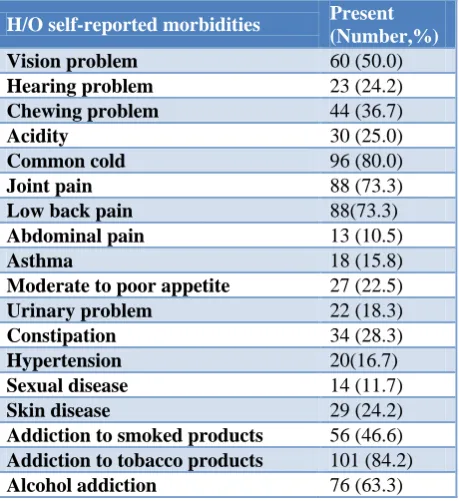
Table 2: Self- reported morbidities and diseases in last three months (N=120).
H/O self-reported morbidities Present (Number,%)
Vision problem 60 (50.0)
Hearing problem 23 (24.2)
Chewing problem 44 (36.7)
Acidity 30 (25.0)
Common cold 96 (80.0)
Joint pain 88 (73.3)
Low back pain 88(73.3)
Abdominal pain 13 (10.5)
Asthma 18 (15.8)
Moderate to poor appetite 27 (22.5)
Urinary problem 22 (18.3)
Constipation 34 (28.3)
Hypertension 20(16.7)
Sexual disease 14 (11.7)
Skin disease 29 (24.2)
Addiction to smoked products 56 (46.6)
Addiction to tobacco products 101 (84.2)
Alcohol addiction 76 (63.3)
Table 3: Findings of clinical examination (N=120).
Variables Number (%)
Presence of pallor 70 (50.3)
BMI
Underweight 9 (7.5)
Overweight 42 (35.0)
Obese 17 (14.2)
Blood pressure
Normal 28(23.3)
Pre hypertension 38 (31.7) Stage 1 hypertension 6 (5.0) Stage 2 hypertension 9 (7.5) Systolic hypertension 29 (24.2) Diastolic hypertension 10 (8.3)
middle or lower social class. More than 90% were not aware of any welfare scheme available for elderly, either government or private. Out of 10 respondents who were aware of the scheme, three were illiterate. Distress was more common in female, living singly and in nuclear family (p>0.05). Distress was seen more in persons aged
more than 70 years (p<0.05). Association was found between mental health condition and social class, education status, self-rated health and it was significant (p<0.05). Stress was more among lower middle and lower social class and illiterate people (Table 4).
Table 4: Association between stress and other variables (N=120).
Variables Mental health condition Statistics
Normal Distressed
OR= 9.33, 95% CI= 1.20 -197.24, df=1, x2=4.98, p= 0.025
Age group
<70 yrs 42 63
≥70 yrs 1 14
Sex
Male 20 26 OR = 1.71, 95% CI= 0.74 -3.93,
df= 1, x2=1.40, p= 0.23
Female 23 51
Type of family
Nuclear 2 11 OR = 0.29, 95% CI= 0.04 – 1.51, df= 1, x2=1.75, p= 0.132
Joint 41 66
Educational status
Illiterate 54 45 OR = 0.23, 95% CI= 0.07 – 0.69, df= 1, x2=7.61, p= 0.005
Literate 15 5
Living status
Single 3 13 OR = 0.42, 95% CI= 0.09 – 1.72, df= 1, x2=1.08, p= 0.298
With family 40 73
Socio economic class
Upper middle/middle 17 9 OR = 4.87, 95% CI= 1.77-13.68, df= 1, x2=10.77, p= 0.001
Lower middle/lower 26 67
Figure 1: Prevalence of distress by GHQ-12.
DISCUSSION
Geriatric age group is an age group where there is large number illness leading to disability, impairment, morbidity or mortality. It is seen that elderly are more vulnerable to develop illness due to physiological attrition and adjusted defence mechanisms. Both Central and State Governments have implemented new welfare programmes for old age people to improve their socio economic status and health conditions.13 The old age
illnesses sometimes have no permanent solution in terms of cure whereas there may be a major financial burden on the family that makes the situation even worse.
study. Nearly half of the elderly women were housewives taking care of the grandchildren and attending to household chores. All the respondents had health problems, the most common being hypertension (22%), arthritis (17%), diabetes (10%), or constipation (2%). Others included anaemia (10%), skin problems (12%) vision problems (18%) and other minor ailments (5%). Hypertension, arthritis and diabetes were found to be more common among females.14,15
The research among elderly women of Kodaikanal hills showed that age is an important demographic trend of a respondent. A good number (31.8%) of them belonged to the age group between 60-64 years. And 2.6% of them were above 80 years old. Analysis of educational status found that there were more of illiterate (91.2%), and a few of the (8.8%) respondents completed only primary level education. Marital status revealed that out of 390 respondents a vast majority of them (53.6%) were married and living with their spouse. 24.9% of the respondents were widow. It was observed that 31.9% of the respondents get financial support from their daughters. 12.1% of the respondents are getting financial support from their spouse and remaining 11.7% of the respondents are receiving from their sons. When assessed the level of awareness of supportive systems and welfare of the elderly tribal people, the majority (58.2%) responded that they did not know about the Government programmes. The elderly people were not well aware of Government tribal welfare programmes due to ignorance and illiteracy. 85.9% of the respondents have some kind of physical problems like gastro intestinal disease, chronic constipation, chronic headache, joint pain, loss of vision, loss of hearing. In addition, they suffer from communicable diseases such as tuberculosis and malaria. In this modern medicine era, 45.1% were following Siddha medicine for their physical illness. Regarding visual or eye sight problems 38.2% of the respondents have visual problems. Psychological problem is most common among elderly. Loneliness in old age is a common problem found in many of the developed and developing countries. 13.3% of the respondents stated that they have the feeling of isolation. The analysis of self-reported morbidities reflected the fact that the some health problems namely vision problems, hearing problem, backache, joint pain, constipation found in present study were similar to some other studies. But it was also noticed that the proportion of different morbidities were more among the current study subjects. The reason attributed might be lack of knowledge regarding when to seek health care among the respondents. Visual problem was marked in about half of population which reflected that it was a common problem of geriatric age group. An earlier study from Orissa reported nearly similar proportion in both sexes. In the present study, there is less prevalence of hearing problem, chewing problem in comparison to Orissa study. Similar proportion of non-specific fever was reported in previous studies.7,14,15
A study from Chennai showed 56% visual disability among the general elderly population. High proportion of visual (65%) and loco motor disability (36%) was also reported in a rural India study.16,17 The reported case of tuberculosis was less in the current study but the prevalence was quite higher in other studies, ranging from 17% to 30%.18 A high prevalence of pallor cases were seen in both sexes (50.0% males and 63.5% females). The haemoglobin estimation could be a better and more sensitive indicator for knowing the true picture. The Orissa study showed that none of the females had normal haemoglobin status and severe anaemia was noted among 70% of males and 77% of females. Self-reported cases of hypertension were less in comparison with Orissa study (16% vs. 35% approx.) whereas Kodaikanal study (22%) revealed a much close result. The reason for the less percentage could be due to the fact that the respondents of present study were not aware of their morbidities due to high rate of illiteracy among them. In the Orissa study, blood pressure levels indicated a higher prevalence of hypertension in these groups with the overall prevalence among males and females being 31.8% and 42.2%, respectively. In the present study, the prevalence of high blood pressure was also more in females. The high prevalence could be due to urbanisation and acculturation among the tribes.7,14 Severe distress was found in one among every five respondents. Loneliness in old age is a common problem found in many of the developed and developing countries. The study from Kodaikanal, India had observed that one in two individuals felt uncomfortable with their family members regarding respect and love. In addition to loss of respect, 35.4% were not having food along with family members. Feeling of isolation was reported by 13.3% of the respondents. Among the study subjects, more than 90% were not aware of any old age welfare scheme, either government or private whereas in a previous study from South India showed that the level of awareness about old age welfare schemes was 68.2% and the most astonishing fact was that the illiteracy rate of these two studies were quite similar. Therefore the reason behind could be due to lack of initiative from the local administrative government bodies for making them aware of the fact and this also reflected a sense of negligence towards these elderly.14
CONCLUSION
condition of these people and the proportion of distress is really high. The non-communicable diseases are progressing as evident from this present study. Another point of focus is complete unawareness of any elderly scheme among the majority. The major limitation of this study was shortage of resources in form of time and also some obstacles in communication. A future broader comparative study involving more manpower, time and funds is the prime aim of the researcher. Finally it is concluded that old age related problem is unavoidable but the quality of life can be enhanced by inner will, dissemination of adequate knowledge and active involvement by the local Governmental administration.
ACKNOWLEDGEMENTS
We express our sincere gratitude to Indian Council of Medical Research (ICMR) for allowing us to do the study. Finally we cordially thank the social worker Mrs. Papiya Das and the study population for their continuous support and cooperation from beginning to completion of the project.
Funding: No funding sources Conflict of interest: None declared
Ethical approval: The study was approved by the Institutional Ethics Committee
REFERENCES
1. Alam M, Mazumder S, Chakravorty I, Yadav P. The status of elderly in West Bengal, 2011. United Nation Population Fund(India). Available at: https://www.researchgate.net/. Accessed on 18 January 2018.
2. Census 2011 C-Tables, electronic data. Available at: http://censusindia.gov.in/. Accessed on 20 January 2018.
3. West Bengal: Data Highlights the Scheduled Tribes. Census of India 2001.Census Commission of India. Available at: https://en.wikipedia.org/. Accessed 18 January 2018.
4. Balgir RS. Dimensions of rural tribal health, nutritional status of Kondh tribe and tribal welfare in Orissa: a biotechnological approach. Proceedings of the UGC Sponsored National Conference on Human Health and Nutrition: A Biotechnological Approach (Lead Lecture). Thane; 2004: 47-57. 5. Balgir R. Tribal health problems, disease burden
and ameliorative challenges in tribal communities with special emphasis on tribes of Orissa; 2006. Available at: http://www.rmrct.org/. Accessed 18 January 2018.
6. Planning Commission of Government of India. Report of the Working Group on Communicable Disease Burden for the 12th Five Year Plan. New Delhi: Planning Commission; 2011.
7. Kerketta AS, Bulliyya G, Babu GV, Mohapatra SS, Nayak RN. Health status of the elderly population among four primitive tribes of Orissa, India: A clinico epidemiological study. Z Gerontol Geriat. 2009;42:53–9.
8. De Bruin A, Picavet HSJ, Nossikov A. Health interview surveys. Towards international harmonization of methods and instruments. European Series No. 58; WHO Regional Publications, 1996.
9. Mangal A, Kumar V, Panesar S, Talwar R, Raut D, Singh S. Updated BG Prasad socioeconomic classification, 2014: A commentary. Ind J Pub Health. 2015;59(1):42-4.
10. World Health Organization. Obesity- preventing and managing the global epidemic. WHO technical report series; 1999: 894.
11. Park K. Park's text book of preventive and social medicine. 23nd ed. Jabalpur: M/S Banaroidas Bhanot Publishers; 2015: 373-399.
12. Montazeri A, Harirchi AM, Shariati M, Garmaroudi G, Ebadi M, Fateh A. The 12-item General Health Questionnaire (GHQ-12): translation and validation study of the Iranian version. Health and Quality of Life Outcomes. 2003;1:66.
13. Chanana HB, Talwar PP. Aging in India: its socio-economic and health implications. Asia-Pac Popul J. 1987;2:23–38.
14. Santhosam AM, Samuel U. A study on the health status of elderly irular tribal women in Kancheepuram district. IOSR J Humanities Social Sci. 2013;7(2):1-4.
15. Thirumalraja D. The problems of elderly tribal women in Kodaikanal hills: a sociological persprective. Int J Sci Res Publications. 2013;3(6):1- 4.
16. Rao TV, Ezhil R, Jabbar S, Ramakrishnan R. Prevalence of disability and handicaps in geriatric population in rural south India. Indian J Public Health. 2005;49:11–7.
17. Shah B, Prabhakar AK. Chronic morbidity profile among elderly people. Indian J Med Res. 1997;106:265.
18. Murhekar MV, Kolappan C, Gopi PG, Chakraborty AK, Sehgal SC. Tuberculosis situation among tribal population of Car Nicobar, India, 15 years after intensive tuberculosis control project and implementation of a national tuberculosis programme. B World Health Organ. 2004;82:836– 43.