A Comparative Study of Biology-inspired and Game
Theoretical Optimization Algorithms on Power Utilization
Efficiency in Cognitive Radio Environment
Jide Julius Popoola
Department of Electrical and Electronics Engineering,
Federal University of Technology, Akure, Nigeria
Olaoluwa Temitope Ojo
Department of Electrical and Electronics Engineering,
Federal University of Technology, Akure, Nigeria
ABSTRACT
This paper develops two different optimization algorithms for solving problem of power utilization efficiency in cognitive radio environment (CRE). While genetic algorithm was developed as biology-inspired optimization algorithm, load balancing algorithm was developed as game-theoretical optimization algorithm. The two algorithms were developed in MATLAB environment. The developed algorithms were later evaluated to determine their respective power efficiency utilization in CRE. Numerical results obtained reveal that genetic algorithm is about 15% better than load balancing algorithm in term of power utilization efficiency. In addition, the obtained results show that biology-inspired optimization algorithm such as genetic algorithm in which all the parties act together to optimal system is better candidate for spectral resource allocation in CRE than game-theoretical optimization algorithm such as load balancing algorithm where individual acts separately to optimal the system.
General Terms
Cognitive radio; Radio spectrum management; Biology-inspired and game-theoretical algorithms
Keywords
Radio spectrum management, dynamic spectrum access, optimization, evolutionary algorithms, game theory
1.
INTRODUCTION
Observations recently as shown that there is surge in demand for and use of radio spectrum as a result of daily increasing in emerging and deployment of new wireless services and applications, which has led to radio spectrum scarcity [1,2]. Although, radio spectrum is a renewable nature resource, its usage and access is currently being regulated both at international and national levels. While its regulation at the international level is by assigning specific frequency bands to certain applications and services, the regulation policy at the national level is by assigning certain portions of the radio spectrum to individual users on a fixed allocation policy. This traditional approach to radio spectrum management has worked well and provided optimal solution in the past by ensuring interference free communication between active radio spectrum users. However, with the recent surge in demand for and use of radio spectrum, current fixed allocation policy of radio spectrum is obviously obsolete. One of the reasons the policy is being considered as obsolete is because of the imbalanced it has created between radio spectrum scarcity and underutilization [3]. As a result of this imbalance, several spectrum regulatory agencies and researchers around
the world had conducted studies on current radio spectrum scarcity with an aim of finding optimal means of managing the available radio spectrum. Unfortunately, results of these studies showed that radio spectrum is not really scarce but underutilized as large portion of licensed spectrum is either not in used at all or sporadically used in time, space and frequency [1, 2].
In overcoming this underutilization problem, series of solutions were proposed. One of the feasible solutions first proposed in the academic community and equally supported by the regulatory bodies is dynamic spectrum access (DSA) also known as opportunistic spectrum access (OSA). This access strategy allows unlicensed or secondary user (SU) to use underutilized or unused portion of the licensed spectrum in an opportunistic manner as long as it does not cause significance interference to the licensed or primary user (PU).
The need for DSA or OSA as reported in [4] was first proposed for the United States (US) by the Federal Communications Commission (FCC) in 2003. The key enabling technology for DSA, as reported in [5, 6], is cognitive radio. As reported in [5], cognitive radio (CR) unlike a traditional radio has the capability to sense and understand its environment and proactively change its mode of operation as needed. In light of these capabilities, CR can intelligently use the unused portions of the licensed spectrum and communicate reliably without interfering with the PU thereby maximizing the spectrum utilization rate.
Optimization by simple definition is an act of achieving the best possible outcome under a given situation or circumstance. It is a powerful tool of finding suitable feature subsets for a selected problem. However, the difficulties associated with using mathematical optimization on large-scale engineering problems have contributed to development of alternate solutions such as evolutionary-based and game-theoretical optimization algorithms. While the evolutionary algorithms (EAs) are stochastic search methods that mimic the process of natural or biological evolution to find a solution to a problem from a set of solutions called population, game-theoretical algorithms are set of mathematical models that describe cooperation and conflict of several decision-makers.
According to [9], family of successful EAs consists of genetic algorithm, genetic programming, differential evolution, evolutionary strategy and most recent paddy field algorithm. Generally, all members of the EA family share a great number of features in common. For instance, they are all population-based stochastic search algorithms with best-to-survive criteria. In the EA family, each member algorithm usually commences by creating an initial population of feasible solutions, and evolves iteratively from generation towards a best solution. Fitness-based selection usually takes place within the population of solutions in the algorithm successive iterations. Better solutions are preferentially selected for survival into the next generation of solutions. Like EAs, game-theoretical optimization algorithm main goal is to find optimal solutions to situations of conflict and cooperation [10] under the assumption that players are instrumentally rational and act in their own best interest. The theory represents the interface of mathematics and management. Thus, the theory adopts terminology that is familiar to both management and mathematics.
Basically, game theory (GT) has three components [11], which are: (i) set of players, (ii) set of actions and (iii) utility function. In context of CRN, the set of players are nodes of CRN while actions may be available modulation scheme, flow control parameter, coding rate, transmit power, protocol, or any other factor that is under the control of the node. On the other hand, utility function can be throughput, signal-to-interference-plus-noise ratio (SINR) and quality of service (QoS) of CRNs. Thus, one of the fundamental constituents of any game is its participating, autonomous decision makers called players. Each game must have at least two players who gait to maximize their own benefits with regard to its opponent’s decision. Therefore, in game theoretical algorithm, players maximize their opponent’s choices by choosing a strategy or strategies that will maximize profits for them. The theoretical algorithm is therefore based on the principle that players are rationally behaves whenever they are playing with each other in the strategic environment. This attribute aids the algorithm enhancement of rational and optimal result in competitive environment.
As reported in [12], the first evolutionary-based optimization technique introduced in the literature was the genetic algorithm (GA). GA was developed based on the Darwinian principle of the survival of the fittest and the natural process of evolution through reproduction. On the other hand, load balancing algorithm (LBA) as a GT based optimization algorithm aims at distributing available recourses between players in order to enhance optimal resources utilization.
GA, all parties are willingly acted together which leads to the best results for the whole system. On the other hand, in game-theoretical optimization methods such as load balancing (LB) each party tends to act individually, which leads to most logical outcome for one party but may not be the best for the whole of the system. Hence, it is not clear whether optimization algorithm that is based on biology-inspired optimization algorithm or game-theoretical optimization algorithm will perform better on radio spectrum resource allocation problem or not. Thus, in this paper, comparative performance of GA and LBA using power resource’s utilization efficiency in CRE is carried out.
While interest in LB game-theoretical algorithm in this study is as a result of competition involves in spectrum resources usage under DSA, where players can be cooperative, selfish or even malicious, the usage of GA is based on observation made by [14,15] that biology-inspired optimization algorithm such as GAs are more effective than conventional optimization algorithms under appropriate conditions. Thus, in order to verify the strengths of these two optimization algorithms in CRE, the two optimization algorithms were employed in modeling competitive behavior and strategic interactions among wireless users. The two developed optimization algorithms were later evaluated to determine their respective performance efficiency and suitability for power allocation in CRE. The main contribution of this paper therefore is to experimentally show whether or not biology-inspired optimization algorithm particularly GA is more efficient than game-theoretical algorithm particularly LBA in power utilization in CRE for efficient radio spectrum usage and information transmission in wireless communication. For sequential and logical presentation of the study presented in this paper, the rest of this paper is structured as follows. Section 2 presents brief review of the two optimization algorithms’ applications in CRN. In Section 3, details on the development of the two optimization algorithms are for this study are presented. The performance evaluation results carried out on the developed algorithms are presented and discussed in Section 4. The paper is finally concluded in Section 5, which is the last section of the paper.
2.
REVIEW OF GA AND GT
APPLICATION IN CRN
sensing, learning and adaptation. Similarly, in the study presented in [20], GA was employed for enhancing the CRN performance by using it to solve multi-objective problems that aim at minimize both the bit error rate and power while the throughput was maximized. Also, in [21], GA was used for radio frequency parameter optimization in CR. In reference [21], receiver noise figure, antenna parameters, modulation and coding schemes, transmit and receive antenna gains, transmit power, coding gain, data rate frequency and bandwidth were used as genes. The fitness measure was determined using link margin, data rate and spectral efficiency. The maximum fitness measure and associated chromosomes were tracked and save, were later utilized as optimal solution for setting the radio parameters.
Like GA, knowledge of GT has equally been used in allocation of channel to CRs in CRN. The two types of GT, which are cooperative and non-cooperative, have been used in CRN. When the cooperative game theory is used, all the CRs or SUs will cooperative to maximize total network performance by sharing vital information like utility function to achieve Nash Bargaining [11]. On the other hand when the non-cooperative GT is used, CRs or SUs are consider as rational users that maximize their utility function such as allocating resources individually since users do not have access to the strategies and payoff of other users. This type of GT converges at Nash equilibrium state. For instance, in [22] the problem of fixed radio spectrum allocation policy from an economic point of view was solved using simulation model to improve bandwidth allocation issue between the PU and SUs in a CRN or CRE. These authors in [22] approached the problem by developing an algorithm that maximizes the effectiveness of the SUs in the CRE while the cost of the bandwidth was minimized. Also, in study presented in [23], a framework for modeling multi-user, multi-band, spectrum sensing and spectrum sharing problem in CRs was developed as a cooperative game. Secondary or CR users jointly sense or monitor the spectrum and cooperatively detect the PU activity for detecting spectrum holes. The formulated cooperative game by these authors quantified and shared the benefits of cooperation by accessing identified spectrum holes in fair manner. The simulation results show that the formulated cooperative game by the authors in [23], in comparison with other resource allocation models provides the best balance among fairness, cooperation and performance in terms of data rates obtained by secondary users.
Apparently, the review has shown the effectiveness of GA and GT in resources allocation in CRNs. However, none of the survey literature cares to compare the performance efficiency of these two algorithms, which is the focus of the study presented in this paper. This aim was achieved by developing GA and LBA for dynamic power utilization efficiency in CRE. The detailed information on the development of the two algorithms is presented in next section.
3.
THE TWO ALGORITHMS
DEVELOPMENT
This section is divided into two subsections. While detailed information on development of the GA is presented in the first subsection, the detailed information on development of the LBA is presented in the second subsection. Details
information on the development of the two algorithms are presented in the following subsections.
3.1
Development of GA
In developing the GA for this study, an initial population made up of strings of numbers was chosen at random. Each string of numbers, which are known as chromosomes were broken down into smaller sets called traits. While each chromosome represents a network user or node, the traits are used as subsets of the network parameter. A slot in each subset, also known as gene, is used to represent the basic unit of the radio resource to be optimized. The developed GA was then used for efficient power allocation in the multi-users network with the total chromosomes making up the number of spectrum users.
The operation of the GA proceeds in steps. It begins with the initial population based on the number of users in a band-limited network. After the initialization stage, a selection process to choose chromosomes that will survive and form mating pool takes place. The survival of this chromosome determines how power was allocated. Chromosomes are chosen based on how fit they are relative to the other members of the population. More fit individuals end up with more copies of themselves in the mating pool so that they will more significantly affect the formation of the next generation. The GA was developed using MATLAB GA toolbox. The modeled flowchart for the developed GA is as shown in Fig. 1.
3.2
Development of LBA
Unlike the GA, the LBA is a non-genetic algorithm but a GT optimization algorithm that aims at equally distributing the network resources among players (i.e. the network users). Like the GA, the LBA for this study was also implemented in MATLAB. It was developed to accept a number of users, technically called players, and then allocates the spectral power to the players in two modes.
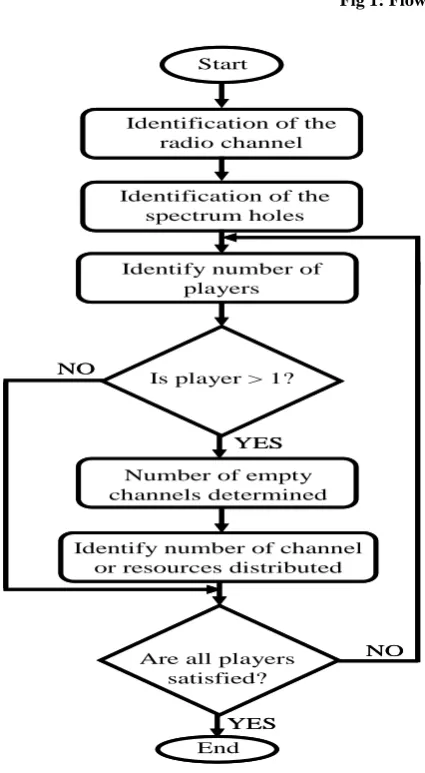
The first mode is the priority based allocation and the second mode is even resource allocation. In even resource allocation, the optimization function is evenly distributed among all the players i.e. the secondary spectrum users at a particular time. The procedure involved in developing the LBA was divided into stages. The first stage involves spectrum sensing, which is assumed to be perfect and not considered in this study. The second stage involves allocation of spectral resource, i.e. the power among the secondary users based on their numbers. The step-by-step approach involves in developing the algorithm is shown in Fig. 2. The results obtained for the two algorithms are presented and discussed in next section.
4.
RESULTS AND DISCUSSION
Fig 1: Flowchart for GA development
Fig 2: Flowchart for LBA development
4.1
Power Spectral Density per user
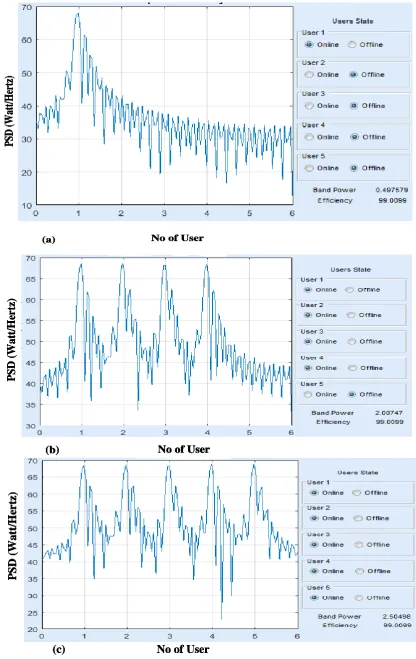
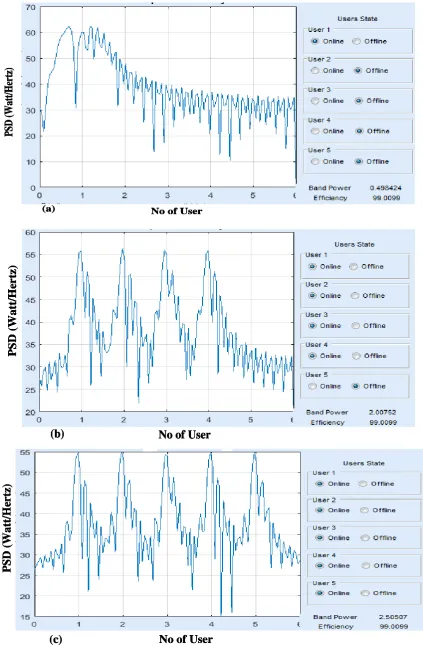
The power spectral density (PSD) distribution against the number of users for GA and LBA are presented graphically in
Fig. 3 and Fig. 4 respectively. Five numbers of secondary or cognitive devices were considered. However three corresponding PSD obtained for the two algorithms are presented out of five considered due to limited space. The PSD analysis was considered to characterize the average power distribution for each of the algorithms. Critical observation of Fig. 3 and Fig. 4 for GA and LBA respectively shows that the energy of the signal is uniformly or evenly distributed for each algorithm. The evenly distribution of the energy among the users implies the possibility of interference free communication among the users.
Furthermore, critical analysis of Fig. 3(a) and Fig. 4(a) for GA and LBA respectively show inefficiency usage of spectral power when only one user is operating compared with Fig. 3(b) and Fig. 4(b) when multiples, precisely three, users were operating or assessing the available channel simultaneously. The results of this study presented graphically in Fig. 3(a) and Fig. 4(a) confirmed the findings in [1,6] that the current traditional or fixed spectrum allocation policy is majorly responsible for radio spectrum scarcity currently experience worldwide and sole causes of imbalance in current radio spectrum scarcity and underutilization [1-3]. On the other hand, when multiple users are occupying the same channel simultaneously as shown in Figures (3b), (3c), (4b) and (4c), the wastage spectral resource that is unused when only one user is occupying the channel in Fig. 3(a) and Fig. 4(a) is effectively utilized. This implies that DSA policy that allows multiple users to operation simultaneously as long as there is no interference among users, especially the PU, will not only serve as a means of improving spectral resources utilization but also serve as a means of converting wastage spectral resources to wealth. Thus, the results shown in Figures (3b), (3c), (4b) and (4c) have equally confirmed DSA as a better alternative to the current fixed allocation policy and a new access technology to mitigate current radio spectrum scarcity and underutilization.
Start
Identification of the radio channel
Identification of the spectrum holes
Identify number of players
Is player > 1?
YES NO
Number of empty channels determined
Identify number of channel or resources distributed
Are all players satisfied?
End YES
NO Start
Identification of the radio channel
Identification of the spectrum holes
Identify number of players
Is player > 1?
YES NO
Number of empty channels determined
Identify number of channel or resources distributed
Are all players satisfied?
End YES
NO
Generate initial
population Evaluate End Reached?
Evaluate
population Best population
YES
NO
Selection
Crossover
Mutation Generation of
New Population Start
Result Generate initial
population Evaluate End Reached?
Evaluate
population Best population
YES
NO
Selection
Crossover
Mutation Generation of
New Population Start
Fig 3: GA PSD for (a) one, (b) four, and (c) five numbers of user respectively No of User
(a)
P
SD (
Wat
t/H
er
tz
)
No of User (a)
P
SD (
Wat
t/H
er
tz
)
P
S
D (
Wat
t/H
er
tz
)
No of User
(b)
P
S
D (
Wat
t/H
er
tz
)
No of User
(b)
No of User
(b)
P
S
D (
Wat
t/H
er
tz
)
No of User
(c)
P
S
D (
Wat
t/H
er
tz
)
No of User
(c)
No of User (a)
P
SD (
Wat
t/H
er
tz
)
No of User (a)
P
SD (
Wat
t/H
er
tz
)
P
S
D (
Wat
t/H
er
tz
)
No of User
(b)
P
S
D (
Wat
t/H
er
tz
)
No of User
(b)
No of User
(b)
P
S
D (
Wat
t/H
er
tz
)
No of User
(c)
P
S
D (
Wat
t/H
er
tz
)
No of User (a)
P
SD (
Wat
t/H
er
tz
)
No of User (a)
P
SD (
Wat
t/H
er
tz
)
P
S
D (
Wat
t/H
e
r
tz
)
No of User
(b)
P
S
D (
Wat
t/H
e
r
tz
)
No of User
(b)
P
S
D (
Wat
t/H
er
tz
)
No of User
(c)
P
S
D (
Wat
t/H
er
tz
)
No of User
(c)
No of User (a)
P
SD (
Wat
t/H
er
tz
)
No of User (a)
P
SD (
Wat
t/H
er
tz
)
P
S
D (
Wat
t/H
e
r
tz
)
No of User
(b)
P
S
D (
Wat
t/H
e
r
tz
)
No of User
(b)
P
S
D (
Wat
t/H
er
tz
)
No of User
(c)
P
S
D (
Wat
t/H
er
tz
)
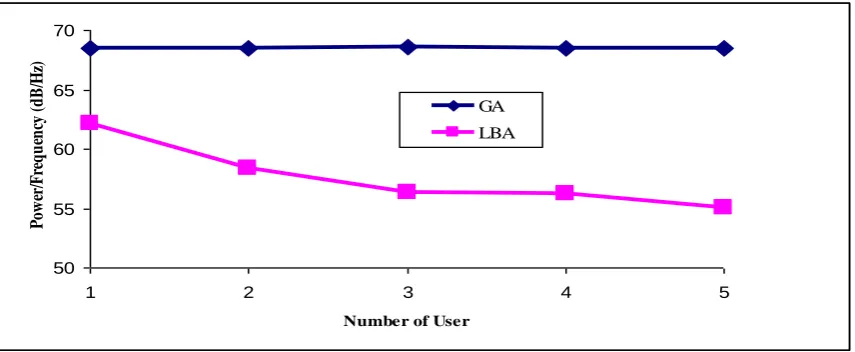
Fig 5: Overall Comparative Power Frequency Utilization Efficiency Result
In addition, further observation of the PSD for GA and LBA shown in Fig. 3 and Fig. 4 respectively show slight degree in power distribution. The figures show that power distribution of GA is about 15% higher than that of LBA. This indicates that power conversion efficiency in GA outperform that of the LBA. In addition, this higher power conversion efficiency in GA implies better quality signal transmission and reception in GA modeled CRNs than the corresponding LBA modeled CREs. Similarly, critical observation of Fig. 3(a) – (c) show that the PSD obtained from GA are with minimum spikes compare to the PSD obtained for LBA. This implies that CRE developed based GA enjoys better interference free communication compared with CRE developed based LBA.
Furthermore, the PSD results shown in Fig. 3 and Fig. 4 show relatively perfect coexisting of two or more spectrum users in the same frequency band with guard bands between the users. This result agrees with the results presented in [24].This established the fact that results obtained in this study is in agreement with results obtained in previous study in surveyed literature. In addition, the PSD results for the two algorithms as shown in Fig. 3(c) and Fig. 4(c) show some negative spikes when five users are considered. This implies that after fourth users, the two algorithms experience diminishing return. The results buttress the finding in [25] that a maximum of four cognitive radio users or SUs are ideal for optimal cooperation gain in a CRE in order to avoid incurring cooperative overhead.
4.2
The Algorithms Comparative
Performance Analysis
In order to further establish which of the two algorithms outperform the other, further comparative performance analyses were carried out on the two algorithms based on their respective power efficiency utilization. The result of this power efficiency comparative analysis is shown in Fig. 5. The analysis result shows that there is variation in the two algorithms power efficiency profiles. From Fig. 5, while the power utilization efficiency for GA remains constant with increase in the number of users, the corresponding power utilization efficiency for LBA decreases as the numbers of user increases. This comparative analysis also shows that GA outperforms LBA in power utilization efficiency.
This variation in power utilization efficiency between the two algorithms buttresses the finding in [13] that optimization algorithms’ performance is based on their respective observed
optimization properties. Basically, the two algorithms are optimization algorithms; however, while all the parties act together in GA to ensure optimal result, each party in LBA acts separately to ensure individual optimal result. Thus, the optimization diversity approach in the two algorithms account for the variation in their respective performance result.
5.
CONCLUSION
The results obtained from this study have shown clearly that GA is a better power utilization algorithm than GA. Also, based on the comparative evaluation result, this study has scientifically established that GA, which is biology-inspired optimization algorithm, performs better on power spectral resource allocation in CRE than LBA, which is a game-theoretical optimization algorithm. The numerical result obtained from this study buttresses the observation that biology-inspired optimization algorithm such as GA is more effective than conventional optimization algorithms under appropriate conditions. The result of the study also shows that optimization algorithm, such as GA, in which all parties act together to ensure optimal result is better candidate for spectral resource allocation in CRE than optimization algorithm such as LBA where individual party acts to fulfill their respective desire. Furthermore, the study has shown practically the potential of DSA in overcoming the problem of radio spectrum scarcity and underutilization currently experience worldwide in the nearest future if the radio spectrum access can be adopted worldwide. In addition, it is obvious that the adoption of DSA will not only overcome the current problem of radio spectrum scarcity and underutilization but equally enhances radio or wireless information transmission worldwide.
6.
REFERENCES
[1] Popoola, J.J., Ogunlana, O.A., Ajie, F.O., Olakunle O., Akiogbe, O.A., Ani-Initi, S.M. and Omotola, S.K. (2016). Dynamic Spectrum Access: A New Paradigm of Converting Radio Spectrum Wastage to Wealth. International Journal of Engineering Technologies, No. 2, Vol. 3, pp. 124-131.
[2] Popoola, J.J. and van Olst, R. (2013). The performance evaluation of a spectrum sensing implementation using an automatic modulation classification detection method with a Universal Software Radio Peripheral, Expert Systems with Applications, Vol. 40, No. 6, pp. 2165– 2173.
50 55 60 65 70
1 2 3 4 5
Number of User
P
ow
er
/F
re
q
u
en
cy (d
B/
H
z)
[3] Popoola, J.J. and van Olst, R. (2011). A novel modulation-sensing method: Remedy for uncertainty around the practical use of cognitive radio technology. IEEE Vehicular Technology Magazine, Vol. 6, No. 3, pp. 60-69.
[4] Masonta, M.T., Mzyece, M. and Ntlatlapa, N. (2013). Spectrum decision in cognitive radio networks: A survey, IEEE Communications Surveys and Tutorials, Vol. 15, No. 3, pp. 1088-1107.
[5] Akylidz, I.F., Lee, W.Y., Vuran, M.C. and Mohanty, S. (2006). NeXt generation/dynamic spectrum access/cognitive radio wireless networks: A survey, International Journal of Computer and Telecom. Networking, Vol. 50, No. 13, pp. 2127-2159.
[6] Konig, C., Perez Guirao, M.D. and Lubben, R. (2014). Distributed Indoor Spectrum Occupancy Measurements in the UHF TV Band, IEEE International Conference on Communications, Sydney, NSW, Australia, 10-14 June, pp. 1373-1378.
[7] Moghal, M.R., Khan, M.A. and Bhatti, H.A. (2010). Spectrum optimization in cognitive radios using elitism genetic algorithm, Proceedings of 6th IEEE International Conference Emerging Technologies, Islambad, Pakistan, 18-19, pp. 49-54.
[8] Abdulghfoor, O.B., Ismail, M. and Nordin, R. (2013). Application of game theory to underlay ad-hoc cognitive radio networks: an overview, Proceedings of the IEEE International Conference on Space Science and Communication, Melaka, Malaysia, 1-3 July, pp. 296-301.
[9] Binitha, S. and Sathya, S.S. (2012). A survey of bio inspired optimization algorithms, International Journal of Soft Computing and Engineering, Vol. 2, No. 2, pp. 137-151.
[10] Ji, Z. and Liu, K.J.R. (2007). Dynamic Spectrum Sharing: A Game Theoretical Overview, IEEE Communications Magazine, Vol. 45, No. 5, pp. 88-94.
[11] Sharma, U., Mittal, P. and Nagpal, C.K (2015). Implementing Game Theory in Cognitive Radio Network for Channel Allocation: An Overview, International Journal of Energy, Information and Communications, Vol.6, No. 2, pp.17-22.
[12] Elbeltagi, E., Hegazy, T. and Grierson, D. (2005). Comparison among five evolutionary-based optimization algorithms, Advanced Engineering Informatics, Vol. 19, No. 1, pp. 43-53.
[13] Barough, A.S., Shoubi, M.V. and Skardi, M.J.E. (2012). Application of game theory in solving the construction project conflicts, Procedia-Social and Behavioral Sciences, Vol. 58, pp. 1586-1593.
[14] Yang, X.S. (2005). Engineering optimization via nature-inspired virtual Bee algorithms. In Mira, J., Alvarez, J.R. (eds) Artificial Intelligence and Knowledge Engineering Applications: A Bioinspired Approach. IWINAC 2005. Lecture Notes in Computer Science, Vol. 3562. Springer, Berlin, Heidelberg, DOI: org/10.1007/11499305_33.
[15] Singh, R.P. (2011). Solving 0-1 Knapsack problem using Genetic algorithms, IEEE International Conference on Communication Software and Networks, Xi’an, China, 27-29 May, 591-595.
[16] Akyildiz, I.F., Lee, W.Y. Vuran, M.C. and Mohanty, S. (2008). A survey on spectrum management in cognitive radio networks, IEEE Communications Magazine, Vol. 46, No. 4, pp. 40–48.
[17] Zhao, J.H, Li, F. and Zhang, X.X. (2012). Parameter adjustment based on improved genetic algorithm for cognitive radio networks, The Journal of China Universities of Posts and Telecommunications, Vol. 19, No. 3, pp. 22-26.
[18] Gözüpek, D. and Alagöz, F. (2011). Genetic algorithm-based scheduling in cognitive radio networks under interference temperature constraints, International Journal of Communication Systems, Vol. 24, pp. 239-257. DOI: 10.1002/dac.1152.
[19] Rondeau, T.W., Le, B., Rieser, C.J. and Bostian, C.W. (2004). Cognitive Radios with Genetic Algorithms: Intelligent Control of Software Defined Radios, Proceeding of the SDR Technical Conference and Product Exposition, pp. C–3–C–8. Online [Available] https://pdfs.semanticscholar.org/f5ea/32eb879fae38911c cf18f324cb6a37de27c2.pdf. Access on March 18, 2018.
[20] Chen, S, Newman, T.R. Evans, J.B. and Wyglinski, A.M (2010). Genetic algorithm-based optimization for cognitive radio networks. IEEE Sarnoff Symposium, Princeton, New Jersey, USA, 12-14 April. DOI: 10.1109/SARNOF.2010.5469780.
[21] Hauris, J.F., He, D., Michael, G. and Ozbay, C. (2007). Cognitive radio and RF communications design optimization using genetic algorithms, Proceedings of IEEE Military Communications Conference, Orlando, Florida, USA, 29-31 October, pp. 1-6.
[22] Pandit, S. and Singh, G. (2013). Spectrum sharing in cognitive radio using game theory, Proceedings of the 3rd International Advance Computing Conference, Ghaziabad, India, 22-23 February, pp. 1505-1508.
[23] Rajasekharan, J. and Koivunen, V. (2015). Cooperative game-theoretic approach to spectrum sharing in cognitive radios, Signal Processing, Vol. 106, pp. 15-29.
[24] Nolan, K., Sutton, P., Doyle, L., Rondeau, T., Le, B. and Bostian, C. (2007). Dynamic Spectrum Access and Coexistence Experiences Involving Two Independently Developed Cognitive Radio Testbeds, Proceedings of 2nd IEEE International Symposium on New Frontiers in Dynamic Spectrum Access Networks, Dublin, Ireland, 17-20 April, pp. 270-275.