University of Pennsylvania
ScholarlyCommons
Publicly Accessible Penn Dissertations
1-1-2016
Culturally Responsive Computing for American
Indian Youth: Making Activities With Electronic
Textiles in the Native Studies Classroom
Kristin Anne Searle
University of Pennsylvania, [email protected]
Follow this and additional works at:
http://repository.upenn.edu/edissertations
Part of the
Education Commons
This paper is posted at ScholarlyCommons.http://repository.upenn.edu/edissertations/1995 For more information, please [email protected].
Recommended Citation
Searle, Kristin Anne, "Culturally Responsive Computing for American Indian Youth: Making Activities With Electronic Textiles in the Native Studies Classroom" (2016).Publicly Accessible Penn Dissertations. 1995.
Culturally Responsive Computing for American Indian Youth: Making
Activities With Electronic Textiles in the Native Studies Classroom
Abstract
By providing access to hands-on activities and the physical and digital tools necessary to complete them,
maker activities encourage cross-disciplinary, interest-driven learning and problem solving in schools.
However, maker movement efforts to broaden participation into computer science have largely ignored
Indigenous populations. In this dissertation, I examine how electronic textiles (e-textiles) materials connects
to the heritage craft practices found in many Indigenous communities. By design, e-textiles materials combine
low-tech craft practices like sewing with high-tech engineering and programming. Framing learning
computing within these two distinct but overlapping cultural contexts provides youth will a familiar context in
which to learn something new (programming), promotes positive identity development, and fosters
connections across multiple dimensions of youth’s lives. At the core of this work is design-based research into
the development and implementation of a three-week electronic textiles unit in gender-segregated Native
Studies class with American Indian youth (12-14 years old) at a charter school located on tribal lands in the
Southwest. This unit was implemented four times over the course of the school year. Findings highlight how
different groups of students (American Indian girls and American Indian boys) engaged with e-textiles
activities and how their perspectives on computing developed through participation in the unit. In addition,
the teacher’s perspective on integrating digital technologies in the Native Studies classroom is explored within
the context of contemporary Federal Indian educational policy and practice. This work makes three significant
contributions to ethnography, computing education, and American Indian education. First, it proposes a new
methodology through the integration of ethnography with design-based research and critical Indigenous
research approaches. Second, it contributes to the emerging field of culturally responsive computing by
exploring what happens when computing moves beyond the screen and into the tangible realm. Third, it
furthers our understandings of the role of digital technologies in American Indian education, with a particular
focus on how making activities might contribute to increased educational sovereignty for Indigenous peoples
throughout the United States.
Degree Type
Dissertation
Degree Name
Doctor of Philosophy (PhD)
Graduate Group
Education
First Advisor
Yasmin B. Kafai
Second Advisor
John L. Jackson, Jr.
Keywords
American Indian, Computer Science, Education, Electronic Textiles, Making
Subject Categories
Education
CULTURALLY RESPONSIVE COMPUTING FOR AMERICAN INDIAN YOUTH:
MAKING ACTIVITIES WITH ELECTRONIC TEXTILES IN THE NATIVE STUDIES CLASSROOM
Kristin A. Searle
A DISSERTATION
in
Education and Anthropology
Presented to the Faculties of the University of Pennsylvania
in
Partial Fulfillment of the Requirements for the
Degree of Doctor of Philosophy
2016
Supervisor of Dissertation Co-Supervisor of Dissertation
_____________________________________ __________________________________ Yasmin B. Kafai, Professor of Education John L. Jackson, Jr. Richard Perry
Professor of Communication, Africana Studies & Anthropology
Graduate Group Chairperson Graduate Group Chairperson
______________________________________ __________________________________ J. Matthew Hartley, Professor of Education Deborah A. Thomas, Professor of
Anthropology & Africana Studies
Dissertation Committee:
Yasmin B. Kafai, Professor of Education
John L. Jackson, Jr. Richard Perry Professor of Communication, Anthropology, & Africana Studies
Betsy R. Rymes, Associate Professor of Education
CULTURALLY RESPONSIVE COMPUTING FOR AMERICAN INDIAN YOUTH:
MAKING ACTIVITIES WITH ELECTRONIC TEXTILES IN THE NATIVE STUDIES CLASSROOM
COPYRIGHT
2016
Kristin Anne Searle (unless noted below)
Chapter 3 “Boys’ Neeldework: Understanding gendered and Indigenous perspectives on computing and crafting with electronic textiles” appears in the Proceedings of the International Computing Education Research Association (ICER ‘15) Conference, pp. 31-39. Omaha, Nebraska, USA. The publisher of this copyrighted material is the Association for Computing Machinery, Inc. (ACM). Permission to make digital or hard copies of all or part of this work for personal or classroom use is granted without fee provided that copies are not made or distributed for profit or commercial advantage and that copies bear this notice and the full citation on the first page. To copy otherwise or post on servers or to redistribute on lists, requires specific permission and/or fee.
Chapter 4 “Culturally responsive making with American Indian girls: Bridging the identity gap in crafting and computing with electronic textiles” appears in the Proceedings of the Third
Conference on Gender and Information Technology (Gender IT ’15), pp. 9-16. Philadelphia, Pennsylvania, USA. The publisher of this copyrighted material is the Association for Computing Machinery, Inc. (ACM). Permission to make digital or hard copies of all or part of this work for personal or classroom use is granted without fee provided that copies are not made or distributed for profit or commercial advantage and that copies bear this notice and the full citation on the first page. To copy otherwise or post on servers or to redistribute on lists, requires specific permission and/or fee.
This work is licensed under the Creative Commons Attribution- NonCommercial-ShareAlike 3.0 License
To view a copy of this license, visit
iii
ACKNOWLEDGMENT
My road to completion of this dissertation has been a long one and would not have happened
without the advice, guidance and friendship of many individuals. I would first and foremost like
to thank Yasmin Kafai, who guided me through the process and taught me what it means to be a
scholar. I cannot thank her enough for believing in me and in this work, even when I did not
believe in myself. She introduced me to electronic textiles in their infancy, secured a grant to
explore the project that my dissertation research would grow out of, and read countless drafts of
this dissertation. I am grateful for her intellectual insights, her willingness to explore new terrain
and, above all, her patience.
I would also like to thank Bryan Brayboy, who has stood by me for many years and endured
many panicked phone calls and e-mails when I thought perhaps the Academy was not for me. It
was Bryan who gave me my first research job and then encouraged me to pursue a PhD. Many
years later, it was Bryan who helped me to find a field site for this dissertation work and provided
me with a scholarly community at Arizona State University while I was conducting fieldwork. I
continue to be amazed by his thoughtful scholarship and commitment to Indigenous communities.
I would also like to thank my dissertation committee co-chair, John Jackson, and committee
member Betsy Rymes for their contributions to this project. John and Betsy constantly drew my
attention back to the anthropological nature of the project, and always seemed to have key
insights at the moments when I needed them most.
Because my journey through graduate school has been long and winding, there are many people
to thank for their support. Jessica Solyom has been my partner-in-crime for too many years to
count, the one who reminds me why social justice work is worth doing, and is always there for
me when the going gets tough. I am certain some of the ideas in this dissertation were hammered
out during our weekly Blue Adobe dinners. Cristobal Martinez co-taught many of the e-textiles
units with me and taught me how to be a better, more critical teacher and researcher in the work
that we do. Deborah Fields has mentored me through the graduate school experience, always
ready to provide coffee, ice cream, or advice. Charles Washington provided me with a space that
felt like home in the Graduate School of Education and I had some of my most compelling
conversations about race and privilege in his basement office. I also want to thank the members
of the Research Apprenticeship Course (RAC) at the Graduate School of Education for reading
countless drafts of these chapters and providing thoughtful comments.
I also want to thank my family for always being supportive and understanding, even when I spent
family “vacations” sitting at a desk writing. Above all, I want to thank my mom, Nancy, who
taught me to love books and learning and to stand up for what you believe is just.
iv
ABSTRACT
CULTURALLY RESPONSIVE COMPUTING FOR AMERICAN INDIAN YOUTH:
MAKING ACTIVITIES WITH ELECTRONIC TEXTILES IN THE NATIVE STUDIES
CLASSROOM
Kristin A. Searle
Yasmin B. Kafai
By providing access to hands-on activities and the physical and digital tools necessary to
complete them, maker activities encourage cross-disciplinary, interest-driven learning and
problem solving in schools. However, maker movement efforts to broaden participation into
computer science have largely ignored Indigenous populations. In this dissertation, I examine
how electronic textiles (e-textiles) materials connects to the heritage craft practices found in many
Indigenous communities. By design, e-textiles materials combine low-tech craft practices like
sewing with high-tech engineering and programming. Framing learning computing within these
two distinct but overlapping cultural contexts provides youth will a familiar context in which to
learn something new (programming), promotes positive identity development, and fosters
connections across multiple dimensions of youth’s lives. At the core of this work is design-based
research into the development and implementation of a three-week electronic textiles unit in
gender-segregated Native Studies class with American Indian youth (12-14 years old) at a charter
school located on tribal lands in the Southwest. This unit was implemented four times over the
course of the school year. Findings highlight how different groups of students (American Indian
girls and American Indian boys) engaged with e-textiles activities and how their perspectives on
computing developed through participation in the unit. In addition, the teacher’s perspective on
integrating digital technologies in the Native Studies classroom is explored within the context of
contemporary Federal Indian educational policy and practice. This work makes three significant
contributions to ethnography, computing education, and American Indian education. First, it
proposes a new methodology through the integration of ethnography with design-based research
v
culturally responsive computing by exploring what happens when computing moves beyond the
screen and into the tangible realm. Third, it furthers our understandings of the role of digital
technologies in American Indian education, with a particular focus on how making activities might
contribute to increased educational sovereignty for Indigenous peoples throughout the United
vi
TABLE OF CONTENTS
ABSTRACT ... IV
LIST OF TABLES ... IX
LIST OF ILLUSTRATIONS ... X
CHAPTER 1 ... 1
INTRODUCTION ... 1
Tribal Sovereignty, American Indian Education, and Achievement ... 2
Culturally Responsive Computing, Making, and E-Textiles Materials ... 6
The Dissertation Study ... 7
CHAPTER 2 ... 11
TOWARDS CRITICAL ETHNOGRAPHIC DESIGN RESEARCH IN AN EDUCATIONAL
SETTING ... 11
Introduction ... 11
Background ... 13
Ethnographic Research Perspectives ... 13
Critical Indigenous Research Perspectives ... 14
Design-Based Research Perspectives ... 16
Towards Critical Ethnographic Design Research ... 19
Context ... 19
Findings ... 22
Of Superheroes and Stories: Negotiating and Designing “Culture” in Educational Contexts and Curriculum ... 22
From Canals to Casinos: Negotiating and Designing “Technology” in Educational Contexts and Curriculum ... 26
vii
CHAPTER 3 ... 30
BOYS’ NEEDLEWORK: UNDERSTANDING GENDERED AND INDIGENOUS
PERSPECTIVES ON COMPUTING AND CRAFTING WITH ELECTRONIC TEXTILES
... 30
Abstract ... 30
Introduction ... 31
Background ... 33
Methods ... 35
Participants ... 35
E-Textile Design ... 36
Native Studies E-Textile Unit ... 38
Data Collection and Analysis ... 40
Findings ... 41
Computational Perspectives: Expressing ... 42
Computational perspectives: Connecting ... 44
Computational Perspectives: Questioning ... 46
Discussion ... 48
Challenges to Gender in Crafting and Computing ... 48
Reflections on Computation and Community Connections ... 49
Considerations for Culturally-Relevant Computing ... 50
CHAPTER 4 ... 51
CULTURALLY RESPONSIVE MAKING WITH AMERICAN INDIAN GIRLS:
BRIDGING THE IDENTITY GAP IN CRAFTING AND COMPUTING WITH
ELECTRONIC TEXTILES ... 51
Abstract ... 51
Introduction ... 51
Background ... 54
Methods ... 57
Participants ... 57
E-Textile Design ... 57
Native Studies E-Textiles Unit ... 59
Data Collection and Analysis ... 62
Findings ... 63
viii
E-Textile Making as “Fun Learning”: Exercising Design Agency ... 65
E-Textiles as Boundary Crossing Objects: Linking School, Home, and Community ... 67
Discussion ... 69
CHAPTER 5 ... 72
NEGOTIATING SOVEREIGNTIES AND IDENTITIES THROUGH CULTURALLY
RESPONSIVE COMPUTING IN THE NATIVE STUDIES CLASSROOM ... 72
Introduction ... 72
Background ... 74
Methods ... 77
Context, Participants, and Positionality ... 77
Native Studies Class ... 78
E-Textile Materials ... 80
Data Collection and Analysis ... 81
Findings ... 82
Classroom: Wrestling with Tradition and Technology ... 83
Community: Negotiating the Place of Digital Technologies in Classroom and Community ... 86
Governments: Navigating Overlapping Sovereignties in the Native Studies Classroom 89
CHAPTER 6 ... 93
CONCLUSION ... 93
Directions for Future Research ... 95
Conclusion ... 96
APPENDIX A: STUDENT INTERVIEW PROTOCOL ... 98
APPENDIX B: TEACHER INTERVIEW PROTOCOL ... 99
ix
LIST OF TABLES
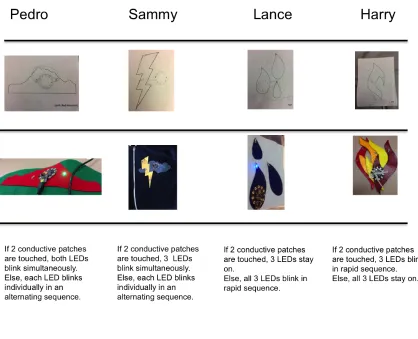
TABLE 1: BOYS’ E-TEXTILE DESIGNS
………40x
LIST OF ILLUSTRATIONS
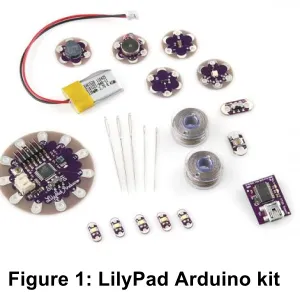
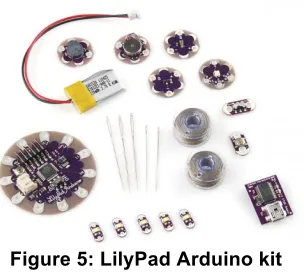
FIGURE 1: LILYPAD ARDUINO KIT………... 36
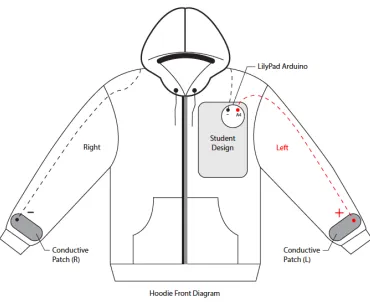
FIGURE 2: HUMAN SENSOR HOODIE………38
FIGURE 3: JASON’S CIRCUITRY BLUEPRINT AND COMPLETED DESIGN………….46
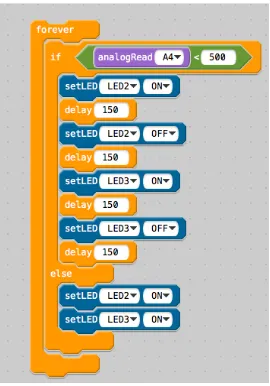
FIGURE 4: CODE FOR JASON’S COMPLETED PROJECT……….47
FIGURE 5: LILYPAD ARDUINO KIT………58
FIGURE 6: HUMAN SENSOR HOODIE ………..59
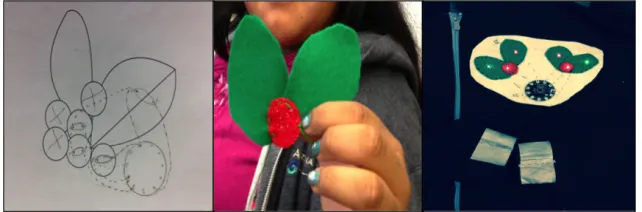
FIGURE 7: JESSI’S PROJECT FROM CIRCUITRY BLUEPRINT TO COMPLETED
E-TEXTILE………...64
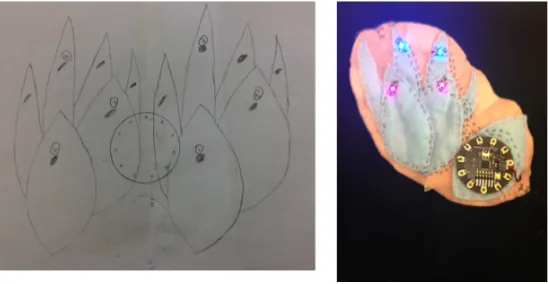
FIGURE 8: KELLY’S CIRCUITRY DIAGRAM AND COMPLETED PROJECT…………..66
FIGURE 9: LAUREN’S E-TEXTILE PROJECT………..68
1
CHAPTER 1
INTRODUCTION
In recent years, the Maker Movement has gained prominence in the United States. While
people have always engaged in creating stuff, Dale Dougherty, founder of Make magazine,
argues that the Maker Movement is “a renewal of some deeply held cultural values, a recognition
rooted in our history and culture that making comes to define us” (2013, pp. 7-8). These
sentiments were echoed by President Obama at the first White House Maker Faire held in 2014
where he remarked that, “Our parents and our grandparents created world’s largest economy and
strongest middle class not by buying stuff, but by building stuff – by making stuff, by tinkering and
investing and building.” Of course, the idea that making is a culturally process is not a new
concept to anthropologists, who have long studied craft practices (Ingold, 2013), media making
(Ginsburg, Abu-Lughod, & Larkin, 2002; Mazzarella, 2004), and other forms of production.
Spurred by the availability of low-cost hardware, digital fabrication tools, and open
source software, many perceive the Maker Movement as fundamentally democratic or, at the very
least, having tremendous democratic potential (Halverson & Sheridan, 2014; Ratto & Boler,
2014). Making happens in a variety of formal and informal learning contexts, with a particular
focus on the transformative potential of the Maker Movement in K-12 education, one of the
institutions established to democratize access to learning (Honey & Kanter, 2013).
The importance of making for learning is not new in education (Dewey, 1938/1963; Harel
& Papert, 1991), but the Maker Movement has successfully focused much-needed attention on
the value of hands-on, interest-driven learning in K-12 education. It has been less successful in
fulfilling its democratic promises. At a formal level, the Maker movement has largely been driven
by the initiatives of the Make organization, which is behind Make magazine. An analysis of Make
magazine covers revealed an overwhelming focus on White men and boys engaged in computing
2
never featured on the cover (Buechley, 2013). But we know that our public schools are diverse
places. In order to realize the transformative, democratic potential of the Maker Movement in
education, we need to understand the range of maker activities that can support not only learning
but also students’ identities as makers (Halverson & Sheridan, 2014; Kafai, Fields, & Searle,
2014).
One of the reasons why the Maker Movement has so quickly gained traction in
educational spaces is because of its strong connection to science, technology, engineering and
mathematics (Honey & Kanter, 2013), which are seen as central to the United States’ ability to
remain competitive in a global marketplace. In particular, computing has garnered much attention
in educational policy conversations and in popular media, with school districts from New York City
to San Francisco adding computer science courses to their K-12 offerings. Like the Maker
Movement, computing has struggled to broaden participation beyond White and Asian males
(Margolis, Estrella, Goode, Homle, & Nao, 2008; Margolis & Fisher, 2002). While efforts rooted in
the tech industry like Code.org’s “Hour of Code” program, have recently taken hold, educational
researchers have been working for some time to understand how to introduce a broad range of
youth to computing. In this dissertation, I explore a culturally responsive approach to making with
American Indian youth, a population that has been largely left out of conversations about making
and STEM learning in spite of a rich history of making through craft practices (Dewhurst, Keawe,
MacDowell, Okada-Carlson, & Wong, 2013) and scientific innovation (Bang, Marin, Faber, &
Suzokovich, 2013; Cajete, 1999; Kawagley, 1995). In order to provide broader context, I briefly
delve into the history of American Indian education and the academic achievement of American
Indian youth before returning to the specifics of this study.
Tribal Sovereignty, American Indian Education, and Achievement
The history of American Indian education is inextricably linked to what Lumbee scholar
David Wilkins (2004) calls “the four T’s” – tribal sovereignty, treaties, trust, and territory. While the
3
in the commerce clause of the Constitution, as well as in treaties and case law. Sovereignty is
maintained through the trust responsibility of the U.S government to “protect or enhance tribal
assets (including fiscal, natural, human, and cultural resources) through policy decisions and
management actions” (Wilkins & Lomawaima, 2001, p.65). While many entities may claim
sovereign status, tribal sovereignty, is unique to Indigenous contexts and articulates the
intersecting worldviews at the heart of U.S.-Indian relations (Brayboy, Faircloth, Lee, Maaka, &
Richardson, 2015; Wilkins, 2004). Initially popularized by Vine Deloria, Jr. in Custer Died for Your
Sins (1969), tribal sovereignty refers to both the unique legal/political relationship between
Indigenous peoples and the federal government and the internal cultural integrity of American
Indian nations (Wilkins, 2015). Defining tribal sovereignty in this way “forefronts the communal
process and encompasses multiple dimensions: inherent, political/legal, economic, cultural, and
educational, wherein all features are inextricably linked and are defined by the particularity of
individual tribes” (Brayboy et al, 2015, p.3). It also draws attention to the ways in which tribal
sovereignty is constrained by “the political realities of relations with the federal government,
relations with state and local governments, competing jurisdictions, complicated local histories,
circumscribed land bases, and overlapping citizenships” (Wilkins & Lomawaima, 2001, p.5).
Importantly, recognizing the limitations of tribal sovereignty does not lessen the sovereign status
of tribal nations (Lomawaima & McCarty, 2006; Wilkins & Lomawaima, 2001).
While space does not permit a full history of American Indian education, I situate current
efforts to support tribal educational self-determination in the context of top-down Federal Indian
educational policies since the 1960s and bottom-up community efforts to promote sovereignty in
education. Historically, education for American Indian youth was driven by the goal of erasing
Native languages and cultures and replacing them with the English language and American
values (Lomawaima & McCarty, 2006; Manuelito, 2005). However, two reports issued in 1969
(Indian Education: A National Tragedy—a national challenge) and 1970 (the Havinghurst Report)
drew attention to the abysmal state of Indian education, and especially the lack of recognition of
4
by leveraging the increased political and social activism throughout the United States to pressure
the federal government for increased tribal control over schooling for Indigenous youth
(Lomawaima & McCarty, 2006). In 1970, in what is widely perceived as a major shift in Federal
Indian policy, President Nixon articulated a policy of “self-determination without termination” for
Indian nations, including tribal control of schools. This announcement was followed by several
significant pieces of legislation for tribal educational self-determination. The Indian Education Act
of 1972 (a Title IV amendment to the Elementary and Secondary Education Act of 1965) provided
funding for the implementation of bilingual or immersion programs for tribal languages, the
development of curriculum materials, and the training of native language teachers and the Indian
Self-Determination and Education Assistance Act of 1975 allowed tribes to contract with the
Bureau of Indian Education to run their own schools. The result was the development and
implementation of a number of bilingual/bicultural programs for Indigenous youth at tribally
controlled schools (McCarty, 2002; Spolsky, 1974). Tribally-controlled bilingual/bicultural
programs empowered Indigenous teachers and community members to decide what
“appropriate” education looked like and, in doing so, challenged the relationship between tribal
and federal authority as it had historically played out.
While progress has been made, Indigenous communities, school administrators, and
teachers must constantly renegotiate their power. Federal Indian policy has, at least theoretically,
tended towards tribal independence, with presidents from Ronald Reagan to Barack Obama
explicitly reaffirming the sovereignty of tribal nations, but educational policy has provided a
number of challenges to tribal sovereignty (McCarty & Lomawaima, 2006; Pevar, 2004). In 1988,
just as many of the bilingual/bicultural programs at tribally-controlled schools were becoming able
to demonstrate the successes of their programs, Public Law 100-297, the Elementary and
Secondary School Improvement Amendments, was passed by Congress. In theory, P.L. 100-297
provided more stable funding to tribally controlled schools, but a condition of this funding was that
tribal schools became accountable to outside standards and accreditation processes. This forced
5
and high-stakes testing” (Lomawaima & McCarty, 2006, p.133). In particular, the passage of the
No Child Left Behind Act (NCLB) in 2001 and the era of high-stakes testing it ushered in have
provided a significant challenge to tribal sovereignty in education (McCarty, 2008). While Title VII
of NCLB (“Indian, Hawaiian, and Alaska Native Education”) provides for the incorporation of
culturally responsive curriculum, in practice, the demands of high-stakes tests have meant that
socially, culturally, and linguistically responsive (SCLR) education have gone entirely by the
wayside or have been bracketed off into elective classes rather than integrated throughout the
curriculum (Beaulieu, 2008; Beaulieu, Sparks, & Alonzo, 2005; Lee, 2015). While there are
certainly examples of schools that are providing Indigenous students with bilingual/bicultural
education and achieving the high test scores required under NCLB, these are the exception
rather than the norm and even these schools struggle with integrating tribally defined measures of
success with state and federal definitions of success (McCarty & Lee, 2014). For the most part,
our nation’s schools are still failing Indigenous students.
American Indian youth attend some of the lowest performing schools in the country
(Bureau of Indian Education Study Group, 2014) and lag behind their non-Indigenous peers on
almost every measure of academic success, from standardized test scores to graduation rates to
discipline referrals to presence in special education and gifted programs (Faircloth & Tippeconnic,
2010; Grigg, Moran, & Kuang, 2010). Overall the American Indian population is younger than the
average population in the United States, with about one-third of its members under the age of
eighteen. This means that many youth will soon be ready to attend college, but studies suggest
that they will not be academically prepared to do so, especially in STEM fields. American Indian
students are almost three times as likely as their White peers to score at the lowest levels on the
National Assessment of Educational Progress (NAEP) in math (Grigg, Moran, & Kuang, 2010)
and many do not take or do not have access to the kinds of advanced science and math courses
that would prepare them to pursue a post-secondary STEM trajectory (Babco, 2003). In other
6
Culturally Responsive Computing, Making, and E-Textiles Materials
In spite of little to no systemic change, the research literature suggests that culturally
responsive approaches to schooling, which leverage Indigenous languages and cultures to teach
school subjects, may provide one solution (Castagno & Brayboy, 2008; Hermes, 2005). Rooted in
culturally responsive approaches to schooling (Castagno & Brayboy, 2008; Gay, 2000;
Ladson-Billings, 1995; Paris, 2012; Paris & Alim, 2014), culturally responsive computing, sometimes
called ethnocomputing (Eglash, Bennett, O’Donnell, Jennings, & Cintorino, 2006), seeks to make
explicit the mathematical and computational knowledge found in a variety of heritage and
vernacular cultural practices, from star navigation to skateboarding, and to connect these
practices to school-based learning (Eglash, Gilbert, & Foster, 2013; Kafai, Searle, Martinez, &
Brayboy, 2014). In particular, Eglash (2007) and his colleagues have designed a series of
Culturally Situated Design Tools (CSDT’s) around Indigenous craft practices (www.csdt.rpi.edu).
The Virtual Bead Loom tool, for instance, situates learning of the Cartesian Coordinate System
within the context of creating designs on a virtual loom. Using these kinds of tools has been
associated not just with improved learning outcomes but also with positive identity development
for youth from a variety of cultural backgrounds (Eglash, Gilbert, & Foster, 2013). Given the
confluence of computing education and the Maker Movement, I wondered what it would look like
to extend culturally responsive computing beyond the screen into the realm of culturally
responsive making.
In this dissertation, I leverage electronic textiles (e-textiles) materials to explore the idea
of culturally responsive making with American Indian. By design, e-textiles materials combine old
and new tools and techniques. To create a functional e-textile artifact, a small, flat sewable
computer (the LilyPad Arduino microcontroller) is connected to a variety of sensors and actuators
using conductive thread rather than the wire and solder used in more traditional electronics
projects (Buechley & Eisenberg, 2008). Once a functional circuit has been sewn together with a
7
perform specific behaviors, such as making lights blink in a rapidly flashing pattern. In Indigenous
communities, where there is often a strong craft tradition, e-textiles present an opportunity to
connect heritage craft practices with digital making in culturally responsive ways.
The Dissertation Study
In order to explore culturally responsive making in an American Indian school context, I
conducted eighteen months of ethnographic fieldwork in the context of a tribally controlled charter
school located on tribal lands in the Southwest. The community is relatively small (10,000
enrolled members) and was historically known for its basket weaving and pottery making. During
the 2013-2014 school year, when the bulk of my research occurred, Eagle High School enrolled
just over two hundred students in grades 7-12. Although the mission statement highlighted a
combination of academic rigor and cultural awareness, culture was most often bracketed off into
elective courses like Native Studies and Native Arts. Students’ academic achievement was a
major concern and it was never clear whether the school would maintain its charter from
year-to-year.
After receiving tribal council approval, beginning in the spring of 2013, I conducted
eighteen months of ethnographic fieldwork at Eagle High School and in the surrounding
community. Working in conjunction with a classroom teacher at Eagle High school, I also
designed and implemented a three-week e-textiles unit as the culminating project for a Native
Studies class. Over the course of the 2013-2014 school year, the e-textiles unit was implemented
four times. Seventy-six American Indian youth between the ages of twelve and fourteen
participated in the unit over the course of the school year. Through field notes, I documented
insights from participant observation in school and community settings, with a focus on the Native
Studies e-textiles class and my interactions with students from the class in other settings. I video
recorded classroom sessions when participants were amenable and collected relevant
documents, such as handouts provided by the Native Studies teacher and copies of the
8
compiling a portfolio for each student that consisted of a circuit design blueprint for his or her
project, daily photographs of the in-progress design, photographs or short videos of the
completed, programmed artifact, and screenshots of students’ computer code. At the end of each
implementation of the Native Studies e-textiles unit, I conducted interviews with willing students,
usually five or six. These semi-structured interviews typically lasted ten to fifteen minutes and
asked students to reflect on their experiences with making an e-textile and to think about how the
project connected to other themes of the Native Studies course. I also conducted reflective
interviews with the Native Studies teacher at the end of each quarter. These interviews, once
transcribed, served as a way to document how design decisions regarding the e-textiles unit
evolved over the course of the school year.
Because this dissertation is interdisciplinary in nature, situated at the intersections of
educational research, anthropology, and American Indian studies, I have elected to write a series
of four stand-alone articles rather than one cohesive narrative, allowing me to speak to a
multiplicity of audiences. While these articles could be read in any order, they are described here
in the order in which they appear in the dissertation. Chapter Two: “Ethnographic design research
or design ethnography?” is intended to provide a more in-depth look at the methodological basis
of this dissertation, which combines critical Indigenous research methodologies with ethnography
and design-based research.
Chapter Three: “Boys’ needlework: Understanding gendered and Indigenous
perspectives on computing and crafting with electronic textiles” was submitted and presented at
the Association of Computing Machinery’s (ACM) Conference on International Computing
Education Research (ICER) 2015 in Omaha, Nebraska. It was awarded the John Henry Award for
“attempting a task that seems nearly impossible and pushing the upper limits of computer science
pedagogy.” Intended for researchers and computer science educators, this paper draws attention
to the intersections of race/ethnicity and gender in computing education research and unpacks
the kinds of computational perspectives ten American Indian boys developed through their
9
American Indian boys initially engage with e-textiles materials? (2) How did boys’ computational
perspectives develop through the process of making and programming their own e-textiles
artifacts? Findings highlight the importance of connecting to larger community value systems as a
context for doing computing, the importance of allowing space for youth to make decisions within
the constraints of the design task, and the value of tangible e-textiles artifacts in providing
linkages between home and school spaces. The discussion makes connections to other efforts to
engage racial and ethnic minority students in computing and examines the implications of this
work for computer science educators designing computing curricula for increasingly diverse
groups of students, especially as pertains to the emerging field of culturally responsive
computing.
Chapter Four: “Culturally responsive making with American Indian girls: Bridging the
identity gap in crafting and computing with electronic textiles” was submitted and presented at the
Association for Computing Machinery’s (ACM) conference on Gender and Information
Technology (GenderIT) 2015 in Philadelphia. This paper will be of particular interest to
educational researchers studying making. I argue that combining heritage craft practices, like
those found in many American Indian communities throughout the United States, with maker
practices presents an opportunity to examine a rich, if contentious space, where different cultural
systems come together. Further, I argue that the combination of heritage crafts, maker practices,
and computing provides an opportunity to address the “identity gap” experienced by many girls
and individuals from non-dominant communities, who struggle with taking on the identity of a
“scientist.” In this paper, I focus on the experiences of twenty-six American Indian girls (12-14
years-old). Findings highlight students’ initial engagement with e-textiles materials and activities,
their agency in designing and making e-textiles artifacts, and the ways in which e-textile artifacts
fostered connections across home and school spaces.
Chapter Five: “Negotiating Sovereignties and Identities in American Indian Classroom: A
Teacher’s Perspectives on Culturally Responsive Computing with Electronic Textiles” will be of
10
focusing on students, this paper takes up larger discussions about technology in American Indian
education and explores the implementation of the Native Studies e-textiles unit from the
perspective of the classroom teacher. Findings highlight the complexities of attempting to honor
Indigenous ways of knowing, being, valuing, and teaching within the U.S. educational system, the
need for an expansive view of technology, and the ways in which novel materials like electronic
11
CHAPTER 2
TOWARDS CRITICAL ETHNOGRAPHIC DESIGN RESEARCH IN AN EDUCATIONAL
SETTING
Introduction
Historically, ethnographers took themselves off to remote places untouched by the taint
of modernity, such as the “salvage ethnography” conducted by Boaz and others among
Indigenous peoples in North America or Malinowski’s study of Trobriand Islanders in New
Guinea. Key features of this kind of ethnographic project were its removal from modernity (a kind
of timelessness) and its location in a singular place where the ethnographer conducted fieldwork
over an extended period of time. Through observation, the ethnographer documented the
routines of daily life but at least from a theoretical and methodological perspective, did not
intervene. The doing of ethnography in this vein has come to be seen as not only complicit with
the colonial project (Jackson, 2008) but also unrealistically removed from the actual lived lives of
research participants across various interconnected online and offline spaces.
This historical legacy and lack of connectedness has raised serious questions about the
relevance of ethnography in the contemporary world as “the field” under study becomes
increasingly connected to our everyday lives and expands into new realms like the Internet and
virtual worlds. Questions about the doing of ethnography become especially complicated when
we turn the ethnographic lens on participants who are using and/or producing new digital tools.
Various solutions have been proposed to address these disparities, including “thin” rather than
“thick” description (Jackson, 2013), a more timely ethnographic practice concerned with
contemporary social and cultural issues (Rabinow & Marcus, 2008), multi-sited ethnography, and
the emerging arena of design anthropology (Gunn, Otto, & Smith, 2013).
In this article, I propose another response to these disparities, which I call “critical
ethnographic design research.” Critical ethnographic design research will help researchers and
12
through their use, and how their very existence instantiates new cultures. Anthropologists must
be willing to become timely, interventionist participants and designers rather than mere
observers. Doing so will require, if not wholly new methodological approaches, at least tweaks to
existing approaches. In articulating a vision for critical ethnographic design research, I make four
main arguments. First, critical ethnography provides a much-needed understanding of the context
in which design occurs. Second, Indigenous research perspectives draw our attention to the
importance of doing timely research that meets community needs as they are defined by the
community. Third, design-based research provides explicit guidance for how to conduct research
that meets community needs through iteration and partnership building. Fourth, combining these
three methods allows for a research practice and product that pays attention to social and cultural
elements, produces timely solutions, and meets community needs as they are defined by the
community.
Building on the traditions of critical ethnography, design based research, and Indigenous
research methodologies, I argue that critical ethnographic design research can make an
important contribution to addressing educational challenges in Indigenous (and other
non-dominant) communities as they are defined by community members. I draw upon my own
experiences as a non-Indigenous ethnographer/design-researcher collaborating with two
Indigenous classroom teachers, Culture Department staff, and an Indigenous co-researcher to
develop and implement multiple iterations of a culturally responsive computing unit using
electronic textiles technologies as a context for how these methodologies work in concert with
one another. Electronic textiles are just one of many emergent digital tools being deployed in
educational spaces. To illustrate what critical ethnographic design research might look like in
practice, I provide two vignettes. I conclude with a discussion of how these methodologies work
13
Background
In mapping out the dimensions of critical ethnographic design research, I recognize that
ethnographers, design-based researchers, and Indigenous researchers have large
methodological toolkits that may or may not overlap. Researchers from these disparate
communities may also deploy each other’s tools without fully understanding their methodological
premises or the implications of their use in particular contexts. With this in mind, I begin by
outlining the historical origins and characteristic features of each methodology to reveal not only
their strengths but also silences and omissions that are addressed in a combined approach.
Ethnographic Research Perspectives
Ethnography studies people in their own environments with a minimum of intervention. At
its most basic level, ethnography as a “way of seeing” is ideally suited to answering broad
questions of cultural context through the systematic study of a particular group of people
connected to a specific place over an extended period of time (Wolcott, 1999). The goal of
ethnography is to use “thick description” (the kind that allows you to distinguish between a wink, a
blink, and a twitch even though they are physically quite similar) to provide a holistic interpretation
of a cultural system through both emic (insider) and etic (outsider) perspectives (Geertz, 1973).
An ethnographer’s account of a particular cultural phenomenon must make “strange” cultural
practices accessible to those outside of the group under study and must also explain that cultural
phenomenon in ways that make sense to members of the group. As Jackson (2013) writes, “[p]art
of an anthropologist’s job is to contextualize social behaviors for readers, behaviors that are
never purely self-evident and that always reward more careful scrutiny” (p. 13). In order to
accomplish this goal, an ethnographer must observe a complete cycle of life in a particular place,
14
Ethnographic fieldwork carried out by anthropologists excels in its ability to engage
deeply with one community, place, or phenomenon over extended timescales and its ability to
delve into the complex, often contradictory sense-making of individuals and communities. This
strength might also be considered a weakness: What good is documenting the resistance
practices of non-dominant youth in schools if we are unable to alter the design of school spaces,
curriculum, and student-teacher interactions? Of course, many ethnographers have drawn upon
their research to argue for different educational policies at the state and national levels (see, for
instance, U.S. Senate Report 106-467) and offshoots like cultural therapy (Spindler, 2002),
ethnography for empowerment (Delgado-Gaitan & Trueba, 1991), and participatory action
research (Camarrota, 2008; Kirshner, Possoboni, & Jones, 2011) have found a home within the
anthropology of education, but these kinds of efforts are not the practices of most anthropologists.
Historically, ethnographers were tasked with documenting exotic languages and cultures before
their imminent extinction. Because it was presumed that these languages and cultures would not
survive colonization, timeliness was irrelevant. This is no longer the case. Ethnography must
become, as Rabinow and Marcus (2008) argue, contemporary. Part of this project is that
ethnography, at least in some contexts, will begin to take on an interventionist bent. Such
interventions are necessary to understand how culture emerges in certain settings, such as the
design of new tools and technologies, but also allows anthropologists to remain relevant by
addressing real-world problems as they are defined by participants.
Critical Indigenous Research Perspectives
At the same time that ethnography has struggled to maintain its relevance, Indigenous
communities have sought to reclaim research practices as their own and to decolonize them so
that they might serve community needs in practical ways (Smith, 2012). While there are several
approaches to Indigenous research (Archibald, 2008; Wilson, 2008), a constellation of
approaches known as Critical Indigenous Research Methodologies (hereafter: CIRM) center on
15
of outsider anthropologists (Deloria, 1969). CIRM are explicitly rooted in the knowledge systems
of Indigenous communities, including Indigenous ways of knowing (epistemologies), being
(ontologies), valuing (axiologies), and teaching (pedagogies) (Brayboy & Maughan, 2009). The
concepts of culture, knowledge, and power are central to understanding what research grounded
in Indigenous Knowledge Systems might look like and how this might differ from standard
anthropological conceptions of culture, knowledge, and power rooted in the work of scholars like
Bourdieu and Foucault.
Culture in an Indigenous conceptualization is both stable and dynamic. It is typically
connected to a group of people and often to a physical place, but there is also an awareness that
“culture shifts and flows with changes in contexts, situations, people, and purposes” (Brayboy,
2005, p.434). Within this conceptualization, Indigenous forms of knowledge and Western forms of
knowledge need not be diametrically opposed (Battiste, 2002; Castagno & Brayboy,
2008). Because an Indigenous conceptualization of knowledge focuses on the ability of a group
of people to recognize change and adapt accordingly, multiple knowledge sources are seen as a
powerful locus of survival. Indigenous peoples have always engaged in knowledge production, or
research, in the name of survival (Kawagley, 1995).
Power is a complicated concept in Indigenous Knowledge Systems (Deloria, 1970;
Stoffle, Zedeño, & Halmo, 2001; Warrior, 1995). It is both everywhere and nowhere. That is
“power is not a property or a trait that an individual has to exercise control over others; rather, it is
rooted in a group’s ability to define themselves, their place in the world, and their traditions”
(Brayboy, 2005, p.435). One way in which power is exercised is through sovereignty, the ability of
a group to self-determine, self-govern, self-identify, and self-educate (Lomawaima & McCarty,
2006). These definitions of culture, knowledge, and power highlight that a research approach
rooted in Indigenous Knowledge Systems supports a both/and approach to knowledge production
and takes seriously the adaptability of Indigenous individuals and groups to change rather than
16
perspective also highlights the value of understanding how Indigenous peoples engage with new
digital tools and adapt them for their own purposes.
CIRM are also guided by what Brayboy and his colleagues (2012) call “the four r’s” —
relationality, responsibility, respect and reciprocity (see also Kirkness & Barnhardt, 2001).
Relationships are crucial to the research endeavor, especially in terms of establishing the
trustworthiness of the researcher (Smith, 2000). Indeed, research should be seen as an ongoing
“process of fostering relationships between researchers, communities, and the topic of inquiry”
(Brayboy et al, 2012, p. 437). Because so much research in Indigenous communities has been
carried out unethically, CIRM emphasizes the researcher’s responsibility to conduct ethical
research that serves community wants and needs as they are defined by the community (Smith,
2012). Both respect and reciprocity grow out of developing relationships and being responsible to
the community.
The strengths of critical Indigenous research perspectives lie in their ability to reframe the
theory and practice of research from an Indigenous perspective in ways that emphasize
sovereignty and self-determination. Such an approach explicitly demands research that realizes
real, positive changes for Indigenous communities rather than the kinds of abstract theories and
actions that Deloria (1969) critiqued anthropologists for developing. However, there is less clarity
on how to understand community needs as they are defined by the community and how to
engage in research processes that lead to change. For Indigenous researchers working in their
own communities, these processes may be self-evident but, for Indigenous researchers working
outside of their home communities and for non-Indigenous researchers, more guidance is
required. One approach that has been successful in several contexts is design-based research
(e.g. Hermes, Bang, & Marin, 2012), which I describe in the following section.
Design-Based Research Perspectives
Design-based research (DBR) is an evolving research methodology with its origins in
17
inseparable from context, DBR is used to design new kinds of learning environments and to
research their implementation in the complexity of real-world-settings such as classrooms. It is
explicitly interventionist. As a kind of middle ground between laboratory settings where variables
can be carefully controlled and naturalistic settings (the focus of ethnographic research) where
there is no control of variables, DBR is particularly useful for helping us to understand the
underlying reasons why something is happening, the conditions under which a particular type of
learning or interaction can take place, and the ways in which an individual’s mind interacts with
the environment and any available tools. Most importantly, DBR sees interventions that change
features of environments, activities or tools as part of the process to be studied.
Rather than a singular approach, DBR is a collection of approaches that share some
common features (Barab & Squire, 2004; Design-Based Research Collective, 2003). Cobb,
Confrey, di Sessa, Lehrer, and Schauble (2003) highlight five crosscutting features of DBR. First,
design-based research has two goals that are intertwined: the design of learning environments
and the development of theories. This means that theories are often mid-level. As Cobb et al
(2003) elaborate, “Rather than grand theories of learning that may be difficult to project into
particular circumstances, design experiments tend to emphasize an intermediate theoretical
scope (di Sessa, 1991) that is located between a narrow account of a specific system (e.g., a
particular school district, a particular classroom) and a broad account that does not orient design
to particular contingencies” (p.11).
A second feature of DBR is that it is interventionist and focused on innovation. In other
words, much design-based research demands a break from business as usual in classrooms,
schools, and other educational contexts. It also demands active, engaged participation on the
part of the researcher or, more realistically, a collaborative team of researchers. Unlike the lone
ethnographer conducting fieldwork, design-based research is typically carried out by teams of
researchers working in partnership with administrators, teachers, students, parents, and other
community members. Third, DBR is both prospective and reflective. Designs are initially
18
through a particular design or design feature. However, as the design is implemented, new
features emerge as salient and both design and implementation may be refined. As a result, the
fourth characteristic of design research is that it is iterative in nature, allowing
designers/researchers to deal with multiple aspects of a learning ecology (Brown, 1992; Collins,
1992). Both design and research take place through cycles of design, implementation, analysis,
redesign, reimplementation, and analysis. Methods must be able to document all of these phases
in order to adequately capture the dynamics of the learning ecology (Cobb et al, 2003). Finally,
theories developed through DBR must do real work in the world, facilitating sharing with
practitioners and other designers while improving educational outcomes for participants. As
Hermes, Bang, and Marin (2012) articulate in thinking through an Ojibwe language revitalization
project, “DBR...has the affordance of engaging educational researchers in developing immediate
solutions for critical, timely, and practical problems in education” (p. 384).
If creating real change within schools in a relatively rapid time period is one of DBR’s
greatest strengths, it is also one of its greatest weaknesses. The theories and designs generated
through DBR are often critiqued as being too formative in nature, the time-scale too condensed
(Barab, 2014). Further, in spite of its focus on situating learning in context, DBR has been
relatively silent about the role that culture and sociohistorical context play in schooling and
design. Ironically, “the lessons involved in DBR often uncover the sociohistoric foundations in
which learning, education, and language are deeply entrenched” (Hermes et al, 2012). In
Indigenous communities, Bang and her colleagues (2015) have begun to experiment with what
they call community-based design research, which centers the role of community and the
sociohistorical context of learning (Bang, Faber, Gurneau, Marin, & Soto, 2015). In such contexts,
I suggest that ethnography could provide a much-needed link between design-based research
and the larger, contemporary school and community context as it is linked with historical practices
19
Towards Critical Ethnographic Design ResearchReviewing the strengths and weaknesses of critical ethnographic, Indigenous, and design
based research perspectives reveals how these methodologies could benefit from each other.
Ethnographic perspectives contribute a critical attention to deeply situated contextual knowledge,
including community members’ complicated and often contradictory sense-making, and
emphasize long-term engagement but lack an interventionist stance. Critical Indigenous
Research Methodologies focus attention on conducting research that meets community needs
but could benefit from more explicit guidance on how to do so. Design based research provides
this guidance by outlining a design process that involves community engagement and provides
real-time solutions to community-defined educational problems, but requires the attention to
social and cultural context and timescale provided by ethnographic perspectives.
In the following sections, I draw upon my research in the Salt River Pima Maricopa Indian
Community to illustrate how the combination of ethnography, critical Indigenous research
methodologies, and design-based research is a useful approach for educational researchers
seeking to understand the context in which design occurs while meeting community needs
through timely changes to the educational system. I begin by providing some historical context
because that perspective greatly informs community-defined educational needs.
Context
On October 28, 1988, House Resolution 5066 (H.R. 5066) was signed into law, setting
into motion a multi-government land exchange to facilitate the construction of Arizona State
Route 101, which would run through nine miles of reservation land belonging to the Salt River
Pima Maricopa Indian Community (the Community). In exchange for the Community ceding land
to the State of Arizona for highway construction, the U.S. government added additional lands to
20
government by ceding state-owned lands to the Bureau of Land Management. For the
Community, the signing of H.R. 5066 and the construction of what would become known as the
Pima Freeway, completed in 2001, marked a shift in many aspects of community life.
In 1988, the Salt River Pima Maricopa Indian Community had 4,100 enrolled members
and 300 tribal government employees. In 2013, the Community had 9,600 enrolled members and
1300 tribal government employees. This rapid growth in community membership and tribal
government can largely be attributed to the construction of the Pima Freeway. Today, 380,000
cars per day travel through nine miles of tribal lands courtesy of the highway. Significant tribal
economic development opportunities accompanied the freeway, including two casinos, a stadium
facility that hosts spring training for three Major League baseball teams, and several strip mall
and office complexes located on the West side of the highway such that many people do not
realize they are shopping on tribal lands when they visit Target or Starbucks. With this rapid shift
from poverty to relative economic prosperity has come a need for the Community to seriously
consider what kind of government it wants to have and how it wants to self-identify. As the
Community has become not only economically independent but also prosperous, external
challenges to their sovereignty have increased, often premised on a perceived lack of cultural
distinctiveness (Cattelino, 2008). As such, there is not only a community-based desire to maintain
tribal languages and cultures but also external pressure to perform cultural distinctiveness in
“authentic” ways, such as the presence of traditionally-dressed basket dancers at the grand
opening of the aforementioned Target or prominent displays of Native American art at both tribal
casinos.
While this is not a story of casinos or development per se, it would be virtually impossible
to understand the significant tensions that arise around culturally responsive computing without
understanding the pressures for cultural “authenticity” brought about by economic prosperity and
the concomitant push back against “modernity” in particular contexts (Clifford, 1988; Samuels,
2004; Scales, 2012). I visited the Salt River Pima Maricopa Indian community for the first time in
21
on the Pima Freeway, long before exiting the highway and beginning the drive through fields
brimming with “Pima” cotton leased to Levi Strauss & Company and trailers decorated for
Halloween. This “arrival,” consisting of a flight to Phoenix from Philadelphia and a twenty-minute
drive in a rental car on a major highway, was a far cry from the classic scene of anthropological
arrival in a remote location (Jackson, 2013, Malinowski, 2013/1922). Yet, with the exception of
the Talking Stick Casino rising like a mirage out of the desert landscape, there is a marked
transition from urban to rural as one moves from the West side of the Pima Freeway to the East
side. Stop signs replace stoplights, sidewalks disappear, and dogs roam freely.
The purpose of my initial trip was two-fold: to visit the educational administration building
for fingerprinting (part of an extensive background check conducted by the community) and to run
a small pilot workshop in the after school language and culture program at the Community’s
elementary school. The workshop, making light up Halloween masks, was intended to provide the
Community’s education and culture departments with an opportunity to vet the project before it
went before the Education Standing Committee and the tribal council for official approval.
Although the workshop took place in the context of an after school Piipaash (Maricopa) language
and culture program, the instructor, Mr. C, purposefully steered the activity in a direction that
would not include any contentious cultural material. Throughout my tenure in the community, the
incorporation of cultural knowledge into educational contexts, especially in the context of
electronic textiles, was continuously negotiated and often contested. In fact, the negotiation and
contestation of cultural knowledge, combined with the community’s economic development, is
what made the Salt River Community such a compelling place to understand how the relationship
between “tradition” and “modernity” played out in educational contexts.
To understand how community members made sense of the complicated, often
contradictory relationships between “tradition” and “modernity” in their lived lives and how they
conveyed this information to community youth, I conducted ethnographic research in
tribally-controlled schools and the community at-large. I also conducted design-based research in tribal
22
Culture Department staff to develop and implement multiple iterations of a culturally responsive
unit incorporating electronic textiles technologies. Ultimately, my research focused on Eagle High
School, a tribally-controlled traditional charter school that served just over 200, mostly American
Indian (99%) students in grades 7-12 during the 2013-2014 school year. About half of the
students were eligible for free or reduced lunch.
At the request of school administration, I worked primarily with seventh and eighth grade
students in the context of two elective courses. I conducted pilot research in an elective Native
Arts class for junior high youth in the spring of 2013 and then collaborated on the design and
implementation of a three-week Native Studies e-textiles unit during the 2013-2014 school year. I
also worked with staff members from the Culture Department and the Education Department to
develop two culturally responsive computing units in the context of a pre-college preparatory
summer camp for junior high youth. These units occurred over two weeks but were roughly the
same number of hours as the Native Studies e-textiles unit. In addition to these design-based
interventions, I also spent time “hanging out” at school, reading the community newspaper,
attending special “culture day” events and the school-sponsored “social gathering” (in lieu of a
Pow Wow) alongside students, and conducting community outreach through a booth at the
annual Halloween carnival and a family night at Eagle High School.
The following vignettes illustrate how I came to approach critical ethnographic design
research and how the combined perspective offered insights into not just how “tradition” and
“modernity” were negotiated, but also how to implement culturally responsive computing curricula
in the midst of these negotiations that I couldn’t have gained with just one methodological toolkit.
Findings
Of Superheroes and Stories: Negotiating and Designing “Culture” in Educational Contexts and Curriculum
Working together to design a culturally responsive computing unit for community youth
23
“modernity,” and how they negotiated the relationships between these for themselves and for the
community. Culture Department staff were quick to point out the presence of “modernity” in their
own work and home lives. Jesse, who was one of the community gardeners, discussed his use of
new technologies for cultivating food in the desert. He said, “Using modern technology doesn’t
make you less O’Odham or Piipash, it just expands your ability to express yourself into other
realms” (FN, 5/23/13). Similarly, reflecting on the hypothetical process of making an electronic
textile artifact, Mr. W, the director of the Culture Department commented, “On a given day, I might
make a Metallica logo, I might not feel like making something Native” (FN, 4/2/14). He also
stressed the Culture Department’s use of digital tools to aid their cultural preservation work. In
this way, he recognized that being O’Odham or Piipaash was not about being “traditional” or
“modern” but about balancing the two. In fact, he often framed questions in terms of, “How do we
meet modern needs and maintain our traditional ways of being O’Odham and Piipaash?” (FN,
6/4/13).
In contrast, when it came to educating community youth, culture department staff were
rigidly focused on tradition. As one member of the Culture Department staff articulated in a
meeting about curriculum for summer camp, “We know what it means to be O’Odham and
Piipaash, but a lot of our youth do not” (FN, 4/2/14). Because of this disjuncture, many Culture
Department staff articulated that it was especially important for youth to learn their “traditional”
culture without “modern” influences. This became especially clear when one of my research
collaborators and I proposed implementing a superhero themed e-textiles unit with junior high
youth for summer camp. From our perspective, a superhero theme would have allowed us to
emphasize the ways in which O’Odham and Piipaash cultures were anything but “old” and “in the
past,” phrases we had heard youth use to describe “traditional” culture. We envisioned that by
creating superhero-themed e-textiles unit, we would be able to connect youth’s interest in comic
books to “traditional” community stories and contemporary social issues by drawing upon comic
books by Indigenous authors and contemporary trends in Native art (e.g. the work of Santa Clara