Microbial Population Balancing for Containment
Specification
L isa E. F erris
This thesis is submitted for the degree of Ph.D. in Biochemical Engineering at
ProQuest Number: 10017758
All rights reserved
INFORMATION TO ALL USERS
The quality of this reproduction is dependent upon the quality of the copy submitted.
In the unlikely event that the author did not send a complete manuscript and there are missing pages, these will be noted. Also, if material had to be removed,
a note will indicate the deletion.
uest.
ProQuest 10017758
Published by ProQuest LLC(2016). Copyright of the Dissertation is held by the Author.
All rights reserved.
This work is protected against unauthorized copying under Title 17, United States Code. Microform Edition © ProQuest LLC.
ProQuest LLC
789 East Eisenhower Parkway P.O. Box 1346
Acknowledgements
I would like to thank Mike Turner, Eli Keshavarz-Moore and Peter Dunnill for
their invaluable support and direction both during my experimental work and the
preparation of this thesis. I would also like to thank Ian Stewart and Geoff Leaver
at ABA Technology for their technical assistance.
I would also like to thank: David McDowell at the Laboratory of the Government
Chemist for teaching me how to carry out PGR; Michael Noble for carrying out
the PGR analysis for the experiments in chapter 4, the results of which are pivotal
to this PhD, and Grant Hamilton for assisting with a protein assay in the final stage
of my experimental work.
I must also thank the workshop and pilot plant staff at University College, lead by
John Betts and Clive Orsbom. They are rarely thanked sufficiently.
I am grateful to the Biotechnology and Biological Science Research Council and Warren Spring Laboratory (now at ABA Technology) for their financial support.
Finally, I would like to thank Sarah Curl for a bottle of gin which has made the last
Abstract
The aim of this project is to quantify the numbers of microorganisms released from
bioprocessing equipment during its normal operation. This release can occur either
in the form of a liquid or an aerosol. Experimental work has concentrated on
sampling and detecting aerosol releases of microorganisms.
A population balancing system which allows the consistent quantitation of a
microbial aerosol has been devised. This mass balancing system consists of the
release and capture of a known aerosol in a contained environment. The aerosol
was produced using an atomiser or a Collison Nebuliser. This aerosol was released
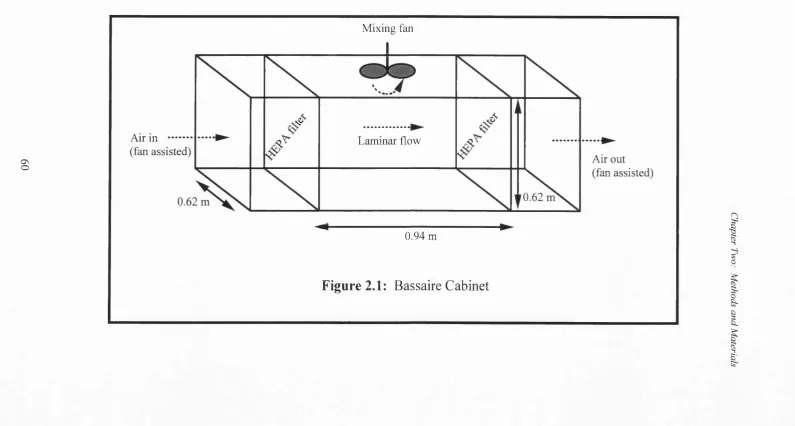
into the Bassaire cabinet (volume 360L) and collected using an Aerojet-General
cyclone sampler. The number of microorganisms that fell to the floor of the
cabinet was also enumerated using Petri dishes containing a liquid. The total number of microorganisms collected from both the air in the cabinet and from the
floor were enumerated under a microscope, using a counting chamber.
This mass balance was carried out using both Saccharomyces cerevisiae and
Escherichia coli. The cell recovery in the cyclone, i.e. the % of those cells released that were captured, was found to depend upon the released cell concentration and
the composition of the suspending medium. It was possible to consistently recover
over 50% of the cells released into the cabinet.
The mass balance was then carried out exactly as before, but in a larger, soft film
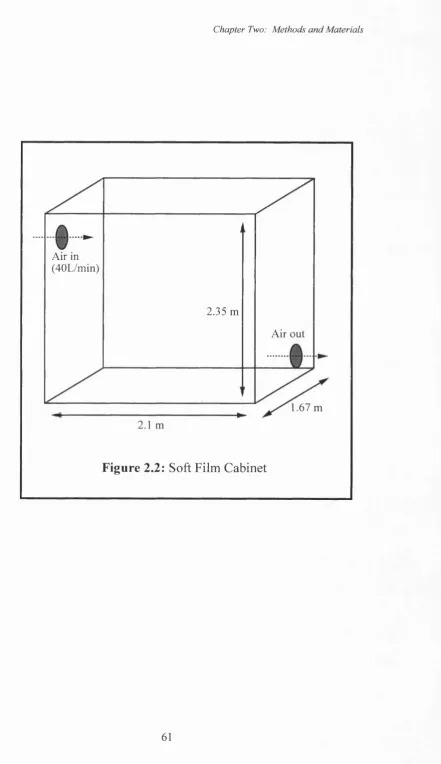
cabinet (volume 8.3m^). This cabinet was used because it was large enough to
hold a piece of bioprocessing equipment, such as an APV 3 CCD high pressure
homogeniser. Since the aim of this investigation was to quantify release from such
a piece o f equipment, the cabinet that it was located in should first be calibrated.
Cell recoveries in the cyclone were found to be around 10-20%. Again, these
Recoveries were dependent upon the released cell concentration, but found to be
consistent on repetition.
The Aerojet-General cyclone was then used to sample the air in the cabinet whilst
the homogeniser processed a suspension of S. cerevisiae. It was not possible to
detect released S. cerevisiae cells in the cyclone using the counting chamber.
However, when the homogeniser was used to process a recombinant E. coli
Polymerase Chain Reaction (PGR) could be used to detect a DNA sequence
present only in the recombinant E. coli. The microbial release was dependent upon
operating time and pressure.
The difficulty experienced in aerosolising microorganisms from a liquid
suspension was investigated further by using the cyclone to sample the headspace
air above a fermenter. Released S. cerevisiae cells could not be detected using the
counting chamber. However, using PGR, it was possible to detect E. coli cells in
the fermenter headspace. It is suggested that S. cerevisiae cells are less easily
aerosolised from a liquid surface than E. coli cells.
This study shows that during the normal operation of bioprocessing eqiupment
such as a homogeniser and small scale fermenter, microbial release can be detected
at a very low level only (approx. 10^ E. coli cells.h‘ 1). These results have
important implications for both equipment design for contained operation and GMO legislation.
Some suggestions for further work which could be carried out include: alterations
to the cyclone design to improve cleanability, reduce liquid losses in the air stream and to achieve more efficient washing of collected cells from the cyclone walls; a
more comprehesive analysis of the particle size distribution in the aerosols; an
investigation of the off-gas from a recombinant S. cerevisiae fermentation; an
investigation into the effects of operating pressure on microbial release from the
30GD homogeniser and finally the application of the microbial population
balancing technique developed here together with Gomputational Fluid Dynamics
to build up a picture describing the destination of release cells in a processing
Contents
Title Page 1
Acknowledgements 2
Abstract 3
Contents 5
List of Figures 10
List of Tables 12
Abbreviations 14
CHAPTER ONE: INTRODUCTION 16
1.1 Importance and Aims 16
1.1.1 The Significance of Microbial
Population Balancing 16
1.1.2 Aims o f the Study 17
1.2 Release 18
1.2.1 Definition and Form 18
1.2.2 Release of Microorganisms from
Bioprocessing Equipment 18
1.2.2.1 Health Effects 21
1.2.3 Survival of Microorganisms in Aerosols 22
1.2.4 Survival of Microorganisms in the
External Environment 26
1.2.5 Exchange of rDNA in the External
Environment 28
1.2.5.1 DNA Transfer to Other
Microorganisms 28
1.2.5.2 DNA Transfer to Animal Cells 31
1.3 Safety Legislation 32
1.3.1 The Robens' Report and the Health and
Safety at Work Act (1974) 32
1.3.2 The Gordon Research Conference 35
1.3.3 The Asilomar Conference (1975) 36
1.3.4 The Organisation for Economic Co-operation and
Development (OECD) (1986) 36
1.3.5 The Control of Substances Hazardous to
Health (1988) 40
Guidance Notes 40
1.3.7 The Contained Use Regulations 42
1.4 Risks and Hazards in Bioprocessing 44
1.4.1 Definitions 44
1.4.2 Public Perception of Risk 45
1.4.3 Risk Assessment 47
1.4.3.1 Farmer Plots 48
1.4.3.2 Fault Tree Analysis 49
1.4.3.3 Hazard and Operability Studies 50
CHAPTER TWO: METHODS AND MATERIALS 53
2.1 Addresses of Suppliers 53
Materials 55
2.2.1 Microorganisms 55
2.2.2 Media and Chemicals 55
2.2.3 Containment Cabinets 58
2.2.4 Atomisers 63
2.2.5 Cyclone 63
2.2.6 Fermenter Head-Space Sampler 63
2.2.7 APV 30CD Homogeniser 68
2.2.8 Fermenters 70
2.2.9 Other Equipment 70
Methods 74
2.3.1 Preparation of Cells 74
2.3.2 Cabinet Preparation 74
2.3.2.1 Bassaire Cabinet 74
2.3.2.2 Soft Film Cabinet 75
2.3.3 Spraying and Collecting 75
2.3.3.1 Bassaire Cabinet 75
2.3.3.2 Soft Film Cabinet 75
2.3.3.3 Cyclone Operation 78
2.3.4 Cell Enumeration 81
2.3.4.1 Total Counts Using a
Haemocytometer 81
2.3.4.2 Viable Counts 81
CHAPTER THREE: MASS BALANCING IN
CONTAINED ENVIRONMENTS 85
3.1 Sampling Aerosols 85
3.1.1 Introduction 8 5
3.1.2 Samplers Collecting onto Solid or
Semi-solid Surfaces 90
3.1.3 Samplers Collecting into Liquids 93
3.1.4 Samplers Collecting onto Filters 95
3.2 Detecting Microorganisms in Aerosols 97
3.2.1 Choosing a Method 97
3.2.2 Microscopy 97
3.2.3 Growth-Reliant Methods 99
3.2.4 Luminescence 101
3.2.5 Nucleic Acid Probes 104
3.2.6 The Polymerase Chain Reaction 106
3.2.6.1 Quantitative PCR 108
3.2.7 Immunoassays 112
3.2.8 Biosensors 113
3.3 Cell Detection in This Study 116
3.4 Mass Balancing Experimentation 117
3.4.1 Mass Balancing in Bassaire Cabinet 117
3.4.1.1 Aerosol Release Using
the Collison Nebuliser 117
3.4.1.2 Aerosol Release Using
the Glass Atomiser 122
3.4.2 Mass Balancing in Soft Film Cabinet 126
3.4.3 Mass Balancing in the ACBE 127
3.5 Factors Affecting Recovery of Microbial Aerosols 134
3.5.1 Bassaire Cabinet 134
3.5.1.1 Enumeration by Total Counts 134
3.5.1.2 Enumeration by Viable Count 137
3.5.2 Soft Film Cabinet 139
3.6 Particle Size Analysis of Microbial Aerosols 141
3.6.1 Aerosol Release and Sampling in
Bioaerosol Test Chamber 141
3.6.2.1 Aerosol Masses 148
3.6.2.2 Particle Size Distribution and
Cell Recovery in the Cyclone 149
3.7 The Polymerase Chain Reaction 150
3.7.1 Detection of Transketolase E. coli Cells
Using Kanamycin Primers 150
3.7.2 Detection of TK E. coli Using the
Primers LFl, M l3F and M l3R 156
CHAPTER FOUR: RELEASE OF MICROORGANISMS
FROM BIOPROCESSES 157
4.1 Process Design for Containment 157
4.1.1 Biological Disablement 157
4.1.2 Physical Containment: Design Aspects 159
4.1.3 Equipment Design 159
4.1.3.1 Fermenters 160
4.1.3.2 Centrifuges 162
4.1.3.3 Homogenisers 164
4.1.3.4 Seals and Valves 165
4.1.4 Facility Design 168
4.1.4.1 Air Supply 168
4.1.4.2 Water Supply, Effluent Disposal
and Sterilisation 169
4.1.4.3 Validation of Containment 170
4.2 Measurement of Release from Fermenter Head-spaces 175
4.2.1 Fermenter Operation 175
4.2.2 Detection of Released S. cerevisiae by
Total Counting 175
4.2.2.1 Sampling Strategy 175
4.2.2.2 Results 176
4.2.3 Detection of Released TK & coli hy
the Polymerase Chain Reaction 178
4.2.3.1 Sampling Strategy 178
4.2.3.2 Results 179
4.3 Measurement of Microbial Release from
Total Counting 183
4.3.1.1 Homogeniser Operation 183
4.3.1.2 Sampling Strategy 185
4.3.1.3 Results 185
4.3.2 Detection of Released TK E. coli by
the Polymerase Chain Reaction 188
4.3.2.1 Fermentation 188
4.3.2.2 Homogeniser Operation and
Sampling Strategy 188
4.3.2.3 Results 189
CHAPTER FIVE: DISCUSSION 195
5.1 The Mass Balancing Method 195
5.1.1 Aeroj et-General Cyclone 195
5.1.2 Counting Chambers 197
5.1.3 Bassaire Cabinet 197
5.2 Factors Affecting Recovery in the Cyclone 198
5.3 Releases from Bioprocessing Equipment 200
5.3.1 APV 3OCD Homogeniser 200
5.3.2 Fermenters 202
5.3.3 Detection Limits 207
5.4 PCR and Microbial Population Balancing 209
5.5 Implications for Legislators and Industry 210
5.5.1 Incidental Versus Accidental Release 211
5.5.2 Why We Need More Sensitive
Detection Methods 212
5.6 Conclusions 213
5.7 Future Work 215
References 217
APPENDICES
A Fermentation Profiles 232
B Particle Size Analysis Data 238
C Protein (BSA) Analysis Calibration Curve 243
List o f Figures
2.1 Bassaire Cabinet 60
2.2 Soft Film Cabinet 61
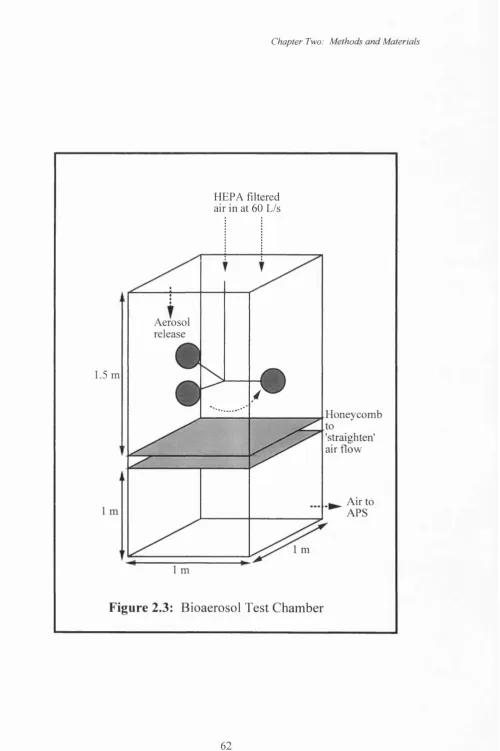
2.3 Bioaerosol Test Chamber 62
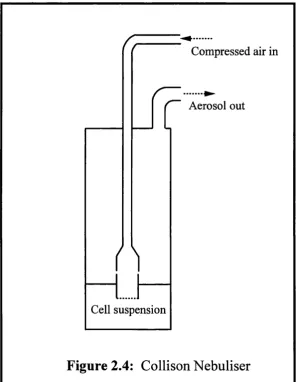
2.4 Collison Nebuliser 64
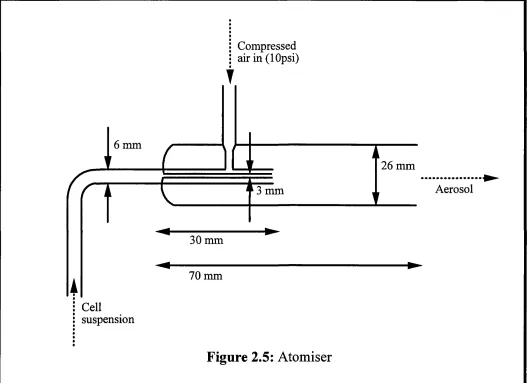
2.5 Glass Atomiser 65
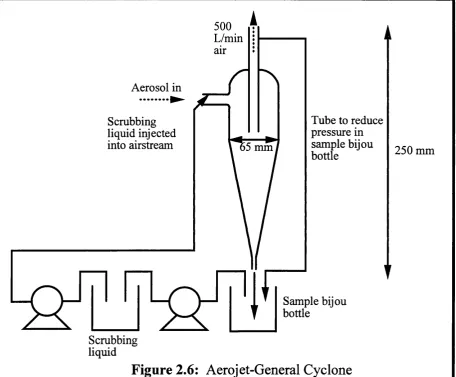
2.6 Aerojet-General Cyclone 66
2.7 Fermenter Head-Space Sampler 67
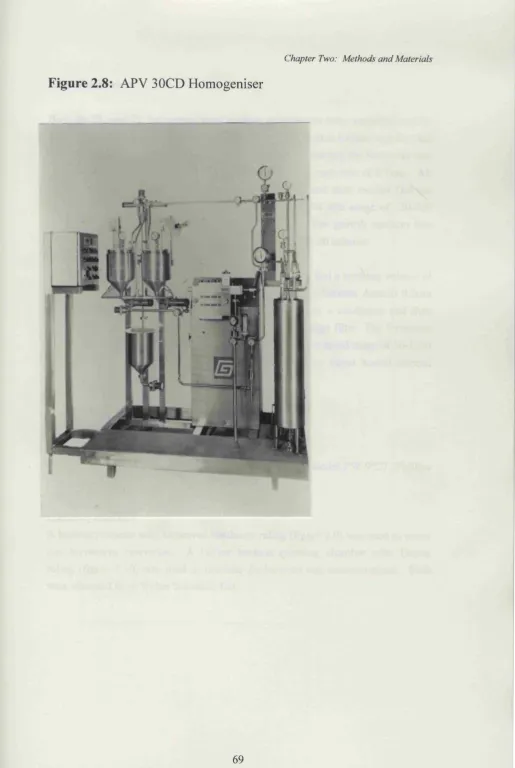
2.8 APV 3OCD Homogeniser 69
2.9 Haemocytometer with Improved Neubauer Rulings 71
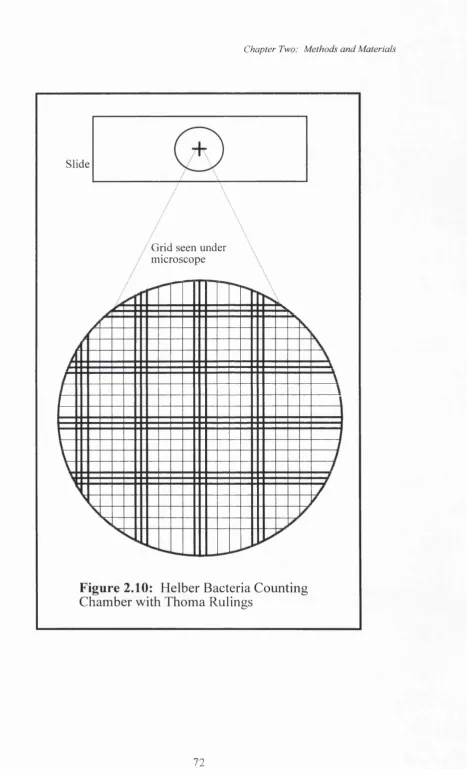
2.10 Helber Bacteria Counting Chamber with Thoma Rulings 72
2.11 Mass Balancing in Bassaire Cabinet 76
2.12 Mass Balancing in Soft Film Cabinet 77
2.13 Fluid Flow in Aerojet-General Cyclone 80
3.1 Mass Balancing in Downstream Processing Room o f the
ACBE 131
3.2 Mass Balancing Locations in Downstream Processing Room
of the ACBE 132
3.3 Timing of Mass Balancing Experiments 133
3.4 Particle Size Distribution of S. cerevisiae Aerosolised from
Ringers' Solution 144
3.5 Particle Size Distribution of 5". cerevisiae Aerosolised from
Fermenter Broth 145
3.6 Particle Size Distribution of E. coli Aerosolised from
Ringers' Solution 146
3.7 Particle Size Distribution of E. coli Aerosolised from
Fermenter Broth 147
3.8 (i) Detection of Kanamycin Resistance Gene from Whole
Transketolase E. coli Cells 152
3.8 (ii) Detection of Kanamycin Resistance Gene from Whole
Transketolase E. coli Cells 153
3.9 Detection of Kanamycin Resistance Gene from Lysed
Transketolase E. coli Cells 154
3.10 Plasmid PQR701 155
4.2 Release of Transketolase E. coli from a Fermenter
Head-Space (Experiment B) 182
4.3 30CD Homogeniser Located Inside Soft Film Cabinet 184
4.4 3OCD Homogeniser Piston 186
4.5 Detection of Transketolase E. coli Released from an APV
3 OCD Homogeniser (Run A) 192
4.6 Detection of Transketolase E. coli Released from an APV
3 OCD Homogeniser (Run B) 193
A1 S. cerevisiae Fermentation 233
A2 E. coli Fermentation A 234
A3 E. coli Fermentation B 235
A4 Transketolase E. coli Fermentation A 236
A5 Transketolase E. coli Fermentation B 237
C l Protein (BSA) Calibration Curve 244
List o f Tables
1.1 Current Legislation Concerning the Safe Use o f Genetically
Modified Organisms 34
1.2 OECD Containment Levels 39
3.1 Sampling Methods for Aerosols 89
3.2 Detection Methods for Aerosols 98
3.3 Collection of S. cerevisiae in the Cyclone 117
3.4 Release of S. cerevisiae from the Collison Nebuliser 118
3.5 Collection of NaCl in the Cyclone 119
3.6 Collection of E. coli in the Cyclone 120
3.7 Collection of NaCl in the Cyclone 122
3.8 Collection of S. cerevisiae in the Cyclone 123
3.9 Collection of E. coli in the Cyclone 125
3.10 Collection of S. cerevisiae sprayed with the Atomiser 126
3.11 Persistance of S. cerevisiae as an Aerosol 127
3.12 Air sampling Using the Cyclone 128
3.13 Collection of S. cerevisiae from the Downstream
Processing Room of the ACBE 129
3.14 Effect of Air Circulation on Collection of S. cerevisiae
from the Downstream Processing Room 129
3.15 Recovery of S. cerevisiae and E. coli Aerosolised in
Ringers' Solution 134
3.16 Recovery of S. cerevisiae Aerosolised in Broth 135
3.17 Recovery of E. coli Aerosolised in Ringers' Solution 136
3.18 Recovery of E. coli Aerosolised in Broth 136
3.19 Recovery of S. cerevisiae Aerosolised in Ringers' Solution 137
3.20 Recovery of S. cerevisiae Aerosolised in Broth 138
3.21 Recovery of E. coli Aerosolised in Ringers' Solution 138
3.22 Recovery of E. coli Aerosolised in Broth 138
3.23 Recovery of S. cerevisiae and E. coli Aerosolised in
Ringers' Solution 139
3.24 Recovery of S. cerevisiae from the Soft Film Cabinet
Containing the APV 3 OCD Homogeniser 140
3.25 Mass Concentration of & Suspensions 149
4.2 Fermenter Conditions Tested for Release 175
4.3 Measurement of Release of Unmodified E. coli Cells from
the Head-space of a Fermenter 177
4.4 F ermenter Conditions T ested for Release 178
4.5 Measurement of Release of Transketolase E. coli Cells from
the Head-space of a F ermenter 179
4.6 Measurement of Release of Transketolase E. coli Cells from
the 3OCD Homogeniser (Run A) 189
4.7 Measurement of Release of Transketolase E. coli Cells from
the 3 OCD Homogeniser (Run B) 190
4.8 Protein Release from Transketolase E. coli During
Homogenisation 194
5.1 Cyclone Efficiencies 207
5.2 Limit of Detection of Total Counting Method 208
B1 Particle Size Analysis of S. cerevisiae in Ringers' Solution 239
B2 Particle Size Analysis of S. cerevisiae in Broth 240 B3 Particle Size Analysis of E. coli in Ringers' Solution 241
Abbreviations
ACBE Advanced Centre for Biochemical Engineering ACGM Advisory Committee on Genetic Manipulation
ACGIH American Conference of Governmental and Industrial Hygienists
ADP Adenosine DiPhosphate
AEG Adenylate Energy Charge
AGI All Glass Impinger
AMP Adenosine MonoPhosphate
AMS Anderson Multistage Sampler
APS Aerodynamic Particle Sizer
ATP Adenosine TriPhosphate
BSA Bovine Serum Albumin
BTC Bioaerosol Test Chamber
CD valve Cell Disruption valve
cmtBl A primer that binds to a site on the cmtB gene
CSS Casella Slit Sampler
dNTP deoxyNucleoside TriPhosphates
DOT Dissolved Oxygen Tension
DSP Downstream Processing room of the ACBE
EDTA Ethylenediaminetetraacetic acid ELISA Enzyme Linked ImmunoSorbent Assay G(I)LSP Good (Industrial) Large Scale Practice
GMO Genetically Modified Organism
HASAWA Health and Safety at Work Act (1974) HAZOP Hazard and Operability Study HEPA High Efficiency Particulate Air Filter
HEPES N-[2-hydroethyl] piperazine-N'-[2-ethanesulphonic acid]
ISO International Standards Organisations KM I and KM2 Kanamycin primers
LFI A primer
LPC Laser Particle Sizer
LSCC1/2/3 Large Scale Containment Category 1/2/3 M I3F and R A primer set
MPN Most Probable Number
PCR Polymerase Chain Reaction
RO Reverse Osmosis
RODAC Replicate Organism Direct Count
SAS Surface Air System
SOP Standard Operating Procedure/Practice
TBE Tris-Borate-EDTA buffer
TK Transketolase
tftc too few to count
UM Unmodified
Chapter One: Introduction
CHAPTER ONE: INTRODUCTION 1.1 Importance and Aims
1.1.1 The Significance of Microbial Population Balancing
It is widely recognised that although the majority of large scale bioprocesses are
safe (WHO, (1984), ACGM Note 6, (1987)), some will need containment. This
may be because the process involves a pathogenic organism or one that has been
genetically manipulated. This containment is required because the release of the
process organism may be hazardous to man or the environment and is a legal
requirement (Health and Safety at Work Act, (1974) and Genetically Manipulated
Organism (Contained Use) Regulations, (HSE, 1992)).
Current UK Legislation states that, depending upon the containment category that a
process is operated at, a microbial release from the process must either be
minimised or prevented. These two words "minimise" and "prevent" are subjective
and would be easier to interpret if they were supported by numbers. Ideally, these numbers should take the form of a release limit. However, at present, there is little
data available on the release of microorganisms from bioprocesses. Industry has
reacted to this legislation (HSE, 1992) by applying more containment measures
than are necessary, which inevitably will lead to higher plant costs and processes
that are difficult to work with. Indeed, a recent report by the Select Committee on
Science and Technology (1993) expressed concerns that the Contained Use
Regulations would lead to a lack of competitiveness in the UK Biotechnology
Industry.
Previous studies have monitored microbial release from bioprocesses (Dunnill,
(1982), Lawrence and Barry, (1982), Ashcroft and Pomeroy, (1983), Cameron et
a l, (1987), and Tinnes and Hoare (1992)). However, all of these, except that of
Ashcroft and Pomeroy (1983), have been of a qualitative nature. These qualitative
studies have not related the number of cells detected to the number of
microorganisms that were initially released from the process. Since these two
numbers often differ considerably, it is desirable to know the number of cells in the
release itself.
Chapter One: Introduction
Dunnill (1982) and Lawrence and Barry (1982) describe release during the normal
operation of centrifuges. Ashcroft and Pomeroy (1983) monitored aerosol release
from a fermenter which they subjected to accidental damage. Cameron et a l
(1987) monitored release from a fermenter during normal sampling and also when
a sample pot was deliberately overfilled. A microbial release was only detected
during overfill of the sampler. Tinnes and Hoare (1992) could not detect release
from a disc-stack centrifuge during normal operation; however when a hose
connection was loosened, microbial release was detected. In most of these studies,
it is the concentration of organisms detected that is quoted, not the number of
organisms released.
The above discussion highlights the need for a quantitative approach to release
measurement during the normal operation of bioprocesses.
1.1.2 Aims of the Study
This study aims to achieve the following:
1. Relate the number of cells detected in an aerosol release to the number actually
released from the process. This should be carried out as a microbial population
balance in a contained environment and should be demonstrated to be reproducible.
This procedure is also referred to as "mass balancing" throughout this thesis.
However it is only microbial cells that are balanced, not the whole mass of the
release (the release may also include suspended solids from broth etc.).
2. Carry out a microbial population balance on a release from a piece of
bioprocessing equipment during normal operating conditions.
3. Relate the results of 2. above to equipment design for contained operation and
Chapter One: Introduction
1.2 Release
1.2.1 Definition and Form
In the context of biosafety, release can be defined as the escape or setting free of
microorganisms or their products, from containment, into the environment. The
environment is either the processing plant or the external area surrounding the
plant. Strauss's definition is different: "Release occurs when a specified number of
microorganisms are no longer subject to containment.". Strauss (1987) took data
from Lincoln et al, (1985) and estimated that 2 x 10^ - 4 x 10^ microorganisms a
day are released from a BLl laboratory (the lowest containment category for work
with rDNA in the US). This value does not allow for day to day variation in
emissions. Strauss would like to see this estimate used as an emissions standard, to
determine whether an environmental release has occurred.
Lincoln et al, (1985) simulated the release of microorganisms during different
genetic engineering procedures. Using these simulations Strauss estimated the
number of microorganisms released per day from laboratories. The computer
simulations looked at 3 different operations:
1. Insertion of a rDNA molecule into a microorganism and selection o f colonies
for incorporated DNA.
2. Growth and harvest of lOL of each of 3 selected colonies.
3. Growth in a 250L fermenter.
Escape routes considered included aerosols, technician's hands and clothes,
inhalation and ingestion by technicians, and liquid and solid waste. The dominant
methods were thought to be by aerosolisation and liquid waste from large culture
volumes. Strauss explained that because most labs work with many different
genetically engineered strains, the total number released into the environment on
any day is likely to be much higher than 2 x 10^ - 4 x 10^. He suggests that this
emissions limit be per strain.
1.2.2 Release of Microorganisms from Bioprocessing Equipment
Aerosols are produced when a force is exerted on a liquid. If sufficient force is
Chapter One: Introduction
liquids involved in fermenter inoculation procedures, sampling and vessel
overpressure situations. Centrifuges and homogenisers are two commonly used
pieces of equipment with the potential to produce aerosols of allergenic biological
material. Accidental spills often occur due to leaks in fermentation equipment
(seals, head plates, quick disconnect fittings and probe penetrations) during the
transfer of process liquids and in recovery operations such as filtration and
crystallisation.
As explained in section 1.1.1, releases can be either incidental or accidental. Most
of the literature published on this subject refers to simulated accidental releases.
Some examples of this are discussed in this section although the design aspects are
discussed in section 4.1.3.
Ashcroft and Pomeroy (1983) carried out experiments to simulate accidents which may occur during the large scale production o f microorganisms. The accidents
concerned fermenter operation and included:
1. Fermenter operation without the air outlet filter (At GILS? the outlet air would
not normally be filtered). 2. Failure of antifoam supply.
3. Failure in pipework.
4. Vessel breakage.
The accidents resulted in the following contamination: Air outlet filter failure
resulted in gross contamination of surfaces up to 1 m from the vessel. Failure in
the antifoam supply resulted in the culture fluid being forced through the air outlet
filter, settle plates showed widespread contamination of the floor with up to 40
particles.cm'2. Pipework failure was simulated by removal of the fermenter drain
plug, this caused the contents of the vessel to surge out under pressure from the
agitator and compressed air supply, causing widespread visible contamination of
the floors and walls. In the last experiment the glass vessel was struck by a missile
which caused immediate collapse of the vessel and propulsion of the culture fluid
onto the walls, floor and ceiling.
Ashcroft and Pomeroy (1983) found that most of the culture fluid expelled from
the fermenter during these experiments was disseminated in large droplets which
rapidly deposited on surfaces. They also concluded that the simulated processes
selected were inefficient in creating the shear forces required to produce a stable
Chapter One: Introduction
Cremer and Warner (1982) calculated the probability of pipeline breakage in the
chemical industry for a pipeline outdoors at 10"^.year"l. For pipeline sections of
10m with a diameter of 50mm or 50-150mm, the probability of failure is 2 x 10"^
and 3 x lO'^.hour"^. In bioprocessing, with watery fluids, without aggressive
substances, at lower temperatures and pressures, the probability o f failure is much
lower. Leakage tends to be much more important than breakage because small
leakages tend to happen first. The amount of aerosol produced from a liquid leak
depends on the fermentation stage, i.e. the cell concentration in the liquid, the size
of the opening, the velocity of the escaping liquid and obstacles that the liquid
stream meets. A leak from a large opening will produce less aerosol than a small
leak. If the escaping liquid hits the surface of other apparatus a secondary aerosol
may be produced. Yeast and fungi occur much less in the inhalable aerosol
because of their size.
According to Ashcroft and Pomeroy (1983) aerosols contain 10"^% or 10”^ x the total number of bacteria escaping in a fluid. Therefore a release of lOL (10^^
bacteria) would cause an aerosol of 10^ bacteria to spread through several m^. The
aerosol will quickly spread throughout the area available, especially if the area is ventilated. In one inhalation a person would inhale 500-600 cells. This will be 10-
20 times higher near to the leak. The causes of gross damage to bioprocessing
equipment are limited to bombs, falling aeroplanes, explosion and earthquakes.
Cremer and Warner (1982) estimate the chance of this at 10'^.fermenter" ^ .year"^.
This is obviously independent of scale and fermenter contents.
Tinnes and Hoare (1992) monitored a high speed disc bowl centrifuge for the
release o f a mutant E coli strain. They used settle plates, a Casella Slit sampler and
an air filter sampler to monitor a deliberate low pressure leak of 10 mL of
supernatant from the centrifuge. The centrifuge was placed inside a soft-film
cabinet to provide secondary containment and also to allow the air around the
cabinet to be monitored. Inlet air was HEPA filtered and had a sufficiently high
flow rate to provide a positive pressure inside the cabinet. The settle plates, both
close to the leak, and further away showed viable cells present, therefore the
release must have been at least part aerosol. If the release was accidental, the
acceptability of such a release would depend on the organism involved and its
Chapter One: Introduction
Flickinger and Sansone (1984) discuss containment of equipment for the large
scale production and purification of microbially produced cytotoxic agents and
oncogenic viruses. They state that the primary biohazard risk to workers and the
environment are the generation of aerosols and accidental spills. Accidental spills
often occur due to leaks in fermentation equipment, during transfer of process
liquids and recovery operations such as filtration, centrifugation and crystallisation.
The physical containment o f the equipment used in these processes is discussed in
section 4.1. Flickinger and Sansone (1984) monitored environmental and worker
exposure to a chemotherapeutic agent during material transfers and other aerosol
producing operations when uncontained process equipment with few permanent
lines was used. Samples were taken by swabbing workers, clothing, floors, walls,
and equipment with pieces of filter paper wetted with n-butanol. The samples were
analysed spectrophotofluorimetrically.
The results indicated that the most hazardous operations, in terms of worker and environmental exposure are material transfers, extraction and concentration.
Substantial quantities o f product were found on workers gloves, shoe covers, and
suits. The degree of contamination of worker with product was 50-100 times higher during purification than during extraction and concentration. Flickinger and
Sansone (1984) point out that the potential exposure hazard increases as the
concentration of drug increases at each production stage.
1.2.2.1 Health Effects
Biotechnological processes that have given rise to illnesses include fungal
fermentations, those involving Gram negative bacteria, including those involving
endotoxin producing bacteria. The fungus Aspergillus produces a spore of 5 pm diameter which, if airborne, can invade the lower respiratory tract causing either
infection or a hypersensitive response. During the production of single cell protein
in 1972 some workers were exposed to aerosols of whole cells, which resulted in influenza-like symptoms, even though the organisms had previously been tested
and found to be non-toxic and non-pathogenic.
Bennett et al., (1990) describe various incidents where illness has resulted from the
release of biological material from processing equipment. At Michigan State
Chapter One: Introduction
abortus resulted in 1 death and 27 cases of illness. At University College London,
5 workers experienced severe stomach and kidney pains following the operation of
a tubular bowl centrifuge to process Pseudomonas aruginosa cell debris.
Few exposure limits for aerosolised biological products have been suggested, let
alone put into the regulations. Endotoxin is a rare example where exposure limits
have been studied. Endotoxin has been estimated to be 3-4% of the dry weight of E
coli K-12 by Kabir et al, (1978) and is reported by Palchak et al, (1990) to have
clinically significant health effects. Endotoxins have a pyrogenic effect on
mammals, they act on host cells to stimulate a large number of metabolic and
immunological events simultaneously (Kabir et al, 1978). Toxic effects of
endotoxin inhalation include fever, obstructive pulmonary changes and
inflammation of airways (Baseler et al, 1983).
Palchak et a l (1990) found that operations such as culturing microbes,
centrifugation, and homogenisation had associated endotoxin levels ranging from
0.07 - 12.8 ng.m"^. Using a 10 fold safety factor under the threshold where clinically significant changes can be detected, an action level o f 30 ng.m"^ for
large scale operations involving E coli was established. Palchak et al, (1990)
conclude that endotoxin generation and potential worker exposure is associated
with large scale production of pharmaceuticals extracted from Gram negative bacteria. This may exist at a level associated with clinically significant changes in
pulmonary function, if cultures become aerosolised.
1.2.3 Survival of Microorganisms in Aerosols
The effects of the release of (genetically modified) organisms into the environment
either deliberately in agriculture to control plant pathogens, or unintentionally from
bioprocessing equipment are not clear. Since the primary form of release is by
aerosol, it is worth discussing the ability of microorganisms to survive in the
aerosolised state.
The factors which influence aerosol survival and virulence are numerous and have
been reviewed by Cox (1987). Much of the work carried out by Cox takes little
account o f the importance of growth conditions upon airborne survival and also
Chapter One: Introduction
Data from previous studies indicates that aerosolisation can cause stress to
bacterial populations (Marthi et al, 1990). The survival of aerosolised bacteria is
influenced by:
1. Growth conditions before aerosolisation.
2. Constitution of the aerosolised fluid.
3. The size of the aerosolised particles.
4. Method of aerosolisation and environmental conditions during aerosolisation
(relative humidity, temperature, oxygen, sunlight, protective agents).
5. Methods of collection and enumeration.
Lindow et al, (1988) carried out field trials to monitor the number of viable cells of a non-recombinant Pseudomonas syringae, following aerosolisation and
deposited on plants and the soil following aerosolisation. An exponential decrease
in the numbers of viable cells, deposited at increasing distances from the spray site
was observed. The relative rate of survival of cells sprayed directly onto plants was
more than 10 times higher than that of cells dispersed through the air to similar adjacent plants. The authors suggest that the results can be used to characterise a
release in terms of containment and dispersal, and to develop sampling
methodologies to evaluate survival and dispersal of GMOs released into the
environment.
Marthi et al (1990) investigated the effects of aerosolisation induced stress on
bacterial survival. Non-recombinant, spontaneous antibiotic-resistant mutants of 4
organisms. Enterobacter cloacae, Erwinia herbicola, Klebsiella planticola, and Ps.
syringae were sprayed in separate experiments in a greenhouse, and samples were
collected up to 15m from the spray site. Spores of Bacillus subtilis were used as
physical tracers to determine the extent of dilution of the aerosolised population,
since their survival is not thought to be affected by most adverse conditions
(Ehrlich et a l 1970, Miller et a l 1961). The target organism and the spores were
sprayed together in each experiment. The results were expressed as a ratio of the
number of viable target organism cells to the number of viable spores. Following
the spraying of the cell suspensions, impingers (see section 3.2) were used to
recapture the released cells. A comparison of the survival of the four bacteria and a
study of the effects of droplet size, ambient temperature and relative humidity on
Chapter One: Introduction
Closer to the spray site (1 m), organisms survived better in the larger of two droplet
diameters (450 pm and 130 pm). At distances of less than 1 m there was no
significant difference in survival between the two sizes. As distance from the spray
site increased, survival significantly decreased for both droplet sizes. Survival was
also increased at 22°C compared to 12°C, this effect was enhanced further with a
decreased droplet diameter.
At a higher ambient temperature the detrimental effects of aerosolisation are
independent of droplet size. At a lower relative humidity (39%, 22°C) the rate of
droplet evaporation is fast for both droplet diameters. On evaporation the droplets
reach a constant diameter, when evaporated at 22°C, both initial droplet diameters
reach the same final constant diameter. At 12°C the rate of evaporation is reduced
because the relative humidity is 77%. Cox (1987) has shown that a relative humidity of 70-80% has a protective effect on aerosolised bacteria. Experiments
showing that survival rate increases with increased distance from the spray site, for
the smaller droplet diameter at 13°C can be explained (Marthi et al, 1990) by
spore clumping due to increased humidity. The number of spores counted and the
relative ratio of microorganisms to spores would therefore be underestimated.
Marthi et a l (1990) also found that unwashed Ps. syringae sprayed in large
droplets showed no change in survival with distance, whereas washed cells under
the same conditions showed a significant reduction in survival. However,
unwashed cells sprayed as small droplets showed significantly reduced survival. It
is possible that organic materials from the growth medium may reduce evaporation
and thus protect the bacteria, although this may be masked by the more rapid
evaporation of smaller droplets. Further experiments were carried out to determine
if the washing procedure caused any reduction in viability. The authors compared
the viability of Ps. syringae washed in phosphate buffer with unwashed cells, and
found no significant difference.
Benbough and Hood (1971) used micro threads (the cells are suspended on spider's
webs) and ventilated spheres (a closed metal chamber, 22 ft diameter from which
the aerosol is sampled, air is drawn in at 14 air changes/hour) to determine the
viricidal activity of open air and compare it with bactericidal activity. It is thought that this bactericidal activity of open air is due to the combination of ozone and
Chapter One: Introduction
Sphere technique was used by Benbough and Hood to determine the inactivation
rates of viruses in the open air as a function of aerosol droplet diameter. The
viruses used were Semiliki Forest Virus and Coliphages T1 and T7. E. coli MRE
162 was used for the comparison of viruses with bacteria and B. subtilis var niger
spores were used as a tracer. Aerosols were generated by a Collison nebuliser and
deposited on micro threads, they were exposed to open air and shaded from direct
sunlight. A suspension of test virus and B. subtilis spores in a solute solution were
aerosolised in the ventilated sphere and aerosol samples taken using a three stage
liquid impinger (May, 1966).
The results showed large day to day differences in the decay rates of airborne E.
coli. This could be accounted for by large variations in the concentration of an
unknown bactericidal atmospheric pollutant. This concentration will depend on the
distance between the pollutant source and test areas and wind direction. Since the
viricidal activity of open air is constant this may be caused by another pollutant
whose concentration is constant. Alternatively, airborne bacteria and viruses may
be inactivated by the same component but in different concentrations. Benbough and Hood (1971) also discovered that, using the ventilated sphere method,
although the infectivity of viruses in enclosed air is independent o f particle size, in
open air a particle size effect is seen. They postulate that the airborne component
may attack through the particle surface containing the virus. If this is the case, the virus inactivation rate may be directly proportional to the surface to volume ratio
of the particle.
Oxygen inactivates some bacteria such as Serratia marcescens, E. coli, and
Klebsiella pneumoniae, in the airborne state. It is interesting to note that spores,
phages, and viruses survive equally well in air and pure nitrogen (Bennett and
Norris, 1989). Oxygen susceptibility usually increases with degree of desiccation,
oxygen concentration and time, whether dehydration is through aerosolisation,
freeze drying or drying on surfaces. For E. coli B it seems that cell division is the
process that is inactivated by oxygen, which leads to loss of viability (Cox, 1987).
The sensitivity of aerosolised microorganisms to radiation is dependent upon the
degree of desiccation, oxygen tension, particle size and the spray fluid used.
Visible light can be lethal to bacteria but some viruses, e.g. Foot and Mouth
disease virus and Polio virus are resistant. Dry disseminated bacteria are not
Chapter One: Introduction
Ozone as an air pollutant has shown antibacterial activity. Cox, (1987) describes
several studies in which the toxic effects of ozone were evident when it chemically
recombines with other photochemical oxidants commonly associated with car
exhaust, petrol vapour and olefins. The toxic effects o f ozone increase with relative
humidity. After 30 minutes of exposure to 0.025 ppm ozone, 90 % o f cells are
killed if the relative humidity is 70 %. At 45 % relative humidity and 10000 ppm
ozone, little bacterial death is reported (National Research Council Criteria
Document, 1977).
1.2.4 Survival of Microorganisms in the External Environment
The primary escape route of microorganisms from bioprocessing plant is via
exhaust gases. They are much diluted during transport and arrive at a niche as
single organisms (Winkler, 1988). This means that the probability o f growth in a
niche is low. The risk to the environment depends on (Winkler, 1988): escape,
transport and arrival in the niche, survival and adaptation, competitive growth,
survival o f famine, and colonisation of more niches. Winkler comments that one
b a c t e r i u m . m ~ 2 is equivalent to a density of one man.million k m " 2 . At this density they cannot affect each other, they arrive as single organisms. Microorganisms can
also enter aquatic environments via agricultural run-off, drainage of industrial
effluent, or faecal contamination from birds or animals (Edmonds, 1976; White
and Godfree, 1985). Much information concerning the survival and persistence of
enteric bacteria is available since pollution by faecal bacteria is routinely
monitored to maintain potable water quality standards. For example, E. coli, faecal
streptococci and spore-forming bacteria {Clostridium perfringens) are often used as
indicators of faecal pollution in water supplies. Beringer and Bale (1988) reviewed
the factors affecting the survival of these and other organisms in the aquatic
environment. The main influences can be summarised as follows:
1. Temperature: enhanced survival of microorganisms occurs at low temperatures,
if other eukaryotic microorganisms are present.
2. Sunlight: most enteric microorganisms are inactivated by sunlight in freshwater
and marine environments, the effect being greater in salt water compared to
freshwater.
3. pH: the optimum pH for survival is 5.5-7.5, a low pH can be used by some
Chapter One: Introduction
4. Suspended solids: the absorption to suspended solids often leads to the
accumulation of introduced bacteria in sediments. Sediments enhance the survival
of bacteria in laboratory systems containing sediment and sea water.
Beringer and Bale (1988) compared the release of GMOs into the environment
with the well established release of Rhizobium sp for nodule formation in
leguminous crops. Two concerns often raised about GMOs are that they might
somehow become pathogenic and that they may colonise the environment and
displace existing species. Millions of hectares o f land are inoculated with
Rhizobium each year to improve the growth of leguminous crops, and much work
has concentrated on the survival and persistence of Rhizobium, due to its
commercial importance. Strains of Rhizobium have been released into the
environment since the turn of the century, with the emergence of legumes as major
crops. In USA alone in 1980 almost 4x 10^ kg of inoculant were produced for use
on 15.5 X 10^ hectares of land (Burton, 1982). The release of Rhizobium has been
well documented in The Netherlands, Australia and the USA. The absence of
disease linked to this practice might indicate that the release of microorganisms per se is not inherently dangerous or environmentally damaging. Beringer and Bale
(1988) conclude by saying that experience shows that large numbers of
microorganisms can be released into the environment without causing harm and
that the release of GMOs into the environment should not be discouraged as long
as the organisms are not pathogenic.
The survival of microorganisms will depend on interaction with already established
organisms. It is influenced by competition, parasitism and predation. Indigenous
bacteria prevent 'new' bacteria from establishing themselves by competition for
nutrients. It is evident that bacteria can survive starvation stresses by a series of
biochemical and morphological changes (Morita, 1982; Kjelleberg, 1987). It has
been shown that starved populations of E. coli, Salmonella enteritidis,
Campylobacter jejuni, and Vibrio cholerae enter a non-culturable resting stage,
whilst maintaining their pathogenicity (Xu et al. ,1982; Baker et al, 1983; Roszak
é ta l, 1984; Colwell et al, 1985; Rollins and Caldwell, 1986).
Colwell et a l (1985) observed that over time. Vibrio cholerae and other related
human pathogens enter a viable, but non-culturable state. Direct viable counts by
epifluorescent microscopy are consistently higher than corresponding plate counts.
Chapter One: Introduction
be re-evaluated, since stressed or nutrient starved cells are unable to grow and be
enumerated by standard plate count methods. These non-culturable cells continue to to be potentially infectious. The public health importance of these findings is
obvious, but there is also relevance for the release of GMOs into the environment.
It will not be possible to depend on plating methods for the recovery and
monitoring of such organisms; direct detection methods of high specificity will be
required.
The ability of microorganisms to survive in the natural environment for extended
periods of time is illustrated by the following example. In the 1940's the MOD
carried out some field trials using Bacillus anthracis, on Gruinard Island, off the
NW coast of Scotland. These trials are worth discussing now because although
they concern a pathogenic bacterium, not a GMO, the problems associated with the
clean-up following release are the same. Manchee and Stewart (1988) describe the
experiments and the decontamination procedure carried out almost 40 years later.
In summary, an anthrax bomb of spores was exploded on the island and the
movement of airborne spores monitored via strategically positioned sheep. In 1979 an improved detection method was used to determine that actually only 1 .1
hectares (about 0.5% of the island) was contaminated, in most cases to a depth of 5
cm. Following this discovery formaldehyde was applied over the surface of the contaminated area. Formaldehyde was chosen because it is effective at killing
bacterial spores, it is cheap and it does not leave toxic residues. Successful
decontamination work was also carried out on the surrounding area, sheep now graze on Gruinard Island and no further deaths have been reported.
1.2.5 Exchange of rDNA in the External Environment
The possibility of large releases of GMOs into the external environment has
triggered much research on the ability of microorganisms to transfer recombinant
plasmids either to other microorganisms (released or indigenous) or to animals.
1.2.5.1 DNA Transfer to Other Microorganisms
There are three methods whereby DNA can be transferred from one bacterial cell
Chapter One: Introduction
particle containing the bacterial DNA. Transformation is the process by which
cells acquire genes from free DNA molecules in the surrounding medium. This
process of DNA transfer into a bacterial cell from the surrounding medium was
first suggested by the experiments carried out by Griffiths (1928). Griffiths noted
that non virulent (rough) cells of Streptococcus pneumoniae became virulent,
killing the mice they were injected into, when mixed with either heat killed
virulent (smooth) cells, or smooth cell extracts. Avery et al. (1944) mixed together
purified DNA from smooth cells and growing rough cells, resulting in growing
smooth cells, thus proving that DNA was the genetic material.
Bogosian and Kane (1991) have reviewed studies concerning the survival o f E.
coli K-12 strains containing recombinant plasmids derived from pBR322 and the
potential to transfer such plasmids to other organisms in the environment (soil,
water, sewage and the mammalian intestinal tract). These studies have indicated
maximum survival times of approximately 15 days in water, 2 0 days in soil, 1 0
days in sewage, and 3-6 days in the intestinal tract of normal hosts. For the transfer
o f recombinant plasmids derived from pBR322, from these strains to indigenous
microbial inhabitants, the following are required:
1. A conjugative plasmid to mediate conjugative pore formation.
2. A mobilisation plasmid to provide trans-Sicimg components o f the transfer complex.
3. The pBR322 plasmid to contain functional bam and nic sites.
The only known habitat for E. coli is the intestinal tract o f warm blooded
vertebrates (Brenner, 1984). The presence of E. coli in soil or water is taken as
evidence of recent faecal contamination. As discussed by Bogosian and Kane
(1991), E. coli K-12 is not a strain suited for survival in sewage or the mammalian
intestinal tract, and therefore it is at a distinct disadvantage in environments outside
the laboratory. Winkler and Parke (1992) point out that DNA is quickly degraded
in the gut of animals by DNAases. Bearing in mind the stringent conditions required for gene transfer plus the limitations of pBR322 type plasmids, it is not
surprising that the transfer of recombinant plasmids from E. coli K-12 to
indigenous inhabitants of water, soil, sewage, or intestinal tracts, in their natural
environments has never been demonstrated.
Winkler (1988) discusses the likelihood of genetic exchange occurring between
Chapter One: Introduction
without growth. This means that the probability of transfer is very low for single
escaping organisms. DNA transfer by transformation or transduction in soil is
limited and delayed by strong non-specific adsorption of DNA to clay and humus.
On crowded surfaces, conjugation is possible, but is normally limited to closely
related strains. If the host strain does not contain a transfer mechanism, two
conjugations/transductions will be necessary for rDNA transfer, thus reducing the
probability of transfer. If the rDNA product is of no use in the natural environment,
the rDNA sequence will be lost. Constitutive enzymes that breakdown
macromolecules are wasted in niches that do not contain that substrate, and will
then hamper adaptation (Pardee, 1961).
Drahos et al. (1988) reported a field test of a recombinant Pseudomonas aurifaciens marked with the E. coli lac ZY tracking system. This was the first
field test in the United States of a live recombinant microbe containing genes fi*om
two different strains. Drahos et a l (1988) discuss the rigorous pre-release testing
procedures required, mainly to show that the organism intended for release is non-
pathogenic to plants and animals, the stability of the introduced genes and the
efficacy o f the monitoring system to track the GMOs in the environment in the
presence of native field microbes.
It is thought that the risk involved with the release of GMOs is small because
rDNA techniques produce better characterised organisms than traditional techniques. A major concern regarding the use of GMOs is that recombinant
techniques may convert non-pathogens into pathogens. However it is unlikely that
single gene modifications with no pathogenic potential or history will result in
pathogenicity. For a organism to cause disease, it requires recognition factors,
adhesion ability, toxigenicity factors and resistance to the host defence system.
These could not all be produced from single gene modifications.
Winkler and Parke (1992) suggest that by cloning DNA from a pathogen into a
related harmless host, e.g. DNA from an enteric pathogen into E. coli K12, this
question of the possibility of a non-pathogenic organism becoming pathogenic by
gene transfer in a natural environment can be addressed. Guinee (1977) found that
when the genes for adherence factor and enterotoxin were introduced into E. coli
K12 cells they did not become pathogenic. Winkler and Parke point out that these
Chapter One: Introduction
saprophytes that do not grow in the human body. The transfer of well defined
DNA into harmless host organisms cannot accidentally produce pathogens.
1.2.5.2 DNA Transfer to Animal Cells
It has been suggested that microorganisms may transfer rDNA to animal cells,
causing disease (Berg, 1974). Israel et a l (1979a) studied the effects of oncogenic
polyoma virus on mice and hamsters. The complete viral genome was cloned into
E. coli K12 cells, which were then injected into mice. They found that the PyDNA
in bacteria was 10^ times less dangerous than the viral particles. Injection into
baby hamsters did not cause infection. Israel et al. then used wild type E. coli
containing PyDNA administered orally. The mice did not become infected and did
not produce antibodies against the polyoma virus. The probability o f rDNA
transfer from bacteria to a mammalian host was found to be less than 2 in 1 0^^
.bacterium" 1. day"l. Two other oncogenic viruses were also studied (including a
retrovirus) and no transfer of DNA detected. The probability of transfer from E. coli K12 to animals is even lower because E. coli K12 does not colonise the gut.
In 1987 Bartels described how 5 molecular biologists working with tumour
viruses, oncogenes and mutagens contracted cancer (mostly bone) at the same time.
The following year, two of the researchers died, one of the deaths was ruled to be
due to occupational disease. The 5 researchers worked in 2 adjacent laboratories.
The chance of this happening is 1 in 10^. The researchers worked on oncogene-
containing tumour viruses.
Oncogenes are made of DNA and code for protein products and are able to
transform normal cells into a cancerous state. In 1985, Yoakum showed that the "ras" oncogene on its own can turn normal human lung cells into cancerous ones.
Obviously there must be occupational hazards for researchers involved in this kind
of work. Without strict adherence to safety precautions there is little to prevent
oncogenic agents accessing laboratory workers. Bartels (1987) recommends that a
risk assessment is carried out on the techniques involved in the manipulation of
Chapter One: Introduction
1.3 Safety Legislation
Current regulations concerning the use of genetically modified organisms in the
UK are summarised in table 1.1. They are numerous and often confusing to the
uninitiated. The Health and Safety at Work Act (1974) was the first piece of
legislation that included all places of work and most importantly, gave the
employer responsibility for employee health and safety in the workplace. This act
makes no mention of genetically modified organisms, however, all UK regulations
concerning the contained use of GMOs are made under the power of this act. The
regulations contained detailed information on risk assessment, organism
classification and containment categories. They are supported by the ACGM
guidance notes (ACGM, 1987, 1988a and 1988b). Both Guidance Note 6 (ACGM,
1987) and the Contained Use Regulations (HSE, 1992) themselves are currently
under review.
1.3.1 The Robens’ Report and the Health and Safety at Work Act (1974)
Current legislation concerning the use of GMOs and their effects on both workers
and the environment originates in the Health and Safety at Work Act (1974).
Although at this time GMOs were not used in industry and were not mentioned in
the Act.
The Health and Safety at Work Act, 1974 (HAS AW A) came into existence as a
direct result of recommendations made in the Robens' Report (1972) . At the time
the report was written there were no safety regulations which encompassed all
places of work. The regulations that existed not only were different for almost every industry/workplace, but were also controlled by many different bodies. On
average, one thousand people a year were being killed in accidents at work, in the
UK. This accounted for 23 million lost working days. These statistics show that
there are economic, not just humanitarian reasons for improvement.
The Robens' report highlights accidents that occurred because some workplaces
were missed out of legislation altogether, and others that happened because it was
not clear where the responsibility lay for a particular activity. The report found that the greatest single contributing factor to accidents at work was apathy, calling for
Chapter One: Introduction
on state regulation. A more unified and integrated system was required to increase
the effectiveness of the state's contribution, plus a large element of self regulation.
The report recognised the need to protect the public as well as workers from large
scale hazards. If it is possible that an industrial establishment could put nearby
residents at risk, a 'cordon of safety' should be provided between the hazardous
activity and the residential area. The report discusses whether the Radioactive
Substances Act (1960) and the Alkali etc. Works Regulation Act (1906) and their
administration should be brought within the scope of the Robens' report. They were
both administered by the Department of the Environment (DoE), and were
concerned, not with the health and safety of work people but with the need to
control certain emissions from workplaces in the interests of public health and
amenity. They form part of a separate pattern of provisions for public health and
control of environmental pollution which lie within the responsibility o f the DoE
and local health authorities. But, both Acts concern establishments subject to occupational safety and health provisions. The problem seems to be that of
drawing the line between controls over the workplace environment and the general
environment.
The report suggests inclusion of these two acts into the proposed unified arrangements for safety and health at work. This discussion is interesting in the
context of GMOs, which may effect both workers and the external environment, if
released from secondary containment. The Robens' Report made two major
recommendations :
1. That a comprehensive act for safety and health at work should be passed. This
act should be supported by a combination of regulations and non-statutory codes
and standards. The regulations should be limited to general requirements only.
Detailed specification on technical content should be undertaken by expert
technical working parties.
2. That what is now known as the Health and Safety Executive should be set up to
unify administrative arrangements and to provide a mechanism for linking
Chapter One: Introduction
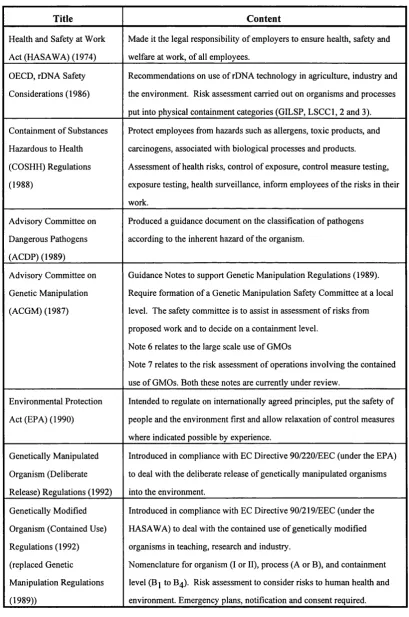
Table 1.1: Current Legislation Concerning the Safe Use of Genetically Modified Organisms
Title C ontent
Health and Safety at Work Act (HAS A W A ) (1974)
Made it the legal responsibility o f employers to ensure health, safety and welfare at work, o f all employees.
OECD, rD N A Safety Considerations (1986)
Recommendations on use o f rD N A technology in agriculture, industry and the environment. Risk assessment carried out on organisms and processes put into physical containment categories (GILSP, L S C C l, 2 and 3).
Containment o f Substances Hazardous to Health (CO SHH ) Regulations (1988)
Protect employees from hazards such as allergens, toxic products, and carcinogens, associated with biological processes and products. Assessment o f health risks, control o f exposure, control measure testing, exposure testing, health surveillance, inform employees o f the risks in their work.
Advisory Committee on Dangerous Pathogens (A C D P )(1 9 8 9 )
Produced a guidance document on the classification o f pathogens according to the inherent hazard o f the organism.
Advisory Committee on Genetic Manipulation (A C G M ) (1987)
Guidance Notes to support Genetic Manipulation Regulations (1989). Require formation o f a Genetic Manipulation Safety Committee at a local level. The safety committee is to assist in assessment o f risks from proposed work and to decide on a containment level.
Note 6 relates to the large scale use o f GMOs
Note 7 relates to the risk assessment o f operations involving the contained use o f GMOs. Both these notes are currently under review.
Environmental Protection
Act (EPA) (1990)
Intended to regulate on internationally agreed principles, put the safety of people and the environment first and allow relaxation o f control measures where indicated possible by experience.
Genetically Manipulated Organism (Deliberate
Release) Regulations (1992)
Introduced in compliance with EC Directive 90/220/EEC (under the EPA) to deal with the deliberate release o f genetically manipulated organisms into the environment.
Genetically Modified Organism (Contained Use) Regulations (1992) (replaced Genetic Manipulation Regulations
Introduced in compliance with EC Directive 90/219/EEC (under the H A S A W A ) to deal with the contained use o f genetically modified organisms in teaching, research and industry.