http://www.sciencepublishinggroup.com/j/ajns doi: 10.11648/j.ajns.20180706.19
ISSN: 2328-5745 (Print); ISSN: 2328-5753 (Online)
Effect of Educational Program on Vulvitis Prevention
Among Nursing Students
Somaya Ouda Abd EL-Menim
1, Huda Abdalla Moursi
2, Ahlam Elahmady Mohamed Sarhan
21
Obstetric and Woman Health Nursing, Faculty of Nursing, Benha University, Benha, Egypt
2Community Health Nursing, Benha University, Benha, Egypt
Email address:
To cite this article:
Somaya Ouda Abd EL-Menim, Huda Abdalla Moursi, Ahlam Elahmady Mohamed Sarhan. Effect of Educational Program on Vulvitis Prevention among Nursing Students. American Journal of Nursing Science. Vol. 7, No. 6, 2018, pp. 254-267.
doi: 10.11648/j.ajns.20180706.19
Received: November 7, 2018; Accepted: November 23, 2018; Published: January 2, 2019
Abstract:
The aim of this study was to evaluate the effect of educational program on vulvitis prevention among nursing students Research design: A quasi-experimental design was utilized. Setting: This study was conducted at Faculty of Nursing, Benha University. Sample: convenient sample included two hundred and fifty nursing students female all enrolled in first academic years. Tools of data collection1) a structured interviewing sheet to collect data about socio-demographic characteristics, menstrual and gynecological history and knowledge of nursing students regarding vulvitis 2) reported practices assessment 3) modified likert scale for students' attitude regarding vulvitis. Results: there were general improvements regarding students' knowledge, attitude and practice regarding prevention of vulvitis with highly significant (P ≤ 0.001) difference after educational Program. The mother was the main sources of knowledge to students (60%). There was insignificant relation between students' total knowledge, total attitude and total practice scores with their age. Conclusion: The implementation of educational Program significantly improved students’ knowledge, practices and attitude towards prevention of vulvitis. There were positive high statistically significant correlations between students' total knowledge, total practices and total attitude scores after educational Program. Recommendation: Provide students booklets and pamphlet about healthy habits and measures to prevent infection in reproductive system. Replication of the study on a larger sample and in different geographical areas in Egypt is recommended for generalization of findings.Keywords:
Educational Program, Vulvitis, Prevention1. Introduction
The vulva is the first line of defense to protect the genital tract from infection. Contaminants often collect in the vulvar folds, and increased moisture; sweating, menses, and hormonal fluctuations influence vulvar microbial growth and species balance, potentially resulting in odor and vulva infection [1]. Vulva or external genital organs, includes all structures visible externally from the pubis to the perineum. These include the mons pubis, labia majora, labia minora, clitoris, vestibular glands, vaginal vestibule, vaginal orifice, and urethral opening [2]. The vulvar tissue is richly supplied with sweat and sebaceous glands, and some areas contain hair follicles as well; the vulvar region supports a moist environment that contains increased concentrations of skin
bacteria [3].
Vulvitis is more likely caused due to unhygienic practices as the mal-use of soaps or douche, poor menstrual hygiene, and tissue damage, in addition, to the personal unhygienic behaviors such as swimming in polluted water, or using contaminated towels, and using irritating and tight nonabsorbent underwear [7, 8]. Symptoms include vulvar itching and/ or burning: excoriation of vulva, scaly thickened white patches. The diagnosis is based on the patient's symptoms and on inspection of the vulva. Treatment is to discourage tight clothing, urge sitz baths to decrease itching, apply topical estrogen cream and water – based vaginal lubricants [9]. Complications ascending infection (an infection that moves through the vagina to internal structures) is a potential complication of vulvitis and vaginitis. Infection confined to the lower reproductive tract seldom poses a threat to life or fertility [10].
Female students have a high risk of making unhealthy lifestyle choices that could affect their health and wellbeing. This is the result and influence of a variety of popular cultures among this age group, and the typical peer pressure encountered during these years. Uninformed, university and college students could formulate inaccurate and incomplete notions regarding health, lifestyle, physical activity and fitness [11]. Awareness and knowledge regarding the prevention and control of reproductive tract morbidity in order to uncover the asymptomatic infections must be supplemented with reliable and appropriate instructions and guidance for early diagnosis of the wide range of genital tract infections [12].
Education in health is one of the key components of primary health care and one of the most vital health care requirements for female that must be considered much more in the primary health care system, particularly maternal and child health [13]. Health education conducted by nursing personnel helps imparting knowledge regarding prevention of vulva infection among female. The nurse can educate female
regarding genital infection, recommended treatment,
preventive measures and risky behavior change. This education will help female to understand in depth about genital infection; thereby can adopt healthy life style practices which will prevent further complication [14]. Health teaching should include the prevention of future infections. Teaching girls at an early age to wipe front to back after toileting, Avoiding tight fitting clothes and nylon panties assist in prevention [15].
The Nurse plays an important role in preventing vulvitis through counseling and education. Nurses must give health teaching to student to prevent having vulvitis such as wear loose clothing, choose cotton underwear, hygiene the vulva by soaking for five minutes in lukewarm water to avoid any residue of lotions or other products. Pat dry, and use any prescribed medication or a soothing and substance such as Vaseline or olive oil [16].
1.1. Significant of Study
Vulvitis is the most common gynecological problem among female was found to affect all preparatory, secondary
school and faculties students [17]. In 2013 external genital organs infection rates among 15- to 19-year-old female were considerably higher, at 3043.3 cases per 100,000 [18] 10-20% untreated women, infection spreads up the genital tract to cause Pelvic Inflammatory Disease (PID) and damage to the fallopian tube [19]. also Genital infection can cause the female embarrassment, may lower self- image, and may negatively affect relationships [20]. Egyptian females' University students receive insufficient reproductive health education through the formal Education in Schools & University system [21].
1.2. Aim of the Study
This study was undertaken to evaluate the effect of educational program on vulvitis prevention among nursing students through:
(1)Assessing nursing students' knowledge regarding
vulvitis (pre and post educational program).
(2)Assessing nursing students' knowledge regarding
prevention of vulvitis (pre and post educational program).
(3)Assessing nursing students' practice regarding
prevention of vulvitis (pre and post educational program).
(4)Assessing nursing students' attitude regarding
prevention vulvitis (pre and post educational program).
1.3. Research Hypothesis
Student nurses who received educational program would have improved knowledge, attitude and practices regarding prevention of vulvitis than before educational program.
2. Subjects and Method
2.1. Research Design
A quasi experimental (pre/post test) design was utilized in this study.
2.2. Setting
This study was conducted in Faculty of Nursing at Benha University. This particular setting was chosen because it is has large number of female students.
2.3. Subject
2.3.1. Sample Type Convenient sample
2.3.2. Sample Size
Number 250 female university students (all students female who enrolled in first academic years).
2.3.3. Technique
All students in the first academic years divided to sub group (10 group) every group consist of 25 student to allow
the researchers interactive, demonstration and
2.4. Tools of Data Collection
Three tools were used for collecting data
2.4.1. First Tool
A Structured interview sheet: It was developed by the researchers in Arabic language after reviewing related literature. It involved three main parts:
Part I: Socio-demographic characteristics of students such as; age, residence, marital status and mother education.
Part II: Menstrual and gynecological history about vulvitis as; age of menarche, frequency of menstruation, duration of menstruation, menstrual disturbance and previous vulvitis.
Part III: Students knowledge about vulvitis, it consisted of 6 items (meaning infection, meaning of vulvitis, symptoms, causes, complication, preventive measures of vulvitis) was used pre and post intervention.
Scoring system: Each correct answer was assigned a score of ‘1’, and a score of ‘0’ was assigned for wrong answer, the total score was categorized into three levels as follows: Good knowledge score, ≥75%; average knowledge score, 50–75%; and poor knowledge score, ≤50%.
2.4.2. Second Tool: Reported Practices Sheet
It was developed by the researchers after reviewing related literature [22, 23, 24], It was used to assess nursing students reported practices, It included 20 items as (student's general hygienic reported practices for prevention of vulvitis 10 items) & (hygienic reported practice during menstruation10 items) was used pre and post educational program.
Scoring system: Each done practice was assigned a score of ‘1’, and a score of ‘0’ was assigned for not done practice. The total score was categorized into two levels as follows: Unsatisfactory practice score < 60% of total practice score and Satisfactory 60% - 100% of total satisfactory score.
2.4.3. Third Tool: Modified Likert Scale
Modified likert scale was used to assess attitude of the students regarding vulvitis and it was adopted from Fakhri [25]. It was composed of (17) items was used pre and post intervention.
Scoring system: Each question was assigned a score of ‘2’ for agree, a score of ‘1’ was assigned for Uncertain and a score of ‘0’ was assigned for disagree. The total score was categorized into three levels as follows: Positive attitude score >75% of total attitude score, Uncertain attitude 60 -75% of total attitude score and Negative attitude < 60% of total attitude score.
2.5. Methods
The study was executed according to the following steps:
2.5.1. Tools Validity
The tools validity was done by five experts of Faculties Nursing Staff from the (Obstetrics & Gynecology Nursing) and (Community Health Nursing) specialties who reviewed the tool for comprehensiveness, appropriateness, and applicability.
2.5.2. Tools Reliability
Reliability was done by using Cronbach’s Alpha coefficient test of all items of the tools which revealed that, each of the tools consisted of relatively homogenous items as indicted by the high reliability, knowledge = (0. 789), attitude =(0.868), practice =(0.863).
2.5.3. Ethical Considerations
Verbal consent was obtained from each nursing students before conducting the interview and after informed about the purpose of the study and its importance. Anonymity and confidentiality were assured through coding the data. The students were informed about their right to withdraw at any time from the study without giving any reasons.
2.5.4. Pilot Study
A pilot study was carried out on 10 % of the nursing students (25) to test the feasibility, clarity, applicability of the tools and, determine the time needed to fill the study tools as well as to find out any problem that may interfere with the process of data collection. No modifications were done. The nursing students involved in the pilot study were included in the main study.
2.5.5. Field Work
A written official approval to conduct this research was obtained from the Dean of the Faculty of Nursing; Benha University was taken to obtain their agreement to conduct the study after explaining its purpose. The nursing students was divided into 10 groups (each group about 25 students) to receive the session of education. The study was carried out through four phases: Assessment, planning, implementation, and evaluation. These phases were carried out from beginning of October 2017 to the end of April 2018, covering along a period of seven months. The previously mentioned settings were attended by the researchers two days/week (Saturday and Sunday) according to student table from 9.00 a.m. to 3 p.m.
2.5.6. Assessment Phase
Upon securing official permissions to conduct the study, the researchers interviewed the student nurses, greeted each nursing students, explained the purpose and procedures of the study, and asked for participation. Upon consent to participate, the nursing students were interviewed to assess general characteristics, knowledge regarding prevention of vulvitis, as well as nurses' practices and attitude toward prevention of vulvitis. The data obtained during this phase constituted the baseline for further comparisons to evaluate the effect of the educational program, Average time for the completion of interviewing schedule 30-45 minutes. The number of group assessed nursing students /week ranged from 2-3group (the phase of assessment take first month)
2.5.7. Planning Phase
knowledge, practices and attitude regarding vulvitis. Power Point presentation about vulvitis was prepared in simple Arabic language. The general objective of the educational program was to improve students' knowledge, practices and attitude regarding prevention vulvitis.
Specific objectives: By completion of the educational program, each student will be able to:
(1) Discuss female anatomy external genital organ. (2) Define infection.
(3) Define vulvitis
(4) Enumerate symptoms of vulvitis.
(5) List common causes and risk factors for vulvitis. (6) Discuss the potential complications of vulvitis. (7) Demonstrate diagnosis of vulvitis
(8) Discuss preventive measures of vulvitis. (9) State the steps necessary perineal hygiene
(10)Demonstrate menstrual hygiene
2.5.8. Implementation Phase
Implementation of the educational program took (24) weeks. The researchers attended the settings two days/week according to student table lecture. The educational program involved (5) scheduled sessions; first session: Anatomy of the external genital organ second & third session: meaning, symptoms, risk factor, causes, complication, diagnosis and treatment of vulvities. Four & five session: Practices and preventive hygienic measures of students regarding vulvitis including perineal hygiene and menstrual hygiene. These sessions were repeated to each group of (25) students. The number of group 2/month repeated until finished all groups. The duration of each session lasted from half an hour to one hour including periods of discussion according to their achievement, progress and feedback. At the beginning of the first session an orientation to the educational program and its aims took place. Feedback was given in the beginning of each session about the previous one. The teaching methods used were discussion, demonstration and re-demonstration, posters and group discussion. Suitable teaching media were used, included an educational booklet that was distributed to all nursing students in the first day of the educational program as well as audio-visual aids, PowerPoint and real objects used for practical sessions regarding perineal care.
2.5.9. Evaluation Phase
The effectiveness of the educational program was evaluated immediately after the implementation of the intervention using the same questionnaire for pretest and post test.
2.5.10. Statistical Analysis
The data were coded for entry and analyzed using SPSS Statistical Package for Social Science, USA (version 20). Data were presented using descriptive statistics in the form of frequencies and percentages, mean and standard deviation. Chi square tests and Pearson correlation coefficient were used to estimate the statistical significant differences. A significant P-value was considered when P-value was less than 0.05 and it was considered highly significant when P-value was less than or equal to 0.001.
3. Results
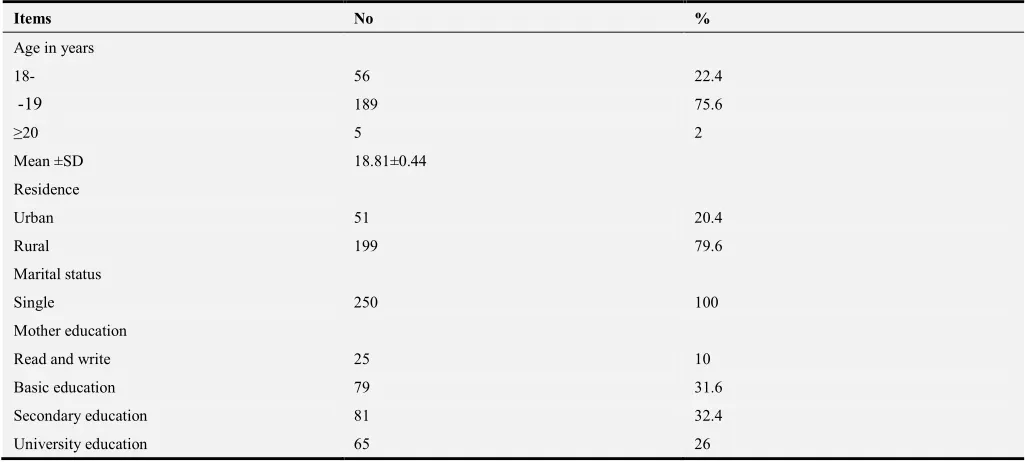
Table 1 represents socio-demographic characteristics of the nursing students. It was clear that the mean age of students 18.81±0.44, 79.6 % of them were resident at rural settings and all nursing students are single. Furthermore mother education 32.4% of them had secondary education and 26.0%of them had university education.
Table 2 shows that menstrual history of the nursing students. It was clear that the mean age of menarche 13.90 ± 1.43. As regards frequency of menstruation, 87.6% of them occurred every 26-30 days and 67.6% of them duration of menstruation 3-5 days. Also illustrates 28.4% complaining from menstrual disturbance and 81.7%complain from dysmenorrhea.
Table 3 shows that 24.0% of nursing students' complain from vulvitis, regarding previous vulvitis, 60.0% of them had previous vulvitis twice, 65.0% of them don’t go to doctor, all of them added that the rational for not go to doctor was feeling of shyness. Moreover self-care that used for prevention of vulvitis 50.0% using of antiseptic solution for cleaning vulva, the result of this care 65.0% recovered.
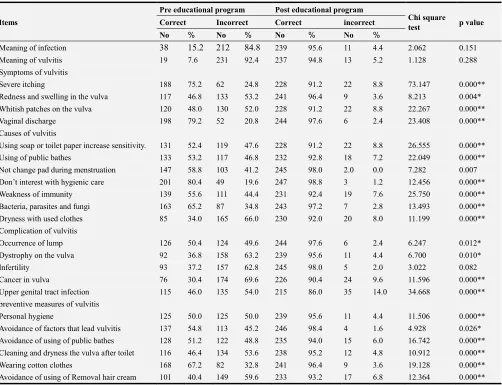
Table 4 represents that, 84.8%, of nursing students' incorrect answer about meaning of infection and 92.4% incorrect answer about meaning of vulvitis before educational program compare to after program with insignificant differences p=0.151 meaning of infection and meaning of vulvitis p= 0.288. Also 41.2% incorrect answer about not change pads during menstruation as causes of vulvitis before educational program compare 98.0% correct answer after educational program with insignificant difference. In addition 62.8% incorrect answer about infertility as complication to vulvitis before educational program compare to 98.0% correct answer after educational program with insignificant difference (p 0.082).
Figure 1 illustrates that, all the nursing students had not a good knowledge level before the educational program. However, the good knowledge level improved after program 67.2%.
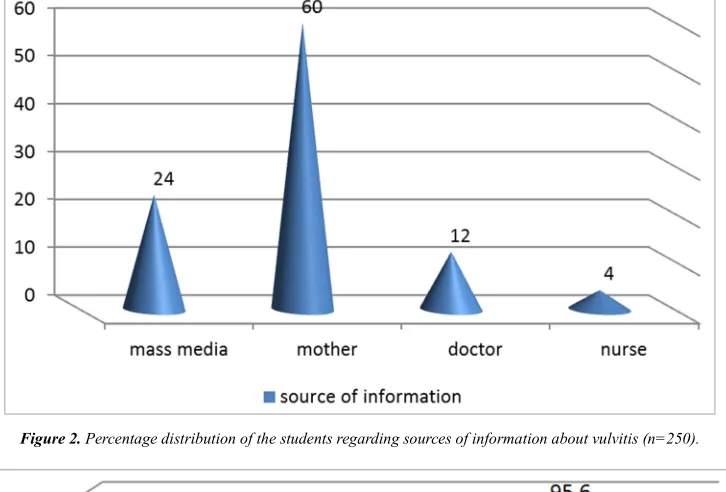
Figure 2 demonstrates that, 60% of students' sources of information regarding vulvitis mother and 24% from mass media.
Table 5 clarifies that, there were21.6% of nursing students not done cleanliness vulva after each toilet before educational program compare to 99.2 % done after educational program with statistically insignificant difference (P= 0.007). Also shows a highly statistically significant difference (P ≤ 0.000) before and after the educational program regarding their general hygienic practice about vulvitis.
Table 6 displays that, 39.2% of nursing students not done changing pad after each bath before educational program compare to 96.8% done after program with significant difference (P =0.021*). Also demonstrated there were highly statistically significant differences (P<.001**) before and after educational program in relation to practice about hygienic practice during menstruation.
practice before educational program compare to satisfactory practice 95.6% after educational program.
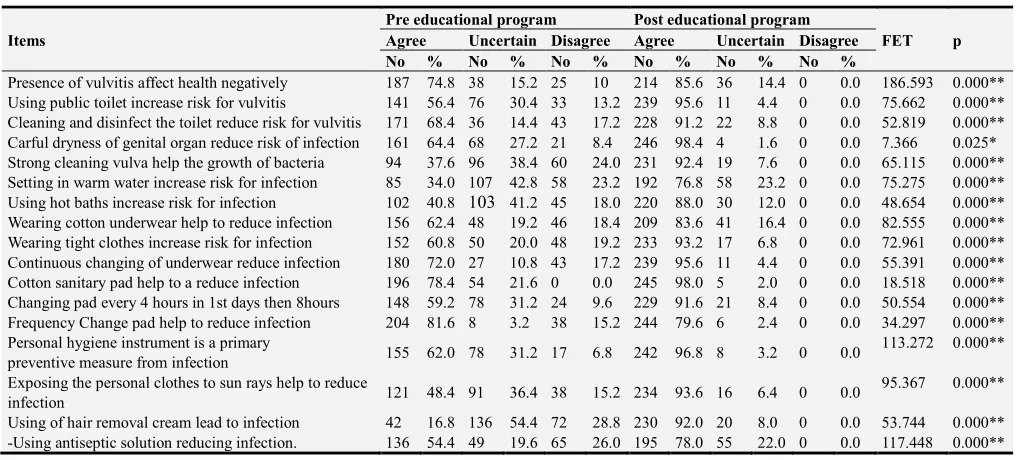
Table 7 reflects that, 64.4% agree about carful dryness of genital organ reduce risk of infection before educational program compare 98.4% agree after program with significant difference (P= 0.025*), also shows that there were, highly statistically significant difference regarding attitude about prevention of vulvitis after educational program (P ≤0.001**).
Figure 4 demonstrates that, 77.2% of students had a positive level of total attitude score before the educational program. However, after the educational program, 97.6%of them had got a good level of total attitude score
Table 8 emphasizes that there were a positive statistically significant correlation (p ≤ 0.05) between nursing students total knowledge, total practices and total attitudes scores before educational program, Furthermore, a positive highly statistically significant correlation (p ≤ 0.001**) after educational program.
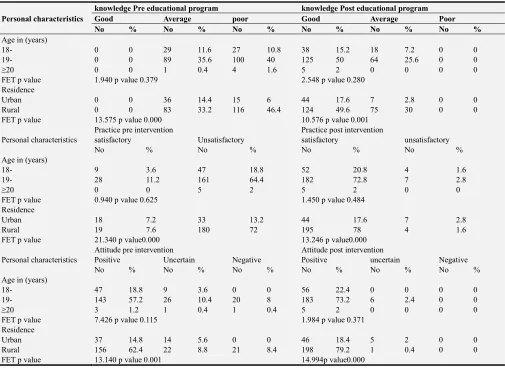
Table 9 shows that, insignificant relation between nursing students total knowledge, total attitude and total practices scores and their age before and after educational program. Also revealed highly significant relation between nursing students 'total knowledge, total attitude and total practices scores and their residence before and after educational program (p ≤ 0.001**)
Table 1. Frequency distribution of the students regarding socio-demographic Characteristics (n=250).
Items No %
Age in years
18- 56 22.4
19
- 189 75.6
≥20 5 2
Mean ±SD 18.81±0.44
Residence
Urban 51 20.4
Rural 199 79.6
Marital status
Single 250 100
Mother education
Read and write 25 10
Basic education 79 31.6
Secondary education 81 32.4
University education 65 26
Table 2. Frequency distribution of the students regarding menstrual history (n=250).
Items No %
Age of menarche (years)
12- 54 21.6
13- 32 12.8
14- 88 35.2
≥15 76 30.4
Mean ±SD 13.90 ± 1.43
Frequency of menstruation (days)
22- 7 2.8
26- 219 87.6
≥30 24 9.6
Duration of menstruation (days)
< 3 days 68 27.2
3-5 days 169 67.6
>5 days 13 5.2
Menstrual disturbance
Yes 71 28.4
No 179 71.6
Type of menstrual disturbance (N=71)
Dysmenorrhea 58 81.7
Menorrhagia 8 11.3
Table 3. Frequency Distribution of the students regarding previous history of vulvitis (n=250).
Items No %
Complaining of vulvitis
Yes 60 24.0
No 190 76.0
Previous vulvitis (n=60)
Once 19 31.7
Twice 36 60.0
Three or more 5 8.3
Go to doctor (n=60)
Yes 21 35.0
No 39 65.0
Causes of not going to doctor (n=39)
Feeling of shyness 39 100.0
Self-care that used for prevention ofvulvitis (n=60)
Using warm water 20 33.3
Using of antiseptic solution for cleaning vulva 30 50.0
Avoiding worry and psychological stress 3 5.0
Using of alternatives that prescribed 7 11.7
Prognosis of this care (n=60)
Recovered 39 65.0
Go to doctor 21 35
Table 4. Frequency distribution of the students regarding their general knowledge about vulvitis pre and post educational program (n=250).
Items
Pre educational program Post educational program
Chi square
test p value Correct Incorrect Correct incorrect
No % No % No % No %
Meaning of infection 38 15.2 212 84.8 239 95.6 11 4.4 2.062 0.151
Meaning of vulvitis 19 7.6 231 92.4 237 94.8 13 5.2 1.128 0.288
Symptoms of vulvitis
Severe itching 188 75.2 62 24.8 228 91.2 22 8.8 73.147 0.000**
Redness and swelling in the vulva 117 46.8 133 53.2 241 96.4 9 3.6 8.213 0.004*
Whitish patches on the vulva 120 48.0 130 52.0 228 91.2 22 8.8 22.267 0.000**
Vaginal discharge 198 79.2 52 20.8 244 97.6 6 2.4 23.408 0.000**
Causes of vulvitis
Using soap or toilet paper increase sensitivity. 131 52.4 119 47.6 228 91.2 22 8.8 26.555 0.000**
Using of public bathes 133 53.2 117 46.8 232 92.8 18 7.2 22.049 0.000**
Not change pad during menstruation 147 58.8 103 41.2 245 98.0 2.0 0.0 7.282 0.007
Don’t interest with hygienic care 201 80.4 49 19.6 247 98.8 3 1.2 12.456 0.000**
Weakness of immunity 139 55.6 111 44.4 231 92.4 19 7.6 25.750 0.000**
Bacteria, parasites and fungi 163 65.2 87 34.8 243 97.2 7 2.8 13.493 0.000**
Dryness with used clothes 85 34.0 165 66.0 230 92.0 20 8.0 11.199 0.000**
Complication of vulvitis
Occurrence of lump 126 50.4 124 49.6 244 97.6 6 2.4 6.247 0.012*
Dystrophy on the vulva 92 36.8 158 63.2 239 95.6 11 4.4 6.700 0.010*
Infertility 93 37.2 157 62.8 245 98.0 5 2.0 3.022 0.082
Cancer in vulva 76 30.4 174 69.6 226 90.4 24 9.6 11.596 0.000**
Upper genital tract infection 115 46.0 135 54.0 215 86.0 35 14.0 34.668 0.000**
preventive measures of vulvitis
Personal hygiene 125 50.0 125 50.0 239 95.6 11 4.4 11.506 0.000**
Avoidance of factors that lead vulvitis 137 54.8 113 45.2 246 98.4 4 1.6 4.928 0.026*
Avoidance of using of public bathes 128 51.2 122 48.8 235 94.0 15 6.0 16.742 0.000**
Cleaning and dryness the vulva after toilet 116 46.4 134 53.6 238 95.2 12 4.8 10.912 0.000**
Wearing cotton clothes 168 67.2 82 32.8 241 96.4 9 3.6 19.128 0.000**
Avoidance of using of Removal hair cream 101 40.4 149 59.6 233 93.2 17 6.8 12.364 0.000**
Figure 1. Percentage distribution of total knowledge score pre and post educational program of the students regarding vulvitis (n=250).
Figure 2. Percentage distribution of the students regarding sources of information about vulvitis (n=250).
Table 5. Frequency distribution of the students regarding their general hygienic reported practices for prevention of vulvitis pre and post educational program(n=250).
items
Pre educational program Post educational program Chi square test
p value
done Not done done Not done
No % No % No % No %
Washing hand before and after bathing 201 80.4 49 19.6 245 98.0 5 2.0 20.929 0.000**
Cleanliness vulva after each toilet 196 78.4 54 21.6 248 99.2 2 0.8 7.318 0.007*
dryness of vulva after cleanliness 188 75.2 62 24.8 233 93.2 17 6.8 55.309 0.000**
Wearing cotton under wear 201 80.4 49 19.6 228 91.2 22 8.8 98.953 0.000**
Wearing loose under wear 120 48.0 130 52.0 237 94.8 13 5.2 12.658 0.000**
Continuous changing of underwear 190 76.0 60 24.0 239 95.6 11 4.4 36.437 0.000**
Use chlorine and potash for washing
underwear Clothes 83 33.2 167 66.8 234 93.6 16 6.4 22.226 0.000**
washing underwear clothes by hot water 137 54.8 113 45.2 243 97.2 7 2.8 8.731 0.003*
Exposing clothes to sun rays 142 56.8 108 43.2 241 96.4 9 3.6 12.275 0.000**
Avoiding use hair removal cream 36 14.4 214 85.6 226 90.4 24 9.6 4.466 0.035*
**Highly statistically significant difference at P ≤ .001 * Statistical significant difference at (p ≤ 0.05)
Table 6. Frequency distribution of the students regarding their hygienic reported practices during menstruation pre and post educational program(n=250).
Items
Pre educational program Post educational program
FET p value
Done Not done Done Not done
No % No % No % No %
Taking a shower during menstruation 193 77.2 57 22.8 239 95.6 11 4.4 38.960 0.000**
Cleaning vulva from front to back 186 74.4 64 25.6 238 95.2 12 4.8 36.633 0.000**
Disinfecting toilet before and after use 176 70.4 74 29.6 240 96.0 10 4.0 24.775 0.000**
Using sanitary pad 225 90.0 25 10.0 247 98.8 3 1.2 27.328 0.000**
Use sanitary pad made from cotton 184 73.6 66 26.4 245 98.0 5 2.0 14.224 0.000**
-Changing pad after each bath 152 60.8 98 39.2 242 96.8 8 3.2 5.328 0.021*
Changing pad every 4 hours especially in 1st days
then 8hourey 193 77.2 57 22.8 229 91.6 21 8.4 19.917 0.000**
Carefully using personal hygiene Instrument 180 72.0 70 28.0 237 94.8 13 5.2 35.262 0.000**
Exposing personal hygiene instrument to sun rays 159 63.6 91 36.4 231 92.4 19 7.6 4.104 0.043*
Adding antiseptic solution to water during Washing 200 80.0 50 20.0 248 99.2 2 0.8 8.065 0.005*
FET= Fisher Exact Test
**Highly statistically significant difference at P ≤ .001 * Statistical significant difference at (p ≤ 0.05
Table 7. Frequency distribution of the students attitude about prevention of vulvitis pre and post educational program (n=250).
Items
Pre educational program Post educational program
FET p
Agree Uncertain Disagree Agree Uncertain Disagree No % No % No % No % No % No %
Presence of vulvitis affect health negatively 187 74.8 38 15.2 25 10 214 85.6 36 14.4 0 0.0 186.593 0.000** Using public toilet increase risk for vulvitis 141 56.4 76 30.4 33 13.2 239 95.6 11 4.4 0 0.0 75.662 0.000** Cleaning and disinfect the toilet reduce risk for vulvitis 171 68.4 36 14.4 43 17.2 228 91.2 22 8.8 0 0.0 52.819 0.000** Carful dryness of genital organ reduce risk of infection 161 64.4 68 27.2 21 8.4 246 98.4 4 1.6 0 0.0 7.366 0.025* Strong cleaning vulva help the growth of bacteria 94 37.6 96 38.4 60 24.0 231 92.4 19 7.6 0 0.0 65.115 0.000** Setting in warm water increase risk for infection 85 34.0 107 42.8 58 23.2 192 76.8 58 23.2 0 0.0 75.275 0.000** Using hot baths increase risk for infection 102 40.8 103 41.2 45 18.0 220 88.0 30 12.0 0 0.0 48.654 0.000** Wearing cotton underwear help to reduce infection 156 62.4 48 19.2 46 18.4 209 83.6 41 16.4 0 0.0 82.555 0.000** Wearing tight clothes increase risk for infection 152 60.8 50 20.0 48 19.2 233 93.2 17 6.8 0 0.0 72.961 0.000** Continuous changing of underwear reduce infection 180 72.0 27 10.8 43 17.2 239 95.6 11 4.4 0 0.0 55.391 0.000**
Cotton sanitary pad help to a reduce infection 196 78.4 54 21.6 0 0.0 245 98.0 5 2.0 0 0.0 18.518 0.000**
Changing pad every 4 hours in 1st days then 8hours 148 59.2 78 31.2 24 9.6 229 91.6 21 8.4 0 0.0 50.554 0.000**
Frequency Change pad help to reduce infection 204 81.6 8 3.2 38 15.2 244 79.6 6 2.4 0 0.0 34.297 0.000**
Personal hygiene instrument is a primary
preventive measure from infection 155 62.0 78 31.2 17 6.8 242 96.8 8 3.2 0 0.0
113.272 0.000**
Exposing the personal clothes to sun rays help to reduce
infection 121 48.4 91 36.4 38 15.2 234 93.6 16 6.4 0 0.0
95.367 0.000**
Using of hair removal cream lead to infection 42 16.8 136 54.4 72 28.8 230 92.0 20 8.0 0 0.0 53.744 0.000** -Using antiseptic solution reducing infection. 136 54.4 49 19.6 65 26.0 195 78.0 55 22.0 0 0.0 117.448 0.000**
Figure 4. Percentage distribution of total attitude score of the students regarding prevention of vulvitis pre and post educational program (n=250).
Table 8. Correlation coefficient between students' the total knowledge, total attitude and total practices score pre and post educational program.
Score Time of assessment Total attitude score Total practice score
r p-value r p-value
Total knowledge score Pre-intervention 0.157 0.01* 0.140 0.02*
Post-intervention 0.560 0.000** 0.651 0.000**
**A highly statistical significant correlation (p ≤ 0.01) * statistical significant correlation (p ≤ 0.05)
Table 9. Relation between socio-demographic characteristics and students total knowledge, total attitude and total practices score pre and post educational program.
Personal characteristics
knowledge Pre educational program knowledge Post educational program
Good Average poor Good Average Poor
No % No % No % No % No % No %
Age in (years)
18- 0 0 29 11.6 27 10.8 38 15.2 18 7.2 0 0
19- 0 0 89 35.6 100 40 125 50 64 25.6 0 0
≥20 0 0 1 0.4 4 1.6 5 2 0 0 0 0
FET p value 1.940 p value 0.379 2.548 p value 0.280
Residence
Urban 0 0 36 14.4 15 6 44 17.6 7 2.8 0 0
Rural 0 0 83 33.2 116 46.4 124 49.6 75 30 0 0
FET p value 13.575 p value 0.000 10.576 p value 0.001
Personal characteristics
Practice pre intervention Practice post intervention
satisfactory Unsatisfactory satisfactory unsatisfactory
No % No % No % No %
Age in (years)
18- 9 3.6 47 18.8 52 20.8 4 1.6
19- 28 11.2 161 64.4 182 72.8 7 2.8
≥20 0 0 5 2 5 2 0 0
FET p value 0.940 p value 0.625 1.450 p value 0.484
Residence
Urban 18 7.2 33 13.2 44 17.6 7 2.8
Rural 19 7.6 180 72 195 78 4 1.6
FET p value 21.340 p value0.000 13.246 p value0.000
Personal characteristics
Attitude pre intervention Attitude post intervention
Positive Uncertain Negative Positive uncertain Negative
No % No % No % No % No % No %
Age in (years)
18- 47 18.8 9 3.6 0 0 56 22.4 0 0 0 0
19- 143 57.2 26 10.4 20 8 183 73.2 6 2.4 0 0
≥20 3 1.2 1 0.4 1 0.4 5 2 0 0 0 0
FET p value 7.426 p value 0.115 1.984 p value 0.371
Residence
Urban 37 14.8 14 5.6 0 0 46 18.4 5 2 0 0
Rural 156 62.4 22 8.8 21 8.4 198 79.2 1 0.4 0 0
FET p value 13.140 p value 0.001 14.994p value0.000
4. Discussion
Vulva hygiene has a key role in preventing vulva infections; Nurses play a critical part in preventing situations which lead to gynecological infections and in finding out wrong hygiene habits and determining the correct practices. The nurses can undertake the role of a health educator and mentor through proper approaches in identifying and resolving gynecologic problems. Within the context of reproductive health services, nurses are typically expected to have knowledge on the causes of vulvitis and other infections and on the methods of preventing and managing such conditions and teaching these to women. Education provided to women, particularly young female, by nurses and by trainers who have relevant experience and knowledge may ensure proper hygiene practices [26]. The aim of the present study was to evaluate the effect of educational program on vulvitis prevention among nursing students. The present study was framed on the light of the study hypothesis and supported the study hypothesis (Student nurses who received educational program would have improved knowledge, attitude and practices regarding prevention of vulvitis than before educational program).
Regarding socio-demographic characteristics of the students, the results showed that, the mean ages of students were 18.81±0.44years; this is may be due to considered this
age more vulnerable to infections, and infection
complications due to deficient knowledge. Around three quarters of them were living in rural areas, all nursing students were single and about three fifths the mothers have basic and secondary education. This result is in the same line with Ibrahim et al., [27] who reported that the majority of female students where single and between ages of 18-19years, more than three quarters of them were from rural areas and more than one-third of their mothers' can't read & write, and just less than half of them completed only primary education. Also is similar to the findings reported by Mittal and Goel, [28] and Akhtar et al. [29] who assessed the knowledge and perception about the reproductive health issues among unmarried girls aged 15-19 years. More than half of their respondents were aged 18-19 years (55%). Also in congruent with Khedr, [30] more than two third of students’ age was ranged from 21-23 years old (71.9%) and (68.2%) were from rural areas.
Concerning menstrual history of the nursing students, the present study showed that the mean age of menarche13.90 ± 1.43 and that the majority of them frequency of menstruation every twenty six to thirty days. Moreover, about two thirds of students' duration of menstruation from three to five days and most of them complained from dysmenorrhea. This finding agree with Tolossa & Bekele, [38] who indicated that among the study participants, (64.2%) started menstruation at the age of 13-15 years followed by the age of <13 years (22.5%) The usual menstrual cycle of the participant was 28days (57.8%) and menstrual duration was 4-5 days (56.2%).
Also consistent with Kulkarni & Durge, [39] revealed that the mean age at menarche of 13.15 and 13.16 years
respectively. in the same line with Amaze et al., [40]who found that high percent of sample was frequency of menstruation regular (84.6%) in addition agree with Mohite et al., [41] who find that 36.08% frequency of menstruation irregular and 63.91% regular menstruation as similar to patil & angadi, [42] 7.5% girls had irregular cycle. these result were in disagreement with lee, [43] who studied: menstruation among girl in Malaysia: cross section school survey, reported that: abnormal cycle length, majority of a menstrual cycle longer than 35 days these is may be due to emotional and environmental factor or difference due to female students neglect of their complaints or shame to speak about menstruation with a strange person
Dysmenorrhea is the commonest gynecologic disorders among female and is among the commonest gynecologic complaints in young female who present to doctors today. The result of the present study showed that, the majority of students complain from dysmenorrhea this reported agree with Anandha et al., [44] who studied, prevalence of premenstrual syndrome and dysmenorrhea among female medical students and its association with college absenteeism, found that 51% had dysmenorrhea, 66.1% of the students reported pain with menstruation during the previous 3 months. The severity of dysmenorrhea varied greatly.
As regard the previous history of vulvitis among the nursing students less than quarter of them complain of vulvitis and two third of student didn't consult a doctor because all students feeling shyness. This may be due to the Egyptian culture. Traditionally in Egypt, females were shielded from information about reproduction and sexuality until the time of marriage. These results are consistent with Chauhan, et al., [31] who showed that out of total 195 girls who had genital tract infection, 170 girls didn’t approach any health facility for the treatment due to various reasons like shyness in 95(55.88%) girls, financial constraint among 65 (38.23%) girls & lack of awareness among 10 (5.89%) girls. Also In the same line with Kennedy et al., [32]in 2010 shows treatment seeking behavior for genital tract infection was only 18% &12.6% girls respectively.
genital infection significantly increase after the intervention compared to its previous status in relation to health care by female.
Concerning sources of knowledge regarding knowledge about vulvitis, the present study revealed that the main sources of the students’ knowledge mothers then mass media. These findings agreed with Tiwari, [36] who found that the major sources of information were the mother (60.7%) or elder sister (15.8%) In addition the findings were supported by Ahmed, [37]; found that students' mothers were the main sources of adolescent students’ knowledge.
Menstruation is a normal physiological phenomenon throughout the childbearing years of the female. Poor hygiene practice during menstruation has been associated with serious ill-health ranging from reproductive tract infection, urinary tract infection, etc. Females are generally expected to exercise good hygienic practices during menstruation to prevent themselves from these problems. In our study, revealed that the majority of students done correct hygienic practices during menstruation regarding used sanitary pads and clean vulva from front to back before educational program with high significant difference after program. This is may be due high availability and increased awareness from television regarding availability and use of sanitary pad. This is consistent with the findings of Bhattacherjee et al., [45]who reported that the majority of girls followed correct hygienic practices during menstruation with respect to the type of towels used were those who used sanitary pads (85.1%). Similarly with Sevil et al., [26] reported that, front to backward genital cleaning and changed pads 6 times or more a day was favored by more than half of the students.
Also the results of current study revealed that the majority of studied student take shower during menstruation after educational program compare with pre program with highly significant difference, This is may be due traditionally forbidden bathing during menstruation in rural cultures in Egypt. This result agreement with Unni, [46] who showed that 30.5% of women did not consider bathing during menstruation is healthy, they have persistent belief that bathing during the menstruation is dangerous. Actually, the menstruation is a period of uncleanliness and the individuals are at highest risk of infection which requires regular bathing, and reported that a significantly higher proportion was found to bath during menstruation after they had received health education. El- Gilany, [47] found that in Egypt, the proportion of females who bath during menstruation was high (70.9%) after education program application. In addition Anuradha, [48], illustrated that, hygiene related practices of women during menstruation are of considerable importance as it has a health impact in terms of increased vulnerability to infection.
The type and cleanliness of the underwear as well as the frequency with which it is changed are important factors regarding the risk of getting a vulvitis. Nylon and synthetic underwear does not absorb perspiration as much as the cotton underwear does, causing the perineum to remain humid and
leading an increased risk of genital tract infections Glenville, [49]. The present study also demonstrated highly significantly difference (p =0.001) after educational program about underwear should be made from cotton, frequency change, Wearing loose under wear, washing by hot water, Using chlorine and potash and exposed to sun.
Regarding total students reported practices towards prevention of vulvitis, the present study revealed that the majority of them had unsatisfactory practice regarding menstrual and general hygiene practice before educational program compare with the most of them had satisfactory practice after program. This may be due to the insufficient knowledge and lack of awareness about hygienic practices that negatively affects their practice. This result agrees with Thakree et al., [50] who revealed that, practices of studied females toward cleaning of the external genitalia was unsatisfactory. This may be attributed to insufficient education related to reproductive health.
The researchers believe that having information and knowledge alone is not sufficient to perform self-care behaviors, but the thought and attitude about a disease is an important factor to do or not to do a preventive measure and thoughts lead to behavior and action Amini, [51]. In connection with the attitude in this study, there was illustrated that the majority of them had positive attitude after educational program compare to before program. These result similar with Gaferi, [52] illustrated that, the highest positive attitudes (96.6%) and (96.3%) were toward education about puberty associated changes and attention to personal hygiene. Moreover similar with Freeman, et al., [53] discussed the importance of skills-based health education using participatory activities to help female acquire knowledge and develop the attitudes and skills required to adopt healthy behaviors.
Regarding relation between socio-demographic characteristics and nursing students total knowledge, total attitude and total practices scores, there was insignificant relation between age and students total knowledge, total attitude and total practices scores before and after educational program. This may be due to the students approximately the same age. Also there was highly significant relation between students' total knowledge, total attitude and total practices scores and residence before and after educational program (p ≤ 0.001**). This may be due to increase awareness in the urban area than in rural area. This finding in the same line With Jamshidi, et al., [58] who mentioned that The total mean score of knowledge and total mean score of practice had not a significant relation with age, also consistent with El-Beih et al., [34] who reported a highly statistical significant relation between students' total knowledge score level and their residence.
Finally the previous findings of the present study are attributed to the importance of educational program in improving students' knowledge, practices and attitude which raise awareness, improved outcome towards prevention of vulvitis.
5. Conclusion
Based on the results of the present study, it can be concluded that, there was a statistically significant improvement in nursing students’ total knowledge, total practice and total attitude scores after the educational program. There is highly statistically significant correlation between students total knowledge, total practice and total attitude scores after educational program. Also insignificant relation between students' total knowledge, total attitude and total practice scores with their age and significant relation between total knowledge, total attitude and total practice scores with their residence, Moreover, the above mentioned results supported and reinforced the study hypothesis.
Recommendations
In the light of the findings of current study the following recommendations were be suggested:
1. Provide students booklets and pamphlet about healthy habits and measures to prevent infection in reproductive system.
2. Replication of the study on a larger sample and in different geographical areas in Egypt is recommended for generalization of findings.
Limitation of the Study
Space time of participating students was limited and some students were absent they needed more effort and time from the researchers
Acknowledgements
The authors would like to express their appreciation and
gratitude to all students who willingly participated in the study.
References
[1] Chen, Y., Bruning, E., & Rubino, J. (2017): Role of female intimate hygiene in vulvovaginal health: Global hygiene practices and product usage, SAGE Journals, 13(3):58-67 http://journals.sagepub.com/doi/full/10.1177/17455057177310 11.
[2] Lowdermilk, D. L., perry S. E., Cashion, K., Alden K. R., & Olshansky, E. F. (2016): Maternity and Women's Health Care, 11th ed., ST Louis, Elsevier, p 59.
[3] Ward, S. L., Hisley, S. M., & Kenndey, A. M. (2016): Maternal-Child Nursing Care: Optimizing Outcomes for Mothers, Children, and families, 2nd ed., Philadelphia, FA
Davis company, p86.
[4] The American College of Obstetricians and Gynecologists, (2018): Vulvovaginal Health. Vulvovaginal Health: FAQ 190, November 2015. Accessed 7/6/2018. Available at https://my.clevelandclinic.org/health/articles/4976-vulvar-care.
[5] Tidy, C. (2017): Vulvitis. https://patient.info/health/vulval-problems-leaflet/vulvitis.
[6] Peters, M. (2013): British Medical Association Illustrated Medical Dictionary, 3th ed., London, south china priniting company (LTD), p 592.
[7] Porter, R. S., & Justin L. K. (2010): Vaginal Infection, the Merck Manual, On Line Medical Library, Home Edition for Patients and Care Givers. Available at www. Merck Sharpand Dohme Corp. 2011 Practitioners-Researchers Blackwell, Oxford.
[8] American Social Health Association (ASHA), (2013): Vaginitis Menlo Research triangle Park. Available from ASHA, creating asexual health nation at: www.ashasexualhealth.org11-10-2013, 10.00 pm.
[9] Stewart, J. G., & Dennert, N. L. (2017): Family Nurse Practitioner Certification Review, 1st ed., USA, Jones & Bartlett Learning, p 364.
[10] Linton, A. D., (2015): Introduction to Medical-Surgical Nursing, 6th., Canada, Elsevier Saunders , P. 1105-1106.
[11] Niekerk, V., Barnard, E., &Justhinus, G. (2011): Women College Students Health Aspects, College Student Journal, Project Innovation (Alabama); 45(3).
[12] Pushpanath, N., (2014): A Study To Evaluate The Effectiveness Of Video Assisted Teaching Regarding The Factors Contributing To Reproductive TractInfection Among Married Women In The Reproductive Age Group of Selected Rural Hospitals At Bangalore, K. T. G College Of Nursing Hegganahalli Cross, Sunkadakatte, Magadi Road, RAJIV Gandhi University Of Health Sciences, Bangalore, Karnataka.
[13] Gilson, L., (2012). A Methodology Reader Health Policy and Systems Research, WHO Document, Production Services, Geneva, Switzerland.
[15] Hockenberry, M. J., & Wilson, D., (2013): Wong's Nursing Care of Infants and Children Multimedia Enhanced Version, 9th ed., USA, Elsevier Mosby, p485.
[16] Newson, L., (2015): Health and care information about Vulvitis management in adolescent female, International Journal of nursing and midwifery, 98(2): 218-223.
[17] Cemek (2015): North American Society for Pediatric and adolescent gynecology, turkey, Elsevier.
[18] Centers for disease control and prevention, (2013); vaginal
and vulvar cancers available at
http://www.cdc.gov/cancer/vagvulv/index.htm.
[19] Goering, R. V, Mims, C. A., Dockrell, H. M., Zuckerman, M., Chiodini, P. L., & Roitt, I. M. (2013): Mims' Medical Microbiology, 5th Ed., Elsevier Saunders, China, p251.
[20] deWit, S. C., & Kumaga, C. K.(2013): Medical-Surgical Nursing - E-Book: Concepts & Practice 2nd ed., St- Louis, Elsevier Saunders, p 906.
[21] Hanafy, S., ELsharkawy, O., Abdelbaqy, M., &Tewfik, M. (2012): Minding the Gap in Alexandria Talking to Girls in Schools about Reproductive Health, Population Reference Bureau. www.prb.org.
[22] Adika, V., Ayinde, M., & Jack-Ide, I., (2013): self-care practices of menstrual hygiene among adolescents school going girls in amassoma community, International Journal of Nursing and midwifery Bayelsa State, 5(5), pp.99-105 August 2013 Available at http://www.academic journals.org/IJNM.
[23] Umar, M., Yusuf, N., & Musa, A., (2010): Menstruation and menstrual hygiene amongst adolescent school girls in kano, north western nigeria, African journal of reproductive health, 14 (3): 201-208.
[24] Hamed, A. G. (2015): The impact of genital hygiene practices on the occurrence of vaginal infection and the development of a nursing fact sheet as prevention massage for vulnerable women, Journal of nursing and health science, vol 4, Issue 6, pp55-64 Available at http//www.iosr journals.org.
[25] Fakhri M., Z., Hajikhani N., &Komili A. (2012): Promoting menstrual health among Persian adolescent girls, BMC public
health 2012, 12:193, Fakhrietal,
http://www.biomedcentral.com/1471-2458/12/193.
[26] Sevil, S., Kevser, O., Aleattin, U., Dilek, A., &Tigen, N. (2013): An Evaluation of the Relationship between Genital Hygiene Practices. Genital Infection Gynecol. Obstet., 3(6): 2161-0932.
[27] Ibrahim, O., Morad, M., El Nashar, E., Mohamed, S., & Hafez, A. (2007): Prevalence of Symptoms and Complaints of Reproductive Tract infection among El Minia University Single Adolescent Female Educational Intervention. EL-Minia Med., Bull., 18, (2): 195-198.
[28] Mittal K., &Goel, M. K. (2010): Knowledge Regarding Reproductive Health among Urban Adolescent Girls of Haryana. Indian J Community Med., 35(4): 529-530. https://doi.org/10.4103/0970-0218.74374.
[29] Akther N., Begum N., & Chowdhury S., et al. (2012): Knowledge on reproductive health issues among the unmarried adolescent girls. J Family Reprod Health. 2012; 6(4): 169-176.
[30] Khedr, N. F., Elmashad, H. A., & Al-Wehedy, A.(2015): Vaginal Secretions among Students in the Egyptian Universities: Prevalence, Knowledge and Practices, World Journal of Nursing Sciences 1 (3): 68-75.
[31] Chauhan, M. G., Patel, H., &Solanki, H., (2013): Reproductive Health Problems And Treatment Seeking Behavior Among Adolescent Girls Of Uhtc Field Practice Area, Govt. Medical College, Bhavnagar, National Journal of Community Medicine, 7(5): 355-358.
[32] Kennedy et al., (2013):“be kind to Young people so they feel at home “A qualitative study of adolescents & service providers’ perception of youth friendly sexual & reproductive health services in Vanuatu. BMC health services research 13: 455.
[33] Chauhan, A., Chawla, D., Saini, G., Rawat, H., Pundir K., kumar L., & Benjamin P., (2014): Effectiveness of a “Planned Teaching Programme” (PTP) on Knowledge Related to Reproductive Tract Infections Among Rural Women, IOSR Journal of Nursing and Health Science 3(1): 17-21.
[34] El-Beih, A. A., Dawah, A. A., Abd- El Aal, E. M., & Mohamed, H. A. (2014): Health Practices among Female University Students Regarding Prevention of Reproductive Tract Infections, International Journal Infect, Microbial.1(1): 29-33.
[35] Yarmohammadi, S., Taheri,, G., Mousavi, S. S., Sheikhehpour, M., PaykoubM. H., &Hashemian, A. H. (2015): The Effect of Education on Knowledge, Attitude and Practice of Patients with Vaginitis, Advances in Biological Research 9 (3): 196-200.
[36] Tiwari, H., Ozaun, & Tiwri, R. (2010): Knowledage, Attitude And Belief, About Menarche Of Adolescent Girls Inane And District, Gujarat, Deprtment Of Preventive And Social Medicine, India, Us National Library Of Medicine, available atwww.ncbi.nim.nih.gov/pubmed/17037713.
[37] Ahmed, S. (2009): Urinary Tract Infections (UTI) among Adolescent Girls in Rural Karimangar District, Ap-K. A. P. Study, Indian J. Prev. Soc. Med; 40(1): 7.
[38] Tolossa, F. W. and Bekele, M. L. (2014): Prevalence, impacts and medical managements of premenstrual syndrome among female students: cross-sectional study in college of health sciences, Mekelle University, Mekelle, Northern Ethiopia. Biomed central BMC Women's Health, research article, 14:52, available at: www.biomedcentral.com/submit Accessed October, 18 2016, 7 pm.
[39] Kulkarni, M., & Durge, P. M.(2011): reproductive health morbidities among adolescent girls: breaking the silence, Ethno Med; 5(3): 165-168.
[40] Amaze, D. S., Sambo, N., Zirahei, J. V., Dalori, M. B., Japhet, H., & Toyin, H.(2012): Menstrual Pattern Among Female Medical Students In The University Of Maiduguri, Nigeri, British Journal Of Medicine And Medical Research, 2(3): 327-337, available at www.sciencedomain.org.
[41] Mohite, R. V., Mohite, V. R., Kumber, S. M., & Ganaganahallip, (2013): Menstrual Problems Among Slum Adolescent Girl Of Western Maharahata, Journal Of Krishna Institute Of Medical Science University (Maharashtra) India, vol.1, p90.
[43] Lee, J., (2008): A kotex and a smile: mothers and daughters at menarche, journal of family issues, Japan, 29: 1325-1346.
[44] Anandha, L. S., Priy, M., Saraswathi, I., Saravanan, A., &Ramamchandra, C. (2011): prevalence of premenstrual syndrome and dysmenorrhea among female medical students and its association with college absenteeism, J Bio I Med Res 2(4): 1011-1016.
[45] Bhattacherjee, S., Ray, K., Biswas, R., et al. (2013): Menstruation: Experiences of Adolescent Slum Dwelling Girls of Siliguri City, West Bengal, India. Journal of Basic and Clinical Reproductive Sciences, Jul 1; 2(2): 85-91. https://doi.org/10.4103/2278-960X.118646.
[46] Unni JC (2010): Adolescent Attitudes and Relevance to Family Life Education Programs. Indian Pediatr, 47: 176-9.
[47] El-Gilany, A., Badawi, K., & El-Fedawy, S. (2005): Menstrual Hygiene among Adolescent School Girls in Mansoura, Egypt. Reprod Health Matters; 13(26): 147-152.
[48] Anuradha, (2012): Menstrual hygiene practices and reproductive morbidity- A community based survey in rural Kerala. Available at (http://www.sctiinst.ac.in /anchess).
[49] Glenville, M. (2012): Vaginal infections, understanding vaginal infections e-book, everything you need to know about vaginal infection from symptoms to solutions. The natural practice; 2-19.
[50] Thakre, S. B., Thakre, S. S., Reddy, M., Rathi, N., Pathak, K.&Ughade, S.(2011): Menstrual Hygiene: Knowledge and Practice among Adolescent School Girls of Saoner; Nagpur District, Journal of Clinical and Diagnostic Research, 5(5): 1027-1033.
[51] Amini, N., Bayat, F., Rahimi, M., Bekri, G., Taheri, G., &
Shojaeezadeh, D. (2013): Effect of education on knowledge, attitude and Nutritional behavior of patients with type II Diabetes. Journal of Health and Development, 1(4): 306-314.
[52] Gaferi, S. M., Al-Harbi, M. F., Yakout, S, M.&, Soliman, A. T., (2018): Knowledge, attitude and practice related to reproductive health among female adolescents, Journal of Nursing Education and Practice, 8, (8): 53-65.
[53] Freeman, M. C., Greene, L. E., Dreibelbis, R., Saboori, S., Muga, R., Brumback, B., &Rheingans, R. (2012): Assessing the impact of a school based water treatment, hygiene and sanitation program on pupil.
[54] Kadam A., &Shinde M. B., (2014): Effectiveness of Structured Education on Caregiver’s Knowledge and Attitude Regarding Colostomy Care, International Journal of Science and Research (IJSR), 3(4), 586-593.www.ijsr.net.
[55] Mudey, A. B., Keshwani, N., &Mudey, G. A. (2010): A cross-sectional study on the awareness regarding safe and hygienic practices amongst school going adolescent girls in the rural areas of Wardha district. Global J Health Sci 2010; 2: 225–31.
[56] Gothankar, J. S., Patil, R. S., &Plkar, S. H. (2015): Knowledge and practices related to reproductive health amongst adolescent girls. Medical Journal of Dr. D. Y. Patil University. 8(6): 719-23. https://doi.org/10.4103/0975-2870.169882.
[57] Bobhate, P., &Shrivastava, S. (2011): Across Sectional Study of Knowledge & Practices about Reproductive Health among Female Adolescents In urban Mumbai. Journal of Family & Reproductive Health, 5(4): 123.