Article
Influence of Parameter Sensitivity and Uncertainty on
Projected Runoff in the Upper Niger Basin under a
Changing Climate
Ganiyu Titilope Oyerinde 1,*and Bernd Diekkrüger 2
1 Department of Soil Science, Faculty of Agriculture, University of Abuja, Abuja, Nigeria
2 Department of Geography, University of Bonn, Meckenheimer Allee 166, 53115 Bonn, Germany; [email protected]
* Correspondence: [email protected]; Tel.: +234-703-683-5998
Abstract: Hydro-climatic projections in West Africa are attributed with high uncertainties that are difficult to quantify. This study assesses the influence of the parameter sensitivities and uncertainties of three rainfall runoff models on simulated discharge in current and future times using meteorological data from 8 Global Climate Models. The IHACRES Catchment Moisture Deficit (IHACRES-CMD) model, the GR4J and the Sacramento model were chosen for this study. During model evaluation, 10,000 parameter sets have been generated for each model and used in a sensitivity and uncertainty analysis using the Generalized Likelihood Uncertainty Estimation (GLUE) method. Out of the three models, IHACRES-CMD recorded the highest Nash-Sutcliffe Efficiency (NSE) of 0.92 and 0.86 for the calibration (1997-2003) and the validation (2004-2010) period respectively. The Sacramento model was able to adequately predict low flow patterns on the catchment while the GR4J and IHACRES-CMD over and under estimate low flow respectively. The use of multiple hydrological models to reduce uncertainties caused by model approaches is recommended along with other methods of sustainable river basin managements.
Keywords: climate change; hydrology; rainfall-runoff models; model uncertainty
1. Introduction
Many uncertainties are associated with climate predictions in West Africa [1]. This is attributed to the complexity of regional climates and the influence of regional geographic features, such as deserts, land cover variations, mountain chains, large lakes, land-sea contrasts and the sea surface temperatures (SSTs) of the surrounding oceans [2]. Climate patterns in the historical periods are not properly documented [3] and satellite-based observations have been identified with inherent biases [2]. This has led to contradictory results from climate trend studies at local and sub-regional scales [4]. The Niger River Basin, the largest basin in West Africa and the main water source of the Sahel was also ascribed with challenging uncertainties for hydrological projects [5]. A vivid example is the ‘Sahelian paradox’ which is an observed runoff increase in some Sahelian catchments of the Niger basin, such as in Nakanbe (Burkina Faso), Sirba (Niger) and Mekrou (Benin), despite a decrease in rainfall [6,7].
Rainfall runoff (RR) models are widely used tools in hydrology because of the simplicity in its usage and the required input data are readily available for most applications [8]. More complex, physically-based, distributed models often require input data such as soil and land use data that are either missing or weakly reliable in West Africa [9]. However, there is uncertainty in the results of any modelling, of different types and from different sources [10]. Characterization of the uncertainties affecting RR models remains a major scientific and operational challenge. Vetter et al. [11] disclosed that scenarios from climate models are the largest uncertainty source, providing large discrepancies in precipitation, and therefore clear hydrological projections are difficult. Renard et al. [12] ascribed uncertainties in RR models to either input data or model structure. Data uncertainty
stems from sampling, measurement and interpretation errors in the observed input/output data. Since these errors arise independently from the RR model, their properties (e.g., means and variances of rainfall and runoff errors) can be estimated prior to the calibration by analysing data acquisition instruments and procedures [12]. Structural uncertainties are an inherent feature of all hydrological models including RR models. It is a consequence of simplifying assumptions made in approximating the actual environmental system with a mathematical hypothesis [12].
In West Africa, several authors have evaluated uncertainties in climate [2,13,14] and runoff [11,15] modelling. While most authors stopped at the assessments of only climate uncertainties, Cornelissen et al. [15] used three distributed and semi distributed models along with a RR model to project climate and land use change impacts in Benin. The authors observed variations in the robustness of the models to simulate the current total discharge and its components. They attributed variation to serious uncertainties in input data, particularly in precipitation and saturated hydraulic conductivity data, calibration strategy, parameterization and differences in model structure. In their study, Cornelissen et al. [15] only used climate scenarios from one RCM which limits their finding concerning uncertainties in future climate change impacts.
Scenarios from climate models especially precipitation was also identified by Vetter et al. [11] as a major source of uncertainties in the upper Niger basin. Yira et al. [16] used six different RCM-GCM combinations to study climate change impacts on water resources of a 200 km² catchment in Burkina Faso. They found that the different climate models do not show a clear trend, some are predicting a wetter future others a drier. Although a clear trend is missing because of the complex West African climate system [2], changes in hydrological regimes could become even more important in the future. In combination with the increasing demographic pressure and low adaptive capacity, these changes will have significant impacts on people and sectors that depend on water resources in West Africa [17]. Thus, there is a need to comprehend regional impacts of climate change on water resources. This study thereby aims at evaluating the influence of the model structure on simulated runoff in current and future times using a set of climate change scenarios and a single calibration strategy for three RR models. It uses the RR models to assess parameter sensitivity with associated uncertainties and evaluate their influence on runoff projections.
2. Materials and Methods
2.1 Study area
The Niger River Basin covers 2.27 million km2, with the active drainage area comprising less than 50% of the total basin [18]. With 4200 km in length, it is the third longest river in Africa and the world’s ninth largest river system. The study area is the Upper Niger catchment at the Koulikoro gauging station, Mali (Figure 1), covering an area of about 120,000 km2. It spreads over the countries of Guinea and Mali, and a small part of the Côte d’Ivoire. According to Vetter et al. [11], the topography of the catchment is quite heterogeneous, with several steep-sloped tributaries in the Upper Guinea that flow into the floodplain of the Niger River. The dominant land cover in the Upper Niger catchment is forest (34%) followed by savannah (30%). The climate is characterized by a dry season (November–May) and a rainy season from June to September. Rainfall that feeds the river comes mainly from the Guinean Highlands during the rainy season. It has an average annual precipitation of 1495 mm and the catchment is not much influenced by human management. There are no major irrigation schemes in this part of the Niger basin [11].
Preprints (www.preprints.org) | NOT PEER-REVIEWED | Posted: 5 June 2017 doi:10.20944/preprints201706.0018.v1
Figure 1 Location of the Koulikoro catchment on the Niger basin
2.2 Modelling framework
2.2.1 Hydrological models
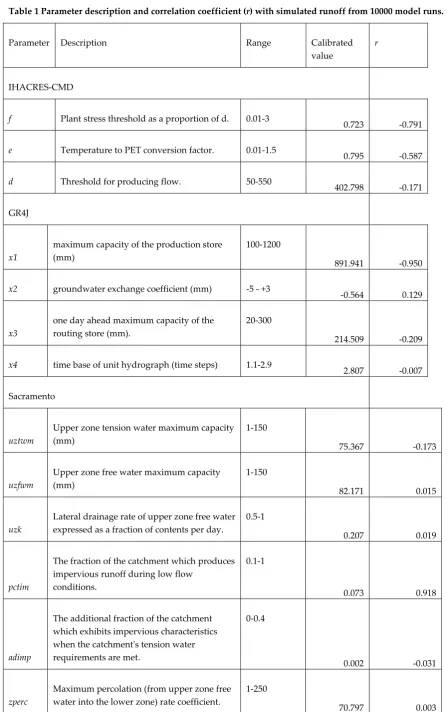
Table 1 Parameter description and correlation coefficient (r) with simulated runoff from 10000 model runs.
Parameter Description Range Calibrated
value
r
IHACRES-CMD
f Plant stress threshold as a proportion of d. 0.01-3
0.723 -0.791
e Temperature to PET conversion factor. 0.01-1.5
0.795 -0.587
d Threshold for producing flow. 50-550
402.798 -0.171 GR4J
x1
maximum capacity of the production store (mm)
100-1200
891.941 -0.950
x2 groundwater exchange coefficient (mm) -5 - +3
-0.564 0.129
x3
one day ahead maximum capacity of the routing store (mm).
20-300
214.509 -0.209
x4 time base of unit hydrograph (time steps) 1.1-2.9
2.807 -0.007 Sacramento
uztwm
Upper zone tension water maximum capacity (mm)
1-150
75.367 -0.173
uzfwm
Upper zone free water maximum capacity (mm)
1-150
82.171 0.015
uzk
Lateral drainage rate of upper zone free water expressed as a fraction of contents per day.
0.5-1
0.207 0.019
pctim
The fraction of the catchment which produces impervious runoff during low flow
conditions.
0.1-1
0.073 0.918
adimp
The additional fraction of the catchment which exhibits impervious characteristics when the catchment's tension water requirements are met.
0-0.4
0.002 -0.031
zperc
Maximum percolation (from upper zone free water into the lower zone) rate coefficient.
1-250
70.797 0.003 Preprints (www.preprints.org) | NOT PEER-REVIEWED | Posted: 5 June 2017 doi:10.20944/preprints201706.0018.v1
rexp
An exponent determining the rate of change of the percolation rate with changing lower zone water contents.
0-5
4.700 0.005
lztwm
Lower zone tension water maximum capacity (mm).
1-500
10.424 -0.336
lzfsm
Lower zone supplemental free water maximum capacity (mm).
1-1000
251.439 0.103
lzfpm
Lower zone primary free water maximum capacity (mm).
1-1000
576.492 0.091
lzsk
Lateral drainage rate of lower zone supplemental free water expressed as a fraction of contents per day.
0.02-0.25
0.155 0.007
lzpk
Lateral drainage rate of lower zone primary free water expressed as a fraction of contents per day.
0.0004-0.25
0.038 0.005
pfree
Direct percolation fraction from upper to lower zone free water
0-0.6
0.017 0.025 2.2.2 Uncertainty and Sensitivity Analysis
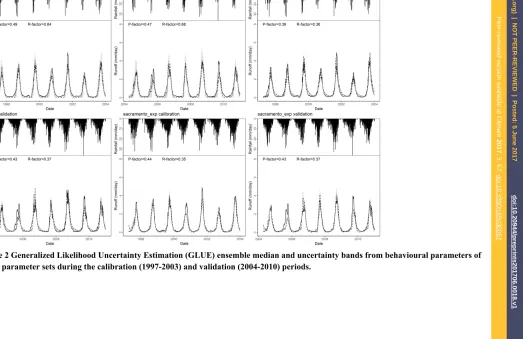
Uncertainty was analysed using the Generalized Likelihood Uncertainty Estimation (GLUE) method [28,29]. GLUE is a Monte Carlo based method for model calibration and uncertainty analysis. It requires large number of model runs with different combinations of parameter values chosen randomly and independently from the prior distribution in the parameter space. The prior distributions of the selected parameters are assumed to follow a uniform distribution over their respective range since the real distribution of the parameter is unknown. By comparing predicted and observed responses, each set of parameter values is assigned a likelihood value [29]. In this study, the number of model runs was set to 10,000 and the total sample of simulations were spitted into “behavioural” and “non-behavioural” based on a threshold value of NSE ≥ 0.5 [29] , 90% coverage of the observed values and a GLUE quantile range of 0.05 - 0.95. In line with the study of Chaibou Begou et al.[29], GLUE prediction uncertainty was quantified by two indices referred to as P-factor and R-factor [29,30]. The P-factor represents the percentage of observed data bracketed by the 90% predictive uncertainty band of the model calculated at the 5% and 95% levels of the cumulative distribution of an output variable obtained through random sampling. The R-factor is the ratio of the average width of the 90% predictive uncertainty band and the standard deviation of the measured variable. For uncertainty assessment, a value of P-factor > 0.5 (i.e., more than half of the observed data should be enclosed within the 90% predictive uncertainty band) and R-factor < 1 (i.e., the average width of the 90% predictive uncertainty band should be less than the standard deviation of the measured data) should be adequate for this study, especially considering limited data availability [29].
calibrated value [31]. The models were run with each of these parameter combinations and dependency of the mean simulated runoff from the parameters was evaluated.
2.3 Data
2.3.1 Observations
The RR models require daily precipitation and PET. The Global Precipitation Climatology Project (GPCP) daily precipitation [32] and PET computed from Modern Era Retrospective-analysis for Research and Applications (MERRA) 2 meter temperature [33] were used as boundary conditions. GPCP is available from 1997-2016 while MERRA is available from 1979-2010. PET was computed from MERRA temperature using the Hamon’s model that was earlier reported to provide acceptable estimations of PET [9,34,35]. Catchment boundary of the Niger basin was obtained from Hydrosheds [36]. Upstream area and boundaries of the catchment (Figure 1) was delineated using the Hortonian drainage network analysis [37]. Rainfall and temperature distribution in West Africa have been attributed with the back and forth movement of the Inter Tropical Discontinuity (ITD) [38]. The movement of the ITD follows the position of maximum surface heating associated with meridional displacement of the overhead position of the sun, lower latitudes experience higher rainfall and lower temperature, whereas higher latitudes experience lower rainfall and higher temperatures. This creates a large rainfall and temperature gradients across latitudes which were considered by using the latitudinal weighted modelling approach of Oyerinde et al. (2016).
2.3.2 Future projections
Rainfall data from a set of 8 CMIP5 Global Climate Models (GCM) (Table 2) with two emission scenarios were used. The GCMs were dynamically downscaled to 0.44° x 0.44° resolution with the SMHI-RCA (Sveriges Meteorologiskaoch Hydrologiska Institute) Regional Climate Model (RCM) within the CORDEX-Africa regional downscaling experiments. Climate projection framework within CORDEX is based on the set of new global model simulations planned in support of the IPCC Fifth Assessment Report, referred to as CMIP5 [39]. These simulations are based on the reference concentration pathways (RCPs), i.e. prescribed greenhouse-gas concentration pathways throughout the 21st century, corresponding to different radiative forcing stabilization levels by the year 2100. Within CMIP5, the highest-priority of global model simulations is given to RCP4.5 and RCP8.5, roughly corresponding to the IPCC SRES emission scenarios B1 and A1B, respectively [39]. The same scenarios are therefore also the highest priority of the CORDEX simulations [40]. CORDEX data have been evaluated and used for hydrological studies in the region [9,35,41,42]. In this study, basin CORDEX projection data were extracted as described for the observations data. Future PET was computed from extracted temperature with the Hamon’s model. In line with previous studies [9,35,43], rainfall and temperature projections were bias corrected with quantile mapping [44] at monthly time step. Similar to other studies [9,35,45], future annual runoff was aggregated into two future time periods (“near future” (2010–2035) and “far future” (2036–2099)) and were compared to the historical period (1951–2005).
Preprints (www.preprints.org) | NOT PEER-REVIEWED | Posted: 5 June 2017 doi:10.20944/preprints201706.0018.v1
Table 2 List of CMIP5 GCM models considered in the study
Modelling Center (or Group) Institute ID Model Name
Canadian Centre for Climate Modelling and Analysis CCCMA CanESM2 Centre National de Recherches Météorologiques / Centre
Européen de Recherche et Formation Avancée en Calcul Scientifique
CNRM-CERFACS CNRM-CM5
NOAA Geophysical Fluid Dynamics Laboratory NOAA GFDL GFDL-ESM2M Met Office Hadley Centre (additional HadGEM2-ES
realizations contributed by Instituto Nacional de Pesquisas Espaciais)
MOHC HadGEM2-ES
Atmosphere and Ocean Research Institute (The University of Tokyo), National Institute for Environmental Studies, and Japan Agency for Marine-Earth Science and Technology
MIROC MIROC5
Max-Planck-Institut für Meteorologie (Max Planck Institute for Meteorology)
MPI-M MPI-ESM-LR
Norwegian Climate Centre NCC NorESM1-M
EC-EARTH consortium ICHEC EC-EARTH
3. Results
High efficiency coefficients were recorded during model calibration and validation (Table 3) for the three RR models. Visual observation of simulated and observed runoff (Figure 2) showed that the models well replicate the seasonality of flow at the Koulikoro catchment.
Table 3: Comparative efficiencies of three hydrological models (IHACRES Catchment Moisture Deficit - CMD, GR4J and Sacramento)
Models ME RMSE RSD NSE KGE VE
Calibration (1997 – 2003)
Sacramento -0.07 0.31 0.93 0.91 0.89 0.77
GR4J 0.01 0.36 0.92 0.88 0.90 0.72
IHACRES-CMD -0.10 0.30 0.99 0.92 0.88 0.75
Validation (2004 – 2010)
Sacramento -0.06 0.43 1.02 0.81 0.88 0.7
GR4J -0.02 0.39 0.95 0.84 0.9 0.69
Figure 2 Generalized Likelihood Uncertainty Estimation (GLUE) ensemble median and uncertainty bands from behavioural parameters of
10000 parameter sets during the calibration (1997-2003) and validation (2004-2010) periods.
Preprints
(www.preprints.org) | NOT PEER-REVIEWED | Posted: 5 June 2017
doi:10.20944/preprints201706.0018.v1
Peer-reviewed version available at
Climate
2017
,
5
, 67;
Global sensitivity analyses of the model parameters highlighted in Table 1 and Figure 3 revealed that the parameters f of the IHACRES-CMD model, the x1 of the GR4J and the pctim of the Sacramento model were the most sensitive by having the highest correlation coefficient with simulated runoff. From Figure 2, uncertainty assessment factor P was about 0.5 at both calibration and validation periods for the IHACRES-CMD model. P factor of the GR4J and Sacramento models was below 0.5 during both calibration and validation periods. These indicate that the bound of uncertainty of the behavioural parameters of the IHACRES-CMD model captures about 50% of the observed thereby showing acceptable uncertainty levels in hydrological modelling [29]. The R-factor however was below one for all the models indicating acceptable thickness of the uncertainty bounds [29].
Figure 3 Sensitivity of simulated runoff from 10,000 parameter sets for three RR models and the most sensitive model parameters.
Figure 4 Comparison of historical (1951 - 2005) monthly discharge from 8 GCMs and ensemble with the observed discharge.
Preprints
(www.preprints.org) | NOT PEER-REVIEWED | Posted: 5 June 2017
doi:10.20944/preprints201706.0018.v1
Peer-reviewed version available at
Climate
2017
,
5
, 67;
Figure 5 effects of model structures on ensemble simulated discharge from 8 GCMs in the historical (1951-2005) near (2010–2035) and far (2036–2099) future.
doi:10.20944/preprints201706.0018.v1
Peer-reviewed version available at
Climate
2017
,
5
, 67;
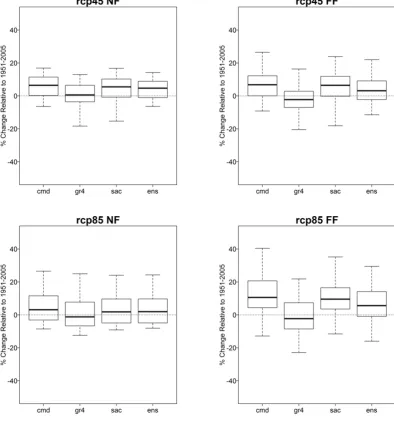
Figure 6 Effects of model structures on climatological trends of ensemble mean projected runoff at the
Near Future (NF: 2010-2035) and Far Future (FF: 2036-2099).
Preprints (www.preprints.org) | NOT PEER-REVIEWED | Posted: 5 June 2017 doi:10.20944/preprints201706.0018.v1
4. Discussion
High efficiency values recorded during the calibration and validation periods indicate the suitability of the three models for runoff simulation in the catchment, particularly with the IHACRES-CMD having the highest NSE especially during model validation. This is in agreement with the study of Oyerinde et al. [9] who disclosed similar high efficient runoff simulation with a similar version of the IHACRES - CMD model in the Niger basin. Clear differences in monthly simulation patterns in the different RR models were due to contrasting model structures (structural uncertainties). Structural uncertainties arise from simplified assumptions made in approximating the actual environmental system with a mathematical hypothesis [12]. Similar uncertainties in hydrological modelling was reported by Cornelissen et al. [15] where it was ascribed to differences in model parameterization and structure. More robust model parameterisation is responsible for adequate simulation of low flow by the Sacramento model. The over estimation of low flow by GR4J model experienced in this study is in line with work of Demirel et al., [46] who stated that parameter uncertainty has the highest effect on the low flow simulation.
Because the ensemble of the hydrological models is compensating effects of model uncertainties, the mean result is a more reliable estimation of future runoff characteristics. The multi-model approach has been proven to be more robust and provides better performance than individual models [47]. Simple multi-model approaches that combine the outputs of hydrological models improve simulation and forecasting efficiency [47]. This is due to more accurate representation of catchment water balance by the hydrological model ensemble [51]. This is in line with the study of Lambert and Boer [48] and Diallo et al. [49] who reported ensembles of models as better predictor than individual models. This finding is also in agreement with Seiller et al [50] who compared ensembles of twenty hydrological models and concluded that using a single model may provide hazardous results when the model is to be applied in contrasted conditions.
5. Conclusions
The Niger basin is ascribed with high uncertainties in future runoff trends making hydrological project implementation and evaluation difficult. This study evaluates the potential of using multi climate and multi hydrological model to reduce hydro-climatic modelling uncertainties. The influence of three (IHACRES-CMD, GR4J and Sacramento) model structures on simulated and projected runoff in current and future times was evaluated.Each of the models was able to properly simulate runoff patterns with high efficiencies in the historical period. The influence of structural uncertainties of the models was prominent in their inability to simulate low flow patterns. However, these effects were smoothed out in the ensemble hydrological model prediction which is recommended as a better predictor than individual hydrological models.
Acknowledgments: We thank the ESGF that provides the CORDEX-Africa future climate projections. The Niger Basin Authority is acknowledged for providing the runoff data. We appreciate the R project (www.r-project.org) and the Hydromad group (www. hydromad.catchment.org) for providing the modelling environments. The Global Precipitation Climatology Project (GPCP) and Modern Era Retrospective-analysis for Research and Applications (MERRA) are acknowledged for making available their rainfall and temperature datasets. Dr Vincent Olanrewaju Ajayi and Dr Fabien C.C. Hountondji are appreciated for reading through the manuscript.
Author Contributions: The modeling parts and manuscript write-up was done by Dr Oyerinde Ganiyu Titilope and Prof Bernd Diekkruiger
References
1. Druyan, L. M. Studies of 21st-century precipitation trends over West Africa. Int. J. Climatol. 2011, 31, 1415–1424.
2. Sylla, M. B.; Giorgi, F.; Coppola, E.; Mariotti, L. Uncertainties in daily rainfall over Africa: Assessment of gridded observation products and evaluation of a regional climate model simulation. Int. J. Climatol. 2013, 33, 1805–1817.
3. Ali, A.; Lebel, T. The Sahelian standardized rainfall index revisited. Int. J. Climatol. 2009, 29, 1705– 1714.
4. Oyerinde, G. T.; Hountondji, F. C. C.; Wisser, D.; Diekkrüger, B.; Lawin, A. E.; Odofin, A. J.; Afouda, A. Hydro-climatic changes in the Niger basin and consistency of local perceptions. Reg. Environ. Chang. 2015, 15, 1627–1637.
5. KfW Adaptation to climate change in the upper and middle Niger River Basin. http://ccsl.iccip.net/niger_river_basin.pdf (accessed Feb 12, 2017).
6. Mahe; Paturel; Servat; Conway; Dezetter The impact of land use change on soil water holding capacity and river flow modelling in the Nakambe River, Burkina-Faso. J. Hydrol. 2005, 300, 33–43. 7. Descroix, L.; Mahé, G.; Lebel, T.; Favreau, G.; Galle, S.; Gautier, E.; Olivry, J.-C.; Albergel, J.; Amogu, O.; Cappelaere, B. Spatio-temporal variability of hydrological regimes around the boundaries between Sahelian and Sudanian areas of West Africa: A synthesis. J. Hydrol. 2009, 375, 90–102.
8. Uhlenbrook, S.; Seibert, J.; Leibundgut, C.; Rodhe, A. Prediction uncertainty of conceptual rainfall-runoff models caused by problems in identifying model parameters and structure. Hydrol. Sci. J. 1999, 44, 779–797.
9. Oyerinde, G. T.; Wisser, D.; Hountondji, F. C. C.; Odofin, A. J.; Lawin, A. E.; Afouda, A.; Diekkrüger, B. Quantifying Uncertainties in Modeling Climate Change Impacts on Hydropower Production. Climate 2016, 4, 1–15.
10. Kay, A. L.; Davies, H. N.; Bell, V. A.; Jones, R. G. Comparison of uncertainty sources for climate change impacts: Flood frequency in England. Clim. Change 2009, 92, 41–63.
11. Vetter, T.; Huang, S.; Aich, V.; Yang, T.; Wang, X.; Krysanova, V.; Hattermann, F. Multi-model climate impact assessment and intercomparison for three large-scale river. Earth Syst. Dyn. 2015, 6, 17–43.
12. Renard, B.; Kavetski, D.; Kuczera, G.; Thyer, M.; Franks, S. W. Understanding predictive uncertainty in hydrologic modeling: The challenge of identifying input and structural errors. Water Resour. Res. 2010, 46, 1–22.
Preprints (www.preprints.org) | NOT PEER-REVIEWED | Posted: 5 June 2017 doi:10.20944/preprints201706.0018.v1
13. Knutti, R.; Sedláˇ, J. Robustness and uncertainties in the new CMIP5 climate model projections. 2012, 1–5.
14. Giorgi, F.; Francisco, R. Evaluating uncertainties in the prediction of regional climate change. Geophys. Res. Lett. 2000, 27, 1295–1298.
15. Cornelissen, T.; Diekkr??ger, B.; Giertz, S. A comparison of hydrological models for assessing the impact of land use and climate change on discharge in a tropical catchment. J. Hydrol. 2013, 498, 221– 236.
16. Yira, Y.; Diekkrüger, B.; Steup, G.; Bossa, A. Y. Impact of climate change on hydrological conditions in a tropical West African catchment using an ensemble of climate simulations. Hydrol. Earth Syst. Sci 2017, 21, 2143–2161.
17. Roudier, P.; Ducharne, A.; Feyen, L. Climate change impacts on river discharge in West Africa: a review. Hydrol. Earth Syst. Sci. Discuss. 2014, 11, 2483–2514.
18. Ogilvie, A.; Mahéé, G.; Ward, J.; Serpantiéé, G.; Lemoalle, J.; Morand, P.; Barbier, B.; Kaczan, D.; Lukasiewicz, A.; Paturel, J.; Liéénou, G.; Clanet, J. C. Water, agriculture and poverty in the Niger River basin. Water Int. 2010, 35, 594–622.
19. Andrews, F. T.; Croke, B. F. W.; Jakeman, A. J. An open software environment for hydrological model assessment and development. Environ. Model. Softw. 2011, 26, 1171–1185.
20. Croke, B. F. W.; Jakeman, A. J. A catchment moisture deficit module for the IHACRES rainfall-runoff model. Environ. Model. Softw. 2004, 19, 1–5.
21. Burnash, R. J. . The NWS River Forecast System - Catchment Modeling. In Computer Models of Watershed Hydrology; Singh, V. P., Ed.; Water Resource Publications, LLC, 2012; p. 1144.
22. Perrin, C.; Michel, C.; Andréassian, V. Improvement of a parsimonious model for streamflow simulation. J. Hydrol. 2003, 279, 275–289.
23. Nash, J. E.; Sutcliffe, J. V. River flow forecasting through conceptual models part I — A discussion of principles. J. Hydrol. 1970, 10, 282–290.
24. Zambrano-Bigiarini, M. Graphical Goodness of Fit Description https://www.rforge.net/doc/packages/hydroGOF/ggof.html (accessed May 17, 2017).
25. D. N. Moriasi; J. G. Arnold; M. W. Van Liew; R. L. Bingner; R. D. Harmel; T. L. Veith Model Evaluation Guidelines for Systematic Quantification of Accuracy in Watershed Simulations. Trans. ASABE 2007, 50, 885–900.
26. Robert, E. C.; William, E. W. Do Nash values have value? Discussion and alternate proposals. Hydrol. Process. 2008, 22, 2723–2725.
of climate change scenarios. J. Hydrol. 2012, 424–425, 264–277.
28. Beven, K.; Binley, A. The future of distributed models: model calibration and uncertainty prediction. Hydrol. Process. 1992, 6, 279–298.
29. Chaibou Begou, J.; Jomaa, S.; Benabdallah, S.; Bazie, P.; Afouda, A.; Rode, M. Multi-Site Validation of the SWAT Model on the Bani Catchment: Model Performance and Predictive Uncertainty. Water 2016, 8, 178.
30. Abbaspour, K. C.; Johnson, C. a.; van Genuchten, M. T. Estimating Uncertain Flow and Transport Parameters Using a Sequential Uncertainty Fitting Procedure. Vadose Zo. J. 2004, 3, 1340.
31. Soetaert, K.; Petzoldt, T. Inverse Modelling, Sensitivity and Monte Carlo Analysis in R Using Package FME. J. Stat. Softw. 2010, 33, 1–28.
32. Huffman, G. J.; Adler, R. F.; Arkin, P.; Chang, A.; Ferraro, R.; Gruber, A.; Janowiak, J.; Mcnab, A.; Rudolf, B.; Schneider, U. The Global Precipitation Climatology Project ( GPCP ) Combined Precipitation Dataset. Bull. Am. Meteorol. Soc. 1997, 78, 5–20.
33. Rienecker, M. M.; Suarez, M. J.; Gelaro, R.; Todling, R.; Bacmeister, J.; Liu, E.; Bosilovich, M. G.; Schubert, S. D.; Takacs, L.; Kim, G.-K.; Bloom, S.; Chen, J.; Collins, D.; Conaty, A.; da Silva, A.; Gu, W.; Joiner, J.; Koster, R. D.; Lucchesi, R.; Molod, A.; Owens, T.; Pawson, S.; Pegion, P.; Redder, C. R.; Reichle, R.; Robertson, F. R.; Ruddick, A. G.; Sienkiewicz, M.; Woollen, J. MERRA: NASA’s Modern-Era Retrospective Analysis for Research and Applications. J. Clim. 2011, 24, 3624–3648. 34. Oudin, L.; Hervieu, F.; Michel, C.; Perrin, C.; Andréassian, V.; Anctil, F.; Loumagne, C. Which potential evapotranspiration input for a lumped rainfall–runoff model? J. Hydrol. 2005, 303, 290–306. 35. Oyerinde, G. .; Hountondji, F. C. C.; Lawin, A. E.; Odofin, A. J.; Afouda, A.; Diekkrüger, B. Improving Hydro-Climatic Projections with Bias-Correction in Sahelian Niger Basin, West Africa. Climate 2017, 5, 1–18.
36. Lehner, B.; Verdin, K.; Jarvis, A. New global hydrography derived from spaceborne elevation data. EOS, Trans. Am. Geophys. UNION 2008, 89, 93–94.
37. Jasiewicz, J.; Metz, M. A new GRASS GIS toolkit for Hortonian analysis of drainage networks. Comput. Geosci. 2011, 37, 1162–1173.
38. Lucio, P.; Molion, L.; Valadão, C.; Conde, F.; Ramos, A.; MLD, M. Dynamical outlines of the rainfall variability and the ITCZ role over the West Sahel. Atmos. Clim. Sci. 2012, 2, 337–350.
39. Taylor, K. E.; Stouffer, R. J.; Meehl, G. A. An Overview of CMIP5 and the Experiment Design. Bull. Am. Meteorol. Soc. 2012, 93, 485–498.
40. Giorgi, F.; Jones, C.; Asrar, G. R. Addressing climate information needs at the regional level: the CORDEX framework. WMO Bull. 2009, 58, 175–183.
Preprints (www.preprints.org) | NOT PEER-REVIEWED | Posted: 5 June 2017 doi:10.20944/preprints201706.0018.v1
41. Mounkaila, M. S.; Abiodun, B. J.; ‘Bayo Omotosho, J. Assessing the capability of CORDEX models in simulating onset of rainfall in West Africa. Theor. Appl. Climatol. 2014.
42. Tall, M.; Sylla, M. B.; Diallo, I.; Pal, J. S.; Faye, A.; Mbaye, M. L.; Gaye, A. T. Projected impact of climate change in the hydroclimatology of Senegal with a focus over the Lake of Guiers for the twenty-first century. Theor. Appl. Climatol. 2016, 1–11.
43. Ravazzani, G.; Dalla Valle, F.; Gaudard, L.; Mendlik, T.; Gobiet, A.; Mancini, M. Assessing Climate Impacts on Hydropower Production: The Case of the Toce River Basin. Climate 2016, 4, 16. 44. Maraun, D. Bias Correction, Quantile Mapping, and Downscaling: Revisiting the Inflation Issue. J. Clim. 2013, 26, 2137–2143.
45. Su, F.; Duan, X.; Chen, D.; Hao, Z.; Cuo, L. Evaluation of the Global Climate Models in the CMIP5 over the Tibetan Plateau. J. Clim. 2013, 26, 3187–3208.
46. Demirel, M. C.; Booij, M. J.; Hoekstra, A. Y. Effect of different uncertainty sources on the skill of 10 day ensemble low flow forecasts for two hydrological models. Water Resour. Res. 2013, 49, 4035– 4053.
47. Nicolle, P.; Pushpalatha, R.; Perrin, C.; François, D.; Thiéry, D.; Mathevet, T.; Le Lay, M.; Besson, F.; Soubeyroux, J. M.; Viel, C.; Regimbeau, F.; Andréassian, V.; Maugis, P.; Augeard, B.; Morice, E. Benchmarking hydrological models for low-flow simulation and forecasting on French catchments. Hydrol. Earth Syst. Sci. 2014, 18, 2829–2857.
48. Lambert, S. J.; Boer, G. J. CMIP1 evaluation and intercomparison of coupled climate models. Clim. Dyn. 2001, 17, 83–106.
49. Diallo, I.; Sylla, M. B.; Giorgi, F.; Gaye, A. T.; Camara, M. Multimodel GCM-RCM Ensemble-Based Projections of Temperature and Precipitation over West Africa for the Early 21st Century. Int. J. Geophys. 2012, 2012, 1–19.
50. Seiller, G.; Anctil, F.; Perrin, C. Multimodel evaluation of twenty lumped hydrological models under contrasted climate conditions. Hydrol. Earth Syst. Sci. 2012, 16, 1171–1189.