OPTIMUM SCHEDULING BASED ON
PRICE RESPONSIVE ANALYSIS OF
THE RESIDENTIAL MICROGRID
H. S. PANDYA,Research Scholar , Electrical Engineering Department,
SardarVallabhbhai National Institute of Technology, Surat 395007, Gujarat, India [email protected]
A.CHOWDHURY
Electrical Engineering Department,
SardarVallabhbhai National Institute of Technology, Surat 395007, Gujarat, INDIA [email protected]
Abstract: This paper presents an approach for optimal scheduling of residential microgrid energy. The proposed mechanism is based on analysis of price responsiveness of residential loads, signature of load peaks are obtained as a response to the different time of use (TOU) tariffs. These signatures are utilized to design optimum tariff plan to obtain effective peak shaving. The price responsive behavior is estimated by particle swarm optimization technique based algorithm that schedules load and renewable generators optimally taking care of climatic conditions and comfort level of the consumers.
Keywords: microgrid; demand response; distributed energy resources; solar photo voltaic; state of charge;
biomass gasifier; time of use; particle swarm optimization
I. Introduction
The residential sector is gaining significance for utility companies in India. Electricity sale to the residential consumers is found while growth of the sector is estimated by 14% over next 10 years [2]. This leads to boost significance of research in residential load pattern analysis, its coincidence factor, time of use and peak-non peak load constraints [1]. It enables utility to estimate price responsiveness of residential load targeting to peak-shaving of overall load profile. The study also found that energy consumption in residential buildings is in the range of 1-3 kWh/m2 /month, which translates to 12 – 36 annual kWh/ m2 and suggests that peak load varies significantly
between 30-100% based on the prevailing weather conditions [3].
T. Logenthiran, et al.(2012) [4] effectively demonstrated generation scheduling involving micro grid operating in islanding mode. P. Finn, et al.(2013) [5] have proposed peak shaving in residential sector by scheduling renewable energy source viz. wind generator. N. Mehta, et al.(2014) [6] have discussed control of thermostatically controlled loads using strategies based on the timers to control operation so as not to create discomfort but that lead to energy saving. But they did not consider load scheduling, so motivation for consumers to take part in energy exchange with central grid is not addressed. O. Adika st al.(2014) [7] have presented appliance scheduling, by enabling aggregating demand supported by battery storage system so as to avoid peaky system load profile. Manisa Pipattanasomporn et. al.2014)[8], have analyzed residential load by obtaining load profile of various appliances. Hyungna Oh, et. al.(2009) [9] and H.Pandya et al. (2017)[11] have proposed demand-response program tailored to residential customers by analyzing price-sensitive DRP based residential energy management. R.Iyer et. Al [12] have developed smart load control strategy based on energy interface and consumer response.
This work is an effort to study and develop control mechanism for residential loads based on effective tariff design. Scheduling of renewable sources along with the load shifting can make the mechanism more appropriate for the microgrid participants to play active role.
This is an attempt to propose a holistic approach of scheduling price responsive loads as well as renewable sources by implementing Time of Use Tariff (TOU) obtained by detailed price responsive analysis of residential loads targeting towards system peak shaving.
II. Problem Defination
The problem involves three major layers of functionalities as shown in Fig.1, wherein first and second layers includes process of obtaining TOU by analyzing price responsiveness of different peaks of residential load profile. This TOU is used to prepare final optimum schedule using HPSO.
Fig.1 Basic Algorithm
The data regarding residential load profile is considered from ECO –III-1024[1] reflecting residential load demand pattern of consumers having different income groups and their connected load in Gujarat state in India. A case study using above data was carried out assuming microgrid of 16 homes incorporating consumers of different load profiles in same proportion as in[1]. The consumers, as discussed earlier are considered as prosumers, having rooftop solar PV and biomass gasifier along with a battery storage. The solar PV design and estimation is carried out using PVSys and discussed in the following subsection.
A. Designing roof top solar plant
The system considered here is microgrid connected smart homes wherein one of the renewable sources installed is roof top solar PV system including inverter and battery storage. The system is represented by block diagram as in Fig.2
Fig.2 Block diagram of the solar PV based system
a) Collection of the data:
Site selected for the present case is, place in Ahmedabad city with latitude and longitude of the place that is necessary to obtain the data for the solar radiation of the place. The data regarding radiation, temperature, wind velocity etc. are obtained as per estimated by Meteronorm 7.1. This collected data is used to estimate average hourly, monthly and yearly energy ( kWh ) generated through the assumed system simulated through PVsyst V6.43 for obtaining estimate of electrical energy that can be supplied to the grid and approximate economical analysis of the system
b) Panel orientation and mounting selection:
With a view to harvest maximum possible radiation, single axis (N-S) tracking is considered with tilt angle varying at -450 to 450. Other parameters are as per Table 1.
Obtain original demand profile based on the data collection from load estimator/survey
Identify various peaks in load profile and conduct price responsive signature analyze for each peak with change in TOU
Identify optimum TOU and obtain final solution using HPSO based on the same
Table 1. Heliostats Parameters
C) PV Panel and Inverter selection:
PV Module of Canadian Solar Inc. with 315 Wp is proposed for 8 kW system. Thus 26 modules required to be connected in two parallel string, 13 module in series. While inverter selection is as shown in table 2.
Table 2. PV Module & Inverter Parameters
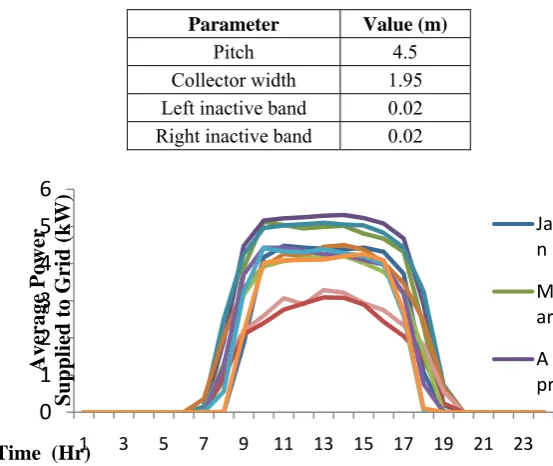
Fig. 3 Monthly Hourly Average Power Supplied to Grid
Fig.3 depicts monthly hourly power (kW) that can be supplied to grid. It shows that maximum power generated is in April 1:00 pm of 5.31 kW. Average hourly estimated power supplied to grid for April month is used for the case study.
B. Day-Ahead Scheduling Using Hybrid PSO
The scheduling problem that determines two types of decision variables: i) Time flexible or shiftable load demand which needs binary details i.e. to be scheduled or not, at given instant (ON/OFF). And ii) Battery power available at an hour‘t’. This is continuously varying non-binary variable (i.e. continuous variable). Such problem which involves solving continuous as well as binary decision variables (particles), can be solved by Hybrid Particle Swarm Optimization (HPSO) [9]
C. Formating Swarm of particles
The swarm generated for the problem solution incorporates two sub swarms (i) is a swarm of binary particles representing scheduling of binary status [1/0] for washing machine, flourmill and biomass gasifier, respectively. They are initialized from randomly initialized velocity. Once the binary variables are initialized, are checked for the feasibility (the minimum up-down constraints for load). While sub swarm (ii) is a swarm of continuous variable particles, for battery power status, initialized with uniformly distributed random numbers [
P
b1,...,
P
bT] within. Thus each string of swarm consists of 96 particles. First 24 continuous variable particles, while next 72 (25 to 96) binary particles i.e. swarm =[
P
b1,...,
P
bT,
u
wm1,...,
u
wmT,
u
fm1,...,
u
fmT,
u
bio1,...,
u
bioT]
.0
1
2
3
4
5
6
1 3 5 7 9 11 13 15 17 19 21 23
Average Power
Supplied
to Grid (kW)
Time (Hr)
Ja n M ar A pr
No. Of Module 26
Module area 9900 m2
No of Inverters 1
Nominal PV Power 8.19 kwp Maximum PV Power 7.49 kWdc Nominal AC Power 8.0 kWac
Parameter Value (m)
Pitch 4.5
Collector width 1.95
Left inactive band 0.02
D. Algorithmic steps
The steps involved in preparation of the Swarm, number of variables, swarm sizes, times dimension initialized and defined by the set of randomly generated particles within limits. Repair algorithm fixes the time-constrained variables ON for their ON periods, must-run loads for whole time horizon. Washing machine and flour mill are defined as flexible load without time constraint. Fitness function is constructed for calculating the objective function wherein the profit is calculated.PSO is run to search for the optimal scheduling for the day ahead by scheduling flexible loads, so as to obtain minimum cost to be paid for the consumption, and maximum earning by selling power in peak period, and ultimately obtaining maximum profit. To obtain maximum profit in energy exchange with the utility, the PSO may schedule flexible load demands for minimum time in OFF-peak periods; hence repair algorithm keeps check for the flexible demand should remain ON for the minimum on time expected for the satisfactory operation of particular load.
III. Mathematical Formulation
Above algorithm involved in obtaining optimum schedule for residential load and biomass gasifier so as to obtain maximum profit in the energy exchange day wise considering various constraints is discussed below..
Notations for the formulation are as follows:
t
Hourly time slot for scheduling (hr)T Total span of scheduling (24 hrs)
h Count of residential consumer
t
G Forecasted solar irradiation at an hour‘t’ (in W/m2)
,
S t
P Hourly power generated by solar PV. (kW)
min
chb
P Minimum permissible state of charge level for battery.
,
chb t
P State of charge of battery at hour‘t’.
min
cr
e b Critical loads energy consumption (in kWh).
max
eb Maximum battery capacity (in kWh).
,
b t
P
Battery power available (in kW), at tth hour. (kW),
optl t
P
Total optimized load on the microgrid at an hour ‘t.’(kW), ,
l h t
opt
P
Optimally scheduled load demand on the bases of priority of demand at an hour ‘t’ and rate of energy to be drawn from the grid of home ‘h’.(kW),
r t
Tariff rate of electrical energy at an houre‘t’. (Rs/kWh),
rg t
Tariff rate for electrical energy at an hour‘t’ for drawing energy from grid.(Rs/kWh),
rmg t
Tariff rate for electrical energy at an hour‘t’ for supplying energy from micro grid to utility.(Rs/kWh)chb
Efficiency of battery Charging/discharging operation.i
x
ith particle of the population.i
v
Velocity vector.d
1,2...D dimension of space.1
,
2c c
, Two positive acceleration coefficients.1
R,R2 Uniformly distributed random numbers in [0, 1].
w
Linearly decreasing function of the iteration index.max
w
,w
min Initial and final weights.,
biomass t
, 1
_ t
u bio Scheduled availability of the gasifier.
,
up t
Up time counter. (Hr),
dn t
Down time counter. (Hr)Max up
Maximum up time. (Hr)Min dn
Minimum down time. (Hr)bmr
Cost of biomass in Rs/kWh.Objective function can be defined as:
The objective function targets maximizing profit that is net difference of amount earned from the utility for energy supplied to the grid and amount paid to the utility for energy drawn from the grid.
, , , , , ,
1
((( ) ) ( ( )))
T
S t b t optl t r t biomass t bmr r t t
Maximize P P P
P
… … … (1)Subjected to:
Initial charge: Error! Reference source not found.
,1
chb
P
Initial charge ... ... ...(2)State of charge dynamics
, , 1 , max
b t chbt chbt
P t P P
eb
... … ...(3)
State of charge constraint
min min
,
max 1
cr
ch b ch b t
e b
P P
eb
... ... ...(4)
State of battery: charging/discharging:
, ,
,
, ,
1,2,...
Max
b t chb b t b
b t Min
b t chb b t b
P P P
P t T
P P P
... ...(5)
Total load optimized connected to the micro grid at instant‘t’
, optl t
P
= , , 1 1 ( )l h t
T I opt t h
P
... ...(6)Tariff rate of power at time‘t’:
r t,, r t
= , , , , , , , , ( ) 1,2,... ( )rg t s t b t optl t
rmg t s t b t optl t
P P P
t T
P P P
… …(7)Biomass power output: Scheduled output power from biomass gasifier based system to be constrained by the maximum up/down timing as per requirement of the system (discussed in section IV).
… …(8)
… …(9)
Load optimization: total load can be classified and optimized by shifting time-independent load, curtailing less priority loads and controlling thermal (premium loads).
… …(10)
, 1
_
, 11,2,...
biomass t biomass t
P
P
u bio
t
T
, , 1 ,
0
1
Maxup t up
bio t Min
dn t dn
u
, , , , , , , , , , , ,l h t fl h t p rl h t th l h t
o p t o p t o p t o p t
m l h t tc l h t
Where,
P
P
u ut
t
P
P
P
P
P
Fig.4 rep Demand profile ha different. To analy loads for choices. The tariff The sche different , ,fl i t
opt
P
= optother
, , , ,
fl h t
opt
fl h
P
P
,
_ t
u fl = availa
,
_ 0
1
t
u fl
s
t
= start of pef
t
= finish of p, ,
prl h t
opt
P
= optim, ,
thl h t
opt
P
= optim, , , ,
thl h t
opt
thl h
P
P
= duty cof the ro
, ,
ml h t
P
=must-, must-,
tcl h t
P
= timemanual
presents the est Response Pro as distinct pea .
yze and get op the optimum
ff were floated
eduler has sch load peaks of
imally schedu than the unco
,t
u
_
fl
,tability of the f
,
s
f
t t
t t t
riod not comf period not com
mally defined a
mally schedule
,t
cycle changes oom, with cha -on load whic
constrained l as per decided
timated daily ogramme (DRP
aks and all pe
ptimal solution profit for eac
d of following
i) Fi
ii) TO
an heduled loads f the original l
uled flexible l omforted perio
1, 2,.
t
flexible load d
f s t t t
fortable to use mfortable to u
and scheduled
ed thermal loa
... , at given oute ange in therma ch is normally
load which is d during the c
IV.
load profile ba P) offered by aks consisting
n, various sam ch smart home
Fig.4
type: ixed 3 Rs/kW OU with off p nd 9 Rs/kWh.
s responding load profile as
oad: it can be od defined by
..
T
defined by (12
e flexible load use flexible loa
d less priority
ds viz. AC, he
er and inner te al setting for t
critical load i
s non-curtaila contract.
Result and a
ased on the da the given mic g of different t
mple TOU tar e owner with t
4 Original load Pr
Wh, 4 Rs/kWh, peak period 3
change in th s in Fig.5 peak
e scheduled at the user. … ...(11) 2) … …(12) . ad
load, which is
eater which is
... ...(13) emperature di thermal load c in the system.
able load that
analysis
ata input by th crogrid. It also types of load
riff are floated the constraints
rofile
5 Rs/kWh Rs/kWh whil
he tariff rate t ks 1 to 8 are id
t any instant d
s also called c
s defined by (1
fference and t control.
t gets that is
he prosumers d o shows that th their response
d and system s initially set a
e peak load at
that resulted dentified as in
during the tim
curtailable load
13).
thermal insula
operated by
during the reg he original loa e to change in
is allowed to as per their co
t 6 Rs/kWh, 7
in diverse re n Fig.4. me horizon d. ation level consumer istering in ad demand n tariff are
o schedule omfort and
7 Rs/ kWh
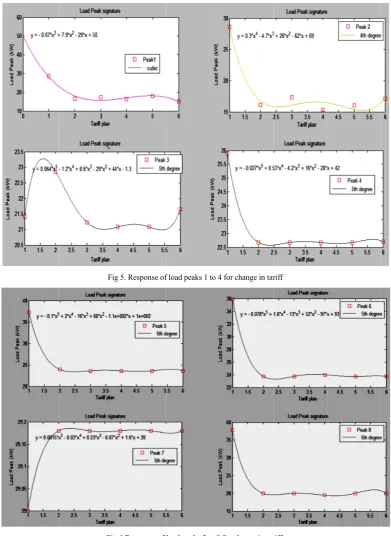
Fig. 5 an signature that insta the types while 5, part of pe
nd 6 shows th es of each pea ant. It is obser s of loads each
6, and 7 are a eak load that i
Fi
Fi
hat when PSO ak shows the w
rved that seco h peak consis almost constan is shift-able to
ig 5. Response of
g 6 Response of l
O based sched way load at th ond point in ea sting of. The t
nt. (Peak load o off peak peri
f load peaks 1 to 4
load peaks 5 to 8
duler analyzes hat moment to ach peak sign typical signatu d demand iden iod is called p
4 for change in tar
for change in tar
the price res o be estimated nature takes a ures of peak 1 ntified in Fig. price responsiv
riff
riff.
sponsiveness o d to get vary w big leap whil 1, 2, 3, 4 and 4, changes its veness of peak
of each load p with change in
le next steps d 8 show respo s value by res ks )
The plots to differe The Load TOU wit to the mi Final shi estimated
s in Fig.7 and ent tariffs men d profile sign th 3 Rs/kWh f
nimum. fted load curv d higher.
Fig. 7
Fig.8 Schedulin
8 show sched ntioned in resp nature plots sh for off peak lo
ve in Fig 9 sh
Scheduling of Bi
ng of Biomass, Ba
duling of biom pective plot. how that out o oad and 7 Rs/k
hows that rem
iomass, Battery e
attery energy and
mass, battery c
of different ta kWh during s
markable peak
nergy and Flexib
Flexible load wit
charging-disch
ariff schemes ystem load pe
shaving can
ble load.
th tariff change 2
harging and fl
applied, it ca eak tariff, all p
be achieved w
2
lexible load in
an be observed peak signature
while profit/d
n response
d that, for es reaches
Fig.9 Shifted load profile
V. Conclusion
Residential load has a unique characteristics. It consists of less than 25% of load that is automatic and shiftable, others are time dependent.
It is observed that original load profile may be analyzed and by identifying peaks, TOU can be designed. This TOU may be sent as a test signal to the microgrid central controller, which runs the PSO based scheduler simulation constrained by the data collected from the consumers. Itpredicts load response based on TOU. This response is sent to the utility which may finalize TOU for next season or day ahead scheduling by certain trial and analysis.
When TOU is applied, it is observed that flexible loads move to the off peaks reducing overall system peak and whichever load peak consists more non-shiftable loads, consumers are motivated to schedule use of renewable energy sources like PV, biomass and storage. These sources may supply to load during peak periods and also can supply excess energy to the grid.
VI. References
[1] J. U. Amit Garg, Jyothi maheshwari, “Load Research for Residential and Commercial Establishments in Gujarat,” pp. 1–79, 2010. [2] McKinsey, “Powering India :Road to 2017,” McKinsey Co. Mon. J., p. 13, 2008.
[3] M. S. Bhatt, N. Rajkumar, S. Jothibasu, R. Sudirkumar, G. Pandian, and K. R. C. Nair, “Commercial and residential building energy labeling,” vol. 64, no. January, pp. 30–34, 2005.
[4] T. Logenthiran, D. Srinivasan and T. Z. Shun, “Demand Side Management in Smart Grid Using Heuristic Optimization,” vol. 3, no. 3, pp. 1244–1252, 2012.
[5] P. Finn, M. O. Connell, and C. Fitzpatrick, “Demand side management of a domestic dishwasher : Wind energy gains , financial savings and peak-time load reduction,” Appl. Energy, vol. 101, pp. 678–685, 2013.
[6] N. Mehta, N. A. Sinitsyn, S. Backhaus, and B. C. Lesieutre, “Safe control of thermostatically controlled loads with installed timers for demand side management,” ENERGY Convers. Manag., vol. 86, pp. 784–791, 2014.
[7] C. O. Adika and L. Wang, “Electrical Power and Energy Systems Smart charging and appliance scheduling approaches to demand side management,” International Journal of Electric.Power Energy Syst., vol. 57, pp. 232–240, 2014.
[8] M. Pipattanasomporn,et al. “Load Profiles of Selected Major Household and Their Demand Response opportunities,” no. March, 2014. [9] N. Pindoriya, S.Singh, and J.Ostergaard, “Hybrid particle swarm optimization based day-ahead self-scheduling for thermal generator
in competitive electricity market”, in Proc. IFAC Sympo.on Power Plant & Power Syst.control,Tampere,Finland,2009.
[10] X. Guan, Z. Xu, and Q. Jia, “Energy efficient building facilitated by micro grid”, IEEE Trans. Smart Grid, vol.1, no.3, pp. 243-252, Dec. 2010.
[11] H.S.Pandya, A.Chowdhury, “Short Term Scheduling of Rural Residential Electricity Demand by A Smart Micro Grid”,in International Journal of Control Theory and Applications, vol 10, no.6, April 2017.
[12] R.K. Iyer, et al. ““Enabling Smart Distribution System based on Consumer Response and Energy Interface” Second National Conference on Emerging trends in Engineering, Technologyand Management, Jan-2015.
0 5 10 15 20 25
0.5 1 1.5 2 2.5
3x 10
4
X= 23 Y= 20099.2959
Shifted Demand Profile
Time Horizone(Hrs)
P
o
w
e
r(w
)