~ 40 ~ WWJMRD 2019; 5(3): 40-46
www.wwjmrd.com International Journal Peer Reviewed Journal Refereed Journal Indexed Journal
Impact Factor MJIF: 4.25 E-ISSN: 2454-6615
Thi Minh Hao Dong Ho Chi Minh City University of Transport, Vietnam
Phuoc Quy Phong Nguyen Ho Chi Minh City University of Transport, Vietnam
Correspondence: Thi Minh Hao Dong Ho Chi Minh City University of Transport, Vietnam
Some problems relating on oil pollution in maritime
operation
Thi Minh Hao Dong, Phuoc Quy Phong Nguyen
Abstract
Incidents in the exploitation and transportation of oil in the world have become a major threat to the environment in general and ecosystems in particular. Many oil spills have occurred leaving serious long-term consequences for the ecological environment. In the history of the world where many oil spills have occurred, it not only affects the ecological environment but also a great damage to the national economy of the region. Oil spill is the release of liquid petroleum hydrocarbon into the environment due to human activities and causing environmental pollution. This term often refers to spill oil that occurs in a marine or river environment. Oil may include different types of crude oil, oil refining products (such as gasoline or diesel), oil tanks of ships, waste oil or oily waste. This distribution may take months or even years to clean up.
Keywords:oil pollution, oil spill, absorbent, heavy metal
1. Introduction
Besides favorable oil exploitation, which brings many economic benefits to our country, it also brings many consequences, the reverse after that. The amount of oil discharged is also many or sometimes incidents caused by oil spill ships on the sea. It has the characteristics of not being able to be in the water so it floats on the water not only causing water pollution but also Even marine species living below it are difficult to survive because of the lack of oxygen and too much toxic environment. Depending on the environmental and weather conditions in each area, each specific location, the level of influence of the oil will affect the area but there are differences but the most common points are polluting. Severe not only for the water environment but also for living things [1-3]. The first areas to be protected are water sources for activities and production of coastal rice fields, aquaculture areas, mangrove forests, salt fields, seaweed yards, wetlands and reefs. Coral, beaches are located in tourist areas, historical sites and residential areas. Oil spill is mainly caused by the incidents of ships, boats trrening sometimes there are some small refineries ... Residential areas, tourist resorts, individuals living around serving for River and coastal development work such as fishing, aquaculture, salt production, agriculture will be greatly affected to the economy and life around those areas. The oil floats on the water and is insoluble in water due to its chemical properties. So it spreads all the way that it can spread when a large area occupies several hectares of water surface. Such a floating oil reduces the photosynthesis of marine plants and phytolankton [4]. This results in unformed natural food chains causing the organisms to die slowly. In oil there are some other components that cause pollution but there is one ingredient present in the list of hazardous substances is the most polluted perhaps to mention hydrocarbon only constitute small components, sulfur, nitrogen ... These substances When meeting ideal conditions like light, temperature will cause them to evaporate and seriously pollute the air. Heavy metals in the oil component will settle down and accumulate in the deep sea floor, which is toxic poison for aquatic species, coral reefs and other types of living in the bottom layers. According to statistics, there are many types of corals that die out of beauty, and become deep-sea rocks. Not only deep-sea species, but also other animals that live around the sea such as birds, other animals are also affected. The bodies of these animals have oil covering the fur of seals and otters that reduce metabolism
and reduce body temperature. When eating oil, animals will suffer from dehydration and reduce digestion [5-8]. Beaches, wetlands and weak aquatic ecosystems, oil spills caused by damaged tankers, oil pipelines, or offshore oil rigs often lead to immediate environmental damage. instant and long can take decades. Oil spill covers everything they touch and becomes an unexpected but lasting part of any ecosystem they appear. When the oil spills from a large oil spill to a beach, the oil layer will cover and cling to all the rocks and grains of sand. If oil flows through coastal marshes, mangroves or other wetlands, plants and grass will absorb the oil, which will harm these plants themselves and make this area no longer suitable for the living of wild animals [9-13]. When the oil no longer floats on the surface of the sea and begins to submerge into the underwater environment, it can have similar effects on aquatic ecosystems, killing or poisoning small fish and aquatic species with contact. Intimate system in the global food chain. Despite the Exxon Valdez oil spill cleanup efforts in 1989, a 2007 study conducted by the National Oceanic and Meteorological Agency (NOAA) showed that 26,000 gallons of oil were still stuck in the sand. along Alaska coast. Scientists also point out that according to the study, the excess oil only decreased by less than 4% per year [14-16].
Nationwide, there are approximately 4 million tons of petroleum fuel from over 1,700 transport ships and about 130,000 fishing vessels per year in Vietnam, which is the source of pollution in coastal areas and in many places [17]. Serious damage to marine ecosystems, damage to marine resources, endangering human health. Research into new materials with high oil absorption capacity, low cost to process oil spills or waste oil pollution is a matter of great urgency and has scientific and practical implications. high fees [18]. The world has made a lot of research into the manufacture and application of polyurethane-based absorbers to tackle oil spills as well as oil pollution at sea. In addition, there are many researches on the absorption of lignocellulosic material from plant biomass, mainly of agricultural and forestry by-products. At present, there are some researches on synthesis of oil absorbing materials
such as oil spill collection material using Fe3O4 nanoparticles or organic materials but still in experimental stage.
2. Cause of Oil Pollution
Environmental impacts from a seagoing vessel can be attributed to the ship's oil, cargo, waste water, waste, exhaust gas, ballast water.
A. Oil pollution
The environmental impact of oil on shipping operations is greatest because of the enormous amount of oil transported by waterways, which is also the primary fuel for
waterborne transportation and delivery vehicles.
Information, queues operating in ports [19]. Oil is released into the environment for many reasons: From engine cooling water, along with fuel falling from transportation means such as ships or land vehicles operating at ports discharged into rivers and sea. These types of water contain a large amount of gasoline, oil and grease that pollute river and sea water; Oil spills, collisions between ships, due to bad weather, break oil spills into the sea or incidents during fuel supply, port operations, etc. Oil spills on the sea will spread across different areas due to waves, tides or large ocean currents; Water washing tanker cargo.
Oil Spill Pollution refers to the negative polluting effects that oil spills have on the environments and living organisms, including humans, due to the environmental discharge of various organic compounds that make up crude oil and oil distillate products, the majority of which include various individual hydrocarbons. Hydrocarbons are made exclusively from carbon and hydrogen atoms which bind together in various ways, resulting in paraffins (or normal alkanes), isoparaffins (isoalkanes), aromatics (such as benzene or various PAHs), cycloalkanes and unsaturated alkanes (alkenes and alkynes). Other individual compounds that are present in crude oil and oil discharges include (apart from carbon and hydrogen) sulfur, nitrogen and/or oxygen atoms.
~ 42 ~ The Oil Spill Pollution Act - The Oil Pollution Act is an environmental regulation adopted in 1990 in the U.S. to prevent oil spill pollution. In 1990, the Oil Pollution Act was passed by U.S. Congress and amended the existing Clean Water Act, aiming to require oil storage facilities to prepare "Facility Response Plans". Various revisions to the Act have been made in 1994 by the EPA. The revised plan obliged facility owners and operators to prepare and submit plans addressing a "worst-case scenario" of oil discharge. This regulation was meant to prevent and prepare emergency responses to oil spills. The Oil Spill Pollution Act: established new requirements and amended the U.S. Federal Water Pollution Control Act in order to provide enhanced capabilities for oil spill response and natural resource damage assessment; required the Coast Guard to strengthen its regulations on oil tank vessels; included the specification that companies must have a cleanup plan in order to prevent spills that may occur and a detailed containment; imposed liability for injuries, removal costs, and damages from incidents involving the discharge of oil into navigable waters or adjoining shorelines.
These organic compounds may affect the wildlife (including fish and birds) and humans in various ways: Directly: by direct contact with the skin - some of the oil components could be irritants to the skin and may also penetrate into our bodies via skin absorption through inhalation - many individual components of oil are volatile and thus may easily evaporate and while breathing can enter our bodies. Some less volatile compounds (such as PAHs) may adsorb on dust and other small particulate matter suspended in the breathing air and may get into our bodies through inhalation of small particulate matter from the air through ingestion of contaminated water and/or particles through emitted odors - How many of us have smelled gasoline or diesel/fuel oil and noticed the strong unpleasant smell.
Indirectly: by consuming contaminated food (some of the oil hydrocarbons such as PAHs bioaccumulate in fish and other organisms and may concentrate many times more than in water or other media); by disrupting professional and/or recreational activities due to the oil pollution in certain areas; by decreased property values from the affected areas - it is logical to imagine the drops in house values in a polluted area; aesthetically - by visual alteration of marine, beach and many other environments (where the oil spill occurred); overall economic impact - in the community affected by the oil spill
Depending on where and how an oil spill occurs, it will have distinct environmental effects. For example: a marine oil spill is usually degraded fast since water is an excellent medium for dispersion, emulsifying and microbial degradation processes. If released in the water, oil and oil products tend to accumulate at the surface of the water and float on the water. Small oil droplets may also form which may increase the surface contact with water and also the natural biodegradation of the spilled oil an oil spill on the land may penetrate underground and move downward reaching eventually the groundwater. However, such
vertical movement may be slowed done if not prevented by the presence of paved surfaces, natural clay layers or other natural or anthropogenic barriers. Oil may also move laterally along less permeable layers (including surface pavements) or with groundwater and surface waters an oil spill in the underground (such as from pipelines or underground storage tank leaking) will likely affect the groundwater since the vertical traveling distance is reduced. Such spill may also result in oil residuals that could be entrapped underground constituting a secondary source of groundwater pollution. In aadition, over 80% of the world's merchandise is shipped by sea, with a wide variety of highly toxic cargoes such as liquid and bulk cargoes, bulk cargoes Hazardous packaging in the package. For liquid toxins carrying the bucket, the risk of contamination derives from leaks during handling, discharge from marine accidents and disposal of residues during storage and in storage. Dump for maintenance, repair. For liquid volatile liquids such as petroleum and v products, the amount of vapor that blows into the atmosphere cannot be removed, due to the presence of condensed vapors, when the temperature changes of slight modification of the mandrel to discharge the vapor to maintain proper pressure to protect the structure. The supply chain will also have an excess of steam produced because the air in the storage tank is replaced by a dump, due to leaks from the dredger.
B. Waste water pollution
Wastewater from water transport vehicles is a major source of pollution. They include two groups:
Wastewater from toilets, from the blackwater: This
type of water may contain harmful bacteria, pathogens, viruses, intestinal parasites and harmful substances. The discharge of these wastewater without treatment or inadequate treatment can contaminate water sources and aquatic resources which cause harm to public health. Nutrients in wastewater such as nitrogens and phosphorus increase the growth of algae that reduces oxygen in the water causing death of aquatic organisms and can damage other aquatic resources. A cargo ship with 20 crew members daily emits tons of waste water, especially passenger vessels, a cruise ship carrying 3,000 people daily emitting 6 to 10 tons of waste water.
Wastewater from bathrooms, cafeterias, laundry rooms
and sanitation activities on board. This water contains
many different pollutants including coliforms,
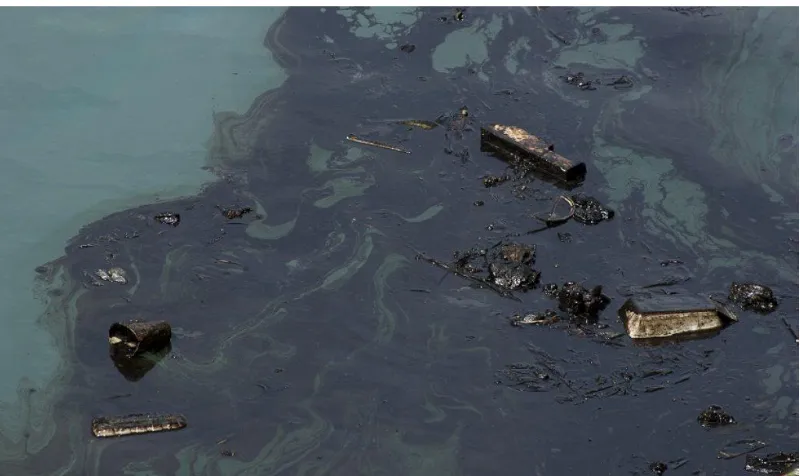
Fig. 2: Oil pollution from waste water
Waste from the ship is made up of various materials such as mops, paper, cartoon paper, metal, glass, paint residues, cargo liners, food waste and cans or plastic materials. Many of these are burned and their ash is often discharged into the sea. On average, each person on the ship leaves about 800 grams of garbage and 2 bottles of jars or cans each day. With a passenger ship of several thousand people, the amount of garbage is enormous, according to the estimated amount of solid waste that comes from passenger ships, which account for 24% of all garbage from the world fleet.
C. Pollution from the ship
Because of the submergence of the ship always soaked in sea water should be a good adhesion to aquatic life including the sea. When hatching and growing on the hull surface, they significantly increase friction with water, slowing down ship speeds and increasing fuel consumption. To remove hatches to the hulls, metal-based paints and
TBTs have been used as a toxic substance for the environment. During water dipping, the substance disperses slowly into the water and settles to the bottom causing poisoning to aquatic organisms. The new anti-pesticide pollution prevention convention is now being phased out of anti-fouling paint for ships. In each ship's voyage, in order to ensure stability and balance for the vessel, water (sea, river, etc.) is pumped into the tanks on board, accompanied by ballast water that is the pathogen or aquatic organism present. In the area, when pumped into a new sea they may adapt to the environment in which they grow and overwhelm local ecological communities, resulting in ecological imbalance. regional or human healt. It is estimated that there are around 4,000 species worldwide, including phytoplankton, algae, fish, jellyfish and other invertebrates.
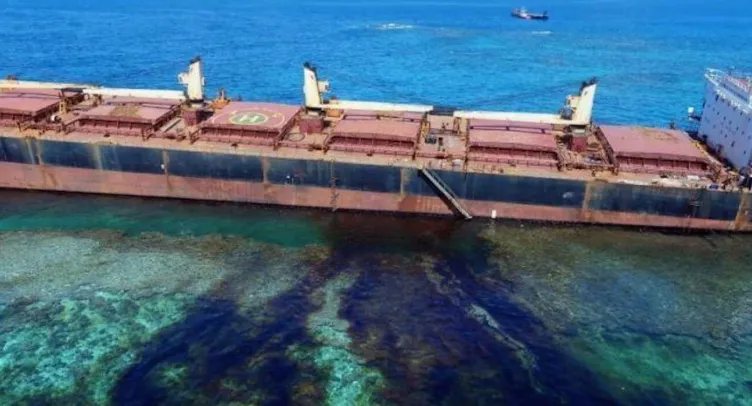
Fig. 3: Oil pollution from ship operation
Every hour, about 7.5 million liters of ballast water are discharged into the waters every hour, a marine specialist at the WWF Wildlife Fund. By transporting over 90% of the world's cargo, ocean freight transports around 10 billion
~ 44 ~ determined that the transport of organisms that hatch on the hull and in ballast water from one area to another has the potential to cause serious harm to the ecological environment sea. These strange creatures can become invasive species, rapidly destroying local flora and fauna, causing serious damage to the ecosystem, the economy and even human health.
3. Impact of environmental pollution
In order to meet the growing demand for domestic and export fleets, many large shipyards have been upgraded, expanded and equipped with state-of-the-art technology - and this has also increased coastal and marine pollution. From the shipbuilding and repairing process, the pollution is mainly heavy metal in the form of oxide powder such as lead oxide Pb3O4, Pb2O3, PbCrO3, copper oxide powder, zinc oxide powder, Fe2O3, TiO2, ZnCrO3; cellulosic paint (-C3H7O2 (OH-) 2, epoxy (CHOCH) paint, phenolic formaldehyde C6H5O-) paint, environmental alkyd (-CHO) paint. gasoline, fuel used much, causing considerable amount of waste oil in the construction phase. All heavy metals: Zn, Cu, Hg, Cr are found in water and sediments, which are highly toxic, very stable and active metals in the marine organism, the food chain and its negative impact on human growth and health. These wastes pollute mainly the coastal waters, oil pollution and sediment pollution (heavy metals) in the areas where shipyards and shipyards are located. These wastes alter the physicochemical properties of water, which directly affects aquatic and marine animals and plants as well as hinders the development of a number of marine industries, salt making, aquaculture and coastal torism.Boat repair also generates large amounts of dust when spraying sand or copper slag to clean the hull. This dust also contains many toxic chemicals for both humans and aquatic organisms. Asbestos dust, glass wool used in insulation on ships can persist for days in the human body, wading into the joints, accumulate in the pleural cavity is capable of causing cancer to humans. According to the statistics of Lloyd's Marine Information System, the world fleet of ships has nearly 100,000 registered and active in the world. The average life expectancy of ships is 25 ÷ 30 years and when the service time expires, they will be demolished at a certain port. Every year, the number of old ships, the expiry of the use of demolition is increasing. According to Greenpeace estimates, by 2020 there will be about 5,000 ships demolished each year. According to reports from international organizations such as the ILO, the Basel Convention, the demolition of sea-going vessels is likely to pollute the marine and inland environment caused by hazardous chemicals and wastes. as well as the risk of causing accidents to workers and surrounding communities by direct exposure to hazardous substances and dangerous incidents that may occur at any time. As most of the countries that receive ship dismantling are developing countries, heavily dependent on agriculture and fisheries, ship dismantling activities have a large and negative impact on the surrounding environment. Ship dismantlement activities threaten to seriously undermine fishery resources as well as affect the production of the fishery. Demolition ships produce toxic chemicals and hazardous waste such as PCB, PVC, PAH, TBT, mineral oil, asbestos, heavy metals (mercury, lead, copper, zinc, aluminum, iron. ..) and other hazardous substances such as radioactive substance, organic cyanide compound and
ballast water ballast containing large amount of bacteria and foreign organisms. That does not include the hazards of dismantling oil, chemical, radioactive, waste or other dangerous goods. Waste generated during ship dismantling: Most of the ships that need to be demolished in the current period are ships built in the 1970s. At that time no legal document banning the use of toxic chemicals was available. This has allowed manufacturers to use a lot of toxic substances such as:
The most toxic chemicals (as long as they are cheap) are able to protect the ship from being rusty, avoiding marine organisms (such as galaxies),
Use asbestos for good insulation and fire protection, Light hull paint for easy identification of ships at sea in fog and to prevent ship hull erosion using paint containing lead and zinc chromate,
The paint contains antifouling agents such as mercury, arsenic, and tributyl tin (TBT) ... so that the hull cannot gain weight by clinging to marine organisms.
According to calculations by some experts, 1 m3 of contaminated water will make 50-60 m3 of fresh water unusable. In the world, up to 500 km3 of polluted water is mixed with natural water on Earth every two years, leaving about 2 billion people without sanitary water. In spite of the country's attention to water resources, in 1950, the United States established a Water Resources Advisory Committee. In 1956, the International Commission on Water was established. However, industrialization is taking place at a rapid pace, and environmental protection measures are not strong enough, so the situation of water pollution is getting worse.
contribute to microbial contamination from the hospital to the community where the effluent of the hospital flows. Garbage that is not classified but disposed of with domestic waste or buried at the hospital is also a factor causing environmental pollution.
Water pollution comes from many different causes. Because of receiving many types of waste water, surface water is polluted in many places, depending on the characteristics of different areas. However, due to the limitation in statistics, this section only mentions 4 main sources of waste that affect the surface water environment in Vietnam: agricultural, industrial, domestic and medical wastewater. Increasing levels of wastewater are now widespread in large parts of the country. Domestic wastewater accounts for over 30% of total direct discharge to rivers, lakes or canals. According to calculations, the South East and Red River Delta are the two areas where most of domestic wastewater is concentrated. In the period of accelerated industrialization and modernization of the country, many industries are expanding their production scale as well as the distribution range. Along with the increase in the amount of wastewater, the investment in the wastewater treatment system is not up to the requirements. The South East region, with all the provinces in the Southern Key Economic Zone, where large industrial zones are concentrated, is the region with the largest amount of industrial wastewater. The number of industrial zones with wastewater treatment systems is still at medium level (50-60%), moreover, 50% of them have not been effectively operated yet.
4. Conclusion
In general, spilled oil can affect animals and plants in two ways: dirесt from the oil and from the response or cleanup process. There is no clear relationship between the amount of oil in the aquatic environment and the likely impact on biodiversity. A smaller spill at the wrong time/wrong season and in a sensitive environment may prove much more harmful than a larger spill at another time of the year in another or even the same environment.Oil penetrates into the structure of the plumage of birds and the fur of mammals, reducing their insulating ability, and making them more vulnerable to temperature fluctuations and much less buoyant in the water. Animals who rely on scent to find their babies or mothers cannot due to the strong scent of the oil. This causes a baby to be rejected and abandoned, leaving the babies to starve and eventually die. Oil can impair a bird's ability to fly, preventing it from foraging or escaping from predators. As they preen, birds may ingest the oil coating their feathers, irritating the digestive tract, altering liver function, and causing kidney damage. Together with their diminished foraging capacity, this can rapidly result in dehydration and metabolic imbalance. Some birds exposed to petroleum also experience changes in their hormonal balance, including changes in their luteinizing protein.The majority of birds affected by oil spills die from complications without human intervention. Some studies have suggested that less than one percent of oil-soaked birds survive, even after cleaning, although the survival rate can also exceed ninety percent, as in the case of the Treasure oil spill.
5. References
1. A. T. Hoang, Q. V. Tran, and X. D. Pham,
“Performance and Emission Characteristics of Popular 4-Stroke Motorcycle Engine in Vietnam Fuelled with Biogasoline Compared with Fossil Gasoline,” no. 2, 2018.
2. A. T. H. Viet Dung Tran, Anh Tuan Le, Van Huong Dong, “Methods of operating the marine engines by ultra-low sulfur fuel to aiming to satisfy MARPOL Annex VI,” Adv. Nat. Appl. Sci., vol. 11, no. 12, pp. 34–40, 2017.
3. A. T. Hoang and V. V. Pham, “Impact of jatropha oil
on engine performance, emission characteristics, deposit formation, and lubricating oil degradation,” Combust. Sci. Technol., 2018.
4. L. Kuroshi and A. I. Ölçer, “A modified AD-TRIZ hybrid approach to regulation-based design and
performance improvement of ballast water
management system,” J. Mar. Eng. Technol., pp. 1–13, 2018.
5. Y. Yuan, Z. Li, R. Malekian, and X. Yan, “Analysis of
the operational ship energy efficiency considering navigation environmental impacts,” J. Mar. Eng. Technol., vol. 16, no. 3, pp. 150–159, 2017.
6. A. O. Ifelebuegu and A. Johnson, “Nonconventional low-cost cellulose-and keratin-based biopolymeric sorbents for oil/water separation and spill cleanup: A review,” Crit. Rev. Environ. Sci. Technol., vol. 47, no. 11, pp. 964–1001, 2017.
7. V. V. Le, D. C. Nguyen, and A. T. Hoang, “The potential of using the renewable energy aiming at environmental protection,” Int. J. Latest Eng. Res. Appl., vol. 2, no. 7, pp. 54–60, 2017.
8. M. J. Wilson et al., “A targeted health risk assessment following the Deepwater Horizon oil spill: polycyclic aromatic hydrocarbon exposure in Vietnamese-American shrimp consumers,” Environ. Health Perspect., vol. 123, no. 2, pp. 152–159, 2014.
9. A. T. Hoang, “Waste heat recovery from diesel engines
based on Organic Rankine Cycle,” Appl. Enery, vol. 231, pp. 138–166, 2018.
10. N. Singkran, “Classifying risk zones by the impacts of oil spills in the coastal waters of Thailand,” Mar. Pollut. Bull., vol. 70, no. 1–2, pp. 34–43, 2013. 11. A. T. Hoang, X. L. Bui, and X. D. Pham, “A novel
investigation of oil and heavy metal adsorption capacity from as-fabricated adsorbent based on agricultural by-product and porous polymer,” Energy Sources, Part A Recover. Util. Environ. Eff., vol. 40, no. 8, pp. 929–939, 2018.
12. A. A. Takshe, M. Huby, S. Frantzi, and J. C. Lovett, “Dealing with pollution from conflict: Analysis of discourses around the 2006 Lebanon oil spill,” J. Environ. Manage., vol. 91, no. 4, pp. 887–896, 2010. 13. S. T. Nguyen et al., “Cellulose aerogel from paper
waste for crude oil spill cleaning,” Ind. Eng. Chem. Res., vol. 52, no. 51, pp. 18386–18391, 2013.
14. B. D. Goldstein, H. J. Osofsky, and M. Y. Lichtveld, “The Gulf oil spill,” N. Engl. J. Med., vol. 364, no. 14, pp. 1334–1348, 2011.
15. M. Fingas, The basics of oil spill cleanup. CRC press, 2012.
~ 46 ~ 17. A. T. Hoang, V. V. Pham, and D. N. Nguyen, “A
report of oil spill recovery technologies,” Int. J. Appl. Eng. Res., vol. 13, no. 7, pp. 4915–4928, 2018. 18. Anh Tuan Hoang et al., “An absorption capacity
investigation of new absorbent based on polyurethane foams and rice straw for oil spill cleanup,” Pet. Sci. Technol., vol. 36, no. 5, pp. 361–370, 2017.
19. A. T. Hoang and L. Anh Tuan, “A review on deposit