R E S E A R C H
Open Access
‘
Phasing out pig tail docking in the EU
-present state, challenges and possibilities
’
Nancy De Briyne
1*, Charlotte Berg
2, Thomas Blaha
3, Andreas Palzer
4and Déborah Temple
5Abstract
Background:European legislation dictates that pig tail docking is not allowed to be performed routinely (European Union. Council Directive 2008/120/EC of 18 December 2008 laying down minimum standards for the protection of pigs. OJ L 47, 18.2.2009). Nevertheless, tail docking is still practiced routinely in many European countries, while four countries stopped routine tail docking completely. Tail docking is also practiced in many countries outside Europe. The Federation of Veterinarians of Europe (FVE), the European Association of Porcine Health Management (EAPHM) together with the European Commission carried out an online survey to investigate the situation regarding the practice of pig tail docking and the provision of enrichment material across 24 European countries. It also focuses on the role of the veterinary profession and gives an overview on published literature regarding the challenges and possibilities related to the raising of pigs with intact tails.
Results:Fifty-seven (57) usable survey responses from 24 countries were received. On average 77% (median = 95%) of pigs are routinely tail-docked. In Finland, Norway, Sweden, Switzerland, less than 5% of the pigs are tail-docked. According to the respondents, 67% of pigs (median = 76%) across the 24 EU countries surveyed are given suitable enrichment materials. Training of veterinary practitioners, their role in advising the producer and undertaking a risk assessment of tail biting were more positively valued in countries that stopped routine tail docking than in countries that had not stopped routine tail docking. Initiatives such as training from national authorities to encourage abandoning tail docking and routine recording of tail biting at the slaughterhouse were identified as two successful items to promote the raising of pigs with entire tails.
Conclusion: In many European countries the majority of the pigs are still routinely tail-docked, which is a violation of the European legislation. To stop routine tail docking it is necessary to raise the awareness and education about risk factors to prevent tail biting. The growing knowledge about the reasons for failing voluntary national initiatives as well as about successful measures taken by some countries to make pig production with intact tails feasible should be distributed throughout the EU pig producing community. The veterinary profession has a significant role to play in raising awareness, facilitate knowledge transfer and to identify risk factors and solutions on farm level for the benefit of pig health and welfare.
Keywords:Animal welfare, Enrichment materials, Mutilations, Straw, Swine, Tail biting, Veterinarian
Background
Many piglets in Europe are routinely exposed to the cut-ting or cauterizing of a part of the tail in the first week after birth to prevent tail biting in their later life. This procedure is mostly done by the farmer during the first week of the piglets’ life, without any pain relief. If it is done after the piglets are 7 days old, it needs to be
performed by a veterinarian with provision of analgesia/ anaesthesia to provide pain relief, in accordance with the EU pig Directive [1].
Since 1994, European legislation has stipulated that this procedure cannot be done routinely and only if there is evidence of tail biting and if other measures have first been taken to prevent tail biting but have failed. Suggested measures to be taken include improv-ing husbandry and environmental conditions, increasimprov-ing the space allowance, modifying the management system or providing additional enrichment material.
* Correspondence:[email protected]
1Federation of Veterinarians of Europe, Avenue Tervueren 12, 1040 Brussels,
Belgium
Full list of author information is available at the end of the article
The European Food Safety Authority (EFSA) 2007 sci-entific opinion [2] on risk factors for tail biting in pigs reported that the practice of tail docking was widespread in the vast majority of EU Member States, with percent-ages of 81–100% of pigs being tail docked, the only exceptions being Finland (5% of pigs tail-docked), Lithuania and Sweden (0%). Three EU Member States -Austria, Denmark and Slovenia - have specific legislation further limiting this practice, while 3 others - Finland, Lithuania and Sweden – have prohibited tail docking, unless motivated in each individual case from a veterin-ary perspective.
Tail biting is associated with pain, stress and frustra-tion and negatively affects food safety [2]. It has the po-tential for evoking short- as well as long-term physiological and behavioural changes indicative of pain [3, 4]. It can be triggered by a wide range of factors, often in combination, including: overstocking, feed and drinking water deficiencies or competition for these re-sources, incorrect or fluctuating temperature levels, in-adequate ventilation, noise, draught, high levels of dust and noxious gases (i.e. ammonia), lack of opportunities to escape dominant animals, genetic factors, lack of en-vironmental enrichment such as rooting material, and also general health problems [2, 5, 6]. If tail biting oc-curs, it can spread quickly through affected and neigh-bouring pens, can be difficult to stop and the degree of injury can increase rapidly [5,7]. Tail biting can occur in all production systems. Danish studies which compared slaughter lesions in pigs found more tail lesions in free-range systems than in the conventional indoor sys-tem. Marked herd effects were noted [8,9].
Often tail biting prevention is part of the farm animal health and welfare plan, which the farmer prepares to-gether with the contracted veterinarian. Toto-gether they have to ensure that enough and appropriate enrichment material is provided and that husbandry, management and climate conditions are optimal [10, 11]. In some countries, if all these preventive steps are taken and the farmer still needs to tail-dock, the veterinarian has to sign a veterinary certificate to verify this and to justify the pigs being tail-docked. Trade issues also play a role, with some fattening farms only wishing to purchase tail-docked piglets.
Tail biting is a significant animal health, welfare and food safety problem. As a result of increased numbers of dead and runted animals after ascending abscesses it can also pose a considerable financial problem to the farmer, and increased costs for carcass handling at the slaughter-house. An Irish study with tail-docked pigs calculated producer losses resulting from carcass condemnation and carcass trimmings to be around€1.1 per pig slaugh-tered [12]. These combined losses represented a loss of 43% of the profit margin per pig, at the time of the
study, attributable to tail biting. ProHealth, an FP7 Framework program, estimated the costs of tail biting in tail-docked fattening pigs at about €2 per produced pig [13]. Tail docking is used to reduce the risk of tail biting. Nevertheless, tail docking is in itself a welfare problem, as it causes pain to the pigs, can lead to the formation of spinal abscesses, impairs the physical integrity of the ani-mals, and facilitates suboptimal production methods from a welfare point-of-view and it does not completely remove the risk for tail biting [14]. When evaluating the costs and benefits of tail docking, it is important to consider negative impacts of both tail docking and tail biting [14].
In addition to the ban on routine tail docking, European legislation requires that pigs must have“permanent access to a sufficient quantity of material to enable proper inves-tigation and manipulation activities, such as straw, hay, wood, sawdust, mushroom compost, peat or a mixture of such” [1]. In order to give more clarity on measures to prevent the need for tail docking and on‘suitable enrich-ment’, in 2016 the European Commission adopted rec-ommendations on tail biting and suitable enrichment materials [15, 16]. Many scientific publications also emphasized the importance of providing suitable en-richment material and the relation of it with tail bit-ing [2, 14, 17, 18].
In the last years a high level of political attention has been seen to improve implementation and enforcement of the ban on routine tail docking [19–21].
The aim of this paper was to analyse the progress made in the different countries regarding phasing out of tail docking. Specific attention was given to the role of veterinary practitioners in the efforts to reduce tail biting and docking.
Methodology
tail-docked pigs; ii) provision of suitable enrichment mate-rials. The survey also contained questions regarding the risk factors, challenges, slaughterhouse monitoring and role of the veterinary practitioner. All questions are listed inAppendix.
Statistics
The tail docking outcome was converted into dichotom-ous variable to look for possible associations between variables. Each respondent was classified in one of two categories based on expert opinion on the percentages provided by the survey: 0) No-TD (No-Tail Docking): no or few tail-docked pigs (range from 0 to 5%) and 1) TD (Tail Docking): more or equal than 70% of tail-docked pigs (range from 70 to 100%). Responses from the 3 countries reporting intermediate tail docking levels were not included in this part of the analysis.
The experimental unit was the respondent. A Mann– Whitney Wilcoxon test was used to identify any signifi-cant difference between the prevalence of suitable en-richment material in countries which routinely tail-dock versus those that phased out tail docking. A chi-square test was applied to detect possible associations between the other answers given and the fact of performing rou-tine tail docking or not. A p-value of 0.05 was consid-ered significant for all analyses.
Results
Percentages of pigs’tail-docked
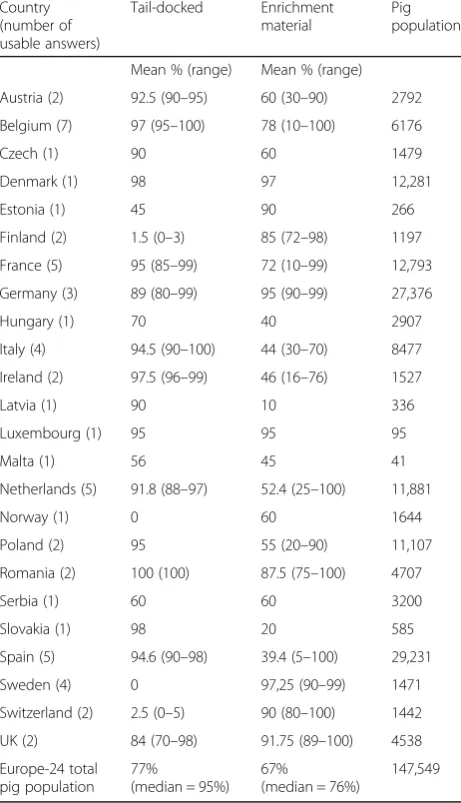
Table 1 shows the percentage of pigs’ tail-docked and given enrichment materials in the 24 countries that par-ticipated in the survey. On average 77% (median = 95%) of pigs were routinely tail-docked. In Finland, Norway, Sweden, Switzerland, less than 5% of the pigs were tail-docked. Respondents from Estonia, Malta and Serbia reported intermediate percentages (> 5% to < 70%) of tail-docked pigs.
Percentage of pigs which are provided suitable enrichment materials
According to the respondents, 67% of pigs (median = 76%) across the 24 countries surveyed were provided with suitable enrichment materials. Within a country, between respondents, extensive variation was seen in the percentages regarding suitable enrichment mate-rials (Table 1).
The percentage of suitable enrichment material was significantly different in TD-countries (Tail Docking countries) (mean 63% +/− sd 32.9%; median 70%) compared with No-TD countries (No Tail Docking Countries) (mean 89% +/− sd 14.8%; me-dian 97%) (Z = 1.9, P = 0.048).
Awareness on European and national recommendations and initiatives regarding prevention of tail biting and tail docking
Eighty-six percent (86%) of the veterinarians declared that they were aware of the Commission Recommenda-tion regarding tail docking (EU 2016/336) [15] and 69% of the accompanying Commission Staff Working Document [16]. Fifty six percent (56%) replied they were aware of manuals, training opportunities or other supporting material developed and organised, mostly by the national governments, animal welfare councils/com-mittees or research institutes.
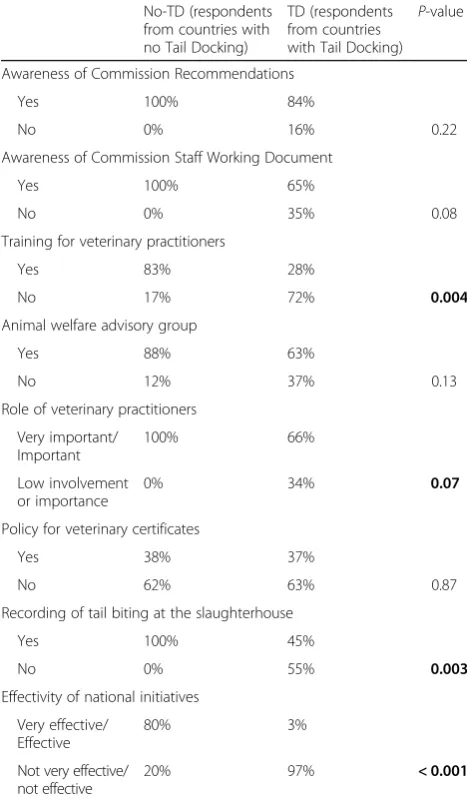
Eighty-three percent (83%) reported the existence of a training for veterinary practitioners in No-TD countries, against 28% in TD-countries (P= 0.004). (see Table2). Table 1Percentage of pigs tail docked and pigs provided suitable enrichment material (mean, max and min) in relation to the pig population in the 24 countries surveyed
Country (number of usable answers)
Tail-docked Enrichment
material
Pig populationa
Mean % (range) Mean % (range)
Austria (2) 92.5 (90–95) 60 (30–90) 2792
Belgium (7) 97 (95–100) 78 (10–100) 6176
Czech (1) 90 60 1479
Denmark (1) 98 97 12,281
Estonia (1) 45 90 266
Finland (2) 1.5 (0–3) 85 (72–98) 1197
France (5) 95 (85–99) 72 (10–99) 12,793
Germany (3) 89 (80–99) 95 (90–99) 27,376
Hungary (1) 70 40 2907
Italy (4) 94.5 (90–100) 44 (30–70) 8477
Ireland (2) 97.5 (96–99) 46 (16–76) 1527
Latvia (1) 90 10 336
Luxembourg (1) 95 95 95
Malta (1) 56 45 41
Netherlands (5) 91.8 (88–97) 52.4 (25–100) 11,881
Norway (1) 0 60 1644
Poland (2) 95 55 (20–90) 11,107
Romania (2) 100 (100) 87.5 (75–100) 4707
Serbia (1) 60 60 3200
Slovakia (1) 98 20 585
Spain (5) 94.6 (90–98) 39.4 (5–100) 29,231
Sweden (4) 0 97,25 (90–99) 1471
Switzerland (2) 2.5 (0–5) 90 (80–100) 1442
UK (2) 84 (70–98) 91.75 (89–100) 4538
Europe-24 total pig population
77%
(median = 95%) 67%
(median = 76%)
147,549
a
National initiatives and the role of veterinary practitioners Eighty (80%) of No-TD countries respondents thought national initiatives to reduce tail docking were“(very) ef-fective”against only 3% in TD countries (p< 0.001).
The role of the veterinary practitioner was seen as (very) important by 100% participants from the No-TD group against 66% from the TD group (P = 0.07) (Table 2). Nobody replied that veterinarians have a deciding role.
Recording of tail biting or tail docking at slaughterhouses Recording of tail biting at the slaughterhouse was re-ported by 100% participants from the No-TD coun-tries against 45% from the TD councoun-tries (P = 0.003) (Table2).
Most important practices suggested to prevent tail biting and to avoid routine tail docking of pigs
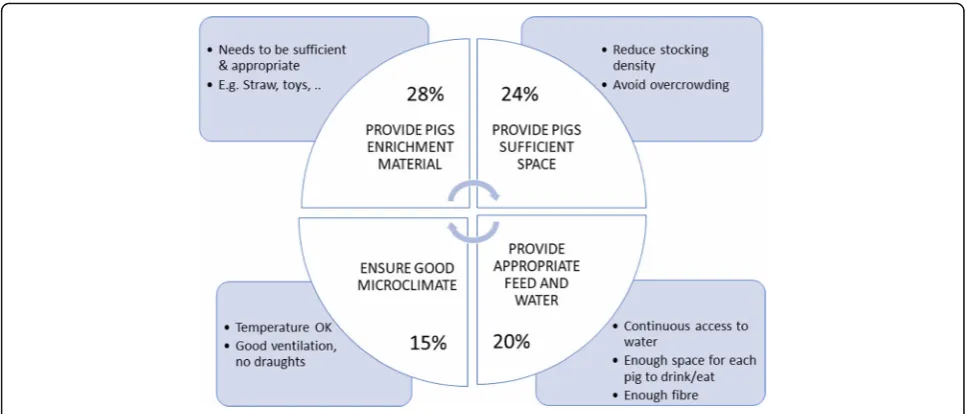
The main practices suggested by veterinarians to prevent tail biting were: 1/ to provide sufficient and appropriate enrichment materials (quoted by 28%), 2/ stocking dens-ities to be respected or reduced, i.e. avoid overcrowding (24%) 3/ appropriate feeding, watering and enough space for animals to drink and feed (20%) and 4/ an appropri-ate and reasonably stable microclimappropri-ate (15%) (Fig.1).
The main challenges preventing veterinarians to advise to stop tail docking
The main challenges to stop tail docking quoted were: 1/ the risk for tail biting and the potentially welfare con-sequences (28%), 2/ inappropriate or insufficient housing (24%), 3/ related to farmers’ management, knowledge and (un)willingness or hesitation to change (20%) and 4/ related to economics and the market (18%) (Fig.2).
Top 3 benefits to farms not performing tail docking The main benefits of not performing routine tail docking given were: 1/ improved animal welfare for the pigs, by avoiding the pain from the tail docking itself and the risk of consequent infections (46%), 2/ less labour and time input (15%), 3/ economic benefit for higher price with a label that requires intact tails and 4/ improved public image of pig farming (12%).
Countries having stricter regulations on tail docking Via desk-research, our study collected examples of EU and EFTA countries having stricter legislation than the EU Directive [1] (Table3).
Discussion
For most countries, reliable statistical data is not avail-able on the amount of pigs with docked tails, tail biting lesions and how many pigs are provided with suitable and sufficient enrichment materials. The present survey relied upon a limited number of answers of experts in pig production from different countries despite reaching out extensively. This shows the need for more data col-lection on this topic. While the results presented in this document indicate the situation per country, it should be recognised that this might not reflect the situation in the whole of Europe, nor give a complete picture.
Little progress in preventing tail docking
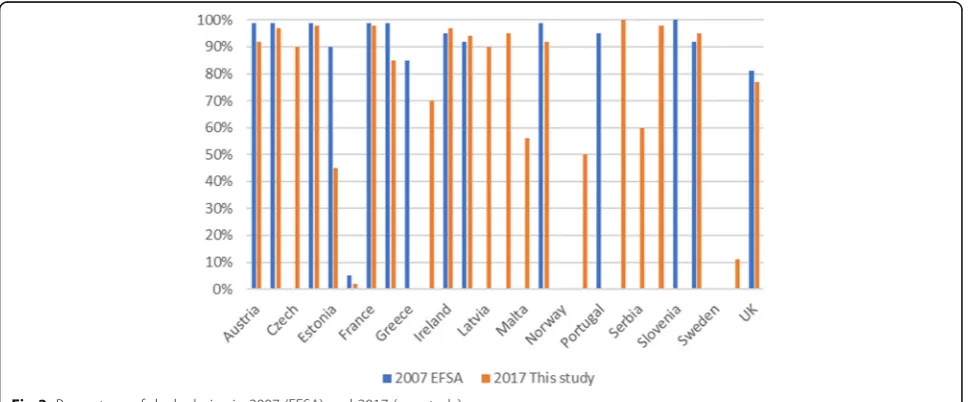
Although routine tail docking is banned in the EU since 1994, the results of our survey show that little progress has been made in the last 20 years with still 77% (me-dian = 95%) of the pigs being tail-docked in the 24 sur-veyed countries. Comparing with the percentages EFSA quoted in its 2007 report [2], the percentage of pigs be-ing tail-docked has hardly decreased at all (see Fig.3). Table 2Frequencies of answers in the tail docked (TD) and no
routinely tail docked groups (No-TD) No-TD (respondents from countries with no Tail Docking)
TD (respondents from countries with Tail Docking)
P-value
Awareness of Commission Recommendations
Yes 100% 84%
No 0% 16% 0.22
Awareness of Commission Staff Working Document
Yes 100% 65%
No 0% 35% 0.08
Training for veterinary practitioners
Yes 83% 28%
No 17% 72% 0.004
Animal welfare advisory group
Yes 88% 63%
No 12% 37% 0.13
Role of veterinary practitioners
Very important/ Important
100% 66%
Low involvement or importance
0% 34% 0.07
Policy for veterinary certificates
Yes 38% 37%
No 62% 63% 0.87
Recording of tail biting at the slaughterhouse
Yes 100% 45%
No 0% 55% 0.003
Effectivity of national initiatives
Very effective/ Effective
80% 3%
Not very effective/ not effective
20% 97% < 0.001
Four countries stand out, namely Finland, Norway, Sweden and Switzerland, as they stopped tail docking al-most completely, without large problems with tail biting. Most EU countries literally transcribed the EU pig dir-ective text [1] in their national legislation. Exceptions to this are Denmark, Estonia, Finland, Norway, Sweden and Switzerland, which introduced stricter legislation (Table 3). Stricter implementation and control of the current legislation to enforce it properly, would be bene-ficial to pig welfare and also create a more level playing field for producers in different EU countries.
Providing enrichment materials is vital to prevent tail biting, but not enough alone
While the legislation requires permanent access to a suf-ficient quantity of suitable enrichment and in details
describes what is ‘suitable’and‘sufficient’, our survey re-sults show that in reality knowledge and awareness is lacking. Only 67% of pigs (median = 76%) across the 24 EU countries surveyed were said to be given suitable en-richment materials. The association between providing suitable enrichment material and routine tail docking was significantly. The four countries that stopped tail docking replied to almost give all pigs sufficient and suitable enrichment material. Lack of proper enrichment material and need for appropriate space allowance were identified as the two main risk factors for tail biting. This expert opinion is in accordance with risk factors studies [2,5,6, 22, 23]. Several publications demonstrate that enrichment material and more specifically clean and fresh straw can substantially reduce the risk of tail biting [24]. Larsen [25] showed that a moderate amount of straw
Fig 2.Main challenges to stop tail docking
(150 g/pig/day) reduced the risk of injurious tail biting by more than two-fold, while docking reduced the risk by more than four-fold. Combining straw and increased space (1.2 m2per pig) reduced the risk in undocked pigs to the same level as found in docked pigs kept under high stocking density (0.72 m2per pig) without straw.
Tail docking has been reported as the most commonly applied management tool used to prevent tail biting. Hunter [26] recorded tail biting in 2.4% of docked and 8.5% of long-tailed pigs in the UK. In some cases, tail docking has reduced the prevalence of tail biting by up to 66% [27]. However, tail docking does not prevent tail biting completely. For example, sampling 18,500 docked pigs in French slaughterhouses in 2017, they found 62.6% of pigs having mild tail lesions and 2.21% with se-vere tail biting lesions [28].
Looking at the four countries that stopped tail docking almost completely, production systems are characterized by the use of enrichment materials (often straw), re-duced stocking rates and high standards in relation to
thermal comfort and air quality, health status, competi-tion for food and space, and diet [20]. Both Sweden as Finland have a higher legally required space allowance than stipulated in the EU Directive [1]. A study inter-viewing Swedish pig farmers found that straw was used in 98% (61% straw only, 37% straw supplemented with other enrichment materials e.g. wood shavings) [24]. A Swiss study [29] showed that tail biting in undocked pigs can be reduced to similar levels as for docked pigs when the environment is suitably enriched.
Despite reporting high mean percentages of pigs hav-ing access to suitable enrichment material several coun-tries still tail-docked more than 70% of pigs. This result may be explained through three main hypotheses: i) Due to the multifactorial nature of the problem [2, 6, 26], it may be difficult to predict and completely prevent epi-sodes of tail biting [23]; ii) Another explanation is that of habit, i.e. the tendency to continue doing what has usually been done, and limited knowledge about the al-ternatives; iii) Yet another explanation is that raising pigs
Fig 3.Percentage of docked pigs in 2007 (EFSA) and 2017 (our study)
Table 3Non exhaustive list of countries having stricter legislation then the EU Directive in relation to tail docking
Country Legislation stricter than EU Directive
Denmark Stricter legislation regarding rooting material, cooling, solid/drained floors and hospital pens, tail should be docked as little as possible (not more than ½ of the tail), if performed after the 4th day of life, piglets should be given long-lasting analgesia
Estonia Veterinarian has to make the decision
Finland Tail docking is forbidden since 2003, lower legal stocking densities
Germany It is only allowed to tail-dock piglets up to an age of 4 days. If older, it has to be done by a veterinarian with anaesthesia (§5 TierSchutzGesetz). Since 2018, also stricter requirements apply regarding enrichment materials and a guidance to cut maximum 1/3 of the tail
Norway Amputation of tails for medical reasons can only be performed by veterinarians Regulation for Housing of Swine of 2003, using anaesthesia and prolonged analgesia. As a consequence, it is not carried out any more Paragraph 10
Sweden Tail docking is not allowed (SFS 1988:534 Paragraphs 2,4,10)
with intact tails may cost more, as a result of decreasing the stocking density, providing more enrichment mater-ial, and the labour costs involved including keeping a closer eye on any tendencies of tail biting.
Measuring as precondition for improvement
Recording of tail biting at the slaughterhouse seems an important precondition for improvement. Recording was done in all countries which stopped routine tail docking against only 45% in the countries where tail-docking was common. Serious tail biting lesions should normally be recorded as part of the standard meat inspection system [30]. However, slaughterhouse data indicate that tail bit-ing remarks from meat inspection data tend to severely underestimate on-farm prevalence of tail lesions [31,32].
It is crucial to set up an effective monitoring program, both on farm as at the slaughterhouse, which records tail biting lesions and percentage of docked pigs. For moni-toring and benchmarking purposes, both nationally as on a European scale, a grading scale should be developed to score tail docking (length of docking) and both old and new tail bite damage in a systematic, standardized way [32].
EUWelNet, a coordinated European Animal Welfare Network, has developed standardised training for EU in-spectors in respect to provision enrichment materials, tail biting and tail docking [33].
Preventing tail biting as part of herd health management Seen the multi-factorial nature of tail biting [2, 6,26], it needs a holistic health, welfare and biosecurity approach [14, 17]. While the deciding role to tail-dock or not, is up to the farmer, the farm veterinarian has an important role in doing a farm specific risk assessment and advis-ing the farmer [10, 11]. Overall, 70% of the respondents see the role of vet practitioner as (very) important. Stud-ies also showed that record keeping through an advisory service can help to lower the risk of tail biting, which is associated with improved farm performance [34,35].
Some countries or farm assurance systems only allow farmers to tail-dock pigs after a veterinarian has issued a veterinary certificate or a veterinary statement [11]. However, most countries or veterinary practices do not have clear policies and guidelines when and after which assessment a certificate/statement can be issued. Every veterinary certificate issued should always follow the FVE 10 principles of certification [36]. These request amongst others that a veterinarian has to 1/only certify issues that he/she can ascertain 2/ avoid conflict of interest and 3/ does not allow economic or other pres-sures to compromise his/her impartiality.
Following the legislation, a veterinary certificate/ state-ment should only be given if the veterinarian has evi-dence of tail biting in the stable, when appropriate and
sufficient enrichment material is present and after the farmer has tried to change e.g. housing, climate or stock-ing density.
National action plans: Need for close collaboration between government, veterinary profession and pig industry
Our results show that countries that have stopped rou-tine tail docking invest more in training for veterinary practitioners. The EU has requested all member coun-tries to draw up an action plan to prevent tail docking by summer 2018. To make this plan work, it will be vital to work in close collaboration with the national pig vet-erinary practitioners and the pig industry in the country. Monitoring tail biting and tail docking and developing training materials and guidance should be part of the ac-tion plans. Several countries already developed support materials, such as Belgium [37], Denmark [38], Ireland [39], Spain [40] and the UK [41]. On a European level, materials were developed by FareWellDock [42] and the European Commission [43].
It is important to ensure that such useful materials reach all pig veterinarians and pig farmers in Europe.
Conclusion
In the EU, routine tail docking is banned since 1994. Nevertheless, our study shows that the majority of pigs are still tail-docked. EU countries are developing na-tional action plans to improve implementation and en-forcement of the legislation. Our results show that it will be vital for countries to raise awareness and work out these plans in close collaboration with national pig vet-erinary practitioners and the pig industry. Private veteri-narians in collaboration with all other actors have an important role to play in advising and supporting farmers. Monitoring tail biting and tail docking, both on farm as at the slaughterhouse, and developing training materials and guidance should be part of the above-mentioned plans. Veterinary certification can play a role, but should only be provided upon fulfil-ment of clearly specified criteria, based on proper in-vestigations and clearly verifiable by the veterinarian and the authorities.
Appendix
Survey questions Open questions
Percentage of pigs tail-docked
Percentage of pigs provided suitable enrichment materials
List the main challenges to stop tail-docking
List the main benefits for farmers to stop tail-docking
Please share the best communication material you have seen to prevent tail-docking
Dichotomous and multiple-choice questions
Do you have national legislation on tail docking in your country? (yes, no)
Are you/your members aware of the Commission Recommendation laying down measures to reduce the need for tail-docking? (yes, no)
Are you/your members aware of the Commission Staff Working Document on best practices to prevent routine tail-docking and on the provision of enrichment materials to pigs? (yes, no)
Have you distributed these guidelines, or made them available to your members / colleagues? (yes, no)
Has your national veterinary organisation or any other organisation organised training for veterinary practitioners on how they can assist operators to prevent tail biting pigs? (yes, no, I do not know)
Is there any animal welfare advisory group (or similar) in the veterinary association(s) in your country? (yes, no, I do not know)
How effective have these national initiatives been to reduce tail-docking in your opinion? (Very effective, effective, not very effective, not effective)
Please describe the role of veterinary practitioners in such strategies on farms? (Very important, important, low involvement or importance)
Does your association or practice have a policy on the issuing of veterinary certificates related to tail docking? (yes, no, I do not know)
Are you aware if slaughterhouses in your country record the incidence of docking and / or tail-biting (yes, no, I do not know)
Is there a standard tail scoring methodology used? (yes, no, I do not know)
Acknowledgements
The authors are grateful to all organisations and institutions who supported this survey, namely the European Association of Porcine Health Management, the European Commission DG Sante and the Federation of Veterinarians of Europe. We are also very grateful for all the national veterinary associations who helped distributing the survey. We express our gratitude to all pig experts who shared with us their knowledge. Last but not least we are grateful for all veterinarians specialised in pigs who filled in the survey. Without them, this publication would not exist.
Funding
No funding was provided.
Availability of data and materials
Data are available from the corresponding author upon request.
Authors’contributions
All authors contributed to the study conception and design. NDB programmed the survey online and supervised data acquisition. NDB and DB contributed to interpretation of the data. DB performed the statistical analysis. NDB and DT drafted first draft of manuscript. All authors read, critically revised and approved the final manuscript.
Ethics approval and consent to participate
Participation in the survey was completely voluntary. Participants were informed before starting the survey about the methodology for collecting, using and sharing the data and that consent for using the data as specified was implied when participating. All data was anonymised and no personal data was processed.
Consent for publication
All authors consent to the publication of the present manuscript.
Competing interests
The authors declare that they have no competing interests.
Publisher’s Note
Springer Nature remains neutral with regard to jurisdictional claims in published maps and institutional affiliations.
Author details
1Federation of Veterinarians of Europe, Avenue Tervueren 12, 1040 Brussels,
Belgium.2Department of Animal Environment and Health, Swedish University of Agricultural Sciences, POB 234, SE-532 23 Skara, Sweden. 3German Veterinary Association for Animal Welfare, Wiesenweg 11, 49456
Bakum, Germany.4Clinic for Swine, Ludwig-Maximilians-University Munich, Sonnenstrasse 16, 85764 Oberschleissheim, Germany.5Universitat Autònoma de Barcelona, Farm Animal Welfare Education Center, Plaza Cívica, s/n, 08193 Bellaterra, Barcelona, Spain.
Received: 6 June 2018 Accepted: 18 October 2018
References
1. European Union. Council Directive 2008/120/EC of 18 December 2008 laying down minimum standards for the protection of pigs (Codified version). Official J Europ Union. 2009;L47:5–13.
2. EFSA (European Food Safety Authority). Scientific opinion of the panel on animal health and welfare on a request from commission on the risks associated with tail biting in pigs and possible means to reduce the need for tail-docking considering the different housing and husbandry systems. EFSA J. 2007;611:1–13.
3. Di Giminiani P, Nasirahmadi A, Malcolm EL, Leach MC, Edwards SA. Docking piglet tails: how much does it hurt and for how long? Physiol Behav. 2017; 182:69–76.
4. Di Giminiani P, Edwards SA, Malcolm EL, Leach MC, Herskin MS, Sandercock DA. Characterization of short- and long-term mechanical sensitisation following surgical tail amputation in pigs. Sci Rep. 2017;7(1):4827. 5. D’Eath RB, Arnott G, Turner SP, Jensen T, Lahrmann HP, Busch ME, et al.
Injurious tail biting in pigs: how can it be controlled in existing systems without tail docking? Anim. 2014;8:1479–97.
6. Sonoda LT, Fels M, Oczak M, Vranken E, Ismayilova G, Guarino M, Viazzi S, Bahr C, Berckmans D, Hartung J. Tail biting in pigs--causes and management intervention strategies to reduce the behavioural disorder: a review. Berl Munch Tierarztl Wochenschr. 2013;126(3–4):104–12.
7. De Briyne N. Private communication, 2017.
8. Kongsted H, Sørensen JT. Lesions found at routine meat inspection on finishing pigs are associated with production system. Vet J. 2017;223:21–6. 9. Alban L, Petersen JV, Busch ME. A comparison between lesions found
during meat inspection of finishing pigs raised under organic/free-range conditions and conventional, indoor conditions. Porcine Health Manag. 2015;1:4.
10. British Pig Association. Template BPA Plan for Pig Health. 2008.http://www. britishpigs.org.uk/BPA%20FHP%20Template.pdf. Accessed 2 Sept 2018. 11. Red Tractor. Red tractor quarterly veterinary report. 2017.https://assurance.
12. Harley S, Boyle LA, O’Connell NE, More SJ, Teixeira DL, Hanlon A. Docking the value of pigmeat? Prevalence and financial implications of welfare lesions in Irish slaughter pigs. Anim Welf. 2014;23(3):275–85.
13. Prohealth. Production diseases: the cost to pig producers. Prohealth Newsl. 2015.http://www.fp7-prohealth.eu/newsindex/newsletter-november-2015/ production-diseases-cost-pig-producers/.
14. Valros A, Heinonen M. Save the pig tail. Porcine Health Manag. 2015;1:2. 15. European Union. Commission Recommendation (EU) 2016/336 on the
application of Council Directive 2008/120/EC laying down minimum standards for the protection of pigs as regards measures to reduce the need for tail-docking. Offical J Europ Union. 2016;L 62:20
16. European Union. Commission staff working document on best practices with a view to the prevention of routine tail-docking and the provision of enrichment materials to pigs. SWD(2016) 49 final.https://ec.europa.eu/food/ sites/food/files/animals/docs/aw_practice_farm_pigs_stfwrkdoc_en.pdf. Accessed 2 Sept 2018.
17. Valros A, Munsterhjelm C, Hänninen L, Kauppinen T, Heinonen M. Managing undocked pigs–on-farm prevention of tail biting and attitudes towards tail biting and docking. Porcine Health Manag. 2016;2:2.
18. Studnitz M, Jensen MB, Pedersen LJ. Why do pigs root and in what will they root? A review on the exploratory behaviour of pigs in relation to environmental enrichment. Appl Anim Behav Sci. 2007;107:183–97. 19. Dijksma S, Bucht SE, Schmidt C, Jorgenson D. Joint declaration in respect to
pig welfare. 2015.http://www.bmel.de/SharedDocs/Downloads/Tier/ Tierwohl/GemeinsameErklaerungSchweinehaltung-DK-NL-SE-DE-englisch. pdf;jsessionid=C92EDCACC2E604DEC0B45962C469F46B.1_cid358?__blob= publicationFile. Accessed 2 Sept 2018.
20. European Commission. Overview report Study Visits on Rearing Pigs with Intact Tails. 2016.http://ec.europa.eu/food/audits-analysis/overview_reports/ act_getPDF.cfm?PDF_ID=790. Accessed 2 Sept 2018.
21. European Parliament. Routine tail docking of pigs. Study for the PETI Committee. IPOL_STU(2014)509997.http://www.europarl.europa.eu/ RegData/etudes/STUD/2014/509997/IPOL_STU(2014)509997_EN.pdf. Accessed 22 Oct 2018.
22. Schrøder-Petersen DL, Simonsen HB. Tail biting in pigs. Vet J. 2001;162:196–210. 23. Temple D, Courboulay V, Velarde A, Dalmau A, Manteca X. The welfare of
growing pigs in five different production systems in France and Spain: assessment of health. Anim Welfare, Volume 21, Number 2, May 2012, pp. 257–271(15).
24. Wallgren T, Westin R, Gunnarsson S. A survey of straw use and tail biting in Swedish pig farms rearing undocked pigs. Acta Vet Scand. 2016;58:84. 25. Larsen M, Andersen H, Pedersen L. Which is the most preventive measure
against tail damage in finisher pigs: tail docking, straw provision or lowered stocking density? Anim. 2017:1–8.
26. Hunter EJ, Jones TA, Guise HJ, Penny RHC, Hoste S. The relationship between tail biting in pigs, docking procedure and other management practices. Vet J. 2001;161:72–9.
27. Kritas SK, Morrison RB. Relationships between tail biting in pigs and disease lesions and condemnations at slaughter. Vet Rec. 2007;160:149–52. 28. IFIP study in French Slaughterhouses 2017:https://circabc.europa.eu/sd/a/
362f9971-7f5c-4ece-93b2-560efc445e73/National%20Plan%20on%20Tail%20 Docking%20(FR)_LALOY%20F%20%26%20HUET%20R_2017_EN.pdf. Accessed 2 Sept 2018.
29. Cagienard A, Regula G, Danuser J. The impact of different housing systems on health and welfare of grower and finisher pigs in Switzerland. Prev Vet Med. 2005;68(1):49–61.
30. FVE. FVE guidance document on Food Chain Information. 2015http://www. fve.org/uploads/publications/docs/005_fci_guidance_fci_adopted_full_ document.pdf. Accessed 2 Sept 2018.
31. Lahrmann H, Busch M, D’Eath R, Forkman B, Hansen C. More tail lesions among undocked than tail docked pigs in a conventional herd. Anim. 2017; 11(10):1825–31.
32. Keeling L, Wallenbeck A, Larsen A, Holmgren N. Scoring tail damage in pigs: an evaluation based on recordings at Swedish slaughterhouses. Acta VetScand. 2012;54(1):32.
33. EUWellNet. Training resource on tail biting in pigs. 2013.http://www. euwelnet.eu/en-us/euwelnet-pig-training/. Accessed 2 Sept 2018. 34. van Staaveren N, Teixeira DL, Hanlon A, Boyle LA. Pig carcass tail lesions: the
influence of record keeping through an advisory service and the relationship with farm performance parameters. Anim. 2017;11(1):140–6.
35. Scollo A, Gottardo F, Contiero B, Edwards SA. A cross-sectional study for predicting tail biting risk in pig farms using classification and regression tree analysis. Prev Vet Med. 2017;146:114–20.https://doi.org/10.1016/j. prevetmed.2017.08.001.
36. FVE. 10 principles of certification. 2014.http://www.fve.org/uploads/ publications/docs/061_fve_10_principles_of_veterinary_certification_ adopted.pdf. Accessed 2 Sept 2018.
37. Belgian Federal Government. Staartbijten voorkomen zonder coupure. 2013.
http://www.varkensloket.be/Portals/63/Documents/GR_201302_Staartbijten_ voorkomen_zonder_coupure_DIGIdef.pdf. Accessed 2 Sept 2018. 38. Danish Agriculture and Food Council. Pig Industry Quality Manual. 2017, 5th
Edition.https://www.lf.dk/~/media/lf/aktuelt/publikationer/svinekod/2018/ qsg-english-2017.pdf?la=da. Accessed 2 Sept 2018.
39. Farm Animal Welfare Advisory Council (FAWAC). Code of practice for the welfare of pigs. 2009.http://www.fawac.ie/media/fawac/content/publications/ animalwelfare/CodePracticePigWelfare.pdf. Accessed 2 Sept 2018.
40. Ministerio de Agricultura y Pesca, alimentacion medio ambiente. Document on the management of pig holdings to avoid the risk of tail biting. 2017.
http://www.mapama.gob.es/es/ganaderia/temas/produccion-y-mercados-ganaderos/20171031documentosobregestiondelasexplotacionesparala prevenciondelraboteo_tcm30-441875.pdf. Accessed 2 Sept 2018. 41. AHDB. A Practical Guide to Environmental Enrichment for Pigs.https://pork.
ahdb.org.uk/media/273607/enrichment-guide-2017.pdf. Accessed 2 Sept 2018.
42. FareWellDock. Tail biting, tail docking, health and enrichment in pigs. 2017
http://farewelldock.eu/. Accessed 2 Sept 2018.