Automatic screening and classification of diabetic retinopathy
and maculopathy using fuzzy image processing
Sarni Suhaila Rahim.Vasile Palade. James Shuttleworth.Chrisina Jayne
Received: 7 December 2015 / Accepted: 24 February 2016 / Published online: 16 March 2016 ÓThe Author(s) 2016. This article is published with open access at Springerlink.com
Abstract Digital retinal imaging is a challenging screening method for which effective, robust and cost-ef-fective approaches are still to be developed. Regular screening for diabetic retinopathy and diabetic maculopa-thy diseases is necessary in order to identify the group at risk of visual impairment. This paper presents a novel automatic detection of diabetic retinopathy and macu-lopathy in eye fundus images by employing fuzzy image processing techniques. The paper first introduces the existing systems for diabetic retinopathy screening, with an emphasis on the maculopathy detection methods. The proposed medical decision support system consists of four parts, namely: image acquisition, image preprocessing including four retinal structures localisation, feature extraction and the classification of diabetic retinopathy and maculopathy. A combination of fuzzy image processing techniques, the Circular Hough Transform and several feature extraction methods are implemented in the pro-posed system. The paper also presents a novel technique for the macula region localisation in order to detect the
maculopathy. In addition to the proposed detection system, the paper highlights a novel online dataset and it presents the dataset collection, the expert diagnosis process and the advantages of our online database compared to other public eye fundus image databases for diabetic retinopathy purposes.
Keywords Diabetic retinopathy MaculopathyEye screeningColour fundus imagesFuzzy image processing
1 Introduction
Diabetic retinopathy is one of the eye complications caused by the diabetes mellitus, which causes other problems such as stroke, cardiovascular disease, diabetic nephropathy and diabetic neuropathy. Diabetes mellitus produces damage to retinal capillaries and it can be visualised only in the retina, a transparent tissue of several different layers of cells [1]. Diabetic retinopathy results in visual disturbances and can lead to permanent blindness. Therefore, an effective dia-betic retinopathy screening is essential for early treatment, along with an effective risk factor management to prevent diabetic complications and reduce morbidity and mortality impact.
In order to perform a screening of diabetic retinopathy, there are various tools available, such as the direct oph-thalmoscope, PAN ophoph-thalmoscope, binocular indirect ophthalmoscope, slit lamp and fundus camera [2]. There are two types of fundus cameras. The first type is mydri-atic, where the pupil dilation is required. The second type is non-mydriatic, which is easy to use, patient-friendly and pupil dilation is done only if necessary. The fundus camera provides high quality of digital photographs, where the fundus photos can be instantly viewed and shown to the S. S. Rahim (&)V. PaladeJ. ShuttleworthC. Jayne
Faculty of Engineering, Environment and Computing, Coventry University, Priory Street, Coventry CV1 5FB, UK
e-mail: [email protected]; [email protected]
V. Palade
e-mail: [email protected]
J. Shuttleworth
e-mail: [email protected]
C. Jayne
e-mail: [email protected]
S. S. Rahim
Faculty of Information and Communication Technology, Universiti Teknikal Malaysia Melaka, Hang Tuah Jaya, 76100 Durian Tunggal, Melaka, Malaysia
patients to increase the patient’s understanding of the dis-ease [2].
Microaneurysms, the earliest visible signs of diabetic retinopathy, appear as small red dots on the retina. There are other diabetic retinopathy signs, such as haemorrhages, i.e. red lesions caused by the rupture of the small blood vessels in the deeper layers of the retina. Exudates, which are yellow–white lesions caused by plasma leakage from the capillaries, are another type of common features of diabetic retinopathy. However, if the exudates are found within one disc diameter (1DD) of the fovea, they are called exudative maculopathy.
In addition to the diabetic retinopathy signs detection, the maculopathy detection is also important in order to indicate the urgency of the referral based on the presence or absence of the maculopathy [3]. Diabetic maculopathy affects the visual function through the macular ischaemia and increased retinal vascular permeability resulting in macular oedema [3]. Maculopathy is represented by yellow lesions near the macula region and it is the diabetes dam-age near the fovea. The centre of the macular region is a tiny area called the fovea, where all the detailed vision is provided and it represents the most sensitive area of the retina. So, the lesions in this area are of particular concern, as they can cause loss of vision. It is therefore vital to have a screening and grading of all lesions in the macular region as it affects the visual acuity as well as other visible abnormalities presence. The leakage of capillary in the macular region is associated with macular oedema, i.e., the swelling of the retina, and it affects sight. The macula oedema is not visible but can cause damage to the fovea [1]. Figure1 shows the fundus images for the diabetic maculopathy different stages. The classification into dif-ferent severity levels of maculopathy, i.e., mild, moderate and severe levels, are based on the location of exudates in macula region.
Fuzzy image processing uses fuzzy techniques in the various stages of an image processing task. Fuzzy tech-niques can help not only to produce better representation of images and improve the performance analysis but also can help produce a more reliable screening system. Fuzzy image processing has been reported to work well as fuzzy histogram equalisation method by Sheet et al. [4], Garud et al. [5] and Rahim et al. [6–8]. Fuzzy filtering is another fuzzy image processing method, proposed by Patil and Chaudhari [9], Toh et al. [10,11], Kwan [12,13] and also Rahim et al. [7,8]. In addition, fuzzy edge detection can be used as a preprocessing technique in order to enhance the image quality and is reported in [7,8].
The paper is organised as follows. Section2 presents previous related work on automatic methods for diabetic retinopathy and maculopathy detection. Section3 describes in details the novel dataset developed by us,
while Sect.4 presents the proposed system for the detec-tion of diabetic retinopathy and maculopathy in eye fundus images by using fuzzy image processing. Finally, Sect.5 presents some conclusions and future work.
2 Previous related work
Several systems for detection and diagnosis of diabetic retinopathy have been reported in the literature [14–17]. Some of the reported developments focus and propose techniques for detecting certain features of diabetic retinopathy, such as microaneurysms in [18–23], exudates in [24–28], haemorrhages in [27,29] and neovascularisa-tion in [28,30–32].
In our earlier work, we have proposed a preliminary system for the detection of diabetic retinopathy by using a combination of non-fuzzy techniques [33]. We have also presented several individual systems for the automatic detection of microaneurysms in colour fundus images for diabetic retinopathy screening in [6]. The first system highlights the automatic detection of microaneurysms in colour fundus images using segmentation and feature extraction. We have proposed two subsystems for an automatic detection of microaneurysms in colour fundus images using the Circular Hough Transform method for the localisation of the microaneurysms, due to the capability of this method to detect circular shapes. The first subsystem proposed a combination of image processing techniques and circular Hough transform, while the second subsystem presented the detection of microaneurysms using fuzzy image processing. The first system, which applies a non-fuzzy technique for image preprocessing is compared with the second system, which implements a fuzzy image pre-processing technique. Based on the results obtained, it can be concluded that the implementation of fuzzy prepro-cessing techniques provide better contrast enhancement for fundus images and it greatly assists in detecting the microaneurysms.
fundus images. The use of fuzzy image processing tech-niques plays an important role in producing better image quality and improved performance analysis. We investi-gated the capability of a combination of different fuzzy image processing techniques for the detection of diabetic retinopathy and maculopathy in eye fundus images in [8]. The proposed system implements a combination of fuzzy techniques in the image preprocessing part, which combine fuzzy filtering, followed by the fuzzy histogram equalisa-tion and fuzzy edge detecequalisa-tion. The system first classified images into two classes, and then into ten classes, which provide more details about the stage of the disease. The results show that the two-class classifiers identify much better the diabetic retinopathy cases compared to the ten classes’ case. This is due to the fact that there were more images in the two-class dataset compared to the ten classes’ case (when some of the ten classes were not represented by enough images in the dataset). In addition, the result shows that the maculopathy can be seen clearly from the gener-ated output image.
2.1 Fuzzy image processing for medical images
Fuzzy approaches are widely implemented in image pro-cessing system developments reported in the literature, mainly for non-medical images but, in a smaller number of cases, for medical image processing too. This section highlights the use of fuzzy approaches performed particu-larly in the processing stage on medical images. The fuzzy image processing techniques that can be implemented are fuzzy filtering, fuzzy contrast enhancement, fuzzy image segmentation and fuzzy edge detection.
Li et al. [34] proposed a novel fuzzy level set algorithm for medical image segmentation based on the segmentation obtained by spatial fuzzy clustering. The proposed algo-rithm leads to a more robust segmentation and effective-ness for medical image segmentation tasks. Moreover, for fuzzy contrast enhancement, Sheet et al. [4] proposed a novel modification of the brightness preserving dynamic histogram equalisation, called the Brightness Preserving Dynamic Fuzzy Histogram Equalisation (BPDFHE), in Fig. 1 Diabetic maculopathy
order to improve the brightness preservation and contrast enhancement capabilities, but at the same time reducing its computational complexity. The proposed technique has been tested later by Garud et al. in [5] to investigate the ability of the technique for digital pathology images. The results show that the proposed technique can preserve the image brightness better than histogram equalisation and techniques based on contrast-limited adaptive histogram equalisation. In addition, fuzzy filter techniques proposed in [10–13] aim to detect and remove the noise from the corrupted image.
2.2 Maculopathy detection methods
In order to identify the maculopathy, the localisation and the detection of macula and fovea are essential, as the maculopathy is represented by lesions in the macula region and fovea is the centre of macula. Kumar et al. [35] pro-posed an approach in detecting the macula by using bit plane decomposition and mathematical morphology methods. Mubbashar et al. [36] presented an automated system for the localisation and detection of macula in digital retinal images. The optic disc centre and blood vessels extraction are performed prior to the detection of the macula by using the centre of optic disc and thresh-olding, followed by vessel enhancement and locating the macula as the darkest pixels in the region. In addition, the detection of macula is proposed by Akram et al. [37] along with the detection of exudates. The system proposed a contrast enhancement, thresholding and blood vessel seg-mentation to detect the dark candidate, followed by the classification of some features set for the macula detection by using a Gaussian mixtures model-based classifier. The localisation of the optic disc and the fovea in retinal fundus images is also proposed by Sekhar et al. [38]. Morpho-logical operations and Hough transform are implemented to locate the optic disc, while the fovea is located by using the spatial relationship with the optic disc and from the spatial distribution of the macula. They defined the region of interest as an area of a sector originating at the optic disc centre by an angle of 30°above and below the line between the optic disc centre and the centre of the retinal image disc.
The detection of maculopathy is vital as it will eventu-ally cause loss of vision if the affected macula is not timely treated. Therefore, some researchers are focusing on this challenging area and suggest several solutions on the detection of the maculopathy on the retinal images. Pun-nolil [39] proposed an approach for the diabetic macu-lopathy grading by implementing the detection of the retinal structures, such as optic disc, macula and fovea followed by the detection of the lesions including the exudates, haemorrhages and microaneurysms. These were
later graded into classes of diabetic maculopathy using a multiclass Support Vector Machines (SVM) classifier based on the extracted features. Tariq et al. [40] present a similar diabetic maculopathy grading system starting with the optic disc localisation and vascular structure to extract the macula. Next, some features, such as area, compact-ness, mean intensity, mean hue and others, are extracted from the exudates detection and used to classify into dif-ferent stages of maculopathy by using a Gaussian Mixture Model-based classifier. The detection of diabetic macu-lopathy in retinal images is also investigated by Vimala and Kajamohideen [41] by using morphological operations. The detection of macula is generated from the image pre-processing techniques, such as green component extraction, filtering and adaptive histogram equalisation. Next, mor-phological operations, such as top-hat transform and bot-tom-hat transform, are performed. Other automatic grading of diabetic maculopathy systems are proposed by Sid-dalingaswamy and Prabu [42], Hunter et al. [43] and Chowriappa et al. [44]. Siddalingaswamy and Prabu [42] proposed the detection of the optic disc, fovea and macula region, based on the location and diameter of the optic disc, followed by the detection of the hard exudates using clustering and mathematical morphological techniques. The classification into severity levels of maculopathy, which consists of mild, moderate and severe levels, is performed based on the location of exudates in marked macular region. An automated diagnosis of maculopathy system is presented by Hunter et al. [43]. First the optic nerve head and fovea are detected in order to locate the macula region. Next, candidate lesions are segmented, followed by feature extraction and, finally, the classifica-tion by a multilayer perceptron. An ensemble selecclassifica-tion for feature-based classification of diabetic maculopathy ima-ges is sugima-gested by Chowriappa et al. [44] based on extracting textural features and then classifying into the disease severity classes by using classifiers such as the hidden Naı¨ve Bayes, Naı¨ve Bayes, sequential minimal optimisation (SMO) and the tree-based J48 algorithm.
However, fuzzy processing has not been implemented during the preprocessing stage within these previously reported maculopathy detection systems. Therefore, this proposed system implements a combination of fuzzy techniques for the image processing part for the diabetic retinopathy and maculopathy detection.
3 Experimental datasets
Level 1 (DIARETDB1), Methods to Evaluate Segmenta-tion and Indexing techniques in the field of Retinal Oph-thalmology (MESSIDOR), Digital Retinal Images for Vessel Extraction (DRIVE), STructured Analysis of the Retina (STARE), Retinal Vessel Image set for Estimation of Widths (REVIEW) and the Retinopathy Online Chal-lenge (ROC) database.
3.1 Existing datasets
The DIARETDB0 dataset consists of 130 colour fundus images of which 20 are normal and the remaining 110 contain signs of diabetic retinopathy, such as hard exu-dates, soft exuexu-dates, microaneurysms, haemorrhages and neovascularisation. The original images, which are of size 150091152 in PNG format, are captured with 50° field-of-view digital fundus cameras with unknown camera settings [45]. In addition to the DIARETDB0, there is another dataset developed by the Machine Vision and Pattern Recognition Research Group, at Lappeenranta University of Technology, Finland, which is DIARETDB1, with 89 colour fundus images, combining 84 images that contain at least mild non-proliferative signs (microa-neurysms) of diabetic retinopathy and five normal images [46]. The MESSIDOR database is another dataset produced by the research funded by the French Ministry of Research and Defence to facilitate studies on diabetic retinopathy diagnosis [47]. It consists of 1200 colour fundus images, captured using a colour video 3CCD camera on a Topcon TRC NW6 non-mydriatic retinography with a 45°field of view. The images acquired by three ophthalmologic departments have three different sizes: 14409960, 224091488 and 230491536 pixels and also 8 bits colour plane [47]. Another database with retinal images is from the DRIVE project [48], which offers retinal colour images and results of automatic segmentation of blood vessels. The set of 40 images, where 33 do not show any sign of diabetic retinopathy and seven show signs of mild early diabetic retinopathy, were captured using a Canon CR5 non-mydriatic 3CCD camera with a 45°field of view, 8 bits per colour plane and of size 768 by 584 pixels [48]. The STARE project by Dr. Michael Goldbaum at the University of California, San Diego is funded by the U.S. National Institutes of Health produced another database with retinal colour images [49]. The set of 400 raw images with the list of the diagnosis codes and the diagnosis for each image can be obtained from the STARE database. Blood vessel segmentation work involves 40 of these ima-ges [49], while 80 imaima-ges are used for optic nerve detection [50]. The DRIVE and STARE dataset are excellent data-bases of retinal vessel pixel segmentations; however, they do not include width measurements. Thus, the REVIEW [51] dataset is presented to fill this gap. The dataset includes
16 images with 193 vessel segments and a variety of pathologies and vessel types. The database contains accu-rate width measurements and four subsets of images, which are categorised in four classes: high resolution, vascular disease, central light reflex and kick points. Al-Diri and others [51] reported about the REVIEW dataset for retinal vessel and the algorithm used to process the segmentation to produce vessel profiles. The ROC presents an online com-petition for numerous methods for microaneurysms detec-tion to compare with each other on the same dataset [52]. The images have three different sizes: 768 9576, 105891061 and 138991383. The dataset consists of 50 training images of colour fundus photographs with available reference standard, and 50 test images where the reference standard was withheld by the organisers.
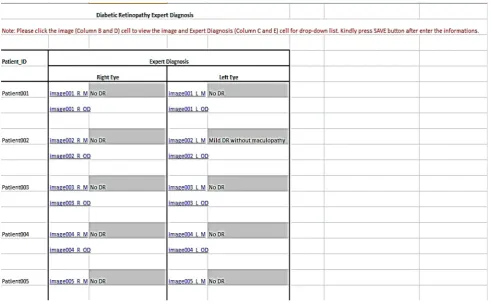
In addition to the public datasets presented above, a combination of normal and Diabetic Retinopathy (DR) fundus images from a novel dataset was developed as part of this project. The fundus images were collected from the Eye Clinic, Department of Ophthalmology, Hospital Mel-aka, Malaysia. The details of the developed dataset are presented in [7], under Sect.4—‘‘Proposed System’’.
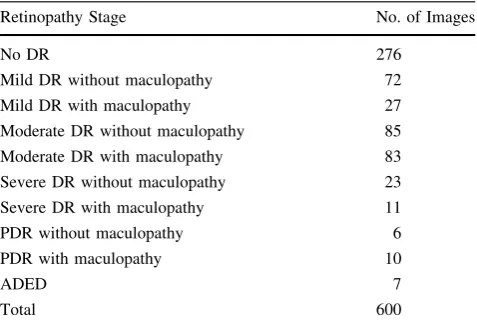
3.2 Novel developed dataset
images in each class is as follows: normal (no retinopathy) class with 276 images, while the abnormal or diabetic retinopathy (DR) class can be divided into nine other cat-egories: mild DR without maculopathy (72), mild DR with maculopathy (27), moderate DR without maculopathy (85),
moderate DR with maculopathy (83), severe DR without maculopathy (23), severe DR with maculopathy (11), proliferative DR without maculopathy (6), proliferative DR with maculopathy (10) and, finally, advanced diabetic eye disease, ADED (7). These are presented in Table 1. Fig. 2 Examples of images in the dataset. Macula centre. Optic disc centre
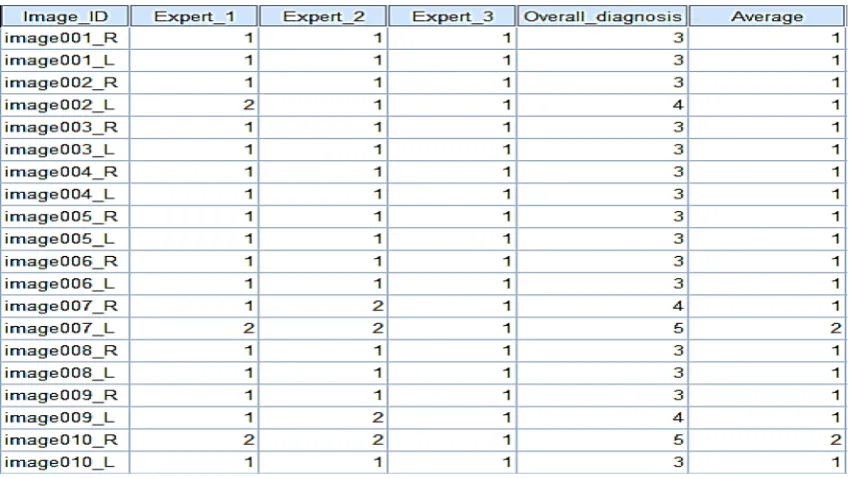
Fig. 4 Summary of experts’ diagnosis
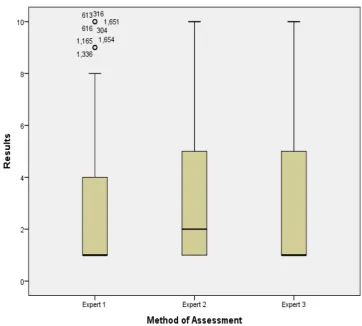
Based on the ground truth provided by the experts, several descriptive and inferential analysis tasks using the SPSS statistical package were performed. The boxplot is the first method of assessment used for the descriptive analysis. It is a useful visualisation for viewing how the data are distributed. In addition, the boxplot is capable to display the distribution of scale variable and pinpointing outliers. Moreover, the boxplot shows the five statistics which are minimum, first quartile, median, third quartile and maximum value. Figure6shows the representation of the boxplot performed on the ground truth, which involves a total of 1800 images, i.e., 600 from each expert. It shows that for the first expert, there are outliers; the extreme values, which do not fall in the inner fences. The outliers mean that the values are not frequent values, particularly for the first expert, and, most of the time, these values are not within the normal range. Meanwhile, the dark line shows the median, which is the measure of central ten-dency. It shows that for the first and third experts, the median value is 1 (no diabetic retinopathy), while for the second expert, the median generated is 2 (mild diabetic retinopathy without maculopathy). The boxplot also shows the 25th percentile, representing 25 % of cases/rows that have values below the 25th percentile, in addition to the 50 % of the case/row that lie within the box and 75th percentile.
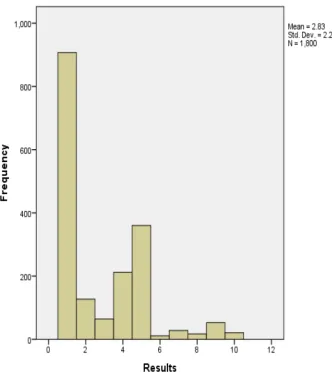
Using histograms is an alternative for a descriptive analysis that can be performed for this application. It is a visual summary of the distribution of values and it is useful for showing the distribution of a single-scale variable. Figure7shows the representation of the histogram, where the 1800 images from the three experts are binned into the ten retinopathy stages. It shows that the majority of the images are classified into the first stage, which is no retinopathy, followed by the fifth stage which is moderate diabetic retinopathy with maculopathy. The histogram also
generated the mean (2.83) and the standard deviation (2.269) for the 1800 images used for the ground truth.
Analysis of variance (ANOVA) test is an inferential analysis that can be performed on the expert diagnosis ground truth. The test produces a one-way analysis of variance for a quantitative dependent variable by a single-factor (independent) variable. The analysis of variance is used to test the hypothesis that several means are equal. The test generated shows ap-value of 0.000. Next, the post hoc test is performed to determine which means are dif-ferent. Table2 shows the output of the post hoc test showing the multiple comparisons of the experts’ means. It can be concluded from Table2, that there are differences between the first expert and the second and third expert; however, there is similarity between the second and the third expert.
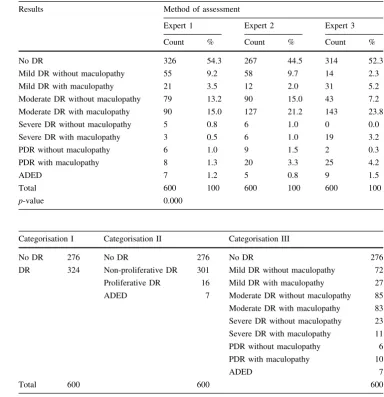
Chi-square test tabulates a variable into categories and computes a Chi-square statistic. It compares the observed and expected frequencies in each category to test that all categories contain the same proportion of values, or it tests that each category contains a user-specified proportion of values. In this case, the Chi-square is useful for deter-mining if there is a relationship among the experts. Table3 shows the cross tabulation results of the Chi-square test. The inferential statistic with thep-value of 0.000 indicates there is no relationship among the three experts. Table3 represents the number of images in each category for the three experts alongside the percentage.
Furthermore, the ground truth provided by the experts can be categorised into three categories. The variety of the categorisation, shown in Table4, can be used for testing and, as a result, various analyses can be performed. The first categorisation divides the images into two classes, which are no diabetic retinopathy and diabetic retinopathy, while the second categorisation consists of four stages, involving no diabetic retinopathy stage, non-proliferative diabetic retinopathy (mild, moderate and severe cases), proliferative diabetic retinopathy and advanced diabetic eye disease. Finally, the third categorisation is the one that contains the ten retinopathy stages.
The new dataset is different compared to other datasets which are presented earlier in Sect. 3.1. The dataset rep-resents South East Asian population, particularly Malay-sian, compared to the other datasets, which represent Caucasian population. It provides almost a balanced total number of No DR/Normal and DR/Abnormal images. Typically, in medical images diagnosis, it is difficult to find a large number of normal cases. The imbalanced number of available images poses some problems in the classification phase; therefore, the balanced number in our dataset will help overcome this problem.
Moreover, the categorisation of the expert diagnosis followed the standard practice based on the International Table 1 Expert diagnosis summary
Retinopathy Stage No. of Images
No DR 276
Mild DR without maculopathy 72
Mild DR with maculopathy 27
Moderate DR without maculopathy 85 Moderate DR with maculopathy 83 Severe DR without maculopathy 23 Severe DR with maculopathy 11
PDR without maculopathy 6
PDR with maculopathy 10
ADED 7
Clinical Retinopathy and Diabetic Macula Oedema Disease Severity Scale. The classification of data involves macu-lopathy, which is the yellow lesion near the macula. This is a very detailed categorisation compared to other datasets. The detection of maculopathy is very important, as the macula is responsible for central vision and it represents a sensitive part of the eye and hence it is vital for detecting the urgency of the referral. In addition, the novel dataset and the expert diagnosis may be used for the diabetic retinopathy grading as well as for the diabetic maculopathy grading, separately.
In order to make the novel fundus images dataset widely accessible, the dataset has been made available as an online database. The novel dataset is accessible athttp://creative. coventry.ac.uk/fundus. The webpage of this research con-tains the novel dataset with eye fundus images, including the expert diagnosis file and the published papers related to this research project. The aim of this online database is to highlight the research project development and to promote research on retinal imaging to enable comparative studies and, most importantly, to share the eye fundus images with other researchers. The dataset can be downloaded for research and educational purposes.
4 Proposed system: detection of diabetic retinopathy and maculopathy in eye fundus images using fuzzy image processing
edge detection, for the purpose of one of the important lesion detection in diabetic retinopathy screening—mi-croaneurysms. However, the fuzzy techniques are imple-mented individually in different variants of the system. On the other hand, the system in [8] proposed the implemen-tation of the combination of several fuzzy image prepro-cessing techniques for the detection of the maculopathy without the retinal structures localisation. Three features, which are the area of on pixels, the mean and the standard
deviation of the white pixels area, are extracted from the output image for the classification stage, which classifies into two main categories with the aid of several machine learning classifiers. Due to the promising results of both systems reported in [7] and [8], especially on the fuzzy techniques ability, we continued our developments with the proposed system to investigate the capability of the com-bination of the fuzzy image processing techniques, together with retinal structures detection approach and by using more extracted features, in order to produce a more reliable system for the detection of diabetic maculopathy.
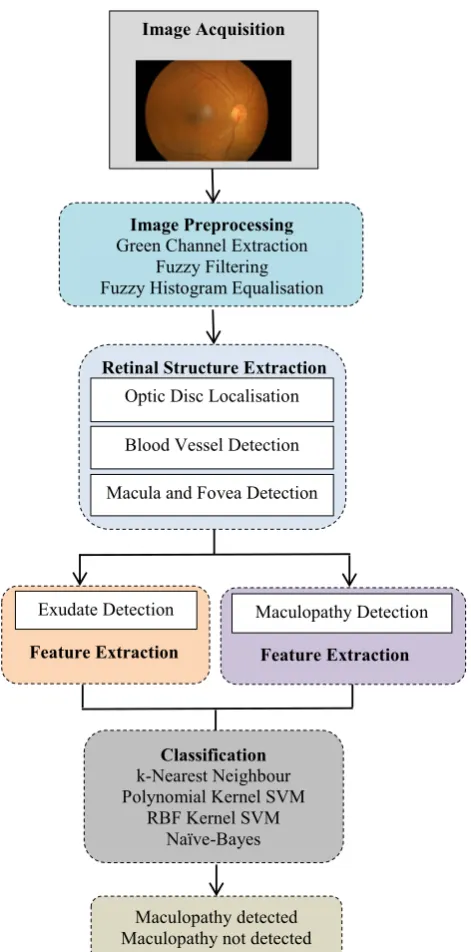
The proposed diabetic retinopathy and maculopathy detection system has been created using Matlab R2014a environment. The system starts with the image acquisition process, where the system selects images from the image’s folder for further processing. Next, the image preprocess-ing task takes place in order to improve the image quality. This task includes the implementation of the fuzzy image processing techniques and the retinal structures’ localisa-tion and segmentalocalisa-tion. In order to detect the maculopathy, the lesions called exudates have to be identified, where Fig. 7 Histogram assessment
Table 2 ANOVA multiple comparisons
Method of Assessment p-value
Expert 1 Expert 2 0.001
Expert 3 0.001
Expert 2 Expert 1 0.001
Expert 3 1.000
Expert 3 Expert 1 0.001
exudates situated in the macula region represent the exudative maculopathy. After that, several features are extracted from the preprocessed image. Finally, in the classification phase, several machine learning classifiers, such as K-nearest neighbour, support vector machines and Naı¨ve Bayes classifiers are trained using the generated features in order to classify the images onto the respective classes.
Figure8shows the block diagram of the proposed sys-tem for automatic screening and classification of the dia-betic retinopathy and maculopathy in retinal images using fuzzy image processing techniques. The individual stages are discussed in more detail in the following sections.
4.1 Image preprocessing
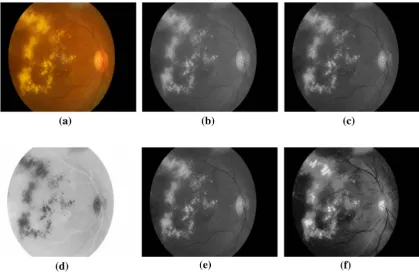
Image preprocessing takes place after the image acquisition process in order to improve the quality of the image. The present system utilises the following image preprocessing techniques: green channel extraction, fuzzy filtering and
fuzzy histogram equalisation. Figure9 shows the output image obtained after the preprocessing stages.
4.1.1 Green channel extraction
The first preprocessing technique extracts the green chan-nel from the colour fundus image, which consists of the red, green and blue channels. In the previous system pro-posed by [6–8,33], the colour fundus images are converted into a greyscale image. In the present system, the green channel extraction is used to investigate the difference and capability of the green channel format compared to the greyscale format and other image colour conversion for-mats. In most of the research in diabetic retinopathy screening carried out, the green channel is used for detecting the diabetic retinopathy lesions such as haemor-rhages, vessels and microaneurysms. The red channel is somewhat saturated, while the green channel contains more structural information. Therefore, it is sensible to use the green channel for the segmentation or morphological Table 3 Chi-square analysis Results Method of assessment
Expert 1 Expert 2 Expert 3
Count % Count % Count %
No DR 326 54.3 267 44.5 314 52.3
Mild DR without maculopathy 55 9.2 58 9.7 14 2.3
Mild DR with maculopathy 21 3.5 12 2.0 31 5.2
Moderate DR without maculopathy 79 13.2 90 15.0 43 7.2 Moderate DR with maculopathy 90 15.0 127 21.2 143 23.8
Severe DR without maculopathy 5 0.8 6 1.0 0 0.0
Severe DR with maculopathy 3 0.5 6 1.0 19 3.2
PDR without maculopathy 6 1.0 9 1.5 2 0.3
PDR with maculopathy 8 1.3 20 3.3 25 4.2
ADED 7 1.2 5 0.8 9 1.5
Total 600 100 600 100 600 100
p-value 0.000
Table 4 Expert diagnosis
summary categorisation Categorisation I Categorisation II Categorisation III
No DR 276 No DR 276 No DR 276
DR 324 Non-proliferative DR 301 Mild DR without maculopathy 72
Proliferative DR 16 Mild DR with maculopathy 27 ADED 7 Moderate DR without maculopathy 85 Moderate DR with maculopathy 83 Severe DR without maculopathy 23 Severe DR with maculopathy 11 PDR without maculopathy 6 PDR with maculopathy 10
ADED 7
operations, since most of the image processing tools work for greyscale only.
4.1.2 Fuzzy filtering
Image filtering needs to be implemented to improve the image quality or restore the digital image which tends to have a variety of noise types. The poor photo quality may be due to the equipment-related factors, such as dirty lens
and dirty computer screen. In addition, distraction from surroundings, such as a too bright room, can be a factor of generating poor quality of fundus photographs. Therefore, the filtering process is necessary to overcome this problem and enables the image for further processing and grading task effectively. The proposed system implements the median filter with fuzzy techniques described by Toh et al. [10], called the Fuzzy Switching Median (FSM) filter. Although the proposed technique is not working well as an individual system variant in [7] for the microaneurysms detection, the technique has been working well in [8] for the diabetic retinopathy and maculopathy detection.
4.1.3 Fuzzy histogram equalisation
After filtering the image from noise, the third preprocessing technique, which is the fuzzy histogram equalisation, is performed on the images. Histogram equalisation’s role is to improve the image’s contrast. The colour fundus images are more challenging compared to the other modes of fundus photography examination, which are angiography and red-free. Therefore, the implementation of the his-togram equalisation by employing fuzzy techniques helps to improve the contrast of the fundus images for better visualisation and detection. The technique called brightness preserving dynamic fuzzy histogram equalisation (BPDFHE) proposed by Sheet et al. [4] was found to work well on colour fundus images (see [6–8]) and has been chosen as a preprocessing technique in this proposed sys-tem as well.
4.2 Retinal structure extraction
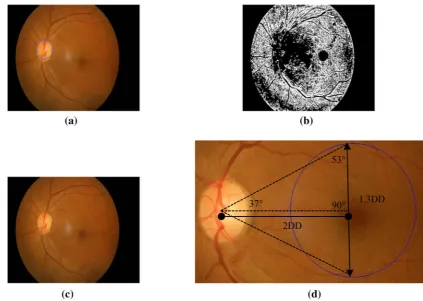
The extraction of retinal structures is helpful in eye dis-eases diagnosis, for improving the lesion detection results and the lesions grading. Therefore, the detection of retinal structures for diabetic retinopathy screening such as optic disc, blood vessels, macula and fovea are essential in order to produce a reliable screening system. Figure 10 shows the output image with retinal structures extraction.
4.2.1 Optic disc detection
The optic disc is the important retinal structure in the diabetic retinopathy screening. The optic disc has the lar-gest high contrast among the circular shape areas. The location of the optic disc is of critical importance in retinal image analysis and is required as a prerequisite stage in detecting the lesions, such as in exudate detection. There-fore, the optic disc localisation and segmentation are both performed in the proposed system to improve the overall detection accuracy.
Image Acquisition
Image Preprocessing Green Channel Extraction
Fuzzy Filtering Fuzzy Histogram Equalisation
Retinal Structure Extraction Optic Disc Localisation
Blood Vessel Detection
Exudate Detection
Feature Extraction
Macula and Fovea Detection
Maculopathy Detection
Feature Extraction
Maculopathy detected Maculopathy not detected
Classification k-Nearest Neighbour Polynomial Kernel SVM
RBF Kernel SVM Naïve-Bayes
The technique used in the proposed system is based on circular Hough transform (CHT), to ensure more reliability of the optic disc detection task. Hough transform can be used to detect lines, circles or other parametric curves. In this case, the Hough transform for circles is used to locate the optic disc, due to the circle shape of the optic disc. Based on the specified radius range, the system finds the circles in fundus images using CHT with the use of imfindcirclesfunction in Matlab. After finding the circles in the image based on the radius range, the functionviscircles in Matlab is used to create a circle. The function draws circles with the specified centre and radius onto the current axes on the fundus images. The CHT technique has also been used for the detection of microaneurysms in [6–8], as this technique is capable well in detecting circular shapes. In addition to the CHT technique proposed, the polygonal Region of Interest (ROI) technique can be performed on the fundus image to detect the optic disc. A region of interest is a portion of an image for filtering purposes or for performing some other operations. In order to implement this method, the roipoly Matlab function is used, which aims to create an interactive polygon tool associated with the image displayed in the current image, called the target image. The functionroipolyworks by selecting vertices of the polygon and, as a result, it returns a binary image that can be used as mask for masked filtering. The function allows moving, deleting or resizing the polygon as well as
moving, adding, deleting a vertex and also changing the colour of the polygon.
4.2.2 Blood vessels detection
After locating the optic disc, another important retinal structure, represented by the blood vessels, is extracted. There are several vessel extraction techniques, to name a few, morphological operations, Kirsch filter, Frangi filter, local entropy and entropic thresholding. For the proposed system, morphological operations are implemented for the extraction of the blood vessels. The operations start where the fuzzy histogram equalisation output image is opened using a disc-shaped structuring element. Next, the image background is removed and the image is thresholded to get the binary images containing the vessels. Finally, the morphological open is implemented by using the bwar-eaopen function to remove the small noise. In order to generate the elimination of vessels, the binary image can be subtracted from the Gaussian filtered image so that the final image has vessel-free candidates.
4.2.3 Macula and fovea detection
nearby the centre of the image and its location is at two disc diameter distance of the optic disc. The fovea is the centre of the macula. Once the macula is identified, it is simple to determine the fovea, as the centre of the macula. The macular region can be defined by using two clinical approaches. The first approach uses the Early Treatment Diabetic Retinopathy Study (ETDRS), which indicates the presence of clinical significant macular oedema (CSME) as any part located within one disc diameter of the centre of the fovea [53]. The second approach is based on the anatomical characteristics, where the macular region is about 5–5.5 mm in diameter.
In the proposed system, three methods for the macula detection are implemented. The first method is using the centre of the optic disc identified by the circular Hough transform. The macula is identified based on the distance specified from the optic disc. Once again, the circular Hough transform is used to create a circle for the macula region. We propose the detection of the macula region by an angle of 37° up and down from the horizontal line crossing the optic disc centre and with the centre of the macula region situated at two disc diameter (2DD) distance from the optic disc centre. We then crop a circle of 1.3
discs diameter (1.3DD) as the macula region where we try to find lesions. Figure10d illustrates this process more clearly. The cropped macula region can be used to locate larger and appropriate lesion areas relevant to maculopa-thy. Thepoly2maskfunction can be used to get the region of interest of the macula region. In addition, the imcrop tool can also be used. However, cropping process has its limitation as it can be performed with rectangular shapes only, because images are represented as arrays in Matlab and arrays are required to be rectangular. The circular region of interest (ROI) cropping can be implemented with roicirclecrop function. The function crops the ROI in the form of circular shape and with black background based on the two points: the centre and the radius of the circle.
features from the output image, the current image is changed to a binary image. The white pixels around this region are presented as maculopathy.
The morphological operations also can be implemented as one of the ways to detect the macula. The top-hat transformation, which consists of morphological opening of the image and then subtracts the result from the original image operations, is implemented, followed by adding the original image to the top-hat-filtered image, and finally subtracting the bottom-hat-filtered image. As a result, the macula is detected.
4.3 Exudate and maculopathy detection
In order to detect maculopathy, exudates first need to be detected in the macula region. One of the ways to detect the exudate lesions is by using the thresholding method. Thresholding is used to extract an object from its back-ground by assigning an intensity value (threshold value) for each pixel, such as that pixel is either classified as an object pixel or a background pixel. In this case, the thresholding is used in the system development as the simplest form of segmentation to segment the fundus image into exudate region or background region. In the proposed system, the global thresholding or fixed thresholding is implemented, as it is one of the most popular types of thresholding methods. In global thresholding, the threshold value,T, is held constant throughout the image. Choosing a right threshold value is quite challenging and important to ensure that the value chosen is not too low or too high. In order to find a suitable threshold value for this system development, a software called ImageJ [54] is used (by using the thresholding slider bar from the Adjust Threshold menu). From our observations and the threshold value found through the searching process, it is concluded that a value of 135 is the most appropriate one to segment the exudate regions and the background in the fundus images obtained after the fuzzy histogram equalisation task. In addition to the global thresholding, fuzzy c-means (FCM) clustering can also be implemented in the system for detecting the exudates. Morphological operations can be used for the extraction of exudates too.
The image after the optic disc localisation and blood vessels segmentation is generated for the feature extraction task. We first convert it into a binary image in order to extract the exudates’ features. After the detection of the exudates, the maculopathy can be identified by cropping the area around the macula region. Figure11a shows the exudates extraction with the optic disc overlay, while Fig.11b shows the maculopathy output within the pro-posed macula region.
4.4 Features extraction
After performing the preprocessing techniques, the retinal structure extraction and also the exudates detection, feature extraction takes place in order to obtain the features from the given images. There are three features selected from the exudates output image and macula image, respectively. They are the area of on pixels, the mean of on pixels and the standard deviation of the on pixels for the exudates region. In addition, there are another three features from the maculopathy region, i.e., the area of on pixels, the mean of on pixels and the standard deviation of on pixels for the maculopathy. The features between the exudates region and maculopathy region are compared. The value of the exudates area is higher compared to the area of the mac-ulopathy value as the macmac-ulopathy is located around the macula, and the diameter of the macula is small.
4.5 Classification
The six extracted features were used in the classification stage. As the system focuses on the detection of macu-lopathy, the classes from the developed dataset, as pre-sented in Table1(in Sect. 3.2), have been categorised into two classes which are maculopathy detected or eye fundus with maculopathy (131 images) and maculopathy not detected or fundus without maculopathy (469 images). Several machine learning algorithms, such as the 1-nearest neighbour classifier, Naı¨ve Bayes classifier, support vector machines (SVM) and radial basis function kernel SVM, have been selected to train and classify images into their respective classes. In the k-nearest neighbour classifier, the object is classified by a majority vote of its neighbours, with the object being assigned to the most common class among itsk-nearest neighbours. A support vector machine performs the classification by constructing an N -dimen-sional hyperplane that optimally separates the data into two categories. The radial basis function kernel is used to transform the data into a higher dimensional space in order to be able to perform the separation in the non-linear region, while Naı¨ve Bayes classifier is based on the Bayes’ theorem with independence assumptions between predic-tors. The Naive Bayes can outperform more sophisticated classification methods, despite its simplicity.
4.6 System results
Fig. 11 Exudates and maculopathy extraction output image.aExudates detection. bMaculopathy detection
Fig. 12 Snapshot of the proposed system user interface
Table 5 Average results when using the four classifiers
k-nearest neighbour Polynomial Kernel SVM RBF Kernel SVM Naı¨ve Bayes
Misclassification error 0.0700 0.3000 0.0700 0.2500
Accuracy 0.9300 0.7000 0.9300 0.7500
Specificity 1.0000 0.9787 0.9362 0.9149
compared to the maculopathy not detected class (469 images), the maculopathy detected class was oversampled several times. As a result, a total of 990 images, which consist of 469 images from the maculopathy not detected class and 521 images from the maculopathy detected class are involved in the final classification stage. The new dataset is split randomly into 90 % for training and the remaining 10 % for testing purpose. The process is repe-ated ten times in a cross-validation procedure to generate unbiased results. The results are averaged over ten runs for each of the classifiers. The experimental results show that the four classifiers are able to identify well both categories, and particularly the k-nearest neighbour and radial basis function kernel support vector machine classifiers work well. The detection of exudates first is important because the presence of exudates will determine the presence of the maculopathy or not. Based on the presented results, it can be seen that the sensitivity value is a little bit lower than the specificity. This is due to the fact that the total number for maculopathy detected (abnormal) cases is lower than the total number for maculopathy not detected cases (normal), which was explained above. The other reason may be the capability of global thresholding technique which was used for the detection of the exudates; the proposed threshold value may be quite high and, as a result, some of the exudates were not detected by the proposed technique.
5 Conclusions and future work
An automatic system for the combined detection of dia-betic retinopathy and diadia-betic maculopathy using fuzzy image processing techniques has been created. The system proposes a novel combination of fuzzy image preprocess-ing techniques includpreprocess-ing the retinal structures localisation, (i.e. for the optic disc, the blood vessels, the macula and the fovea), followed by the feature extraction and, finally, the classification with some machine learning algorithms. The system can be enhanced by implementing other fuzzy image preprocessing techniques to fully investigate the capabilities of a variety of fuzzy techniques in this appli-cation. Fuzzy circular Hough transform, as an alternative technique to detect the optic disc, will be considered in our future work. Since the detection of maculopathy presence depends on the exudate detection performance, more pre-cise exudate detection methods need to be developed in the future as well. As a conclusion, employing fuzzy image processing together with the retinal structure extraction in diabetic retinopathy screening can help produce a more reliable screening system. The paper is not only proposing an automatic detection for diabetic retinopathy and macu-lopathy, but also introducing a novel dataset which would be useful to researchers and practitioners working in the
retinal imaging area, especially in the diabetic retinopathy screening field. The online dataset can be made more widely accessible by integrating the dataset with other popular databases, such as the UCI machine learning repository or others.
Acknowledgments This project is a part of Ph.D. research currently being carried out at the Faculty of Engineering, Environment and Computing, Coventry University, United Kingdom. The deepest gratitude and thanks go to the Universiti Teknikal Malaysia Melaka (UTeM) and Ministry of Higher Education Malaysia for sponsoring this Ph.D. research. The authors are thankful to the Ministry of Health Malaysia and the Hospital Melaka, Malaysia, for providing the database of retinal images and also for the manual grading done by three experts.
Open Access This article is distributed under the terms of the Creative Commons Attribution 4.0 International License (http://crea
tivecommons.org/licenses/by/4.0/), which permits unrestricted use,
distribution, and reproduction in any medium, provided you give appropriate credit to the original author(s) and the source, provide a link to the Creative Commons license, and indicate if changes were made.
References
1. Taylor R, Batey D (2012) Handbook of retinal screening in diabetes: diagnosis and management. Wiley, Newcastle Upon Tyne
2. Ministry of Health Malaysia Diabetic Retinopathy Screening Team (2012) Diabetes mellitus and complications—module 4-2012. Ministry of Health Malaysia, Putrajaya
3. Ministry of Health Malaysia Diabetic Retinopathy Screening Team (2012) Diabetes mellitus and complications—module 3-2012. Ministry of Health Malaysia, Putrajaya
4. Sheet D, Garud H, Suveer A, Mahadevappa M, Chatterjee J (2010) Brightness preserving dynamic fuzzy histogram equal-ization. IEEE Trans Consum Electron 56(4):2475–2480 5. Garud H, Sheet D, Suveer A, Karri PK, Ray AK, Mahadevappa
M, Chatterjee J (2011) Brightness preserving contrast enhance-ment in digital pathology. In: 2011 International conference on image information processing, New York, pp 1–5
6. Rahim SS, Jayne C, Palade V, Shuttleworth J (2015) Automatic detection of microaneurysms in colour fundus images for diabetic retinopathy screening. J Neural Comput Appl. doi:10.1007/
s00521-051-1929-5available online, in press
7. Rahim SS, Palade V, Shuttleworth J, Jayne C, Raja Omar RN (2015) Automatic detection of microaneurysms for diabetic retinopathy screening using fuzzy image processing. In: Iliadis L et al (eds) Engineering applications of neural networks. Com-munications in computer and information science, vol 517. Springer, Heidelberg
8. Rahim SS, Palade V, Jayne C, Holzinger A, Shuttleworth J (2015) Detection of diabetic retinopathy and maculopathy in eye fundus images using fuzzy image processing. In: Guo Y et al (eds) Brain Informatics and Health, BIH 2015. LNAI 9250. Springer, Heidelberg
9. Patil J, Chaudhari AL (2012) Development of digital image processing using Fuzzy Gaussian filter tool for diagnosis of eye infection. Int J Comput Appl 51(19):10–12
11. Toh KKV, Ibrahim H (2008) Salt-and-pepper noise detection and reduction using fuzzy switching median filter. IEEE Trans Con-sum Electron 54(4):1956–1961
12. Kwan HK, Chai Y (2002) Fuzzy filters for image filtering. In: Proceedings of 45th IEEE international midwest symposium on circuits and systems, Tulsa, pp 672–675
13. Kwan HK (2003) Fuzzy filters for noisy image filtering. In: Proceedings of IEEE international symposium on circuits and systems, Bangkok, IV-161–IV-164
14. Priya R, Aruna P, Suriya R (2013) Image analysis technique for detecting diabetic retinopathy. Int J Comput Appl 1:34–38 15. Selvathi D, Prakash NB, Balagopal N (2012) Automated
detec-tion of diabetic retinopathy for early diagnosis using feature extraction and support vector machine. Int J Emerg Technol Adv Eng 2(11):762–767
16. Lichode RV, Kulkarni PS (2013) Automatic diagnosis of diabetic retinopathy by hybrid multilayer feed forward neural network. Int J Sci Eng Technol Res (IJSETR) 2(9):1727–1733
17. Selvathi D, Prakash NB, Balagopal N (2012) Automated detec-tion of diabetic retinopathy for early diagnosis using feature extraction and support vector machine. Int J Emerg Technol Adv Eng 2(11):762–767
18. Adal KM, Sidibe D, Ali S, Chaum E, Karnowski TP, Meriaudeau F (2014) Automated detection of microaneurysms using scale-adapted blob analysis and semi-supervised learning. Comput Methods Programs Biomed 114:1–10. doi:10.1016/j.cmpb.2013. 12.009
19. Akram MU, Khalid S, Khan SA (2013) Identification and clas-sification of microaneurysms for early detection of diabetic retinopathy. Pattern Recogn 46:107–116. doi:10.1016/j.patcog. 2012.07.002
20. Antal B, Hajdu A (2013) Improving microaneurysm detection in color fundus images by using context-aware approaches. Comput Med Imaging Graph 37:403–408. doi:10.1016/j.compmedimag. 2013.05.001
21. Prakash J, Sumanthi K (2013) Detection and classification of microaneurysms for diabetic retinopathy. Int J Eng Res Appl 4:31–36
22. Aravind C, Ponnibala M, Vijayachitra S (2013) Automatic detection of microaneurysms and classification of diabetic retinopathy images using SVM technique. In: IJCA Proceedings on international conference on innovations in intelligent instru-mentation, optimization and electrical sciences ICIIIOES (11), pp 18–22
23. Akram MU, Khalid S, Tariq A, Khan SA, Azam F (2014) Detection and classification of retinal lesions for grading of diabetic retinopathy. Comput Biol Med 45:161–171. doi:10.1016/ j.compbiomed.2013.11.014
24. Zhang X, Thibault G, Decenciere E, Marcotegui B, Lay B, Danno R, Cazuguel G, Quellec G, Lamard M, Massin P, Chabouis VZ, Erginay A (2014) Exudate detection in color retinal images for mass screening of diabetic retinopathy. Med Image Anal 18(7):1026–1043. doi:10.1016/j.media.2014.05.004
25. Wisaeng K, Hiransakolwong N, Pothiruk E (2013) Automatic detection of exudates in digital retinal images. Int J Comput Appl 64(4):19–26. doi:10.5120/10622-5342
26. Harangi B, Antal B, Hajdu A (2012) Automatic exudate detection with improved Naı¨ve-Bayes classifier. In: Proceedings of the 25th IEEE international symposium on computer-based medical sys-tems, Roma, pp 1–4
27. Akram MU, Khalid S, Tariq A, Khan SA, Azam F (2014) Detection and classification of retinal lesions for grading of diabetic retinopathy. Comput Biol Med 45:161–171. doi:10.1016/ j.compbiomed.2013.11.014
28. Sundhar C, Archana D (2014) Automatic screening of fundus images for detection of diabetic retinopathy. Int J Commun Comput Technol 2(1):100–105
29. Lim G, Lee ML, Hsu W, Wong TY (2014) Transformed repre-sentations for convolutional neural networks in diabetic retinopathy screening. Modern Artif Intell Health Anal 55:21–25 30. Akram MU, Khalid S, Tariq A, Javed MJ (2013) Detection of neovascularization in retinal images using multivariate m-Me-diods based classifier. Comput Med Imaging Graph 37:346–357.
doi:10.1016/j.compmedimag.2013.06.008
31. Hassan SSA, Bong DBL (2012) Detection of neovascularization in diabetic retinopathy. J Digit Imaging 25:437–444. doi:10.1007/ s10278-011-9418-6
32. Akram MU, Jamal I, Tariq A, Imtiaz J (2012) Automated seg-mentation of blood vessels for detection of proliferative diabetic retinopathy. In: Proceedings of the IEEE-EMBS international conference on biomedical and health informatics, Hong Kong, pp 232–235
33. Rahim SS, Palade V, Shuttleworth J, Jayne C (2014) Automatic screening and classification of diabetic retinopathy fundus ima-ges. In: Mladenov V et al (eds) Engineering applications of neural networks. Communications in computer and information science, vol 459. Springer, Heidelberg, pp 113–122
34. Li BM, Chui CK, Chang S, Ong SH (2011) Integrating spatial fuzzy clustering with level set methods for automated medical image segmentation. Comput Biol Med 41(1):1–10
35. Kumar TA, Priya S, Paul V (2013) A novel approach to the detection of macula in human retinal imagery. Int J Signal Pro-cess Syst 1(1):23–28
36. Mubbashar M, Usman A, Akram MU (2011) Automated system for macula detection in digital retinal images. In: International conference on information and communication technologies, Karachi, pp 1–5
37. Akram MU, Tariq A, Khan SA, Javed MY (2014) Automated detection of exudates and macula for grading of diabetic macular edema. Comput Methods Programs Biomed 114:141–152 38. Sekhar S, Al-Nuaimy W, Nandi AK (2008) Automated
locali-sation of optic disk and fovea in retinal fundus images. In: 16th European signal processing conference, Lausanne, pp 1–5 39. Punnolil A (2013) A novel approach for diagnosis and severity
grading of diabetic maculopathy. International conference on advances in computing, communications and informatics, Mysore, pp 1230–1235
40. Tariq A, Akram MU, Arslan S, Khan SA (2013) Automated detection and grading of diabetic maculopathy in digital retinal images. J Digit Imaging 26:803–812
41. Vimala GSAG, Kajamohideen S (2014) Detection of diabetic maculopathy in human retinal using morphological operations. J Biol Sci 14(3):175–180
42. Siddalingaswamy PC, Prabhu KG (2010) Automatic grading of diabetic maculopathy severity levels. In: Proceedings of 2010 international conference on systems in medicine and biology, Kharagpur, pp 331–334
43. Hunter A, Lowell JA, Ryder B, Basu A, Steel D (2011) Auto-mated diagnosis of referable maculopathy in diabetic retinopathy screening. In: 33rd Annual international conference of the IEEE EMBS, Boston, pp 3375–3378
44. Chowriappa P, Dua S, Acharya UR, Krishnan MMR (2013) Ensemble selection for feature-based classification of diabetic maculopathy images. Comput Biol Med 43:2156–2162 45. Kauppi T, Kalesnykiene V, Kamarainen J-K, Lensu L, Sorri I,
46. Kauppi T, Kalesnykiene V, Kamarainen J-K, Lensu L, Sorri I, Raninen A, Voutilainen R, Uusitalo H, Kalviainen H, Pietila J (2007) DIARETDB1 diabetic retinopathy database and evalua-tion protocol, Technical report
47. Messidor (2004) Messidor: digital retinal images.http://messidor.
crihan.fr/index-en.php, Accessed on 16 Jan 2014
48. Staal JJ, Abramoff MD, Niemeijer M, Viergever MA, van Gin-neken B (2004) Ridge based vessel segmentation in color images of the retina. IEEE Trans Med Imaging 23:501–509
49. Hoover A, Kouznetsova V, Goldbaum M (2000) Locating blood vessels in retinal images by piece-wise threshold probing of a matched filter response. IEEE Trans Med Imaging 19(3):203–210 50. Hoover A, Goldbaum M (2003) Locating the optic nerve in a retinal image using the fuzzy convergence of the blood vessels. IEEE Trans Med Imaging 22(8):951–958
51. Al-Diri B, Hunter A, Steel D, Habib M, Hudaib T, Berry S (2008) REVIEW—a reference data set for retinal vessel profiles. In: 30th Annual international IEEE EMBS conference, Vancouver, pp 2262–2265
52. Niemeijer M, van Ginnerken B, Cree MJ, Mizutani A, Quellec G, Sanchez CI, Zhang B, Hornero R, Lamard M, Muramatsu C, Wu X, Cazuquel G, You J, Mayo A, Li Q, Hatanaka Y, Cochener B, Roux C, Karray F, Garcia M, Fujita H, Abramoff MD (2010) Retinopathy online challenge: automatic detection of microa-neurysms in digital color fundus photographs. IEEE Trans Med Imaging 29(1):185–195
53. Wilkinson CP, Ferris FL, Klein RE, Lee PP, Agardh CD, Davis M, Dills D, Kampik A, Pararajasegaram R, Verdaguer JT (2003) Proposed international clinical diabetic retinopathy and diabetic macula edema disease severity scales. Am Acad Ophthalmol 110(9):1677–1682
54. ImageJ (2014) [online] available at http://imagej.net/ImageJ, Accessed date on 18 July 2014
55. Ministry of Health Malaysia Diabetic Retinopathy Screening Team (2012) Diabetes mellitus and complications—module 5-2012. Ministry of Health Malaysia, Putrajaya
Sarni Suhaila Rahimis a Ph.D. student at the School of Computing, Electronics and Maths, Coventry University, UK. Her research area is medical image processing, with a focus in the ophthalmology field.
Dr. Vasile Paladejoined the Department of Computing at Coventry University, UK, in September 2013, after working for many years with the Department of Computer Science of the University of Oxford. His research interests lie in the area of machine learning with various applications. Dr. Palade is author of more than 120 papers in journals and conference proceedings as well as books on machine learning and applications. He is an Associate Editor for several reputed journals. He has delivered keynotes and chaired international conferences on machine learning and applications. Dr. Vasile Palade is an IEEE Senior Member and a member of the IEEE Computational Intelligence Society.
Dr. James Shuttleworth is a Principal Lecturer in the Faculty of Engineering, Environment and Computing, Coventry University. He received his Ph.D. from Coventry University. His research interests are image analysis and wireless sensor networks.
![Fig. 1 Diabetic maculopathystages [55]. Mild maculopathy.Moderate maculopathy. Severemaculopathy](https://thumb-us.123doks.com/thumbv2/123dok_us/815969.1579005/3.595.208.544.55.418/fig-diabetic-maculopathystages-mild-maculopathy-moderate-maculopathy-severemaculopathy.webp)