R ES EAR CH A R T I C LE
Open Access
Microarray analysis for differentially expressed
genes of patients undergoing total knee
arthroplasty with ischemia preconditioning
Jianguang Wang
1,2, Zhengdong Cai
3,4,5*and Junjian Liu
2,5*Abstract
Background:Ischemia preconditioning (IPC) has been proved as a powerful method of protecting tissues against ischemia reperfusion insults. We aimed to elucidate the mechanism of IPC in ischemia reperfused tissues.
Methods:GSE21164 containing 16 muscle biopsies taken from the operative knee of four IPC-treated patients and four control at the onset of surgery (T= 0) and 1 h into surgery (T= 1) undergoing primary total knee arthroplasty was downloaded from the Gene Expression Omnibus (GEO) database. Differentially expressed genes (DEGs) between IPC group and control were screened with Limma package in R language. KEGG pathway enrichment analysis was performed by the DAVID online tool. Meanwhile, potential regulatory microRNAs (miRNAs) for downregulated DEGs and targets of transcription factors for upregulated DEGs were screened out. Based on the above DEGs, protein-protein interaction (PPI) networks were constructed by the STRING software.
Results:Significantly upregulated DEGs at T1 were mainly enriched in asthma and p53 signaling pathway. Meanwhile, significantly enriched transcriptional factor NOTCH1 at T1 and GABP at T0 were obtained. Moreover, miRNA analysis showed that targets of miR141/200a were enriched in downregulated DEGs both at T0 and T1. Mostly, RPA1 and JAK2 in PPI network at T1 were with higher degree.
Conclusions:In our study, obtained DEGs, regulatory transcriptional factors, and miRNA might play a vital role in the protection of ischemia reperfusion injury. This finding will provide a deeper understanding to the mechanism of IPC.
Keywords:Ischemia preconditioning, microRNA, Transcriptional factor, Protein-protein interaction network
Background
Many surgical procedures involve prolonged ischemia of organs or tissues which can lead to sever postoperative complications, including dysfunction and necrosis [1]. In order to prevent ischemia-reperfusion injury, Murry et al. first documented the protective effect of ischemia preconditioning (IPC) in 1986 [2]. IPC has been proved as an extremely powerful method of protecting tissues against subsequent sustained ischemia insults [3] when it is firstly subjected to short bursts of ischemia and reperfusion. This method is universally applicable in
modulating ischemia-reperfusion injury to tissues in-cluding the myocardium [4], brain [5], liver [6], lung [7], kidney [8], intestine [9], and skeletal muscle [10]. IPC is thought to provide protection by inducing tissues’ toler-ance to ischemia, therefore reducing oxidative stress [11], inflammation, and apoptosis [12].
The complex mechanism of protection through IPC has partially been demonstrated. Studies have shown that re-lease of signaling molecules such as adenosine, bradykinin, reactive oxygen species (ROS), catecholamines, and opi-oids can trigger protective response through various cell surface G-protein coupled receptors [13-16]. The released agonists then might activate protecting signaling pathway. Kinases such as protein kinase C [17], PI-3 K [18], tyrosine kinase [19], and MAPK kinase [20] play a vital role in the signaling pathway. IPC exerts a protective effect through
* Correspondence:[email protected];[email protected]
3The Affiliated Shanghai No.1 People’s Hospital, Nanjing Medical University,
Shanghai 200080, China
2Department of Orthopedics, Shanghai Tenth People’s Hospital, Tongji
University School of Medicine, Shanghai 200072, China Full list of author information is available at the end of the article
© 2014 Wang et al.; licensee BioMed Central. This is an Open Access article distributed under the terms of the Creative Commons Attribution License (http://creativecommons.org/licenses/by/4.0), which permits unrestricted use, distribution, and reproduction in any medium, provided the original work is properly credited. The Creative Commons Public Domain Dedication waiver (http://creativecommons.org/publicdomain/zero/1.0/) applies to the data made available in this article, unless otherwise stated.
as an extremely powerful method of protecting tissues against subsequent sustained ischemia insults [3] when it is firstly subjected to short bursts of ischemia and reperfusion. This method is universally applicable in order to prevent ischemia-reperfusion injury, Murry et al. first documented the protective effect of ischemia preconditioning (IPC) in 1986 [2]. IPC has been proved as an extremely powerful method of protecting tissues against subsequent sustained ischemia insults [3] when organs or tissues which can lead to sever postoperative complications, including dysfunction and necrosis [1]. In order to prevent ischemia-reperfusion injury, Murry et al. first documented the protective effect of ischemia Many surgical procedures involve prolonged ischemia of organs or tissues which can lead to sever postoperative complications, including dysfunction and necrosis [1]. In order to prevent ischemia-reperfusion injury, Murry
Ischemia preconditioning, microRNA, Transcripti
Many surgical procedures involve prolonged ischemia of
in the protection of ischemia reperfusion injury. This finding will provide a deeper understanding to the
Ischemia preconditioning, microRNA, Transcripti
miRNA analysis showed that targets of miR141/200a were enriched in downregulated DEGs both at T0 and T1. Mostly, RPA1 and JAK2 in PPI network at T1 were with higher degree.
In our study, obtained DEGs, regulatory transcriptional factors, and miRNA might play a vital role in the protection of ischemia reperfusion injury. This finding will provide a deeper understanding to the
Significantly upregulated DEGs at T1 were mainly enriched in asthma and p53 signaling pathway. Meanwhile, significantly enriched transcriptional factor NOTCH1 at T1 and GABP at T0 were obtained. Moreover, miRNA analysis showed that targets of miR141/200a were enriched in downregulated DEGs both at T0 and T1. Mostly, RPA1 and JAK2 in PPI network at T1 were with higher degree.
In our study, obtained DEGs, regulatory transcriptional factors, and miRNA might play a vital role downregulated DEGs and targets of transcription factors for upregulated DEGs were screened out. Based on the above DEGs, protein-protein interaction (PPI) networks were constructed by the STRING software.
Significantly upregulated DEGs at T1 were mainly enriched in asthma and p53 signaling pathway. Meanwhile, significantly enriched transcriptional factor NOTCH1 at T1 and GABP at T0 were obtained. Moreover, miRNA analysis showed that targets of miR141/200a were enriched in downregulated DEGs both at T0 and T1. was downloaded from the Gene Expression Omnibus (GEO) database. Differentially expressed genes (DEGs) between IPC group and control were screened with Limma package in R language. KEGG pathway enrichment analysis was performed by the DAVID online tool. Meanwhile, potential regulatory microRNAs (miRNAs) for downregulated DEGs and targets of transcription factors for upregulated DEGs were screened out. Based on the above DEGs, protein-protein interaction (PPI) networks were constructed by the STRING software.
ischemia reperfusion insults. We aimed to elucidate the mechanism of IPC in ischemia reperfused tissues.
GSE21164 containing 16 muscle biopsies taken from the operative knee of four IPC-treated patients and = 1) undergoing primary total knee arthroplasty was downloaded from the Gene Expression Omnibus (GEO) database. Differentially expressed genes (DEGs) between IPC group and control were screened with Limma package in R language. KEGG pathway enrichment
Ischemia preconditioning (IPC) has been proved as a powerful method of protecting tissues against ischemia reperfusion insults. We aimed to elucidate the mechanism of IPC in ischemia reperfused tissues.
upregulating heat shock proteins, reducing oxidative stress and inhibition of apoptosis in tissue injury [21].
In recent studies, microarray analysis for IPC effect was utilized to assess the gene expression after ischemia reperfusion. Murphy and colleagues screened differen-tially expressed genes (DEGs) > 1.5-fold and performed gene ontology analysis from GSE21164 [22]. Chunxiao Li also searched related motif and phosphorylation sites for significant DEGs [23] using same gene data. With the same limitation, they did not perform deep analysis for GSE21164. As a result, the mechanism of IPC pro-tection in humans has not fully been elucidated.
For better understanding the effect of IPC, we carried out deep analysis in additional to DEGs screening and pathway analysis to explore molecular mechanism of protective effect of IPC. First of all, we predicted tran-scriptional factor in upregulated DEGs and evaluated microRNA (miRNA) targets in downregulated DEGs in our study. In addition, we constructed protein-protein interaction (PPI) network based on up- and downregu-lated DEGs at the onset of surgery (T= 0) and 1 h into surgery (T= 1).
Materials and methods Microarray data
The gene expression profile of GSE21164 based on the platform GPL570 Affymetrix Human Genome U133 Plus 2.0 Array was obtained from National Center of Biotech-nology Information (NCBI) Gene Expression Omnibus (GEO) database (http://www.ncbi.nlm.nih.gov/geo/). A total of eight patients undergoing total knee arthroplasty were randomized to IPC treatment group (n= 4) and control group (n= 4). Patients in the IPC group received IPC stimulus which consisted of three 5-min periods of tourniquet insufflation on the lower operative limb and interrupted by 5-min periods of reperfusion prior to total knee arthroplasty. Comparisons for gene expression of muscle biopsies taken from the operative leg between the IPC group and the control both at the onset of sur-gery (T= 0) and 1 h into surgery (T= 1) were performed for future analysis.
Date preprocessing and DEGs screening
For each sample of GSE21164, the original expression datasets were converted into recognizable format and standardized using robust multi-array analysis (RMA) method [24]. Then, the RMA signal values were sub-jected to log2 transformation. To identify DEGs between the IPC group and the control, the empirical Bayes test (implemented in Linear Models for Microarray Data (Limma) package [25]) was applied in our analysis.Pvalues were determined by Student’s t test. Log 2 |fold change (FC)| > 0.26 (|FC| > 1.2) and P< 0.05 were chosen as the cutoff criteria for screening DEGs.
Pathway enrichment analysis and prediction of transcriptional factors and regulatory miRNAs
Kyoto Encyclopedia of Genes and Genomes (KEGG) pathway annotation for DEGs was carried out using Database for Annotation, Visualization and Integrated Discovery (DAVID) [26] online tool. P< 0.05 was se-lected as the cutoff criterion. For prediction of the key transcriptional factors that regulated the expression of the upregulated DEGs, ChAE (ChIP Enrichment Analysis) [27] tool was utilized under the criteria of
P< 0.005. Furthermore, Fisher’s exact test was applied to identify the significant miRNAs which targeted downregulated DEGs in TargetScan [28] database with
P< 0.005.
Construction of PPI network
Building interaction network is beneficial for under-standing of protein functions because most proteins play an important role in biological activity in the form of complexes not work alone. STRING software [29] was utilized to establish the interaction networks for signifi-cant up- and downregulated DEGs. Then, Cytoscape [30] was employed to explore and plot PPI network. Node degree is the number of interactions for a node, in other words, the number of other nodes which con-nected with directly. We calculated the node degree with significance in PPI network.
Results
DEGs identification and KEGG pathway enrichment analysis
Based on the cutoff criteria of |FC| > 1.2 andP< 0.05, we screened 372 up- and 227 downregulated DEGs from IPC group at the onset of surgery (T= 0). Besides, at 1 h into surgery (T= 1), 419 up- and 383 downregulated DEGs were obtained.
The KEGG pathway enrichment analysis was per-formed for both up- and downregulated DEGs at T0 and T1. Upregulated DEGs at T0 were mainly enriched in aminoacyl-tRNA biosynthesis. At T1, upregulated genes were mostly enriched in Soluble NSF Attachment Pro-tein receptor (SNARE) interactions in vesicular trans-port, asthma, graft-versus-host disease, melanogenesis, and p53 signaling pathway, while downregulated genes at T1 were significantly enriched in chemokine signaling pathway (Table 1).
Significant transcriptional factors for upregulated DEGs
Considering that most changes in gene expression are controlled by upstream regulatory transcriptional fac-tors, we searched on ChEA for transcriptional factors that could regulate the 791 upregulated genes identified both at T0 and T1. A total of 12 transcriptional factors at T0 and 13 at T1 with statistical significance were
Date preprocessing and DEGs screening
For each sample of GSE21164, the original expression datasets were converted into recognizable format and standardized using robust multi-array analysis (RMA) the IPC group and the control both at the onset of
sur-= 0) and 1 h into surgery ( for future analysis.
Date preprocessing and DEGs screening
For each sample of GSE21164, the original expression total knee arthroplasty. Comparisons for gene expression of muscle biopsies taken from the operative leg between the IPC group and the control both at the onset of
sur-= 0) and 1 h into surgery (
tourniquet insufflation on the lower operative limb and interrupted by 5-min periods of reperfusion prior to total knee arthroplasty. Comparisons for gene expression of muscle biopsies taken from the operative leg between the IPC group and the control both at the onset of sur-= 4). Patients in the IPC group received IPC stimulus which consisted of three 5-min periods of tourniquet insufflation on the lower operative limb and interrupted by 5-min periods of reperfusion prior to total knee arthroplasty. Comparisons for gene expression (GEO) database (http://www.ncbi.nlm.nih.gov/geo/). A total of eight patients undergoing total knee arthroplasty were randomized to IPC treatment group (n
= 4). Patients in the IPC group received IPC stimulus which consisted of three 5-min periods of platform GPL570 Affymetrix Human Genome U133 Plus 2.0 Array was obtained from National Center of Biotech-nology Information (NCBI) Gene Expression Omnibus (GEO) database (http://www.ncbi.nlm.nih.gov/geo/). A total of eight patients undergoing total knee arthroplasty The gene expression profile of GSE21164 based on the platform GPL570 Affymetrix Human Genome U133 Plus 2.0 Array was obtained from National Center of Biotech-nology Information (NCBI) Gene Expression Omnibus
significance in PPI network.
[30] was employed to explore and plot PPI network. Node degree is the number of interactions for a node, in other words, the number of other nodes which con-nected with directly. We calculated the node degree with significance in PPI network.
complexes not work alone. STRING software [29] was utilized to establish the interaction networks for signifi-cant up- and downregulated DEGs. Then, Cytoscape [30] was employed to explore and plot PPI network. Node degree is the number of interactions for a node, in Building interaction network is beneficial for under-standing of protein functions because most proteins play an important role in biological activity in the form of complexes not work alone. STRING software [29] was utilized to establish the interaction networks for signifi-Construction of PPI network
found probably to modulate upregulated DEGs (Table 2). Furthermore, GA repeat-binding protein (GABP), vita-min D receptor (VDR), forkhead box P1 (FOXP1), and FLI1 were most significant at T0, while FLI1, forkhead box P3 (FOXP3), FOXP1, and NOTCH1 at T1. Ignoring the overlapping transcriptional factor, targets of GABP at T0 and NOTCH1 at T1 were significantly enriched in upregulated DEGs.
Significant DEGs-related miRNAs
The screening of significant DEGs-related miRNAs for downregulated DEGs was performed by Fisher’s exact test. As shown in Table 3, predicted targets of miR-141/ 200a family were obviously enriched in downregulated DEGs both at T0 and T1.
Construction of PPI network
We mapped DEGs to the STRING database and screened significant interactions with score larger than 0.4. By integrating these relationships, we constructed interaction
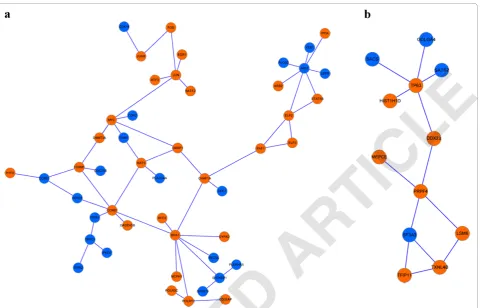
networks among interactive proteins at T0 (Figure 1) and T1 (Figure 2). Several proteins including replication pro-tein A1 (RPA1), MYC, Janus kinase 2 (JAK2), and cyclin B1 (CCNB1) were screened from PPI network based on their highest degree, shown in Table 4.
Discussion
IPC is a universal method to reduce ischemia reperfu-sion injury in several tissues and organs [31]. In this study, we screened DEGs from biopsies of four control and four IPC-treated patients who were subjected to total knee arthroplasty surgery in order to gain insight into the molecular mechanism of IPC in protection against ischemia reperfusion injury. A number of DEGs Table 1 Results of KEGG pathway enrichment analysis of
up- and downregulated genes both at the onset of surgery (T= 0) and 1 h into the surgery (T= 1)
Term Pvalue Genes
T= 0 upregulated DEGs hsa00970: aminoacyl-tRNA
biosynthesis 3.045E
−02 FARS2, CARS2, DARS2, SARS2
T= 1 upregulated DEGs hsa04130: SNARE interactions in vesicular transport
4.998E−03 SNAP29, STX5, BNIP1, VAMP5, GOSR2 hsa05310: asthma 1.579E−02 HLA-DQB1, IL3, TNF,
HLA-DQA1 hsa05332: graft-versus-host
disease
3.461E−02 HLA-DQB1, IL6, TNF, HLA-DQA1 hsa04916: melanogenesis 3.554E−02 FZD9, WNT1, ADCY1,
CREB3L4, CALML6, FZD5 hsa04115: p53 signaling
pathway
3.631E−02 CCNB1, BBC3, BAI1, RPRM, GADD45B
hsa05200: pathways
in cancer 3.827E
−02 FZD9, WNT1, FOS, IL6, RXRB, JUN, STAT5B, ARNT2, FZD5, MYC, MMP1, CTNNA3 hsa00970: aminoacyl-tRNA
biosynthesis
3.933E−02 TARS2, FARS2, MARS2, EARS2 T= 1 downregulated DEGs
hsa04062: chemokine
signaling pathway 1.919E
−02 PLCB4, GNAI1, TIAM1, CCR3, CCL19, GRK4, JAK2, CCL16, CXCL10 hsa04730: long-term depression 3.554E−02 PLA2G4A, PLCB4, GNAI1,
ITPR1, ITPR2 hsa04070: phosphatidylinositol
signaling system
4.421E−02 PLCB4, PLCG2, INPP4B, ITPR1, ITPR2
hsa00140: steroid
hormone biosynthesis 4.976E
−02 AKR1C2, CYP7A1, HSD17B3, AKR1C1
Table 2 Enriched targets of transcriptional factors in upregulated differentially expressed genes both at the onset of surgery (T= 0) and 1 h into the surgery (T= 1)
Transcriptional factor Pvalue
T= 0
GABP-19822575 3.5453E−10
VDR-23849224 4.39418E−10
FOXP1-21924763 5.58129E−09
FLI1-21571218 6.78555E−09
FOXP3-21729870 1.16903E−08
ETS1-20019798 1.39977E−08
XRN2-22483619 5.46758E−08
E2F4-21247883 5.49972E−06
DCP1A-22483619 4.81578E−05
RUNX1-21571218 0.000157662
TTF2-22483619 0.000349486
TP63-22573176 0.000439082
T= 1
FLI1-21571218 6.78838E−11
FOXP3-21729870 2.40847E−10
FOXP1-21924763 5.84899E−09
NOTCH1-21737748 1.56938E−06
XRN2-22483619 5.20959E−06
MITF-21258399 2.10127E−05
VDR-23849224 2.1157E−05
TTF2-22483619 3.85815E−05
ATF3-23680149 4.62329E−05
GATA1-21571218 7.06282E−05
RUNX1-21571218 7.27917E−05
HNF4A-19822575 0.000155321
DCP1A-22483619 0.000221014
Note: The number following gene symbol is the PubMed ID of the article which provided the Chip-seq data.
upregulated DEGs.
Significant DEGs-related miRNAs
The screening of significant DEGs-related miRNAs for downregulated DEGs was performed by Fisher box P3 (FOXP3), FOXP1, and NOTCH1 at T1. Ignoring the overlapping transcriptional factor, targets of GABP at T0 and NOTCH1 at T1 were significantly enriched in upregulated DEGs.
Significant DEGs-related miRNAs
min D receptor (VDR), forkhead box P1 (FOXP1), and FLI1 were most significant at T0, while FLI1, forkhead box P3 (FOXP3), FOXP1, and NOTCH1 at T1. Ignoring the overlapping transcriptional factor, targets of GABP at T0 and NOTCH1 at T1 were significantly enriched in found probably to modulate upregulated DEGs (Table 2). Furthermore, GA repeat-binding protein (GABP), vita-min D receptor (VDR), forkhead box P1 (FOXP1), and FLI1 were most significant at T0, while FLI1, forkhead box P3 (FOXP3), FOXP1, and NOTCH1 at T1. Ignoring found probably to modulate upregulated DEGs (Table 2). Furthermore, GA repeat-binding protein (GABP), vita-min D receptor (VDR), forkhead box P1 (FOXP1), and
02 PLCB4, PLCG2, INPP4B, ITPR1, ITPR2
02 AKR1C2, CYP7A1, HSD17B3, AKR1C1 02 PLA2G4A, PLCB4, GNAI1,
ITPR1, ITPR2
02 PLCB4, PLCG2, INPP4B, 02 PLCB4, GNAI1, TIAM1,
CCR3, CCL19, GRK4, JAK2,
02 PLA2G4A, PLCB4, GNAI1,
MITF-21258399 2.10127E
VDR-23849224 2.1157E
FOXP1-21924763 5.84899E
NOTCH1-21737748 1.56938E
XRN2-22483619 5.20959E
MITF-21258399 2.10127E
FLI1-21571218 6.78838E
FOXP3-21729870 2.40847E
FOXP1-21924763 5.84899E
RUNX1-21571218 0.000157662
TTF2-22483619 0.000349486
TP63-22573176 0.000439082
E2F4-21247883 5.49972E
DCP1A-22483619 4.81578E
RUNX1-21571218 0.000157662
TTF2-22483619 0.000349486
XRN2-22483619 5.46758E
E2F4-21247883 5.49972E
DCP1A-22483619 4.81578E
ETS1-20019798 1.39977E
XRN2-22483619 5.46758E
E2F4-21247883 5.49972E
FLI1-21571218 6.78555E
FOXP3-21729870 1.16903E
ETS1-20019798 1.39977E
GABP-19822575 3.5453E
VDR-23849224 4.39418E
FOXP1-21924763 5.58129E−09
were identified between IPC group and the control at T0 and T1.
Moreover, KEGG pathway enrichment analysis showed that upregulated DEGs were significantly enriched in aminoacyl-tRNA biosynthesis both at T0 and T1, SNARE interactions in vesicular transport and p53 sig-nal pathway at T1. As shown in previous studies, the expression of ARS (aminoacyl-tRNA synthetases) cod-ing genes and genes involved in metabolism and trans-port of amino acids were upregulated after ischemia but decreased after IPC treatment [32]. Previous re-port showed that p53 was a caspase inhibitor, which has been known to stimulate the disruption of mito-chondria and widely used in studies of apoptosis [33]. P53 expression has also been shown to inhibit apoptosis induced by tumor necrosis factor-α (TNF-α) in the liver [34,35]. Furthermore, reperfusion-induced hepatic apop-tosis could be decreased by IPC through lowering TNF-α
levels and modulating the caspase dependent pathway [36]. Notably, emerging evidences have pointed out that Golgi-SNARE GS28 (Golgi SNAP receptor complex mem-ber 1) forms a complex with p53, and thus affect the sta-bility and activity of p53 [37]. In addition, GS28 may enhance cells to DNA-damage-induced apoptosis through inhibiting the ubiquitination and degradation of p53 [37]. Taken together, IPC might render protection against reperfusion-induced injury at cellular, organ, and systemic level partly through aminoacyl-tRNA biosynthesis, SNARE interactions in vesicular trans-port and p53 signaling pathways.
To identify transcriptional factor upon Chip-seq gene profile, we performed ChEA analysis in upregulated DEGs both at T0 and T1. Results suggested that NOTCH1 remarkably regulated overexpressed DEGs at T1 but not at T0. Recent studies have shown that NOTCH1 assumed a fundamental role in the mecha-nisms of cerebral ischemia injury [38] through eliciting protective effects against ischemia injury by decreasing neuronal apoptosis in mice [39]. IPC-induced NOTCH1 signaling could activate the endogenous neuroprotective components and decrease the ischemic-reperfusion in-jury at the early phase after stroke [40]. In addition, NOTCH1 signaling protected against ischemia-reperfusion injury partly though PTEN/Akt-mediated anti-nitrative and anti-oxidative effects [41]. Remarkable miR-141/200a was member of miR-200 family which was originally associated with the inhibition of cancer invasion [42] or olfactory neurogenesis [43]. Lee's group indicated that miR-141/200a were upregulated early after IPC and they were neuropro-tective mainly by improving neural cell survival via proly1 hydroxylase 2 (PHD2) silencing and subsequent HIF-1α (hypoxia-inducible factors-1α) stabilization [44,45]. To sum Table 3 Enriched potential regulatory microRNAs for
targeting downregulated differentially expressed genes both at the onset of surgery (T= 0) and 1 h into the surgery (T= 1)
miR-141/200a targets Pvalue
T= 0
ASTN1, ATP8A1, CHKA, ENAH, GLS, LRRTM2, PDCD4, PEG3, RGAG1, SCN9A, SNAP91, STRN, STX2, THRB, TIAM1, TRHDE, WWTR1
0.0071
T= 1
AMPD2, APOLD1, CDC25B, ENAH, FAT3, FBXL2, GPC6, GPM6B, KALRN, LENG8, MAP4K4, MARK1, MYH10, PEG3, PLCB4, PTPRD, RBM47, SOX11, THRB, TIAM1, TTLL7, VASH2, VCAN, VGLL3, WWTR1
0.0076
Figure 1Protein-protein interaction network for significant differentially expressed genes at T0 (a-b).The network includes two small netsaand b.Orange circle means upregulated DEG, and blue circle means downregulated DEG. The line indicates one pair interaction between different proteins. [34,35]. Furthermore, reperfusion-induced hepatic
apop-tosis could be decreased by IPC through lowering TNF-tudies of apoptosis [33]. P53 expression has also been shown to inhibit apoptosis (TNF- ) in the liver [34,35]. Furthermore, reperfusion-induced hepatic apop-tosis could be decreased by IPC through lowering TNF-but decreased after IPC treatment [32]. Previous re-port showed that p53 was a caspase inhibitor, which has been known to stimulate the disruption of mito-tudies of apoptosis [33]. P53 expression has also been shown to inhibit apoptosis ing genes and genes involved in metabolism and trans-port of amino acids were upregulated after ischemia but decreased after IPC treatment [32]. Previous re-port showed that p53 was a caspase inhibitor, which has been known to stimulate the disruption of
mito-anti-oxidative effects [41]. Remarkable miR-141/200a was member of miR-200 family which was originally associated expression of ARS (aminoacyl-tRNA synthetases)
cod-ing genes and genes involved in metabolism and
trans-components and decrease the ischemic-reperfusion in-jury at the early phase after stroke [40]. In addition, NOTCH1 signaling protected ag
injury partly though PTEN/Akt-mediated anti-nitrative and anti-oxidative effects [41]. Remarkable miR-141/200a was protective effects against ischemia injury by decreasing neuronal apoptosis in mice [39]. IPC-induced NOTCH1 signaling could activate the endogenous neuroprotective components and decrease the ischemic-reperfusion in-jury at the early phase after stroke [40]. In addition, T1 but not at T0. Recent studies have shown that NOTCH1 assumed a fundamental role in the mecha-nisms of cerebral ischemia injury [38] through eliciting protective effects against ischemia injury by decreasing neuronal apoptosis in mice [39]. IPC-induced NOTCH1 profile, we performed ChEA analysis in upregulated DEGs both at T0 and T1. Results suggested that NOTCH1 remarkably regulated overexpressed DEGs at T1 but not at T0. Recent studies have shown that NOTCH1 assumed a fundamental role in the mecha-To identify transcriptional factor upon Chip-seq gene profile, we performed ChEA analysis in upregulated DEGs both at T0 and T1. Results suggested that NOTCH1 remarkably regulated overexpressed DEGs at biosynthesis, SNARE interactions in vesicular trans-port and p53 signaling pathways.
To identify transcriptional factor upon Chip-seq gene profile, we performed ChEA analysis in upregulated DEGs both at T0 and T1. Results suggested that and systemic level partly through aminoacyl-tRNA biosynthesis, SNARE interactions in vesicular
up, transcriptional factor NOTCH1 and miR-141/200a might regulate effects of IPC.
To well understand functions of apparent DEGs, we mapped them to STRING software and obtained PPI networks at T0 and T1. It is well known that DNA dam-age and DNA response related proteins were revealed to
play crucial role during ischemia reperfusion injury in brain and heart. In network at T1, the dual-specificity tyrosine-(Y)-phosphorylation regulated kinase 2 (DYRK2), interacted with RPA1, regulated p53 to induce apoptosis in response to DNA damage [46]. As a result, we sug-gested that RPA1 which had the highest degree might play a role in IPC protection via interacting with DYRK2. Meanwhile, JAK2 known as a member of Janus kinase signal transducers and activators of transcription (JAK-STAT) pathway which protected against ischemia-reperfusion injury by decreased number of apoptotic cardiomyocytes, improved functional recovery, and re-duced infarct size in the early phase of IPC [47]. When isolated working rat hearts were subjected to ischemia, tyrosine phosphorylation of JAK2 and STAT3 immedi-ately increased after IPC stimulus as well as 2 h after reperfusion [48]. Specially, ischemia-reperfusion could activate JAK2 and recruit STAT3, resulting in transcrip-tional upregulation of inducible cyclooxygenase-2 (COX-2) and nitric oxide synthase (iNOS), which then mediated the infarct-sparing effects of the late phase of preconditioning [49]. However, in our research, JAK2 has been shown to be downregulated in the PPI network which was inconsistent with previous demonstration. Thus, JAK2 might also par-ticipate in other pathway to regulate IPC effect when tissue
Figure 2Protein-protein interaction network for differentially expressed genes at T1 (a-b).The network includes two small netsaandb.
Orange circle means upregulated DEG, and blue circle means downregulated DEG. The line indicates one pair interaction between different proteins.
Table 4 Degree of differentially expressed genes in protein-protein interaction network both at the onset of surgery (T= 0) and 1 h into the surgery (T= 1)
Gene Regulated Degree
RPA1 (T= 1) Up 8
MYC (T= 1) Up 7
JAK2 (T= 1) Down 7
CCNB1 (T= 1) Up 6
JUN1 (T= 1) Up 5
TP63 (T= 1) Up 5
CHAF1A (T= 1) Up 4
FOXM1 (T= 1) Up 4
PRPF4 (T= 1) Up 4
RUVBL2 (T= 0) Up 4
FBXO25 (T= 0) Up 4
STX8 (T= 1) Up 4
T= 1) Up 7
JAK2 (T= 1) Down 7
CCNB1 (T= 1) Up 6
JUN1 (T= 1) Up 5
Gene Regulated Degree
= 1) Up 8
= 1) Up 7
= 1) Down 7
Table 4 Degree of differentially expressed genes in protein-protein interaction network both at the onset of
= 0) and 1 h into the surgery (
Gene Regulated Degree
= 1) Up 8
age and DNA response related proteins were revealed to
Table 4 Degree of differentially expressed genes in protein-protein interaction network both at the onset of
= 0) and 1 h into the surgery (
mapped them to STRING software and obtained PPI networks at T0 and T1. It is well known that DNA dam-age and DNA response related proteins were revealed to
Table 4 Degree of differentially expressed genes in
up, transcriptional factor NOTCH1 and miR-141/200a
To well understand functions of apparent DEGs, we mapped them to STRING software and obtained PPI networks at T0 and T1. It is well known that DNA dam-up, transcriptional factor NOTCH1 and miR-141/200a
cle means downregulated DEG. The line indicates on Protein-protein interaction network for differentially expressed genes at T1 (a-b).
was subjected to ischemia-reperfusion. Further studies will be necessary to elucidate the mechanisms for JAK2 sig-naling in IPC treatment. In our study, MYC, CCNB1, and JUN1 with higher degree in PPI network were newly re-ported associated with IPC protection.
Conclusion
Our study shed new light on the mechanism of IPC effect and treatment to diseases due to ischemia reperfusion. Based on the screened significant DEGs, p53 signaling pathway, transcriptional factor NOTCH1, and miR141/ 200a might regulate IPC protective effect to ischemia re-perfusion injury. Importantly, significant DEGs RPA1 and JAK2 in PPI network might participate in the protection of IPC. Although these evidences were obtained, further research will be indispensable to explore the mechanisms of previous mentioned genes. On the other hand, experi-mental verifications in further research were needed to support our results.
Abbreviations
ARS:aminoacyl-tRNAsynthetases; CCNB1: cyclin B1; ChEA: ChIP enrichment analysis; ChIP: chromatin immunoprecipitation;
COX-2: cyclooxygenase-2; DEGs: differentially expressed genes; DYRKCOX-2: dual-specificity tyrosine-(Y)-phosphorylation regulated kinase 2; GABP: GA repeat-binding protein; GEO: Gene Expression Omnibus; FOXP1: forkhead box P1; FOXP3: forkhead box P3; HIF-1α: hypoxia-inducible factors-1α; IPC: ischemia preconditioning; JAK2: Janus kinase 2; KEGG: Kyoto Encyclopedia of Genes and Genomes; miRNA: microRNA; NCBI: National Center of Biotechnology Information; NOS: nitric oxide synthase; PHD2: proly1 hydroxylase 2; PPI: protein-protein interaction; ROS: reactive oxygen species; RPA1: replication protein A1; SNARE: soluble NSF attachment protein receptor; STAT: signal transducers and activators of transcription; TNF-α: tumor necrosis factor-α; VDR: vitamin D receptor.
Competing interests
The authors declare that they have no competing interests.
Authors’contributions
JW carried out the molecular genetic studies, participated in the sequence alignment, and drafted the manuscript. ZC carried out the immunoassays. JL participated in the sequence alignment. JW participated in the design of the study and performed the statistical analysis. JL conceived of the study, and participated in its design and coordination and helped to draft the manuscript. All authors read and approved the final manuscript.
Acknowledgements
This study was supported by the National Natural Science Foundation of China (No. 31370986).
Author details
1The Affiliated Shanghai No.10 People’s Hospital, Nanjing Medical University,
Shanghai 200072, China.2Department of Orthopedics, Shanghai Tenth
People’s Hospital, Tongji University School of Medicine, Shanghai 200072, China.3The Affiliated Shanghai No.1 People’s Hospital, Nanjing Medical
University, Shanghai 200080, China.4Department of Orthopedics, Shanghai
First People’s Hospital, Shanghai Jiao Tong University, Shanghai 200080, China.5Department of Orthopedics, Shanghai First People’s Hospital, No.100
Haining Road, Hongkou District, Shanghai 200080, China.
Received: 19 September 2014 Accepted: 27 November 2014
References
1. Beyersdorf F, Unger A, Wildhirt A, Kretzer U, Deutschlander N, Kruger S, Matheis G, Hanselmann A, Zimmer G, Satter P:Studies of reperfusion injury in skeletal muscle: preserved cellular viability after extended periods of warm ischemia.J Cardiovasc Surg (Torino)1991,32:664–676. 2. Murry CE, Jennings RB, Reimer KA:Preconditioning with ischemia: a delay of
lethal cell injury in ischemic myocardium.Circulation1986,74:1124–1136. 3. Hausenloy DJ, Yellon DM:Remote ischaemic preconditioning: underlying
mechanisms and clinical application.Cardiovasc Res2008,79:377–386. 4. Deutsch E, Berger M, Kussmaul WG, Hirshfeld JW Jr, Herrmann HC, Laskey
WK:Adaptation to ischemia during percutaneous transluminal coronary angioplasty. Clinical, hemodynamic, and metabolic features.Circulation
1990,82:2044–2051.
5. Jenkins DP, Pugsley WB, Alkhulaifi AM, Kemp M, Hooper J, Yellon DM:
Ischaemic preconditioning reduces troponin T release in patients undergoing coronary artery bypass surgery.Heart1997,77:314–318. 6. Clavien PA, Selzner M, Rudiger HA, Graf R, Kadry Z, Rousson V, Jochum W:
A prospective randomized study in 100 consecutive patients undergoing major liver resection with versus without ischemic preconditioning. Ann Surg2003,238:843–850. discussion 851–842.
7. Chen S, Li G, Long L:Clinical research of ischemic preconditioning on lung protection.Hunan Yi Ke Da Xue Xue Bao1999,24:357–359. 8. Stokman G, Stroo I, Claessen N, Teske GJ, Florquin S, Leemans JC:SDF-1
provides morphological and functional protection against renal ischaemia/reperfusion injury.Nephrol Dial Transplant2010,25:3852–3859. 9. Sola A, Hotter G, Prats N, Xaus C, Gelpi E, Rosello-Catafau J:Modification of
oxidative stress in response to intestinal preconditioning.Transplantation
2000,69:767–772.
10. Saita Y, Yokoyama K, Nakamura K, Itoman M:Protective effect of ischaemic preconditioning against ischaemia-induced reperfusion injury of skeletal muscle: how many preconditioning cycles are appropriate?Br J Plast Surg
2002,55:241–245.
11. Grace PA:Ischaemia-reperfusion injury.Br J Surg1994,81:637–647. 12. Cinel I, Avlan D, Cinel L, Polat G, Atici S, Mavioglu I, Serinol H, Aksoyek S,
Oral U:Ischemic preconditioning reduces intestinal epithelial apoptosis in rats.Shock2003,19:588–592.
13. Cohen MV, Baines CP, Downey JM:Ischemic preconditioning: from adenosine receptor to KATP channel.Annu Rev Physiol2000,62:79–109. 14. Liu GS, Thornton J, Van Winkle DM, Stanley AW, Olsson RA, Downey JM:
Protection against infarction afforded by preconditioning is mediated by A1 adenosine receptors in rabbit heart.Circulation1991,84:350–356. 15. Goto M, Liu Y, Yang XM, Ardell JL, Cohen MV, Downey JM:Role of
bradykinin in protection of ischemic preconditioning in rabbit hearts. Circ Res1995,77:611–621.
16. Baines CP, Goto M, Downey JM:Oxygen radicals released during ischemic preconditioning contribute to cardioprotection in the rabbit
myocardium.J Mol Cell Cardiol1997,29:207–216.
17. Ytrehus K, Liu Y, Downey JM:Preconditioning protects ischemic rabbit heart by protein kinase C activation.Am J Physiol1994,266:H1145–H1152. 18. Tong H, Chen W, Steenbergen C, Murphy E:Ischemic preconditioning
activates phosphatidylinositol-3-kinase upstream of protein kinase C. Circ Res2000,87:309–315.
19. Tong H, Imahashi K, Steenbergen C, Murphy E:Phosphorylation of glycogen synthase kinase-3beta during preconditioning through a phosphatidylinositol-3-kinase–dependent pathway is cardioprotective. Circ Res2002,90:377–379.
20. Weinbrenner C, Liu GS, Cohen MV, Downey JM:Phosphorylation of tyrosine 182 of p38 mitogen-activated protein kinase correlates with the protection of preconditioning in the rabbit heart.J Mol Cell Cardiol1997,
29:2383–2391.
21. Hecker JG, Mcgarvey M:Heat shock proteins as biomarkers for the rapid detection of brain and spinal cord ischemia: a review and comparison to other methods of detection in thoracic aneurysm repair.Cell Stress Chaperones2011,16:119–131.
22. Murphy T, Walsh PM, Doran PP, Mulhall KJ:Transcriptional responses in the adaptation to ischaemia-reperfusion injury: a study of the effect of ischaemic preconditioning in total knee arthroplasty patients.J Transl Med2010,8:46.
23. Sha Y, Xu YQ, Zhao WQ, Tang H, Li FB, Li X, Li CX:Protective effect of ischaemic preconditioning in total knee arthroplasty.Eur Rev Med Pharmacol Sci2014,18:1559–1566.
Acknowledgements
This study was supported by the National Natural Science Foundation of China (No. 31370986).
Author details
The Affiliated Shanghai No.10 People
study and performed the statistical analysis. JL conceived of the study, and participated in its design and coordination and helped to draft the manuscript. All authors read and approved the final manuscript.
Acknowledgements
This study was supported by the National Natural Science Foundation of JW carried out the molecular genetic studies, participated in the sequence alignment, and drafted the manuscript. ZC carried out the immunoassays. JL participated in the sequence alignment. JW participated in the design of the study and performed the statistical analysis. JL conceived of the study, and participated in its design and coordination and helped to draft the manuscript. All authors read and approved the final manuscript. JW carried out the molecular genetic studies, participated in the sequence alignment, and drafted the manuscript. ZC carried out the immunoassays. JL participated in the sequence alignment. JW participated in the design of the study and performed the statistical analysis. JL conceived of the study, and The authors declare that they have no competing interests.
JW carried out the molecular genetic studies, participated in the sequence protein A1; SNARE: soluble NSF attachment protein receptor; STAT: signal
: tumor necrosis factor-preconditioning; JAK2: Janus kinase 2; KEGG: Kyoto Encyclopedia of Genes and Genomes; miRNA: microRNA; NCBI: National Center of Biotechnology Information; NOS: nitric oxide synthase; PHD2: proly1 hydroxylase 2; PPI: protein-protein interaction; ROS: reactive oxygen species; RPA1: replication protein A1; SNARE: soluble NSF attachment protein receptor; STAT: signal
: tumor necrosis factor-α; ; IPC: ischemia preconditioning; JAK2: Janus kinase 2; KEGG: Kyoto Encyclopedia of Genes and
13. Cohen MV, Baines CP, Downey JM:
preconditioning against ischaemia-induced reperfusion injury of skeletal muscle: how many preconditioning cycles are appropriate?
2002, 11. Grace PA:
12. Cinel I, Avlan D, Cinel L, Polat G, Atici S, Mavioglu I, Serinol H, Aksoyek S, Oral U:
9. Sola A, Hotter G, Prats N, Xaus C, Gelpi E, Rosello-Catafau J:
oxidative stress in response to intestinal preconditioning. 69:767 772.
10. Saita Y, Yokoyama K, Nakamura K, Itoman M:
preconditioning against ischaemia-induced reperfusion injury of skeletal muscle: how many preconditioning cycles are appropriate?
Hunan Yi Ke Da Xue Xue Bao
8. Stokman G, Stroo I, Claessen N, Teske GJ, Florquin S, Leemans JC:
provides morphological and functional protection against renal ischaemia/reperfusion injury.Nephrol Dial Transplant
9. Sola A, Hotter G, Prats N, Xaus C, Gelpi E, Rosello-Catafau J:
oxidative stress in response to intestinal preconditioning.
A prospective randomized study in 100 consecutive patients undergoing major liver resection with versus without ischemic preconditioning.
850. discussion 851
Clinical research of ischemic preconditioning on
Hunan Yi Ke Da Xue Xue Bao
8. Stokman G, Stroo I, Claessen N, Teske GJ, Florquin S, Leemans JC: 6. Clavien PA, Selzner M, Rudiger HA, Graf R, Kadry Z, Rousson V, Jochum W:
A prospective randomized study in 100 consecutive patients undergoing major liver resection with versus without ischemic preconditioning.
850. discussion 851–842.
Clinical research of ischemic preconditioning on
5. Jenkins DP, Pugsley WB, Alkhulaifi AM, Kemp M, Hooper J, Yellon DM:
Ischaemic preconditioning reduces troponin T release in patients undergoing coronary artery bypass surgery. 1997,
6. Clavien PA, Selzner M, Rudiger HA, Graf R, Kadry Z, Rousson V, Jochum W:
A prospective randomized study in 100 consecutive patients undergoing major liver resection with versus without ischemic preconditioning. angioplasty. Clinical, hemodynamic, and metabolic features.
5. Jenkins DP, Pugsley WB, Alkhulaifi AM, Kemp M, Hooper J, Yellon DM:
Ischaemic preconditioning reduces troponin T release in patients
1997,77:314
Remote ischaemic preconditioning: underlying 79:377 386. 4. Deutsch E, Berger M, Kussmaul WG, Hirshfeld JW Jr, Herrmann HC, Laskey
24. Irizarry RA, Hobbs B, Collin F, Beazer-Barclay YD, Antonellis KJ, Scherf U, Speed TP:Exploration, normalization, and summaries of high density oligonucleotide array probe level data.Biostatistics2003,4:249–264. 25. Smyth GK:Limma: linear models for microarray data. InBioinformatics and
Computational Biology Solutions Using R and Bioconductor.Edited by
Gentleman R, Carey V, Huber W, Irizarry R, Dudoit S. New York: Springer; 2005:397–420.
26. Da Huang W, Sherman BT, Lempicki RA:Systematic and integrative analysis of large gene lists using DAVID bioinformatics resources.Nat
Protoc2009,4:44–57.
27. Lachmann A, Xu H, Krishnan J, Berger SI, Mazloom AR, Ma’ayan A:ChEA: transcription factor regulation inferred from integrating genome-wide ChIP-X experiments.Bioinformatics2010,26:2438–2444.
28. Lewis BP, Shih IH, Jones-Rhoades MW, Bartel DP, Burge CB:Prediction of mammalian microRNA targets.Cell2003,115:787–798.
29. Franceschini A, Szklarczyk D, Frankild S, Kuhn M, Simonovic M, Roth A, Lin J, Minguez P, Bork P, Von Mering C:STRING v9. 1: protein-protein interaction networks, with increased coverage and integration.Nucleic Acids Res 2013,41:D808–D815.
30. Smoot ME, Ono K, Ruscheinski J, Wang PL, Ideker T:Cytoscape 2.8: new features for data integration and network visualization.Bioinformatics 2011,27:431–432.
31. Otani H:Ischemic preconditioning: from molecular mechanisms to therapeutic opportunities.Antioxid Redox Signal2008,10:207–247. 32. Kamphuis W, Dijk F, Bergen AA:Ischemic preconditioning alters the
pattern of gene expression changes in response to full retinal ischemia.
Mol Vis2007,13:1892–1901.
33. Hoshi M, Sato M, Kondo S, Takashima A, Noguchi K, Takahashi M, Ishiguro K, Imahori K:Different localization of tau protein kinase I/glycogen synthase kinase-3 beta from glycogen synthase kinase-3 alpha in cerebellum mitochondria.J Biochem1995,118:683–685.
34. Rudiger HA, Clavien PA:Tumor necrosis factor alpha, but not Fas, mediates hepatocellular apoptosis in the murine ischemic liver.
Gastroenterology2002,122:202–210.
35. Cohen O, Inbal B, Kissil JL, Raveh T, Berissi H, Spivak-Kroizaman T, Feinstein E, Kimchi A:DAP-kinase participates in TNF-alpha- and Fas-induced apoptosis and its function requires the death domain.J Cell Biol1999, 146:141–148.
36. Yadav SS, Sindram D, Perry DK, Clavien PA:Ischemic preconditioning protects the mouse liver by inhibition of apoptosis through a caspase-dependent pathway.Hepatology1999,30:1223–1231. 37. Nian-Kang S, Shang-Lang H, Kun-Yi C, Chuck C-KC:Golgi-SNARE GS28
potentiates cisplatin-induced apoptosis by forming GS28-MDM2-p53 complexes and by preventing the ubiquitination and degradation of
p53.Biochem J2012,444:303–314.
38. Arumugam TV, Chan SL, Jo DG, Yilmaz G, Tang SC, Cheng A, Gleichmann M, Okun E, Dixit VD, Chigurupati S, Mughal MR, Ouyang X, Miele L, Magnus T, Poosala S, Granger DN, Mattson MP:Gamma secretase-mediated Notch signaling worsens brain damage and functional outcome in ischemic stroke.Nat Med2006,12:621–623.
39. Yang Q, Yan W, Li X, Hou L, Dong H, Wang Q, Wang S, Zhang X, Xiong L: Activation of canonical notch signaling pathway is involved in the ischemic tolerance induced by sevoflurane preconditioning in mice.
Anesthesiology2012,117:996–1005.
40. Takeshita K, Satoh M, Ii M, Silver M, Limbourg FP, Mukai Y, Rikitake Y, Radtke F, Gridley T, Losordo DW, Liao JK:Critical role of endothelial Notch1 signaling in postnatal angiogenesis.Circ Res2007,100:70–78.
41. Pei H, Yu Q, Xue Q, Guo Y, Sun L, Hong Z, Han H, Gao E, Qu Y, Tao L: Notch1 cardioprotection in myocardial ischemia/reperfusion involves reduction of oxidative/nitrative stress.Basic Res Cardiol2013,108:373. 42. Gregory PA, Bert AG, Paterson EL, Barry SC, Tsykin A, Farshid G, Vadas MA,
Khew-Goodall Y, Goodall GJ:The miR-200 family and miR-205 regulate epithelial to mesenchymal transition by targeting ZEB1 and SIP1.Nat Cell Biol2008,10:593–601.
43. Choi PS, Zakhary L, Choi WY, Caron S, Alvarez-Saavedra E, Miska EA, Mcmanus M, Harfe B, Giraldez AJ, Horvitz HR, Schier AF, Dulac C:Members of the miRNA-200 family regulate olfactory neurogenesis.Neuron2008,57:41–55. 44. Lee ST, Chu K, Jung KH, Yoon HJ, Jeon D, Kang KM, Park KH, Bae EK, Kim M,
Lee SK, Roh JK:MicroRNAs induced during ischemic preconditioning.
Stroke2010,41:1646–1651.
45. Li JS, Yao ZX:MicroRNAs: novel regulators of oligodendrocyte differentiation and potential therapeutic targets in demyelination-related diseases.
Mol Neurobiol2012,45:200–212.
46. Taira N, Nihira K, Yamaguchi T, Miki Y, Yoshida K:DYRK2 is targeted to the nucleus and controls p53 via Ser46 phosphorylation in the apoptotic response to DNA damage.Mol Cell2007,25:725–738.
47. Hattori R, Maulik N, Otani H, Zhu L, Cordis G, Engelman RM, Siddiqui MA, Das DK:Role of STAT3 in ischemic preconditioning.J Mol Cell Cardiol 2001,33:1929–1936.
48. Bolli R, Dawn B, Xuan YT:Role of the JAK-STAT pathway in protection against myocardial ischemia/reperfusion injury.Trends Cardiovasc Med 2003,13:72–79.
49. Dawn B, Xuan YT, Guo Y, Rezazadeh A, Stein AB, Hunt G, Wu WJ, Tan W, Bolli R:IL-6 plays an obligatory role in late preconditioning via JAK-STAT signaling and upregulation of iNOS and COX-2.Cardiovasc Res2004, 64:61–71.
Submit your next manuscript to BioMed Central and take full advantage of:
• Convenient online submission
• Thorough peer review
• No space constraints or color figure charges
• Immediate publication on acceptance
• Inclusion in PubMed, CAS, Scopus and Google Scholar
• Research which is freely available for redistribution
Submit your manuscript at www.biomedcentral.com/submit
40. Takeshita K, Satoh M, Ii M, Silver M, Limbourg FP, Mukai Y, Rikitake Y, Radtke F, Gridley T, Losordo DW, Liao JK:
in postnatal angiogenesis.
41. Pei H, Yu Q, Xue Q, Guo Y, Sun L, Hong Z, Han H, Gao E, Qu Y, Tao L: Notch1 cardioprotection in myocardial ischemia/reperfusion involves reduction of oxidative/nitrative stress.
42. Gregory PA, Bert AG, Paterson EL, Barry SC, Tsykin A, Farshid G, Vadas MA, Activation of canonical notch signaling pathway is involved in the ischemic tolerance induced by sevoflurane preconditioning in mice. Anesthesiology2012,
40. Takeshita K, Satoh M, Ii M, Silver M, Limbourg FP, Mukai Y, Rikitake Y, Radtke F, Gridley T, Losordo DW, Liao JK:
in postnatal angiogenesis.
signaling worsens brain damage and functional outcome in ischemic 2006,12:
39. Yang Q, Yan W, Li X, Hou L, Dong H, Wang Q, Wang S, Zhang X, Xiong L: Activation of canonical notch signaling pathway is involved in the ischemic tolerance induced by sevoflurane preconditioning in mice. 38. Arumugam TV, Chan SL, Jo DG, Yilmaz G, Tang SC, Cheng A, Gleichmann M,
Okun E, Dixit VD, Chigurupati S, Mughal MR, Ouyang X, Miele L, Magnus T, Poosala S, Granger DN, Mattson MP:Gamma secretase-mediated Notch signaling worsens brain damage and functional outcome in ischemic
–623.
39. Yang Q, Yan W, Li X, Hou L, Dong H, Wang Q, Wang S, Zhang X, Xiong L: potentiates cisplatin-induced apoptosis by forming GS28-MDM2-p53 complexes and by preventing the ubiquitination and degradation of
38. Arumugam TV, Chan SL, Jo DG, Yilmaz G, Tang SC, Cheng A, Gleichmann M, Okun E, Dixit VD, Chigurupati S, Mughal MR, Ouyang X, Miele L, Magnus T,
Gamma secretase-mediated Notch Ischemic preconditioning protects the mouse liver by inhibition of apoptosis through a
1999,30: 1231. 37. Nian-Kang S, Shang-Lang H, Kun-Yi C, Chuck C-KC:Golgi-SNARE GS28
potentiates cisplatin-induced apoptosis by forming GS28-MDM2-p53 complexes and by preventing the ubiquitination and degradation of DAP-kinase participates in TNF-alpha- and Fas-induced
J Cell Biol
Ischemic preconditioning protects the mouse liver by inhibition of apoptosis through a 35. Cohen O, Inbal B, Kissil JL, Raveh T, Berissi H, Spivak-Kroizaman T, Feinstein
DAP-kinase participates in TNF-alpha- and Fas-induced 1999,
IL-6 plays an obligatory role in late preconditioning via JAK-STAT signaling and upregulation of iNOS and COX-2.Cardiovasc Res 49. Dawn B, Xuan YT, Guo Y, Rezazadeh A, Stein AB, Hunt G, Wu WJ, Tan W,
IL-6 plays an obligatory role in late preconditioning via JAK-STAT Cardiovasc Res2004,
J Mol Cell Cardiol
Role of the JAK-STAT pathway in protection Trends Cardiovasc Med