S T U D Y P R O T O C O L
Open Access
A feasibility study of an intervention for
structured preparation before detoxification
in alcohol dependence: the SPADe trial
protocol
Christos Kouimtsidis
1*, Ben Houghton
1, Heather Gage
2, Caitlin Notley
3, Vivienne Maskrey
4, Allan Clark
4,
Richard Holland
5, Anne Lingford-Hughes
6, Bhaskar Punukollu
7and Theodora Duka
8Abstract
Background:Alcohol-related harm is currently estimated to cost the National Health Service (NHS) in England £3.5 bn a year. Of the estimated 1.6 million people with some degree of alcohol dependence, some 600,000 are believed to be moderately or severely dependent and may benefit from intensive treatment. Outcomes from medically assisted withdrawal, also referred to as detoxification, are often poor, with poor engagement in relapse prevention interventions and subsequent high relapse rates. Detoxification is costly both financially and to the individual. It has been found that people who experience multiple detoxifications show more emotional and cognitive impairments. These changes may confer upon them the inability to resolve conflict and increased sensitivity to stress thus contributing to increased vulnerability risk of relapse. The study aims to test the feasibility of using a group intervention aiming to prepare participants for long-term abstinence before, rather than after, they have medically assisted detoxification. The current study will establish key parameters that influence trial design such as recruitment, compliance with the intervention, retention, and sensitivity of alternative outcome measures, in preparation for a future randomised controlled trial (RCT). This paper presents the protocol of the feasibility study.
Methods:The study corresponds to phase 2 of the Medical Research Council (MRC) complex interventions guidelines which cover the development and feasibility testing of an intervention. The work is in three stages. The development, adaptation and implementation of the Structured Preparation before Alcohol Detoxification (SPADe) intervention (stage 1), a randomised feasibility study with economic evaluation (stage 2) and a qualitative study (stage 3). Fifty participants will be recruited from two community alcohol treatment services in England. Participants will be randomised in two arms: the treatment as usual arm (TAU), which includes planned medically assisted detoxification and aftercare and the intervention arm in which participants will receive structured group preparation before detoxification in addition to TAU. The main outcomes are duration of continuous abstinence with no incidents of lapse or relapse, percentage of days abstinent and time to relapse. Discussion:The socioeconomic harms associated with alcohol have been well-documented, yet existing treatment options have not been able to reduce high relapse rates. This study will build on existing naturalistic studies underpinned by psychological interventions offered early and before detoxification from alcohol, which aim to reverse automatised habitual behaviours and thus may help us to understand how better to support people to remain abstinent and improve post detoxification outcomes.
Trial registration:ISRCTN, 14621127; Registered on 22 Feb 2017
Keywords:Alcohol dependence, Detoxification, Structured preparation, SPADe
© The Author(s). 2019Open AccessThis article is distributed under the terms of the Creative Commons Attribution 4.0 International License (http://creativecommons.org/licenses/by/4.0/), which permits unrestricted use, distribution, and reproduction in any medium, provided you give appropriate credit to the original author(s) and the source, provide a link to the Creative Commons license, and indicate if changes were made. The Creative Commons Public Domain Dedication waiver (http://creativecommons.org/publicdomain/zero/1.0/) applies to the data made available in this article, unless otherwise stated. * Correspondence:[email protected]
1Research and Development, Abraham Cowley Unit, Surrey and Borders NHS Foundation Trust, Surrey, Chertsey KT16 0AE, UK
Background
Tackling the impact of harmful and dependent drinking is a key global public health priority. Harmful drinking refers to consuming alcohol at amount and patterns that would affect the person’s physical and mental health and lead to personal and social harm. The harm is linked to both chronic as well as episodic heavy use (intoxication). For example, global estimates suggest that one in five adults report at least one occasion of heavy episodic drinking in the past month [1]. Alcohol harmful use is linked directly to a range of health disorders, including high blood pressure, heart disease, stroke, liver disease,
some cancers and depression [2]. Furthermore, more
than 21,000 people died from alcohol-related causes in England in 2012 [2]. As far as financial cost is con-cerned, estimates suggest that alcohol-related harm (from harmful and dependent use) costs the National Health Service (NHS) in England £3.5 bn a year [2].
Despite the fact that the prevalence of dependent drink-ing is far less than that of harmful drinkdrink-ing, of an esti-mated 1.6 million people with some degree of alcohol dependence, some 600,000 are believed to be moderately or severely dependent and may benefit from intensive treatment [3]. Individuals who are ‘moderately’ or ‘
se-verely’ dependent represent the severe end of the
spectrum of alcohol use disorders and consume alcohol at levels that are likely to have a severe impact on their own health and mortality, the health and behaviours of others (family members) and to have economic and social impli-cations [4]. Alcohol dependence impacts significantly on the NHS, as individuals affected are at increased risk of ac-cidents, and more likely to attend an accident and emer-gency department (A&E) and have emeremer-gency admissions [2, 5]. In the longer term, alcohol-dependent individuals are more likely to suffer from chronic conditions requiring expensive treatment, such as liver and heart disease [2].
Current treatment guidelines suggest that treatment for moderate to severe alcohol dependence needs to be planned, with up to four motivational sessions focusing on treatment engagement and development of aftercare sup-port, followed by medically assisted withdrawal (also re-ferred to as detoxification) and aftercare support [4]. Benzodiazepines are normally prescribed during detoxifica-tion to reduce the overt symptoms of alcohol withdrawal (sweats, tremor) as well as potentially life-threatening com-plications (e.g. convulsions, delirium tremens) [4]. However, these drugs do not prevent alcohol craving, relapse back into alcohol drinking and other long-term effects on mental functioning [4,6]. Outcomes from detoxification are often poor with low proportions engaging in aftercare [7] and high relapse rates [4]. Repeat detoxification is costly. Add-itionally, there is some evidence suggesting that people with alcohol dependence who experience multiple detoxifica-tions show increased impairment in mental functioning [8,
9]. It is important to clarify that these changes are shown to be associated, not caused by the detoxification process. Nevertheless, they may confer inability in conflict reso-lution and increased sensitivity to stress, both of which may contribute to relapse and might compromise the effective-ness of aftercare support [8–11]. There is also evidence to suggest that multiple detoxifications can exacerbate craving, adversely impacting on subsequent attempts at achieving abstinence [12].
In the light of the abovementioned evidence indicating the potential risk of an accumulation of adverse effects following repeated detoxifications, and until definitive evidence is generated to confirm or refute a causal rela-tionship, it is prudent to maximise treatment effective-ness and to reduce the risk of exposing people to repeated detoxifications and the potential adverse effects associated with the detoxification process itself. Al-though the existing evidence is only indicative, it is pos-sible that the long-term course, and economic and social impact of alcohol dependence, is not only due to the natural process of the phenomenon, but is also associ-ated with the existing treatment approach that empha-sises the importance of the provision of detoxification per se, without any emphasis on long-term sustainable outcomes. There is currently no guidance specifically on preparation for the detoxification process, apart from general guidance on care coordination and case manage-ment [4]. Absence of specific guidance reflects the lack of developed interventions in this area. Evidence is re-quired on whether structured preparation before detoxi-fication rather than detoxidetoxi-fication alone improves treatment outcomes and therefore whether the whole treatment paradigm should shift. Before embarking on a full trial of the effectiveness of such structured prepar-ation, there is a need to undertake a feasibility study to establish key parameters that influence trial design such as recruitment, adherence to the intervention, retention and sensitivity of alternative outcome measures.
A literature search of PubMed Central using alcohol re-lapse prevention, treatment-related MeSH terms under-taken in June 2014 found (1) that group interventions with diverse theoretical bases are considered to be more cost-effective than one-to-one interventions [13] and (2) cognitive behaviour therapy (CBT) relapse prevention in-terventions are well-supported by evidence [14].
This proposed feasibility study builds on the above preliminary evidence and aims to refine the preparatory intervention and assess the feasibility of conducting a large-scale evaluation (Structured Preparation before Al-cohol Detoxification (SPADe)) for people with moderate to severe alcohol dependence, as an adjunct to usual care, consisting of planned detoxification and aftercare.
The intervention under investigation in this study is based on Plans, Responses, Impulses, Motives, Evaluations (PRIME) theory of motivation [18] and learning theories [19] that underlie the use of psychological interventions aiming to reverse the development of automatised behav-iour and associated loss of control, such as CBT relapse prevention interventions. It combines the long-established (in alcohol treatment) ethos of group intervention and fol-lows the biological principle of homeostasis, which is dis-turbed with prolonged alcohol use [20], in order to help individuals to regain control over drinking as the first step towards lifelong sustainable abstinence.
Aims and objectives
The key research question is can we design a large-scale, randomised controlled trial (RCT) that will answer whether SPADe as an adjunct to usual care is more ef-fective than usual care alone in helping adults to main-tain longer periods of alcohol abstinence? The feasibility trial will compare the use of SPADe as an adjunct to treatment as usual with treatment as usual in the partici-pating sites.
Furthermore, reduction in subjective measures of alco-hol dependence and craving as well as improvement in objective measures of mental functioning will be ex-plored. Finally, we will conduct qualitative interviews with service users, their carers and service providers, to assess the acceptability of the treatment and to explore their experience of the treatment including any barriers and/or facilitators to taking part in the study. Findings from these interviews will enable us to refine the SPADe intervention and the design of the future definitive RCT.
Methods/design
The study corresponds to Phase 2 of the Medical Re-search Council (MRC) complex interventions guidelines, which guides the development of an intervention [21]. Therefore, the study has three stages:
Stage 1—adaptation and implementation of the intervention
We will adapt the existing pre-alcohol detox group proto-col [6, 16, 17] by incorporating feedback from service users and group facilitators gathered at two patient and public involvement (PPI) meetings to produce a manual for the intervention. Group facilitators will be recruited from existing staff and trained in the intervention via the
use of the manual. When training is complete, we will im-plement the SPADe groups across our two study sites.
A 1-day training event will take place in each partici-pating site and one central event for those not able to at-tend locally. At least six members of staff will be trained (to allow cross-cover for sickness and leave). Facilitators will have face-to-face or Skype supervision at least monthly or more frequently if required weekly by the chief investigator.
Importantly during this phase, treatment as usual proce-dures will also be standardised across the sites. To reduce the risk of contamination between the intervention and the control arms of the study, the trained intervention group facilitators will offer only the intervention and they will not undertake individual work with any service user for the period of the study. They will also provide the one-to-one version of the intervention to non-English speaking service users (via an interpreter if required). The rest of the staff will provide the treatment as usual.
Stage 2—feasibility study
Design
This is a single-blind (outcome assessor blind to alloca-tion), parallel, two-arm, feasibility RCT comparing the clinical effectiveness of SPADe as an adjunct to treat-ment as usual (TAU), against TAU. Participants will be assessed at baseline, 3, 6 and 12 months following ran-domisation. Additionally, qualitative interviews will be carried out at 3 and 9 months (see stage 3 below).
Setting
Participants will be recruited from specialist alcohol community services offering recovery-orientated treat-ment for people with alcohol use disorders (AUD). Re-cruitment will take place in two sites, both offering the intervention and the treatment as usual, in order to ex-plore challenges associated with implementation of the intervention across a range of services.
Participants
We will recruit 50 alcohol-dependent participants, aged 18 or over who have a desire to stop drinking. As both
recruiting services operate within a multi-lingual,
Recruitment
When entering the service, eligible service users will be advised about the study by the clinician undertaking the initial assessment, following the completion of the as-sessment. If interested, the service user will be given the participant information sheet and a member of the re-search team will contact them a few days later to ascer-tain if they would like to be recruited into the study. An arrangement will be made to meet in the clinic to take informed consent and collect baseline information. Participants will receive a £10 shopping voucher (not valid for alcohol purchase) per completion of each re-search assessment throughout the trial (four in total, with additional two vouchers if they take part in the qualitative study, see below) (see Fig.1).
Inclusion criteria
Inclusion criteria are as follows:
1. Presentation to either of the two alcohol services seeking abstinence from alcohol.
2. Alcohol dependence (moderate to severe), scoring 16 and above on Severity of Alcohol Dependence Questionnaire (SADQ) (see the‘Outcome measures’
section below). This level of dependence indicates that it would be clinically appropriate to receive a medically assisted detoxification [4].
3. Stated intention to stay in the area within the time period of the intervention.
4. Willingness to be part of a group intervention if randomised to receive it.
Exclusion criteria
Exclusion criteria are as follows:
1. Age less than 18 (as not usually treated by specialist alcohol services).
2. Pregnancy: pregnant women need urgent
intervention to withdraw from alcohol, due to the effect of alcohol on the foetus.
3. Known terminal illness with life expectancy of less than 6 months.
4. Severe medical condition that requires urgent medical admission, which would lead to an unplanned medically assisted withdrawal. 5. Severe cognitive impairment that compromises
capacity and/or ability to participate in a group intervention.
6. Acute stage of severe and enduring mental illness (schizophrenia, bipolar affective disorder, recurrent depressive disorder—current episode severe), when acute symptomatology compromises service user’s ability to participate in a group intervention.
Trial arms
Treatment as usual Usual detoxification/control
com-prises planning for detoxification, detoxification delivery and aftercare. Standardised procedures across sites will be confirmed in phase 1. Service users enter detoxification at the first available opportunity (likely to be within 4 weeks from presentation). Whilst waiting for detoxification, they will meet their key worker (one-to-one) on 3–4 occasions to maintain motivation and plan aftercare.
Detoxification is medically assisted in the community as an outpatient, or inpatient, as clinically indicated. The choice depends on health risk factors and availability of social support during detoxification. The type of detoxi-fication has been shown by NICE not to affect treatment outcomes [4]. Aftercare (following detoxification) in-cludes peer support groups such as Self-Management and Recovery Training (SMART) Recovery or Alcoholics Anonymous (AA), a small number of individual key worker sessions, pharmacological interventions as ap-propriate or more comprehensive aftercare group programme. Participants in both intervention and con-trol groups will receive all the above elements of usual care available in the recruiting service. Each participant’s care pathway will be recorded in detail and analysed for variability within and between sites as part of the eco-nomic evaluation (see below), to ensure these are equivalent across trial arms.
Intervention The intervention provides structured
group preparation (additional to usual care) with the aim of helping participants regain control over their drinking, prior to detoxification. Part of this control is lifestyle modification, which is necessary for maintaining abstinence post detoxification. Regaining control is linked with developing new coping skills and enhanced self-efficacy.
The six sessions are numbered and offered weekly in a given order. Stabilisation of the amount and pattern of drinking is a common theme across all the sessions. To that effect, each session can act as an entry point (i.e. an open rolling programme group), despite the special theme covered in depth during the second part. Each session has two facilitators, lasts for 1 h and is divided into three parts:
In the first part (15 min), group rules are established (as advised in PPI meetings), new members are introduced, aims of the intervention, in-between ses-sions practice allocated in previous session reviewed as are individual targets set for the previous week are reviewed.
The second part (30 min, main part) explores the following themes depending on the session number: 1—understanding habit, addiction and alcohol dependence; 2—stabilise and control your drinking; 3—lifestyle changes for you and the people around you; 4—reduction of your drinking; 5—achieving abstinence; and 6—relapse prevention strategies. In the third part (15 min), the group summarises the
main learning points and agrees in-between sessions practice and targets to be achieved before the next session. A group work folder will be provided enab-ling notes and worksheets to be kept together, as also suggested by PPI meetings.
The number of participants per group at any point is between two and eight, as this is considered appropriate for theory-based treatment groups, to reach a balance between education, treatment, group interactions and fa-cilitator’s attention to each participant [13]. This max-imum is unlikely to be reached in the feasibility trial. If only one participant is present, the session will be of-fered by one of the facilitators as an individual session. The duration of 1 h as suggested in PPI, will reduce risk of withdrawal symptoms and help participants to main-tain concentration.
Outcome measures
A variety of possible outcomes will be used, assessed at different time points (3, 6 and 12 months following randomisation), so the primary outcome for the main trial can be identified and sample size calculations con-ducted, including duration of continuous abstinence with no incidents of lapse or relapse; percentage of days of abstinence (PDA) (both self-report using Timeline
Followback method (TLFB)) [22]; and time to relapse
(from stopping alcohol to first day of alcohol use, also as defined by self-report).
Secondary outcomes will be measured using validated instruments wherever possible at the same time points as above:
1. Severity of Alcohol Dependence Questionnaire (SADQ), a 20-item self-completion questionnaire, scores range 0 to 60 (16 to 29 indicates moderate severity, above 30 severe dependence) [23]. 2. Alcohol Urge Questionnaire (AUQ), an eight-item
self-completion questionnaire containing three do-mains of drinking urges: desire for a drink, expect-ation of positive effect from drinking and inability to avoid drinking [24].
3. Incentive conflict task (ICT). We have introduced the ICT as incentive conflict task (ICT), a newly developed task which models contributors to relapse (inherent conflict in abstaining drinkers between the intention to abstain from drinking, and the desire to drink) [9]. The ICT requires
experimental subjects to abstain from responding during the presentation of a novel compound stimulus made up of two visual cues that she/he has previously learned to signal reward availability when presented separately. Thus, the task requires the subject to respond for the monetary reward, but to withhold responding under conditions in which an increased size of reward (both positive cues together) might be reasonably anticipated. In other words, ICT engages both bottom-up triggers of reward-seeking and the top-down processes that normally modulate and veto responses to such trig-gers. We have suggested that the task thus creates a conflict between abstaining and responding for re-ward similar to that experienced by the patients be-fore relapse and that the impaired ability of
multiple-detoxified patients to perform the task ac-curately reflects the consequences of detoxification on top-down control of their behaviour. Alcohol-dependent patients, as they experience successive detoxifications and their alcohol dependence in-creases, become increasingly impaired in perform-ing the ICT [25].
4. Euro-QoL (EQ-5D-5 L); English version [26], which is a short questionnaire assessing general healthcare
used in economic evaluations for the calculation of quality-adjusted life years.
5. Self-reported participation in aftercare activities, using a specifically developed log, measuring type and frequency of activity attended, during the period prior to the follow-up interview.
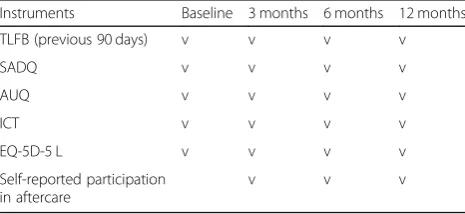
All instruments will be administered by research assis-tants in face-to-face assessments with participants. These assessments will take place at a convenient loca-tion for each participant, including their home. Research assistants (RA) will be fully trained to administer all out-come measures (see Table1below).
Randomisation and masking
Once consented, participants will be randomised using a third-party web-based randomisation system which will ensure concealed allocation. Participants will be strati-fied according to the number of previous detoxifications (> 2 vs≤2) and site. Randomisation will have a random block size [2–4]. Research assistants will be blind to the randomisation of the opposite study site and will con-duct those follow-up interviews. Any breach in blinding/ unmasking, a common problem with single-blind trials, will be monitored by asking the research assistants to re-port any such incident, to ensure that the research assis-tants are not aware, as far as possible, to which group the individual was allocated in the opposing study site.
Treatment fidelity
Twenty-five percent of the intervention sessions, offered across both recruitment sites, during the whole duration of the study recruitment and treatment stage, will be ob-served and rated using the Yale Adherence and Compe-tence Scale (YACS II) (2005) [27]. This is a validated instrument measuring the use of CBT techniques. The tool can be adapted to the focus of the therapy under in-vestigation. Furthermore, 10% of the sessions will be ob-served and rated by an additional independent rater using YACS II. Group facilitators will complete a self-assessment form following each session to reflect on their fidelity to the intervention manual.
Table 1The use of instruments at different time points
Instruments Baseline 3 months 6 months 12 months
TLFB (previous 90 days) v v v v
SADQ v v v v
AUQ v v v v
ICT v v v v
EQ-5D-5 L v v v v
Self-reported participation in aftercare
Twenty-five percent of the key-working sessions of-fered to the control group will be audio recorded and be rated to assess possible contamination between the study arms using a specifically developed form based on YACS II items as well as the main objectives of the SPADe group intervention. Ten percent of those sessions will also be independently rated.
Statistical analysis
The main analysis will be based on the intention-to-treat principle considering all randomised clients according to the arm they were allocated. As the trial is a feasibility study, the main analysis is to be descriptive and estimate the potential effect sizes and parameters required for the sample size cal-culation, rather than formal hypothesis testing.
The feasibility outcomes will be summarised using de-scriptive statistics where appropriate. The potential pri-mary and secondary outcomes will be summarised by arm, as well as completion rates estimated for each out-come measure. Duration of continuous abstinence, as measured from randomisation, and the time to relapse, as measured from the end of the intervention, will be analysed using a Kaplan-Meier curve and log-rank test. The percentage of days of abstinence (PDA) will be ana-lysed using a regression model. Formal hypothesis tests and confidence intervals will be conducted although due to the nature of this trial, they will be treated cautiously and the main focus will be on the completion rate of outcomes and the estimation of parameters required for a sample size calculation for the main trial.
Economic evaluation and analysis
The economic evaluation that will run alongside the fu-ture trial will assess the cost-effectiveness of the SPADe intervention, compared to usual care, from the NHS and wider public service perspective. Economic evaluation is required in the feasibility study to inform decisions about how costs and outcomes would be measured in any future definitive trial.
The feasibility study will seek to gain an understanding of the main resource items for which comprehensive data collection would be required in the main trial. The resources involved in delivering the intervention will be collected from providers and will cover human re-sources, facilities, materials and overheads, so that full economic costs and average costs per participant can be calculated. Usual care (received by both arms) may vary. Hence, data on care provided will be collected on an in-dividual client basis from clinic records so that variabil-ity can be explored both within and between groups.
Alcohol dependence can give rise to significant use of health, social and criminal justice services. The cost of implementing SPADe may be offset if it results in
in-creased numbers of successful detoxifications and
consequent reductions in alcohol-related utilisation of these services. To capture this possible effect, data on ser-vice utilisation will be gathered retrospectively from par-ticipants at 3-, 6- and 12-month assessments by self-report. The Client Service Receipt Inventory, custo-mised in collaboration with service users, will be used for this purpose. Included items will cover GP, mental health services, specialist alcohol services, A&E attendance, in-patient stays and contact with social and criminal justice services. Items of service use will be converted to costs (British pounds, 2017) using nationally validated sources [28, 29] and national reference costs for secondary care ( https://www.gov.uk/government/publications/nhs-refer-ence-costs-2012-to-2013). Service use data will be ana-lysed descriptively to assess validity.
The feasibility study will also explore the properties of the alternative primary outcomes to assess their value as measures of effectiveness for the full economic evaluation. The health-related quality of life outcome for the eco-nomic evaluation will be EQ-5D-5 L, measured at each as-sessment point, from which a standardised unit of measurement—the quality-adjusted life year (QALY)—can be obtained. A preliminary cost-effectiveness analysis will be undertaken to determine the likely advantage of con-ducting a full economic evaluation. Total and per partici-pant costs will be compared between groups to assess whether overall there are cost savings associated with the SPADe intervention, compared to usual care, and how these compare with client outcomes.
Stage 3—qualitative study
Aim
The qualitative study seeks to understand the experi-ences of the feasibility trial participants. Although we are interested in individual interpretations of experi-ences, recognising that there are many views on the world all with equal ‘validity’, a critical realist approach has been chosen as we also seek to uncover practical-ities, understand key events and important aspects
spe-cifically of trial procedures (recruitment and
randomisation, for example, and then specific aspects of either the intervention or of treatment as usual), from the perspectives of individuals involved in the study, that may inform our approach for a definitive trial.
Method
Sampling
A purposive sample of participants across both trial groups and areas (approximately n= 20) will be inter-viewed at 3 months to establish experiences of random-isation, recruitment and initial trial procedures. These early interviews (wave 1) will select participants by accessing demographic details and purposefully selecting individuals across a range of variables, including age, employment status, length of time in treatment, and se-verity of dependence; aiming for maximum variation in the sample. Further variables may be selected for de-pending on the specific features of individuals recruited to the study and in consultation with the project steering group (including PPI input). Follow-up participant inter-views with the same interviewees will be undertaken at 9 months (completion of the study, wave 2) to give spe-cific feedback on retention issues and treatment condi-tions (specifically in relation to the control condition or receiving the intervention).
Data collection
Interview guides will be developed in consultation with PPI representatives and following piloting, to capture the range of possible views, but will be flexibly employed to allow par-ticipants to discuss experiences and opinions in a way that is meaningful to them. Thus, although interviews are semi-structured and focused very much on trial procedures to inform a future definitive study, we will also consider the lens of individual experience and understanding in the in-terpretation of our findings. Qualitative interviews will be undertaken by the study RA, who will be trained in qualita-tive interviewing techniques. Qualitaqualita-tive interviews will be undertaken at treatment premises and timed to coincide with appointments, where possible, to minimise inconveni-ence to the participant. All interviews will be audio re-corded following informed consent. A £10 shopping voucher will be offered to participants as compensation for their time commitment per interview they attend (total of two vouchers). All interviews will be transcribed verbatim, at which stage transcripts will be fully anonymised. Identify-ing participant details for follow-up (wave 2) interviews will be stored on password-protected encrypted computers, ac-cessible only to members of the study team. Anonymised transcripts will be password-protected, stored separately, and will be archived for potential secondary analysis at later date. Archived transcripts will be kept in fully anonymised form, conforming to data archiving procedures such as those of the ESRC UK data archive.
Triangulation
A selected sample of carers and staff involved with the intervention will be interviewed on study completion. We anticipate that 5–6 carer interviews and 5–6 staff inter-views will be sufficient to inform our aim of informing
study procedures and will add to perspectives of partici-pant experience. Carers and staff will not receive any monetary compensation for participating in the study. Thus, these other views will help us to triangulate the qualitative data and offer a range of different perspectives that may be useful for meeting our feasibility aims. For ex-ample, staff may usefully offer practical service-based rec-ommendations for future trial procedures. Carers will offer a unique perspective on how participants experience the intervention which may give an alternative view for our consideration. The topic guides for these carer and staff interviews will be finalised following completion of the participant data collection, in order that emergent analysis can shape areas for further discussion with staff and carers. Contextual factors will be included such as staff descriptions and perceptions of service delivery (local level contextual factors). Relevant local and national policy will be monitored for the study duration (macro-level con-textual factors).
Analysis
Qualitative analysis will thematically compare key expe-riences between trial groups ( https://www.gov.uk/gov-ernment/publications/nhs-reference-costs-2012-to-2013) and consider staff experiences across trial areas. Analysis will be discussed at regular meetings to develop the the-matic coding scheme and will utilise service user per-spectives in reaching consensus. Analysis will be led by one study RA and supervised by CN, who will undertake independent coding to triangulate perspectives and en-sure that interpretations are reliable and valid. We con-sider that our proposed sample size of 20 participants will be adequate to meet project aims and to achieve
‘saturation’of coding in terms of the range of likely ex-periences and views. However, we will continue to sam-ple in an iterative manner should our emergent analysis suggest that saturation is not yet reached. Final analysis will offer in-depth qualitative explanation of the quanti-tative study findings. Qualiquanti-tative analysis findings will therefore inform feasibility questions considered by the trial steering group and enable a thorough evaluation of the process of the feasibility study in order to proceed to a definitive study.
Ethical and research and development reviews
a non-invasive intervention, we do not anticipate any ad-verse events, but we will follow safety reporting guidance issued by the National Research Ethics Service (UK) for studies except clinical trials of investigational medicinal products. The study has been approved by the research and development (R&D) departments of the relevant recruiting sites.
Patients and public involvement
The first PPI event was organised in 2014. Advice had been sought from three service users who had com-pleted the groups and another service user who did not. Suggestions included being able to ‘write things down’ and keep in a group work ‘folder’as well as preference for face-to-face research assessments. Feeding back re-sults to service users via service user reps, newsletters, and peer mentors and on the electronic screen display in service waiting rooms was also requested and imple-mented. The concept of randomisation was met with en-thusiasm by service users and it was felt that people would be happy to participate in the study. All sugges-tions were incorporated in the study protocol and dis-semination plans. There were two discussion groups with staff at two treatment centres where the need for research outcomes and the practicalities of running trials was met with eagerness by staff.
A second PPI event took place in 2015 at the service users’forum where the feasibility study design was dis-cussed. Suggestions were made about the provision of written information about the group, the importance of rules for acceptable behaviour during the group sessions, the maximum number of sessions and participants and the aftercare planning as part of preparation. One ser-vice user expressed interest in being a collaborator in the study, and he became part of our study steering committee. Following the PPI event, existing informa-tion about the group was reviewed, modified and ap-proved by the service users’forum.
Discussion
The SPADe trial builds on previous work completed by the authors, which has shown that a structured prepar-ation approach prior to alcohol detoxificprepar-ation can im-prove overall capacity of the treatment pathway by increasing patients’ engagement and by reducing drop-out rates from detoxification [6, 15]. Two open studies indicated that the intervention improves outcomes (con-tinuous abstinence) at 3 [15] and 6 months [16]. A quali-tative study with service users who have completed the intervention [17] and a process study [33] have indicated that the theory-based intervention works as expected and predicted by the underpinning theory.
This feasibility trial will help us to answer questions of acceptability of the intervention by wider group of service
users, carers and service providers. It will provide evidence on implementation issues such as the training, supervision and overall support required to implement the interven-tion. In more detail will enable us to do the following:
1. Measure the number of eligible participants and those not, willingness of clinicians to recruit participants, recruitment rate, loss to follow-up, ad-herence to the intervention and standard deviation of the primary outcome measures. This will ultim-ately inform the sample size calculation for a multi-centre clinical trial.
2. Determine the acceptability of randomisation to service users, through its effect on recruitment, dropout rates and via qualitative interviews. 3. Determine, through response rates to
questionnaires, the appropriateness and the acceptability of the outcome measures to service users, in order to explore the suitability of our chosen secondary outcome measures, that is, percentage of days of abstinent, service use and health-related quality of life.
4. Estimate the time needed to collect and analyse baseline and outcome data
5. Explore the utility of the health-related quality of life instrument (EQ-5D-5 L) (see the‘Outcome measures’section) in allowing the estimation of quality-adjusted life years in the sample.
The development of the intervention manual, fidelity checks (standardised measures and self-reflection tools scored by two assessors, one an independent) and quality monitoring of the TAU key-working sessions are consist-ent with the recommendations of the Treatmconsist-ent Fidelity Workgroup of the NIH Behaviour Change Consortium [34]. This group recommended five broad areas in which fidelity could be enhanced during clinical trials: study de-sign, training of treatment providers, delivery of treatment, receipt of treatment and enactment of treatment skills. Specific suggestions to avoid threats to fidelity included the following: development of a treatment manual that in-cludes information about treatment dose (length and number of contacts) and specific content of each contact, standardisation of therapist training, monitoring the inter-vention with fidelity checklists and inclusion of strategies to measure the recipient’s comprehension and enactment of the intervention principles addressed.
the collection of data regarding aftercare treatment en-gagement will provide further evidence on the potential positive role of our structured preparation in aftercare participation and the associated exposure to the psycho-social treatment ingredients recommended by current treatment guidelines.
Trial status
At the time of the manuscript submission, the trial has started recruitment of participants. At the time of manu-script acceptance, recruitment was completed (June 2018).
Abbreviations
A&E:Accident and emergency department; AA: Alcoholics Anonymous; AUD: Alcohol use disorders; AUQ: Alcohol Urge Questionnaire; CBT: Cognitive behaviour therapy; HRA: Health Research Authority; ICT: Incentive conflict task; MRC: Medical Research Council; NHS: National Health Service; PDA: Percentage of days abstinent; PPI: Patient and public involvement; PRIME: Plans, Responses, Impulses, Motives, Evaluations; RA: Research assistant; RCT: Randomised controlled trial; REC: Research Ethics Committee; SADQ: Severity of Alcohol Dependence Questionnaire; SMART: Self-Management and Recovery Training; SPADe: Structured Preparation for Alcohol Detoxification; TAU: Treatment as usual; TLFB: Timeline Followback method; YACS: Yale Adherence and Competence Scale
Acknowledgements
We thank the service users’representatives participating in this study. We thank the study sponsor Surrey and Borders Partnership NHS Foundation Trust, the Camden and Islington NHS Foundation Trust, collaborating researcher assistant and therapists and members of the Steering Committees. The views expressed are those of the author(s) and not necessarily those of the UK National Health System, the NIHR or the Department of Health.
Funding
This study is supported by the UK National Institute for Health Research (NIHR) under its Research for Patient Benefit (RfPB) Programme (grant reference number PB-PG-0815-20014). The funder of the study had no role in study design, data collection, data analysis, data interpretation, or writing of the report. The authors had full access to all the data in the study and had final responsibility for the decision to submit for publication.
Availability of data and materials
The datasets generated and/or analysed during the current study are available from the corresponding author on reasonable request.
Authors’contributions
CK has overall management of the research project, developed the intervention manual, will supervise the therapists and will contribute to all outputs such as papers in conference and journals. He has contributed to the writing of the current paper. BH is a research assistant on the project, conducts the assessments and interviews with participants and carers and has contributed to the paper content and its preparation for submission. HG is the lead for the health economics part of the project and will oversee the analysis of those data. CN is the lead for the qualitative study. She will train the service users and research assistants for the qualitative interviews and will supervise the analysis of the data. VM is the overall project manager. She is responsible for the coordination of study recruitment across sites, the supervision and support of the research assistants. AC is the project statistician. He is responsible for all statistical aspects including randomisation and analysis of quantitative data. RH and ALH contributed into the methodological aspects of the project and will participate in data analysis and dissemination of the findings. BP is responsible for coordination of recruitment from one of the participating services. TD is responsible for the training and appropriate use of the ICT. All authors read and approved the final manuscript.
Authors’information
CK is a consultant psychiatrist in addictions; his PhD is on psychological interventions in substance misuse. BH is a research assistant. HG is a professor of health economics. CN is a senior lecturer in mental health and a research fellow of the Society for the Study of Addiction. VM is a research fellow and senior programme co-ordinator. AC is a senior lecturer in statistics. RH is head of the Leicester Medical School and a professor of Public Health Medicine. ALH is a professor in psychiatry, chair of addiction Biology and consultant psychiatrist in addictions. BP is a consultant psychiatrist in addictions. TD is a professor in experimental psychology.
Ethics approval and consent to participate
The study was approved by the HRA REC (IRAS ID:213086) for all participating centres. All participants gave written consent to participate in the study.
Consent for publication
Not applicable
Competing interests
The authors declare that they have no competing interests.
Publisher’s Note
Springer Nature remains neutral with regard to jurisdictional claims in published maps and institutional affiliations.
Author details
1Research and Development, Abraham Cowley Unit, Surrey and Borders NHS Foundation Trust, Surrey, Chertsey KT16 0AE, UK.2University of Surrey, 388 Stag Hill, Guildford GU2 7XH, UK.3Norwich Medical School, University of East Anglia, Norwich Research Park, Norwich NR4 7TJ, UK.4University of East Anglia, Norwich Research Park, Norwich NR4 7TJ, UK.5University of Leicester, University Road, Leicester LE1 7RH, UK.6Imperial College London, Burlington Danes Building, Hammersmith Campus, 160, Du Cane Road, London W12 0NN, UK.7Camden and Islington NHS Foundation Trust, St Pancras Hospital, 4 St Pancras Way, Kings Cross, London NW1 0PE, UK.8University of Sussex, Falmer, Brighton BN1 9RH, UK.
Received: 15 February 2018 Accepted: 9 April 2019
References
1. Peacock A, Leung J, Larney S, Colledge S, Hickman M, Rehm J, Giovino GA, West R, Hall W, Griffiths P, Ali R, Gowing L, Marsden J, Ferrari AJ, Grebely J, Farrell M, Degenhardt L. Global statisitcs on alcohol, tobacco and illicit drug use: 2017 status report. Addiction. 2018;113:1905–26.
2. England Public Health. Alcohol treatment in England 2013–14 2014. 3. Public Health England. Alcohol and drug treatment in England: the picture
from the 2016–17 data. 2017.
4. Alcohol use disorders: diagnosis, assessment and management of harmful drinking and alcohol dependence. London: NICE, 2010.
5. Alexander PK, Roebuck MC, French MT, Chitwood DD, McCoy CB. Problem drinking, health services utilization, and the cost of medical care. Recent Dev Alcohol. 2001;15:285–98.
6. Noel X, Van der Linden M, Schmidt N. Supervisory attentional system in non-amnesic alcoholic men. Arch Gen Psychiat. 2001;58:1152–8. 7. Kouimtsidis C, Drable K, Ford L. Implementation and evaluation of a three
stages community treatment programme for alcohol dependence. A short report. Drugs. 2012;19(1):81–3.
8. Duka T, Townshend JM, Collier K, Stephens DN. Impairment in cognitive functions after multiple detoxifications in alcoholic inpatients. Alcohol Clin Exp Res. 2003;27(10):1563–72.
9. Loeber S, Duka T, Welzel H, Nakovics H, Heinz A, Flor H, et al. Impairment of cognitive abilities and decision making after chronic use of alcohol: the impact of multiple detoxifications. Alcohol Alcohol. 2009;44(4):372–81. 10. Duka T, Trick L, Nikolaou K, Gray MA, Kempton MJ, Williams H, et al. Unique
brain areas associated with abstinence control are damaged in multiply detoxified alcoholics. Biol Psychiatry. 2011;70(6):545–52.
impairment under abstinence and rate of relapse. Alcohol Alcohol. 2010; 45(6):541–7.
12. Duka T, Townshend JM, Collier K, Stephens DN. Kindling of withdrawal: a study of craving and anxiety after multiple detoxifications in alcoholic inpatients. Alcohol Clin Exp Res. 2002;26(6):785–95.
13. Bieling P, McCabe RE, Antony MM. Cognitive-behavioral therapy in groups. New York: Guilford Press; 2006.
14. Raistrick D, Heather N, Godfrey C. Review of the effectiveness of treatment for alcohol problems. London: National Treatment Agency for Substance Misuse; 2006.
15. Kouimtsidis C, Ford L. A staged programme approach for alcohol dependence: cognitive behaviour therapy groups for detoxification preparation and aftercare; preliminary findings. Drugs. 2011;18(3):237–9. 16. Kouimtsidis C, Sharma E, Smith A, Charge KJ. Structured intervention to prepare dependent drinkers to achieve abstinence; results from a cohort evaluation for six months post detoxification. J Subst Abus. 2015.https:// doi.org/10.3109/14659891.2015.1029020.
17. Croxford A, Notley C, Maskrey V, Holland R, Kouimtsidis C. An exploratory qualitative study seeking participant views evaluating group cognitive behavioural therapy group preparation for alcohol detoxification. J Subst Abus. 2015;20(1):61–8.
18. West R. Theory of addiction. London: Blackwell Publishing; 2006. 19. Bandura A. Self-efficacy in changing societies. London: Cambridge
University Press; 1995.
20. Koob GF, leMoal M. Drug abuse: hedonic homeostatic dysregulation. Science. 1997;278:52–8.
21. Sobell LC, Sobell MB. Timeline follow-back: a technique for assessing self-reported ethanol consumption. In: Allen J, Litten RZ, editors. Measuring alcohol consumption: psychosocial and biological methods. Totowa: Humana Press; 1992. p. 41–72.
22. Craig P, Dieppe P, Macintyre S, Michie S, et al. Developing and evaluating complex interventions: the new Medical Research Council guidance. Br Med J. 2008;337:a1655.
23. Stockwell T, Murphy D, Hodgson R. The severity of alcohol dependence questionnaire: its use, reliability and validity. Br J Addict. 1983;78:145–55. 24. Bohn M, Krahn DD, Stachler BA. Development and initial validation of a
measure of drinking urges in abstinent alcoholics. Alcohol Clin Exp Res. 1995;19:600–6.
25. Duka T, Stephens DN. Repeated detoxification of alcohol-dependent patients impairs brain mechanisms of behavioural control important in resisting relapse. Curr Addict Rep. 2014;1:1–9.https://doi.org/10.1007/ s40429-013-0009-0.
26. EQ-5D-5 L User Guide. Basic information on how to use the EQ-5D-5 L instrument.https://euroqol.org/eq-5d-instruments/eq-5d--5l-about/. Accessed 4 July 2017.
27. Nuro KF, Maccarelli L, Baker SM, Martino S, Rounsaville BJ, Carroll KM. Yale Adherence and Competence Scale (YACS-II) guidelines. West Haven: Yale University Psychotherapy Development Center. Substance Abuse Center; 2005. 28. Chisholm D, Knudsen HC, Amaddeo F, Gaite L, van Wijngaarden B, Epsilon
study group. Client sociodemographic and service receipt inventory -European version : development of an instrument for international research. Br J Psychiatry 2000; 177: s28-s33. doi:https://doi.org/10.1192/bjp.177.39.s28. 29. Curtis L. Unit costs of health and social care 2017.www.pssru.ac.uk
30. Braun V, Clarke V. Using thematic analysis in psychology. Qual Res Psychol. 2006; 3(2):77–101 ISSN 1478-0887. Available from:http://eprints.uwe.ac.uk/11735. 31. Notley C, Christopher R, Hodgekins J, Byrne R, French P, Fowler D.
Participant views on involvement in a trial of social recovery cognitive– behavioural therapy. Br J Psychiatry. 2015;206(2):122 7.https://doi.org/10. 1192/bjp.bp.114.146472.
32. Mental Capacity Act 2005.http://www.mentalhealthlaw.co.uk/Mental Capacity Act 2005. 2014. Accessed 4 July 2017.
33. Kouimtsidis C, Charge KJ, Moch JP, Stahl D. Abstinence preparation group intervention for dependent alcohol users. How does it work? Results of a process study. J Subst Abus. 2017;22(2):149–55.https://doi.org/10.3109/ 14659891.2016.1153164.