INTRODUCTION
In the next 40 years, the world population will double and consequently, the capacity to treat the volume of wastewater according to the population increase will barely meet the demand; this would cause the waste to be discharged without known control to ecosystems. Municipal wastewater contains pathogenic bacteria, protozoa, viruses, and parasites, as well as oils, fats, detergents, soaps, nutrients, salts, and particles of hair, food, and paper. The treatment of municipal wastewater accounts for the worldwide production of approx. 48 million dry tons of sewage sludge, and its dis-posal has become an environmental problem be-cause of the pathogenic risks (Fytili and Zabaniot-ou, 2008; Krüger et al., 2014; Li et al., 2007; Mu et al., 2016; Snowden-Swan et al., 2016; Wang et al., 2008a; Wei et al., 2003; Zahan et al., 2016). A typical drawback of the wastewater treatment system is the high-energy cost in the context of
energy efficiency, carbon footprint, and recy-cling. Sludge treatment and its disposal account for up to 60% of the total operating costs, and the elimination of harmful pathogens and a new kind of contaminant, namely, emerging pollutants constitutes a critical step (Barrios et al. 2015; De Vrieze et al., 2016; Jenicek et al., 2012; Lewis et al., 1999; Ruffino et al., 2015; Wang et al., 2008b; Weemaes and Verstraete, 1998; Ye et al., 2014). Biological sewage sludge is mainly composed of organic matter (approx. 59–88%) from scum or the solids removed in wastewater treatment (Tchobanoglous et al., 2013). Sewage comes from human excreta and is a mixture of fats, proteins, carbohydrates, lignin, amino acids, sugars, cel-lulose, humic material, fatty acids, non-essential trace metals and organic micropollutants, which can be decomposed and produce offensive odors (Environmental Protection Agency, 1994; Kinney et al., 2006; Rogers, 1996; Singh and Agrawal, 2008; Weemaes and Verstraete, 1998).
Published: 2018.09.01 Volume 19, Issue 5, September 2018, pages 76–85
https://doi.org/10.12911/22998993/91272
Gravimetric Evolution During Sewage Sludge Biostabilization
Paola Posligua
1,2,3, Michelle Peñaherrera
1, Elvito Villegas
2, Carlos Banchón
41 Universidad de Las Américas (UDLA), Faculty of Engineering and Agrarian Sciences, Environmental
Engineering, Av. de los Granados and José Queri, 59302, Quito, Ecuador
2 Universidad Nacional Mayor de San Marcos (UNMSM), 07001, Lima, Perú
3 Instituto Antártico Ecuatoriano (INAE), 59316, 9 de Octubre y Chile, Guayaquil, Ecuador
4 Universidad Agraria del Ecuador (UAE), Environmental Engineering School, Faculty of Agrarian Sciences,
Av. 25 de Julio and P. Jaramillo, 59304, Guayaquil, Ecuador * Corresponding author’s e-mail: [email protected]
ABSTRACT
Sewage sludge is a by-product in the wastewater treatment and is an inherent hazardous issue because of the pathogenic contamination of natural resources. Therefore, in this study, domestic sludge was treated with pre-montane forest soil, macronutrients, and also pasteurization to reduce the content of volatile solids and patho-gens. The best biostabilization treatment using premontane forest soil and pasteurization obtained a volatile solids reduction of 87% according to the environmental regulations, in which a biosolid is stable in a range of 38% of volatile solids reduction. In less than 30 days in a mesophilic range, the coliform count was reduced up to 71% when using forest soil and pasteurization. Thus, a biosolid-class B was obtained using gravimetric means as a platform to promote fast quality control.
Journal of Ecological Engineering Vol. 19(5), 2018
In 1991, the term biosolid was adopted to ap-ply to all sedimentary sludge in which mesophilic or thermophilic digestion diminishes odors, or-ganic matter, and pathogenic risk under anaero-bic conditions, which also generates bioenergy (Bright and Healey, 2003; Cain, 2010; Carrère et al., 2010; Snowden-Swan et al., 2016; Zahan et al., 2016). Biosolids have been recognized as a useful soil amendment and source of nitrogen, phosphorus, organic matter, and other nutrients, which can enhance the physical properties of soil as well as plant growth (Kinney et al., 2006); moreover, biosolids contain a good deal of en-ergy at approx. 11,400 BTU per dry pound (Mu et al., 2016). Among Canada, the US, and European countries, 53 percent of biosolids are used in agri-culture directly or after composting, totaling more than 2.39 milliondry tons per year yield (Kinney et al., 2006; Stasinakis, 2012; Wang et al., 2007). However, biosolids are not completely secure for land application due to offensive odors and toxic elements, e.g., heavy metals and persistent organ-ic pollutants, found in the sewage sludge (Hale et al., 2001; Krach et al., 2008; Lewis et al., 2002; Wei et al., 2003). A total of 87 synthetic organ-ic chemorgan-icals were found in biosolids, including chemicals like polychlorinated biphenyls (PCBs), pharmaceuticals such as triclosan (antimicrobial disinfectant), tonalide (a musk fragrance), di-phenhydramine (antihistamine), carbamazepine (an antiepileptic drug), and heavy metals like As, Cd, Cr, Pb, Hg, Ni, and Se (Barrios et al., 2015; Cain, 2010; Egan, 2013; Mulla et al., 2016; Ven-katesan and Halden, 2014). Biosolids also carry high densities of enteric viruses, helminth eggs, and Salmonella spp., which pose risks to the hu-man health (Barrios et al., 2015; Gerba et al., 2011; Oron et al., 2014). Given that a stabilization process should be performed with high-quality standards to prevent the human health risks, the principal contributions in the present study are:
• An anaerobic process to stabilize sewage sludge using pre-treatments under different conditions like the addition of premontane for-est soil under differing nutritional conditions and pasteurization.
• A thermogravimetric technique to monitor sludge stabilization.
In the pursuit of testing the hypothesis, we found out that the interactions between the biologi-cal, thermal, and salinity treatments influence the
change of total and volatile solids, namely a gravi-metric evolution of a biostabilization process.
MATERIALS AND METHODS
Biostabilization process
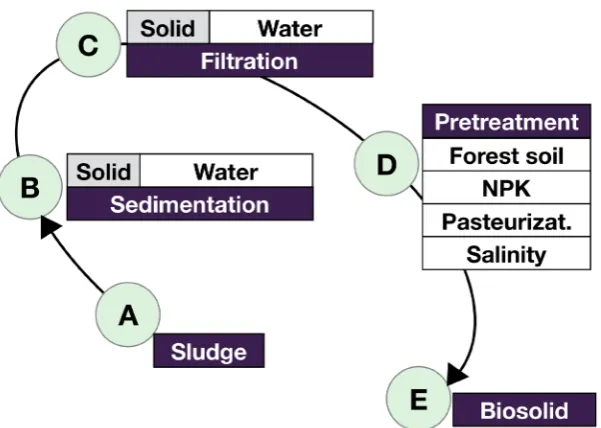
Residual sludge was collected from the sec-ondary settler tank of a municipal wastewater treatment plant located in Quito (Ecuador). The residual sludge (A) was thickened by sedimen-tation (B) with a sedimensedimen-tation column (2 m in length and 30 cm in diameter). Afterwards, the resulting sludge was filtered with cellulose pads (C) and then pre-treated under different condi-tions (D). The following pre-treatments were made before the anaerobic digestion: (T1) 0.6 kg of soil from a premontane secondary forest was added per each kg of sludge; (T2) again, 0.6 kg of soil from a premontane forest was added per each kg of sludge, and also, a 0.1% nutrient solu-tion of 10% N, 40% P and 10% K (Merck, USA) was added twice daily for 30 days; (T3) the sludge was pasteurized in an oven (Wiseven 165, USA) at 70°C for 30 minutes; (T4) a 0.1% nutrient solu-tion was added every morning, and a 1.0% NaCl solution (Merck, USA) was added at night for 30 days. After pre-treatment, anaerobic digestion was performed in a sealed 1000 mL Erlenmeyer flask (E). The flasks were thermally insulated and were slowly mixed twice a day for 30 days. At the end of the process, the biosolid was sundried (Figure 1).
Analysis
The temperature and pH were measured three times a day using a soil multiparameter tester (HANNA HI 99121, USA). Total solids (ST) and volatile solids content (SV) were determined at 105°C and 550°C, respectively, using ASTM methods. Arsenic, cadmium, mercury, and lead were quantified by atomic absorption according to APHA standard methods. The biological activ-ity of the sludge was measured using OxiTop®
RESULTS AND DISCUSSION
Effect on pH and temperature
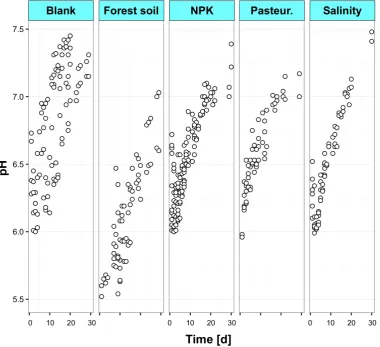
Different treatment conditions using pre-montane forest soil, NPK, NaCl, and pasteuriza-tion changed pH from 6.0–6.5 to 7.0–7.5 during 30 days of biostabilization, as indicated in Figure 2. According to the results, pH changes due to the microbial decarboxylation of organic anions, heterocyclic compounds, and volatile fatty acids, suggesting that stability was reached (Wu, Ma, and Martinez, 2000; Yuan and Zhu, 2016). Nor-mally, the first days in the anaerobic digestion are the rate-limiting step because of the hydrolysis of insoluble organic matter into a soluble form, which influences the further stabilization kinet-ics (Eastman and Ferguson, 1981; Parkin et al., 1986). The addition of forest soil, NPK, and NaCl boosted the release of microbial exoenzymes to cleave macromolecules like triglycerides, di-glycerides, and fatty acids (Harris and McCabe, 2015). Thus, the more carbon is solubilized, the faster the stabilization process. Therefore, pre-treatments focused on hydrolysis maximize the degradation rate until mineralization of organic matter occurred. A drop in pH shows an increase of volatile fatty acids as acetic acid or propionic acid, which could be a problem in the stabiliza-tion process (Ahring et al., 1995; Amani et al., 2010; Berktay and Nas, 2007; Carrère et al., 2010; Harris and McCabe, 2015). In our case, the acid phase lasted for about 15 days, which is an indicator of hydrolysis without interruption of the
high fatty acid concentrations or non-biodegrad-able (refractory) components. At the end of the process (Fig. 2), the pH was 7.0–7.5 due to the microbial ammonification when ammonium com-pounds are nitrified to nitrate (Cofie et al., 2016).
Journal of Ecological Engineering Vol. 19(5), 2018
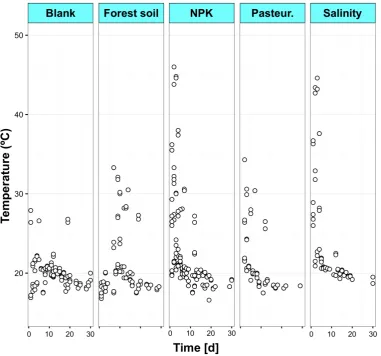
ing the first few days, which favored the growth of fungi and actinomycetes. However, afterwards, a neutral pH and a temperature close to ambient temperature (20°C) were obtained. Together, pH and temperature progressively interacted due to high microbial activity during a solid residence time (SRT) of 30 days at 20–45°C. Thus, SRT and the mesophilic range in our biostabilization pro-cess performed according to the EPA regulations for biosolids under class B (Mustafa et al., 2014).
Gravimetric evolution
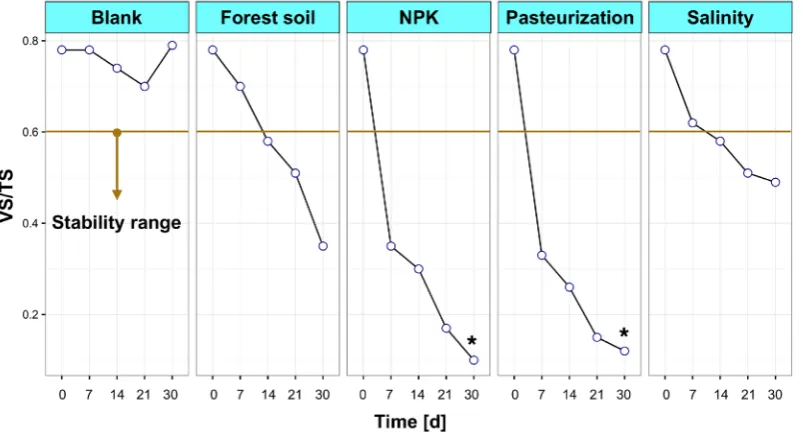
One method to evaluate biostabilization is to measure the change in total solids (TS) and volatile solids (VS), which is herein recognized as gravimetric evolution. Over a period of 30 days, the content of TS and VS changed dramati-cally, and showed tendencies that demonstrated biostabilization (Fig. 4). The content of organic matter is virtually represented by VS, and its reduction is due to the microbial mineraliza-tion and the conversion of organic matter into
humic substances (Gómez et al., 2005; Otero et al., 2002). The measurement of volatile solids destruction is an indicator of the mineralization degree of organic carbon to mineral forms like CO2 or CH4 (Ahring et al., 1995; Bernal et al., 1998). According to VS destruction, the USEPA uses the value of 38% reduction in the threshold for considering the sludge to be stabilized (En-vironmental Protection Agency, 1994; Oleszkie-wicz and Mavinic, 2002). In Figure 4, the VS/ TS relationship is presented. Due to the low min-eralization rate of the organic nitrogen found in sludge, enrichment with minerals like nitrogen, phosphorous, potassium and bacterial inoculant (forest soil) enhances the microbial activity and further organic matter degradation (Cofie et al., 2016). Our results confirm that nutrients, forest soil, thermal treatment, and even salinity are the enhancers of VS reduction (Bhattacharya et al., 1996; Ruffino et al., 2015).
above 11.4% VS reduction. The forest soil, as a pre-digestion treatment, reduced 55.7% VS/TS because the more diverse the microbes, the faster digestion occurs. The pre-treatment that used for-est soil and NPK nutrients, altogether reduced by 87.3% the VS/TS content. An optimal pre-treat-ment was also using pasteurization, in which an 87.2% VS/TS reduction was obtained. The pre-treatment with NaCl destroyed the VS content just by 36.7%; in this case, NaCl inhibited the microbial growth.
According to the results shown in Figure 5, a first order kinetic was obtained in two pre-treat-ments (Bernal et al., 1998). Forest soil enhanced a first order kinetic (k = 0.02930, R2 = 0.9312,
p < 0.05), as well as NPK (k = 0.064, R2 = 0.9706,
p < 0.05). On the other hand, a second order ki-netic was observed in the pre-treatments using pasteurization (k = 0.2390, R2 = 0.9833, p < 0.05)
and salinity (k = 0.0262, R2 = 0.9486, p < 0.05).
Thus, faster kinetics reduces the size of the reac-tor and decreases hydraulic retention time (HRT) (Carrère et al., 2010).
According to the literature, the mesophilic di-gestion requires over a 20-day retention time, and it is not as efficient as the thermophilic process (Rulkens, 2008; Song et al., 2004). However, in the present work, the change of VS/TS in pre-treat-ments using forest soil, NPK, and pasteurization was up to 87%, which shows that mesophilic diges-tion can be optimal as the thermophilic counterpart.
Heavy metals
Table 1 shows the reduction in the heavy met-al content through the biostabilization process in comparison with the EPA permissible limits. Ac-Figure 3. Effect of different biostabilization pre-treatments on temperature during 30 days
Table 1. Chemical characterization before and after the biostabilization process
Parameter (mg/kg)Sludge Biosolid (mg/kg) EPA (mg/kg)
As 0.170 0.010 41
Cd 0.110 0.025 85
Hg 0.002 0.001 57
Journal of Ecological Engineering Vol. 19(5), 2018
cording to the results, the order of metal content at the end of biostabilization was Pb > Cd > As > Hg. The concentrations of Pb, Cd, As, and Hg decreased by 94.1%, 77.3%, 50%, and 80.8%, re-spectively. The reduction of the total concentra-tions of heavy metals in biosolids is significant due to dilution during the mixing process with forest soil; therefore, the concentrations are under the EPA regulation limits. However, the bioavail-ability and toxicity of heavy metals in the sludge
Figure 4. Change in TS and VS (%) during 30 days
Figure 5. Gravimetric evolution (VS/TS) at different pre-treatments during 30 days
depend on their chemical forms and pH, which in consequence will precipitate with carbonate min-erals, complexes and organic ligands at basic pH (Dong et al., 2013).
Pathogen removal
activity (Figure 6). After the VS destruction, the CO2 production rate should decrease, along with the pathogen removal (Wu et al., 2000). Both di-gestion and coliform reduction were examined to test which treatment was the most efficient way to stabilize sludge through pathogen reduction. The colony-forming units (CFU) per mL were 31700, 26550, 9650, 9150, 28500, and 13700 for blank, forest soil, NPK, pasteurization, and
salin-ity treatments, respectively. According to the re-sults, the order of coliform reduction at the end of biostabilization was NPK > forest soil > salinity > blank > pasteurization, and the removal of co-liforms was reduced by 71%, 70%, 56%, 16.2%, and 10%, respectively. In the present case, the best pre-treatment utilized NPK and forest soil.
According to the results, our biosolid is clas-sified as class B because the US EPA recom-Figure 6. Digestion of sludge samples after the biostabilization process
Journal of Ecological Engineering Vol. 19(5), 2018
mends a VS reduction by 38% and a mean coli-form density of less than 2 million CFU per gram of biosolids (Environmental Protection Agency, 1994). Although a biosolid might be recognized as freshly processed class B, sewage sludges may pose a significant risk of infection due to the pathogen regrowth, and this is why such biosolids should be managed with great care to public ac-cess (Gattie and Lewis, 2003). In order to adhere to the human health standards, different treatment methods should demonstrate the ability to neu-tralize the pathogen viability.
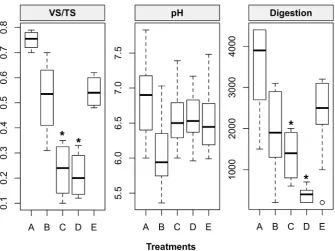
Figure 7 presents the biostabilization results in box plots. The pre-treatments using forest soil as bio-accelerator, NPK and pasteurization stabi-lized sewage sludge up to 87% in VS/TS reduc-tion. All treatments, except the forest soil one, got a pH between 6.5 and 7. No significant benefit was obtained by the NaCl treatment.
CONCLUSIONS
The legal constraints to using sewage sludge in agriculture and further land applications motivate the search for cheaper stabilization processes and therefore avoiding incineration as the final option for sewage disposal. In the present study, the use of the proper combination of nutrition and temperature enhanced the performance of sludge biostabilization. However, to improve the digestion efficiency, a pasteurization process should be conducted at a higher temperature in a shorter time. According to the results obtained in this work, the further research outlook is focused on the high reduction of pathogen count.
Acknowledgment
The authors thank lab specialists Javier Álava and Pavlova Sigcha from UDLA for their assistance in all experiments.
REFERENCES
1. Ahring, B.K., Sandberg, M., and Angelidaki, I. 1995. Volatile fatty acids as indicators of process imbalance in anaerobic digestors. Applied Micro-biology and Biotechnology, 43(3), 559–565. 2. Amani, T., Nosrati, M., and Sreekrishnan, T.R. 2010.
Anaerobic digestion from the viewpoint of micro-biological, chemical, and operational aspects – a review. Environmental Reviews, 18(NA), 255–278.
3. Barrios, J.A., Becerril, E., De León, C., Barrera-Díaz, C. and Jiménez, B. 2015. Electrooxidation treatment for removal of emerging pollutants in wastewater sludge. Fuel, 149, 26–33.
4. Berktay, A., and Nas, B. 2007. Biogas Production and Utilization Potential of Wastewater Treatment Sludge. Energy Sources, Part A: Recovery,
Utiliza-tion, and Environmental Effects, 30(2), 179–188.
https://doi.org/10.1080/00908310600712489 5. Bernal, M.P., Sanchez-Monedero, M.A., Paredes,
C., and Roig, A. 1998. Carbon mineralization from
organic wastes at different composting stages dur -ing their incubation with soil. Agriculture, Ecosys-tems and Environment, 69(3), 175–189.
6. Bhattacharya, S.K., Madura, R.L., Walling, D.A., and Farrell, J.B. 1996. Volatile solids reduction in two-phase and conventional anaerobic sludge di-gestion. Water Research, 30(5), 1041–1048. 7. Braguglia, C.M., Gianico, A., Gallipoli, A., and
Mininni, G. 2015. The impact of sludge pre-treat-ments on mesophilic and thermophilic anaerobic
digestion efficiency: Role of the organic load.
Chemical Engineering Journal, 270, 362–371. 8. Bright, D.A., and Healey, N. 2003.
Contami-nant risks from biosolids land application. Envi-ronmental Pollution, 126(1), 39–49. https://doi. org/10.1016/S0269–7491(03)00148–9
9. Cain, G. D. (2010). Sanitizing Sewage Sludge: The Intersection of Parasitology, Civil Engineering, and Public Health. Journal of Parasitology, 96(6), 1037–1040. https://doi.org/10.1645/GE-2631.1 10. Carrère, H., Dumas, C., Battimelli, A., Batstone,
D.J., Delgenès, J.P., Steyer, J.P., and Ferrer, I. 2010. Pretreatment methods to improve sludge anaerobic degradability: A review. Journal of Hazardous Ma-terials, 183(1–3), 1–15. https://doi.org/10.1016/j. jhazmat.2010.06.129
11. Cofie, O., Nikiema, J., Impraim, R., Adamtey, N.,
Paul, J., and Kone, D. 2016. Co-composting of solid waste and fecal sludge for nutrient and organ-ic matter recovery: Retrieved from https://books.
google.com.ec/books?id=QrukDQAAQBAJ
12. De Vrieze, J., Smet, D., Klok, J., Colsen, J., Angen-ent, L.T., and Vlaeminck, S.E. 2016. Thermophilic sludge digestion improves energy balance and nutrient recovery potential in full-scale municipal wastewater treatment plants. Bioresource Technol-ogy, 218, 1237–1245.
13. Dong, B., Liu, X., Dai, L., and Dai, X. 2013. Changes of heavy metal speciation during high-solid anaerobic digestion of sewage sludge. Biore-source Technology, 131, 152–158.
15. Egan, M. 2013. Biosolids management strategies: an evaluation of energy production as an alterna-tive to land application. Environmental Science and Pollution Research, 20(7), 4299–4310. https:// doi.org/10.1007/s11356–013–1621–1
16. Environmental Protection Agency 1994. A Plain English Guide to the EPA Part 503 Biosolids Rule. Retrieved from https://www.epa.gov/biosolids/ 17. Fernández-Rodríguez, J., Pérez, M., and Romero,
L.I. 2015. Temperature-phased anaerobic diges-tion of Industrial Organic Fracdiges-tion of Municipal Solid Waste: A batch study. Chemical Engineering Journal, 270, 597–604. https://doi.org/10.1016/j. cej.2015.02.060
18. Fytili, D., and Zabaniotou, A. 2008. Utilization of sewage sludge in EU application of old and new methods – A review. Renewable and Sustainable Energy Reviews, 12(1), 116–140. https://doi. org/10.1016/j.rser.2006.05.014
19. Gattie, D.K., and Lewis, D.L. 2003. A High-Level Disinfection Standard for Land-Applied Sewage Sludges (Biosolids). Environmental Health Perspectives, 112(2), 126–131. https://doi. org/10.1289/ehp.6207
20. Gerba, C.P., Ross, A., Takizawa, K., and Pepper,
I.L. 2011. Efficiency of ASTM Method D4994–89
for Recovery of Enteric Viruses from Biosolids. Food and Environmental Virology, 3(1), 43–45. https://doi.org/10.1007/s12560–011–9054–9 21. Gómez, X., Cuetos, M.J., García, A.I., and Morán,
A. 2005. Evaluation of digestate stability from anaerobic process by thermogravimetric analysis. Thermochimica Acta, 426(1–2), 179–184. https:// doi.org/10.1016/j.tca.2004.07.019
22. Hale, R.C., La Guardia, M.J., Harvey, E.P., Gaylor,
M.O., Mainor, T.M., and Duff, W.H. 2001. Flame
retardants: Persistent pollutants in land-applied sludges. Nature, 412(6843), 140–141. https://doi. org/10.1038/35084130
23. Harris, P.W., and McCabe, B.K. 2015. Review of pre-treatments used in anaerobic digestion and their potential application in high-fat cattle slaughter-house wastewater. Applied Energy, 155, 560–575. https://doi.org/10.1016/j.apenergy.2015.06.026 24. Jenicek, P., Bartacek, J., Kutil, J., Zabranska, J.,
and Dohanyos, M. 2012. Potentials and limits of anaerobic digestion of sewage sludge: Energy
self-sufficient municipal wastewater treatment
plant? Water Science and Technology, 66(6), 1277. https://doi.org/10.2166/wst.2012.317
25. Kinney, C.A., Furlong, E.T., Zaugg, S.D., Bur-khardt, M.R., Werner, S.L., Cahill, J.D., and Jor-gensen, G.R. 2006. Survey of Organic Wastewa-ter Contaminants in Biosolids Destined for Land Application. Environmental Science and Technol-ogy, 40(23), 7207–7215. https://doi.org/10.1021/ es0603406
26. Krach, K.R., Burns, B.R., Li, B., Shuler, A., Cole, C., and Xie, Y. 2008. Odor Control for Land Ap-plication of Lime Stabilized Biosolids. Water, Air, and Soil Pollution: Focus, 8(3–4), 369–378. https:// doi.org/10.1007/s11267–007–9147–5
27. Krüger, O., Grabner, A., and Adam, C. 2014. Complete Survey of German Sewage Sludge Ash. Environmental Science and Technology, 48(20), 11811–11818. https://doi.org/10.1021/es502766x 28. Lewis, D.L., Garrison, A.W., Wommack, K.E.,
Whittemore, A., Steudler, P., and Melillo, J. 1999.
Influence of environmental changes on degrada -tion of chiral pollutants in soils. Nature, 401(6756), 898–901. https://doi.org/10.1038/44801
29. Lewis, D.L., Gattie, D.K., Novak, M.E., Sanchez, S., and Pumphrey, C. 2002. Interactions of patho-gens and irritant chemicals in land-applied sewage sludges (biosolids). BMC Public Health, 2(1), 11. 30. Li, X., Brown, D.G., and Zhang, W. 2007.
Sta-bilization of biosolids with nanoscale zero-va-lent iron (nZVI). Journal of Nanoparticle Re-search, 9(2), 233–243. https://doi.org/10.1007/ s11051–006–9187–1
31. Mu, D., Addy, M., Anderson, E., Chen, P., and Ruan, R. 2016. A life cycle assessment and eco-nomic analysis of the Scum-to-Biodiesel technol-ogy in wastewater treatment plants. Bioresource Technology, 204, 89–97. https://doi.org/10.1016/j. biortech.2015.12.063
32. Mulla, S.I., Wang, H., Sun, Q., Hu, A., and Yu, C.-P. 2016. Characterization of triclosan metabolism
in Sphingomonas sp. strain YL-JM2C. Scientific
Reports, 6(1). https://doi.org/10.1038/srep21965 33. Mustafa, N., Elbeshbishy, E., Nakhla, G., and Zhu,
J. 2014. Anaerobic digestion of municipal
waste-water sludges using anaerobic fluidized bed bio -reactor. Bioresource Technology, 172, 461–466. https://doi.org/10.1016/j.biortech.2014.09.081 34. Oleszkiewicz, J.A., and Mavinic, D.S. 2002.
Wastewater biosolids: an overview of process-ing, treatment, and management. Journal of Envi-ronmental Engineering and Science, 1(2), 75–88. https://doi.org/10.1139/s02–010
35. Oron, G., Adel, M., Agmon, V., Friedler, E., Hal-perin, R., Leshem, E., and Weinberg, D. 2014. Greywater use in Israel and worldwide: Standards and prospects. Water Research, 58, 92–101. https:// doi.org/10.1016/j.watres.2014.03.032
36. Otero, M., Calvo, L.F., Estrada, B., Garcıa, A.I.,
and Moran, A. 2002. Thermogravimetry as a tech-nique for establishing the stabilization progress of sludge from wastewater treatment plants. Thermo-chimica Acta, 389(1), 121–132.
Engineer-Journal of Ecological Engineering Vol. 19(5), 2018
ing, 112(5), 867–920. https://doi.org/10.1061/ (ASCE)0733–9372(1986)112:5(867)
38. Rogers, H.R. 1996. Sources, behaviour and fate of organic contaminants during sewage treatment and in sewage sludges. Science of the Total Environ-ment, 185(1), 3–26.
39. Ruffino, B., Campo, G., Genon, G., Lorenzi, E.,
Novarino, D., Scibilia, G., and Zanetti, M. 2015. Improvement of anaerobic digestion of sewage sludge in a wastewater treatment plant by means of mechanical and thermal pre-treatments: Perfor-mance, energy and economical assessment. Bio-resource Technology, 175, 298–308. https://doi. org/10.1016/j.biortech.2014.10.071
40. Rulkens, W. 2008. Sewage Sludge as a Biomass Re-source for the Production of Energy: Overview and Assessment of the Various Options †. Energy and
Fu-els, 22(1), 9–15. https://doi.org/10.1021/ef700267m 41. Singh, R.P., and Agrawal, M. 2008. Potential
ben-efits and risks of land application of sewage sludge.
Waste Management, 28(2), 347–358. https://doi. org/10.1016/j.wasman.2006.12.010
42. Snowden-Swan, L.J., Hallen, R.T., Zhu, Y., Bill-ing, J.M., Jones, S.B., Hart, T.R., et al. 2016. Hy-drothermal Liquefaction and Upgrading of Mu-nicipal Wastewater Treatment Plant Sludge: A
Preliminary Techno-Economic Analysis. Pacific
Northwest National Laboratory (PNNL), Rich-land, WA (US). Retrieved from http://www.pnnl. gov/main/publications/external/technical_reports/ PNNL-25464Rev1.pdf
43. Song, Y.-C., Kwon, S.-J., and Woo, J.-H. 2004. Mesophilic and thermophilic temperature co-phase anaerobic digestion compared with single-stage mesophilic- and thermophilic digestion of sewage sludge. Water Research, 38(7), 1653–1662. https:// doi.org/10.1016/j.watres.2003.12.019
44. Stasinakis, A.S. 2012. Review on the fate of emerging contaminants during sludge anaerobic digestion. Bioresource Technology, 121, 432–440. https://doi.org/10.1016/j.biortech.2012.06.074 45. Tchobanoglous, G., Burton, F.L., and Stensel,
H.D. 2013. Wastewater Engineering: Treatment and Resource Recovery. McGraw-Hill Educa-tion. Retrieved from https://books.google.com.ec/
books?id=BL3wjgEACAAJ
46. Venkatesan, A.K., and Halden, R.U. 2014. Waste-water Treatment Plants as Chemical Observatories to Forecast Ecological and Human Health Risks of
Manmade Chemicals. Scientific Reports, 4. https://
doi.org/10.1038/srep03731
47. Wang, H., Brown, S.L., Magesan, G.N., Slade, A.H., Quintern, M., Clinton, P.W., and Payn, T.W. (2008a). Technological options for the manage-ment of biosolids. Environmanage-mental Science and
Pol-lution Research – International, 15(4), 308–317. https://doi.org/10.1007/s11356–008–0012–5 48. Wang, H., Brown, S.L., Magesan, G.N., Slade,
A.H., Quintern, M., Clinton, P.W., and Payn, T.W. 2008b. Technological options for the management of biosolids. Environmental Science and Pollution Research – International, 15(4), 308–317. https:// doi.org/10.1007/s11356–008–0012–5
49. Wang, L.K., Hung, Y.-T., and Shammas, N.K. 2007. Biosolids Treatment Processes. Totowa (NJ): Humana Press.
50. Weemaes, M.P.J., and Verstraete, W.H. 1998. Evaluation of current wet sludge disintegration techniques. Journal of Chemical Technology and Biotechnology, 73(2), 83–92.
51. Wei, Y., Van Houten, R.T., Borger, A.R., Eikel-boom, D.H., and Fan, Y. 2003. Minimization of excess sludge production for biological wastewa-ter treatment. Wawastewa-ter Research, 37(18), 4453–4467. https://doi.org/10.1016/S0043–1354(03)00441-X 52. Wu, L., Ma, L., and Martinez, G. 2000.
Compari-son of methods for evaluating stability and maturi-ty of biosolids compost. Journal of Environmental Quality, 29(2), 424–429.
53. Ye, F., Liu, X., and Li, Y. 2014. Extracellular poly-meric substances and dewaterability of waste ac-tivated sludge during anaerobic digestion. Water Science and Technology, 70(9), 1555.
54. Yuan, H., and Zhu, N. 2016. Progress in inhibi-tion mechanisms and process control of interme-diates and by-products in sewage sludge anaero-bic digestion. Renewable and Sustainable Energy Reviews, 58, 429–438. https://doi.org/10.1016/j. rser.2015.12.261