Geschke Center
Doctoral Dissertations Theses, Dissertations, Capstones and Projects
2014
Rehearsal and Enactment for Teaching in Urban
School Settings: A Qualitative Study Investigating
the Connections between a Math Methods Course
and Fieldwork
Rajeev Virmani
University of San Francisco, [email protected]
Follow this and additional works at:https://repository.usfca.edu/diss
Part of theEducational Psychology Commons, and theScience and Mathematics Education Commons
This Dissertation is brought to you for free and open access by the Theses, Dissertations, Capstones and Projects at USF Scholarship: a digital repository @ Gleeson Library | Geschke Center. It has been accepted for inclusion in Doctoral Dissertations by an authorized administrator of USF Scholarship: a digital repository @ Gleeson Library | Geschke Center. For more information, please [email protected].
Recommended Citation
Virmani, Rajeev, "Rehearsal and Enactment for Teaching in Urban School Settings: A Qualitative Study Investigating the Connections between a Math Methods Course and Fieldwork" (2014).Doctoral Dissertations. 114.
REHEARSAL AND ENACTMENT FOR TEACHING IN URBAN SCHOOL SETTINGS: A QUALITATIVE STUDY INVESTIGATING THE CONNECTIONS
BETWEEN A MATH METHODS COURSE AND FIELDWORK
A Dissertation Presented To
The Faculty of the School of Education Learning and Instruction Department
In Partial Fulfillment
of the Requirements for the Degree Doctor of Education
By
ii
THE UNIVERSITY OF SAN FRANCISCO
Dissertation Abstract
Rehearsal and Enactment for Teaching in Urban School Settings: A Qualitative Study Investigating the Connections between a Math Methods Course and Fieldwork
In this dissertation, I studied teacher education reform efforts aimed at improving
the preparation of preservice teachers through the use of rehearsals in a math methods
class. As many experts in the field of teacher education call for curricula in which
preservice teachers learn from and in practice, I investigated a type of pedagogy called
rehearsals within a practice-based teacher education setting that may afford preservice
teachers with the initial preparation needed to become effective teachers.
In this qualitative study, I examined how three preservice teachers and math
methods instructors rehearse the high leverage practice of leading a whole-class
discussion. I followed the preservice teachers into the field to document how they enacted
the discussion in their student teaching placements. Additionally, I explored the
connections between preservice teacher rehearsals of high leverage practices and
enactment of those high leverage practices in the field. Ultimately, the goal of this study
was to understand how rehearsals in a math methods course shaped the development of
the preservice teacher’s high leverage practices and link theories learned in the university
with practice in the field. The results from this study are based on video analysis of
iii
Findings from this study indicate that there was substantial variation in the three
preservice teachers’ opportunities to practice key aspects of leading a whole-class
discussion, the type of feedback they received from the instructors, and the authenticity
of the rehearsal. The alignment between content, pedagogical purpose, and the rehearsal
activity provided certain opportunities for the preservice teachers to learn about leading a
whole-class discussion. Further, the alignment, or in some cases, lack thereof, likely
impacted the authenticity of the preservice teachers’ rehearsals and the subsequent
enactments in the field. Findings suggest that the quality of the rehearsals influenced the
generative nature of the preservice teachers’ enactments of a whole-class discussion in
their student teaching placements. If rehearsals provide opportunities for preservice
teachers to deeply investigate high leverage practices and receive precise feedback on the
relational aspects of teaching, they will likely be prepared for the complexities of
teaching.
iv
This dissertation, written under the direction of the candidate’s dissertation committee
and approved by the members of the committee, has been presented to and accepted by
the Faculty of the School of Education in partial fulfillment of the requirements of the
degree of Doctor of Education. The content and research methodologies presented in this
work represent the work of the candidate alone.
Rajeev K. Virmani January 20, 2015
Candidate Date
Dissertation Committee
Dr. Peter Williamson January 20, 2015 Chairperson
Dr. Mathew Mitchell January 20, 2015
Dr. Nicola McClung January 20, 2015
v DEDICATION
This dissertation is dedicated to my loving wife Elita, and my delightful children Amae
and Zara. Elita, you are my inspiration in so many ways. Your love, countless edits, and
support kept me going. Thank you for always believing in me. Amae, I thought of you
often as I wrote my dissertation. You are an amazing boy who I learn so much from
every day. I admire your enthusiasm for life and your experiments as you research the
world. Zara, you are my little bundle of joy. Your smile helped me get through the
dissertation process. I look forward to watching you grow.
vi
ACKNOWLEDGEMENTS
I could not have written this dissertation without the love and support of many
people. First, I am very grateful to my advisor and chair of my dissertation committee,
Dr. Peter Williamson. Throughout my doctoral career, he has been a strong advocate for
me—encouraging me to think deeply about research and how I can contribute
meaningful research to the field of teacher education. Dr. Williamson was extremely
generous with his time and insights and consistently provided me with precise and
thorough feedback.
I would like to thank Dr. Hilda Borko at Stanford University for her guidance.
She placed faith in me as a graduate student researcher and taught me how to conduct
rigorous research. I also would like to thank my current and past dissertation committee
members: Dr. Mathew Mitchell, Dr. Nicola McClung, Dr. Xornam Apedoe, and Dr.
Yvonne Bui for their wisdom and contributions. I am also thankful to my dedicated
professors in the Learning and Instruction Department at USF. I would also like to thank
Dr. Pam Grossman who introduced me to the field of teacher education.
My research was made possible by the many participants in this study. In
particular, thank you to the math methods instructors for allowing me to conduct my
research project in their classroom, the preservice teachers for allowing me to examine
their practice, and the cooperating teachers for their support for my research. I would
also like to thank all of the students affiliated with this study.
I am thankful for the teachers, administrators, and students at Henry M. Gunn
vii
doctorate while teaching. I was very fortunate to be able to learn about learning while
teaching.
I am deeply grateful for both the Virmani and Amini families. To my Mom and
Dad for their love and unwavering commitment to my success. To my mother-in-law
(Nana) for her dedication to family and my father-in-law (Baba) who taught me that
truth is the only rule that is needed in the classroom and in life. To my brothers, Vikram
and Sanjay, for always being there for me and making me laugh. I share this degree and
dissertation with my family and friends who have helped make my aspirations a reality.
Most importantly, I am deeply thankful to have my loving wife Elita and two
beautiful children Amae and Zara in my life. I am now Dr. Papa because of their love
viii
TABLE OF CONTENTS
TABLE OF CONTENTS ...viii
LIST OF TABLES ...x
LIST OF FIGURES ...xi
CHAPTER ONE STATEMENT OF THE PROBLEM ...1
Purpose of the Study ...7
Theoretical Framework ...9
Background and Need ...15
Significance of the Study ...28
Research Questions ...28
Definition of Terms ...29
CHAPTER TWO LITERATURE REVIEW ...32
Teacher Education Programs ...32
High Leverage Practices ...38
Learning about the Practice of Teaching ...51
Summary ...65
CHAPTER THREE METHODOLOGY ...67
Research Design ...67
Sample ...69
Protection of Human Subjects ...74
Instrumentation ...74
Procedure ...77
Data Analyses ...79
Limitations ...85
Summary ...87
CHAPTER FOUR RESULTS ...88
Investigation ...90
Case Study #1 – Victor’s Story ...98
Case Study #2 – Julia’s Story ...129
Case Study #3 – Kaya’s Story ...154
Summary ...179
ix
Summary of Study ...192
Summary of Findings ...194
Limitations ...197
Discussion of Findings ...200
Conclusions ...214
Implications for Research ...216
Implications for Practice ...218
References ...222
Appendix A High Leverage Practices ...230
Appendix B IRB Approval ...236
Appendix C Consent Forms ...238
Appendix D Interview Questions ...245
Appendix E Code Window ...248
Appendix F Substance Codes for Rehearsals ...250
Appendix G Codebook ...252
Appendix H Discussion Facilitation Assignment ...255
Appendix I Sort Materials Analysis ...260
Appendix J Discussion Facilitation Protocol ...263
Appendix K Victor’s Sort Cards ...268
Appendix L Julia’s Sort Cards ...271
x
LIST OF TABLES
Table Page
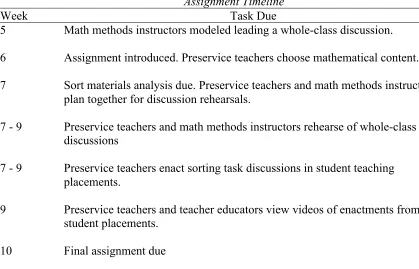
1 Assignment Timeline ...91
2 Victor’s Facilitation Moves in Rehearsal ...106
3 Instructor Feedback during Victor’s Rehearsal ...108
4 Victor’s Facilitation Moves in Student Teaching Placement ...120
5 Frequency of Victor’s Facilitation Moves in Rehearsal and Student Teaching Placement ...123
6 Julia’s Facilitation Moves in Rehearsal ...136
7 Instructor Feedback during Julia’s Rehearsal ...138
8 Julia’s Facilitation Moves in Student Teaching Placement ...147
9 Frequency of Julia’s Facilitation Moves in Rehearsal and Student Teaching Placement ...150
10 Kaya’s Facilitation Moves in Rehearsal ...162
11 Instructor Feedback during Kaya’s Rehearsal ...164
12 Kaya’s Facilitation Moves in Student Teaching Placement ...171
13 Frequency of Kaya’s Facilitation Moves in Rehearsal and Student Teaching Placement ...175
14 Preservice Teacher Frequency of Facilitation Moves in Rehearsal ...181
15 Preservice Teacher Frequency of Substantive Foci in Rehearsal ...183
xi
LIST OF FIGURES
Figure Page
1 Graphic depicting the cycle of enactment and investigation ...6
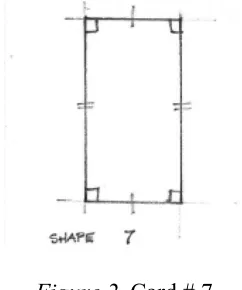
2 Graphic of card #7 from Victor’s rehearsal ...100
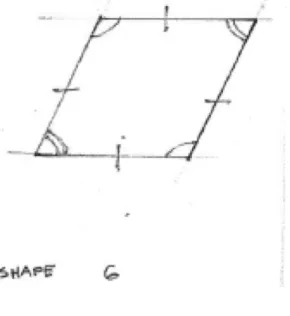
3 Graphic of card #6 from Victor’s rehearsal ...102
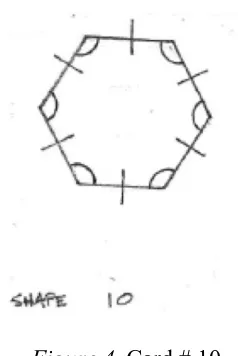
4 Graphic of card #10 from Victor’s rehearsal ...103
5 Graphic of card #11 from Victor’s rehearsal ...104
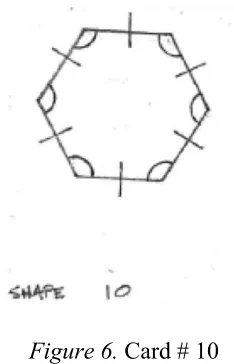
6 Graphic of card #10 from Victor’s rehearsal ... 112
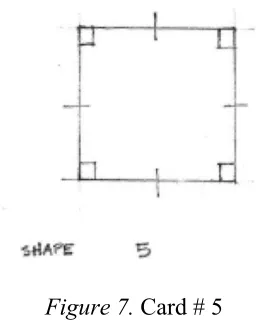
7 Graphic of card #5 from Victor’s rehearsal ... 113
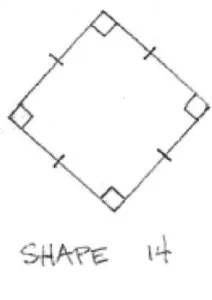
8 Graphic of card #14 from Victor’s rehearsal ... 114
9 Graphic of card #1 from Victor’s rehearsal ... 114
10 Graphic of card #15 from Victor’s rehearsal ... 115
11 Graphic of card #5 from Victor’s rehearsal ... 116
12 Graphic of card #14 from Victor’s rehearsal ... 117
13 Graphic of card #12 from Victor’s rehearsal ... 117
14 Graphic of card #3 from Victor’s rehearsal ... 118
15 Graphic of card #11 from Victor’s rehearsal ... 118
16 Graphic of card #7 from Julia’s rehearsal ... 130
17 Graphic of card #1 from Julia’s rehearsal ... 132
xii
19 Graphic of card #10 from Julia’s rehearsal ... 133
20 Graphic of card #11 from Julia’s rehearsal ... 134
21 Graphic of card #14 from Julia’s rehearsal ... 135
22 Graphic of card #14 from Julia’s rehearsal ... 141
23 Graphic of example from Julia’s class ... 142
24 Graphic of card #10 from Julia’s rehearsal ... 143
25 Graphic of card #6 from Julia’s rehearsal ... 144
26 Graphic of card #5 from Julia’s rehearsal ... 144
27 Graphic of card #11 from Julia’s rehearsal ... 145
28 Graphic of card #7 from Julia’s rehearsal ... 146
CHAPTER ONE
STATEMENT OF THE PROBLEM
As the student population has become more economically, racially, and linguistically
diverse, the expectations placed on teachers to successfully educate all students have increased
(Levine, 2006). As a result of the changing demographics and increased demands placed on
teachers, teacher education programs are searching for innovative ways to produce highly
competent teachers who have sophisticated skills that engage and teach a diverse set of learners.
Along with the attention placed on teacher preparation, has come scrutiny of teacher education
programs. For instance, The National Council of Teacher Quality Report (2013) claimed that
only 7 percent of the nation’s teacher education programs provide strong preparation to
preservice teachers. While the report was considered highly controversial by many experts in the
teacher education field because it may have overstated the problem and researchers questioned
the report’s methodology, it received much exposure by criticizing the current state of teacher
preparation programs as an “industry of mediocrity, churning out first-year teachers with
classroom management skills and content knowledge inadequate to thrive in classrooms with
ever-increasing ethnic and socioeconomic student diversity” (p. NCTQ Report, 2013, p. 1).
Although the report received ample criticism for oversimplifying and overstating the
problem, many experts would agree that teacher education programs are not providing teachers
with appropriate training for the realities of today’s student population (Darling-Hammond,
2010; Levine, 2006). Furthermore, the lack of consensus around what the knowledge base for
teaching is or the best ways to prepare teachers for success further complicates the issue.
The need for better preparation of teachers for the teaching profession extends to the field
teacher effectiveness could be improved with quality preparation of mathematics teachers.
Furthermore, they state that opportunities to learn mathematics for teaching is critical for training
preservice teachers for the professional field of teaching. The National Council of Teachers of
Mathematics (2013) have also reported the need for more intensive training for mathematics
teachers in the areas of content knowledge, skills for teaching mathematics, and a deeper
understanding of how students learn mathematics.
Across disciplines and perhaps especially in math education, teacher educators and
education researchers have been actively trying to find innovative ways to support preservice
teachers as they begin to develop skills to effectively teach. Teaching is a complex profession
that requires teachers to continually analyze and reflect on their own instruction with the primary
goal to support student ideas and knowledge formation. Mathematics teachers must draw on their
expertise in a specific content area and develop complex tasks that both engage and challenge the
student. Skilled mathematics teachers use their specialized knowledge of mathematics teaching
to connect students to the content (Ball & Bass, 2002; Ball & Cohen, 1999). Effective
mathematics teachers are able to elicit and interpret student thinking and support students in
constructing a complex formation of their knowledge (Ball & Bass, 2002). High quality
mathematics teachers integrate their knowledge of math content with their understanding of
pedagogy for teaching mathematics. As with all teachers, mathematics teachers need to be
skilled in facilitating discussions with a diverse set of students, appropriately orienting students
to each others mathematical ideas, while incorporating language, culture, and community
contexts into their instruction (Darling-Hammond, 2006).
With a multitude of skills needed to be a successful mathematics teacher, education
practices that are critical to effective teaching found within the contextual relationship between
the teacher, the students, and the subject matter. These essential practices of teaching, known as
“high-leverage practices”, are gaining interest among teacher educators across all disciplines, as
they design learning activities for preparing preservice teachers. High leverage practices have
been characterized by a cadre of education researchers as those teaching practices that: support
student understanding; occur frequently in teaching; are accessible to preservice teachers, and are
practices that preservice teachers can enact in student teaching (Ball, Sleep, Boerst, & Bass,
2009; Franke & Chan, 2006; Grossman & McDonald, 2008; Lampert, 2009; Sleep, Boerst, &
Ball, 2007). While progress has been made in conceptualizing effective teaching practices,
teacher education programs continue to struggle to develop rigorous curricula that support the
deep inquiry of high leverage practices within an integrated framework inclusive of both the
university and fieldwork settings.
Experts in the field argue that teacher preparation needs to “be turned on its head” by
designing teacher education programs that are grounded in clinical practice (NCATE Blue
Ribbon Panel, 2010). In response, some teacher educators have begun to transform the design of
teacher education programs by organizing the training and preparation of preservice teachers
around content-specific high leverage practices. Practice-based teacher education programs are
designed for preservice teachers to learn in and from practice by providing opportunities to
examine their own teaching practice. As teaching is filled with unpredictable situations and
complex interactions, practice-based programs allow for preservice teachers to carefully examine
particular classroom situations and think about different approaches to interacting with students.
With proper guidance from experts in the field and a tightly integrated coursework-fieldwork
preservice teachers to deeply examine their practice and develop a richer knowledge of teaching.
While there is emerging literature around making practice the center of teacher
preparation, education researchers continue to debate how best to structure the training of
preservice teachers within the university and fieldwork settings. At present, most teacher
education programs generally include field-based experiences along with coursework, however,
there is a great deal of variation among programs with regards to the amount of field experience,
the quantity and quality of support from experts, and the way in which coursework and field
work is integrated, if at all (Zeichner, 2010). Furthermore, there are often few structured, planned
opportunities for preservice teachers to enact theory-based practices from the methods course in
the field (Zeichner, 2010).
Many have argued that for preservice teachers to deeply understand and learn about the
teaching practice, teacher education programs need to design preparation around learning in and
from the actual practice of teaching (Ball & Cohen, 1999; Lampert, 2010). In particular,
practice-based teacher education programs place practice at the center of teacher training and may
provide the preparation needed for preservice teachers to interpret and respond to specific
classroom situations while developing proficiency in the essential teaching practices. Within this
model, teacher educators have the opportunity to provide intensive support to preservice teachers
in the university setting as they engage in learning high leverage practices to gain proficiency as
teachers in their specific content area. While practice-based education models for teacher
preparation may be a promising approach to train preservice teachers, this work is new to the
teacher education field and it remains unclear how to design university courses that support deep
Practice-based teacher education research has made substantial advances in designing
teacher preparation around the skills and knowledge for teaching and in finding effective ways to
strengthen the structural partnership between universities and schools. However, further
investigation needs to be conducted on how the substantive aspects of teacher training connect
university coursework and fieldwork (Grossman, Hammerness, & McDonald, 2009). In
particular, further research is needed to understand how high leverage practices are learned by
preservice teachers in university settings, how these pedagogies are enacted in the field, and the
impact of learning these practices from the point of view of the preservice teacher.
One approach that has begun to garner much interest in the teacher education field is the
use of rehearsal instructional activities to help prepare preservice teachers learn about and enact
high leverage practices in the university setting. Rehearsal in teacher education programs is used
as a pedagogical tool to engage novice teachers with the performative aspects of teaching. The
development of rehearsals in teacher education has been guided by Grossman and colleagues
(2009) “pedagogies of practice in professional education” framework. The Grossman et al.
(2009) framework was initially developed to analyze the preparation of teaching practices in a
variety of professional education programs. The major components of the framework include
representations of practice, decompositions of practice, and approximations practices in a setting
that is less complex than the professional field.
Teacher education programs and education researchers have extended the pedagogies of
practice in professional education framework to find rigorous ways to examine the pedagogies
that are associated with this framework in action (Lampert et al., 2013). In particular, Lampert
and colleagues (2013) used the Grossman et al. (2009) framework to develop the “cycle of
embedded in instructional activities (See Figure 1). Within this cycle, the preservice teachers
first observe and make sense of the ways the high leverage practices are represented and made
visible (representation), next the practice is broken down into parts for the purposes of teaching
and learning (decomposition), and finally the preservice teachers are given opportunities to
rehearse and engage in practice (approximations). To complement the deep investigation and
guided rehearsals of high leverage practices embedded in instructional activities within the
teacher education setting, preservice teachers are provided with the opportunity to enact the
rehearsal activity in their student teaching.
Figure 1: Cycle of enactment and investigation (Lampert et al., 2013)
Throughout the cycle of enactment and investigation process, the preservice teachers
have the opportunity to continually reflect and refine their knowledge of teaching with support
from both the teacher educator and cooperating teacher. Experts in the field provide the
scaffolding to preservice teacher to examine preconceptions and beliefs of teaching to construct
new conceptions and skills to become a reflective practitioner. Creating learning activities for
preservice teachers to rehearse the high leverage practices designed for secondary mathematics
may provide the link necessary to connect coursework and fieldwork and for preservice teachers
at present little is known about how teaching practice is rehearsed in coursework, and what
students seem to learn from it. With the guidance of experts, integrating rehearsals into
preservice teacher education may be an innovative approach to effectively preparing teachers for
the professional field of teaching.
Purpose of the Study
The purpose of the study is to explore how preservice teachers and teacher educators
investigate and rehearse high leverage practices in a math methods course and how preservice
teachers then enact the high leverage practices in their student teaching placement. Additionally,
this study aims to understand the connections between preservice teacher rehearsals of high
leverage practices and enactment of those high leverage practices in the field. This qualitative
study employs a case study design to follow three secondary preservice mathematics teachers in
an urban teacher education program from their math methods course into their student teaching
placements. This study draws upon data that includes video documentation and observations in
the university’s math methods classroom, video documentation and observations of preservice
teachers’ student teaching, interviews with the teacher educators following the rehearsals in the
math methods class, and interviews with the preservice teachers following their student teaching
observations.
In the math methods course, I specifically focused on the interactions between the
preservice teachers and math methods instructors as they together rehearsed the high leverage
practice of leading a whole-class discussion. Using video documentation and observations of
rehearsals, I aimed to capture the preservice teacher’s use of high leverage practices during the
rehearsal process, the statements and feedback from the teacher educators, and an examination of
of video documentation in the student teaching placements helped examine how preservice
teachers rehearsed the discussion of an instructional activity in their math methods class.
Specifically, I examined the statements and actions made by the preservice teacher and students
in the classroom to understand if and how the rehearsed activity was enacted in the student
teaching placement. Past research conducted on rehearsals, high leverage practices, instructional
activities, and interactions between teacher educators and preservice teachers were drawn upon
to help guide data collection methodologies (Boerst, Sleep, Ball, & Bass, 2011; Grossman et al,
2009; Kazemi, Franke & Lampert, 2009; Lampert et al., 2013; Lampert & Graziani, 2009; Sleep
& Boerst, 2012; Williamson, 2013).
Perhaps because there have been few studies conducted on the use of rehearsals in the
university setting, education researchers have yet to examine how preservice teachers enact the
rehearsed high leverage practices in their student teaching placements. In this study, I followed
and observed the preservice teachers teaching in their school site to better understand how their
student teaching is influenced by the rehearsals of high leverage practices in the math methods
class. The observations and video documentation in their student teaching placement took place
during second semester. I observed and videotaped all three preservice teachers in three phases:
1) at the beginning of the semester and 2) leading a whole-class discussion of a sorting task
activity and 3) near the end of the semester for a total of five observations each. The preservice
teachers were initially observed three days in a row following a similar strategy employed by
Heather Hill’s (2008) Mathematical Quality for Instruction study. The primary goal for the
observation and video documentation was to investigate if and how preservice teachers used high
leverage practices in their student teaching. Furthermore, this documentation provided useful
in their student teaching placements and the rehearsal activities in their math methods class. I
interviewed the preservice teachers following the observation to explore how the preservice
teachers viewed the influence of the rehearsal process on their development of high leverage
practices. The observations also gave useful insight into the classroom norms and dynamics as
well as the preservice teacher’s relationship with the cooperating teacher.
The ultimate goal for this study was to examine how rehearsals prepare preservice
teachers for the complexities of teaching mathematics and to contribute to the existing literature
on teacher education. Rehearsals may be an innovative pedagogy that provides effective training
for preservice teachers to learn about the high leverage practices for teaching mathematics.
Theoretical Framework
Pedagogies of Practice in Professional Education
The “pedagogies of practice in professional education” framework developed by
Grossman and colleagues (2009) helps frame the learning process that the preservice teachers
undergo in the math methods course. The framework includes three key concepts:
representations, decompositions, and approximations of practice. Within the pedagogies of
practice framework, the preservice teachers first investigate how the practice is represented in
which they try to notice the visible and nonvisible aspects of the practice. Preservice teachers are
invited to consider what they can see in different kinds of representations such as video,
enactments, and case studies. This initial investigation affords the preservice teacher with
different opportunities to “see” certain aspects of their practice. The teacher educator helps the
preservice teachers to decompose the complex practice into multiple components so they are able
to make sense of how the practice can be enacted with students. The decomposition of practice
teaching and learning (Grossman, et al., 2009). By breaking down the practice into parts, the
preservice teacher identifies and comprehends the smaller component of practice more easily.
Finally, the teacher educator creates opportunities for preservice teachers to “approximate” high
leverage practices in a setting of reduced complexity through pedagogical approaches such as
rehearsal and role-play (Grossman, et al., 2009). This process of learning about teaching in this
framework is an iterative process where preservice teachers and teacher educators engage in the
different pedagogies to investigate different representations, decompose, and approximate
practice.
By approximating key practices within university coursework, teacher educators can
design a variety of approaches and settings to provide support and guidance to preservice
teachers before they enact the practices in the field. Approximation of practice allows for
flexibility for teacher educators to design activities that have a varying degree of authenticity to
teaching aimed for preservice teachers to work on certain aspects of teaching. As preservice
teachers rehearse and practice high leverage practices in the safe environment of the methods
course with the support from the teacher educators, they begin to develop a relationship between
content, pedagogy, and student thinking (Lampert et al., 2013).
Teacher educators have begun to use the Grossman et al. (2009) pedagogies of practice
framework to design activities to rehearse high leverage practices in math methods classes
(Kazemi et al., 2009; Lampert et al., 2013; Lampert & Graziani, 2009). The focus on the
performative aspects of teaching under the guidance of the teacher educator aims to allow the
preservice teacher to evaluate and adapt to new teaching strategies and may better prepare them
for the relational activities of teaching (Grossman, Hammerness, & McDonald, 2009;
2005). Redesigning teacher preparation programs to incorporate rehearsals into the curriculum
places practice at the core of teacher preparation and allows for a smoother integration between
university coursework and fieldwork. Within the university setting, the preservice teacher is free
from the constraints of the classroom and allowed to develop a greater control of the actions of
teaching (Rogoff, 2003). The social interactions and negotiation with other members in the
university setting begins the process of modifying the preservice teacher’s initial perceptions of
teaching and sets the stage for preservice teachers to apply their understanding of teaching
practices to the classroom setting.
Sociocultural Theories of Learning
This study draws upon sociocultural theory as a framework for exploring how preservice
teachers rehearse complex teaching practices as they participate in learning activities within a
community. Specifically, I draw upon Vygotsky’s theory of the zone of proximal development
and Lave and Wenger’s theory of legitimate peripheral participation to examine how preservice
teachers learn about high leverage practices through social interactions in the math methods class
and student teaching placements. Additionally, I use Dewey’s theories of experiential learning to
discuss the learning process that integrates experience, observation, and action in a teacher
preparation program.
Learning through interactions within a community. Sociocultural theory provides a
useful frame for thinking about how individuals learn. One key feature in this view of human
development is that learning and higher order cognitive functions occur through social
interactions. Vygotsky’s theories about the zone of proximal development (ZPD) helps to
explain the process of learning that preservice teachers undergo during the rehearsal process in
what the learner can accomplish independently and what the learner can accomplish in
collaboration with a more skilled partner. Through interactions with more skilled partners within
the community, the learner can move from his current state of development to his potential level
of development, and in the process become more proficient in the “tools” of his culture. The
“tools” in sociocultural theory are not necessarily considered the material artifacts, but the
behaviors, language, and knowledge of the culture that the individuals participate in over time
(Cole, 1996). Through social relations within the culture, the individual’s behavior is reshaped
and tools are appropriated (Cole, 1996). By interacting and engaging in complex thinking with
others, the individual will able to eventually use the tools of his culture independently. To truly
understand how an individual develops, one must examine the social environment or the culture
in which the individual participates. Within the culture, the learner interacts with people, objects,
and events using both cognitive and communicative processes to learn. The assistance from
others that occurs in the zone of proximal development allows for the individual to participate in
activities and learn the tools that would be impossible to do so without the social environment.
Lave and Wenger (1991) build upon the concept of the zone of proximal development by
suggesting that one way learning occurs is through the participation of different members within
the communities of practice. Communities of practice are groups of people who share a common
interest and as they interact with each other, they learn to perform an activity with more
proficiency (Wenger, 1998). According to this theory, novice learners initially participate in
simple tasks and as they become more skilled and accustomed to the goals of the community,
they can accomplish more complex tasks. The apprentice continually generates and revises ideas,
problem solves, and works together with other members to become more proficient with the
of the community of practice towards the center, gaining knowledge of the practices and
becoming a more accomplished participant.
Sociocultural theory applied to teacher preparation. In this study, the preservice
teachers interact with each other and math methods instructors to learn the skills, content, and
practices for mathematics teaching. In particular, the rehearsal activities are designed to assist the
preservice teachers to become more accomplished in high leverage practices, the professional
tool of their teaching community. The math methods instructors model and provide quality
examples of how high leverage practices are used in teaching and provide feedback to the
preservice teachers during rehearsals. The hypothesis here is that the preservice teachers have
enough content and pedagogical knowledge to learn the high leverage practice, but they cannot
become proficient in high leverage practices without the assistance of the math methods
instructors, peers, and their own experiences in the field. The preservice teachers begin on the
periphery of participation, but as they learn by watching videos, by observing the instructors’
modeling, by getting feedback on their rehearsals, they move toward more full participation.
While enacting rehearsals in the math methods class, the preservice teachers learn and
develop high leverage practices through the interactions with the teacher educators and other
preservice teachers. By rehearsing complex teaching activities, the preservice teachers activate
cognitive, social, and perceptual processes in an effort to develop the tools for teaching. For
example, in a “number talk” rehearsal activity the preservice teacher learns about the high
leverage practices of eliciting and interpreting student thinking, orienting students to each others
mathematical ideas, connecting solution strategies, and facilitating a classroom discussion.
During the rehearsal activity, the math methods instructor provides coaching to the preservice
what a typical student response might be, pressing the preservice teacher to think deeply about
his or her role in attending to student thinking. The teacher educator focuses on multiple aspects
of teaching, including probing of student understanding, displaying solution strategies on the
board, and connecting student ideas and methods. Through this process in the math methods
course, the goal is for preservice teachers become more adept at eliciting and responding to
student thinking and continue to build their teaching skills and professional knowledge of
teaching. During rehearsals, the preservice teachers and teacher educators engage in deliberate
and reflective thinking about high leverage practices in a setting that is less complex than the
student teaching placement. A reduced complexity setting allows for preservice teachers to make
errors in a low-stakes setting and for the teacher educators to spend time focused on working on
the challenging aspects of the teaching practice.
Dewey’s (1938) theories of experiential learning connect to the theory of legitimate
peripheral participation and provide a lens for understanding the process that an individual
undergoes through participating in a community of practice by placing considerable importance
on the act of learning by experience. This model is useful in describing the learning process
during rehearsals of high leverage practices in the math methods course and enactment of these
practices in the field. The preservice teachers’ conceptions of teaching are formed and modified
through authentic, quality experiences. During the dialectic relationship between the preservice
teachers’ conceptions of teaching and what actually happens during teaching, learning occurs.
Dewey describes this tension between thought and action as the basis for learning from
experience (Dewey, 1938).
During the rehearsal process in the math methods class, the preservice teacher can delve
student teaching placement, the preservice teacher uses these newly formed teaching skills in a
setting that allows for continual refinement and learning. The preservice teacher observes the
cooperating teacher’s instructional practices and gradually takes on additional classroom
responsibilities as the school year progresses. By intentionally learning specific classroom roles
and more, preservice teachers change how they participate within the community activities and
ultimately become more knowledgeable practitioners. The preservice teachers are becoming
more accomplished teachers by learning from their math methods instructors, cooperating
teacher, peers, and the success and failures of student teaching. By continually negotiating their
initial set of conceptions of teaching through interactions in the community paired with
scaffolded analysis of what is happening within their practice, preservice teachers can develop a
deep understanding of their teaching practice. An integrated system of learning between the math
methods course and the student teaching placement may provide a strong training model to
prepare preservice teachers for the professional field of teaching and ultimately provide the
training needed to connect theoretical knowledge to practice.
Background and Need
In developing the background and need for this study, I present research on (a) teacher
preparation models for preparing preservice teachers, (b) the need for preservice teachers to
examine practice (c) the professional knowledge needed for teaching mathematics, (d) high
leverage practices, (e) practice-based teacher education programs, and (f), and rehearsals of high
leverage practices. This section will conclude with a brief summary of factors relevant to the
Preparing Preservice Teachers for the Teaching Profession
Teacher education has long struggled to connect theoretical knowledge with practice in
the preparation of preservice teachers. In John Dewey’s “Relation of Theory to Practice in
Education”, he states that it is clear that both theory and practice are essential for teacher
instruction, but the question that remains is how teacher training should be conducted (Dewey,
1904). While Dewey stressed that knowledge of theory was the most critical aspect for the
development of teachers, he also believed that learning how to teach could not truly be
understood without being paired with practice. The ongoing challenge that teacher education
faces is connecting the subject matter knowledge of teaching and theoretical knowledge learned
within the university courses to the practice of teaching in the field.
Historically, education researchers have debated about how to best structure and integrate
coursework and fieldwork into the design of teacher education programs. As a result, teacher
educators have made use of a variety of approaches to prepare preservice teachers for the
teaching profession. Dewey (1904) proposed two approaches for preparing teachers for the
professional field: the apprenticeship model and laboratory model. The apprenticeship model is
based on preservice teacher learning by observing an experienced teacher and gradually
assuming specific classroom responsibilities while student teaching. Since the inherently
conservative apprenticeship model is based on what is seen in the classroom and not practiced,
this type of learning focuses on the external behaviors of students and trains student teachers for
practical skills of teaching. The laboratory model takes place in the university setting and is used
to design practical experiences for the preservice teacher. The teacher laboratory allows for
university professors with preservice teachers to experiment with new teaching practices that
deeper understanding of the fundamental cognitive and internal processes of the student as it
involves deep examination of the different aspects of one’s teaching practice (Shulman, 1998).
However, the laboratory model may not make it possible for preservice teachers to experience
the realities of working with real students in a real school. While aspects of both models may be
useful for the preparation of teachers, the inherently conservative apprenticeship model has
become the most common design for traditional teacher education programs further reinforcing
the status quo of how teachers are prepared for the professional field of teaching.
Within the traditional teacher education design, preservice teachers are given instruction
in their university classes and then asked to apply their learning in their role as a student teacher
under the mentorship of a cooperating teacher. Through the apprenticeship model, prospective
teachers are given the opportunity to observe, reflect, and learn about the teaching practice.
However, a great deal of variety exists in the role the student teacher plays in the cooperating
teacher’s classroom and the level of support and feedback the cooperating teacher provides the
student-teacher with regards to instructional practices. While the intention of the apprenticeship
model is for student teachers to learn about best teaching practices, it is quite common for the
student teacher to primarily notice surface-level instructional practices and not the essential
aspects of teaching-- preparation, decision-making, or implementation (Hammerness, et. al,
2005). One possible explanation is that preservice teachers notice the “face” (Little, 2002) of the
practice and do not have the capacity to distinguish through observation alone what aspects of
the teaching practice are difficult to perform (Little, 2003). Perhaps, the preservice teacher is not
fully equipped with the tools to participate in the complexities of teaching from solely observing
The need to examine practice. By the time prospective teachers enter a teacher
education program, they have spent approximately 13,000 hours observing teachers and have
already developed their conception of who a teacher is and what a teacher does (Lortie, 1975).
Lortie (1975) used the term “apprenticeship of observation” to describe this phenomenon. When
the preservice teachers begin the formal apprenticeship process in a teacher education program,
they enter with an initial frame of reference that has been developed through their informal
observations as a student (Kennedy, 1999). Kennedy (1999) explains that this frame of reference
acts as a standard set of expectations through which preservice teachers interprets the situations
that occur in practice. They interact with the curriculum in a similar fashion to how they were
taught and take the role of a teacher that has characteristics similar to how they experienced
being taught (Britzman, 2003). Ultimately, preservice teachers teach as they were taught.
If teacher education programs do not provide preservice teachers the right kinds of
opportunities to examine and interpret their practice, the initial frame of reference stays intact
and could prevent the preservice teacher from gaining a deeper understanding of the teaching
practice. Preservice teachers assimilate novel situations into their preexisting schemas, and do
not develop a richer knowledge of practice (Kennedy, 1999). As a result, preservice teachers
may not make use of the theory that was taught in their teacher education program and perceive
that they did not received adequate preparation (Korthagen, Kessels, Koster, Lagerwerf, &
Wubbels, 2001). If their conceptions are not challenged, preservice teachers will continue to
reinforce their preexisting schemas drawing upon their initial frame of reference to guide their
approach to teaching and future practices (Kennedy, 1999).
To shift the student teacher’s frame of reference, the student teacher needs help to
appropriately (Kennedy, 1999). Preservice teachers need to investigate concrete classroom
situations that integrate high leverage practices and have the opportunity to enact their
scholarship of practice within an authentic setting. Teacher education programs can be the ideal
setting for teacher educators and cooperating teachers to integrate coursework and fieldwork
components that allow student teachers to change their initial frame of reference. To support this
integration, one possible approach is to design a teacher education curriculum around the
investigation and enactment of core teaching practices. In particular, practice should be at the
core of teacher education.
Practice at the core of teacher education. One promising approach to preservice
training is the development of practice-based teacher education programs that focus on the
essential teaching practices teachers must enact to help students learn. Education researchers
have been calling for change in teacher preparation in two critical areas: the integration of
methods courses and fieldwork practice, and putting practice at the core of teacher education
(Grossman, Hammerness, & McDonald, 2009; Ball & Cohen, 1999). To address both needs,
researchers have proposed that the design of teacher preparation should organize the curriculum
around a set of core teaching practices (Grossman, Hammerness, & McDonald, 2009). Ball and
Cohen (1999) explain that aspects of practice-based teacher education programs include
identifying the central activities of instructional practice, selecting and/or creating materials that
depict the work of teaching, and using these materials to create opportunities for teacher
learning. A practice-based teacher education curriculum uses “practice as a site of inquiry in
order to center professional learning in practice” (Ball and Cohen, 1999, p.19), and creates
opportunities for preservice teachers to examine the every day aspects of teaching within a
about central aspects of learning and instruction with a goal of improving teachers’ knowledge
and classroom practice.
The preparation provided to preservice teachers in traditional teacher education programs
varies in the amount of student teaching required and often does not provide the opportunities
necessary for preservice teachers to deeply examine their own teaching (Valencia et al., 2009).
Furthermore, without providing extensive practice with opportunities to reflect, preservice
teachers may not be able to connect the principles of teaching learned in the university
coursework with teaching practices. Preservice teachers trained in traditional apprenticeship
programs have few opportunities to engage collaboratively in professional discourse and inquire
about core teaching practices. On the other hand, the practice-based teacher education model
places the biggest need, the opportunity to examine and interpret practice, at the heart of teacher
education and allows preservice teachers to develop the skills, modify their initial frame of
reference, and attain the professional knowledge needed to become a successful teacher
(Grossman, Hammerness, & McDonald, 2009). Practice-based teacher education programs allow
for contextualized practice around key elements of content and pedagogy within a strongly
integrated university coursework and fieldwork experience (Ball & Cohen, 1999; Grossman &
McDonald, 2008). Within a mathematics practice-based curriculum, the math methods course
has been the course in which key teaching practices are investigated and learned. In the math
methods course, teacher educators take the essential practices of mathematics teaching and make
them learnable for the preservice teacher. At the center of the course design would be the
knowledge of teaching mathematics and the principles that guide the judgment of the practice
Professional knowledge needed for mathematics teaching. Over three decades, teacher
education research has focused on developing ways to conceptualize the knowledge needed for
teaching and the core practices for teaching that can be taught (Ball & Bass, 2000; Grossman,
1990; Hill, Ball, & Schilling, 2008; Kazemi, Lampert, & Ghousseini, 2007; Shulman, 1986;
Sleep, Boerst, & Ball, 2007). By analyzing and identifying key aspects of teacher knowledge,
teacher educators will be able to address the key demands placed on the preparation of preservice
teachers more effectively (Ball, Sleep, Boerst, & Bass, 2009). Lee Shulman’s presidential
address at the American Education Research Association’s annual meeting in 1985 is considered
the beginning of a new wave of research conducted on teacher’s professional knowledge for
teaching. Shulman (1986) suggested that education researchers distinguish between three
categories of knowledge: 1) subject matter content knowledge, 2) pedagogical content
knowledge, and 3) curricular knowledge. Shulman (1986) argued that pedagogical content
knowledge (PCK) is central to effective teaching and defined PCK as “the dimension of subject
matter knowledge for teaching” (Shulman, 1986, p. 9). Shulman’s idea of pedagogical content
knowledge has brought a lot of attention to the importance of focusing on the development of a
teacher’s professional knowledge for teaching as it connected the content knowledge and the
practice of teaching.
In math education, Ball, Thames, and Phelps (2008) further extended Shulman’s
pedagogical content knowledge framework to examine the mathematical knowledge for teaching
(MKT) to connect teachers’ knowledge to content, teaching, and students. The two major
components of subject matter knowledge for teaching mathematics are the common and
specialized knowledge of mathematics. Education researchers argue that both common
teaching mathematics (Hill, Ball, & Schilling, 2004). Common knowledge of mathematics
content is the basic knowledge of mathematics that most educated adults should have. It is an
understanding of mathematical skills, procedures, and concepts that teachers draw upon while
teaching. Mathematics teachers need to have a strong foundation in common knowledge of
mathematics, as it is this knowledge they use to identify incorrect answers and recognize
incorrect mathematical definitions (Ball, Thames, & Phelps, 2005). The specialized knowledge
of mathematics is the knowledge that mathematics teachers’ used to identify student errors, give
instructional explanations, and provide mathematical representations. Specialized knowledge is
thought to be developed through experience and is uniquely used in teaching.
Ball, Thames, and Phelps (2008) further elaborated pedagogical content knowledge in
mathematics to include knowledge of content and teaching and knowledge of content and
students. The knowledge of content and teaching is an understanding of the advantages and
disadvantages for using certain pedagogical strategies and instructional materials for teaching
mathematical concepts. This knowledge is drawn upon when teachers develop lesson plans, to
make instructional decisions while teaching the lesson, and after the lesson to reflect on how to
make the lesson better. Furthermore, knowledge of content and teaching is central for teachers’
ability to effectively sequence content for teaching.
The second component of pedagogical content knowledge is the knowledge of content
and the knowledge of students. Teachers use the knowledge of content and student skills and
their backgrounds in their classes to make certain pedagogical decisions. Instructional examples
of teacher knowledge of content and students include predicting student solution strategies,
anticipating student errors, and to interpret students’ emerging and incomplete conceptions (Ball,
knowledge for teaching is described independently, they are intricately interwoven in the
practice of teaching mathematics. For instance, characteristics of mathematical knowledge of
teaching include interpreting and analyzing student work, providing mathematical explanations
that are developmentally appropriate, creating links between mathematical symbols and pictorial
representations, analyzing student errors, selecting meaningful examples, using multiple
solutions, and assessing mathematical integrity of a representation in a textbook (Ball, 1990; Ball
& Bass, 2000; Ball, Thames, & Phelps, 2008; Hill & Ball, 2009; Hill, Schilling, & Ball, 2004;).
High Leverage Practices
For over 30 years, the field of education has struggled to find a common vocabulary for
describing and analyzing teaching for both the preparation of teachers and for the research done
on teaching (Grossman & McDonald, 2008). In the 1980’s, education researchers began to focus
on differentiating and identifying the specialized knowledge needed for teaching and the
knowledge needed within a specific content area. This work on the knowledge of teaching has
guided education research and ultimately teacher preparation programs towards a better
understanding of what teachers need to know for particular subjects they teach, however, lost in
this process was a focus on the specific skills and practices needed to use this knowledge of
teaching (Grossman, Hammerness, & McDonald, 2009).
In efforts address this gap, teacher education programs have recently begun to focus on
providing preservice teachers with rich experiences that support their professional knowledge
around core-teaching practices (Grossman, Hammerness, & McDonald, 2009). Using high
leverage practices for teaching embedded in scaffolded instructional activities, teacher educators
guide preservice teachers to focus on specific aspects of their teaching practice to help build
learning the most effective and frequently used teaching practices is the key to successfully
preparing preservice teachers for the rigors of teaching (Ball & Cohen, 1999; Hatch & Grossman
2009).
Although researchers have used a variety of names to describe these key teaching
practices, including “core-practices” (Grossman & McDonald, 2008), “generative practices”
(Franke & Chan, 2006), and “high-leverage practices” (Ball, Sleep, Boerst, & Bass, 2009), they
are essentially referring to the practices that are fundamental to effective teaching (Lampert,
2009). For the purposes of this study, I will use the term “high leverage practices” from this
point on.
High leverage practices are defined as the strategies, routines, or activities that preservice
teachers need to learn to be effective teachers and it is from these practices that they will
continue to learn to teach (Ball, Sleep, Boerst, & Bass, 2009; Lampert, 2009). Researchers have
devoted extensive effort to teasing apart the teaching practice to identify the high leverage
practices within specific subjects and contexts that may be focused on in teacher education
programs (Kazemi & Hintz, 2008; Kazemi, Lampert, & Ghousseini, 2007; Sleep, Boerst, & Ball,
2007). While the definition of high leverage practices varies among educational researchers, they
share many common characteristics. High leverage practices are those that are most frequently
used in the classroom and can be adapted for use across subjects and grade levels (Grossman,
Hammerness, & McDonald, 2009). Emerging research on teachers who enact high leverage
practices in their classrooms has shown the potential to improve student achievement (Franke et
al., 2009). They are complex practices that preservice teachers are unlikely to master without
support and guidance (Ball, Sleep, Boerst, & Bass, 2009). High leverage practices can be
teaching or teacher education curriculum. Although there is much interest in the development of
high leverage practices, there is limited research conducted on preservice teachers learning high
leverage practices in the university setting or in the field.
The research on identifying high leverage practices in teacher education is relatively new,
primarily focused on identifying high leverage practices within specific content areas and
examining how preservice teachers effectively learn these practices (Kazemi, Lampert, &
Ghousseini, 2007; Lampert et al., 2013; Sleep & Boerst, 2012). One of the main driving forces in
identifying high leverage practices is a national organization formed by the University of
Michigan called Teaching Works. Teaching Works is “focused on improving the standard of
teaching practice, by building strong professional infrastructure for quality teaching” (Teaching
Works, n.d.). They have set out to decompose the practice of teaching into meaningful and
learnable parts, paying close attention to the practice of teaching as well as learning to teach.
Teaching Works has built upon already existing research on high leverage practices to
develop specific criteria for aspects of teaching that are considered to be the most
“high-leverage” for preservice teachers (Teaching Works, n.d.). They identified tasks and activities for
learning high leverage practices at grain-sizes that were adaptable for a teacher preparation
curriculum. Two major considerations were taken while identifying high leverage practices: the
use and impact of the high leverage practice in teaching and the ability to learn the high leverage
practice in a teacher education class. In particular, practices identified had a high probability of
making a difference in teaching quality and effectiveness, were effective across differences in
students, and could be used broadly across multiple contexts (Teaching Works, n.d.). For teacher
education programs, the considerations included ability to assess and teach high leverage
Teaching Works and the University of Michigan have identified 19 high leverage
practices for teaching (see Appendix A). All 19 high leverage practices are applicable for all
subjects and grade levels, however, some high leverage practices may be used more frequently
than others depending on the type of class. Although a growing consensus has begun to form
among education researchers around the identification of high leverage practices, limited
empirical research has been conducted on how to make these practices learnable to preservice
teachers. However, we know little about how teachers employ the high leverage practices in their
own classrooms and how this might impact student learning. Two examples of high leverage
practices that are often used in mathematics teaching and I will discuss in the literature review
are eliciting and interpreting individual student thinking, and leading a whole-class discussion.
These high leverage practices are a central part of this study’s aim to examine how preservice
teachers and teacher educators rehearse high leverage practices in the math methods class and
how preservice teachers enact these practices in their student teaching placements.
Rehearsal of high leverage practices. Teacher educators are using rehearsals to provide
the support and scaffolding to preservice teachers in practicing the teaching of complex
mathematics content in a collaborative environment (Lampert & Graziani, 2009). Rehearsal
involves preservice teachers deliberately practicing demanding teaching practices (e.g., high
leverage practices) with feedback from teacher educators and peers. Deliberate practice is not
mindless repetition of an activity, but rather repeated experiences that allow the learner’s
attention to be focused on critical elements of the situation with the goal to improve performance
(Ericsson, Krampe, & Tesch-Romer, 1993). In rehearsals, teacher educators and student teachers
interact, working together to approximate the essential teaching practices. For example, a
the high leverage practices needed for teaching this complex mathematical activity in the
classroom. The teacher educator can interrupt the preservice teacher during rehearsal with the
aim of directing the attention of the preservice teacher to a particular aspect of his or her teaching
practice (Lampert et al., 2013). The teacher educator might play the role of a student during the
rehearsal by asking questions or making errors. The teacher educator may also try to push the
preservice teacher to think deeply about how to respond to student thinking and preparing the
teacher for the adaptive nature of teaching (Kazemi, Franke, & Lampert, 2009). Deliberately
practicing high leverage practices allows for deep pedagogical inquiry and learning (Lampert et
al., 2013). Rehearsal of high leverage practices provides an organized process for preservice
teachers to have authentic interactions with peers and teacher educators within a setting that is
less complex than the field (Grossman et al., 2009; Lampert et al., 2010). Rehearsal in
practice-based teacher preparation programs has the potential to connect the university and classroom
settings for preservice teachers and provide opportunities for deep pedagogical inquiry into the
central facets of teaching.
This study aims to contribute to our understanding of teacher learning by examining the
process of rehearsals in the math methods course and exploring how preservice teachers use the
rehearsed high leverage practices in their student teaching placement. While few studies have
looked at how preservice teachers and teacher educators rehearse high leverage activities
(Charalambous, Hill, & Ball, 2011; Inoue, 2009; Lampert et al., 2013), to date, there have not
been any studies that have examined the connection of rehearsals to the preservice teachers’
Significance of the Study
This study is important for the field of teacher education for many reasons. The study
explores a relatively new pedagogy used in teacher education, rehearsals, and its connection to
enactment of teaching practices in the field. The recent studies that have been conducted on
rehearsals have looked primarily at their use in elementary teacher education programs. More
research needs to be conducted on the use of rehearsals at the secondary level. While limited
studies have examined the use of rehearsals in the university setting and have found positive
outcomes in developing high leverage practices, there are no studies that have followed the
preservice teachers into the field to understand how rehearsals may influence their teaching
practice (Lampert, 2013; Lampert & Graziani, 2009). Rehearsals of high leverage practices in
well-designed instructional activities may provide preservice teachers opportunities to think
deeply about teaching practices and potentially strengthen the connection between university and
classroom settings. This study on rehearsal and enactment of high leverage practices aims to
inform the field of teacher education to further examine this approach as a way to effectively
support the development of preservice teachers and provide a link between university
coursework to the classroom practice.
Research Questions
This study addresses the following questions:
1. How do preservice teachers and teacher educators rehearse high leverage practices in
the math methods course?
2. How do preservice teachers enact the high leverage practices in their fieldwork?
3. What are the connections between high leverage practices rehearsed in the math
a. How do preservice teachers view the connection between enactment of high
leverage practices in rehearsals and fieldwork?
b. How do I view the connection between enactment of high leverage practices
in rehearsals and fieldwork?
Definition of Terms
Cooperating teacher: In this study cooperating teacher is defined as a teacher who hosts
the preservice teacher in their classroom, provides opportunities for professional growth,
feedback on teaching, and models quality teaching practices.
Enactment: In this study enactment is defined as the teaching of the instructional activity.
Although the rehearsal is considered an enactment, the enactment is most commonly referred to
the teaching of the instructional activity in the student teaching placement.
High leverage practices: In this study high leverage practices are defined as essential
practices that support student understanding, practices that occur frequently in teaching, practices
that are accessible to preservice teachers, and practices that preservice teachers can enact in
student teaching. Terms used in teacher education related to high leverage practices include core
teaching practices, best practices, and generative practices (Lampert, 2012).
Instructional activity: In this study instructional activity is defined as an interactive
structure that is used during rehearsals within the university setting. Instructional activities are
well-designed activities that include three main facets that work in relation to each other: high
leverage practices, mathematical knowledge, and principles of teaching (Lampert et al., 2013).
Instructional explanation: In this study instructional explanation is considered the act of