World Maritime University World Maritime University
The Maritime Commons: Digital Repository of the World Maritime
The Maritime Commons: Digital Repository of the World Maritime
University
University
World Maritime University Dissertations Dissertations
11-5-2017
Challenges caused by IUU fishing in the offshore : lessons for
Challenges caused by IUU fishing in the offshore : lessons for
Liberia's fisheries based on a global review and analysis
Liberia's fisheries based on a global review and analysis
Emma C. Metieh GlasscoFollow this and additional works at: https://commons.wmu.se/all_dissertations
Part of the Environmental Law Commons
Recommended Citation Recommended Citation
Glassco, Emma C. Metieh, "Challenges caused by IUU fishing in the offshore : lessons for Liberia's fisheries based on a global review and analysis" (2017). World Maritime University Dissertations. 560. https://commons.wmu.se/all_dissertations/560
World Maritime University Malmö, Sweden
CHALLENGES CAUSED BY IUU FISHING IN THE OFFSHORE; LESSONS FOR LIBERIA’S FISHERIES BASED ON A GLOBAL REVIEW AND
ANALYSIS
By
EMMA C. METIEH GLASSCO
Liberia
A dissertation submitted to the World Maritime University in partial Fulfillment of the requirement for the award of the degree of
MASTER OF SCIENCE
In
MARITIME AFFAIRS
(OCEAN SUSTAINABILITY GOVERNANCE AND MANAGEMENT)
2017
i
Declaration
I certify that all the material in the dissertation that is not my own work has been identified, and that no material is included for which a degree has previously been conferred on me.
The content of this dissertation reflect my own personal views, and are not necessarily endorsed by the University.
(Signature): ……….
(Date): ……….
Supervisor: Professor Mary Wisz
World Maritime University
_______________________________________________________________________
Assessor: Professor Neil Bellefontaine
ii
Acknowledgement
“
Giving thanks always for all things unto God and the Father in the name of our Lord
Jesus Christ” (Ephesians 5:20)
First of all, I thank the Almighty God for His continuous grace, mercy and unconditional
love towards me.
My profound gratitude also goes to Professor Neil Bellefontaine and Professor Larry
Hildebrand for their continuous support and immense contributions towards the
completion of my dissertation and throughout this entire MSc. program. Thanks also to
Professor Mary Wisz.
Further, I would like to acknowledge my sponsor, Stena Rederi AB and the World
Maritime University for affording me the opportunity to attend this prestigious Maritime
Institution to be awarded with an MSc. in Maritime Affairs.
I dedicate this dissertation to my dearest mother Professor Mary E. Metieh for her
continuous and endless support to have seen me come thus far. In this respect, I appreciate
the immense contributions of Emma C. Coleman Gaye who has also been a mother to me,
my supportive husband Eric W. Glassco and my Swedish host Viveca Andersson-
Plyming including all my family members who have also contributed in diverse ways.
Finally, a heartfelt appreciation goes out to my employer, the Ministry of Agriculture of
iii
Abstract
Title of the Dissertation: Challenges caused by IUU Fishing in the offshore; Lessons for Liberia’s Fisheries based on a Global Review and Analysis
Degree: MSc
In Liberia, Illegal Unreported and Unregulated fishing activities are undermining national growth resulting in socio-economic crisis. The country sustains an economic loss of $75 million annually caused by IUU fishing activities. As a result, 49% of the population is faced with food insecurity and thousands of local fishermen are displaced from a way of life that has existed for years.
This dissertation discusses the underlying reasons for the prevalence of IUU fishing in Liberia’s EEZ, including the government management response and also examines best approaches used around the globe to combat IUU fishing activities.
The findings from the analysis depict that the prevalence of IUU fishing in Liberia could be attributed to lack of domestic fishing vessels, dominance of distant water operating fleets (controlled by Asian vessel operators from countries such as China and Korea), lack of domestic fishing vessels and illegal transshipment in the EZZ. However, best practice to improve Liberia’s fisheries management must incorporate the implementation of enhanced Monitoring Control and Surveillance (which Liberia began implementing since 2010) and all the components, including adoption/guidance of international fisheries instruments such as UNCLOS, UNFSA, IPOAA-IUU, PSMA, and the 1993 FAO- Compliance Agreement. Liberia must also, adopt stronger deterrent measures (such as fines, sanctions and confiscations), and better utilize Regional Cooperation, Community- Based Approaches, and Good Fisheries Governance and Genetics that have been used and proven effective and measurable in combatting IUU fishing globally, particularly through many RFMOs.
The recommendations from this dissertation will serve as an informative tool for Liberia’s fisheries sector on how to improve its management response in order to sustainably manage its fisheries and also assist in achieving the UN SDG 14 target 14.5 which is tailored towards eliminating IUU fishing activities.
iv
Table of Contents
Declaration ... i
Acknowledgement ... ii
Abstract ...iii
List of Table ... vii
List of Figures ... viii
List of Abbreviations ... ix
CHAPTER ONE: GENERAL OVERVIEW OF IUU FISHING ... 1
1.1 Introduction ... 1
1.2 What is IUU? ... 2
1.3 How has it affected the Fisheries Globally? ... 2
1.4 Types of Illegal Unreported and Unregulated Fishing ... 5
1.4.1 Bycatch ... 5
1.4.2 Destructive Fishing Gears and Practices ... 5
1.4.3 Nets ... 6
1.4.4 Cyanide Fishing... 6
1.4.5 Dynamite Fishing ... 7
1.4.6 Ghost Fishing ... 7
1.5 Why West Africa and Liberia ... 7
1.6 Rationale of Study ... 8
CHAPTER TWO: METHODOLOGY ... 10
2. 1 Selections of Article ... 10
2.2 Articles Screening ... 10
2.3 Data Gathering and Analysis ... 11
2.4 Best Practice ... 11
2.5 Criteria ... 12
CHAPTER THREE: OVERVIEW OF GLOBAL IUU FISHING APPROACHES ... 13
3.1 Introduction ... 13
3.2 Management Approach ... 14
v
3.3.1 Catch Documentation Scheme ... 15
3.3.2 VMS ... 16
3.3.3 Fisheries Patrols ... 17
3.3.4 Inspector Program ... 18
3.3.5 Observer Program ... 19
3.3.6 MCS as Best Practice ... 20
3.4 Enforcement ... 21
3.4.1 National Fisheries laws and policy Enforcement ... 21
3.4.2 Regional Fisheries regulations or agreements ... 21
3.4.3 International Fisheries laws ... 23
3.4.4 Enforcement as a best practice ... 24
3.5 Deterrence Effect ... 24
3.5.1 Fines ... 25
3.5.2 Confiscation ... 25
3.5.3 Sanctions ... 26
3.6 Genetics ... 26
3.7 Community-Based Approach ... 27
3.8 Governance ... 28
3.9 Regional Cooperation ... 30
CHAPTER FOUR: OVERVIEW LIBERIA IUU FISHING SITUATION AND CURRENT PRACTICES ... 36
4. 1 Introduction ... 36
4.2 Overview of the Fisheries Sector ... 37
4.3 Dominance of Distant Water Operation Fleets... 39
4.4 Illegal Transshipment ... 43
4.5 Lack of Fishing Vessel ... 44
4.6 Liberia’s Government Response ... 45
4.6.1 Monitoring Control and Surveillance Program ... 47
4.6.2 Observer Program ... 47
4.6.3 Inspector Program ... 48
vi
4.6.5 Fisheries Monitoring Center ... 49
4.6.6 Monitoring Control and Surveillance Coordination Committee ... 49
4.6.7 Development of Patrol Capacities ... 50
4.6.8 Introduction of Port State Measures ... 52
4.6.9 Collaboration with FCWC ... 53
4.7 Challenges faced in Liberia’s Management Approach ... 53
4.7.1 Lack of Inter-Ministerial Cooperation: ... 53
4.7.2 Lack of Scientific Data ... 54
4.7.3 Lack of Sea and Aerial Patrols ... 54
CHAPTER FIVE: COMPARISON & SWOT ANALYSIS OF LIBERIA AND GLOBAL APPROACHES ... 55
5.1 Introduction ... 55
5.2 SWOT Analysis based upon Liberia’s Management Approach ... 55
5.3 Comparison between Global Reponses and Liberia’s Management Response ... 60
5.3.1 VMS ... 61
5.3.2 Fisheries Patrol ... 61
5.3.3 Inspector Program ... 62
5.3.4 Observer Program ... 62
5.3.5 Governance ... 63
5.3.6 Enforcement ... 63
5.3.7 Deterrent Effect ... 64
CHAPTER SIX: CONCLUSION AND RECOMMENDATION ... 65
6.1 Conclusion ... 65
6.2 Recommendations ... 67
APPENDIX 1 ... 71
vii
List of Table
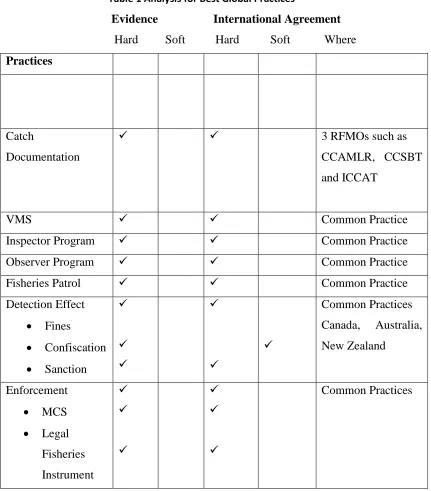
Table 1 Analysis for Best Global Practices ... 33
Table 2 SWOT Analysis of Liberia’s Management Response ... 56
viii
List of Figures
Figure 1 Criteria for Measuring Best Fisheries Practices ... 12
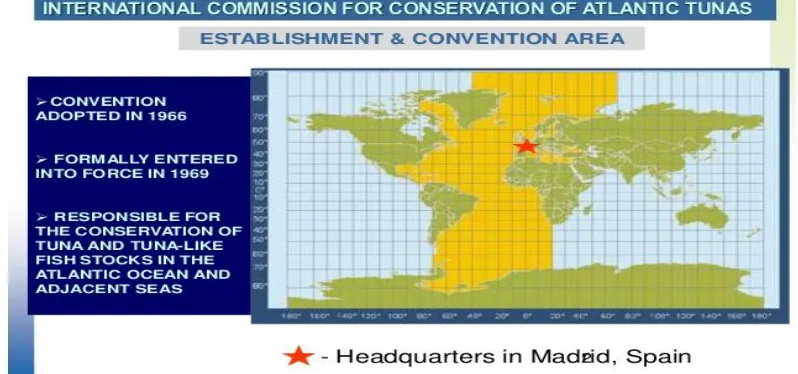
Figure 2 ICCAT Convention Area ... 23
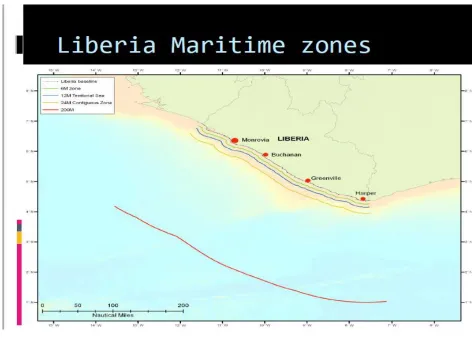
Figure 3Map Showing IEZ,CZ,TW and EEZ of Liberia's Maritime Domain ... 38
Figure 4 Location of current and future on Liberia's continental shelf ... 39
Figure 5Documentation of IUU fishing Activities in Liberia... 41
Figure 6 IUU fishing in the EEZ of few African Countries ... 43
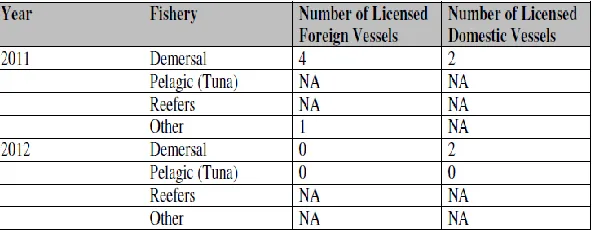
Figure 7 Number of Registered Vessel in Liberia. ... 45
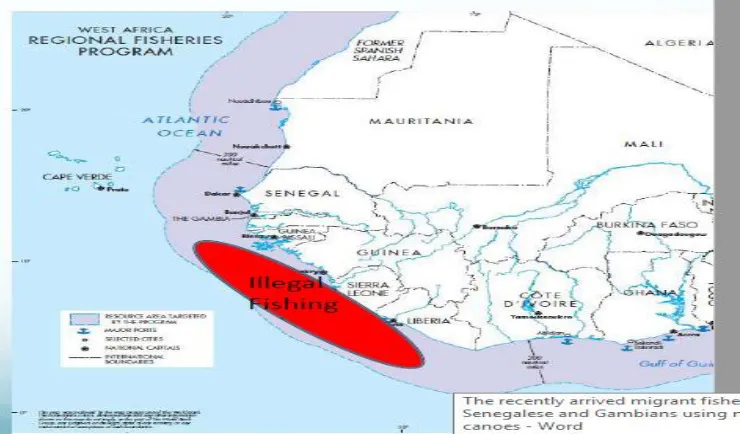
Figure 8 West Africa Regional Fisheries Programs in Developing African Countries ... 46
Figure 9 Joint Aerial Patrol with UNMIL, BNF/Project Staff, &Sea Patrol with LCG and BNF/Project Staff ... 51
ix
List of Abbreviations
ABNJ Areas Beyond National Jurisdiction
ALTFACO Ministerial Conference on Cooperation of African States Bordering the
Atlantic Ocean
AIS Automatic Identification System
BNF Bureau of National Fisheries
CDS Catch Documentation Scheme
CCAMLR Convention for the Conservation of Antarctic Marine Living Resource
DNA Deoxyribonucleic Acid
EU- European Union
EEZ- Exclusive Economic Zone
FAO Food and Agriculture Organization
FCWC Fisheries Committee for the West Central Gulf of Guinea
FMC Fisheries Monitoring Center
GDP Gross Domestic Product
GRT Gross Tonnage
HF High Frequency
ICG Icelandic Coast Guard
IPOA-IUU International Plan of Action to prevent, deter and eliminate Illegal
Unregulated, Unreported Fishing Activities
x IUU Fishing Illegal Unreported Unregulated
IEZ Inshore Exclusion Zone
ICCAT International Commission for the Conservation of Atlantic Tuna
LCG Liberia Coast Guard
MPA Marine Protected Area
MRAG Marine Resources Assessment Group
MCS Monitoring Control and Surveillance
MCSCC Monitoring Control and Surveillance Coordination Committee
NOAA National Oceanic and Atmospheric Administration
NOP National Observer Program
NEPAD New Partnership for Africa’s Development
NAFO Northwest Atlantic Fisheries Organization
NEAFC North East Atlantic Fisheries Commission
PSMA Port State Measures Agreement
RFMO Regional Fisheries Management Organization
SAR Search and Rescue
SDG Sustainable Development Goal
SWOT Strength Weakness Opportunity Threaten
SOP Standard Operating Procedure
xi UN United Nations
UNCLOS United Nations Convention Law of the Sea
UNFSA United Nation Fish Stocks Agreement
UNCED United Nations Conference on Environment and Development
UNHCR United Nations High Commissioner for Refugees
UNMIL United Nations Mission in Liberia
USAID United States Agency for International Development
VMS Vessel Monitoring Systems
VHF Very High Frequency
WCFC Western and Central Pacific Fisheries Commission
WARFP West African Regional Fisheries Project
WWF World Wildlife Fund
1
CHAPTER ONE: GENERAL OVERVIEW OF IUU FISHING
1.1 Introduction
Illegal Unreported Unregulated (IUU) Fishing activities have a global impact on human
society, marine ecosystem and conservation as well as food security. IUU fishing
undermines global, regional and national laws governing sustainable management and
conservation of fisheries (Johns, 2013). It accounts for an economic loss of approximately
$23 billion which is equivalent to 26 million metric tons of fish stocks annually worldwide
(Johns, 2013), representing an, estimated 15 to 30% of global annual fish catch. It also
threatens 4.3 billion people who depend on fisheries for protein (FAO, 2016).
Fisheries stocks are declining rapidly due to overfishing and ecosystem degradation
caused by destructive fishing methods and practices. As a result, global food security,
including 30% of the world’s animal protein, has been affected (Quaas et al, 2016).
IUU fishing activities have contributed to socio-economic and ecological crisis in
economies around the globe. Although several laws and voluntary fisheries legal
instruments have been developed by relevant stakeholders, and governmental and
non-governmental bodies, there is still a pressing need for more collaborative effort.
This dissertation is a comprehensive study of IUU fishing challenges as well as best
management approaches and responses employed by nations to tackle the challenge on a
global scale. It further discusses Liberia’s IUU fishing challenges and lessons learned that
will serve as a useful tool for decision makers in the Liberian fisheries sector and other
2
1.2 What is IUU?
Illegal Unreported Unregulated (IUU) Fishing is a term coined to describe all fishing
activities that violate fisheries law or go beyond the fisheries regulations; It also includes
prohibited fishing gear (wrong fishing gear), overfishing (fishing over quota), fishing
without license, fishing in closed areas, or fishing prohibited species (FAO, 2016). The
FAO (2016) broadly defines IUU as:
Illegal Fishing: Fishing activities by a foreign vessel in the national jurisdiction of a
coastal state within the 200 nautical miles’ unit of the Exclusive Economic Zone (EEZ)
or the high seas which is not under the regime of a Regional Fisheries Management Body
(RFMO) without permission or without license.
Illegal fishing can also be described as fishing within restricted zones. For example,
fishing in a Marine Protected Area (MPA) or in the Inclusive Exclusion Zone (IEZ) of a
coastal state within 4 nautical miles from the shoreline by an industrial trawler. The IEZs
are spawning grounds for fish and habitat for juvenile fish. Fishing in the IEZ is prohibited
by industrial trawlers but permissible for small domestic fishing boats by artisanal or local
fishermen.
Unreported Fishing: Fishing activities by vessels that are intentionally under-reported or
fish catch that is misreported to relevant national fisheries authorities or RFMOs.
Unregulated Fishing: Fishing in areas out of the bounds of the national jurisdiction of a
coastal state or RFMO, wherein there are no management or conservation measures or
fishing activities of a vessel without a flag or by a flag vessel which is not party to the
RFMOs.
1.3 How has it affected the Fisheries Globally?
Based on global analysis, over the last twenty years, the trend of illegal fishing has
3
metric tonnes annually of global seafood catch (Agnew et al., 2009).Developing countries
have been most affected; for example, over 40% of the fish stocks harvested are
unreported catches in West Africa (Agnew et al., 2009). As a result, it threatens the food
insecurity of 2.6 billion people from developing countries that depend on fish protein
(USAID, 2016). It also has an ecological impact on critical marine environments (Marine
Resources Assessment Group, 2005). For example, destructive fishing practices like
bottom trawl fishing and the use of unselective fishing gear like small mesh gill nets are
used to capture juvenile fish stocks (Namisi, 2005), disrupting natural growth of marine
species in reefs, seamounts and other vulnerable marine ecosystems (MRAG, 2005).
Illegal Unreported Unregulated fishing reduces the sustainable management of marine
ecosystems and fish stocks (unregulated catch reports and stock estimate), affects the
livelihood of local fishermen, increases the black market for illegal fish product and
negatively affects the fish industry market such as the wholesale or local distribution of
fish product (Leal et al, 2015). The negative impact of illegal fishing is enormous and has
raised the concerns of governmental and non-governmental bodies, regional fisheries
management organizations and all relevant stakeholders.
Coastal Livelihood of Local Fishers: Most coastal communities depend on fisheries for jobs and food security, however IUU fishing activities by industrial
fishing fleets displace these local fishers out of jobs. It also disrupts their fishing
activities by competing for ocean space. For example, in 2013 a domestic
industrial trawler with a Korean flag was caught fishing in the IEZ of Sierra Leone
waters; It reduced the catch of the local fishers, destroyed their nets and it has, at
times led to conflict, death or injury (Roush et al., 2014).
Marine Stocks: IUU fisheries harvests are unregulated or unreported; This
hampers the ability to sustainably manage the fish stocks and, as a result, the stocks
are underestimated. This has led to a drastic decline of the world’s fish stocks and
4
reports, 30% of the world fisheries is overexploited and 57% is fully exploited
(Bondaroff et al., 2015), also an estimated 20% of world’s fisheries were either
underexploited or moderately exploited (United Nations, 2010). For example, 60%
of the world’s shark species are assumed to be overexploited or depleted (United
Nations, 2010).
Economic Impact: Expected revenue and taxes due to the government or
appropriate authorities generated by fisheries are diverted or reduced because of
illegal fishing activities. They also reduce price or market value of fish
significantly (Le Gallic & Cox, 2006). IUU fishing contributes to a global
economic loss of $USD 10 to 23 billion annually (Agnew et al., 2009). It is more
convenient for IUU fishers to fish illegally because they operate at a lower cost
than the legal fishers. Therefore, in countries where illegal fishing is prevalent the
government suffers substantial economic loss.
Ecological Impact: There are several environmental impacts caused by IUU such as overfishing which lead to a decline in fish stocks and high amount of bycatch
or non-targeted species by commercial fishing vessels; Destructive fishing
practices such as benthic trawlers destroy critical marine habitats and disrupt the
food web as well as hamper the conservation of vulnerable species (Borges et al.,
2001). For example, an average of 17.9 to 39.5 million tonnes of bycatch are
discarded annually by commercial fisheries in Portugal (Borges et al., 2001). Socio- Cultural: Overfishing has led to depletion and collapse of marine fish
stocks such as the California sardine fishery in the 1950s, Alantos-Scandian
herring fishery in the 1960s, North Cod fishery of Canada in 1992 and the North
Sea cod fishery (Hauge, Cleeland, & Wilson, 2009). Commercial exploitation of
global fisheries and increase in the world consumption of seafood has resulted in
unequal distribution of marine resources, food scarcity and loss of employment for
2.6 billion people that live within coastal communities of poor developing
5
n.d.). For instance, thousands of local fishers have abandoned their fishing careers
in search of other jobs because of inadequate catch (Pollack et al., 2008).
1.4 Types of Illegal Unreported and Unregulated Fishing
There are several types of illegal fishing practices within the exclusive economic zone of
a coastal state or on the high seas beyond national jurisdiction. They include bycatch,
destructive fishing gear, overfishing, benthic trawlers, illegal transshipment (discussed in
chapter 4 with respect to Liberia) and unregulated fishing. Each of these fishing practices
is particular to certain regions.
1.4.1 Bycatch
Bycatch are species incidentally caught or non-targeted species (Davies et.al, 2009);
however, they are very vulnerable to overexploitation. Vulnerable marine species such as
whales, dolphins, sharks, sea turtles, and seabirds live in pelagic habitats of both tropical
and non-tropical regions (Lewison et al, 2004). These non-targeted species are
incidentally entrapped, entangled or hooked by fishing gears intended for targeted species.
(Borges et al., 2001).
Commercial Fishing is characterized by a high portion of incidental capture species or
bycatch wherein there is no directed effort (Borges et al., 2001). However, bycatches are
unavoidable because the majority of the fishing gear used is multispecies and
non-selective fishing gear such as trawls; As a result, the bycatch and discards are significantly
high (Borges et al., 2001).An estimate of 7.3 million metric tons of bycatch is discarded
annually in the world’s commercial fisheries from 78.4 million metric tons of landed catch
(Kelleher, 2005).
1.4.2 Destructive Fishing Gears and Practices
Fishing gear refer to the tools used by fishers to catch fish and the use of such gear is
6
However, according to FAO (2008), destructive fishing gear or non-selective gear is
fishing equipment used in a manner that destroys or damages the marine ecosystem. Some
destructive fishing practices include dynamite fishing, cyanide fishing, ghost fishing and
trawling activities by commercial fishing vessels.
1.4.3 Nets
There are different types of nets used to capture fish from the simple nets used by artisanal
fishers to the most sophisticated nets used by commercial fishing vessels. The most
destructive fishing nets are the benthic trawlers and dredgers (blade-like metal which digs
into the bottom sea and scrape all the organism into an armor-plated or steel net) which
drag across the seabed and scour the benthic habitat, capturing a large amount of bycatch
as the trawl beam un-selectively disturbs the sea floor in its path (Watson et al, 2006)
Gill nets are made up of walls of meshes (mesh size is the spaces within the net which
determines the size of fish to be captured, Wolf et al., 2015) of thread which could be
about 5 by 30 inches as standard size (Bjordal,2001). Another destructive fishing method
is the use of small meshed gill nets or mosquito nets commonly used by artisanal fishers,
scoping all the juvenile fish into the net ((Namisi, 2005). For example, in Lake Victoria
of Uganda, local fishers predominantly use mosquito nets and small mesh gill nets of 3.5
4. or 4.5 inches, which has led to depletion in fish stocks as well as social- economic loss
(Namisi, 2005).
1.4.4 Cyanide Fishing
This is a destructive fishing method used predominantly in the Indo-pacific to catch live
reef fish; The cyanide poison is put into the water by divers in targeted areas where schools
of reef fish are seen or in supposed areas in the corals where the reef fish could be hiding;
As a result, the cyanide temporarily stuns the fish, which are easily collected. In the
process and then it is easily collected in the process, many non-targeted species such as
7
1.4.5 Dynamite Fishing
Fishing with explosives or bomb blast that kills fish stocks within close proximity, is
prevalent in developing countries and practiced mainly by locals or artisanal fishers
(Wells, 2009). Dynamite fishing is widespread in South Asia, particularly in Indonesia
and the Philippines (Shrivastav, 2012). Dynamite, grenades or empty bottles filled with
potassium nitrates or artificial fertilizer with pebbles and a fuse are used as bombs in
fishing. The explosive or bomb is dispensed into the water and detonated, immediately
killing large schools of fish. The bombs burst the swim bladders of the fish and the shock
waves from the explosion break the coral’s calcium carbonate skeleton into small pieces,
which disrupts the symbiotic relationship between the coral and the algae, and gradually
the coral loses its nutrients and dies off (Shrivastav, 2012). Dynamite fishing is a
convenient and cheap way for fishers to hunt large schools of fish (Shrivastav, 2012).
1.4.6 Ghost Fishing
These are abandoned, lost or discarded fishing gears in the seas such as gillnets, hooks,
longlines, and trawl nets, which kill or capture marine species and contribute to 10% of
annual marine debris from a total global estimate of 6.5 million tons (Gilman, 2015).
1.5 Why West Africa and Liberia
The West Africa region especially Liberia is endowed with an abundant fishery resource
which provides coastal livelihood, animal protein, and job opportunities for over 3 million
people and generates revenue to governments (Fisheries Committee for the West Central
Gulf of Guinea et al,2015). In 2011, the total catch production from marine waters in West
and Central Africa was estimated to be two million tonnes which is approximately 3.5 %
of the world’s annual fish production (FCWC et al,2015).
However, West Africa particularly Liberia needs immediate attention because the fishery
8
governance, weak implementation and enforcement schemes, dominance of distant water
fishing trawlers, lack of regional cooperation and overfishing, which have led to a rapid
decline of fish stocks (Atta-Mills et al, 2004).In West Africa an estimated 40% of the fish
stocks harvested are not reported catches (Agnew et al, 2009). Chinese fishing fleets
(industrial trawlers) have dominated the West African waters contributing immensely to
most of the IUU fishing activities in the Exclusive Economic Zone (EEZ); Approximately
166,000 metric tonnes of illegal fish catch is associated with Chinese Distant Waters
Fishing Operation (Mallory, 2013). Overfishing has led to food insecurity and has affected
the coastal communities, which depend solely on fishing for livelihood.
Liberia is an example of a West African country that is faced with enormous challenges
of IUU fishing, which has led to economic and social crises; IUU fishing contributes to
an economic loss of $ USD 75 million annually (displacing thousands of local fishers out
of jobs and a way of life that has existed for years), as well as food insecurity. As a result,
49% of the country’s population is faced with food insecurity because of an inadequate
food consumption pattern that is, consisting of a, large intake of cereal and low amount of
protein (USAID, 2013). Fisheries contribute 10% to national GDP and provide 15% of
animal dietary protein to the population (USAID, 2016).
1.6 Rationale of Study
This dissertation is a literature review of Global Illegal Unreported and Unregulated
Fishing, with emphasis on successful approaches and management response. The author
reviewed 128 published articles, including national reports, FAO reports, books and
journal articles. It also discusses common IUU fishing challenges around the globe.
Furthermore, it provides an overview of Liberia’s IUU fishing situation and challenges in
comparison with current challenges and approaches on a global scale. The dissertation is
composed of six parts; Part one (1) gives a general overview of global IUU fishing
activities; part two (2) discusses the methodology of the literature review; part three (3)
9
four (4) overviews Liberia’s IUU fishing situation and current practices ,while part five
(5) provides a SWOT analysis of strengths, weakness, opportunities and threats for
combatting IUU fishing in Liberia and compares Liberian and global approaches used
against IUU fishing and part six (6) makes recommendations for Liberia based on useful
lessons learned from the review.
Recommendations from the dissertation will serve as an informative tool for various stakeholders, including inter-collaborating agents of Liberia’s fishery sector, such as the
Ministry of Agriculture, Ministry of Defense (Coast Guard), Maritime Commission,
Ministry of Immigration, Ministry of Finance and the Ministry of Justice about the
importance of effective collaboration and management response to tackle IUU fishing.
This dissertation will also serve as an informative tool for other Regional Fisheries
Management Organizations (RFMO), Sub-regional Fisheries Commission (SRFC) and
the Fisheries Committee for West Central Gulf of Guinea (FCWC) on how to improve
10
CHAPTER TWO: METHODOLOGY
2. 1 Selections of Article
An intensive, systematic search of peer reviewed literature was conducted on journal
articles, articles, including national reports on Liberia and textbooks using keywords, such
as EEZ, IUU fishing, Overfishing, offshore, PSMA, best practices in MCS, fisheries
management and illegal fishing, in search engines, which included EBSCO discovery
science, google scholar and Scopus. Secondly, the reference sections of relevant articles
were used to obtain other related articles useful for this research. Finally, the author
conducted a bibliographic search of relevant review journal articles identified in the search
engines to ensure all relevant articles were identified.
2.2 Articles Screening
The articles screening section comprises of both inclusion and exclusion criteria. In the
inclusion criteria, articles were selected using date restriction methods (only articles
published from 2000 onwards), and language (English only). Articles with titles and
abstracts on Fisheries Management, Illegal Unreported, Unregulated Fishing, Exclusive
Economic Zone (EEZ) or Offshore fishing were assessed by full text. The first 36 related
article results from EBSCO discovery science were screened by reading through the
abstracts only. During the screening process articles were assessed by the article title and
abstract, followed by the full content. For the exclusion criteria, articles with titles and
abstracts that were indirectly related to the literature review subject matter were not
assessed by full text. For example, topics on coastal erosion, pollution, marine sewage,
and artisanal fisheries were excluded from the search results. This process was conducted
11
2.3 Data Gathering and Analysis
Information extracted from the articles included full references and percentage of global
impact of IUU fishing activities in particular regions. These were hierarchally assessed
and categorized in terms of regions, tropical and non-tropical regions on the basis of best
practices/ solutions peculiar to the geographical location. Some of the issues mentioned
include bycatch sizes (species that are prohibited from harvesting), benthic trawlers
(destructive fishing practices), illegal fishing, wrong fishing gear and illegal
transshipment at sea. Best practices or compliance strategies observed by states as they
relate to the deterrence of illegal fishing activities were fines, monitoring control and
surveillance activities, regional cooperation, sharing of information, genetics (fish
traceability) and governance.
The next step was, the SWOT analysis by plotting a chart which shows strengths,
weaknesses, opportunities and threats of Liberia’s fisheries management approach, and a
comparative analysis with other countries and RFMOs with advanced fisheries
management regimes. Based on this comparison, useful examples for Liberia to consider
in improving its fisheries management were highlighted.
2.4 Best Practice
There is no universally defined, or best agreed upon, goal standard method for defining
IUU fishing. Different methods are being applied in different places, using standard
guidelines set by global and international organizations such as the FAO, UNCLOS and
UNSFA. In this light, for the purpose of this dissertation as defined by the author; best
practice can be defined based on two criteria. The first criteria, are based on fisheries
management measures that are consistent with international fisheries agreements and are
supportable by scientific evidence. These measures are shown to have worked effectively
and have measurable results in detection of IUU fishing activities for the same amount of
12
criteria are without scientific evidence or not in line with an international fisheries
agreements and are considered Soft Management Response. These are visually described
in Figure 1 below.
2.5 Criteria
International Agreement Evidence Works
Align international agreement
Hard Management Approach
Evidence for decreasing in detection
of IUU Fishing
Hard Management Approach
Does not align with international
agreement
Soft Management
No solid evidence but accepted to
probably be working
Soft Management
Soft Management Response
13
CHAPTER THREE: OVERVIEW OF GLOBAL IUU FISHING APPROACHES
3.1 Introduction
Due to the global decline in fish stocks and degradation of critical ecological ecosystems
as well as socio-economic problems caused by IUU fishing activities to economies,
various relevant stakeholders such as regional fisheries management bodies,
conservationists, fisheries managers, governmental and non-governmental organizations
have seen the need to develop new strategies including more effective legal fisheries
instruments to combat IUU fishing activities (Lodge et al., 2007).
Since 1995, theUN Fish Stocks Agreement has been the major international treaty that
deals directly with fisheries (United Nations, 2010). It was later followed by an
international Agreement on Port State Measures (PSMA) to prevent and eliminate IUU
fishing as the first legally binding global response against IUU fishing (Schmidt, 2005).
This global effort has motivated regional and sub-regional fisheries management
organizations to develop laws, regulations and policies both on national and international
levels as it relates to the sustainable management and conservation of fisheries.
The most recent international fisheries agreement is the Sustainable Development Goal
14 of the United Nations with particular emphasis on target 14.5 to eliminate IUU fishing
by 2020 in commitment to the UN 2030 Agenda (United Nations, 2015). This seems to
be a global challenge due to non-compliance, poor governance, lack of political will, weak
enforcement and implementation schemes, and several other challenges.
This Chapter is a literature review which highlights global management response and
14
3.2 Management Approach
In developing new strategies to combat IUU fishing it is important to identify the main
drivers which could be attributed to economic and social factors such as excessive fishing
for maximum benefits by IUU fishers, the market value (price) of fish, the efficiency of
the Monitoring Control and Surveillance (MCS) programs, level of deterrence against
IUU (such as fines and sanctions), flag State obligations, local governance and
management regimes, poor socio-economic conditions in developing countries and
enforcement of international legal framework (Schmidt, 2005). Hence, cooperation at
international and regional levels is the most effective tool to reduce IUU fishing activities
to a minimum level. Other types of management approaches include regional cooperation,
genetics and community based approaches.
3.3 Monitoring Control and Surveillance
Monitoring Control and Surveillance (MCS) is a legal international fisheries instrument
developed by the FAO in 1981 in response to Article 73 of the (LOSC) 1982 which gives
sovereign rights to Coastal States over their Exclusive Economic Zone (200 nautical miles
from shoreline beyond the territorial seas) to explore, exploit, manage and conserve its
natural resources including fisheries (Everett, 2002). It was further defined by FAO in the
fisheries context as, “Monitoring is the continuous requirement to measure fishing effort
and resource yield, Control is the regulatory condition under which the exploitation of the
resource may be conducted and Surveillance is the degree and types of observation
required to maintain compliance with regulatory controls imposed on fishing activities”
(Everett, 2002).
The Regional Fisheries Management Organizations (intergovernmental fisheries
organizations with legal competence under international law to govern, manage and
conserves fisheries resources including part of the high seas; (Asmundson, 2016) obligates
15
instrument for the purpose of monitoring and controlling the activities of commercial
fishing vessels, especially in the domain of the Exclusive Economic Zone of the Coastal
State (Sodik, 2009). MCS is an integrated system which entails collaborative efforts from
related institutions and organizations at the national level to fight against IUU fishing.
Although it has been proven to be an effective fisheries tool, there are still pressing
challenges of coordination in MCS operations (Geirsson, 2011). This integrated MCS
program is categorized in into several components which include Catch Documentation
Scheme (log record), Vessel Monitoring System (VMS) and Automated Identification
System (AIS) of which the latter two are software satellite programs installed on vessels.
MCS also encompasses, fisheries patrols and the Observer and Inspector Programs, which
include certified fisheries personnel or officers who record fishing effort or stock estimates
and inspect activities of fishing fleets(Wold et al, 2000).
3.3.1 Catch Documentation Scheme
Catch Documentation Scheme is a voluntary fisheries instrument developed by RFMOs
as a component of MCS to combat IUU fishing (Clarke, 2010). The system tracks the fish
from the point of capture throughout the entire supply chain or trade route and ensures
that fish were caught in a manner that is consistent with applicable conservation and
regulatory fisheries measures (Clarke, 2010). The scheme includes all legally caught fish
(quantity, size, weight, species), excludes illegally caught fish and ensures the legitimacy
of the vessel (Clarke, 2010). The CDS certifies the stock at the point of landing, thereby
verifying its origin, and requires fishing or trading nations to ensure that copies of all
validated documentations, such as the DSD or Dissostichus catch documents, under the
Convention for the Conservation of Antarctic Marine Living Resources (CCAMLR) CDS
and the BCD or Bluefin catch document under the International Commission for the
Conservation Atlantic Tuna (ICCAT) CDS, are issued or received from the fishing vessel,
including copies of export or re-export documents (World Wildlife Fund-South Pacific,
16
world market through the certification process, thereby, ensuring that the trade cycle of
fish landed in accordance with the certification process. Violators will be dealt with
nationally, sub-regionally and regionally in accordance with set fisheries rules and policies
for IUU catches (Lodge et al., 2007). In many countries catch verification is conducted
through a Dockside Monitoring Scheme that actively monitors catches at wharfside. In
many developed countries the cost of dockside monitoring (weigh out) is borne by the
fishers (Rodríguez et al., 2015).
The CCAMLR uses this scheme to trace Patagonian toothfish and exclude those IUU
caught fish in major Patagonian toothfish markets within or out of the convention area
such as the United States of America (U.S.A), Canada, Japan, Australia and EU (Agnew,
2000). Other regional fisheries management bodies such as Commission for the
Conservation of Southern Bluefin Tuna (CCSBT) and the ICCAT have most recently, in
2010 and 2008 respectively, started implementing the scheme amongst all the other
RFMOs worldwide; However, only these three RFMOs have adopted the CDS
(WWF-South Pacific, 2013). In a number of developed countries there are also dockside
monitoring schemes established to increase the reliability of the reported catch at the
landing site (Rodríguez et al., 2015).
3.3.2 VMS
Vessel Monitoring Systems are software satellite equipment with high resolution installed
on commercial fishing vessels that continuously transmit the vessel’s location regionally
at specific time intervals between 30mins and 120min (Lee et al, 2010). The VMS is a
standard requirement as a voluntary fisheries instrument for all fishing fleets, used to
transmit information automatically for computer analysts at fisheries monitoring centers
to interpret (Wold et al, 2000). The VMS is composed of three components: the tracking
unit on board the vessel, transmission medium and the base station (Deng et al., 2005).
17
which sends positioning data through the transmission medium, a communication satellite
to the base station, while VMS reports are automatically transmitted from a predetermined
location at a specific time (Deng et al., 2005).
This makes the VMS data reliable and useful in determining a vessel’s speed, and fishing
location, tracking of fishing and non- fishing activities, removing duplicated VMS
records, providing time and distance of vessel near or in the port, providing records of
fishing trips (time vessel leaves to when it returns), calculating and estimating fishing
effort, affirming the validity of the log book data and determining habitats with high
fishing pressure (Watson & Haynie, 2016). The information on affirmation of logbooks is
obtained by reading tracks of the vessel’s speed provided by the VMS; Both the logbook
data and VMS data could be linked by combining details such as vessel name and dates
which are common to both data (VMS and Logbook), thus affirming the catches in the
logbook with the VMS creating a means to determine depletion analysis (Deng et al.,
2005).
In 2001, the European Commission (EU) adopted a regulation that requires VMS
installation on all fishing vessels greater than 24 m in length, later extended to vessels
over 15m, and finally, in 2012, it was reduced to vessels over 12m, as an enforcement and
surveillance tool to monitor the spatial distribution of fishing effort (Lee et al, 2010). VMS
is widely used as a mandatory fisheries regulatory and enforcement tool in nations such
Australia, Canada, New Zealand and United States of America (FAO, 2006).
3.3.3 Fisheries Patrols
Fisheries patrols include air, sea and land patrols (lakes, rivers and coastal areas) and are
the primary MCS surveillance tools used to detect violations and illegal fishing activities.
They could become cost effective with the integration of surveillance resources
(Flewwelling et al, 2003). Patrols should be pre-planned and key participants briefed on
18
areas with high fishing concentration and closed spawning areas. These areas may contain
many un-licensed vessels mixed with licensed fishing vessels. The debriefing will identify
potential illegal fishing activities before the operation, including the preparation and
review of relevant documents for the patrol and any follow up action as required after the
surveillance operation (Flewwelling, et al 2003).The military coast guard officers
conducts sea patrol operations (Renton & McIvor, 2015) and the air patrols are
coordinated by a military aircraft on a multitasked mission or by a civilian aircraft hired
for specific maritime surveillance operations (Meltzer & Fuller, 2009) and could also
include other fisheries enforcement officers on maritime surveillance. Through the
fisheries patrols, photographic and observational evidence is obtained, which can later be
used for prosecution of fisheries violations (Meltzer & Fuller, 2009).
For example, the Canadian government assigns aircraft in a joint inspection and
surveillance operation which provides air surveillance for the NAFO zone and the
Canadian EEZ (Meltzer & Fuller, 2009). The Canadian fisheries is one of the most
monitored and regulated fisheries in the world because of the aerial and sea patrols
component of its enforcement program, which is employed on both the Pacific and
Atlantic coasts (Millar & Russell, 2012). It has been used to monitor the rebuilding of the
codfish resource which collapsed in the early 1990s and has maximized the deterrence of
illegal fishing activities (Millar & Russell, 2012).
3.3.4 Inspector Program
The Fisheries Inspector Program comprises certified and trained fisheries officers with
vested powers to participate in or conduct investigations, prepare reports of serious
fisheries crimes or provide evidence in court and participate in special fisheries operations
organized to detect crime, but with limited power to enforce fisheries laws and regulations
on infringements or minor violations (Bergh & Davies, 2002). Such programs may entail
19
particularly in high value fisheries such as tuna and other billfish (Secretariat of the
Fisheries Transparency Initiative, 2016).
Regional fisheries management bodies (RFMOs), such as the Northwest Atlantic Fisheries
Organization (NAFO), CCAMLR and ICCAT, mandate member States to ensure that
fisheries inspectors inspect the fishing vessels of non-member States that harvest fish
within any part of the convention area and those that enter the port of a member state.
Prior to inspection, the vessel shall not land or transship its catch and, furthermore, a
non-member State that harvest within the convention area must comply with all relevant
fisheries laws and regulations (Wold et al., 2000).
The fisheries inspector is authorized to inspect all fishing vessels within its jurisdiction as
it relates to the type of fishing gear, fish catches and log records to ensure that the vessel
is in compliance with relevant fisheries regulations (Wold et al., 2000).
3.3.5 Observer Program
The Observer Program is a major component of MSC, wherein trained fisheries personnel or fisheries observers with scientific knowledge are deployed on-board fishing vessels to
collect accurate scientific data as well as to ensure compliance with relevant fisheries laws
and policies during fishing activities for the purpose of conserving and managing fisheries
(Wold et al., 2000). The information collected by the fisheries observer will support the
determination of total allowable catch and bycatch fish stocks assessment and assessment
of total fish population, with the purpose of sustainable management and conservation of
fish stocks (Porter, 2010).
Since the establishment of the U. S National Observer Program (NOP), 1000 observers
have been deployed and have spent 83,000 days at sea. They, additionally, render support
to 6 other regional programs which that observe 47 fisheries around the world (National
Oceanic Atmospheric Administration, 2013), and support national coordination for
20
Presently, forty-two (42) fisheries have adopted regulations that mandate fisheries
observers as a requirement on commercial fishing vessels (Porter, 2010). For example, the
North Pacific fisheries regulation requires 100% observer coverage on commercial fishing
vessels of 125 m and 30% observer coverage on 60m long vessels. During 2000 to 2002,
these observers reported 590 violations which serves as a serious deterrent to fisheries
violators (Porter, 2010).
3.3.6 MCS as Best Practice
The region of the North Atlantic Ocean particularly Iceland has gained significant success
in the fight against IUU fishing activities through an MCS integrated system (Geirsson,
2011). Iceland has improved its software technology for VMS such that it is mandatory
for all licensed vessels fishing in its EEZ. The VMS programme is operated strictly by the
Icelandic Coast Guard (ICG) for Search and Rescue (SAR) operations, fisheries control,
border control, immigration, Icelandic civil defense, customs, communication and air
transport as well as monitoring of vessels within or outside of Iceland national jurisdiction
(Suhender, 2012).
The approach includes all available data such as vessel’s identification, its movement,
IUU list, notification, reports, fishing license, permit and port state control reports
(Geirsson, 2011). Iceland has improved the biomass of fish stock, and minimized IUU
fishing activities to the point that no IUU fishing activities were detected in Iceland waters
or North Atlantic Ocean, including Norway and Greenland from 2010 to 2015 (Dignan et
al., 2015). The measures undertaken by Iceland have included mandatory VMS
regulations, and consist of sea and air patrols conducted by the Icelandic coast guard over
its EEZ. The country has implemented other fisheries management and conservation
measures such as Individual Transferable Quotas (ITQ) system, discard ban, area closure
to protect spawning and juvenile fish species, and improvement in mesh size regulations
21
3.4 Enforcement
The most effective fisheries management tools are compliance monitoring and
enforcement; Nevertheless, the expected economic gain of an illegal activity and expected
penalty are factors that influence the decision of an illegal fisher before committing a
violation (King et al, 2009). Fisheries enforcement is a process that ensures maximum
compliance with fisheries agreements or rules regarding fisheries (Arnason, 2013).
According to Bose, et al (2017), a successful enforcement program ensures the ability to
detect a violation when it occurs, the ability to apprehend, and the ability to determine the
category and degree of penalty that could serve as a deterrent. Furthermore, the
effectiveness of an enforcement program depends on key elements such as rules,
detection, arrest, seizure and confiscation given detection, prosecution given arrest,
conviction given prosecution and penalty given conviction (Bose et al.,2017). There are
several types of fisheries rules or regulations that govern fisheries national, international
and regional levels.
3.4.1 National Fisheries laws and policy enforcement
National fisheries laws or policies are developed by the legislation of a country to ensure
that fisheries resources are managed in a sustainable way and in compliance with relevant
regional and international fisheries agreements (Skonhoft & Gobena, 2009). For example,
the New Zealand Fisheries Act (1996) consists of two concepts, which are the utilization
concept (the human right approach) and the sustainability concept (long term conservation
for sustainable yield) (Skonhoft & Gobena, 2009).
3.4.2 Regional Fisheries regulations or agreements
Regional fisheries regulations are a legally binding set of rules and agreements adopted
by intergovernmental organizations that are made up of several countries within a
22
National Jurisdiction (ABNJ), given the authority under international law for conservation
and management fisheries measures (Asmundson, 2016). Examples of RFMOs, are
CCAMLR, ICCAT, NAFO amongst others. There is a total of 38 regional fisheries bodies
worldwide; Twenty of these are advisory bodies and 18 are RFMOs (Lodge et al., 2007).
Most often, the regulatory measures target specific species regarding issues such as area
based measures which is the restriction or banning of bottom fishing gear to protect
vulnerable benthic habitats, adverse environmental impacts caused by destructive fishing
practices, data collection used to assess, describe and identify the impact of fishing
activities and status of the marine stocks, and total allowable catch monitoring as well as
MCS programs (FAO,2009).
An independent panel made proposals to the High Seas Task Force on best practices for
RFMOs as reported by Michael Lodge (Lodge et al., 2007), which are considered as
standard global best practices employed in combating IUU activities in regional areas
monitoring. The best practice is accomplished through effective regional cooperation and
compliance of conservation and fisheries management measures which entails, sharing
VMS information and IUU vessel list, coordinating port and trade measures and the
harmonization of international fisheries instrument into national legislation (The Royal
Institute of International Affairs, 2007). For example, the Northeast Atlantic Fisheries
Commission (NEAFC), West Central Fisheries Commission (WCFC) and the earlier
mentioned CCAMLR, ICCAT, and NAFO have established an IUU vessel list of fishing
vessels caught illegally fishing in their convention areas to be published on their websites
and shared among member states as a means of deterring IUU fishing (Lugten, 2014). In
particular, Liberia needs to focus on the regional fisheries body ICCAT (see Figure 2
below), given the importance of the large pelagic tuna species to the potential fisheries
economy of Liberia. Further information concerning other RFMOs is provided in Annex
23
Figure 2 ICCAT Convention Area Source: https://www.google.se
3.4.3 International Fisheries laws
International fisheries laws are sets of rules, principles and standards that legally binds
States, both members and non–members and establish a framework to regulate and
sustainably manage their fisheries resources in the oceans and high seas (Cochrane &
Garcia, 2009). There have been several regional and international voluntary and
non-voluntary fisheries agreements between member states for effective implementation and
enforcement of relevant fisheries laws and regulations to combat and eliminate IUU
fishing activities for sustainable management and conservation of fisheries since the early
twenty-first century prior to the alarming rate of IUU fishing activities.
UNCLOS 1982; provides coastal states rights to manage and utilize the fisheries resources
in the national jurisdiction of their (EEZs). The 1993 FAO Compliance Agreement of the
United Nations also plays an important role in the fight against IUU fishing activities; Its
main focus is on high sea fishing as it relates to reflagging of vessels by nationals in order
24
the Agreement assigns FAO, instead of the RFMOs, the role of international coordination
as a means to prevent, deter and eliminate illegal fishing (Swan, 2005).
In 2001, the FAO of the United Nations developed a voluntary fisheries instrument,
referred to as the International Plan of Action to prevent, deter and eliminate Illegal
Unregulated, Unreported Fishing Activities (IPOA-IUU) in the framework of the Code of
Conduct for Responsible Fisheries as a regulatory tool to be used by all member states in
the fight against IUU. For example, the IPOA-IUU calls upon States and RFMOs to
promote the use and implementation of MCS components and cooperate through MCS by
sharing of information on IUU activities including Port State control measures (Swan,
2005).
3.4.4 Enforcement as a best practice
The United States has an effective and rigid enforcement program which has gained
maximum compliance since it strengthened its enforcement measures by recruiting more
competent field officers and increased the penalty charges against fisheries violators in
2001 (King et al, 2009). Within the first five years, there was a serious reduction in
fisheries violations. For instance, from 2001 to 2006, violations declined from 20-30% to
10-20% (King et al., 2009).
3.5 Deterrence Effect
Non-compliance behavior such as misreporting or underreporting catch, exceeding the
catch limits and other illegal activities are common amongst fishers; Therefore, to ensure
maximum compliance, there is a need to impose more rigid measures (Nielsen &
Mathiesen, 2003). Some effective compliance measures are fines (monetary value),
25
3.5.1 Fines
Fisheries laws and regulations are not self-enforced but most often correspond to an
enforcement cost (Nostbakken,2008). Fines are a form of monetary penalty imposed on
violators to deter illegal fishing activities (Cacaud et al, 2003). This has proven to be an
effective deterrent measure. For example, the third key component of the European Union
(EU) fisheries regulation; mandates all member states to penalize any EU individual or
EU related entity caught in illegal fishing activities; The penalty requires member states
to impose five (5) times the monetary value of the fishery product, and if caught again
within the next five years, the member State shall levy a fine which should be eight times
the value of the fishery product (Schmid et al, 2016).
Most recently, in 2015, the EU levied a record breaking fine of € 18 million against four
Spanish vessels caught fishing Patagonian toothfish in Antarctic waters. It served as
deterrence to other illegal fishing vessels and, the Spanish national fisheries amended the
fisheries law just to incorporate the EU regulation (Schmid et al, 2016).
3.5.2 Confiscation
Confiscation of vessels, fishing gear and catch is a form of penalty against fisheries
violations which is State practice that basically requires court proceedings to become
effectives; Notwithstanding, an FAO survey of States fisheries legislation denotes that
Australia, Canada and New Zealand are the only States that practice the automatic
forfeiture regime wherein the fishing vessel, fishing gear, catch and all other fisheries
equipment are seized upon arrest; This approach is used as a means to deter the influx of
illegal IUU fishing vessels within their national jurisdictions (Baird, 2008). For example,
from 2004 to 2006, the Australian government apprehended 607 vessels in its EEZ, fishing
for target species Patagonian toothfish. The number decreased considerably in 2007, after
26
3.5.3 Sanctions
Fisheries sanctions could be warnings, suspension or revocation of a fishing license, the
loss of fishing quota, seizure of gear, equipment, vessel or catches, temporary ineligibility
of authorization, monetary penalty, banning or prohibiting of fishing activities in a certain
area, that could be applied against vessels that infringe fisheries regulations by an
authorized fisheries management authority or body (Cacaud et al., 2003).
According to Tyler (2006), sanctions are the best mechanism to enforce compliance
especially in multilateral agreements that help to promote flag state compliance, which is
a major problem faced by RFMOs. Tyler (2006), argued that RFMOs should enforce trade
sanctions by delegating power to the flag State (third- party State) and compelling them
to exert maximum control over their flagged vessels and ensure their flagged vessels fully
comply with and do not contravene RFMOs regulations. For example, the most significant
achievement of the World Trade Organization (WTO) for fisheries was the settlement on
the Shrimp-Turtle dispute between the United States and other nations (India, Thailand,
Malaysia and Pakistan) regarding a ban on shrimp fishers for fishing sea turtles as bycatch
and a trade ban or sanction on nations (shrimp importers and exporters) that did not adopt
programs with conservative and regulatory measures for shrimp fishing. Such measures
could lead to a minimal reduction in the number of sea turtles harvested as bycatch (Tyler,
2006). Through this ban other nations including the WTO adopted laws that encourages
nations to employ such best practices in order to trade with other nations that have similar
programs (Tyler, 2006).
3.6 Genetics
Traceability of seafood or fisheries product through genetics (DNA-based marker to
identify an organism from its origin or species history) in a supply chain is critical in
27
unregulated fishery trade or fraud through mislabeling of product species and origin (Leal
et al, 2015).
Most often species are shipped and marketed in nations or continents far away from their
origin; Therefore, there is increasing need for global fish identification tools to be used to
assess the fish stocks market (32,500 species of finfish worldwide) in order to provide
necessary information to fishery inspectors, custom officers and consumers on a local and
regional scale (Fischer, 2013).
As the fish identification tool plays a major role in the fight against IUU activities and due
to the misidentification of catch statistics, the FAO has developed a Fishfinder programme
with more than 200 species identification guides as well as taxonomy descriptors for more
than 8,000 species and an archive with more than 40,000 scientific illustrations to help in
the identification of species worldwide (Fischer, 2013).
Many nations are adopting the fish identification scheme as a best practice for sustainable
management of fisheries. Most recently, the EU fisheries has been playing a leading role
in the application of genetic markers to achieve scientific results in identifying fish species
such as hake, herring and sole (Fischer, 2013).
3.7Community-Based Approach
The community-based fisheries co-management approach or cooperation is a system whereby responsibility or authority for fisheries management is shared between the
government agencies, local fishers, non-governmental organizations and stakeholders for
sustainable fisheries management (Needham et al., 2013). This fisheries cooperative
management is a consensus driven approach wherein the government and the community
dwellers aim to achieve common interests (Bulayi, 2001).
This fisheries community-based and co-management approach (FAO Regional Fisheries
Livelihood Program) has contributed immensely to improving fisheries capacity in six
28
Leste (Needham et al., 2013).The first major approach was by enhancing the relationship
between the government and the local communities, wherein the locals were encouraged
to participate in a fishery data collection survey which afforded them the opportunity to
gain the trust of the local fishers. Secondly, the government improved upon pre-existing
traditional laws practiced by the locals and also provided them with fishing gear and
relevant fisheries training (Needham et al., 2013).
Through this approach, the governments gained community-based IUU fishing reports (a
pilot community based IUU reporting initiative wherein local fishers are trained and
provided with relevant equipment such as GPS), enforced compliance in artisanal fisheries
(local fishers conducting mobile licensing and registering of vessels), monitored catch
(community fishers officers that weigh and identify the fish at each landing sites) as well
as disseminated information through trained local fishers to create awareness of fisheries
regulations and upcoming mobile licensing (Needham et al., 2013).
The community based approach is a more efficient means of managing fisheries because
the locals or the indigenous population have a more practical understanding of particular
fish stocks within their community and are directly affected by adverse impacts to the
environment. According to Bulayi (2001), the cooperative fisheries-based management
approach is more cost effective because the fishing communities also assist in
implementation of surveillance, management and enforcement.
3.8 Governance
Governance is the interaction between public and private sectors to solve societal
problems and create opportunities by establishing guidelines and principles to guide those
interactions (Kooiman et al., 2005). Good Fisheries Governance entails a system that
promotes, recognizes and enhances national economies and food security, wherein fishers,
fish workers and other stakeholders are empowered to participate in decision making;
29
insecurity and poverty. It is also a system where social, economic, and ecological systems
are managed in a sustainable and integrated way so as to reduce conflicts (Charles, 2010).
According to Kooiman et al (2005), fisheries governance is dependent on two main
features; The first indicates the time trend towards greater diversity, complexity and
dynamics and the second is the scale which is defined by the time and space dimension of
various governing systems and those systems that are to be governed. Kooiman et al
(2005); further state that globalization, which includes trade, production and regulations,
has attributed to fisheries complexity worldwide through chains of interaction.
Furthermore, complexity is characterized by ecosystems, wide-ranging social, cultural,
political environments and regulatory regime.
South Asia and Southern Africa are classic examples in the implementation of good
governance through a co-management approach. This approach is utilized to resolve
issues arising from globalization and increasing population, which have imposed pressure
on fisheries, leading to overexploitation of resources as well as conflicts regarding access
to resources, space and markets within their coastal environment(Nielsen et al., 2004).
Globalization involves integration of local market into global market, which often results
in exclusion by denying community dwellers adequate control or access over their natural
resources because other users enjoy more control. Secondly, international agreements and
conventions, which are another aspect of globalization, focuses more on the long term
interest of fishing communities than giving attention to the immediate needs of food and
income for local fishermen. Both globalization and competing users, such as industrial
and infrastructure development, have threatened many fisheries communities in South
Asia and Southern Africa (Nielsen et al., 2004).
However, the co-management approach as practiced by many South Asian and Southern
African nations has proven to be effective through empowering the local fishing
communities to participate and become actively involved in decision making by providing