Geschke Center
Doctoral Dissertations Theses, Dissertations, Capstones and Projects
5-2018
Perceptions of Barriers to Leadership Appointment
and Promotion of African American Female
Commissioned Officers in the United States
Military
Beverly Henderson Davis
University of San Francisco, [email protected]
Follow this and additional works at:https://repository.usfca.edu/diss
Part of theAfrican American Studies Commons,Feminist, Gender, and Sexuality Studies Commons, and theMilitary, War, and Peace Commons
This Dissertation is brought to you for free and open access by the Theses, Dissertations, Capstones and Projects at USF Scholarship: a digital repository @ Gleeson Library | Geschke Center. It has been accepted for inclusion in Doctoral Dissertations by an authorized administrator of USF Scholarship: a digital repository @ Gleeson Library | Geschke Center. For more information, please [email protected].
Recommended Citation
Davis, Beverly Henderson, "Perceptions of Barriers to Leadership Appointment and Promotion of African American Female Commissioned Officers in the United States Military" (2018).Doctoral Dissertations. 459.
PERCEPTIONS OF BARRIERS TO LEADERSHIP APPOINTMENT AND PROMOTION OF AFRICAN AMERICAN FEMALE COMMISSIONED OFFICERS
IN THE UNITED STATES MILITARY
A Dissertation Presented to
The Faculty of the School of Education Department of Leadership Studies Organization and Leadership Program
In Partial Fulfillment
of the Requirements for the Degree Doctor of Education
by Beverly Henderson Davis
ii
Dissertation Abstract
Perceptions of Barriers to Leadership Appointment and Promotion of African American Female Commissioned Officers in the United States Military
The U.S. military is perceived by many to be the example of workplace
meritocracy, but historical studies have shown that the perceptions of African American
female commissioned officers run counter to that belief. The military has as its goal the
movement from a diverse fighting force to one that is totally inclusive of all members.
The purpose of this study was to gather insights into whether the military has moved
toward full integration from the viewpoint of the demographic that has shown the least
confidence in the accomplishment of that task.
This qualitative study involved 12 participants: active duty, retired, and separated
short of retirement African American female commissioned officers. Each participant
shared their perceptions during structured interviews that averaged one hour by telephone
and personal discussion. All data was consolidated and categorized based on the themes
that emerged from the interviews. The three categories of importance to success were
strong support as undergraduates by the Reserve Officers’ Training Corps cadre that
empowered those participants who had attended historically Black colleges and
universities to be more outspoken in challenging the power structure to achieve equitable
outcomes of situations, the importance of an influential mentor for military success, and
that all participants had been the target of or witnessed either racial- or gender-based
discrimination in the course of their military service.
Data from interviews indicated that 3 of the 4 propositions of equity theory were
applicable to participants’ military-service time. Study participants who separated short
iii
acceptance by study participants who stayed in the military until retirement that they
could not change the system eventually manifested in Proposition IV and they gave up
fighting to do so. This study supported the call for further study in areas of (a) how to
implement increased cultural-capital awareness among persons in positions of authority
to retain valued personnel by routing out systematic discriminatory practices, (b) how to
increase identification and prosecution of military persons accused of sexual
harassment/assault, (c) examination of assignment practices and biases that resulted in
lower representation of women and minority men from operational career fields and
iv
and approved by the members of the committee, has been presented to and accepted by
the Faculty of the School of Education in partial fulfillment of the requirements for the
degree of Doctor of Education. The content and research methodologies presented in this
work represent the work of the candidate alone.
Beverly Henderson Davis April 3, 2018
Candidate
Dissertation Committee:
Patricia A. Mitchell, Ph.D., Chairperson April 3, 2018
Walter Gmelch, Ph.D., Committee Member April 3, 2018
v
To my husband, Mel: my partner, best friend, cheerleader and constant
encourager that I could and I did. Your love and support pulled me through.
For my children, India, Cira, and Melvin III, who inspired and believed in me: I
couldn’t quit because I knew you were watching. To my parents, the late George S.
Henderson and Alverta C. Steptoe, thank you for giving me life and belief that I was the
most wonderful child ever. And to my grandmother, the late Oakley King Harris, who
vi
So many people have been there for me through this entire process. I would have
to write a book to list them all. Some of you went way above and beyond to support me
so I want to mention you by name:
Dr. Patricia A. Mitchell, from the beginning you saw potential in me and told me
“Get to Stepping” on the first day, and I haven’t stopped moving forward ever since. You
are the most wonderful advisor, dissertation chair, and most of all, my friend. You guided
me gently but firmly. You tempered my sometime aggressive leanings but most of all
kept pushing me when I wanted to slow down or quit. It would not have happened
without you.
To Dr. Gmelch, you selflessly gave of your time and nurtured me from the
beginning. You opened my eyes to seeing the world from a different angle. You
facilitated learning experiences beyond anything I could have imagined and most of all
gently guided me back on track when I strayed. Dr. Johnson, who showed me the
importance of not only identifying problems areas but also how to remedy inequities
through changes in policy by governmental action. Thanks for guiding my research and
pointing me to valuable resources.
To Bridget and Emerald, who told me early on it’s okay to cry as long as you
keep pushing forward. To Dr. Z, who first helped me visualize that I could actually
achieve my goal. To every single person in my first semester classes, you inspired me
more than you will ever know to “press toward the goal of the high calling” (Philippians
vii
TABLE OF CONTENTS
ABSTRACT ... ii!
SIGNATURE PAGE ... iv!
DEDICATION ...v!
ACKNOWLEDGMENTS ... vi!
LIST OF TABLES ... ix!
LIST OF FIGURES ...x!
CHAPTER I THE RESEARCH PROBLEM ...1!
Statement of the Problem ...1!
Background and Need for the Study ...6!
Purpose of the Study ...12!
Research Questions ...13!
Theoretical Framework ...13!
Limitations of the Study...17!
Delimitations of the Study ...18!
Significance of Study ...19!
Definition of Terms ...20!
Summary ...22!
CHAPTER II REVIEW OF THE LITERATURE ...24!
Glass Ceiling—Myth or Fact ...25!
Historical Perspectives on Women in Military Service ...34!
African American Women in the U.S. Military ...40!
Summary ...48!
CHAPTER III METHODOLOGY ...50!
Restatement of Purpose ...50!
Research Design ...50!
Research Setting ...52!
Population and Sample ...54!
Protection of Human Subjects ...55!
Instrumentation ...55!
Data Analysis ...59!
Validity and Reliability ...61!
Data Collection ...62!
Researcher’s Background ...63!
CHAPTER IV FINDINGS ...65!
Overview ...65!
viii
Findings ...66!
CHAPTER V DISCUSSION, CONCLUSION, IMPLICATIONS, AND RECOMMENDATIONS ...87!
Discussion ...87!
Conclusions ...107!
Recommendations to Practice ...108!
Recommendations for Future Research ...111!
Concluding Thoughts ...112!
REFERENCES ...113!
APPENDIX A INTERVIEW QUESTIONS ...124!
APPENDIX B RECRUITMENT LETTER ...130!
APPENDIX C VALIDATION PANEL REQUEST ...131!
PURPOSE OF THE STUDY ...132
APPENDIX D AIR FORCE GROOMING REGULATION AFI-2903...136
APPENDIX E ARMY GROOMING REGULATION AR 670-- ...142
APPENDIX F COAST GUARD GROOMING REGULATION COMDTINST M1020.6I ...147
APPENDIX G MARINE CORPS GROOMING REGULATION 1004 ...154
ix
LIST OF TABLES
Table 1 Military Demographics 2015 Report Percentages ...8!
Table 2 Military Members by Rank and Gender (2015) ...9!
Table 3 Department of Defense Officer Occupational Codes ...11!
Table 4 Department of Defense 2007 Demographic Report by Percentage ...41!
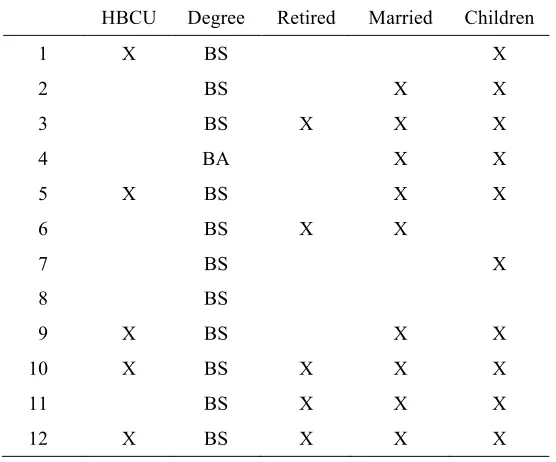
Table 5 Participant Demographic Information ...66!
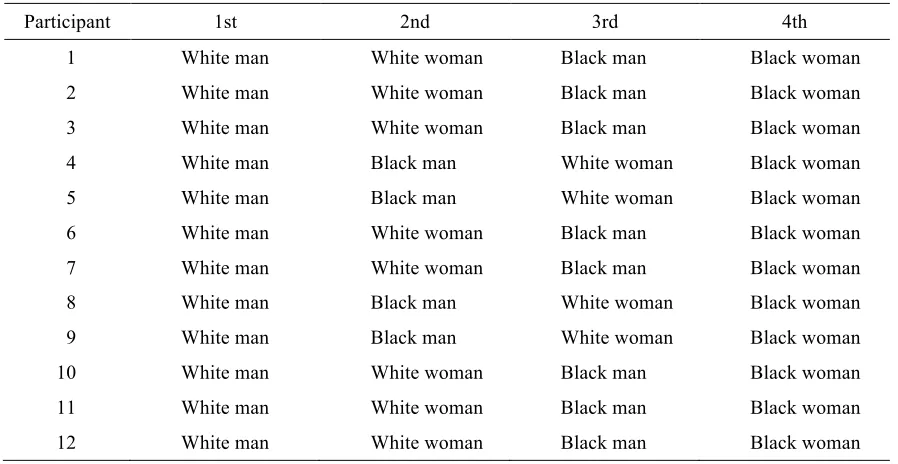
Table 6 Participant Degree/Initial Assignments ...68!
Table 7 Participant Demographic Hierarchy Rankings ...83!
Table 8 Active Duty Female Officers by Rank/Grade and Service ...97!
x
LIST OF FIGURES
CHAPTER I
THE RESEARCH PROBLEM
Statement of the Problem
The 2009 National Defense Authorization Act, Fiscal Year 2009 had as one of its
provisions the establishment of a Military Leadership Diversity Commission to evaluate
programs that affect minority personnel. The resultant report, From Representation to Inclusion: Diversity Leadership for the 21st Century Military, stated “the diversity of our service members is the unique strength of our military” (Lyles, 2011, p. iii). The report
goes on to say that they found “the promotion policies and practices of the Department of
Defense and the Services to be fair, [they] find also that there are some barriers to
improving demographic representation among military leaders.” These barriers are
evident by the lack of diversity in the leadership of the U.S. military. An essay by
Ambrose and Barber (1972) posits that the military is an acknowledged leader and at the
forefront of equal opportunity for racial and gender opportunities in the United States.
The Career Progression of Women and Minority Officers echoed this sentiment is echoed
in the Career Progression of Women and Minority Officers (Gilroy et al., 1999, p. v),
reporting that the military’s record of equitable treatment of personnel often surpassed
that of the overall civilian workforce. The foundation for his supposition could be
grounded in two key pieces of legislation that affect military personnel: the Women’s
Armed Services Integration Act of 1948 and Executive Order 9981, which desegregated
the military.
The Women’s Armed Services Integration Act of 1948 made women permanent
work. Up to the time of this legislation, women, with the exception of nurses, were
generally only allowed to be in the U.S. military during times of war to relieve men of
support duties in clerical, maintenance, and other noncombat roles (Borlik, 1998). The
other key law that plays a part in nurturing the perception of an egalitarian military is
Executive Order 9981, signed by President Harry Truman in 1948. Even though this
order officially ended racial segregation in the armed forces, the need for the Gesell
Committee, chartered by President Kennedy in 1962 to investigate “problems affecting
Negro servicemen” (Fortas et al., 1964) argued the awareness of a problem in the full
implementation of the 1948 presidential directive. The failure to put into practice the
recommendations of the Gesell Committee were a proximate cause of “tensions and
conflicts that occurred in the (military) in the decades that followed” (Mershon &
Schlossman, 1998, p. 6). The apparent disparities in underrepresentation of minorities at
the leadership or senior-officer ranks could have been avoided if the Gesell
recommendations had been fully achieved (Mershon & Schlossman, 1998).
A Public Broadcasting Service report (Sagalyn, 2011) surmised that even though
the overall military officer corps is far more representative of the ethnic composition of
the United States than private sector corporations, this is much less the case when
perusing the demographic data of who occupies the highest ranks of leadership. The
Department of Defense’s (DoD’s) own publicly available demographic information
shows inverse proportionate minority representation by both race and gender as rank
increases. This inverse racial and gender representation at the top displays that despite
concerted efforts by the DoD to be a more inclusive representational organization, the
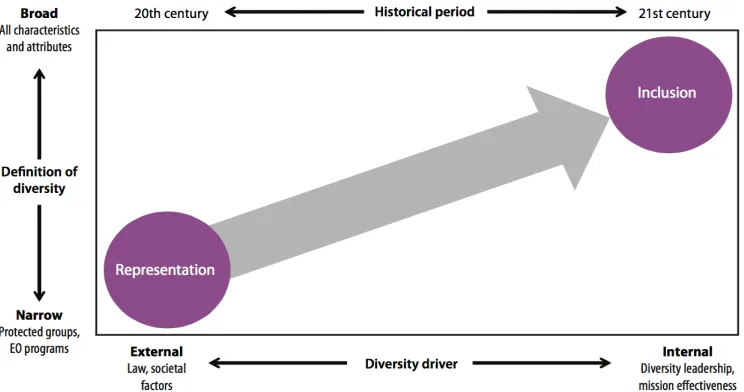
is an idealistic representation of how the U.S. military would like to emphasize
equal-opportunity programs.
Figure 1. From goal to reality.
This research examines the effectiveness of U.S. DoD inclusion policies from
1948 through the 21st century and beyond. The underlying question is to evaluate the
effectiveness of policies the U.S. military made to determine if quantifiable strides have
been made to move from token representation of all minority groups to full integration at
all levels of military service. To attempt to study policies across all minority groups in the
military is too broad; this study focuses on the perceptions of African American female
commissioned officers as to whether the U.S. military is achieving their goal. This group
was chosen because an in-depth Career Progression of Women and Minority Officers
(Gilroy, C, et. al., 1997) divulged that African American commissioned officers had the
lowest belief that the opportunities available to them for promotion and leadership were
sentiments about the status of the military in the inclusion continuum and the factors that
supported their opinion. Study results were juxtaposed with available demographic
information of U.S. military personnel to discern if the surveyed perceptions may be
representative of the perceptions of the group studied.
This study also evaluated if the current perceptions of promotion and
leadership-selection process opportunities, as expressed by African American female military
officers, have changed or remained stagnant in the last 20 years. The baseline of
comparison was the DoD-wide Career Progression of Women and Minority Officers
(Gilroy et. al., 1999) study undertaken for the Office of the Under Secretary of Defense,
Personnel and Readiness. According to the that study, African American female officers
did not believe opportunities for promotion were equally available to them (Gilroy et al.,
1999). This opinion can be contrasted with the perceptions of Caucasian military men
who perceived the exact opposite. Caucasian military men perceived the situation to be
that minorities and especially minority women are given more support for promotion and
leadership appointment beyond what is warranted.
Women in male-dominated jobs generally have lower job satisfaction, even
though they may have a higher salary than their same-gender peers in female-dominated
career fields, commensurate with the status of higher wage earners (Hakim, 1996;
Lundquist, 2008). An ongoing General Social Survey was conducted annually since 1972,
with the exception of 1979, 1981, and every other year starting in 1994, by the National
Opinion Research Center of the University of Chicago (Lundquist, 2008). Study results
revealed that African Americans are notably less pleased with their workplace situations
whole, women have a higher job satisfaction than men, when responses are disaggregated
by race the outcome differs. African American women are the least satisfied with their
workplace situations compared to other ethnic groups. This dissatisfaction can be
attributed to lower salaries. Caucasian women have the highest pay of female workers
whereas African American women have the lowest pay. Latin and Asian women fall in
the spectrum between Caucasian and African American women when salaries are
evaluated.
Minority women experience “double jeopardy” in the workforce by having to
address the negative effects of race and gender (McGuire & Reskin, 1993, Petrie &
Roman, 2004, as cited in McGuire & Reskin, 1993). When comparing the conditions of
workers, the top of the hierarchy is Caucasian men followed by Caucasian women; then
African American men. The African American woman is consistently at the bottom of the
list in salary and opportunities afforded than those in other categories of workers. The
cumulative effect is that being a African American woman in the workforce negates the
otherwise high level of job satisfaction experienced by women as a homogenous group.
In a study of African American women in the Navy “women … exemplify what some
researchers refer to as the ‘double whammy’ phenomenon: disadvantaged because of
both their race and gender” (Moore & Webb, 1998). The Gilroy et al. (1999) report also
spoke to “the effects of this ‘double jeopardy’ and indicates that minority women
consistently experienced the lowest rates of promotion and retention” (p. 79). This study
also solicited from the respondents if they believed they were working from a double
disadvantage, as they attempted to climb in rank and the leadership structure of the
Background and Need for the Study
Nearly 50 years after the signing of the legislation that granted equal opportunity
to all military personnel regardless of race or gender, the Career Progression of Women
and Minority Officers (Gilroy et. al., 1999) study conducted for the DoD Office of the
Under Secretary of Defense, Personnel and Readiness questioned if the implementation
of the integration laws were proceeding as envisioned. The report provided insight into
quantifiable data as well as the subjective perceptions of equal opportunity in the military
about and by minority members. The 1999 study revealed that even though the raw
numbers and percentages of minorities and women in the military had increased, this
increase was not reflected in the gender and race representation at the highest
(admiral/general officer: 0–7 to 0–10 pay-grade) levels in any of the military services
(p. ix). A comparison of the 2015 military demographic information of all military
services revealed that 18 years after the initial study, disparities in role occupancy persist.
The highest positions and ranks are still held by Caucasian men in operational career
fields.
The 2015 DoD demographic report aggregates information of minority service
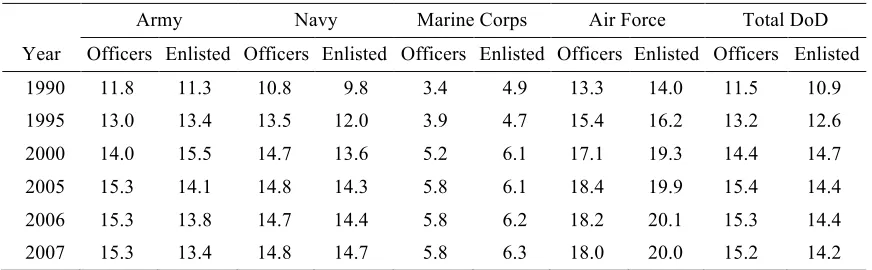
members at all officer ranks. African American officers, female and male, comprise 9.1%
of the officer corps at all ranks (p. 26). A review of the percentage of active-duty
minority officer data, male and female, for fiscal year 2007 (DoD, 2015,, p. 17) indicated
that African American officers in the military have remained constant at 9.1% of the
officer corps.
Aggregation of minority data leads to the masking of the unequal achievement for
organizations develop and implement institutional policy on personnel, masking minority
representation “patterns of inequality” and does not cause unequal outcomes to rise to the
level of importance that warrants concerted effort to correct (Bensimon, 2005, p. 100).
The report does not provide disaggregated data on numbers of African American
female officers at the admiral/general-officer level so it cannot be determined how many
are currently on active duty. Exactly which minority group occupies flag/generalofficer
positions is also difficult to determine, as all minority officers, male and female, are
aggregated. Aggregation of demographic data is an ongoing issue in reporting on DoD
personnel statistics. A General Accounting Office (GAO) study criticized the military for
not fully implementing the 1997 congressional mandate to collect and report
disaggregated race data and makes it harder for congressional oversight to in matters
related to the military (Stewart, 2005).
All minorities, including African American, Asian, American Indian, Pacific
Islander, multi-race, and other/unknown of both genders only comprise 11.6% of
flag/general-officer positions (DoD, 2015, p. 28) even though they make up 22.8% of the
overall officer corps numbers shown in Table 1.
According to a GAO report, African American women comprised 28% of female
service members, officers and enlisted (Stewart, 2005). This number is more than double
the 13% representation of African American women in the civilian workforce. Women of
all ethnic backgrounds comprise 17% of the total military-officer force yet hold only 7%
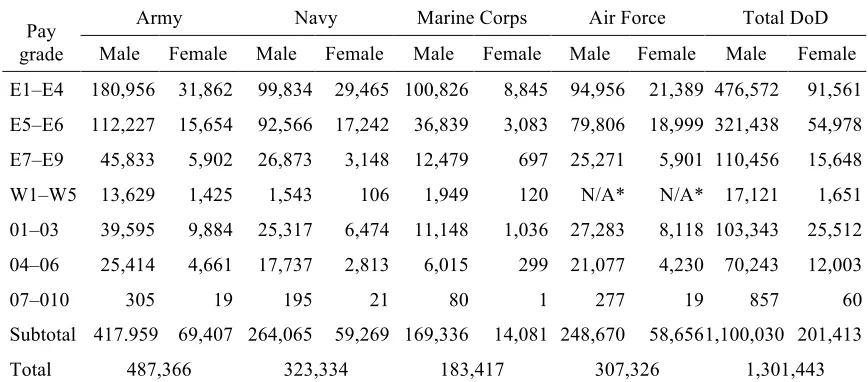
of the flag/general-officer positions in the services (see Table 2). The demographics
provided are not disaggregated sufficiently to discern the racial composition of female
8 Table 1
Military Demographics 2015 Report Percentages
Pay grade
Army Navy Marine Corps Air Force Total DoD
Racial
minority Nonminority
Racial
minority Nonminority
Racial
minority Nonminority
Racial
minority Nonminority
Racial
minority Nonminority
E1–E4 32.0 68.0 42.5 57.5 17.2 82.8 28.0 72.0 30.7 69.3
E5–E6 34.3 65.7 43.5 56.5 25.3 74.7 30.9 69.1 35.1 64.9
W1–W5 33.3 66.7 38.1 61.9 27.4 72.6 N/A* N/A* 33.1 66.9
01–03 25.7 74.3 22.0 78.0 18.9 81.1 21.8 78.2 23.0 77.0
04–06 24.5 75.5 18.1 81.9 17.4 82.6 17.2 82.8 20.1 79.9
07–010 16.0 84.0 10.6 89.4 12.3 87.7 7.1 92.9 11.6 88.4
Total 32.9 67.1 38.6 61.4 20.5 79.5 27.5 72.5 31.3 68.7
Table 2
Military Members by Rank and Gender (2015)
Pay grade
Army Navy Marine Corps Air Force Total DoD
Male Female Male Female Male Female Male Female Male Female
E1–E4 180,956 31,862 99,834 29,465 100,826 8,845 94,956 21,389 476,572 91,561 E5–E6 112,227 15,654 92,566 17,242 36,839 3,083 79,806 18,999 321,438 54,978 E7–E9 45,833 5,902 26,873 3,148 12,479 697 25,271 5,901 110,456 15,648
W1–W5 13,629 1,425 1,543 106 1,949 120 N/A* N/A* 17,121 1,651 01–03 39,595 9,884 25,317 6,474 11,148 1,036 27,283 8,118 103,343 25,512 04–06 25,414 4,661 17,737 2,813 6,015 299 21,077 4,230 70,243 12,003
07–010 305 19 195 21 80 1 277 19 857 60
Subtotal 417.959 69,407 264,065 59,269 169,336 14,081 248,670 58,656 1,100,030 201,413
Total 487,366 323,334 183,417 307,326 1,301,443
Note. The Air Force does not have warrant officers, Source: DMDC Active Duty Military Personnel Master File (September, 2015); Bureau of Labor Statistics, 2015.
This distinction is noteworthy because one study finding was that African
American female officers have the least trust that the military system is egalitarian
(Gilroy et. al., 1999). The Lundquist research (2008) directly contradicted this assessment
and concluded that African American women have the highest level of satisfaction with
the military. These diametrically opposed reports of perceptions studied just 9 years apart
point to a possible evolution of perceptions unresolved in reviewing DoD annual
demographic information.
Harris-Perry (2011), in her seminal book Sister Citizen, examined the stereotypes
of African American women in the United States, quoting Zora Neil Hurston’s 1937 book,
Their Eyes Were Watching God, to encapsulate the plight of the African American
So de white man throw down de load and tell de nigger man tuh pick it up. He
pick it up because he have to, but he don’t tote it. He hand it to his womenfolks.
De nigger woman is de mule uh de world so fur as Ah can see. (p. 19)
Evaluating this perception of the task faced by the African American female officer
provides an insight into the challenges faced in progressing through the ranks to the top
level of the male-dominated military structure. Are African American female
commissioned officers the mule of the military services and is this reflected in their
selection for promotion and leadership appointment?
Dorn (1991) synopsized DoD reports, indicating that despite being at the forefront
of equal opportunity, certain areas should be cause for concern:
1. The low number of minorities and women in the top ranks (admiral/general
officer
2. The high number of women in administrative and support career fields instead
of the operational track from which most military leaders are gleaned
3. The continued disparity in the perceptions between the races and genders of
fairness in all aspects of the evaluation and assignment system
Dorn’s (1991) assessment of the situation in the military connects to Hurston’s 1937 statement
that African American military members, especially women, are the least represented in the
tactical-operations areas in all services. This career fact is important because it is from the
tactical/operational career areas that the majority of military leaders are selected (Baldwin, 1996).
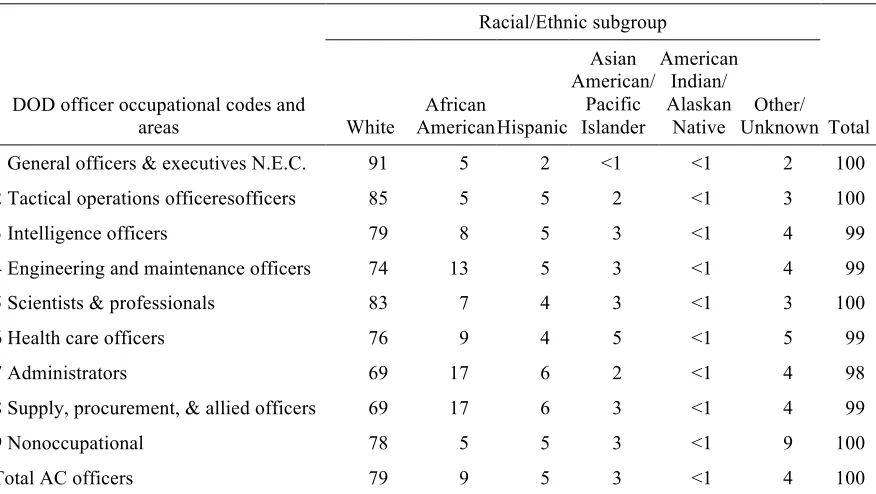
Table 3, taken from the GAO report (Stewart, 2005, p. 34) provides the career fields where
highest concentration of African American officers of both genders is in the administration and
supply/procurement career fields.
Table 3
Department of Defense Officer Occupational Codes
Racial/Ethnic subgroup
DOD officer occupational codes and
areas White
African American Hispanic Asian American/ Pacific Islander American Indian/ Alaskan Native Other/ Unknown Total
1 General officers & executives N.E.C. 91 5 2 <1 <1 2 100
2 Tactical operations officeresofficers 85 5 5 2 <1 3 100
3 Intelligence officers 79 8 5 3 <1 4 99
4 Engineering and maintenance officers 74 13 5 3 <1 4 99
5 Scientists & professionals 83 7 4 3 <1 3 100
6 Health care officers 76 9 4 5 <1 5 99
7 Administrators 69 17 6 2 <1 4 98
8 Supply, procurement, & allied officers 69 17 6 3 <1 4 99
9 Nonoccupational 78 5 5 3 <1 9 100
Total AC officers 79 9 5 3 <1 4 100
Note. N.E.C. = not elsewhere classified. Source: GAO analysis of DOD-provided data from Reporting Additional Servicemember Demographics Could Enhance Congressional Oversight, by D. B. Stewart, 2005, Washington, DC: U.S. Government Accountability Office, retrieved from https://www.gao.gov
/products/GAO-05-952. Non-occupational areas include patients, students, those with unassigned duties, and unknowns; rows may not total 100% due to rounding.
Findings from the 2nd Biennial Equal Opportunity (EO)/Equal Employment Opportunity
(EEO) Research Survey (Dansby, 1998) were presented at a symposium held at Patrick Air
Force Base Florida for the heads of all military organizations in 1998. The survey reiterated the
perceptions of minorities and women in the Gilroy report. The EO/EEO survey reported that of
all the demographics in the military, the African American female officer had the least favorable
perception of equal opportunity within the military. The research reported at the symposium
reiterated that of all service members responding to the Military Equal Opportunity Climate
approximately 1.4 million on active duty during this period, minority women officers viewed the
military’s overall equal opportunity climate least favorably.
The DoD 2015 demographic report stated that women comprised 16.8% of the force; an
increase of 1.4% since 2000, and African Americans, male and female, comprised 360,690 or
17% of the active-duty military force. Further review of the same report indicated that of all
active-duty officers in the U.S. military, only 9.1% of the officer corps is African American.
According to the 2015 U.S. Census, African Americans comprised 13.3% of the U.S. population,
up from 12.6% in 2010. This statistical fact is important when noting that even though they
comprise just 13.3% of the population, African Americans comprise 30% of the enlisted corps.
The over-representation of African Americans in the enlisted ranks is counterbalanced by the
underrepresentation of African Americans in the officer ranks, compared to the census data.
Purpose of the Study
The purpose of this study was to examine the perceptions of African American female
commissioned officers in the U.S. military concerning the equity of the promotion and selection
for leadership system. This study solicited perceptions from current, retired, and separated short
of retirement female African American military officers to determine if study participants
believed disparate opportunities exist for promotion and leadership in the United States, based on
gender and race. Previous researchers indicated that even though the military has made strides
toward the implementation of programs and practices to ensure selection for advancement was
strictly merit-based, African American female officers have the least trust in this being true.
Using the 1997 Career Progression of Women and Minority Officers study as the baseline
(Gilroy et al., 1999), this new research assessed the current perceptions of equity, regardless of
Research Questions
The questions used to elicit the individual perceptions from the study fell under
the broad categories listed below. Even though it was expected that more topics of
concern would arise organically from interviews, it was believed that the below
high-level topic areas would serve as a foundation for further discussion. A full list of
questions used appears in Appendix A.
Research Question 1: What work or life experiences contribute to African
American female commissioned officers’ success in the military?
Research Question 2: Do African American female officers perceive that race and
gender play a negative role in selection for promotions and leadership
positions?
Research Question 3: To what extent has race and/or gender been a factor in
African American female commissioned officers’ promotions, professional
military education (PME), and appointments to leadership positions?
Research Question 4: What are some of the challenges African American female
commissioned officers have had to overcome in their military career?
Research Question 5: What recommendations would interviewees offer to African
American female commissioned officers aspiring to advance to leadership
positions in the military?
Theoretical Framework
The theoretical framework for this study was equity theory. J. S. Adams
developed equity theory in 1963 in work explaining factors that motivate workers to be
drawn from “exchange, dissonance and social comparison theories in making predictions
how individuals will manage their relationships with others.” On the most basic level,
equity theory can be encapsulated as all persons in a workplace environment wanting to
be fairly compensated for their contributions in proportion to the amount of expended
effort and effectiveness. The entering assumption stated by J. S. Adams, Berkowitz and
Hatfield (1976, p. 2) is that “man is selfish.” Equity theory recognizes that when
compensation is meted out for performance, it cannot be done in a vacuum; it must be
done in relation to other workers for the compensation to be believed to be fair (J. S.
Adams et. al., 1976). How people choose to address inequities in the workplace can be
measured on a scale of equity sensitivity (Huseman et al., 1987). Equity sensitivity
determines whether a worker will stay on the job and attempt to rectify an inequity or
leave to reduce their dissonance.
Dissatisfaction with one’s work environment can be evaluated as a
cost-of-business equation. The cost to train a new military officer was $112,000 in 2004 (Wilson,
2009). When the General Accounting Office attempted to do a quantitative evaluation of
the cost of onboarding a new officer in 2005, they were unable to do so because the
number of variables needed to accurately calculate costs across all career fields were too
numerous to tabulate (Wilson, 2009). In 1981, the cost to train an officer in the present
researcher’s career field was $250,000 and this cost was surpassed by training costs
associated with navigators and pilots. The initial cost to train a military pilot is $1 million
and to fully train them to be independently operational is $9 million (Gebicke & Farrell,
1999). With such high training costs, it is prudent to determine the factors that are
Women of all ethnic backgrounds leave the military short of retirement at higher
rates than White men (Gilroy et al., 1999). This higher rate translates into increased costs
to recruit and train a combat-ready force. It takes 6–9 months to prepare a new enlisted
person to be a productive soldier (Thomas, 2004). Although these military members are
being trained in what is, by its very nature, the unique jobs in the military, they are not
fully productive. This point can be extrapolated to equate to turnover of personnel due to
dissatisfaction at having a negative economic effect on the military budget.
According to equity theory, workers evaluate their efforts, experience, education,
and competence, and compare them to the compensation of others in a similar job when
determining their own satisfaction and whether it is in their best interest to stay in the job
or go. Equity-theory provides explanations of the theory in many areas of life. One of the
applications of equity theory is in the ‘“fight or flight” scenario (Austin, Walster, & Utne,
1976). When people’s rising expectations consistently meet with the frustration of not
being rewarded for the work done, people implement it gives rise to the implementation
of the decision to stay and attempt to rectify the situation, or as they call it a revolution,
or they leave and seek gratification elsewhere (Austin et al., 1976). Equity theory work is
a natural outgrowth of hygienes identified by Herzberg in two sectors: intrinsic and
extrinsic job satisfaction (Maidani, 1991).
Intrinsic factors are motivators and include advancement and recognition for a job
well done and opportunities for advancement. These factors can make people happier at
work; equity theory goes a step further, providing a “strikingly simple theory” (Austin et
al., 1976, p. 164). The four propositions of equity theory follow:
2. Groups can maximize collective rewards by evolving accepted systems for
“equitably” apportioning rewards and cost among members
3. When individuals find themselves participating in inequitable relationships,
they become distressed. The more inequitable the relationship, the more
distress the individual feels
4. Individuals who discover they are in an inequitable relationship attempt to
eliminate their distress by restoring equity. The greater the inequity that exists,
the more. (Walster, Walster, & Berscheid, 1978, p. 6)
If people perceive a lack of equitable evaluation of performance for promotion
and appointment to leadership positions, this theory states that those being denied
equality will try to repair the situation. Most important to military leaders is the
application of Proposition II of the theory, that can be restated as equitability in the ranks
will provide the greatest efficiency for the organization and thus the ability to meet the
unique mission of the military. This study explored if the propositions of equity theory
are in play in the U.S. military as they specifically apply to African American female
commissioned officers and if dissonance with the propositions, especially Proposition I,
are factors in perceptions of dissatisfaction.
An auxiliary theory used to evaluate the perceptions of study participants was
deficit-cognitive-frame theory. Deficit-cognitive-framework theory, initially applied only
to students, is equally applicable in the study of why African American female officers
are not represented at the highest ranks of the military structure in numbers proportionate
to their initial accession into the military. The theory states that underrepresented groups
is not in their nature to excel in a situation foreign to their background. Estela Bensimons
says in her research on deficit cognitive frame theory that persons in authority who
subscribe to deficit-cognitive-frame theory may well believe in diversity and are
generally positive toward increasing minority participation (Bensimon, 2005, p. 102).
To extrapolate from this theory to the military would provide a rationale for the
belief that the reason African American female commissioned officers fail to be
promoted and selected for leadership positions is due to their inadequate socialization
into the military structure (Smith, 2010). Despite rising accessions of African American
officers, they are not reaching the top echelons of the rank structure due to an inability to
adhere to unspoken military-culture rules. African American graduates of the service
academies have been inculcated with these mores before beginning active service and are
thereby better able to navigate the system, and are rewarded with promotions and
appointments to leadership positions (Smith, 2010).
Limitations of the Study
The major limitation of this study was finding sufficient people in the
demographic group willing to discuss their perceptions of the equal-opportunity structure
of the military. Service in the U.S. military does not end upon separation/retirement from
the military. People with regular commissions are obligated to be recalled to active duty
up to 30 years beyond the original commissioning date. Being obligated to be recalled to
service opens the path for actions and utterances of former military members to be tried
under the Uniform Code of Military Justice if it is determined that statements or writings
of prior military personnel reflect poorly on the military. Additionally, if they have
Because the population of female African American commissioned officers in the
U.S. military is numerically so limited and the military “community” is correspondingly
small, great lengths must be attempted to mask the identity of study participants.
Providing direct quotations in descriptions could identify study participants by
associating speech mannerisms with individuals. Providing exact locations of situations
could identify study participants. Another limitation of the study is the over-identification
of the researcher with study participants.
An additional limitation was finding sufficient disaggregated military
demographic data with which to evaluate the perceptions of study participants. A dearth
of recent scholarly works reviewed information on the topic of African American female
commissioned officers in the military is also a concern.
Delimitations of the Study
The researcher contacted people in the researcher’s social network to request
participation. The convenience-sample group was enlarged by asking participants to
disseminate the participant request to their social networks. To overcome the reticence of
participation, due to possible retaliation by the military structure, all participants were
provided with written and verbal assurances that all identifying data would be aggregated
and masked to ensure individual identification was highly unlikely. Additionally, each
study participant was assured that, at the end of the study, all oral interviews and written
transcripts would be destroyed. To combat the possibility of researcher bias, the
researcher secured additional corroboration from other sources to support statements by
All efforts were employed to find disaggregated data. In addition to online
exploration, the researcher contacted the Defense Equal Opportunity Management
Institute at Patrick Air Force Base, Florida, to review their database and results of DoD
equal-opportunity-climate survey results. The Defense Equal Opportunity Management
declined to provide the information and directed the researcher to the individual services.
Requesting the information from the individual services was likewise unsuccessful. Even
though each service provided an acknowledgment of the Freedom of Information Act
request by the researcher, only the Marine Corps responded. The link to the data in the
Marine Corps database could not be used, as they have a proprietary database that the
researcher could not access.
It was projected that some data would be available in the public domain and that
has proven to be the case. Information was gained by looking at third-party
announcements concerning promotions of African American commissioned officers.
Additionally, a search of images of military generals allows researchers to identify people
who are the focus of this study by phenotype identification.
Significance of Study
The study of perceptions of barriers to leadership and promotion for all women is
significant in that it will illuminate whether the military is truly an egalitarian
organization. An article in the June 2013 edition of the Military Review also added
credence to the importance of this work. In the article (Escobar, 2013, p. 71) “The U.S.
military cannot reach its maximum potential until our personnel system fully integrates
women into all facets of service and all levels of leadership.” The article further stated
Army is putting itself in a sub-optimal position for strategic decision making. The
historical patterns of gender- and race-based discrimination in the U.S. military have not
been easily overcome and the lack of minorities and women at the top of military
organizations are evidence that more work needs to be done to rectify this situation.
Despite previous research on the topic, it has generally been service specific. A
cross-service view offers a common point of reference to evaluate if perceptions are more
widely held based on the branch of service. To evaluate the perceptions of a subset of the
military force is a starting place in the adoption of policies to maximize the satisfaction
and productivity of all military members and with it, a reduced retraining cost of
replacing service people who leave, due to perceptions of inequity. At the conclusion of
the analysis, a foundation is laid for further evaluation of whether race is a factor that
negatively affects the promotion of African American women across the commissioned
ranks in the military. The results of the study are a starting point for the military to review
its policies on the evaluation of performance and face implicit biases experienced by all
ethnic minorities.
Definition of Terms
The following terms have been operationalized for this study:
Commissioned officer: Those members of the armed forces who have an official
commission by the U.S. president. These commissions are usually obtained through one
of three avenues: Service Academy, Reserve Officers’ Training Corps (ROTC) or an
Officer Candidate School. In rare instances, battlefield commissions have been awarded
below them including the enlisted ranks (E–1 to E–9) and Warrant Officers
(W–1 to W–4).!
Enlisted personnel: People who entered the military from basic recruitment. Their
designation is noted as E–1 through E–9.!
Flag officer: Commissioned officers with the rank of O–7 to O–10 with the “O”
standing for officer. These persons are at the top of the military rank structure. The Air
Force, Army, and Marine Corps designate these ranks as general officers, whereas the
Navy gives these officers the title of Admiral.
Noncommissioned officers: Enlisted personnel at the rank of E–4 through E–9.
The nomenclature of how these people are addressed varies by branch of service.
Reduction in forces: Voluntary and involuntary separation of military personnel
enacted to meet budgetary restraints and to be in line with projected mission requirements.
Regular officer: A person who has been commissioned as an officer in the armed
forces by the President of the United States. Until 2005 all graduates of service
academies were given automatic regular commissions as well as some ROTC cadets
identified as having superior potential. Currently, all people receive a reserve commission
and must compete for regular commissions. This category of officer cannot be removed
from duty during a reduction-in-forces action.
Reserve officer: A person who has received a commission as an officer in the
armed forces. This officer can only serve up to 20 years in the active force but that period
can be extended, at the discretion of the service. This officer can be removed from active
Reserve Officer Training Corps (ROTC): A civilian college-based training
program to prepare students to become commissioned officers in the U.S. military.
Service academy: Federally funded undergraduate colleges with the sole purpose
of training students to become commissioned officers in the U.S. Armed Forces. For this
research, this designation is assigned to the Air Force Academy, Annapolis (Navy and
Marine Corps) and West Point (Army).
Summary
This chapter provided an overview of the issues, laying a foundation about the
scarcity of representation of African American female officers at the highest ranks of the
U.S. military. This chapter introduced the theoretical guidelines used in the evaluation of
the responses of study participants. The theories were selected as most likely to
encompass the range of responses from participants.
Chapter 2 is a literature review that covers the topics used in the evaluation of
participants’ responses. Examined was the glass-ceiling hypothesis, which indicates that
women will only be able to ascend to a certain level in organizations and will be stopped
by an invisible glass ceiling that inhibits them from being selected for the top positions in
an organization. The chapter includes a review of research on the historical
discrimination faced by African American men in the U.S. military, providing a lens into
how the military has used race as a determiner of occupations, promotions, and selection
for leadership in the military.
The review of documentation on the status of women in the military provided a
historical perspective on the progress of women in the U.S. military in times of war and
say about historic discrimination against African American men and women in the
military. Additionally, literature reviews revealed a perception that African American
military women, and especially African American commissioned officers, face a “double
whammy” that must be overcome for them to be equitably rewarded for their service.
Chapter 3 provides an overview of the methodology used in the study and a description
of the participants in the study. Chapter 4 describes the results of the research. Chapter 5
CHAPTER II
REVIEW OF THE LITERATURE
This literature review examines discrimination against women, personified by a
perceptual glass ceiling, African American military men, military women in general, and
how the combined effects of race and gender discriminatory practices affect the status of
African American female officers in the military. The chapter provides an overview of
the written documentation of the historical foundations of discrimination and the
legislative and societal actions that were factors in changing the hurdles minorities faced
in serving the United States in the military.
The military has more African American female commissioned officers on active
duty than Caucasian women or African American male officers, yet they do not hold top
leadership positions or rank in proportion to this representation (Melin, 2016). With the
removal of the combat-exclusion ban in January 2013 by then Secretary of Defense
Panetta (Dempsey & Panetta, 2013), the last overt barrier to military women, including
African American female commissioned officers, having the opportunity to acquire the
requisite operational background for promotion to the highest positions in the U.S.
military was lifted. DoD personnel committees (Bohon, 2011) argued that the
exclusionary policy was actually a de facto, barrier to women being promoted to
leadership positions in the military (Burelli, 2013). In a report on the lack of diversity in
military leadership, Segalyn (2011) noted that although the enlisted force is quite diverse
at all ranks, this level of diversity is not the case in the officer ranks. The present study
promotion to the highest ranks or places in positions of authority, based on their gender
and race.
This research also focused on whether African American female commissioned
officers believed other discriminatory factors keep them from being equitably represented
at the highest levels of the military. To evaluate the reason African American female
officers in the U.S. military are not represented at the highest ranks proportionate to the
general population of the United States or the gross numbers of African American female
officer accessions, this chapter reviewed the following: (a) historical discrimination faced
by women of all ethnic groups in society at large, (b) historic sanctioned discrimination
against African American men at all ranks in the U.S. military, (c) historic discrimination
against women in the military, and (d) perceived barriers that African American military
women face that prevent them from achieving the highest ranks and positions of authority
and leadership in the U.S. military. This inquiry examined if some of the sanctioned
discriminatory practices used to exclude African American men from full integration into
the armed forces until the 1948 Presidential Executive Order formally ended those
practices are parallel to discriminatory practices aimed at women, and especially African
American female officers. This investigation studied if African American female
commissioned officers believe they face a ‘double whammy’ circumstances while serving
in the military.
Glass Ceiling—Myth or Fact
According to the American Association of University Women (K. Miller, 2017),
women have made progress in bridging the pay gap with men in the United States. As of
following the trend of past wage growth for women who work outside the home and
extrapolating into the future, women’s pay will be on par with men’s by 2052. Further
research provided by the National Center for Educational Statistics showed that, as of
school year 2013–2014, women were awarded 57% of all bachelor’s degrees, 60% of all
master’s degrees, and 52% of all doctoral level degrees. This higher level of educational
achievement appears inconsistent with the lower pay received by women.
A June 7, 2017, edition of Fortune Magazine lists 32 women as being heads of
Fortune 500 companies worldwide. At 6.4% position occupancy, women at the helm of
the largest companies in the world significantly lag the global female population. This
group of Fortune 500 company heads has no African American women. According to the
world-population clock, as of July 28, 2017, the world population comprised 49.6%
females. This study examined the proposition that the same reasons women are not rising
to the top of corporations are similar to the reasons for the low representation of all
women, and especially African American women, at the top of the military structure..
This study examined the views of African American female commissioned officers to
elicit their views as to whether this situation relates to the supposition that the gender and
color of the skin of the aspirant is a factor in the selection for promotion and leadership in
the military.
The Director of the Central Intelligence Agency (CIA) commissioned an advisory
group to study the topic of women in leadership at the intelligence agency (Albright,
2012). The report revealed that the CIA had a history of women being promoted on par
with the men with whom they worked alongside, but a slow down and stagnation has
atmosphere of male-domination culture at the CIA belies the expected historic negative
matriculation of women to higher ranks at rates in relation to their raw accession numbers.
The then Director of the CIA General (retired) David Petraeus, saw that the rate of
advancement of female CIA members was declining and convened a committee to
determine the underlying root of the slowdown in promotion. The CIA, like the military,
is a male-dominated society (Ellefson & Magee, 1998, p. 3). Military recognition of the
problem (Gilroy et al., 1999; Lyles, 2011) may lead military leaders to remediation, like
that attempted at the CIA.
Acker (2006, p. 441) defined inequality regimes as “loosely interrelated practices,
processes, actions, and meanings that result in and maintain class, gender, and racial
inequalities within particular organizations.” To further this concept to the military is to
provide a rationale for why so many military leaders are men. Even though women
comprise approximately 18% of the military, they are represented at only 7% at the
general/admiral levels. Homosocial reproduction is a concept that can be applied to this
situation. Arxer (2011, p. 392) summarized work done by Connell (1987) on homosocial
reproduction as it relates to gender in the following statement: “hegemonic masculinity
specifically works to enforce a gender order, wherein masculine qualities are elevated in
social status over “feminine” ones so as to suppress the competing interests of women.”
Arxer encapsulated Demetriou’s (2001) description of the ideal hegemonic masculine
manifestation as a western European White male who is self-centered, violent, and
attempting to put as much distance as possible between themselves and anything that
Even though White men comprised only 66% of the non-Hispanic U.S.
population, in 2011 they comprised 77% of the U.S. military officer corps (Sagalyn,
2011). In the same year, Hispanics comprised 15% of the U.S. population but they were
represented in the U.S. military officer corps at a rate of only 5%. Sagalyn (2011) was
especially attuned to hear if respondents volunteered the concept of men favoring other
men who look like them for high-level promotions and leadership positions.
Research conducted by Cook and Glass (2014) of Fortune 500 companies
examined support given to leadership by women and men. They determined that women
are more scrutinized for on- and off-job-related issues and judged more harshly than men.
They also determined that women are more often given the chance to lead at large
organizations when the organizations are in crisis or there is a greater chance of failure.
To counter the supposition presented by Glass and Cook is the proposition by
Schuh et al. (2014) that the reason women are not selected for promotion is that they do
not want to be promoted. Women, they conjectured, do not have the drive to achieve
higher levels of leadership and power. The team acknowledged that women still face
discrimination in the workplace, but the reason for the underrepresentation of women at
the top is because they do not want leadership enough. The concept of women not having
a strong enough desire to be promoted was a concept listened for during interviews but
not presented to study participants as a rationale for the lack of selection of women for
promotion and leadership positions.
Work performed by Boyce and Herd (2003) at the Air Force Academy with
cadets attempted to replicate an earlier study by Schein in 1973 and 1975 on acceptance
based on the highly selective admission process and the investment of resources in their
training, these cadets, who will be the leaders of U.S. military services, would display the
highest levels of enlightenment on equity in leadership, regardless of gender. The
researchers were quite disappointed. The Air Force Academy study directly
contraindicated the Schein (1973, 1975) studies. The Schein studies showed that
increased interaction with women in the workplace moderated civilian men’s gender-role
stereotypes. The Boyce and Herd study revealed that senior cadets were more entrenched
in the perception that leadership is an attribute most closely aligned with men than did
first-year male cadets. The leaders of tomorrow were still entrenched in an outmoded
assessment of a woman’s place—and it is not in the military.
This inequity and the systems that keeps it in place is not a new concept in the
United States. Farnell (2009, p. 17) spoke to the prevailing beliefs in Western
civilizations that women are “intellectually inferior to men, as the weaker sex … and also
as a major source of temptation and evil.” Western societies have relegated women to the
role of procreation of the species as their primary raison d’etre and to provide a support
system for men. The view of women as primarily driven by emotional logic has
repeatedly been proven incorrect in studies conducted by such unrelated entities as the
Rand Institute, the Alliance for National Defense, and the Women’s Research and
Education Institute.
Historical Discrimination Against African American Men in the U.S. Military
According to Wintermute (2012), assimilation was the ultimate source of
legitimization and financial and social success in the United States. Service in the
that it was in the military, that immigrant males of many nations such as Ireland, Greece,
and a plethora of eastern European nations were able to prove their loyalty to their
adopted nation and thereby earning the full rights of citizenship. By the virtue color of
their skin, Americans of African ancestry were denied access to the dominant society by
military service and not given the opportunity to be treated as quasi-equals, despite being
born in the U.S. This denial was rationalized by saying Negros would display cowardice
on the battlefield (Wintermute, 2012).
A memorandum to the Chief of Staff of the Army, writing on a study performed
by the Army War College in 1925, provided an assessment of the negro (sic) soldier
capability for battle. The 1925 memorandum begins by stating that negroes, as a group,
did not perform their civic duties in proportion to their population. The memorandum
went on to state, “His mental inferiority and the inherent weakness of his character are
factors that must be considered with great care in the preparation of any plan for his
employment in war” (Ely,1925, p. 4). Based on the opinion of this study, the
military-service role of the African American man was further restricted. The 1925 study further
stated that even though negroes have the rights of citizenship and are physically qualified
for combat duty, they should not be assigned due to the propensity to display cowardice
in the face of battle.
To further support the exclusion of negro men from military service, several
Army medical doctors postulated that recently freed men of color did not display the
temperament or ability to learn and adapt to military life (Military Surgeon, 1899). To
further support the rationale that the negro was not fit to serve as a full-fledged member
stated that to expect Colored men to serve in other than “the most menial tasks suited to
their allegedly primitive intellectual/ emotional/ physiological states” would frustrate
them (pp. 195–196). These doctors forwarded this theory to maintain the whiteness of the
military. The initial theory was greeted with skepticism by the War Department but
politics became a factor in changing this skepticism. As Jim Crow became more
prevalent and accepted by the wider society outside of the U.S. southern states, this view
of the African American man being unfit for military service was likewise accepted into
belief systems.
This view of the capability of the African American soldier was disproved by the
bravery displayed by Colored soldiers in the Spanish-American War. The conduct of
Negro soldiers surprised their Caucasian counterparts, according to the Journal of the
Military Service Institution (N. Y. Evening Post, 1901) at the battle of Santiago. The
journal reported that, when commenting on the conduct of the Negro soldier “even when
their beloved white officers were shot down they went ahead under their sturdy sergeants’
with their eyes to the front” (N. Y. Evening post, 1901, p. 288). This was not the action
predicted by the Medical Review article of 1899.
Despite a stellar showing of bravery in Cuba, the policy of exclusion of negro
soldiers was further codified into law and practice by the advocacy of politicians.
Leading proponents of this exclusion were White southern Democrats like Mississippi
Senator Vardaman, who advocated that, beyond the concept that negro men would not
make good soldiers, them joining the military would deplete the labor pool by taking too
many away from the farm and would disrupt southern agricultural production
returning to their southern towns after serving in the military. Addressing the Senate,
Vardaman said that returning soldiers would disrupt the social norms of the south (Equal
Justice Initiative, 2017).
Despite overwhelming obstacles, a few African American men were able to slip
into military service. The Negroes who served were sent to the worst assignments, such
as the western U.S., and colonized outposts such as the Philippines. From this limited
cadre of Negro soldiers was drawn the Buffalo Soldiers, who were given the task of
“civilizing” the American West (Wintermute, 2012). According to National Park Service
Archives (n.d.), it was thought that African Americans had a natural immunity to tropical
diseases such as yellow fever. For that reason, the Buffalo Soldiers were sent first to
Cuba and then to the Philippines and other colonial possessions where tropical diseases
were rife, to spare the health of as many people of western European descent as possible.
As the years progressed, the U.S. government acquiesced to the reality that in the
time of world war, the blatantly racist tactics of preventing Colored people from serving
in the military was counterproductive to the aim of winning battles with high attrition.
The Selective Service Act of 1940 prohibited segregation of selection and opportunity
based on race and Colored boys registered for military service in record numbers. Despite
laws to the contrary, units were essentially kept segregated and Jim Crow continued in
the disparate treatment of soldiers.
Despite blatant discrimination, is not so blatant as that evidenced by Senator
Vardaman, but the African American service person still faces an implicit level of
discrimination in the military-justice system. In a study on the administration of the death
Newell (2011, pp. 1261–1262) identified a pattern of “disparate treatment” of the accused
that can only be attributed to race. They found that those in the military-criminal-justice
system did not purposely discriminate based on race of the accused or the victim but
there is “substantial evidence that many actors in the U.S. criminal justice system are
unconsciously influenced by the race of defendants and their victims.”
The Baldus et al. (2011) report aligns with perceptions of the disparity of the
application of punitive action of military personnel, based on their race. A study
completed by a team associated with the Defense Equal Opportunity Management
Institute determined that, even though the rates of courts-martial has diminished, the
convictions of African Americans has remained constant at a rate of twice that of their
Caucasian counterparts (Landis, Dansby, & Hoyle, 1998). The reason for the disparity in
punishment is that Whites are more apt to accept a plea bargain, but that can be explained
by the fact that “blacks received less favorable charge reductions compared to whites”
(Landis et al., 1998, p. 191). The study conclusion confirmed that the perception of unfair
treatment in the military-justice system by Blacks in the military is justified. The study
said that race is the greatest factor in forecasting the outcome of the application of
punitive justice in the military judicial system.
Other high-profile cases of seemingly disparate sentencing based on race are rife
in military history. The Port Chicago California munitions explosion in 1944, which
resulted in the death of 320 in the fire and the injuring of an additional 200 men, was the
impetus for the first mutiny trial of World War II and the longest mutiny trial in naval
history (Wollenberg, 1979). One of the African American sailors who was
Island, another military installation close to Port Chicago, spoke to a reporter from The
Guardian newspaper about his recollection of the incident (Gumble, 2015). Freddie
Meeks, an African American sailor, missed being killed that day because he was on leave
in Oakland, California.
Upon returning from leave, African American sailors were ordered to Mare Island
to begin loading munitions on other ships, but Caucasian naval workers were given leave
to recover from the catastrophe. Meeks and 49 other sailors were courts-martialed for
refusing a direct order to load the ships. The courts-martial were of such high profile that
the National Association for the Advancement of Colored People (NAACP) sent
Thurgood Marshall to observe the trial. Wollenberg (1979) quoted Marshall in the
November 1944 issue of Crisis Magazine, the official magazine of the NAACP, as saying
the trial against the sailors was solely based on the race of the soldiers. The publicity and
scrutiny brought about by this incident were the impetus for the Navy being the first
uniformed service to fully desegregate.
Historical Perspectives on Women in Military Service
The military has historically been quite dominated by masculine culture with no
allowance for deviation for problem assessment and solution with any but brute strength
(Eagly, Karau, & Makhijani, 1995). This macho-focused lens of the world rewards
people who fit into the social-identity theory of leadership, as typified by the
unquestioning man and in direct conflict with the woman who does not look like them
and flatter their ego (Ellefson & Magee, 1998). When formally allowed to join the
military, the roles of women were highly prescribed and restrictive. Women had to fight
former head of the Women Airforce Service Pilots during World War II, Jacqueline
Cochran, asserted that “a woman’s primary function in life is to get married, maintain a
home and raise a family,” and not to fight in combat (Hearings Before Subcommittee No.
2, 1974). This statement from the woman who was at the head of the nontraditional group
of female pilots whose sole job was to free men from non-direct combat-related jobs is
only one indication of the uphill battle women had to face to volunteer to serve their
country in the military.
The societal orientation that a woman’s place was in the home may be the reason
women have not received recognition for their support of the war effort of Western
civilizations. The book, Women and War (Cometti, 1947, p. 31) said that “women were
expected to remain largely within the home unless forced by necessity, such as illness or
death of their husbands, to do otherwise.” According to Goldstein (2003), “War and
Gender,” women as warriors has not been an acceptable social constraint with two
notable exceptions: the Dahomey Kingdom of West Africa and the Soviet Army that
drafted women into combat during World War II. Even though Greek mythology and
other folklore speaks of all-female fighting forces, the only documented history of a
separate female unit is that of the Dahomey kingdom (Alpern, 2011). The kings of
Dahomey used these female soldiers as elite royal bodyguards. Even though they were
considered premier soldiers, they were still under the indirect command of a larger armed
force commanded by men. These two notable exceptions have not been widely heralded
in history books but rather are mentioned as aberrant anomalies.
Women saw active combat in the Revolutionary and Civil Wars of the United