USF Scholarship: a digital repository @ Gleeson Library |
Geschke Center
Doctoral Dissertations Theses, Dissertations, Capstones and Projects
2017
Writing-to-Learn in High-School Chemistry: The
Effects of Using the Science Writing Heuristic to
Increase Scientific Literacy
Denae Nurnberg
University of San Francisco, [email protected]
Follow this and additional works at:https://repository.usfca.edu/diss Part of theScience and Mathematics Education Commons
This Dissertation is brought to you for free and open access by the Theses, Dissertations, Capstones and Projects at USF Scholarship: a digital repository @ Gleeson Library | Geschke Center. It has been accepted for inclusion in Doctoral Dissertations by an authorized administrator of USF Scholarship: a digital repository @ Gleeson Library | Geschke Center. For more information, please [email protected].
Recommended Citation
Nurnberg, Denae, "Writing-to-Learn in High-School Chemistry: The Effects of Using the Science Writing Heuristic to Increase Scientific Literacy" (2017).Doctoral Dissertations. 342.
WRITING-TO-LEARN IN HIGH-SCHOOL CHEMISTRY: THE EFFECTS OF USING THE SCIENCE WRITING HEURISTIC TO INCREASE SCIENTIFIC LITERACY
A Dissertation Presented to
The Faculty of the School of Education Learning and Instruction Department
In Partial Fulfillment
of the Requirements for the Degree Doctor of Education
by
Denae Nurnberg San Francisco
ii
Dissertation Abstract
Writing-to-Learn in High-School Chemistry: The Effects of Using the Science Writing Heuristic to Increase Scientific Literacy
The purpose of this study was to investigate the effectiveness of using the Science
Writing Heuristic (SWH) as an instructional tool to improve academic achievement and writing
in the context of scientific literacy. This quasi-experimental study compared the effects of using
the SWH in five laboratory settings over a 16-week span. The SWH was administered to a
treatment group (n=63), whereas the comparison group (n=67) received laboratory sessions
using a traditional laboratory report format.
There were four classes (n=130) of general chemistry enrolled in the study with two
teachers. Each teacher taught a treatment and comparison class during the study. A pretest was
administered to investigate any between-group mean differences. There was no statistically
significant difference in between-group mean differences. The dependent measures administered
to investigate differences between the treatment and comparison group included five SWH
laboratory scores, a posttest content assessment (CA), a posttest written assessment (WA), and a
student perceptions questionnaire. Teacher interviews were conducted as anecdotal evidence of
teachers’ opinions about the use of the SWH compared with a traditional laboratory format.
The means on the CA and the WA were higher in the treatment group than the
comparison group. Two independent-samples t tests were conducted to compare the means of the
CA and the WA by treatment and comparison groups. Ten paired-samples t tests were used to
make planned pairwise comparisons between the laboratory scores. There were five statistically
significant differences in laboratory scores; however, there was no clear linear trend of an
iii
questionnaire components focused on writing as a tool for learning chemistry. The results
favored the traditional laboratory format group. Post-hoc data analyses were conducted due to
treatment fidelity concerns. A statistically significant difference in means was found between a
treatment and comparison class through the post-hoc analyses. Additional research may be
conducted on professional development to support teachers in implementing the SWH with
fidelity.
Keywords: Scientific Literacy, Science Writing Heuristic, Writing-to-Learn, Science
iv
TABLE OF CONTENTS
Page
ABSTRACT ... ii
LIST OF TABLES ... vi
LIST OF FIGURES ... vii
CHAPTER I.STATEMENT OF THE PROBLEM ...2
Purpose of the Study ...5
Educational Significance...9
Background and Need for the Study ...11
Theoretical Framework ...13
Research Questions ...16
Definition of Terms...17
Summary ...21
II. REVIEW OF THE LITERATURE ...23
Scientific Literacy ...24
Guided Inquiry ...26
Cognition of Writing ...28
Writing Protocols ...32
Writing-to-Learn ...33
Previous Research ...34
Science Writing Heuristic ...37
Metacognitive Writing Prompts ...41
Summary ...45
III. METHODOLOGY...47
Research Design...47
Sample...49
Participating Teachers ...52
Protection of Human Subjects...52
Instrumentation ...53
Pretest ...54
Laboratory Scoring Rubric ...56
Posttest Content Assessment ...56
Posttest Writing Assessment...57
Student-Perceptions Questionnaire ...58
v
Treatment ...62
Treatment Design ...63
Treatment Procedures ...64
Data Collection ...66
Fidelity of Treatment Implementation ...67
Data Analyses ...69
IV. RESULTS ...71
Descriptive Statistics ...71
Analyses for Research Questions ...72
Research Question 1...73
Research Question 2...74
Research Question 3...74
Research Question 4...76
Teacher Interviews ...79
Additional Findings...80
Summary ...83
V. SUMMARY, LIMITATIONS, DISCUSSION, AND IMPLICATIONS ...85
Summary of Study ...85
Summary of Findings ...87
Limitations ...88
Discussion of Findings ...92
Implications for Research ...94
Implications for the Practice of Teachers ...98
Summary ...100
REFERENCES ...102
APPENDIXES ...113
A: Traditional Laboratory Report Format versus SWH Format ...114
B: Letter to Parents of Student Participants in Study...116
C: Content-Validity Rubric for Pretest ...118
D: SWH Laboratory Scoring Rubric...121
E: Posttest Content Assessment ...123
F: Content-Validity Rubric for Posttest Content Assessment...127
G: Posttest Writing Assessment ...130
H: Content-Validity Rubric for Posttest Writing Assessment ...133
I: Scoring Rubric for Posttest Writing Assessment ...135
J: Validity Rubric for Student-Perceptions Questionnaire...137
K: SWH-Laboratory Student-Perceptions Questionnaire for Pilot ...140
L: Comparison-Group Student-Perceptions Questionnaire for Pilot ...143
M: Powerpoint for SWH Treatment-Group Laboratory ...145
N: Sample SWH Laboratory Write-Up...147
vi
LIST OF FIGURES
Figure Page
1. Mental Modeling of Writing Adapted from Flower and Hayes (1980)……….30
2. Learner-Centered Writing Model………...32
3. Research Design Diagram for Proposed Study………..……48
4. Boxplot of posttest Content Assessment (CA) scores between treatment and comparison groups……….…74
5. Boxplot of posttest Written Assessment (WA) scores between treatment and comparison groups……….75
6. Boxplot of treatment group and comparison group component 3 responses on student- perceptions questionnaire ………..79
7. Boxplot comparing CRI laboratory mean scores between treatment groups…………..82
vii
LIST OF TABLES
Table Page
1. Traditional Laboratory Report Format Versus SWH Format ………...6
2. Frequency and Percentage of Gender and Ethnicity for Sample………....…...50
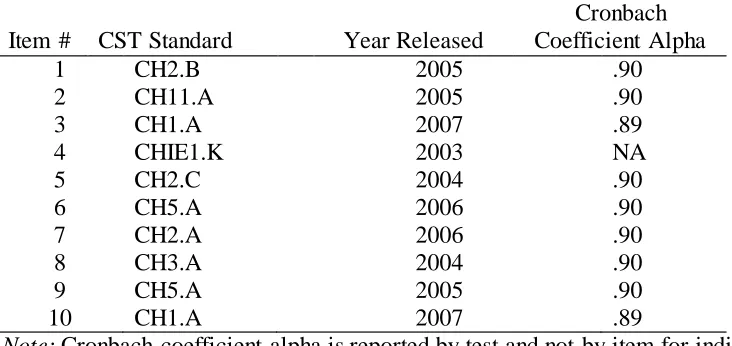
3. Pretest Quiz CST Standards, CST Year Released, and Cronbach Coefficient
Alpha………..………...55
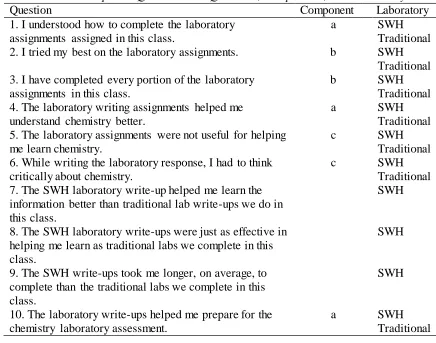
4. Student-Perceptions-Questionnaire Questions, Components, and Laboratory……… 61
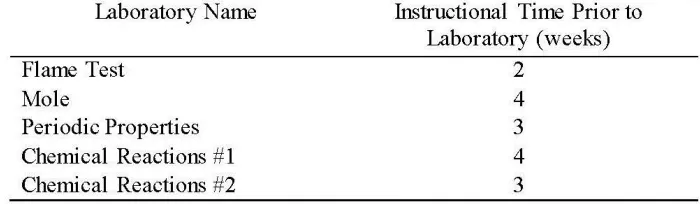
5. Name of Laboratory and Time of Instruction for Each Laboratory Session………….65
6. One-Way ANOVA Results, Pretest Sample Sizes, Means, and Standard Deviations..70
7. Means, Standard Deviations, and Independent-Samples t-test Results for all
Assessments and Laboratory Measures for the Treatment and Comparison Group…..72
8. Lab Report Mean Differences………76
9. Means, Standard Deviations, and Independent-Samples t Test Results for Treatment, and Comparison-Group Student-Perceptions Questionnaire……..………...…77
10. SWH Student-Perceptions Questionnaire Questions 8 to 10 Frequencies……….….78
11. Means and Standard Deviations for Posttest Content Assessment and Posttest Written Assessment by Treatment and Comparison Group………..……81
This dissertation, written under the direction of the candidate’s dissertation committee and
approved by the members of the committee, has been presented to and accepted by the Faculty of
the School of Education in partial fulfillment of the requirements for the degree Doctor of
Education. The content and research methodologies presented in this work represent the work of
the candidate alone.
Denae Nurnberg 5/12/2017
Candidate Date
Dissertation Committee
Dr. Patricia Busk 5/12/2017
Chairperson Date
Dr. Robert Burns 5/12/2017
Date
CHAPTER I
INTRODUCTION
There is a call to action among educators to adopt the shift in the pedagogy of
curriculum design in order to address the evolving needs of the educational landscape in
the United States. The new Common Core State Standards (CCSS) adopted by 42 of 50
states as of Fall 2016 emphasize the importance of literacy skills in order to help build
foundational skills and conceptual understanding in all content areas. The Next
Generation of Science Standards (NGSS) are a set of teaching standards to address
science content and literacy development that are parallel to the CCSS. Past standards
had a focus on knowledge students possess, whereas the NGSS focus on what students
must do to demonstrate and apply their knowledge (Best & Dunlap, 2014). The NGSS
were developed by a multistate consortia to support and promote the increase of scientific
literacy among the nation’s students.
It is the responsibility of science educators to adopt these new NGSS standards
and uphold their vision with rigor and relevance in their classrooms (Bybee, 2014). In the
context of education, rigor refers to educators upholding high academic standards and
expectations, whereas relevance emphasizes the importance of application in education
so content is not being taught esoterically (Blackburn, 2012). The focus of the new
NGSS is on the development of scientific literacy as a progression of skills over time
rather than a discrete set of skills or knowledge to cover in the science classroom (NGSS,
2013). Scientific literacy includes the ability to use observable scientific phenomenon
(e.g., data) and the marriage of these data points to predict and understand a scientific
over time are embedded in a 12-year scope and sequence of “disciplinary core ideas,
crosscutting concepts, and practices” (NGSS, 2013, p.41). Science educators, however,
are not trained within teacher-education programs to teach literacy skills while
developing content knowledge in their students resulting in the underuse of literacy
strategies embedded into curriculum (Balgopal & Wallace, 2013). Thus, further research
needed to be conducted in order to help inform evidence-based writing strategies to
support the implementation of literacy skills within the scientific domain in an effort to
help narrow the gap between research and practice (Carnegie, 2009). This study focused
on assessing the value in a literacy-based high-school science laboratory writing format
named the Science Writing Heuristic (SWH).
The SWH is a laboratory protocol that includes the following steps in its process:
(a) student-generated laboratory question constructed in a group setting, (b) student
development of identifying the procedures to test the question, (c) recording of data in
experimental manipulation, (d) making a claim based on the data, (e) identifying
evidence in the data to support the claim, and (f) reflections on how a student’s
understanding of the world has been effected by this increased understanding of scientific
concepts. The process of generating questions as part of a collaborative experience for
students is rooted in the Vygotskyan (1978) framework for learning in context of social
interaction. The SWH is a collaborative student process where the co-construction of
knowledge is at the core of the work.
Statement of the Problem
Previous research has demonstrated that students are not meeting required
Carnegie, 2009; National Assessment of Educational Progress (NAEP), 2011; National
Science Foundation, 2012). The 2015 Programme for International Student Assessment
(PISA) indicated that the United States ranks 24th out of 71 countries in science. These
assessments of the nation’s underperforming students are based on the standardized
expectations of college-readiness markers for literacy in mathematics, science, reading,
and writing that are not being met compared with their international peers. Additionally,
research has been conducted on students who have not met literacy standards across
subject-matter content areas and subsequently are placed in developmental literacy
courses early in college (Boatman & Long, 2010; Hughes & Scott-Clayton, 2011; Quint,
Jaggars, Byndloss, & Magazinnik, 2013).
The process of writing and synthesizing information is an essential skill for the
21st-century workplace and educational settings (National Association of State Directors
of Career Technical Education Consortium, 2006; National Council of Teachers of
English (NCTE), 2009). Unfortunately, this necessary skill set is still needing
development within the secondary level in order to prepare students for postsecondary
success in college or the workplace. This process of scientific-literacy development
begins with teachers. Aydeniz and Ozdilek (2015) found that preservice science teachers’
knowledge of science, scientific argumentation, and the difference between scientific
explanation and scientific argumentation is underdeveloped and that these skills are all
major tenets of scientific literacy. Research in science education helps teachers with
curriculum development in order to reinforce and develop scientific-literacy practices. In
a 2-year study focused on professional development for science educators, researchers
scientific literacy is fostered (Lederman, Lederman, & Antink, 2013). The Lederman et
al. (2013) research suggested the importance of providing teachers additional training and
practical resources for use in their classrooms to improve scientific literacy. Thus, the
goal of this research study was to provide additional research on a practical
scientific-laboratory-inquiry application that develops scientific literacy.
The National Center for Educational Statistics (NCES) reported in 2011 that 74%
of eighth graders, and 73% of 12th graders performed at or below basic levels on writing
proficiency (NCES, 2011). Within the national benchmarks, students also failed to
perform well in scientific standards with over one-third of eighth graders having earned
below basic scores on the 2015 NAEP science assessment (NAEP, 2015). Additionally,
62% of high-school graduates failed to meet the 2015 readiness benchmark levels in
science on the ACT assessment (ACT, 2015). Students in the United States are
performing poorly in science readiness and literacy, and research around the use of
science laboratories for teaching these skills was the purpose of this study in order to
support the development of scientific literacy.
In 2010 the United States government signed into law the Every Student Succeeds
Act (ESSA) in order to provide flexibility to the states to design accountability systems
and support that align with their educational standards. The ESSA was signed into l aw to
replace the No Child Left Behind Act (2001) that was prescriptive. The ESSA requires
annual proficiency assessments administered alongside the reporting of success indicators
for economically disadvantaged students, students from major racial and ethnic groups,
children with disabilities, and English learners. ESSA requires the administration of
language arts and mathematics over seven age groups. These assessments provide the
public with information regarding the progress state and local education agenci es are
making in providing high-quality, standards-based instruction. These accountability
measures encourage alignment between classroom and assessments to ensure high
standards for all students. While ESSA was taking shape in the United States, new
standards (Common Core State Standards and Next Generation Science Standards) were
being developed and administered in classrooms with a focus on writing as a tool for
learning.
Common Core State Standards and the Next Generation Science Standards
require students to write arguments focused on discipline-specific content. The shift in
expectations of teachers has high-stakes consequences based on standardized-testing
outcomes, but the process of developing the literacy content within the curriculum is not
well-developed in terms of guidance and direction for classroom teachers. The NGSS are
focused on student-performance expectations and are not curricula. Thus, it is essential
for researchers to investigate the most effective strategies to support this pedagogical
shift in curriculum design (NGSS Framework, 2012).
Purpose of the Study
The purpose of this study was to examine the effectiveness of a writing
framework in high-school science in order to help inform the best practices for
developing scientific literacy and learning science content through writing. This study
included a format of writing within the scientific framework that required students to
think differently about the observable phenomenon compared with the traditional
framework that promotes the use of observable data points as evidence to support the
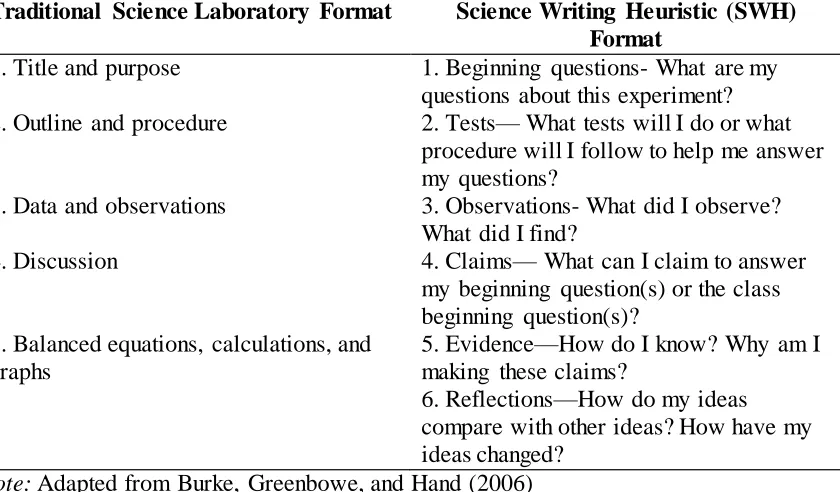
students’ claim. As seen in Table 1, this skill of using data as evidence in order to reason
through a claim is one of the main conceptual shifts of the NGSS and CCSS. The
educational purpose underlying this skill is to develop scientific literacy within
high-school science students.
Table 1
Traditional Laboratory Report Format Versus SWH Format
Note: Adapted from Burke, Greenbowe, and Hand (2006)
With scientific literacy being the focus of the work of science teachers
nationwide, it is important to understand the significance of this term and its definition.
As part of the National Society for the Study of Education’s Yearbook (1932), scientific
literacy was defined as the understanding the influence that the natural world has on
individual lives and the utility of knowing science in their personal worlds. By 1946, the
National Society for the Study of Education evolved into the reliance of including an
element of critical thinking on behalf of the science consumer when making decisions in
Traditional Science Laboratory Format Science Writing Heuristic (SWH) Format
1. Title and purpose 1. Beginning questions- What are my questions about this experiment? 2. Outline and procedure 2. Tests— What tests will I do or what
procedure will I follow to help me answer my questions?
3. Data and observations 3. Observations- What did I observe? What did I find?
4. Discussion 4. Claims— What can I claim to answer my beginning question(s) or the class beginning question(s)?
5. Balanced equations, calculations, and graphs
5. Evidence—How do I know? Why am I making these claims?
society. Later in the 20th century, scientific literacy primarily was defined as having a
relevance in everyday life to make decisions informed by scientific understanding
(DeBoer, 2000). The commonly accepted definition, as used in NGSS, is that of the
National Research Council (2012) to include the understanding of scientific concepts and
processes required to convert observable phenomenon into describable, explainable, and
predictable scientific events. This process includes the ability to pose and evaluate
arguments based on evidence and to apply conclusions from such arguments
appropriately.
The need for increased research in scientific curricula areas is rooted in the goal
of science education to develop a scientifically literate society. Scientific literacy is the
essential outcome and mastery objective of all science teachers and courses; it is the goal
of the NGSS to develop scientifically literate persons who can make sense of and apply
scientific knowledge to unique settings (NGSS Framework, 2012). Scientific literacy is
an essential skill for students to acquire in order to communicate the methods of the
natural world and make an informed and cohesive argument about personal and societal
problems (Balgopal & Wallace, 2013). Scientific literacy includes the traditional science
processes of observing, inferring, classifying, predicting, measuring, questioning,
interpreting, and analyzing data and also includes the confluence of these processes with
scientific knowledge, scientific reasoning, and critical thinking (Lederman et al., 2013).
The incorporation of literacy strategies helps build connections between lecture and
laboratory practices, which have been shown to have positive academic results (Harmon
& Pegg, 2012). The process of mastering scientific literacy and developing this skill set is
years. The process of scientific-literacy development occurs through classroom lessons,
experiments, and opportunities for students to produce scientific language in order to
explain scientific phenomenon. Research shows, however, that there are varied literacy
standards in classrooms, which creates a call for a more systematic approach to
implementation of scientific literacy (Adams & Pegg, 2012).
This study included high-school general-chemistry classes using the SWH
protocol during the Fall and Spring semester of study. The study included a 10-item
pretest administered at the beginning of the unit to assess prior knowledge of chemistry
and any between-group mean differences, half of the students received instruction using
the traditional science laboratory protocol (comparison group), whereas the other half of
the students received instruction using the SWH laboratory protocol (treatment group), a
posttest content assessment (CA) directly pertaining to the laboratories, a posttest writing
assessment (WA), and a questionnaire regarding student opinions about the SWH and
traditional laboratories referred to as the student-perceptions questionnaire.
The purpose of this research was to examine the effectiveness of the SWH as a
writing-to-learn activity in 10th-grade chemistry classes. There have been a number of
research studies conducted in high-school and college science around the effectiveness of
writing-to-learn activities. Most of the research conducted to date has not assessed the
effectiveness of the SWH in the 15- to 16-year-old age range, which is the age of a
typical 10th-grade high-school student. The cognitive demands of writing, making claims,
and processing the scientific evidence are a gap in the literature at this age level in a
chemistry course. Additionally, several studies have been conducted to investigate the
protocol (Greenbowe, Rudd & Hand, 2007; Keys, Hand, Prain, & Collins, 1999; Nam,
Choi, & Hand, 2011). This research design was unique in its methodology of assessing
the development of scientific-literacy skills with implementation of the SWH over an
extended period of time. This research was designed with an extended time and
frequency component of implementing the laboratory protocols in order to fill a gap in
the literature of the effectiveness of the SWH.
The independent variable in this research design was the laboratory format with
one-half of the classes of students receiving the SWH laboratory protocol and the other
half of the classes of students receiving the traditional laboratory format. The dependent
variables in this research were the students’ scores on the posttest content assessment
(CA), the scores on the posttest writing assessment (WA), and the scores on the
laboratory write-ups. The Likert-type scale scores were analyzed from the
student-perception questionnaires.
This research was focused on developing the literature around best practices for
improving scientific literacy and science-content knowledge in high-school students.
Scientific literacy was assessed through the writing assessments where students were
asked to develop and support a claim about an observable scientific phenomena. The
student-perception questionnaire assessed the ease of use of the SWH versus the
traditional laboratory report in order to help practitioners understand student needs and
interests with a redesigned laboratory format.
Educational Significance of the Study
This study was important in the field of education for several reasons. The first
their classrooms using writing as a mode of learning. Writing is a fundamental
component of the CCSS and NGSS in reasoning through concepts. By providing a
research-based teaching framework, teachers have a practical strategy for processing
laboratory experiments that require writing as a method for reasoning through concepts.
The SWH is an activity that is rooted in the shift toward CCSS and NGSS due to the
incorporation of evidence-based claims, and, therefore, timely in terms of supporting
instructional design for science educators.
The second reason this study was relevant is to narrow the gap in research-based
literature around the Science Writing Heuristic (SWH) writing-to-learn model. There are
several studies that focus on university-level chemistry and a limited number of studies in
the foundational high-school science courses. Very few research studies of the SWH
follow the conventions of an experimental design in a high-school chemistry class using
SWH as the writing-to-learn framework. This writing modality has limited research with
younger students ranging in age from 15 to 16 years. The cognitive skill set required to
synthesize ideas into a complex-writing framework needs be researched with this age
range in order to establish its effectiveness as a learning tool.
Finally, this study is important due to its approach in researching a practical
instructional strategy and its effectiveness over time with the design including the
incorporation of five chemistry laboratory experiments over the course of a semester.
This work assessed the cumulative effects of students practicing a writing skill over time
and its academic effects. Most of the relevant research includes the assessment of the
SWH’s effectiveness after a one-time implementation. This research investigated the
previous studies (Hand & Prain, 2002; Keys et al., 1999; Nam et al., 2011; Rudd,
Greenbowe, & Hand, 2007), the research is conducted with one laboratory session as the
treatment whereas this study was conducted with five laboratory sessions over 5 months.
Background and Need
The use of scientific-literacy skills have taken on many variations over time and
has evolved into the foundation of the current NGSS and broader CCSS as they pertain to
reading and writing within the sciences. Scientific literacy is a paramount skill in the 21st
century in order for students to be able to identify useful evidence, draw conclusions
from evidence, and develop policies based on these data (NGSS, 2013). The Next
Generation of Science Standards are aligned with the Common Core State Standards in
order to promote literacy development across all content areas and prepare students for a
future of informed and educated decision-making. An increased emphasis on building a
scientifically literate society has shifted within the standards, and the support for
instructional design to align with these standards is necessary in order to provide
practitioners with a research-based option for developing scientific literacy as a skill and
knowledge base within their students.
Scribner and Cole (1981), in a seminal study, positioned literacy to include three
components of practice: technology, knowledge, and skills. These practices of literacy
include “patterned ways of using technology and knowledge to accomplish tasks” (p.
236). Scientific literacy incorporates the regular use of these patterns and technological
skills to apply knowledge in unique scientific settings. Scientific literacy requires more
than rote memorization and recall of facts and data. Scientific literacy includes the use of
level (National Research Council, 2011). Lederman et al. (2013) argued that a very
“narrow and distorted view” of scientific inquiry is taught and reinforced in the
kindergarten to 12th-grade educational system that limits a student’s imagination and
connectedness to scientific inquiry. This research study was conducted in order to
approach inquiry from a different viewpoint in order to broaden the inquiry paradigm and
allow students to think more openly about science and the many scientific connections
that can be made during the laboratory process. The inquiry model in this research
included the co-construction of knowledge in order for students to explore scientific
phenomenon from a social perspective. Inquiry through the SWH framework is a
platform for students to write informally about their observable findings and mentally
negotiate meaning of their observed data into formal writing (Akkus, Gunel, & Hand,
2007).
Experts in the field of science education and research have called for the increase
of inquiry as a means to teach science in order to integrate scientific content knowledge
within scientific practices (National Research Council, 2012). Inquiry is one of the main
foci for the NGSS Framework and are rooted partially in the Benchmarks for Scientific
Literacy (2009), which maps out standards for scientific literacy development by the end
of the 12th grade. Inquiry, as a means for learning, is a social and exploratory framework
that supports the learning of complex scientific concepts through laboratory settings
(Becker, 2012). This learning method was the foundation for this research study and was
the main focus of the writing-to-learn paradigm. There was a need for further research
around the effectiveness of the SWH as a learning tool in order to support the process of
Theoretical Framework
Writing is not only a method for expressing literacy but also a method to help
process scientific information and formulate a cohesive argument or explanation about a
concept. The process of writing helps focus students on the schematic knowledge and
skills that build memory and require organization of thought versus the lower-level
cognitive process of declarative knowledge (Magnifico, 2010). The theoretical
framework behind writing as a method for learning is rooted in the constructivist theory
of learning (Treadwell, 2010) and the schema theory (Beene & And, 1985;
Schatzberg-Smith, 1988). The learning process is generative, and meaning is constructed through
negotiation with complex concepts. The SWH laboratory process builds a schema for
students for students in terms of understanding and doing science that facilitates them
becoming more scientifically literate. Vygotsky (1978) argued that learners do not
acquire knowledge in isolation, rather they co-construct knowledge, and learning in a
social interaction. The process of negotiating ideas and reasoning through complex
scientific evidence is an essential part of the knowledge-construction process (Tobin &
Tippins, 1993; Vygotsky, 1978). The process of co-constructing the scientific question to
test for the laboratory process in the SWH relies on Vygotskyan framework for student
learning.
Schema theory is a theoretical underpinning in the process of developing
arguments within the scientific laboratory setting. When a student observes a scientific
phenomenon, he or she must connect it to prior knowledge and develop a progressive
definition of the scientific world (Bischoff & Anderson, 1998). The laboratory experience
schema for newly learned scientific knowledge. The laboratory experience promotes the
development of knowledge with increased experience with scientific phenomon (She,
2004).
Writing requires the process of organizing thoughts, evaluating and supplying
supporting evidence, and drawing connections between concepts to explain phenomenon.
The co-construction of knowledge through writing and discussion with peers in a
laboratory setting has been found to have beneficial learning outcomes (Balgopal &
Wallace, 2009; Hand, Hohenshell, & Prain, 2004; Hand, Wallace, & Yang, 2004; Saul,
2004; Wellington & Osborne, 2001). Therefore, formative writing assignments used to
support a laboratory experiment and develop conceptual understanding should improve
learning outcomes in a high-school chemistry course. Formative writing assessments that
require schematic knowledge skills are better able to develop students’ mental models
and conceptions (Furtak & Ruiz-Primo, 2008).
There are two types of writing classifications in formative assessments:
Writing-to-Learn (WTL) and Writing-to-Communicate (WTC). WTL is an effective instructional
strategy that centers on the process of organizing and articulating ideas as opposed to
WTC that focuses on the finished written product (Balgopol et al. 2013). WTL strategies
are classified by the process of writing as a method of reasoning through a concept in
order to facilitate learning (Zinsser, 1988). WTL strategies are designed to use writing as
a process in which students generate and clarify understanding of scientific concepts for
themselves, rather than simply communicating with a teacher for evaluation such as a
WTC assignment (McDermott, 2010). The Science Writing Heuristic is a WTL activity
focused on scientific-knowledge development (Memiş & Seven, 2015).
The SWH is a method of scaffolding laboratory experiences that is inquiry
group-based and require processing the learning of scientific phenomenon through writing. The
SWH is considered a WTL strategy due to nature of the writing process that is structured
in a way to deepen learning and make connections between prior knowledge and the
observable data. As seen in Table 1 (Appendix A), the SWH relies on the use of guided
questioning techniques in the laboratory setting to include questioning of scientific
phenomenon observed, knowledge claims, evidence, and observable data (Nam et al.,
2011) in order to guide the inquiry process. The process requires both students and
teachers to take an active role in the laboratory process versus more traditional laboratory
settings that are cookbook in nature. The SWH is a cooperative negotiation of conceptual
understanding through the writing process rooted in the constructivist theory of learning.
Included in Table 1 (Appendix A) that was adapted from Burke, Greenbowe, and Hand
(2006) is a list of the traditional science laboratory formats and prompts and the proposed
science-writing-heuristic format questions. These are outlined in a way to provide a
comparison between the two sequences of the laboratory protocols.
In a seminal study on the SWH, Rudd et al. (2007) conducted a SWH experiment
with 52 students in an undergraduate chemistry course. One-half of the participants were
assigned a traditional laboratory process including a laboratory write-up with title,
purpose, outline of procedure, data and observations, balanced equations, calculations,
graphs, and discussion. The treatment group participated in an SWH laboratory process
that included a write-up with beginning questions or ideas, tests and procedures,
the traditional laboratory group that resulted in a statistically significant different
achievement on a posttest between the two groups holding their prior knowledge
constant. The results of this study suggest that with appropriate structure of writing
protocols to help students process a complex scientific process, students may have a
deeper and stronger understanding than those taught with a traditional laboratory
protocol. This research study is one of several SWH studies (Cronje, Murray, &
Rohlinger & Wellnitz, 2013; Hand, Therrien, & Shelley, 2013; Keys et al., 1999; Kingir,
Geban, & Gunel, 2013; Nam et al., 2011) conducted to assess the effectiveness of the
SWH protocol.
Research Questions
The intent of this research was to add to the body of literature around effective
Writing-to-Learn (WTL) strategies in order to help students learn high-school science
and develop scientific literacy. The research included a locally created pretest,
intervention, and a locally created posttest. Each of the assessments included in the
research were vetted through a validity panel of experts. Grades were collected for the
laboratory report in order to ensure standardization of the laboratory process and
write-ups. The research included a questionnaire regarding students’ opinions about the
scientific writing protocol as compared with the traditional protocol. The research was
administered over several months with five total laboratory sessions. Thus, a research
question regarding improvement of writing over time was included. The research,
overall, was aimed at identifying the effectiveness of the SWH teaching methodology as
a means to improve scientific literacy and content knowledge. The research questions
1. To what extent is there a difference between SWH and traditional laboratory
groups’ scores on the posttest of content assessment?
2. To what extent is there a difference between SWH and traditional laboratory
groups’ scores on the posttest of a writing assessment?
3. To what extent are there differences in student scores on the SWH laboratory
protocol over five laboratory experiments?
4. Was there a statistically significant difference in student perceptions of the
usefulness of the SWH laboratory report and student perceptions of the usefulness
of the traditional laboratory report?
Definitions of Terms
The following terms are defined as they are applied within this study. There may
be additional definitions of these terms used in other contexts, however, for the purposes
of this study, these terms were used as they are defined below.
Common Core State Standards (CCSS) are the state standards for 43 out of 50 states. The
state standards are learning goals for each grade level, kindergarten to 12th grade, that
define the content-area knowledge and skills that students are expected to know and be
able to do by the end of each grade level in Mathematics and English Language Arts. The
Common Core originally included 48 states working together to develop the standards
(National Governors Association Center for Best Practices, Council of Chief State School
Officers, 2010).
Evidence-Based Claims is the process by which students use observable data to make and
support a scientific claim. This practice extends past the sciences and is used in English
this process includes the use of observable scientific phenomenon (National Research
Council, 2012).
Formative Writing Assessment is a method used by teachers to assess learning progress
by students. This evaluation is used as a practice application of learning by the student as
well as a learning evaluation by the teacher in order to assess how much a student has
learned of a particular concept. Often times the writing or assessment assignment is used
as a reflective tool for students to gauge their own learning progress as well as a tool for
teachers to modify their instruction to improve learning (Garrison & Ehringhaus, 2007).
Next Generation of Science Standards (NGSS) are the Common Core State Standard
equivalent for the science content area. The NGSS are the core scientific concepts and
skills as identified by the scientific and research community. The standards are articulated
across grade bands and are organized by disciplinary core ideas, crosscutting concepts,
and science and engineering practices (NGSS Lead States, 2013).
Posttest Content Assessment (CA) The posttest CA was one of the dependent variables in
this study. The posttest CA was a multiple-choice with 20 multiple-choice questions.
These questions were related directly to the content learned in the laboratories during the
study. The scores on the CA were used as one of the dependent variables in this study.
Each question is scored as 1 point per question. Scores range from 0 to 20.
Posttest Writing Assessment (WA) The posttest WA was a dependent variable in this
study. The WA was included as a measurement of writing growth and was linked to the
scientific-literacy development of student participants. The WA includes a laboratory
description of a scientific phenomenon, laboratory procedures, and observed data.
WA was aligned with the SWH laboratory write-ups and assessed the students’ scientific
literacy. The WA included a 9-point rubric scale using the SWH laboratory rubric
categories for the “observations, claims, and evidence” category for 3 points on each.
Scores range from 0 to 9.
Pretest was the baseline assessment conducted prior to the commencement of the
experimental treatment. The pretest was administered to investigate any between-group
mean differences (Creswell, 2014). In this study, the pretest assessment included a
10-item multiple-choice test with questions from previously released California Standardized
Tests (CST). Items were selected from CSTs administered from 2003 to 2007. Scores
range from 0 to 10.
Science Writing Heuristic (SWH) was a science laboratory protocol that included
investigations including idea expression, collaborative peer discussion, and writing. The
protocol was designed to guide teachers and students in negotiating meaning through
investigation (Keys et al., 1999). SWH was a WTL activity in a science laboratory setting
that focused on scientific literacy skills and scientific knowledge development (Hand et
al., 2004; Hand et al., 2004; Memiş et al. 2015, Nam et al., 2011)
Science Writing Heuristic (SWH) Laboratory Rubric The SWH laboratory rubric was
designed to assess students’ ability to complete effectively each section of the science
writing heuristic. The elements of the SWH laboratory assessed were (a) beginning
questions, (b) test or experiments, (c) observations, (d) claims, (e) evidence, (f) reflection,
and (g) work cited. The rubric ranged in scored points from 1, 2, or 3 for a total of 21
points possible in order to maintain overall grade weighting scores in the class. The SWH
of this study, the rubric scores were used in data analyses as a dependent variable looking
at change over time.
Scientific Literacy Scientific literacy is the knowledge and understanding of scientific
concepts and processes required to convert observable phenomenon into describable,
explained, and predicted scientific events. This process includes the ability to pose and
evaluate arguments based on evidence and to apply conclusions from such arguments
appropriately (National Research Council, 2012).
Student-Perceptions Questionnaire The student-perceptions questionnaire was
administered following the posttest CA and posttest WA. The student-perceptions
questionnaire included 10 Likert-type scale items on the SWH questionnaire and 7
Likert-type scale items on the comparison-group questionnaire. The questionnaire
included three overall components: (a) chemistry students' perceptions of the importance
of WTL assignments and their understanding of chemistry, (b) chemistry students’
attitudes toward WTL assignments, and (c) the extent that chemistry students perceived
writing as a method of helping them make deeper curricular connections. Each item was
scored based on the Likert-type scale with each statement assigned point values for each
rating: 1=Not at all true, 2=A little true, 3= Somewhat true, and 4=Very true. There was
one reverse verification item that was adjusted during data analysis. Scores ranged from
10 to 40 for the SWH questionnaire and 7 to 28 for the comparison-group questionnaire.
Traditional Laboratory Protocol The traditional laboratory protocol was an agreed upon
set of standardized questions that traditionally have been taught in the Kindergarten
to12th-grade science course and commonly is referred to as the scientific method. These
discussion, balanced equations, and graphs (Helmenstine, 2016).
Writing Protocols Writing protocols are assignments required of students during the
reflection phase of learning as a follow-up course-work activity (Langer & Applebee,
1987).
Writing-to-Communicate (WTC) WTC activities focus on the final written product and
the method of writing in order to communicate an idea. The most common WTC
assignments in a formal classroom include (a) expository, (b) persuasive, and (c)
narrative essays (Balgopal et al., 2013; Hillocks, 2002).
Writing-to-Learn (WTL) Writing to learn is the process to order and represent
experiences to make meaning of concepts through written language. This process helps
the learner shape meaning, reach a deeper understanding, and developing a stronger
ability to reason through evidence (Zinsser, 1988).
Summary
Outlined in chapter I of the proposed research is the need to develop a
scientifically literate society. Extant data were presented to reflect the current reality of
academic achievement in the domain of writing as part of the compelling need for
improved educational practices. The research included a writing-to-learn strategy through
the scientific laboratory process known as the Science Writing Heuristic.
Chapter II included a review of relevant research of the Science Writing Heuristic
as a means for students learning science laboratory content as compared with the
traditional laboratory protocols used in high-school science. This review included an
outline of the development of the Science Writing Heuristic as a laboratory protocol and
The methodology for this study is included in Chapter III. The validity
measurements of the locally generated assessments, the content of the SWH protocol and
its application in the chemistry units, and an outline of the student opinion questionnaire
development are outlined in Chapter III. This chapter also includes the data-collection
process as well as data analysis postresearch. Chapter IV includes a review of the
descriptive data and data analysis pertaining to the research questions. Chapter V
CHAPTER II
REVIEW OF THE LITERATURE
The purpose of this study was to examine the effectiveness of a writing
framework in high-school science in order to help inform the best practices for
developing scientific literacy and learning science content through writing. This research
investigated the effectiveness of a laboratory protocol in developing scientific literacy
and science-content knowledge through writing. The study incorporated a writing
protocol as a framework for students to process observable scientific phenomenon. The
protocol, named the Science Writing Heuristic (SWH), provided a framework that
promoted the use of observable data points as evidence to support the student’s claim.
This skill of using data as evidence in order to reason through a claim is one of the main
tenants of the Next Generation Science Standards (NGSS) and the Common Core State
Standards (CCSS). The educational purpose underlying this skill is to develop scientific
literacy within high-school science students.
The United States engaged in a focus on education reform in the 1980s including
an emphasis in science, technology, engineering, and mathematics in order to develop a
scientifically literate society (Duschl, 2008). Scientific literacy is an essential skill for
students to acquire in order to communicate the methods of the natural world and make
an informed and cohesive argument about personal and societal problems (Balgopal &
Wallace, 2013). Scientific literacy not only includes the traditional science processes of
observing, inferring, classifying, predicting, measuring, questioning, interpreting, and
analyzing data but also includes the confluence of these processes with scientific
2013).
Scientific literacy is the essential outcome and mastery objective of all science
teachers and courses; it is the goal of the NGSS to develop scientifically literate persons
who can make sense of and apply scientific knowledge to unique settings (NGSS Lead
States, 2013). Scientific literacy is the foundation for the proposed research using the
science writing heuristic. Below is a review of scientific literacy and its importance in
education, cognition of writing, writing protocols, writing-to-learn instructional
strategies, previous research on writing-to-learn strategies, science writing heuristic,
metacognitive writing prompts, and writing audiences. Each of these areas is reviewed in
the context of relevant literature.
Scientific Literacy
Scientific literacy is the foundational skill that all students are expected to learn
prior to high-school graduation in order to become active citizens who can assimilate into
society with a working knowledge of science knowledge consumption (Cavagnetto,
2010). The process of mastering scientific literacy and developing this skill set is the
work of classroom teachers during the elementary-, middle-, and secondary-school years.
The process of scientific literacy development occurs through classroom lessons,
experiments, and opportunities for students to produce scientific language in order to
explain scientific phenomenon (Ross, Hooten, & Cohen, 2013).
The incorporation of literacy strategies helps build connections between lecture
and laboratory practices, which have been shown to have positive academic results
(Harmon & Pegg, 2012). The understanding of laboratory procedures and drawing
shows, however, that there are varied literacy standards in classrooms, which creates a
call for a more systematic approach to implementation of scientific literacy (Adams &
Pegg, 2012).
A scientifically literate student is able to communicate effectively his or her ideas
through writing or speaking while demonstrating a clear understanding of a scientific
concept (Deming, O’Donnell, & Malone, 2012; Krajcik & Sutherland, 2010; Norris &
Phillips, 2003). The writing required in CCSS helps improve scientific literacy as the
standards emphasize the use of evidence-based arguments in all subject areas and
promotes the movement from the vernacular to scientific expression. Jagger and Yore
(2012) argued that all members of the educational community need to encourage and
promote the use of evidence-based arguments in writing in order to increase scientific
literacy in students. The use of evidence-based arguments are the hallmark of the CCSS
and are essentially the anchor of the pedagogical shift in education. Research has shown
that integrating literacy skills into science curriculum has had a positive effect on
students’ inquiry skills and also has improved student attitudes toward science (Guzzetti
& Bang, 2011).
In a recent study conducted by researchers Maulucci, Brown, Grey, and Sullivan
(2014), a multiple-case study design was used to look in depth at the experiences of 6
fifth-grade students and an inquiry-based science education at an urban middle school. A
variety of data sources were collected to reflect on authentic inquiry including teaching
journal entries, samples of student work, photographs of students and their work,
classroom video, semistructured focus-group interviews, and performance-assessment
(a) students develop authentic and personally relevant science knowledge; (b) students’ funds of knowledge shape their inquiries; (c) students’ relationships with science and sustained interest in science are transformed; (d) students’ identities as potential scientists are affirmed; (e) students engage in science as a social enterprise; and (f) student develop a sense of agency. (Maulucci et al., 2014, p.1119)
Maulucci et al. (2014) concluded through a close examination of all artifacts that
science-inquiry experiences provided students with a greater sense of academic agency,
fostered expertise, challenged students’ views of science concepts, improved science
achievement and enhanced their relationship with science. This research provided the
meaningful context in which the study was situated. The study was looking to foster a
strong connection between students and scientific inquiry in order to increase scientific
literacy and improve science achievement.
Guided Inquiry
The science writing heuristic uses a guided inquiry framework with the teachers
providing prereading, and contextual scientific information and working with the students
to develop a guiding question. Guided inquiry includes a laboratory process where the
teacher asks the question and students construct the solution through experimental
observations (Ural, 2016). Guided inquiry is more structured than an open-inquiry
process where students are searching for the problem and the solution through
experimental means. Guided-inquiry research suggests that students’ attitudes toward
science and their academic achievement increase (Taitelbaum, Mamlık-Naaman,
Carmeli, & Hofstein, 2008; Hofstein, Shore, & Kipnis 2004). Sen and Oskay (2016)
conducted research on 34 undergraduate chemistry students with half of the students
receiving inquiry learning activities and the other half receiving lecture-based traditional
difference between the experimental and comparison group with the experimental group
showing positive academic gains t(32)= 3.63, with a reported large eta squared=.29.
These results suggest that students taught with an inquiry framework benefit
academically from this structure.
Research conducted by Ural (2016) with 37 undergraduate science students was
centered around the use of a guided-inquiry laboratory framework. The students received
the traditional laboratory teaching method in the fFall semester of a two-semester course
of study. In the second semester, the laboratory protocols were all guided inquiry
facilitated by the professor. Affective data were collected using the Chemistry Laboratory
Attitude Scale (CLA), Chemistry Laboratory Anxiety Scale (CLAx), and a semistructured
interview form. The academic achievement data collection included seven laboratory
quizzes in each semester, a chemistry achievement pretest, and a chemistry achievement
posttest for each semester. Results indicated that there was a statistically significant
increase in student’s attitudes toward chemistry laboratories, their academic-achievement,
and a decrease in their chemistry laboratory anxiety. The paired-samples t test results
indicated a statistically significant difference in the attitudes of students toward chemistry
favoring the guided inquiry laboratory framework, t(36)= -3.84, r=.54. Additionally,
there was a statistically significant effect for laboratory anxiety with students reporting
less anxiety within the guided-inquiry laboratory setting, t(36)= 4.54, r=.60. Last, there
was a statistically significant difference in academic achievement between semesters of
study with the guided-inquiry quiz and posttest scores being higher on average than the
traditional laboratory achievement scores, t(36)= 15.06, r=.93. The achievement score
framework.
Cognition of Writing
The guided-inquiry framework builds scientific-literacy skills through the
laboratory experience. Scientific-literacy development is the foundational goal of this
study. In order to investigate the process by which scientific literacy is developed through
writing, the framework behind the cognition of writing was explored. Understanding
cognition of writing is intertwined with understanding the development of academic
literacy, namely science. Hillocks (1975) emphasized the importance of inquiry in
writing, noting that students need to be writing about something that was observed in the
content area in which they are writing. Hillocks (1979), a leading researcher in the field
of writing assessments in education, prioritized the process of writing following an
observation in order for students to make inferences and connections to the content they
were learning.
The process of writing is an essential skill for most workplace and educational
settings (National Education Association, 2007). It is an emphasized skill in the CCSS
and a prioritized shift in the development of curriculum within the new standards (CCSS,
2010). Unfortunately, this necessary skill set has not yet translated into student
application in unique settings (Vázquez et al., 2012). This skill of using writing to learn
and communicate will be the foundation of the work during the CCSS curriculum
development with teachers prioritizing writing to learn in their lesson designs (Rhodes &
Feder, 2014). With writing being the backbone of the CCSS and NGSS, it is imperative
that educators understand the mechanics of writing paired with their specific content area
2013). Research indicates that teachers have not been trained in the mechanics of
teaching writing in their preservice coursework (Cutler & Graham, 2008; Gilbert &
Graham, 2010; Kiuhara, Graham, & Hawken, 2009). In a study conducted by Gillespie et
al. (2013) 800 ninth-grade and 12th-grade teachers nationwide were selected randomly to
complete a questionnaire on their preparation and use of writing strategies to help student
learn classroom content. The questionnaire was stratified between four content areas: (a)
language arts, (b) mathematics, (c) science, and (d) social studies. Teachers reported
using writing-to-learn strategies in their classes, yet they were not applied appropriately.
Teachers also reported a lack of preservice or inservice preparation on how to use writing
to support learning. The purpose of this research was to provide teachers a
research-based writing tool to use in laboratory reports that use a writing-to-learn model in order
for students to process the information and develop their scientific-literacy skills.
The process of writing is one that is complex in that it requires the use of both
long-term and short-term memory in order to plan, organize, and execute. Researchers
began developing models of the cognition of writing around the 1970s following Emig’s
(1971) seminal study involving 12th-grade students. Emig’s (1971) study focused on the
process of writing rather than analyzing the end product of student work in order to
inform writing as an instructional paradigm. Flowers and Hayes (1980), expanded on
Emig’s (1971) work and are known as the experts in the field of the cognition of writing.
Flowers and Hayes (1980) organized the mental model of writing cognition into two
types of information: the writer’s knowledge stored in long-term memory and the writer’s
representation of the task environment. Hayes (2012) developed an updated cognition of
presented here.
Figure 1. Mental Model of Writing by Flower and Hayes (1980).
Flowers and Hayes (1980) outlined the long-term memory as the warehouse of
knowledge that a writer can access during the planning stages. The “planning” of writing,
as defined by Flower and Hayes (1980) requires the use of long-term memory to generate
ideas in order to build an internal representation (Figure 1). “Organizing” was defined as
the process of selecting the useful memories and placing them into a logical structure that
requires formulating ideas and searching memory for subordinate ideas, “translating” was
defined as the process of transforming a logical structure into written sentences, and
“reviewing” is the process of rereading, evaluation, and editing. This process is not one
that is linear in nature, rather it requires the use of hierarchical mental systems in order to
fluctuate between the stages.
Holliday, Yore, and Alvermann (1994) expanded on the cognitive process of
writing that was outlined previously by Hayes and Flower (1980). Holliday et al. (1994)
memory, and sensory motor activity. The process of writing is knowledge transforming
and interactive due to the requirement of complex retrieval of concepts, negotiation of
meaning, and the constructive process that ensues. This iterative process of planning
writing, generating, translating, and reviewing helps build schematic and conceptual
knowledge based on a constructivist theory of learning. Constructivist theorists maintain
that learning takes place when meaning is made by prior knowledge being activated
(Stahl, 1995).
The notion of writing-to-learn (WTL) through a constructivist framework is a
concept that is rooted in the foundation of a meaningful experience to the writer. If a
person perceives that he or she emotionally is connected to the topic they are writing
about then conceptual understanding will be refined and developed during the knowledge
construction process (Iverson, 2010). This educational approach to employing
writing-to-learn strategies helps students activate prior knowledge, make meaningful connections,
and construct meaning as part of the learning process.
In an experimental study conducted with fifty 12th-grade students, the role of
affect was investigated during a WTL assignment on biosecurity (Tomas & Ritchie,
2012). The students were assigned six writing tasks on biosecurity over the course of an
eight week period. Data were collected on affective measures through student
questionnaires, interviews, and video recordings of emotional expressions as tied to the
writing task. Researchers found that favorable emotions elicited during writing were
positively and strongly connected to students’ interest in the writing assignment. This is
an important connection to the following research due to the link between a positive and
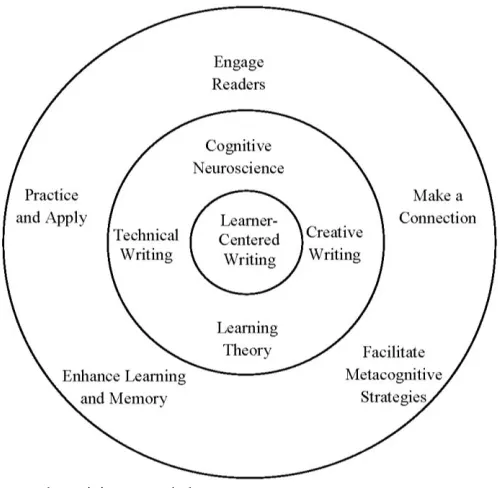
Figure 2. Learner-centered writing model.
This study’s research design included the co-construction of knowledge during the
laboratory experiment planning and the meaningful writing process of assimilating the
information being observed and the output of meaning constructed in a WTL activity.
Writing Protocols
Writing protocols help teachers facilitate learning experiences through writing as
can be seen in the learner-centered writing model (Iverson, 2010) in Figure 2. Writing
protocols are defined as assignments required of students during the reflection phase of
learning as a follow-up course work activity (Langer & Applebee, 1987). In Figure 2, the
inner ring of the model includes four separate, but interconnected, components of the
theoretical frameworks that provide context and background to the writing process:
creative writing, learning theory, cognitive neuroscience, and technical writing. The outer
ring includes the best practices for teaching and learning in order to maximize the results
of the outcomes for learner-centered writing: engage readers, make a connection,
Each of these best practices are rooted in the constructivist theory of learning and help
students to continue to negotiate meaning with prior knowledge and construct new
knowledge through writing.
Writing protocols provide the structure to tap into each of these best practices
when properly implemented in the classroom. Writing protocols require students to apply
cognitive and meta-cognitive strategies (Nückles, Hübner, & Renkl, 2009) through the
knowledge-construction process. Writing protocols that are scaffolded appropriately to
allow for meaning making promote the learning process through negotiation of long-term
memory and newly constructed knowledge (Higgins & Flower, 1994). These learning
strategies are applied through writing-to-learn opportunities that require students to
access long-term knowledge while articulating thoughts in the course of writing. This
knowledge production process is iterative in design.
Writing-to-Learn
Writing is a method for expressing literacy, but it is also a method to help process
scientific information and help formulate a cohesive argument or explanation about a
concept. As previously outlined, the process of writing helps focus students on the
schematic knowledge skills that build memory and require organization of thought versus
the lower-level cognitive process of declarative knowledge (Magnifico, 2010). Writing
requires process of organizing thoughts, evaluating and supplying supporting evidence,
and drawing connections between concepts to explain phenomenon. Formative writing
assessments that require schematic knowledge skills are better able to access students’
mental models and conceptions (Furtak et al., 2008). Shanahan and Shanahan (2008)