R E V I E W
Open Access
Control of hypertension in the critically ill:
a pathophysiological approach
Diamantino Ribeiro Salgado
1,2, Eliezer Silva
3and Jean-Louis Vincent
1*Abstract
Severe acute arterial hypertension can be associated with significant morbidity and mortality. After excluding a reversible etiology, choice of therapeutic intervention should be based on evaluation of a number of factors, such as age, comorbidities, and other ongoing therapies. A rational pathophysiological approach should then be applied that integrates the effects of the drug on blood volume, vascular tone, and other determinants of cardiac output. Vasodilators, calcium channel blockers, and beta-blocking agents can all decrease arterial pressure but by totally different modes of action, which may be appropriate or contraindicated in individual patients. There is no preferred agent for all situations, although some drugs may have a more attractive profile than others, with rapid onset action, short half-life, and fewer adverse reactions. In this review, we focus on the main mechanisms underlying severe hypertension in the critically ill and how using a pathophysiological approach can help the intensivist decide on treatment options.
Keywords:Beta-blockers; Calcium channel blockers; Cardiac output; Diuretics; Mean arterial pressure; Vasodilators
Introduction
Arterial hypertension is a worldwide problem, affecting more than 1 billion people [1,2]. Chronic arterial hyper-tension is an important cardiovascular risk factor and as-sociated with significant morbidity and mortality in the general population [3]. Chronic hypertension also is the primary risk factor for cerebrovascular disease [4]. Acute hypertension is not uncommon in the emergency room or acute care setting [5] and can have important conse-quences on various organs, including the heart [6], the kid-neys [7], the brain, and the lungs; associated end-organ injury has been reported in 19-81% of patients with acute severe hypertension [8-10]. In a recent American survey of patients with severe acute hypertension (defined as systolic arterial pressure [SAP] >180 mmHg and/or diastolic arter-ial pressure [DAP] >110 mmHg) requiring hospitalization, new or worsening end-organ dysfunction was observed in 59% of subjects [10]; the 90-day mortality rate was 11% [10]. More than one third of patients discharged home were rehospitalized at least once within 90 days, 29% for acute severe hypertension [11]. Interestingly, 28% of the
patients had a primary neurological diagnosis and mortality rates were higher in these patients than in those without a neurological diagnosis (24% vs. 6%,p< 0.0001) [12].
According to general guidelines [1], moderate arterial hypertension is defined as a systolic arterial pressure (SAP) ≥140 mmHg or a diastolic arterial pressure (DAP)
≥90 mmHg, also known as Stage I hypertension. This degree of hypertension is rarely treated in critically ill sub-jects, unless it is accompanied by obvious harmful hemo-dynamic symptoms. Stage II hypertension (systolic arterial pressure [SAP] >160 mmHg or diastolic arterial pressure [DAP] >100 mmHg [1]) is more frequently associated with acute cardiovascular complications, including acute heart failure, intensive care unit (ICU) admission, prolonged hos-pital stay, and death [1,10,12,13]. Values of SAP >180 mmHg and/or DAP >110 mmHg often are used to define severe hypertension [10,14].
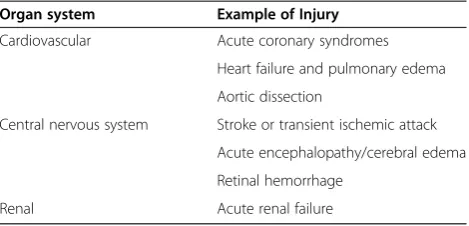
In discussing hypertension, it is important to differen-tiate some terms. Hypertensive emergencies are defined as a marked increase in arterial pressure associated with acute, life-threatening target-organ injuries (Table 1), often requiring hospitalization in an ICU for immediate pressure control. Hypertensive urgenciesare not associ-ated with imminent acute end-organ injury, so that blood pressure control can be slower, over several hours, * Correspondence:[email protected]
1
Department of Intensive Care, Erasme Hospital, Université Libre de Bruxelles, route de Lennik 808, Brussels 1070, Belgium
Full list of author information is available at the end of the article
© 2013 Ribeiro Salgado et al.; licensee Springer. This is an Open Access article distributed under the terms of the Creative Commons Attribution License (http://creativecommons.org/licenses/by/2.0), which permits unrestricted use, distribution, and reproduction in any medium, provided the original work is properly cited.
and hospitalization may not even be necessary [1]. Be-cause there is no consensus regarding the cutoff value of blood pressure for defining hypertensive urgencies, diag-nosis should be individualized after taking into account several factors, such as age, sex, the presence of chronic hypertension (and use of antihypertensive drugs), and the presence of comorbidities. Indeed, the same degree of arterial hypertension may be associated with symp-toms of acute target-organ damage in one individual or be completely asymptomatic in another. Nevertheless, in general terms, a blood pressure equal to or greater than 180/100 mmHg may require intervention [15].
Before initiating therapy for severe acute hypertension in a critically ill patient, the presence of precipitating causes should be looked for (Table 2), because removal
and/or control of these factors can prevent unnecessary treatment in many instances. In the patient with chronic hypertension, it may be wise to continue the antihy-pertensive medications. Unlike some other traditional reviews that cover the management of hypertensive ur-gencies/emergencies in specific diseases (e.g., acute aor-tic dissection, preeclampsia, cerebrovascular accident) [16-18], we focus on the main mechanisms underlying severe hypertension in the critically ill and how a patho-physiological approach can help the practicing intensivist to manage this problem.
Review
Pathophysiology of arterial hypertension
Regional blood flow and organ perfusion are determined by the driving pressure and by vascular autoregulation, a functional property of vessels that permits blood flow to adapt to a given level of arterial pressure and tissue metabolic demand [19,20], thus protecting tissues against the negative effects of excessive or insufficient flow ob-served during hypertension and hypotension, respectively. In healthy subjects, for example, cerebral blood flow is kept relatively constant through a wide range of arterial pressures (usually a mean arterial pressure [MAP] from 60-120 mmHg) [5]. Various mechanisms are involved in vessel autoregulation, including activation of the auto-nomic system and local production of vasoactive sub-stances, such as angiotensin II, endothelin, prostanoids, nitric oxide (NO), adenosine, reactive oxygen species (ROS), and lactate [21,22]. Endothelial dysfunction also may contribute to the development of systemic hyperten-sion. In this respect, preeclampsia, a disease model of systemic endothelial dysfunction, and some recent chemo-therapy drugs that inhibit vascular endothelial growth fac-tor (VEGF), share similar physiological mechanisms for the genesis of hypertension by inhibiting VEGF, reducing the production of NO and increasing systemic vascular resist-ance (SVR) [23].
When faced with a patient with severe acute hyperten-sion, one needs to keep in mind the two determinants of arterial pressure [24]:
MAP¼COSVR ð1Þ
where CO is the cardiac output. SVR essentially repre-sents the degree of vascular tone. Because CO is the product of the heart rate (HR) and the stroke volume (SV), we can write:
MAP¼ðHRSVÞSRV ð2Þ
The vascular tone (SVR) is mainly determined by the degree of constriction of precapillary and small arterioles and, to a lesser degree, by the blood viscosity (k). The vascular tone is an important determinant of ventricular Table 1 Most frequent target organs damaged during
acute hypertensive crises
Organ system Example of Injury
Cardiovascular Acute coronary syndromes
Heart failure and pulmonary edema
Aortic dissection
Central nervous system Stroke or transient ischemic attack
Acute encephalopathy/cerebral edema
Retinal hemorrhage
Renal Acute renal failure
Table 2 Principal causes of acute systemic arterial hypertension in critically ill patients
Organ system Cause
Decompensated essential (primary) hypertension Secondary causes
Discontinuation of antihypertensive drugs
Central Nervous System Pain
Anxiety and stress
Delirium
Withdrawal syndromes
Intracranial hypertension
Renal system Urinary retention
Renal failure
Hypervolemia
Respiratory system Respiratory distress–Hypoxemia, hypercapnia
Metabolic Hypoglycemia
Steroid administration
Pheochromocytoma
Cushing syndrome
Intoxication, substance abuse and overdose (cocaine, phencyclidine, amphetamines)
Salgadoet al. Annals of Intensive Care2013,3:17 Page 2 of 13
afterload. Cardiac output is determined by heart rate, afterload, myocardial contractility, and preload. Preload is largely determined by the volume status, which is rep-resented by the central venous pressure (CVP), pulmon-ary artery occlusion pressure (PAOP), or inferior vena cava diameter in the clinical setting. Cardiac contractility is difficult to assess at the bedside but can be indirectly appreciated by the assessment of the ventricular stroke work index (basically derived from the product of stroke index and MAP) and the ejection fraction obtained by echocardiography [25]. Increased myocardial contractil-ity can, in principle, contribute to the development of hypertension, although this would only be observed in hyperadrenergic conditions.
Combining all these aspects, a final equation for arter-ial pressure can be derived:
MAP¼ðHR½preload x myocardial contractilityÞSVR ð3Þ
Physicians will be able to manage most cases of severe hypertension in critically ill patients by associating these physiological principles with knowledge of the pharma-cological properties of the available antihypertensive drugs.
Treatment options for severe acute hypertension in the ICU
In patients with chronically uncontrolled hypertension, the circulation in vital organs, such as the brain, heart, and kidney, adapts, resulting in arteriolar hypertrophy. These patients are prone to develop organ ischemia when blood pressure is rapidly reduced, even to levels considered as relatively high in normotensive patients [5,26], and one should be particularly cautious when controlling arterial pressure in such individuals. As a general rule for the treatment of hypertensive emergen-cies, one should not try to reduce the MAP by more than 20% (or diastolic blood pressure by 10-15% or to approximately 110 mmHg) during the first hour, except in acute aortic dissection where this goal should be achieved within 10 min [27].
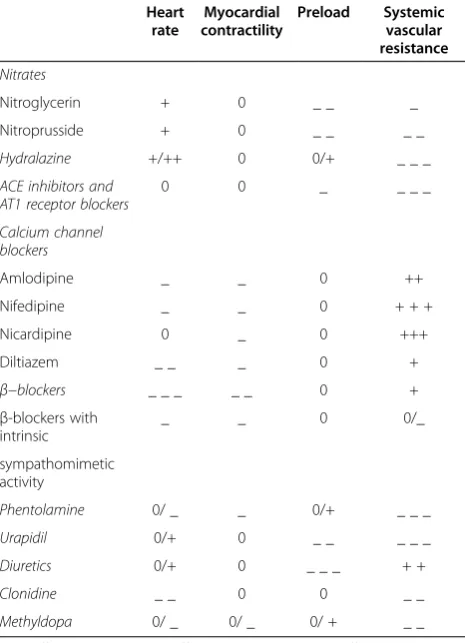
There are a large number of therapeutic options for severe hypertension. We will restrict our discussion to the agents most frequently used in ICU patients (Tables 3 and 4).
Vasodilators
Nitroglycerin Although described as having antihyper-tensive effects, nitroglycerin causes weak direct arterial vasodilation, which is observed only with high doses (>60 μg/min intravenously) [28]. Nitroglycerin has a more profound venodilating than arteriolar effect. In the presence of hypovolemia, it may cause a decrease in
venous return and CO; in these conditions, reflex tachy-cardia is common [27]. Nitroglycerin is indicated in se-vere hypertension associated with volume overload and pulmonary edema. Nitroglycerin promotes coronary vasodilation without steal syndrome [29], so that it may be used at low doses (≤60μg/min) as an adjunct to other intravenous antihypertensive agents in patients with acute coronary syndromes [14]. Nitroglycerin (as other vasodilators) may increase pulmonary shunt and aggra-vate systemic hypoxemia by inhibiting pulmonary hyp-oxic vasoconstriction.
Nitroprusside Sodium nitroprusside is a potent and short-acting purely vasodilatory agent, causing both ar-terial and venous vasodilation, thus reducing pre- and afterload. The rapid onset of action and short half-life mean that this drug is easily titrated, but because of its potency, speed of action, and risk of tachyphylaxis, intraarterial blood pressure monitoring is recommended [15]. The major unwanted effect if used at high doses for Table 3 Main cardiovascular effects of the different antihypertensive drugs
Heart rate
Myocardial contractility
Preload Systemic vascular resistance
Nitrates
Nitroglycerin + 0 _ _ _
Nitroprusside + 0 _ _ _ _
Hydralazine +/++ 0 0/+ _ _ _
ACE inhibitors and AT1 receptor blockers
0 0 _ _ _ _
Calcium channel blockers
Amlodipine _ _ 0 ++
Nifedipine _ _ 0 + + +
Nicardipine 0 _ 0 +++
Diltiazem _ _ _ 0 +
β−blockers _ _ _ _ _ 0 +
β-blockers with intrinsic
_ _ 0 0/_
sympathomimetic activity
Phentolamine 0/ _ _ 0/+ _ _ _
Urapidil 0/+ 0 _ _ _ _ _
Diuretics 0/+ 0 _ _ _ + +
Clonidine _ _ 0 0 _ _
Methyldopa 0/ _ 0/ _ 0/ + _ _
0, no effect; - Slight negative effect; -- moderate negative effect; --- strong negative effect.
+ Slight positive effect; + + moderate positive effect; + + + strong positive effect.
ACEangiotensin-converting enzyme,AT1angiotensin II subtype 1.
Salgadoet al. Annals of Intensive Care2013,3:17 Page 3 of 13
Table 4 Doses, pharmacokinetics, and pharmacodynamics of the intravenous antihypertensive agents most frequently used in intensive care units
Drugs Intravenous dose Onset/peak of
action
Half-life/duration of action
Metabolism/ excretion
Main side effects Main clinical indications
Sympatholytic drugs
β-blockers
Propranolol (β1- and
β2-receptor blocker)
1-3 mg every 2–5 min (over 1–30 min)
Onset: 5 min Half-life: 3–5 h Metabolism: hepatic CYP450
Hypotension, heart failure, heart block, dizziness, fatigue, confusion, depression, bronchospasm, Raynaud´s phenomenon, diarrhea, pruritus, rash
Cardiac ischemic syndromes with arterial hypertension and normal heart function. Avoid in pheochromocytoma crises
Max dose: 5 mg Duration: 6–12 h Excretion: urine
(96-99%)
Infusion: not recommended
Metoprolol (selective β1-receptor blocker)
5 mg every 3 min (over 1–30 min)
Onset: 5–10 min Half-life: 3–7 h Metabolism: hepatic CYP2D6
Hypotension, heart failure, heart block, dizziness, fatigue, depression, bronchospasm, diarrhea, pruritus, rash
Cardiac ischemic syndromes with arterial hypertension and normal heart function
Max dose: 15 mg Duration: 5–8 h Excretion: urine
(5-10% unchanged)
Infusion: not recommended
Labetalol (α1,β1, and
β2-receptor blocker)
Bolus: 20–80 mg every 10 min.
Max dose: 300 mg
Onset: 5–10 min Half-life: 6 h Metabolism: hepatic glucuronide conjugation
Nausea, scalp tingling, bronchospasm, dizziness, heart block, orthostatic hypotension
Most hypertensive emergencies, good for hypertension in neurocritically ill patients and pregnancy; caution in heart failure
Infusion: 0.5-2.0 mg/min Peak: 5–15 min Duration: 3–18 h Excretion: urine 50% (<5% unchanged), feces 50%
Esmolol (selective β1-receptor blocker)
Bolus: 500μg/Kg (over 1 min)
Onset: 1–2 min Half-life: 9 min Metabolism: plasma esterases
Arterial hypotension, bronchospasm, heart block, heart failure
Hypertensive emergencies with normal or high cardiac output, and aortic dissection in particular. Contraindicated in
pheochromocytoma crisis Max dose: 300μg/Kg/min Peak: 6–10 min Duration: 10–30 min Excretion: urine 70-90%
(<1% unchanged)
Infusion: 50–300μg/Kg/min α-Adrenergic antagonists
Phentolamine (peripheralα-receptor antagonist)
Bolus: 5–20 mg Onset: 1–2 min Half-life: 19 min Metabolism: hepatic Tachycardia, flushing, headache, orthostatic hypotension, dizziness, nasal congestion, pulmonary hypertension
Hypertensive emergencies associated with excessive catecholamine levels Max dose: 15 mg Peak: 10–20 min Duration: 15–30 min Excretion: urine
(10% unchanged)
Infusion: not recommended
Urapidil (peripheral α1-receptor antagonist
and central serotonin antagonist)
Bolus: 12.5-25 mg Onset: 3–5 min Half-life: 2–4.8 h Metabolism: hepatic Headache, hypotension, dizziness Hypertensive emergencies in postoperative and pregnant patients
Max dose: 50 mg Peak: 0.5-6 h Duration: 4–6 h Excretion: urine (15-20% unchanged), feces 10%
Infusion: 5–40 mg/h
Salgado
et
al.
Annals
of
Intensiv
e
Care
2013,
3
:17
Page
4
o
f
1
3
http://ww
w.annalsofint
ensivecare.co
m/content/3/1
Table 4 Doses, pharmacokinetics, and pharmacodynamics of the intravenous antihypertensive agents most frequently used in intensive care units(Continued)
Centrally acting agents
Clonidine (central α2receptor agonist)
Bolus: not recommended Onset: 5–10 min Half-life: 12 h Metabolism: Hepatic CYP450
Eye and mouth dryness, sedation, erectile dysfunction, orthostatic hypotension, bradycardia, drowsiness.
Hypertensive emergencies, particularly in the context of withdrawal syndrome and pain Max dose: 7.2μg/min
(or 450μg/2 h)
Peak: 2–4 h Duration: 6–10 h Excretion: Urine (50% unchanged), feces/bile 20%
Infusion: 1.2-7.2μg/min
Methyldopa (central α2receptor agonist)
250-1000 mg every 6-8h Onset: >1 h Half-life: 2 h Metabolism: Hepatic CYP450 and central adrenergic neurons
Peripheral edema, fever, depression, sedation, dry mouth, bradycardia, hepatitis, hemolytic anemia, lupus-like syndrome
Hypertensive emergencies, particularly in pregnant patients. Use limited by adverse effects
Max dose: 1000 mg every 6h
Peak: 6–8 h Duration: 12–24 h Excretion: urine (85% metabolites), feces
Infusion: not recommended
Dexmedetomidine (centralα2−receptor
agonist)
Bolus: 1μg/Kg/min over 10 min (not necessary in sedated patients)
Onset: 6–15 min Half-life: 2–2.5 h Metabolism: hepatic Hypotension, bradycardia, fever, nausea, vomiting, hypoxia, anemia
Hypertensive urgencies associated with hyperactive delirium or withdrawal syndrome
Max dose: 1.5μg/Kg/h Peak: 1 h Duration: 4 h Excretion: urine (metabolites)
Infusion: 0.2-0.7μg/Kg/h
Calcium channel blockers
Nicardipine Bolus: not recommended Onset: 5–10 min Half-life: 2–4 h Metabolism: hepatic CYP3A4
Tachycardia, headache, flushing, peripheral edema, angina, nausea, AV block, dizziness
Most hypertensive emergencies; caution in heart failure
Max dose: 30 mg/h Peak: 30 min Duration: 4–6 h Excretion: urine 60% (<1% unchanged), feces 35%
Infusion: 5–15 mg/h
Clevidipine Bolus: not recommended Onset: 1–2 min Half-life: 1–15 min Metabolism: plasma and tissue esterases
Atrial fibrillation, nausea, fever, insomnia, headache, acute renal failure
All hypertensive emergencies, particularly postoperative hypertension
Max dose: 32 mg/h Peak: 3 min Duration: 5–15 min Excretion: urine 63-74 %, feces 7-22%
Infusion: 1–2 mg/h
Diltiazem Bolus: 0.25 mg/Kg
(over 2 min)
Onset: 2–7 min Half-life: 3.4 h Metabolism: hepatic CYP3A4
Bradycardia, AV block, hypotension, cardiac failure, peripheral edema, headache, constipation, hepatic toxicity
Hypertensive emergencies associated with normal heart function and tachyarrhythmia
Max dose: 15 mg/h Peak: 7–10 min Duration:30 min-10 h (median 7 h)
Excretion: bile, urine (2-4% unchanged)
Infusion: 5–15 mg/h (≤24 h)
Salgado
et
al.
Annals
of
Intensiv
e
Care
2013,
3
:17
Page
5
o
f
1
3
http://ww
w.annalsofint
ensivecare.co
m/content/3/1
Table 4 Doses, pharmacokinetics, and pharmacodynamics of the intravenous antihypertensive agents most frequently used in intensive care units(Continued)
ACE inhibitor
Enalaprilat Bolus: 1.25-5 mg every 6 h Onset: 15–30 min
Half-life: 11 h Metabolism: hepatic biotransformation
Hypotension, headache, worsening of renal function, hyperkalemia, angioedema, cough, agranulocytosis
Hypertensive emergencies associated with left ventricular dysfunction; caution in hypovolemia Max dose: 5 mg every 6 h Peak: 3–4.5 h Duration: 6–12 h Excretion: urine
(60-80%)
Infusion: not recommended
Arterial vasodilators
Hydralazine (arteriolar vasodilator)
Bolus: 10–20 mg every 4–6 h
Onset: 5–20 min Half-life: 2–8 h Metabolism: Hepatic acetylation
Hypotension, tachycardia, headache, facial flushing, angina pectoris, vomiting, paradoxical hypertension, lupus-like syndrome
Hypertensive emergencies, especially severe hypertension in pregnancy
Max dose: 40 mg per dose Peak: 30–60 min Duration: 1–8 h Excretion: urine 52-90% (14% unchanged), feces 10%
Infusion: not recommended
Fenoldopam (selective dopamine type 1-receptor agonist)
Bolus: not recommended Onset: 5–10 min Half-life: 5 min Metabolism: Hepatic methylation
Hypotension, tachycardia, headache, nausea, facial flushing, angina, ST-T wave changes, elevated intraocular pressure
Hypertensive emergencies, especially severe hypertension in patients with acute renal failure
Max dose: 1.6μg/Kg/min Peak: 15 min Duration:30–60 min Excretion: urine 90%, feces 10%.
Infusion: 0.05-1.6μg/Kg/ min
Mixed arterial/ venous vasodilators
Nitroprusside (nitric oxide donor)
Bolus: not recommended Onset: 1–2 min Half-life: <10 min (nitroprusside), 3 days (thiocyanate)
Metabolism: erythrocytes, hepatic methylation
Hypotension, tachycardia, headache, cyanide and thiocyanide intoxication, nausea, flushing, vomiting, muscle spasm, pulmonary shunt
Hypertensive emergencies, especially aortic dissection. Caution in renal and hepatic failure
Max dose: 10μg/Kg/min (<1 h)
Peak: 15 min Excretion: urine
Infusion: 0.25-4μg/Kg/min Duration: 1–10 min
Nitroglycerin (nitric oxide donor with predominant venular action)
Bolus: not recommended Onset: 2–5 min Half-life: 1–3 min Metabolism: erythrocytes, hepatic, vessel wall
Hypotension, headache, dizziness, vomiting, tachyphylaxis, methemoglobinemia
Hypertensive emergencies, especially those associated with acute coronary syndrome, volume overload, or pulmonary edema
Max dose: 300μg/min Peak: 5 min Duration: 5–10 min Excretion: urine
Infusion: 5–300μg/min
Diuretics
Furosemide (inhibits reabsorption of Na/Cl in the ascending loop of Henle)
Bolus: 20–40 mg Onset: 5 min Half-life: 30–60 min Metabolism: hepatic Hypokalemia, hypovolemia, hypotension, metabolic alkalosis, ototoxicity, thrombocytopenia, pancreatitis, interstitial nephritis, hyperglycemia, hyperuricemia
Hypertensive emergencies, especially those associated hypervolemia and/or heart failure
Max dose: 200 mg/dose or 160 mg/h
Peak: 1–2 h Duration: 2 h Excretion: urine 88%, bile/feces 12%.
Infusion: 10–40 mg/h
Salgado
et
al.
Annals
of
Intensiv
e
Care
2013,
3
:17
Page
6
o
f
1
3
http://ww
w.annalsofint
ensivecare.co
m/content/3/1
Table 4 Doses, pharmacokinetics, and pharmacodynamics of the intravenous antihypertensive agents most frequently used in intensive care units(Continued)
Bumetanide (inhibits reabsorption of Na/Cl in the ascending loop of Henle)
Bolus: 0.5-1 mg/dose up to 2 times/day
Onset: 2–3 min Half-life: 1–1.5 h Metabolism: hepatic Hypokalemia, hypovolemia, hypotension, metabolic alkalosis, ototoxicity, thrombocytopenia, pancreatitis, interstitial nephritis, hyperglycemia, hyperuricemia
Hypertensive emergencies, especially those associated with hypervolemia and/or heart failure
Max dose: 10 mg/day Peak: 1–4 h Duration:4–6 h Excretion: urine 81%, bile 2%
Infusion: 0.5-2 mg/h
ACEangiotensin-converting enzyme.
Salgado
et
al.
Annals
of
Intensiv
e
Care
2013,
3
:17
Page
7
o
f
1
3
http://ww
w.annalsofint
ensivecare.co
m/content/3/1
prolonged periods (>8 hours) is the generation of the toxic metabolites, cyanide and thiocyanide, which accu-mulate more rapidly in the presence of renal and hepatic failures. Nitroprusside infusion also may alter gas ex-change by aggravating pulmonary shunt, increase intracra-nial pressure by inducing vasodilation, induce coronary steal syndrome by nonselective coronary vasodilation, and may be associated with spinal ischemia and paralysis dur-ing thoracic aortic surgery [30]. Nitroprusside is now rarely used or recommended as a first-line agent; if used, limited doses and infusion durations are preferred [15,27].
Hydralazine Hydralazine is a direct arterial vasodilator without significant effects on the venous system. Its mechanisms of action are complex and involve inhib-ition of calcium influx into vascular smooth muscle cells, either by cell membrane hyperpolarization or by induc-tion of cGMP [31,32]. Hydralazine increases heart rate and has a slight positive inotropic effect. Hydralazine is indicated for severe hypertension associated with in-creased SVR, especially in the presence of bradycardia. However, hydralazine causes a reflex increase in sympa-thetic tone and can worsen myocardial oxygen con-sumption, so should be used with caution in patients with known heart disease (e.g., heart failure, coronary ar-tery disease, or valvular dysfunction). Fluid retention resulting from activation of the sympathetic and renin-angiotensin systems following peripheral vasodilation can be managed by adding diuretic drugs if needed. Hy-dralazine can have prolonged antihypertensive effects and dosage titration can be difficult [33].
Hydralazine has been used for a long-time as a first-line agent for pregnancy-induced hypertensive disorders, but there is evidence suggesting that parenteral hydral-azine may be associated with more adverse outcomes, including maternal hypotension, placental abruption, fetal heart rate abnormalities, Cesarean section, stillbirth, and fetal suffering compared with labetalol and calcium channel blockers [34,35].
Fenoldopam As a specific dopamine type-1 receptor agonist, fenoldopam increases renal blood flow, stimu-lates natriuresis and urinary output, and may improve renal function, so that it may be suitable for the treat-ment of severe hypertension in patients with renal fail-ure [36]. Fenoldopam has a rapid onset of action, a relatively short half-life, no rebound effect, and no nega-tive effects on cardiac function [37,38], although it also may be associated with mild tolerance and hypokalemia after prolonged infusions. Anaphylactic reactions have been reported in patients with known sulfite sensitivity because fenoldopam contains a metabisulfite molecule. It can increase intraocular pressure and thus also is
contraindicated in patients with glaucoma. Fenoldopam is not currently available in many countries.
Enalaprilat Enalaprilat is an intravenous angiotensin-converting enzyme (ACE) inhibitor that reduces periph-eral arterial vasoconstriction caused by angiotensin II. Its final antihypertensive effect is highly dependent on the patient’s volume status and plasma renin activity [39]. Hence, in normo- or hypervolemic patients without increased angiotensin II levels, enalaprilat will not cause major hypotension. Conversely, in hypovolemic subjects with high angiotensin II levels, the antihypertensive ef-fect can be significant [39]. Enalaprilat may be consid-ered in severe hypertension associated with heart failure. Because of its unpredictable effects, long half-life, and risk of excessive hypotensive response (especially in hypovol-emic hyperreninhypovol-emic patients), it is not considered as a first-line agent for the treatment of acute hypertension. Enalaprilat is contraindicated in pregnancy [40].
Calcium channel blockers
These drugs inhibit calcium influx through voltage-sensitive L-type calcium channels in vascular smooth muscle cells inducing arteriolar vasodilation and redu-cing SVR. They are divided into two pharmacological classes: dihydropyridines and nondihydropyridine deriva-tives. The dihydropyridines (e.g., nifedipine, nicardipine, amlodipine) are the largest class, and members have greater vasodilatory potency and less negative chronotropic activity, making them relatively safe for patients with hypertension. However, they can be potentially hazardous in patients with severe heart failure because of the calcium entry blocking effects. Two agents, nicardipine and clevidipine, are available for continuous intravenous in-fusion for the management of arterial hypertension. Nicardipine is a second-generation dihydropyridine with high hydrosolubility, and short onset but a rela-tively long duration of action. Its dosage is weight-independent, easily titrated, and it promotes cerebral and coronary vasodilation [41]. Nicardipine has been used for the treatment of severe hypertension, particu-larly in the perioperative period [42,43], and has re-cently been shown to be superior to labetalol in treating acute severe hypertension in emergency de-partment patients [44], including those with end-organ damage [45], and also in critically ill patients [46].
Clevidipine, a third-generation dihydropyridine, is an ultrashort acting agent. It is metabolized by plasma es-terases and has few drug interactions, making it useful for severe hypertension in critically ill patients, particu-larly those with renal and/or hepatic failure [47,48]. Clevidipine exerts vascular-selective, arterial specific vasodilation, without negative effects on cardiac func-tion, because it does not significantly affect preload and
Salgadoet al. Annals of Intensive Care2013,3:17 Page 8 of 13
induces minimal reflex tachycardia [9,49]. Clevidipine has been shown to be more effective than other vasodi-lators, such as sodium nitroprusside and nitroglycerin, in the control of acute hypertension during the peri-operative period of cardiac surgery [49,50]. It also has been reported to be safe and effective in the manage-ment of acute severe hypertension in patients with acute heart failure and renal dysfunction [51,52]. Because it is a fairly new agent, it is relatively expensive compared with other agents.
The nondihydropyridine derivatives, which include dil-tiazem and verapamil, are less potent vasodilators but with significant negative chronotropic activity, making them less commonly used as antihypertensive drugs.
Beta-blocking agents
β-adrenergic receptor antagonists (β-blockers) inhibit the action of norepinephrine, epinephrine, and other sympathomimetic drugs acting onβreceptors. As a gen-eral rule, the greater the degree of β stimulation that occurs at a given site, the greater the observed effect of β-blockers.
β-blocking agents primarily decrease blood pressure by a reduction in cardiac output (through a reduction in both contractility and heart rate). They also can reduce renin release by the juxtaglomerular cells, resulting in less angiotensin II formation, less generation of NO [53], suppression of the central nervous sympathetic outflow, alteration of baroreceptor sensitivity, and attenuation of the peripheral pressor response to catecholamines [54]. β-blockers reduce the risk of cardiovascular disease and are of particular interest for patients with ischemic car-diomyopathy, because they reduce myocardial oxygen consumption and increase coronary blood flow toward ischemic regions [55]. β-blocking agents should not be used in isolation in catecholamine-induced severe hyper-tension seen with pheochromocytoma or stimulant in-toxication, because the unopposed peripheral α-effect could further increase blood pressure [17,56]. Obviously, β-blocking agents must be avoided in situations where a reduction in oxygen delivery could be problematic.
Variousβ-blockers are available, with different degrees of specificity for β1-receptor antagonism, intrinsic sym-pathomimetic activity, membrane-stabilizing properties, capacity to induce vasodilation, lipid solubility, half-life, onset of action, and routes of administration [57]. β -blocker agents are classified as non-subtype receptor se-lective (first generation), β1-receptor selective (second
generation), and antagonists with additional cardiovascu-lar actions (third generation). Some examples are presented in Table 4. Of particular interest is esmolol, an ultrashort acting β1-blocker, which is rapidly metabo-lized by plasma esterases (safe in renal and hepatic fail-ure) and has a short half-life. Esmolol is a good option
for the treatment of severe hypertension, because it can be easily titrated and discontinued in high-risk patients or if poorly tolerated, e.g., if heart failure, atrioventricu-lar block or bronchospasm develop [58,59]. Labetalol, an example of a third generation β-blocker, competitively inhibits α1 and β receptors, resulting in a decrease in
blood pressure by both vasodilation and reduction of the sympathetic stimulation of the heart. Labetalol infusion is useful in the management of hypertensive crises, par-ticularly in pregnancy-induced hypertensive emergencies because of its negligible lipid solubility and placental transfer [35], but should be used with caution in patients with hepatic failure [60].
Alpha-blocking agents
Phentolamine (peripheralα-receptor antagonist) This peripheralα-adrenergic receptor blocker has limited use in the management of severe hypertension because of the risk of severe hypotension and other adverse effects. Phentolamine is mainly indicated for the treatment of hypertensive emergencies associated with excessive cir-culating catecholamines, such as in pheochromocytoma crisis or cocaine intoxication [61,62]. It is no longer available in many countries.
Urapidil This drug combines selective postsynaptic α1
-adrenergic antagonist activity with central antagonism of serotonin receptors, which gives it a potent vasodilatory effect reducing both pre- and afterload, as well as caus-ing pulmonary and renal vasodilation, without any sig-nificant effect on cardiac function. It is relatively safe because it does not affect coronary and cerebral blood flow. Urapidil has a rapid onset of action, with good effi-cacy. It has been used for the treatment of severe hyper-tension in the postoperative period and pregnancy but is contraindicated in patients with aortic isthmus stenosis, major arteriovenous shunt, and during lactation [63].
Diuretics
Diuretic drugs provoke inhibition of sodium chloride re-absorption at different sites in the nephron. Because di-uretics reduce sodium and water load, and consequently volemia, they are particularly useful for the treatment of hypertension associated with hypervolemic and edema-tous states. For blood pressure control, loop of Henle di-uretics (furosemide and bumetanide) are preferred for their rapid onset of action and high potency. Furosemide may have a direct venodilating effect, although this is de-bated [64].
Diuretics should be used with caution in acute hyper-tension, because these patients are often hypovolemic. Use of ACE inhibitors or other vasodilators may abolish the increment of SVR induced by furosemide [65], and
Salgadoet al. Annals of Intensive Care2013,3:17 Page 9 of 13
the ACE inhibitor/diuretic association can be an inter-esting combination for the long-term treatment of hypertensive patients.
Centrally acting antihypertensives
Clonidine Clonidine is a centrally acting α2-adrenergic
agonist. It is more frequently used via the oral route, but an intravenous formulation is available in some coun-tries. It can be used as an alternative to β−blocking agents, because it associates some vasodilating proper-ties with negative chronotropic effects and is not contra-indicated in heart block or bronchospasm. Clonidine is particularly indicated in severe hypertension associated with pain, anxiety, or withdrawal syndromes, because it has sedative and analgesic-sparing properties [66]. How-ever, it should be avoided in patients with a reduced conscious level. Clonidine should be discontinued grad-ually because of possible rebound hypertension [67]. In addition, intravenous clonidine can induce a transient increase in arterial pressure so that close monitoring is necessary [68]. Clonidine also can be associated with un-pleasant effects, including dry eye and mouth, excessive sedation, and postural hypotension. The availability of other, safer drugs means that clonidine is not used as a first-line agent for severe acute hypertension [69].
Dexmedetomidine Although primarily a sedative agent, dexmedetomidine is a selective α2-adrenergic agent with
rapid onset of action and easy titration, which could contribute to the control of hypertension in withdrawal syndromes [70].
MethyldopaInitially used in the treatment of eclampsia, intravenous methyldopa is no longer widely used be-cause of its adverse effects. An oral formulation is still available, but the availability of newer drugs with shorter half-lives and fewer adverse effects has limited its use.
Choosing the most appropriate antihypertensive treatment in the ICU
There is no ideal drug for the treatment of severe acute hypertension in all patients and it is only by recognizing the underlying pathophysiological process and under-standing the risk-benefit ratio of each medication that the intensivist will be able to choose the best therapy for the individual patient. A recent report from the European registry for Studying the Treatment of Acute hyperTen-sion (Euro-STAT), including 761 patients treated with intravenous antihypertensive agents in the emergency de-partment, perioperative unit, or ICU, reported that nitro-glycerin was the most commonly used antihypertensive treatment (40% of patients), followed by urapidil (21%), clonidine (16%), and furosemide (8%) [8]. However, in a
United States registry of 1,588 critically ill patients with acute severe hypertension treated with intravenous ther-apy,β-blockers were the most frequently used antihyper-tensive agent (labetalol 32% and metoprolol 17%), followed by nitroglycerin (15%), hydralazine (15%), nicardipine (8%), and sodium nitroprusside (5%) [10]. Interestingly, most of the patients in this survey (64%) required more than one drug for blood pressure control. These regional differences are due to several factors, including marketing influences.
Antihypertensive agents for acutely ill patients should optimally have a rapid onset of action, a short half-life enabling easy titration, and no adverse effects. For the patient with less severe hypertension who will need prolonged treatment, a long-acting antihypertensive may be started at the same time as the short-acting drug.
Some important clinical issues must be considered be-fore starting therapy. First, a careful search and correc-tion of precipitating factors should be made (Table 2). Second, major neurological problems should be ex-cluded. In the presence of intracranial hypertension, every attempt should be made first to control intracra-nial hypertension before starting antihypertensive drugs, because a reduction in cerebral perfusion pressure (the difference between MAP and intracranial pressure) can precipitate or worsen brain injury. In the presence of intracranial hypertension, vasodilators are not the best agents, because an increase in intracranial blood volume can further increase intracranial pressure. In these cir-cumstances, β-blocking agents are a good option. Third, if drug therapy is needed, it must be based on underlying pathophysiological considerations. For this purpose, one should consider the most important components of acute hypertension: blood volume, heart rate, cardiac function, and vascular tone. Some comorbidities also must be considered: the best example is the cautious use ofβ-blockers in patients with severe chronic obstructive pulmonary disease or A-V block. Fourth, in all cases, an abrupt reduction in blood pressure must be avoided. In general, the reduction in MAP should not exceed 15-20 % in the first 30 to 60 min [27]. A notable exception is the presence of acute aortic dissection for which faster (within 15 min) and greater pressure control may be re-quired [71].
The first question that should then be asked is whether or not cardiac output is increased. Maintenance of a high arterial pressure associated with a hyperkinetic state is only possible when cardiac function is well preserved, because cardiac work (essentially the product of arterial pressure and stroke volume) must be unnecessarily increased. These states are observed when there is hypervolemia and/or in-creased sympathetic tone. In the presence of hypervolemia, diuretics are the preferred drugs.
In the presence of increased adrenergic tone, tachycar-dia is typically present. Withdrawal syndromes are an
Salgadoet al. Annals of Intensive Care2013,3:17 Page 10 of 13
example of this category. β-blocking agents are good options for the control of hypertension associated with hyperadrenergic states. If acute reduction in cardiac output is of concern, a dihydropyridine calcium channel blocker (e.g., nicardipine, clevidipine) may be preferred, because these agents have fewer negative effects on the heart rate and myocardial contractility. These agents provide an interesting option for the treatment of post-operative hypertension [28]. If a vasodilating effect is best avoided (e.g., in the presence of increased intracra-nial hypertension), clonidine may be a good alternative toβ-blocking agents.
If cardiac output is not increased much, then the crease in arterial pressure is primarily the result of in-creased vascular tone. In these conditions, vasodilators are a logical choice. Venous vasodilators (nitroglycerin) are particularly indicated in the presence of pulmonary edema (in association with diuretics). Nitroprusside re-mains a valuable agent on a short-term basis in the pres-ence of severe heart failure (because it has no negative inotropic affects). Its balanced effects on the arterial and venous sides of the vasculature make it more effective than nitroglycerin. Its main advantage is its very short half-life, allowing easy titration. Urapidil also may be considered where it is available.
A proposed treatment strategy based on a patho-physiological approach is presented in Figure 1.
Conclusions
Severe acute hypertension is an interesting hemodynamic challenge. Whereas fluid refractory hypotension is gener-ally treated with a single agent (a vasopressor), hyperten-sion can be treated with a large array of drugs. After recognition and removal of precipitating factors, drug therapy should be initiated and guided by a pathophysio-logical approach, which consists of the identification of the principal determinants of arterial pressure and a basic pharmacological knowledge of the most frequently used antihypertensive agents. This strategy permits rational management of individual cases and will help to reduce undesirable side effects resulting from inadequate or in-appropriate therapy.
Competing interests
The authors declare that they have no competing interests.
Author contributions
DRS and JLV drafted the manuscript. DRS, ES, and JLV revised the initial draft. All authors read and approved the final manuscript.
Author details 1
Department of Intensive Care, Erasme Hospital, Université Libre de Bruxelles, route de Lennik 808, Brussels 1070, Belgium.2Dept of Internal Medicine, Universidade Federal do Rio de Janeiro, Rua Professor Rodolpho Paulo Rocco, 255 Sala 4A, Rio de Janeiro 12-21941-913, Brazil.3Intensive Care Unit, Albert Einstein Hospital, Sao Paulo, Brazil.
Received: 27 December 2012 Accepted: 14 May 2013 Published: 27 June 2013
Figure 1Pathophysiological approach to the treatment of acute systemic arterial hypertension in critically ill patients based on the main determinants of the mean arterial pressure (MAP).HR, heart rate; SVR, systemic vascular resistance; ALI, acute lung injury; ARDS, acute respiratory distress syndrome; COPD, chronic obstructive pulmonary disease.
Salgadoet al. Annals of Intensive Care2013,3:17 Page 11 of 13
References
1. Chobanian AV, Bakris GL, Black HR, Cushman WC, Green LA, Izzo JL Jr, Jones DW, Materson BJ, Oparil S, Wright JT Jr, Roccella EJ:The Seventh Report of the Joint National Committee on Prevention, Detection, Evaluation, and Treatment of High Blood Pressure: the JNC 7 report.
JAMA2003,289:2560–2572.
2. Rosamond W, Flegal K, Furie K, Go A, Greenlund K, Haase N, Hailpern SM, Ho M, Howard V, Kissela B, Kittner S, Lloyd-Jones D, McDermott M, Meigs J, Moy C, Nichol G, O'Donnell C, Roger V, Sorlie P, Steinberger J, Thom T, Wilson M, Hong Y:Heart disease and stroke statistics–2008 update: a report from the American Heart Association Statistics Committee and Stroke Statistics Subcommittee.Circulation2008,117:e25–e146. 3. Danaei G, Ding EL, Mozaffarian D, Taylor B, Rehm J, Murray CJ, Ezzati M:
The preventable causes of death in the United States: comparative risk assessment of dietary, lifestyle, and metabolic risk factors.PLoS Med2009,6:e1000058.
4. Owens WB:Blood pressure control in acute cerebrovascular disease.
J Clin Hypertens (Greenwich)2011,13:205–211.
5. Shafi T:Hypertensive urgencies and emergencies.Ethn Dis2004,14:S2–S7. 6. Styron JF, Jois-Bilowich P, Starling R, Hobbs RE, Kontos MC, Pang PS,
Peacock WF:Initial emergency department systolic blood pressure predicts left ventricular systolic function in acute decompensated heart failure.Congest Heart Fail2009,15:9–13.
7. Szczech LA, Granger CB, Dasta JF, Amin A, Peacock WF, McCullough PA, Devlin JW, Weir MR, Katz JN, Anderson FA Jr, Wyman A, Varon J:Acute kidney injury and cardiovascular outcomes in acute severe hypertension.
Circulation2010,121:2183–2191.
8. Vuylsteke A, Vincent JL, de La Payen GD, Anderson FA, Emery L, Wyman A, Rushton-Smith S, Gore JM:Characteristics, practice patterns, and outcomes in patients with acute hypertension: European registry for Studying the Treatment of Acute hyperTension (Euro-STAT).Crit Care
2011,15:R271.
9. Pollack CV, Varon J, Garrison NA, Ebrahimi R, Dunbar L, Peacock WF: Clevidipine, an intravenous dihydropyridine calcium channel blocker, is safe and effective for the treatment of patients with acute severe hypertension.Ann Emerg Med2009,53:329–338.
10. Katz JN, Gore JM, Amin A, Anderson FA, Dasta JF, Ferguson JJ, Kleinschmidt K, Mayer SA, Multz AS, Peacock WF, Peterson E, Pollack C, Sung GY, Shorr A, Varon J, Wyman A, Emery LA, Granger CB:Practice patterns, outcomes, and end-organ dysfunction for patients with acute severe hypertension: the Studying the Treatment of Acute hyperTension (STAT) registry.Am Heart J2009,158:599–606. 11. Gore JM, Peterson E, Amin A, Anderson FA Jr, Dasta JF, Levy PD, O'Neil BJ,
Sung GY, Varon J, Wyman A, Granger CB:Predictors of 90-day readmission among patients with acute severe hypertension. The cross-sectional observational Studying the Treatment of Acute hyperTension (STAT) study.Am Heart J2010,160:521–527.
12. Mayer SA, Kurtz P, Wyman A, Sung GY, Multz AS, Varon J, Granger CB, Kleinschmidt K, Lapointe M, Peacock WF, Katz JN, Gore JM, O'Neil B, Anderson FA:Clinical practices, complications, and mortality in neurological patients with acute severe hypertension: the Studying the Treatment of Acute hyperTension registry.Crit Care Med2011,39:2330–2336.
13. Peacock F, Amin A, Granger CB, Pollack CV Jr, Levy P, Nowak R, Kleinschmidt K, Varon J, Wyman A, Gore JM:Hypertensive heart failure: patient
characteristics, treatment, and outcomes.Am J Emerg Med2011,29:855–862. 14. Varon J, Marik PE:Clinical review: the management of hypertensive crises.
Crit Care2003,7:374–384.
15. Marik PE, Varon J:Hypertensive crises: challenges and management.Chest
2007,131:1949–1962.
16. Varon J:The diagnosis and treatment of hypertensive crises.Postgrad Med2009,121:5–13.
17. Papadopoulos DP, Mourouzis I, Thomopoulos C, Makris T, Papademetriou V: Hypertension crisis.Blood Press2010,19:328–336.
18. Johnson W, Nguyen ML, Patel R:Hypertension crisis in the emergency department.Cardiol Clin2012,30:533–543.
19. Camici PG, Crea F:Coronary microvascular dysfunction.N Engl J Med2007, 356:830–840.
20. Ince C:The microcirculation is the motor of sepsis.Crit Care2005, 9(Suppl 4):S13–S19.
21. Cohen JD:Overview of physiology, vascular biology, and mechanisms of hypertension.J Manag Care Pharm2007,13:S6–S8.
22. Liu Y, Gutterman DD:Vascular control in humans: focus on the coronary microcirculation.Basic Res Cardiol2009,104:211–227.
23. Robinson ES, Khankin EV, Karumanchi SA, Humphreys BD:Hypertension induced by vascular endothelial growth factor signaling pathway inhibition: mechanisms and potential use as a biomarker.Semin Nephrol
2010,30:591–601.
24. Pinsky MR:Hemodynamic evaluation and monitoring in the ICU.
Chest2007,132:2020–2029.
25. Tibby SM, Murdoch IA:Monitoring cardiac function in intensive care.
Arch Dis Child2003,88:46–52.
26. Strandgaard S, Olesen J, Skinhoj E, Lassen NA:Autoregulation of brain circulation in severe arterial hypertension.Br Med J1973,1:507–510. 27. Slama M, Modeliar SS:Hypertension in the intensive care unit.Curr Opin
Cardiol2006,21:279–287.
28. Marik PE, Varon J:Perioperative hypertension: a review of current and emerging therapeutic agents.J Clin Anesth2009,21:220–229.
29. Duncker DJ, Bache RJ:Regulation of coronary blood flow during exercise.
Physiol Rev2008,88:1009–1086.
30. Cernaianu AC, Olah A, Cilley JH Jr, Gaprindashvili T, Gallucci JG, DelRossi AJ:Effect of sodium nitroprusside on paraplegia during cross-clamping of the thoracic aorta.Ann Thorac Surg1993,56:1035–1037. 31. Powers DR, Papadakos PJ, Wallin JD:Parenteral hydralazine revisited.
J Emerg Med1998,16:191–196.
32. Wei S, Kasuya Y, Yanagisawa M, Kimura S, Masaki T, Goto K:Studies on endothelium-dependent vasorelaxation by hydralazine in porcine coronary artery.Eur J Pharmacol1997,321:307–314.
33. Ludden TM, Shepherd AM, McNay JL, Lin MS:Hydralazine kinetics in hypertensive patients after intravenous administration.Clin Pharmacol Ther1980,28:736–742.
34. Magee LA, Cham C, Waterman EJ, Ohlsson A, von Dadelszen P:Hydralazine for treatment of severe hypertension in pregnancy: meta-analysis.
BMJ2003,327:955–960.
35. Magee LA, Abalos E, von Dadelszen P, Sibai B, Easterling T, Walkinshaw S: How to manage hypertension in pregnancy effectively.Br J Clin Pharmacol2011,72:394–401.
36. Shusterman NH, Elliott WJ, White WB:Fenoldopam, but not nitroprusside, improves renal function in severely hypertensive patients with impaired renal function.Am J Med1993,95:161–168.
37. Oparil S, Aronson S, Deeb GM, Epstein M, Levy JH, Luther RR, Prielipp R, Taylor A:Fenoldopam: a new parenteral antihypertensive: consensus roundtable on the management of perioperative hypertension and hypertensive crises.Am J Hypertens1999,12:653–664.
38. Murphy MB, Murray C, Shorten GD:Fenoldopam: a selective peripheral dopamine-receptor agonist for the treatment of severe hypertension.
N Engl J Med2001,345:1548–1557.
39. Hirschl MM, Binder M, Bur A, Herkner H, Brunner M, Mullner M, Sterz F, Laggner AN:Clinical evaluation of different doses of intravenous enalaprilat in patients with hypertensive crises.Arch Intern Med1995, 155:2217–2223.
40. Rhoney D, Peacock WF:Intravenous therapy for hypertensive emergencies, part 2.Am J Health Syst Pharm2009,66:1448–1457. 41. Narotam PK, Puri V, Roberts JM, Taylon C, Vora Y, Nathoo N:Management
of hypertensive emergencies in acute brain disease: evaluation of the treatment effects of intravenous nicardipine on cerebral oxygenation.
J Neurosurg2008,109:1065–1074.
42. Varon J, Marik PE:Perioperative hypertension management.Vasc Health Risk Manag2008,4:615–627.
43. Curran MP, Robinson DM, Keating GM:Intravenous nicardipine: its use in the short-term treatment of hypertension and various other indications.Drugs2006,66:1755–1782.
44. Peacock WF, Varon J, Baumann BM, Borczuk P, Cannon CM, Chandra A, Cline DM, Diercks D, Hiestand B, Hsu A, Jois-Bilowich P, Kaminski B, Levy P, Nowak RM, Schrock JW:CLUE: a randomized comparative effectiveness trial of IV nicardipine versus labetalol use in the emergency department.Crit Care2011,15:R157.
45. Cannon CM, Levy P, Baumann BM, Borczuk P, Chandra A, Cline DM, Diercks DB, Hiestand B, Hsu A, Jois P, Kaminski B, Nowak RM, Schrock JW, Varon J, Peacock WF:Intravenous nicardipine and labetalol use in hypertensive patients with signs or symptoms suggestive of end-organ damage in the emergency department: a subgroup analysis of the CLUE trial.BMJ Open2013,3:e002338.
Salgadoet al. Annals of Intensive Care2013,3:17 Page 12 of 13
46. Malesker MA, Hilleman DE:Intravenous labetalol compared with intravenous nicardipine in the management of hypertension in critically ill patients.J Crit Care2012,27:528. e7–14.
47. Deeks ED, Keating GM, Keam SJ:Clevidipine: a review of its use in the management of acute hypertension.Am J Cardiovasc Drugs2009, 9:117–134.
48. Awad AS, Goldberg ME:Role of clevidipine butyrate in the treatment of acute hypertension in the critical care setting: a review.Vasc Health Risk Manag2010,6:457–464.
49. Nguyen HM, Ma K, Pham DQ:Clevidipine for the treatment of severe hypertension in adults.Clin Ther2010,32:11–23.
50. Aronson S, Dyke CM, Stierer KA, Levy JH, Cheung AT, Lumb PD, Kereiakes DJ, Newman MF:The ECLIPSE trials: comparative studies of clevidipine to nitroglycerin, sodium nitroprusside, and nicardipine for acute
hypertension treatment in cardiac surgery patients.Anesth Analg2008, 107:1110–1121.
51. Peacock F, Varon J, Ebrahimi R, Dunbar L, Pollack CV Jr:Clevidipine for severe hypertension in acute heart failure: a VELOCITY trial analysis.
Congest Heart Fail2010,16:55–59.
52. Peacock WF, Varon J, Ebrahimi R, Dunbar L, Pollack CV Jr:Clevidipine for severe hypertension in patients with renal dysfunction: a VELOCITY trial analysis.Blood Press Suppl2011,1:20–25.
53. Pedersen ME, Cockcroft JR:The latest generation of beta-blockers: new pharmacologic properties.Curr Hypertens Rep2006,8:279–286. 54. Che Q, Schreiber MJ Jr, Rafey MA:Beta-blockers for hypertension: are they
going out of style?Cleve Clin J Med2009,76:533–542.
55. Wiysonge CS, Bradley HA, Volmink J, Mayosi BM, Mbewu A, Opie LH: Beta-blockers for hypertension.Cochrane Database Syst Rev2012,11, CD002003.
56. Varon J:Treatment of acute severe hypertension: current and newer agents.Drugs2008,68:283–297.
57. Chrysant SG, Chrysant GS, Dimas B:Current and future status of beta-blockers in the treatment of hypertension.Clin Cardiol2008,31:249– 252.
58. Rodriguez MA, Kumar SK, De Caro M:Hypertensive crisis.Cardiol Rev2010, 18:102–107.
59. Gray RJ:Managing critically ill patients with esmolol, An ultra short-acting beta-adrenergic blocker.Chest1988,93:398–403.
60. Pearce CJ, Wallin JD:Labetalol and other agents that block both alpha-and beta-adrenergic receptors.Cleve Clin J Med1994,61:59–69. 61. McMillian WD, Trombley BJ, Charash WE, Christian RC:Phentolamine
continuous infusion in a patient with pheochromocytoma.Am J Health Syst Pharm2011,68:130–134.
62. Mazza A, Armigliato M, Zamboni S, Rempelou P, Rubello D, Pessina AC, Casiglia E:Endocrine arterial hypertension: therapeutic approach in clinical practice.Minerva Endocrinol2008,33:297–312.
63. Dooley M, Goa KL:Urapidil, A reappraisal of its use in the management of hypertension.Drugs1998,56:929–955.
64. Jhund PS, McMurray JJ, Davie AP:The acute vascular effects of frusemide in heart failure.Br J Clin Pharmacol2000,50:9–13.
65. Tamagawa Y, Saino T, Matsuura M, Satoh Y:The effects of diuretics on intracellular Ca2+ dynamics of arteriole smooth muscles as revealed by laser confocal microscopy.Acta Histochem Cytochem2009,42:121–128. 66. Gregoretti C, Moglia B, Pelosi P, Navalesi P:Clonidine in perioperative
medicine and intensive care unit: more than an anti-hypertensive drug.
Curr Drug Targets2009,10:799–814.
67. Prichard BN, Graham BR:I1 imidazoline agonists. General clinical pharmacology of imidazoline receptors: implications for the treatment of the elderly.Drugs Aging2000,17:133–159.
68. Jamadarkhana S, Gopal S:Clonidine in adults as a sedative agent in the intensive care unit.J Anaesthesiol Clin Pharmacol2010,26:439–445.
69. Cline JC, Connelly J:Intravenous clonidine for hypertensive emergencies.
Am J Health Syst Pharm1999,56:572–574.
70. Farag E, Chahlavi A, Argalious M, Ebrahim Z, Hill R, Bourdakos D, Woo H: Using dexmedetomidine to manage patients with cocaine and opioid withdrawal, who are undergoing cerebral angioplasty for cerebral vasospasm.Anesth Analg2006,103:1618–1620.
71. Khan IA, Nair CK:Clinical, diagnostic, and management perspectives of aortic dissection.Chest2002,122:311–328.
doi:10.1186/2110-5820-3-17
Cite this article as:Salgadoet al.:Control of hypertension in the critically ill: a pathophysiological approach.Annals of Intensive Care 20133:17.
Submit your manuscript to a
journal and benefi t from:
7 Convenient online submission
7 Rigorous peer review
7 Immediate publication on acceptance
7 Open access: articles freely available online
7 High visibility within the fi eld
7 Retaining the copyright to your article
Submit your next manuscript at 7 springeropen.com
Salgadoet al. Annals of Intensive Care2013,3:17 Page 13 of 13