IJEDR1704035
International Journal of Engineering Development and Research (
www.ijedr.org
)
231
Optimized Quality and Structure Using Adaptive
Total Variation and MM Algorithm for Single Image
Super-Resolution
1
Shanta Patel,
2Sanket Choudhary
1 Mtech. Scholar, 2 Assistant Professor,
1Department of Electronics & Communication Engineering, 1 Lakshmi Narain College of Technology & Science, Bhopal, India
________________________________________________________________________________________________________
Abstract— In this work, proposed an approach, which explores both structural and statistical information of image patches to learn multiple dictionaries for super-resolving an image in sparse domain. In this paper propose a novel computationally efficient single image SR method that learns multiple linear mappings to directly transform LR feature subspaces into HR subspaces. Self-similarity based super-resolution (SR) algorithms are able to produce visually pleasing results without extensive training on external databases. Such algorithms exploit the statistical prior that patches in a natural image tend to recur within and across scales of the same image. Structural information is estimated using dominant edge orientation, and means value of the intensity levels of an image patch is used to represent statistical information.
IndexTerms— Sparse representation, Dictionary, Edge orientation, Clustering, Edge preserving constraint,
Super-resolution
________________________________________________________________________________________________________
I.INTRODUCTION
Signal processing techniques to reconstruct a high quality image from its degraded measurements, named Image Reconstruction (IR), and are particularly interesting. A first reason for this assertion is due to the technological progress that has raised the standards and the user expectations when enjoying multimedia contents. In fact, it has witnessed a revolution in large-size user-end display technology: consumer markets are currently flooded with television and other display systems - liquid crystal displays (LCDs), plasma display panels (PDPs), light emitting diode displays (LEDs), and many more, which present very high-quality pictures with crystal-clear detail at high spatial and temporal resolutions.
Despite the increasing interest in large-size user-end display technology, high quality contents are not always available to be displayed. Videos and images are unfortunately often at a lower quality than the desired one, because of several possible causes: spatial and temporal down-sampling, noise degradation, high compression, blurring, etc. Some family of methods belonging to IR can be useful to improve the quality of images and videos, such as: denoising, deblurring, compressive sensing, and super-resolution. Moreover, the new sources of video and images, like the Internet or mobile devices, have generally a lower picture quality than conventional systems. When we consider only images, things seem to be better than videos. Modern cameras, even the handy and cheap ones, allow any user to easily produce breathtaking high-resolution photos. However, if we consider the old productions, there is an enormous amount of user-produced images collected over the years that are valuable but may be affected by a poor quality. Moreover, there is an enormous amount of images that must be down sampled (or compressed) to use less storage space and facilitate, or even enable, its transmission. The need to improve the image quality can then be remarked also in this case. The other reason for the need of augmenting the resolution of videos and images is related to the applicability of IR in video surveillance and remote sensing, for example. In fact, this kind of applicability requires that the display of images at a considerable resolution, possibly for specific tasks like object recognition or zoom-in operations.
II.CHALLENGES AND SOLUTIONS FOR SUPER-RESOLUTION
Super-resolution problems are considered to be the most challenging in the IR classes. Super-resolution addresses the problem that refers to a family of methods that aim at increasing the resolution (consequently, the quality of given images) more than traditional image processing algorithms.
IJEDR1704035
International Journal of Engineering Development and Research (
www.ijedr.org
)
232
amplitude spectrum of the image. In this way, considering that noise is not amplified too, existing high frequencies in the image are improved, thus producing images with better quality.III.PROPOSED METHOD
In this proposed wok aim to construct the spatial constraint from a regional perspective, and a regional spatially adaptive total variation (RSATV) model is proposed.
Fig.1: Output Procedure Block Diagram
The traditional spatially adaptive total variation model has the shortcoming of being sensitive to noise, and it performs poorly in high noise intensity conditions. To overcome this, in this research, we propose a regional spatially adaptive total variation (RSATV) super-resolution algorithm with spatial information filtering and clustering. The spatial information is first extracted for each pixel, and then the spatial information filtering process and spatial weight clustering process are added. With these two processes, the regularization strength of the total variation model is adjusted for each region with different spatial properties, rather than for each pixel, as in the traditional spatially adaptive TV model.
IV.RESULT
IJEDR1704035
International Journal of Engineering Development and Research (
www.ijedr.org
)
233
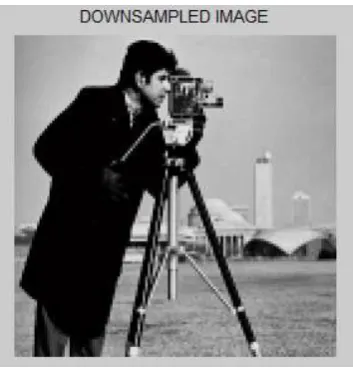
Figure 2 represents the blurred form of the input image taken which indicates the frame of video on that time its gives blurred form of the output image.Figure 3 down sampled image
Figure 3 down sampled image is used for the indication of resolution taken in three forms and the super resolution of image should be down sampled for optimization.
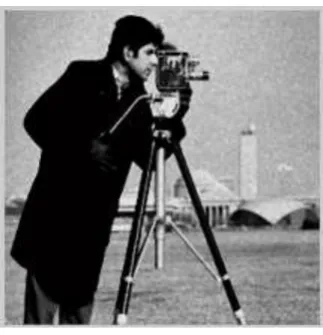
Figure 4 Image with Gaussian noise attack
Figure 4 shows the noise attacked form of Input image in which Gaussian noise is added in the image. Noise by definition is just unwanted sound. However, there is one special type of noise that has broad application in the hearing sciences.
Figure 5 special information extractions
IJEDR1704035
International Journal of Engineering Development and Research (
www.ijedr.org
)
234
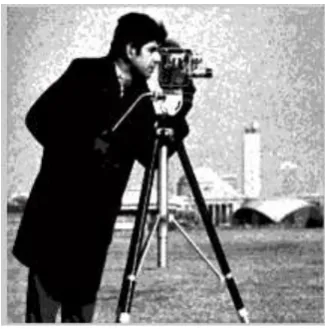
Figure 6 mean filtering imageThis fig.6 represent mean filtering image. In this used the mean filter for remove the noise filtering then we get that mean filtering image.
Figure 7 k-means clustering
This figure 7 demonstrates the k-means clustering. In this k-means clustering algorithm are applied in the image then we get that image.
Figure 8 minimization and maximization
IJEDR1704035
International Journal of Engineering Development and Research (
www.ijedr.org
)
235
Figure 9 TVMM denoising imageThis fig.9 depicts denoising image. When applied the total variation minimization maximization algorithm on the input image then we get that TVMM denoising image.
Figure 10 cluster and post processing output image
This fig.10 shows the output image. In the output there are two output images that are cluster output image and post processing output image.
Table 1 Comparison Analysis
S.No. Parameter Base Paper Proposed
1. PSNR 21.33 37.6703
2. SSIM 0.6290 0.9206
V.CONCLUSION
In this paper, we propose a Regional spatially adaptive (RSATV) super-resolution calculation with spatial data filtering and clustering. The spatial data is initially extricated for every pixel, and after that the spatial data filtering procedure and spatial weight clustering methodology are included. With these two courses of action, the regularization quality of the total variation model is balanced for every area with distinctive spatial information, instead of for every pixel, as in the conventional spatially adaptive TV model.
REFERENCES
[1] Srimanta Mandal , Anil Kumar Sao “Employing structural and statistical information to learn dictionary (s) for single image super-resolution in sparse domain”, Elsevier 2016.
[2] Jia-Bin Huang, Abhishek Singh, and Narendra Ahuja “Single Image Super-resolution from Transformed Self-Exemplars”, Conference Paper • June 2015.
[3] Kaibing Zhang, Dacheng Tao, Xinbo Gao, “Learning Multiple Linear Mappings for Efficient Single Image Super-Resolution”, IEEE TRANSACTIONS ON IMAGE PROCESSING, VOL. 24, NO. 3, MARCH 2015.
[4] Jianchao Yang, John Wright, Thomas Huang “Image Super-Resolution via Sparse Representation”, IEEE transactions on image …, 2010.
[5] Zhu, Zhiliang, et al. "Fast single image super-resolution via self-example learning and sparse representation." IEEE Transactions on Multimedia 16.8 (2014): 2178-2190.
[6] Olafare, Olayinka, Hani Parhizkar, and Silas Vem. "A New Secure Mobile Cloud Architecture." arXiv preprint arXiv:1504.07563 (2015).
IJEDR1704035
International Journal of Engineering Development and Research (
www.ijedr.org
)
236
[8] Ly, Alice, et al. "High-mass-resolution MALDI mass spectrometry imaging of metabolites from formalin-fixed paraffin-embedded tissue." Nature protocols11.8 (2016): 1428-1443.
[9] S.C.Park, M.K.Park, M.G.Kang, Super resolution image reconstruction:a technical overview, IEEE Signal Process .Mag.20(3)(2003)21–36.
[10] R.Keys,Cubic convolution interpolation for digital image processing, IEEE Trans. Acoust. Speech Signal Process.29(6)(1981)1153–1160.
[11] H.Hou, H.Andrews, Cubic splines for image interpolation and digital filtering, IEEE Trans. Acoust. Speech Signal Process. 26(6)(1978)508–517.