T
HE
C
AUSES AND
C
ONSEQUENCES OF
O
PERATIONAL
R
ISK
:
S
OME
E
MPIRICAL
T
ESTS
A thesis submitted in fulfilment of the requirements for the degree of
Doctor of Philosophy
Xingnan Jiang
Bachelor of Business (Hons)
School of Economics Finance and Marketing
College of Business
RMIT University
i
D
ECLARATIONI certify that except where due acknowledgement has been made, the work is that of the author
alone; the work has not been submitted previously, in whole or in part, to qualify for any other
academic award; the content of the thesis is the result of work which has been carried out since
the official commencement date of the approved research program; any editorial work, paid or
unpaid, carried out by a third party is acknowledged; and, ethics procedures and guidelines
have been followed.
ii
A
CKNOWLEDGMENTSI would like to begin by acknowledging the generous financial support from my parents.
Without their funding, this work would not have been possible.
On the academic front, I wish to express my deepest appreciation to my senior supervisor
Professor Imad Moosa for his wise direction, patient assistance, and insightful guidance during
my doctoral research. In addition, I would like to thank my associate supervisor Professor
Michael Dempsey for his support and guidance. Furthermore, it is to Professor Tony Naughton
that I owe an overwhelming debt of gratitude for assisting me throughout my research. Without
his generous help and endless support, most of this work would not have been possible.
I would like to thank Alastair MacLeod and Edward Hassall for sharing their insights on the
CFA program and working in the corporate world of finance. I thank Professor Terry Hallahan
for providing me with rare opportunities to gain precious exposure to operational risk
management in practice.
I thank my friends who have made my stay in Melbourne an enjoyable and unforgettable
experience. I have learnt so much from each one of them and I will always cherish their
friendship. Sincere thanks go to Maria and Larry who have kindly helped me through the very
early stages of my Australian stay; my beloved cousins Zara and Ryan have always motivated
me to complete my research. I am grateful to Corrie for her constant help with my English
language skills. I am appreciative of the professional editorial assistance that I received from
iii
Finally, words alone cannot express the immense gratitude that I feel for my parents' support—
both financial and emotional—their constant efforts to inspire me, and their care of me. They
have given me very many invaluable opportunities in life and they have always encouraged me
iv
C
ONTENTSDeclaration ... i
Acknowledgments... ii
Contents ... iv
List of Tables ... viii
List of Figures ... x
Summary ... 1
Chapter 1 Introductory Background ... 3
1.1 Introduction ... 3
1.2 Objectives ... 5
1.3 Thesis Structure ... 6
1.4 Operational Loss Data ... 8
Chapter 2 The Concept of Operational Risk ... 10
2.1 Definition of Operational Risk ... 10
2.2 The Concept and Classification of Risk ... 12
2.3 Rising Significance of Operational Risk ... 14
2.4 Examples of Catastrophic Operational Loss Events ... 15
2.5 Classification of Operational Risk ... 17
2.6 The Characteristics of Operational Risk ... 21
2.7 Measurement and Modelling of Operational Risk ... 23
2.8 Conclusion ... 24
Chapter 3 Operational Risk and The Basel Regulation ... 26
3.1 Operational Risk and Banking ... 26
3.2 The Basel Committee and the Original Basel Accord ... 27
3.3 Basel II and its Pillars... 29
3.4 Pillar I: Minimum Capital Requirements for Operational Risk ... 30
The Basic Indicators Approach and Standardised Approach ... 31
The Advanced Measurement Approach ... 33
3.5 Constituents of the AMA ... 34
The Scenario-Based Approach ... 35
The Scorecard Approach ... 36
v
The Loss Distribution Approach ... 38
3.6 Pillar II: Capital Adequacy and Regulatory Principles ... 39
3.7 Pillar III: Market Discipline and Public Disclosure ... 40
3.8 The Implementation of Basel II: Some General Concerns ... 41
3.9 From Basel II to Basel III: An Ambitious Transition ... 44
3.10 Conclusion ... 49
Chapter 4 Country-Level Determinants of Operational Risk ... 51
4.1 Introduction ... 51
4.2 The Empirical Literature ... 53
4.3 Loss Sample and Raw Data ... 56
4.4 Potential Determinants ... 65
4.5 Macroeconomic Determinants ... 67
GDP ... 67
GNI Per Capita ... 68
Unemployment ... 69
Inflation ... 70
4.6 Legal and Regulatory Indicators ... 71
Voice and Accountability ... 72
Government Effectiveness and Regulatory Quality ... 73
Political Stability, Rule of Law and Control of Corruption ... 73
4.7 Social and Other Factors ... 73
Human Development Index ... 73
Income Inequality ... 74
Economic Freedom ... 75
Technological Progress ... 76
Appendices to Chapter 4: Raw Data ... 78
Chapter 5 Cross-Sectional Regression and Extreme Bounds Analysis ... 85
5.1 Introduction ... 85
5.2 The Use of Extreme Bounds Analysis ... 86
5.3 Applications of Extreme Bounds Analysis: Previous Studies ... 90
5.4 Variations of Extreme Bounds Analysis ... 92
Chapter 6 Data and Results ... 95
vi
6.2 Cross-Sectional Regression ... 98
6.3 Extreme Bounds Analysis ... 101
Traditional Extreme Bounds Analysis ... 101
Sala-i-Martin (1997) Modified EBA: Cumulative Density Function ... 102
The Granger and Uhlig (1990) Restricted EBA ... 104
Estimations of the Free Variables ... 105
6.4 Robustness Test and Model Sensitivity Analysis ... 107
Subsample Test ... 107
Model Sensitivity: Number of Z Variables ... 111
6.5 Results Summary... 112
6.6 Conclusion ... 114
Appendix to Chapter 6: Cross-Sectional Regression Results ... 118
Chapter 7 The Consequences of Operational Risk ... 119
7.1 Introduction ... 119
7.2 Existing Literature ... 123
7.3 Hypothesis Development ... 127
Chapter 8 Operational Loss Data ... 131
8.1 The Loss Dataset ... 131
8.2 Raw Data and Descriptive Statistics ... 133
8.3 Descriptive Statistics ... 135
8.4 First Press Release Date and Settlement Date ... 143
Chapter 9 Event Study Methodology ... 146
9.1 Abnormal Return and Cumulative Abnormal Return ... 146
9.2 Statistical Significance Testing ... 149
Chapter 10 Estimation Results ... 154
10.1 Estimation of Stock Returns: Global Sample ... 154
10.2 Estimation of Stock Returns: Subsamples by Country ... 159
10.3 Estimation of Stock Returns: Subsamples by Event Type ... 165
10.4 Estimation of Stock Returns: Subsamples by Loss Size ... 171
10.5 Estimation of Stock Returns: Subsamples by Loss Knowledge ... 175
10.6 Estimation of Stock Returns: Subsamples by Loss Impact and Claimant Type ... 179
10.7 Estimation of Trading Volume: A General Trend ... 187
vii
10.9 Conclusion ... 193
Appendices to Chapter 10: Event Study Results ... 197
Chapter 11 Conclusion ... 199
11.1 Recapitulation... 199
11.2 Limitations and Extensions ... 202
viii
L
IST OFT
ABLESTable 2.1: Examples of catastrophic operational losses in global banking ... 16
Table 2.2: Operational loss impact classification ... 18
Table 2.3: Operational loss event classification ... 19
Table 2.4: Business-line classification ... 20
Table 4.1: Some of the biggest operational losses around the world... 54
Table 4.2: Losses by regional categories ... 58
Table 4.3: Company ownership by regional categories ... 58
Table 4.4: Number of losses in each business line or event type ... 60
Table 4.5: Total amount of losses in each business line or event type ... 61
Table 4.6: Total loss amounts according to contributory factors... 63
Table 4.7: Total loss amounts according to event trigger ... 64
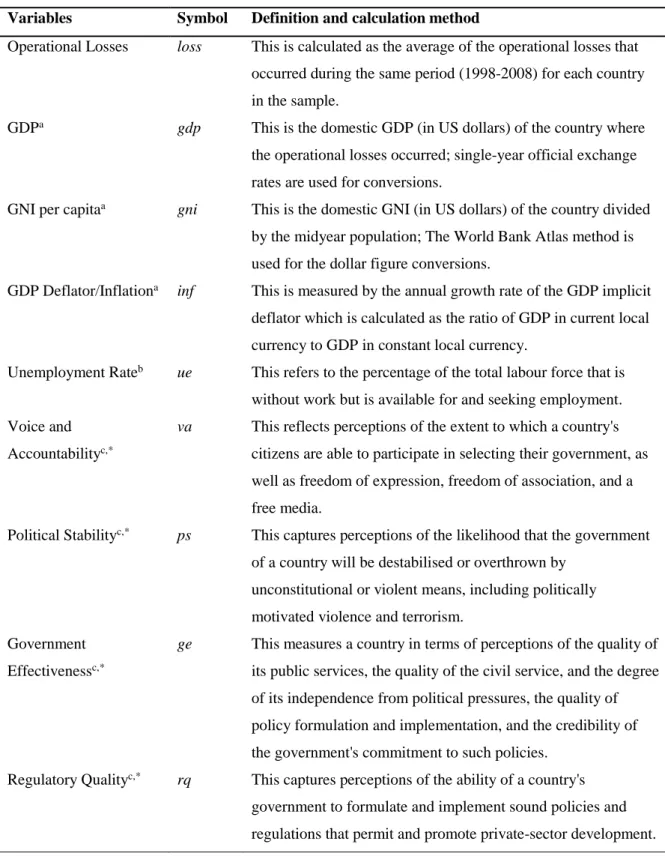
Table 4.8: Definitions of all the variables used in the study ... 66
Table 6.1: Number of operational losses by year ... 97
Table 6.2: Descriptive statistics of the explanatory variables ... 97
Table 6.3: Estimation results of cross-sectional regression ... 99
Table 6.4: Results of traditional extreme bounds analysis ... 102
Table 6.5: Estimations of Sala-i-Martin’s CDF-based EBA ... 103
Table 6.6: Results of restricted EBA ... 105
Table 6.7: The robustness of GDP using Leamer’s EBA ... 106
Table 6.8: The robustness of GNI per capita using Leamer’s EBA ... 107
Table 6.9: Comparison of various subsamples ... 108
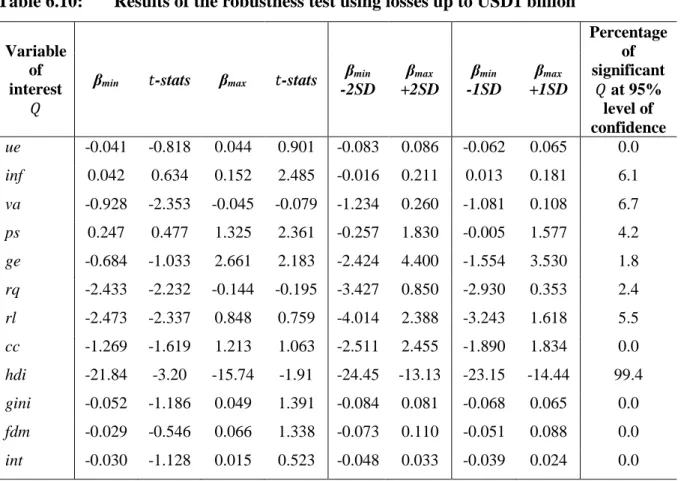
Table 6.10: Results of the robustness test using losses up to USD1 billion ... 109
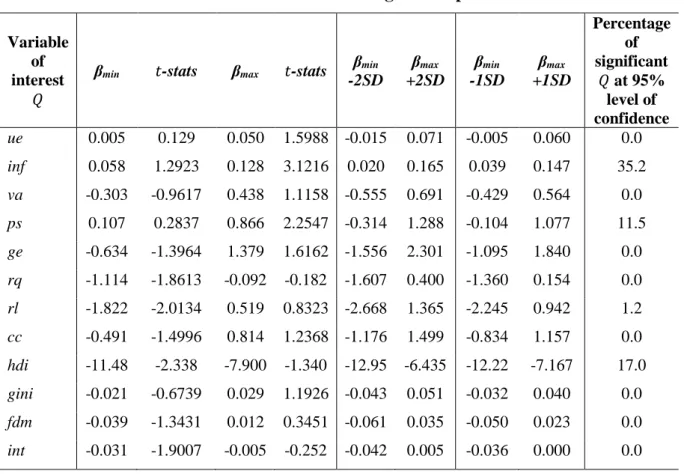
Table 6.11: Results of the robustness test using losses up to USD100 million ... 110
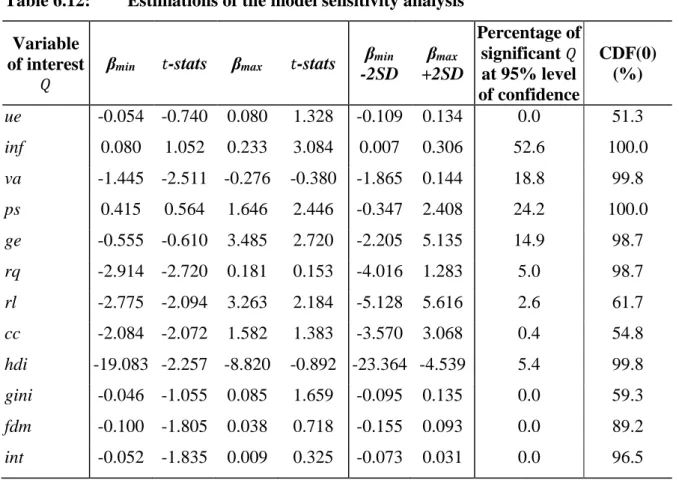
Table 6.12: Estimations of the model sensitivity analysis ... 112
Table 6.13: Results summary (robustness tests included) ... 113
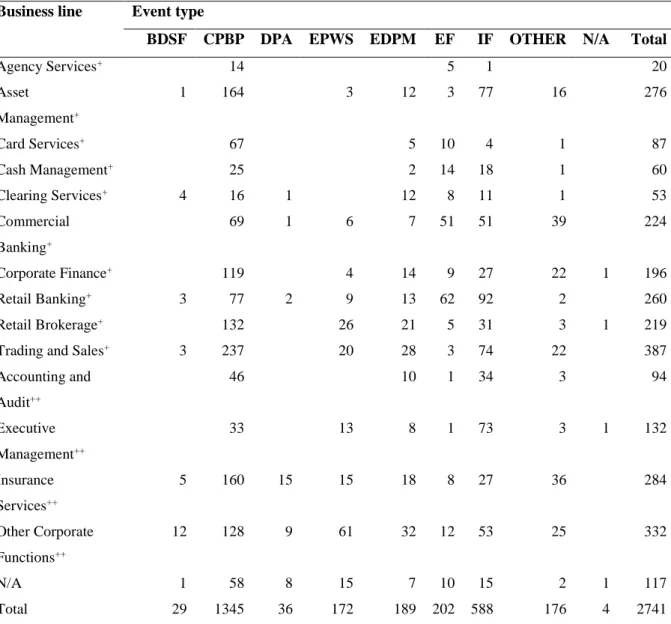
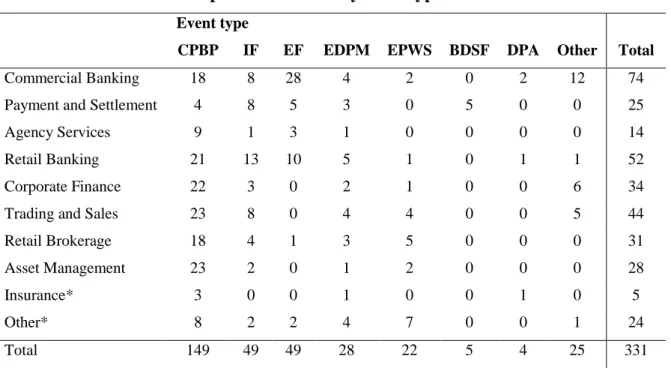
Table 8.1: Number of operational losses by event type and business line ... 134
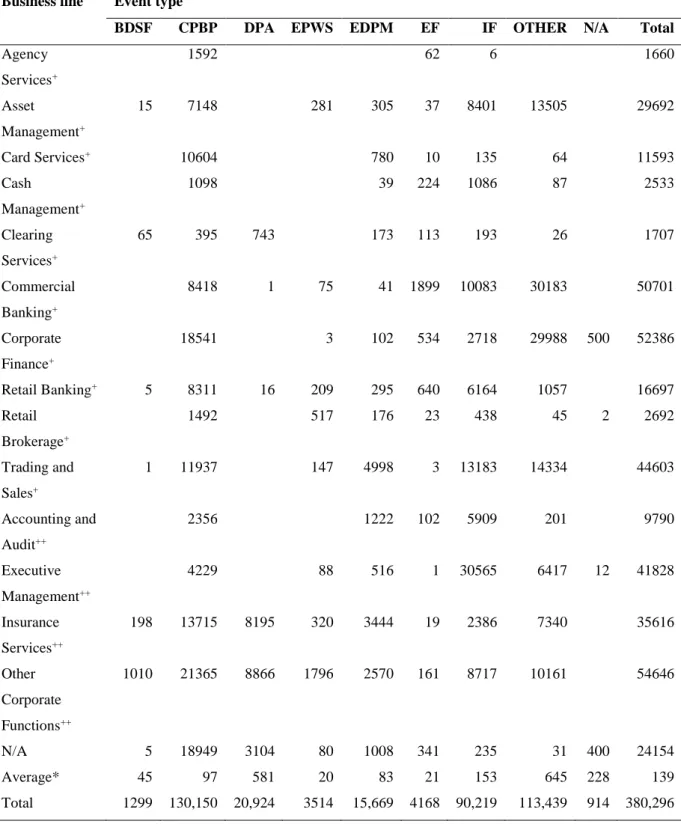
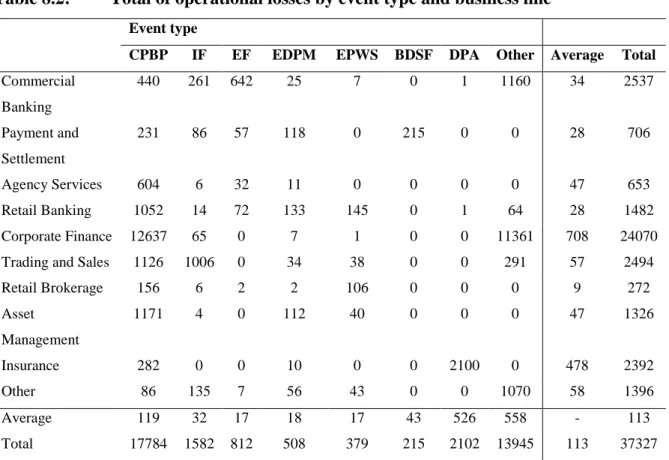
Table 8.2: Total loss amount of operational losses by event type and business line ... 135
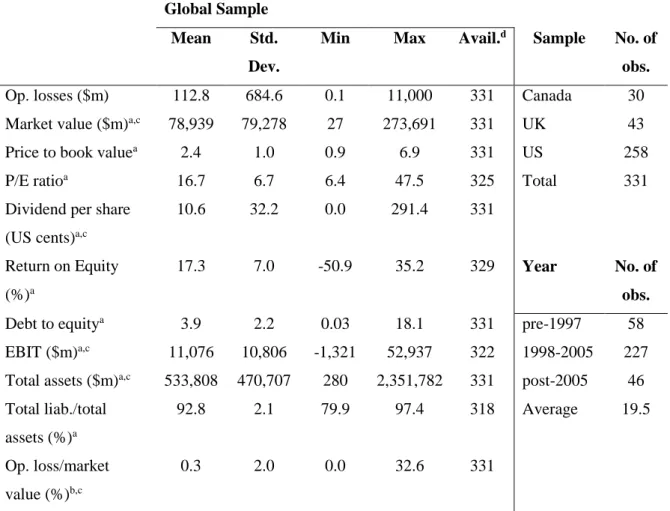
Table 8.3: Descriptive statistics of the companies and losses across the sample prior to the press date of the loss events ... 136
Table 8.4: Descriptive statistics of the companies by region prior to the press date of the loss events ... 137
ix
Table 8.5: Descriptive statistics of the operational losses according to various criteria ... 141
Table 10.1: Mean ARs and CARs (in percentage) and test statistics for the global sample ... ... 156
Table 10.2: Mean ARs and CARs for the US subsample ... 163
Table 10.3: Mean ARs and CARs for the UK subsample ... 164
Table 10.4: Mean ARs and CARs for the Canadian subsample ... 165
Table 10.5: ARs and CARs (in percentage) for the subsamples by event type around the press date ... 168
Table 10.6: ARs and CARs (in percentage) for the subsamples by event type around the settlement date ... 169
Table 10.7: ARs and CARs (in percentage) for the subsamples on the basis of the relative size of the losses ... 174
Table 10.8: ARs and CARs (in percentage) for the subsamples based on the knowledge of the loss amount ... 178
Table 10.9: ARs and CARs (in percentage) for the subsamples based on the impact of the losses on the press date and settlement date ... 184
Table 10.10: Press date ARs and CARs (in percentage) for the subsamples given the claimant type of the loss events ... 186
x
L
IST OFF
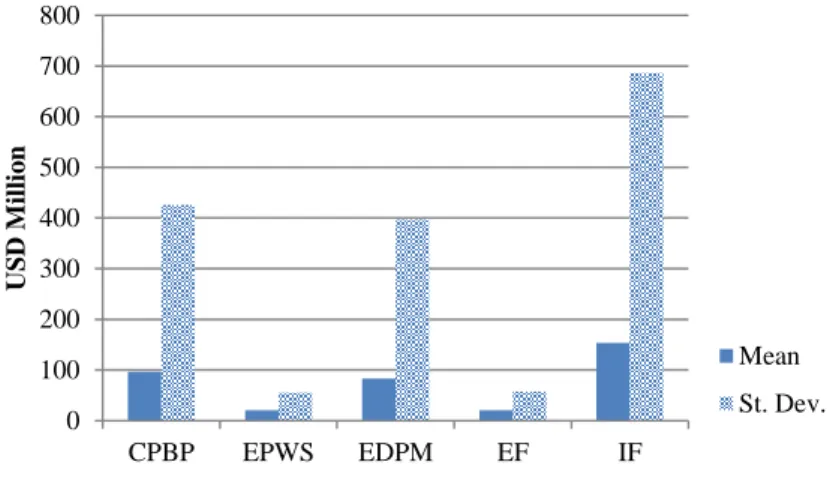
IGURESFigure 6.1: Mean value and standard deviations of operational losses by event type ... 96
Figure 6.2: Number of operational losses by event type during the sample period... 96
Figure 10.1: Average cumulative abnormal returns (CAR) around the two event dates for the full sample ... 155
Figure 10.2: United States–Average CAR around the two event dates ... 159
Figure 10.3: United Kingdom–Average CAR around the two event dates ... 160
Figure 10.4: Canada–Average CAR around the two event dates ... 161
Figure 10.5: CAR and CAR(Rep) for the subsamples of the two event types CPBP and fraud (both internal and external) around the press date ... 166
Figure 10.6: CAR and CAR(Rep) around the press date for the subsamples of fraud (combined), internal fraud, and external fraud ... 166
Figure 10.7: CAR and CAR(Rep) for the subsamples of four event types: CPBP, fraud (combined), internal fraud, and external fraud ... 167
Figure 10.8: CAR and CAR(Rep) for the relatively bigger losses around both press and settlement dates ... 171
Figure 10.9: CAR and CAR(Rep) for the relatively smaller losses around both press and settlement dates ... 172
Figure 10.10: CAR and CAR(Rep) for the relatively bigger (left) and smaller (right) unknown losses around both press and settlement dates ... 173
Figure 10.11: First press date CAR and CAR(Rep) for subsamples according to the knowledge of the losses ... 176
Figure 10.12: Settlement date CAR and CAR(Rep) for subsamples according to the knowledge of the losses ... 176
Figure 10.13: Press date CAR and CAR(Rep) for subsamples according to the impact of losses ... 180
Figure 10.14: Settlement date CAR and CAR(Rep) for subsamples according to the impact type of losses (legal charges and monetary write-down only) ... 181
Figure 10.15: Press date CAR and CAR(Rep) for subsamples by claimant type ... 182
Figure 10.16: Trading volume variation around the press and settlement dates—global sample ... 188
Figure 10.17: Trading volume variation for the three country subsamples around the press date (left) and the settlement date (right) ... 188
1
S
UMMARYThe thesis provides empirical evidence on the causes and consequences of operational risk.
First, by including operational losses endured by firms across all sectors worldwide, we
investigate the determinants that potentially explain cross-country differences in operational
risk. These determinants are based on country-level information. They can be broadly classified
into three categories measuring three unique dimensions of a country: macroeconomic,
regulatory, and social. To circumvent model-specification issues and variable-selection bias,
we carry out the empirical work according to extreme bounds analysis (EBA), which is an
econometric modelling approach suggested by Leamer (1983, 1985) and further extended by
Granger and Uhlig (1990), as well as Sala-i-Martin (1997).
The empirical results show that operational-loss severity, on average, rises as a country’s GDP
level and the cost of living increase. In addition, a country as a whole is more likely to
experience catastrophic losses with a poorer regulatory and governance standard, particularly
against the background of the rigorous process by which a country’s government is selected,
monitored, and replaced; and also on the capacity of that government to formulate and
implement sound policies effectively. Furthermore, the overall development of a country’s
citizens—including their life expectancy, education, and income levels—also plays a role when
comparing operational-loss severity from one country to another.
Second, to address the consequences of operational risk, we use an event-study approach to
examine the economic impact of operational-loss announcements on firms’ stock market value
and the potential reputational damage that follows. We distinguish operational-loss settlement
2
two announcement types, and we examine the effect of gradual information release. We
account for the nominal amount of operational losses to separate the reputational effect of the
loss announcement from its direct monetary impact, hence refining the measures of reputational
risk. We scope the empirical estimation at a firm-level for 331 operational-loss events settled
by commercial banks headquartered in the United States, the United Kingdom, and Canada
during the period 1995 to 2008.
The findings reveal that the stock market reacts negatively to the initial press release of
operational-loss events, as well as to its settlement news across all three countries analysed.
This negative reaction is more abrupt surrounding the event dates, highlighting the strong initial
reaction to loss news, although it fades quickly after the announcements are made to the public.
This suggests that the market selloff may be short-lived. Reputational risk is consistently
evident in the global and in all of the sub-regional samples, indicating that the market tends to
overreact to operational-loss announcement. In addition, the market appears to be more
sensitive to announcements of (i) losses resulting from internal fraud; (ii) losses of a bigger
magnitude with an undisclosed loss figure; (iii) losses that result in restitutions, and (iv) losses
3
C
HAPTER1
I
NTRODUCTORY BACKGROUND1.1 Introduction
Operational risk is the risk of losses arising from the failure of people, process and systems,
and from external events. In practical terms, it is the risk of losses arising from the
materialisation of a variety of events including fraud, theft, computer hacking, loss of key staff
members, lawsuits, loss of information, terrorism, vandalism, and natural disasters (Moosa,
2007a). The particular significance assigned to operational risk is motivated by the spectacular
and widely publicised financial scandals and corporate collapses that surface regularly (for
example Enron and Barings Bank). And because of this, operational risk has been receiving
increasingly significant attention from the media, regulators, and business executives. In
addition, the trend towards greater dependence on technology, more intensive competition, and
globalisation have left the corporate world more exposed to operational risk than ever before.
It was not until the early 1990s (and possibly the mid-1990s, following the collapse of Barings
Bank) that the term operational risk was coined. Power (2005) attributes the emergence of this
term to the publication of the Basel II proposals, but he suggests that Nick Leeson, the rogue
trader who brought down Barings, was 'the true author and unwitting inventor of operational
risk, since most discussions of the topic refer to this case as a defining moment' (Power, 2005).
For a long time, operational risk was not even recognised. Halperin (2001) argues that
'operational risk has traditionally occupied a netherworld below market and credit risk' but
'headline-grabbing financial fiascos, decentralised control, the surge in e-commerce and the
emergence of new products and business lines have raised its profile'. In a particular reference
4
in the business of managing risk, that generally means managing credit risk, market risk or
insurance risk—the kinds of risk that are typically associated with banking and finance. Dutta
and Perry (2007) point out that 'operational risk is being recognised as an important risk
component for financial institutions as evinced by the large sums of capital that are allocated
to mitigate this risk'. Similarly, De Fontnouvelle (2007) argues that 'the frequency of large
operational losses, their widespread impact, and their reputational consequences highlight the
importance of measuring, monitoring and mitigating operational risk, as well as holding
sufficient capital for unexpected losses'. Therefore, it was only until then the significance of
operational risk—a distinct risk category not as well understood as market and credit risks—
has been recognised.
The empirical literature on operational risk, particularly the determinants and effects of
operational losses, is rather thin, which is not surprising for at least two reasons. The first is the
lack of good-quality data, given the secrecy with which firms treat their operational losses
(Moosa and Li, 2015). The second reason is due to the difficulty associated with
operational-risk modelling, as the causes of operational losses are extremely heterogeneous—ranging from
fraud to fire and law suits. For these reasons, Chernobai et al. (2011) state that current academic
research that sheds light on the determinants of operational risk (and operational risk in general)
5 1.2 Objectives
In this thesis, we aim to examine the causes and consequences of operational risk empirically
by identifying country-level determinants that explain the severity of operational losses, and
by investigating the economic impact of operational-loss announcement on the announcing
firm’s market value. Our motivation is formed based on the following considerations:
1 Within the thin literature on the determinants of operational risk, most of the studies
are conducted at firm-level using firm-specific factors. However, it is possible that
operational risk may exhibit some form of cross-country differences. Therefore, it
is vital to understand any potential country aspects of operational risk and,
subsequently, how these aspects may affect operational-risk management.
2 Operational-loss announcements affect business operations and can be detrimental
to firms’ business continuity. However, the impact of such announcements has not
yet been addressed adequately in the literature. The empirical evidence on the
matter remains scarce overall. Amongst the existing studies, few discussed the
potential consequences of operational-loss events and the reputational damage that
may follow. However, these studies were either single-firm oriented, or were
conducted within a specific sector. Cross-sector and cross-country studies remain
in demand.
We take a step in this thesis toward filling these gaps in the literature of operational risk.
Specifically, we identify and examine the factors that may explain the country-level differences
in the severity of operational risk, as well as exploring the impact of operational-loss
announcements on a firm’s value and the potential reputational effect arising from such
6
operational risk exhibit cross-country differences? And, if it does, can the differences be
explained by any factors? (ii) What is the economic impact of operational-loss announcements
on the announcing firms? (iii) Is the impact reputational? And, does it vary according to loss
characteristics?
1.3 Thesis Structure
The thesis is organised as follows. Chapter 2 introduces operational risk. We centre our
discussion on the definition of operational risk, as well as its classification and its unique
characteristics. We also discuss the challenging aspects of measuring and modelling
operational risk. This work is challenging in part because of the widespread incidence of
operational risk. A brief discussion on the concept of risk in general is also provided in this
chapter.
Chapter 3 reviews the regulations of operational risk—the Basel Accords. We start with the
history and development of the Basel Committee on Banking Supervision. Then we move on
to take a closer look at its accord, beginning with Basel I. We focus our discussion on the
second Accord where, for the first time, operational risk is included in the regulatory capital
framework. We address the three pillars of the Accord and explain how they work coherently
in protecting banks from operational losses. This chapter is concluded with a discussion of the
Basel III Accord. A critical review is provided.
Chapter 4 begins our empirical study on the causes and effects of operational risk. In this
chapter, we explore the country aspect of operational risk. We review existing studies that used
country-level variables to explain operational risk. We present and discuss the variables that
7
In Chapter 5, we explain the methodology that we use in studying the country aspect of
operational risk—EBA. A selection of previous studies using this technique is discussed, along
with their findings. We show several variations of the technique since its original development.
The estimation results on the relationship between country-level determinants and
operational-loss severity are presented in Chapter 6. These results are obtained using EBA. We perform
various robustness checks on the results obtained using EBA.
Chapters 7 to 10 address the second part of the empirical analysis—the consequences of
operational risk. In Chapter 7, we discuss the potential impact of an operational-loss event on
the company that announces it to the public. We isolate the direct monetary impact of the loss
announcement to study the indirect effect of reputational damage to the company. A literature
review is provided in the chapter on existing studies that deal with this type of risk, thus
providing a basis for hypothesis development.
While Chapter 8 outlines the data used in this part of the study, Chapter 9 presents the
event-study methodology which we use to examine how the market reacts to a company’s loss
announcement when it is released to the public. In addition, we investigate the potential
differences that may arise in this reaction and whether these differences vary according to
various operational-risk characteristics. The event-study findings are presented in Chapter 10.
Chapter 11 concludes the thesis by reviewing the main objectives of the research, along with
our empirical findings, discussing the limitations of the study, and presenting several potential
8 1.4 Operational Loss Data
For the empirical analysis of the thesis, we collect the operational-loss data from the Algo
FIRST database, which was the primary data source for several existing operational-risk studies
(for example Wang and Hsu, 2013; Chernobai et al., 2011; Fiordelisi et al., 2013). The database
contains detailed event descriptions and a full spectrum of useful information on loss events
obtained from multiple sources. This includes information on the loss amount, event dates, loss
location, company information, loss-event type, market impact, and the corrective action taken
by management in response to the event. It provides a comprehensive analysis of the
circumstances under which loss events occur.
A unique feature of this database is that it only contains losses collected from public areas,
such as media reports and regulatory filings. This implies that losses that are discovered
through a firm’s internal loss-reporting process—and that are kept for internal use only—are
excluded. Although the Algo database only includes publically disclosed losses, its exposure
to self-selection bias by the firm in loss disclosure is said to be at a minimal level. This
particularly benefits our study in the part where we find the determinants that explain the
country aspects of operational risk—where a firm’s individual characteristics are of less
concern relative to the overall business environment of the market.
Further, the database reports a timeline for each loss event outlining the development of the
event. The timeline begins with the event start date and finishes with the closing date, where
the event is materialised and a loss is usually recorded. The timeline reports a settlement date
which is when the event is officially settled. However, this information is only available on
loss events where the settlement date is different to the closing date, as many firms settle their
9
useful to our research dealing with operational-loss severity, as loss events can take months,
and years in some cases, to materialise. This timeline is vital to monitoring precisely when
firms release sensitive information on their operational-loss announcement and settlement
news to the public. The information is later used in the event-study setting to explain the
10
C
HAPTER2
T
HEC
ONCEPT OFO
PERATIONALR
ISK2.1 Definition of Operational Risk
Defining operational risk is crucial for two reasons. On the one hand, it sets the risk apart from
other risk categories. On the other, it forms the basis for the treatment of operational risk,
ranging from raising the awareness of management to the calculation of the regulatory capital
(Buchelt and Unteregger, 2004). However, due to its diversity, defining operational risk has
never been easy. Allen and Bali (2004) state that defining operational risk is easier said than
done, and this is perhaps why Metcalfe (2003) dubbed operational risk as 'Risk X'. Similarly,
Crouchy (2001) argues that operational risk is a fuzzy concept, because 'it is hard to make a
clear-cut distinction between operational risk and the normal uncertainties faced by the
organisation in its daily operations'.
Following the collapse of Barings, the financial industry started to recognise rogue trading and
the like as a separate risk category, comprising the types of risk that could not be classified as
either credit risk or market risk. Medova and Kyriacou (2001) are convinced that thinking of
operational risk as 'everything not covered by exposure to credit and market risk' remains
prevalent amongst practitioners. Rao and Dev (2006) argue that 'it was not uncommon, five
years ago, to consider OR [operational risk] as a residual', and that 'everything other than credit
risk or market risk was, by default, OR'. However, defining operational risk in such a negative
manner as a residual item is probably a reflection of a lack of understanding and of the diversity
of operational risk. It makes the concept difficult to work with, in the sense that it cannot be
11
Early definitions of operational risk appeared in the published literature of major international
banks and other bodies in the 1990s. This was before the Basel Committee adopted its official
definition. These definitions range from the narrow regulatory approach to the extremely broad
classifications. For example the Group of Thirty (1993) defined operational risk as 'uncertainty
related to losses resulting from inadequate systems or controls, human error or management'.
The Commonwealth Bank of Australia (1999) came up with the broad definition that
operational risk is 'all risks other than credit and market risk, which could cause volatility of
revenues, expenses and the value of the Bank’s business'. Another early definition of operational risk emerged in a seminar at the Federal Reserve Bank of New York where
Shepheard-Walwyn and Litterman (1998) defined it by saying that 'operational risk can be seen
as a general term that applies to all the risk failures that influence the volatility of the firm’s cost structure as opposed to its revenue structure'.
The British Bankers’ Association (1997) suggested a rather long definition, stipulating that operational risk encompasses:
the risks associated with human error, inadequate procedures and control,
fraudulent and criminal activities; the risks caused by technological
shortcomings, system breakdowns; all risks which are not "banking" and arising
from business decisions as competitive action, pricing, etc.; legal risk and risk
to business relationships, failure to meet regulatory requirements or an adverse
impact on the bank’s reputation; "external factors" include: natural disasters, terrorist attacks and fraudulent activity, etc.
The most common—and probably the most reasonable—definition of operational risk first
12
or indirect loss resulting from inadequate or failed internal processes, people and systems, or
from external events'. The Basel Committee adopted this definition as it was initially, but
subsequently dropped the reference to indirect losses (including those resulting from the loss
of reputation) for the purpose of quantifying regulatory capital, since these losses are difficult
to measure. Thus, the BCBS (2004) defines operational risk as: 'The risk arising from
inadequate or failed internal processes, people and systems or from external events'. This
definition, which is based on the underlying causes of operational risk, includes legal risk but
excludes business and reputational risk. The BCBS definition of operational risk has been
adopted by many firms and is now generally accepted as the standard, although the process of
doing so has not been easy with many issues and heated debates from academics and
practitioners (for example Turing, 2003; Herring, 2002; Hadjiemmanuil, 2003).
2.2 The Concept and Classification of Risk
To understand operational risk, we must first address the concept of risk, and the fundamental
difference between risk and loss, as they are often used interchangeably. Risk is an ex ante
concept in the sense that it is a source of potential loss. This implies that exposure to risk may
or may not produce losses. Loss, however, is an ex post concept, in the sense that it may
materialise as a result of exposure to risk (Moosa, 2008).
In its broadest sense, risk means exposure to adversity (Moosa, 2007b). Risks can be classified
in several ways. For example risks can be arranged along a spectrum, depending on how
quantifiable they are. The simplest and most common classification scheme is based on the
distinction between financial and non-financial risk (Moosa, 2008). Financial risk is the risk of
losses inherent in financial transactions, hence it is classified into credit risk (the risk arising
13
from fluctuations in financial prices). Non-financial risk may be classified into operational risk
and other kinds of risk. Recall the definition of operational risk: the risk of loss resulting from
the failure of people, processes, systems, or from external events. Operational risk is more
diverse than either credit risk or market risk, encompassing, among other things, the following
risk types: liquidity risk, herstatt risk, compliance risk, processing risk, system risk, human
resources (HR) risk, crime risk, disaster risk, fiduciary risk, model risk, and legal risk. Other
non-financial risks include the following risk types: business risk (also referred to as strategic
risk), reputational risk, macroeconomic risk, business-cycle risk, country risk, political risk,
sovereign risk, and purchasing-power risk.1 These lists are, however, not exhaustive. Doerig
(2003) identifies 100 types of risk facing financial institutions, arguing that all of them 'have
at least a touch of operational risk'.
The classification of risk has implications for risk measurement. For instance, while market
risk can be measured by using value at risk (VAR) and scenario analysis, credit risk is measured
by the probability of default, loss given default, and exposure at default.2 However, VAR can
be also used to measure credit risk and operational risk. In the case of credit risk, the probability
of default, loss given default, and exposure at default are used to estimate the underlying
credit-loss distribution, with the ultimate objective of measuring VAR (or capital at risk). As for
operational risk, scorecards, and extreme-value theory, the concepts of expected and
unexpected losses can be used to construct an operational-loss distribution for the purpose of
measuring VAR.3
1 A definition for each of these risk types is provided in Moosa (2008).
2 For a detailed discussion on the concept and use of VAR, see Moosa (2007b).
14 2.3 Rising Significance of Operational Risk
As mentioned earlier, the particular significance assigned to operational risk is highlighted by
the spectacular corporate collapses and headline-grabbing loss events that appear quite
regularly. Barings Bank, Long-Term Capital Management, Enron, and Société Générale are
only few examples of these catastrophic operational-loss events. However, it is not that
operational risk did not exist before Nick Leeson—the rogue trader who brought down Barings.
According to the definition of operational risk, it encompasses losses caused by external
factors. This includes natural disasters such as fire, flood, and earthquake.
In a specific reference to the banking industry, Buchelt and Unteregger (2004) argue that the
risk of fraud and external events has been around ever since the beginning of banking.
However, it is technological progress that has attracted increasingly more attention to
operational risk. In addition, other contributory factors have led to the intensification of
operational risk. These factors include: more intensive competition, globalisation, the rise of
e-commerce, privatisation and deregulation, mergers and consolidation, the growing use of
outsourcing arrangements, and the increasing complexity of financial assets.
Jobst (2007) argues that the increased size and complexity of the banking industry has made
operational risk amplify system-wide risk levels with a greater potential to produce more
harmful outcomes than do many other sources of risk. However, it is not only banks that are
exposed to operational risk. Over time, operational risk attracted increasing interest from the
general public, firms that are exposed to it and, of course, the regulators. Firms are interested
in operational risk because exposure can be fatal. Blunden (2003) argues that operational risk
is as likely to bring a company to its knees as is a market collapse, although it is within
15
that 'the impact of operational failure can be far reaching' and that 'a firm’s long-term viability
can be impaired by operational failures regardless of whether the immediate losses are
sustainable in the short term'. Firms are also interested in operational risk because the rating
agencies have started to incorporate exposure to, and the management of operational risk in
their analyses of creditworthiness. de Fontnouvelle et al. (2005) state that operational-risk
management practices are becoming an important factor considered by all banks, regardless of
the regulatory capital regime to which they are subject (Basel I, Basel II, or Basel III).4
The greater interest of the regulators in operational risk is attributed to the changing risk profile
of the financial-services sector for many reasons, including the growth in e-business activity
and reliance on technology (Hubner et al., 2003). The BCBS (1999) expressed the view that
operational risk is 'sufficiently important for banks to devote the necessary resources to
quantify' it. Operational risk has affected a fundamental part of doing business, and, as such, it
cannot be eliminated completely. For this reason, firms and supervisors have a common interest
in identifying, monitoring, and controlling operational risk.
2.4 Examples of Catastrophic Operational Loss Events
Over the last 30 years, the global financial system has repeatedly endured high-profile
operational-loss events. This was especially so for the large international banks. A number of
reputable international banks have been shaken as a result, and some were even forced to close
or merge—for example Barings, Wachovia, and Merrill Lynch. More than 100 operational
losses with a magnitude of over USD100 million each have been reported since the beginning
of the 1980s. Some of the losses even exceeded USD1 billion. It is estimated that large
multinational banks typically incur annual losses of between USD50 and 80 million dollars (de
16
Fontnouvelle et al., 2003). Table 2.1 lists some of the biggest billion-dollar losses recorded in
the banking sector around the globe. These include the monumental case of Barings Bank,
which led to the firm’s insolvency as a result of Nick Leeson’s unauthorised trading, and the French banking giant Société Générale with its resounding loss totalling almost USD7 billion
through its rogue trader Jérôme Kerviel. These losses were all caused by internal factors, and
despite the fact that the financial product or service in which losses are incurred may be
different for each case, internal fraud is seen as being at the heart of the losses and is deemed
to be the major contributory factor towards the operational failure of the organisations.
Table 2.1: Examples of catastrophic operational losses in global banking Loss amount
(USD b) Year Company Country Source of loss
8.67 2008 Morgan Stanley US Credit Default Swaps
6.95 2008 Société Générale France European Index Futures
5.80 2012 JP Morgan UK Credit Default Swaps
1.83 2011 UBS UK Equities ETF and Delta 1
2.38 1994 Orange County US Leveraged Bond Investments
1.78 1995 Barings Bank UK Nikkei Futures
1.50 1995 Daiwa Bank Japan Bonds
Apart from internal factors, operational losses resulting from external events such as the natural
disaster of Hurricane Sandy and the US September 11 terrorist attack are striking examples of
factors causing catastrophic operational losses. It is suggested that the financial loss due to the
September 11 attack is the costliest insured property loss in history, with current estimates of
17
to physical assets and business disruption, and the cost of thousands of lives. It produced a
tremendous economic and political impact worldwide.5
2.5 Classification of Operational Risk
The BCBS (2001) states that 'there is often a high degree of ambiguity inherent in the process
of categorizing losses and costs'. The task of classifying operational risk is not easy, due to its
heterogeneity. A system is therefore needed for classifying the risk and identifying its
components. According to Chernobai et al. (2007), operational risk can be classified based on
the following factors:
1 The nature of the loss: internally inflicted or externally inflicted
2 The impact of the loss: direct losses or indirect losses
3 The degree of expectancy: expected or unexpected
4 Risk type, event type, and loss type
5 The magnitude (or severity) of loss and the frequency of loss
Similarly, Moosa (2008) suggests that the classification of operational losses (resulting from
exposure to operational risk) can be approached from three alternative angles: the causes of
operational failure; the resulting loss events; and the legal and accounting forms of
consequential losses. Other classifications of operational risk include: (i) the frequency
(probability) and severity (size, impact, or intensity) of operational loss events; (ii) based on
the frequency of loss events, operational risk can be classified into nominal, ordinary, and
exceptional risk (Pezier, 2003a); (iii) a classification of extreme loss events under which
operational-loss events are classified into perfect storm, ethical meltdown, infrastructure
disasters, and learning curve (McConnell, 2006); (iv) by taking into account the effect of risk
5 For instance, Cantor Fitzgerald alone lost 700 of its employees during the attack; and the New York Stock
18
controls, operational risk can be classified into inherent (or gross) and residual (or net) risk;
and (v) a quantifiability-based classification scheme under which operational risk is classified
into quantifiable risk, transferable and (or) insurable risk, and agency risk.
The BCBS definition of operational risk is based on the four broad causes of operational failure:
people, processes, systems, and external events. The Basel Committee classifies operational
risk in terms of the loss-event type, business line, and loss-impact type. We will concentrate
on these classification criteria for the purpose of this thesis. Tables 2.2 to 2.4 present a detailed
description for each of these classifications.
Table 2.2: Operational loss impact classification Loss impact types Contents
Write-downs Direct reduction in the value of assets due to theft, fraud, unauthorised activity, or market and credit losses arising as a result of operational events
Loss of recourse Payments or disbursements made to incorrect parties and not recovered
Restitution Payments to clients of principal and (or) interest by way of restitution, or the cost of any other form of compensation paid to clients
Legal liability Judgements, settlements, and other legal costs
Regulatory and compliance
Taxation penalties, fines, or the direct cost of any other penalties, such as licence revocations
Loss of or damage to assets
Direct reduction in the value of physical assets, including certificates, or due to some kind of accident (for example neglect, fires, earthquakes)
19
Table 2.3: Operational loss event classification Event-type category
(Level 1)
Definition and Level 2 categories
1. Internal Fraud Acts intended to defraud, misappropriate property, or circumvent regulations, the law or company policy, which involves at least one internal party. Categories: unauthorised activity and theft and fraud
2. External Fraud Acts of a type intended to defraud, misappropriate property, or circumvent the law by a third party. Categories: (1) theft and fraud, and (2) systems security
3. Employment Practices and Workplace Safety
Acts inconsistent with employment, health or safety laws or agreements, from payment of personal-injury claims, or from diversity, and (or) discrimination events. Categories: (1) employee relations, (2) safe environment, and (3) diversity and discrimination
4. Clients, Products and Business Practices
Unintentional or negligent failure to meet a professional
obligation to specific clients (including fiduciary and suitability requirements), or from the nature or design of a product.
Categories: (1) suitability, disclosure, and fiduciary, (2) improper business or market practices, (3) product flaws, (4) selection, sponsorship, and exposure, and (5) advisory activities
5. Damage to Physical Assets
Loss or damage to physical assets from natural disaster or other events. Categories: disasters and other events
6. Business Disruption and System Failures
Disruption of business or system failures. Categories: systems
7. Execution,
Delivery, and Process Management
Failed transaction processing or process management, from relations with trade counterparties and vendors. Categories: (1) transaction capture, execution and maintenance, (2) monitoring and reporting, (3) customer intake and documentation, (4) customer and (or) client account management, (5) trade counterparties, and (6) vendors and suppliers
20
Table 2.4: Business-line classification
Business units Business lines (Level 1)
Investment Banking Corporate Finance Trading and Sales
Banking
Retail Banking Commercial Banking Payment and Settlement Agency Services
Others Asset Management
Retail Brokerage
Source: The BIS website.
Although the Basel Committee has provided a useful guide in classifying operational risk by
the loss-event type, several issues remain. One problem with the BCBS classification of
operational-loss events is that some of the subcategories, such as fraud, do not have an exact
legal or regulatory meaning. The term is used in a generic way to designate a variety of forms
of economic wrongdoing. It may be the case that some important subcategories are missing
from this classification scheme. In addition, McConnell (2006) argues that many large
operational-loss events do not 'fit easily into very broad one size fits all Basel II event type
classification' and that they 'cut across many of the mandated categories'. Cech (2007) agrees
with the view that the Basel classification of operational-loss event types is not perfect.
However, he suggests that arguments against the classification have subsided because 'the
Basel Committee issued a series of interpretive papers without reopening the hierarchy for
discussion or clarifying its ambiguities'. The difficulty associated with classifying loss events
has been attributed to the imprecise concept of event type and several suggestions have been
made subsequently.6
6 See Cech (2007) for a list of proposed changes to a number of criteria for defining categories of operational-loss
21 2.6 The Characteristics of Operational Risk
Operational risk possesses some unique characteristics which distinguish it from other kinds
of risk. Doerig (2003) argues that 'OpRisks are primarily institutional, bank made, internal,
context dependent, incredibly multifaceted, often judgemental, interdependent, often not
clearly discernible vis a vis for example market and credit risks and not diversifiable'. It is
debatable whether operational risk is bank made or internal, because external factors can be the
culprit, but it is definitely 'incredibly multifaceted'.
The diversity of operational risk separates it from the relatively narrowly defined market risk
and credit risk, which are more widely understood and appreciated by firms and regulators.
These features of operational risk make it difficult to limit the number of dimensions required
to describe it. Operational risk encompasses the types of risk emanating from all areas of the
firm, which makes it more difficult to identify and define than market risk and credit risk. The
Economist (2003) describes operational risk as 'the risk of all manner of mishaps and foul-ups,
from a lost document to a bomb blast'. Likewise, Milligan (2004) describes operational risk as
the risk that 'includes everything from slip-and-fall to the spectacular collapse of Barings Bank'.
Apart from the diversity, some would argue that another distinguishing feature of operational
risk is that it is 'one-sided' in the sense that it is driven solely by its role as an undesired
by-product of increasingly complex business operations. This implies that exposure to operational
risk can cause losses without boosting the potential rate of return on capital and assets. Herring
(2002) describes operational risk as being 'downside risk'. Similarly, Crouchy et al. (2003)
express the view that 'by assuming more operational risk, a bank does not expect to yield more
on average' and that 'operational risk usually destroys value for all claimholders'. This, they
22
bank expects to yield a higher rate of return on its capital'. However, the contrary argument
suggests that it is wrong to believe that operational risk is one-sided in the sense that it is a
source only of losses, because firms may take it deliberately for the sake of realising a potential
return. By taking on operational risk, firms earn income while exposing themselves to the risk
of incurring operational losses if and when a loss event materialises. Hence, there is risk-return
trade-off in the case of operational risk.
A view that has been put forward repeatedly is that operational risk may be idiosyncratic, in
the sense that when it hits one firm it does not spread to other firms, suggesting the absence of
contagion and system-wide effects (Ford and Sundmacher, 2007). However, this argument is
questionable. For example the operational failure of one bank affects other banks when
businesses are dealing between the parties, and one party fails to meet its obligations to the
others. This consequently causes contagion and systemic effects and therefore the loss event is
no longer idiosyncratic. The same reasoning is valid for the subprime crisis of 2007/08, which
can be thought of as a series of operational failures with systemic, cross-border losses.
Other distinguishing features of operational risk are that unlike credit risk and market risk,
operational risk is a risk inherent in the firm—that is, within the operational processes and
projects of the firm. In addition, operational risk may sometimes appear to be difficult to
distinguish among loss events attributed to three kinds of risk, namely: credit, market, and
operational. KPMG (2005) argues that 'operational risk losses cannot often be separated clearly
23
2.7 Measurement and Modelling of Operational Risk
Even though banks (and firms in general) have shown that they have the skills and procedures
to manage operational risk effectively in the absence of adequate measurement and modelling,
measuring this risk has become increasingly important because the environment in which banks
operate has changed dramatically. Peccia (2003) argues that to remain fit, banks must adapt to
the new reality, given that the new environment is much more complex in terms of product
offerings, delivery channels, and jurisdictions. Operational-risk modelling is needed to provide
a firm’s management with a tool for making better decisions about the desirable level of
operational risk to undertake (this is often known as risk appetite or risk tolerance).
Modelling operational risk is essentially an exercise that is conducted with the objective of
arriving at the best-fit distribution for potential operational losses over a given period of time
(normally a year). In contrast, the measurement of operational risk amounts to arriving at a
single figure that tells us how much the underlying firm is likely to lose with a certain
probability, so that a correspondingly adequate amount of capital is held for the purpose of
protecting the firm from insolvency. Bocker and Kluppelberg (2005) argue that the only
feasible way to manage operational risk successfully is by identifying and minimising it, which
requires the development of adequate quantification techniques. Fujii (2005) states that
quantifying operational risk is a prerequisite for the formulation of an effective economic
capital framework. Furthermore, Consiglio and Zenois (2003) emphasise the importance of
operational-risk models by attributing some widely publicised loss events to the use of
inadequate models rather than to anything else.
Measuring and modelling operational risk have been problematical. The first difficulty
24
finding a proper and universally accepted definition of operational risk (Peccia, 2004). The
second issue is the lack of adequate data on operational losses. As Muzzy (2003) described it,
'anyone venturing into operational risk management has quickly learned that the process is
doomed without robust data'. The third potential problem associated with the measurement and
modelling of operational risk arises from the cyclicality of risk and loss events. Allen and Bali
(2004) argue that extrapolating the past to measure future risk may be flawed if there are
cyclical factors that have an impact on operational risk measures. The fourth and final issue
pertains to the assumption on the correlation of operational loss events. Powojowski et al.
(2002) suggest that including correlations in the calculation of regulatory capital requirements
can have a significant effect on the calculation. Frachot et al. (2004) cast doubt on the validity
of the proposition that operational-risk losses occur simultaneously. However, it makes it
difficult to assess the level of correlation between different operational-risk types and (or)
business units because of the lack of historical data.
Despite the potential difficulties in the measurement and modelling of operational risk, major
banks are actively engaged in operational-risk modelling as they are, if not for any other reason,
required to do so by the regulators responsible for the implementation of the Basel II Accord.
2.8 Conclusion
In this chapter, we provide a definition of operational risk and a general introduction to the
concept of risk. We also review the increasing significance of operational risk following the
spectacular corporate collapses and headline-grabbing loss events that surfaced regularly. Due
to its widespread nature, operational risk is considered as a more difficult concept to grasp
compared to the superior studies of market and credit risks. The processes of defining,
25
problematic than for the other two risk classes. In addition, the forgoing arguments and debates
on what operational risk really is and how to manage it in practice continue to add pressure,
not only on firms that are exposed to operational risk in their daily business operations, but on
regulators as well who are responsible for the oversight of the financial industry and the
protection of the banks from those catastrophic operational losses that have the potential to
destroy a firm and cause system-wide market turmoil.
In Chapter 3, we turn to the current regulations of the Basel Accord on operational risk, the
important roles that the regulators play, and on how effective these regulations have been in
26
C
HAPTER3
O
PERATIONALR
ISK ANDT
HEB
ASELR
EGULATION3.1 Operational Risk and Banking
Although operational risk is not restricted to banks, these institutions command more
importance than other financial and non-financial firms do, therefore making it more important
to regulate (Moosa, 2008). The failure of banks is more likely to create system-wide turmoil in
the economy than perhaps any other kind of firm. An example would be the UK Northern Rock
crisis in 2007, which created a lot of problems for the British government and cost the tax
payers billions of pounds. Similarly, the collapse of the banking system in Argentina beginning
in 1998 resulted not only in economic collapse, but also in civil unrest. As such, proper
regulations in tackling operational risk are essential to protect the banking industry and
subsequently a country’s economic foundation.
In acknowledging the importance of a nation’s banking system and to protect its safety, the US
government enacted the Glass-Steagall Act in 1933 to distinguish between commercial banks
(as deposit-taking and lending institutions) and other financial institutions (particularly
investment banks). The Act was replaced by the Gramm-Leach-Biley Act in 1999 to
acknowledge the emergence of broad banking (Bath et al, 2000). In the United Kingdom,
distinction between banks and securities firms has been more a matter of custom than of law.
By contrast, continental European countries have always had the tradition of universal banking,
which still prevails. Banks are unique because of their role in financial intermediation, and this
is why the banking industry is, and needs to be, regulated and closely supervised. A primary
objective of bank regulation is to curtail the negative externalities arising from bank failure that
27
in the financial-intermediation system and have real effects on business activity and prices
(Moosa, 2008).
Bank regulators have been preoccupied with capital adequacy as the vehicle to control the
underlying levels of risk. Palia and Porter (2003) argue that equating bank viability with capital
adequacy seems to be axiomatic, because capital is the cushion that protects liability holders
from declining asset values, and means that the deposit insurer will be protected. Capital is
simply the arithmetic difference between assets and liabilities—that is, shareholders’ equity. A
bank is solvent if the difference between assets and liabilities is positive, and vice versa. Benink
and Wihlborg (2002) point out that capital serves three functions: (i) it is a buffer against
unexpected losses causing bankruptcy; (ii) equity capital creates incentives for managing risk
appropriately from the perspective of the shareholders; (iii) equity capital of sufficient
magnitude signals that a firm will not take advantage of its lenders. Mainelli (2004) emphasises
the importance of capital by arguing that 'capital is pivotal to everything that a bank does, and
changing it … has wide-ranging implications for bank management and bank investors'.
3.2 The Basel Committee and the Original Basel Accord
Following the collapse of the German bank Bankhaus Herstatt in 1974, the Basel Committee
on Banking Supervision (BCBS, or the Committee) was established by the central bank
governors of the Group of Ten (G10) countries to coordinate and strengthen
banking-supervision practices worldwide. The Basel Committee does not have any supernational
authority with respect to banking supervision, and this is why its recommendations and set
standards do not have legal force. In this sense, it is up to the national authorities to implement
its recommendations and standards. As the losses incurred by some large international banks
28
concerned about the potential failure of one or more of these banks, and the serious adverse
effects that such failure could have on the international financial system in general. Fearing
cross-border contagion, and inadequate capital held by large banks in relation to the risks they
were assuming, the BCBS began to focus on the development of international regulation, with
the objective of establishing and implementing higher and more uniform capital standards for
banks across countries. These capital standards were introduced in 1988 as the Basel I Accord,
and at the time of their establishment banks were only required to hold regulatory capital
against credit risk.7 Following the introduction of the first Accord, several revisions were
introduced and, for the first time, market risk was included in the 1996 amendment.
The main objective behind the revision of the Basel I Accord is to develop a framework that
boosts the soundness and stability of the international banking system, without introducing
competitive inequality among international banks. It is also there to address criticism arising
from the fact that Basel I was becoming outdated, which resulted from the rapid changes in the
banking environment that the 1988 Accord could not deal with effectively. This led to the birth
of Basel II, which arose in response to the rapid market innovations and a fundamental shift
toward more complexity in the banking industry. After several rounds of publications of new
proposals, and refinements including the major changes that were put into place in 2004 and
2005 (BCBS, 2004; BCBS, 2005), the final version of the Basel II Accord was released in 2006
and is known as the revised framework of capital adequacy (BCBS, 2006).
The main improvement of the Basel II Accord over its predecessor is the new process of
determining capital requirements This is done by modifying the structure of the credit-risk
weights and allowing their values to be determined by three alternative methods, depending on
7 For a detailed discussion on the Basel I Accord, including its content and several criticisms of the Accord, see
29
the size and sophistication level of the bank. In addition, Basel II includes a more sophisticated
measurement framework for evaluating capital adequacy in banks. However, it is arguable that
despite all the improvements and changes, the main focus of the new Accord is operational
risk, rather than market risk or credit risk. This is justifiable on the basis of the observation that
operational losses in the banking sector have intensified in terms of both severity and
frequency. It is said that the second Accord is far from perfect, and it has been subject to a
barrage of criticism from academics, practitioners, and even regulators. Some have said that
the Accord might destroy two European banking systems (The Economist, 2006), while some
bankers think that it is complex and dangerous.
3.3 Basel II and its Pillars
Unlike Basel I which had only one pillar (minimum capital requirements or capital adequacy),
the Basel II Accord has three pillars: (i) minimum regulatory capital requirements; (ii) the
supervisory review process; and (iii) market discipline through disclosure requirements. These
three pillars are designed to be mutually complementary. The effectiveness of the first pillar
depends on the supervisors' ability to regulate and monitor the application of the three
approaches to the determination of the minimum regulatory capital. However, wider public
disclosure and market discipline will reinforce the incentives for sound risk-management
practices. The Committee notes that it is critical for the minimum capital requirements of the
first pillar to be accompanied by a robust implementation of the second and third pillars. Fischer
(2002) argues that the three pillars should be mutually supporting. A brief discussion on each
pillar takes place in turn, however, we focus on the first pillar for operational risk, as it deals
with Basel II’s capital requirements which is at the centre of the quantitative measurement of operational risk.
30
3.4 Pillar I: Minimum Capital Requirements for Operational Risk
The Basel II Accord suggests three methods for calculating operational-risk capital charges: (i)
the basic indicators approach (BIA); (ii) the standardised approach (STA); and (iii) the
advanced measurement approach (AMA). As banks become more sophisticated, they are
encouraged to move along the spectrum of available approaches. The underlying hypothesis is
that the use of sophisticated approaches to the calculation of regulatory capital by a bank that
has an appropriate risk-management framework should result in lower operational-risk
minimum regulatory capital. This gives banks the incentive to use sophisticated
risk-management practices and modelling approaches. Certain criteria apply as to what approach to
use:
1 Internationally active banks and those exposed to significant operational risk (for
example specialised processing banks) are expected to use a more sophisticated
approach than the BIA.
2 Once a bank has been approved to use a more advanced approach, it will not be
allowed to move back to a simpler approach without supervisory approval.
3 If, on the other hand, a bank using a more advanced approach is no longer meeting
the criteria, the bank may be required to revert to a simple approach for some or all
of its operations, until it meets the conditions again to use a more advanced
approach.
However, these criteria may create a false impression for 'internationally active' and (or)
'significant operational-risk' firms, as they are expected to use more sophisticated approaches,
and the eligibility requirements to use such approaches may not be met. This is referred to as
the 'Basel paradox' by Swenson (2003), who argues that such criteria can potentially leave