ScholarWorks
Walden Dissertations and Doctoral Studies Walden Dissertations and Doctoral StudiesCollection
2019
Implementing a Self-Scheduling Model to
Decrease Nurse Turnover in Medical-Surgical
Nursing
Rebecca Fuentes
Walden University
Follow this and additional works at:https://scholarworks.waldenu.edu/dissertations
Part of theNursing Commons
This Dissertation is brought to you for free and open access by the Walden Dissertations and Doctoral Studies Collection at ScholarWorks. It has been accepted for inclusion in Walden Dissertations and Doctoral Studies by an authorized administrator of ScholarWorks. For more information, please [email protected].
Walden University
College of Health Sciences
This is to certify that the doctoral study by
Rebecca Fuentes
has been found to be complete and satisfactory in all respects, and that any and all revisions required by
the review committee have been made.
Review Committee
Dr. Cathleen Colleran, Committee Chairperson, Nursing Faculty Dr. Patricia Schweickert, Committee Member, Nursing Faculty
Dr. Cheryl McGinnis, University Reviewer, Nursing Faculty
The Office of the Provost
Walden University 2019
Abstract
Implementing a Self-Scheduling Model to Decrease Nurse Turnover in Medical-Surgical Nursing
by
Rebecca Fuentes
MS, Walden University, 2008 BS, Angelo State University, 1996
Proposal Submitted in Partial Fulfillment of the Requirements for the Degree of
Doctor of Nursing Practice
Walden University November 2019
Abstract
Nurses may experience job stress and burnout due to the amount of hours worked and demanding schedules. At one hospital, nurse turnover rates were high in medical-surgical units. Surveys and interviews conducted by hospital administration found that the
bedside nurses were dissatisfied with scheduling practices and that this dissatisfaction could lead to heightened turnover. The purpose of this project was to determine if the implementation of a self-scheduling model would decrease nurse turnover on a medical-surgical nursing unit. This quality improvement project focused on facilitating the empowerment of nurses through a self-scheduling model; it followed the quality improvement steps of the Deming approach of Plan-Do-Check-Act. During the pilot, turnover rates of the unit that implemented the self-scheduling model were reviewed 30 days pre- and 30 days post-implementation. The project results showed a decrease in turnover rates from 12.96% to 10.00% on the unit where the model was implemented. This project has a social impact by allowing nurses to participate in a self-scheduling model to have work–life balance, because the work environment plays a significant role in encouraging engagement and decrease in turnover. Implementing this model in other units may result in decreased nurse turnover for the hospital.
Implementing a Self-Scheduling Model to Decrease Nurse Turnover in Medical-Surgical Nursing
by
Rebecca Fuentes
MS, Walden University, 2008 BS, Angelo State University, 1996
Proposal Submitted in Partial Fulfillment of the Requirements for the Degree of
Doctor of Nursing Practice
Walden University November 2019
Acknowledgments
A special thank you to my family for their patience with my being in front of the computer every night rather than with them for the past few years. Also, thank you to my many coworkers for their ongoing support during this journey.
i
Table of Contents
List of Figures ... iii
Section 1: Nature of the Project ...1
Introduction ...1
Problem Statement ...2
Purpose Statement ...4
Nature of the Doctoral Project ...4
Significance...5
Summary ...6
Section 2: Background and Context ...7
Introduction ...7
Concepts, Models, and Theories ...7
Relevance to Nursing Practice ...9
Local Background and Context ...13
Role of the DNP Student...13
Summary ...14
Section 3: Collection and Analysis of Evidence ...15
Introduction ...15
Practice-Focused Question...16
Sources of Evidence ...18
Published Outcomes and Research ...18
ii
Work-Life Balance... 21
Turnover ... 22
Evidence Generated for the Doctoral Project ... 25
Analysis and Synthesis ...27
Summary ...27
Section 4: Findings and Recommendations ...28
Introduction ...28
Findings and Implications ...30
Recommendations ...34
Strengths and Limitations of the Project ...34
Summary ...35
Section 5: Dissemination Plan ...36
Analysis of Self ...36
Summary ...36
iii List of Figures
Figure 1. The Plan-Do-Check-Act Cycle...9
Figure 2. Flow diagram of included/excluded studies ...20
Figure 3. Exclusion criteria for the literature review ...20
Figure 4. Comparison of monthly turnover rates to hospital goals...32
Section 1: Nature of the Project
Introduction
Nurse turnover in the inpatient setting continues to rise. Researchers found that between 13% and 40% of registered nurses (RNs) leave their employment within the first year of employment (Kovner, Brewer, Fatchi, & Jun 2014). Today, nurses have many career options available to them (i.e., working from home, travel nursing, as nursing educators, or hospital nursing). Many nurses work long shifts, weekends, and holidays, often making it difficult to focus on work-life balance. Nurses who worked more than 12 hours in a shift and 40 hours in a week are more apt to become dissatisfied with their job, resulting in resignation (Gelinas, 2015). The retention of RNs and licensed vocational nurses (LVNs) has become an increasingly important issue confronting the health industry and its leaders (O’Brien-Pallas, Duffield, & Hayes, 2006). Nurses who report higher levels of job satisfaction also indicate an increased likelihood of remaining employed in their current healthcare organization (Wilson, Squires, Widger, Cranley, & Tourangeau, 2008).
Depending on the location and training required to replace a nurse, turnover can be costly. Kovner et al. (2014) stated that it might cost up to $88,000 dollars to replace an RN. This turnover can negatively impact operational performance and patient outcomes. These impacts are not only financial and can include patient satisfaction with care and potentially reduced quality from nurses who are not as familiar with the team and processes. Adverse effects arising from these factors cause an increase in job dissatisfaction and turnover (Chan, Tam, Lung, Wong, & Chan, 2013).
The turnover rates in the medical-surgical unit were over 25% in the not-for-profit, privately-owned hospital in the southern United States that served as the practice site for this doctoral study. Job location could contribute to difficulty in recruiting, due to most locations being far from major transfer points. Furthermore, job location could make transportation difficult for nurses, especially considering the variety of hours required of nurses. To better understand retention, the hospital administration conducted a nursing satisfaction survey in the spring of 2017 which was sent to 500 employees; 203 were completed. Results showed that nurses were not satisfied with their work shifts or the way time off was granted.
Potential positive social changes of this project include allowing nurses to feel more in control of their work-life balance. The work environment plays a significant role in driving engagement. Nurses were frustrated by the lack of choices they had over scheduling—whether they wanted to work additional hours, take time off, or had more predictable work to enable better work-life balance. Gelinas (2015) showed that shifts lasting 12 hours or longer were associated with a 40% greater level of job dissatisfaction and a 31% higher risk of turnover.
Problem Statement
The project question asked whether nurse participation in a self-scheduling model decreases turnover on a medical-surgical nursing unit. Nurses face continuous challenges to their ability to maintain a healthy work-life balance. Nurses that worked in the
inpatient setting and met a 24/7 service expectation, along with high physical and mental demands, are faced with even more challenges. Medical-surgical patients are sicker and
more difficult to care for while the nursing shortage worsens (Hooper, Craig, Janvrin, Wetsel, & Reimels, 2010). There is no restriction on the number of overtime hours a nurse could work or other scheduling parameters (i.e., the number of shifts in a row or number of hours in a row that a nurse could be assigned without taking time off). These stressors could result in burnout for caregivers. According to Cheryl (2008), the cost to replace a nurse is $88,000. This figure encapsulates the financial implication of losing a nurse; there are also the quality of care and patient satisfaction issues that must be taken into consideration.
Exhaustion is another impact of demanding schedules for nurses. The American Nurses Association (Cipriano, 2014) released a position statement detailing joint responsibilities for nurses and employers to reduce the risk of fatigue and sleepiness. Nurse leaders at all levels are being asked to develop policies and make strategic,
operational, and tactical decisions to minimize the occurrence of fatigue and mitigate the potential negative consequences for patients nurse and organizations (Steege &
Pinekenstein, 2016).
Locally, there are two hospitals in the town of 100,000, as well as two nursing schools that graduate approximately 60 students per year. Therefore, the competition to hire these new graduates is strong. Due to the rural location of the town, there is also difficulty recruiting. This makes the retention of nurses even more important. According to Beltzhoover (1994), staff members often submit special requests, making any type of orderly scheduling time-consuming and nearly impossible. When scheduling was the responsibility of nursing management, low morale and conflicts among staff members
were frequent, especially if the process was inequitable or prone to favoritism
(Beltzhoover 1994). Perceptions of inequity could lead to stress, dissatisfaction, and a high turnover rate among employees. By implementing a self-scheduling protocol, my doctoral study may help nurses by allowing them to be more involved in creating a better work-life balance, resulting in a healthier work environment and increasing job
satisfaction.
Purpose Statement
Currently, at the hospital used for this study, the turnover rate is high. In surveys and interviews with the nurses, hospital administrators found that the nurses were dissatisfied with the lack of input to their work schedule. This lack of input led to work-life balance challenge for the nurses employed there. The project question was as follows: does nurse participation in a self-scheduling model decrease turnover on a medical-surgical nursing unit? Self-scheduling can be an effective employment tool. However, many areas of nursing at this hospital do not allow self-scheduling, which causes a gap in practice. Self-scheduling recognizes that each nurse has his or her preference of workdays, off days, shifts, and coworkers, and provides nurses with more autonomy and control over their lives (Hung, 2002). The purpose of this project was to implement a self-scheduling model in one inpatient nursing unit. After implementation, I then measured turnover to test for improvement.
Nature of the Doctoral Project
The project purpose was to implement a self-scheduling model in an inpatient medical-surgical unit and to review the impact on nursing turnover. Potential impact was
assessed by turnover rates that were shared with me by the director of human resources. The setting for the project was a medical-surgical unit in a hospital-based in the southern United States. This quality improvement project was to develop and implement a self-scheduling model for the medical-surgical unit.
Significance
Key stakeholders for this project include the chief nursing officer, bedside nurses, and medical-surgical unit managers. Nursing leadership was impacted by improvements that were made in nursing satisfaction and benefited from any decrease in their unit turnover rates. Successful implementation of a self-scheduling system requires the involvement of staff and organizational support. Successful self-scheduling may improve nurse job satisfaction, morale, professionalism, and work-life balance and may also have financial benefits for organizations (Koning, 2014).
Potential contributions of this project to nursing practice include an increase in patient safety related to decreased turnover. Studies show that, despite compelling evidence that employee turnover affects patient care and financial performance, many healthcare organizations had not focused sufficiently on relevant workforce issues, such as staff retention, ongoing competency development, or adequate orientation and training (Gelinas & Loh, 2004).
Because the pilot self-scheduling program was deemed successful in decreasing turnover, I recommend that the program be expanded to other units at the same hospital. According to Russell, Hawkins, and Arnold (2012), flexible scheduling practice has become a workplace norm for recruiting and retaining staff. Nurse leaders who
implement self-scheduling could improve nurse work-life balance and realize
organizational benefits. Furthermore, this project had implications for positive social change by increasing nurse satisfaction, which in turn improve the quality of care, patient satisfaction, and staff work-life balance and health; all these factors may help decrease turnover.
Summary
In Section 1, I provided an overview of the problem of turnover and staff satisfaction and presented the doctoral project’s problem statement, purpose, and plan. With healthcare continuing to increase in complexity, nurses will continue to feel the burden of challenging patients, increasing chances of fatigue and burnout (Kelly, Runge, & Spencer, 2015). Healthcare organizations must address this issue to retain their nurses. For organizations, the cost of burnout among staff includes increased employee
absenteeism, turnover, decreased performance, and difficulty in recruiting and retaining staff (Hooper et al., 2010). Allowing nurses to participate in self-scheduling could help empower them to feel more satisfied with controlling their careers and work-life balance. In Section 2, I introduce the model that frames this project and the evidence-based
Section 2: Background and Context
Introduction
According to Fisher, Jabara, Poudrier, Williams, & Wallen (2010), many facilities do not empower nurses to make decisions or participate in setting processes at the staff level; instead, decisions are made from the top down. This does not encourage the engagement of staff nor allow the staff to feel empowered. This project addressed how allowing nurses to be more empowered in decision-making in areas that affect their work-life balance could increase nurse satisfaction and decrease turnover. The project question asks whether nurse participation in a self-scheduling model decreases turnover on a medical-surgical nursing unit. The purpose of this project was to implement a nurse-driven scheduling model on one inpatient nursing unit. With the implementation of a self-scheduling model, turnover was then measured for potential improvement. In
Section 2, I discuss concepts, models, and theories used in the project, as well as how this project was relevant to nursing practice. I also present the local background and the role of the doctoral student in the project.
Concepts, Models, and Theories
According to Ning, Zhong, Libo, and Qiujie, (2009), today’s radically changed healthcare environment is characterized by increased patient acuity and shortages of nurses to meet the increasing demands of patient care. This changed environment has led to frustration for nurses. This frustration, paired with fatigue from long hours and lack of work-life balance, has led to increased turnover.
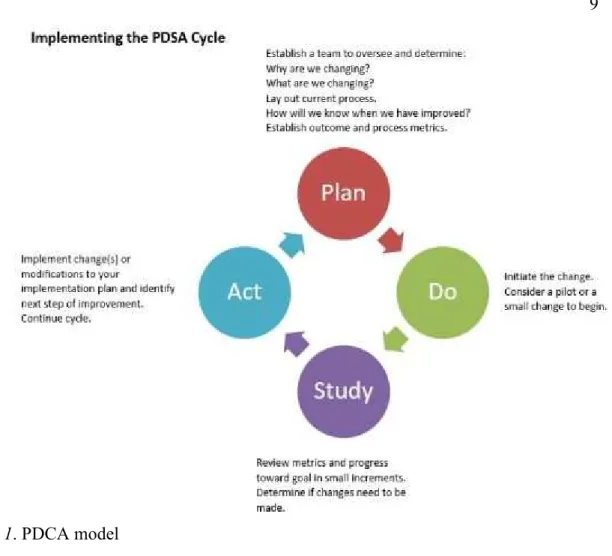
Productive organizational power is derived from having access to the resources, information, and support necessary to complete tasks and through the ability to make connections with others in the organization. Access to productive power sources is influenced by (a) the formal position a person has in the organization, and (b) the informal relationships and connections an individual has with other parts of the system (McDermott, Laschinger, & Shamian, 1996). Self-scheduling is a way to harness a nurse’s productive power. To further aid in increasing nurses’ productive power at the practice site, my quality improvement project followed the steps of the Deming approach: Plan-Do-Check-Act (PDCA). The PDCA cycle is also known as the Deming wheel (See Figure 1; Platje & Wadman, 1998).
Figure 1. PDCA model
Relevance to Nursing Practice
Increasingly, the retention of nurses has become a significant issue confronting the healthcare system and its managers. Factors that attract and retain nurses are
associated with opportunities to develop professionally and include autonomy in practice, participative decision-making processes, fair rewards, and remuneration for work
undertaken (O’Brien-Pallas et al., 2006).
Retention of nurses was imperative to address the growing demand of the aging population in the United States, as baby boomers reach retirement age and require more and more healthcare. Nurses are needed at the bedside in the acute care hospital setting;
hospitals, therefore, must find ways to attract them and keep them. It costs up to $88,000 to replace an RN (Kovner et al., 2014). Healthcare facilities cannot afford this.
There was a consensus in the literature that culture plays a major part in the recruitment and retention outcomes. People interact with their environments in various ways and are often influenced by their response to threat or reward. These two
characteristics can negatively or positively affect workplace culture (Tillott, Walsh, & Moxham, 2013).
Hospitals must increase staff satisfaction to keep their nurses. Staff satisfaction involves commitment from frontline leaders who must be willing to take risks and to challenge their own beliefs. Moreover, research shows that meaningful collaboration and empowerment of staff is imperative when staffing decisions are made (Ferlise & Baggott, 2009). To address methods of staff retention, several studies attempted to identify factors in the nursing work environment related to nursing satisfaction. Researchers have noted the link between a healthy work environment and nurse satisfaction and retention
(Duffield, Roche, Blay, & Stasa, 2011).
Many areas have shown to affect staff satisfaction, including culture, work environment, work-life balance, and the ability to participate in decisions. According to Duffield (2011), this raises the question of defining the “work environment” and, more importantly, determining which aspects of the work environment has the biggest influence on staff retention. At the broadest level, the work environment refers to the tone of any workplace. Tone is influenced by a wide variety of different factors,
including a)the role of management b) peer relations c)patient acuity d) availability of equipment, and e) the physical environment .
In the acute care setting, Dunn, Wilson, and Esterman (2005) examined a wide variety of work environment factors that they grouped into five main categories: (a) organizational (including rostering; referred to as scheduling in the United States), (b) staffing and workload; (c) interpersonal (including relationships with peers and managers); (d) structural (including features of the physical environment); and (e) professional (including perceived autonomy and quality of care). Staff satisfaction is a multi-dimensional concept. For this project, I narrowed satisfaction to empowerment of staff using a self-scheduling model and how those changes could affect turnover.
Job satisfaction has been linked to empowerment. If nurses participate in shared governance, staffing practice committees, policy committees, and unit level decision-making, they may feel like they have input into their practice. According to Spence Laschinger, Zhu, and Read (2016), structural empowerment is strongly related to nurse perception of support for their professional practice, higher nurse satisfaction, and perceived patient care quality. The literature suggests that empowering nurses in both their units and organizations resulted in higher levels of support for the professional practice, greater nurse satisfaction, and better patient outcomes.
Researchers have agreed that there is a correlation between empowerment, workplace satisfaction, and nurse engagement. When nurses feel empowered, they are most likely to perceive that they have reasonable workloads, could maintain control over their working relationships, feel rewarded and treated fairly for their contributions, and
maintain a link between personal and organizational values. As a result, these nurses are less likely to experience burnout and more likely to remain committed to their work (Tillott et al., 2013).
Self-scheduling has shown to be a potential benefit, especially for nurses with young families. In healthcare, long hours, or working overtime, weekends, and nights were found to be predictors of anticipated turnover. Therefore, job satisfaction needed to be maintained. According to a Cochrane review, when staff have flexible working hours, they are more likely to provide above par care, to have higher job satisfaction, and to have increased general well-being. Irregular working hours and longer shifts may have the opposite effect, even if chosen by the employee (Kullberg, Bergenmar, & Sharp, 2016).
It was essential to implement strategies that promote job satisfaction in younger nurses in order for acute care environments to retain them. Providing nurses with the opportunity to self-schedule their worked hours within the organization’s guidelines may increase overall job satisfaction. Ideally, self-scheduling will promote balance between home and job responsibilities. Wilson et al. (2008) asserts that greater perceived control over work hours is significantly correlated with higher job satisfaction.
According to Bluett (2008), self-scheduling offers nursing staff the opportunity to be autonomous and in charge of their worked schedules, promoting accountability and responsibility that lead to job satisfaction and personal growth. Staff members who have a better understanding of staffing and scheduling issues are also less likely to have unscheduled absences and last-minute requests to change shifts. This project focused on
facilitating the empowerment of nurses through self-scheduling of worked shifts to decrease nurse turnover.
Local Background and Context
Previously, on one medical-surgical unit at the studied community hospital, the manager did the schedule based on staffing needs without input from the staff. The nurse turnover rate on the unit was over 25%, and staff indicated in the comments of the
employee engagement survey and during the focus interviews their dissatisfaction with their worked schedules. Dissatisfaction included requested time off, the number of days they had to worked in a row, and the amount of overtime they were required to work. The pilot self-scheduling program was implemented for eight weeks on a medical-surgical unit. The hospital administration solicited feedback from the participants of the unit and provide anonymized responses to the doctoral student to review.
Definitions of locally used terms that were used in this project include unplanned turnover and self-scheduling. Unplanned turnover was any separation from the
organization that was not anticipated by leadership; these do not include retirements or terminations. Self-scheduling allows staff to participate in requesting days they worked and requesting days off.
Role of the DNP Student
The role of the doctoral student role in this project was to work closely with the leader of the medical-surgical unit and the staff to establish a scheduling committee to develop the self-scheduling guidelines and implement the program. I worked with them throughout the process, following the quality improvement process of PDCA.
Motivations for the success of this program include a desire to decrease the turnover of bedside nurses at the hospital and the development of a more empowered nursing team at my institution. Decreasing turnover in nursing has the potential to improve quality of care as well as patient satisfaction. As a leader in nursing this is important to provide quality care to our patients.
Summary
In Section 2, I discuss the concepts, theories, and models that were used in the project as well as how this project was relevant to nursing practice. In Section 3, I
describe the approach to this project, including how evidence was gathered and analyzed. The procedures to protect each participant was be identified and described. This project examined a medical-surgical unit that implements this process.
Section 3: Collection and Analysis of Evidence
Introduction
As nurse turnover in the inpatient setting continues to rise, nurses have many options open to them: they can work from home, as travel nurses or educators, or in hospital settings. With long, weekend, and holiday shifts, a career in medical-surgical nursing can be demanding and can result in difficulties achieving work-life balance. Nurses who worked more than 12 hours in a shift and 40 hours in a week are prone to job dissatisfaction and quitting (Gelinas, 2015). Retention of RNs and LVNs has become an increasingly significant issue that confronts health systems and their managers (O’Brien-Pallas et al., 2006).
According to Fisher et al. (2010), many facilities do not empower nurses to make decisions or participate in setting processes at the staff level. The turnover rate was high at the hosptial used for this study. In surveys and interviews with nurses, the
administrators had determined that nurses were dissatisfied with their lack of control over how they were scheduled, which affected their work-life balance. This project addressed the impact that a self-scheduling model had on work-life balance and whether this model promoted a decrease in overall turnover.
The project question asks whether nurse participation in a self-scheduling model decreases turnover on a medical-surgical nursing unit. In a medical-surgical unit at this community hospital, the manager does the schedule based on staffing needs without input from the staff. The nurse turnover rate for the unit was over 25%, and staff members indicated dissatisfaction in their schedules. Dissatisfaction included requested time off,
the number of days they must work in a row, and the amount of overtime they were required to work. In Section 3, I outline the approach to implementing a self-scheduling program.
This includes the practice-focused question, a method of evidence, participants, ethical considerations, data collection, and analysis; I also discuss the timeline for the project (Appendix A).
Practice-Focused Question
Nurses face continuous challenges with having a healthy work-life balance, which impacts turnover. The project question was as follows: does nurse participation in a self-scheduling model decrease turnover on a medical-surgical nursing unit? This project resulted in the creation of a nurse-driven self-scheduling model. The gap in practice on the medical-surgical unit was that the manager makes the schedule with no input from the staff. The literature has shown that many organizations allow staff to use self-scheduling models to help with nurse retention. Thus, this was a gap in practice for this unit. Implementation of a self-scheduling model has the potential of decreasing turnover.
Locally, there are two hospitals in the town of 100,000, and there are two nursing schools that had a graduating class of approximately 60 students per year. The
competition to hire these new graduates is very high. Due to the location, there was also competition with other local hospitals. This makes the retention of nurses even more important.
The practice setting for this project was the medical division of a 400-bed hospital in the southern United States. The medical-surgical division includes seven units. All
the units worked 8- and 12-hour shifts. The units vary in staffing ratios, depending on acuity from four to six patients per nurse. For this project, one of the larger units was used: a 31-bed unit.
The purpose of this project was to decrease turnover rates by allowing the staff to participate in a self-scheduling model and implement an advanced scheduling program on the 31-bed unit. During the pilot, turnover rates were reviewed from the unit that
implemented self-scheduling. The hospital administration also solicited feedback from participants and provide anonymized responses to the doctoral student for review.
The administration measured the project using hospital data, including retention surveys and turnover rates. The hospital was asked to include staff participation in and input from the shared governance committee to the self-scheduling model. Unit based staff also participated.
For this project, self-scheduling was defined as the ability of staff members to choose the day and shift of preference following predetermined criteria that ensure appropriate unit staffing (Bluett, 2008). Definitions of locally used terms that were used in this project include unplanned turnover and retention surveys. Unplanned turnover was any separation from the organization that was not anticipated by leadership (not including retirements or termination). Retention surveys are interviews that are done by leaders of their staff at 30 days to determine how the staff members are doing in their new roles and what the leaders and organization could do to help them.
Sources of Evidence
Sources of evidence for this project included nurse turnover rates for the unit and feedback that the hospital administration solicited from participants in the unit, both of which were provided to me for review. The turnover rate report included monthly and annual turnover rates. Human resources collects this data from the activity report, where terminations and resignations are logged. The feedback solicited from participants was collected by nursing leadership 30 days post-implementation, summarized, and provided to me, including thoughts on the new process regarding success, barriers, and ideas for improvement. Both turnover rates and summary of comments were provided to me electronically.
The purpose of this project was to implement a self-scheduling model in one inpatient nursing unit. Using the above data, I evaluated the self-scheduling model to see if it had an impact on the turnover rate 30 days post-implementation. Once the findings and evidence were reviewed, I determined if the practice problem had been met and whether nurse participation in a self-scheduling model decreased turnover on a medical-surgical nursing unit. Because turnover had decreased, I will recommend the self-scheduling model for other medical-surgical units at the hospital.
Published Outcomes and Research
I conducted a literature review to find outcomes and research related to self-scheduling and turnover. The following databases and search engines were used at the Walden University library: CINAHL, PubMed, AHRQ, Medline, and Thoreau multi-database. Keywords and search terms used in this search included fatigue, turnover,
self-scheduling, empowerment, and staff satisfaction. Combinations of these terms included self-scheduling and turnover, empowerment and turnover, and satisfaction and self-scheduling. Boolean operators AND and OR were used to optimize the results. Journals searched included the Journal of Nursing Management, Nurse Management, the Journal of Clinical Nursing, the Journal of Nursing Administration, and Nursing Economics. The years included in the search were 1990-2019 to investigate trends in scheduling and turnover and to include a comprehensive array of literature.
Forty-seven articles were found and reviewed; an integrative literature review method was selected for this project. This method allows for retrieval and integration of existing information on a topic and provides direction for research on turnovers and self-scheduling. According to Whittemore and Knafl (2005), integrative literature reviews have the potential to provide a more comprehensive understanding of a phenomenon or healthcare problem and can add to nursing science and inform research and policy initiatives.
Of the 47 articles found, I removed duplicates yielding 32 articles. Nine articles were included as valuable evidence to add to my project. I developed a flow diagram (see Figure 2) to track the retrieved articles and the inclusion/exclusion criteria (see Figure 3).
Figure 2. Flow diagram of included/excluded studies. Did not discuss nurses, self-scheduling, or turnover Inaccessible material, not available online or via librarian Not primary literature
Not peer-reviewed Duplicates
Figure 3. Exclusion criteria for the literature review.
An overview of the evidence discusses scheduling models and how self-scheduling influence nurses and turnover. The literature was reviewed with a focus on patterns, regularities, or contrasts relating to the topic. Included articles were not limited to geographic location or year of publication to ensure information was comprehensive and exhaustive.
Self-Scheduling
Self-scheduling was first documented by Jenkinson (1963), who initiated a self-scheduling program at St. George’s Hospital in London (Hung, 2002). According to one
study, self-scheduling helped both staff and management. It has empowered nursing staff and increased their control over their personal and professional lives. Self-scheduling was particularly helpful to nurses who have children or are in part-time schooling, increasing predictability and flexibility of the nursing schedule. It also freed the nursing manager for other tasks and enhanced the communication and interaction in the work environment, stimulating cooperative community building (Bailyn, Collins, & Song, 2006). Allowing nurses to be in more control of their lives in such ways, allowing them to switch schedules or schedule around children’s activities and families was a common theme throughout the literature. Wright, McCartt, Raines, and Oermann (2017) showed that nurse self-scheduling was now the norm in hospital settings across the United States. Today there are many software products available to help facilitate this in hospital
systems, allowing nurses to access their schedules through mobile devices or computers and to communicate with their nurse managers remotely regarding schedule needs.
Work-Life Balance
A theme of nurses expressing an increased sense of control and power over decision-making due to using self-scheduling programs was found in the literature. Nurses interviewed by Bailyn et al. (2007) stated that they enjoyed more freedom and control over their time and personal lives and delivered better patient care while participating in self-scheduling. Bluett (2008) and Griesmer (1993) suggested that, in their experience, nurses felt more empowered, had a sense of control over their work and life, and had improved job satisfaction while using self-scheduling. Evidence showed that self-scheduling decreased staff turnover and absenteeism Bluett (2008). Balancing
work, life, and other commitments was often a challenge for shift workers. The reviewed literature revealed that self-scheduling enhanced nurses’ work-life balance. Nurses expressed pleasure with being able to schedule their work around their non-work needs without difficulty (Bailyn et al., 2007).
Turnover
The literature shows work-life balance plays a role in turnover and was specifically impacted by scheduling and time off. Inflexible work schedules for staff nurses and other types of scheduling problems could affect job satisfaction and eventually lead to nurses leaving their positions. In studies of nursing turnover, scheduling was one of the reasons nurses left their current job (Wright et al., 2017). These nurses eventually become burnt out and leave.
According to Cheryl (2008), the cost to replace a nurse is $82,000. This cost only considers the financial implication for losing a nurse; there are also quality issues and patient satisfaction issues that must be taken into consideration. Hospitals cannot afford the economic impact or impact on the quality that turnover has.
Poor job satisfaction in nursing worldwide could be addressed by providing nurses with more flexibility and control over their working hours, resulting in improved work-life balance. One method for doing this was to introduce self-scheduling programs. Flexible work schedules give nurses the freedom to manage the demands of work and home, allow organizations to meet their staffing needs, and could improve job
satisfaction (Koning, 2014).
Successful implementation of a self-scheduling program in nursing requires support from both the staff nurses and management but, if successful, it has the potential to improve work-life balance and decrease turnover. Bailyn et al. (2007) suggested that successful programs set guidelines early in the implementation process, such as at the first committee meeting, and create goals for the pilot to keep the focus on the concept.
Several contrasts and irregularities were also present in the literature. Bailyn et al. (2007) revealed that self-scheduling did not affect absenteeism. The literature varied regarding the effect of self-scheduling on managers’ use of time. However, Bailyn et al. (2007) noted that self-scheduling increased the amount of time spent by managers on schedule. This led to nurse managers’ feelings of frustration, nurses’ resistance to
change, undue scrutiny of the schedule, and hesitation to participate, and the end of some pilot self-scheduling programs (Bluett, 2008).
Other suggestions for successful programs include support from leadership and early involvement of staff. These two key concepts are shown to be imperative for success. Russell et al. (2012) suggested that research shows these two components are key to the success of a self-scheduling program: nurse leaders must adopt a supportive attitude toward the program and, in order to effectively introduce self-scheduling, staff must be involved from the early stages of development through the implementation phase and program evaluation.
For a self-scheduling program to be successful, leaders must examine any barriers to the self-scheduling of nurses, to help nurses with their work-life balance so that they could promote change. While there was a risk with any project, self-scheduling could be
successful and benefit the organization, not only by decreasing turnover but also freeing up leaders’ time previously spent on scheduling. According to Bluett (2008), self-scheduling frees up managers’ time to perform other tasks and provides staff with more autonomy, which could ultimately lead to increased job satisfaction and retention rates.
The literature has also shown that allowing self-scheduling helps empower nurses, which has been shown to increase staff satisfaction. This was part of a management style that values staff contributions and encourages staff involvement in decision-making, which also enhances organizational and professional job satisfaction, resulting in lower turnover rates (Stordeur, D’Hoore, & Group, 2007). The acknowledged benefits of self-scheduling include increased flexibility, which could accommodate family time, classes, to further nurses’ education, appointments, and other commitments, and to work together with others on schedules. According to Beltzhoover (1994), self-scheduling also allows earlier posting of the schedule, which decreases changes in schedules and increases teamwork.
Limitations of Self-Scheduling
The literature has revealed several limitations of self-scheduling programs. Limitations include managers not being willing to hand control over to their staff to manage scheduling, unsupportive leadership, a lack of program structure and
communication, too little training and education, prioritizing personal needs over unit needs, and a disregard for scheduling rules and guidelines (Bailyn et al., 2007; Bluett, 2008).
Evidence Generated for the Doctoral Project
Participants. The participants in this project were 60 full- and part-time RNs on a 31-bed medical-surgical unit in a hospital-based in the South of the United States. These RNs had associate and bachelor’s degrees and had worked on the unit from 1 to 10 years. These participants were chosen due to the unit’s high turnover rate and because they expressed dissatisfaction regarding scheduling processes. This allowed staff with various needs for their work-life balance to have input in the pilot. None were required by the administration to participate in the commenting phase, but their participation was requested on a volunteer basis, so all were invited. The self-scheduling model was implemented with all staff on the unit.
Procedures. The practice setting for this project was the medical division of a 400-bed hospital in the South of the United States. The medical-surgical division
includes seven units. All units worked 8- and 12-hour shifts. They vary in staffing ratios depending on acuity, from four patients to six patients per nurse. For this project, the self-scheduling model was pilot-tested on one of the larger units, which has a ratio of 1:4. The nurses worked 12-hour shifts, and the aides worked 12- or 8-hour shifts.
The unit’s shared governance staff was involved in setting guidelines for the self-scheduling process, such as the number of weekends required, the length of time the schedule was open for self-scheduling, how requests were handled, and when the
schedule was posted. This staff was involved because they are the chosen leaders for the unit; allowing them, early participation helped establish buy-in for the program and increase the chance of success. The procedure also addressed how to request changes
after the schedule was posted. Once the model was established, the shared governance group were the first ones to review and test the model before expanding it to the rest of the unit nurses. This allowed them to be unit champions during the education phase of the project. Once the guidelines and procedures were established, all involved staff were educated regarding the model before implementation.
Evaluation of the model was performed by assessing turnover rates 30 days pre- and 30 days of post-project implementation. Unplanned turnover was any separation from the organization that was not anticipated by leadership (not including retirements or termination). Retention surveys are interviews that are done by leaders of their staff at 30 days to determine how the staff members are doing in their new roles and what the
leaders and organization could do to help them. This data was anonymized and given to the doctoral student for analysis to determine the feasibility of implementing the model on other units.
Protections. The appropriate paperwork was submitted to Walden University’s Institutional Review Board (IRB). The doctoral student obtained data for analysis from the hospital administration only after receiving approval from the IRB. A letter of participation was also submitted to the practicum site following the Walden Manual for Quality Improvement Evaluation Projects. All staff and leaders were contacted by the administration, assuring confidentiality at the beginning of the project, and that all data was anonymized. I then worked closely with the administration and the nursing unit manager to ensure buy-in to the pilot and to receive their input for the model and guidelines.
Analysis and Synthesis
Once the anonymized data was obtained from the hospital administration, the turnover rates were analyzed. The turnover rates were gathered 30 days pre- and 30 days post-implementation of the self-scheduling model, and the survey responses from the hospital survey was analyzed using charts and graphs. These charts and graphs were studied for trends and improvements, using Microsoft Excel and Word. The findings were presented and discussed with the hospital administration. The turnover findings were analyzed based on the percent difference. Since the data was being obtained from the hospital administration, the doctoral student needed to rely on their integrity and the reliability of their data.
Summary
In Section 3, I outlined the approach to implementing a self-scheduling program. The plan included a practice-focused question, methods of evidence, participants, ethical considerations, and proposed methods the hospital administration could use to collect data to conduct a feasibility analysis of implementing the model across other units. The pilot project was developed using evidence-based literature, recommendations from nursing leadership, and input from shared governance. In Section 4, I discuss the findings of the pilot project, the implications, and recommendations for improvements and implementation in other areas of the hospital. I will also discusses the strengths and limitations of the model.
Section 4: Findings and Recommendations
Introduction
The turnover rates in the medical-surgical setting are over 25% in one not-for-profit, a privately-owned hospital in the southern United States. With the aim of addressing nurse retention issues, the hospital administration conducted a nursing satisfaction survey in the spring of 2017. Results showed that nurses were not satisfied with their worked shifts or the way time off was granted. This lack of input to their worked schedule that influenced their work-life balance. In order to address this gap in practice, I assisted the hospital in adopting a self-scheduling process on one Medical-Surgical unit.
The project question was as follows: does nurse participation in a self-scheduling model decrease turnover on a medical-surgical nursing unit? Self-scheduling has been found to be an effective employment tool. However, many areas of nursing at this hospital do not allow self-scheduling, which is a gap in practice. Self-scheduling recognizes that each nurse has his or her preference of workdays, off days, shifts, and coworkers, and provides nurses with more autonomy and control over their lives (Hung, 2002). The purpose of this project was to implement a self-scheduling model in one inpatient nursing unit. After implementation, turnover was measured to test for improvement.
Sources of evidence for this project included nurse turnover rates for the unit and feedback that the hospital administration had solicited from participants in the unit, both of which were provided to me for review. The turnover rate report included monthly and
annual turnover rates. Human resources collected this data from the activity report, where terminations and resignations are logged. The feedback solicited from participants was collected by nursing leadership 30 days post-implementation, summarized, and included thoughts on the new process regarding success, barriers, and ideas for improvement. Both turnover rates and summary of comments were provided electronically.
The purpose of this project was to implement a self-scheduling model in one inpatient nursing unit and then to evaluate the self-scheduling model to see if it had an impact on the turnover rate 30 days post-implementation. Once the findings and evidence were reviewed, I determined whether the practice problem had been met and whether nurse participation in a self-scheduling model decreased turnover on the unit. I conducted this study so that I could make an evidence-backed recommendation to hospital administration about potentially implementing the self-scheduling model elsewhere to reduce nurse turnover. Once the anonymized data was obtained from the hospital administration, I analyzed the turnover rates. The turnover rates were gathered 30 days pre- and 30 days post-implementation of the self-scheduling model, and the survey responses from the hospital survey were analyzed using charts and graphs. These charts and graphs were studied for trends and improvements, using Microsoft Excel and Word. The findings were presented and discussed with the hospital administration. The turnover findings were analyzed based on the percent difference. Because the data was being obtained from the hospital administration, I needed to rely on their integrity and the reliability of their data. In Section 4, I discuss the findings of the pilot project, the
implications, and recommendations for improvements and implementation in other areas of the hospital. I also address the strengths and limitations of the model.
Findings and Implications
In developing, implementing, and evaluating the self-scheduling model for the medical surgical unit, it was important to obtain buy-in from the key stakeholders. Hospital administration was very concerned with turnover rates; therefore, they were open to looking at strategies to improve staff satisfaction related to scheduling. It was important to not only include key stakeholders but also look at a model that would be sustainable and could implement on other units.
The medical-surgical unit that was chosen to participate in this pilot was picked by administration because they had a robust and positive nurse manager who has been on the unit for 3 years and she was very open and supportive to change. Also, the staff on her unit are very involved in process improvements projects in the hospital and the shared governance committee. Based on previous interactions with the group, the administration had determined that they would have strong participant voices. The staff on the unit vary from the length of employment from 1 month to 5 years.
A small group of staff, along with the unit manager from the medical surgical unit, were included in setting rules and guidelines for the self-scheduling model. Once the model was ready, education was done for the staff, and the model was implemented. This was done following the PDCA cycle is also known as the Deming wheel (Platje & Wadman, 1998).
The first step was selecting key staff members from the unit, along with the manager, to be on the group to help set up the program. This group helped set up the self-scheduling guidelines and rules and helped develop the program. The program was built in an electronic version which allowed the staff to access and select which shifts they would prefer and to request days off during the open schedule period. Once the schedule period closed, the manager was then able to go in and ensure coverage, approve the request, and finalize the schedule. After several meetings designing the model and ensuring it was ready to implement, an implementation plan was developed.
The implementation plans included staff education to all the staff on the 31-bed medical surgical unit. Once the education was done, the self-schedule model was used for two full months, April and May. The unit manager then obtained the turnover rate for the unit from human resources for the months involved in the study as well as 30 days before the model. Before beginning the model, the turnover rate was 12.96%. The rate for April was 10.17% and May 10.00%, which enabled her to meet the overall hospital goal of 10.00%. Figure 4 shows the monthly turnover rates.
Figure 4. Comparison of monthly turnover rates.
One possible impact to this data may include the fact that the manager had been working on turnover for 6 months. Due to this attention to the turnover rate during the time I was designing and implementing this study project, the turnover rate of the unit was already on a downward trend. Hence, it was unclear how much the rates were affected by the model versus other interventions.
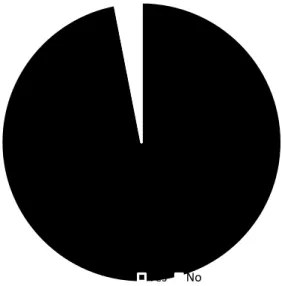
To address this potential limitation, therefore, the unit manager also interviewed some of the staff to ask if they liked the new scheduling model. The overall result was support from the staff: 95% of the staff interviewed expressed support to continue using the system (see Figure 5). The manager also supported the new model.
Desire to Continue Self - Scheduling Model
Yes No
Figure 5. Staff desire to continue using the self-scheduling model
The new self-scheduling staffing model turned out to be a positive change and the way we added the mobile application where the staff could access their schedule from home turned out to be a bonus and staff satisfier. The implication for this project was import to staff satisfaction, which has an impact on staff turnover. Staff also verbalized their satisfaction with the new model allowing them to be more in control with their personal life such as when they could schedule appointments, schedule shifts around children activities, swap shifts with coworkers when something comes up last minute.
The self-scheduling model so far was isolated to one unit, so at this time does not impact any communities, institutions, or systems. However, if it was implemented in other departments, it did have the potential to impact them. It does impact patient care,
with decreased turn over you have a more stable and experienced nursing team, which has been shown to decrease errors, increase quality, and patient satisfaction.
The implication from a social perspective requires that all stakeholders supported the new model and were willing to continue with the pilot to ensure that the turnover rate continues to be impacted as well as the feeling of the staff that they were empowered in their work life balance. If this department supports the model, and it continues to show successful turnover rates that were key to the success of future implementations. Findings from the study may influence other nurse managers to implement the self-scheduling model as a tool for staff satisfaction to decrease staff turnover.
Recommendations
This writer did present the finding for this pilot at the July nurse manager
meeting. The nurse manager meeting has all the nurse managers of the inpatient medical-surgical units that were very similar to the pilot unit. They also struggle with staff turnover. It is also this writer’s recommendation to implement the self-scheduling model along with the mobile application to access schedule on other medical-surgical units.
Strengths and Limitations of the Project
The strength of this project was that both the turnover rate obtained from the hospital and findings from the interviews done by the unit manager was unbiased. The data was obtained from the hospital human resources department and the unit manager; therefore, the staff was under no pressure from this writer to participate or give positive feedback.
Limitations of the project include the time it took this writer to gain approval to start pilot and timing of approval. This caused a decrease in time for the timeline to implement and the timing of approval happened during a hectic time on the unit when construction was planned so getting a group of stakeholders together was not as easy, so if it could have been done earlier in the year it might have been easier to meet with staff. Other limitations include that the pilot was only implemented on one medical-surgical unit that was moderate in size and the other medical-surgical units vary in size from 10 beds to 48 beds. An additional limitation was that I was not able to gather the turnover data, it had to be obtained through human resources.
Summary
This section provided findings of the turnover rates and nurse manager interviews. These were obtained and analyzed after the self-scheduling model was implemented following the PDCA cycle. Findings supported the decrease in turnover after the implementation of the self-scheduling model.
Section 5: Dissemination Plan
The dissemination plan for this project included sharing a copy of this study with the Chief Nursing Officer and then, with her approval, presenting the project to the nurse management team at a monthly management meeting. The finding of the project was also shared with the committee chair for this study and committee members at Walden
University. Additionally, after approval from the Walden committee, I would like to present the project and scheduling application abstract for presentation at a local leadership organization and the annual Nurse Executive Leadership organization conference.
Analysis of Self
I have grown during this project both as a leader and as a student. The analysis of self in the roles of a practitioner has played a large role in working with the nurses in understanding their need for work life balance to avoid burnout. As a scholar, I have learned a great deal about scholarly writing and presentation. As a project manager, this experience has helped me gain further experience in long term goals needed for career growth. Using the PDCA cycle was a very good experience, as well as leading a project with bedside staff. My overarching purpose of using my doctoral study project to positively impact the field of nursing has been successful in that the pilot unit has shown a decrease in staff turnover.
Summary
This project highlighted that the turnover rates in the medical-surgical setting were over 25% in one not-for-profit, a privately-owned hospital in the southern United
States. Additionally, at the hospital-based in the South of the United States, the turnover rate was high, and in surveys and interviews with the nurses, it was found that the nurses were dissatisfied with the lack of input to their worked schedule that influences their work-life balance.
I, along with a group of key stakeholders, implemented a self-scheduling model, following the PDCA cycle. Once the model was ready, education was done for the staff, and the model was implemented. After 2-month pilot, turnover rates were reevaluated, and rates were found to have decreased. Project findings were consistent with my goals.
References
Bailyn, L., Collins, R., & Song, Y. (2007). Self-scheduling for hospital nurses: An attempt and its difficulties. Journal of Nursing Management, 15(1), 72-77. doi:10.1111/j.1365-2934.2006.00633
Bluett, L. (2008). Self-scheduling: Facilitate, don't control. Nursing Management, 39(6), 12. doi:10.1097/01.NUMA.0000320632.43318.42
Beltzhoover, M. (1994). Self-scheduling: An innovative approach. Nursing Management, 25(4), 81.
Chan, Z. C., Tam, W. S., Lung, M. K., Wong, W. Y., & Chau, C. W. (2013). A
systematic literature review of nurse shortage and the intention to leave. Journal of Nursing Management, 21(4), 605-613. doi:10.1111/j.1365-2834.2012.01437 Cheryl, J. (2008). Revisiting nurse turnover costs: Adjusting for inflation. Journal of
Nursing Administration, 38(1), 11-18. doi:10.1097/01.NNA.0000295636.03216.6f
Cipriano, Pamela. (2014) ANA: Tackling nurse fatigue together. American Nurse, 46(6)
Duffield, C., Roche, M., Blay, N., & Stasa, H. (2011). Nursing unit managers, staff retention, and the work environment. Journal of Clinical Nursing, 20(1/2), 23-33. doi:10.1111/j.1365-2702.2010.03478
Dunn S, Wilson B & Esterman A (2005): Perceptions of working as a nurse in an acute care setting. Journal of Nursing Management, 13, 22-31.
Fisher, C. A., Jabara, J., Poudrier, L., Williams, T., & Wallen, G. R. (2016). Shared governance: The way to staff satisfaction and retention. Nurse Management,
47(11), 14-16. doi:10.1097/01.NUMA.0000502808.67918.e8
Ferlise, P., & Baggot, D. (2009). Improving staff nurse satisfaction and nurse turnover: Use of a closed-unit staffing model. Journal of Nursing Administration, 39(7-8), 318-320. doi:10.1097/NNA.0b013e3181ae967f
Gelinas, L. (2015). The business case for optimizing the nursing workforce. American Nurse Today, 10 (9), 2-3.
Gelinas, L., & Loh, D. (2004). Patient safety: The effect of workforce issues on patient safety. Nursing Economics, 22(5), 266-272.
Hooper, C., Craig, J., Janvrin, D., Wetsel, M., & Reimels, E. (2010). Compassion
satisfaction, burnout, and compassion fatigue among emergency nurses compared with nurse in other selected inpatient specialties. Journal of Emergency Nursing, 36(5), 420-427. doi:10.1016/j.jen.2009.11.027
Hung, R. (2002) A note on nurse self-scheduling. Nursing Economics, 20(1), 37-39. Kelly, L., Runge, J. & Spencer, C. (2015) Predictors of compassion fatigue and
compassion satisfaction in acute care nurses. Journal of Nursing Scholarship, 47(6), 522-528. doi:10.1111/jnu.12162
Kullberg, A., Bergenmar, M., & Sharp, L. (2016). Changed nursing scheduling for improved safety culture and working conditions - patients’ and nurses’ perspectives. Journal of Nursing Management, 24(4), 524-532.
doi:10.1111/jonm.12352
Koning, C. (2014). Does self-scheduling increase nurses’ job satisfaction? An integrative literature review. Nursing Management, 21(6), 24-28.
doi:10.7748/nm.21.6.24.e1230
Kovner, C. T., Brewer, C. S., Fatehi, F., & Jun, J. (2014). What does nurse turnover rate mean and what is the rate? Policy, Politics, & Nursing Practice,15(3-4), 64-71. doi:10.1177/1527154414547953
McDermott, K., Laschinger, H., & Shamian, J. (1996). Work empowerment and organizational commitment: Kanter’s Structural theory of organizational behavior. Nursing Management, 27(5), 44-48.
Ning, S., Zhong, H., Libo, W., & Qiujie, L. (2009). The impact of nurse empowerment on job satisfaction. Journal of Advanced Nursing, 65(12), 2642-2648.
doi:10.1111/j.1365-2648.2009.05133.x21(6), 24-28
O’Brien-Pallas, L., Duffield, C., & Hayes, L. (2006). Do we really understand how to retain nurses? Journal of Nursing Management, 14(4), 262-270.
doi:10.1111/j.1365-2934.2006.00611
Russell, E., Hawkins, J., & Arnold, K. A. (2012). Guidelines for successful
self-scheduling on nursing units. Journal of Nursing Administration, 42(9), 408-409. doi:10.1097/NNA.0b013e3182664dd8
Platje, A., & Wadman, S. (1998). From Plan-Do-Check-Action to PIDCAM: The further evolution of the Deming-wheel. International Journal of Project Management, 16(4), 201-208. doi:10.1016/S0263-7863(97)00031-8
Spence Laschinger, H. K., Zhu, J., & Read, E. (2016). New nurses’ perceptions of professional practice behaviors, quality of care, job satisfaction, and career retention. Journal of Nursing Management, 24(5), 656-665.
doi:10.1111/jonm.12370
Steege, L. M., & Pinekenstein, B. (2016). Addressing occupational fatigue in nurses. Journal of Nursing Administration, 46(4), 193-200.
doi:10.1097/NNA.0000000000000325
Stordeur, S., D’Hoore, W., & Group, N.-S. (2007). Organizational configuration of hospitals succeeding in attracting and retaining nurses. Journal of Advanced Nursing, 57(1), 45-58. doi:10.1111/j.1365-2648.2006.04095
Tillott, S., Walsh, K., & Moxham, L. (2013). Encouraging engagement at work to improve retention. Nursing Management - UK, 19(10), 27-31.
Wilson, B., Squires, M., Widger, K., Cranley, L., & Tourangeau, A. (2008). Job satisfaction among a multigenerational nursing workforce. Journal of Nursing Management, 16(6), 716-723. doi:10.1111/j.1365-2834.2008.00874
Whittemore, R., & Knafl, K. (2005). The integrative review: Updated methodology. Journal of Advanced Nursing, 52(5), 546-553.
doi:10.1111/j.1365-2648.2005.03621
Wright, C., McCartt, P., Raines, D., & Oermann, M. H. (2017). Implementation and evaluation of self-scheduling in a hospital system. Journal for Nurses in