Communicating with the EXADEP™ Program
Inquiries from Educators
By Email [email protected] By Phone 1-787-753-6363 By Fax 1-787-250-7426 By TDD 1-787-758-4598 By Mail EXADEP Program ETS Puerto Rico Office 250 Muñoz Rivera Ave., Suite 315
San Juan, PR 00918-1811
EXADEP Score Reporting Schedule: 2015–16
Test Date
Report Mailing Date
Approximate Score
August 22, 2015 September 21, 2015 October 17, 2015 November 16, 2015 December 5, 2015 January 4, 2016 February 6, 2016 March 7, 2016 March 19, 2016 April 18, 2016 May 7, 2016 June 6, 2016 June 18, 2016 August 8, 2016
Copyright © 2015 by Educational Testing Service. All rights reserved. ETS, the ETS logo and LISTENING. LEARNING. LEADING. are registered trademarks of Educational Testing Service (ETS) in the United States and other countries. EXADEP is a trademark of ETS.
EXADEP is a registered trademark in Chile and Mexico.
CONTENTS
Communicating with the EXADEP™ Program ... 2
EXADEP Score Reporting Schedule: 2015-16 ... 2
Overview of the EXADEP Test ... 5
Guidelines for the Use of EXADEP Scores ... 6
Reporting and Using EXADEP Scores ... 9
Considerations in Score Interpretation ... 10
Score Interpretation and Statistical Information ... 10
Statistical Tables ... 11
Table 1: EXADEP Summary Table ... 11
Table 2: Percentile Ranks for All Test Takers ... 12
Department Code List for Tables 3-7 ... 13
Table 3: Percentile Ranks for Test Takers Reporting Scores to Business Programs ... 15
Table 4: Percentile Ranks for Test Takers Reporting Scores to Education Programs ... 16
Table 5: Percentile Ranks for Test Takers Reporting Scores to Law Programs ... 17
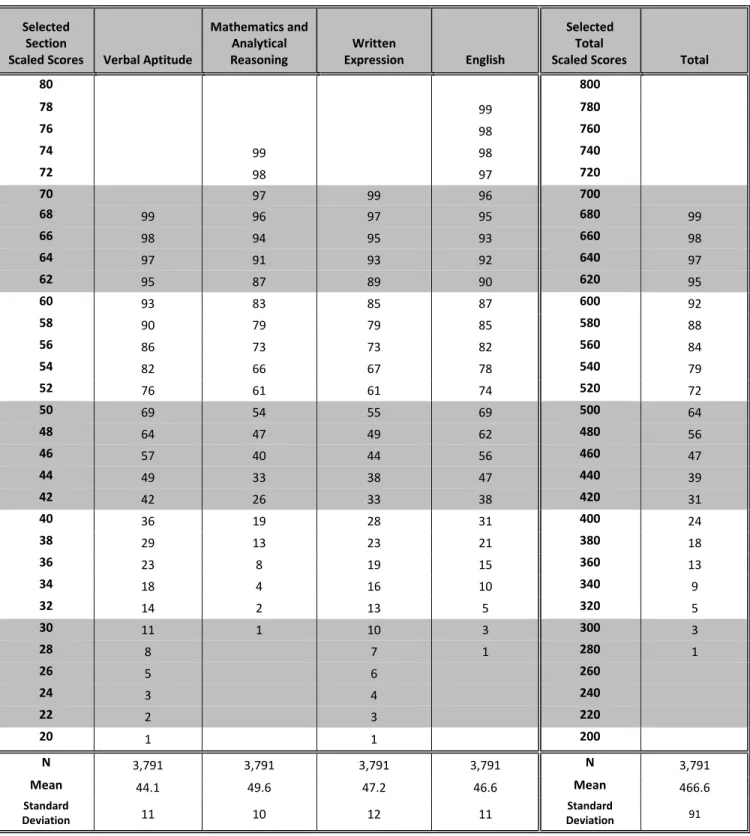
Table 6: Percentile Ranks for Test Takers Reporting Scores to Natural Science Programs ... 18
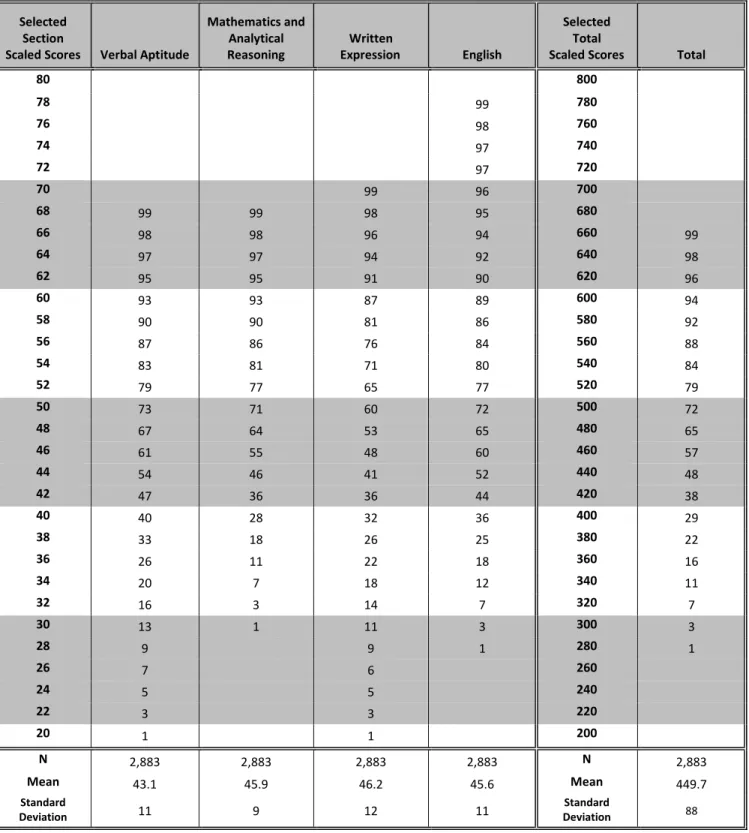
Table 7: Percentile Ranks for Test Takers Reporting Scores to Social and Behavioral Science Programs ... 19
Overview of the EXADEP
TMTest
Introduction
EXADEP test scores can be used by admissions or fellowship panels to supplement undergraduate records and other qualifications for graduate-level study. The scores provide common measures for comparing the qualifications of applicants and aid in the evaluation of grades and recommendations. EXADEP score recipients may not, without the prior, written consent of ETS, use EXADEP score data for any other purpose, or copy, release, provide access to or otherwise disclose EXADEP score data to anyone except individuals within their particular organization who need this confidential information. ETS reserves the right to monitor the access and use of the EXADEP score data by all EXADEP score recipients.
Institutions of higher education that award graduate degrees and non-degree-granting organizations that award graduate fellowships are eligible for consideration to receive an EXADEP score recipient code. Institutions and organizations that do not meet either one of these requirements are, in general, not eligible to receive an EXADEP score recipient code.
ETS reserves the right, at its sole discretion, to grant or revoke an EXADEP score recipient code based on eligibility requirements or for any other reason, and to make exceptions to its policy, under special circumstances.
Test Content
The EXADEP test contains five sections: Verbal Aptitude, Mathematics, Analytical Reasoning, Written Expression, and English. All questions are in Spanish except for those in the English section.
The VerbalAptitude section measures the ability to analyze and evaluate written material and
synthesize information obtained from it, to analyze relationships among component parts of sentences, and to recognize relationships between words and concepts. In each test edition, the passages are a balance among three different subject-matter areas: humanities, social sciences and natural sciences.
The Mathematics section measures basic mathematical skills and understanding of elementary mathematical concepts, as well as the ability to reason quantitatively and to solve problems in a quantitative setting. There is a balance of questions requiring arithmetic, algebra, and geometry.
The Analytical Reasoning section measures the ability to think analytically. It tests the ability to draw inferences and think deductively based on a partially defined scenario and a set of conditions that must hold in any fully developed version of the scenario. It does not test knowledge of any particular subject nor does it require training in formal logic.
The Written Expression section measures the ability to recognize the use of language essential to a finished piece of writing that would be considered acceptable by most educated readers and writers of Spanish.
The English section measures similar abilities to those measured in the Verbal Aptitude section but in the context of English as a foreign language.
The testing time is four hours and five minutes and is divided into the following timed sections:
Section Number of Questions minutes Time in
1. Verbal Aptitude 90 90 2. Mathematics 40 40 3. Analytical Reasoning 25 40 4. Written Expression 50 30 5. English 50 45
Test Administration
The EXADEP test is a paper-delivered test offered at test centers in Puerto Rico, the United States, Europe and Latin America. The test is offered seven times per year, in August, October, December, February, March, May and June. Current test dates and deadlines are available at www.ets.org/exadep/testdates.
How the Test is Scored
For each of the five sections of the EXADEP test, scoring is essentially a two-step process. First a raw score is computed for each section. The raw score for each section is the number of questions answered correctly.
The raw scores are then converted to scaled scores through a process known as equating. The equating process accounts for minor variations in difficulty among the different test editions. Thus, a given scaled score for a particular section reflects the same level of performance regardless of which edition of the test was taken.
Scores Reported
The following five scaled scores are reported:
• A Verbal Aptitude score on a 20-80 score scale, in 1-point increments
• A Mathematics/Analytical Reasoning score on a 20-80 score scale, in 1-point increments
• A Written Expression score on a 20-80 score scale, in 1-point increments
• An English score on a 20-80 score scale, in 1-point increments
• A Total score on a 200-800 score scale, in 1-point increments
To obtain the Total score, each section score is multiplied by the section weight (see table in the next column). The weight for each section is proportionate to the number of items in each section.
Section Section Score Weight
Section 1: Verbal Aptitude A 3.5 Sections 2: Mathematics, and
3: Analytical Reasoning B 2.5 Section 4: Written Expression C 2.0
Section 5: English D 2.0
TOTAL T
T = 3.5A + 2.5B + 2.0C + 2.0D
Guidelines for the Use of EXADEP Scores
Introduction
These guidelines have been adopted by the EXADEP Program to assist score users in using EXADEP test scores. Adherence to the guidelines is important.
The EXADEP test is designed to assess academic knowledge and skills relevant to graduate study in programs where the language of instruction is in Spanish. When used properly, the test scores can improve graduate admissions and fellowship selection processes.
Any EXADEP test, however, has two primary limitations: (1) it does not and cannot measure all the qualities that are important in predicting success in graduate study or in confirming undergraduate achievement, and (2) it is an inexact measure—that is, only score differences that exceed the standard error of measurement of a given score can serve as reliable indications of real differences in academic knowledge and developed abilities. Although limitations and cautions apply to all admissions measures, the EXADEP Program is obligated to inform users of the appropriate uses of EXADEP scores and to identify and try to rectify instances of misuse. To this end, the following policies and guidelines are available to all EXADEP test takers, institutions and organizations that receive EXADEP scores.
Policies
In recognition of its obligation to ensure the
appropriate use of EXADEP scores, the EXADEP Program has developed policies designed to make score reports available only to approved recipients, to encourage these score users to become knowledgeable about the validity of the test, to protect the confidentiality of test takers’ scores and to follow up on cases of possible misuse of scores. The policies are discussed below.
Score users. Institutions that offer graduate degrees and non-degree-granting organizations that award graduate fellowships are eligible for consideration as score recipients. Institutions and organizations that do not meet either one of these requirements are, in general, not eligible to be score recipients. The EXADEP Program retains the right to make exceptions to this policy in special circumstances.
Validity. The general appropriateness of using EXADEP test scores for graduate admissions and fellowship selection has been established by research studies carried out by ETS.
One way to determine the weight to give to EXADEP test scores is to conduct a validity study to examine the correlation between test scores (and
perhaps other predictors, such as undergraduate grade point average) and one or more criteria of success in graduate study. It should be noted, however, that where there are small numbers of students, major problems can occur in attempting to carry out adequate validity studies.
In addition to a validity study, institutions might consider other approaches. One would be to prepare a table of EXADEP scores for those students who do poorly and/or drop out of graduate school. Another approach would be to independently assess the general skills or abilities needed for success in the particular graduate school and compare them to those assessed by the EXADEP test.
Confidentiality. EXADEP scores, whether for an individual or aggregated for an institution, are confidential and can be released only by authorization of the individual or institution or by compulsion of legal process.
Use of Reportable Scores. EXADEP scores are part of test takers’ reportable history for five years after the test administration. Older scores may not reflect an applicant’s current ability in verbal aptitude,
mathematics, analytical reasoning, written expression or English. Applicants’ experiences over a long period of time (more than five years) between testing and applying to a graduate program may impact their ability and their scores in these areas may have changed. Only official reportable scores should be used in the
graduate admissions and fellowship selection processes.
Use of Scores in Aggregated Form. Information based on EXADEP scores may be useful to prospective students, but use of a precise mean or median should be avoided. Graduate programs and institutions are urged to report EXADEP scores in ranges such as the highest and lowest scores of the middle 50 percent of the admitted students. Presenting information by score ranges emphasizes the diversity of individual scores for any one graduate program or institution and also makes clear the overlap of scores among graduate programs and institutions.
Use of EXADEP scores in aggregated form as a measure for ranking or rating graduate programs, institutions, university systems or states is strongly discouraged except when the scores are used as one indicator among several appropriate indicators of educational quality.
Encouragement of Appropriate Use and Investigation of Reported Misuse. All users of EXADEP scores have an obligation to use the scores in accordance with published EXADEP Program policies and guidelines. Institutions have a responsibility to ensure that all individuals using EXADEP scores are aware of the EXADEP Program score-use policies and guidelines and to monitor the use of the scores, correcting instances of inappropriate use when they are identified. The EXADEP Program staff is available to assist institutions in resolving issues of inappropriate score use.
Guidelines
1. Use Multiple Criteria
Regardless of the decision to be made, multiple sources of information should be used to ensure fairness and balance the limitations of any single measure of knowledge, skills or abilities. These sources may include undergraduate grade point average, letters of recommendation, personal statement, samples of academic work and professional experience related to proposed graduate study. A cut-off score (i.e., a minimum score) should never be used as the only criterion for denial of admission or awarding of a fellowship.
The use of multiple criteria is particularly important when using EXADEP scores to assess the abilities of educationally disadvantaged students, as well as those who are returning to school after an extended absence. Score users are urged to become familiar with factors affecting score interpretation for these groups, as discussed in this publication.
2. Accept Only Official EXADEP Score Reports
The only official reports of EXADEP scores are those issued by ETS and sent directly to approved
institutions and organizations designated by the test takers. EXADEP scores obtained from other sources should not be accepted. If there is a question about the authenticity of a score report, it should be referred to ETS. ETS will verify whether an official report was issued and the accuracy of the scores.
3. Conduct Validity Studies
Departments and programs using EXADEP scores for graduate admissions, fellowship awards, and guidance and counseling for graduate study are encouraged to collect validity information by conducting their own studies. The EXADEP Program staff will provide advice on the design of
appropriate validation studies without charge.
4. Maintain Confidentiality of EXADEP Scores
All individuals who have access to EXADEP scores should be aware of the confidential nature of the scores and agree to maintain their confidentiality. Institutional policies should be developed to ensure that confidentiality is maintained. For example, EXADEP scores should not be placed on documents sent outside the institution.
5. Consider Verbal Aptitude, Mathematics and Analytical Reasoning, Written Expression, and English Scores as Separate and Independent Measures
Since the level of skills required for success in graduate school varies by field or department, the scores provided for each section of the test should be taken into consideration. Scores from the different sections should not be directly compared because each is scaled separately.
6. Avoid Decisions Based on Small Score Differences
Small differences in EXADEP scores (as defined by the standard error of measurement (SEM)) should not be used to make distinctions among test takers. Standard errors of measurement vary by test and are available in this publication.
7. Use the Appropriate Percentile Ranks when Comparing Test Takers
Percentile ranks are provided with score reports and can be used to compare test takers’ relative
performance among the measures. Percentile ranks indicate the percent of test takers in a group who obtained scores below a specified score. The percentile ranks are generally based on previous EXADEP test takers from a recent three-year period. Percentile ranks should be compared only if they are based on the same reference population.
8. Do Not Compare Scores from Different Tests
EXADEP scores are not directly comparable with scores on other graduate admission tests. Percentile ranks should be compared only if they are based on the same reference population.
Normally Appropriate Uses
The suitability of an EXADEP test for a particular use should be explicitly examined before using test scores for that purpose. The following list of appropriate uses of EXADEP scores is based on the policies and
guidelines outlined above. The list is meant to be
illustrative, not exhaustive, in nature. Uses other than those listed below should be discussed in advance with EXADEP Program staff to determine their appropriateness.
If a use other than those appropriate uses listed below is contemplated, it will be important for the user to validate the use of scores for that purpose. The EXADEP Program staff will provide advice on the design of such validity studies without charge.
Appropriate Uses
Provided all applicable guidelines are adhered to, particularly the use of multiple sources of information in the decision-making process, EXADEP scores are suitable for the following uses:
1. Selection of applicants for admission to graduate school
2. Selection of graduate fellowship applicants for awards
3. Guidance and counseling for graduate study If you have comments or questions about the use of EXADEP scores, contact the ETS Puerto Rico office (see inside front cover).
Reporting and Using EXADEP Scores
Score Reporting Policies
EXADEP score reporting policies have been adopted by the EXADEP Program to encourage the appropriate use of EXADEP scores and to protect the right of
individuals to control the distribution of their own score reports. Current EXADEP Program policy states that scores are reportable for five years after the test administration. Departments and programs should not use scores that are older than five years due to changes in ability that may occur over extended periods of time.
Score reports are sent to test takers, to approved institutions of higher education granting the
baccalaureate or higher and graduate
fellowship-granting sponsors designated by the test takers, and to vendors the score recipients might designate to process the scores they receive.
Score reports for the test are released
approximately 15-20 business days after the August, October, December, February, March and May test administrations, and 30-35 business days after the June test administration.
The names of test takers who are absent on test day are reported to institutions on the institution roster with no scores.
Percentile ranks shown on the tables included in this Guide, on the EXADEP website, and with official score reports, are based on the performance of the current reference group regardless of when the scores were earned. The percentile rank for any score may vary over the years depending on the scores of the group with which the score is compared. Thus, when two or more applicants are being compared, the comparison should be made on the basis of their respective scores; if percentile ranks are considered, they should all be based on the most recent percentile rank tables.
Reporting Revised Scores
ETS routinely follows extensive review and quality control procedures to detect and avoid flawed questions and consequent errors in scoring. Nonetheless, if an error is discovered after scores have been reported, the specific circumstances are reviewed carefully, and a decision is made about how best to take corrective action that is fairest to all concerned. Revised scores are sent to the affected students, who may request that ETS send the revised scores to any graduate schools or fellowship sponsors still considering their applications.
Confidentiality and Authenticity of EXADEP
Scores
EXADEP scores are confidential and are not to be released by an institutional recipient without the explicit permission of the test taker. EXADEP scores are not to be included in academic transcripts.
Dissemination of score records should be kept to a minimum, and all staff who have access to them should be explicitly advised of their confidential nature. To ensure the authenticity of scores, the EXADEP Program urges that institutions accept only official score reports of EXADEP scores received directly from ETS.
The EXADEP Program recognizes the privacy rights of both institutions and individuals with regard to information supplied by and about them. ETS, therefore, safeguards from unauthorized disclosure all information stored in its data or research files. Information about an institution (identified by name) will be released only in a manner consistent with a prior EXADEP agreement or with the consent of the institution.
EXADEP Scores and Graduate Admissions
Many factors play a role in an applicant’s admissibility and expectation of success as a graduate student. EXADEP scores are only one element in this total picture and should be considered along with other data. The EXADEP Program believes that EXADEP scores should never be the sole basis for an
admissions decision, and that it is inadvisable to reject an applicant solely on the basis of EXADEP scores. A cutoff score should not be used without consideration of other admission factors.
EXADEP test scores permit comparison of one applicant to a graduate school with other applicants for the same program at that institution as well as with everyone else who took the test.
For admissions decisions, the weight to be given to EXADEP scores can generally be established by relating what the test measures to the orientation, curriculum, and aims of the department. Specifically, the content validity of the test for a graduate department should be determined by reviewing the test carefully and then making subjective decisions as to the weight, if any, the scores on EXADEP should receive in relation to other admission factors.
Considerations in Score Interpretation
EXADEP scores should be used to supplement theinformation provided in a person’s application, such as undergraduate record and letters of recommendation. Officials responsible for admission at each institution must determine the significance of EXADEP scores for each applicant. Particular attention must be paid to the use of EXADEP scores for individuals described below. The experience of institutions or departments should continue to be the best guide to interpretation of EXADEP scores in these instances.
Repeat Test Takers
Individuals are permitted to take the EXADEP test more than once. Score recipients are cautioned not to view an increase in scores necessarily as a reflection of academic gain, especially over a short-time period. There are several ways in which graduate departments can judge multiple scores for an individual (e.g., use average of all scores, use most recent score, use highest score). Using the mean score may be the best technique because it is the most objective. Whatever approach is adopted, it should be used consistently with all applicants.
Test Takers with Disabilities or
Health-Related Needs
ETS provides testing accommodations for individuals who have recently documented visual, physical, hearing or learning disabilities and are unable to take the tests under standard conditions. The tests are administered in a manner chosen to minimize any adverse effect of the test taker’s disability on test performance and to help ensure that, insofar as possible, the final scores should closely represent the test taker’s educational achievement. Depending on the nature and extent of the disability, a test taker’s scores may not fully reflect his or her educational achievement and, because there are so few persons with disabilities taking EXADEP tests and their circumstances vary so widely, it has not been possible to provide special interpretive data for these test takers. Therefore, graduate schools should seriously consider waiving EXADEP requirements for applicants with certain disabilities.
Score Interpretation and Statistical Information
• The range of EXADEP scores for each section isfrom 20 to 80, in one-point increments. If no answers are given for a section, a score of 20 is reported for that section.
• The total scale score ranges from 200 to 800, and it is the sum of the results of the different sections multiplied by their individual weights (see page 5). The weight of each section is proportional to the number of questions in the section.
• The sections of the EXADEP test are intended to have reliabilities of at least .80 and the total test is intended to have a reliability of at least .90. Reliability coefficients are in Table 1.
• The standard errors of measurement (SEM) of score differences presented in Table 1 should be taken into account when comparing test takers’ scores on the same section. Score recipients should avoid making decisions based on small score differences (as defined by the SEM).
Statistical Tables
Table 1 (Summary Information)
Table 1 provides the mean, standard deviation, standard error of measurement (SEM) and reliability coefficients for each of the sections on the EXADEP test and for the Total Score. SEM is an index of the variation in scores to be expected because of errors of measurement. Reliability indicates the degree to which individual test takers would keep the same relative standing if the test were administered more than once to each test taker. The reliability index ranges from zero to 1.00.
Tables 2-7 (Interpretive Data)
Tables 2-7 provide percentile ranks (i.e., the percentage of test takers in a group who obtained scores lower than each possible scaled score) for the test and are based on individuals who took the EXADEP test between July 1, 2011 and June 30, 2014. Table 2 shows percentile ranks for all test takers. Tables 3-7 show percentile ranks for test takers who reported their scores to business, education, law, natural science, or social and behavioral science programs. The tables also include the means and standard deviations for each group.
Table 1: EXADEP Summary Table
(Based on the results of 20,510 individuals who took the test between July 1, 2011 and June 30, 2014)
Section Mean Deviation Standard Standard Error of Measurement
Reliability Coefficient
Section 1: Verbal Aptitude 44.1 11 4 0.871
Sections 2: Mathematics and 3: Analytical Reasoning 48.8 10 4 0.837
Section 4: Written Expression 47.3 12 5 0.816
Section 5: English 47.0 12 5 0.830
TOTAL 465.7 91 22 0.940
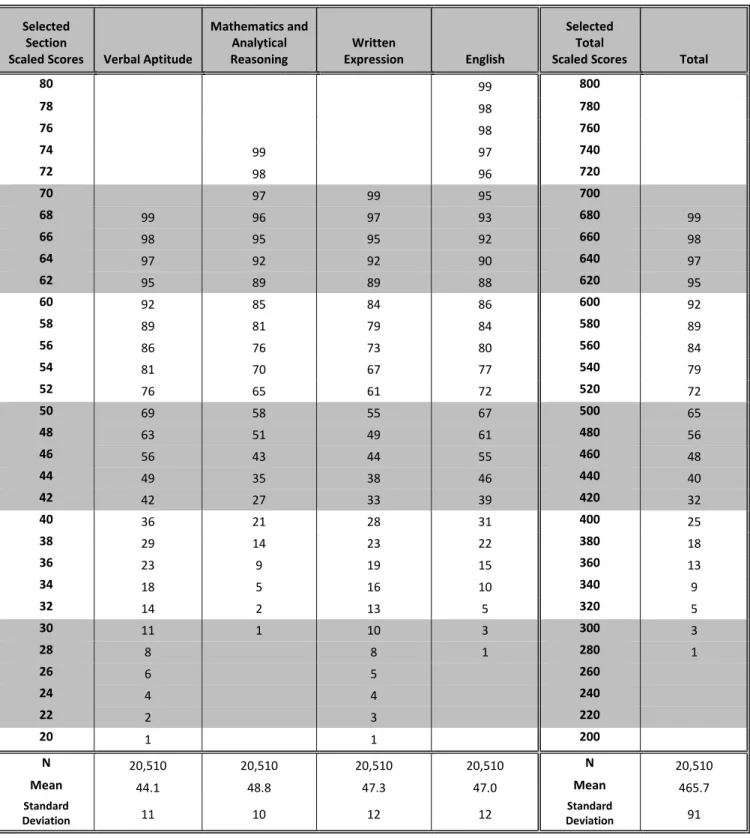
Table 2: Percentile Ranks for All Test Takers
Percent of Test Takers Scoring Lower than Selected Scaled Scores
(Based on the performance of 20,510 individuals who tested in Puerto Rico between July 1, 2011, and June 30, 2014)
Note: Not all of the section and total scores appear in the table; however, the percentile ranks of the values not included can be inferred.
Selected Section
Scaled Scores Verbal Aptitude
Mathematics and Analytical
Reasoning Expression Written English
Selected Total
Scaled Scores Total
80 99 800 78 98 780 76 98 760 74 99 97 740 72 98 96 720 70 97 99 95 700 68 99 96 97 93 680 99 66 98 95 95 92 660 98 64 97 92 92 90 640 97 62 95 89 89 88 620 95 60 92 85 84 86 600 92 58 89 81 79 84 580 89 56 86 76 73 80 560 84 54 81 70 67 77 540 79 52 76 65 61 72 520 72 50 69 58 55 67 500 65 48 63 51 49 61 480 56 46 56 43 44 55 460 48 44 49 35 38 46 440 40 42 42 27 33 39 420 32 40 36 21 28 31 400 25 38 29 14 23 22 380 18 36 23 9 19 15 360 13 34 18 5 16 10 340 9 32 14 2 13 5 320 5 30 11 1 10 3 300 3 28 8 8 1 280 1 26 6 5 260 24 4 4 240 22 2 3 220 20 1 1 200 N 20,510 20,510 20,510 20,510 N 20,510 Mean 44.1 48.8 47.3 47.0 Mean 465.7 Standard
Deviation 11 10 12 12 Deviation Standard 91
Department Code List for Tables 3-7
Scholarship Programs ... 234
Natural Sciences Advanced Practice Nursing ... 184
Agricultural Sciences (Doctoral Programs) ... 124
Agriculture ... 038
Audiology (Master's Programs) ... 040
Audiology (Doctoral Programs) ... 144
Biology (Master's Programs) ... 120
Biology (Doctoral Programs) ... 141
Biomedical Sciences (Master's Programs)... 045
Biomedical Sciences (Doctoral Programs) ... 047
Biostatistics Health (Doctoral Programs) ... 079
Biotechnology ... 034
Chemistry (Master's Programs) ... 037
Chemistry (Doctoral Programs) ... 036
Clinical Laboratory Science ... 046
Commercial Mathematics ... 105
Computer and Information Sciences (Master’s Programs) ... 009
Computer and Information Sciences (Doctoral Programs) ... 147
Computer Sciences (Doctoral Programs) ... 076
Cytotechnology ... 150
Dentistry ... 064
Development Deficiencies and Early Intervention (Graduate Certificate) ... 180
Ecology ... 131
Environmental Health (Master’s Programs)... 113
Environmental Health (Doctoral Programs) ... 049
Environmental Sciences (Master's Programs) ... 041
Environmental Sciences (Doctoral Programs) ... 145
Epidemiology ... 057
Food Sciences ... 063
Forensic Science ... 142
Health Information Management ... 030
Health Promotion (Graduate Certificate) ... 183
Health Sciences ... 004
Health Service Management ... 052
Industrial Hygiene ... 111
Marine Sciences ... 121
Mathematics (Master's Programs) ... 104
Mathematics (Doctoral Programs) ... 152
Medical Technology ... 035
Microbiology ... 153
Natural Science - Medicine (Doctorate Programs) ... 146
Nursing (Master's Programs) ... 043
Nursing (Doctoral Programs) ... 134
Obstetric and Labor Nursing (Graduate Certificate) ... 181
Occupational Health ... 051
Occupational Nursing ... 126
Occupational Therapy ... 033
Pharmaceutical Sciences (Doctoral Programs)... 048
Pharmacy ... 026
Physical Therapy ... 032
Physics (Master's Programs) ... 027
Physics (Doctoral Programs) ... 140
Public Health (Master's Programs)... 050
Public Health (Doctoral Programs) ... 054
Public Health Education ... 112
Research Evaluation of Health Systems ... 114
Science ... 028
Science and Technology (Master's Programs) ... 067
Science and Technology (Doctoral Programs) ... 073
Science of Anesthesia ... 031
Speech-Language Pathology ... 042
Substance Abuse ... 044
Veterinary Medicine and Animal Husbandry ... 174
Engineering Aeronautical ... 137 Chemical ... 014 Civil ... 138 Electrical ... 015 Electronic... 016
Engineering (Doctoral Programs) ... 008
Engineering - Other ... 010 Industrial ... 065 Mechanical ... 159 Metallurgical ... 013 Regulations ... 160 Telecommunication ... 148
Social and Behavioral Sciences Anthropology (Master's Programs) ... 100
Anthropology (Doctoral Programs) ... 156
Archaeology ... 151
Behavioral Sciences and Community Affairs ... 117
Counseling and Pastoral Psychology ... 102
Counseling and Rehabilitation... 099
Criminal Justice ... 088
Criminology (Master's Programs) ... 087
Criminology (Doctoral Programs) ... 081
Cultural Studies ... 154
Demography ... 006
Economics (Master's Programs) ... 178
Economics (Doctoral Programs) ... 158
Geography ... 155
Gerontology (Graduate Certificate)... 182
Government ... 162
Hispanic Studies (Master's Programs) ... 007
Hispanic Studies (Doctoral Programs) ... 135
Justice System ... 127
Latin-American and Caribbean Studies ... 143
Planning and Development Regional Administration... 163
Political Science (Master's Programs) ... 098
Political Science (Doctoral Programs) ... 157
Psychology (Master's Programs) ... 093
Psychology (Doctoral Programs) ... 020
Public Affairs ... 017
Social Economy ... 070
Sociology ... 097
Arts and Humanities
Art ... 022
Art Management ... 110
English ... 123
Graphic Art ... 002
History (Master's Programs) ... 122
History (Doctoral Programs) ... 136
Humanities (Master's Programs) ... 055
Humanities (Doctoral Programs) ... 168
Languages ... 011
Languages and Literatures (Master's Programs) ... 103
Languages and Literatures (Doctoral Programs) ... 060
Music... 001
Philosophy... 071
Plastic Art ... 023
Translations ... 132
Education Curriculum and Instruction ... 061
Education (Master's Programs) ... 085
Education (Doctoral Programs) ... 080
Educational Administration ... 029
Educational Computing ... 062
Educational Leadership (Doctoral Programs) ... 075
Educational Management (Doctoral Programs) ... 115
Educational Supervision ... 090
Guidance and Counseling... 066
Physical Education ... 149
Science - Education ... 058
Business Building Project Management ... 109
Business Administration (Master's Programs) ... 092
Business Administration (Doctoral Programs) ... 012
Commercial Education ... 186
E-Commerce... 069
Environmental Management ... 068
Finance ... 106
Financial Planning and Auditing ... 107
Human Resources ... 074
International Business (Master's Programs) ... 082
International Business (Doctoral Programs) ... 133
Labor Relations ... 077
Management Information Systems ... 078
Manufacturing Management ... 108
Non-for-Profit Administration ... 086
Project Management ... 179
Risk Management ... 053
School Management ... 125
Telecommunications and Network Management... 119
Law Law (Juris Doctor) ... 089
Law (Doctoral Programs) ... 072
Master of Law for Lawyers (LLM) ... 173
Other Fields Advanced Studies in Social Communication ... 166
Architecture ... 169 Archival Studies ... 018 Archives ... 024 Digital Journalism ... 176 Divinity ... 025 Drafting Media ... 116
Film Studies and Contemporary Media ... 167
Information Technology, Communication and Audiovisual Media (Doctoral Programs) ... 175
Interdisciplinary Media and Interactive Cognitive Systems ... 172
Interdisciplinary Studies on Development ... 161
International Communication ... 101
Journalism ... 003
Law and Business Administration ... 139
Law and Medicine ... 170
Law and Public Policy ... 171
Library Management ... 096
Media and Contemporary Culture ... 129
Philosophy (Doctoral Programs) ... 039
Planning ... 091
Planning and Management of Regional Development ... 163
Public Administration ... 094
Public Communication ... 083
Public Relations ... 084
Publishing ... 130
School Library Management ... 019
Script Writing ... 128
Social Communications (Doctoral Programs) ... 177
Social Work (Master's Programs) ... 095
Social Work (Doctoral Programs) ... 005
Sound Technologies and Music ... 164
Telecommunications ... 148
Television Innovations and Quality (TV3) ... 165
Theological Studies (Doctoral Programs) ... 059
Theology and Religious Studies (Master's Programs)... 021
Theology and Religious Studies (Doctoral Programs) ... 056
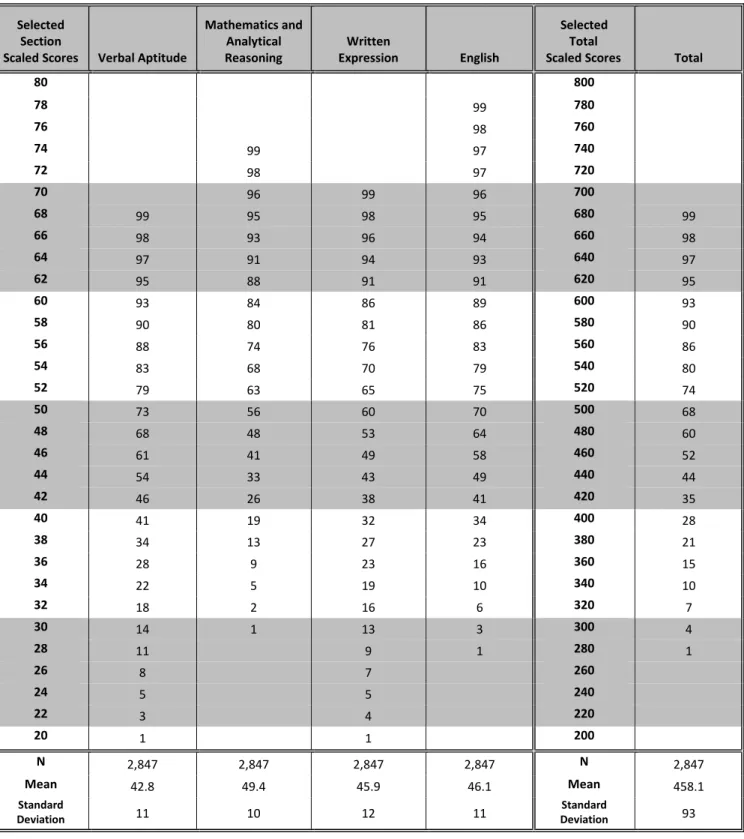
Table 3: Percentile Ranks for Test Takers Reporting Scores to Business Programs
Percent of Test Takers Scoring Lower than Selected Scaled Scores
(Based on the performance of 2,847 test takers who reported scores to business programs who were among the 20,510 individuals who tested in Puerto Rico between July 1, 2011, and June 30, 2014)
Note: Not all of the section and total scores appear in the table; however, the percentile ranks of the values not included can be inferred.
Selected Section
Scaled Scores Verbal Aptitude
Mathematics and Analytical
Reasoning Expression Written English
Selected Total
Scaled Scores Total
80 800 78 99 780 76 98 760 74 99 97 740 72 98 97 720 70 96 99 96 700 68 99 95 98 95 680 99 66 98 93 96 94 660 98 64 97 91 94 93 640 97 62 95 88 91 91 620 95 60 93 84 86 89 600 93 58 90 80 81 86 580 90 56 88 74 76 83 560 86 54 83 68 70 79 540 80 52 79 63 65 75 520 74 50 73 56 60 70 500 68 48 68 48 53 64 480 60 46 61 41 49 58 460 52 44 54 33 43 49 440 44 42 46 26 38 41 420 35 40 41 19 32 34 400 28 38 34 13 27 23 380 21 36 28 9 23 16 360 15 34 22 5 19 10 340 10 32 18 2 16 6 320 7 30 14 1 13 3 300 4 28 11 9 1 280 1 26 8 7 260 24 5 5 240 22 3 4 220 20 1 1 200 N 2,847 2,847 2,847 2,847 N 2,847 Mean 42.8 49.4 45.9 46.1 Mean 458.1 Standard
Deviation 11 10 12 11 Deviation Standard 93
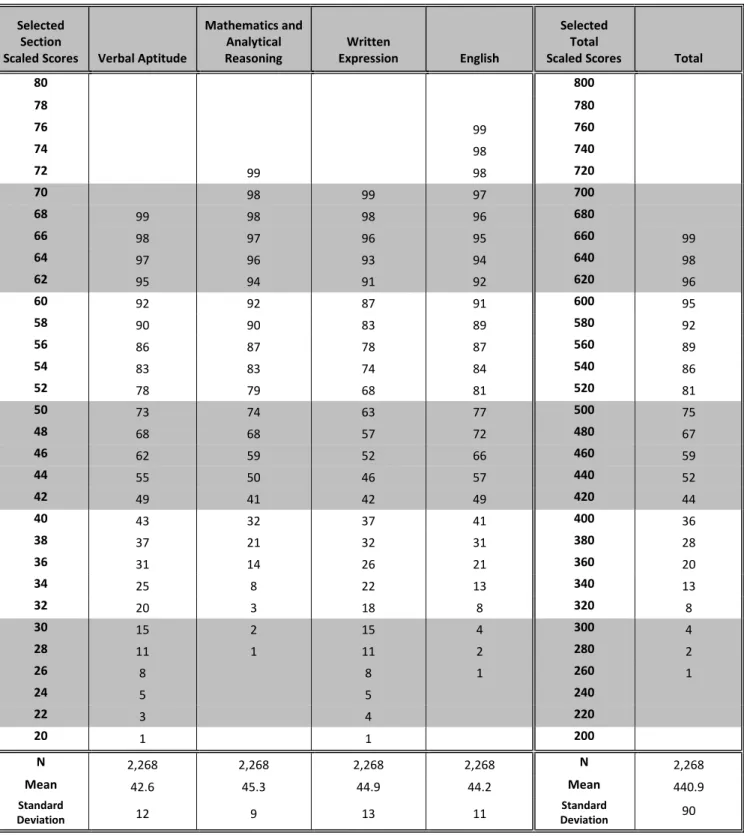
Table 4: Percentile Ranks for Test Takers Reporting Scores to Education Programs
Percent of Test Takers Scoring Lower than Selected Scaled Scores
(Based on the performance of 2,268 test takers who reported scores to education programs who were among the 20,510 individuals who tested in Puerto Rico between July 1, 2011, and June 30, 2014)
Note: Not all of the section and total scores appear in the table; however, the percentile ranks of the values not included can be inferred.
Selected Section
Scaled Scores Verbal Aptitude
Mathematics and Analytical
Reasoning Expression Written English
Selected Total
Scaled Scores Total
80 800 78 780 76 99 760 74 98 740 72 99 98 720 70 98 99 97 700 68 99 98 98 96 680 66 98 97 96 95 660 99 64 97 96 93 94 640 98 62 95 94 91 92 620 96 60 92 92 87 91 600 95 58 90 90 83 89 580 92 56 86 87 78 87 560 89 54 83 83 74 84 540 86 52 78 79 68 81 520 81 50 73 74 63 77 500 75 48 68 68 57 72 480 67 46 62 59 52 66 460 59 44 55 50 46 57 440 52 42 49 41 42 49 420 44 40 43 32 37 41 400 36 38 37 21 32 31 380 28 36 31 14 26 21 360 20 34 25 8 22 13 340 13 32 20 3 18 8 320 8 30 15 2 15 4 300 4 28 11 1 11 2 280 2 26 8 8 1 260 1 24 5 5 240 22 3 4 220 20 1 1 200 N 2,268 2,268 2,268 2,268 N 2,268 Mean 42.6 45.3 44.9 44.2 Mean 440.9 Standard
Deviation 12 9 13 11 Deviation Standard 90
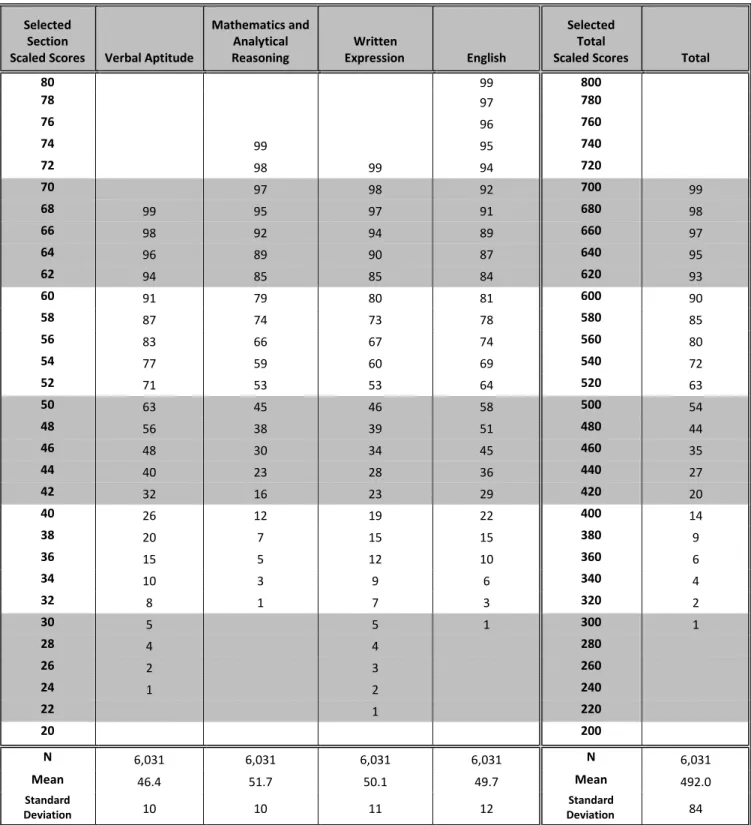
Table 5: Percentile Ranks for Test Takers Reporting Scores to Law Programs
Percent of Test Takers Scoring Lower than Selected Scaled Scores
(Based on the performance of 6,031 test takers who reported scores to law programs who were among the 20,510 individuals who tested in Puerto Rico between July 1, 2011, and June 30, 2014)
Note: Not all of the section and total scores appear in the table; however, the percentile ranks of the values not included can be inferred.
Selected Section
Scaled Scores Verbal Aptitude
Mathematics and Analytical
Reasoning Expression Written English
Selected Total
Scaled Scores Total
80 99 800 78 97 780 76 96 760 74 99 95 740 72 98 99 94 720 70 97 98 92 700 99 68 99 95 97 91 680 98 66 98 92 94 89 660 97 64 96 89 90 87 640 95 62 94 85 85 84 620 93 60 91 79 80 81 600 90 58 87 74 73 78 580 85 56 83 66 67 74 560 80 54 77 59 60 69 540 72 52 71 53 53 64 520 63 50 63 45 46 58 500 54 48 56 38 39 51 480 44 46 48 30 34 45 460 35 44 40 23 28 36 440 27 42 32 16 23 29 420 20 40 26 12 19 22 400 14 38 20 7 15 15 380 9 36 15 5 12 10 360 6 34 10 3 9 6 340 4 32 8 1 7 3 320 2 30 5 5 1 300 1 28 4 4 280 26 2 3 260 24 1 2 240 22 1 220 20 200 N 6,031 6,031 6,031 6,031 N 6,031 Mean 46.4 51.7 50.1 49.7 Mean 492.0 Standard
Deviation 10 10 11 12 Deviation Standard 84
Table 6: Percentile Ranks for Test Takers Reporting Scores to Natural Science Programs
Percent of Test Takers Scoring Lower than Selected Scaled Scores
(Based on the performance of 3,791 test takers who reported scores to natural science programs who were among the 20,510 individuals who tested in Puerto Rico between July 1, 2011, and June 30, 2014)
Note: Not all of the section and total scores appear in the table; however, the percentile ranks of the values not included can be inferred.
Selected Section
Scaled Scores Verbal Aptitude
Mathematics and Analytical
Reasoning Expression Written English
Selected Total
Scaled Scores Total
80 800 78 99 780 76 98 760 74 99 98 740 72 98 97 720 70 97 99 96 700 68 99 96 97 95 680 99 66 98 94 95 93 660 98 64 97 91 93 92 640 97 62 95 87 89 90 620 95 60 93 83 85 87 600 92 58 90 79 79 85 580 88 56 86 73 73 82 560 84 54 82 66 67 78 540 79 52 76 61 61 74 520 72 50 69 54 55 69 500 64 48 64 47 49 62 480 56 46 57 40 44 56 460 47 44 49 33 38 47 440 39 42 42 26 33 38 420 31 40 36 19 28 31 400 24 38 29 13 23 21 380 18 36 23 8 19 15 360 13 34 18 4 16 10 340 9 32 14 2 13 5 320 5 30 11 1 10 3 300 3 28 8 7 1 280 1 26 5 6 260 24 3 4 240 22 2 3 220 20 1 1 200 N 3,791 3,791 3,791 3,791 N 3,791 Mean 44.1 49.6 47.2 46.6 Mean 466.6 Standard
Deviation 11 10 12 11 Deviation Standard 91
Table 7: Percentile Ranks for Test Takers Reporting Scores to Social and
Behavioral Science Programs
Percent of Test Takers Scoring Lower than Selected Scaled Scores
(Based on the performance of 2,883 test takers who reported scores to social and behavioral science programs who were among the 20,510 individuals who tested in Puerto Rico between July 1, 2011, and June 30, 2014)
Note: Not all of the section and total scores appear in the table; however, the percentile ranks of the values not included can be inferred.
Selected Section
Scaled Scores Verbal Aptitude
Mathematics and Analytical
Reasoning Expression Written English
Selected Total
Scaled Scores Total
80 800 78 99 780 76 98 760 74 97 740 72 97 720 70 99 96 700 68 99 99 98 95 680 66 98 98 96 94 660 99 64 97 97 94 92 640 98 62 95 95 91 90 620 96 60 93 93 87 89 600 94 58 90 90 81 86 580 92 56 87 86 76 84 560 88 54 83 81 71 80 540 84 52 79 77 65 77 520 79 50 73 71 60 72 500 72 48 67 64 53 65 480 65 46 61 55 48 60 460 57 44 54 46 41 52 440 48 42 47 36 36 44 420 38 40 40 28 32 36 400 29 38 33 18 26 25 380 22 36 26 11 22 18 360 16 34 20 7 18 12 340 11 32 16 3 14 7 320 7 30 13 1 11 3 300 3 28 9 9 1 280 1 26 7 6 260 24 5 5 240 22 3 3 220 20 1 1 200 N 2,883 2,883 2,883 2,883 N 2,883 Mean 43.1 45.9 46.2 45.6 Mean 449.7 Standard
Deviation 11 9 12 11 Deviation Standard 88