Traceability in Meat Supply Chains
Jill E. Hobbs
Associate Professor, Department of Agricultural Economics, University of Saskatchewan
This paper was presented at the Canadian Agricultural Economics Society workshop “Identity Preservation of Agricultural and Food Products” (Ottawa, October 2002). Papers presented at CAES workshops are not subjected to the journal’s standard refereeing process.
The Issue
raceability through the agri-food supply chain has become the focus of recent industry initiatives and policy discussions in Canada. Traceability can be part of a strategy to reduce the risk or minimize the impact of a foodborne disease problem. It can also be part of a larger quality assurance strategy, facilitating the verification of specific quality attributes. This paper examines the economic incentives for implementing traceability systems in the meat and livestock sector, including ex post cost reduction, enhanced effectiveness of liability law, and reduced information costs for consumers. Preliminary evidence is presented from experimental auctions in Ontario and Saskatchewan that measured consumer willingness to pay for traceability information, food safety assurances and animal welfare assurances for beef and pork.
Implications and Conclusions
he chief economic benefit from traceability in meat supply chains is the potential to reduce the scope and impact of and the costs associated with a foodborne disease problem. Although some consumers indicated a willingness to pay for a traceability assurance, traceability by itself does not deliver a great deal of value to most consumers. This is because there is nothing preventive about traceability per se. If a consumer has
T
T
ß
Current
Agriculture, Food
& Resource Issues
A Journal of the Canadian Agricultural Economics Society
already contracted a foodborne illness, knowing where the problem originated is of no direct value to him or her. Thus, quality assurances with respect to specific credence attributes, bundled with traceability, have more appeal. An identity preservation system, featuring traceability, may be necessary to facilitate the provision of ex ante quality assurances in the meat sector. Paradoxically it appears that the Canadian food industry could do more to engender higher levels of consumer confidence with respect to the credibility of private sector quality assurances about production and processing practices.
Economic Incentives for Traceability
Food safety and quality together comprise one of the five pillars of the ongoing Agricultural Policy Framework (APF) discussions between the federal, provincial and territorial governments in Canada. Traceability of food products features in this strategy, with a target of 80 percent of domestic food at the retail counter to be traceable through the agri-food continuum (AAFC, 2002). One industry initiative to facilitate traceability in the livestock sector is the Canadian Cattle Identification Agency (CCIA) established by the Canadian Cattlemen’s Association. The CCIA has implemented a mandatory national cattle identification system to allow the traceback of cattle in the event of a food safety or animal disease problem. Given the interest in traceability in both the public sector and the Canadian livestock sector, it is pertinent to consider the economic incentives for introducing a traceability system. There are three main functions of a traceability system: (i) facilitating the traceback of products to reduce the costs associated with or minimize the risks of a food safety problem; (ii) strengthening liability incentives; and (iii) allowing
ex ante verification of credence quality attributes.
Traceback as a Cost Reduction Strategy
The primary economic incentive for many private sector and most regulatory traceability initiatives is to facilitate the traceback of products or animals in the event of a food safety problem. This is a risk reduction strategy designed to reduce the ex post costs of a food safety incident or an outbreak of an animal disease such as foot-and-mouth disease. Potential private sector cost savings include reduction of product recall costs through more targeted recalls, protection of market share through the maintenance of consumer/buyer confidence, and protection from free riders of firms that do practise due diligence in their food safety procedures, through the ability to demonstrate that a problem is isolated to a small segment of the industry. Enhanced traceability may reduce the public costs associated with a foodborne disease if the scope of an outbreak can be limited, thereby reducing the medical costs, productivity losses and psychological costs (pain and suffering) that arise from a widespread foodborne illness.
Strengthening Liability Incentives
Improved traceability would allow more accurate identification and isolation of the source of a food safety problem. Legal liability could then be more easily established, enhancing the effectiveness of tort liability law as an incentive for firms to practise due diligence.
Ceteris paribus, if traceability increases the probability of being found liable for a food safety problem that can be traced to poor production or food handling practices at a particular facility or business, then we would expect the overall level of food safety to improve. Traceability can act as a disciplinary mechanism on the marketplace when combined with effective and enforceable tort liability law. With this incentive in place, improved traceability could also reduce the transaction costs of downstream food retailers or processors in monitoring the activities of upstream suppliers and enforcing good production practices upstream.
Both the liability and risk reduction traceback functions are ex post information functions – the process of tracing back products yields economic benefits related to food safety. In contrast, the third function of a traceability system involves ex ante information provision related to product quality.
Ex ante
Verification of Credence Quality Attributes
Traceability has been touted as a means to differentiate products on the basis of credence quality attributes such as enhanced production practices that promote farm animal welfare, protect the environment or ensure the absence of genetically modified organisms, etc. Due to the presence of information asymmetry consumers cannot detect the presence of a credence attribute; therefore, identity preservation and labelling are necessary to signal the presence of the attribute. In this context, “traceability” involves the proactive provision of information on credence attributes and quality verification to reduce consumer information costs. Rather than simply depending on the ability to trace products backwards in the event of a problem, this approach requires that information on the credence attributes accompany the product as it moves forward through the supply chain.
Traceability Systems
A variety of traceability systems exist in livestock industries across different countries; some of these are private industry initiatives and others are mandated by regulation. Most livestock traceability systems perform the first function discussed above. They were put in place in response to the perceived risk reduction benefits of improved traceback in the event of a food safety problem. Perhaps more by accident than by design they may also perform the second function of enhancing food safety through stronger liability incentives. A few livestock traceability systems also perform the third function of ex ante
quality verification for consumers.
The Canadian cattle identification system facilitates ex post cost reduction in the event of a food safety problem. The system was fully implemented in July 2002 by the CCIA –
an industry association. The system mandates identity tagging of all bovine and bison animals in Canada before they leave the farm of origin, using a system of unique identification numbers. The ID number is maintained through slaughter until carcass inspection but not beyond that point. The Canadian Food Inspection Agency (federal government) initiates a traceback procedure in the event of a food safety or herd health problem. Information on the herd of origin and the last location of the animal preslaughter is stored on a database maintained by CCIA. This information can be used to track cattle movements backwards and forwards in the supply chain, relying on voluntary provision of location information for any intermediary ownership arrangements (CCIA).
The CCIA argues that the cattle identification system was necessary to maintain consumer confidence and protect market share domestically and internationally (CCIA). The traceback system is not designed to provide complete traceability through the supply chain. It only allows direct traceback from the point of carcass slaughter backwards. Traceback from the retail counter relies on the product recall and internal record keeping abilities of downstream retailers and processors. These abilities will vary depending on the effectiveness of the system of barcodes that identify product source and batch number and the internal record keeping that identifies either the time of processing or the source of inputs into each batch. The ability to maintain full traceability through a packing plant presents technological, logistical and economic difficulties for large-scale packers. Tracking technology is becoming increasingly sophisticated, including the potential to use DNA as part of a traceability system. However, until it becomes clear whether the economic benefits of full traceability through a packing plant outweigh the costs, partial traceability linked to batch or lot numbers will remain the dominant system.
National livestock identification systems can also be a platform on which to build more complex quality assurance programs. Australia has introduced the voluntary National Livestock Identification System (NLIS) as a joint industry/government initiative. Cattle are identified using devices imbedded with an electronic microchip. Information on the chip can be read electronically and is stored on a national database. The system goes beyond simple identification and allows the storage of information on disease and residue status of the animal, market eligibility and other commercial information. Cattle producers can access individual animal information through the database, linking it back to their own farm records on feed performance, genetics and management techniques (Meat and Livestock Australia, 2001).
A quality assurance system, including DNA sampling for traceback, piggybacks on the Australian NLIS. A series of quality management protocols – “Cattle Care” – cover production, handling and processing. A National Vendor Declaration form identifies the seller and provides basic production information (e.g., whether the cattle were treated with a growth-promoting hormone, information about the feeding program, etc.) (Lawrence, 2002). A voluntary grading system, Meat Standards Australia (MSA), uses a series of pre
and postslaughter measures to predict the eating quality of meat. A blood sample is taken from each carcass that qualifies for the MSA program while the carcass can still be identified with a seller. If a consumer complains of a bad eating experience from MSA-graded meat, a DNA sample from the meat and can be matched with the blood sample from the carcass. In this way, meat cuts can be traced through the supply chain and to the farm of origin. Although there is a food safety element, the traceback in the MSA system is focused primarily on eating quality. It can assist in identifying where improvements may be necessary or in identifying sellers who consistently misrepresent cattle on their National Vendor Declaration forms (Lawrence, 2002).
The food retailing sector can also be a catalyst for improved traceability if retailers determine that it could reduce their risk exposure, improve product recall effectiveness or reduce the transaction costs of monitoring product quality, including supplier production methods. The Canadian retailer Sobey’s requires its meat suppliers to demonstrate that specific production, processing, transportation and handling process have been implemented. In the UK, supermarkets require their beef suppliers to be members of accredited on-farm quality assurance programs. This does not necessarily mean that traceability information is labelled on retail packages for consumers. Traceability back to the farm may not be an explicit requirement, but it may be a necessary condition for providing retailers with production and processing quality assurances (Hobbs, 1996; Bredahl et al., 2001; Fearne, 1998).
Traceability may also be mandated by regulatory initiatives, such as the European Union beef labelling and traceability regulation. Beef products will be labelled with a traceability number identifying the origin of the meat, including where the animal was born, reared, slaughtered and processed. To facilitate the provision of this information each member state must have a national cattle identification and registration system. The regulation also introduces rules for voluntary labelling with additional information, such as production information, animal welfare information, etc. While the EU labelling regulation requires that a traceability number be included on retail packages, it does not provide additional quality assurances to consumers. The regulation does not reduce consumer information asymmetry with respect to credence attributes. Instead it performs the first of the functions identified earlier, potentially reducing the costs and risks from a food safety problem by facilitating more accurate traceback and product recall.
To summarize, there are many approaches to enhancing traceability in livestock sectors. Alternative approaches include industry-wide private sector initiatives versus individual supply-chain initiatives versus public sector regulation. There may be complete traceability from the retail package back to the farm production unit or traceability between specific stages, such as packer to producer. There are systems that provide simple traceback capability versus those that bundle traceability with additional meat quality or credence attribute assurances. Whatever the scope or level of complexity of the
traceability system, however, the need to be more responsive to consumers is often cited as the primary reason for implementing traceability systems. For this reason, it is useful to assess consumer reactions to traceability in meat products, and the extent to which Canadian consumers value traceability information by itself and combined with other quality assurances.
Consumers’ WTP for Traceability,
Food Safety and Quality Assurances
Experimental Design and Sample
Experimental auctions were used to evaluate Canadian consumers’ willingness to pay (WTP) for traceability, food safety and on-farm production information for beef and ham products.1 In the absence of publicly available market data on the demand for traceability
and quality verification characteristics, experimental auctions provide a means of eliciting non-hypothetical bid data for these characteristics. The experimental auctions were conducted in Saskatoon, Saskatchewan and Guelph, Ontario in 2002. Saskatchewan participants (106) were recruited from a range of demographic groups at the University of Saskatchewan (faculty, students, professional administrative staff and maintenance staff). Ontario participants (98) were recruited from the consumer database of a private consumer research firm. Auctions were run with ham and beef at both locations, with 104 people participating in the beef auctions and 100 in the ham auctions.
Overall 61 percent of participants were male and 39 percent were female. The Saskatchewan sample had a higher proportion of males and tended to be younger on average.2 There was a range of education levels within the sample, although the higher
education levels tended to be more heavily represented.3 Relative to the Saskatchewan
group, a higher proportion of Ontario respondents had some college and an undergraduate degree, whereas a lower proportion had a graduate degree. This is to be expected given that the Saskatchewan sample was drawn from a university population, albeit from a broad cross-section of employees and students. Income distribution was broadly similar across the participants in both provinces, although Saskatchewan had a higher proportion of respondents in the lower income groups.4
The experiments were run in groups of 12 to 14 people. Participants were given a beef (or ham) sandwich as part of a light lunch, and had the opportunity to bid to exchange their sandwich for a sandwich with additional verifiable characteristics. Four alternative sandwiches were used in the auction, with different information available for each sandwich: (i) an animal welfare assurance, (ii) an extra food safety assurance, (iii) meat that was traceable to the farm of origin, and (iv) a sandwich that combined all three attributes – extra food safety and animal welfare assurances and meat that was traceable to the farm. Participants were paid $20 as an incentive for attending the session, which usually lasted about one hour.
The auction format followed previous research using experimental auctions to measure WTP, for example, Shogren et al., (1994). The auction is designed so that the rational strategy for each participant is to bid his or her true marginal value for the auction sandwich. In a series of ten rounds, bids were collected for each auction sandwich. Participants bid the amount (if any) that they would be willing to pay to exchange their sandwich for each “auction” sandwich. Individual bids were private information, written down by participants and collected by monitors. At the beginning of each bidding round, the second highest bid for that sandwich from the previous round was announced. Conducting multiple rounds of bidding and announcing the “market price” allows for bid stabilization over the ten rounds and provides a corrective mechanism to assist participants in understanding the experiment (Shogren et al., 1994; Dickinson and Bailey, 2002).
At the end of the tenth round, a random draw was used to determine which of the simultaneous sandwich auctions and which round of bidding would be binding. The highest bidder for the randomly selected sandwich and round paid the second highest bid price and exchanged his or her sandwich for the auction sandwich. Only one sandwich was auctioned off in each experiment. There was an equal chance that any of the rounds of bidding would be binding; thus participants had an incentive to bid honestly each time. Following the bidding exercise participants completed a short questionnaire, which collected additional data on individual respondent attitudes toward food safety risks and animal welfare issues, the level of trust in quality assurances from different parties, and demographic data.
Results
Bidding Information
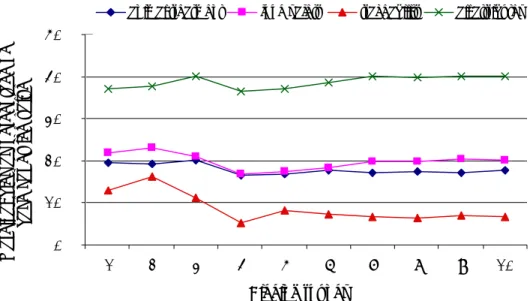
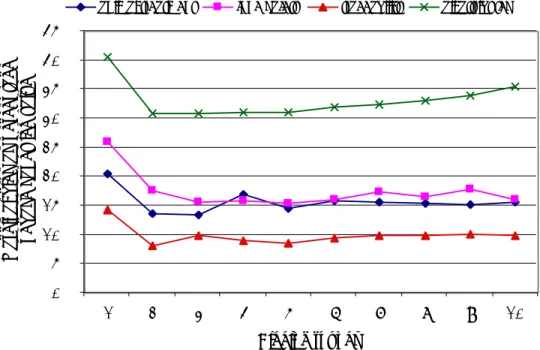
Average bid information for each sandwich across the ten rounds is presented in figures 1 and 2. Marginal bid information is presented as a percentage of the base sandwich value of Cdn $2.82 for the beef sandwich and Cdn $2.85 for the ham sandwich. The base sandwich value was calculated by asking respondents how much they would typically expect to pay for the type of sandwich provided to them in the experiment, and averaging these responses. For both ham and beef, the figures indicate that traceability to the farm of origin, without additional quality assurances, elicited the lowest average willingness to pay. Quality verification with respect to credence attributes such as an additional food safety assurance or an animal welfare assurance elicited higher bids on average. Bundling traceability information with positive quality assurances yielded the highest bids. Consistent with results obtained from a similar WTP study with U.S. consumers (Dickinson and Bailey, 2002), there was a decreasing marginal willingness to pay for the attributes. Thus, the average bid for the “all inclusive” sandwich was less than the sum of bids for the individual attributes.
Some important caveats accompany the interpretation of these bid data. Clearly these average values mask considerable variations in bids across participants. For example, there were a high number of zero bids for the “traceability only” sandwich. Due to the nature of a one-day experiment, the bid information is usually considered to be an upper bound on WTP (Dickinson and Bailey, 2002; Hayes et al., 1995). Caution should be exercised in extrapolating these WTP bids into other contexts. Budget constraints typically limit WTP. Differences in perceived food safety risks across products could also affect consumers’ WTP for safety assurances depending on the product in question.
Nevertheless, a preliminary analysis of the raw bid data suggests a number of interesting conclusions. Traceability, by itself, while it may be of interest to some consumers, does not deliver much value to most people unless it is bundled with quality assurances with respect to specific credence attributes. Forty-six percent of participants bid zero for the traceability-only sandwich during the last five rounds of bidding, when bids can be expected to have stabilized. This compares with only 7 percent bidding zero on the fourth sandwich, which combined traceability with an extra food safety assurance and animal welfare assurance. Ex post reactive traceability systems may perform an important economic function in limiting the costs from a food safety problem and in maintaining consumer confidence in an industry; however, they do little to reduce consumer information asymmetry. Traceability may be a necessary but not sufficient condition for ex ante verification of quality attributes.
0% 10% 20% 30% 40% 50% 1 2 3 4 5 6 7 8 9 10 Bidding rounds
animal treatment food safety traceability all attributes
Marginal bids as percentage of
base sandwich value
Credibility of Information Sources
The post-bidding survey questions revealed that Ontario respondents tended to be more sensitive to food safety issues – a larger proportion having experienced foodborne illness within their families5 and a larger proportion having altered their food purchases in
response to media articles about foodborne illness.6
A higher proportion of Ontario respondents stated that they would “highly value” additional assurances about meat safety, on-farm production assurances and traceability to the farm of origin.7 Participants were asked to indicate which sources they most trusted
and least trusted to provide information about production methods. Possible answers included various levels of industry: producer associations;8 processors and retailers;
government: federal9 and provincial; and third parties: animal welfare or environmental
groups10 and independent quality assurance firms, or participants could name other
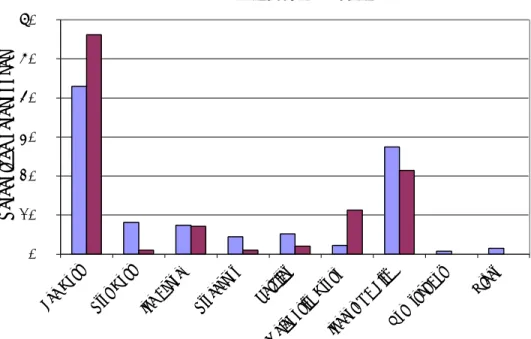
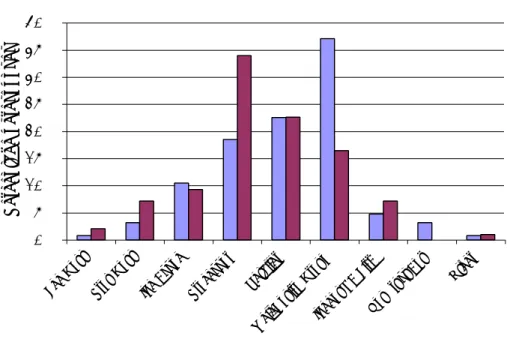
sources. Figures 3 and 4 compare the results for Saskatchewan and Ontario for the most trusted and least trusted sources respectively.
In both provinces, a federal government agency was the most trusted by participants, some of whom indicated a belief that the federal government was more likely to protect the interests of consumers, although the level of trust was higher in Ontario than in Saskatchewan. An independent quality assurance firm was the most trusted source for
0% 5% 10% 15% 20% 25% 30% 35% 40% 45% 1 2 3 4 5 6 7 8 9 10 Bidding rounds
Marginal bids as percentage
of base sandwich value
animal treatment food safety traceability all attributes
over 20 percent of respondents in both Ontario and Saskatchewan. There appeared to be some scepticism of animal welfare or environmental groups (such as Greenpeace or PETA – People for the Ethical Treatment of Animals) among participants in Saskatchewan (least trusted source for 37 percent of respondents). Results for Ontario were mixed: 16 percent of respondents listed these groups as their least trusted source, but 11 percent named animal welfare or environmental groups as the most trusted information source. Some respondents commented that they did not trust these groups as an objective source of information since they were seen to have an agenda.
Another striking difference is the level of trust of the respective provincial governments, with 8 percent of Saskatchewan respondents listing the provincial government as the most credible source of information, whereas 7 percent of Ontario respondents regarded their provincial government as the least trusted source. One Ontario participant referred to the budget cutbacks of the Conservative government as the reason for their distrust. One might also speculate that the lower level of trust could stem from a loss in confidence in the Ontario provincial government following the outbreak of E. coli contamination of the municipal water supply in Walkerton in 1999 that resulted in seven deaths. Without more information, however, it is not possible to provide a clear interpretation of this difference between the two provinces.
0% 10% 20% 30% 40% 50% 60%
Fed Govt Prov Govt Ind Assoc. Processor Retailer
Welf/Enviro GroupIndept. QA Firm
Not Trust Any
Other
Percentage of responses
Saskatchewan Ontario
Interestingly, downstream food firms did not engender a great deal of trust among the respondents. Food processors were regarded as the least trusted source of information by 34 percent and 18 percent of Ontario and Saskatchewan respondents respectively, while food retailers were the least trusted source for about 22 percent of respondents in both Ontario and Saskatchewan. Comments from some people revealed that these sources were perceived as having a vested commercial interest that might give them an incentive to mislead consumers. Paradoxically, these members of the supply chain are in the best position to communicate directly with consumers, indicating a potential credibility problem for industry sources in providing traceability and quality assurances. Building individual branding and product assurances into a nationally accredited identification and quality verification system, as in the Australian meat industry, could offer a solution.
Conclusions
he development of private sector traceability systems in meat supply chains is primarily driven by cost reduction and risk reduction motivations. Traceability systems may also facilitate ex ante quality assurances, but they do not necessarily always provide consumers with this additional information. Although some Canadian consumers indicated a willingness to pay for traceability assurance, traceability by itself did not appear to deliver a great deal of value to most consumers in our sample. However, quality
T
0% 5% 10% 15% 20% 25% 30% 35% 40%Fed Govt Prov Govt Ind Assoc Processor Retailer
Welf/Enviro GroupIndept QA FirmNot Trust Any Other
Percentage of responses
Saskatchewan Ontario
assurances with respect to specific credence attributes – food safety and humane animal treatment – bundled with traceability had more appeal. This suggests that combining traceability with additional quality assurances with respect to enhanced on-farm production or processing methods may represent a more viable product differentiation strategy in the Canadian red meat sector. To be effective as a product differentiation strategy, however, these quality assurances need to be credible. Participants indicated that they had relatively higher levels of trust in public sector assurances about production methods than in those from the private sector. The question of credible quality signals in the food industry is an important topic for further research.
References
Agriculture and Agri-Food Canada. 2002. Putting Canada First: An Architecture for Agricultural Policy in the 21st Century. Federal-Provincial-Territorial Framework Agreement on Agricultural and Agri-Food Policy for the Twenty-First Century. (Part II, Section B, paragraph 21.1.4) http://www.agr.gc.ca/cb/apf/agreement5_e.html (accessed 24 February, 2003).
Bredahl, M.E., J. R. Northen, A. Boecker and M. A. Normile. 2001. Consumer Demand Sparks the Growth of Quality Assurance Schemes in the European Food Sector. In Regmi, A. (ed.) Changing Structure of Global Food Consumption and Trade.
Washington DC: Market and Trade Economics Division, Economic Research Service, U.S. Department of Agriculture, Agriculture and Trade Report WRS-01-1: 90-102. CCIA (Canadian Cattle Identification Agency). Rationale: Why Do We Need to Identify
Cattle? Canadian Cattle Identification Agency.
http://www.canadaid.com/about/rationale.shtml (accessed 3 February, 2003). Dickinson, D.L. and D. Bailey. 2002. Meat Traceability: Are U.S. Consumers Willing to
Pay for It? Journal of Agricultural and Resource Economics 27(2): 348-364.
Fearne, A. 1998. The Evolution of Partnerships in the Meat Supply Chain: Insights From the British Beef Industry. Supply Chain Management: An International Journal 3(4): 214-231.
Hayes, D.J., J. F. Shogren, S. Y. Shin and J. B. Kliebenstein. 1995. Valuing Food Safety in Experimental Auction Markets. American Journal of Agricultural Economics
77(February): 40-53.
Hobbs, J.E. 1996. A Transaction Cost Analysis of Quality, Traceability and Animal Welfare Issues in UK Beef Retailing. British Food Journal 98 (6): 16-26.
Lawrence, J.D. 2002. Quality Assurance “Down Under”: Market Access and Product.
MATRIC Briefing Paper 02-MBP 1, Midwest Agribusiness Trade Research and Information Center, Iowa State University. http: www.matric.iastate.edu.
Meat and Livestock Australia. 2001. Australian Meat Safety: Animal Health and Welfare – National Livestock Identification (NLIS).
http://www.australianmeatsafety.com/nlis/html (Accessed 3-Feb-2003) Shogren, J.F., S. Y. Shin, D. J. Hayes, and J. B. Kliebenstein. 1994. Resolving
Differences in Willingness to Pay and Willingness to Accept. American Journal of Agricultural Economics 84(March): 255-270.
Endnotes
1 This research was conducted in collaboration with DeeVon Bailey and David Dickinson
from Utah State University, who were conducting experiments in the United States, the UK, Japan and Canada (Dickinson and Bailey, 2002). Agriculture and Agri-Food Canada funded additional data collection to expand the Canadian portion of the study.
2 Seventy-four percent of Saskatchewan respondents were male, compared with
46 percent in Ontario. In the Saskatchewan sample, 30 percent were aged 18-25, compared with 8 percent in Ontario, while 6 percent were aged 56-65 compared with 12 percent in Ontario.
3 High school was the highest education level for 24 percent of the sample, whereas
35 percent had some college, 21 percent had an undergraduate degree and 20 percent a graduate degree.
4 In Saskatchewan, 34 percent reported annual household income as less than $30,000
compared with 17 percent in Ontario. Twenty percent of Saskatchewan respondents had household incomes of $60,000-$90,000 compared with 33 percent in Ontario. For the intermediate ($30,000-$60,000) and upper income brackets (over $90,000), the distribution was very similar in both locations.
5 Forty-eight percent of Ontario participants reported that they themselves or members of
their families had experienced food poisoning, compared with 34 percent in Sask-atchewan.
6 Respondents were asked whether recent media reports about foodborne illness had
affected their food purchase decisions on a scale of 1 to 5, where 1 = Great effect and 5 = No effect. Ten percent of Ontario respondents indicated that media reports had had a fairly major effect (scoring 1 or 2), compared with 7 percent in Saskatchewan. Most people indicated that media reports had not had a major impact on their food purchase decisions (scoring 4 and 5) – 55 percent in Ontario, compared with 68 percent in Saskatchewan.
7 The percentages of respondents stating that they would “highly value” this additional
information were 34 percent for additional food safety assurances in Ontario (14 percent in Saskatchewan), 32 percent for on-farm production assurances in Ontario (22 percent in Saskatchewan) and 15 percent for traceability in Ontario (8 percent in Saskatchewan).
8 The Canadian Cattlemen’s Association or the Canadian Pork Council, as appropriate,
were given as examples.
9 The Canadian Food Inspection Agency and Agriculture and Agri-Food Canada were
given as examples.
10 Greenpeace and PETA (People for the Ethical Treatment of Animals) were given as