CHANGE, RESTRUCTURING AND TRANSFORMATION OF METRO
DISTRICT HEALTH SERVICE
By
JOSLYN MANUEL
Submitted in partial fulfilment of the requirements for the degree of
MAGISTER INDUSTRIAL PSYCHOLOGY
in the
DEPARTMENT OF INDUSTRIAL PSYCHOLOGY
at the
UNIVERSITY OF THE WESTERN CAPE
SUPERVISOR: Professor ELZA THOMSON
CO SUPERVISOR: Dr LEON BOSMAN
NOVEMBER 2012
ii
DECLARATION
The researcher hereby declares that the thesis
“
Change, Restructuring and Transformation of Metro District Health Service” is her own work, and that all sources have been referred to, and quoted have indicated and acknowledged with complete references.________________________ Joslyn Manuel
iii
DEDICATION
My existence and abilities are all due to the Grace of God to whom I am eternally grateful and humbled in enabling me to embark on this journey. I would like to dedicate this thesis to my parents the late Jacob Stewart Noble and Beatrice Noble for their unconditional love, support and guidance throughout my life. The values and humility in their parenting, their appreciation of life‟s blessings bestowed to them has provided me with a sound foundation to be the very best person in my own right and to use those values, appreciations and humility in all endeavours I have pursued. To my husband Trevor, children Lesley and Steven, thank you for the sacrifices made and patience showed whilst completing my studies.
iv
ACKNOWLEDGEMENTS
The decision to embark on this journey in completing my thesis is a culmination of events and certain people being part of my life at various phases which is so aptly expressed in the poem:
Reason, Season or Lifetime.
People come into your life for a reason, a season or a lifetime. When you figure out which one it is,
you will know what to do for each person…...
Firstly, I would like to thank my family and friends for all the support and encouragement during my studies. Having you in my life is godsend and inspired me to persevere given all the challenges I was faced with.
To the employees at MDHS for agreeing to participate in my research study, the Chief Director: MDHS for granting permission and a heartfelt thanks my ex- manager to Mr Riaan Van Staden for providing me the platform to utilize my skills and abilities resulting in exponential growth and development in my career, hence the motivation to pursue my Masters degree specializing in Organizational Development and Change.
To the academic staff at UWC, Dr. Leon Bosman thanks for allowing me to conduct a quantitative and qualitative study and securing the necessary support to facilitate the research study. To Mr Karl Heslop, my undergraduate lecturer, a sincere expression of gratitude for your constant support, guidance and advice throughout my student life and always availing yourself and being the voice for students beyond your call of duty.
Lastly to the most distinguished lady I have met thus far Professor Elza Thomson my saving grace, godsend supervisor, esteemed academic, mentor and professional in your discipline of research methodology. I am indeed humbled and blessed to have been assigned to you as a
v
Masters student who needed guidance, unwavering support and to believe in my ability to pursue this research study. Your wisdom is admirable, your purpose in life is definitive and may you continue to inspire future students in accomplishing their dreams and aspirations in life.
It is with this sense of humility and appreciation to the people in my life I end this acknowledgment with the extract from the same poem:
……When someone is in your life for a REASON, it is usually to meet a need you have expressed. They have come to assist you through a difficulty;
to provide you with guidance and support; to aid you physically, emotionally or spiritually.
They may seem like a godsend, and they are. They are there for the reason you need them to be….
- Unknown.
vi
ABSTRACT
The phenomenon of change has been the subject of debate for decades. Whether the change was planned or as the result of a catastrophic event, change affects nations, people, businesses, the economy and the environment. Typical changes in businesses are mergers, restructuring, transformations and retrenchments. Consequently, to this contentious phenomenon, change has been the subject of research by social scientists, behavioural theorists and analysts. Their collective endeavours have provided the world with a wealth of scientific knowledge.
The Metro District Health Services in the Western Cape have undergone major restructuring and transformation. It is with this premise the question is posed, are change agents, leaders, and employees sufficiently empowered to mitigate the challenges and appease the expectations associated with restructuring, transformation and change?
Supporting and contextualizing the study to the existing body of knowledge, previous research is reflected upon in an attempt to add value to future change initiatives. The reflections include different perspectives of change management, the multifaceted and evolutionary nature of change. The theoretical framework underpinnings of organisational development and transformation were also explored. One point of departure was to establish what is needed to ensure organisational success and describes activities, action plans and strategies, which modifies the organisational structures. The suggested methodologies, dimensions, variables influencing or enabling transformation formed the baseline for this study, with the emphasis placed on models of change, communication, theories of success formulae for organisational change, competencies of change agents, behaviour and attitudes of all stakeholders.
Circumventing the purpose and contextualizing the baseline for this research, the survivor syndrome was explored and the dimensions of different change elements offered value to this study.
The intent of the restructuring and transformation initiative, was to strengthen the Metro District Health Services by decentralizing Primary Health Care Services. Selected employees were tasked as change agents to facilitate the process and were simultaneously directly impacted by the process.
vii
The objective of this study is to explore and understand the effects of change on selected employees functioning at different levels within the Metro District Health Services during restructuring and transformation of the provisioning of healthcare services. In determining the effects the variables explored were their attitude towards change, their commitment to the organisation, the barriers and challenges encountered with the implementation of the process. The selected participants were part of an intensive restructuring and transformation process. The sample chosen from the population of 350 employees at the regional office of the Metro District Health Service and was representative of the greater population. The sample includes selected managers and employees at different hierarchal levels ranging from salary levels five to fourteen. Ensuring representativeness the different departments were used as strata and within each department a random sampling method was used to select respondents. Support was provided to explain that stratified sampling is a procedure of selecting a probability sample where a heterogeneous population is first divided into subgroups (known as strata) on the sampling frame, and simple random samples are drawn from each stratum.
The research methodology was a combination of qualitative and quantitative research design. A questionnaire was distributed consisting of three sections, Section A Biographical Information, Section B Structured Interview (10 participants), Senior Managers were approached to conduct the structured face to face interviews asking open ended questions and Section C Survey Questionnaire was completed by the rest of the sample group by indicating on a likert scale their agreement or disagreement with the statements. The questionnaires have been demonstrated to be psychometrically sound in that their reliability and validity have been reported on and supported in previous studies.
The analysis of the raw data involved statistical computations using Statistical Package for Social Science called Moonstats© and Thematic Content Analysis for the interpretation of the qualitative data.
The limitations of the study are discussed as well as recommendations for future change initiatives and future research projects on the subject.
viii KEYWORDS Change Management Restructuring Decentralization Commitment Attitude Leadership Psychological Contract Resistance Models of Change Survivor Syndrome
ix Table of Contents TITLE PAGE i DECLARATION ii DEDICATION iii ACKNOWLEDGEMENTS iv ABSTRACT vi KEYWORDS ix TABLE OF CONTENTS x CHAPTER 1: INTRODUCTION 1 1.1 Introduction 1 1.2 Background 3
1.2.1 Overview of Management Structure in the Western Cape 5 1.2.1.1 Management structure of District Health Services 5
1.2.1.2 Demographic Analysis 6
1.2.1.3 Population estimates for the Western Cape 6
1.2.2 Strategic Priorities 10
1.3 Rationale for Study 11
1.3.1 Problem Statement 11
1.3.2 Objectives of Study 12
1.3.3 Significance of Study 12
1.4 Ethical Statement 13
1.5 Overview of this Study 13
x
1.6 Limitations of the Study 14
CHAPTER 2: LITERATURE REVIEW 15
2.1 Introduction 15
2.2 Definition of Change Management 16
2.3 Evolutionary Nature of Change 17
2.4 Theoretical Perspective 19
2.4.1 Organisational Development and Transformation 19
2.4.2 Theory: Success Formula for Organisational Change 22
2.5 Models of Change 24
2.5.1 The Change Curve Model 25
2.5.2 Kurt Lewin‟s Three Step Model and Force- Field Theory 28
2.5.3 The John Kotter‟s Eight Step Model 28
2.6 Dimensions and Elements of Change 29
2.6.1 Integrated Approach 30
2.6.2 Moderators of Change 31
2.6.3 Inherent Personal Elements 31
2.6.4 Trusting Relationships during Change 39
2.6.5 Leadership and Change Strategies 40
2.6.6 Communication 41
2.6.7 The Impact on Survivors 42
2.7 Transforming Public Service Departments 44
2.7.1 Public Sector Governance 44
xi
2.7.2 Health Care System 45
2.7.3 Primary Health Care Platform 46
2.8 Summary 47
CHAPTER 3: RESEARCH METHODOLOGY 49
3.1 Introduction 49
3.2 Research Design 50
3.2.1 Qualitative Paradigm 51
3.2.2 Quantitative Paradigm 52
3.3 Population and Sample 52
3.3.1 Sample 52
3.3.2 Sampling Procedure 53
3.4 Data Collection 54
3.4.1 Procedure 54
3.4.2 The Measuring Instrument 55
3.4.2.1 Section A: Biographical Data 55
3.4.2.2 Section B: Structured Interview 55
3.4.2.3 Section C: Survey Questionnaire 56
3.4.3 Reliability and Validity of Instrument 56
3.4.4 Rationale for use 56
3.5 Data Analysis Techniques 57
3.5.1 Thematic Content Analysis 57
3.5.2 Statistical Program for Social Science (SPSS) 59
xii
3.6 Summary 59
CHAPTER 4: PRESENTATION OF RESULTS 61
4.1 Introduction 61
4.2 Biographical Data 61
4.2.1 Gender 61
4.3 Survey Questionnaire 66
4.3.1 Results: Organisational Commitment (OC 1-22) 66
4.3.2 Descriptive Statistics: Attitudes towards Change ( AC 23- 54) 77
4.4 Interviews 84
4.4.1 Phase 1: Familiarisation with Data 84
4.4.2 Phase 2: Categorising Data 85
4.4.3 Phase 3: Elaboration and Interpretation 91
4.5 Summary 92
CHAPTER 5: DISCUSSIONS, LIMITATIONS AND RECOMMENDATIONS. 94
5.1 Introduction 94
5.2 Discussion 95
5.2.1 Demographic information about the sample 95
5.2.2 Discussion: Problem Statement 96
5.3 Objectives 96
5.3.1 Discussion on Survey Questionnaire 96
5.3.2 Discussion on Structured Interviews 101
xiii
5.3.2.1 Organisational Restructuring Process: Expressions 101
5.4 Limitations 101
5.5 Recommendations 102
5.6 Conclusions 103
REFERENCES 105
APPENDICES
APPENDIX A: Cover Letter 111
APPENDIX B: Informed Consent 112
APPENDIX C: Biographical Questionnaire 113
APPENDIX D: Structured Interview 114
APPENDIX E: Survey Questionnaire 116
xiv
LIST OF FIGURES
Figure 1.1 Burke Litwin Model of Organisational Performance and Change 2
Figure 1.2 District Health Service Platform 3
Figure 1.3 Organogram for District Health Service Management Structure 6
Figure 2.1 The Change Process 17
Figure 2.2 The Change Curve 26
Figure 2.3 Using the Change Curve 26
Figure 2.4 The Psychodynamic Approach: The process of change and adjustment (Kübler- Ross,1969) 27
Figure 2.5 Satir‟s Model for Change Process 27
Figure 2.6 Lewin‟s Three Step Model 28
Figure 2.7 Kotter 8 –Step Model 29
Figure 2.8 Maslow‟s Hierarchy of Needs 32
Figure 2.9 Psychological Contracts 33
Figure 2.10 Definitions of Commitment 34
Figure 3.1 Hierarchical Distribution of participants 54
Figure 3.2 Phases of Content Analysis 58
Figure 4.1 Gender Distribution 62
Figure 4.2 Age Distribution 62
Figure 4.3 Language Distribution 63
Figure 4.4 Hierarchical Distribution 63
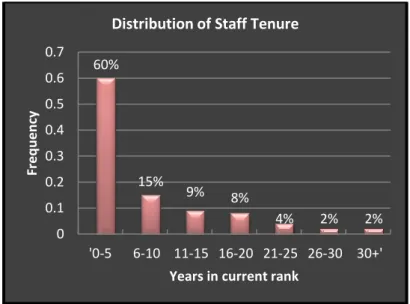
Figure 4.5 Tenure Distribution 64
Figure 4.6 Education Distribution 64
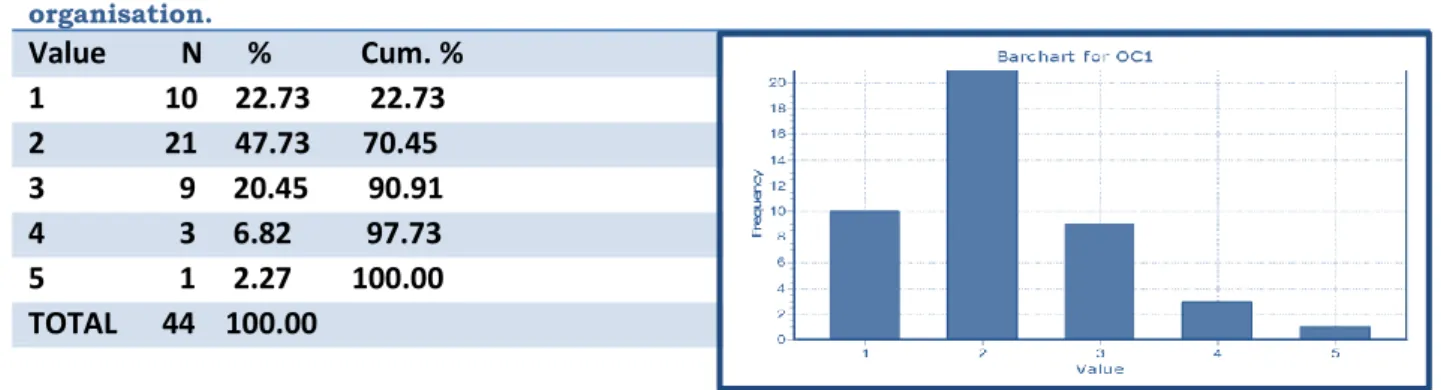
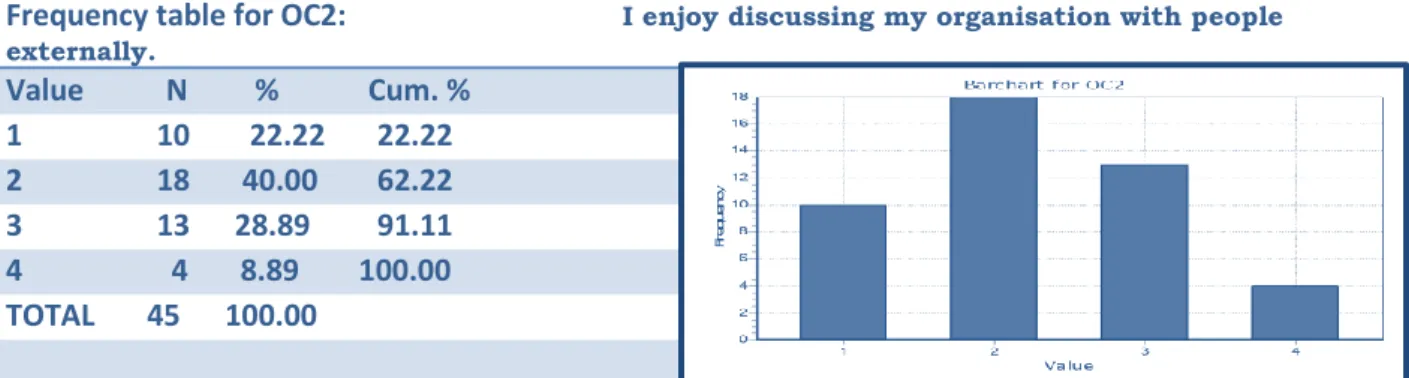
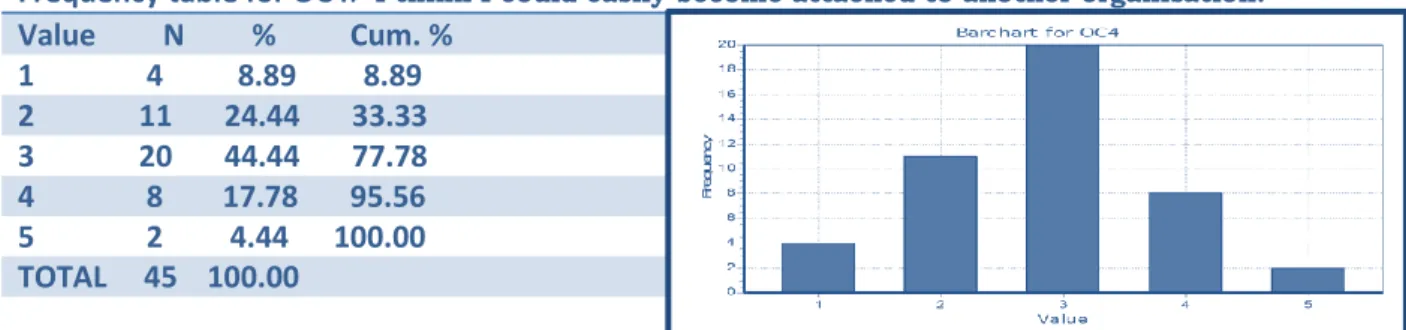
Figures 4.7 – 4.28 Frequency Distributions for OC1 – OC22 66
xv
LIST OF TABLES
Table 1.1 Population Estimates for Stats SA 7
Table 1.2 Strategic Goals for Western Cape Department of Health 10 Table 4.1 Descriptive Statistics for Attitudes to Change: AC23-AC25 79 Table 4.2 Descriptive Statistics for Readiness to Change: AC26 –AC30 79 Table 4.3 Descriptive Statistics for Attitudes towards Trust: AC31 80 Table 4.4 Descriptive Statistics for Communication of Organisational Change:
AC32-AC 34 80
Table 4.5 Descriptive Statistics for Attitude towards Training: AC35 – AC36 81 Table 4.6 Descriptive Statistics of Attitude of Change Confidence: AC 37 – AC 38 81 Table 4.7 Descriptive Statistics for Need for Change: AC39 – AC41 82 Table 4.8 Descriptive Statistics of variable Personal Benefit: AC42 – AC47 82 Table 4.9 Descriptive Statistics for variable Organisational Benefit: AC49- AC54 83
Table 4.10 Change Sentiment Framework 85
Table 4.11 Emerging Themes 86
Table 4.12 Participant‟s Expressions 86
Table 5.1 Scores related to Organisational Commitment 97
Table 5.2 Scores related to Attitudes to Change 100
1
CHAPTER 1 INTRODUCTION
1.1 INTRODUCTION
Change and its management has been extensively researched and investigated by academics, consultants and researchers in an attempt to find solutions and mitigate the risks that are associated with related initiatives. The general consensus is change is on-going and therefore the solutions that were developed and the risks that were mitigated cannot be static. Change in the work situation inevitably takes place and has to be dealt with appropriately to ensure there is return to an equilibrium condition.
Facilitating adaptations to the existing body of knowledge about change a diagnostic tool was developed by Burke and Litwin in 1992, called The Burke Litwin Model (BLM) of Organisational Change which assists organisational consultants in identifying, assessing and diagnosing the factors resulting in change. The framework is illustrated in figure 1.1 where the sequential order of the model starts with the most important elements and is strategically interlinked, proving that all the elements to a greater or lesser degree has a cascading effect on change initiatives. The BLM comprises of 12 dimensions which allows the change agent to assess these variables in the organisational context. The findings of the assessment is used to populate the BLM and used as a diagnosis for change. The initiated change is effective with the use of a model of change elaborated upon in the literature review.
The Western Cape Department of Health against this backdrop signalled a change in the way health services will be rendered in the future which led to the development of Healthcare 2010 Strategy and the Comprehensive Service Plan (CSP) for health services in the Western Cape.
Generic to any change project the risks and challenges are paramount in determining the success of the endeavour. Coupled with the complexity of the business operations the generic challenges include (Alsbridge http://www.alsbridge.com/ ):
The lack of sponsorship: The change is not viewed as important by all the role-players.
Vague and ineffective decision-making processes: The lack of vision and direction delays the implementation process.
2
The appropriate people are not involved: results in delayed decision making and no sense of urgency to implement.
Failure to remove organisational barriers.
Poor management of people issues: Results in increased resistance and employees relations issues.
Skills for new roles and jobs are assumed and not assessed: resulting in unmanaged staff expectations.
Lack of a baseline Monitor and evaluation tool: Used to assess progress, momentum and project fatigue.
Figure 1.1
Burke Litwin Model of Organisational Performance & Change
EXTERNAL ENVIRONMENT
INDIVIDUAL & ORGANISATIONAL PERFORMANCE MOTIVATION WORK UNIT CLIMATE TASK & INDIVIDUAL SKILL INDIVIDUAL NEEDS & PERFORMANCE
MISSION & STRATEGY ORGANISATIONAL
CULTURE LEADERSHIP
MANAGEMENT PRACTICES
STRUCTURE SYSTEMS &
PROCEDURES
(Source: Organisational Assessment for Development Planning 2004).
3
1.2 BACKGROUND
The need for change within the Western Cape Department of Health resulted in the development of a service plan called the Comprehensive Service Plan (CSP). This involved extensive research and consultation with a number of stakeholders within the department. The draft plan was subjected to a rigorous process of public comment resulting in amendments before the final document was adopted by the Provincial Cabinet in July 2006. The purpose to the CSP was to provide a guideline for the implementation of Health Care 2010 at all levels of care (figure 1.2).
Figure 1.2
District Health Service Platform
(Source: Western Cape Government: Draft Dialogue for Healthcare 2020)
The Healthcare 2010 strategy was developed to improve the quality of healthcare service. This meant the existing service platform needed to be restructured and the service needed to be rendered closer to the patients. Essentially treating patients at the level of care most appropriate to their needs and resources allocated to the healthcare facilities and aligned to the level and type of service that is provided. The complexity of the Primary Health Care (PHC) platform required the restructuring to be carefully synchronized to prevent disruption of services. The PHC is the foundation of an effective and efficient Public Health Service where it is the first point of contact with the patient and the gateway to the rest of the service.
CL IN ICA L & AD M IN SU P P O RT SERVI CES ( Phar mac y, lab o rato ri es , H R , F in an ce , In fras tr u ctu re & I n fo rmati o n Te ch n o lo gy) . SPE CIA LIS ED HOS P ITALS & SERVI CES ( TB, P syc h iatr y, R eh ab ili tati o n , De n ta l, F o re n si c P ath o lo gy &E me rg en cy Me d ic al s ervi ce s
4
In the planning process various factors were considered the geographical accessibility, equitable distribution of human and financial resources between the sub districts, well balanced health teams pertaining to the skills mix and sound district management structures to co-ordinate the services.
An electronic PHC workload and utilization calculator was developed to integrate key PHC variables namely, utilisation variables (number of times a person visits a PHC facility); workload variables and efficiency indicators. The data used in the calculations and allocation of resources were based on population projections and statistical results generated from Census 2001.
The implementation of the CSP impacted the workforce of the department and to guide the process a Human Resource Restructuring Framework was developed. The framework ensured in the first instance the appropriate numbers and categories of staff were employed to accomplish the goals and objectives of the CSP. Secondly the staff were matched and placed in accordance with their skills, competencies and abilities to ensure effective and efficient service delivery.
The restructuring processes the department implemented were regulated by the following legislations (Human Resource Restructuring Plan):
The Public Service Act, 1994.
The Basic Conditions of Employment Act, 1997. The Labour Relations Act, 1995.
The Employment Equity Act, 1998. The Skills Development Act, 1998.
The Government Employees Pension Law, 1996. The promotion of Access to Information Act, 2000. The promotion of Administrative Justice Act, 2000.
Relevant collective agreements, determinations and directives issued by the Minister of Public Service and Administration.
Source: Provincial Government of the Western Cape: Department of Health: Human Resource Restructuring Plan
The restructuring process was implemented in a phased process focusing on the creation of newly created organisational and post structures in the form of staff establishments and
5
aligning the existing formats. The process of the restructuring framework was facilitated by including detailed macro and micro human resource action plans and change management strategies to address the gaps identified by the new organisational structures.
Pertinent to this study was the matching and placement process of employees based at the metro regional office based in Woodstock, Cape Town. Management determined through the matching and placement process by comparing the individuals‟ functions they were performing at the time, taking into account their qualifications, experience and minimum requirements and functions expected against the corresponding posts on the new post structures. This process essentially determined whether the staff skills profile fits the job profile of the new posts according the job descriptions and then placed against the post. Staff that could not be absorbed in the matching and placement process was ring-fenced and declared in excess. Various measures were put in place to manage the staff declared in the excess category. These measures included the utilisation of the Employee Assistance Program to support affected staff and the development of a social plan. The Social Plan assisted staff in the development of career plans to identify options in further skills training and provide information on suitable vacancies elsewhere within the Department.
1.2.1 OVERVIEW OF MANAGEMENT STRUCTURE IN WESTERN CAPE
The implementation of the CSP and Health Care 2010 has led to the PHC services being provincialized in the rural areas but these services remain fragmented in the Cape Town Metro District Areas as it is currently provided by both City of Cape Town and the Provincial Government Department of Health.
1.2.1.1 Management structure of District Health Service
In terms of the National Health Act, Act 61 of 2003 the District Health Services must be managed per health district. The Cape Town Metro District known as Metro District Health Service (MDHS) is one of six districts demarcated in the Western Cape. The MDHS was further divided into eight sub-districts to facilitate the provisioning of effective and efficient health service. In the respective sub-districts four sub-structure offices were created with the necessary management capacity. These four sub-structure directorates are managed by a Director and report to the Chief Director of the MDHS (figure 1.3).
6
Figure 1.3
Organogram for District Health Service Management Structure
(Source: WCDoH: Strategic Plan 2010 -2014) 1.2.1.2 Demographic analysis
The province is divided into five rural district municipalities namely Eden, Cape Winelands, Central Karoo, Overberg and the West Coast and one Metropolitan district, the City of Cape Town. The Cape Town Metro District accommodates 66% of the province‟s population. The complexity of the equitable distribution of resources is illustrated with the geographical map in figures 1.4 & 1.5 shows the various districts and sub-districts in the Western Cape. The map also illustrates the dense and sparsely populated areas where the human settlements are found.
1.2.1.3 Population estimates of the Western Cape
The data of census 2001 conducted in the province was used to project population growth and guide the planning processes looking at various factors for example, fertility rates, average
MDHS: Chief Directorate (CD) Director: Eastern Khayelitsha Director: Southern Western Director: Klipfontein Mitchells Plain Director: Northern Tygerberg. RURAL DISTRICT HEALTH SERVICES:(CD) Director: Eden Director; Central Karoo Direcotr: Cape Winelands Director: West Coast Director: Overberg Health Programs: CD Director: Community Based Service Director:Facility Based Service Director: HIV Aids & TB Director: Public Health HUMAN RESOURCE: CD FINANCE :CD
District Health Service: Deputy Director General (DDG)
7
life expectancy, migration, socioeconomic status, HIV prevalence and mortality rates (table 1.1).
Table 1.1
Population Estimates by Stats SA
DISTRICT 2001 2007 2008 2009 2010 2011 2012 2013 2014 2015 % Un- insured Cape Town 2 893 248 3 497 097 3 53571 3 638 959 3 724 347 3 809 735 3 895 123 3 980 511 4 065 899 4 151 287 76 % W. Cape Province 4 524 332 5 278 634 5 391765 5 513 039 5 634 323 5 755 607 5 876 887 5 998 164 6 119 435 6 240 702 78 % Uninsured Population Cape Town 2 209 674 2 671 782 2 714 928 2 780 164 2 845 401 2 910 637 2 975 874 3 041 110 3 106 346 3 171 583 W. Cape Province 3 535 728 4 117 808 4 207 479 4 301 882 4396 294 4 490 706 4 585 115 4 679 521 4 773 922 4 868 319
(Source: Western Cape Department of Health (WCDoH): Strategic Plan 2010 – 2014)
10
1.2.2 STRATEGIC PRIORITIES
Remaining within the context of this study it is important to deliberate on the Department of Health‟s responsibility in delivering an effective health service. It is with this premise necessary to articulate how the implementation of the CSP shaped the compilation of the DoH Strategic Plan for 2010-2014 and Annual Performance Plan for the period 2009. The development of the plan was conducted under the guidance of the Minister of Health reflecting the goals and objectives of the Department of Health taking into account the restructuring and transformation initiatives. The priorities identified by the National Department of Health were captured in a Ten Point Plan of which the Western Cape DoH contributed significantly. The highlights of their contribution focused on improvement on governance and management of the National Health System; promotion of healthy lifestyles; improving the quality of care; and strengthening the primary health care service.
Maximising and achieving the priorities identified, the WCDoH Strategic Goals were reflected in table 1.2.
Table 1.2
Strategic Goals for Western Cape Department of Health
STRATEGIC GOAL GOAL STATEMENT
1. Burden of Disease 1.1.Manage the burden of disease
2. Strategic management capacity and
synergy
2.1.Ensure and maintain organisational strategic management capacity and synergy.
3. A capacitated workforce. 3.1.Develop and maintain a capacitated
workforce to deliver the required health services.
4. Health technology and infrastructure. 4.1.Provide and maintain appropriate health
technology and infrastructure.
5. Sustainable income. 5.1.Ensure a sustainable income to provide the
required health services according to the needs.
6. Quality of health services. 6.1.Improve the quality of health services.
(Source: WCDoH Strategic Plan 2010 – 2014)
11
1.3 RATIONALE FOR STUDY
The Western Cape Department of Health, specifically the District Health Services having undergone major restructuring and transformation since 2008/9, has resulted in a new organisational structure to facilitate the implementation of Healthcare 2010, with the focus on an efficient Primary Health Care Platform. The new organisational structure lead to the matching and placing of employees against the new posts created. The Western Cape Department of Health span of control included the five rural districts with a staff compliment of approximately 28 000 at the time significantly increasing the risks in dealing with people issues relating to change.
During the same time period of the implementation of the Healthcare 2010 and the Comprehensive Service Plan (CSP) parallel change processes were being implemented referred to as the Occupational Specific Dispensation (OSD). This resulted in specific occupational streams within occupations having new job titles and remuneration packages. These employees also had to be aligned to the new post structures creating further anxiety and uncertainty with career progression.
It is within this complex conundrum the rationale of this study is postulated. The changes affected a large number of employees and retrospectively the department have not concluded the process in its entirety and have embarked on a strategic plan for 2020. Circumventing it might be considered by some as visionary or others as premature. The rationale is here to engage with employees affected by the planned changes initiated by the Department of Health and attempt to get an understanding of their attitudes towards change and those towards the organization together with leadership. Most important is to provide the selected sample population an opportunity to share insights relating to the change processes and methodology that was used.
1.3.1 PROBLEM STATEMENT
To give fruition to the intent of this research study and future initiatives, this study endeavours to solve the problem associated with Change Management:
Are change agents, leaders and employees sufficiently empowered to mitigate the challenges and appease the expectations associated with restructuring, transformation and change?
12
1.3.2 OBJECTIVES OF STUDY
The intent of the restructuring was to strengthen the Metro District Health Services (MDHS) by decentralizing Primary Health Care Services. Selected employees within MDHS were tasked as change agents to facilitate the process and were simultaneously directly impacted by the process.
The composite objective of this study is to explore and understand the effects of change on selected employees functioning at different levels within the MDHS Regional office based at Woodstock, during restructuring and transformation of the provisioning of healthcare services.
The objectives of the study aims:
To determine employees attitude towards change.
To establish challenges and barriers with the implementation of the change process To evaluate employees commitment to the organisation after transformation.
To provide guidelines to pave the way forward to produce productive and effective work and service delivery.
1.3.3 SIGNIFICANCE OF STUDY
The WCDoH is emulating the evolutionary nature of change and is determined to ensure a positive outcome. Reinforcing findings of previous research that change is on-going the department subsequently drafted a Draft Strategic plan for 2020. The plan is guided by the milestones achieved with Healthcare 2010 and the implementation of CSP. The reasoning behind 2020 incorporates the increase in population, socio- economic issues, burden of disease and the advances in technology. The approach of the new plan is to foster continuity from previous plans and realistically learn from achievements and revisit challenges experienced in the past decade.
The draft document has been made available to the public for scrutiny and poses pertinent questions relating to Health outcomes, public expectations, accountability, sustainability, national and provincial contextual factors, values adopted, leadership and good governance.
13
The findings of this study will provide insight and contribute significantly to the questions posed in the draft dialogue, what should be done differently in 2020?
1.4 ETHICAL STATEMENT
The compelling premise in conducting research is accepting the responsibility for all procedures and ethical issues related to the process. The integrity of the research project should be maintained and the choice of research should benefit participants and society at large. The researcher should self-assess and ensure the research is conducted as competently as possible and be in compliance and awareness of local customs, standards, laws, regulations and should not intrude in people‟s lives or the communities of their study. The Health Professions Council of South Africa‟s (HCPSA)‟s Ethical Code of Professional Conduct for Psychologists is the regulatory framework within which the researcher adhered to for this study.
In conducting this study a cover letter accompanied the questionnaire informing participants on the purpose of the research and the intended use of the findings. Therefore the participants provided the researcher their informed consent to participate notwithstanding that confidentiality and anonymity would be maintained.
Participants were also informed the organisation will be interested in the results of the research to guide future initiatives and the findings are reflected in this project. The accuracy of the data and both favourable and unfavourable elements were dealt with the utmost sensitivity to ensure the reporting of the results is an accurate reflection of the raw data derived from the research.
1.5 OVERVIEW OF THIS STUDY
Chapter 2 contextualizes the existing body of knowledge and literature relevant to the phenomena of change. Research conducted previously is reflected upon in the literature including different perspectives of change management, the multifaceted and evolutionary nature of change. The theoretical framework underpinnings of organisational development and transformation were also explored. Particular reference is made to the many comprehensive definitions of change management and illustrations of various models of change.
14
Chapter 3 elaborates the methodological paradigms used to accomplish the end result. The paradigms are aligned to the qualitative and quantitative paradigms reflecting the research design framework inclusive of the sampling technique, the data measuring instruments, the data collection and data analysis.
Chapter 4 presents the findings of the research.
Chapter 5 discusses the results of the research conducted, deliberating on the limitations of the study. Recommendations presented for future change initiatives and to future researchers on the phenomenon of change.
1.6 LIMITATIONS OF THE STUDY
The statistical analyses are at a basic level to gain understanding of the responses. The challenges posed prompted the use basic statistical computations by means of a statistical program for social sciences. Future research should be extended to more facilities that were affected by the restructuring process and online distribution of survey questionnaires may offer a larger sample group. The limitations relevant to this study were the accessibility of the employees that were part of the restructuring process as they were deployed across the Metropole. The timeframe that lapsed since the restructuring process were that some staff had left the organisation due to natural attrition.
15
CHAPTER 2 LITERATURE REVIEW 2.1 INTRODUCTION
The phenomenon of change has been subject of debate for decades and many proposals have been presented to solve the underlying phenomena. Whether change was planned or as the result of a catastrophic event it affects nations, people, businesses, the economy and the environment in different ways and with varying degrees of intensity. Consequent to this contentious phenomenon, change has been the subject of research by social scientists, behavioural theorists and analysts where their collective endeavours have provided the world with a wealth of scientific knowledge.
The Metro District Health Services in the Western Cape have undergone major restructuring and transformation. It is with this premise the purpose of this study is to analyse the effects of change and restructuring had on employees that were affected by the process exploring the employee‟s psychological contract, attitudes and their level of commitment to the organisation after the transformation process.
Supporting and contextualizing the study to the existing body of knowledge, previous research is reflected upon in this review in an attempt to add value to future change initiatives. The reflections include different perspectives of change management, the multifaceted and evolutionary nature of the movement from the status of equilibrium. The theoretical framework underpinnings of organisational development and transformation were also explored in an effort to provide a further perspective of its effect on people and the workplace. Cummings and Worley‟s (2009) point of departure was to establish what is needed to ensure organisational success and describes activities, action plans and strategies which modify the organisational structures. The suggested methodologies, dimensions, variables influencing or enabling transformation formed the baseline with the emphasis placed on communication, competencies of change agents, behaviour and attitudes of all stakeholders.
Circumventing the purpose and contextualized baseline the survivor syndrome explored offered value and insight of underlying dimensions to the foundations of cognitive processes.
16
2.2 DEFINITION OF CHANGE MANAGEMENT
The different definitions and perspectives of change management are continuously being explored and researched in the framework of this discipline. The reason being change by nature is not static and the external environment is constantly changing; an environment in which organisations has little or no control.
Nickols (2010) examines the different perspectives of change management as a matter of problem finding and solving. The author reflects on the one hand it as a task of managing change, which would imply that effecting it, is done in a planned and systematic fashion. On the other hand change can be effected due to a change in legislation or a shift in economic tides, either way this would have an impact on people that need to be managed. He also examines change as an area of professional expertise and a control mechanism that has a wealth of knowledge. He postulates the subject matter of change management consists mainly of related models, methods and skills and theories that make up the practice.
The research conducted by Erkal and Kebapci (2009) categorized change into five different approaches specifically survival, behaviour, process, structure and system. They make reference to the studies conducted by Darwin (1876) whereby the notion of survival and the ability to respond to change in the environment are associated. Considering the premise of survival, businesses are urged to view themselves in the business world as a species of nature that constantly needs to adapt to the changing environment to survive or run the risk of becoming obsolete or extinct.
Erkal and Kebapci (2009) view the idea of change management as a necessity and evaluates organisation‟s ability to shift direction and improve its functioning with the key purpose of their research was based on the causes of failed change initiatives. Their primary aim was to clarify the phenomena of resistance in a manner that espouses positivity and can alter the management of critical issues in a change program.
Nickols (2010) is of the opinion managing change requires a finely honed set of skills of which political, analytical, people, system and business skills are of paramount importance. Furthermore, he elaborates there is no single perfect strategy and change is at best achieved with a combination of strategies. These are dependent on a number of factors namely, scope and scale of change, the degree of resistance, the target population, the time-frame and the level of available expertise.
17
2.3 EVOLUTIONARY NATURE OF CHANGE
The research conducted by Von Tonder (2004) reveals a multitude of studies and publications pertaining to the field of organisational behaviour, theory, change and organisational change. The author alluded in his research question, the reasons for the dismally unsuccessful implementation initiatives of change. This could primarily be based on the change management practices that are aligned to a perceived stable, one-dimensional concept of organisational change. Contrary to this Erkal and Kebapci (2009) describes the nature of change as an on-going process with a range of activities resulting in specific end results for the organization. The simplified version of the change process is split into three parts namely, diagnosis of change drivers, strategy building and implementation and lastly the evaluation.
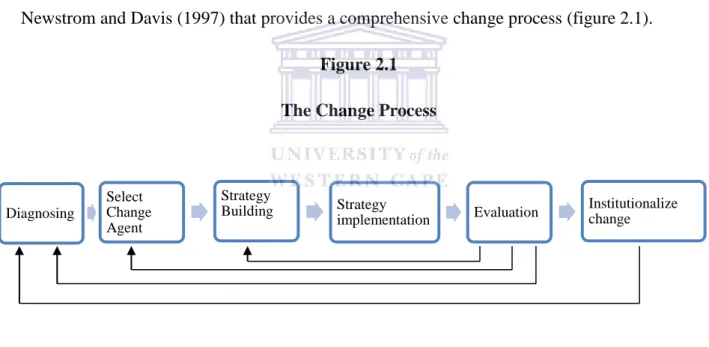
Erkal and Kebapci (2009)) increased the number of steps by referring to studies conducted by Newstrom and Davis (1997) that provides a comprehensive change process (figure 2.1).
Figure 2.1 The Change Process
(Source: as cited in Erkal & Kebapci. 2009)
The change process starts with diagnosing the circumstances that compels change. The implementation of strategies decided upon requires change agents to possess managerial and leadership‟s skills. Erkal and Kebapci (2009) highlights the last step in the process indicating that change is a continuous process and each step is supported by the previous one reinforcing the nature of it as on-going.
Diagnosing Select Change Agent Strategy Building Strategy implementation Evaluation Institutionalize change
18
The multitude of studies indicate the topic has not been exhausted yet and even in those few initiatives that have minimal success rates there are more cases with unintended consequences. It is with this premise that the topic is continuously being researched in an attempt to find a perfect change management concept. The assumption made in the research provides commonality of reasons for the high failure rates, largely determined by the size of the organization, the ability or inability of the change agents and the degree of knowledge and understanding of the phenomena and theories relevant to organisational settings (Von Tonder, 2004).
Von Tonder (2004) in his discussions focused on the taken for granted concept of organisations, change from a systems perspective and that of change in a macro context. The author attempts to simplify the social theories developed consisting of four sociological paradigms, each with a distinct view of the social world and a set of assumptions with regard to organisations. The four schools of thoughts are the classical theorists, who depicted organisations as mechanistically structured, hierarchical supervision and detailed rules and regulation; the human relations movement, depicted organisations as human co-operative systems; the structural analysts depicted organisations as on-going entities that had to adapt to the changing environment and lastly the contemporary theorists depicting transactional and resource dependent elements. He reflects there is merit in the four paradigms but the oversimplification of the complexities of each variation allows for consideration to the development of the multifaceted organisational theory.
According to Von Tonder (2004) different philosophies and concepts of organisational change has emerged from this paradigmatic framework. The one being the philosophy of avoiding or embracing change, both constructs are predisposed to it but promotes a reactive approach to change. The other approach being a fundamental nature alluding to the content of change as being human and structural in origin where it incorporates both subjective, objective, social and external phenomenon.
This shift from a functional to interpretative paradigm is indicative that the theories of organisation and the understanding of change within organisations are changing (Von Tonder, 2004). The author consolidates his findings by acknowledging the character of change processes within the organisation is significantly informed by an evolving concept of an institution thus organisational change in itself is taking place.
19
Von Tonder (2004) reflected organisations change in numerous ways, which varies from evolutionary, developmental, self-induced, rational adaptive and uncontrollable multifaceted revolutionary change. Von Tonder (2004) states organisations may experience different dynamics at the same time and alternate between closed, open and complex systems and often transforming into chaotic systems before returning to a complex, stable open system. Erkal and Kebapci (2009) studied the change process in four areas namely the nature, source, scope and level of change. The deliberations on the evolutionary nature of change related to organisations attempts to link the strength of the change agents to the change strategies and implementation thereof. According to Erkal and Kebapci (2009) changes in organisations may be expected or unexpected and therefore needed to adapt or re-engineer their core deliverables as a consequence.
2.4 THEORETICAL PERSPECTIVE
The theory underpinning organisational change is exceptionally vast and it with this premise the literature relevant to this study being organisational development, transformation and the success formula for organisational change provides a canvas for placing it all in context. 2.4.1 ORGANISATIONAL DEVELOPMENT AND TRANSFORMATION
Restructuring and continuous change in large organisations has become an inherent feature which can be complex and contributes to the success or failure of the process. Veldsman (2008) state under these conditions navigating change has to be a core competency in most organisations. The terminology relating to organisational development, transformation and change are being used interchangeably indicating the traditional conceptual boundaries are disappearing (Veldsman, 2008).
Often the reasons for restructuring and transformation are as a direct consequence of external influences impacting the business side of the organisation ranging for economic climate, revolution in technology and socio-economic challenges. Typical restructuring and transformation initiatives include mergers, downsizing, decentralisation and large scale expansion of business.
The key element in the transformation was decentralization and highlighted by Tsamareb (2005) where the focus is on the objectives of decentralisation of essential services in Namibia. Prior to the decentralization process the country whilst under the South African
20
apartheid government were functioning in a centralised manner. The rationale for decentralisation was to promote rapid sustainable development and democracy. According to Tsamareb (2005), the people of Namibia had to travel vast distances to access essential services. This practice was impeding development and perpetuated poor living conditions amongst local communities. The objective of decentralization was to provide a more effective and efficient service to the greater population. The author defines decentralisation as the devolution, delegation and de-concentration of public services to regional and local authorities and councils. The implication thereof National Government cedes their power to structures at lower levels. This action allows lower level authorities to formulate their own policies and decision making parameters within their senior executive committees increasing responsibility and accountability. Furthermore decentralisation may increase the sustainability of the area, improve service delivery and provides the infrastructure to distribute the resources equitably.
Benefits derived from the process of decentralization (Tsamareb 2005):
Decrease the amount of bureaucratic processes prevalent in a centralised government.
Provides opportunities for diversity and increased representation from all spheres in the local community namely ethnic, political and religious groups.
Platform to illustrate innovation, creativity and in doing so create stability and national unity
Shortcomings of decentralisation (Tsamareb 2005):
Disparities prevalent amongst social and local affluent groups are heightened with the additional authority that is devolved.
National financial bodies are reluctant to embrace decentralisation out of fear that provincial authorities will indulge in fruitless and wasteful expenditure in competing for resources.
Corruption amongst local authorities are rife and are sensationalized by the media and would lack the protection from powerful national politicians The concept of organisational development and change relates to converting the organisation‟s current state of reality to a future desired end state of reality; following this conversion from the status quo to reality. Veldsman (2008), explains organisations
21
experiencing the in-between state will be different more or less in terms of functioning, character, performance and trajectory.
The elements postulated by Veldsman (2008) deems organisational development change complex; are the boundaries within which an organisation operates; the scope of the of its span of action ranging from a simple dimension to a multiple, complex scope of customers and services and the nature and pace of change the organisation is exposed to. Some organisations go through a change process incrementally, evolutionary or revolutionary. Typical action plans in organisational development and change includes team building interventions, leadership training and resolving people performance problems. People performance problems are often depicted as negative and the main objective is to remove the negatives from the organisation. The „negatives‟ according to Veldsman (2008) include interpersonal conflict, poor team dynamics, a silo enhancing/reinforcing organisational design, toxic leadership, low morale, high absenteeism and turnover.
The action plans all form part of the organisational development and change paradigm and therefore becomes interdependent. Essentially, strategic transformations leads to people issues that need to be addressed inversely, people problems may lead to strategic transformation and enhanced their performance may create favourable conditions for strategic transformation. Imperative to the process the change agents, leading, affecting and adopting modification should adopt a clear perspective of reality and of the organisational reality especially if the desired end state is to be sustained. Irrespective of the size of the organisation, the understanding of an organisation should be viewed as a dynamic interconnected systemic whole (Veldsman, 2008).
Erkal and Kebapci (2009) explore the field of psychology by tapping into the organisational development approach and links the theory of motivation to behaviours in the workplace. He suggests the success of a change initiative can be determined by the behaviours of the individual and the prevailing conditions that shape them. Hence the behavioural approach would focus on the impact that change has on the individuals and the motivating factors that would increase or decrease performance and resistance to change. This approach reinforces the need for proper structures for managing change.
Erkal and Kebapci (2009) highlight the divergence to the behavioural approach by changing the individual‟s cognitive processes. The way people think inadvertently affects their
22
emotions and their behaviour hence by altering their thought processes would minimize negative reactions to change. Various techniques may be used ranging from mentoring and coaching activities. Erkal and Kebapci (2009) reiterate the behavioural approach concentrates on observable behaviours whereas the cognitive approach evaluates the actions of the individual in the frame of internal process of the mind and emotions. Bringing about a change in the manner individuals respond to a situation, the research study suggests that the individuals thought processes should be changed.
2.4.2 THEORY: SUCCESS FORMULA FOR ORGANISATIONAL CHANGE
Van Tonder (2005) looks at organisational change from a different perspective by focusing on the change management model as a means of structuring and guiding the thought processes and actions during this process. The Carnell Change Model he used offers a formula for change success. The equation developed by Beckhard and Harris (1987) was promoted by Collin Carnall (1990) in his book Managing Change in Organizations has become a useful tool for understanding, analysing and predicting the likelihood for success. The Beckhard and Harris (1987) change equation are:
EC = A x B x D – where EC is greater than Z. Which suggests that energy for change (EC) is a function of felt dissatisfaction with the status quo / present situation (A), supplemented by knowledge of the practical steps forward (B) and a vision of the change outcome or the shared / common vision (D) provided that the energy for change (EC) is greater than the perceived costs of the change Z.
According to Van Tonder (2005) using the equation individuals are likely to gather energy for change if they are fully dissatisfied with the current situation and have a vision of the desired state. In addition, have the knowledge of how this desired state can be achieved with the proviso that the effort required to change is less than the energy required to bring about the change.
Van Tonder (2005) postulates from an organisational and change management perspective, the equation suggests numerous intervention dimensions with corresponding strategies which is similarly populated in the model developed by John Kotter (1995) called the Kotter8-Step Change Model. The current undesirable state is articulated in a manner that frames the need for change.
23
Management often wish to establish credibility for the change initiative by communicating the vision. The analysis and presentation of the future and post-change status of the organisation implies that a fair amount of preparation and planning is needed. Most important is a well-structured plan of the process delineating implementation and how it will affect individuals and the organisation.
The change equation is similar to the generic change management model and demonstrates the critical stages of the change process. Van Tonder (2005) is of the opinion the equation‟s value is derived from the quick uncomplicated manner with which the willingness to change and sources of resistance can be estimated by pitting attractiveness of the alternative state against the undesirable status quo.
Van Tonder (2005) points out the weaknesses of the change equation, namely it under-represents complex and variable phenomenon and it does not factor in the rapid changes in the environment. Neither can it proximate the cost of change until it actually takes place. The equation does not allow for individual variance, which is paramount to the costs of change. Van Tonder (2005) suggests the change equation offer a useful micro supplement to the macro orientated management models; however, it must be bound by clearly defined organisational contexts.
Erkal and Kebapci (2009) in their research analysis claim organisational change constitutes a large portion of research conducted on the change management process. The findings of their studies suggest organisational change initiatives are classified into three different approaches as cited in the studies of Hamburger and Yitzchayak (1998). The first approach is derived from classical management theory that focuses on empirical facts which describes the organisation as a formal entity. The second approach in describing organisational change looks at the sociological elements associated with different cultures and identities which inevitably create tension based on socio-economic differences. The last approach looks at the psychological condition of the employees in their description of the organisations. Erkal and Kebapci (2009) cite studies conducted by Morgan (1986) whereby „organisational metaphors‟ are useful in evaluating organisational level of change which assists in explaining complex change processes such as; organisations as machine, organisations as culture and organisations as political system. According to Erkal and Kebapci (2009) these metaphors portrays an abstract picture of an organisation on how they function and view the external environment. Furthermore the interpretation of organisational change is primarily concerned
24
about its sustainability after the changes have been effected. This interpretation is based on Senge‟s (1999) analogy termed systemic view on organisational change Erkal and Kebapci (2009). The systemic view equates the notion to that of nature where organisms similarly should have a balance to co-exist and systems within the organisation and to contend with balancing the status quo for future sustainability.
2.5 MODELS OF CHANGE
Neal‟s (2006) criticisms about transformation programmes in the US defence force lacks basic management systems, processes, skills and management leadership skills have been identified as a major area of weakness. He compares the US experience with several other countries within a generic context. The author remarks in many situations change is imposed from senior management and individuals seldom have a choice rather than to adapt and accept changes. He further explores the differences of change between private and public sectors. The private sector is linked to financial and technological indicators whereas the public sector has elements of politics and the media as a focal point.
Neal (2006) points out often change initiative fail due to a lack of clear and sustained leadership, cultural resistance to change and lack of inadequate incentives and accountability. Other factors that surfaced were the deeply grounded problems in the bureaucratic operating practices in a complex multifaceted organisation. These findings were correlated with change programmes in other countries and the bureaucratic practices included authoritarian leadership with poor communication problems and ignoring creativity. The change management literature describes the content of changes is accompanied with new job titles, responsibilities and reporting structures.
Neal (2006) explains change management in essence has to do with the blend of leadership and management skills in order to get extra ordinary activities completed by everyday people. Neal (2006) focus on the change management theory points out the full spectrum of complexities. Cummings and Worley (2009) describe the activities necessary in planned change which in essence modifies structures, strategies and processes to increase organisations effectiveness. It is within this context that the theories of change have been integrated in a change model.
Erkal and Kebapci (2009) systematically deliberate on a variety of change models that exists and organisations could use to maximise successful implementation of change initiatives.
25
Most change models begin with the unfreezing of the status quo and moving it to the desired end state. The most popular change models are the Kurt Lewin‟s Change model, the action research model, the Kotter eight-step model, the change curve attributed to psychiatrist Elisabeth Kübler-Ross work on death and dying, the positive model and the generic model (Cummings & Worley, 2009). The basic dimensions and activities are prevalent in all the models but the usage would be dependent on the dynamics of business and the type of change needed. The underlying activities are entering and contracting with a client; gathering of data and information; diagnosing the concerns presented; providing feedback to the clients and jointly planning and implement recommended interventions (Cummings & Worley, 2009). 2.5.1 The Change Curve Model
Gaining an understanding of change and how it impacts people and the organization through transition processes, this model is an effective tool to describe the change process. The role of the change agents is to minimize the duration and depth productivity dip and constraints caused by transform initiatives. Change agents empowered with the knowledge of the utilization of the change curve similar to the Elizabeth Kübler-Ross model on death and dying will help planning on how to minimize the negative impact of change and help people to adapt more quickly to adjust. The goal is to ensure the curve becomes narrower and shallower with time (figures 2.2 and 2.3).
26
Figure 2.2 The Change Curve
Positive Imp a ct Negative STAGE 1 2 3 4
STATE Status Quo Disruption Exploration Rebuilding REACTION Shock, denial Anger, fear acceptance commitment (Source: http://www.mindtools.com/pages/article/) Adapted from the work of Kübler-Ross, 1969
Change agents use their knowledge of the change curve to give employees and organizations the information and assistance they need during transformation, depending on where they are on the curve. This will help accelerate change and increase its likelihood of success.
Figure 2.3
Using the Change Curve
Positive Accelerating Change
Im
pac
t Managed
Change Unmanaged Change
Negative
Reducing Negative Consequences TIME
(Source: http://www.mindtools.com/pages/article/) Adapted from the work of Kübler-Ross, 1969
27
According to Erkal and Kebapci (2009) and Adams, Hayes and Hopson (1976) they adopted the Kübler-Ross Model by adding additional stages such as shock, disruption, exploration and rebuilding. The initial model developed by Kübler-Ross (1969) was based on the psychodynamic approach when individuals are faced with changes or trauma from their external environment. The model (figure 2.4) has five stages namely, denial, anger, bargaining, depression and acceptance. The theories of the psychodynamic approach Erkal and Kebapci (2009) suggests is valuable in understanding the change process and how individuals internalise the changes and the impact it has in their workplace depicted in figures 2.4 and 2.5.
Figure 2.4
The Psychodynamic Approach: The process of change and adjustment, (Kübler-Ross, 1969)
Source: Erkal & Kebapci: Resistance to Change (2009).
Figure 2.5
Satir’s Model for Change process
Foreign Element Transforming Idea
New Status Quo Old Status quo Integration & practice Chaos
Time Source: Erkal & Kebapci: Resistance to Change (2009)
Per fo rm anc e S el f Es te em. Time Denial Anger Bargaining Depression Acceptance
28
2.5.2 Kurt Lewin’s Three Step Model and Force-Field Theory
Studies conducted by Schein (1994) proclaim Lewin‟s advanced ability to theorise and build change model processes focussing on the appropriate variables that is needed to facilitate change. The uncomplicated three step change model (figure 2.6) starts with unfreezing of the current state, followed by moving and changing people to partake and be involved in the change initiative. The last step refreezing objective is to bring about normality to the organisation and to adopt the changes that have been implemented. According to Schein (1994) important to note was the change effected at individual and group level following a dynamic psychological process of painful unlearning and at the same time maintaining unique identities whilst relearning new behaviours.
Figure 2.6
Lewin’s Three Step Model
Source: Erkal & Kebapci: Resistance to Change (2009). 2.5.3 The John Kotter’s Eight Step Model
As illustrated in figure 2.7 John Kotter formulated eight sequential steps to be charted in a change management program. Erkal and Kebapci (2009) express their opinion communicating the vision, addressing the challenges and acknowledging achievements is crucial to the success of the intervention.
Unfreeze Change / Move Refreezing
Analysis of status quo, increasing need for change and address resistance. Initiate Action Plans and introduce changes. Adopting new behaviours learnt that is congruent to change objectives.