P
REVENTING
H
OME
B
ASED
I
NJURIES
IN
P
RESCHOOL
A
GED
C
HILDREN
:
July 2010
This document was prepared by Elizabeth Craig, Jean Simpson, Jenny Park and the Staff of the New Zealand Child and Youth Epidemiology Service (Judith Adams, Gabrielle McDonald, Anne Reddington and Andrew Wicken). The project was made possible as a result of a Child Injury Prevention Foundation of New Zealand Summer Studentship Scholarship.
Contents
Contents ... 3
List of Figures ... 4
List of Tables ... 4
Executive Summary ... 5
Introduction ... 9
Injury Related Hospital Admissions and Mortality in New Zealand Children ... 13
Poisoning ... 19
Burns and Scalds ... 24
Drowning ... 32
References ... 36
Appendix 1: The National Minimum Dataset ... 38
List of Figures
Figure 1. Trends in Injury Mortality Rates for Children 0-14 Years, New Zealand 1990-2005 . 15 Figure 2. Mortality Rates from Unintentional Non-Transport Injuries in Children 0-14 Years and
Young People 15-24 Years, New Zealand 1990-2005 ... 16 Figure 3. Hospital Admission (2003-07) and Mortality (2001-05) Rates from Unintentional Non-Transport Injuries in New Zealand Children and Young People 0-24 Years by Age and Gender ... 16 Figure 4. Hospital Admission Rates for Selected Unintentional Non-Transport Injuries in
Children and Young People 0-24 Years by Age and Cause, New Zealand 2003-2007 . 17 Figure 5. Mortality Rates from Unintentional Non-Transport Injuries in Children and Young
People 0-24 Years by Ethnicity, New Zealand 1996-2005 ... 18
List of Tables
Table 1. Most Frequent Causes of Injury Related Hospital Admission for Children 0-14 Years, New Zealand 2003-2007 ... 14 Table 2. Most Frequent Causes of Injury Related Mortality in Children 0-14 Years, New
Zealand 2001-2005 ... 14 Table 3. Distribution of Hospital Admission Rates from Unintentional Non-Transport Injuries in
Children 0-14 Years by Ethnicity, NZDep Decile and Gender, New Zealand 2003-2007 ... 17 Table 4. Haddon‟s Matrix Describing Circumstances Surrounding Home Based Poisoning
Events in Preschool Aged Children ... 19 Table 5. Publications Relevant to the Prevention of Poisoning in Preschool Children ... 21 Table 6. Haddon‟s Matrix Describing Circumstances Surrounding Burns and Scalds in
Preschool Aged Children (Source information [9][15]) ... 26 Table 7. Systematic and Other Reviews Relevant to the Prevention of Burns and Scalds in
Preschool Age Children ... 27 Table 8. Haddon‟s Matrix Describing Circumstances Surrounding Home Based Drowning
Events in Preschool Aged Children [9, 27] ... 32 Table 9. Publications Relevant to the Prevention of Drowning in Preschool Age Children ... 33
Executive Summary
Introduction
Injuries are among the leading causes of morbidity and mortality in New Zealand children [1, 2] [3], with children under five years of age carrying a particularly heavy burden. This report focuses on home based injury prevention in preschool age children. It aims to provide DHBs / those working in the health sector, with a broad overview of the most common injuries experienced by New Zealand children (0-14 years), before reviewing preventative interventions for home based injuries in preschool age children in three high priority areas (poisoning, burns and scalds, drowning). The report is divided into four main sections:
1. Brief Overview of Injury Related Hospital Admissions and Mortality in New Zealand Children: Using information from the NZ Child and Youth Epidemiology Service‟s 2008 DHB Reports, this section provides an overview of the most common causes of injury related hospital admissions and mortality in New Zealand children.
2. Poisoning: This section considers a range of measures (e.g. child resistant packaging, parent education, safe storage of toxins) which may reduce the occurrence or severity of poisoning in this age group.
3. Burns and Scalds: This section considers a range of measures (e.g. changes to hot water cylinder temperatures, reduced flammability of nightwear) which may reduce the occurrence or severity of burns and scalds in this age group.
4. Drowning: This section considers measures to reduce the incidence of drowning in the home environment (e.g. swimming pool fencing legislation).
For each of the priority areas outlined above, the following information is reviewed: 1. Brief Overview of New Zealand Epidemiology:
2. Circumstances Surrounding Injury Event (using Haddon‟s Matrix [8]). 3. Relevant New Zealand Legislation and Standards
4. Overview of Available Evidence on Prevention and Implications for DHBs
When interpreting the information in each of these sections, a number of broad principles and cautions are important. While some childhood injuries may require very specific and targeted interventions, a range of broader approaches are also recognised as being effective in injury prevention. The World Health Organization World Report on Child Injury Prevention [9] lists a number of these:
1. Legislation and Enforcement 2. Product Modification
3. Environmental Modification 4. Safety Devices
5. Education, Skills and Behaviour Change
When assessing the literature for evidence of the effectiveness of these approaches however, a number of cautions are also warranted. Firstly, the field of child injury prevention is complex. While randomised controlled trials (RCTs) are considered the gold standard for assessing effectiveness, where causal pathways or interventions are complex (e.g. childhood injury prevention education), such trials are rare, as it is often difficult to control for all of the potentially confounding factors involved. Further, in many situations a formal RCT will never be undertaken, either because such a trial would be impractical or unethical, or because the intervention is already in established practice. Thus when assessing the evidence for the
effectiveness of particular interventions in the sections which follow, consideration must be given to the weight of evidence across all of the available studies. Further, the precautionary principle is applicable to injury prevention [10]. Thus if the body of evidence suggests an intervention may be effective, but no high quality RCTs are available, consideration must be given to the possible harm of not acting to protect the child despite the scientific uncertainty.
Injury Related Hospital Admissions and Mortality in New Zealand Children:
Injuries are a major cause of morbidity and mortality for New Zealand children and especially those under the age of five years. For preschool age children, falls, unintentional poisoning, burns and scalds and injuries arising from “inanimate forces” (e.g. being struck by objects or bumping into things) are all common causes of hospital admission, with children 1-3 years being particularly vulnerable to a number of these causes. For mortality, suffocation and drowning are of particular concern (among non-transport injuries). There appears also to be groups within the child population who are more vulnerable to non-transport injuries. For example, particular attention should be paid to Maori and Pacific children, boys and those living in more deprived, or rural areas, when planning injury prevention initiatives.
Poisoning
Potentially useful Interventions in the area of poisoning prevention include:
Child Resistant Packaging (CRP): CRP is a mechanism for making medicines and household chemicals less accessible to children. In New Zealand, a range of legislation provides guidance as to which medications and toxins require CRP. While no Cochrane reviews have considered the effectiveness of CRP in preventing childhood poisoning, a number of other reviews have summarised individual studies on their effectiveness [14], [7] and found them to be effective in childhood poisoning prevention. CRP have limitations however, with research suggesting that a significant proportion of childhood poisonings occur while the substance is in use. Further a significant minority of children are able to access some medications, even given a properly closed CRP.
Home Safety Education Regarding the Secure Storage of Poisons: Research [5] suggests that families receiving home safety education are more likely to store medicines and cleaning products safely, with the most effect being seen when locks are provided in addition to safety education. While there is still insufficient evidence to suggest that home safety education (with our without safety equipment) reduces poisoning rates, it is likely that home safety education regarding the safe storage of poisons may result in changes in parental behaviour.
Burns and Scalds
Potentially useful Interventions in the area of burns and scalds prevention include:
Lowering Hot-Water Tap Temperature: Research suggests that the exposure time required to produce a burn varies directly with water temperature and that between 44 and 51 degrees, the rate at which burning occurs is almost doubled with each degree rise in temperature [18]. Thus lowering tap hot-water temperatures is likely to result in significant reductions in burns, with two approaches to intervention being possible: 1) Legislation: In many countries (including New Zealand), law requires hot water to be delivered at a temperature which minimizes the risk of thermal injury. Such legislation may specify that all new hot water cylinders are preset at a certain temperature (e.g. 49 degrees) [20], or if higher storage temperatures are required (e.g. to prevent legionella), that a tempering valve (which mixes hot and cold water to achieve lower delivery temperatures) is used; 2) Safety Education and the Provision of Safety Devices: While legislation may address hot water temperatures in new homes, safety education and the provision of safety devices (e.g. thermometers, thermostatic
mixing valves) may also be required for those living in older homes, existing non compliant hot water systems, or where temperatures may have been increased after cylinder instillation.
Fire Retardant Clothing: Since the 1970s, a number of countries have enforced flammability standards to protect children from death and serious burns resulting from the ignition of their sleepwear by small open-flame sources.The safety requirements include performance tests requiring that sleepwear self-extinguish after being exposed for specified periods to a small open-flame ignition source.
Child-Resistant Lighters: There is evidence that child resistant lighters may reduce cigarette lighter fires started by young children.
Smoke Detectors: Research [25] suggests that counselling and educational interventions (with or without free or discounted smoke alarms), modestly increase alarm ownership, or having an installed, functional alarm. Smoke alarm installation programmes may also increase the likelihood of having a working smoke alarm, although research concerning the impact of such alarms on fire related injuries is inconclusive.
Drowning
Potentially useful Interventions in the area of drowning prevention include:
Pool Fencing: Pool fencing is a passive environmental intervention designed to reduce children‟s unintended access to swimming pools, and thus prevent drowning in the preschool age group. Research [28] suggests that pool fencing significantly reduces the risk of drowning or near drowning, with isolation fencing (enclosing pool only) being superior to perimeter fencing (enclosing property and pool).
In New Zealand the Fencing of Swimming Pools Act 1987 provides a means to prevent children from drowning, but evidence [26] suggests that a low level of compliance by the swimming pool owners may be compromising its effectiveness. Thus legislation alone is not sufficient to ensure the safety of children. Legislation must thus be enforced to be effective or compliance will be incomplete.
In Conclusion
Injuries are a significant cause of morbidity and mortality in preschool age children, with the majority of these injuries occurring in the home environment. This report on home based injury prevention in preschool age children aims to provide DHBs / those working in the health sector, with a broad overview of the most common injury types in children aged 0-14 years, as well as the available preventative interventions for a small number of high priority injuries (poisoning, burns and scalds, drowning). While the volume of literature relating to each of these injuries is considerable, and the issues surrounding the evidence are often complex, this should not preclude DHBs from ensuring that, to the best of their ability, effective interventions are implemented within their regions.
Introduction
Introduction
Injuries are among the leading causes of morbidity and mortality in New Zealand children [1, 2] [3], with children under five years of age carrying a particularly heavy burden. In 2001, 23% of New Zealand‟s 0-14s were less than 5 years of age, yet 52% of deaths and 35% of hospitalisation from injury occurred in this age group [4]. The circumstances surrounding such injuries vary however, with the age and developmental stage of the child. New Zealand data from the 1990s indicates that 53% of injury deaths and 54% of injury hospitalisations among those under five years occurred at home [4]. In contrast, for older children, most fatal injuries are road traffic related (as in other developed countries [5]). Further, a number of additional factors are thought to affect the likelihood of childhood injury, with Kendrick et al (2007) in one recent review noting that the risk of injury was higher (in a number of studies) for those from more disadvantaged socioeconomic backgrounds, those with younger mothers, those from large families, and amongst boys [5]. Similarly, a New Zealand study found a social gradient for child injury [6].
The high burden of injury related morbidity and mortality in preschool age children has led to a search for effective interventions to reduce injuries in the home environment. A number of interventions have been identified for specific mechanisms of injury, most of which are environmental in nature. Examples include swimming pool fencing, child proof packaging of medication and toxic chemicals, and temperature reduction for hot tap water [7]. These interventions do not address all injury types however and other strategies are also needed, with a review by Kendrick et al finding that home safety education and the provision of safety equipment can also be effective in changing some, but not all safety practices [5].
Structure of this Report
This report focuses on home based injury prevention in preschool age children. It aims to provide DHBs / those working in the health sector, with a broad overview of the most common injuries experienced by New Zealand children (0-14 years), before reviewing preventative interventions in the high priority areas. These priority areas (poisoning, burns and scalds, drowning) have been selected, not only because of their significant contribution to hospital admissions and mortality in preschool age children, but also because of the existence of preventative measures which fall within the scope of DHBs. While land transport injuries are also a major cause of morbidity and mortality in children, they are not reviewed in detail, as they are more common in older children and adolescents, and because the Ministries of Transport and Police are mandated to play the leading role in reducing these types of injuries. The report which follows is thus divided into four main sections:
1. Brief Overview of Injury Related Hospital Admissions and Mortality in New Zealand Children: Using information from the NZ Child and Youth Epidemiology Service‟s 2008 DHB Reports, this section provides an overview of the most common causes of injury related hospital admissions and mortality in New Zealand children.
2. Poisoning: While not a leading cause of mortality in preschool children, unintentional poisoning is an important cause of hospital admission. This section considers a range of measures (e.g. child resistant packaging, parental education regarding safe storage of chemicals) which may reduce the occurrence or severity of poisoning in this age group. 3. Burns and Scalds: Burns and scalds are a common cause of severe morbidity in
temperatures, reduced flammability of nightwear) which may reduce the occurrence or severity of burns and scalds in this age group.
4. Drowning: While drowning is not a leading cause of hospital admission in children, it is an important cause of mortality. This section considers measures to reduce the incidence of drowning in the home environment (e.g. swimming pool fencing legislation).
In order to provide a framework for considering the priority areas outlined above (poisoning, burns and scalds, drowning), each of these sections is further sub-divided into four main parts: 1. Brief Overview of New Zealand Epidemiology: Each section begins with a brief
overview of the injury‟s distribution in the New Zealand context.
2. Circumstances Surrounding Injury Event: In considering the contributory factors leading to home based injury events in preschool aged children Haddon‟s Matrix [8] provides a useful framework. Developed by William Haddon in 1970 [8], this matrix assists the reader to consider the personal attributes of the child, the properties of the agent itself, and the physical and social / policy environment which may have contributed to the injury event. It also assists the reader to consider potential intervention points at different stages during the poisoning episode. Haddon‟s Matrix [8] is thus used to review the key pre-event, event and post-event characteristics of the child, the agent of injury, and the physical and socioeconomic environment which may contribute to each of these injuries in this age group, as well as the implications for intervention design.
3. Relevant New Zealand Legislation and Standards: When considering the most effective interventions to reduce home injury, it is important to understand the legislative framework which governs for example, the manufacture, supply, or design of materials, the packaging of poisons, or the fencing of swimming pools.
4. Overview of Available Evidence on Prevention and Implications for DHBs: An understanding of the current evidence base is also crucial, when considering injury prevention options. This section aims to provide a brief best practice synthesis, with interventions being designated as having general support, some support, insufficient evidence, or occasionally, being unsafe or no longer in use.
When considering the information above, it is also necessary to have an understanding of some of the broader approaches to injury prevention, as well as the limitations of the current literature, in terms of the strength of the evidence it can provide.
Broad Approaches to Childhood Injury Prevention and Issues with
Interpreting the Literature
The pathways leading to childhood injuries are heterogeneous, reflecting the developmental stage of the child, and the physical and social environments in which they occur. While some childhood injuries may require very specific and targeted interventions, a range of broader approaches are also recognised as being effective in childhood injury prevention. The World Health Organization World Report on Child Injury Prevention [9] lists a number of these: 1. Legislation and Enforcement: Legislation is a useful tool in injury prevention, with
successful initiatives including smoke alarms, hot water temperature legislation, child resistant packaging, and swimming pool fencing regulations. While a number of studies have demonstrated reductions in injury rates following the introduction of such legislation, issues such as how well the legislation is enforced need also to be taken into account. 2. Product Modification: Changes to the design and manufacture of products have also
resulted in reductions in injury rates, with examples including the introduction of child resistant packaging on drugs and household chemicals, and changes to cigarette lighters. 3. Environmental Modification: Initiatives which modify the environment with a view to
injury prevention (e.g. fire resistant building materials, swimming pool fences) have also shown promise in some studies.
4. Safety Devices: The use of safety devices such as bicycle and motorbike helmets have been shown to reduce injuries in a number of studies, with the use of smoke alarms also showing promise (legislation may be required as an adjunct in this context).
5. Education, Skills and Behaviour Change: While research suggests that safety education may significantly change behaviour (e.g. storage of chemicals), evaluating these processes is difficult and it remains unclear how well such initiatives lead to reductions in childhood injury rates. Further research is required in this area. However, the educative process is important for increasing community awareness and acceptance of the importance of implementing interventions.
When assessing the literature for evidence of the effectiveness of such approaches however, a number of cautions are also warranted. Firstly, the field of child injury prevention is complex. While randomised controlled trials (RCTs) are considered the gold standard for assessing intervention effectiveness, where causal pathways or interventions are complex (e.g. childhood injury prevention education), such trials are rare, as it is often difficult to control for all of the potentially confounding factors involved. Further, in many situations a formal RCT will never be undertaken, either because such a trial would be impractical or unethical, or because the intervention is already in established practice.
In addition, there are also difficulties in measuring the effect of interventions on child injury and therefore whether they do result in reductions in injury rates [5]. There are also difficulties with the diversity of injury causes. While falls are the most common reason for admission to hospital among the under five year olds, developing interventions that address this cause is complex. Changing the environment, for example, is unlikely to address the circumstances of most fall events that result in injury. As a consequence, measures to address, for example, childhood poisoning that peak at around 2 years of age, will be very different to falls that occur commonly among the four to five year olds.
Thus when assessing the evidence for the effectiveness of particular interventions in the sections which follow, consideration must be given to the weight of evidence across all of the available studies. Further, the precautionary principle is applicable to injury prevention [10]. Thus if the body of evidence suggests an intervention may be effective, but no high quality RCTs are available, consideration must be given to the possible harm of not acting to protect the child despite the scientific uncertainty.
Further, the limitations of the methodology used to undertake this review need to be taken into account. The textbox below outlines some of the issues inherent with this.
Methodology Used in Preparing Evidence Based Review Tables
The methodology used to undertake this review borrows heavily from the principles of the Evidence Based Medicine (EBM) movement, which has emerged in recent years as a means of providing busy clinicians with up to date overviews of the evidence in particular areas [202]. Such overviews generally rely on reviewers collating all of the available evidence (e.g. published and unpublished trials and observational studies), evaluating this in a rigorous manner, and then publishing the resulting synthesis in a format which allows clinicians to quickly evaluate the effectiveness of the intervention(s) reviewed. While the evidence base for population level injury prevention interventions is much less developed than for individual patient therapies (as such interventions often have longer follow up times, more diffuse outcomes, and less readily identifiable “control” groups [203]), there is nevertheless a reasonable body of evidence emerging as to the effectiveness of population level interventions in injury prevention. The brief overviews presented in this report, thus aim to provide busy DHB staff with a logical starting point for considering the types of intervention available to address particular types of childhood injury. In preparing these overview tables however, the methodology used was not exhaustive, but rather involved searching a restricted number of EBM journals and databases (e.g. the Cochrane Library) for systematic reviews of population level interventions to prevent childhood injuries.
For most searches the Evidence Based Medicine Reviews-Full Text* database was used to find reviews which considered the effectiveness of population level interventions to prevent each of the injuries in question. The search strategy concentrated on publications which attempted to synthesise all of the available evidence, thereby providing as broad as possible coverage of the relevant literature. In general, only literature from 2000 onwards was searched, although earlier publications were included if there was a paucity of more recent information. While
individual trials and protocols were not specifically sought, if there was no other relevant information available, an attempt was made to locate individual research reports or recommendations. While not being exhaustive, it is nevertheless hoped that these brief overviews will provide a useful starting point for DHBs wishing to explore strategies to address particular child injuries in their areas. (*This database allows three databases to be searched simultaneously: 1) The ACP Journal Club comprising two journals; ACP Journal Club and Evidence-Based Medicine 2) The Cochrane Database of Systematic Reviews; and 3) The Database of Reviews of Effects (DARE) produced by National Health Services‟ Centre for Reviews and Dissemination at the University of York, UK). The Standards NZ http://standards.co.nz/default.htm, New Zealand Legislation http://www.legislation.govt.nz/ and Ministry of Consumer Affairs http://www.consumeraffairs.govt.nz/legislation-policy/acts-regulation/product-safety-standards websites were also searched in order to identify relevant New Zealand legislation.
In many cases, there was a paucity of high quality evidence based reviews on population level interventions to address childhood injuries (although the absence of such reviews does not rule out the existence of individual studies in particular areas). In this context, while the search strategy utilised did not primarily aim to identify individual studies, or reviews of individual programs, in cases where such studies were identified, and where no other systematic reviews were available, they were included under the heading of Other Relevant Publications. In such cases, the reader needs to be reminded that these studies were identified in a non-systematic manner and that their findings should thus not be given the same weight as systematic reviews (e.g. Cochrane reviews) where all the available evidence has been evaluated using a rigorous methodology. Further, it must be remembered that Evidence Based Medicine has three parts. In addition to the evidence, the clinical judgment made by the specialist, in this case, the public health specialist, and the realistic appraisal of what will be possible with the patient, or the population also contribute to decisions about what is the best practice to achieve the outcome sought.
In Conclusion
Injuries are a significant cause of morbidity and mortality in preschool age children, with the majority of these injuries occurring in the home environment. This report on home based injury prevention in preschool age children thus aims to provide DHBs / those working in the health sector, with a broad overview of the most common injury types in children aged 0-14 years, as well as the available preventative interventions for a small number of high priority injuries (poisoning, burns and scalds, drowning). Further, where New Zealand research on impediments to the implementation of safety interventions is available, this has been highlighted in the text, in order to ensure that DHBs are aware of potential barriers to the implementation of interventions which have been shown to be efficacious elsewhere.
While the volume of literature relating to each of these injuries is considerable, and the issues surrounding the evidence are often complex, this should not preclude DHBs from ensuring that, to the best of their ability, effective interventions are implemented within their regions. This document has been developed therefore to provide the key evidence on known interventions to prevent home based injuries in preschool age children, with a view to providing DHBs with a basis upon which to build effective prevention programs.
Injury Related Hospital Admissions and
Mortality in New Zealand Children
Introduction
Injuries are the leading causes of hospital admissions and mortality for New Zealand children. The following section is derived from the NZCYES 2008 DHB Report Template, and provides an overview of injury related hospital admissions and mortality in New Zealand children aged 0-14 years (Note: in a small number of analyses, data for those aged 15-24 years has also been included, either for comparative purposes, or where numbers are small, in order to ensure sufficient numerical stability. In such cases this is clearly indicated in the relevant captions and text).
Data Source and Methods Definition
Hospital Admissions and Deaths from Injury in Children 0-14 Years
Data Source
Admissions Numerator: National Minimum Dataset: Hospital admissions for children 0-14 years with a primary diagnosis of injury (ICD-9 800-995: ICD-10 S00-T79). Causes of injury were assigned using the external cause code (E code). The following were excluded: 1) Those with an E code ICD-9 E870-879: ICD-10 Y40-Y84 (complications of medical/surgical care), ICD-9 E930-949 (adverse effects of drugs in therapeutic use) and ICD-9 E929, E969, E959 (late effects (>1 year) of injury); 2) Inpatient admissions with Emergency Medicine Specialty code (M05-M08) on discharge (see Appendix 4);
Deaths Numerator: National Mortality Collection: Deaths of children 0-14 years with a clinical code (cause of death) attributed to injury (ICD-9 E800-995: ICD-10 V01-Y36). Excluded were deaths with an E code ICD-9 E870-879: ICD-10 Y40-Y84 (complications of medical/surgical care), ICD-9 E930-949 (adverse effects of drugs in therapeutic use) and ICD-9 E929, E969, E959 (late effects (>1 year) of injury).
Causes of Injury Numerator: Causes of injury were assigned using the first E code in ICD10 as follows: Transport Crashes, Pedestrian (V01-V09), Cyclist (V10-V19), Motorbike (V20-29), 3-Wheeler (V30-39), Vehicle Occupant (V40-79), Other Land Transport (V80-89, V98-99); Falls (W00-W19), Mechanical Forces: Inanimate (W20-W49), Mechanical Forces: Animate (W50-64), Drowning/Submersion (W65-74), Unintentional Threat to Breathing (W75-W84), Electricity/Fire/Burns (W85-X19), Unintentional Poisoning (X40-X49), Intentional Self Harm (X60-84), Assault (X85-Y09), Undetermined Intent (Y10-Y34).
Broader Categories included Transport Crashes (V01-V89, V98-V99) and Unintentional Non-Transport Injuries (W00-W74, W85-X49). Transport crashes were assigned to traffic or non-traffic related categories based on the fourth digit of the External Cause code as outlined in the ICD-10 Tabular List of Diseases. For time series analyses broader diagnostic categories (as well as those relating to unintentional threats to breathing, assault and self inflicted injuries) were also back mapped to ICD-9 (with coding for each of these categories available on request). Denominator: NZ Census
Notes on Interpretation
Note 1: The limitations of the National Minimum Dataset are discussed at length in Appendix 1. The reader is urged to review this Appendix before interpreting any trends based on hospital admission data.
Note 2: 95% confidence intervals have been provided for the rate ratios in this section and where appropriate, the terms significant or not significant have been used to communicate the significance of the observed associations. Tests of statistical significance have not been applied to other data in this section, and thus (unless the terms
significant or non-significant are specifically used) the associations described do not imply statistical significance or non-significance (see Appendix 2 for further discussion of this issue).
Most Frequent Causes of Injury Admissions and Mortality
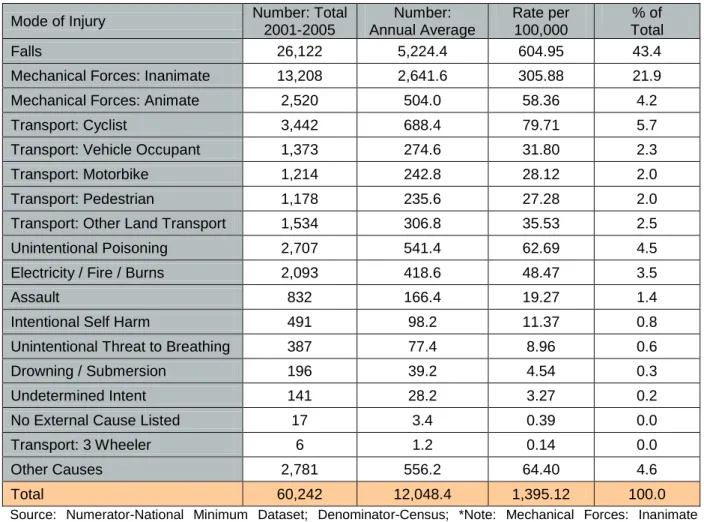
Hospital Admissions:In New Zealand during 2003-2007, falls followed by inanimate mechanical forces (injuries where children are struck by something or struck against) were the leading causes of injury related hospital admissions for children (0-14 years). Transport related injuries as a group however also made a significant contribution (Table 1).
Mortality
In New Zealand during 2001-2005, unintentional threats to breathing were the leading cause of injury related mortality in children (0-14 years), with the majority of these cases occurring during infancy and being attributed to unintentional suffocation or strangulation in bed. Vehicle occupant and pedestrian injuries and drowning also made a significant contribution (Table 2).
Table 1. Most Frequent Causes of Injury Related Hospital Admission for Children 0-14 Years, New Zealand 2003-2007
Mode of Injury Number: Total
2001-2005 Number: Annual Average Rate per 100,000 % of Total Falls 26,122 5,224.4 604.95 43.4
Mechanical Forces: Inanimate 13,208 2,641.6 305.88 21.9
Mechanical Forces: Animate 2,520 504.0 58.36 4.2
Transport: Cyclist 3,442 688.4 79.71 5.7
Transport: Vehicle Occupant 1,373 274.6 31.80 2.3
Transport: Motorbike 1,214 242.8 28.12 2.0
Transport: Pedestrian 1,178 235.6 27.28 2.0
Transport: Other Land Transport 1,534 306.8 35.53 2.5
Unintentional Poisoning 2,707 541.4 62.69 4.5
Electricity / Fire / Burns 2,093 418.6 48.47 3.5
Assault 832 166.4 19.27 1.4
Intentional Self Harm 491 98.2 11.37 0.8
Unintentional Threat to Breathing 387 77.4 8.96 0.6
Drowning / Submersion 196 39.2 4.54 0.3
Undetermined Intent 141 28.2 3.27 0.2
No External Cause Listed 17 3.4 0.39 0.0
Transport: 3 Wheeler 6 1.2 0.14 0.0
Other Causes 2,781 556.2 64.40 4.6
Total 60,242 12,048.4 1,395.12 100.0
Source: Numerator-National Minimum Dataset; Denominator-Census; *Note: Mechanical Forces: Inanimate includes being unintentionally struck/crushed/injured by an object/implement. Emergency Department Admissions excluded (see Appendix 1 for rationale)
Table 2. Most Frequent Causes of Injury Related Mortality in Children 0-14 Years, New Zealand 2001-2005
Cause of Death Number: Total
2001-2005 Number: Annual Average Rate per 100,000 % of Deaths
Unintentional Threat to Breathing 91 18.2 2.13 19.2
Transport: Vehicle Occupant 80 16.0 1.87 16.8
Transport: Pedestrian 71 14.2 1.66 14.9
Transport: Cyclist 13 2.6 0.30 2.7
Transport: Motorbike 8 1.6 0.19 1.7
Transport: Other Land Transport 13 2.6 0.30 2.7
Drowning / Submersion 68 13.6 1.59 14.3
Assault 36 7.2 0.84 7.6
Electricity / Fire / Burns 34 6.8 0.79 7.2
Intentional Self Harm 16 3.2 0.37 3.4
Falls 14 2.8 0.33 2.9
Mechanical Forces 11 2.2 0.26 2.3
Other Causes 20 4.0 0.47 4.2
Total 475 95.0 11.10 100.0
New Zealand Trends in Injury Mortality
During 1990-2005, injury related mortality rates in New Zealand children (0-14 years) gradually declined, and while the largest absolute declines were in the land transport crash category (where rates fell from 8.3 per 100,000 in 1990-91 to 3.8 per 100,000 in 2004-05), the unintentional (non transport) mortality rate also reduced (Figure 1).
Figure 1. Trends in Injury Mortality Rates for Children 0-14 Years, New Zealand 1990-2005
Causes of Death due to Injury in Children 0-14 Years, New Zealand 1990-2005 0 2 4 6 8 10 12 14 16 18 20 1990-91 1992-93 1994-95 1996-97 1998-99 2000-01 2002-03 2004-05 Year Mo rtal ity pe r 10 0,0 00 Other Causes
Assault, Neglect and Maltreatment Accidental Threat to Breathing Land Transport Accident Unintentional Non-Transport
*Other Causes include Suicide Deaths
Source: Numerator-National Mortality Collection; Denominator-Census
Unintentional Injuries in Children (Non-Transport)
Trends in MortalityIn New Zealand during 1990-2005, unintentional non-transport injury deaths (e.g. due to falls, mechanical forces (e.g. being struck by an object), drowning, burns, poisoning) in children gradually declined, although the pattern was more variable for young people after 2000-01 (Figure 2).
Gender and Age Differences
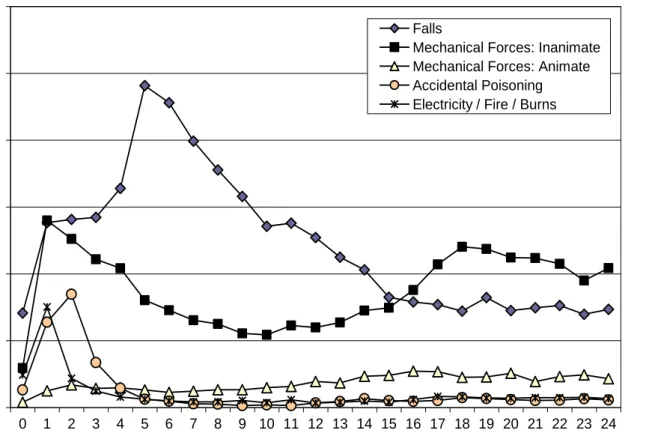
When broken down by age, unintentional non-transport injury admissions were lowest for those <1 year, but then rose rapidly to peak between one and two years of age. While for females, rates declined throughout childhood, for males this decline was much less marked. A similar gender imbalance was seen for mortality during the teenage years (Figure 3). When broken down by cause, admissions for falls peaked at 5 years, while unintentional poisoning, inanimate mechanical forces and exposure to electricity / fire / burns were highest for those aged 1-2 years (Figure 4).
Distribution by Prioritised Ethnicity, NZDep, Gender and Rural / Urban Location
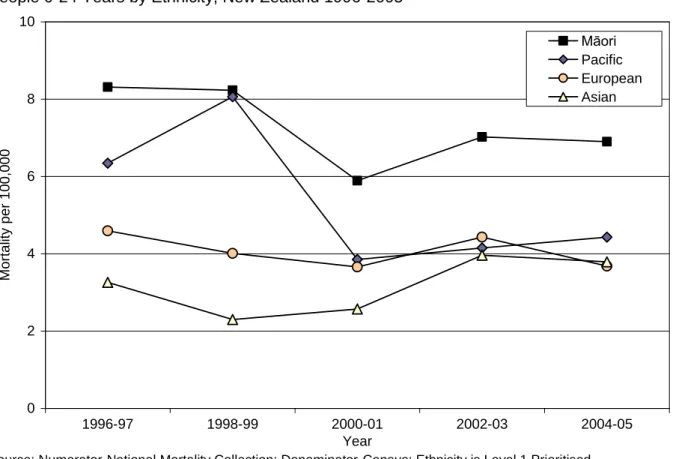
In New Zealand during 2003-2007, hospital admissions for unintentional non-transport injuries were significantly higher for Pacific than for Māori, than for European, than for Asian children. They were also significantly higher for males and those in more deprived or urban areas (Table 3). In contrast, during 1996-2005 mortality from unintentional non-transport injury was higher for Māori children and young people (Figure 5).
Figure 2. Mortality Rates from Unintentional Non-Transport Injuries in Children 0-14 Years and Young People 15-24 Years, New Zealand 1990-2005
Deaths from Unintentional Non-Transport Injuries in Children 0-14 and Young People 15-24 Years, New Zealand 1990-2005
0 2 4 6 8 10 1990-91 1992-93 1994-95 1996-97 1998-99 2000-01 2002-03 2004-05 Year Mo rtal ity pe r 10 0,0 00
New Zealand Unintentional Non-Transport Deaths 0-14 yrs New Zealand Unintentional Non-Transport Deaths 15-24 yrs
Source: Numerator-National Mortality Collection; Denominator-Census
Figure 3. Hospital Admission (2003-07) and Mortality (2001-05) Rates from Unintentional Non-Transport Injuries in New Zealand Children and Young People 0-24 Years by Age and Gender
0 200 400 600 800 1,000 1,200 1,400 1,600 1,800 2,000 2,200 0 1 2 3 4 5 6 7 8 9 10 11 12 13 14 15 16 17 18 19 20 21 22 23 24 Age (Years) A dm is s ion s pe r 10 0,0 00 0 10 20 30 40 50 Mo rtal ity pe r 10 0,0 00 Deaths Male Deaths Female Admissions Male Admissions Female
Figure 4. Hospital Admission Rates for Selected Unintentional Non-Transport Injuries in Children and Young People 0-24 Years by Age and Cause, New Zealand 2003-2007
Hospital Admissions for Unintentional Non-Transport Related Injury in Children and Young People 0-24 Years by Age and Mode of Injury, New Zealand 2003-2007 0 200 400 600 800 1,000 1,200 0 1 2 3 4 5 6 7 8 9 10 11 12 13 14 15 16 17 18 19 20 21 22 23 24 Age (Years) A dm is s ion s pe r 10 0,0 00 Falls
Mechanical Forces: Inanimate Mechanical Forces: Animate Accidental Poisoning Electricity / Fire / Burns
Source: Numerator-National Minimum Dataset; Denominator-Census
Table 3. Distribution of Hospital Admission Rates from Unintentional Non-Transport Injuries in Children 0-14 Years by Ethnicity, NZDep Decile and Gender, New Zealand 2003-2007
Variable Rate RR 95% CI Variable Rate RR 95% CI
NZ Deprivation Index Decile NZ Deprivation Index Quintile
1 771.51 1.00 1-2 756.32 1.00 2 740.45 0.96 0.91 - 1.01 3-4 854.11 1.13 1.09 - 1.17 3 792.63 1.03 0.98 - 1.08 5-6 1003.03 1.33 1.28 - 1.37 4 916.79 1.19 1.13 - 1.24 7-8 1230.58 1.63 1.58 - 1.68 5 927.76 1.20 1.15 - 1.26 9-10 1461.44 1.93 1.88 - 1.99 6 1078.43 1.40 1.34 - 1.46 Prioritised Ethnicity 7 1145.71 1.49 1.42 - 1.55 European 1074.54 1.00 8 1311.54 1.70 1.63 - 1.77 Māori 1231.98 1.15 1.12 - 1.17 9 1483.52 1.92 1.85 - 2.00 Pacific 1355.77 1.26 1.22 - 1.30 10 1443.16 1.87 1.80 - 1.95 Asian 635.94 0.59 0.57 - 0.62
Gender Urban / Rural
Female 885.43 1.00 Urban 1127.73 1.00
Male 1274.89 1.44 1.41 - 1.47 Rural 836.28 0.74 0.72-0.76
Source: Numerator-National Minimum Dataset; Denominator-Census; Note: Rate per 100,000 per year; Ethnicity is Level 1 Prioritised; RR: Rate Ratios are unadjusted
Figure 5. Mortality Rates from Unintentional Non-Transport Injuries in Children and Young People 0-24 Years by Ethnicity, New Zealand 1996-2005
Deaths due to Unintentional Non-Transport Injuries in Children and Young People 0-24 Years by Ethnicity, New Zealand 1996-2005
0 2 4 6 8 10 1996-97 1998-99 2000-01 2002-03 2004-05 Year Mo rtal ity pe r 10 0,0 00 Māori Pacific European Asian
Source: Numerator-National Mortality Collection; Denominator-Census; Ethnicity is Level 1 Prioritised
Summary
Injuries are a major cause of morbidity and mortality for New Zealand children and especially for children under the age of five years. For preschool age children, falls, unintentional poisoning, burns and scalds, and injuries arising from “inanimate forces” (e.g. being struck by objects or bumping into things) are all common causes of hospital admission, with children 1-3 years being particularly vulnerable to a number of these causes. For mortality, suffocation and drowning are of particular concern (among non-transport injuries). There appears also to be groups within the child population who are more vulnerable to non-transport injuries. For example, various analyses indicate that particular attention should be paid to Maori and Pacific children, boys and those living in more deprived, or rural areas, when planning injury prevention initiatives.
Poisoning
Introduction
In New Zealand each year, on average 540 children aged 0-14 years are admitted to hospital as the result of an accidental poisoning, with the peak age of hospitalisation being 2 years (see previous section). Further, recent research in the Australian context suggests that the majority (94.1%) of children <5 years seeking medical attention (either poisons information centre, or the emergency department) as the result of a poisoning accessed the agent in their own home, and in 38% of cases, the parent or caregiver was in the immediate vicinity at the time of the incident. The span of unsupervised time reported was 5 minutes or less in 79.5% of cases, with the means of access generally being at the time of the use of the agent (75.3%) including just purchased, rather than when the agents were in their usual place of storage [11]. The authors of this study concluded that there may be little scope for improved supervision as a major intervention, but that improved labelling and packaging (including child resistant packaging) and agent specific interventions (e.g. child resistant bait stations for rat poison, covers for vaporisers), could potential play a much greater role in keeping children safe [11].
Circumstances Surrounding Poisoning in Preschool Children
In considering the contributory factors leading to home based injury events, Haddon‟s Matrix [8] provides a useful framework. Table 4 provides an overview of these factors as they relate to poisoning in preschool age children.
Table 4. Haddon‟s Matrix Describing Circumstances Surrounding Home Based Poisoning Events in Preschool Aged Children
Child Agent Physical
environment Social / Policy Environment Pre-Event Age and developmental stage (e.g. judgement, curiosity) Gender Access: Ease of opening packaging Attractiveness of substance Inadequate labelling Large packaging dose House has no lockable cupboards, Cupboards within easy reach Agent in use Level of caregiver supervision Lack of awareness of toxicity and poisoning risks by caregivers Lack of standards / regulations for toxic products and packaging
Event Child‟s secrecy about ingestion
Toxicity of chemical Ease of consumption (e.g. liquid vs. solid) Dose consumed
Places where child can ingest substances out of sight of caregiver Caregiver not noticing unusual behaviour Caregiver distracted (e.g. other children sick, crisis, phone)
Post-Event Child‟s inability to communicate post incident Lack of suitable antidote Lack of instruction for post ingestion on packaging Lack of access to Poison Information Centre Lack of adequate pre-hospital care, acute care and / or rehabilitation
Lack of awareness by caregivers of First Aid measures or how to contact Poison Info Centre Lack of timely decontamination by healthcare workers Source of Information: [11] [9]
Relevant New Zealand Legislation and Standards
In New Zealand a range of Legislation and Standards are relevant to the prevention of unintentional poisoning in children. The textbox below outlines the key points for each.
Legislation and Standards Relevant to the Prevention of Poisoning in Children
Medicines Regulations 1984 (Section 37)
Section 37 of this regulation states that “no person shall sell any tablet...or.. medicine.. belonging to a class of medicines to which this regulation applies, unless the tablet or item is enclosed in a safety
container”. The following medicines are named specifically in this regulation: aspirin, paracetamol, iron
(high doses only), barbiturates, phenothiaszines (only those for mental illness), and antidepressants.
The definition of CRP under this legislation is not tied to any safety particular standard [12].
Hazardous Substances and New Organisms Act 1996
This Act restates and reforms the law relating to the management of hazardous substances and new organisms. The Environmental Risk Management Authority was established under this Act as an authority, with certain obligations and responsibilities. These include identifying a group of hazardous substances or products, and imposing conditions that they see fit. Group standards are an approval for a group of hazardous substances of a similar nature. Child Resistant Packaging clauses in some of the group standards outline what substances require CRP and which do not. For further detail see http://www.legislation.govt.nz/act/public/1996/0030/latest/DLM381222.html?search=ts_act_Hazardous+
Substances+and+New+Organisms+Act+1996_resel&p=1&sr=1 .
Child-Resistant Packages (NZS 5825:1991)
Child resistant packaging (CRP) includes both non-recloseable and recloseable packaging. Non-recloseable packaging usually contains a single tablet enclosed in either aluminium foil or blister packaging, while recloseable packaging involves a container fitted with a child resistant cap [12]. CRP are designed to increase the amount of time that it takes for a young child to gain access to the medication or chemical (i.e. they are designed to be significantly difficult for most children under five years of age to open, or obtain a toxic amount of the substance within a reasonable time). CRP however are not child proof (see http://poisons.co.nz/fact.php?f=27&c=26) .
In New Zealand, child resistant packaging (CRP) is required to meet the current New Zealand Standard (NZS 5825:1991). This standard outlines the requirements for child resistant packaging and provides for panel testing of CRP, with typical test criteria requiring a container to undergo panel testing by e.g. 200 children aged from 42 months to 51 months, and 100 adults between the ages of 18 to 60 years (including people with disabilities). The Standard specifies that “At least 85% of the children must be unable to open the container within 5 minutes of following a non-verbal demonstration of how to open
the container. For adults, at least 90% must be able to open the container”.
1998 Code of Practice for Child Resistant Packaging and Toxic Substances
The 1998 Code of Practice for Child Resistant Packaging and Toxic Substances [13] produced by the
Ministry of Health lists a range of chemicals requiring child resistant closures. These include:
Alkaline salts -dishwasher powders; Alkaline salts -dishwasher liquids; Cineole; Clove oil Eucalyptus oil preparations containing greater than 50%; Eugenol; Hydrocarbons when packaged as kerosene, lamp oil, mineral turps, thinner, reducers, white petroleum spirits or dry cleaning fluids; Hydrochloric acid; Melaleuca oil (tea tree oil); Methylated Spirits; Methyl salicylate preparations containing greater than
50%; Oil of turpentine; Potassium hydroxide; Sodium hydroxide.
If a substance is not included in the above list, the Code of Practice outlines a number of criteria against which an agent may be assessed in order to determine wither a CRP is required. These criteria fall into three main categories: toxicity, corrosivity and viscosity.
Pharmacy Contractors Section 51 Advice Notice
Pharmac funds child safety caps for oral liquid preparations of a number of medications [12]. Since 1 November 1997, it has been a requirement under the Pharmacy Contractors Section 51 Advice Notice, that child safety caps be placed on the subsidised, dispensed oral liquid formulations of the following:
Paracetamol; Salicylates/NSAIDs; Anticonvulsants; Thyroxine; Antidepressants; Narcotics;
Beta-2-agonists; Benzodiazepines; Theophylline; Iron salts; Digoxin; Cardiac Drugs; and Phenothiazines,
Current Evidence for Prevention and Implications for DHBs
Table 5 provides an overview of systematic and other reviews relevant to the prevention of poisoning in preschool age children. These reviews suggest that a range of measures may be effective in preventing poisoning events, but that each approach has its strengths and limitations. The following section considers these measures, under the subheadings of General Support, Some Support and Insufficient Evidence.
Table 5. Publications Relevant to the Prevention of Poisoning in Preschool Children
Systematic Reviews of Poisoning Prevention Studies in Children
Kendrick, D., et al., Home safety education and provision of safety equipment for injury prevention. Cochrane Database of Systematic Reviews, 2007(1).
This review considered the effect of home safety education and provision of safety equipment on a variety of interventions to reduce childhood injuries. In total eighty studies were included, forty of which reported a range of outcomes related to poisoning prevention. Of these 40, there were 18 which were included in at least one of the meta-analyses of poisoning prevention outcomes. (14 RCTs, 3 non-RCTs and 1 controlled before-and after study.) Individual participant level data was obtained from 9 of these studies. The poisoning prevention interventions considered were: storage of medicines and cleaning products out of children‟s reach, possession of syrup of ipecac (Note: now no longer recommended) and having the poison control centre number accessible. The reviewers found that home safety education was effective in increasing all of these safety practices and that provision of equipment, as well as education (e.g. by providing childproof cupboard catches) was more effective than education alone. The reviewers found there was a lack of evidence that home safety education, with or without the provision of safety equipment was effective in reducing rates of thermal injuries, poisoning or a range of injuries, but note that the number of studies and the number of person years included in the meta-analyses for injury outcomes were relatively small. They explained that it was unlikely that this meant that safety education was not beneficial and reported on a number of observational studies supporting this point of view.
Nixon, J., Spinks, A. and Turner, C. Community based programs to prevent poisoning in children 0-15 years.
Injury Prevention, 2004. 10: p. 43-46.
This authors of review found only four studies of community based poisoning prevention programs that included reporting on poisoning rates as an evaluative component (the 3 most recent of which are included in the Cochrane review above). Two studies were designed with a community control for comparison with the intervention community and a further two studies were designed using the intervention community as an historical control in a before-after design. Only one of the 4 studies provided convincing evidence for an effective community program for reducing child poisoning; this was a South African study which found that the introduction of child resistant containers for paraffin resulted in a 47% decrease in the incidence of paraffin ingestion in the intervention area compared to the control area. The authors note that further work is needed on two fronts: providing community implementation of interventions that have been shown to be efficacious in research settings and demonstrating the resulting population level improvements in outcomes through high quality evaluations.
Towner, E., et al., What Works in Preventing Unintentional Injuries in Children and Young Adolescents. 2001, Health Development Agency. www.nice.org.uk/niceMedia/documents/prevent_injuries.pdf
Pages 71-75 of this document relate to poisoning. Five studies which examined the impact of educational approaches to poisoning prevention are reviewed. (3 of which are included in the Cochrane review above). These include 2 RCTs, a before-and-after study without a control group, a non-randomised controlled trial and one study having a post-test only control group design. The review found that interventions to increase the safe storage of non-medicinal poisons may be an effective means of preventing poisoning injury. It also found that educational interventions aimed at children and parents have been associated with increased knowledge of poisons and poison prevention but that it is not known whether such approaches result in reductions in poisoning injuries. In addition 2 studies examining the effect of legislation are reviewed. One was a U.K. before-and after study which reviewed hospital admission data following the voluntary introduction of child-resistant packaging or blister packs for all solid dose medications. This study did not demonstrate a reduction in poisoning admission rates and noted an increase in poisoning due to liquid medicines (which were not covered by the packaging agreement). The other was a U.S. time series study which examined poisoning deaths in the period 1964-1992 during which legislation on the packaging of prescription drugs was introduced ( in 1974). This study found a reduction in children‟s deaths from poisoning over the study period.
Individual Randomised Trials of Poisoning Prevention in Children
Sznajder, M., et al., Home delivery of an injury prevention kit for children in four French cities: a controlled randomizedtrial. Injury Prevention, 2003. 9: p. 261-265.
This study was a RCT involving 100 families in 4 French cities. Selection criteria for participation were primipara, medical problem, psychological and/or socio-economic difficulties. One group (50 families) received counselling and a kit including preventive devices and pamphlets about indoor injuries and ways to avoid them and the other group received only counselling. At follow up 6-8 weeks later, safety improvement in the group was significantly higher in the group with the kit (p<0.01 for improvements related to poisoning). The authors concluded that “Routine home visits by social services offer a good opportunity to tackle child injury prevention. Free delivery of prevention kits and counselling allow families to modify their behaviour and homes so as to reduce risks.”
Other Reviews, Programs and Campaigns - Overseas Publications
Peden, M., et al., (Editors) World report on child injury prevention. World Health Organization, 2008
http://www.who.int/violence_injury_prevention/child/injury/world_report/en/
This publication provides a global perspective on child injury. Chapter 6 relates to poisoning. It covers epidemiology and mortality, types of poison, risk factors and preventive measures. The preventive strategies of proven effectiveness are listed as: removing the toxic agent, legislating for (and enforcing) child-resistant packaging of medicines and poisons, packaging drugs in non-lethal quantities and establishing poison control centres.
MacKay, M. et al., Child Safety Good Practice Guide: Good investments in unintentional child injury prevention and safety promotion. Amsterdam: European Child Safety Alliance, EuroSafe, 2006.
http://www.eurosafe.eu.com/csi/eurosafe2006.nsf/wwwVwContent/l3publicationsresources.htm
This European Child Safety Alliance publication (a programme of the European Association for Injury Prevention and Safety Promotion (EuroSafe)) is a “Good practice guide” which aims to “combine the best available research evidence with the practical expertise of professionals in the „real world‟”. Page 18 summarises good practice for poisoning prevention in children, while page 68 reviews a study on Child Resistant Packaging for Chemicals in the Netherlands.
Other Relevant Links – New Zealand Websites New Zealand National Poisons Centrewww.poisons.co.nz
Provided by the Ministry of Health and ACC, the NPC maintains an accurate and up-to-date database of almost all poisonous substances in NZ and Australia, and provides professional and timely advice during poisoning incidents.
TOXINZ databasewww.toxinz.com
TOXINZ is an Internet database containing information regarding toxic compounds and the management of poisoned patients. It is designed to meet Australasian requirements and contains over 190,000 listed chemical products, pharmaceuticals, plants and hazardous creatures. It is fully referenced and reviewed by an international
editorial board.
SafeKids New Zealandhttp://www.safekids.org.nz/
Safekids New Zealand is a national child injury prevention service, and a service of Starship Children's Health. It aims to reduce the incidence and severity of unintentional injuries to children in New Zealand aged 0 - 14 years. Its website contains a range of information on child injury prevention relevant to the New Zealand context
Current Evidence for Prevention and Implications for DHBs
General Support
Child Resistant Packaging
Child Resistant Packaging is one mechanism for making medicines and household chemicals less accessible to children. In New Zealand, a range of legislation provides guidance as to which medications and toxins require CRP.
While no Cochrane reviews have considered the effectiveness of CRP in preventing childhood poisoning, a number of other reviews have summarised individual studies on the effectiveness of CRP [14], [7]. In one such review [14] of 3 RCTs and 2 observational studies, the authors found general support for the use of CRP. They cited one UK before and after study where the authors noted a significant fall in salicylate poisoning after the introduction of CRP for children‟s aspirin and paracetamol preparations in 1976. Similarly they note that in the USA, the Poison Prevention Packaging Act (PPPA) was introduced in 1970 to reduce unintentional childhood poisoning. Since 1970 there has been an extension in the number of substances with safety packaging (including prescription medicines, non-prescription and household products). This has resulted in a significant mortality rate reduction of 45% from levels before child-resistant packaging.
CRP have limitations however. Australian [11], research suggests that a significant proportion of childhood poisonings occur while the substance is in use, therefore necessitating ongoing parental vigilance, even in the presence of CRP. Problems identified include: adults failing to close the CRC properly; an older child opening the container and giving the contents to a younger child; closures that do not continue to function as designed over the period of use;
broken or faulty containers; parents having a false sense of safety, so that they are less vigilant. Further, the current ANZ Standard states that at least 85% of children will be unable to open the container within 5 minutes. This means that a significant minority of children will be able to access some medications, even given a properly closed CRP.
Some Support
Home Safety Education Regarding the Secure Storage of Poisons
Kendrick et al‟s systematic review [5] found that families receiving home safety education were significantly more likely to store medicines and cleaning products safely. The most effect appeared to be where locks were provided in addition to safety education. While there is still insufficient evidence that home safety education (with our without safety equipment) reduces poisoning rates, it is likely that home safety education regarding the safe storage of poisons may result in changes in parental behaviour. Further research may help clarify the actual processes that will ensure more effective reductions in poisoning rates. In addition, as previously noted, a significant proportion of poisonings actually take place while the agent is in use [11] and this also needs to be taken into account in any educational program.
No Longer Supported
While Syrup of Ipecac is mentioned in a number of reviews, it has been determined to be harmful in some cases, so it is no longer recommended (see National Poisons Centre fact sheet: www.poisons.co.nz/fact.php?f=19).
Additional Points for DHBs
In considering childhood poisoning prevention in their areas, DHBs might also like to consider the following:
1. Supporting the ongoing work of the National Poisons Centre www.poisons.co.nz, so that it can continue to provide immediate information that is critical to prompt and appropriate treatment for childhood poisoning.
2. Increasing community knowledge of the frequency, and effects, of poisoning from common medications such as paracetamol in young children, so that both prevention and rapid response to an ingestion are known to be important.
3. Continuing to actively support programmes that promote the use of CRP and/or actively monitor HSNO regulations, whether these are through pharmacies, community programmes, general information processes or home visiting.
4. Ensuring that syrup of ipecac is not longer included in any material on poisoning treatment at home.
Burns and Scalds
Introduction
Burns and scalds are a common cause of injury related hospital admission in preschool age children, with admission rates being highest for those between 1 and 2 years of age [4]. Research suggests that burns and scalds in this age group typically occur in the home environment and are usually caused by common household items, such as kettles, saucepans, taps, hot drinks, irons and heaters [15]. The most common cause in New Zealand is scalds from hot beverages. Common scenarios include adults with hot drinks who are interacting with young children, and when a child pulls containers with hot liquids onto themselves from the bench, table or stove. Children who play in the kitchen during food or drink preparation are also at risk, with the child‟s small stature and relative mobility making them vulnerable to an adult tripping / the spilling of hot drinks or food. Children‟s thinner skin also burns at a lower temperature, making them more vulnerable to deeper burns from contact with hot liquids [16]. Burns are also one of the top four causes of mortality for 0-4 year olds in New Zealand [4], with house fires being the major reason for these events.
Circumstances Surrounding Burns and Scalds in Preschool Children
Table 6 uses Haddon‟s Matrix to consider the attributes of the child, thermal agent, physicaland social / policy environment which may contribute to burns or scalds in preschool children.
Relevant New Zealand Legislation and Standards
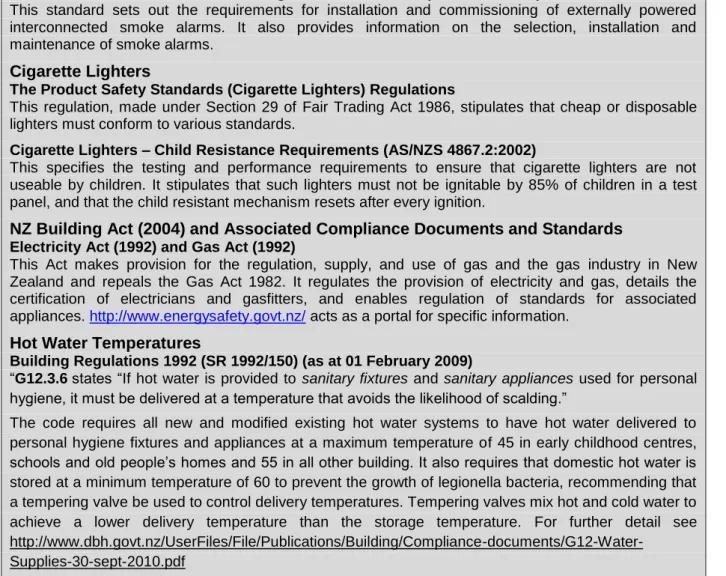
In New Zealand there is a range of Legislation and Standards relevant to the prevention of burns and scalds in children. The following textbox outlines the key points for each.
Flammability of Clothing
Children’s Nightwear and Limited Daywear Having Reduced Fire Hazard (AS/NZS 1249:2003)
This Product Safety Standard aims to ensure that all children‟s nightwear is either designed to reduce fire danger or is made of fabric that is less likely to burn. All children‟s nightwear (including some types of daywear) must carry a fire hazard label. The label provides to caregivers information aimed at helping to reduce the risk of death and injury from fire hazards [17].
Product Safety Standards (Children’s Nightwear and Limited Daywear Having Reduced Fire Hazard) Regulations 2008 (SR 2008/199)
This regulation, made under Section 29 of Fair Trading Act 1986 stipulates that children‟s‟ sleepwear and limited daywear must conform to standard AS/NZS 1249:2003.
Flammability of Upholstery
Furniture – Assessment of the Ignitability of Upholstered Furniture (AS/NZS3744:1998)
Ignitability characteristics of furniture can affect the ignition and spread of fires, especially when the furniture provides initial fuel for the fire (e.g. cigarette butt on couch, chair too close to a heater). This standard specifies the testing and performance requirements for the ignitability of upholstered furniture based on different ignition sources.
Upholstery Materials for Domestic Furniture – Smouldering Ignitability (AS/NZS 4088.1:1996)
This standard specifies testing and performance requirements for upholstery materials for domestic furniture use. While generally indicative of the likely ignitability characteristics of furniture items made from tested materials, variable outcomes may arise from different production methods and designs. Smoke Alarms
Fire Detection and Alarm Systems in Buildings (NZS 4512:2003)
This Standard specifies the requirements for fire detection and alarm systems in specified buildings. It covers their design, installation, extension, modification, commissioning, testing and maintenance.




![Table 6. Haddon‟s Matrix Describing Circumstances Surrounding Burns and Scalds in Preschool Aged Children (Source information [9][15])](https://thumb-us.123doks.com/thumbv2/123dok_us/1342010.2679359/26.892.80.823.129.1170/haddon-matrix-describing-circumstances-surrounding-preschool-children-information.webp)