AFRICAN DEVELOPMENT BANK
UGANDA
FARM INCOME ENHANCEMENT AND FORESTRY CONSERVATION
PROGRAMME: PROJECT -2 (FIEFOC-2)
OSAN DEPARTMENT November 2015 P u b lic D is clo su re Au th o rized Pu b lic Dis clos u re Au th o rized
TABLE OF CONTENTS
I – STRATEGIC THRUST & RATIONALE ... 1
1.1. Project linkages with country strategy and objectives ... 1
1.2. Rationale for Bank’s involvement ... 2
1.3. Donors coordination... 3
II – PROJECT DESCRIPTION ... 3
2.1. Project components ... 4
2.2. Technical solutions retained and other alternatives explored ... 4
2.3. Project type ... 5
2.4. Project Cost and financing arrangements ... 5
2.5. Project’s target area and population ... 7
2.6. Participatory process for project identification, design and implementation ... 8
2.7. Bank Group experience, lessons reflected in project design ... 8
2.8. Key performance indicators ... 9
III – PROJECT FEASIBILITY ... 10
3.1. Economic and financial performance ... 10
3.2. Environmental and Social impacts ... 11
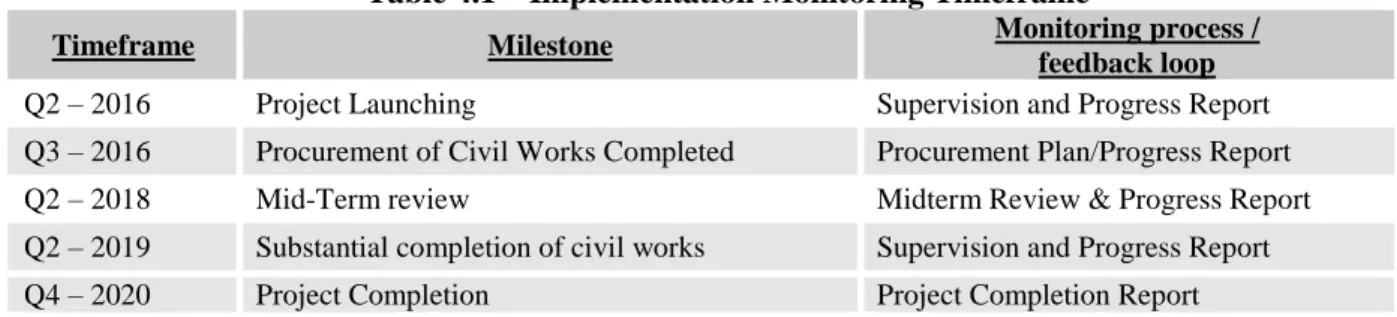
IV – IMPLEMENTATION ... 13 4.1. Implementation arrangements ... 13 4.2. Monitoring ... 16 4.3. Governance ... 17 4.4.Sustainability... 17 4.5. Risk management: ... 18 4.6. Knowledge building ... 18
V – LEGAL INSTRUMENTS AND AUTHORITY... 18
5.1. Legal instrument ... 18
5.2. Conditions associated with Bank’s intervention ... 18
5.3. Other conditions ……… ………..19
5.4. Compliance with Bank Policies ... 19
V– RECOMMENDATION………..20
Appendix I. Country’s comparative socio-economic indicators
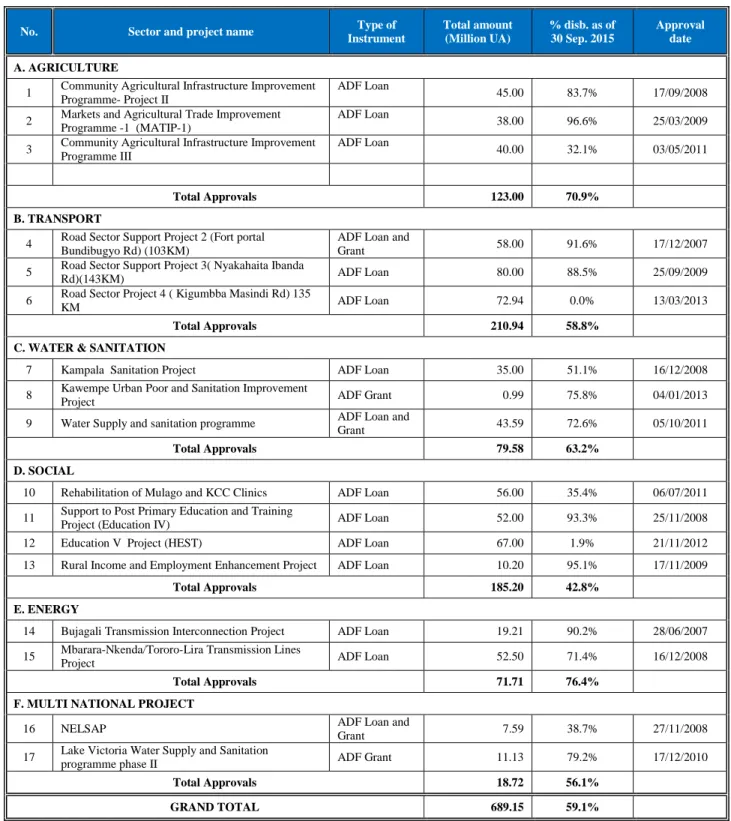
Appendix II. AfDB’s Ongoing Portfolio in Uganda (as at 30 September 2015)
Appendix III. Key related projects financed by the Bank and other development partners in the country
Appendix IV. Map of the Project Area
Appendix V. Agriculture and Water Sector Project: Fragility Analysis Uganda Appendix VI. Financial and Economic Analysis
Appendix VII. Climate Screening – Full Results
i
Currency Equivalents
As of August, 2015
Currency Unit = Ugandan Shillings (UGX) UA 1 = UGX 4787.95
UA 1 = USD 1.3947
USD 1 = UGX 3432.96
Fiscal Year
July 1 – June 30
Weights and Measures
1metric tonne = 2204 pounds (lbs) 1 kilogramme (kg) = 2.200 lbs
1 metre (m) = 3.28 feet (ft) 1 millimetre (mm) = 0.03937 inch (“) 1 kilometre (km) = 0.62 mile 1 hectare (ha) = 2.471 acres
ii
Acronyms and Abbreviations
ADB ADF AAMP ASDP AREP BOU CAADP CAIIP CAP CBO CSP DANIDA DEAP DFID DP EIRR ESMP EU FBMOs FFS FID FIRR GDP GoU HDI IAWMP ICB IFAD LCA LFR MAAIF
African Development Bank African Development Fund
Area-based Agricultural Modernisation Programme
Agriculture Sector Development Partners Group
Adaptation Review and Evaluation Procedures
Bank of Uganda
Comprehensive Africa Agricultural Development Programme
Community Agricultural Infrastructure Improvement Programme
Catchment Afforestation Project Community Based Organisation Country Strategy Paper
Danish International Development Agency
District Environmental Action Plan Department for International Development
Development Partners
Economic Internal Rate of Return Environmental and Social Management Plan
European Union
Farmer Based Management Organizations
Farmer Field School
Forestry Inspection Division Financial Internal Rate of Return Gross Domestic Product
Government of Uganda Human Development Index
Integrated Agriculture and Watershed Management Project
International Competitive Bidding International Fund for Agricultural Development
Local Currency Account Local Forest Reserve
Ministry of Agriculture, Animal Industry and Fisheries
M&E MGLSD MOFPED MOWE MOU MTR NAADS NCB NDF NDP NEMA NFA NFP NPV O&M NPCU PEAP PY1 PY2 PY3 PY4 PY5 PMA PPP PRA RBLF SFI SME SSI TA TOT UA UBOS UGFO UGX WAP WUA
Monitoring and Evaluations
Ministry of Gender, Labour and Social Development
Ministry of Finance, Planning and Economic Development
Ministry of Water and Environment Memorandum of Understanding Mid-Term Review
National Agricultural Advisory Services National Competitive Bidding
Nordic Development Fund National Development Plan
National Environment Management Authority
National Forestry Authority National Forestry Plan Net Present value
Operation and Maintenance National Project Coordination Unit Poverty Eradication Action Plan Programme Year One
Programme Year Two Programme Year Three Programme Year Four Programme Year Five
Plan for Modernisation of Agriculture Public-Private-Partnership
Participatory Rural Appraisal Result-Based Logical Framework Soil Fertility Initiative
Small and Medium Scale Enterprise Small Scale Irrigation
Technical Assistance Training of Trainers Unit of Account
Uganda Bureau of Statistics Uganda Field Office of ADB Uganda Shillings
Watershed Action Plan Water Users’ Associations
iii
Loan and Grant Information
Client’s information
BORROWER : Republic of Uganda
EXECUTING AGENCY : Ministry of Water and Environment
Financing plan
Source Amount (USD Million) Instrument
ADB 76.70 Loan
Nordic Development Fund (NDF) 5.60 Grant
Government 9.13 Not applicable
TOTAL COST 91.43
ADB’s key financing information
Loan / grant currency US Dollars
Loan Type Enhanced variable spread type
Interest rate * Base Rate + Funding Cost Margin + Lending Margin
Base Rate Floating Base Rate based on 6 month LIBOR with free
option to fix the Base Rate.
Funding cost margin The six months adjusted average of the difference between:
(i) the refinancing rate of the Bank as to the borrowings linked to 6- month LIBOR and allocated to all its floating interest loans denominated in USD and (ii) 6-month LIBOR ending on 30 June and on 31 December. This spread shall apply to the 6-month LIBOR which resets on 1 February and on 1 August. The Funding Cost Margin shall be determined twice per year on 1 January for the semester ending on 31 December and on 1 July for the semester ending on 30 June.
Lending Margin 60 basis point (0.60%)
Commitment Fee Not Applicable
Other fees* Not Applicable
Tenor 20 years maximum
Grace period 5 years maximum
FIRR
NPV (USD base case )
18% 1.3 Million
EIRR (base case) 21%
*if applicable
Timeframe - Main Milestones (expected)
Concept Note approval 15 June, 2015
Project approval December, 2015
Effectiveness June, 2016
Last Disbursement June,2021
Completion December, 2020
iv
Project Summary
1. Project Overview
1.1 The Farm Income Enhancement and Forest Conservation Programme – Project 2 (FIEFOC-2) is designed within the context of the Government of Uganda’s National Development Plan (NDP) and the long term development strategy, the Vision 2040 both of which promote of agricultural infrastructure and income enhancement. In order to realize the 2040 vision, the project will contribute to improvement of farm incomes, rural livelihoods, food security and climate resilience, sustainable natural resources management and agricultural enterprise development. The project consists of four components namely: (i) Agriculture Infrastructure Development; (ii) Agribusiness Development; (iii) Integrated Natural Resources Management; and (iv) Project Management with a total cost of USD 91.43 million. The project seeks to consolidate and expand the notable achievements of the FIEFOC Programme first phase which was completed in December 2012.
1.2 According to Uganda National Household Survey 2013, about 19.7%, of the total population representing 6.7 million people, are unable to meet their basic needs and are living below absolute poverty line. The incidence of poverty is highest among food-crop growing category in the rural areas due to low income. The project seeks to increase production and farmer incomes through improvements to, and expansion of small-scale irrigation schemes, development of agribusiness and adoption of sustainable land, forest, and water management practices and technologies to generate income from natural resources.
1.3 The project will be implemented over a five-year period in five districts where the proposed irrigation schemes are located namely: Nebbi, Oyam, Butaleja, Kween, and Kasese. The target population in those districts is about 1,816,756 of which 51.7% are women and comprising 386,543.8 households. It is envisaged that the Project would lead to increase in yields of major crops by 50% and per capita incomes of the target population specifically women by an average of 10%. In particular a greater percentage (50%) of the start-up enterprises and income generating activities from natural resources, capacity building and service delivery of the project would specifically target women and youth whose incomes are expected to increase by an average of 30%; thus enhancing their socio economic status through improved standard of living. The project will benefit further 300,000 households of which 20% are female headed outside of irrigation command areas, by introducing or improving soil conservation measures in the catchments feeding the irrigation schemes. Moreover, the project is expected to provide technical skills in conservation and other farming practices that promote environmental management and thus increasing agricultural productivity in the proposed project area. It will also assist in the formulation and implementation of measures that reduce deforestation and promote agro-forestry which will lead to emission reductions and the protection of carbon reservoirs as part of the Reduction of Emissions from Deforestation and Degradation (REDD+) agenda. The carbon dioxide (CO2) sequestered as a result of tree planting by the project is estimated at 245, 000 tons of over 20 years.Training under the project will provide an opportunity for special attention to be given to intensification of climate-smart farming operations.
2. Needs Assessment
2.1 FIEFOC- 2 has been identified as a flagship project under NDPII that will contribute to achievement of Uganda’s national objectives to increase household income; generate employment; develop the infrastructure; and increase access to quality social services. This Appraisal Report follows a request from the Government of the Republic of Uganda through a Concept Note in 2012 for the Bank Group assistance to finance the Farm Income Enhancement
v
and Forest Conservation Programme – Project 2 (FIEFOC 2). Government had commissioned feasibility studies and detailed designs of 11 irrigation schemes located in the North, South and Eastern regions of Uganda. The development partners namely JICA has undertaken feasibility studies for three more sites in the Elgon region. These studies have formed the basis for prioritization and selection of the proposed sites by the Government to be financed under the project. The multi criteria used for selection was: (i) technical soundness; (ii) economic viability; (iii) environmental sustainability; and (iv) social desirability. This phase is demand driven by farmers, local governments, various stakeholders and the GoU to address requirements of increased agricultural production and enhancement of household incomes. The project will build on Uganda’s relatively strong record in improving gender equity through deliberate inclusion and promotion of project activities with farms and agribusiness activities owned, operated, and managed by women. The project will aim to empower more women and youth to make decisions, invest in agriculture, and improve their social and economic status for the family’s overall wellbeing.
2.2 In keeping with the Bank’s new strategy on addressing fragility and building resilience, this project has also been developed with the goal of building resilience in mind. Food security is critical to community resilience, and agribusiness provides value addition, creating micro enterprises and micro industries. By helping the development of agribusiness micro-enterprises and cottage industries, the Bank will contribute to more stable sources of income, greater food security, boosts youth employment, and expand economic opportunities for the communities.
3. Bank’s Added Value
3.1 The proposed project is anchored on the Country Strategy for Uganda which focuses on two main pillars namely (i) Infrastructure development and increased agriculture productivity and (ii) Human capacity improvement and skills development for poverty reduction. This is in line with the Bank’s Ten-Year Strategy (2013-2022), which prioritizes agriculture and food security as one of the key areas for the Bank’s future assistance. The Bank has gained considerable experiences under FIEFOC-1 in implementation of irrigated agriculture and has also accumulated vast experience through the implementation of other agricultural infrastructure projects in Uganda. The Project is in furtherance of the Bank assisted phase-1 of the project and thus has a comparative advantage based on the lessons it learned from the completed Project.
4. Knowledge Management
4.1 Knowledge gained from implementation of the phase 1, particularly on the need to build country capacity for project implementation, has been duly applied in designing this project. In the same pattern, the knowledge that will be generated by the project will be instrumental in designing and managing similar Bank-financed projects in the future. Provisions made for knowledge and information management include on Geographic Information System and web-based technology for natural resources data collection, compilation and presentation, the market Information System (MIS) that will generate data pertaining to prices, sources and volumes of commodities to be shared with all stakeholders and the gender sensitive value chain analysis and development that allow women and youth to design and manage sustainable SMEs.
vi
RESULTS-BASED LOGICAL FRAMEWORK
Country and project name: UGANDA: Farm Income Enhancement and Forest Conservation Programme, Project 2 - (FIEFOC-2)
Purpose of the project : To improve household incomes and, food security and climate resilience through sustainable natural resources management and agricultural enterprise development.
RESULTS CHAIN INDICATOR BASELINE TARGET MEANS OF
VERIFICATION RISK/MITICATION MEASURES
IMPACT
1.1 Enhance livelihoods through increased income, food security, and climate resilience
1.1: Reduction in proportion of people living below poverty line
1.2: Increased average household income (UGX per month) (female headed HH)
1.3 Reduction in months of food scarcity in male/female-headed households per year
2015 1.1: 19.7% 1.2:223000 (117000) 1.3: 04(05) 2025 1.1:14.2% 1.2: 10% (10%) 1.3: 02(02) Uganda poverty status report 2014, MoFPED O UTC O MES
2.1.Improved incomes for farmers and rural entrepreneurs
2..2 Improved integrated natural resources management practices
2.1: % Increase in yields of major crops
2.2.: % Reduction in Sediment in the river at the irrigation schemes 2015 2.1: 0 2.2: tbd 2022 2.1: 20% 2.2: 50% Crop forecast survey, UBOS
Risk 1: Poor sustainability of infrastructure coupled with lack of adequate social inclusion due to cultural barriers.
Mitigation1: Establish and support management entity for O&M; participatory approach, and community mobilization O U T P U T S 3. Agricultural Infrastructure Development
3.1Irrigation infrastructure developed (head works, conveyance system, drains, WUA -offices, on-farm roads, etc.) 3.2: Access roads constructed
3.3. Meteorological stations established 3.4 Farmer based institutions established for irrigation schemes
3.1: Acreage of new irrigated areas (Ha)
3.2 length of access roads constructed (kms)
3.3 Number of Met-stations established 3.4 Number of WUAs established (women in leadership)/Farmer based management organizations
2015 3.1: 0 3.2: 0 3.3: 0 3.4: 0 2020 3.1:4038 3.2:50 3.3: 4 3.4: 5 Quarterly and Annual Project reports, MoWE
Risk 2: The project may be exposed to future climate risks.
Mitigation 2: Future climate risks will be mitigated by strengthen the weather forecast capacity of government in the project areas.
4. Agribusiness Development
4.1: Alternative livelihoods and business skill developed
4.2: Business skills development
4.1 1Number of alternative livelihoods established and jobs created
4.2: Number of Business skills programs developed and farmers and entrepreneurs trained (women and youth)
2015 4.1:0 4.2:0 2020 4.1:1000 4.2:1400 (70%) Quarterly and Annual Project reports, MoWE
Risk 3: Sources of financing required for value addition activities may be scarce. Mitigation 3: Provision of Business Development Support Services to potential actors will motivate private sector participation.
vii
RESULTS CHAIN INDICATOR BASELINE TARGET MEANS OF
VERIFICATION RISK/MITICATION MEASURES
4.3 facilitate linkage with financial institutions and markets
4.3 Number of actors accessing support from financial institutions
4.4 Number of start-up enterprises (women and youth)
4.3:0
4.4:0
4.3: 50%
4.4: 120No (80 No)
5. Integrated Natural Resources Management
5.1: Integrated soil and water conservation improved in irrigation scheme catchment areas(soil and water conservation, conservation farming practices)
5.2 Sustainable Forest Management in Watershed areas (forest regeneration, agro forestry)
5.3 Capacity Building (gender
responsiveness, awareness on integrated NRM, productive use of natural resources)
5.1.1: No of KM of soil and water conservation measures established
5.1.2: % of targeted farmers adopt conservation farming practices
5.2: Hectarage of degraded forest rehabilitated in hotspot areas
5.3: No. of farmers trained in Natural Resources Management. 5.1.1: 0 5.1.2: 0 5.2: 0 5.3:0 5.1: 2000 5.1.2: 30% 5.2: 5000 5.3: 90683
District and sub-county extension records Bureau of Statistics (UBOS) reports M & E reports
Risk 4:There may not be enough
planting materials for the identified tree species
Mitigation 4: The Districts would be tasked with the provision of the planting materials for the
identified tree species
6. Project Management
6.1: National Project Coordination Unit established
6.2: Financial Management and M&E system established
6.3: Training
6.1: NPCU fully constituted
6.2.1: Set up a financial management system 6.2.2: Establishment of M&E system
6.3: Training related to irrigated agriculture agri-business and environment
2015 6.1: 2 (40%) 6.2.1: 0 6.2.2: 0 6.3: 0 2020 6.1: 5 (100%) 6.2.1: (1) 6.2.2: (1) 6.3: 2000 Progress reports, M&E reports, Audit reports, Supervision Mission reports
Risk 5: Delayed approval of the project by the Government and delayed VAT payment.
Mitigation 5: UGFO will work and
follow up closely with the Government K EY AC TIV ITI ES Components Inputs
Component 1: Agricultural Infrastructure Development: 1.1 Irrigation Infrastructure, 1.2 Access road, 1.3 Meteo-stations, 1.3 WUA
organization and Capacity Development
Component 2: Agribusiness Development: 2.1 Alternative Livelihoods Development, 2.2 Youths in Agri-business Development.
Component 3: Integrated Natural Resources Management: Subcomponent 3.1 Integrated Soil and Water Conservation, 3.2 Sustainable forest
management, 3.3 Capacity Development (Gender and youth employment cross-cutting issues).
Component 4: Project Management: 4.1 Project Coordination, 4.2 Monitoring and Evaluation 4.3 Capacity Building.
Total Project Cost: USD 91.43 million ADB Loan: USD 76.70 million NDF Grant: USD 5.60 million Government: USD 9.13 million
Component 1: USD 68.46 million Component 2: USD 5.93 million Component 3: USD 10.10 million Component 4: USD 6.84 million
viii
1
REPORT AND RECOMMENDATION OF THE MANAGEMENT TO THE BOARD OF DIRECTORS ON A PROPOSED ADB LOAN TO THE REPUBLIC OF UGANDA FOR
THE FARM INCOME ENHANCEMENT AND FOREST CONSERVATION PROGRAMME – PHASE 2 (FIEFOC-2)
Management hereby submits this Report and Recommendation for an ADB loan of USD 76.70 million, under ADB terms to finance the Farm Income Enhancement and Forest Conservation Programme – Phase 2 (FIEFOC-2) activities in Uganda.
I. STRATEGIC THRUST & RATIONALE
1.1. Project linkages with country strategy and objectives
1.1.1 The Farm Income Enhancement and Forest Conservation Programme – Project 2 (FIEFOC-2) is consistent with Uganda’s National Development Plan (NDPII) 2015/16-2019/20, which has been designated by Government of Uganda (GoU) as the second of a series of six 5-year NDPs to translate the country’s Vision 2040 into action. The NDPII, whose implementation commenced on 01 July 2015, builds on experiences of NDPI and aims to enable Uganda attain a middle income status by 2020 through strengthening the country’s competitiveness for sustainable wealth creation, employment, and inclusive growth.
1.1.2 The NDP’s core objectives, therefore, are to increase household income; generate employment; develop the infrastructure; increase access to quality social services; promote science and technology; and develop human capital. FIEFOC-2 has been identified as a flagship project under NDPII that will contribute to achievement of Uganda’s national objectives. The Project is also consistent with the Bank’s CSP (2011-2016) with its two pillars focusing on (i) the development and rehabilitation of critical economic infrastructure and increased agricultural productivity; and (ii) improving capacity skills development for poverty reduction, both of which are well aligned to NDPI and NDPII, and subsequently to Vision 2040. FIEFOC-2 (see section 1.2) is identified as one of the key investment projects by the CSP to be supported by the Bank under its first pillar mentioned above. The CSP (2011 – 2016) is also well aligned with the Bank’s Ten Year Strategy (2013-2022). The project is also in line with the Bank Group’s Strategy on addressing Fragility and Building Resilience in Africa and with the Gender Strategy 2014-2018 under its Pillar 2, Women Economic Empowerment. A key focus of the strategy is strengthening state capacity, establishing effective institutions and promotion of inclusiveness to build resilient societies.
1.1.3 The Project’s key outputs, notably, development of irrigation infrastructure, promotion and development of agribusiness, and integrated natural resources management, to enhance household incomes are consistent with the country’s Agricultural Sector Development Strategy and Investment Plan (DSIP) 2010. The DSIP will be succeeded by a new Agricultural Sector Support Programme (ASSP) which is expected to be in force by December 2015. Both the DSIP and ASSP prioritise investment in water for production and promote investment in sustainable natural resource use. The Project is also consistent with the Rural Development Strategy (RDS) of the Ministry of Finance, Planning and Economic Development (MoFPED) which focuses on rural infrastructure development, the National Agriculture Policy (2013) of the Ministry of Agriculture, Animal Industry and Fisheries (MAAIF), and the Irrigation Master Plan of the Ministry of Water and Environment (MoWE). Further, the project activities are also in line with the Gender Policy Brief for Uganda’s Agriculture Sector (2012), the Uganda Forestry Policy, the Uganda Climate Change Policy and Uganda’s Ministry of Gender’s revised Gender Policy 2007.
1.1.4 The sector and the project area face varying degrees of fragility. Food insecurity, lack of rural infrastructure, lack of economic opportunities for women etc. are key elements of fragility. The project is designed to address these challenges and build resilient institutions and societies as shown in Appendix V.
2
1.1.5 Regionally, the project is consistent with Pillar 2 of the NEPAD’s Comprehensive African Agricultural Development Programme (CAADP), which focuses on improvement of agricultural infrastructure and related capacities for enhanced food security; and with the Sustainable Development Goals.
1.1.6 The Project was originally programmed to be financed under the ADF 13 window. Due to reduced ADF allocations to Uganda and the high importance the Government attaches to expanding irrigated agriculture, the Government has requested the Bank to provide financing for the Project under ADB terms. The Government of Uganda is committed to operationalising its National Development Plan (NDP) but remains with the challenges of fully financing all activities using the limited budgetary resources available.
1.2. Rationale for Bank’s involvement
1.2.1 The Farm Income and Forest Conservation Programme – Project-2 (FIEFOC-2) is designed to assist the GoU increase the area under irrigated agriculture. With effects of climate change and the increasingly unreliable rainfall pattern, the need for investment in irrigation has become of paramount importance. Only about 5% of the irrigation potential of Uganda has been exploited so far and the GoU requested the Bank to support its renewed efforts to expand its irrigation investments. The GoU has developed an Irrigation Master Plan for the period 2010-2035 which targets to expand irrigation infrastructure to cover at least 70% of surface water irrigation potential by 2035. This will increase the total agricultural land under irrigation from the current 14,418ha to about 420,000ha by 2035. As a result, the GoU has ranked irrigation as the third most important infrastructural investment that will facilitate economic transformation of the country as envisaged under Vision 2040.
1.2.2 The first phase of this Programme, FIEFOC-1 that closed in 2012, assisted the GoU to rehabilitate three key irrigation schemes (i.e. Mubuku, Doho, and Agoro) that has enabled full scale irrigation on 2,328 ha. The Project also increased the forest cover of the country by about 31,000ha by planting trees within identified watershed areas across Uganda’s cattle corridor. Based on these key achievements under FIEFOC-1 and the confidence that the Government has in the Bank’s expertise in agricultural infrastructure projects, the Bank has been requested to finance FIEFOC-2. The Bank has accumulated valuable experiences under FIEFOC-1 and the vast experience through implementation of other similar agricultural infrastructure projects in the past, predominantly in the rural setting. The projects have had considerable impact on the livelihoods of the beneficiary communities and the economy as a whole.
1.2.3 The project is also in line with the Bank’s focus on financing capital intensive hardware infrastructure related development activities, while other donor agencies undertake the software services. In this case, support for integrated soft services under FIEFOC-2 is provided by the Nordic Development Fund (NDF). It also fits well with the Bank’s overall Ten Year Strategy for 2013-2022 and the Bank’s Framework for Reduction of Post-Harvest Losses in Africa (PHLP -2010-2014), under revision. This project complies and is consistent with all applicable Bank policies.
1.2.4 In May 2014 the Bank approved a credit policy to “Diversify the Bank’s Products to provide Eligible ADF-Only Countries Access to the ADB Sovereign Window”. The Board approved Uganda’s request for ADB public sector financing in 2014 in connection with the Uganda Markets and Agricultural Trade Improvement Programme (MATIP-2) Project in accordance with the Bank’s Credit Policy, as at 2014, following a Credit Risk Committee (CRC) decision that Uganda was sufficiently creditworthy, had a Low Risk of Debt Distress classification and was within its non- concessional borrowing limit. There has subsequently been no major change in Uganda’s macroeconomic and debt outlook that would invalidate the original assessment provided in the Information Note to the Board in 2014.
3 1.3. Donors coordination
Sector or
subsector*
Size
GDP Exports Labor Force
Agricultural Sector 23.1% 55% 81%
Players - Public Annual Expenditure (average 2009/2010 to 2013/2014)**
Government Donors UA m UA 31.4 m UA 52.0 m AfDB 30.2% % 36.1% 63.9% IDA 31.6% IFAD 10.9% USAID 7.8% Danida 7.0% EC 7.7% JICA 1.6% Italy 1.7% FAO 1.6%
Level of Donor Coordination
Existence of Thematic Working Groups Y
Existence of SWAPs or Integrated Sector Approaches Y
ADB's Involvement in donors coordination*** M****
* as most appropriate; ** Years [yy1 to yy2]; *** for this sector or subsector **** L: leader, M: member but not leader, none: no involvement
1.3.1 The Bank is one of the major Development Partners (DPs) in Uganda, providing about 30.2% of development assistance in the agriculture and rural development sector. The Bank collaborates closely with the other Development Partners, especially the World Bank, IFAD, USAID, JICA, and the EU for agricultural related projects, within the framework of the Agriculture and Rural Development Donor Coordination Group. The Group has been greatly invigorated through the Bank’s field presence. In an effort to harmonize Development Partner intervention, the Bank has partnered with the other DPs under the umbrella of the Agricultural Sector Development Partners Group (ASDPG) to undertake development interventions in the choice of sub-sectors and activities where it has a comparative advantage. In regard to this Project, the Bank will work closely with NDF which will co-finance the pilot youth employment programme, watershed management and climate-smart agriculture activities within the project, JICA, who are preparing an irrigation programme, but in particular to tap on their experiences with farmer groups development in irrigation activities; the IDA who are processing a cluster development project that will also undertake some irrigation related activities; the Netherlands Embassy on crop intensification and inputs supply.
1.3.2 The ASDPG is currently chaired by the Embassy of The Netherlands. The Group is well informed about the project through consultations with Bank Teams at preparation/appraisal missions and also continually by UGFO through monthly meetings. The Uganda Field Office is an active member of this group, which relates with the overall Heads of Missions’ Local Development Partners Group (LDPG), currently chaired and coordinated by the World Bank.
II. PROJECT DESCRIPTION
Project development goal: The overall goal of the Project is to contribute to poverty reduction and economic growth in Uganda through enhanced productivity and commercialization of agriculture. Specific Project objective: The project objective is to improve household incomes, food security, and climate resilience through sustainable natural resources management and agricultural enterprise development.
4 2.1. Project components
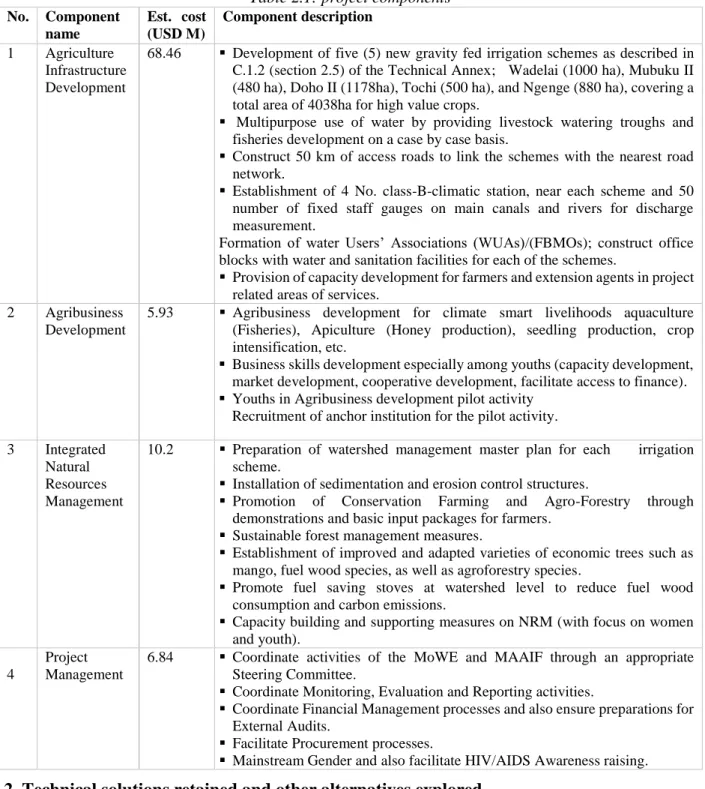
Table 2.1: project components
No. Component name Est. cost (USD M) Component description 1 Agriculture Infrastructure Development
68.46 Development of five (5) new gravity fed irrigation schemes as described in
C.1.2 (section 2.5) of the Technical Annex; Wadelai (1000 ha), Mubuku II (480 ha), Doho II (1178ha), Tochi (500 ha), and Ngenge (880 ha), covering a total area of 4038ha for high value crops.
Multipurpose use of water by providing livestock watering troughs and fisheries development on a case by case basis.
Construct 50 km of access roads to link the schemes with the nearest road network.
Establishment of 4 No. class-B-climatic station, near each scheme and 50 number of fixed staff gauges on main canals and rivers for discharge measurement.
Formation of water Users’ Associations (WUAs)/(FBMOs); construct office blocks with water and sanitation facilities for each of the schemes.
Provision of capacity development for farmers and extension agents in project related areas of services.
2 Agribusiness
Development
5.93 Agribusiness development for climate smart livelihoods aquaculture
(Fisheries), Apiculture (Honey production), seedling production, crop intensification, etc.
Business skills development especially among youths (capacity development, market development, cooperative development, facilitate access to finance).
Youths in Agribusiness development pilot activity Recruitment of anchor institution for the pilot activity.
3 Integrated
Natural Resources Management
10.2 Preparation of watershed management master plan for each irrigation scheme.
Installation of sedimentation and erosion control structures.
Promotion of Conservation Farming and Agro-Forestry through
demonstrations and basic input packages for farmers.
Sustainable forest management measures.
Establishment of improved and adapted varieties of economic trees such as mango, fuel wood species, as well as agroforestry species.
Promote fuel saving stoves at watershed level to reduce fuel wood consumption and carbon emissions.
Capacity building and supporting measures on NRM (with focus on women
and youth). 4
Project Management
6.84 Coordinate activities of the MoWE and MAAIF through an appropriate
Steering Committee.
Coordinate Monitoring, Evaluation and Reporting activities.
Coordinate Financial Management processes and also ensure preparations for External Audits.
Facilitate Procurement processes.
Mainstream Gender and also facilitate HIV/AIDS Awareness raising.
2.2. Technical solutions retained and other alternatives explored
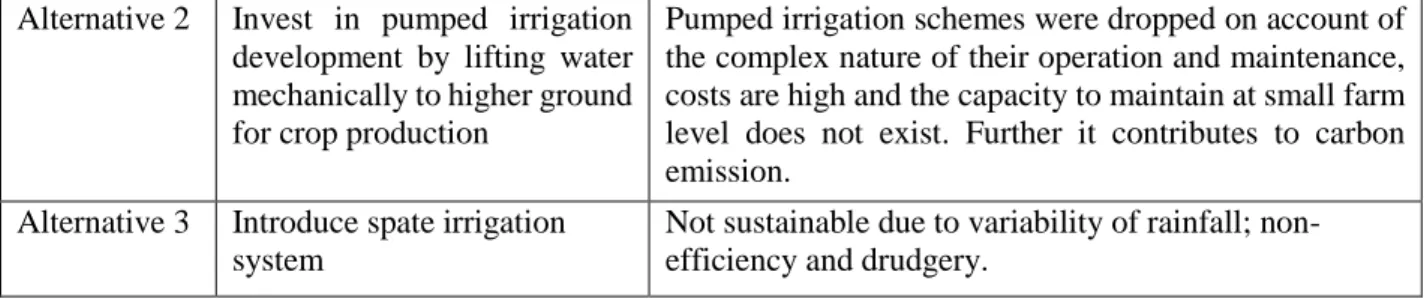
Table 2.2: project alternatives considered and reasons for rejection
Alternative Brief description Reasons for rejection
Alternative 1 Invest in rain water harvesting infrastructure such as smaller
water holding structures
scattered all over the selected
districts for agriculture,
livestock and domestic use
Rain water harvesting structures cannot sustain the impacts of climate change and their socio-economic impact will be spread out thinly. In addition they cannot provide food and cash crops two to three times a year.
5
Alternative 2 Invest in pumped irrigation
development by lifting water mechanically to higher ground for crop production
Pumped irrigation schemes were dropped on account of the complex nature of their operation and maintenance, costs are high and the capacity to maintain at small farm level does not exist. Further it contributes to carbon emission.
Alternative 3 Introduce spate irrigation system
Not sustainable due to variability of rainfall; non- efficiency and drudgery.
2.3. Project type
FIEFOC-2 is a public sector investment project that builds on successful investments undertaken under FIEFOC-1. It complements other existing agricultural production and natural resources management programmes that the Government of Uganda is undertaking to achieve its objectives under the NDP.
2.4. Project Cost and financing arrangements
2.4.1 Project Costs:Thetotal cost of the project is estimated at USD 91.43million, net of taxes and based on August 2015 exchange rate, comprising USD 24.09 million or 26% in local costs and USD 67.34 million or 74% of the total cost in foreign cost. This cost is inclusive of physical and price contingencies estimated at an average rate of 9%. All project costs are exclusive of taxes, and therefore Government should provide budget allocation for VAT in each quarter of the financial year in addition to the 10% Government contribution. A summary of project cost estimates by components, expenditure categories, and schedule are presented in Tables 2.3, 2.4 and 2.5 below, while details are provided in the Technical Annexes B2 Volume II of the appraisal report.
Table 2.3: Summary Project Cost by Component
% Foreign % Total Local Foreign Total Local Foreign Total Exchange Base Costs
Component 1: Agricultural infrastructural development 54 059 162 175 216 234 15 747 47 240 62 987 75 75 Component 2: Agribusiness Development 4 312 14 432 18 744 1 256 4 204 5 460 77 6 Component 3: Integrated Natural Resources Development and M anagement 7 611 24 107 31 718 2 217 7 022 9 239 76 11 Component 4: Project M anagement 7 340 14 250 21 590 2 138 4 151 6 289 66 8
Total base costs 73 322 214 964 288 286 21 358 62 617 83 975 75 100
Physical Contingencies 3 519 10 563 14 082 1 025 3 077 4 102 75 5 Price Contingencies 5 874 5 647 11 521 1 711 1 645 3 356 49 4
Total project costs 82 715 231 174 313 889 24 094 67 339 91 433 73
6
Table 2.4: Summary Project Cost by Expenditure Categories
Local Foreign Total Local Foreign Total Local Foreign Total
I. Investment Costs
A. Works 15 277 41 350 56 627 101 274 375 924 2 576 3 500
B. Goods 523 2 965 3 488 154 871 1 025 -
C. S ervices 1 557 7 093 8 650 666 3 034 3 700 230 689 919
Total Investment Costs 17 357 51 408 68 765 921 4 179 5 100 1 154 3 265 4 419
II. Recurrent Costs
A. Operating And Maintenance Costs 470 1 412 1 882 - - - 595 1 780 2 375
B. Personnel 861 574 1 435 - -
Total Recurrent Costs 1 331 1 986 3 317 - - - 595 1 780 2 375
Physical Contingencies 635 1 905 2 540 69 206 275 321 966 1 287
Price Contingencies 1 060 1 018 2 078 115 110 225 536 516 1 052
Total project costs 20 383 56 317 76 700 1 105 4 495 5 600 2 606 6 527 9 133
Expenditures
ADB (US D'000') NDF (US D'000') GVT (US D'000')
Table 2.5: Summary Project Cost Schedule by Components (USD '000')
Components Y1 Y2 Y3 Y4 Y5
Component 1: Agricultural infrastructural development 12,207 29,696 15,339 3,545 2,200
Component 2: Agribusiness Development 478 3,232 865 585 300
Component 3: Integrated Natural Resources
Development and Management 1,003 3,074 2,459 2,251 452
Project Management 1,625 1,127 1,182 1,118 1,237
Total BASELINE COSTS 15,313 37,129 19,845 7,500 4,189
Physical Contingencies 748 1,814 969 366 205
Price Contingencies 612 1,484 793 300 167
Total PROJECT COSTS 16,673 40,426 21,607 8,166 4,561
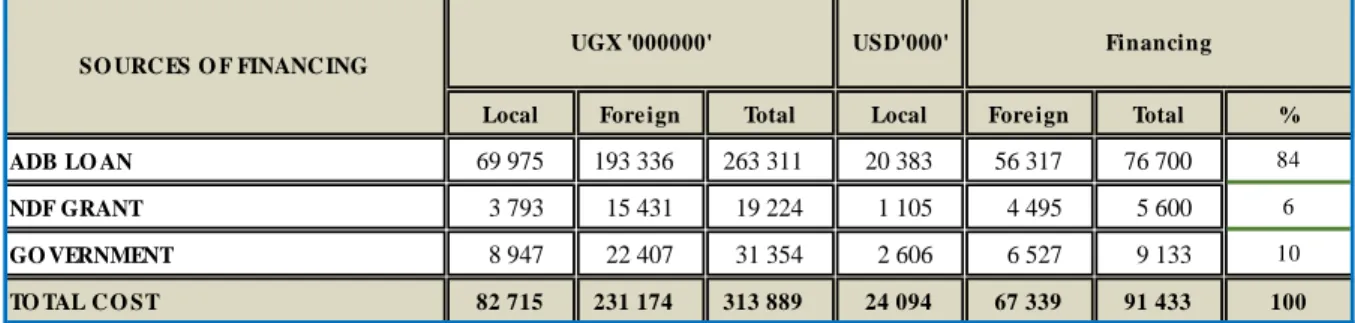
2.4.2 Project Financing Arrangement: ADB loan will finance 100% of the agricultural infrastructure development component, and part of the agribusiness development (component 2) activities. The project also has a co-financing from the Nordic Development Funds grant to the tune of USD 5.6 million. NDF will mainly finance the natural resources management component and youth in agribusiness (pilot programme). The Government will mainly finance capacity building activities, salaries of Government staff assigned to the Project both at national and local government levels, compliance certification by NEMA, and part of component 3 activities (conservation farming and agro-forestry, forest plantation and woodlots, forest resources inventory, training in use of weather information, and expand community radios coverage). The Government of Uganda will also finance some recurrent costs of the National Project Coordination Unit. The beneficiaries will be responsible for the operation and maintenance (O&M) of the irrigation infrastructure, and the agricultural enterprises will operate with the principles of private sector. The breakdown of financing for the project is presented in the Table 2.6.
Table 2.6: Financing Plan of the project
Local Fore ign Total Local Fore ign Total %
ADB LO AN 69 975 193 336 263 311 20 383 56 317 76 700 84
NDF GRANT 3 793 15 431 19 224 1 105 4 495 5 600 6
GO VERNMENT 8 947 22 407 31 354 2 606 6 527 9 133 10
TO TAL CO ST 82 715 231 174 313 889 24 094 67 339 91 433 100 Financing SO URCES O F FINANC ING
7
2.4.3 Counterpart Funds: The Government of Uganda counterpart contribution to the project will be 10% of the total project cost (USD 9.13 million). The total government contribution to the project including 18% VAT is USD 25 million, representing 27.4% of the total cost of project (also equivalent to 33% of total loan funds). This contribution is in addition to financing of the feasibility and detail design of the irrigation schemes valued at USD 2.3 million, in kind contributions in form of salaries for government staff assigned to the project both at national and district levels, and the required office spaces.
2.4.4 The Government of Uganda financing contribution to the project of USD 9.13 million represents about 10% of the total project cost, which is less than the recommended 50% minimum counterpart contribution as per the Bank’s 2008 Policy on Expenditure Eligible for Bank Group Financing. The policy further stipulates that the ADB may finance more than 50% of the total project costs on a case-by-case basis and up to a limit that does not exceed 100%.
2.4.5 Financing of Greater Than 50% of the Project Cost: Uganda has been faced with a narrow fiscal space and dismal revenue generation over the last decade. The average fiscal deficit between 2006/7 and 2015/16 was at 6.3% of GDP, owing largely to low levels of revenue that averaged at 12.8% of GDP. Uganda’s overall deficit as a share of GDP for FY 2015/16 budget is highest in the region which is indicative of low revenue collections relative to its regional counterparts. The current socio-economic and macroeconomic context presents a number of challenges constraining Government resources. These include current account deficits arising from external shocks to the economy leading to the depreciation of the Ugandan currency and related inflationary pressures, widening current account deficit and an increasing stock of external and domestic debt. On account of the above challenges, the Bank financing is raised to 90% of the project cost of the Farm Income Enhancement and Forest Conservation Programme – Project- 2 (FIEFOC- 2). Detailed justification for Bank financing of 90% of the project costs is shown in B2.2 of the Technical Annex -Volume II. 2.5. Project’s target area and population
2.5.1 The interventions will take place in a total of 5 irrigation schemes, spread in five Districts namely: Nebbi, Oyam, Butaleja, Kween, and Kasese as shown in Appendix IV. The target beneficiaries shall be both public and private institutions and individuals associated with the sector. The total population of the 5 districts, based on the 2014 census, is about 1,816,756, 51.7% of whom are women. This population corresponds to about 386,543.8 households. Main target beneficiaries are farmers cultivating rice, cotton, and horticultural crops. According to the Socio-Economic Gender Disaggregated Profile conducted by the Feasibility Study, about 31,000 households from the irrigation schemes will benefit directly of which about 51% are women. In addition to these five core districts, the Project’s natural resources management activities and agri-business development activities will cover 34 districts, which form the watershed area of these five irrigation schemes. The 34 districts are also listed in appendix IV.
2.5.2 The natural resources management Component will be implemented in 34 districts of hot-spot areas and will provide direct benefits to 300,000 households. These districts are located within the watersheds of the river systems feeding the irrigation schemes. The interventions will target selected areas within the watershed depending on the level of deforestation, status of environmental degradation, degraded lands, and degree of bank erosion. Beneficiaries will include communities living in degraded lands, farmers adopting agro-forestry practices, conservation farming, and agribusiness development as well as service providers and Ministry staff who will be trained on sustainable conservation and tree planting practices. The Agribusiness component will create about 1000 alternative livelihood opportunities in addition to the 1400 participants in business skills development programme.
8
2.6. Participatory process for project identification, design and implementation
2.6.1The formulation of the project was largely participatory, with the relevant stakeholders fully involved in the process of project identification throughout its design. The preparation of the Government feasibility study involved a rigorous participatory approach, whereby the relevant stakeholders, particularly Authorities of the respective districts and ministries and the directly benefiting farmers, were fully consulted. Likewise, at preparation and appraisal phases, the Bank team visited 10 of the 14 proposed schemes, in the process of which it interacted with the Central and Local Government Authorities, farmers and their associations; private sector agencies, NGOs including input suppliers, micro credit providers, and development partners, institutions working on gender issues. The appraisal phase also incorporated participation by NDF. This consultative approach will also continue during implementation of project activities especially between the Executing Agency, project steering committee, local governments, participating farmer groups, NGOs, the Bank, and other Development Partners.
2.6.2 Key stakeholders in the FIEFOC-2 Project include; Government, NGOs, Ministries (MoWE, MAAIF, MoFPED, MoGLSD) and parastatal bodies (NEMA, etc.); Civil Society, Organisations working with community groups and those on gender issues; District and community leaders; Farmer cooperatives including women and youth groups; Private sector companies; District Local Governments; and Existing irrigation farmers’ associations, etc. In a bid to ensure stakeholder input into the project design, a number of consultative meetings were held with various institutions and personalities. The Bank has undertaken public consultations with communities, private sectors, Government Ministries and Departments at national and districts levels as well as with the development partners. Ideas were solicited on the relevance of the various project components, target groups and geographical locations. Efforts were made to ensure gender and social inclusiveness in these consultations. A stakeholder workshop was organized on May 5, 2015 which was attended by more than 45 representatives of stakeholder organisations from national to community levels. During the session participants provided valuable input to inform the design of the FIEFOC-2. A wide range of issues were noted for follow-up including among others: access to inputs, microfinance and extension services, market linkages, mechanisation and post-harvest handling, the need for inclusion of value addition to the produce, operations and maintenance of irrigation facilities, strong farmers’ capacity development programme, establishment of demonstration centres, consideration to multi-purpose use of water, use of existing government structures and the need to complement community initiatives, enhance the participation of private sector actors, etc.
2.7. Bank Group experience, lessons reflected in project design
2.7.1 The CPPR review highlighted some lessons, including: (i) role played by project implementation unit in expediting project execution after delay in start-up when implementation was entrusted to Ministries; (ii) lack of project designs and drawings at project start-up results in implementation delay; (iii) inadequate consultation with stakeholders in selection of sites results in poor utilisation and lack of ownership; (iv) weak M&E system results in poor project monitoring; and (v) lack of irrigation scheme management entities compromises sustainability. Based on said lessons, (i) FIEFOC-2 will have a NPCU due to inadequate technical staff within MoWE, (ii) participatory M&E system will be established in PY1 which will be linked to MoWE M&E system, and (iii) detail designs of the irrigation schemes will be made available before the end of 2015 whilst the supervision consulting firm will be brought on board in PY1 through advance procurement arrangement to offset the time spent in the parliamentary approval process.
2.7.2 The Bank has considerable experience in implementing infrastructure projects in Uganda, including the Area-based Agricultural Modernization Programme (AAMP) and the Northwest Smallholder Agricultural Development Project (NSADP) both of which completed in 2009, and
9
Community Agricultural Infrastructure Improvement Programme – Project 1 (CAIIP-1) - the 2013 U.S. Department of the Treasury MDB Awards winner, and FIEFOC 1. The project draws extensively from lessons learned from AAMP, which are well documented in the Impact Study (August 2008), CAIIP-1, FIEFOC1 and from other small scale irrigation schemes, natural resources, watershed management, and community driven development projects in Uganda and other countries. The most pertinent include (i) the enhancement of agricultural commodity trade, including establishment of linkages between Bank financed projects such as CAIIP community access roads and agro-processing facilities built in districts where irrigation schemes will be constructed); (ii) integration of the value addition activities, representing the private sector; (iii) adopting integrated watershed development and alternative livelihood; and (iv) Building the capacity of Water Users’ Associations (WUAs)/FBMOs to ensuring maintenance of the infrastructure and project sustainability. AfDB’s ongoing portfolio in Uganda is rated satisfactory at 2.4 (overall) with no problem projects, aging projects, or slow disbursing projects. A detailed overview of the portfolio as at 30 September, 2015 is provided as Appendix II.
2.7.3 Particular lessons learnt during the implementation of FIEFOC-1 include (i) the identification of an appropriate executing agency and inadequately staffing of the NPCUs with the required skills. MoWE with demonstrated performance in implementing FIEFOC phase-1 was identified as an executing agency. Effort will also be made to reinstate staff that existed during phase-1 of the project with the necessary skill mix to avoid delays in project implementation; (ii) in addition, advance procurement method will be adopted to counter balance delays experienced in getting approvals from Parliament; (iii) the importance of establishment of a technical committee was underscored comprising the most relevant stakeholders to provide technical supervision and back-stopping; (iv) inadequate information regarding land use: Adequate information flow and proper sensitization of stakeholders especially, farmers and land owners are necessary for successful implementation and ownership of the project. Inclusion of secondment of staff from MAAIF is also considered to ameliorate the already improving relationship between the two Ministries; (iv) There is need for a strong Project Monitoring and Evaluation Unit to ensure collection, collation, analysis and dissemination of information and data for timely management decision making, free-flow of information and documentation of lessons learnt and impacts of the project.
2.8. Key performance indicators
2.8.1 The Results Based Logical Framework contains indicators pertaining to the impact, outcomes and outputs of the project. It includes the Bank’s Core Sector Indicators (CSI) and other institutional indicators that will be used to gauge the effectiveness of project management. Monitoring and evaluation of the project activities and results based logical framework indicators will be conducted by the Monitoring and Evaluation Expert of the National Project Coordination Unit (NPCU), in close collaboration with all the partners involved. Special emphasis will be on disaggregation of data to capture benefits from the project to gender and youth. Baseline data will be collected at the beginning of project implementation in addition to the baseline information collected during the feasibility study to improve measurement of indictors of the project. An experienced M&E expert will be put in place from the start of the project.
2.8.2 The impact and outcome indicators include: (i) income level among farmers, (ii) food security among farmers and extended community, (iii) reduction in people living below poverty line, (iv) increase in yield of major agricultural produce, (v) number of livelihood activities and businesses developed, and (vi) reduction in sediment load of rivers feeding the irrigation schemes.
Key output indicators are: (i) area developed under irrigation; (ii) number of farmers adopting conservation farming practices and land area protected against erosion; (iii) involvement of women and youth in decision-making bodies; (iv) jobs created in the agribusiness, especially for women and youths, and (v) number of entities women and men trained.
10
2.8.3 Baseline data: Baseline data was collected as part of the socio-economic study and used in the RBLF. The baseline data will be further strengthened and gaps filled including collection of gender disaggregated data in PY1. Indicators will be used to compare project performance against the baseline situations. Various supervision missions and periodic progress reports will reflect the level of achievement under each of these indicators.
III. PROJECT FEASIBILITY
3.1. Economic and financial performance
3.1.1 The main economic benefits of the project are increase in basic crops productivity and production, increase in beneficiary incomes and strengthening of food security and climate resilience. Other project benefits include jobs generated by business developed, reduction in sediment load of rivers resulting from degraded forest rehabilitation and soil conservation measures.
3.1.2 The economic and financial analysis was based on the incremental net benefit arising from the project investment. The main assumption underlying the economic and financial analysis is an anticipated increase in the productivity of the main crops and the generation of added value on the agricultural products. Crop diversification and intensification will be enhanced under irrigated agriculture using improved seeds and the practice of modern system. Irrigation schemes covering 4038 ha will be developed. The main crops retained for the analysis are rice, maize, cassava, sweet potatoes and beans. Beans are used as representatives of the other food crops cultivated in the regions. The project also promotes aquaculture and apiculture, agribusiness activities on a pilot basis to enhance value addition on maize, cassava and honey. It is estimated that the production of the basic crops will increase by 50% on the average.
3.1.3 The production costs were derived from the results of the 1st phase of the project and computed field data from Uganda. Prevailing 2014 market prices were used for input and output valuation. The O&M costs have been incorporated in the crop budgets. The other assumptions include: (i) all project’s outputs are incremental as they expand supply to meet growing demand; (ii) project’s inputs are mostly non incremental since they are met not by an expansion of overall supply but from existing supplies; (iii) maize and cassava are treated in the analysis, as a traded good since they offer an important export potential. All Project costs and prices were estimated on the basis of constant market prices for a span of 25 years. For the economic analysis, (i) maize and cassava market prices considered as a traded good were adjusted to reflect their economic values; (ii) for the others crops, the market prices were used since they were not import substitute, (iv) all subsidies were excluded. The FIRR is 18% with a NPV of USD 1.3 million at a capital opportunity cost of 12%. The EIRR is 21% for a NPV of USD 1.7 million at a capital opportunity cost of 12%. The summary result is tabulated below:
FIRR, NPV (base case) 18%, NPV (12%): USD 1.3 million EIRR, NPV (base case) 21%, NPV (12%): USD 1.7 million
3.1.4 The economic rate of return (EIRR) and the internal rate of return (FIRR) are sensitive to changes in prices and costs. A 10% increase in the prices of agricultural products generates an EIRR of 23% and a FIRR of 20%. Similarly, a 10% increase in production costs decreases the EIRR and the FIRR to 20% and 17% respectively. Details of financial and economic analysis is shown in in Appendix VI.
11 3.2. Environmental and Social impacts
3.2.1 Environment: The project is classified as Environment Category 2 according to the Bank’s Environmental and Social Assessment Procedures (ESAP), which implies that the potential negative environmental and social impacts are not major and can be mitigated with the application of measures specified in ESMPs. An ESMP, with a budgetary allocation of USD 850,000, was prepared and its Summary posted on Bank’s website on 24 July, 2015 to provide guidelines for the management of potential environmental and social aspects at all possible project sites.
3.2.2 FIEFOC-2 will have significant positive environmental impacts including (i) contribution to the restoration of forest cover that will lead to reduced soil erosion, flooding, and water pollution. The carbon dioxide (CO2) removed from the atmosphere is estimated at 245, 000 tons over 20 years as a result of tree planting by the project as shown in the details under Technical Annex C.3.1 (b) of the Technical Annex; (ii) restoration and enhancement of the ecosystems through re-vegetation and tree planting activities planned as part of the project - this will have significant impacts on combating deforestation and desertification as well as mitigating the impacts of climate change; (iii) rehabilitation of degraded watersheds to sustain and enhance water catchment ; and (iv) improved farm productivity, soil fertility management and increased uptake of proper crop husbandry practices that will improve agricultural production and marketing, thus contributing to food security and improved farm incomes.
3.2.3 Most of the negative impacts to the environment will be attributed to construction activities with minimal operation and post operation effects. Some of these impacts will pertain to (i) loss of vegetation due to land clearing for irrigation schemes and farm/forest roads construction that can be minimised by refilling of burrow pits and re-vegetation, (ii) increase in water abstraction arising from small-scale irrigation schemes requirement, that could upset the existing flow patterns of the rivers, but will be minimised through established water management systems and environmental flow requirements to allow sufficient water for downstream users, and (iii) soil erosion due to loose top soil. 3.2.4 Climate Change: Climate change models for Uganda suggest a projected increase in temperature of 0.7o C to 1.5o C by 2020. These models also predict a likely increase in the variability of rainfall with most areas projected to experience higher rainfall. Uganda is already experiencing extreme weather events including droughts, floods and landslides. Floods and landslides have been linked to drained wetlands, deforestation, and compacted soil that no longer have any water-retention capacity. The Uganda Vision 2040- the long term development blue print for the country-recognizes the impacts of climate change on all sectors of Uganda’s economy, and has committed to the need for preparedness through adaptation and mitigation strategies to ensure the resilience of the country to climate change impacts. The Bank categorized the project as Category 2 in terms of Climate Risk, requiring the application of the Climate Adaptation Review and Evaluation Procedures (AREP). The project carried out Climate Screening Score (CSS) as shown in Appendix VII. The project design reflects the projected climate change risks in Uganda and has embedded adaption measures based on the Bank’s AREP and aligned with the country’s National Adaptation Programme of Action (NAPA) priority projects including community tree planting, land degradation and water for production projects.
3.2.5 The FIEFOC programme is by design part of a strategic response to the impact of climate change evidenced by environmental degradation, dry spells and floods in the vulnerable districts of Uganda. The planned interventions of FIEFOC-2 project will help reduce impacts of extreme weather events through the development of irrigation systems and promotion of alternative livelihoods that will help smoothen the cyclical impacts of droughts and ensure all-year income generating activities. Specifically, the catchment management activities under component 3 of the project will facilitate the reduction of land degradation and related flood impacts; thus increasing the resilience of the community. The irrigation infrastructure will also be designed to be climate resilient in order to prolong the life span of the infrastructures. The project’s ESMP further elaborates the challenges
12
posed by climate risks on the project outcomes as well as proposed adaptation and mitigation measures.
3.2.6 Involuntary resettlement: The proposed new irrigation structures will be located on two Governments owned land and three communally owned land tenure systems. It is anticipated that all Project activities will not lead to land acquisition as project activities will be carried out on land that already belongs to the Government or the beneficiary groups, therefore no land disputes are anticipated. Extensive consultations on access were held with beneficiary groups, district officers, and other government counterparts including the Uganda National Environmental Management Agency. There is a strong commitment from all stakeholders.
3.2.7 Green Growth: FIEFOC-2 has been designed in accordance with the Green Growth principle of “quality and inclusiveness of growth”. The Program design is flexible enough to address existing and emerging development challenges (equitable rural development, youth unemployment, equitable access to food, water and clean environment) without locking resources into activities that may deplete the country’s natural resource capital. FIEFOC-2 has been designed in a holistic manner that has integrated economic, social and environmental concerns for overall improvement of the well-being of the communities.
3.2.8Gender and Social: In 2014, 19.79 million females accounted for 51.5% of the total population, while an estimated 31% of rural households were female headed. The significance of women’s role in community is underscored by the fact that females are normally charged with the responsibility of food production at household level. The low access to water for production, especially in rural areas, undermines agricultural productivity. While the GoU has made substantial efforts in adopting gender-related laws and with the amendment of the Land Act (2010), and the launch of Uganda National land Policy (2013), significant progress has been registered in increasing female land ownership, from a low
16% in 2010 to 39% in 2012. Despite this, issues of limited ownership, access to land owing to cultural
barriers and lack of access to credit continue to affect women’s agricultural production. Other hindrances include, lack of extension service, inadequate access to information technology and poor linkages to markets, post-harvest loses, and degradation of the environment which mostly affects women. Consequently, FIEFOC 2 has been designed to address gaps in sustainable agricultural water management and low agricultural productivity. The project will support a minimum of 30% representation of women in the leadership role in water user associations, and emphasize 50% of the target group training on agribusiness skills in crop value chain preferred by women and youth. The project will support a minimum of 30% women, and 30% youth employment in the labour intensive infrastructure development activities on the scheme.
3.2.9 The project will support gender capacity building activities for FIEFOC as detailed in Annex B8 of the Technical Annex. Furthermore, the project will adopt a gender sensitive approach to support implementation, to ensure capacity is built for effective gender responsiveness in all project components. As such, gender mainstreaming guidelines will be developed in project Y1 to prepare women to participate in different community committees dealing with financing (Tier 4 Microfinance institutions), agriculture and natural resources. The project will also promote strong institutional involvement of women as beneficiaries in farmer cooperatives group trainings, specifically with regards to extension service in agronomic practices, access of financial resources, post-harvest handling, collective commodity bulking and marketing and the establishment to sustainable market linkages. A Social Development Specialist/Gender expert will be recruited. The gender mainstreaming in this project is estimated at UGX 548,900, 000 for capacity building as shown in the Technical Annex page B8.9 (ii).
3.2.10 Youth unemployment: The challenges facing the youth include limited job opportunities, inadequate employable skills and skills mis-match, limited access to productive assets, and early marriages hence forcing the youth into informal agricultural practices. According to the Uganda