An Appraisal of the Effectiveness of International NGOs as Agents of
Development through a Case Study of Concern Universal’s Local
Development Support Programme in Dedza District, Malawi
A thesis submitted in fulfilment of the requirements for the degree of
MASTER OF SOCIAL SCIENCE
Khadija Sungeni Mussa
Supervisor: Professor Lucien van der Walt
Department of Sociology
RHODES UNIVERSITY
ABSTRACT
Malawi, which became independent in 1964, attracted Non-Governmental Organisations (NGOs) from the early 1980s. Initially, NGO involvement was a response to the influx of refugees from neighbouring war-torn Mozambique. Since then, NGOs have been active in the development sector. Malawi, a small country, has widespread poverty, and has recently been in international headlines as a victim of floods, drought and food shortages.
Economically unstable, with environmental problems, Malawi is in need of development assistance. NGOs have been centrally positioned in such efforts, but the academic literature on their role has been limited. NGO interventions in development efforts, generally, have been subject to controversy. While some argue that NGOs provide an essential means of development, especially where state capacity is limited, others argue that, with most NGOs headquartered or funded from abroad, their strategies and practices are often more accountable to external pressures than local needs.
This thesis intervenes in these debates with a case study: with the aim of examining the sustainability, appropriateness, accountability and effectiveness of NGO projects, it looks at a project by the international NGO (INGO), Concern Universal (CU), which works in the central region in Dedza, Malawi. It examines the project, using fieldwork in three villages, looking at issues such as its use of participatory methods, relations with local government and village structures, capacity building methods, and donor relations. The thesis argues that (I)NGOs like CU exist in a conflicted situation: they have to remain in the good books of their donors, while, at the same time, maintaining accountability to their beneficiaries; they depend on their ability to manoeuvre through the conflict in order to ensure their continuity, and so, their impact is shaped by competing imperatives. CU has made a real impact on poverty alleviation efforts, but its methods and approaches are shaped by said competing imperatives.
ACKNOWLEDGEMENTS
Firstly I would like to thank the Almighty for granting me the gifts of life and faith, as well as for seeing me through what became a tough journey -- and making it all possible.
I am especially indebted to my supervisor, Professor Lucien van der Walt, and I thank him for his support and meticulous constructive criticism, which always encouraged me to do better. I also thank Concern Universal (CU) Malawi for allowing me to conduct my research on their Local Development Support Project (LDSP), and for providing me with transport to and from the project sites.
I would also like to thank all the staff of the different institutions involved, as well as the project beneficiaries for allowing me into their offices and homes, respectively, and sparing their time to be interviewed.
I am also thankful for the courage instilled in me by my late mother Martha Mussa, and grateful to my parents, Mr and Mrs George and Roshan Mussa, who have always believed in, prayed for, and supported me through this journey. Without their guidance and encouragement, I would not have been able to do this research.
I also thank my cousins, Mrs Doreen Phiri and Mrs Tangu-cilla Ejiofor, for their emotional support, prayers, and accommodation while I was in transit between the fieldwork and the university. A special thanks goes to Mrs Stevens, and her daughter Chifuno Stevens, for providing me with accommodation, and transport to the CU offices, during my stay in Dedza. Thanks also goes to the staff and colleagues of the Sociology Department at Rhodes for their guidance and advice during the course of this study.
I am appreciative of friends and students, particularly Lethabo Sekele, Zahra Pinto, Keba Tlhoaele, Phatsimo Malatsi and Jamie Eray for their kindness, encouragement and support in various ways while I was on campus.
Lastly, to my siblings Haleemah, Aisha, Sudais and Alia: thank you for always enquiring about my well-being, and for being the precious little beings that you are. I dedicate this thesis to you.
TABLE OF CONTENTS
ABSTRACT ... i
ACKNOWLEDGEMENTS ... ii
TABLE OF CONTENTS ... iii
LIST OF MAPS... vi
LIST OF FIGURES ... vi
LIST OF ABBREVIATIONS AND ACRONYMS ... viii
CHAPTER 1: INTRODUCTION ... 1
1.1.INTRODUCTION ... 1
1.2.CONTEXT OF THE THESIS ... 2
1.3.THESIS OUTLINE ... 3
1.4.CONCLUSION ... 5
CHAPTER 2: DEVELOPMENT IN MALAWI ... 6
2.1.INTRODUCTION ... 6
2.2.MALAWI COUNTRY PROFILE ... 6
2.3.HISTORY OF MALAWI’S DEVELOPMENT CHALLENGES ... 7
2.3.1. Defining Development ... 7
2.3.2. Malawi’s Path to Development ... 8
2.3.3. Dedza District and Central Malawi ... 16
2.4.SERVICE DELIVERY VEHICLES/AGENTS IN MALAWI ... 17
2.4.1. Service Delivery ... 17
2.4.2. The Benefits of Political Participation and Participatory Development ... 18
2.4.3. The Role of Government Decentralisation ... 19
2.4.4. The Role of Civil Society in Efforts for Development ... 22
2.5.THESIS CASE STUDY:CONCERN UNIVERSAL ... 25
2.6.CONCLUSION ... 28
CHAPTER 3: PAVING THE WAY FOR NGOS IN DEVELOPMENT ... 29
3.1. INTRODUCTION ... 29
3.2.DEFINING NGOS ... 29
3.3.NGOS GLOBALLY... 32
3.4.NGOS IN AFRICA ... 35
3.5.THE NGOSECTOR IN MALAWI ... 37
3.6.EFFECTS OF NEOLIBERALISM ON POVERTY IN MALAWI ... 40
CHAPTER 4: THEORETICAL FRAMEWORK ... 47
4.1.INTRODUCTION ... 47
4.2.DEBATING NGOS ... 47
4.3.THE SUSTAINABLE LIVELIHOODS FRAMEWORK ... 49
4.3.1. Limitations of the SL Framework ... 61
4.4.CONCLUSION ... 62
CHAPTER 5: RESEARCH METHODOLOGY ... 63
5.1.INTRODUCTION ... 63 5.2.RESEARCH APPROACH ... 63 5.3.RESEARCH PARTICIPANTS ... 65 5.4.SAMPLING OF PARTICIPANTS ... 66 5.5.GENDER OF PARTICIPANTS ... 66 5.6.DATA COLLECTION ... 67 5.7.DATA ANALYSIS ... 71
5.8.RESEARCH ETHICAL CONSIDERATIONS ... 72
5.9.LIMITATIONS AND CHALLENGES OF THE STUDY ... 73
5.10.CONCLUSION ... 74
CHAPTER 6: CONCERN UNIVERSAL IN CHAFUMBWA ... 75
6.1.INTRODUCTION ... 75
6.2.CONCERN UNIVERSAL (CU)PROFILE ... 75
6.3.THE LOCAL DEVELOPMENT SUPPORT PROGRAMME (LDSP)PROFILE ... 76
6.3.1. Project Design of the LDSP ... 77
6.4.THE LDSP IN CHAFUMBWA EPADEDZA ... 78
6.4.1. Identification of Beneficiaries ... 78
6.4.2. Implementation of the LDSP ... 78
6.5.FOOD SECURITY,NUTRITION AND HEALTH RESULT AREAS OF THE LDSP ... 80
6.5.1. Food Production ... 81
6.5.2. Nutrition Interventions ... 83
6.5.3. Health Outcomes ... 88
6.6.IMPACT OF THE LDSP ON SOCIO-ECONOMIC WELFARE ... 91
6.7.CHALLENGES OF THE LDSP ... 93
6.8.PERFORMANCE OF CU ... 94
6.8.1. Monitoring and Evaluation ... 94
6.8.1. Issues of Accountability in Chafumbwa ... 95
6.9.CONCLUSION ... 97
CHAPTER 7: CONCLUSIONS ... 99
7.1.OVERVIEW ... 99
7.2.NOTED SHORTCOMINGS AND RECOMMENDATIONS ... 101
REFERENCES ... 104
APPENDICES ... 115
APPENDIX 1: INTERVIEW GUIDELINE (CONCERN UNIVERSAL LDSP STAFF) ... 115
APPENDIX 2: INTERVIEW GUIDELINE (BENEFICIARIES) ... 118
APPENDIX 3: INTERVIEW GUIDELINE (DONOR) ... 121
APPENDIX 4: INTERVIEW GUIDELINE (LOCAL GOVERNMENT) ... 124
LIST OF MAPS
Map 2.1: Map of Malawi showing the LDSP target sites ... 27
LIST OF FIGURES
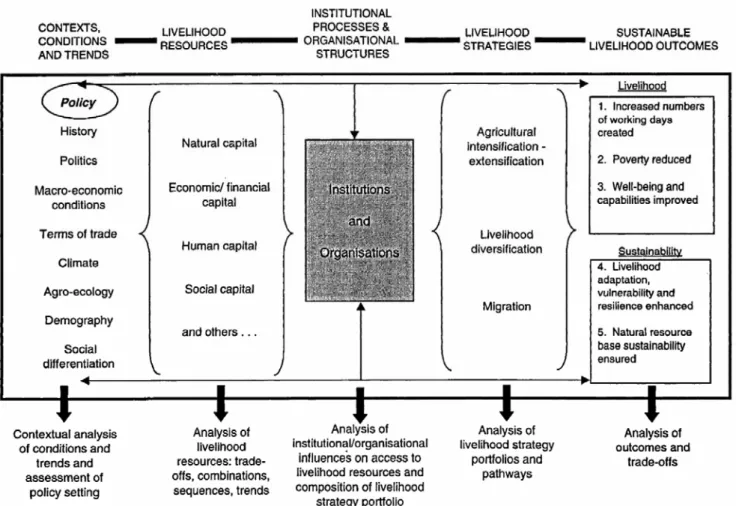
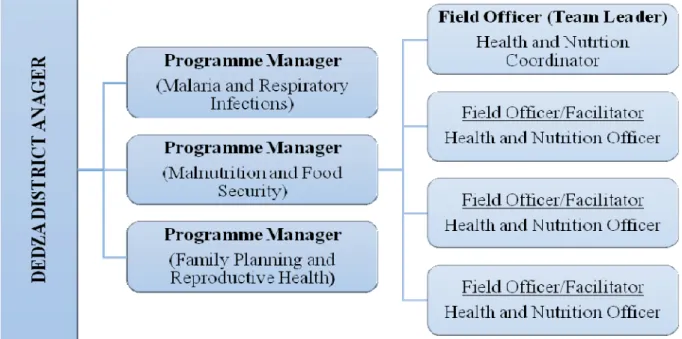
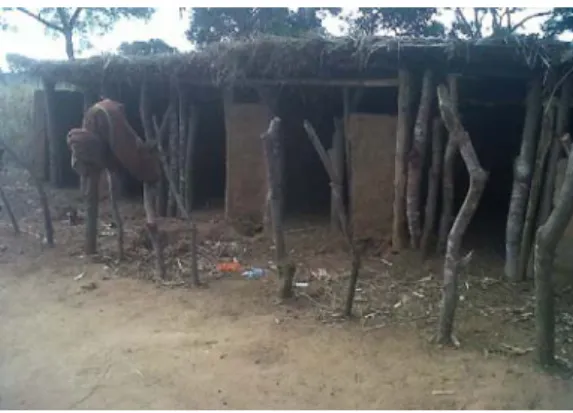
Figure 4.1: The Sustainable Livelihoods Framework ... 53 Figure 6.1: Partial LDSP organisational structure for Chafumbwa EPA ... 78 Figure 6.2: Goats and chickens roaming around one of the beneficiaries’ compounds in Kutsanja Village ... 81 Figure 6.3: Shelters prepared for pigs outside a beneficiary house in Kutsanja Village, which were scheduled to arrive a week after this image was taken ... 81 Figure 6.4: Family removing maize kernels from cobs before taking the grain for milling to produce maize flour in Kutsanja. ... 84 Figure 6.5: Shelling groundnuts so they can be ground to make nsinjiro in Kutsanja .. 84 Figure 6.6: Nsinjiro (crushed groundnuts) drying in the sun on the roof of a village hut in Kafere ... 85 Figure 6.7: Mgayiwa (unprocessed maize flour) straight from the mill drying out in the sun on reed mats in Kafere. ... 85 Figure 6.8: The beginning stages of cooking the special mixed porridge on a fire in Kambadza ... 86 Figure 6.9: Orange-fleshed sweet potatoes also used to make porridge to alternate with maize flour porridge in Kafere. ... 86
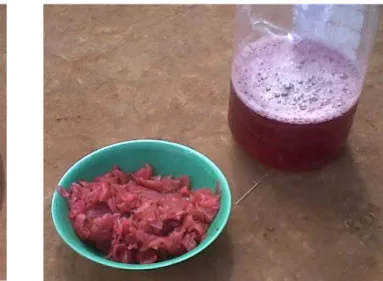
Figure 6.10: Covering cooked red beans. ... 87 Figure 6.11: Unpeeled orange-fleshed sweet potatoes and kholowa vegetables. ... 87 Figure 6.12: Mpiru (mustard greens) before addition of nsinjiro to make mpiru wotendera ... 87 Figure 6.13: “Soya chips” (fried soya beans). ... 88 Figure 6.14: Chidede juice and the remaining squeezed fruit pieces (used to make relish) ... 88 Figure 6.15: Steps in making soya milk: pounded soya beans are boiled, sugar is added then the milk is cooled. ... 88 Figure 6.16: Borehole put in place by CU in Kafere Village. ... 91
LIST OF ABBREVIATIONS AND ACCRONYMS
ADC Area Development Committee
ADMARC Agricultural Development and Marketing Corporation AIDS Acquired Immune Deficiency Syndrome
AIDEP African Institute for Development Policy CBCC Community-Based Childcare Centre CBDA Community-Based Distribution Agent
CBO Community-Based Organisation
CSP Country Strategy Paper
CU Concern Universal
DEC District Executive Committee
DFID Department for International Development (UK Aid) DPD Department of Population and Development
EPA Extension Planning Area
EU European Union
GoM Government of Malawi
HIV Human Immunodeficiency Virus
HSA Health Surveillance Assistant IFIs International Financial Institutions
IMF International Monetary Fund
INGO International Non-Governmental Organisation ISI Import-Substitution-Industrialisation LDSP Local Development Support Programme
MDGs Millennium Development Goals
MGDS Malawi Growth and Development Strategy
MCP Malawi Congress Party
NGO Non-Governmental Organisation
OTP Outpatient Therapeutic Programme PAI Population Action International
PD Hearth Positive Deviance Hearth
SAPs Structural Adjustment Programmes PIPs Policies, Institutions and Processes
RUTF Ready-to-use therapeutic foods SL Framework/
SLF
Sustainable Livelihoods Framework
T/A Traditional Authority
WASH Water, Sanitation and Hygiene WFP World Food Programme
VDC Village Development Committee
VSL Village Savings and Loans UDF United Democratic Front
UN United Nations
Chapter 1:
Introduction
1.1.
Introduction
The aim of this thesis is to engage in the larger debates over the sustainability, appropriateness, accountability and effectiveness of Non-Governmental Organisation (NGO) projects in the area of development. It examined an international NGO (INGO) development project in Malawi, in order to evaluate the impact of (I)NGOs on development and poverty alleviation.
The case study was a project run by an INGO called Concern Universal (CU) in the central region of Dedza. Three villages from the Chafumbwa Extension Planning Area (EPA) in Dedza District, where CU’s Local Development Support Project (LDSP) has operated for six years, were studied. The thesis used qualitative research, examining perceptions and experiences of poverty, and of poverty-reduction strategies and of development, and the experiences, successes and failures of the Dedza project and of CU as a developmental organisation. Issues covered included CU’s use of the Sustainable Livelihoods Framework (SLF), and participatory methods, and its relations with local government and village structures, capacity building methods, and donor relations. It argues that CU has made a real impact on poverty alleviation efforts, but that its methods and approaches are shaped by competing imperatives.
This chapter discusses the literature on NGOs, as well as the issue of “development” – specifically the issue of poverty in relation to the steps required in order to end poverty. This is followed by an outline of the thesis structure, which provides a summary of each of the focus of the following chapters.
1.2. Context of the Thesis
The concept of “development” is understood in this thesis as involving steps to meet basic needs, enhance standards of living and secure tangible achievements such as increased life expectancy and levels of nutrition (Simon, 1997: 185). “Best practices” ought to be determined from these achievements for future planning and to ensure sustainable progress. The thesis looks, in particular, at the results of NGO activities designed to improve the food security, nutrition and health of project beneficiaries. It will also explore alternative understandings of development and poverty, as well as issues of income and expenditure, social inclusion, basic needs, and human development indicators with regard to the development discourse (Johnson, 1996).
Fundamentally, the thesis is intended to enrich the literature on NGOs’ role in development, and to evaluate competing claims about the impact and role of NGOs. There are many claims regarding this impact, which has been portrayed in positive, negative and neutral lights. NGOs are non-profit bodies, reliant on donors, and are faced by the need to make choices that attract funding, as well as between a range of options in development techniques (such as participation, or bottom-up vs. top-down approaches), and criteria for beneficiary selection. Helliker argues that the work of NGOs needs to be understood “from within” because NGO practices cannot be read “from outside” (2009: 105-106) in terms of what donors want. It is important to know what pressures, demands, and negotiations NGOs face, and their coping practices, in order to have a more complete picture of the world of NGOs (Helliker, 2009: 106).
This research will use its case study to engage the different views in the literature with reference to the role of (I)NGOs in promoting sustainable livelihoods through improving health, food and nutrition security. Health, food and nutrition security are the main points of focus because these are the most basic needs.
People are motivated to perform actions that lead to as many of these basic needs being satisfied as possible (Maslow, 1943: 370). In his hierarchy of needs, Maslow argues that biological and physiological needs are the basic needs for human survival (1943: 372) and have to be met before any other needs (such as the promotion of development in any larger sense) can be pursued. Examples of these basic needs include shelter, food, drink, warmth, air and sleep
among others, all of which inform human development indicators used to measure achievements in key dimensions of human development (UNDP, 2014a).
Maslow also adds that the body needs to maintain the constant, normal state of the blood stream which is achieved by the regulation of the water content of the blood, salt content, sugar content, protein content, fat content, calcium content, oxygen content, constant hydrogen-ion level (acid-base balance), constant temperature of the blood, minerals, hormones and vitamins (Maslow, 1943: 372). The balance and stability in the body of these components comes from nutritious food and leads to a healthy body fit to perform the activities of the next stages of needs. All of the processes and efforts involved in alleviating poverty and advancing development fall under one or more of the next stages in Maslow’s hierarchy which are safety needs, love needs, esteem needs (Maslow, 1943), cognitive needs, aesthetic needs (Maslow, 1970a), self-actualisation needs (Maslow, 1943) and transcendence needs (Maslow, 1970b).
The amount of inequality in the world today has meant that what is basic to some of the world’s population is hard to come by for others. Not everyone is able to put food on their table at the end of every day, or be free of worry about manageable diseases that need to be treated with resources and money that is scarce. Access to nutritious food is necessary for achieving full potential growth, concentration in school and improved educational performance (Jukes, McGuire, Method and Sternberg, 2002), leading to a generation equipped with knowledge to lift themselves out of poverty; but nutritious food is not accessible to millions.
1.3. Thesis Outline
Following this introductory chapter, this thesis has six more chapters which are as follows:
Chapter 2 provides a contextual background to Malawi where the INGO in question is implementing its project. It discusses the meaning of development, then goes on to discuss Malawi’s developmental journey, citing historical advances as well as current development challenges, the product of this history. It pays close attention to issues of food security, and the challenges of both reducing food insecurity and maintaining a fixed state of food security.
Chapter 3 provides a discussion of NGOs generally, and of the size of the NGO sector globally, as well as in Africa and in Malawi. Included in these discussions is the issue of development, the actors involved and the extent of their capacity; debates over NGOs in the academic literature with regard to their role in society and development; the contradictions, pressures and conflicts that exist in the world of NGOs; their relationship with states, and the issue of their accountability to beneficiaries and donors. The chapter ends with a discussion of the link between poverty and neo-liberalism in Malawi, and how the two have paved the way for rapidly growing (I)NGO work in the country.
Chapter 4 continues the discussion, looking more closely at INGOs and the world in which they exist, as well as the processes involved in assisting sustainable livelihoods through (I)NGO intervention in local and rural development. It looks at the processes involved in INGOs’ global as well as local relations to better understand how and why INGOs adopt certain practices and strategies. Following this, it goes on to discuss one such strategy, adopted by the case study INGO, CU: its use of the Sustainable Livelihoods Framework (SLF) in its LDSP in Dedza District. An outline of the SLF framework and its limitations is provided.
Chapter 5 is a research methodology chapter, which outlines the processes undertaken to mount this study and obtain empirical data. It provides a profile of the research participants, sampling strategies, data collection and analysis methods, as well as ethical considerations undertaken.
Chapter 6 outlines the findings of the research. It provides a brief overview of the INGO, CU, as an organisation, and its LDSP in Dedza for rural development and poverty alleviation; a discussion of research findings from the Chafumbwa EPA, where fieldwork was undertaken in three different villages; and an indication of how the fieldwork data relates to the issues raised by the literature. This chapter links the theoretical issues with the empirical evidence, in order to address the issues arising from the previous chapters: (I)NGO legitimacy, practices and methodology; the success or otherwise of NGO developmental efforts towards sustainable livelihoods and resilience in rural communities; development and service delivery in Malawi; and food security and health status in the project area.
Finally, chapter 7 draws conclusions from the case study INGO and its developmental project, and outlines some recommendations for NGO effectiveness, sustainability, appropriateness, and accountability in development efforts.
1.4. Conclusion
This chapter has set out the structure of the thesis, defining what is meant by development, identifying INGOs as the subject under examination, and outlining how the thesis will provide historical background, engage the literature, undertake research and a case study, link the literature and the fieldwork, and draw lessons from the research. It will be argued that, if some (I)NGOs might be liable to the charge of being agents of Western power and imperialism, it is irresponsible to make this into a general claim. INGOs operate within a complex development sector, with competing imperatives and pressures, have a substantial degree of autonomy, and can contribute to a range of outcomes.
Chapter 2:
Development in Malawi
2.1. Introduction
This chapter provides information relevant to putting the case study and the literature engaged into larger context. It discusses what “development” means, and provides a historical overview of Malawi and its development, the challenges for development, and the processes, both governmental and non-governmental, that have been involved in the pursuit of poverty alleviation. It also highlights food security as a major element of poverty in the country, and looks at how civil society and international donors have played a part in addressing the problem. Lastly it draws attention to (I)NGOs and their donor-funded projects as an element of civil society that has engaged in sustainable food security activities, particularly in the central region, identifying Dedza District as an area of concern.
2.2. Malawi Country Profile
Malawi is a small landlocked country in southern Africa surrounded by Zambia, Mozambique and Tanzania. According to the United Nations Development Programme (UNDP), its surface area is approximately 118, 484 square kilometres and separating the country from Mozambique and Tanzania is Lake Malawi, which constitutes 20% of the country’s surface area (UNDP, 2013). Lake Malawi provides food, employment, tourist attractions, resorts and souvenirs to visitors and locals alike. With a population of 16.36 million, Malawi is ranked at number 174 in the Human Development Index (HDI) and has 68.68% of its population living in multidimensional poverty (UNDP, 2014b). Currently, the country is creating and implementing development strategies and policies aimed at reflecting the “Vision 2020” strategy developed in 1998 which is aimed at realising Malawi’s development goals by the year 2020 (UNDP, 2013).
Its economy is mainly agriculture-based, with other sectors like tourism, services and mining also contributing to the Gross Domestic Product (GDP), the low-value agricultural
component decreasing from 38% in 1994 to about 27% in 2010 (UNDP, 2013). Overall, the country is one of the world’s poorest countries, but it has made strides of progress in some areas. Below is an overview of the country’s history and economy, and the factors that have shaped its developmental progress.
2.3. History of Malawi’s Development Challenges 2.3.1. Defining Development
Development has several meanings today that take into account various elements. Citing various authors, Mitlin et al provide a definition of “development” in two ways: “little d” and “big d” d/Development. “Little d” development describes the core processes of capitalist development that occur on a global scale that are geographically uneven, contradictory and sometimes unintentional whereas “big D” Development describes development intervention projects that occur particularly in the third world, that emerged in the wake of decolonisation and the Cold War (Mitlin et al, 2007: 1701). These Development interventions are often made today in line with “sustainable development” ideologies that inspire long-term eradication of poverty and improved availability of basic needs, such as food and healthcare, as the driving force behind them. Sustainable development has been defined by the UNDP as efforts that are:
…expanding the choices for all people in society. This means that men and women, particularly the poor and vulnerable, are at the centre of the development process. It also means the protection of life opportunities for future generations and the natural systems on which life depends. This makes the central purpose of development the creation of an enabling environment in which all can enjoy long healthy and creative lives (UNDP, 1997, cited in Work, 2002: 3).
Simon provides an explanation of development that fits this approach by arguing that “development is the process of enhancing individual and collective quality of life in a manner that satisfies basic needs (as a minimum), is environmentally, socially and economically sustainable, and is empowering in the sense that the people concerned have a substantial degree of control (because total control may be unrealistic) over the process through access to the means of accumulating social power” (1997: 185).
This definition offers more than the approach offered by Power (2003: 3) that development is a concept that pushes for linear progression as a way of bridging the gap between the Rich North and the Poor South in favour of creating an improved economy. This approach, where the South emulates the North, is increasingly criticised: for many, development is no longer about “modernisation” and becoming like Western countries (Nederveen Pieterse, 2010: 1). For some countries, development might mean having state-of-the-art technology and infrastructure yet for others, it simply means being able to provide a maintainable means for people to have basic resources such as water, shelter and food on their tables at the end of each day. These basic resources were originally the duty of the postcolonial state to its citizens in the form of services, but over time, a more complex process of service delivery has evolved (this shall be examined further in the chapter, after exploring the various challenges to development that Malawi has seen).
2.3.2. Malawi’s Path to Development
There are several challenges that Malawi has faced, which have hindered its developmental progress and growth as a third world country. Like other developing countries, Malawi’s underdevelopment is a product of history, resulting from past decisions and processes which need to be examined in order to create better policies for the future (Vail, 1984, author’s emphasis, cited in Kayuni, 2011: 116). Under colonialism, Malawi (then Nyasaland) was not the site of major investments, unlike other nearby British colonies. Already faced with high poverty levels and reliance on subsistence agriculture at independence in 1964, its undeveloped manufacturing sector was only responsible for 7% of employment and 10% of the economy’s monetary output, which meant a weak economy because taxation could not balance out the situation (Morton, 1975, cited in Kayuni, 2011: 118).
The 1950s saw Nyasaland and the Northern Rhodesia (now Zambia) and Southern Rhodesia (now Zimbabwe) in a Federation. With the end of Federation, and independence, the capacity of the new Government of Malawi (GoM) to handle public services decreased and what little benefits had been gained from “revenue-sharing arrangements” with the Federal government before its dissolution had left the poor with unfavourable living conditions (Williams, 1978, cited in Kayuni, 2011: 118-119). There were no systems put in place for
managing the economy, or central banking, or any national development plans, and only half the roads and infrastructure needed to reach all areas necessary if national development was to be achieved, were being maintained (Morton, 1975 and Pike, 1968, cited in Kayuni, 2011: 119). As an institution, the independent state was doomed to fail, with its lack of tools for development initiatives.
Inasmuch as the country was a source of labour for the Federation, with an outflow of workers, there was lack of available skilled labour in the form of technical and professional skills; few people were being enrolled in school and the population was tripling (Williams, 1978 and Morton, 1975, cited in Kayuni, 2011: 119, my emphasis). The one thing Malawi really had going for it was agriculture, because there were no minerals discovered at the time that the country could use to boost the economy (Kayuni 2011: 120). But even that led to another series of problems because population growth meant that more land was needed for agricultural purposes, and that put a strain on the soil fertility and the hopes for cash crop production as a road to economic development (Kayuni, 2011: 120). By default, this also posed a threat to national food security, because the country was so desperate to achieve economic development status through cash crops that the pressure on the land had an impact the people’s ability to produce enough food for themselves through subsistence farming.
There were few opportunities for the country, because every avenue explored led to further complications, and the chances of Malawi becoming a “developed” nation were slender. The first leader of independent Malawi, however, had a different plan that saw Malawi go through a unique phase of development that was specifically tailored to the country and involved alienating the West and disregarding existing theories for development (Kayuni, 2011: 120-122). This man was Dr Hastings Kamuzu Banda, Malawi’s first prime minister, turned authoritarian dictator and self-proclaimed “President for Life” (Kelsall and Booth, 2010: 16). Although being the “odd man out” and leading Malawi through a series of developmental efforts dissimilar to most of its African counterparts (Crosby, 1980, cited in Kayuni, 2011: 116), Banda’s post-independence regime was successful in the short-term, but just as crippling in the long run.
The years 1964 to 1980 were a period in which the GoM adopted a unique developmental approach under the Malawi Congress Party (MCP) / Banda regime (Kelsall and Booth, 2010: 16). It was unique in that the MCP, the only party permitted in politics, was used by Banda to spearhead development policies that focussed on production and the economic growth of the country in the form of infrastructural, agricultural (high-value export crops), business (Kelsall and Booth, 2010: 16) and transport developments (Kayuni, 2011: 113). During this time, Banda
had almost total control of Malawi’s economic and development policies (Kayuni, 2011: 116,
author’s emphasis). Many had doubted that Banda’s “fight against poverty, ignorance and disease” slogan and intended direction after Malawi gained independence would last long, especially after Banda himself had admitted that the economy was ‘frail’ and development achievements would require a lot of work (Kayuni, 2011: 113).
However, these policies and Banda’s strategy produced remarkable results. By the end of the 1970s, the economic growth rate, investment, and agricultural returns had increased, more people were in wage employment and the country relied less on grants from the British government, its former colonial master (Kayuni, 2011: 113). Following from these successes, Banda branched into personal entrepreneurship. He owned the Press Corporation and was the majority shareholder of Independence Press Holdings which allowed him to tap into tobacco farming, textiles and manufacturing, food processing, wholesaling and retailing, financial services, distilling and bottling, as well as control of the major stores in these various fields of expertise (Kelsall and Booth, 2010: 17).
His company contributed heavily to economic growth and paid large sums of state tax (Kelsall and Booth, 2010: 17) showing that he was dedicated to re-investing in the country’s welfare and not in increasing personal wealth. Also, Banda did not tolerate theft and corruption, rewarded those who worked hard with employment and assets, and managed to keep a stable government (Kelsall and Booth, 2010: 17).
However, these efforts only saw 15 years of glory; it all started to unravel by the late 1970s (Kelsall and Booth, 2010: 17). External forces had come into play introducing a decline in trade revenues for exports and revealing problems in smallholder agriculture, governmental finances and the improper management of parastatals (Kelsall and Booth, 2010: 17-18). Banda
had not prepared for these events, nor had he put in place proper structures and procedures for succession within his party. His mistress/nurse Cecilia Kadzamira and her uncle John Tembo who were closest to Banda, began to act against those they perceived to be a threat to what Banda had built (Kelsall and Booth, 2010: 18). From the 1980s, the country was involved in various relations with the International Monetary Fund (IMF) and World Bank, and since assistance from these bodies was linked to the adoption of more neo-liberal approaches, the policy space was increasingly narrow.
Banda was now old, and there were fights about who would take over: instead of getting a leader with the same vision for development (Kelsall and Booth, 2010: 18), Malawi got an economic status full of ups-and-downs, a distrustful public who resented the repressive MCP regime, and even more developmental set-backs as various the new leaders came into place. The focus on economic growth only, and not also on the socio-economic welfare of the people themselves, was also an issue.
Aside from the economic shocks and problems in its path to development, Malawi continues to encounter other problems that further inhibit its development. Examples include high illiteracy levels, inadequate energy supply and generation, high costs for transportation, a lack of skilled human resources, the HIV and AIDS pandemic, a narrow export base, over- dependence on rain-fed agriculture, insufficient financial resources and high population growth rates (UNDP, 2013). All are matters of high concern and some are addressed in various GoM publications.
Population growth is one of the major problems hindering sustainable development in the country, with other issues following closely behind it. Malawi’s Department of Population and Development (DPD) prepared a report in 2012 that identified Malawi as a densely populated country whose population grows by 400, 000 every year (DPD, 2012: 3). The number went from 2.9 million in 1950, close to 4 million in 1966, 11.2 million in 2000, 14.8 million in 2012 and it is feared the number could go up to 23 million in 2025 if families continue to have six children on average (DPD, 2012: 2). This has been due to several factors including a high fertility rate since 2004, improved health care and nutrition, and a decline in the mortality rate since the 1950s (DPD, 2012: 2).
This type of very rapid growth, if not controlled, poses risks to Malawi’s ability to make some headway towards meeting the United Nation’s (UN) Millennium Development Goals (MDGs) and advancing its economy (DPD, 2012: 3). A report compiled by the African Institute for Development Policy (AFIDEP) and Population Action International (PAI) highlights that population growth adds pressure on the nation’s capacity to fully allocate resources towards the provision of adequate education facilities, health care, poverty reduction, management of natural resources (AFIDEP and PAI, 2012: 12) as well as public service delivery, food security, and employment rates – to name a few priorities. The number of people having to share arable land for subsistence farming is also continually increasing due to rising population density (AFIDEP and PAI, 2012: 15) which in turn also has adverse effects of food security. The high fertility rate has also ensured that the majority of the population, about forty-five percent, is comprised of youths below the age of 15, meaning that the government has the added problem of having to support a large number of citizens who are not yet a part of the workforce (AFIDEP and PAI, 2012: 12).
Climate change is another challenge faced by Malawi when it comes to development. Only recently creating an environmentally-sensitive development policy (2012), the GoM aims to reduce vulnerability, increase adaptation and mitigation for sustainable livelihoods in the face of climate issues such as droughts, storms and floods (Ministry of Environment and Climate Change Management, 2012: 8), of which one occurs every three to five years (DPD, 2012: 6). Particularly of note is that Malawi has suffered several food crises due to conditions brought about by climate change in the 1991/92, 1996/97, 2000/2001 and 2001/2002 growing seasons, despite the fact that government subsidies resulted in a food surplus between 2005 and 2009 (AFIDEP and PAI, 2012: 19). Rainfall remains unpredictable and there is need to include irrigation practices in development initiatives (AFIDEP and PAI, 2012: 19), otherwise the food security situation will continue to be unstable, with the main people likely to be affected being the poor in the rural areas who depend on farming for survival.
Other dimensions of climate change known to affect Malawi over the years include the drying up of rivers and lakes, heat waves, short rainy seasons, lengthy dry spells during the rainy season, unpredictable weather patterns, landslides, bush fires, declining natural species, flora and fauna and the scarcity of water which leads to unstable hydro-electric production (AFIDEP and
PAI, 2012: 16). These events lead to livelihoods being severely affected because Malawi depends on rain-fed agriculture; the already high levels of poverty are further intensified by climate-sensitive vector-borne and water-associated disease epidemics like diarrhoea, cholera and malaria, the lack of institutional structures to combat disasters and not enough distribution of climate-risk and long-term solution knowledge among communities (Ministry of Environment and Climate Change Management, 2012: 9).
Deforestation is another one of Malawi’s development challenges. Coupled with a dense population, there is an unsustainable exploitation of natural resources (DPD, 2012: 17) due to many people competing for what little resources there are available. This means the cutting of trees for wood and charcoal as an energy source, for example, a practice which is widespread in Malawi. This practice supports cooking and burning of bricks for houses, but also has negative impacts on the country’s ability to combat flooding and climate change, brought on by fewer trees available for carbon dioxide absorption (AFIDEP and PAI, 2012: 18). These activities are also sorely in need of careful management so that the country can continue to rely on forestry for its socio-economic development in the form of construction timber, industrial poles, employment, catchment conservation, fruits, mushrooms and medicinal herbs (Ministry of Finance and Development Planning. 2010: 28).
Equally crippling is the health status of the country, with issues such as the prevalence of preventable diseases, limited health care services (especially for the poor), the lack of an adequate amount of drugs in hospitals and the need to curb HIV, malaria and TB (Ministry of Finance and Planning, 2010: 42). These issues are also heightened by the inadequate water supply and sanitation services. Water supply needs to be addressed in the country in order to facilitate adequate sanitation services, increase hygiene, promote irrigation schemes and decrease the amount of disease transmission (Ministry of Finance and Development Planning. 2010: 54). This, in turn, will contribute to improving the country’s hunger, poverty and nutrition state of affairs, which currently affects household incomes, child-feeding and care and food preparation and processing (Ministry of Finance and Development Planning, 2010: 44), as well as food security.
Food security, or insecurity rather, is one of Malawi’s ongoing developmental challenges. Despite the abundance of food from the Lake, food shortage is still a problem in the country. This is also mainly because the main staple food in the form of starch is maize, whose growth is proving to be a bit difficult due to factors like climate problems, as mentioned above, that involve periods of dry times and also dry areas, therefore poor harvests. Following the last food crisis from the growing season of 2001/2002, there was a time period where most houses had sufficient food supplies due to bumper crops of maize caused by favourable climatic conditions and an input subsidy scheme implemented by government (DPD, 2012: 5; Mtimuni, 2008: 3). Fertilisers and high-yielding seeds were given to smallholder farmers and this led to the country’s maize harvest doubling to 2.7 million tonnes in 2005 and 3.4 million tonnes in 2007, making it possible for the country to have a huge surplus to sell to neighbouring countries as well as the UN World Food Programme (WFP), as well as later donating 10,000 tonnes to the WFP nutrition programme for people living with HIV/AIDS (Fleshman, 2008).
This strategy of state assistance went against IMF and World Bank policies, however, and had to be phased out (Fleshman, 2008). The government decided to use its own funds to start the programme again, since most farmers were too poor to afford fertiliser on their own (Fleshman, 2008). However, another drought struck again in 2010/2011, with the most affected parts being the southern region and Malawi’s surplus maize for export production came to an end (DPD, 2012: 5).
Malawi is mainly reliant on maize, but there are also other food sources such as potatoes, cassava, rice and sorghum that can be given attention in order to focus on alternatives to maize and increase food security (Ministry of Finance and Planning, 2010: 76). The over-reliance on maize is seen as one of the main contributions to food insecurity. According to the WFP, the number of food insecure people in Malawi was 0.2 million in 2011, a figure which increased to 1.6 million in 2012 and now 1.8 million according to the November 2013 assessment (WFP, 2014). In January 2013, the figure was reported as 1.63 million, which is equivalent to 11 per cent of the country’s population (Tafirenyika, 2013). Unfavourable weather conditions, among other causes, have been one of the main reasons cited for the food shortage crises, which led to little harvesting of maize and a prediction that 21 of Malawi’s 28 districts would suffer food insecurity until the next harvest in March 2014 (Integrated Regional Information Networks,
2013). With droughts and other natural disasters, the majority of Malawi’s poor are chronically food insecure and victims of hunger and famine (Ellis, Kutengule and Nyasulu, 2003: 1498).
Babu and Mthindi (1994) wrote two decades ago about household food security practices and factors, and their analysis is still strikingly applicable to Malawi today. Most households in the country then relied on food produced from their own fields and were limited or influenced by conditions of production technologies available for crop production (such as fertiliser and pesticides) and the resource constraints in adopting said technologies (Babu and Mthindi, 1994: 274). This included fertilisers, pesticides, irrigation, improved crop varieties (Babu and Mthindi, 1994: 274), land availability, favourable weather as well as availability of seeds. Sometimes households needed to purchase food on the market and had to rely on income generated by working on other people’s farms as well as off-farm and non-farm employment, in return for cash or wages-in-kind (Babu and Mthindi, 1994: 274, 276) in order to sustain their food security requirements. There were also cases where some households limited the number of meals eaten per day, in order to sustain food stocks; and even when meals were taken, there was no guarantee that the food was nutritious and so, there would be impacts on the health status of household members, particularly children and pregnant women (Babu and Mthindi, 1994: 276).
Ten years later, food security was still a topic of concern for the Malawian population. The 2001/2002 food crisis led to hunger-related deaths of between 500 and 1000 in southern and central Malawi (Devereux, 2002: 1). Flooding in these regions in February and March created a national maize deficit of 273,000 metric tonnes and decreased maize production from 2.5 million metric tonnes in 1990/2000 to 1.7 million metric tonnes in 2000/2001 (Devereux, 2002: 1). Country policies and strategies were in dire need of reform at this time. The crisis had not been anticipated by donors and the government because there had been exaggerated forecasts of roots and tuber production (such as cassava and sweet potatoes) which had been expected to bridge the food gap and decrease over reliance on maize (Devereux, 2002: 1). The fact that the IMF had previously instructed the government to sell the Strategic Grain Reserve also caused strain on policy implementation and the ability for government and its development partners to put in place food distribution programmes in time (Devereux, 2002: 1). As a result, it was realised that food security projects needed to be carried out countrywide and many donors began to fund projects that had a life-span of five years, with the hope of improving resilience in beneficiary
communities with beneficiaries being able to continue to carry out development initiatives after projects had phased out (Chizimba, 2013: 705). These would be service delivery initiatives implemented both by government and donor-funded NGOs alike.
Given limited government capacities and revenues, as well as the constraints of IMF and World Bank models, NGOs and donors play a growing role in such efforts. Currently, there are concerns about the sustainability of these donor-funded projects. Studies show that poverty rates are still relatively high and stable, with 52.4% of the population living below the poverty line in 2006, characterised by 30% of the poor moving out of poverty while 30% of the non-poor
moved into poverty (Chizimba, 2013: 706, my emphases). This suggests a stagnant state of poverty, and calls for more aggressive poverty alleviation initiatives. Clearly, economic vulnerability is still a major concern in Malawi’s development (Chizimba, 2013: 706). Questions arose concerning whether or not there were better ways that food security projects could be implemented to ensure sustainability; how poor farming communities could be better empowered socially and economically to sustain food security projects; and how these objectives could be achieved in such a way that decreased dependence on donor funding (Chizimba, 2013: 706).
2.3.3. Dedza District and Central Malawi
The central region of Malawi, as mentioned above, is one of the areas in the country that has been continuously affected and severely by issues of food insecurity – partly due to its geographic location and seasonally unfavourable climatic conditions. It is not near the Lake, so there is also high demand for farmed fish as a contribution to food reserves.
Dedza district is a particularly large area in the central region that has been severely affected by food insecurity. It has 56.8% of people living in poverty which is the highest percentage in the central region of Malawi (National Statistical Office, 2011: 88). It is an area that reflects the most desperate livelihood circumstances of the majority of Malawi’s rural population (Ellis et al, 2003: 1495). Dedza is also an area that has poor dietary diversity, high levels of malnutrition and food insecurity (Concern Universal, 2010: 8). Stunted growth (also known as chronic malnutrition) is at 47% in Malawi but at 54% among children in Traditional Authority (T/A) Kachere in Dedza specifically (Concern Universal, 2011b: 17). This is why it is a common project site for many NGOs to implement food security projects in the area. Before
looking at the contribution of NGOs as drivers of development and service delivery in this matter, an overview of their role and the structures with which they co-exist shall be examined.
2.4. Service Delivery Vehicles/Agents in MW 2.4.1. Service Delivery
Service provision, or delivery, is a key vehicle of development, and there are several actors involved in service delivery today. States provide assistance to less fortunate citizens: An example in South Africa is the provision of low-cost Reconstruction and Development Programme houses. Organisations such as the UN, NGOs, and international relief and development agencies provide aid and services through measures like the delivery of food and medicines in response to crises. Community development has been seen through the organisation of community engagement programmes like clothes drives for donation to the poor – a process whereby small communities are helped by more developed communities in order to improve the former’s social and economic standards of life (O’Gorman, 1995: 207).
However, it is not only the state, international financial institutions (IFIs) like the World Bank and the IMF, NGOs like Amnesty International, international development agencies like the US Agency for International Development or transnational corporations like the Coca-Cola Company that are agents of development (Power, 2003: 5). Agents are also the members of the communities being developed, that contribute to the development process themselves by participating and getting involved in the decision-making and implementation process (Power, 2003: 5). When community members get together and take part in the development process, the results are more successful than otherwise, because of the trust, respect and friendships that exist among community members (Hailey, 2001: 88). This is part of the reason why help, self-reliance and participation is encouraged by some development projects. Also important is to give community members the ability to learn valuable skills that help them to sustain themselves after the projects have come to an end. Examples of such skills include learning how to make long-lasting bricks for houses, how to start and sustain a vegetable garden, and how to make use of resources readily available from the surrounding environment to support a household.
2.4.2. The Benefits of Political Participation and Participatory Development
Participation of the people is encouraged to make sure that development is achievable and sustainable. A key champion of Participatory Development practice is Robert Chambers, under whose work on Participatory Rural Appraisal, the method of Participatory Development falls. He defined Participatory Rural Appraisal as “an approach and methods for learning about rural life and conditions from, with and by rural people…a process which extends into analysis, planning and action…to enable rural people to share, enhance, and analyse their knowledge of life and conditions, to plan and act” (Chambers, 1994: 953). Participatory Development is therefore also political because it is democratic by involving everyone in the community to have a say in the process of doing something to benefit them all. This is essential for development projects to be of beneficial and effective use as the people who are to be affected have decision-making power and can put things to a vote such as what courses of action to take and who to elect as their representative leaders in the management of the projects. Chinsinga (2003: 132) argues that “for a project to be sustainable, it must address those problems and aspirations which are identified by the poor themselves and it must have a management structure in which they have confidence”.
The Human Development Report states that having a say in the processes that shape one’s community and improve it is a basic human right, which is also essential for development (UNDP, 2002: 51). It ensures that the outcomes of development are equal for all as well. Governments can be held accountable for their actions if they make decisions that fail to promote democracy and development (UNDP, 2002: 54).
Allowing the people freedom for political participation enhances their collective as well as individual agency (UNDP, 2002: 53). This is their ability and capacity to get things done for themselves. Collectively, people are able to push for issues that are central to the development process through the formation of social movements (for example) (UNDP, 2002: 53). When they do this they realise and claim their rights (UNDP, 2002: 53), and they are thereby becoming more empowered and “developed”. They have a platform to express their views and concerns about the democracy when it does not achieve development for all (UNDP, 2002: 55).
2.4.3. The Role of Government Decentralisation
States aid processes of political participation when they put in place structures that facilitate it, by way of a more decentralised government. Decentralisation is a process whereby states “(allocate) power amongst territorially defined and nested hierarchies”, delegate power and authority within the state or transfer power and authority to a parastatal or non-state entity altogether (Crook, 2003: 77). The central government transfers elements of its planning, management, and resource allocation duties from itself and its agencies to lower levels of government (Work, 2002: 5). This is done in order to encourage governance characterised by a shared responsibility between central, regional and local levels of government so that better quality and effectiveness can be achieved (UNDP, cited in Work, 2002: 5-6).
It has been argued that decentralisation addresses key developmental issues such as poverty, environment, healthcare, gender, technology and education because it involves input not only from the state and civil society, but also from other actors in development such as citizens, community organisations, international aid organisations and the private sector (Work, 2002: 4). This large pool of influence is bound to yield better results when it comes to “brainstorming” but can itself prove problematic if each actor becomes determined to further their own agenda before those of the other actors, particularly the poverty-stricken whose plight is the reason for decentralisation in the first place. Originally, the whole point was to promote activity from a grassroots level in order to come up with sustainable projects designed to improve the quality of life of those in poor communities using their input (Work, 2002: 4) as they are better informed on their needs.
It is also beneficial to have channels of communication between the other actors such as civil society and the local government. Their involvement serves to increase resourcefulness and capacity to solve development issues at the local level (Work, 2002: 4). It is also worth pointing out that decentralisation initiatives require the representation of various groups in the communities in new councils or committees which is beneficial to their operation (Work, 2002: 4). Work (2002: 4-5) cites an example of how empowering women in Nigeria by involving them in participation in their communities helped to improve the poverty and economic situations in
their areas. Malawi also has a similar system in place and this shall be explored in the following pages as well as later in the findings chapter (Chapter 6).
Due to decentralisation, because it allows people to be more involved in matters that concern them, governments are then kept more accountable to people through citizen oversight and control is provided through elections (Chinsinga, 2008: 73). Ideally those in power should therefore be easily removed if the people feel they do not have their best interests at heart so there is not much room for abuse of power and resources. Decentralisation also gives people the opportunity to realise their full potential for a dignified life (Chinsinga, 2008: 73). They have the chance to spearhead and contribute insight to development projects, which is particularly important because these are initiatives meant to enhance their lives and not those of elites who are normally in charge of making the decisions on their behalf.
Malawi’s opportunity to introduce decentralisation reforms came during the 1990s, when democratic reform took place, with the MCP one-party system abolished and a multi-party system put in place: the United Democratic Front (UDF) was the first party in power in the new governmental era beginning in 1994 (Chinsinga, 2008: 73). The UDF made issues of crippling poverty and policies pertaining to this matter, a point of focus for the government after the MCP regime had denied the existence of poverty in the country based on the fact that people were seen with clothes, food and houses that did not leak when it rained (Chinsinga, 2008: 73-74).
However, there has been criticism as to the success of subsequent decentralisation, with the division of labour not being clearly outlined and national politicians not implementing decentralisation reforms in a political ploy to keep a strong grip on their power (Chinsinga, 2008: 75). Any reforms implemented could be state-led and controlled as a result (Chinsinga, 2008: 76), making the policy a classic case of being great in theory and on paper, but non-existent or deeply compromised in reality.
Political decentralisation, as is the case in this discussion, involves elected sub-national forms of government such as village councils and state-level (or province-level) bodies in order to encourage accountability and transparency, and links with civil society and the private sector (Work, 2002: 6). The idea behind it is that governments can be more familiar with the people and know their needs, in order to create and implement better pro-poor policies (Crook, 2003: 77) if
there is a space created where they can hear from the very people for whom the policies are designed. It also encourages political participation in communities so that the poor have “voice” to make up for being excluded from elite politics, and so promote relevance and effectiveness in government policies (Crook, 2003: 77).
Like any new system, there were problems with the first attempt at implementing decentralisation in the Malawi. New decentralisation policy reforms were made in the spirit of a transition to democracy in 1994, and new draft decentralisation policy emerged in 1996, being adopted in 1998 and finalised with the enactment of the Local Government Act in December 1998, applied from March 1999 (Chinsinga, 2008: 79).
Lessons had to be learned and adjustments to the policy made, to try and give the locals a real chance at being in the forefront of their development. District Assemblies, consisting of elected representatives of the people, were introduced and put in charge of facilitating local governance, democratising state power, and advancing collective grassroots decision-making and participation at local and district levels (Chinsinga, 2008: 79-80). Under the District Assemblies, several other bodies follow in a hierarchy with Area Development Committees (ADCs) at the top and Village Development Committees (VDCs) at the bottom (Chinsinga, 2008: 81). This system is supported by civil society organisations, some of which use it, while others have their own versions of it (as will be discussed in the chapter on findings, Chapter 6).
The VDC is a group of representatives from a village or group of villages responsible for planning and development at the grassroots level (Chiweza, 2010: 40). Membership consists of an elected member from each village, ward representatives, four women nominated by people within the VDC, and an elected extension worker representative (Chiweza, 2010: 40). With a limit of 16 members whose term of office is 3 years, the VDC also has to elect a chairperson, vice-chairperson, secretary and treasurer (Rural Livelihoods Support Programme, 2014; Chiweza, 2010: 40). The main duties of the VDC are to be the liaison between communities and the ADC and District Executive Committee (DEC), to identify, prioritise and prepare community needs, to mobilise community resources and solicit external funding, to initiate and encourage locally funded self-help activities, to be involved in village development activities by way of supervision, monitoring and evaluation, and to report all of these ventures to the Group Village
Headman/woman (GVH), who cannot chair but can only supervise during conducted meetings (Rural Livelihoods Support Programme, 2014; Chiweza, 2010: 40).
The ADC is a body that represents all the VDCs under the jurisdiction of a T/A (Chiweza, 2010: 40), that is, a “traditional authority” in the form of a headman, chief or king, whose offices form an integral part of the administration of much of postcolonial Africa. Membership consists of the chairperson of the Area Executive Committee, VDC chairpersons and vice-chairpersons as well as representatives from wards, religious faiths, youth and women groups in the area, and the local business community (Chiweza, 2010: 40; RSLP, 2014). The main duties of the ADC are to the liaise with the relevant VDCs during monthly meetings, to identify, prioritise and prepare community needs encompassing more than one VDC and submitting them to the DEC, to be involved in development activities by way of supervision, monitoring and evaluation at the T/A level, to mobilise community resources and solicit funds, and to receive, prioritise and prepare project proposals from VDCs to submit to the DEC (Chiweza, 2010: 40; Rural Livelihoods Support Programme, 2014). The term of office is also 3 years and the T/A also cannot chair but only supervise (Chiweza, 2010: 40).
It has still been noticed though, that these structures in Malawi are still not consulted when making new policies. Decentralisation initiatives have hardly ever taken local-level input from these committees (Chinsinga, 2008: 94), so questions arise as to whether they are effective, useful at all, a waste of time and resources or if there is a need for external actors that can come in to help smooth-out the process as outsiders with a fresh perspective and not so party-politics-orientated. Civil society comes to mind as a space that would be occupied by such actors. As mentioned before, civil society organisations have been known to be in support of government decentralisation, especially since “the role of civil society – and especially NGOs – is to fill in the spaces in a healthy democracy and not to substitute for government” (Edwards, 2000, cited in Gray, Bebbington and Collison, 2006: 322).
2.4.4. The Role of Civil Society in Efforts for Development
Civil society is difficult to define because it includes so many different aspects. Gray et al
argue that civil society exists between, and depends on, other elements of society from which it emerges resulting in it being easier and more convenient to define as “what it is not” (2006:
322). Other authors have provided definitions to better understand “what it is”. Gramsci offers the notion that it lies between “coercive relations of the state and the economic sphere of production” (Abercrombie et al, 1984, cited in Gray et al, 2006: 322). Chandhoke (2002) wrote that it is “located somewhere between the state, the market and the family. Here people come together in projects of all kinds to make their collective histories” (cited in Gray et al, 2006: 322). Edwards (2000) gives a similar description, arguing that it is “the arena in which people come together to advance the interests they hold common, not for profit or political power, but because they care enough about something to take collective action” (cited in Gray et al, 2006: 322-323). All of these explanations lead to an understanding that civil society is an entity that attempts to monitor and have relations with both the state and the market in order to make sure that the people are safeguarded against the malpractices of the two.
Civil society organisations facilitate community politics and participation in development. The particular element of civil society that is of interest in this thesis is that of NGOs; organisations that have been known to simultaneously endorse and often promote local and empowering organisational and political initiatives whilst giving validity to capitalist modernising processes that try to end them (Helliker, 2009: 103). This double standard occurs due to the contradictory processes of globalisation that NGOs are implicated in (Helliker, 2009: 103) and this shall be discussed further in the theoretical framework chapter, Chapter 4. The aforementioned endorsements happen when NGOs assist people to organise themselves according to their various interests and needs or adopt such efforts when they have already been put in place by states and thereafter use this collective action to further their interests. A few examples of organisational interests are healthcare improvement, stable sources of income, youth involvement, religious awareness, trade unions for worker’s rights, environmental concerns, women’s representation and neighbourhood safety among plenty others. These interests are used as a basis for the establishment and improvement of development in the third world communities.
NGOs claim to play the role of watchdogs (Greenstein, 2003: 26), as an active part of a civil society that seeks to ensure that the government maintains its responsibilities to the people. They are well-positioned in civil society, because of their participatory and democratic credentials in development projects (Mercer, 2002: 6) that include service delivery, as well as
their financial resources. NGOs are not isolated in civil society: they are a source of strength for civil society more broadly because of their activities to support democratic endeavours (Mercer, 2002: 7), especially as development has increasingly come to include not just better healthcare, environmental awareness or poverty alleviation, but also issues of equality, democracy and human rights. They are also recognised as civil society organisations by key players in the international development community such as donors, IFIs and public administration theorists, which also welcome the additional fact that they are private organisations because to them, that makes NGOs superior to state organisations in general (Brass, 2010: 20).
NGOs operate in both categories of Mitlin et al’s definition of development mentioned earlier in the sense that in as much as they take part by default in the “little d” development processes that enhance capitalism (since they form part of the political economies and societies in which capitalist development operates), they do so while implementing projects, generating knowledge and being political activists in the third world for the purpose of intervening in and improving the nature and effects of these capitalist processes (Mitlin et al, 2007: 1701, Helliker, 2009: 103). In other words, NGOs perform “big D” Development projects which are part of, or rather are integrated into, the wider capitalist development processes of “little d” development in which they find themselves (Knight, 2012: 22). Unless stated otherwise, it is this “big D”
Development that shall be referred to whenever the term “development” is mentioned in this thesis because it refers to the particular actions taken by NGOs in development.
This definition shows that development, unlike “philanthropy”, is a deliberate attempt to address the root problems facing people, and is not just a quick “fix” of the symptoms of the challenges faced by the poor; the aim is not just to improve a situation occurring at a specific time, but to make long-term benefit possible in the lives of people. However, an agent of development can be “philanthropic” if it is funded or operated on a “philanthropic” basis. NGOs have been positioned, in relation to this concept of Development, as alternative institutions that can be used to improve things like service delivery and project planning (Mitlin et al, 2007: 1701). They have been known to be providers of basic needs and services needed for human survival when states have failed, as well as enhance social awareness on environmental, legislative, human rights and economic issues amongst many others. NGOs, in this sense, have become one of the key drivers of the development agenda.
Whichever form it takes, development needs to be able to contribute to the success of people being able to build better lives for themselves (UNDP, 2002: 13). Political participation plays an important part of this process (UNDP, 2002: 14). This is because it strengthens democratic institutions and practices (UNDP, 2002: 14), which in turn will further development for all. It also ensures that human rights are not infringed (UNDP, 2002: 16) and that political practices benefit all in the society. The case study organisation of this thesis is one that has made use of the existing structures of political participation, put in place as a result of the democratic Malawian government’s decentralisation reforms in order to orchestrate and implement a development project in its beneficiary communities.
2.5. Thesis Case Study: Concern Universal
The particular result areas of the development project being examined are those which relate to food security and health. The implementing organisation is Concern Universal (CU), an international non-governmental organisation (INGO) from Ireland that has been known for promoting development and alleviation of poverty whilst incorporating local community political and practical participation in Malawi. The project being examined is known as the Local Development Support Programme (LDSP) which is funded by Irish Aid and has been carried out in two areas in Malawi, namely Chafumbwa Extension Planning Area (EPA) in T/A Kachere, Dedza Districtand T/A Makwangwala, Ntcheu District. The research site chosen for this thesis was Chafumbwa in Dedza, with the importance of looking at Dedza previously argued. The main goal of the study was to investigate the relationship between the work of the INGO CU, poverty alleviation and sustainable livelihoods in rural Malawian communities, with specific reference to CU’s health, nutrition and food security result areas of the LDSP. Following from the first goal, the secondary goals included:
a) To examine the effectiveness of the nutrition and food security component of the LDSP project undertaken by CU in Chafumbwa;
b) To obtain an overview of how, if at all, the people in Chafumbwa find INGOs as contributors to the betterment of their livelihoods;
d) To identify the income and expenditure patterns of the INGO, and the role of its funders (if any) in these patterns in relation to this portion of Malawi; and
e) To consider whether the work of CU confirms “optimistic” or “pessimistic” assessments of the role of INGOs in development.
With the number of NGOs involved in various food security projects in the country, the question of sustainability of these programmes needs to be raised. There needs to be constant regulation of NGO practices and progress in order to see whether they are making a worthy effort. One such method of regulation is through NGO networks that require NGOs, both local and international, to register with them. These are designed to regulate NGOs and ensure that they abide by the country’s laws, are responsible and accountable, have an effective working relationship with the state and the communities where they work, and, overall, have a positive influence on development (NGO Board Malawi, 2014a; CONGOMA, 2014a). According to the latest updated lists of member organisations, CU is a member of both the NGO Board of Malawi and the Council for International Organisations in Malawi (CONGOMA) (NGO Board Malawi, 2014a; CONGOMA, 2014b).
The focus of this research is on health, nutrition and food security as characterised in result areas 1, 2, 5 and 6 of CU’s LDSP – a further analysis of these features of the LDSP will be looked at in Chapter 6. These result areas are essential for promoting household health and food security, sustainable livelihoods and, in turn, the reduction of poverty (Concern Universal, 2010: 35) by linking food security initiatives to the market and expanding the food sources of the communities. The research site chosen was Chafumbwa in T/A Kachere, Dedza District, in the central region of Malawi. Dedza district is one of the areas that reflects the desperate livelihood circumstances of the majority of Malawi’s rural population, with the other area being Zomba (Ellis et al, 2003: 1495).