The Impact of Micro-Enterprise Training on
SME Development – A Case Study from Rural
Dominican Republic
Full Master Thesis Submitted in Fulfillment of the Requirements for the Award of a Master of Arts in Public Administration
Submitted at the School of Government University of the Western Cape
Cape Town, South Africa
By Benita Rose Student No. 3698792 Supervised by Dr. Sharon Penderis Cologne, 13 November 2018
DECLARATION
I hereby declare that this thesis titled “The Impact of Micro-Enterprise Training on Small and Medium-Sized Enterprise Development – A Case Study from Rural Dominican Republic”, is my own work and that I have not previously submitted it at any university for a degree or examination. All sources that I have quoted have been indicated and duly acknowledged by means of referencing.
Benita Rose November, 2018
Signature:
ii
ACKNOWLEDGEMENTS
I would like to express my sincere gratitude to my supervisor Dr. Sharon Penderis for the continuous support, for her motivation, enthusiasm and the useful comments, remarks and engagement throughout the writing process of this master thesis.
I would also like to thank Dr. Ina Conradie, coordinator of the South African-German Centre for Development Research at the UWC Institute for Social Development, for her efforts and support in realizing my double degree in continuation to the MADM-program.
Furthermore, I am more than grateful for the unconditional support of my mother Edda Rose, who has always encouraged my goals and aspirations with patience and goodwill.
Finally, I am extremely thankful for the support of Ana Rodriguez and her family from Yamasá, Dominican Republic, who shared their valuable time and effort to realize my research project.
With gratitude,
ABSTRACT
In the Dominican Republic (DR) the development of Small and Medium-sized Enterprises (SMEs) in rural areas is of great importance because SMEs generate employment and increase local capacity in areas with the highest poverty rates in the country. Ultimately, SME development can contribute to poverty alleviation especially in rural areas.
Micro-enterprise training as a form of capacity development initiatives aim at effective empowerment of entrepreneurs and prospective entrepreneurs, which allow them to build capacities to develop their business. These capacities will enhance their ability to ensure sustainability of decisions that influence their quality of life.
So far, very little research has been conducted on the precise effects and overall effectiveness of SME-related training in the Dominican Republic. Against this background, it is of great benefit to evaluate impacts of micro-enterprise training initiatives on the development of SMEs in rural DR, in order to find out which factors stimulate the creation and growth of enterprises and which factors hinder their development. This allows effective adjustments of future support initiatives in the development sector and it contributes to the existing empirical evidence base in this field.
This study applies Human Capital Theory and the Theory of Planned Behaviour as theoretical frameworks to analyze impacts of micro-enterprise training on SME development. Secondary data for this study was drawn from the Dominican tourism-project La Ruta del Cacao, applying a mixed-method approach for the data collection. Quantitative research methods in the form of a semi-structured questionnaire helped to quantify the impacts of provided micro-enterprise training. Qualitative methods in the form of Focus Group Discussions allowed an in-depth analysis of training impacts on respondents, with the aim of identifying influencing factors, especially those which the theoretical framework may not have covered.
The theoretical discussion of this study identified that entrepreneurial intentions are mediated by the attitude toward entrepreneurship, perceived subjective norms and perceived behavioural control. The empirical results show that the provided training is likely to have slightly improved the participants attitude towards enterprise creation. Perceived subjective norms have not decreased due to the training and appear not to have played a role in the
iv
participants decision to start or not start a business. The participants perceived behavioural control is not likely to have increased due to the training. On the other hand, results indicate that the training provided participants with useful entrepreneurship-related skills and knowledge. Overall, the participants entrepreneurial intentions slightly improved as a result of the training. However, the impact of these outputs on SME development was rather modest. Identified external factors which influenced the participants entrepreneurial behaviour were a lack of capital, job loss, having a family to take care of, being part of an entrepreneurial family and the existence of an entrepreneurial role model. Intrinsic characteristics were identified as the most influential in demonstrating successful entrepreneurial behaviour and SME creation.
The findings of this research contribute firstly to the existing evidence base of micro-enterprise training impacts in rural Dominican Republic. In addition, the findings contribute to the literature base on applications of both Human Capital Theory and the Theory of Planned Behaviour in the field of entrepreneurship education.
Keywords: Dominican Republic; Monte Plata; Yamasá; SME development; micro-enterprise training;
TABLE OF CONTENT
LIST OF TABLES AND FIGURES ... VII LIST OF ABBREVIATIONS ... VIII
CHAPTER 1 – INTRODUCTION ... 9
1.1 CONTEXT AND BACKGROUND ... 9
1.2 PRESENTATION OF RESEARCH TOPIC AND PROBLEM STATEMENT ... 10
1.3 RESEARCH OBJECTIVES,RESEARCH QUESTIONS AND HYPOTHESIS ... 10
1.4 SIGNIFICANCE OF THE STUDY ... 11
1.5 THESIS OUTLINE ... 12
CHAPTER 2 – ENTREPRENEURSHIP & MICRO-ENTERPRISE TRAINING IN THE DOMINICAN REPUBLIC ... 14
2.1 THE CONCEPT OF ENTREPRENEURSHIP ... 14
2.2 MICRO-ENTERPRISE TRAINING AS A MEANS FOR POVERTY ALLEVIATION ... 16
2.3 LA RUTA DEL CACAO:MICRO-ENTERPRISE TRAINING IN RURAL DOMINICAN REPUBLIC ... 17
2.4 IMPACT OF MICRO-ENTERPRISE TRAINING ... 19
2.4.1 Impact of Micro-Enterprise Training Globally ... 19
2.4.2 Impact of Micro-Enterprise Training in Rural Dominican Republic ... 22
2.5 CHAPTER SUMMARY ... 22
CHAPTER 3 – A FRAMEWORK TO ASSESS SME DEVELOPMENT THROUGH MICRO-ENTERPRISE TRAINING IN RURAL DOMINICAN REPUBLIC ... 23
3.1 HUMAN CAPITAL THEORY... 23
3.2 THEORY OF PLANNED BEHAVIOUR ... 25
3.3 AFRAMEWORK TO ASSESS MICRO-ENTERPRISE TRAINING ... 28
3.4 CHAPTER SUMMARY ... 30
CHAPTER 4 – RESEARCH DESIGN ... 31
4.1 THE CASE STUDY AREA ... 31
4.2 RESEARCH METHODOLOGY ... 32
4.3 SAMPLING STRATEGY ... 33
4.4 DATA COLLECTION METHODS ... 33
4.4.1 Semi-Structured Survey Questionnaire ... 34
4.4.2 Focus Group Discussions ... 34
4.4.3 Literature Review ... 35
4.5 DATA PROCESSING,ANALYSIS AND PRESENTATION ... 36
4.5.1 Quantitative Data Analysis ... 36
4.5.2 Qualitative Data Analysis ... 36
4.6 FEASIBILITY AND LIMITATIONS OF THE RESEARCH ... 37
4.7 ETHICAL CONSIDERATIONS ... 38
4.8 CHAPTER SUMMARY ... 39
CHAPTER 5 – EMPIRICAL FINDINGS AND DATA ANALYSIS ... 40
5.1 QUANTITATIVE ANALYSIS ... 40
5.1.1 Descriptive Analysis: Socio-Economic and Demographic Characteristics of Respondents ... 40
5.1.2 Quantitative Impact of Provided Micro-Enterprise Training ... 43
5.2 QUALITATIVE ANALYSIS ... 51
5.2.1 Stimulating and Hindering Factors to SME Development ... 52
5.2.2 The Role of External Factors ... 60
5.2.3 Extent to Which Training Has Increased Participants’ Intention to Start a Business ... 61
vi
CHAPTER 6 – A CRITICAL REFLECTION OF MICRO-ENTERPRISE TRAINING PROVISION AS
A STRATEGY FOR SME DEVELOPMENT ... 64
6.1 SUMMARY OF EMPIRICAL FINDINGS ... 64
6.2 CRITICAL REFLECTION AND LIMITATIONS ... 68
6.3 CONCLUSION ... 69
REFERENCES ... 72
ANNEX ... 76
ANNEX 1 ... 76
LIST OF TABLES AND FIGURES
Tables
Table 1: Summary of Selected Characteristics of the Sample ... 41
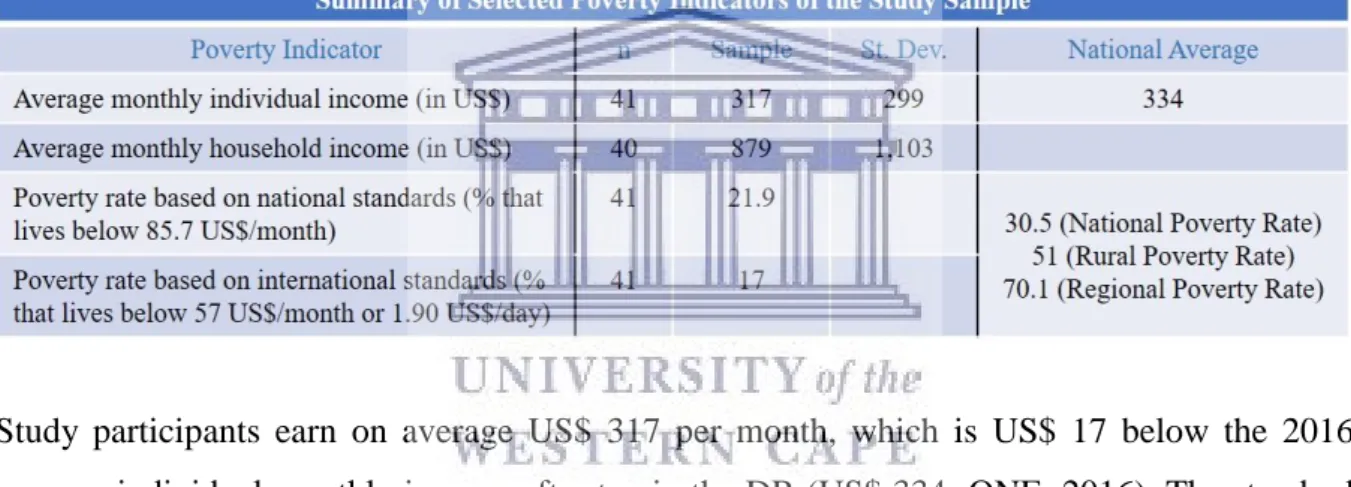
Table 2: Summary of Selected Poverty Indicators of the Study Sample ... 42
Table 3: Most Mentioned Skills Obtained During the Project and Training ... 45
Table 4: Most Mentioned Reasons Why & How Obtained Skills Can Help in Future Work . 45 Figures Figure 1: Conceptual Framework of the Study ... 28
Figure 2: Map of the Research Area in Monte Plata, Dominican Republic ... 31
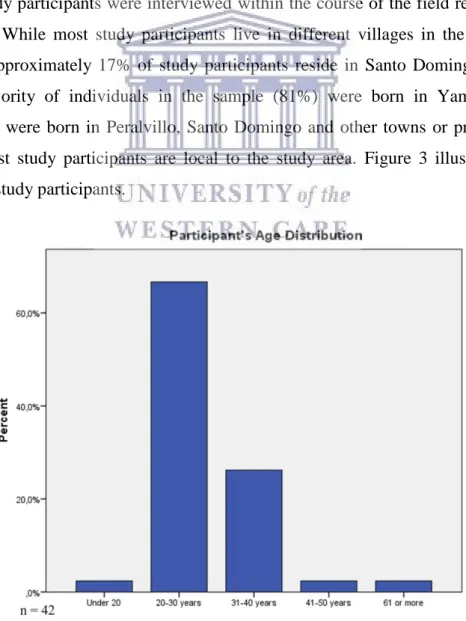
Figure 3: Study Participant’s Age Distribution ... 40
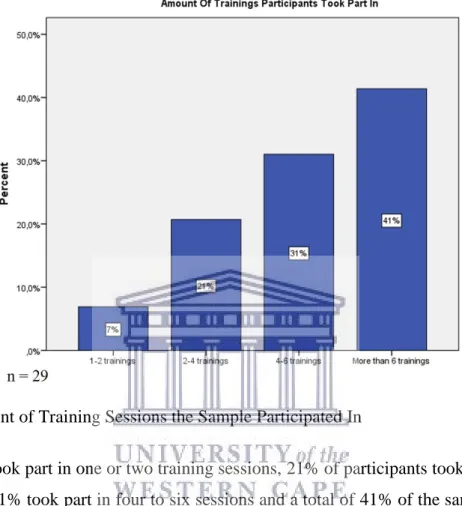
Figure 4: Amount of Training Sessions the Sample Participated In ... 43
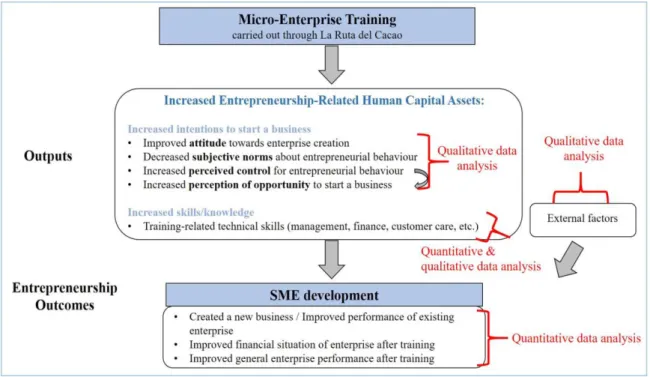
Figure 5: Application of Qualitative and Quantitative Data Analysis ... 44
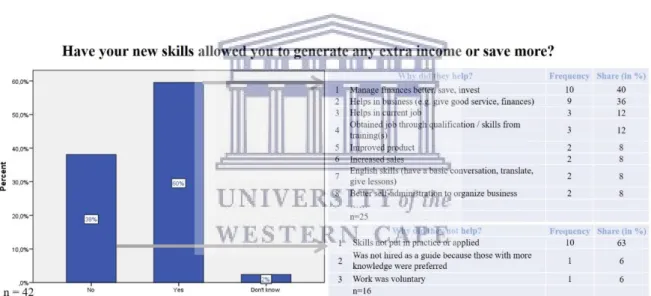
Figure 6: Reasons How New Skills Allowed Beneficiaries to Generate Income & Save More ... 46
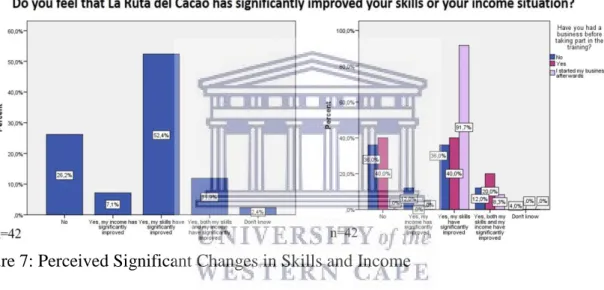
Figure 7: Perceived Significant Changes in Skills and Income ... 47
Figure 8: Business Creation Rate and Share of Existing Enterprises in the Sample ... 48
Figure 9: Perceived Development of Enterprise’s Financial Situation Since the Training... 49
Figure 10: Perceived General Enterprise Development Since the Training ... 50
viii
LIST OF ABBREVIATIONS
DOP Dominican Pesos
DR Dominican Republic
FGD Focus Group Discussion
GEM Global Entrepreneurship Monitor
HCT Human Capital Theory
OECD Organization for Economic Cooperation and Development
ILO International Labour Organization
SDG Sustainable Development Goal
SME Small- and Medium-Sized Enterprise
TPB Theory of Planned Behaviour
UNDP United Nations Development Programme
CHAPTER 1 – INTRODUCTION
In 2015, the international community jointly accepted the Post-2015 Development Agenda, also known as the Sustainable Development Goals (SDGs). The SDGs included 17 global goals that set out targets to be met until 2030. On the top of this list, Goal Number One, is to eradicate poverty. With large parts of the world’s poor living in rural areas, international, national and local actors have been given the task to focus even more on rural populations to improve their living conditions.
The Dominican Republic (DR) faces a set of development challenges including poverty, unemployment and inequality. With an unemployment rate of 14.1% and youth unemployment lying at around 25.5% (MESCyT, 2011: 18,34), one of the country’s priorities remains the creation of employment opportunities, especially in rural areas where both unemployment and poverty rates are the highest. In alleviating rural poverty, micro-enterprise development can play a crucial role, as it is an instrument that generates employment opportunities for rural populations, which is said to promote economic diversification and ultimately contribute to enhancing social stability and improving living standards (Premchander, 2003: 361; Sharma et al., 2012: 114). Serious efforts have been made by international organizations and national and local actors to stimulate SME development in rural areas through micro-enterprise training.
1.1Context and Background
In the attempt of fostering micro-enterprise development, skills and knowledge enhancement can play a crucial role. In this context, the concept of human capital development or capacity building in the form of entrepreneurship-related training is a widely used approach to empower individuals and promote employment creation and sustainable investments on a local level. The process of capacity development includes identifying needs, building knowledge, skills and attitudes that can be applied in a practical and experienced way by an individual or a community (UNDP, 2009: 11). According to the OECD (Noya et al., 2009: 33f), the goal of a capacity building initiative such as micro-enterprise training should be effective empowerment of individuals or communities that allows them to build partnerships and networks that will enhance their ability to ensure sustainability of decisions that influence their quality of life. Nonetheless, the results of efforts to develop such human capital have persistently fallen short of expectations (Otoo et al., 2009: 1).
10
1.2Presentation of Research Topic and Problem Statement
For many years, international, national and local actors have been promoting SME development in rural areas by providing entrepreneurial opportunities. One promoted strategy for SME development is the provision of micro-enterprise training, which is said to stimulate job creation and enterprise growth, allowing entrepreneurs to increase their income and create jobs for others, contributing to poverty alleviation in the area. However, impacts of such training among benefiting entrepreneurs are sometimes unknown. A lack of clarity and consensus about the operationalization of effective micro-enterprise training make evaluations of outcomes and eventually impact assessments very difficult. Approaches have also demonstrated inconsistencies in conceptual frameworks and strategies, making it difficult to understand processes by which change occurs. Ultimately, the link between outcomes of training initiatives and development goals are difficult to establish. Furthermore, the actual changes that training initiatives have caused within entrepreneurs is an area which is understudied. In order to assess changes, which the provision of micro-enterprise training has brought about and in order to make conclusions about the effectiveness of these interventions, sound impact evaluations should be carried out within local contexts.
1.3Research Objectives, Research Questions and Hypothesis
This study will focus on the case study La Ruta del Cacao (English: The Cocoa Trail), an eco-tourism project partly funded by the United Nations Development Programme (UNDP) in rural DR located in one of the poorest regions of the country, to assess the impact of micro-enterprise training provided during the project in 2010. With the overall aim of assessing the perceived impact of micro-enterprise training provided by La Ruta del Cacao, research questions include:
• To what extent has micro-enterprise training carried out through La Ruta del Cacao contributed to the development of SMEs?
• What are the contributing factors that led to SME development?
• What factors hinder SME development?
In more specific terms, the study intends to achieve the following objectives, which serve as an orientation throughout the study:
(1) Investigate the contribution of training to SME development; (2) Identify contributing factors for SME development; and (3) Identify hindering factors for SME development.
CHAPTER 1 – INTRODUCTION
The hypothesis for this study is as follows: The training provided through La Ruta del Cacao impacts entrepreneurial intention and hence entrepreneurial behaviour positively, which translates into SME development. Ultimately, the creation of new enterprises is expected to strengthen the micro-enterprise sector and to bring about positive poverty impacts for the training participant.
1.4Significance of the Study
As noted above, the DR faces several developmental challenges, two of them being unemployment and poverty. Particularly in rural areas, the lack of employment opportunities continues to influence the persistence of poverty. In this regard, micro-enterprise training is seen as an effective investment into skills and knowledge that has the potential to change attitudes and motives of individuals to become entrepreneurs and to enhance individual’s entrepreneurial ability (Raposo and Paço, 2011: 454). With the appropriate skills, individuals will be better equipped to start their own business and to create employment for others (Fiala, 2017: 1). Micro-enterprise training therefore has the potential to stimulate SME development, which may have broader benefits for rural communities by increasing employment opportunities and boosting economic growth. While most direct benefits are likely to take place for the entrepreneur himself, the creation of local businesses allows community members to shop locally, which increases the marketability of other local businesses. In addition, locally owned businesses return a larger share of revenue back into the local economy, they support other local businesses through the purchase of goods and services and they maintain a larger local payroll. Finally, local business creation in rural areas can in turn create jobs for others, therefore bearing the potential to have broader impacts on rural communities (McKenzie and Woodruff, 2014: 71). With these vast potentials, micro-enterprise training can be seen as a means to address unemployment and to boost economic growth, ultimately promoting poverty reduction (Bruhn et al., 2010: 631).
In the DR, barely any studies exist on the impact of micro-enterprise training. Furthermore, evidence from rural areas does not exist in the literature. Due to the lack of empirical evidence on micro-enterprise training impacts in rural Dominican Republic, this study aims to contribute to this research gap by providing insightful details on the effectiveness on training carried out in a local context. This study particularly aims to shed light on influencing factors of the provided training, which foster or hinder micro-enterprise development in the specific rural context. The identification of influencing factors for micro-enterprise development in
12
rural Dominican Republic and the evaluation of the effectiveness of provided training will add valuable information to the current development debate on aid effectiveness and unemployment and poverty reduction efforts. Considering the demonstrated efforts of international, national, and local actors to combat unemployment and rural poverty in the DR, context-specific results for small-scale projects such as La Ruta del Cacao can provide meaningful contributions to future initiatives. Therefore, this study has the potential to provide involved stakeholders with useful insights on such initiatives, which allows improvements of future training initiatives in the research area and possibly other rural areas in the DR. In addition, it contributes to the non-existent empirical evidence base of micro-enterprise training impacts in rural DR.
1.5Thesis Outline
The thesis is divided into six chapters as follows: Chapter One: General Introduction
Chapter One introduces the reader into the context of the study, it outlines the research problem and justifies the research. Thereafter, the research questions, the hypothetical assumptions that underpinned the study and the research objectives are discussed.
Chapter Two: Literature Review
Chapter Two offers a comprehensive review of literature on the topic of entrepreneurship and micro-enterprise training as a means for poverty alleviation. The chapter then introduces the case study project La Ruta del Cacao before providing a review of empirical research on micro-enterprise training impacts globally and in rural Dominican Republic. Thereafter, it identifies the research gap, which this study intends to fill.
Chapter Three: Theoretical and Conceptual Framework
Chapter Three develops the theoretical and conceptual frameworks for this study by elaborating on Human Capital Theory and the Theory of Planned Behaviour, which form the theoretical basis for an impact assessment framework to evaluate provided micro-enterprise training activities. The chapter further describes how relevant variables in the study will be operationalized.
CHAPTER 1 – INTRODUCTION
Chapter Four: Research Design and Methodology
Chapter Four defines the research design and methodology employed to address the study’s objectives. The research design first describes the case study area and elaborates on the research methodology. Thereafter, a description of the sampling and data collection methods and the data processing and analysis follows. The chapter ends with a discussion of the limitations of the study and ethical considerations.
Chapter Five: Empirical Research Findings
Chapter Five deals with the empirical findings of the study. It addresses the specific research objectives and questions through qualitative and quantitative data analysis and explains the findings in relation to the theoretical and conceptual frameworks used for the study. The empirical data analysis concludes with an outline of micro-enterprise training impacts of the case study project on SME development based on the research findings.
Chapter Six: Critical Reflection and Conclusions
The final chapter summarizes the research findings and provides theoretical reflections. Thereafter, concluding remarks based on the analysis follow and answer the research questions and hypothesis of the study. Finally, practical recommendations for future development initiatives providing micro-enterprise training such as La Ruta del Cacao are suggested.
CHAPTER 2 – ENTREPRENEURSHIP & MICRO-ENTERPRISE TRAINING IN THE DOMINICAN REPUBLIC
This chapter presents the literature review for the research. It sets out the academic context of this study to provide a better understanding of the conceptual definition of entrepreneurship and the relevance of micro-enterprise training in countries such as the DR. The review will also include an account of empirical studies that have measured the impact of micro-enterprise training on SME development worldwide and in the DR.
2.1The Concept of Entrepreneurship
Entrepreneurship is a multi-dimensional phenomenon, which is defined differently by representatives of behavioural sciences and economics. Gartner (1990) listed 90 different attributes associated with the concept of entrepreneurship. More recently, Morris (1998) listed 77 different definitions of the concept (Landström, 2005: 10). In searching for a mutually accepted definition of entrepreneurship, this leads to great ambiguity and confusion.
In the past centuries, numerous scholars developed several psychological, sociological and economic theories to understand both causes and consequences of entrepreneurship (Raposo and Paço, 2011: 453). Economic theories (also known as classical and neo-classical theories) on entrepreneurship focus on the role of the entrepreneur in the economy. One of the first pioneers in the field of entrepreneurship in economic theory was Richard Cantillon (1755), a venture capitalist looking for investment opportunities with better than average yields. In his view as an investor, the element of risk was a core aspect to entrepreneurial projects. Jean-Baptiste Say (1815) first identified the element of innovation as being most characteristic of entrepreneurship in the economy. The economic approach generally depicts the role of the entrepreneur in the market when consumers’ preferences are predicted correctly, and profitable market gaps are spotted and filled. In economic terms, an entrepreneur is seen as someone who does not only create job opportunities, but also someone who seeks profit opportunities and therefore introduces new ideas or combinations to the market, which creates solutions for the market needs. Some scholars believe that these market opportunities in the form of new combinations or innovative products and services are the prime endogenous cause of development in the economic system, driving the market toward equilibrium (Oosterbeek et al., 2010: 442). In opposition to this viewpoint, other scholars like Joseph Alois Schumpeter (1934) believe that new entrepreneurial combinations destroy the equilibrium in the economy and create a new equilibrium through which the economy grows,
CHAPTER 2 – ENTREPRENEURSHIP & MICRO-ENTERPRISE TRAINING IN THE DOMINICAN REPUBLIC
called creative destruction (Filion, 2011: 45). Schumpeter was another pioneer in the field of entrepreneurship; he and David McClelland were the main proponents of the psychological theories, which looked at the individual characteristics of entrepreneurs which made them different to other people. Schumpeter was one of the early scholars who defined entrepreneurship as “the creation of something new”. According to him, “the essence of entrepreneurship lies in the perception and exploitation of new opportunities” (Filion, 2011: 44). The key attributes evident from Schumpeter’s study of entrepreneurs are innovativeness, self-confidence, daring, creativity, and desire to break routines. Schumpeter’s entrepreneurs are change agents and their activities result in innovations, systemic changes and new market development processes (Kirchhoff, 1994: 37). Marx Weber and others proposed sociological theories of entrepreneurship, where they hypothesized that the social environment under which an entrepreneur lived in, shaped a person to become an entrepreneur.
Based on these different theoretical groundings, several other definitions of entrepreneurship have emerged in recent years. In 2003, Shane (2003: 4) defined entrepreneurship as the process of discovering, evaluating and exploiting a market opportunity so as to create value through innovative goods and services, either through the formation of a new business or within an already existing company. According to the European Commission, entrepreneurship refers to “an individual’s ability to turn ideas into action. It includes creativity, innovation and risk taking, as well as the ability to plan and manage projects in order to achieve objectives” (Commission of the European Communities, 2006: 4). Kuratko and Hodgetts (2004: 30) note further that entrepreneurship is a dynamic process of vision, change and creation. An entrepreneur – the individual who carries out the role of entrepreneurship – is classified as a person who creates a new business but faces risk and uncertainty for the purpose of achieving profit and growth, by identifying the opportunities and assembling the resources to capitalise on them (Zimmerer and Scarborough, 2002: 4). The term entrepreneur is derived from the French word entreprendre, which means to undertake. An entrepreneur is an individual who undertakes to organise, manage and assume the risks of a business (Kuratko and Hodgetts, 2004: 28f). However, an entrepreneur has many other characteristics. Kilby (1971: 1) defined three essential attributes: The ability to perceive potentially profitable business opportunities, the willingness to act on what is perceived, and the necessary organizing ability (knowledge, skills etc.) to align all available resources into a profitable combination with a profit generating potential. Filion (2011: 45) identified 15 aspects mentioned most frequently in the definitions from the entrepreneurship literature over
16
recent decades that are believed to be most relevant: Innovation, risk, coordination of resources for production, value creation, projective and visionary thinking, focus on action, leadership, dynamo of the economic system, venture creation, opportunity recognition, creativity, anxiety, control, introduction of change and rebellion. Based on what in his view constitutes the essence of the entrepreneur’s activity, in the context of this study an entrepreneur is defined as an innovator or developer who recognizes and seizes opportunities; converts these opportunities into marketable ideas; adds value through time, effort, money or skills; assumes the risks of the competitive marketplace to implement these ideas; and realizes the rewards from these efforts (Bjerke, 2007: 16f; Schaper and Volery, 2004: 6).
According to the Global Entrepreneurship Monitor (GEM), there is wide agreement on the importance of entrepreneurship for economic development. Entrepreneurs create job opportunities and they make an indirect contribution to productivity by driving innovation, i.e. they speed up structural changes in the economy and force old incumbent companies to shape up (Raposo and Paço, 2011: 453). Because of its economic importance, entrepreneurship, either in the form of self-employment alone or as a supplement to wage income, is said to be a viable option for poverty alleviation.
Despite its many definitions, within the context of this study, the term entrepreneurship will be used to describe the process of new business or new venture creation, such as self-employment, a new business organisation, or the expansion of an existing business by an individual, a team of individuals, or an established business (Reynolds, 2000: 3). This definition provided by Reynolds (2000) focuses on the actual result of the entrepreneurship-process: business formation or improvement, emphasizing the economic relevance of entrepreneurship within an economy.
2.2Micro-Enterprise Training as a Means for Poverty Alleviation
As outlined in the preceding section, entrepreneurship is a complex phenomenon. It involves a set of activities with technical, human, managerial as well as entrepreneurial characteristics, the performance of which requires a diverse set of skills (Filion, 2011: 41). Apart from access to physical capital and external finance, much of the literature on the determinants of entrepreneurship have identified managerial or business skills as important drivers of enterprise development and a key determinant of productivity. Similarly, poor management is a constraint to production, especially in developing countries (Bruhn et al., 2010: 631). In this
CHAPTER 2 – ENTREPRENEURSHIP & MICRO-ENTERPRISE TRAINING IN THE DOMINICAN REPUBLIC
regard, the International Labour Organization (ILO) highlights that without capital and appropriate skills, it is difficult for entrepreneurs to be successful at growing businesses (Fiala, 2017: 1). Through effective investment into skills and knowledge – for instance in the form of micro-enterprise training – entrepreneurial ability, i.e. the ability to identify, develop and exploit new opportunities and start and grow a new business, can be enhanced (Raposo and Paço, 2011: 454). Entrepreneurship training is the building of knowledge and skills in preparation for starting a business, or to improve business processes within an existing company. Generally, training is used as a tool that can change attitudes and motives to become an entrepreneur (Raposo and Paço, 2011: 454). Additionally, such training attempts to develop or enhance entrepreneurial behaviours, skills, attributes and values. Ultimately, the importance of training lies in assisting enterprises in the creation of sustainable competitive advantages based on their human resources (Jones et al., 2013: 59).
There are different types of micro-enterprise training. This can include formal or informal training, training done in or outside the workplace, training provided in-house or by external providers. Jones et. al. (2013: 61) identified several different training methods, which include learning at a local college, through a government programme, learning provided by local colleges but within the workplace, employees providing workplace training, private training providers in the workplace, private training providers outside of the workplace, distance learning and E-learning. Furthermore, McKenzie and Woodruff (2014: 78) point out that training can either teach particular practices that business owners can implement in their firms, or they can focus more on the personality of an entrepreneur than on specific skills. The latter is based on the belief that the attitudes and personalities that business owners bring to the business are important factors for enterprise development.
There is international evidence that cognitive, social and technical skills affect earnings of employees as well as employment and occupation status. With the right skills, workers are well-equipped to set up their own business and in turn create jobs for others. With these adverse potentials of enhancing entrepreneurial activity, business training has the potential to achieve poverty reducing effects and to boost economic growth (Bruhn et al., 2010: 631).
2.3La Ruta del Cacao: Micro-Enterprise Training in Rural Dominican Republic With a population of about ten million (2015 est.) and a land area of 48,000 km², the DR is the second largest country in the Caribbean (World Bank, 2017). It shares the island of
18
Hispaniola with Haiti and the official language spoken is Spanish. The annual GDP per capita is US$ 6,484 (2015 est.; Banco Central, 2016; World Bank, 2017). Both moderate and extreme poverty have achieved significant reductions since 2013, with overall poverty decreasing from 41.2% in 2013 to 30.5% in 2016 and extreme poverty from 10% to 7.9% in the same period (World Bank, 2017a). The national poverty line currently lies at 152 DOP (Dominican Pesos) a day, equivalent to US$ 3.2. Among the rural population about 51% (2013 est.) are considered poor according to national standards. Given that 21% of the Dominican population lives in rural areas, the absolute number of poor people in rural areas accounts to 1.1 million people (World Bank, 2017b). In terms of human development, DR ranks 101 out of 188 ranked countries: Indicators such as the illiteracy rate of 8% (2015 est.) emphasize that there is much room for improvements in areas such as education (CIA, 2016: 223; UNDP, 2015: 29). High un- and underemployment remain an important long-term challenge (EPDC, 2014: 1). In total, 30% of 15-24 year old youth have not completed primary education, and only 27.8% of the population has completed secondary education (MESCyT, 2011: 19) As a result, unemployment lies at 14.1% and youth unemployment lies at around 25.5% (MESCyT, 2011: 18,34). With large parts of the population living in areas without necessary infrastructure to sufficient education, major government challenges include the improvement of and guaranteeing access to education in rural areas (Sucre and Fiszbein, 2015: 2). As pointed out in Chapter One, particularly in rural areas, the lack of employment opportunities continues to influence the persistence of poverty.
It is within this context that La Ruta del Cacao aims to address issues related to poverty and unemployment in the area. La Ruta del Cacao was initiated in August 2009 by the Dominican NGO Red Monbayasa1. Firstly, the project intends to promote the region as an eco-tourism destination to attract visitors and income from tourism. Tourism is seen as a viable diversification strategy to revive and add value to the cocoa sector, given that the agricultural sector generates most employment in the area. Secondly, the initiative aims at stimulating micro-enterprise development in the province to provide the local population with additional income opportunities. To achieve this goal, a total of 80 micro-entrepreneurs and individuals aiming to start a business were trained to foster the development of existing and future micro-enterprises, according to internal project documents. In the first 19-months development
1 La Red MONBAYASA is a regionally acting NGO in Monte Plata, Dominican Republic. Members comprise primarily youth from all districts in the Monte Plata province: Monte Plata (MON), Bayaguana (BA), Yamasá (YA), Sabana Grande la Boyá (SA). The NGO’s mission is to contribute to environmental conservation in the region by implementing an efficient eco-tourism network and to promote local economic development through community projects. Further information (in Spanish) can be found under: https://redmonbayasa.wordpress.com.
CHAPTER 2 – ENTREPRENEURSHIP & MICRO-ENTERPRISE TRAINING IN THE DOMINICAN REPUBLIC
phase of the project, training sessions were conducted in the areas customer service, human relations, business management and basic finances (Rodríguez, 2007: 6). The activities are expected to have strengthened the local micro-enterprise sector. The overarching goal of the project is to create additional income opportunities through entrepreneurship. In doing so, poverty-reducing effects are expected to take place among the training participants. Several international, national and local institutions, such as the Cocoa Association Conacado, the Municipalities of Yamasá and Peralvillo and the United Nations Development Programme (UNDP), have supported the initiative. Furthermore, the UNDP Small Grants Programme supported the initiative with 27% of its total expenditures; 73% were co-financed through Conacado and the Municpalities of Yamasá and Peralvillo.
2.4Impact of Micro-Enterprise Training
Based on the understanding that micro-enterprise training can enhance entrepreneurial ability, the number of public and private initiatives to train people to be more entrepreneurial have multiplied globally in the past decades. The multiplication of entrepreneurial training initiatives and increasing level of resources allocated to those initiatives has generated a growing interest from both fund providers and academics about the issue of the effectiveness and efficiency of those initiatives and the identification and diffusion of best practices. Be it in terms of direct (new venture and job creation) or indirect (increasing entrepreneurial spirit) impact on economic development, several researchers have evaluated enterprise training and underlined the complexity of that issue (Fayolle and Gailly, 2005: 1f).
2.4.1 Impact of Micro-Enterprise Training Globally
Despite the growing attention, researchers are still in the initial stages of understanding what kinds of training initiatives are effective (McKenzie and Woodruff, 2014: 49). Martin et al. (2013: 218), in their quantitative review of the existing entrepreneurship literature, have identified 79 studies investigating the effectiveness of entrepreneurship education and training in increasing entrepreneurship outcomes and/or entrepreneurship related human capital assets such as entrepreneurship-related knowledge and skills, a positive perception of entrepreneurship and entrepreneurial intentions. The reviewed studies were carried out in 18 different countries – twelve in developed and six in developing countries around the globe. Although there is still disagreement among the authors as to which are the most appropriate variables to measure, and the most appropriate research methods to ensure meaningful, generalizable results, most of the research supports positive links between entrepreneurship
20
training and entrepreneurship-related human capital assets. Various other studies carried out in the USA, Korea and South Africa have also shown that there is a positive relationship between entrepreneurship education and training on one hand and entrepreneurial success on the other hand (Charney and Libecap, 2000: 40; Lee et al., 2005: 41; Isaacs et al., 2007: 614). In the case of the USA, Varela and Jimenez (2001), in a longitudinal study, chose groups of students from five programmes in three universities in Columbia (USA) and found that the highest entrepreneurship rates were achieved in the universities that had invested the most in entrepreneurship guidance and training for their students. Their results are very close to those of Autio et al. (1997) and Fayolle (1996) derived from the analysis of comparable samples (Fayolle and Gailly, 2005: 3). In the case of South Africa, Isaacs et al. (2007: 613) found that problems hindering the effective implementation of entrepreneurship education are poorly trained educators and lack of adequate resources. Raposo and Paço (2011: 455f), in their academic paper analysing research undertaken on entrepreneurship education impacts, also stress the positive link between specific entrepreneurship education and both the choice to become an entrepreneur and subsequent entrepreneurial success suggested by the general literature. However, the scholars note that study results tend to be ambiguous. Among the studies yielding negative results, Oosterbeek et al. (2010) found a negative relationship between entrepreneurship education training and knowledge and skills, self-efficacy, and entrepreneurial intentions among undergraduate university students in the Netherlands. Martin et al. (2013: 218) considers this study to be among the more methodologically rigorous studies in this literature. Recently, the GEM conducted a cross-sectional survey of working age adults (16-64 years old) on the effect of entrepreneurship training on entrepreneurial outcomes from 38 countries in different phases of economic development. The GEM’s findings indicate that training increases awareness, self-efficacy and intentions but does not influence fear of failure and capacity in opportunity recognition (cf. Martínez et al., 2010: 43).
Studies focussing on training in developing and transition countries have also found the existing evidence to be mixed (McKenzie and Woodruff, 2014: 49). In a critical review of studies on micro-enterprise training impacts in 15 developing countries, McKenzie and Woodruff (2014: 48,67) indicate that almost all studies found a positive impact of business training on business practices, although the effect was often found to be not significant once the sample was divided by gender. The scholars note that the reviewed studies generally differ in what specific business practices they measure. Some studies, for instance, measure basic practices taught in the training such as the use of formal accounting, others measure a broader
CHAPTER 2 – ENTREPRENEURSHIP & MICRO-ENTERPRISE TRAINING IN THE DOMINICAN REPUBLIC
range of practices such as marketing practices or different types of record keeping (McKenzie and Woodruff, 2014: 67). Overall, the magnitude of the improvement of practices was often modest. Few studies reviewed by McKenzie and Woodruff find significant impacts on profits or sales, although some studies with great statistical power have done so. Their review also reveals that many evaluations suffer from small sample sizes and other types of measurement problems which limit the conclusions one can draw. Nonetheless, McKenzie and Woodruff (2014: 69) emphasize that there is strong evidence that training programs help prospective owners launch new businesses more quickly.
The findings in both developed and developing countries show that SME-training programs lead to varying degrees of success, ranging from personal growth and positive attitude changes to business growth, sales and income gains (Michele Cranwell Schmidt et al., 2006: 15). Yet, the great majority of empirical findings support the legitimization process of entrepreneurial education (Lüthje and Franke, 2002: 3). Especially in developed countries, studies generally support the notion that enterprise training programs contribute to economic sustainability and development through the establishment and support of micro-enterprises (Charney and Libecap, 2000: 40; Lee et al., 2005: 41; Fayolle and Gailly, 2005: 3). The results also correspond with literature that micro-enterprise training is a viable option for assisting low- to moderate-income individuals to achieve personal growth, self-employment and self-reliance towards poverty alleviation (Michele Cranwell Schmidt et al., 2006: 15). At the same time, scholars such as Dewhurst et al (2007), Huang (2001) and Patton et al. (2000) highlight that there is currently a lack of sufficient quantifiable empirical evidence demonstrating a conclusive link between training and its impact on business performance. Moreover, the existing evidence is regarded as inconclusive and contradictory (Jones et al., 2013: 57). For instance, a large number of studies is explorative and based on the analysis of single courses or programs. Usually, the surveys do not include longitudinal data, control groups without entrepreneurship education or pre-tests. There is also still a need for valid empirical measures of education characteristics and educational outcomes, which includes appropriate and clearly identified evaluation criteria. In this context, Block and Stumpf (1992) have highlighted the importance of measuring delayed effects of training, given that the goal of entrepreneurship education is not necessarily for all participants to launch businesses in the short-term. Fayolle and Gailly (2005: 2) agree that limiting the evaluation to immediate impact in terms of new venture and job creations can be misleading and short-sighted.
22
2.4.2 Impact of Micro-Enterprise Training in Rural Dominican Republic
As pointed out in Chapter One, in the DR, barely any studies exist on the impact of micro-enterprise training. The only study in this thematic field was carried out by Drexler et. al. in 2010, who evaluated the impact of financial training on firm-level and individual outcomes for mostly female micro-entrepreneurs in the DR. They found that training that relies on the standard approach to SME-training (teaching the fundamentals of financial accounting) had no measurable effect. But the training program based on simple rules of thumb led to significant improvements in the way SMEs managed their finances relative to the control group (Drexler et al., 2010: 19). The scholars conclude that improved knowledge of finance and financial accounting has a positive effect on the growth of small businesses in the Dominican Republic. The results, however, cannot be generalized for the DR context as most participants were women and gender-specific aspects could have played a role in the results.
While – as pointed out above – the number of studies measuring impact of micro-enterprise training in the DR is very limited, specific information on the impact in rural areas is non-existent. Despite the increasingly significant role undertaken by training and its association with enhanced business success and longevity in a global context, the DR results are not conclusive as there is a significant lack of research carried out in the field of micro-enterprise training impacts. It is within this context, that this study intends to contribute to the lack of empirical evidence on micro-enterprise training impacts in rural DR.
2.5Chapter Summary
This chapter has provided insights into the concept of entrepreneurship, the relevance of micro-enterprise training in countries such as the DR and micro-enterprise training impacts globally and in rural DR by drawing from the scholarly literature on the subject. Micro-enterprise training has been identified as an effective instrument for the formation and development of new businesses and the creation of employment. It is seen as a tool that provides skills and knowledge equipping individuals with necessary competencies to be more entrepreneurial. The empirical studies reviewed in the chapter suggest that SME-training leads to varying degrees of success in terms of SME development in both developed and developing countries. Especially in rural DR, there is currently a lack of empirical evidence demonstrating the link between training and its impact on SME development. The next chapter provides the relevant grounding for the research through a discussion of the theoretical and conceptual frameworks underpinning this study.
CHAPTER 3 – A FRAMEWORK TO ASSESS SME DEVELOPMENT THROUGH MICRO-ENTERPRISE TRAINING IN RURAL DOMINICAN REPUBLIC
This chapter aims to provide the necessary conceptual grounding for the research through a presentation of the theoretical and conceptual frameworks used for the study. It also aims to justify the use of Human Capital Theory (HCT) and the Theory of Planned Behaviour (TPB) for a micro-enterprise training impact assessment. The chapter begins with an exposition of Human Capital Theory (3.1) and the Theory of Planned Behaviour (3.2) which underpin the theoretical framework of the research. The chapter ends with the conceptual framework (3.3) which includes an explanation of how relevant variables are operationalized for this study.
A wide range of theories have been employed in providing a framework in which enterprise training is viewed as a determinant of selection into entrepreneurship for the individual, entrepreneurial success for the firm and enterprise creation rates in a society. Despite the recent move to improve the theoretical grounding to determine entrepreneurship training impacts, Martin et. al (2013: 216) stress that there is a general lack of established theories that explain the relationship between entrepreneurship training and entrepreneurial behaviour. Furthermore, Fayolle and Gailly (2005: 10) emphasize that it remains difficult to evaluate the impact of enterprise training directly in terms of specific entrepreneurial behaviour because such training is multidimensional, subject to delayed effect and strongly influenced by environmental factors.
A number of theories relating to entrepreneurial behaviour have been identified in the literature. For the purpose of this study, two theories will be used as the theoretical platform underpinning the investigation. These theories include Human Capital Theory and the Theory of Planned Behaviour which will be discussed in the sections below.
3.1Human Capital Theory
Human Capital Theory predicts that individuals who possess greater levels of knowledge, skills and other competencies will achieve greater performance outcomes than those with lower levels (Martin et al., 2013: 2,5). The theory was originally developed to estimate employees' income distribution from their investments in human capital (Acemoglu and Pischke, 1999: 539) and it has since become one of the more prominent economic theories, which has been used as the foundation for various other theories aiming at understanding the impact of SME-training. The formation of human capital through SME training has been the
24
issue under investigation for many researchers. Much of the literature on the determinants of entrepreneurship and enterprise development has therefore not only focused on factors such as access to physical capital and external finance, but also human capital or business skills as important drivers of enterprise development and a key determinant of productivity (Bruhn et al., 2010: 631). Entrepreneurship researchers have studied the relationship between human capital and entrepreneurship outcomes at the individual, group and firm levels of analysis. Furthermore, much research has considered the differential impact between general human capital and task-related or specific human capital (Martin et al., 2013: 217). According to Martin et al (2013: 213), the use of HCT to explain aspects of entrepreneurial success is well suited and has therefore been well established in the entrepreneurship literature, but almost exclusively as a static model where accumulated education and experience is related to different forms of success. Solomon et al. (2008: 240) stress that in looking across the theoretical frameworks applied in research dealing with education-entrepreneurship linkages, entrepreneurship education is variously assumed as enhancing managerial capabilities, which generates broader options to make entrepreneurial selection of greater value. This in return impacts the quality and quantity of labour, or it signals production ability in labour markets that have incomplete information. According to Unger et al. (2011: 349) and Martin et al. (2013: 217), human capital investments may or may not lead to outcomes in terms of skills or knowledge and different individuals may extract different human capital assets from the same human capital investment as for instance a training initiative. Given the dynamics in entrepreneurship and the constant need to learn and to adapt, the formation of human capital in the entrepreneurship field is not to be seen as static in the form of a fixed set of knowledge, skills and experiences, but rather requires a dynamic view to examine outcomes of actual learning activities such as training (Unger et al., 2011: 344).
As highlighted in Chapter Two, Martin et al. (2013: 218) reviewed the extant entrepreneurship education and training literature and they identified 79 studies that have investigated the effectiveness of entrepreneurship education and training in increasing entrepreneurship-related human capital assets and/or entrepreneurship outcomes. Despite the fact that there is still disagreement among authors as to which are the most appropriate variables to measure and the most appropriate research methods to ensure meaningful, generalizable results, most existing research investigating the effectiveness of entrepreneurship training measures its’ impact on three broad types of entrepreneurship-related human capital assets.
CHAPTER 3 – A FRAMEWORK TO ASSESS SME DEVELOPMENT THROUGH MICRO-ENTERPRISE TRAINING IN RURAL DOMINICAN REPUBLIC
The three capital assets categories are as follows: 1) Entrepreneurial knowledge and skills;
2) Positive perceptions of entrepreneurship; and 3) Intentions to start a business.
These broad groups of measurements, impacting on human capital assets, are based on the knowledge that entrepreneurship education can play a role in the development of perceptions about the desirability or feasibility of entrepreneurial behaviour (Fayolle and Gailly, 2005: 9).
The entrepreneurship literature provides several arguments on how human capital is expected to increase entrepreneurial success. First, Shane and Venkatraman (2000: 223) pose that human capital increases the capability of individuals to perform the generic entrepreneurial tasks of discovering and exploiting business opportunities. For example, Shane (2000) argues that prior knowledge increases individuals’ entrepreneurial alertness preparing them to discover specific opportunities that are not visible to people who do not possess this knowledge. Human capital also affects individuals’ approaches to the exploitation of opportunities (Shane and Venkataraman, 2000: 224). Second, according to some scholars, human capital is positively related to planning and business strategy, which in turn, positively impacts entrepreneurial success (Baum et al., 2001: 301; Frese et al., 2007: 1492). Third, knowledge is useful for obtaining other important resources such as financial or physical capital and can partially compensate a lack of financial capital which is a constraint for many enterprises (Brush et al., 2001: 72). Taken these aspects into consideration, individuals with higher human capital should be more effective and efficient in running their business than individuals with lower human capital. In other terms, the provision of human capital is expected to build up a foundation enabling entrepreneurs to be more successful in operating their business. Hence, the provision of skills, knowledge and other competencies through SME-training should provide participants with necessary human capital for increased entrepreneurial behaviour as opposed to individuals who did not participate in training.
3.2Theory of Planned Behaviour
Several theoretical models considering different measurement variables have been developed, with the purpose of understanding the topic of behavioural intentions and behaviour. One such model is the Theory of Planned Behaviour (TPB) developed by Ajzen in 1985. The TPB is part of the larger family of intentional models that have been used to predict the emergence of entrepreneurial behaviour, positing that behaviour is driven by behavioural intentions. In
26
the context of this study, the TPB will be used as the theoretical framework for the study and will be examined to find answers to the research questions.
Krueger and Carsrud were the first to apply the TPB to the field of entrepreneurship in 1993 by trying to make Ajzen’s model compatible with other theoretical frameworks, especially that of Shapero and Sokol in 1982 (Fayolle and Gailly, 2005: 8). As identified by Krueger and Carsrud’s final model and within the context of this research, a training programme can have an impact on the antecedents of intention (Krueger and Carsrud, 1993: 326) because enterprise creation is a planned business activity and hence an intentional behaviour (Autio et al., 2010: 145; Bird, 1988: 442; Kolvereid, 1996: 51; Krueger and Carsrud, 1993: 315). The TPB provides a useful framework to investigate how training might influence participants intentions regarding their entrepreneurial behaviour and the ultimate outcome of such intentions. The central factor of the TPB is the individual’s intention to perform a given behaviour such as enterprise creation (Fayolle and Gailly, 2005: 6,8). According to the TPB, intentions are the result of three conceptual determinants:
• Attitude toward behaviour: The degree to which a person has a certain evaluation or appraisal of the behaviour in question. In Shapero and Sokol’s model (1982), this factor is called perceived desirability. When new issues arise requiring an evaluative response, people can draw on relevant information (beliefs) stored in memories. Because each of these beliefs carries evaluative implications, attitudes are automatically formed. (Fayolle and Gailly, 2005: 6). Ajzen explains that in the development of attitude towards behaviour, people form beliefs about something by associating it with certain attributes, characteristics, or events. Each belief links the behaviour to a certain result, or to another attribute such as the cost incurred by performing the behaviour. These attributes are already valued positively or negatively, which is why people then automatically and simultaneously acquire an attitude toward the behaviour. People learn to favour behaviours they believe have largely desirable consequences and they form unfavourable attitudes toward behaviours they associate with mostly undesirable consequences. Specifically, the person’s subjective value of the result contributes to the attitude in direct proportion to the strength of the belief (Ajzen, 1991: 191).
• Subjective norms: Perceived social pressures to perform or not perform a particular behaviour; i.e. the subject’s perception of other people’s opinions of the proposed behaviour. These perceptions are influenced by normative beliefs. Furthermore, they are of less relevance for individuals with (what Ajzen calls) a strong internal locus of control
CHAPTER 3 – A FRAMEWORK TO ASSESS SME DEVELOPMENT THROUGH MICRO-ENTERPRISE TRAINING IN RURAL DOMINICAN REPUBLIC
than for those with a strong action orientation. The concept of internal locus of control, first introduced by Julian Rotter (1954), refers to an individual’s general expectancy that his/her outcomes are determined by his/her own behaviour. This means that an individual with an internal locus of control believes that he/she can influence events and their outcomes, while someone with an external locus of control blames outside forces for the latter (Ajzen, 1991: 183).
• Perceived behavioural control: Perceived ease or difficulty of performing a behaviour. According to Ajzen (1986: 453), performance of a behaviour is influenced by the presence of adequate resources and ability to control barriers to behaviours. The more resources and fewer obstacles individuals perceive, the greater their perceived behavioural control and the stronger their intention to perform behaviours. Individuals usually elect to adopt behaviours (such as entrepreneurial activities) they think they will be able to control and master (Ajzen, 1991: 188; Fayolle and Gailly, 2005: 6). Ajzen’s view of perceived behavioural control is influenced by Albert Bandura’s (1977, 1982) concept of perceived self-efficacy which “is concerned with judgments of how well one can execute courses of action required to deal with prospective situations” (Bandura, 1982: 122). Bandura and other scholars lead a systematic research program showing that people’s behaviour is strongly influenced by their confidence in their ability to perform it (Ajzen, 1991: 184). This confidence (i.e. perceived behavioural control) can vary across situations: a person may feel confident starting a business, but less confident in becoming a pilot, for instance. According to the TPB, perceived behavioural control, together with behavioural intention, can be used directly to predict behavioural achievement.
Apart from personal composition, these three determinants influence entrepreneurial intentions and achieving success in entrepreneurial activity, and intentions predict entrepreneurial activity (Krueger and Carsrud, 1993: 315). Ultimately, the quest for entrepreneurial success is linked to motivation which may be intrinsic or extrinsic in nature (Umoren and Udofot, 2014: 1990). The underlying basis of intention and the determinants of behaviour are perceptions, which are developed gradually from beliefs (Fayolle and Gailly, 2005: 6). Among the above-mentioned three factors which influence future behaviours, perceived behavioural control is considered one of the most significant factors contributing to entrepreneurial intention (Ajzen, 1991: 183; Krueger and Carsrud, 1993: 322). Other scholars support this proposition. Krueger and Dickson (1994: 385) showed that an increase of perceived behavioural control increases the perception of opportunity. Davidsson (1995: 23)
28
has also argued that the mastery of vicarious experience and social influences are factors that may affect the intention and/or the decision to start a new business. Boyd and Vozikis (1994: 71) show that intentions of creation are stronger when the degree of perceived behavioural control grows due to the presence of an entrepreneurial role model and when the influences come from several close relatives. Finally, Tkachev and Kolvereid (1999: 271) also demonstrate that a role model is a dominant factor for the prediction of employment choice (self-employed or employee).
The contributions of several scholars suggest that this model remains open to the influence of exogenous factors that may play a role in the development of beliefs and attitudes. It also uses the notion of external trigger to explain the shift from intention to behaviour (Fayolle and Gailly, 2005: 8). Ultimately, the various contributions show that it is possible and relevant to use the Theory of Planned Behaviour to study the emergence and development of the entrepreneurship intention and how enterprise training might affect this emergence (Fayolle and Gailly, 2005: 9).
3.3 A Framework to Assess Micro-Enterprise Training
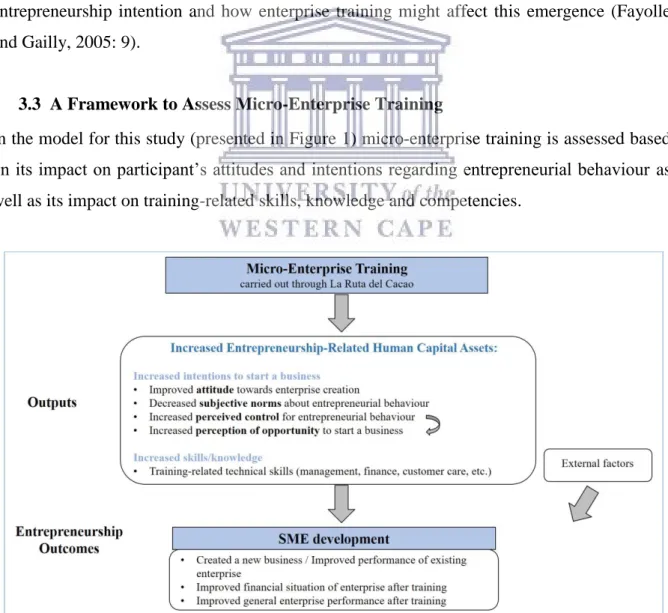
In the model for this study (presented in Figure 1) micro-enterprise training is assessed based on its impact on participant’s attitudes and intentions regarding entrepreneurial behaviour as well as its impact on training-related skills, knowledge and competencies.
Figure 1: Conceptual Framework of the Study (Adapted from Fayolle and Gailly, 2005: 34; Krueger and Carsrud, 1993: 323).
CHAPTER 3 – A FRAMEWORK TO ASSESS SME DEVELOPMENT THROUGH MICRO-ENTERPRISE TRAINING IN RURAL DOMINICAN REPUBLIC
The independent variable is the provided enterprise training, whereby characteristics such as the number of participated training sessions and the training area are considered components. The dependent variable SME development relates to the creation of new businesses and/or the development of existing enterprises. This development can take place financially or in the form of general enterprise performance improvements after the training. Mediating factors to the antecedents of entrepreneurship behaviour are training outputs as defined using Human Capital Theory and the Theory of Planned Behaviour, i.e. measures of attitude toward the behaviour, subjective norms, perceived behavioural control and intention.
The key strength of this theoretical approach is that it does not only attempt to assess the impact of enterprise training directly in terms of specific entrepreneurial behaviour, which is, as discussed above, difficult to evaluate. The impact of enterprise training is also measured in terms of changes in attitudes and intentions, which are antecedents of the behaviour and for which the Theory of Planned Behaviour and its applications provide validated measurement methodologies (Fayolle and Gailly, 2005: 10). Impact is also measured in terms of changes in training-related skills and knowledge as proposed by Human Capital Theory. This allows a more detailed look at specific skills, knowledge and competencies which the provided training may have brought about. Furthermore, since entrepreneurial behaviour tends to be affected by external factors, the theoretical model of this study remains open to potential exogenous factors, which may have played a role in the case study project. This allows for a holistic view on possible training impacts outside of the proposed impacts.
In addition, the consideration of specific characteristics of training sessions in the analysis enables the researcher to correlate the changes in the independent variable with the dependent variables. On the one hand, this enables measurement and comparison of the impact of specific sessions and on the other hand, it allows the testing of whether the determined impact is affected by specific factors of the design or execution of the training. By linking specific characteristics of the provided training with particular outcomes in terms of intentions, attitudes and competencies, the latter implies that this theoretical framework can be used to not only assess, but also to improve the design and execution of future training.
30
An analysis of perceived training impacts will operationalize the theoretical framework (illustrated in Figure 1) on a local level and it will reveal the mechanisms through which the case study project affects SME development.
3.4Chapter Summary
This chapter has provided the necessary grounding for the research through an in-depth discussion of the theoretical and conceptual frameworks used for the study. Beginning with an exposition of Human Capital Theory and its applications in research which deals with the effectiveness of enterprise training measures, the chapter further discussed the Theory of Planned Behaviour, which was first applied in the field of entrepreneurship by Krueger and Carsrud. Both theories represent the theoretical frameworks underpinning the research. Moreover, this chapter provided the framework for this study (Figure 1), which is used to assess the micro-enterprise training impacts of the case study project. The chapter concluded with an explanation of how relevant key variables are operationalized for this study while justifying how the selected framework offers a holistic view on possible training impacts. The next chapter provides the research design and methodology used to collect data, which addressed the study’s objectives.
CHAPTER 4 – RESEARCH DESIGN
The research design comprises the “general plan of how the researcher will go about answering the research questions” (Saunders et al., 2009: 600). There are different types of research designs from which to choose when conducting social research. For the present study, the case study design will be adopted. Yin (2009: 18) defines a case study as “an empirical inquiry that investigates a contemporary phenomenon in depth and within its real-life context, especially when the boundaries between phenomenon and context are not clearly evident”. Case study research offers a wide variety of evidence that can be analysed. The case to be studied in this research is the project La Ruta del Cacao.
The following section first describes the case study area (4.1), it summarizes the research methodology (4.2) and it outlines the sampling strategy (4.3) and data collection methods (4.4). Subsequently, it deals with the data processing and analysis (4.5), as well as with limitations of the study (4.6).
4.1The Case Study Area
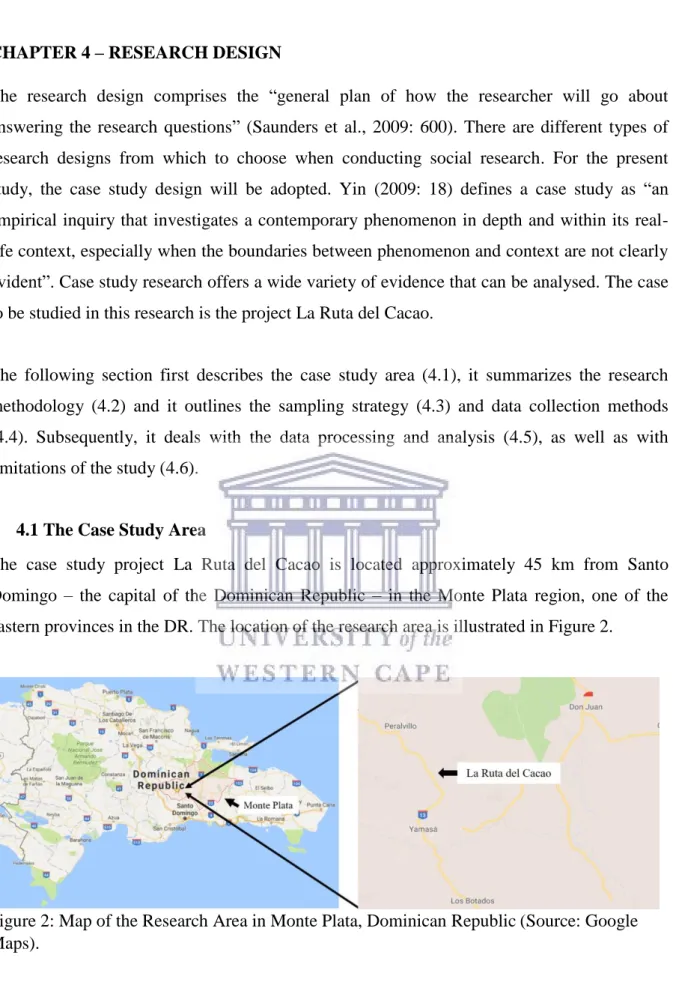
The case study project La Ruta del Cacao is located approximately 45 km from Santo Domingo – the capital of the Dominican Republic – in the Monte Plata region, one of the eastern provinces in the DR. The location of the research area is illustrated in Figure 2.
Figure 2: Map of the Research Area in Monte Plata, Dominican Republic(Source: Google Maps).
Monte Plata is one of the poorest provinces in the country with a poverty rate of 70.1% (Pérez, 2014: 71). The project borders the two towns of Yamasá and Peralvillo. Yamasá has a population of 29,198 and Peralvillo 20,900 (ONE, 2012: 38). Based on information provided by key informants, the most common places of residence of the training participants who