University of Massachusetts Amherst University of Massachusetts Amherst
ScholarWorks@UMass Amherst
ScholarWorks@UMass Amherst
Doctoral Dissertations Dissertations and Theses
July 2018
Technology Integration and Use in Elementary Mathematics
Technology Integration and Use in Elementary Mathematics
Methods Courses for Pre-service Teachers
Methods Courses for Pre-service Teachers
Elzbieta ManosFollow this and additional works at: https://scholarworks.umass.edu/dissertations_2
Part of the Elementary Education and Teaching Commons
Recommended Citation Recommended Citation
Manos, Elzbieta, "Technology Integration and Use in Elementary Mathematics Methods Courses for Pre-service Teachers" (2018). Doctoral Dissertations. 1260.
https://scholarworks.umass.edu/dissertations_2/1260
This Open Access Dissertation is brought to you for free and open access by the Dissertations and Theses at ScholarWorks@UMass Amherst. It has been accepted for inclusion in Doctoral Dissertations by an authorized administrator of ScholarWorks@UMass Amherst. For more information, please contact
TECHNOLOGY INTEGRATION AND USE IN ELEMENTARY MATHEMATICS METHODS
COURSES FOR PRE-SERVICE TEACHERS
A Dissertation Presented
By
ELZBIETA SOBOCINSKI MANOS
Submitted to the Graduate School of the
University of Massachusetts Amherst in partial fulfillment of the requirements for the degree of
DOCTOR OF PHILOSOPHY
May 2018
© Copyright by Elzbieta Sobocinski Manos 2018
All Rights Reserved
TECHNOLOGY INTEGRATION AND USE IN ELEMENTARY MATHEMATICS METHODS
COURSES FOR PRE-SERVICE TEACHERS
A Dissertation Presented
By
ELZBIETA SOBOCINSKI MANOS
Approved as to style and content by:
________________________________ Kathleen S. Davis, Chair
________________________________ Florence Sullivan, Member
________________________________ Ruth-Ellen Verock-O’Loughlin, Member ________________________________ Beverly Woolf, Member
______________________________ Jennifer Randall
Associate Dean for Academic Affairs College of Education
DEDICATION
ACKNOWLEDGEMENTS
I would like to thank my advisor, Dr. Kathleen Davis. Your guidance and belief in me was unwavering throughout this process and means a lot to me. I was fortunate to have you as my advisor and mentor, and I am forever grateful. To the members of my committee, Dr. Florence Sullivan, Dr. Ruth-Ellen Verock-O’Loughlin, and Dr. Beverly Woolf, I would like to thank you for your guidance and support. I was fortunate to have each one of you on my committee.
I am grateful to my friends and colleagues at Anna Maria College. I have received support and encouragement from so many at Anna Maria. Specifically, I would like to acknowledge Sr. Rita Larivee for her friendship and encouragement to pursue a doctorate. I would like to thank Christine Holmes, Joanne McDonnell, and Susan Eliason for allowing me the opportunity to be in their classrooms and to observe such dedicated teachers as part of my pilot study. I would like to express gratitude to Carolyn Allard for reviewing the grammar and my writing. I would also like to thank Elly Wasilak for her encouragement and support throughout this long journey.
I would like to sincerely thank the instructors who agreed to participate in this study. It was my privilege to work with such dedicated educators.
I would like to thank my family for their love and support throughout this process. I could not have done this without them. To my son, Dean, and my husband, Paul, I am forever grateful for your love and support; I am very fortunate to be your mother and wife. I appreciate all the sacrifices that you made. I love you both so much!
ABSTRACT
TECHNOLOGY INTEGRATION AND USE IN ELEMENTARY MATHEMATICS METHODS
COURSES FOR PRE-SERVICE TEACHERS
MAY 2018
ELZBIETA MANOS, B.S., M.B.A., ANNA MARIA COLLEGE
Ph.D., UNIVERSITY OF MASSACHUSETTS AMHERST
Directed by: Professor Kathleen S. Davis
According to the National Educational Technology Plan 2010, technology should be incorporated into teaching methods courses and field experiences and not just in stand-alone technology courses. The teacher preparation programs would provide technology-based learning experiences to prepare pre-service teachers to effectively use technology to improve learning, assessment, and instructional practices. However, the problem is that graduate pre-service teacher preparation programs do not adequately prepare pre-pre-service teachers to incorporate technology into their teaching.Furthermore, the teacher preparation programs lacked opportunities for the pre-service teachers to experience technology as learners beyond the stand-alone course in technology.
Research shows the need for pre-service teachers to experience technology as learners so that they can use their knowledge to create learning environments of greater understanding in their future classrooms, specifically in the area of mathematics. Technological pedagogical content knowledge is knowledge of how to incorporate technology into the teaching of content to promote student learning (Koehler & Mishra, 2009).
This study investigated the ways in which math methods courses that provide technology-based learning experiences for pre-service teachers enable them to gain the
technological pedagogical content knowledge necessary for effective teaching. This study investigated two elementary methods courses where technology integration was in place. Informants included the instructors and pre-service teachers in each course. A qualitative multiple case study methodology utilizing observations of methods courses, interviews with faculty and pre-service teachers, and collection of teaching and learning artifacts was used. Additionally, this study focused on both the faculty and the students’ use of instructional technology for enhancing the teaching and learning.
Furthermore, Massachusetts has a technology self-assessment tool that can be utilized by teachers to assess their own technology proficiency (Massachusetts Department of
Elementary and Secondary Education, 2010). The criteria in Standard 3, Teaching and Learning with Technology, was used to assess the instructors. The analysis also described how faculty used and modeled instructional technology in the methods courses to enhance teaching and learning.
TABLE OF CONTENTS
Page
ACKNOWLEDGEMENTS ... v
ABSTRACT ... vii
LIST OF TABLES ... xii
LIST OF FIGURES ... xiv
CHAPTER 1. PROBLEM STATEMENT ... 1
2. LITERATURE REVIEW ... 4
2.1 Sociocultural Learning Theory: Vygotsky ... 4
2.2 The Use of Technology – Learning of New Ideas and the Learner ... 8
2.2.1 Learning Math with Technology ... 24
2.3 How Pre-Service Teachers Learn to Teach ... 30
2.4 How Pre-Service Teachers Learn to Teach Using Technology ... 37
2.5 Research Questions ... 46 3. METHODOLOGY ... 48 3.1 Research Setting ... 50 3.2 Analysis ... 52 4. CASE STUDY 1 ... 54 4.1 Description of Setting ... 54
4.2 Research Question Two ... 54
4.3 Instructor Use of Technologies ... 55
4.3.1 Videos ... 55 4.3.2 Google Docs ... 57 4.3.3 iPad ... 58 4.3.4 Websites ... 58 4.3.5 Document Camera ... 59 4.4 TPACK ... 60 4.4.1 Content Knowledge ... 60 4.4.2 Pedagogical Knowledge ... 61
4.4.3 Technological Knowledge ... 62
4.4.4 Pedagogical Content Knowledge ... 65
4.4.5 Technological Pedagogical Content Knowledge (TPACK) ... 66
4.5 Research Question One ... 70
4.6 Pre-service Teacher Use of Technologies ... 71
4.6.1 Videos ... 71
4.6.2 Document Camera ... 74
4.6.3 Websites and iPad Apps... 76
4.6.4 Google Docs ... 79
4.7 TPACK ... 80
4.7.1 Content Knowledge ... 80
4.7.2 Pedagogical Knowledge ... 83
4.7.3 Pedagogical Content Knowledge ... 84
4.7.4 Technological Knowledge ... 88
4.7.5 Technological Pedagogical Content Knowledge (TPACK) ... 90
4.8 Summary ... 95
5. CASE STUDY 2 ... 126
5.1 Description of Setting ... 126
5.2 Research Question Two ... 127
5.3 Instructor Use of Technologies ... 127
5.3.1 Videos ... 127 5.3.2 iPad ... 131 5.3.3 Websites ... 133 5.3.4 Document Camera ... 134 5.4 TPACK ... 135 5.4.1 Content Knowledge ... 135 5.4.2 Pedagogical Knowledge ... 137 5.4.3 Technological Knowledge ... 140
5.4.4 Pedagogical Content Knowledge ... 143
5.4.5 Technological Pedagogical Content Knowledge (TPACK) ... 147
5.5 Research Question One ... 154
5.6 Student Use of Technologies ... 155
5.6.1 Videos ... 155
5.6.2 Websites and iPad Apps... 156
5.7 TPACK ... 160
5.7.1 Content Knowledge ... 160
5.7.2 Pedagogical Knowledge ... 162
5.7.3 Technological Knowledge ... 163
5.7.4 Pedagogical Content Knowledge ... 164
5.7.5 Technological Pedagogical Content Knowledge ... 165
5.8 Summary ... 168
6. CROSS-CASE ANALYSIS ... 208
6.1 Research Question Two ... 208
6.2 Instructors and TPACK ... 208
6.2.1 Content Knowledge ... 209
6.2.2 Pedagogical Knowledge ... 211
6.2.3 Technological Knowledge ... 212
6.2.4 Pedagogical Content Knowledge ... 216
6.2.5 Technological Pedagogical Content Knowledge ... 2219
6.3 Research Question One ... 223
6.4 TPACK ... 223
6.4.1 Content Knowledge ... 223
6.4.2 Pedagogical Knowledge ... 225
6.4.3 Technological Knowledge ... 226
6.4.4 Pedagogical Content Knowledge ... 226
6.4.5 Technological Pedagogical Content Knowledge ... 228
7. FINDINGS ... 231
7.1 Conclusions ... 249
7.2 Implications for Further Research ... 250
APPENDIX: TABLES ... 251
LIST OF TABLES
Table Page
4.1 Summary of Findings/Domains of Interest for Site 1... 97
4.2 Technology and Meeting the Massachusetts Standards for Mathematical Practice for Site1 ... 98
4.3 Instructor Using Technology from Observations for Site 1... 99
4.4 Frequency of Instructor Using Technology from Observations for Site 1 ... 100
4.5 Technology Use in Student Presentations ... 101
4.6 Frequency of Technology Use in Student Presentations ... 102
4.7 Websites in Technology Assignment ... 103
4.8 iPad Apps in Technology Assignment ... 107
4.9 Instructor and TPACK ... 109
4.10 Instructor and TPACK Summary ... 110
4.11 Site 1 Instructor and TSAT Standard 3 – Early Technology Mastery Level ... 111
4.12 Site 1 Instructor and TSAT Standard 3 – Developing Mastery Level ... 112
4.13 Site 1 Instructor and TSAT Standard 3 – Proficient Mastery Level ... 113
4.14 Site 1 Instructor and TSAT Standard 3 – Advanced Mastery Level ... 115
4.15 CK and TPACK in Websites/Apps in Individual Student Presentations ... 116
4.16 Student Group 3 Presentation ... 118
4.17 TPACK in Student Group 3 Presentation Alignment with Massachusetts Mathematical Content Strands, Fifth Grade ... 119
4.18 Alignment of Massachusetts Teacher Standard 7.06.7 with Course Objectives and Assessment ... 120
4.20 TPACK in Student Group 1 Presentation Alignment with Massachusetts Mathematical
Content Strands, Second Grade ... 122
4.21 Student Group 2 Presentation ... 123
4.22 TPACK in Student Group 2 Presentation Alignment with Massachusetts Mathematical Content Strands, Second and Sixth Grades ... 124
4.23 Alignment of Massachusetts Teacher Standard 7.08.2 with Course Objectives and Assessment ... 125
5.1 Summary of Findings/Domains of Interest for Site 2... 170
5.2 Technology and Meeting the Massachusetts Standards for Mathematical Practice for Site 2 ... 171
5.3 Instructor Using Video Technology from Observations for Site 2 ... 172
5.4 Instructor Using iPad Apps from Observations for Site 2 ... 173
5.5 Resource – List of iPad Apps by Grade Level ... 174
5.6 Resource – List of iPad Apps by Topic ... 175
5.7 Instructor Using Websites from Observations for Site 2 ... 176
5.8 Instructor Using Document Camera and Other Technology from Observations for Site 2 ... 177
5.9 Instructor and TPACK ... 178
5.10 Instructor and TPACK Summary ... 180
5.11 Frequency of Instructor Using Technology from Observations for Site 2 ... 181
5.12 Alignment of Massachusetts Teacher Standard 7.08.2 with Course Objectives and Assessment ... 182
5.13 Site 2 Instructor and TSAT Standard 3 – Early Technology Mastery Level ... 183
5.14 Site 2 Instructor and TSAT Standard 3 – Developing Mastery Level ... 184
5.15 Site 2 Instructor and TSAT Standard 3 – Proficient Mastery Level ... 185
5.16 Site 2 Instructor and TSAT Standard 3 – Advanced Mastery Level ... 187
5.17 Enhancing Math Instruction Using Apps – Student Edwina ... 188
5.19 Enhancing Math Instruction Using Apps – Student Gemma ... 190
5.20 Enhancing Math Instruction Using Apps – Student Harley ... 191
5.21 Enhancing Math Instruction Using Apps – Student Cassandra ... 192
5.22 Enhancing Math Instruction Using Websites – Students Edwina and Agatha ... 193
5.23 Enhancing Math Instruction Using Websites – Students Gemma and Harley ... 194
5.24 Enhancing Math Instruction Using Websites – Student Cassandra ... 195
5.25 Alignment of Massachusetts Teacher Standard 7.06.7 with Course Objectives and Assessment ... 196
5.26 Technology Use in Student Lesson Plan Presentations ... 197
5.27 Frequency of Technology Use in Student Lesson Plan Presentations ... 198
5.28 Technology Use in Student Presentations – Math in the Real World ... 199
5.29 Frequency of Technology Use in Student Presentations – Math in the Real World ... 200
5.30 Students’ Lesson Plan Presentations and TPACK ... 201
5.31 Student Group 3 Presentation and TPACK ... 202
5.32 Student Group 2 Presentation and TPACK ... 203
5.33 Student Group 1 Presentation and TPACK ... 204
5.34 TPACK in Student Group 2 Presentation Alignment with Massachusetts Mathematical Content Strands, Third to Fifth Grades ... 205
5.35 TPACK in Student Group 3 Presentation Alignment with Massachusetts Mathematical Content Strands, Pre-K and First Grades ... 206
5.36 TPACK in Student Group 1 Presentation Alignment with Massachusetts Mathematical Content Strands, Fourth Grade ... 207
A.1 Examples of Technology Found in a Technology-Empowered Learning Environment ... 251
A.2 TPACK and Knowledge Components Defined ... 252
A.3 Guiding Principles for Mathematics Programs in Massachusetts ... 254
A.5 Instructors and Content Knowledge ... 256
A.6 Instructors and Pedagogical Knowledge – Assessment Tools ... 257
A.7 Instructors and Technological Knowledge ... 258
LIST OF FIGURES
Figure Page
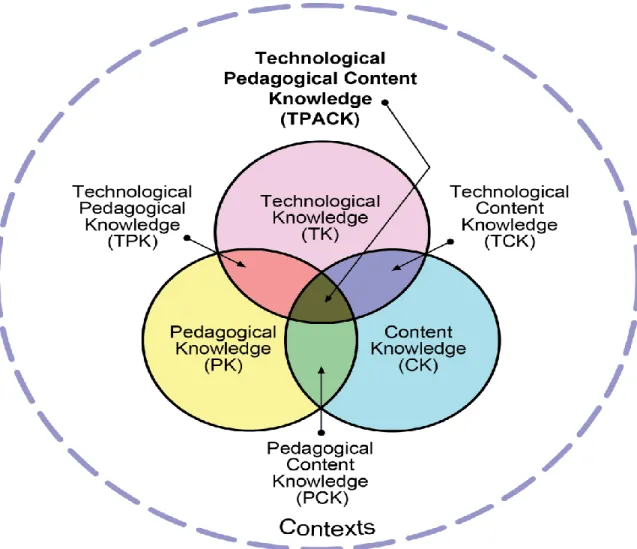
2.1 Technological Pedagogical and Content Knowledge ... 42
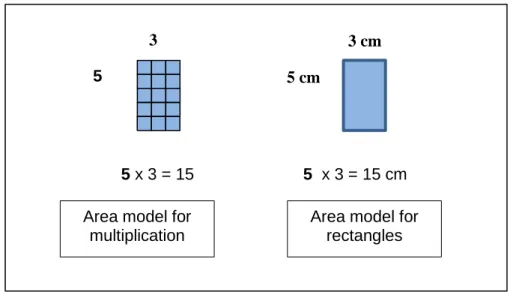
4.1 Area Models for Multiplication Using Cuisenaire Rods and for Rectangles ... 56
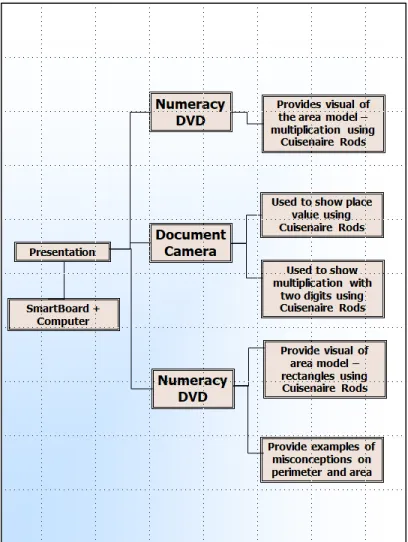
4.2 Flowchart of Site 1 Instructor and Numeracy Presentation ... 67
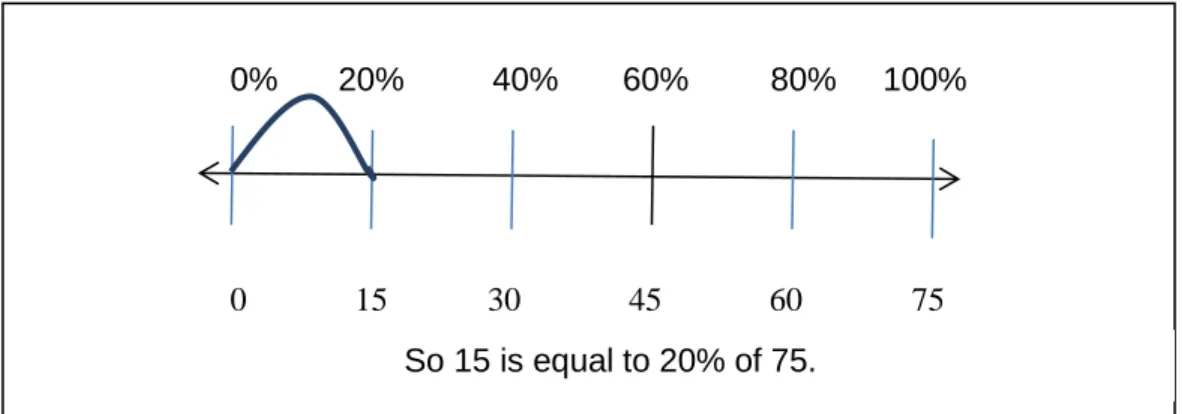
4.3 Double Number Line Showing Percents ... 72
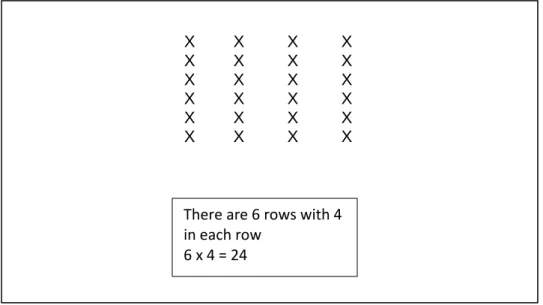
4.4 Multiplying Decimals Using an Array ... 72
4.5 Popsicle Sticks Showing Fractions and Decimals ... 74
4.6 Turnaround Facts with Flipping Cubes ... 74
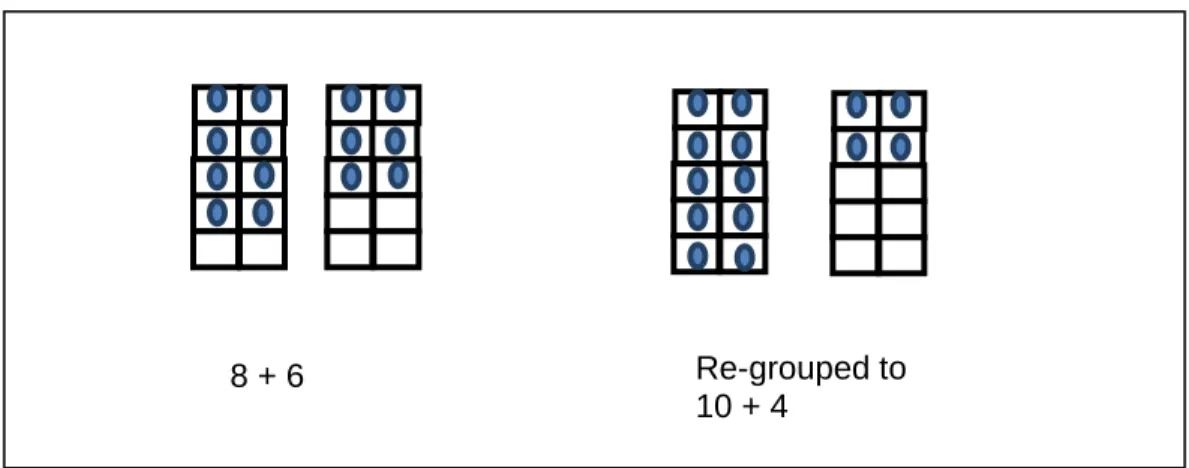
4.7 Regrouping in Addition Using Ten Frames ... 75
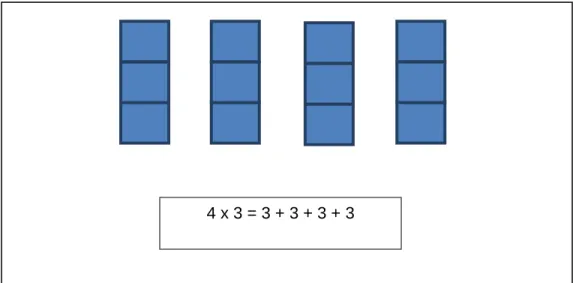
4.8 Repeated Addition Strategies for Multiplication ... 76
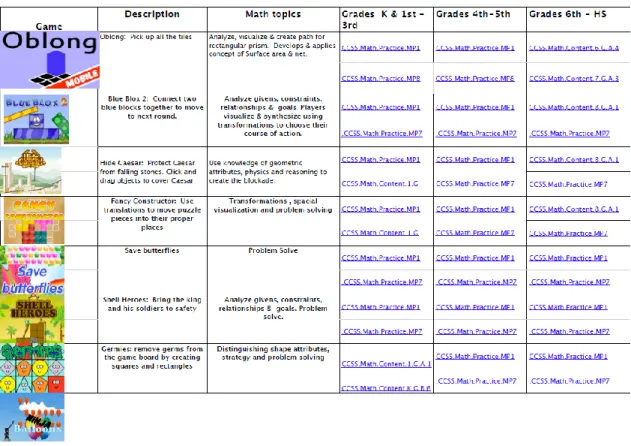
4.9 Hoodamath Games Alignment to Common Core State Standards ... 77
4.10 Using Base 10 Blocks to Illustrate Place Value ... 81
4.11 Decimals Clothes Line ... 85
4.12 Double Number Line Showing Fractions and Whole Numbers ... 86
4.13 Array Used for Multiplication ... 88
4.14 Flowchart of Student Group 3 Presentation ... 91
4.15 Flowchart of Student Group 3 Fractions Detailed Presentation ... 92
4.16 Flowchart of Student Group 1 Presentation ... 93
4.17 Flowchart of Student Group 2 Presentation ... 95
5.1 Division Using a Number Line ... 128
5.2 Using Number Lines to Show Multiplication ... 129
5.4 Array Model for Multiplication ... 131
5.5 Flowchart of Site 2 Instructor and Understanding Operations Presentation ... 145
5.6 Thinking about Multiplication ... 146
5.7 Place Value Using Buttons and Beads ... 160
5.8 Flowchart of Student Presentation on Tangrams ... 166
CHAPTER 1
PROBLEM STATEMENT
As one of its goals for teaching, the National Education Technology Plan 2010 states, “Professional educators will be supported individually and in teams by technology that connects them to data, content, resources, expertise, and learning experiences that enable and inspire more effective teaching for all learners” (U.S. Department of Education, 2010, p. 49). One way to accomplish this goal is through teacher preparation programs. According to this plan,
technology should be incorporated into teaching methods courses and field experiences and not just in stand-alone technology courses. The teacher preparation programs would provide technology-based learning experiences to prepare both pre-service and in-service teachers to effectively use technology to “improve learning, assessment, and instructional practices” (p. 50).
However, according to the National Center for Education Statistics, in 2009, only 33% of all public school elementary teachers reported that their graduate teacher education program prepared them to a moderate or major extent to use educational technology for instruction (Gray, Thomas, & Lewis, 2010). Another 32% reported that their graduate program was not applicable—in other words, not a contributing factor. In addition, Sutton (2011) found that novice teachers felt that the required stand-alone technology course, Introduction to Instructional Computing, in their graduate pre-service teacher preparation program did not adequately prepare them to incorporate technology into their classrooms, nor did it enable them to retain or transfer the skills learned in that course to other coursework and components of their program, such as the methods courses. Furthermore, the novice teachers indicated that their education program lacked opportunities to experience technology as learners beyond the one course.
Computer technology is an important classroom component for student learning and can be used to increase student achievement, comprehension, and problem-solving skills (Otero et al., 2005). However, the National Center for Education Statistics (2000) reported that almost two-thirds of teachers indicated that they were ill prepared to use computers and the Internet in their own classrooms. According to the International Reading Association (2009), “Students must become proficient in the new literacies of 21st-century technologies. As a result, literacy educators have a responsibility to effectively integrate these new technologies into the curriculum, preparing students for the literacy future they deserve” (p. 2). Lastly, technology skills are needed for an educated workforce—a goal of education in general (Marx, 2005; Okojie & Olinzock, 2006; Otero et al., 2005) and particularly for pre-service teachers (Otero et al., 2005)—but students are not learning these skills (Brown & Warschauer, 2006; Watson, 2006).
In addition, there are successful ways for pre-service teachers to acquire knowledge and skills to design effective instruction using technology aligned with constructivism, but again this is not found in teacher education programs (Brown & Warschauer, 2006; Murray & Zembal-Saul, 2008). Moreover, there seems to be a gap in the technology knowledge and skills that pre-service teachers do have and their confidence to effectively use that knowledge (Davis & Falba, 2002; Pope, Hare, & Howard, 2005). Thus, the fact that pre-service teachers know how to use such technologies as the Internet or word processing does not translate into effective classroom integration (Ertmer et al., 2003). In a 10-year study conducted in 1995, researchers found that, relative to other majors, education majors not only have greater computer anxiety but also less familiarity with computers (Reed, Ervin, & Oughton, 1995). This is not a very encouraging statistic for our future teachers. Furthermore, a 2001 study of pre-service teachers had similar findings: These college students, relative to their peers, had less familiarity and expertise with
computers (Reehm, Long, & Dickey, 2001). The study’s authors found that knowledge of computers was lacking in teacher education programs.
CHAPTER 2
LITERATURE REVIEW
The literature review addresses Vygotsky’s sociocultural learning theory, the use of technology in learning new ideas including mathematics, how pre-service teachers learn to teach, as well as how they learn to teach with technology. The Technological Pedagogical Content Knowledge (TPACK) framework is also described in the teaching with technology section.
2.1 Sociocultural Learning Theory: Vygotsky
Vygotsky was both an educator in the classroom as well as a researcher (Jaramillo, 1996). He regarded psychology as the area between sociology and biology (Shalin, 2017). In other words, he believed that “every function in the cultural development of the child appears on the stage twice, in two planes, first, the social, then the psychological” and thus “first between people”, then “within the child” (as cited in Shalin, 2017, p. 182).
Vygotsky believed that learning is social and proposed the theory of the “zone of proximal development.” The focus of this theory is on “the level of potential development as determined through problem solving under adult guidance or in collaboration with more capable peers” (as cited in Wertsch, 1979). For example, in an honors thesis course, the adult guidance consisted of the faculty reviewers, thesis committee members, librarians, theorists and researchers, and the general public [at the thesis defense] (Briggs, 2010). The students’
problem-solving included “unpacking, translating, linking, [and] speculating” the research (Briggs, 2010, p.64). Thus ZPD applies not only to young children but also to college students.
This ZPD can be broken down into three contexts: “developmental, educational, and assessment oriented” (Kozulin, 2011, p.195). The developmental context refers to the surfacing
of new psychological performance. Vygotsky considers that the optimal period for the
development of a particular ability to be the emergence of that psychological ability as opposed to the full development. The educational context refers to it as the “motor” and driving force of a child’s progress. Vygotsky believed that the attainment of “academic concepts” needs
deliberate instructional activity (Vygotsky, 2012). Lastly, the assessment context denotes a process that is “assisted, presenting a complete problem-solving model, asking leading questions, starting solution, and then asking the child to continue” (Kozulin, 2011, p.196). An example of the ZPD might be how more tech-savvy students provide technical support and guidance to the less tech-savvy students in their coursework (Abbott & Faris, 2000). A tutoring writing center provides another example of ZPD. First, the tutor/instructor understands the current skills of the student and then tailors the tutoring session on practicing the developing skills of the student (Nordlof, 2014).
According to Vygotsky, a teacher determines/assesses a child’s ZPD in the following ways:
1. Demonstrate the solution to see if the child can imitate the steps 2. Begin to solve the problems to see if the child can finish it
3. Have the child cooperate with another, more fully developed child (a child who has a higher IQ)
4. Explain the principles of solving the problem, ask leading questions, analyze the problem for the child, and so on (Gredler, 2012, p.118).
Then the teacher can design instruction for the child at the ZPD level.
Additionally, Vygotsky utilized the concept of “scaffolding” in his ZPD theory. He describes scaffolding as an “assisted learning process that supports ZPD, or getting to the next level of understanding, of each student from the assistance of teachers, peers, or other adults”
(as cited in Powell & Kalina, 2009, p.244). In other words, the scaffolding provides a support system for the student/learner. In this ZPD, the teacher starts with concepts that are slightly above the students’ current knowledgebase. The students then use manipulatives in a realistic activity to learn the concepts and “construct” meaning from their experience (Jaramillo, 1996). The teacher facilitates the activity in which the students interact with the manipulatives in small groups. Thus, in the classroom, the teacher understands the student’s cognitive
processes/activities according to Vygotsky: “conscious awareness of his or her own thinking” and “understanding of the psychological nature of the task” (Gredler, 2012, p.125).
Vygotsky stressed “the role of tools which mediate and control the relationship between subjects and object (goals)” (as cited in Keengwe & Kang, 2012, p. 85). Some psychological tools described by Vygotsky include “language, different forms of numeration and counting,
mnemotechnic [vocabulary learning] techniques, algebraic symbolism, works of art, writing, schemes, diagrams, maps, blueprints, [and] all sorts of conventional signs” (as cited in Shalin, 2017, p. 183). These tools are internal or external (Pange & Kontozisis, 2001). These symbolic tools are social in nature, and mediate experiences and learning.
Vygotsky also emphasized the importance of “the social activity of speech or speaking rather than the structure of the language system” and that “speech can be understood only if it is viewed as being part of ongoing human activity” (as cited in Wertsch, 1979, p. 4). Language is the main “vehicle” of communication between humans and is therefore required in social interactions (as cited in Jaramillo, 1996). Additionally, Vygotsky believed that “language” enriches learning and that it comes before knowledge or thinking; it is a “correlative of consciousness” (as cited in Powell & Kalina, 2009). Specifically, Vygotsky (as cited in Nordlof, 2014, p.55-56) expressed the following:
The acquisition of language can provide a paradigm for the entire problem of the relation between learning and development. Language arises initially as a means of communication between the child and the people in his environment. Only
subsequently, upon conversion to internal speech, does it come to organize the child’s thought, that is, become an internal mental function.
Technology can provide tools that facilitate speech and social discourse and thus can be used to co-construct knowledge and learning according to Vygotsky’s philosophy.
Additionally, Vygotsky’s sociocultural theory denotes that individual learning occurs in a social situation and cannot be separated (as cited in Jaramillo, 1996). Furthermore, the group [more knowledgeable peers and adults] plays a vital role in that individual learning process and thus in the construction of knowledge. In Vygotsky’s view, this group teaches the “rules and norms of society”, i.e. the “social”, to individuals [learners] (as cited in Jaramillo, 1996, p.134). The individual needs to experience the learning and then “socially” negotiate their meaning in a real learning environment.
According to Vygotsky, in the classroom, the teacher facilitates student learning. The teacher needs to understand the prior experiences of his/her students and design instruction based upon those experiences, “a continuity of experience” (as cited in Jaramillo, 1996, p.134). Furthermore, Vygotsky stressed the need for experiential learning, i.e. “learning by doing”, as did Dewey (1902/1971). This learning consists of both internal and external experiences as well as cognitive, emotional, and external interactions (as cited in Jaramillo, 1996). Additionally, this learning in the classroom should be consistent with the “real world” and vice versa (Pange & Knotozisis, 2001).
Moreover, in the classroom, Vygotsky emphasized peer collaboration. In small groups, students would work together on various learning activities including problem-solving. Again
the teacher facilitates the learning activities and has each group and/or student explain his/her thinking, building on each other’s’ thinking on how they solved the problem. In the groups, the students exchange ideas, discuss their strategies as well as misconceptions, and communicate their thinking (as cited in Jaramillo, 1996; Henson, 2003). The teacher promotes the “dialogue” and encourages students to think critically (Powell & Kalina, 2009). In other words, everyone is learning from everyone. The students worked more efficiently problem-solving in groups as compared to individually. Vygotsky named this type of social learning as “negotiating meaning” and now referred to as cooperative learning (as cited in Henson, 2003, p.13; Shalin, 2017). It is student/learner-centered learning. Although each student internalizes this learning/knowledge, it happens differently for each student depending on his/her own experience. According to Vygotsky, this “internalization” is more effective in a social situation as described above (as cited in Powell & Kalina, 2009).
2.2 The Use of Technology – Learning of New Ideas and the Learner
Technology can be used to promote this cognitive growth in children as well as adults (Judson, 2006; Otero et al., 2005). Technology can be used to facilitate problem-solving (Hartsell, 2006) and foster collaboration and social interaction with the teacher and/or other students (Judson, 2006; Sherman & Kurshan, 2005). Technology provides an opportunity to form online communities of students and adults who work together to solve particular problems (Sherman & Kurshan, 2005). Technology in the form of cognitive tools can help pre-service teachers comprehend concepts and solve problems. For example, Inspiration software can facilitate the critical analysis of complex texts, such as Jonathan Kozol’s Savage Inequalities (Otero et al., 2005).
In 2011, Strawn reviewed research on technology and learning and referenced an article by Tamim, Bernard, Borokhovski, Abrami, and Schmid (2011), a meta-analysis of 40 years of research. Tamim et al. (p. 16) presented three key findings:
1. A significant positive small to moderate effect size favoring the utilization of technology in the experimental condition over more traditional instruction (i.e., technology free) in the control group.
2. Computer technology that supports instruction has a marginally but significantly higher average effect size compared to technology applications that provide direct instruction.
3. The average effect size for K–12 applications of computer technology was higher than computer applications introduced in postsecondary classrooms.
Thus, as described above in the second finding, when students experience technology as a tool for learning, these experiences lead to greater understanding compared to when students use a website or some other technology to learn the content themselves. Furthermore,
instruction with technology in K–12 shows students scoring “12 percentile points higher” than their counterparts without the technology (Strawn, 2011, p. 38). This is a significant difference and one that educators should be aware of.
Other educators also recognize the impact of technology at such a young age on greater achievement in school. Espinosa, Laffey, Whittaker, and Sheng (2006) documented a
longitudinal study of children from kindergarten through fifth grade in private and public schools where their cognitive development was assessed as measured by their reading and math ability. Technology use at home and socioeconomic status (i.e., household income and parental
educational attainment) were two variables that were studied. The researchers found
of SES indicated as such. The assessments were conducted during the children’s spring
semesters in kindergarten, first grade, and third grade. Espinosa et al. (pp. 428–433) presented the following key findings:
1. Greater incomes and higher parental educational attainment (in this case as indicating higher SES) showed a greater access to computers, Internet access, and books at home.
2. Technology and Internet use at home were positively correlated with grade-level reading achievement in kindergarten and third grade, and SES was
positively/significantly correlated to both reading achievement and reading growth rates.
3. Similar findings for math achievement correlated to technology use and Internet use at home.
Interestingly, technology use at home had a positive correlation in kindergarten but turned out to be negative in the third grade (p. 437). One possible explanation provided by the researcher is the educational software used in third grade is not related to the assessments used in the grade level.
It is essential that students develop skills to function and problem solve in groups. In the real world, problems are not solved in isolation but through collaboration with others.
Technology can facilitate this student-teacher and student-student contact and communication, which in turn can enhance student learning.
For example, in an educational technology course focused on problem-based learning, pre-service teachers used various technologies to work on such activities as ”authentic” problem solving, discussion, and reflection (Park & Ertmer, 2008). In an elementary social studies
opportunities for collaboration, communication, reflection, and observation (Gibson, 2002). These pre-service teachers indicated this constructivist learning experience was a significant teaching and learning tool.
In addition, Pope et al. (2005) described a constructivist model of technology incorporation where the focus is on the student, a ”learner-centered” classroom. One such example of this type of technology is multimedia or hypermedia. The instructor can use multimedia to teach content material to students whereby students can conduct research, investigate ideas, and then present their findings rather than the instructor lecturing to the students (Hartsell, 2006).
Technology can be used in the classroom to promote meaningful student learning in keeping with constructivist approaches, particularly where the absence of the technology would make learning difficult, impractical, or virtually impossible. Simulation software, such as the Oregon Trail, enables students to take the historical trail across the country to Oregon whereby they must actively participate and make various decisions regarding food, weather conditions, sickness, and other variables (Hartsell, 2006). This software provides a meaningful learning experience that, given its historical nature, otherwise would not be possible for students. CD-ROM software, such as The Astronomy Village developed by NASA, provides a virtual community whereby students conduct an investigation and search for such items as a
supernova, earth-crossing objects, or stars. Then the students must present their results to the rest of the class (Harstell, 2006). This CD-ROM software provides a meaningful learning
experience of astronomy exploration that otherwise would not be available to or practical for students.
Digital camera technology can also be used to facilitate student learning. In a science methods course as part of the plant growth project (discussed later), the pre-service teachers
used digital cameras (and also traditional cameras) to illustrate the changes in the plants each week, and these photographs were then incorporated into PowerPoint presentations (Davis & Falba, 2002). It would have been nearly impossible for the students to effectively illustrate these changes in any other manner (including drawing them). Furthermore, these same students utilized spreadsheet software to record data and generate various graphs. They could then compare and contrast their data and findings (Davis & Falba, 2002). In other words, the
spreadsheet software, particularly the graphing capability, facilitated the students’ learning and understanding of plant growth.
Becker and Ravitz (1999) studied more than 400 elementary and secondary teachers in over 150 schools and looked at their teaching practices relative to computer technology and the Internet. They discovered that high school teachers and their teaching practices were the most influenced by utilizing computer technology toward constructivist pedagogy. Specifically, those teaching social studies, science, and nonacademic subjects utilized the computer technology to reflect real-world activities and practices (p. 381). These pedagogies included more project-based activities, more parallel activities, and more student input into the types of activities selected.
Blended online learning environments demonstrate the application of Vygotsky’s zone of proximal development on student learning. Blended (sometimes referred to as hybrid) online environments are those in which students and instructors interact in both online and face-to-face (FtF) learning environments. Chen (2012) compared third graders in two blended online courses (one involved FtF peer interaction and the other FtF student-teacher interaction) and a totally online course (no interaction with either teacher or other students; this was the control group). The same instructional materials were provided to all students and a test was
in both blended courses attained significantly higher scores in the fact portion of the test as compared to the students in the totally online course. Furthermore, there were no significant differences in findings between the two blended online environments. Thus, the guidance of the adult (teacher) or more capable peers (the other students in the course) contributed
significantly to the students’ learning and understanding.
Learning clubs and learning communities are also exemplars of Vygotsky’s zone of proximal development as related to student learning (Hung & Nichani, 2002). Fifth Dimension is a learning club initiative involving public schools and other organizations, such as Boys and Girls Clubs, YWCA, and YMCA (pp. 175–176), and combines a 3-D maze and games (about three-quarters of which are computer related) in 20 rooms. As the children progress through the rooms and levels, the activities require more advanced problem-solving ability and guidance from an adult. In addition, the children are required to reflect on and document or
communicate their strategies to others in the club. The activities and social interactions used in this learning club support the children’s cognitive development and facilitate the children reaching Vygotsky’s zone of proximal development. On the other hand, classroom learning communities provide an opportunity for children (students) to work with others in the classroom community (teams) in the construction of knowledge. The teacher’s role is one of facilitator guiding the students. Discourse and collaboration are key elements as the students move toward understanding. Instructional technology can assist this discourse as well as collaboration. Bodomo (2010) described a specific type of learning community—a conversational learning community. In this model, there are three types of instructional interactivity that may or may not involve information and communication technology (ICT): instructor-learner interaction, learner-learner interaction, and learner-resource interaction (p. 20). The communication or conversation takes place in these interactions. In this study, students
in linguistics courses were noted to be more open to conversation as the course progressed. In other words, as the students moved through and interacted with the course, they realized some of their potential development and so the conversation improved. The author concluded that the interactivity of the web, specifically ICT, such as course management systems, can positively influence teaching and learning, even in traditional classroom environments. Access to an adult expert (teacher or outside resource) and social interaction can lead to knowledge construction and are supportive of Vygotsky’s zone of proximal development.
Collaborative technology tools, such as Google Docs, an online database environment, can help students bridge the difference in Vygotsky’s zone of proximal development—that is, what they know and what they can potentially know. Rimor, Rosen, and Naser (2010) described a study of graduate students using Google Docs in an online course. The students were expected to collaborate and complete an online database of the Internet. As part of the assignment, the students worked in teams of three to four through the online discussion forum and had to classify the entries as one of the following categories of knowledge: “declarative, procedural, structural, meta-cognitive” (p. 358). Once each team reached consensus, the entry would be made in Google Docs. The authors concluded that this collaborative process, which required interaction and mediation, enabled knowledge construction, moving from potential to actualization.
Wikis are another collaborative technology that supports students in Vygotsky’s zone of proximal development. Hazari and Penland (2010) presented a study in which wikis
(www.wikispaces.com) were used in several business management courses. The students worked in teams of no more than five (the maximum recommendation by the authors) on real-life scenario cases where they had to analyze the issues in the case, engage in collaborative discourse, and provide a solution or resolution to the case. A template for the case analysis and
rubric for assessment were provided to the students by the instructors. A peer evaluation form was also used in the assessment process. The authors found that wikis can be used effectively as a collaborative learning tool in a business curriculum where collaboration and teamwork are critical to success in the business world. The instructor’s role in guiding and monitoring the interaction in and content of the wikis is consistent with Vygotsky’s philosophy and the construction of knowledge. In a similar study of wikis, Hazari, North, and Moreland (2009) focused on the pedagogical value of wikis. Wiki assignments included group journal article critiques and group management consultant case reports with an online presentation. Gender and full-time work experience were moderately correlated in terms of the pedagogical value of wikis. Males scored higher than females. Students with fewer than five years of full-time work experience scored higher on the pedagogical value of wikis than those students with more than five years of experience—a surprising finding; I would have expected the opposite. In addition, age was only weakly correlated and not a significant factor. This is contrary to the general idea that younger students (sometimes referred to as digital natives) would score or perform better than older students. The authors concluded that wikis can be used as an effective pedagogical tool to create collaborative student teams and develop content and knowledge. However, the instructors must be comfortable with this technology for it to be used effectively as a teaching and learning tool.
Interactive whiteboards can be used by elementary teachers for pedagogical
interactivity with their students consistent with Vygotsky’s philosophy. Blau (2011) conducted a study investigating the implementation of lesson plans immediately following professional development in interactive whiteboards. The results showed a high level of pedagogical interactivity between the teacher and the students but a marginally lower than average pedagogical interactivity among the students (p. 285). This is evidenced by the preference for
whole-class learning (50% of the time) and individual differentiated learning rather than small-group learning with the use of the interactive whiteboard. The students did not have the opportunity to collaborate and interact with more capable peers; therefore, the concept of Vygotsky’s zone of proximal development was not actualized. However, the teachers did facilitate the individualized student learning and as such provided learning support.
This section will describe how technology tools can mediate relationships consistent with Vygotsky’s philosophy. ICT tools can be used in elementary science classrooms to mediate between students and learning of science. Otrel-Cass, Cowie, and Khoo (2011) investigated how ICT tools are used to improve the teaching and learning of science to seven- and eight-year-old students. One such example is the use of time-lapse video from YouTube. In a lesson on condensation, the teacher showed the video to the class but only after the students conducted their own physical experiments with condensation. This enabled the students to make
connections (mediate) between their own real-time experiences and what they were watching in the video and deepen their understanding of the science concept of condensation. In another example, students used Google Earth and an interactive whiteboard to explore how rivers affect the landscape. The interactivity afforded by both tools empowered the students to work
collaboratively on their journey of discovery. The ICT tools proved to motivate and engage the students. The authors concluded that ICT tools can be used to support the learning of science, helping students in elementary classrooms relate and mediate science concepts to their own experiences and thereby deepen their understanding of science.
Web-Based Learning Tools (WBLTs) are another example of technology tools that can be used to mediate between students and learning in math and science. Kay (2011) explored how context and WBLTs influenced the learning of more than 800 students in middle and secondary schools. Kay defines WBLTs as “interactive web-based tools that support the learning of specific
concepts by enhancing, amplifying, and/or guiding the cognitive processes of learners” (p. 125). The teachers of these middle and secondary school students received training and then
implemented lesson plans in math or science from a database of predesigned WBLT-based lesson plans. Learning performance was measured by the difference in pre-tests and post-tests in terms of remembering, understanding, application, and analysis. The findings revealed that the science WBLT-based lessons were significantly higher than the math lessons in terms of engagement, layout, learning importance, and performance. In addition, the secondary school students were significantly higher than the middle school students in regard to the same contextual factors. Lastly, teacher-led lessons versus student-led, individual versus paired student learning, and lack of software glitches were significantly higher in terms of students’ learning performance. The WBLTs and the context in which they are used can positively and meaningfully affect students’ learning.
Web-Based Learning Resources (WBLRs) are third example of technology tools that can be used to mediate between students and learning. Hadjerrouit (2010) conducted a study of three middle school classes and how WBLRs can affect teaching and learning. WBLR is defined by Hadjerrouit as technology that “is delivered through the Web, . . . teaches content that meets specific learning objectives aligned with the curriculum, . . . is designed on the basis of a learning theory and pedagogical strategy, . . . [and] contains reusable elements” (p. 56). In a case study of three classes of middle school students, the author measured both student and teacher
perceptions of the technical and pedagogical usability of WBLRs. The author found that most of the measures of pedagogical usability were positively correlated to technical usability apart from collaboration and variation. Both students and teachers found the technical usability to be well designed and user-friendly. In terms of pedagogical usability, the students indicated they were motivated and that the WBLRs enabled their understanding of the lesson material. The
teachers had a similar view that the students learned from both the WBLRs and the textbooks. However, the teachers were concerned about the lack of student collaboration and the fact that the students worked independently (not interacting with them either). Thus, the students were missing opportunities to learn from the adult experts (teachers) and more capable peers (other students) and did not realize their potential in Vygotsky’s zone of proximal development.
Mindtools are a group of cognitive technology tools that can be used to enable student learning—that is, mediate between students and knowledge construction. Jonassen (2000) defines mindtools that can be used for constructivist learning as “computer-based tools and learning environments that have been adapted or developed to function as intellectual partners with the learner in order to engage and facilitate critical thinking and higher order thinking” (p. 9). These mindtools can range from spreadsheets to modeling tools to multimedia publishing tools to asynchronous/synchronous communication tools. For example, spreadsheets are a problem-solving tool that allows students to analyze, ascertain the quantitative variables and connections between the variables, generate formulas to manipulate the quantitative data, and ultimately solve the problem. As the mindtool, the spreadsheet requires students to think critically and logically in new ways and therefore mediate between themselves and their learning as they progress through Vygotsky’s zone of proximal development.
This section will describe how speech and social discourse can be used to co-construct knowledge and learning according to Vygotsky’s philosophy. For example, in online discussions, the students reflect on the speech [written discussion on the topic] and then interact in the online discussion by posting and responding to others (Whiteside, 2015). This process repeats itself and thus the co-construction of knowledge and learning.
Online community of inquiry is consistent with Vygotsky’s co-construction of knowledge and learning, as well as Dewey’s concept of community and inquiry as established by Garrison,
Anderson, and Archer (2000). The authors define the first area, cognitive presence, as the “construction of meaning” through continuous communication (p. 89). Dewey (1938/1982) believed that “the presence of reflection which is the mediating aspect of inquiry” (p. 530) is a key feature of knowledge and therefore learning. Online learning can be both reflective and interactive, taking advantage of the technology. This requires the student—the online learner— to be both independent and interdependent, as compared to the FtF learner. Garrison,
Cleveland-Innes, and Fung (2004) conducted a study of graduate students enrolled in six different online courses that compared previous FtF learning experiences with the online learning experiences. The community of inquiry framework, as developed by Garrison et al. (2000) and described above, was used to structure the study. The researchers found that the students felt that online learning required more of a cognitive presence and a greater responsibility on their part. However, FtF learning involved the other elements of the community of inquiry model: social and teaching presence. In a comparative study (Akyol & Garrison, 2011) of blended learning and online learning, graduate students in a Masters of Education program were compared—one group was enrolled in a completely online course and the other was enrolled in a blend online course. Again, the community of inquiry model, particularly the cognitive presence, provided the framework for the study. The researchers found few differences in the students in both courses; even the average grade in each was almost the same. One difference, slight though it may be, was in regard to the cognitive presence: the students in the blended course believed there was a greater cognitive presence and corresponding perceived learning and satisfaction compared to the students in the online-only course. Another difference is the increased frequency at the integration phase of
cognition—that is, the ability to integrate information from several different types of sources, formulate hypotheses, and generate answers to the problems—in the blended course compared
to the totally online course. Thus, the blended environment may have afforded slightly better conditions, but both constructivist learning environments contributed to meaningful learning experiences for the students.
The second area of the community of inquiry model is social presence (Garrison et al., 2000, 2010). This can be defined as the participants’ ability (students and teacher) to “project their personal characteristics into the community” as real people (2000, p. 89). This social presence also included open communication (in keeping with Dewey’s view on communication mentioned previously) and group cohesion. In a study of graduate students in a totally online course with both asynchronous and synchronous formats, Akyol and Garrison (2008) focused on the element of social presence. Weekly online discussions were required, and a key element to their success was the instructor’s model of facilitation during the first online discussion. Thereafter, the students led and facilitated the discussions. The researchers found a social presence emerging over time indicated mostly by open communication messages and an increase in group cohesion (p. 7). However, the social presence was not positively correlated to perceived learning but to overall satisfaction with the course. Students noted that the sense of community contributed greatly to their participation in the online discussions (p. 15).
Teaching presence is the third and final area of the community of inquiry framework (Garrison et al., 2000, 2010). Teaching presence in an online environment is similar to teaching presence in FtF environments in several ways: design and implementation of course content, assignments and assessments, and the overall management of the course to support and further student learning. In an online environment and in keeping with this framework, the teaching presence must also pay closer attention to and monitor the other areas of cognitive and social presence. As seen in the previously mentioned study (Akyol & Garrison, 2008), the teacher presence as noted in the facilitation and modeling of the online discussion was a contributing
factor to the social presence and overall success of the course. Abdallah (2009) also found the role of the instructor to be critical. The instructor must be like a cheerleader— boosting and encouraging the students to participate and interact to succeed in the online environment. She goes on to say that how and when we guide the students in the online environment translates into enabling or inhibiting their online participation and learning (p. 18). Likewise, Whiteside (2015) identified the instructor’s facilitation in blended courses as a key factor. In blended learning the instructor also had to facilitate the students’ transition from face-to-face to online as well as online back to face-to-face learning. Shea (2006) also found that an actively involved instructor had a significant effect. In a study of online students across 32 college campuses in the SUNY system, Shea established that the instructor’s guidance in discourse, building an “accepting climate,” ensuring the students were participating and keeping up with the coursework, and correcting student misconceptions is positively correlated to the students’ perceptions of community and learning (p. 41). Accordingly, in keeping with constructivist pedagogy, the instructor designs and teaches the course to include such activities as reflection, expression of both current and alternative views, and integration of new ideas and concepts to build on existing knowledge and further cognition and understanding (p. 37).
Collaborative online reading, along with a joint argumentative essay assignment, is another example of discourse leading to the co-construction of meaning and learning. Kiili, Laurinen, Marttunen, and Leu (2012) studied high school students working in self-selected pairs in a Finnish language and literature course. The student pairs were first required to discuss among themselves the topic and then search for any additional information online. Lastly, the student pairs discussed and composed the final essay. The results indicate that all the student essays received one of the three highest marks possible under the Finnish national content-focused evaluation system (p. 455). Furthermore, the teachers noted that these essays were
significantly better than past essay assignments that had been completed individually. The authors concluded that the collaborative online reading, along with an argumentative
assignment and self-selection of partners, led to a co-construction and deeper understanding of learning.
Asynchronous computer-mediated communication is another example of discourse leading to the co-construction of meaning and learning. Barab, Thomas, and Merrill (2001) explored how this type of communication among adult learners can support learning. In a graduate-level course in adult education, students were both studying and experiencing adult learning. In other words, the course content and course context overlapped (p. 114). The students accessed an online course website and “conversed” twice via video conferencing and the remainder asynchronously via a discussion board and chat room. As a result of examining the course discourse transcripts, the authors found three elements that supported the learning process. First, flexibility in the design of the assignments and activities took into account the different backgrounds, experiences (technical and nontechnical), and interests of the adult learners. Second, the assignments and the nature of the online learning environment provided opportunities for the adult learners to connect the course readings, their own personal
experiences, and the other students’ personal experiences to build collaborative meaning and learning. Third, this environment fostered in the adult learners an open disposition—to both share their personal experiences and to listen to the other students’ personal experiences. The authors concluded that asynchronous computer-mediated communication environments, along with careful design of assignments and nonintrusive facilitation by the instructor, can lead to deeper understanding and learning.
Another study of asynchronous computer-mediated communications is presented by Schrire (2006). In this case, the author investigated asynchronous communication in a
doctoral-level online program in computer technology in education. Three samples of computer
conferences were selected: two were instructor moderated and one was not (p. 57). Analysis of the discourse in the three sample conferences indicates that the students both introduced discussions and connected to one another’s discussions more so than to the instructor-led discussions. The author concluded that this type of interaction and discourse mediated by asynchronous computer communication can direct students to co-construction more meaningful learning and therefore is valuable.
Lastly, podcasting is another example of discourse leading to the co-construction of meaning and learning. Ng’ambi and Lombe (2012) explored how podcasts can be used in a post-graduate program in educational technology. Podcasting has a distinct advantage as students are already competent in the use of this technology due to today’s pervasive use of MP3 players and iPods. In two sections of a blended course, students accessed podcasts and other course materials posted in the course learning management system. The podcasts were recorded during the FtF sessions. According to the authors, the students felt that the podcasts
contributed to their learning. From an educational point of view, the podcasts served as tool that students could use to build on prior knowledge and incorporate new knowledge from the FtF sessions, take time to reflect on the material, and work together with the instructor and/or other students to support one another’s learning. The key is to have the podcasts directly interwoven as part of the course pedagogy.
In summary, technology promotes and supports the learning process. The technology allow learners to build on prior knowledge, to continue to add to their experiences, to actively engage in the learning process, and to extend their learning in the zone of proximal
development, as previously discussed by Dewey and Vygotsky. In particular, mathematics and science are two subject areas in which technology supports learning. The technology fosters
greater understanding and knowledge. Furthermore, the communication aspects of the technology support the learning process through speech and social discourse, which is also consistent with Dewey and Vygotsky.
2.2.1 Learning Math with Technology
This section describes the use of technology in learning mathematics from a socio-cultural Vygotskian perspective. Rosen and Salomon (2007) compiled a meta-analysis of 32 studies and compared “constructivist technology-intensive oriented” and “traditional” didactic learning environments in the field of mathematics. The authors define constructivist learning and understanding of mathematics as occurring when “learners socially appropriate and actively construct knowledge” (p. 3). Computer tools are used by the students to facilitate this
knowledge construction. These constructivist technologically intensive learning environments (CTILEs) in math include such learning objectives as “self-guided and team-based problem solving, participatory meaning appropriation, and active knowledge construction” (p. 3). The results of this meta-analysis indicated that math students in CTILEs demonstrate greater learning achievements when tested using constructivist-appropriate criteria relative to math students in traditional learning environments. Conversely, the math students in traditional learning environments did not demonstrate greater learning achievements when tested using traditional criteria. Thus, as students encounter these kinds of technology in their learning environments, the cognitive learning of mathematical concepts is greatly enhanced.
One can explore how experiences influence cognitive learning of mathematics in children. For instance, Martinez (2010) described a public school in New York, Quest to Learn School, in which the students work with video games to learn math. In an imaginary city, the students learn and apply math concepts through such activities as portraying a travel agent,
changing foreign currencies, writing travel blogs, and determining and maintaining a travel budget. Problem-solving skills and system-thinking skills are learned by determining the reasons for the failure and collapse of the economy as well as brainstorming new revenue streams for economic recovery. In these classrooms, the teachers facilitate the learning by playing the role of mentors and individual learning coaches, and the students play the role of active and engaged learners constructing their own knowledge. These experiences are significant factors that contribute to the learning of mathematics.
Polly (2016) observed the following technologies in three elementary classrooms: projector, document camera, iPad, teacher computer, interactive whiteboard, and hand-held quiz device, i.e. clickers (p.114). The iPads enabled students to work on memorization and basic skill tasks. The hand-held quiz devices enabled students to work algorithms and procedures. Additionally, Polly (2016) wrote about the use of interactive white boards and the types of high-level tasks they allowed fourth grade elementary teachers to use in their classrooms.
Specifically, these interactive boards enabled students in the class to demonstrate and discuss their strategies in challenging problem-solving.
Likewise, Muir, Callingham, and Beswick (2016) described technology instructional strategies in a first grade lesson on addition. The teacher utilized an interactive whiteboard and virtual ten frames (manipulatives) in her lesson. The students were actively involved in using both technologies. The researchers noted that this lesson enhanced the first-grade students’ understanding of basic addition facts. For example, the teacher demonstrated the “bridging ten strategy,” a thinking strategy in which 10 is used as a “bridge” in adding and subtracting
numbers. Working with the numbers 7 and 8 (corresponding number of dots in each ten frame), the teacher guided the student who moved two dots from the 7 ten frame to the 8 ten frame. Now you have a ten frame with 10 dots and one with 5 dots, which is much easier to add.
Grandgenett, Harris, and Hofer (2009) provide concrete, specific examples of how technology is used to understand mathematical concepts and describe this as “grounded technology integration” into mathematics education. This integration focuses on “content, pedagogy, and how teachers plan instruction” rather than on the elements of the educational technology. Examples include “drill-and-practice software, virtual manipulatives, real-life data sets, interactive geometry programs, graphing calculators, robots, and computer-based laboratories” (p. 24). The authors have developed mathematics activities and taxonomies (a complete list can be found at http://activitytypes.wmwikis.net) along with recommendations for “grounded technology integration” based on National Council of Teachers of Mathematics’ process standards. These activities fall into seven categories: consider, practice, interpret, produce, apply, evaluate, and create (pp. 25–26). Consider activities are defined as activities providing direct foundational knowledge. Practice activities are characterized by the repetition of computations. Interpret activities are defined as activities concerned with deductions of mathematical connections. Produce activities are concerned about generating mathematical structures. Apply activities provide the link between mathematic theory and the real world. Evaluate activities require the assessment of students’ own work as well as that of other students. Create activities are characterized by imaginative and innovative thinking. The main focus is on the student rather than on the teacher—that is, the emphasis is on the individual. Student activities may be combined for higher-level learning, such as mathematical modeling. The authors described one such combination: a graphing calculator, a mechanical robot, and a digital video camera. Math students work on a mathematical expression/equation (i.e., distance = rate x time) using a graphing calculator that is connected to a robot. The digital video camera is used to record the students as they work and is then played back for the rest of the class (Grandgenett et al., 2009, p. 24). Ultimately, the students are learning to interpret, create, and
apply mathematical concepts and relationships through working with these objects, or tools according to Vygotsky (Keengwe & Kang, 2012).
Shirvani (2009) also presented concrete, specific examples of how technology is used to understand and co-construct knowledge of mathematical concepts in elementary math methods courses. The first half of the methods courses were taught by direct instruction and the only technology used was PowerPoint by the instructor [researcher]. The second half of the methods courses were taught differently: group work, group projects, hands-on activities, test, and student presentations. Technology, i.e. manipulatives, such as Cuisenaire rods, base-ten blocks, Unifix cubes, tangrams, and Geoboards, were used by the pre-service teachers in the group hands-on activities. The mathematical concepts covered number sense, operations, area, and volume (p.248). The students worked on real-world problems in groups and had to explain and share their learning. Additionally the students had to teach and present a mathematical
concept/activity to the rest of the class. The researcher found that this social interaction led to a deeper understanding of the mathematical concepts compared to the direct instruction (p.250).
Likewise, Abramovich and Brouwer (2004) provided concrete, specific examples of how technology, such as Geometer’s Sketchpad, is used to understand mathematical concepts in a mathematics course for pre-service teachers. One example described a problem: “find all rectangles with integral sides whose areas are numerically equal to their perimeters” (p.306). The students used Geometer’s Sketchpad, a dynamic geometry program, to solve the problem. Another example involved geometric constructions, “edge-to-edge” tiling with three regular polygons and the Geometer Sketchpad (p.312). The researchers noted that the geometry program facilitated the development of “conscious control over the conceptual system of geometry of regular polygons” and rather than the physical rotation/manipulation polygons
(p.312). The students also wrote mathematics proofs of their solutions. Furthermore, the researchers mentioned that this control happened in the ZPD where students, with the guidance of the instructor, constructed a geometric solution.
Moreover, Maloy, Verock, Edwards, and Woolf (2017) described various web resources and apps that facilitate learning mathematics. The researchers described computer math learning games that facilitate practice of mathematical operations: Math Blaster, The House Series, Zoombinis, and Raft Race Challenge (p. 165-166). They also recommended iPad apps, such as Rocket Math, Splash Math, and Math Ninja (p.166). Another valuable resource, Common Sense Media (https://www.commonsense.org/education/reviews/all), reviews by subject, grade level, skills, and purpose as well as provides teaching tips.
Computer-mediated inquiry can be used in mathematics to enable co-construction of probability knowledge and learning. Enyedy (2003) explored how seventh-grade students engaged in social discourse to gain an understanding of basic probability concepts. Working in pairs, the students participated in computer simulations, hands-on games (such as rolling dice and flipping coins), and full-class discussions of findings (including the reasoning) and
mathematical concepts. Pre-tests, post-tests, and final projects were used to measure how well students achieved an understanding of basic probability concepts. The author found that most students reached a level of understanding in which they could articulate their reasoning and apply it to new situations. Interestingly, peer interaction created productive
disagreement/argumentation but the resolution and significance of these arguments were both “intrapersonal and interpersonal” (p. 402). Furthermore, the students were actively engaged in their own knowledge construction as well as that of their class community.
Additionally, Sharma (2016) investigated research on teaching probability from a socio-cultural Vygotskian perspective. In one study of middle school students, researchers Gürbüz,