ii
Information Security Accountability in the Cloud Computing Context
A thesis submitted in fulfilment of the requirements for the degree of Doctor of Philosophy
Zahir Ahmed Ali Al-Rashdi
Bachelor in Computing Science 2006 Master’s Degree in Information Technology 2008
Queensland University of Technology.
School of Business IT and Logistics College of Business
RMIT University
iii
Declaration
I certify that this thesis contains no material which has been submitted previously, in whole or in part, to qualify for any other academic award of any other degree in any university; the content of this thesis is the result of work which has been carried out since the official commencement date of the approved research program; any editorial work, paid or unpaid, carried out by a third party is acknowledged; and ethics procedures and guidelines have been followed.
Zahir Al-Rashdi 4 September 2018
iv
Acknowledgments
I would like to express my gratitude to my senior supervisor, Dr. Martin Dick, Senior Lecturer at RMIT University, Faculty of Business IT and Logistics, whose expertise, understanding, and patience, added considerably to my graduate experience. I appreciate his vast knowledge and skill in many areas, in grounded theory research methods and his assistance in the whole writing process. I fully acknowledge that without his consistent help, guidance, support, and continued monitoring of the study’s progression; it might not have been possible to complete this thesis. Very special thanks go to my second supervisor, Dr. Ian Storey, Lecturer at RMIT University, Faculty of Business IT and Logistics, for his support and invaluable insight into my research. His much-needed feedback was always inspiring and constructive. His guidance allowed me to choose the topic of this thesis.
I would also like to thank every single member of my family for the support they provided me throughout my entire life. Above all, my parents — my beloved father and dearest mother who underwent a lot of distress while I was away. Their continuous prayers towards this achievement is one reason for my success in this journey of study.
I must acknowledge my beloved wife, and without whose love, encouragement and guidance from the start till the end of this research journey. This thesis would not be possible were it not for her especially during the last six months. Thanks also goes to my lovely kids (Ahmed, Azzan, and Eleen), for all the support and sacrifices they made towards this achievement. I can never say thank you enough to all of my family.
I am very grateful to all my friends in Oman and in Australia who continuously offered me help, encouragement and advice. I am not going to mention names here because the list is very long and I can never say enough about my great friends. A great thanks also goes to my beloved country Oman for the financial support that I received for me and my family through a full scholarship received from the Oman Ministry of Higher Education and Consulate General of the Sultanate of Oman in Melbourne. I also owe many thanks to the individuals and government organisations who participated in the empirical study of this thesis. Finally, thanks to the great editor who put a tireless effort into copyediting this thesis and improving its readability.
v
List of Publications Arising from the Thesis
Al-Rashdi, Z., Dick, M., & Storey, I. (2015). A Conceptual Framework for Accountability in Cloud Computing Service Provision. Australasian Conference on Information Systems; paper presented to The Australasian Conference on Information Systems (ACIS 2015), Adelaide, Australia, November 30 – December 4th.
Al-Rashdi, Z., Dick, M., & Storey, I. (2017, December). Literature-based Analysis of the Influences of the New Forces on ISMS: A Conceptual Framework. In 15th Australian Information Security Management Conference (p. 116).
Al-Rashdi, Z., Dick, M., & Storey, I. (2017, December). Core Elements in Information Security Accountability in the Cloud. In 15th Australian Information Security Management Conference
vi
Dedication
This thesis is dedicated to my beloved country, Oman, and to my dear family for their love, care, and for believing in me
vii
Table of Contents
Declaration ... iii
Acknowledgments... iv
List of Publications Arising from the Thesis ... v
Dedication ... vi
Table of Contents ... vii
List of Figures ... xiv
List of Tables ... xvi
List of Abbreviations ... xviii
Abstract ... 1
1. Introduction ... 4
1.1 What is Information Security Accountability?... 4
1.2 Motivation of the Research ... 7
1.3 Research Aim/Objective ... 8
1.4 Research Method ... 9
1.5 Structure of the Thesis... 10
1.6 Summary ... 12
2 Literature Review ... 13
2.1 The Importance of Information Security ... 13
2.2 Organisations and Investments in Information Technology ... 14
2.3 Organisations and Information Security Concerns ... 14
2.4 Information Security Management System (ISMS) ... 15
2.5 The Evolution of Information Security Management System (ISMS) ... 17
2.6 Information Resources ... 18
2.7 Expansion in Information Resources ... 18
2.8 Hardware ... 20
2.9 The Relationship Between ISMS and Information Resources ... 21
2.10 Conceptual Understanding of the New Forces ... 22
2.11 Adapting ISMS to the New Forces ... 26
viii
2.13 Types of Cloud Services ... 28
2.14 Types of Cloud Computing ... 29
2.15 Cloud Services... 30
2.16 Adoption Drivers for Cloud Computing ... 31
2.17 Current Issues for Cloud Computing ... 31
2.18 Social Media Networking... 35
2.19 Mobility ... 37
2.20 Mobility and Information Security Issues ... 39
2.21 Information Management ... 43
2.22 Information Management and Security Concern ... 45
2.23 Software ... 46
2.24 Different types of Software ... 47
2.25 Software and Security Issues... 47
2.26 Security Breaches for the Above Components ... 50
2.27 Information Security Accountability ... 51
2.28 Organisations and End Users’ Accountability ... 51
2.29 What is Accountability and How Does it Relate to Cloud Computing and ISMSs ... 51
2.30 Evolution of Accountability ... 54
2.31 Conceptual Factors ... 55
2.32 Summary ... 63
3 Research Method ... 64
3.1 Primary Research Questions ... 64
3.2 Research Objectives ... 64
3.3 Impact ... 65
3.4 Research Motivation and Significance ... 65
3.5 Research Methods ... 67
3.6 The Research Process ... 69
3.7 Research Design ... 72
3.8 Data Collection ... 72
3.9 Data Analysis ... 73
ix
3.11 The Interview Process ... 78
3.12 Transcription Process ... 80
3.13 The Analysis Process Using NVivo ... 80
3.14 Ethical Issues ... 89
3.15 Summary ... 89
4 Case Study Background-Oman ... 90
4.1 Rationale for Oman as a Case Study Location ... 90
4.2 Information Technology in Oman ... 91
4.3 Cloud Computing in Oman ... 93
4.4 ITA Oman ... 94
4.4.1 Role of the ITA ... 94
4.4.2 ITA Oman Structure ... 95
4.5 Cloud Computing Adoption Processes ... 108
4.6 Summary ... 108
5 Case Study Findings ... 109
5.1 The Definition of Information Security Accountability ... 110
5.2 Core Elements of Information Security Accountability ... 111
5.2.1 Accountability Support Environment ... 114
5.2.2 Flexible Change Process ... 130
5.2.3 Collaboration... 134
5.2.4 Commitment to External Criteria ... 140
5.2.5 Responsibility ... 144
5.2.6 Transparency ... 150
5.2.7 Assurance ... 154
5.2.8 Remediation ... 162
5.3 Key Operational Mechanisms ... 172
5.3.1 Gradual Migration ... 173
5.3.2 Risk Management Practices ... 174
5.3.3 Education and Training ... 179
5.3.4 Quality Assurance Department ... 185
x
5.3.6 Information Sharing (Portals) ... 189
5.3.7 Regular Updates ... 190 5.3.8 Knowledge Transfer... 191 5.3.9 Compliance ... 192 5.3.10 Continual Reviews ... 194 5.3.11 Operational Performance ... 195 5.4 Chapter summary ... 196
6 Analysis and Theory Development ... 197
6.1 Analysis Process ... 197
6.2 Relationships Between the Core Elements of IS Accountability ... 198
6.2.1 Ensure the Implementation of Different Mechanisms to Enhance IS Accountability 200 6.2.2 Authority to Collaborate to Implement External Criteria ... 204
6.2.3 Flexibility in the Change Process Motivates Collaboration, an Accountability Support Environment, and a Commitment to External Criteria ... 206
6.2.4 Collaboration improves Remediation through several channels. ... 210
6.2.5 Collaboration Encourages a Flexible Change Process by the Increased Flow in Communication ... 214
6.2.6 More Collaboration, More Transparency ... 217
6.2.7 Complex Responsibility Process Motivates Transparency ... 218
6.2.8 Sharing Responsibility enhances Remediation and Transparency. ... 222
6.2.9 Remediation is Supported by Aspects of the Accountability Support Environment with Active Collaboration ... 224
6.2.10 Assuring that Responsibility is Managed Via the SLA and Audit. ... 228
6.3 Strategies Adopted by Clients to Manage IS in the Cloud ... 232
6.3.1 Collaborative Strategy ... 234
6.3.2 Independent Strategy ... 235
6.3.3 Coercive Strategy ... 235
6.4 The Role of the Cloud Service Providers ... 236
6.4.1 Government CSP ... 237
6.4.2 Internal CSP ... 242
xi 6.5 The Relationship Between ISA Practitioner Attributes and the Core Elements of IS
Accountability (demographic analysis) ... 248
6.5.1 Gender ... 248
6.5.2 Employer Type... 248
6.5.3 IS Accountability Practitioner Experience Level ... 252
6.5.4 IS Accountability Management vs IS Accountability Staff ... 253
6.5.5 IS Accountability Practitioners’ Age ... 255
6.6 Issues in Establishing an External Authority ... 255
6.7 A Theory of Information Security Accountability ... 257
6.8 The Importance of Context ... 259
6.9 Chapter Summary ... 260
7 Literature Comparison ... 262
7.1 Definitions of IS Accountability ... 263
7.1.1 Limited understanding of the scope of mechanisms ... 263
7.1.2 Elements of IS Accountability ... 264
7.1.3 Trust and Commitment to External Criteria as Definitional ... 265
7.1.4 High-Level Definitions ... 265
7.2 Accountability Support Environment... 266
7.3 Flexible Change Process ... 268
7.4 Collaboration ... 268
7.5 Commitment to External Criteria ... 269
7.6 Assurance ... 270
7.7 Remediation ... 272
7.8 Responsibility ... 274
7.9 Transparency ... 275
7.10 Key operational mechanisms ... 276
7.11 Relationships between the core IS elements ... 278
7.12 Strategies adopted by Clients to manage IS Accountability in the Cloud ... 285
7.13 The role of the Cloud Service Providers (CSPs) ... 285
7.14 Issues in establishing an external authority ... 286
xii
8 Conclusion ... 289
8.1 Core Elements of Information Security Accountability ... 290
8.2 Findings from the Research... 292
8.3 The Importance of Context ... 293
8.4 Significance for the Information Security Discipline ... 294
8.5 Significance for Cloud Service Providers ... 294
8.6 Significance for Cloud Clients ... 295
8.7 Limitations of this study ... 295
8.8 Future work ... 296
8.9 Summary ... 296
Appendix A- Ethics Notice of Approval and Consent Form ... 298
Appendix B- PCIF Form ... 301
Appendix C- Letters From RMIT University ... 302
Appendix D- Letter From SQU ... 303
Appendix E- Letters From Oman ... 304
Appendix F – Grounded Theory Framework Diagram ... 305
Appendix G – Model 1: Accountability Outcome, Government Hosting, Client Provider Accountability Relationship... 306
Appendix H - Model 2: Accountability Outcome, Internal Hosting, Client Provider Accountability Relationship... 307
Appendix I - Model 3: Accountability Outcome, Profit Hosting for Profit, Client Provider Accountability Relationship... 308
Appendix J - Data Analysis Processes ... 309
Appendix k List of Omani Government Departments participated in this study ... 312
Appendix L – Proposed and achieved tasks ... 313
Appendix M - List of interviewed Cloud Service Providers in Oman (private and Government CSP’’s) (23-10-2015 to 21-01-2016) ... 314
Appendix N – The list of Interviewed Government Departments (23-10-2015-21-01-2016).... 315
Appendix O - List of Standards Used at Government Entities in Oman ... 316
Appendix P – The List of standards used in Government entities in Oman ... 317
Appendix Q- The Migration Services to Cloud in the Government Entities in Oman ... 318
xiii Appendix S - Sample of the interview questions along with opening discussion to know more
about the participant knowledge of cloud computing environment ... 322
Appendix U: The Use of Meetings in the Cloud Adoption Process ... 326
Appendix W: The Use of Standards ... 329
Standards and Law in Oman ... 329
Standard Selection Process ... 331
ITA Vision towards Standards Selection... 335
Challenges relating to Standards ... 337
Appendix X: The Use of ISMS in Oman ... 339
ISO 27001 ... 340
What is ISO 27001 ... 341
The specifications of ISO 27001 ... 344
ISO 27002 ... 345
Appendix Y: Implementing Cloud Service Provision ... 347
ISMS and SLA compliance ... 348
Selection Processes ... 349
xiv
List of Figures
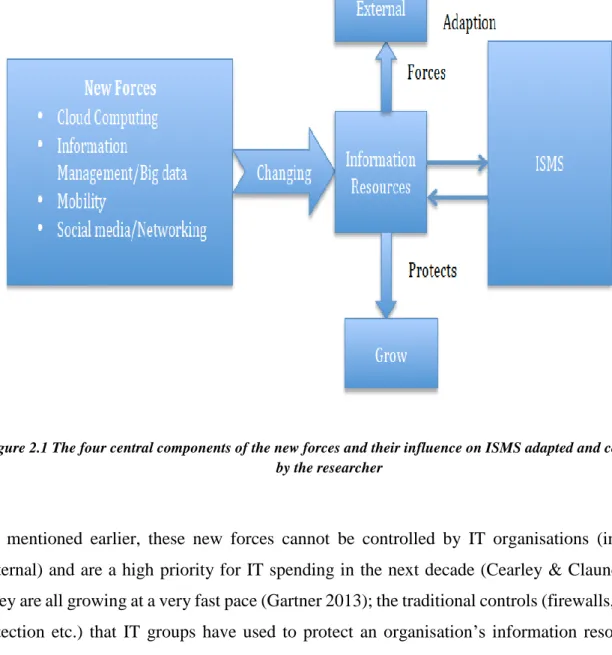
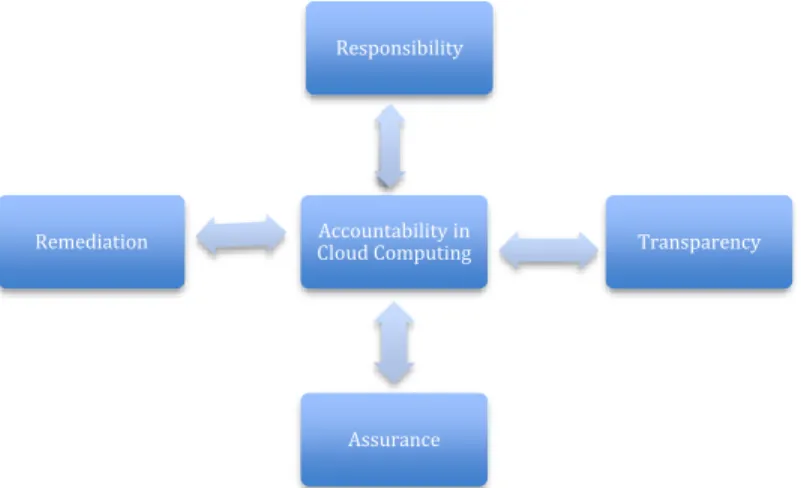
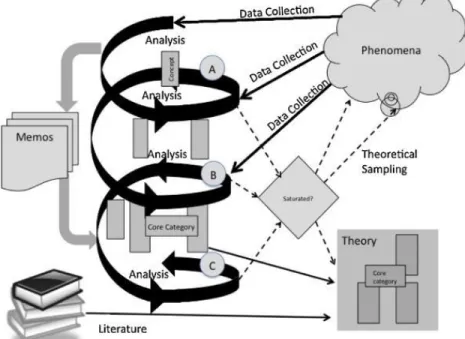
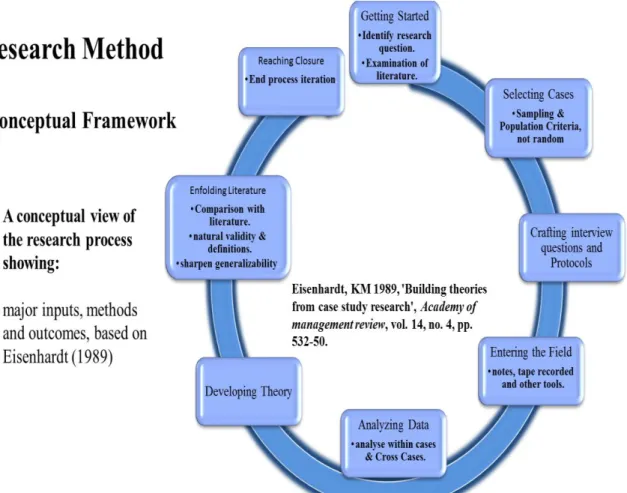
Figure 2.1 The four central components of the new forces and their influence on ISMS adapted and constructed by the researcher ... 23 Figure 2.2 The four central components of Accountability in the existing literature. ... 56 Figure 3.1 The Grounded Theory Method (Adolph, Kruchten & Hall 2012). ... 69 Figure 3.2 A conceptual view of the research process showing major inputs, methods and
outcomes, based on Eisenhardt (1989). ... 70 Figure 3.3 Eisenhardt (1989) theory building process combined with the Grounded Theory
Analytical Process. ... 71 Figure 3.4 Participants and organisations that participated in the interviews... 78 Figure 3.5 The initial high level of themes, codes of IS Accountability. ... 81 Figure 3.6 The initial high level of themes, codes of IS Accountability according to the ITA. ... 83 Figure 3.7 The initial high level of themes, codes of IS Accountability based on government
clientele. ... 85 Figure 3.8 The initial high level of themes, codes of IS Accountability based according to ICSPs. ... 89 Figure 4.1 The number of beneficiaries from the specialised training projects, ITA Annual
Report 2017 (ITA Oman 2017) ... 95 Figure 4.2 The government electronic services launched by end of 2017, ITA Annual Report
2017 (ITA Oman 2017) ... 96 Figure 4.3 The total number of trainees in smart mobile apps development executed by ITA, ITA
Annual Report 2017 (ITA Oman 2017) ... 97 Figure 4.4 The ITA’s Information Security Department achievements by end of 2017, Annual
Report 2017 (ITA Oman 2017) ... 98 Figure 4.5 The ITA O CERT’s achievements by end of 2017, Annual Report 2017 (ITA Oman
2017) ... 99 Figure 4.6 Cyber Security Professional Services achievements, Annual Report 2017 (ITA Oman
2017) ... 99 Figure 4.7 Regional achievements of O CERT, Annual Report 2017 (ITA Oman 2017) ... 100 Figure 4.8 Regional and international achievement of Oman CERT, Annual Report 2017 (ITA
Oman 2017) ... 101 Figure 4.9 The consultancy value in terms of cost and saved money to Omani Government,
Annual Report 2017 (ITA Oman 2017) ... 102 Figure 4.10 The electronic payment achieved through the payment gateway by end of 2017,
Annual Report 2017 (ITA Oman 2017) ... 102 Figure 4.11 The benefits gained from implementing tendering systems at ITA cloud, Annual
xv Figure 4.12 Digital certification offered by the ITA since the end of 2017, Annual Report 2017
(ITA Oman 2017) ... 104
Figure 4.13 Maintaining operational excellence by the ITA, Annual Report 2017 (ITA Oman 2017) ... 107
Figure 5.1 Percentage of coded references for each element ... 113
Figure 5.2 The extended model of IS Accountability ... 113
Figure 5.3 Sub-elements of an ASE ... 115
Figure 5.4 Sub-elements of Responsibility ... 145
Figure 5.5 The sub-elements of Assurance ... 155
Figure 5.6 Remediation and its sub-elements ... 163
Figure 5.7 Education and training tool used as one of the important mechanisms to strengthen IS Accountability in a cloud environment ... 180
Figure 6.1 The relationship between ensuring the implementation of different mechanisms to enhance IS Accountability, Collaboration, Assurance, and a Commitment to External Criteria ... 204
Figure 6.2 The relationship between the authority to collaborate to implement external criteria, Collaboration, and a Commitment to External Criteria ... 205
Figure 6.3 Flexibility in the change process motivates Collaboration, an Accountability Support Environment, and a commitment to comply with external criteria ... 207
Figure 6.4 Collaboration and Remediation improve operational performance ... 211
Figure 6.5 How Collaboration and an increase in the flow of communication lead to a Flexible Change Process ... 215
Figure 6.6 The relationship between Collaboration and Transparency ... 217
Figure 6.7 Complex Responsibility processes motivate Transparency and Responsibility ... 220
Figure 6.8 By sharing Responsibility, Transparency and Remediation are improved ... 222
Figure 6.9 Collaboration and support from the sub-elements of the ASE are needed to achieve Remediation when a serious information security incident occurs ... 226
Figure 6.10 The relationship between implementing SLA, enforcing audits, Assurance, and Responsibility ... 229
Figure 6.11 Summary of the major CSP relationship strategies ... 233
Figure 6.12 The role of the GGCSP (the ITA Oman)... 238
Figure 6.13 The role of an ICSP ... 243
Figure 6.14 The role of a FPCSP ... 246
xvi
List of Tables
Table 3-1 List of interviewed CSPs in Oman (private and government) from 23/10/2015 to
21/1/2016 ... 74
Table 3-2 List of interviewed government departments from 23/10/2015 to 21/1/2016. ... 74
Table 3-3 List of standards used by government entities in Oman... 75
Table 3-4 The cloud migration services used by government entities in Oman. ... 76
Table 3-5 The initial high level of IS Accountability themes. ... 81
Table 3-6 The initial high-level themes associated with IS Accountability according to the ITA. ... 82
Table 3-7 The initial high-level themes associated with IS Accountability according to the government clientele. ... 84
Table 3-8 The initial high-level themes associated with IS Accountability according to the PCSPs. ... 86
Table 3-9 The initial high level of themes, codes of Accountability based on PCSPs. ... 87
Table 3-10 The initial high-level themes associated with IS Accountability according to the ICSPs. ... 88
Table 4-1 Adoption of the cloud in Oman – Comparison between 2010 and 2012 ... 93
Table 5-1 ASE’s sub-elements... 116
Table 5-2 Flexible Change Process... 130
Table 5-3 Collaboration ... 135
Table 5-4 Commitment to External Criteria ... 141
Table 5-5 Responsibility ... 145
Table 5-6 Transparency ... 151
Table 5-7 Assurance ... 154
Table 5-8 Sub-elements of Assurance ... 156
Table 5-9 The sub-elements of Remediation. ... 163
Table 6-1 Ensure the implementation of different mechanisms to enhance IS Accountability in relation to the IS Accountability’s core elements (name and number of relationships), and relationship type ... 201
Table 6-2 Authority to collaborate to implement external criteria in relation to the IS Accountability’s core elements (name and number of relationships), and relationship type ... 206
Table 6-3 Flexibility in the Change Process in relation to the IS Accountability’s core elements (name and number of relationships), and relationship type... 210
Table 6-4 Collaboration, Remediation, in relation to the IS Accountability’s core elements (name and number of relationships), and relationship type ... 214
xvii Table 6-5 How Collaboration encourages a Flexible Change Process in relation to the IS
Accountability’s core elements (name and number of relationships), and relationship type
... 216
Table 6-6 More Collaboration and Transparency in relation to the IS Accountability’s core elements (name and number of relationships), and relationship type ... 217
Table 6-7 A complex responsibility process, motivates Transparency in relation to the IS Accountability’s core elements (name and number of relationships), and relationship type ... 219
Table 6-8 How sharing Responsibility enhances Transparency and Remediation in relation to the IS Accountability’s core elements (name and number of relationships), and relationship type. ... 224
Table 6-9 Collaboration in the face of risk in relation to the IS Accountability’s core elements (name and number of relationships), and relationship type... 227
Table 6-10 Setting and enforcing Responsibility in relation to the IS Accountability’s core elements (name and number of relationships), and relationship type ... 232
Table 6-11 Gender ... 248
Table 6-12 Employer type ... 249
Table 6-13 Experience level in years ... 252
Table 6-14 IS Accountability management VS IS Accountability practitioners ... 253
Table 6-15 The IS Accountability practitioner age category ... 255
xviii
List of Abbreviations
The following terms/acronyms will be used throughout this study. ASE Accountability Support Environment
CSP Cloud Service Provider
DoRC Diwan of Royal Court
FPCSP For-Profit-Cloud Service Provider GCSP Government Cloud Service Provider ICSP Internal Cloud Service Provider
ICTs Information and Communication Technologies
Infosys Information Systems
IS Information Security
IS Accountability Information Security Accountability IS Accountability
Practitioner
Information Security Accountability Practitioners
IT Information Technology
ITA Information Technology Authority
MoCI Ministry of Commerce and Industry
MoH Ministry of Health
MoHE Ministry of Higher Education
MoM Ministry of Manpower
OCERT Oman Computer Emergency Response Team
1
Abstract
This thesis presents a model of the core conceptual elements that determine information security accountability in a cloud computing context. Accountability is a core concern for information security within cloud computing; it represents the trust in service relationships between clients and cloud service providers. Without evidence of accountability, a lack of trust and confidence in cloud computing is to be expected from decision-makers. Furthermore, a lack of accountability is considered as an added level of risk, especially since a client’s essential services are controlled and managed by a third-party. Consequently, this new paradigm of outsourcing increases the difficulty of maintaining data security and privacy, supporting data and service availability, and demonstrating compliance.
In addition, there is the problem of ensuring that security obligations are implemented by cloud service providers. Although technical aspects for cloud security and privacy have been actively researched, the focus on detective controls in relation to cloud accountability and auditability is scarce. Encryption and other privacy protection techniques will only manage a part of this problem. Research is needed into accountability and auditability of cloud service providers to affect both preventive and detective measures in ways that promote transparency, governance and the accountability of the cloud service providers. The enormous growth in moving businesses to cloud computing—due to its flexibility, cost effectiveness, scalability, and the perceived benefits of transference of data security—highlights the growing need for research in this area.
This study used an interpretive qualitative case study using a grounded theory approach. The research provides an explanation of what information security accountability in the cloud computing context is, and how government organisations achieve information security accountability in cloud computing.
This study conducted eighteen qualitative case studies with nineteen different Omani government organisations and three cloud service providers (a total of thirty-four interviews). An extensive literature review was carried out on information security accountability in the context of cloud computing. Four core elements of information security accountability were identified in the literature and confirmed in this study—transparency, remediation, assurance and responsibility. The key finding from this study was that there are eight core elements that make up information
2 security accountability. Therefore, this study presents a more detailed definition of information security accountability than what was previously described in the literature.
First, the researcher examined the meaning of information security accountability against the eight core elements. The eight core elements were identified along with their sub-elements. Then, the researcher examined the meaning of information security accountability to find out whether the four components identified from the literature could be extended. The four key conceptual elements identified in the literature were confirmed and extended to include more sub-elements as a result of the case studies. Four new elements were also identified by the case studies: accountability support environment, flexible change process, collaboration, and a commitment to external criteria. It was concluded that for an organisation to be considered information security accountable, it must address each of these eight factors as necessary in achieving information security accountability.
Additional findings were presented in this research, such as, eleven key operational mechanisms, and the role of the cloud service provider. There were also newly identified relationships between the core elements of information security accountability. These findings contribute to the growing awareness of the importance of information security accountability during all stages of data migration. It was also found that the level of relevance for each of the eight elements is highly context-dependent.
The study also revealed that the perception of information security accountability varies between government client organisations and cloud service providers and is highly dependent on the sensitivity or classification of the data migrated to the cloud—whether it is classified as having a high, medium, or low level of security. The nature of the organisation also plays an important role in determining the perception of accountability. The study shows there are three distinct types of relationships in cloud service provision namely, (1) collaboration based (two-way relationship); (2) marketing based (one-way relationship); and (3) internally based (private cloud that is hosted internally within the government entity and has to comply with internal service level agreements and internal standards).
Most importantly, this study revealed three main strategies to strengthen accountability. The first is a coercive strategy—this appears in the relationship between government client organisations
3 and for-profit cloud service providers. The second strategy is a collaborative strategy—this appears in the relationship between governments and government cloud service providers (in this case, the Information Technology Authority of Oman). The third is an independent strategy. In this strategy, the government client organisation decides not to have any external hosting of their applications or data, and instead establishes an internal cloud service provider.
Key words
Cloud computing, information security, Information Security Accountability, cloud service provision, outsourcing, Accountability elements
4
1.
Introduction
This study provides an explanation of what Information Security Accountability (IS Accountability) in a Cloud computing context is, and how government organisations can ensure that it is present in Cloud computing service relationships. Although information security and privacy in relation to Cloud computing has received a great deal of attention by researchers in the field of information systems (Infosyss) (Buyya et al. 2009; Vaquero et al. 2008) and information security (Bessani et al. 2013; Kalpana & Singaraju 2012; Popovic & Hocenski 2010; Sabahi 2011; Tripathi & Mishra 2011; Yellamma, Narasimham & Sreenivas 2013; Yellamma Pachipala & Challa Narasimham 2014), yet, information security accountability in Cloud computing has not been studied in great depth. Furthermore, many of the studies concentrate on the technical aspects such as encryption and preventive controls. By using a qualitative approach, this study was able to investigate and explore organisations using Cloud computing that ensured IS Accountability prior to, during and after the migration of data. It also explored what happens after implementation in terms of security and business issues.
The primary research questions that this study aims to answer are formulated as follows:
What is Information Security Accountability in the Cloud computing context?
How do government organisations achieve Information Security Accountability in the Cloud computing context?
1.1
What is Information Security Accountability?
Accountability is a core concern for information security in Cloud computing, it represents the trust in service relationships between clients and cloud service providers (CSPs) (Pearson & Wainwright 2013). Without evidence of accountability, a lack of trust and confidence in Cloud computing (Ko et al. 2011; Ko, Kirchberg & Lee 2011; Ko, Lee & Pearson 2011; Muppala, Shukla & Patil 2012; Pearson 2013; Pearson & Charlesworth 2009; Rashidi & Movahhedinia 2012) is developed by decision-makers and considered as an added level of risk, which means
5 a lack of accountability increases (Cayirci 2013; DHS 2010; Ezell et al. 2010; Gellman 2012; Guitart et al. 2013; Kaplan, S & Garrick 1981; Morin, Aubert & Gateau 2012; Rajani, Nagasindhu & Saikrishna 2013; Voeller 2010), especially since a client’s essential services are controlled and managed by a third-party. Consequently, this new method of outsourcing renders the process of maintaining data security and privacy, supporting data and service availability, and demonstrating compliance far less transparent. (Rajani, Nagasindhu & Saikrishna 2013). This makes it difficult for users to understand, influence and determine what security obligations are actually implemented by CSPs.
Many researchers indicate that accountability should be given more attention and treated as a high priority issue in terms of security (Ko et al. 2011; Ko, Kirchberg & Lee 2011; Ko, Lee & Pearson 2011; Pearson & Charlesworth 2009; Pearson et al. 2012; Pearson & Wainwright 2013; Rajani, Nagasindhu & Saikrishna 2013; Yao et al. 2010) as it affects the quality of service (QoS) as well as the grade of service (GoS) (Cayirci 2013; Foster, I et al. 2008; Hofmann & Woods 2010; Joint & Baker 2011; Lee, S-Y et al. 2012; Xu 2012; Ye et al. 2010). Generally most users are seeking Assurance (Firdhous, Ghazali & Hassan 2012; Huang & Nicol 2013; Morin, Aubert & Gateau 2012; Piliouras et al. 2011) that their QoS and GoS requirements are satisfied and that their operations are not hindered due to congested cloud resources. Providing the required assurance measures and guarantees for both QoS and GoS is a challenging task. Furthermore, accountability—along with trust—are two major concepts that are considered as foundational for potential users wishing to embrace cloud services (Cayirci 2013; Chakraborty & Roy 2012; Ferrari 2013; Mouratidis et al. 2013; Pearson 2013; Toney & Kadam 2013). Although technical aspects for cloud security and privacy have been actively researched, the focus on detective controls in relation to cloud accountability and auditability is scarce (Ko, Kirchberg & Lee 2011). Encryption and privacy protection techniques, though important, will only manage a part of this problem (Ko, Lee & Pearson 2011).
A variety of mechanisms have been identified to increase trust, and these are classified by scholars as Preventive (active) Controls and Detective (passive) Controls (Ko et al. 2011; Muppala, Shukla & Patil 2012). Preventive controls are used to reduce or eliminate the
6 occurrence of specific actions or events from continuing—or taking place at all—they include techniques that are mainly used to discover anomalous behaviour of a system or an employee. Examples include firewalls and active system monitoring. On the other hand, detective controls are usually used to identify the root cause of an event that has violated organisational policies and procedures and then has caused a security breach incident. An intrusion detection system, or security audit trails, logs and analysis tools are all good examples of detective controls (Muppala, Shukla & Patil 2012). Ko et al. (2011) indicate that detective controls act as psychological barriers towards the violated policies in the cloud and serve as a record for post-death forensic investigations in case of the occurrence of any non-compliance or policy violations. Therefore, detective controls complement preventive controls and security specialists aiming at achieving a reasonable and acceptable level of protection recommend a combination of both.
However, extensive research is needed to increase the accountability and auditability of CSPs to ensure that both preventive and detective controls are equally treated in Information Security Management Systems (ISMSs) in ways that promote their Transparency, governance and accountability.
Cloud computing is considered as one of the most promising technologies in computing today (Popovic & Hocenski 2010). Cloud computing addresses a number of key characteristics for example, flexibility/elasticity, scalability of infrastructure, a broad network access, location independence, reliability, economics of scale, cost effectiveness and sustainability (Zissis & Lekkas 2012). A cloud model can be implemented in various ways— either as a public, private, hybrid, or community cloud implementation—depending on the business needs of an organisation (Muppala, Shukla & Patil 2012). Cloud computing can be delivered with three major level of services including Software as a Service (SaaS), Platform as a Service (PaaS) and Infrastructure as a Service (IaaS) (Nayak & Yassir 2012). These three types of service and three cloud models are detailed in depth in Chapter 2 (see Sections 2.12, 2.13, 2.14, 2.15, 2.16 and 2.17)
7 Gartner (2015), reported that by 2015 at least 20% of all cloud services would be consumed through internal or external cloud service brokerages, rather than directly. However, by 2017, 80% of large enterprises would restrict their private cloud data center services to less than 20% of their total data centre services and by 2020, the most common use of cloud services will be a hybrid model combining on-premises and external cloud services. In addition, Columbus (2015) claims that Cloud computing adoption is accelerating in enterprises on a global scale as by 2018, 59% of the total cloud workloads will be SaaS workloads, up from 41% in 2013. Columbus (2015) also stated that by 2016 over 80% of enterprises globally would be using IaaS, with investments in private Cloud computing showing the greatest amount of growth. In addition, the adoption of Cloud computing services would be split equally between the public clouds, private clouds and hybrid clouds (Columbus 2015).
Thus, the enormous growth in moving businesses to Cloud computing, due to the aforementioned characteristics and the absence of a specific Cloud computing accountability framework, highlights the growing need for research in this area. This study used an interpretive qualitative case study approach, and accountability for Cloud computing was investigated in relation to the ISMSs adopted by Omani government organisations. Further explanation about research methods, the study’s motivation and significance will be presented in Chapter 3.
1.2
Motivation of the Research
There were many factors that motivated this study, these include:
Lack of research on accountability in Cloud computing.
Lack of research using a qualitative approach.
A government’s perspective in a developing country (Oman).
The enormous growth in the adoption and migration to the cloud in Oman. In just two years the usage rate went up from 33% in 2010 to 65% in 2012. Indicating a growth rate of 100% in two years Nair (2012).
8
Many questions need to be answered about the future of information security regarding customers’ data that is sent to cloud services in Oman and this study contributes towards filling this empirical gap.
This study is one of the few Cloud computing studies that focuses on the government-to-government and government-to-government-to-private relationships.
This study is expected to be the only study of its kind that will be conducted in Oman at the organisational level.
This study seeks a holistic approach towards cloud security with a focus on the strategic level of decision-making as well as implementation.
This study will look at different government agencies rather than focus on a single government agency.
1.3
Research Aim/Objective
The aim of this study is to produce—from industry based Information Security Accountability practitioners (IS Accountability practitioners) in relation to Cloud computing—an understanding of what IS Accountability is and how certain aspects of IS Accountability may lead to either a beneficial or a detrimental IS Accountability outcome. This will support practice for IS Accountability practitioners with results that can direct practice to achieve beneficial IS Accountability outcomes for the adoption and implementation of Cloud computing projects and their stakeholders. The results can also guide educational institutions’ curriculum development and guide organisational culture change. It can provide the research sector a basis to compare and contrast with other IS Accountability research in relation to information security at different spheres. Overall, this study aims to have impacts in the following areas:
• To extend the meaning of the IS Accountability definition to incorporate a wider concept on achieving IS Accountability in a Cloud computing environment.
• To extend the addressed conceptual elements of IS Accountability that will be identified from the literature.
9 practitioners, information systems specialists, policy-makers and regulators to achieve IS Accountability in a Cloud computing environment.
• To identify new strategies that clients can adopt to manage IS Accountability in a cloud environment.
• To identify relationships between the core elements of IS Accountability.
• To identify the operational mechanisms that are the most beneficial to achieving IS Accountability. Decision-makers can then choose which mechanisms to implement whilst considering the organisation’s nature, the sensitivity and nature of the data as well as its suitability to a specific context.
• To understand the role of the CSPs in achieving a beneficial IS Accountability outcome. The two primary research questions for this study are:
What is Information Security Accountability in the Cloud computing context?
How do government organisations achieve Information Security Accountability in the Cloud computing context?
These two questions were answered by developing a theory that emerged from the data collected from experienced Cloud computing, information security and IS Accountability practitioners.
1.4
Research Method
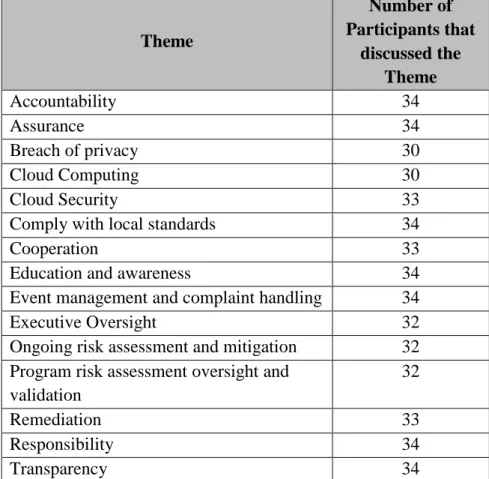
The research methodology used in this study is comprehensively described in Chapter 3. The plan consisted of a literature review that provided this researcher a general understanding of the context of IS Accountability practice. Then, thirty-four IS Accountability practitioners in industry—each with more than seven years of experience—were engaged in qualitative interviews using semi-structured questions (discussed in Chapter 3).
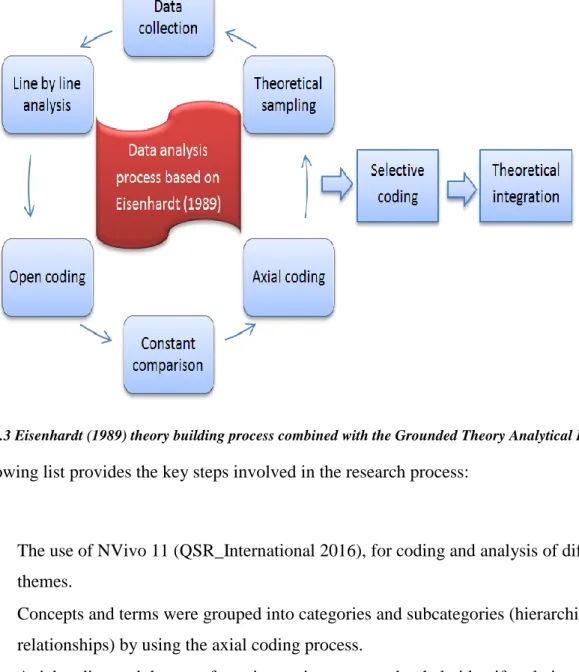
The transcripts of these interviews were analysed using an inductive and interpretive qualitative approach (Eisenhardt 1989), which are qualities of a grounded theory methodology (Strauss and Corbin 1998), aided by a computer software tool, NVivo 11 (QSR_International 2015).
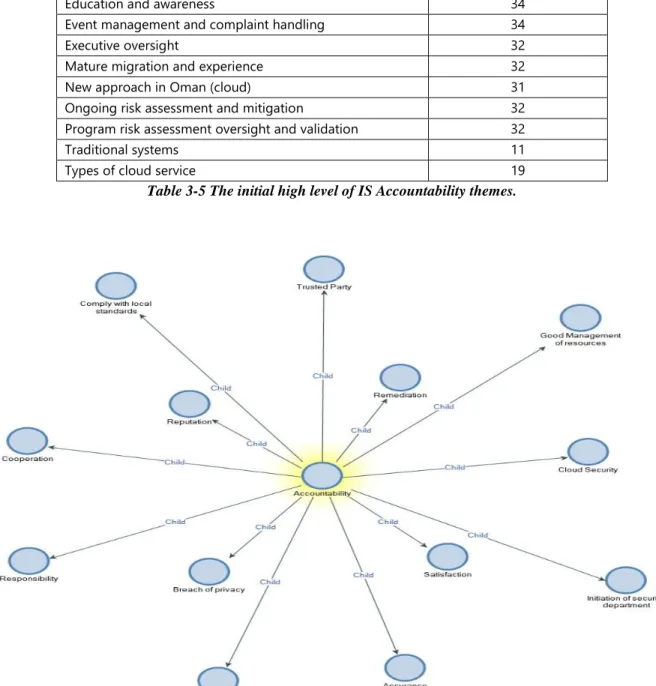
The initial outcome of the set of coding was analysed and grouped including (transcripts and memos that were taken during the interviews). The final wide-ranging of grouping was then
10 conceptualised. These concepts were then grouped and categorised into different key themes. The theory was then developed based on the key themes inherited from a group of concepts along with relationships between them and the introduced theory was used to answer the research questions.
All the stories narrated throughout the interviews along with the various aspects identified in these stories were comprehensively analysed and the emerging theory should assist in identifying what should or should not be done to achieve a beneficial project/framework of IS Accountability outcome. The introduced theory was enfolded with the literature that is relevant to various aspects of the expected theory. The enfolding highlights gaps, commonalities and differences between the literature and the theory developed by this study.
1.5
Structure of the Thesis
This thesis consists of eight chapters. These chapters are described in a sequential order:
Chapter 1 introduces the thesis by providing a description of the study’s background, the study’s motivation and significance, and the study’s objectives and outcomes.
Chapter 2 provides a review of the literature on ISMSs and IS Accountability. It lists the different definitions of ISMS and IS Accountability from the extant literature. This chapter reviews information security and information resources and how they are connected to ISMSs and IS Accountability. The concept of Cloud computing along with the different types of cloud services is thoroughly described. Different aspects of information resources and the factors of accountability are also reviewed.
Chapter 3 presents the research methodology/framework and design adopted for this study. It describes the selection of the philosophy, methodology, data collection and analysis techniques. This study is a qualitative exploratory case study. It is based on an interpretive research paradigm with semi-structured interviews as the main tool of data collection and grounded theory as the data analysis technique. Semi-structured interviews were conducted with thirty-four respondents from different government organisations and CSPs (information security and information technology [IT] departments). To gain a rich understanding and gather rich data about Cloud computing and
11 information security, it was recommended by different scholars to use qualitative study techniques (Creswell, JW 1998; Eisenhardt 1989; Strauss & Corbin 1998).
Chapter 4 offers background information about Oman’s geographic, demographic and cultural aspects. It also provides a description of the emergence of IT, mobile technology, and Cloud computing in Oman.
Chapter 5 describes the findings of the study. In this section, the insights and realisations that the researcher discovered are presented. The initial findings are shown in a way that makes for a better understanding of how to answer the research questions. It presents the following findings: an expanded definition of IS Accountability, the eight core elements of IS Accountability and the eleven Key Operational Mechanisms.
Chapter 6 presents the analysis and theory development. This section analyses the findings and develops the relationships between the eight core elements. These relationships are combined with the eight core elements to present a theoretical model that outlines the main concepts that may impact on an accountability outcome. It also presents: client strategies, the role of the CSP and the issues of establishing an external authority. It also discusses the importance of context in relation to the theoretical model.
Chapter 7 performs a literature comparison and contrast that enfolds the current literature with the theory developed in the previous chapter. The enfolding process provides the emergent theory with grounding from existing literature and highlights the theory’s contribution to knowledge. Chapter 8 presents the theory in light of answering the research question and concludes this thesis by providing a summary of its content. The contribution to knowledge theoretically and practically is presented. The implication of the theory with research, practice, education and Infosyss is provided and outlined. Then, the limitations of the study are discussed. Finally, further research that can be done in the future will be highlighted.
12
1.6
Summary
This chapter introduced the overall picture of what IS Accountability in the computing context is and how government organisations achieve IS Accountability in the Cloud computing context. It briefly introduced what accountability is. It also presented the motivation for the study and the study’s objectives. It briefly presented the research methods and how this thesis is structured. In Chapter 2, the following will be discussed: all aspects of the literature review starting from the importance of information security, organisations’ investment in IT, organisational and information security concerns, ISMSs, information resources, expansion on information resources, hardware, and the relationship between ISMSs and information resources. IS Accountability, and all its related aspects will also be discussed in Chapter 2.
13
2
Literature Review
This chapter is divided into two main sections. The first section will look at ISMSs, information resources and information security. The second section will explore IS Accountability in Cloud computing service provisions. This chapter will review the literature in the areas of ISMSs, including information resources, information security concerns, and Cloud computing with its associated security issues. It also deals with Cloud computing in Oman.
This chapter begins with an overview of the importance of information security in any organisation. It then covers the role of ISMSs to protect the organisational environment and infrastructure. Different factors of ISMSs, which are inherited from the definition of ISMS, are thoroughly identified and explained. Then, information resources that are influenced by ISMSs are explained in-depth. The information security concern for each ISMS factor is analysed throughout this chapter. Finally, accountability for Cloud computing service relationships and all other aspects associated with IS Accountability will also be identified and explained.
2.1
The Importance of Information Security
Information is considered as the most valuable and crucial asset to any organisation, and hence, must be properly protected (Hong et al. 2003). The use of information is evolving at an unprecedented rate and Meike Escherich (Escherich 2014), a principal research analyst at Gartner, emphasises that information within an organisation is vitally important and has to be thoroughly protected. However, downloads and the use of many different types of software that process this information, brings along more threats to organisations (Liu et al. 2012). For example, attackers are able to use malicious tools to gain access to various valuable information resources and services such as identities and credentials (Liu et al. 2012). This information can be used by attackers to gain profit illegally (Fossi et al. 2011). It is also evident that the need for information security for both personal and institutional use has rapidly increased due to the proliferation of communication media, electronic storage and transmission of information (Yeniman Yildirim et al. 2011). Some important reasons for this growth is due to the “increase in electronic applications in businesses as well as in daily life, the sharing of information on network systems, the accessibility of information
14 from many points, the increasing threat of loss of information, and most importantly, the increases in personal and corporate losses” (Dodge Jr, Carver & Ferguson 2007, p. 73). Therefore, it is highly important to consider the management of information security in order to protect organisations’ resources.
2.2
Organisations and Investments in Information Technology
Many researchers have proposed that all investments of business operations and IT should be integrated into their business values and should be aligned with organisational strategy (Chang, SE & Ho 2006; Croteau & Raymond 2004; Ju et al. 2005; Markus 2004). For example, Croteau and Raymond (2004) confirm that the investment in IT and business processes should be coordinated in order to achieve a proper strategic plan with a good integration process. Ju et al. (2005) propose that the correlation between strategic factors, organisational factors, and technology alliance have a great impact on an organisation's competitiveness. However, Markus (2004) argues that approaching success and improvements in terms of functions and performance is difficult whether or not IT is required. In any case, business success requires an integration of both a technological approach and organisational process. There is a resistance to investing in technology in most organisations due to a lack of information, human resources, and cost of implementing internal security management systems. This resistance can be solved by influencing firms and industries by introducing ISMSs to organisations (Chang, H 2013).
2.3
Organisations and Information Security Concerns
Information systems security remains the most challengeable task to IT leaders, executives and professionals (Dhillon & Torkzadeh 2006; Burrell, D. N., Aridi, A. S., & Nobles, C., 2018; Kappelman, Leon, et al. 2019; Kappelman, Leon, et al. 2018 ). Maintaining information systems security in organisations is more than just a technical matter. There are other aspects of information systems security, such as organisational “grounded principles and values” (Dhillon & Torkzadeh 2006, p. 293), which need to be considered. There are various studies in the literature which emphasise that information systems security is more effective in terms of management if it goes beyond technical aspects (Baskerville 1993; Puhakainen & Siponen, 2010; Steinbart, Paul John, et al . 2018; Straub & Wlke, 1998; Dhillon & Backhouse, 2001; Segev, Porra & Roldan, 1998).
15 For example, Puhakainen and Siponen (2010) state that employee refusal to comply with information security policy should be considered as a real information security threat (Pienta, Daniel, et al. 2018; Ahluwalia, Punit, and Mohammad Merhi , 2018). Furthermore, Straub and Welke (1998) state that there are several values to be measured in terms of protecting information resources at any organisation. Segev, Porra and Roldan (1998) outline that the main key of protecting Infosyss security is not technical but that it should be accomplished by studying the key managerial elements featuring each organisation. However, Trompeter and Eloff (2001) argue that in addition to technical and organisational factors, ethics and personal accountability must be considered throughout the implementation of any ISMS.
Many studies have discussed and recommended the adoption of a broader perspective when it comes to Infosyss security (Armstrong 1999; Dhillon & Torkzadeh 2006; Hong et al. 2003; Keeney & Keeney 2009; Orlikowski & Gash 1994; Siponen & Willison 2009; Tan & Hunter 2002). For example, Armstrong (1999) emphasises that management should focus on both human and technical factors, and Tan and Hunter (2002) suggest that a mix of social and organisational factors must be considered as effective values to be employed by Infosyss stakeholders. These organisational and social factors indicate people’s assumptions, accountability, and values towards Infosyss security issues (Orlikowski & Gash 1994). Keeney and Keeney (2009) state that re-evaluating these social factors can help to discover some hidden objectives. Hong et al. (2003) emphasises that both academia and practitioners have directed a large portion of their attention towards management tools for Infosyss security, especially since the use of electronic commerce is evolving exponentially. Organisations nowadays are increasingly becoming committed to adopting ISMS guidelines as the best practice to ensure the security of business practices and compliance (Siponen & Willison 2009).
2.4
Information Security Management System (ISMS)
The development of the research effort on ISMSs has produced a considerable number of definitions that reflect different spheres of ISMSs. Both academics and practitioners have different views and interpretations of the ISMS concept. From a managerial perspective, Hong et al. (2003), identify ISMSs as technical methods, along with managerial processes, practically applied to
16 information resources such as hardware, software and data, to ensure that organisational assets and personal privacy are protected. Eloff and Eloff (2003) claim that an ISMS can be defined as a management system employed to secure information within an organisation, with a good establishment and maintenance process and procedure to manage IT security. According to the ISO 7498-2 standard Fernandez-Medina and Piattini (2013), IT security processes and procedures have three main goals—defining, achieving and maintaining security—which in turn fulfil the requirements of the five security services (identification & authentication, authorisation, confidentiality, integrity and non-repudiation). The management and execution of ISMSs requires some necessary actions namely, (1) to identify the information security requirements; (2) to ensure the right strategies are in place to meet these requirements; (3) to verify the continuous evaluation and measurement of achieved objectives and results; and (4) to ensure the compatibility and usability of both protection strategies and the ISMS by reviewing and improving them over time (Yeniman Yildirim et al. 2011).
An ISMS, according to Von Solms (2005), contains processes and procedures used within an organisation to secure information through information security, operational management and information security compliance management. An ISMS is a complete systematic management system that involves “management of humans, processes, and technologies” (Suhaimi, Goto & Cheng 2013, p. 31), in order to establish, implement, operate, monitor, review, maintain, and optimise security to ensure confidentiality, integrity, and availability of information.
Dhillon and Backhouse (2000), elaborate that an ISMS represents a set of new principles such as responsibility, integrity, trust and ethicality (RITE). These principles are considered to be the key elements of information security management in the next millennium. However, they can be incorporated with traditional aspects of information protection to fulfil confidentiality, integrity, and availability (CIA) (Dhillon & Backhouse 2001; Lumley 2010). Siponen and Willison (2009), emphasise that an ISMS represents a set of guidelines intended to provide organisations with the best practices to fulfil the daily business security commitment.
In the ISO/IEC 17799 code of practice, the ISMS has been identified as a management system that is ensures business continuity, maintains legal compliance and achieves competitive edge within organisations (Saint-Germain 2005).
17 From the above definitions of ISMSs it is clear that it entails several components made up of: (1) information system technology resources (hardware); (2) information system worker resources (IT skilled people); (3) information system software resources (software); and (4) information system data resources. Each of the above perspectives on ISMSs is useful. However, this study uses the definition of an ISMS offered by Hong et al. (2003), because it covers the most important aspects of technology used in any organisation, and it is considered the most valuable asset to an organisation in today’s world. Furthermore, it is the most wide-ranging definition, covering various aspects of technological resources, organisational assets, and personal privacy. The definition incorporates the protection of organisational assets and personal privacy. Each one of these components will be discussed in detail including an outline of the security breaches represented by them to the industry. After this, the security management system issues related to these components will be addressed respectively.
2.5
The Evolution of Information Security Management System
(ISMS)
During the last two decades, the explosive development in technology along with the exploitation of Infosyss (Elisan 2013), has generated major concerns towards information security management in both private and public sectors (Suhaimi, Goto & Cheng 2013). In this context, ISMSs have become vitally important because it helps companies identify and implement security requirements in a cost-effective manner (Chang, SE & Ho 2006). The use of information is evolving unprecedentedly. There has been a massive increase in network and Internet traffic. Users download software, install different programs, and exchange an enormous number of emails on a daily basis and therefore, an inestimable number of malicious programs are silently downloaded (Liu et al. 2012). For example, attackers can use malicious tools to gain access to different valuable information resources such as identities, credentials, hacked hosts, and other information and services (Liu et al. 2012). Consequently, huge profits can be gained by selling stolen information illegally (Fossi et al. 2011). Moreover, Escherich (2014), a principal research analyst at Gartner, emphasised that the extensive use of new technology such as mobile devices within organisations brings with it more concern towards information security management as this can result in data loss, security breaches, non-compliance and regulatory violations.
18
2.6
Information Resources
Information resources comprise of hardware, software, data, IT and human resources in an organisation, and all represent the main source for information according to Bharadwaj (2000). The effective use of information resources is the key indicator to an organisation’s success in gaining value from information security and organisational privacy. However, to some firms, the high investment in IT is a key indicator of failure, if it is not properly adjusted and controlled (Nolan 1994).
Information resource refers to the huge amount of information retrieved and allocated by the use of the Internet and the URLs of websites, including information relative to the filter elements displayed (Kulas, Legall & Masli 1999). The advancement in web browsers has gladly improved web browser usability (Ondov, Bergman & Phillippy 2011) and improved the ability to find and extract information flowing from a variety of information resources (Webster 2014). For example, a large amount of data is sent via satellite and cables, and the user can acquire the requested information from the Internet (Navin-Chandra & Gao 2001). Videos, audio or broadcast programs can easily be viewed at the end user’s desktop due to the multimedia capability available on today’s computers (Steinmetz 2012). The large variety of different information resources that a user can obtain, is easily accessed through establishing queries or using sophisticated search engines (Halavais 2013) for each available resource within a variety of information platforms (Ross, Beath & Goodhue 2012; Weill, Broadbent & Butler 1996).
2.7
Expansion in Information Resources
Ever since the early 1980s when the personal computer (PC) was introduced to the world, the use of the PC has evolved in terms of capability and usage (Navin-Chandra & Gao 2001). Originally, data access was limited to the use of a floppy disc drive to the extended hard drive, whereas today storage comprises multi-gigabytes and terabytes of storage capacity attached to PCs (Arnold et al. 2006). A huge amount of data can be stored and retrieved easily in today’s world, due to the vast development of technology and the rapid growth in storage capacity techniques (Malone et al.
19 2011). The availability of data is no longer limited to the user’s system or what they load on their PC’s, as data can now be shared, transferred and stored within an organisation network through Local Area Networks (LANs) which are commonly used in small and medium enterprises (SMEs). Users can obtain data from other connected stations or from the local server as well (Lawrence et al. 2013). Different types of data are exchanged and made available to other users due to the increase in corporate networks and internetworks where many LANs can be connected together (Begg et al. 2011). In addition, the introduction of Wide Area Networks (WAN) and Metropolitan Area Networks (MANs), make data more easily available, with the ability to be exchanged nationally and internationally (Kazan et al. 2012).
A huge amount of information has been introduced into business organisations and homes, due to the expansion of larger networks commonly known as the World Wide Web or Internet (Kazan et al. 2012; Navin-Chandra & Gao 2001). The numbers of networks are ever increasing and they are located throughout the world, where about 85,000 new domains are registered every month with an uncounted number of Internet sites reproduced from those domains (Malone et al. 2014). The Internet sites represent the aggregation of information resources and are classified according to their usage, for example, commercial servers (.com), university servers (.edu), research networks and other networks of computers (.org, .net), and military networks (.mil) (Gounares, Kinsel & Weitz 2010; Lawrence et al. 2013; Weitz, Gounares & Kinsel 2011).
Organisations nowadays are heavily dependent on the use of information resources and IT, which are considered the base of any organisation, and represent the main element to its growth and survival (Bharadwaj 2000).
In the last two decades there has been continuous debate and controversy over the value of investments on computer and information resources and whether it is worth the expense in terms of satisfying the total return on assets, equity, and the added value to the economy (Brynjolfsson 1993; Brynjolfsson & Hitt 1993, 1996; Hitt & Brynjolfsson 1996). There are many empirical studies (Brynjolfsson 1993; Hitt & Brynjolfsson 1996; Lucas Jr 1993; Wilson 1993) that have investigated the relationship between the investments on information system resources and business value.
20 It is clear that the use of information resources is increasing constantly (Venkatesh, Thong & Xu 2012). For example, data storage (Kazar & Sanzi Jr 2013) is moving and developing at a very fast rate (Baker et al. 2011). There has been a noticeable change towards storing information, it started with a floppy device with a small capacity and has moved on to more capacity within hard disc drives, which are multi-gigabyte and terabyte (Hilbert & López 2011). The exchange of data is changing rapidly too (Jagadish et al. 2014). For example, data used to be saved within an organisation locally through LANs (Wilkinson, Schumacher & Moseley Jr 2013). Today, organisations are able to share data between two or more organisations through WANs and Internetworks (Chen, M et al. 2013). The Internet has caused data to be exchanged all over the world through the World Wide Web (Wagner & Gainous 2013). Consequently, data and (Furano & Hanushevsky 2012), and information—in today’s world—is now stored in clouds (Tilokani & Gupta 2013). Most organisations do not trust clouds because of information security issues (Pearson 2013). However, some organisations are forced to use clouds due to different factors including the on-demand service and cost effectiveness of the adoption of a cloud service (Joint & Baker 2011), or influence from another organisation’s experience to establish their own private clouds (Charif & Awad 2014).
In this context, the concern towards information security comprises of privacy and protection, risk management, and the management of information resources, which is ever increasing. A proper solution needs to be implemented to secure information and its resources. Some information resources are sensitive, therefore a cost-optimal solution to provide secure access to the information located in different servers or databases needs to be provided, along with guidelines to ensure that the security and privacy of sensitive unclassified information in organisations is not leaked. A combination between the latest technologies and strong worker IT skills would strengthen organisational capability to safeguard information security. Similarly, successful organisations could employ the use of technology and human IT skills to ensure the protection of organisational information resources and personal privacy. Hardware is one of the information resources that will be explained in detail in the next section.
21 This section of the literature review examines the use of hardware as related to information security. Hardware is any physical device connected to a computer system through cable connection or indirect connection, such as communication technologies, shareable technical platforms and databases. It also refers to the hardware components that form the overall IT infrastructure in any organisation such as, internal hardware resources (CPUs), and data storage of external hardware resources such as networking hardware, IDSs, firewalls, data bases, webservers, and virtual machines (VMs) (Ross, Beath & Goodhue 2012).
Hardware is comprised of data processing through a central processing unit (CPU), data storage, sharing and transferring of data and restoring data. All of which work alongside the hardware resources process (Davis et al. 2001), which in the end, makes up the information (Tenopir et al. 2011).
Hardware resources are the communication between peripheral devices and system processors (Stufflebeam Jr 2006) allowed and executed through the following: assignable (ITAKURA 2014), and addressable (Baba, Moriki & Uehara 2014) bus paths (Edwin 1983) and memory; I/O port addresses (Higuchi et al. 2013); interrupt vectors (Kwa et al. 2014); and blocks of bus-relative memory addresses (Elboim 2013), all represent the major components of hardware resources (Hendry 1993). Hardware resources are usually assigned through a PnP manager (Plug and Play) (Le et al. 2012), to initiate the necessary communication with a device instance (a physical piece of hardware) (Kwa et al. 2014) based on knowledge of the available resources (Matthews et al. 2014) and the capability of using a certain device instance (Yoshimura 2012). A requirements list and a resource list (Kumar 2014) are the two lists that a PnP manager normally employs to keep track of the hardware resources (Engebretsen et al. 2014).
2.9
The Relationship Between ISMS and Information Resources
This section presents a range of emerging technologies that strongly influence information resources, which have been referred to as ‘new forces’ (Gartner 2013). A conceptual framework for understanding the impact of the emergence of these new forces on ISMSs is presented. The ISMS adoption to the new forces is presented in this section as well. Social media networking,
22 mobility, information management, and software along with security concerns, breaches and issues associated with these components are covered in this section.
2.10
Conceptual Understanding of the New Forces
Due to vast and sophisticated technologies (Prensky 2011), information resources are rapidly growing (Webster 2014) and over the past decade the scope of information resources (Kazan et al. 2012) and the exchange of information (Lacity & Hirschheim 2012) has dramatically changed from internal to external use (Lawrence et al. 2013). This change in the scope of information resources is driven by different aspects of technology, namely the new forces such as, Cloud computing (Xu 2012), social media/networking (Kim, HJ 2012), mobility (Tokuyoshi 2013), and information management/big data, which are all growing strongly and are not easily controlled by in-house IT managers (Cearley & Claunch 2012). The organisational approach towards ISMSs is transforming, based on the new requirements brought about by the four new forces as depicted in Figure 2.1 below (Scholtz 2013).