PRACTICE BRIEF Climate-smart agriculture
Manure helps feed the world
Integrated Manure Management
demonstrates manure is a valuable
resource
Overview of Integrated
Manure Management
Integrated Manure Management is
the optimal handling of livestock
manure from collection, through
storage and treatment up to
application (crops and aquaculture).
Through this process it is possible to
prevent nutrient losses to a large
extent under the site-specific
circumstances.
Edsger Teenstra, Karin Andeweg and Theun Vellinga
KEY MESSAGES
1
Healthy soils produce more food and are more resilient to climate change.2
Manure contains nutrients and organic matter essential for good soil fertility and soil health.3
Manure is a valuable resource of crop fertilizer, soil amendment and renewable energy.4
Manure is not a waste; not properly using manure is a waste.
Overview of Integrated Manure
Management
The key benefit of Integrated Manure
Management is the prevention of nutrient losses as much as possible under the site-specific circumstances, while reducing greenhouse gas emissions and improving food security. Manure discharge should be prevented at all times. The overall nitrogen losses from manure are estimated at approx. 40% (IPCC, 2006). Most nitrogen is lost as ammonia (volatilization) and nitrate (leaching and run-off). A 40% loss of a total of 70 million tonnes of nitrogen applied to soils (including pastures) with manure from swine, poultry and cattle, implies the loss of approx. 28 million tonnes of nitrogen; which accounts for about a quarter of the total nitrogen use with synthetic fertilisers (FAO, 2016).
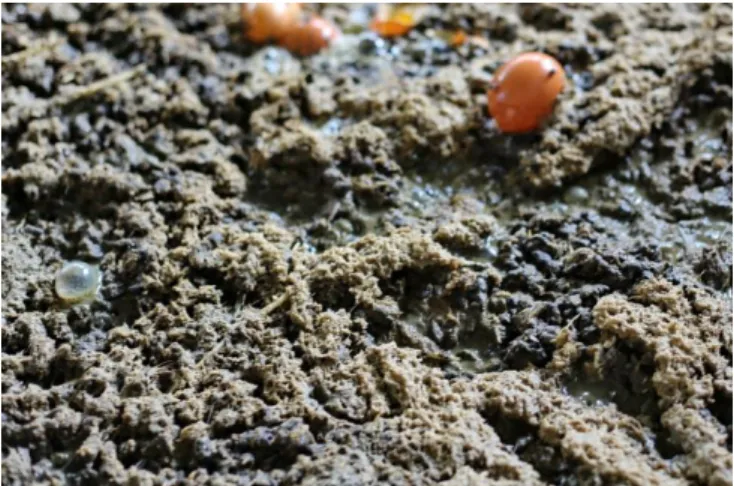
FIGURE 1 Months of unprotected storage greatly reduces the fertiliser value of manure.
Site-specific circumstances refer to the agro-ecological and socio-economic factors relating to the manure chain. For instance, solid manure has different characteristics to liquid manure (slurry), and requires other types of treatment, storage and application methods. From an economic point of view the quantity of manure production influences what is feasible and what is not.
Subsequently, well performed Integrated Manure Management always results in the best possible value for manure, making manure a valuable resource for crop production.
Applying manure to soils improves soil fertility and the soil’s resilience to climate change because it replenishes the decomposed soil organic matter with fresh organic matter. A good organic matter content is essential for a healthy soil life and increases the water and nutrient-holding capacity of the soil (Daniels et al., 2006).
Benefits of Integrated Manure
Management
Improved crop production: Manure is a
natural fertiliser containing essential elements required for plant growth. Its application to cropland restores or replenishes soil fertility. It reduces soil erosion, restores eroded croplands and reduces nutrient leaching. All these factors positively affect crop yield, and are therefore expected to contribute to food security.
Clean, renewable energy: Conversion of
animal manure to biogas through anaerobic digestion processes provides added value to manure as a bioenergy resource, and reduces environmental problems associated with animal manure like the methane emissions, bad odour, and flies. New stove technologies and cleaner fuels, like biogas, reduce exposures to the most health damaging air pollutants (e.g. particulate matter) by as much as 90% (MacCarty et al., 2010).
FIGURE 2 Clean burning biogas substitutes for fossil and biomass fuel.
Improved farm income: Farm income is the
margin between the costs and the benefits. Both can be influenced by integrated manure management. Cost reductions are less expenditures on e.g. synthetic fertiliser, food purchase, energy, and human health. Increased benefits may come from increased farm sales e.g. food, feed, livestock products, manure, energy; and extra income generating activities. Performing integrated manure management may also require investments in housing, manure storage, treatment and application; which in turn will increase costs for
depreciation, interest, maintenance etc. The multiple factors affecting farm income greatly complicate any calculation of changes after improving manure management. Often cost-benefit calculations are restricted to one single factor, e.g. the fertiliser replacement value, or the savings on fossil or biomass fuel purchase.
Challenges to adoption of
Integrated Manure Management
A global assessment of manure management policies and practices conducted in 34 tropical countries concluded that manure is poorly stored and handled and often discharged into the environment (Teenstra et al., 2014). Besides a general lack of knowledge and
awareness, the survey revealed several barriers withholding farmers from improving their
manure management, e.g. limited access to credit, illiteracy, lack of labour, the inability to handle liquid manures in a non-mechanised environment; and the fact that incentives are often restricted to the construction of anaerobic digesters and not to other components of integrated manure management. A key observation is the fact that stakeholders engaged in the enabling environment – like policy makers, credit suppliers, farm advisors, agribusiness etc. – are the main facilitators for practice change at farm level.
FIGURE 3 Dung and urine discharged from a barn to run off the hill
Investing in improving manure management practices will benefit the whole society by better crop production leading to more food security in the region.
Where can Integrated Manure
Management be practiced?
Integrated Manure Management is a universal approach to optimise the use of manure of livestock in (partial) confinement. Therefore, Integrated Manure Management does not have any geographical limitations. Although the presence of livestock is obvious, also manure from landless livestock farming systems needs to be recycled to crops at the right time and with the right dose, which may imply temporary storage, transport and proper application.
Best practices for Integrated Manure
Management depend on local circumstances. It is not a ‘one-size-fits-all’ approach (Teenstra et al., 2015). Key factor is the housing system, because the housing system determines whether dung and urine are collected or collectable and therefore determines the
manure characteristics at the start of the chain.
FIGURE 4 Cattle returning from the communal pastures to be confined during the night.
Slurry, high moisture manure, is common in most large-scale livestock operations where animals are kept in confinement. Small-scale operations often produce a more solid and stackable manure, mainly consisting of the dung and perhaps some bedding material. This type of manure is very suitable to produce compost.
How does Integrated Manure
Management increase productivity,
farm livelihoods, and food security?
Manure applied to soils improves, or restores soil fertility, and increases the potential crop up-take, leading to higher crop yields. Depending on crop nutrient demand and soil nutrient supply, manure application may also reduce the need for supplementary synthetic fertiliser purchase.
Higher crop yields, when sold, increase farm income; or -if used for household consumption- increase food security. When Integrated Manure Management includes biogas production and use, it also saves on fossil or biomass fuel purchase; or time spent on biomass collection, leaving more time available for other income generating activities. For instance in India on average, women spend more than one hour every day collecting firewood (Bloomfield, 2015). Biogas substituting for biomass fuel also has a huge impact on human health, especially that of women and children because they are mostly the ones inhaling the smoke. In 2010
indoor air pollution was estimated to have caused over 3.5 million premature deaths worldwide (Lim et al., 2012).
How does Integrated Manure
Management help adapt to and
increase resilience to climate change
impacts?
Livestock manure, next to crop residues, is a main source of organic matter in agriculture. The addition of organic matter improves soil physical conditions, particularly aggregation and pore space, which in turn leads to
increased water infiltration and water-holding capacity, improved soil tilth, and decreased soil erosion. Organic matter additions also improve soil fertility, since nutrients are released in plant-available mineral forms as organic
residues are decomposed (Daniels et al., 2006). Available nutrients and moisture are essential for crop growth and hence soil cover. A good soil cover including a well-developed rooting system reduces the soil eroding effects of wind and rain and thus strengthens the soil’s
resilience to climate change. Being 100% inorganic, applying synthetic fertilisers does not contribute to the soil organic matter content.
How does Integrated Manure
Management mitigate greenhouse
gas emissions?
Integrated Manure Management has the potential to mitigate two powerful greenhouse gases: methane (CH4) and nitrous oxide (N2O). Manure management accounts for about 10% of the total greenhouse gas emissions from livestock supply chains (Gerber et al., 2013). Methane mainly emits from liquid manure when stored in an oxygen-free (anaerobic)
environment. Livestock supply chains emit 3.1 Gt CO2eq of methane per year, which accounts for about 44% of the anthropogenic methane emissions (IPCC, 2006), originating from enteric fermentation and manure storage. Methane emissions from storage are estimated at 470 Mt CO2eq per year in 2010 (EPA, 2006). These methane emissions can be prevented by either harvesting the emitted methane as biogas or by changing the manure consistency from liquid to solid and stackable e.g. by composting.
FIGURE 5 Bubble with methane emitting from chicken manure.
Natural emissions of nitrous oxide mainly come from the decomposition of nitrogenous
compounds in soils. It is an intermediate product formed during the nitrification of ammonium into nitrate; and during the denitrification of nitrate in soils low in oxygen e.g.waterlogged. Soil oxygen conditions and the time of application are important elements in the last step of the manure chain (Dobbie et al., 1999).
Nitrous oxide is also emitted during the
decomposition of nitrogen in livestock manure and urine.
Costs and funding for
Integrated Manure Management
The costs and funding of integrated manure management largely depend on the scale of operation and the necessary improvements. Site-specific circumstances like the agro-ecological and socio-economic situation will determine what is feasible and what is not. The economies of scale are in favour of large-scale, industrial livestock enterprises, which often have well-developed business plans and access to external capital.
Smallholders often lack the funds to invest in change (Steinfeld et al., 2006). Micro-credit programs and possibly subsidies for small investments in improving on-farm manure handling are essential for smallholder operations. Since still the largest share of greenhouse gas emissions comes from more extensive livestock systems dominated by often poor livestock holders, short-term finance will eventually show long-term benefits on micro, meso and macro level.
Looking at it from another perspective. What are the long-term societal costs of climate change (e.g. drought, flooding), soil degradation, ending rock phosphate,
respiratory diseases, polluted (drinking) water, physically weak labour forces, etc.? Compared to these huge societal costs, improving current on-farm manure management practices, and hence reducing their negative long-term effects, will probably only cost a fraction of this amount. Also payments from public or private sources for ecosystem services can be an effective means to promote better environmental outcomes, including soil conservation, conservation of landscapes and carbon sequestration (FAO, 2009).
Even without taking into account the value of health and crop production benefits, about half of the temperature reduction benefits
associated with black carbon and CH4 mitigation measures could be achieved at net cost savings (as a global average) over the full technical lifetime of the measures (CCAC, 2014).
Metrics for CSA performance of
Integrated Manure Management
The state of Integrated Manure Management in livestock systems is displayed in the Livestock GEO Wiki (http://livestock.geo-wiki.org/). The overview of manure management in geo spatial data allows the calculation of available organic matter and nutrients, emissions to air and water and can be used to calculate scenarios of improved manure management. The manure section of the Livestock GEO Wiki is under development and will be ready in 2016.
Interaction with other CSA
practices
Whereas Integrated Manure Management deals with the excretions of ruminant livestock like cattle, sheep, goats and camels, it also interacts with Low Emissions Agriculture. Besides agronomical related issues, Low Emissions Agriculture too aims to reduce the methane emission from enteric fermentation of feed and forage by ruminants. In general, improving the quality and digestibility of feed rations will reduce the amount of enteric methane production and thus methane emission, while enhancing the livestock production (FAO, 2013). And since dung
contains the undigested fraction of the ingested feed, also the amount of methane emitting from stored dung/manure is reduced (Munandar et al., 2015).
Case studies
No wasted manure
Steep hills and mountains often complicate proper application of livestock manure. Mechanised manure application on these pastures is impossible due to the steep slopes and abundant rainfall. Therefore most dairy farmers use synthetic fertiliser and discharge their manure as a waste (ending up in surface waters). A Costa Rican highland farmer found a solution to tackle this bottleneck. His 20 cows are confined in a plastic covered kraal for approx. 8 hrs. a day. The farmer invested in a small rotary tilling machine used in horticulture to mix and turn the topsoil of the kraal
consisting of approx. 90% manure. Fresh dung is mixed with the old dung twice a week
enhancing the absorption of urine and stimulating air drying in the covered kraal, providing dry bedding for the cows and an easy to store and to handle organic fertiliser for his pastures, thus saving on synthetic fertilisers. Although some nitrogen will be lost in the process; drying manure is a very effective method to prevent methane emissions. Given the circumstances (steep slopes and high rainfall) the application of dry solid manure to the grassland ensures an optimal use of the valuable nutrients.
FIGURE 6 A small rotary tilling machine expedites the manure to dry and thus eases manual spreading on steep hills.
Chicken feed fish
Laying hens are known to produce nutrient rich manure. A Thai poultry and fish farmer uses this knowledge effectively. The farmer raises over 20,000 layer hens in four separate houses that are built over ponds which house over 300,000 fish. Through the metal slatted battery cages, faeces drop directly into the fish ponds. Turbines are used to push water with nutrients from under the hen houses to the connecting ponds. The manure nutrients from the layer hens are completely used up to feed his fish;
directly or indirectly through the higher algae production. With this practice the farmer
reduces his spending on pellet fish food by half. Since the fresh chicken manure is used
immediately after excretion, this system avoids any losses to the environment. The phosphate-rich sediment of the ponds is regularly removed and used to fertilise nearby trees.
Composting saves nutrients
On many smallholder farms in the tropics urine of livestock is lost through discharge and only the solid cattle droppings are stacked. This growing manure pile is left in the open air until the next cropping season, during which period many nutrients get lost through leaching, run-off; and volatilization. Active composting, meaning building a layered compost pile followed by regularly turning and mixing,
prevents a large loss of valuable crop nutrients.
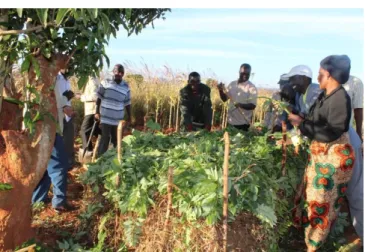
FIGURE 7 Extension workers building a compost pile during a field training in Malawi.
Composting liquid manure, including bio-slurry, in a pit is also an effective method to improve the handling possibilities of liquid manure on smallholder farms. This method is highly promoted by extension services.
In all cases it is essential to protect the compost pits and piles from rain and sun in order to prevent storage losses.
Further reading
Bloomfield E. 2015. Gender and Livelihoods Impacts of Clean Cookstoves in South Asia. Washington DC, USA: Global Alliance for Clean Cookstoves.
CCAC. 2014. Time to Act to reduce short-lived climate pollutants. Climate and Clean Air Coalition to Reduce Short-Lived Climate Pollutants, Paris, France: United Nations Environmental Program.
Daniels WL, Haering KC. 2006. Concepts of Basic Soil Science. In: Haering KC, Evanylo GK, eds. The Mid-Atlantic
Nutrient Management Handbook. Delaware, Maryland,
Pennsylvania, Virginia and West Virginia, USA: The Mid-Atlantic Regional Water Program.
Dobbie K, McTaggart P, Smith A. 1999. Nitrous oxide emissions from intensive agricultural systems: Variations between crops and seasons, key driving variables, and mean emission factors. Journal of Geophysical Research, (D21): 26,891-26,899.
EPA (US Environmental Protection Agency). 2006. Global Anthropogenic Non-CO2 Greenhouse Gas Emissions: 1990-2020. Washington DC, USA: EPA.
FAO. 2009. The state of food and agriculture: livestock in the balance. Rome, Italy: Food and Agriculture Organization of the United Nations.
FAO. 2013. Mitigation of greenhouse gas emissions in livestock production: A review of technical options for non-CO2 emissions. FAO Animal Production and Health Paper No. 177. Rome, Italy: Food and Agriculture Organization of the United Nations.
FAO. 2016. FAOSTAT. Rome, Italy: Food and Agriculture Organization of the United Nations. (Available from: http://faostat3.fao.org/home/E).
Gerber PJ, Steinfeld H, Henderson B, Mottet A, Opia C, Dijkman J, Falcucci A, Tempio G. 2013. Tackling Climate Change Through Livestock: a global assessment of emissions and mitigation opportunities. Rome, Italy: Food and Agriculture Organization of the United Nations. IPCC. 2006. IPCC Guidelines for National Greenhouse Gas Inventories; Volume 4 Agriculture, Forestry and Other Land Use. Kanagawa, Japan: Technical Support Unit of the IPCC Task Force on National Greenhouse Gas Inventories, Institute for Global Environmental Strategies (IGES). Lim SS, Flaxman AD, Bahalim AN, Mokdad AA, Ferrari A, Baxter A, Sapkota A, Roy A, Page A, Hogan A, Ostro A, Calabria B, Grant B, Hubbell BJ, Bonner C, Robinson C, Olives C, Atkinson C, Bucello C, Kok C, Bryan-Hancock C, Hoy D, Pope D, Mozaffarian D, Sleet DA, Des Jarlais DC, Dorsey ER, Sanman ES, Carnahan EC, Smith ES, Ding EL, Passmore E, Rehfuess EA, Farzadfar F, Blyth F, Charlson F, Dentener F, Falder G, Jacklyn GL, Singh GM, Danaei GD, Freedman G, Hosgood III HD, Kan H, Adair-Rohani H, Stöckl H, Gutierrez HR, Razavi H, Chen H, Romieu I, Veerman JL, Leigh J, Zielinski JM, Leasher JL, Patra J, Blore JD, Child JC, Orchard J, Chen JS, Tran JH, Mak J, Lin JK, Powles J, Khoo J-P, Colson KE, Devries K, Edmond K, Graham K, Shield K, Hanafiah KM, Pandey KD, Straif K, Steenland K, Straney L, Rushton L, Mallinger L, Sanchez-Riera L, Rosenfeld LC, Bacchus LJ, Finucane MM, Amann M, Aryee M, Rao M, Freeman MK, Boussinesq M, AlMazroa MA, Naghavi M, Dherani M, Kassebaum N, Wilson N, Stapelberg NJC, Pelizzari PM, Nelson PK, McGale P, Shi P, Davis A, Lopez AD, Cheng AT, Woolf AD, Ritz B, Brunekreef B, Neal B, Pope III CA, Parry CDH, Murray CJL, Gunnell D, Giovannucci E, Bull F, Fowkes FGR, Rivara FP, Mensah GA, Thurston GD, Gmel GG, Borges GB, Anderson HR, Hoek HW, Whiteford HW, Hu HH, Williams HC, Wilkinson JD, Nolla JM, Kanis JA, Balmes JN, McGrath JM, Carapetis JC,
Rodriguez-Portales JA, Salomon JA, Jonas JB, Rehm JT, Shibuya K, Smith KR, Vijayakumar L, Stovner LJ, Morawska L, Degenhardt L, Ezzati M, Petzold M, Brauer MB, Phillips MR, Weissman MM, Pearce NP, Bruce NG, Yip P, Brooks P, Buchbinder R, Lozano R, Martin R, Lalloo R, Malekzadeh R, Osborne R, Marks R, Darby S, Seedat S, Lipshultz SE, Vos TV, Byers TE, Marcenes WM, Hall WH, Khang YK, Memish ZA, Bell ML, Kawakami N, Bourne R, Lan Q, Jasrasaria R, Engell RE, Grainger R, Micha R, White RA, Burnett RT, Dingenen RV, Weintraub W, Norman W, Shivakoti W, Hutchings SJ, Fahimi S, Ghosh S, Flaxman S, Khatibzadeh S, London S, Wiersma ST, Ali SE, Darling S, Barker-Collo S, Ibeanusi SE, Omer SB, Murphy T, Roberts T, Driscoll T, Lathlean T, Merriman TR, Mishra V, Williams W, Li YK, Lu YK, Chafe ZA, Cohen A, van Donkelaar A, Cowie BC, Michaud C, Gakidou E, Laden F, Andrews KG, Erwin PJ, Balakrishnan K, March L, Room R, Sampson U, Mehta S. 2012. A comparative risk assessment of burden of disease and injury attributable to 67 risk factors and risk factor clusters in 21 regions, 1990–2010: a systematic analysis for the Global Burden of Disease Study 2010. The Lancet 380 (9859): 2224-2260.
MacCarty N, Still D, Ogle D. 2010. Fuel use and emissions performance of fifty cooking stoves in the laboratory and related benchmarks of performance. Energy for Sustainable
Development 2010 14(3): 161-71.
Munandar FG, Hayati YR, Munawar AI. 2015. Crop-Cattle Integrated Farming System: An Alternative of Climatic Change Mitigation. Journal of Animal Science and Technology, 38(2): 95-103.
Steinfeld, H. et al. (2006): Livestock's Long Shadow: Environmental Issues and Options. Rome, Italy: Food and Agriculture Organization of the United Nations.
Teenstra E, Vellinga T, Aektasaeng N, Amatayakul W, Ndambi A, Pelster D, Germer L, Jenet A, Opio C, Andeweg K. 2014. Global Assessment of Manure Management Policies and Practices. Livestock Research Report 844. Wageningen, The Netherlands: Wageningen UR Livestock Research. (Available from: http://edepot.wur.nl/335445). Teenstra E, De Buisonjé F, Ndambi A, Pelster D. 2015. Manure Management in the (Sub-)Tropics; Training Manual for Extension Workers. Livestock Research Report 919. The Netherlands: Wageningen UR Livestock Research.
PRACTICE BRIEFS ON CSA
The Practice Briefs intend to provide practical operational information on climate-smart agricultural practices.
Please visit www.climatesmartagriculture.org for more information.
Authors
Edsger Teenstra is Livestock Extension and Communication Specialist at Wageningen UR (University & Research centre) Livestock Research and manager of the Manure
Knowledge Kiosk of the Livestock and Manure Management Component (LMMC) of the Climate and Clean Air Coalition’s Agriculture Initiative.
Karin Andeweg is Researcher Livestock & Environment at Wageningen UR Livestock Research.
Theun Vellinga is Senior Research Scientist Animal Production Systems and Climate Change at Wageningen UR Livestock Research.
Disclaimer
The views expressed in this brief are those of the authors and are not necessarily endorsed by or representative of Wageningen
University or GACSA, or of the cosponsoring or supporting organizations.