All Graduate Theses and Dissertations Graduate Studies
5-2012
Use of Rumen Modifiers to Manipulate Ruminal Fermentation and
Use of Rumen Modifiers to Manipulate Ruminal Fermentation and
Improve Nutrient Utilization and Lactational Performance of Dairy
Improve Nutrient Utilization and Lactational Performance of Dairy
Cows
Cows
Christopher M. Dschaak
Utah State University
Follow this and additional works at: https://digitalcommons.usu.edu/etd Part of the Animal Sciences Commons, and the Philosophy Commons
Recommended Citation Recommended Citation
Dschaak, Christopher M., "Use of Rumen Modifiers to Manipulate Ruminal Fermentation and Improve Nutrient Utilization and Lactational Performance of Dairy Cows" (2012). All Graduate Theses and Dissertations. 1238.
https://digitalcommons.usu.edu/etd/1238
This Dissertation is brought to you for free and open access by the Graduate Studies at
DigitalCommons@USU. It has been accepted for inclusion in All Graduate Theses and Dissertations by an authorized administrator of DigitalCommons@USU. For more information, please contact
AND IMPROVE NUTRIENT UTILIZATION AND LACTATIONAL PERFORMANCE OF DAIRY COWS
by
Christopher M. Dschaak
A dissertation submitted in partial fulfillment of requirements for the degree
of DOCTOR OF PHILOSOPHY in Animal Science Approved: _____________________ _____________________
Dr. Jong-Su Eun Dr. Dale R. Zobell
Major Professor Committee Member
_____________________ _____________________
Dr. Allen J. Young Dr. J. Earl Creech
Committee Member Committee Member
_____________________ _____________________
Dr. Blair L. Waldron Dr. Keneth L. White
Committee Member Department Head
_____________________ Dr. Mark R. McLellan Vice President for Research and Dean of the School of Graduate Studies
UTAH STATE UNIVERSITY Logan, Utah
Use of Rumen Modifiers to Manipulate Ruminal Fermentation and Improve Nutrient Utilization and Lactational Performance of Dairy Cows
by
Christopher M. Dschaak, Doctor of Philosophy Utah State University, 2012
Major Professor: Jong-Su Eun
Department: Animal, Dairy, and Veterinary Sciences
Overall hypothesis in a series of lactation studies reported in this dissertation was that supplementing different rumen modifiers would have consistent responses on ruminal fermentation and lactational performance under optimal ruminal fermentative conditions.
First experiment investigated the influence magnesium exchanged zeolite on ruminal fermentation and lactational performance. Intake of dry matter (DM), milk yield, milk fat concentration, and feed efficiency were not affected. Milk protein concentration tended (P = 0.15) to be higher for the zeolite total mixed ration (TMR). Ruminal pH tended to increase (P = 0.11) by feeding the sodium bicarbonate or the zeolite.
A second lactation experiment determined the influence of quebracho condensed tannin extract (CTE) on ruminal fermentation and lactational performance.
Supplementing CTE decreased intakes of DM and nutrients regardless of forage level thereby increasing feed efficiency. Milk yield and components were not affected. Milk urea N (MUN) and total VFA concentration decreased by supplementing CTE. Cows fed
ruminal N was lost as ammonia.
A third lactation trial assessed whole safflower seeds (SS) on ruminal fermentation, lactational performance, and milk fatty acids. Feeding the Nutrasaff SS TMR (NSST) decreased intake of neutral detergent fiber. Digestibilities of nutrients, milk yield and components, ruminal pH, ruminal VFA, and ammonia-N were similar. Ruminal C16:0 fatty acid (FA) concentration increased with the cottonseed TMR (CST), while C18:1 cis-9 and C18:2 n-6 tended (P = 0.10 and P = 0.09, respectively) to increase with SS supplementation. Supplementing SS decreased milk C16:0 concentration, whereas it increased C18:1 cis-9 and C18:1 trans-9. Milk C18:1 trans-11 FA and cis-9, trans-11 conjugated linoleic acid increased and tended (P = 0.07) to increase with feeding the NSST.
Feeding zeolite would cost-effectively replace sodium bicarbonate as a ruminal buffer, whereas CTE may change the route of N excretion, having less excretion into urine, but more into feces. Whole SS can be an effective fat supplement to lactating dairy cows without negative impacts on lactational performance and milk FA. These studies demonstrate that the three rumen modifiers can positively manipulate ruminal
fermentation.
Use of Rumen Modifiers to Manipulate Ruminal Fermentation and Improve Nutrient Utilization and Lactational Performance of Dairy Cows
by
Christopher M. Dschaak, Doctor of Philosophy Utah State University, 2012
Major Professor: Jong-Su Eun
Department: Animal, Dairy, and Veterinary Sciences
A series of lactation studies reported in this dissertation hypothesized that
supplementing different rumen modifiers would have consistent responses on ruminal fermentation and lactational performance under optimal rumen conditions.
The first experiment investigated the influence of magnesium exchanged zeolite on ruminal fermentation and lactational performance. Intake of dry matter (DM), milk yield, milk fat, and feed efficiency were not affected. Milk protein concentration tended (P = 0.15) to be higher for cows fed the zeolite. Ruminal pH tended to increase (P = 0.11) by feeding the sodium bicarbonate or the zeolite.
A second lactation experiment determined the influence of quebracho condensed tannin extract (CTE) on ruminal fermentation and lactational performance.
Supplementing CTE decreased intakes of DM and nutrients thereby increasing feed efficiency. Milk yield and components were not affected. Milk urea N (MUN) and total VFA concentration decreased by supplementing CTE. Cows fed CTE had decreased ruminal ammonia-N and MUN concentrations, indicating that less ruminal N was lost as ammonia.
A third lactation trial assessed whole safflower seeds (SS) on ruminal fermentation, lactational performance, and milk fatty acids. Feeding Nutrasaff SS decreased intake of neutral detergent fiber. Digestibilities of nutrients, milk yield and components, ruminal pH, ruminal VFA, and ammonia-N were similar. Ruminal C16:0 fatty acid (FA) concentration increased when feeding cottonseed, while C18:1 cis-9 and C18:2 n-6 tended (P = 0.10 and P = 0.09, respectively) to increase with SS supplementation.
Supplementing SS decreased milk C16:0 concentration, whereas it increased C18:1 cis-9 and C18:1 trans-9. Milk C18:1 trans-11 FA and cis-9, trans-11 conjugated linoleic acid increased and tended (P = 0.07) to increase with feeding the Nutrasaff SS.
buffer, whereas CTE may change the route of N excretion, having less excretion into urine, but more into feces. Whole SS can be an effective fat supplement to lactating dairy cows without negative impacts on lactational performance and milk FA. These studies demonstrate that the three rumen modifiers can positively manipulate ruminal
First, I owe a great deal of thanks to my major professor, Dr. Jong-Su Eun, for his guidance and support from the beginning to the end of this journey. His patience, thoughtfulness, and encouragement have been important along this path for completing my degree. He has been an inspiration not only as a researcher and instructor, but also as a mentor. Without him none of this would have been possible.
Second, I must thank my committee members, Dr. Young, Dr. Zobell, Dr. Creech, and Dr. Waldron, for their advice and suggestions and most importantly for their
willingness to help whenever I happened to drop by their office or needed a form signed. I would like to thank the ADVS department at Utah State University, for their help and support as well as their push to get this dissertation written. I would also like to thank all of the staff at the George B. Caine Dairy Teaching and Research Center, for their help during all of my animal trials, their care of theexperimental animals, and giving me the opportunity to learn from experience and knowledge.
There are many people who have helped and supported me along my journey to obtain this degree and my sincerest gratitude to them cannot be adequately put into words.
I would like to thank all the other graduate students for assisting in feeding, sample collection, and analyses during all of my research projects. Without their support I never would have survived and made it through.
and support and for instilling in me the desire to work hard and learn new things. Also for giving me the opportunity to achieve my educational goals.
I would like also to thank my wife, Jeneka, and my daughter Andi for their patience and support from the beginning and for allowing me to stay late at the farm and lab, so I could get samples taken and analyzed. Also thanks to Bryce and Julie Jensen, my wife’s parents, for supporting me in all of my endeavors and for their love and support.
Page
ABSTRACT ... ii
PUBLIC ABSTRACT ... iv
ACKNOWLEDGMENTS ... vi
LIST OF TABLES ... xi
LIST OF FIGURES ... xiii
LIST OF ABBREVIATIONS ... xiv
CHAPTER 1. INTRODUCTION ...1
References ...5
2. REVIEW OF LITERATURE ...9
Ruminant Digestion and Metabolism ...9
Relationship between Carbohydrate and Nitrogen Metabolism in the Rumen ...11
Energy and Nitrogen Synchronization in the Rumen ...13
Ruminal Fermentation of Starch and Its Impacts on Lactational Performance ...15
Manipulation of Ruminal Fermentation ...18
Manipulation of Carbohydrate Fermentation ...18
Manipulation of Nitrogen Metabolism ...22
Manipulation of Lipid Fermentation ...25
Use of Feed Additives in Dairy Diets ...28
Zeolite ...28
Clinoptilolite Zeolite ...29
Ruminal fermentation when feeding CT ...36
Animal performance when feeding CT ...38
Fat Supplementation to Dairy Cows ...42
Yield of milk and milk components and DMI ...45
Unsaturated fat supplementation to dairy cows ...48
Biohydrogenation of FA in the rumen and its impacts on milk fat depression ...53
References ...55
3. EFFECTS OF SUPPLEMENTATION OF NATURAL ZEOLITE ON INTAKE, DIGESTION, RUMINAL FERMENTATION, AND LACTATIONAL PERFORMANCE OF DAIRY COWS ...91
Introduction ...91
Materials and Methods ...93
Cows and Experimental Diets ...93
Sample Collections, Calculations, and Chemical Analyses ...95
Statistical Analyses ...97
Results and Discussion ...98
Chemical Composition of Diets ...98
Intake, Digestibility, Milk Production and Composition, and BW ....98
Ruminal Fermentation Characteristics ...100
Implications ...104
References ...105
4. EFFECTS OF SUPPLEMENTING CONDENSED TANNIN EXTRACT ON INTAKE, DIGESTION, RUMINAL FERMENTATION, AND MILK PRODUCTION OF LACTATING DAIRY COWS1...118
Introduction ...118
Materials and Methods ...120
Cows and Experimental Design and Diets ...120
Sampling, Data Collection, and Chemical Analyses ...122
Ruminal Fermentation Characteristics ...125
Results and Discussion ...128
Characteristics of Experimental Diets ...128
Intake and Digestibility……… ....128
Milk Production and Its Efficiency ...130
Ruminal Fermentation Characteristics ...132
Milk FA Composition ...136
Conclusions ...137
References ...137
5. RUMINAL FERMENTATION, MILK FATTY ACID PROFILES, AND PRODUCTIVE PERFORMANCE OF HOLSTEIN DAIRY COWS FED TWO DIFFERENT SAFFLOWER SEEDS ...157
Introduction ...157
Materials and Methods ...159
Cows, Experimental Design, and Diets ...159
Sampling, Data Collection, and Chemical Analyses ...161
Ruminal Fermentation Characteristics ...164
Statistical Analyses ...165
Results and Discussion ...166
Characteristics of Experimental Diets ...167
Intake and Digestibility ...168
Milk Production and Its Efficiency ...169
Ruminal Fermentation Characteristics ...170
FA Profiles in Ruminal Fluid and Milk ...171
Conclusions ...177
References ...177
6. SUMMARY AND CONCLUSIONS ...196
APPENDIX ...201
Table Page 3.1. Ingredient composition of the control diet ...111 3.2. Chemical composition of the treatment diets on a DM basis ...112 3.3. Nutrient intake and total tract digestibility of lactating dairy cows fed different
ruminal buffer additives ...113 3.4. Milk production and composition, efficiencies of DM and N use, and BW of
lactating dairy cows fed different ruminal buffer additives ...114 3.5. Ruminal fermentation characteristics of lactating dairy cows fed different ruminal
buffer additives ...116 4.1. Ingredients and chemical composition of the TMR fed to lactating cows ...146 4.2. Fatty acid composition of the TMR fed to lactating cows ...148 4.3. Nutrient intake and total tract digestibility of lactating cows fed high (HF) or low
forage (LF) diets without or with condensed tannin extract (CTE)
supplementation ...150 4.4. Milk production and composition and efficiencies of DM and N use for milk
production of lactating cows fed high (HF) or low forage (LF) diets without or with condensed tannin extract (CTE) supplementation ...151 4.5. Ruminal fermentation characteristics of lactating cows fed high (HF) or low
forage (LF) diets without or with condensed tannin extract (CTE)
supplementation ...153 4.6. Fatty acid composition in the milk of lactating cows fed high (HF) or low forage
(LF) diets without or with condensed tannin extract (CTE) supplementation ...155 5.1. Ingredients of the TMR fed to lactating cows ...184 5.2. Chemical composition of oilseeds and the diets (DM basis) ...186 5.3. Nutrient intake and total tract digestibility of lactating cows fed different
production of lactating cows fed different safflower seeds ...189 5.5. Ruminal fermentation characteristics of lactating cows fed different safflower
seeds ...191 5.6. Fatty acid composition in the ruminal fluid of lactating cows fed different
safflower seeds ...193 5.7. Fatty acid composition in the milk of lactating cows fed different safflower seeds
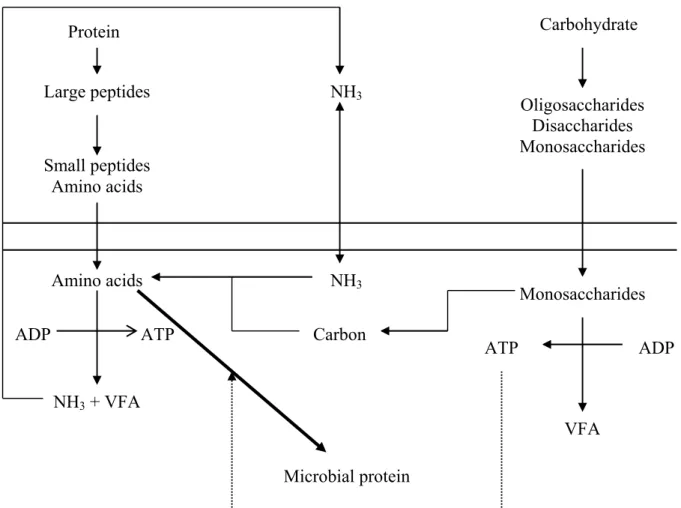
Figure Page 2.1. A theoretical scheme showing carbohydrate and protein utilization by ruminal
bacteria ...82 2.2. Interventions to manipulate fermentation and metabolism in the rumen.
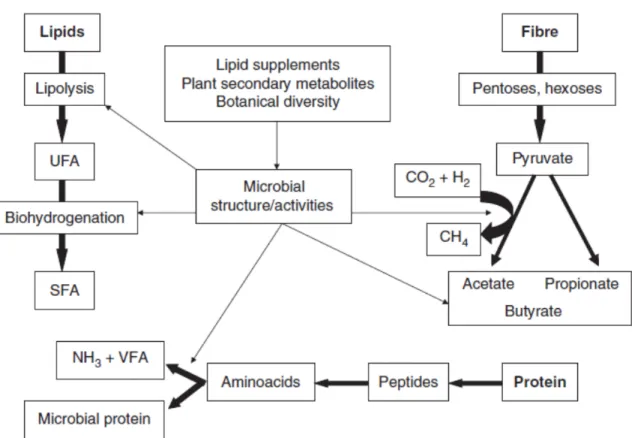
Sometimes the target organisms have several functions, in other cases the
metabolic pathways are linked, for example by the availability of H2 ...83
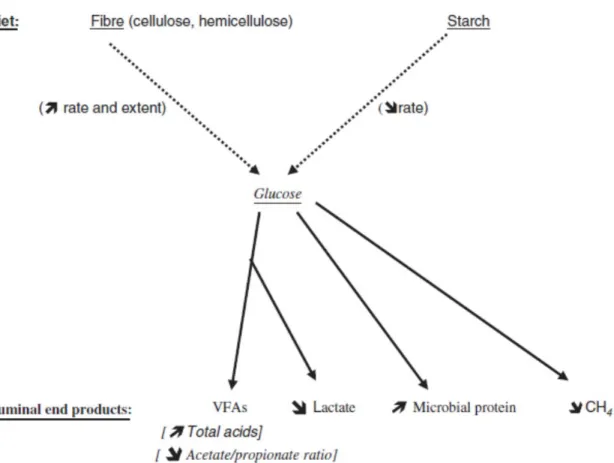
2.3. Possible sites targeted by feed additives to improve carbohydrate fermentation in the rumen ...84 2.4. Possible sites targeted by feed additives to improve nitrogen metabolism in the
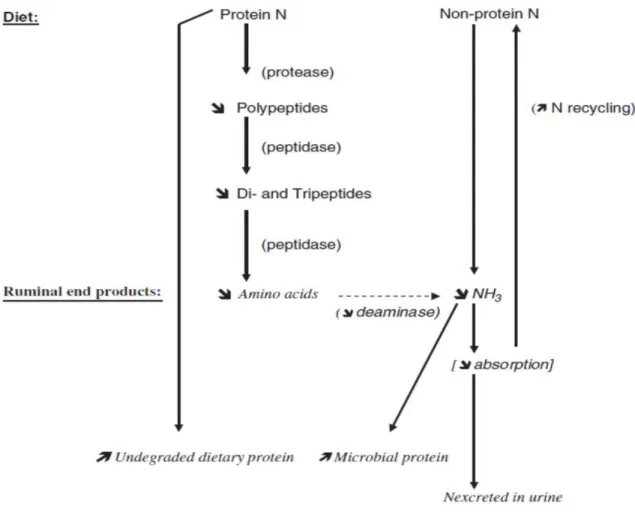
rumen ...85 2.5. Manipulation of lipid fermentation in the rumen. Major reactions in the rumen
and possible sites targeted (increase or decrease) for modifications are depicted .86 2.6. Skeletal structure of clinoptilolite ...87 2.7. Chemical structure of condensed tannins ...88 2.8. Biohydrogenation pathways in the rumen ...89 2.9. Relationship between the change in the fat content of milk and the trans-10 18:1
fatty acid concentration of milk fat (expressed as % of total fatty acids) ...90 3.1. Dry matter intake and milk yield of lactating dairy cows fed different ruminal
buffer additives. Treatments were TMR without buffer (CD), CD and sodium bicarbonate TMR (SBD), and CD and zeolite TMR (ZD). Each point represents the mean of 10 observations (SEM = 1.19 and 1.46 for DMI and milk yield, respectively) ...117
AA = amino acid
A:P = acetate-to-propionate ratio ADF = acid detergent fiber AIA = acid insoluble ash BH = biohydrogenation BW = body weight CH4 = methane
CLA = conjugated linoleic acid CP = crude protein
CS = whole linted-cottonseed CSS = conventional safflower seed
CSST = conventional safflower seed total mixed ration CST = whole linted-cottonseed total mixed ration CT = condensed tannins
CTE = condensed tannin extract
CTL = control diet without Nutrasaff safflower seed addition DM = dry matter
DIM = days in milk DMI = dry matter intake FA = fatty acids
HF+CTE = high forage diet with condensed tannin extract HF–CTE = high forage diet without condensed tannin extract LF = low forage
LF+CTE = low forage diet with condensed tannin extract LF–CTE = low forage diet without condensed tannin extract
LRCpH = Lethbridge Research Centre Ruminal pH Measurement System MFD = milk fat depression
MP = metabolizable protein MUN = milk urea nitrogen N = nitrogen
NaHCO3 = sodium bicarbonate
NDF = neutral detergent fiber NEL = net energy for lactation
NFC = nonfibrous carbohydrates NH3 = ammonia
NH3-N = ammonia nitrogen
NPN = non-protein nitrogen NSS = Nutrasaff safflower seed
NSST = Nutrasaff safflower seed total mixed ration OM = organic matter
PUFA = polyunsaturated fatty acids RDP = rumen-degradable protein
SBD = sodium bicarbonate diet
SEM = standard error of least square means SS = safflower seed
TMR = total mixed ration VFA = volatile fatty acids ZD = zeolite diet
CHAPTER 1 INTRODUCTION
There have been extensive research efforts to acquire better approaches focused on the area of "ruminal microbial fermentation and forage utilization by ruminants". This focus is justified by a challenge to minimize nutrient excretion and maximize use of nutrient by the ruminant production systems. We all know that we “feed the rumen” when we feed ruminants. Yet, in today’s production scenario, we need to be more aware of how and why we feed the rumen because of the greater array of feedstuffs available and environmental concerns. One of most challenging research areas in ruminant nutrition is to integrate biological constraints with feeding practices to identify issues to improve our ability to reduce the variability and increase the efficiency associated with “optimizing ruminal fermentation and maximizing ruminant production”. Ruminal fermentation and function influence all productive processes and, ultimately,
performance in dairy cows. Providing the right nutrients creates an optimal environment that allows rumen microbes to function efficiently, giving cows the nutrients they need to convert feed into milk to enhance profitability. By maximizing rumen microbial activity and bacterial protein production, cows can make the most of their feed to efficiently maximize milk and its components. The end-products of fermentation such as VFA are absorbed across the rumen wall and used for energy and protein synthesis. The outflow of microbial biomass and VFA from the rumen influences the nutritional status of the
animal as well as the efficiency of nutrient utilization. The rumen is therefore a highly efficient organ in the context of the evolution of an herbivore subsisting on forage with its attribution to maintaining rumen function. In order to minimize nutrient waste and
maximize its use by dairy cows, there is strong need to optimize ruminal fermentation with better understanding of microbial dynamics in the rumen.
Manipulation of ruminal fermentation involves improving ruminant productivity by maximizing the efficiency of feed utilization. Therefore, considerable research efforts have focused on methods to modify ruminal fermentation using rumen modifiers to optimize rumen functions for the benefit of ruminants. The ultimate goal of manipulation of ruminal fermentation is to maximize microbial fermentation and improve animal performance.
Use of dietary ruminal buffers, as a rumen modifier, has been suggested to ameliorate the occurrence of ruminal acidosis, especially when lactating diets include large amounts of readily fermentable carbohydrate. Sodium bicarbonate is commonly used as an
exogenous buffer to stabilize ruminal pH in cows that can potentially suffer from ruminal acidosis (Clark et al., 2009). This chemical feed additive is characterized by an acid dissociation constant (pKa = 6.25), which is close to the normal ruminal pH. Sodium bicarbonate is generally recognized as an efficient buffer because of its high acid-consuming capacity in the rumen, and its mode of action is well documented (Erdman, 1988; Russell and Chow, 1993).
Research has continued to identify cheaper mineral buffers that exhibit the same mode of action as the established buffers. The natural zeolite clinoptilolite has a high attraction for water and a large number of cations, such as K+, NH4+, Ca2+, and Mg2+,
which can be reversibly bound or released, depending upon the surrounding conditions (Mumpton, 1999). The high affinity of zeolites for water and osmotically active cations may facilitate ruminal fermentation, and osmotic activity may regulate pH in the rumen
by buffering against hydrogen ions of organic acids. In addition, supplementing zeolite in dairy diets may improve N utilization, because zeolite gradually releases excess ammonia in the rumen and allows rumen microorganisms to capture the ammonia into microbial protein for assimilation into the animals’ digestive systems (Mumpton, 1999). Johnson et al. (1988) reported that ruminal pH increased when synthetic zeolite was added to the diet, and addition of the synthetic zeolite, with or without sodium bicarbonate, resulted in negative effects on feed intake, milk production, milk component yield, and nutrient digestibility in lactating Holstein cows. However, there is a lack of experimental results regarding the effects of long-term feeding of lactating dairy cows with clinoptilolite, a natural zeolite, on its potential as a ruminal buffering agent.
In ruminants fed high quality forage diets, most proteins are rapidly degraded releasing between 56 and 65% of the N concentration in the rumen during fermentation; consequently, large losses of N occur (25-35%) as ammonia into urine (Min et al., 2000). Natural plant compounds, such as condensed tannin extract (CTE), are a rumen modifier and have the ability to reduce proteolysis and improve animals’ N retention. Aerts et al. (1999) found that condensed tannins (CT) in birdsfoot trefoil (Lotus corniculatus) and big trefoil (L. pedunculatus) markedly protected ribulose-1, 5-bisphosphate
carboxylase/oxygenase from degradation. Condensed tannin reduced the growth of a range of bacterial strains from the rumen (Molan et al., 2001; Min et al., 2002). These effects of CT on retarding forage N degradation supported more milk production from cows fed birdsfoot trefoil over alfalfa silage (Hymes-Fecht et al., 2005). Tannin-rich forages are not agronomically suited in many areas. Hence, a concentrated source of CT may be a possible alternative approach to feeding tannin-rich forages to manipulate
ruminal fermentation, enhance N utilization, and improve lactational performance of dairy cows.
Fat supplements in lactation dairy diets allows for the maintenance of energy density while increasing fiber intake, resulting in stabilization of ruminal fermentation (Allen, 1997). In the western and central United States, safflower (Carthamus tinctorius L., Asteraceae) has been widely grown because of tolerance to hot and dry climates (Li and Mündel, 1996; Bradley et al., 1999). Alizadeh et al. (2010) reported that SS can be included up to 5% of dietary DM alongside cottonseed (CS) for early lactating cows without affecting feed intake while maintaining normal ruminal fermentation, peripheral energy supply, and milk production. Whole Nutrasaff SS (NSS), a new variety of SS (Safflower Technologies International, Sidney, MT), contain higher oil and lower fiber concentrations than traditional SS varieties (Bergman et al., 2007). Nutrasaff SS can replace CS and be fed to lactating dairy cows without negative impacts on lactational performance up to 3% DM (Dschaak et al., 2010). Feeding the NSS improved efficiency of use of feed N to milk N and decreased MUN. In addition to the benefits on nutrient utilization, feeding NSS enhanced functional quality of milk with increased cis-9, trans-11 conjugated linoleic acid (CLA) concentration, which is an additional benefit to human health (Dschaak et al., 2010). However, effects of feeding SS on ruminal fermentation has not been assessed, and therefore further research is needed to identify other CLA isomers or 18:1 trans FA would affect milk fat yield when SS are fed in lactation dairy diets.
The overall hypothesis in a series of lactation studies reported in this dissertation was that supplementing different rumen modifiers would have consistent responses on
ruminal fermentation under optimal ruminal fermentative conditions with adequate supply of forage fiber in lactation dairy diets. The objective of this research was to evaluate the use of zeolite, quebracho CTE, and Nutrasaff SS as potential rumen modifiers and assess ruminal fermentation characteristics, nutrient utilization, and
lactational performance. All lactation experiments were performed using typical lactation diets in Intermountain West (i.e., Utah, Idaho, Wyoming, Montana, and parts of Arizona and Nevada) containing relatively high forage. Therefore, high quality of alfalfa hay (high CP but low NDF concentrations) was fed to provide 50 to 75% of the dietary forage with total forage levels averaging 45 to 55% of the dietary DM in the experiments. We have reported that due to positive nutritive contribution by the high quality of alfalfa hay, overall fermentative conditions have not been interfered when sizable dietary proportions of readily fermentable carbohydrates are included in dairy cow diets (Holt et al., 2010). These approaches may help to compare efficacy of supplementing the rumen modifiers investigated in this project and extrapolate overall results to be used in dairy ration formulation.
REFERENCES
Aerts, R. J., W. C. McNabb, A. Molan, A. Brand, J. S. Peters, and T. N. Barry. 1999. Condensed tannins from Lotus corniculatus and Lotus pedunculatus effect the
degradation of ribulose 1, 5-bisphosphate carboxylase (Rubisco) protein in the rumen differently. J. Sci. Food Agric. 79:79–85.
Alizadeh, A. R., G. R. Ghorbania, M. Alikhania, H. R. Rahmania, and A. Nikkhaha. 2010. Safflower seeds in corn silage and alfalfa hay based early lactation diets: A practice within an optimum forage choice. Anim. Feed Sci. Technol. 155:18–24. Allen, M. S. 1997. Relationship between fermentation acid production in the rumen and
the requirement for physically effective fiber. J. Dairy Sci. 80:1447–1462.
Bergman, J. W., N. R. Riveland, C. R. Flynn, G. R. Carlson, D. M. Wichman, and K. D. Kephart. 2007. Registration of ‘Nutrasaff’ safflower. J. Plant Reg. 1:129–130. Bradley, V. L., R. L. Guenthner, R. C. Johnson, and R. M. Hannan. 1999. Evaluation of
safflower germplasm for ornamental use. Pages 433–435 in Perspectives on new crops and new uses. J. Janick, ed. ASHS Press, Alexandria, VA.
Clark, J. H., R. A. Christensen, H. G. Bateman II, and K. R. Cummings. 2009. Effects of sodium sesquicarbonate on dry matter intake and production of milk and milk
components by Holstein cows. J. Dairy Sci. 92:3354–3363.
Dschaak, C. M., J.-S. Eun, A. J. Young, and J. W. Bergman. 2010. Nutritive merits of whole Nutrasaff safflower seed when fed to Holstein dairy cows during midlactation. Anim. Feed Sci. Technol. 156:26–36.
Erdman, R. A. 1988. Dietary buffering requirements of the lactating dairy cow: A review. J. Dairy Sci. 71:3246–3266.
Holt, M. S., C. M. Williams, C. M. Dschaak, J.-S. Eun, and A. J. Young. 2010. Effects of corn silage hybrids and dietary nonforage fiber sources on feed intake, digestibility, ruminal fermentation, and productive performance of lactating Holstein dairy cows J. Dairy Sci. 93:5397–5407.
Hymes-Fecht, U. C., G. A. Broderick, and R. E. Muck. 2005. Effects of feeding legume silage with differing tannin levels on lactating dairy cattle. Page 163 inProc XIV Intl. Silage Conf, a satellite workshop of the XXth Intl Grassland Congress, Belfast, Ireland.
Johnson, M. A., T. F. Sweeney, and L. D. Muller. 1988. Effects of feeding synthetic zeolite A and sodium bicarbonate on milk production nutrient digestion, and rate of digesta passage in dairy cows. J. Dairy Sci. 71:946–953.
Li, D., and H.-H. Mündel. 1996. Safflower Carthamus tinctorius L. Promoting the conservation and use of underutilized and neglected crops. 7. Inst. Plant Genet. Crop Plant Res., Gatersleben/Int. Plant Genet. Resources Inst., Rome, Italy.
Min, B. R., W. C. McNabb, T. N. Barry, and J. S. Peters. 2000. Solubilization and degradation of ribulose-1,5-bisphosphate carboxylase/oxygenase (EC 4.1.1.39; Rubisco) protein from white clover (Trifolium repens) and Lotus corniculatus by rumen microorganisms and the effect of condensed tannins on these processes. J. Agric. Sci. Cam. 134:305–317.
Min, B. R., G. T. Attwood, K. Reilly, W. Sun, J. S. Peters, T. N. Barry, and W. C.
McNabb. 2002. Lotus corniculatus condensed tannins decrease in vivo populations of proteolytic bacteria and affect nitrogen metabolism in the rumen of sheep. Can. J. Microbiol. 48:911–921.
Molan, A. L., G. T. Attwood, B. R. Min, and W. C. McNabb. 2001. The effect of
condensed tannins from Lotus pedunculatus and Lotus corniculatus on the growth of proteolytic rumen bacteria in vitro and their possible mode of action. Can. J.
Mumpton, F. 1999. La Roca Magica: Uses of natural zeolites in agriculture and industry, Proc. Natl. Acad. Sci. 96:3463–3470.
Russell, J. B., and J. M. Chow. 1993. Another theory for the action of ruminal buffer salts: Decreased starch fermentation and propionate production. J. Dairy Sci. 76: 826– 830.
CHAPTER 2
REVIEW OF LITERATURE
Ruminant Digestion and Metabolism
The rumen is a large fermentation chamber providing an anaerobic environment, constant temperature and pH, and good mixing. The rumen microbial population contains billions of complex microbiota made of anaerobic bacteria (~1011 cells/mL), anaerobic protozoa (~105 cells/mL), anaerobic fungi (~103 cells/mL), and methanogen archaea (~109 cells/mL) as the main groups of microorganisms which anaerobically break down and ferment the ingested plant materials (Jouany and Morgavi, 2007). Ruminants evolved to consume and subsist on roughage and grasses consisting predominantly of celluloses. Ruminants typically face several challenges on feeding, because plant matter is difficult to digest, relatively low in fat and protein, and the majority of nutrients are located within strong cell wall fraction (Vaughan et al., 2011). Many microbes synthesize cellulolytic enzymes which allow them to utilize dietary celluloses and other plant cell wall materials. The bacteria in the rumen can be classified into two groups; those that utilize fiber and those that utilize nonfiber sources of carbohydrates (primarily sugars and starch). Microbial fermentation is a slow process, requiring time and space in order to occur.
Several processes are involved in ruminal function, and generally these involve: reduction in size of feed particles, degradation of substrate, utilization of substrate by microorganisms, synthesis of microbial biomass, formation of VFA, ammonia (NH3),
methane, and carbon dioxide as end-products of substrate fermentation, intra-ruminal recycling of microbial matter (death, predation), absorption of VFA and ammonia, and
finally, outflow of ruminal contents. Nutrients that are absorbed differ markedly from those consumed because of microbial fermentation in the rumen (Allen et al., 2005). Organic matter is partially fermented to VFA (primarily acetic, propionic, and butyric acids), feed protein is partially degraded to AA and NH3, which are incorporated into
microbial protein of high biological value, and unsaturated fatty acids (FA) are biohydrogenated and isomerized to varying degrees.
The major fuels for dairy cows are VFA from ruminal and intestinal fermentation of OM, glucose from starch digestion in the small intestine, and nonesterified FA and AA absorbed from the gastrointestinal tract and mobilized from body reserves. Between half and two-third of total ME may originate from VFA produced from fermentative
degradation by microorganisms in the rumen. More than 60% of absorbed AA are from microbial protein flowing from the rumen, with the remainder from feed protein escaping ruminal degradation (Allen et al., 2005).
Feeding value of a diet as well as feed requirement for milk synthesis are affected by animal factors such as the level of DMI, the type of diet consumed, and the physiological state of the cow. The type of nutrient absorbed affects partitioning between maintenance, milk production, body deposition, and efficiency of energy utilization for productive functions (Dijkstra et al., 2007; Friggens and Newbold, 2007). Ruminal digestibility not only depends on the types of material ingested and their intrinsic degradation
characteristics, but also it is influenced by all the ingredients combined in a diet and the fermentation conditions encountered in the rumen with that particular diet. Changes in rumen function affect the interactions between individual types of nutrient with respects to their digestibility, site of digestion and availability for the cow’s metabolism, and
productive functions. It is clear that the rumen plays a major role in the digestion of feed, and the fermentative processes in the rumen largely determine the site and extent of feed digestion. Variation in ruminal fermentation is a major cause of variation in the quantity and type of nutrients absorbed from the gastrointestinal tract.
Ensuring adequate flow of nutrients from the rumen to support high milk production should first take maximum advantage of ruminal fermentation. Maximum ruminal fermentation is characterized by high ruminal digestion of nutrients (DM, OM, NDF, ADF, and CP) in conjunction with an optimum level of efficiency of microbial protein synthesis. In efficient dairy cow diets, over half of the protein requirements of the animal are met with microbial protein produced during the fermentation of feed nutrients. This significant function depends largely on providing dietary energy and protein in
appropriate ratios and amounts. Therefore, the importance of energy and protein interactions within the rumen has been researched with quantitative description of the event as influenced by diet composition, along with consideration of how such processes may be manipulated in order to improve the overall efficiency of ruminant livestock production (Beever, 1993).
Relationship between Carbohydrate and Nitrogen Metabolism in the Rumen
Microbial metabolism in the rumen and the amount of absorbed energy and AA available to meet requirements from ruminal fermentation depend on DMI, content of carbohydrate, protein fractions in diet ingredients, microbial growth on the fiber and non-fiber carbohydrates consumed, and the unique rates of digestion and passage of the individual feed carbohydrate and protein fractions that are being fed. The nutrient
components of diet used for microbial maintenance and growth in the rumen have been subdivided into more specific aspects of ADF, NDF, structural carbohydrate (SC), non-structural carbohydrate (NSC), RDP, and RUP. These different nutrient components have their unique physical and chemical characteristics and utilization efficiencies (Van Soest, 1994).
Microbial growth is largely dependent on availability of both N and carbohydrates in the rumen. From the degradation and fermentation of fiber and starch, microorganisms derive their energy as ATP and their N from feed protein degradation. The overall process illustrating the coordination of N and carbohydrate is shown in Figure 2.1. Plant tissues contain carbohydrates of one kind or another, and provide the primary source of energy for both the ruminal organisms primarily used for FA synthesis in adipose tissue. Therefore, production of adequate levels of acetate in the rumen is essential to maintain adequate quantities of milk fat. Propionic acid provides energy through conversion to blood glucose in the liver and is also used in milk lactose synthesis. Butyric acid provides energy to the rumen wall and is largely converted to ketones during absorption through the rumen epithelium. Starch is the primary energy component in grains, and is
considered the primary driver of microbial protein synthesis in the rumen. Hexoses and pentoses produced through microbial breakdown are subsequently used by the ruminal microbial population to supply the precursors of macromolecules and energy needed for growth and maintenance (Van Soest, 1994). It is generally accepted that the energy available for ruminal microbial yield is largely dependent on the rate of carbohydrate digestion in the rumen (Hoover and Stokes, 1991).
The majority of true protein and NPN entering the rumen is broken down to NH3
which is required for bacteria as a main source of N to synthesize microbial protein. The microbial protein is a high quality protein for the animal that is highly digestible in the small intestine and has a good balance of the essential AA. Ammonia is most efficiently incorporated into microbial protein when the diet is rich in soluble carbohydrates, particularly starch. Because proteolysis occurs rapidly in the rumen, it usually exceeds the rate of utilization by microorganisms with an accumulation of NH3. Ammonia, in
excess of that used by the microorganisms, is absorbed across the rumen wall, converted to urea in the liver, released as blood urea N, and excreted into urine or recycled back to the rumen via saliva or diffusion through the rumen wall. This inefficient recycling of N is energetically costly to the animal. Because of the uncertain contributions to
inefficiency of conversion of dietary CP to tissue or milk protein, this route needs to be further characterized to improve N retention (Firkins and Reynolds, 2005). Although protein sources and NDF are major nutrients supplying NH3-N and energy, respectively,
NSC in ruminal fermentation plays a significant role with respect to optimization of microbial protein yield in the rumen.
Energy and Nitrogen Synchronization in the Rumen
The efficiency of microbial protein synthesis is defined as the amount of microbial N reaching the duodenum per unit of OM truly degraded in the rumen. In order to improve the efficiency of microbial protein synthesis, the rate of growth by microorganisms should match the rate of substrate availability. Otherwise, feed degradation promotes wasteful mechanisms decreasing the efficiency of microbial protein synthesis, and factors that increase energy consumption without increasing the microbial biomass must be
controlled. Synchronization is the provision of both RDP (NPN and rumen-degradable true protein) and energy (ruminally fermentable carbohydrate) to the rumen, so that microorganisms can utilize both simultaneously (Seo et al., 2010). There have been many attempts to test the ‘synchrony’ hypothesis. The basic assumption on the effect of
synchronization of energy and N availability is that a lack of synchrony between the rates at which energy and N become available to the microbes. This will lead to a reduced efficiency of microbial capture of N. Under this condition, ATP produced from fermentation of dietary carbohydrate will be inefficiently used for microbial growth (Chamberlain and Choung, 1995). Therefore, synchronous nutrient availability should allow more efficient use of nutrients, thus enhancing microbial protein yield, increasing nutrient supply to the animal, and potentially improving performance of the animal (Hall and Huntington, 2008).
In a review, Cabrita et al. (2006) reported that synchronization of rapid fermentation with fast degradable starch and protein stimulated greater microbial protein passage than slowly degradable synchronized diets. Furthermore, starch digestibility in the rumen affected utilization of nutrients more than protein digestibility. The authors concluded that the ruminal synchronization of substrate release can enhance the amount and efficiency of microbial protein yield. It has been reported that a synchronous supply of energy and N to the rumen enhances the efficiency of microbes in capturing N and in utilizing ATP for microbial growth (Richardson et al., 2003), which may indicate that synchronized feeds increase microbial protein production in the rumen and enhance rumen fermentation efficiency, thereby improving nutrient utilization and animal performance (Seo et al., 2010).
Conversely, when uncoupled fermentation occurs i.e., when there is asynchronous carbohydrate and protein degradation in the rumen, large amounts of NH3-N are absorbed
across the rumen wall into the blood, and energy use for microbial protein synthesis will decrease (Bach et al., 2005). Cabrita et al. (2006) reported that across a large number of studies in lactating dairy cows, there was no consistent effect of attempts to synchronize carbohydrate fermentation and N availability on ruminal NH3 concentration or microbial
N supply in lactating dairy cows. Kim et al. (2000) showed no significant effect of nutrient synchrony on the efficiency of microbial growth or VFA production. Ichinohe and Fujihara (2008) reported that the microbial N supply was greater for an asynchronous diet than it was for a synchronous diet. Kaswari et al. (2007) and Richardson et al. (2003) also showed that there were no differences in the efficiencies of microbial protein
synthesis or N deposition between diets that were formulated to have different synchronization characteristics. These results indicate that efforts should be made to maintain a continuous ruminal energy supply pattern while supplying the appropriate quantity of rumen degradable N instead of simply pursuing synchronization of energy and N release.
Ruminal Fermentation of Starch and Its Impacts on Lactational Performance The proportion of starch and dietary content of rapidly degradable carbohydrates in the diet determines ruminal fermentation dynamics which affects the VFA profile (Lechartier and Peyraud, 2011) and varies by species and physiological status of animal as well as physical and chemical processing methods. Few studies have attempted to evaluate in vivo the effect of mechanical processing of corn grain on starch digestion. Remond et al. (2004) reported an increase in ruminal starch digestion between whole or
processed grain. Supplementing whole and processed corn grain did not affect milk yield and composition (Remond et al., 2004). Pelleting decreases particle size, thus shifting the site of carbohydrate digestion from post-ruminal sites to the rumen (Kiran and
Mutsvangwa, 2007). Therefore, it can be expected that ruminal starch digestibility would be higher for pelleted barley compared with dry-rolled barley, which could potentially alter urea-N recycling to the rumen and microbial protein synthesis in the rumen, thus having the potential to improve lactational performance of dairy cows.
The theory behind processing grain is shifting the site of starch digestion from the rumen to the small intestine. If total tract digestibility of starch is not affected, there is no direct benefit in a shift of the site of starch digestion. Improved starch digestion is
partially achieved via its increased degradation in the rumen (Tagari et al., 2008). Indeed the nature of glucogenic substrates (propionate derived from starch fermentation or glucose derived from small intestinal starch digestion) has little effect on milk yield and composition (Remond et al., 2004).
Increasing grain content of the diet usually decreases milk fat concentration, a change most commonly explained by changes in ruminal fermentation. High grain diets and diets higher in ruminally degraded starch typically increase propionate proportion, but
decrease acetate proportion, acetate-to-propionate ratio, fiber digestibility, milk fat concentration, and DMI (Plaizier et al., 2008; Lechartier and Peyraud, 2011). The decrease in milk fat concentration with high grain diets has, therefore, been classically explained by a general shift from lipogenesis to gluconeogenesis. Recent research, however, suggests that the depression in milk fat may instead be caused by an
(Hollmann et al., 2011). Increasing the amount of grain fed generally results in an
improvement of milk protein concentration (Yang and Beauchemin, 2007). This is likely due to an increased supply of energy and microbial protein in association with a larger quantity of starch digested in the rumen and the intestine, which might have provided more propionate for glucose synthesis and more glucose for absorption in the intestine. Mackle et al. (2000) suggested that the mechanism by which an increased dietary energy level influences milk protein is related to increased microbial protein synthesis in the rumen.
Other factors that may influence ruminal starch digestion include rumen protozoa (Kiran and Mutsvangwa, 2010), level of DM and starch intake, and grain variety
(Lechartier and Peyraud, 2010). Protozoa reduce the rate of starch digestion in the rumen through ingestion of starch digesting bacteria as well as ingestion of starch granules and sugars. Protozoa engulf starch rapidly and consume lactate, thereby keeping the ruminal pH from becoming more acidic (Williams and Coleman, 1997). Kiran and Mutsvangwa (2010) reported that partial defaunation of sheep has been shown to increase ruminal starch digestibility (Kiran and Mutsvangwa, 2010). Starch disappearance was less in faunated (35.0%) than defaunated (40.7%) rumen fluid, but corn variety did not affect starch disappearance (van Zwieten et al., 2008). When no protozoa were present, the disappearance of starch was higher after 6 and 12 h incubation compared with presence of protozoa. However, early in vivo studies with sheep or cattle reported variable results, indicating decrease (Veira and Ivan, 1983) or increase (Mendoza et al., 1993) of ruminal starch degradation upon defaunation.
Manipulation of Ruminal Fermentation
Manipulating ruminal fermentation involves maximizing the efficiency of feed utilization and increasing ruminant productivity (i.e., increase in milk, meat, and wool production). Therefore, considerable research efforts have focused on methods to modify ruminal fermentation (Figure 2.2). The main objectives of manipulating ruminal
fermentation are to enhance beneficial processes, minimize, alter, or delete inefficient processes, and minimize, alter, or delete processes harmful to the host (Nagaraja et al., 1997). Manipulation of ruminal fermentation can be thought of as a procedure, whereby optimal conditions are sought by maximization and/or minimization of fermentation. One approach to achieve nutrient synchrony that has received considerable attention is the manipulation of dietary carbohydrate and protein sources (NRC, 2001; Cabrita et al., 2006). Other main targets have also been identified for feed additives to optimize some rumen functions for the benefit of ruminants: 1) decreased methane production in favor of propionate to improve the energy balance of animals; 2) reduced feed protein
degradation to increase bioavailability of AA in the small intestine; 3) reduced
degradation rate of rapidly fermentable carbohydrates (starch, sucrose) and control lactic acid concentration; and 4) improved fiber digestion (Jouany and Morgavi, 2007).
Manipulation of Carbohydrate Fermentation
The major sites that are targeted for modification of carbohydrate fermentation in the rumen are depicted in Figure 2.3 (Jouany and Morgavi, 2007). Cellulose and
hemicellulose constitutes more than 17% of most ruminant diets. Since they are
rumen is less than desirable. Increasing fiber or starch fermentation will result in
increased VFA production in the rumen. Increased production of propionate is beneficial to the animal by affecting the capture of fermentation energy (i.e., decreased methane production in the rumen).
Ingestion of large quantities of rapidly fermentable carbohydrate can result in
production of large quantities of VFA, leading to high ruminal lactate concentrations and subsequently ruminal acidosis. Feeding more concentrate also decreases ruminal pH because grains are generally more rumen digestible than forages. The decrease in ruminal pH favors growth of Streptococcus bovis causing changes in fermentation favoring lactate production and its accumulation, and the lactate is 10 times stronger than either acetic, propionic, or butyric acid (Bramley et al., 2008). Therefore, lactate accumulation should be prevented by either inhibiting lactic acid production or enhancing its
fermentation to propionate. Lactic acid accumulation in the rumen is aided principally by a low pH, which favors increased production because of growth of Lactobacillus spp., and decreased fermentation due to inhibition of lactate-utilizing bacteria (Bramley et al., 2008).
The dietary profile of NFC has the potential to alter the supply of metabolizable nutrients to the animal because NFC differs in digestion and fermentation characteristics (Hall et al., 2010). Although NFC has been represented as a single value for feeds or diets, the types of carbohydrates in this fraction can vary greatly. For example, the NFC in corn grain is mostly starch (65 to 70% of DM), citrus pulp provides sugars (12 to 40% of DM), and neutral detergent-soluble fiber (NDSF; largely pectic substances; 25 to 44% of DM) and sugars (mono- and disaccharides) are predominant in molasses (Hall, 2002).
Cows consuming ground corn (starch) had the greatest MUN and milk protein
concentration and yield and tended (P = 0.09) to have the greatest DMI, but had a lesser milk fat concentration compared to cows consuming dried citrus pulp (sugar and pectin) and sucrose + molasses (sugar) (Hall et al., 2010). They also reported the sucrose + molasses diets supported greater DMI, milk protein yield, and 3.5% fat- and protein-corrected milk yield than did dried citrus pulp diets. Ammonia concentration tended (P = 0.09) to be greater with ground corn than with dried citrus pulp and sucrose + molasses.
Carbohydrate supply profoundly influences the amount of ruminal NH3-N assimilated
into microbial protein. Hristov et al. (2005) fed diets high in alfalfa hay that were supplemented with 20.6% purified glucose, starch, or oat fiber. Feeding glucose decreased ammonia production and decreased the amount of microbial N synthesized from ammonia on a gram/d basis. Less NH3-N was converted into microbial N for the
fiber treatment, although one might expect the fiber to stimulate the abundance of ammonia-using cellulolytic bacteria.
Carbohydrate source and availability appear to influence the amount of microbial protein synthesis and efficiency of microbial protein synthesis in potentially different ways. Increasing the dietary proportion of grain in a ration increased microbial N flow to the duodenum by about 30%, but efficiency of microbial protein synthesis was not
affected by level of grain; instead, efficiency of microbial protein synthesis was increased when high-moisture corn was replaced with dry ground corn (Firkins et al., 2007). In another study reported by Voelker and Allen (2003), high-moisture corn was reduced from 36 to 11% of DM by substitution with beet pulp, and microbial N flow was linearly decreased without affecting efficiency of microbial protein synthesis. In this case, the
amount of rumen-degradable starch was probably decreased below the levels needed to support optimum microbial protein synthesis. Cereal grains differ in their starch content, with wheat containing (DM basis) 77% starch, corn 72%, and barley and oats 57 to 58% (Gozho and Mutsvangwa, 2008). The authors reported that differences also exist among these cereal grains in their rates and extents of ruminal starch degradation, with 55 to 70% of corn starch, 80 to 90% of barley and wheat starch, and 92 to 94% of oats starch being digested in the rumen. In principle, the rate and extent of fermentation of dietary carbohydrates in the rumen are important parameters that determine nutrient supply to the animal (Hall, 2004).
Increasing the dietary content of rapidly degradable carbohydrates sharply decreased DMI (−2.1 kg/d) by replacing corn with wheat (Lechartier and Peyraud 2010). Gozho and Mutsvangwa (2008) reported DMI tended (P = 0.10) to be lower for cows fed the wheat-based TMR than those on the barley-wheat-based TMR. Cows fed barley-, corn-, or oats-wheat-based TMR consumed 2.2, 2.0, or 1.2 kg/d of DM more, respectively, compared with those fed the wheat-based TMR (Gozho and Mutsvangwa, 2008). Increasing the amount of
concentrate in the diet linearly increased milk yield, protein yield, and milk protein concentration, but it decreased milk fat content, and tended (P = 0.10) to decrease milk fat yield (Lechartier and Peyraud, 2010). Feeding wheat as a rapidly degradable starch source did not affect milk yield, protein yield, or milk protein concentration, but reduced milk fat yield and milk fat concentration (Lechartier and Peyraud, 2010). Milk yield tended to be lower (P = 0.06) in cows fed the wheat-based diet compared with those fed the barley-based TMR, and on average, cows fed barley-, corn-, and oats-based TMR produced 3.4, 2.1, and 1.6 kg/d more milk, respectively, compared with those fed the
wheat-based TMR (Gozho and Mutsvangwa, 2008). The authors reported that feeding the corn-based TMR resulted in greater fat concentration compared with feeding the barley-based or wheat-barley-based TMR, whereas fat yield was only higher in cows fed corn-
compared with wheat-based TMR diets. Milk protein concentration was higher in cows fed corn based-TMR compared with those fed oats-based TMR, whereas protein yield tended (P = 0.05 and P = 0.10, respectively) to be lower in cows fed wheat-based TMR compared with those fed barley-based TMR or corn-based TMR (Gozho and
Mutsvangwa, 2008). Nitrogen balance was similar across diets, and urine excretion of purine derivatives indicated higher microbial protein availability at the small intestine in cows fed barley- and corn-based diets compared with those fed oats- and wheat-based diets (Gozho and Mutsvangwa, 2008).
Replacing corn with wheat and feeding a rapidly fermentable carbohydrate source in diets increased the yield of trans-10 C18:1 and reduced the yield of trans-11 C18:1 in milk. These findings suggest that increasing the amount of rapidly degradable
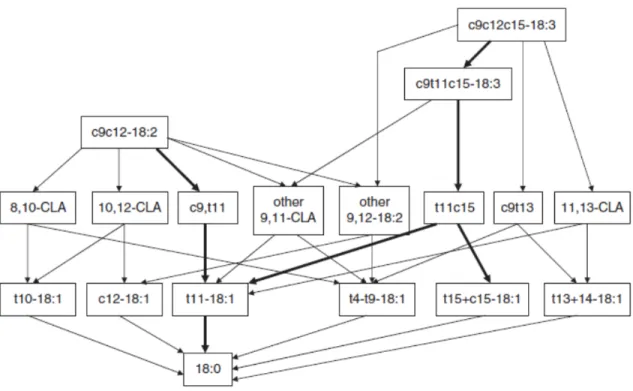
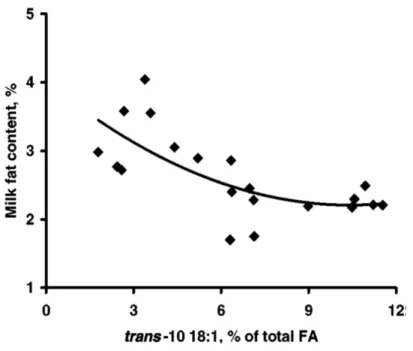
carbohydrates induces a microbial change resulting in a profound modification of ruminal biohydrogenation (BH) and isomerization of C18:2 (Lechartier and Peyraud, 2010). The linear increase of the yield of trans-10 C18:1 in milk as forage level decreased also suggests a shift in the BH pathways of C18:2 that became oriented to trans-10 C18:1 instead of trans-11 C18:1 (Bauman and Griinari, 2003).
Manipulation of Nitrogen Metabolism
Nitrogen utilization is affected by many factors, such as dietary N concentration, degradability, microbial community, and their interaction with other nutrients (Firkins and Reynolds, 2005). The fermentation scheme of nitrogenous substances and sites that
are targeted for modification (increase or decrease) is depicted in Figure 2.4 (Jouany and Morgavi, 2007). The strategy for manipulating N metabolism in the rumen is to enhance ruminal escape of dietary protein by minimizing its degradation and optimizing microbial protein production from NPN. Minimization of protein degradation can be achieved by intervening at the proteolysis, peptidolysis, or AA deamination stages. This will reduce losses incurred in the conversion of dietary protein to microbial cell protein. Most efforts to improve urea utilization have been directed toward minimizing NH3 absorption by
aiming to reduce the rate of urea hydrolysis in the rumen and/or to increase the ability of rumen microorganisms to assimilate NH3, thus reducing N loss to the animal. Urea also
can be recycled from the blood to the rumen, either via saliva or by direct transfer across the ruminal wall. Therefore, NH3 is a prime intermediate in the conversion of dietary N to
microbial N.
Besides N (NH3) and carbon skeletons (organic acids and branched-chain FA),
microbial protein synthesis in the rumen requires other nutrients, such as sulfur and vitamins. However, such nutrients usually are not limiting. These nutrients or cofactors are supplied directly from the feed, synthesized de novo in the rumen, or provided by microbial cross-feeding. The goal in manipulating microbial protein synthesis is to increase efficient production by improving NH3 assimilation and urea recycling, thereby
minimizing N excretion. Urea recycling provides a great advantage when ruminants are fed low-protein diets (Reynolds and Kristensen, 2007).
Feed processing, such as treatments related to heat, can be used to manipulate site of digestion as well as degradation characteristics in the rumen and is therefore a helpful tool in optimizing ruminant production under certain circumstance (Yu et al., 2002).
Historically heat and chemical treatments are probably the most studied and widely used methods for reducing ruminal degradation of feed proteins. Yu et al. (2002) reported that heat treatment (pressure toasting, dry roasting, extrusion, etc.), except pelleting, can reduce the rate and extent of ruminal degradation of protein in legume seeds, thus resulting in a potential increase in the supply of protein (as AA source) to the small intestine.
Decreasing the amount of MP in the diet decreased milk yield by about 3 kg compared with the adequate protein diet (Lee et al., 2011). Lowering the amount of dietary CP was reported by Cyriac et al. (2008) to have a similar effect. Increasing dietary MP linearly increased yields of milk and ECM, but a quadratic relationship was observed for yields of protein and lactose (Weiss et al., 2009). Those yields increased as MP increased and reached their maximums when diets contained approximately 11% MP. Lowering dietary level of protein below requirements of the animal tended (P = 0.06) to decrease total VFA concentration resulting in increased ruminal pH of protein deficient diets and tended to decrease (P = 0.09) NH3-N concentration in ruminal fluid
(Lee et al., 2011).
Hall et al. (2010) reported that changing the proportion of protein degradability in the diet did not affect DMI or milk yield. Cows consuming diets that contained a greater proportion of protein as RDP had greater milk protein concentration and tended to have greater protein production (P = 0.13) and MUN (P = 0.07), respectively (Hall et al., 2010). Milk fat concentration tended (P = 0.15) to be less with increased RDP (Hall et al., 2010). Likewise, NH3 concentration tended (P = 0.09) to be greater by increased RDP,
were not affected by increased RDP (Hall et al., 2010). Increased ruminal protein
degradation, decreased microbial capture of ammonia, or increased catabolism of protein by the animal including protein in excess of requirements could result in the increased NH3-N concentration.
Manipulation of Lipid Fermentation
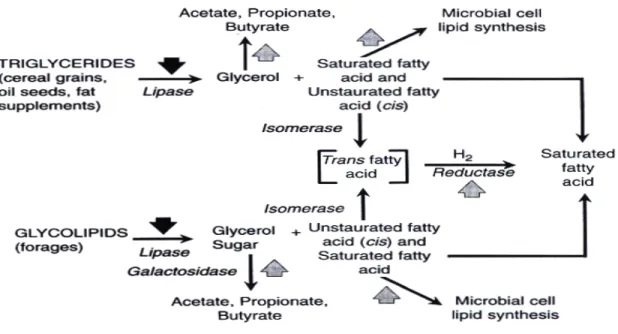
Manipulation of ruminal lipid metabolism depicted in Figure 2.5 is aimed at
controlling antimicrobial effects of FA to minimize disruption of ruminal fermentation, so that higher levels of fat can be included in the diet. In addition, control of ruminal BH has been investigated to alter the absorption of selected FA that may improve nutritional qualities of animal food products or even enhance animal performance (Nagaraja et al., 1997). Increasing dietary polyunsaturated FA intake enhances the polyunsaturated FA content of ruminant meat and milk (Dewhurst et al., 2006; Scollan et al., 2006). Improvement of the FA profile of ruminant products can be achieved by two distinct approaches: 1) Modification of the FA profile during meat or milk processing or 2) Modification through the changes in animal diet (Lourenco et al., 2010). The latter might simply result in greater bypass of dietary FA from the rumen, or might be a consequence of altered microbial metabolic activity.
Commonly used fat supplements in dairy diets are natural fats which include plant oils, oilseeds and animal or animal/vegetable blends, and fats that have been modified with the intent of making them more ruminally "inert" (rumen protected fats). Oils rich in unsaturated FA are relatively more digestible in the small intestine than saturated fats, but when fed unprotected and at high concentrations can interfere with ruminal fermentation and metabolic processes such as milk fat synthesis in the mammary gland.
Oilseeds are commonly extruded (mechanically squeezing the oil from the seed) to enhance their handling, intake, or digestibility, which can significantly reduce their resistance to BH (Jenkins and Lundy, 2001). Extrusion of the oilseeds appears to consistently depress milk fat concentration across a number of oilseed sources. The extrusion process of oilseeds likely results in a faster and greater availability of oil in the rumen than when whole oilseeds are fed (Staples, 2006).
Safflower is an oilseed rich in unsaturated FA, mainly in the form of linoleic acid. Wu et al. (1994) reported that adding 2.2% safflower oil to the diet resulted in increased milk yield as well as C18:1, C18:2, and C18:3 FA in the milk. Rindsig and Schultz (1974) showed that adding 250 mL of safflower oil daily to the ration decreased milk fat concentration. The milk had higher concentrations of C18:1 and C18:2. Bell et al. (2006) reported a decrease in yield and concentration of fat when diets were supplemented with safflower oil. Conjugated linoleic acid (CLA) concentrations were significantly higher in the milk of cows supplemented with the safflower oil (Bell et al., 2006). Feeding free oil depressed milk fat yield, but feeding oil as part of whole oilseeds did not alter milk fat yield (Grummer, 1991).
The potentially negative impact of unsaturated fat from oilseeds as safflower could be minimized if the oilseeds are fed either whole or coarsely cracked rather than extruded (Faldet and Satter, 1991). Jenkins and Lundy (2001) concluded that whole seeds were broken by the cow both in the chewing and by microbial action during the rumination process, so processing was considered unnecessary before feeding. They found that whole seeds provide some protection from BH because of the nature of their hard outer seed coat. This would allow the oil to be released at a slower rate in the rumen, or some
of the oil may escape rumen BH and be absorbed in the small intestine. Disruption of the seed coat exposes the oil to the microbial population, which may result in the potential for fermentation problems and BH. Whole oil seeds release FA slowly and have minimal effects; extruded or ground oilseeds expose more of the FA to the rumen microorganisms and thus have greater impacts (NRC, 2001).
Little research has been conducted on feeding whole, unprocessed safflower seed (SS) to dairy cows. Godfrey (2006) showed that feeding unprocessed SS resulted in 50% of the seeds being excreted in the manure. Feeding coarsely ground SS at 2% of diet DM to dairy cows improved feed efficiency by 11% (Godfrey, 2006). Dschaak et al. (2010) using a new variety of safflower seed (Nutrasaff SS) reported that it can be fed to lactating dairy cows without negative impacts on lactational performance up to 3% DM. Feeding the Nutrasaff SS diet improved dietary N use for milk production as indicated by increase in efficiency of use of feed N to milk N and a decrease in MUN concentration. The enhanced functional quality of milk with increased cis-9, trans-11 CLA
concentration due to increasing the addition of Nutrasaff SS was an additional benefit to human health. The authors stressed further research was needed on the effects of
Nutrasaff SS on ruminal fermentation with an emphasis on microbial protein synthesis (Dschaak et al., 2010).
However, Lammoglia et al. (1999) suggested that the whole SS needed to be processed to improve digestibility. The recommendations were to process (roll) the SS with enough pressure to crack about 90% of the seed hulls without extracting the oil (Lammoglia et al., 1999). Feeding coarsely ground SS at 2% of diet DM to dairy cows improved feed efficiency by 11% (Godfrey, 2006). Milk fat concentration was unchanged
when cows were fed rolled SS at 10% of dietary DM in diets containing at least 50% of the forage as alfalfa (Stegeman et al., 1992).
Use of Feed Additives in Dairy Diets
As rumen modifiers, many feed additives have been developed and extensively used in dairy diets to manipulate ruminal fermentation, improve nutrient utilization, and enhance lactational and environmental performance. Feed additives are a group of feed ingredients that can cause an animal response in a non-nutrient role, such as pH shift, growth, or metabolic modifier. Several feed additives contain nutrients, such as sodium in sodium bicarbonate or protein in yeast culture, substances such as probiotics, prebiotics, some organic acids involved in metabolic pathways, herbs, and plant extracts. Feed additives are not a requirement, nor are they a guarantee for high productivity or
profitability. There has been continued interest in use of feed additives on dairy diets due to potentially positive results and improved profit margins, but securing consistent results on the use of feed additives has been challenged on-farm.
Zeolite
Zeolites are crystalline, hydrates of aluminosilicates of alkali and alkaline earth cations that have an infinite three-dimensional structure with interconnecting channels and large pores, capable of trapping molecules of proper dimensions. Zeolites are unique with respect to other minerals that posses cation adsorption and exchange capacity. Zeolites have the ability to selectively adsorb specific cations while reject others. This property is known as “molecular sieving.” Flanigen (1984) describes the silica and alumina tetrahedra as primary building units. The large structural cavities and the entry
channels leading into them contain water molecules, which form hydration spheres around exchangeable cations. Due to the presence of alumina, zeolites exhibit a
negatively charged framework counter-balanced by positive cations, resulting in a strong electrostatic field on the internal surface. Each zeolite has its own unique chemical composition, crystalline structure (similar to honeycomb), and therefore, possesses its own set of adsorption properties. Water moves freely in and out of the pores; however, the zeolite framework remains rigid. Exchangeable cations maintain electrical neutrality within the structure.
Clinoptilolite Zeolite
Clinoptilolite (CLN) is a member of the natural zeolite family and is the most widely used natural zeolite in animal studies due to its structural stability under high
temperatures and acidic conditions. Clinoptilolite has widespread applications in agriculture due to its high affinity for ammonium (NH4+) and K+ ions and its stable
behavior at high temperatures and low pH. The high cation exchange capability, open cage-like structures with large internal and external surface areas (Figure 2.6) and high permeability make CLN a versatile additive with many uses. Clinoptilolite’s high affinity for NH4+ (Barbarick and Pirella, 1984; Blanchard et al., 1984) and other ions enable it to
be used to remove NH4+ from the rumen of cattle. The high cation exchange capacity of
the inner matrix and large surface area of dehydrated channels and cavities are the properties that allow CLN to adsorb NH4+. Therefore, the NH4+ will not be lost to the
atmosphere. Physical elements such as pH, NH4+ concentration, and temperature all
The ion exchange capabilities of zeolites influence microbial and animal metabolism through the preferential trapping and release of cations (McCollum and Galyean, 1983). In an attempt to reduce the toxic effects of high NH4+ content of ruminal fluids when high
N compounds are added to the diets of cattle, natural zeolites were introduced into the rumen of animals (White and Ohlroggi 1974). White and Ohlroggi (1974) found that NH4+ ions were immediately ion exchanged into the zeolite structure and held there for
several hours until released by the regenerative action of Na+ entering the rumen in saliva during after-feeding fermentation. Data from White and Ohlroggi (1974) using both in vivo and in vitro showed that up to 15% of the NH4+ in the rumen could be taken up by
the zeolite, allowing gradual release of excess N into the rumen which contributes to capturing the N into microbial protein for assimilation into the animals’ digestive systems. The zeolite’s ability to act as a reservoir for NH4+ permits the addition of
supplemental N to the animal feed while protecting the animal against the production of toxic levels of NH3 in the rumen (White and Ohlroggi 1974). Pond et al. (1981)
postulated that the zeolite bound free NH3 in the gastrointestinal tract, thereby preventing
its accumulation to toxic levels in the system. Peterson (1980) also stated that zeolite, when introduced into an acidic environment, will exchange constituent ions for hydrogen ions that could allow zeolite to act as a buffering agent.
In contrast, Sweeney et al. (1980) observed no effect of a synthetic zeolite on NH3
concentrations. Peterson (1980) stated that CLN, when introduced into an acidic
environment, exchanged constituent ions for hydrogen ions that could allow CLN to act as a buffering agent. Sweeney et al. (1980) reported a higher acetate-to-propionate ratio and reduced DM digestibility and blood K levels in dairy cattle consuming zeolites.