I
IN
N
SE
S
E
A
A
R
R
C
C
H
H
O
O
F
F
QU
Q
U
A
A
L
L
I
I
T
T
Y
Y
:
:
M
M
U
U
L
L
T
T
I
I
P
P
L
L
E
E
PE
P
E
R
R
S
S
P
P
E
E
C
C
T
T
I
I
V
V
E
E
S
S
F
FI
I
N
N
A
A
L
L
RE
R
E
P
P
O
O
R
R
T
T
C
C
EENNTTRREEFFOORRS
S
OOCCIIAALLAANNDDE
E
DDUUCCAATTIIOONNAALLR
R
EESSEEAARRCCHHD
D
UUBBLLIINNI
I
NNSSTTIITTUUTTEEOOFFTTEECCHHNNOOLLOOGGYYR
R
EEPPOORRTTS
S
UUBBMMIITTTTEEDDTTOO:
:
C
C
EENNTTRREEFFOORRE
E
AARRLLYYC
C
HHIILLDDHHOOOODDD
D
EEVVEELLOOPPMMEENNTT A ANNDDE
E
DDUUCCAATTIIOONN(
(
C
C
E
E
C
C
D
D
E
E
)
)
K
K
AARREENNM
M
AAHHOONNYYAANNDDN
N
ÓÓIIRRÍÍNNH
H
AAYYEESSM
M
A
A
R
R
C
C
H
H
2
2
0
0
0
0
6
6
Published by the Centre for Early Childhood Development and Education The Gate Lodge,
St. Patrick’s College, Drumcondra, Dublin 9. Tel: 353 1 8842110 Fax: 353 1 8842111 Email: [email protected] Website: www.cecde.ie ISBN: 0-9551894-2-X ISBN-13: 978-09551894-2-5
© 2006 The Centre for Early Childhood Development and Education
All rights reserved. No part of this publication may be reproduced, stored in a retrieval system or transmitted in any form or by any means, electronic, mechanical, photocopying, recording or otherwise without the prior permission of the publisher. The views expressed in this report are those of the authors and do not necessarily represent the views of the CECDE.
Funded by the Irish Government and part financed by the European Union under the National Development Plan 2000-2006
TABLE OF CONTENTS
1. INTRODUCTION 12
1.1 Project Origins 12
1.2 Objectives of the Project 14 1.3 Report Structure 15
1.4 Project Outcomes 17
2. CONTEXTUALISING EARLY CHILDHOOD CARE 18 & EDUCATION
2.1 Introduction 18
2.2 Contextualisation 18
2.2.1 The Irish Policy Context of Quality Early
Childhood Provisions 18 2.2.2 Defining Quality 25 2.2.3 Determinants of Quality 31 2.2.4 Benefits of Quality Provision 33 2.2.5 Researching Children 35 2.3 Conclusion 38 3. METHODOLOGY 40 3.1 Introduction 40 3.2 Sampling Procedures 40 3.3 Field Researchers 42
3.4 Consultative Advisory Group 43 3.5 The Research Instruments 43 3.5.1 Observable Quality 44 3.5.2 Perceived Quality 51
4 MULTIPLE PERSPECTIVES – THE FAMILY UNIT 60
4.1 Introduction 60
4.2 Findings – Children Birth to Six Years 60 4.2.1 Children’s Day-to-Day Experiences 62 4.2.2 Sense of Welcoming to the Service 63 4.2.3 Children’s Favourite Parts of the Setting 63 4.2.4 Favourite Time of the Day 64 4.2.5 A Sense of Belonging 64 4.2.6 A Sense of Acceptance 65 4.2.7 Feeling Understood 65 4.2.8 Feeling Protected 65 4.2.9 A Sense of Respect 65 4.2.10 Children’s Experiences of Activities 66 4.2.11 Children’s Overall Satisfaction of the
Experience/Contentment in the Setting 66 4.2.12 Camera Work and Photographs 67 4.3 Findings - Children Birth to Three Years (Pilot Tool) 69
4.3.1 Background 69
4.3.2 Methodology 71
4.3.3 Findings 71
4.3.4 Future Action 72 4.4 Findings – Parent/Carers’ Perspectives 73
4.4.1 Selecting an ECCE Setting 75 4.4.2 Aspects Contributing to Good Quality Settings 76 4.4.3 Aspects Contributing to Poor Quality Settings 78 4.4.4 Immediate-term Benefits of Providing Quality ECCE 79 4.4.5 Long-term Benefits of Providing Quality ECCE 80 4.4.6 The Role of Statutory Authorities in Quality
ECCE Provision 80
4.4.7 The National Quality Framework 82 4.4.8 The Importance of Various ECCE Elements 83 4.4.9 Parent/Staff Relations 85 4.4.10 Most Important Aspects Contributing to
ECCE Quality 87
5. MULTIPLE PERPSPECTIVES – EARLY CHILDHOOD
CARE AND EDUCATION SETTINGS 90
5.1 Introduction 90
5.2 Observable Quality 91 5.2.1 Early Childhood Environment Rating Scale (Revised) 91 5.2.2 IEA Pre-primary Observation Tool 96
5.3 Perceived Quality 106 5.3.1 Contribution of ECCE to Birth to Six Year Olds 107 5.3.2 Selecting an ECCE Setting – Important Criteria 108 5.3.3 Aspects Contributing to Good Quality Settings 109 5.3.4 Aspects Determining Poor Quality Settings 110 5.3.5 Immediate-term Benefits of Providing Quality ECCE 111 5.3.6 Long-term Benefits of Providing Quality ECCE 112 5.3.7 The Role of Statutory Authorities in Quality
ECCE Provision 112
5.3.8 The National Quality Framework 114 5.3.9 The Importance of Various ECCE Elements 114 5.3.10 The Importance of Staff Development Elements 117 5.3.11 Contributors to Quality Provision 119 5.3.12 The Most Important Aspects of Quality 120
5.4 Conclusion 120
6. MULTIPLE PERSPECTIVES – THE STATE VIEWPOINT 121
6.1 Introduction 121
6.2 Policy Makers’ Perspectives on Quality 122 6.2.1 Understanding of the Term Early Childhood
Care and Education 122 6.2.2 Contribution of ECCE Settings to Birth to
Six Year Olds 124
6.2.3 Criteria Important to Parents in Selecting
ECCE Settings 125
6.2.4 The Contribution of Parental Criteria to Quality 126 6.2.5 Aspects of Good Quality ECCE Settings 126 6.2.6 Aspects of Poor Quality ECCE Settings 127 6.2.7 Benefits of ECCE Provision 128 6.2.8 The Role of Statutory Authorities in Quality
ECCE Provision 128
6.2.9 The National Quality Framework 129 6.2.10 Indicators of Quality 130 6.3 Key Personnel’s Perspectives on Quality 135
6.3.1 Aspects of Good Quality Provision 137 6.3.2 Aspects of Poor Quality Provision 140 6.3.3 The Most Important Aspects of ECCE Relating
to Quality 141
6.3.4 The Role of Statutory Authorities in Quality
ECCE Provision 142
6.3.5 The National Quality Framework 144
7. DISCUSSION AND CONCLUSION 147
7.1 Introduction 147
7.2 Contribution of ECCE to Birth to Six Year Olds 148 7.3 Criteria Important in Selecting ECCE Settings 149 7.4 Aspects of Good Quality ECCE Settings 151 7.5 Aspects of Poor Quality ECCE Settings 154 7.6 Benefits of Quality ECCE Provision 156 7.7 Statutory Role in the Provision of Good Quality ECCE 157 7.8 The Most Important Aspects Contributing to ECCE Quality 159 7.9 A Review of the Main Findings 162 7.10 Comparative Analysis of ECERS(R) and IEA Findings 165
7.11 Conclusion 166
7.12 Issues for Further Research 169 7.13 Policy and Practice Implications 170
BIBLIOGRAPHY 171
APPENDICES 183
Appendix One: NVCO Quality Initiatives 183 Appendix Two: City and County Childcare Committee
Initiatives 188
Appendix Three: IEA Management of Time Categories 191 Appendix Four: IEA Child Activity Categories 194 Appendix Five: IEA Adult Behaviour Categories 196 Appendix Six: ECERS(R) Code Allocation 198 Appendix Seven: Settings: Initial Letter of Contact and
Acceptance Form 203
Appendix Eight: Parents/Carers: Initial Letter of Contact
and Consent Form 207
Appendix Nine:Child Data Gathered 211
Appendix Ten: IEA Management of Time Observation Schedule 213 Appendix Eleven: IEA Child Activity Observation Schedule 215 Appendix Twelve: IEA Adult Behaviour Observation Schedule 217 Appendix Thirteen: Child Interview Schedule 219 Appendix Fourteen: Parental Interview Schedule 222 Appendix Fifteen: Practitioner Interview Schedule 226 Appendix Sixteen: Policy Maker Interview Schedule 232 Appendix Seventeen: Focus Group Schedule 235
Appendix Eighteen: IEA MOT (Whole Group) Cross-tabbed
with Parents’ Most Important Aspects 242 Appendix Nineteen: IEA MOT (Personal and Social) Cross-tabbed with Practitioners’ Most Important Aspects 245 Appendix Twenty: ECERS (Interaction) Cross-tabbed with
Practitioners’ Most Important Aspects 247
LIST OF TABLES 7
LIST OF FIGURES 9
LIST of TABLES
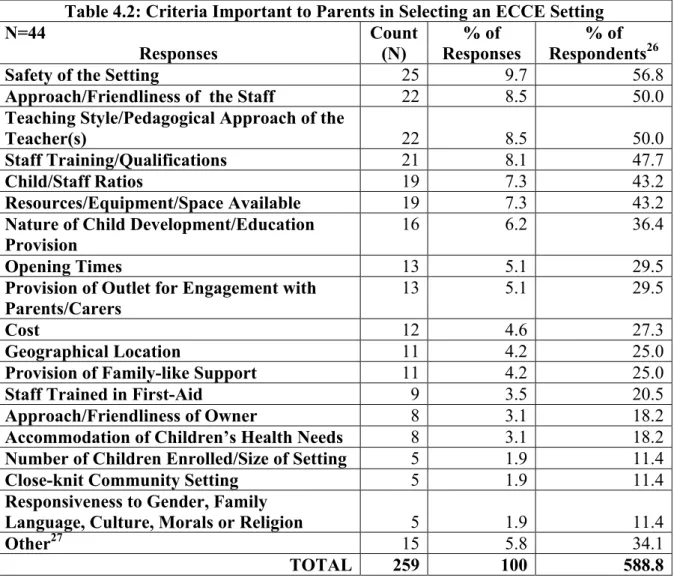
Table 3.1:Designated Research Counties 42 Table 3.2: Management of Time Categories with Examples 48 Table 3.3: Child Activity Categories with Examples 49 Table 4.1: Children’s Photograph Categories 68 Table 4.2: Criteria Important to Parents in Selecting an
ECCE Setting 76
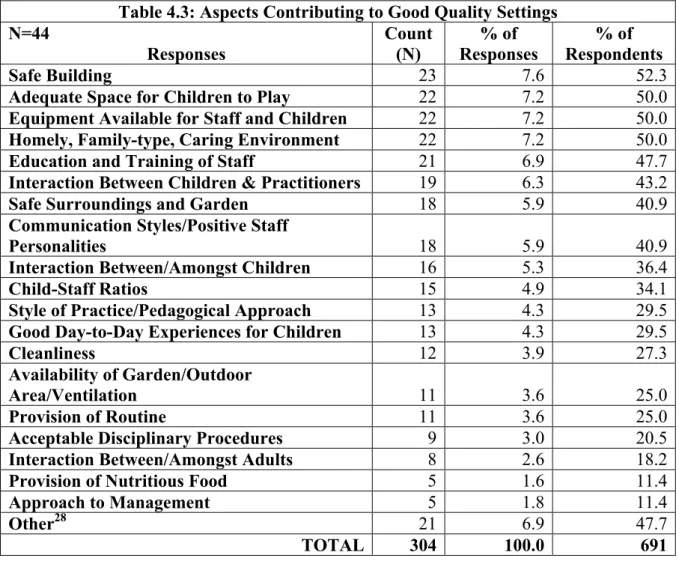
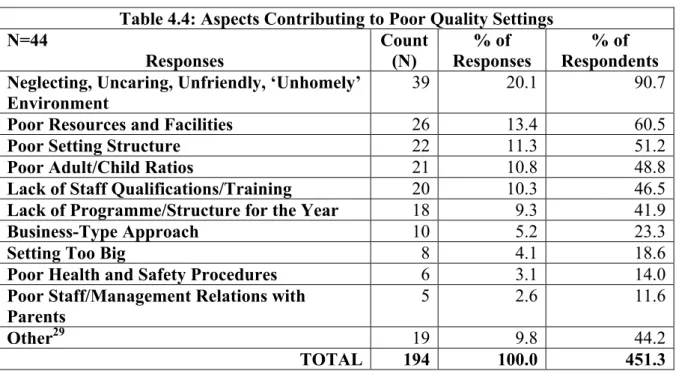
Table 4.3: Aspects Contributing to Good Quality Settings 77 Table 4.4: Aspects Contributing to Poor Quality Settings 78 Table 4.5: Immediate-term Benefits of Quality ECCE Provision 79 Table 4.6: Long Term Benefits of Quality ECCE Provision 80 Table 4.7: Statutory Role in the Provision of Good Quality ECCE 81 Table 4.8: Parental Perspectives on the Importance of Various
ECCE Elements 83
Table 4.9: The Most Important Aspects Contributing to
ECCE Quality 89
Table 5.1: Number of Settings by Geographical County 90 Table 5.2: Total Average Score for All Settings 92 Table 5.3: ECERS(R), Total Number of Scores by Activities 93 Table 5.4: ECERS Average Item Score Statistics 93 Table 5.5: Descriptive Statistics – Proposed Activities 98 Table 5.6: Descriptive Statistics – Group Structure Proposals 100 Table 5.7: Descriptive Statistics – Child Activities 101
Table 5.8:Group Structure 103
Table 5.9: Descriptive Statistics – Adult Behaviour 104 Table 5.10: Contribution of ECCE to Birth to Six Year Olds
(Practitioners’ Perspectives) 107 Table 5.11: Important Criteria in Selecting ECCE 108 Table 5.12: Aspects contributing to a good quality ECCE setting 109 Table 5.13: Aspects Determining Poor Quality Settings 110 Table 5.14: Immediate-term Benefits of Quality ECCE Provision 111 Table 5.15: Long-term Benefits of Quality ECCE Provision 112 Table 5.16: Statutory Role in the Provision of Good Quality ECCE 113 Table 5.17: Practitioners’ Perceptions of Importance relative to
Various Elements 115
Table 5.18: Practitioners Perceptions of the Importance of Staff
Development Elements 117
Table 5.19: Contributing Factors to the Quality of Settings 119 Table 7.1: Practitioners’ compared with Parents’ Aspects of Good
Quality ECCE Settings 152 Table 7.2: Practitioners’ compared with Parents’ Aspects of Poor
Quality ECCE Settings 155 Table 7.3: Practitioners’ crossed with Parents Most Important
Table A.1: IEA Management of Time Category Examples 192 Table A.2: IEA Child Activity Category Examples 195 Table A.3: Adult Behaviour Categories and Examples 197
Table A.4:Child Data Gathered 212
Table A.5: IEA MOT (Whole Group) Cross-tabbed with Parents’
Most Important Aspects Contributing to Quality 244 Table A.6: IEA MOT (Personal and Social) Cross-tabbed with
Practitioners’ Most Important Aspects Contributing to Quality 246 Table A.7: ECERS (Interaction) Cross-tabbed with Practitioners’
LIST of FIGURES
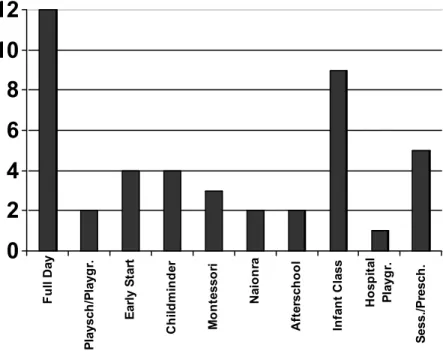
Figure 4.1: Counties of Parental Participants 74 Figure 4.2:Parental Setting ‘Types’ 75 Figure 5.1: Types of Participating Settings 91 Figure 5.2: Overall Average ECERS(R) Score by Type of Setting 92
Figure 5.3:Sample by County 106
Figure 5.4:Setting Type 106
LIST of ACRONYMS
A.B. Adult Behaviour (IEA Observation Tool) A.D.M. Area Development Management Ltd. B.C.C.N. Border Counties Childcare Network C.A. Child Activities (IEA Observation Tool) C.C.C. County/City Childcare Committee
C.E.C.D.E. Centre for Early Childhood Development and Education C.S.E.R. Centre for Social and Educational Research
C.S.O. Central Statistics Office
D.E.S. Department of Education and Science D.I.T. Dublin Institute of Technology
D.J.E.L.R. Department of Justice, Equality and Law Reform E.C. European Commission
E.C.C.E. Early Childhood Care and Education
E.C.E.R.S. Early Childhood Environmental Rating Scale
E.C.E.R.S.(R.) Early Childhood Environmental Rating Scale (Revised) E.O.C.P. Equal Opportunities Childcare Programme
G.D.P. Gross Domestic Product H.B. Health Board(s)
H.S.E. Health Service Executive
I.C.C. (International Association for the Evaluation of Educational Achievement) International Co-ordinating Committee I.E.A. International Association for the Evaluation of Educational
Achievement
I.E.A./A.B. International Association for the Evaluation of Educational Achievement Adult Behaviour Tool
I.E.A./C.A. International Association for the Evaluation of Educational Achievement Child Activities Tool
I.E.A./M.O.T. International Association for the Evaluation of Educational Achievement Management of Time Tool
I.E.A./P.P.P. International Association for the Evaluation of Educational Achievement Pre-Primary Project
I.P.P.A. Irish Pre-school Play Group Association M.O.T. Management of Time (IEA Observation Tool) N.C.C.A. National Council for Curriculum and Assessment N.C.O. National Children’s Office
N.E.S.F. National Economic and Social Forum N.Q.F. National Quality Framework
N.V.C.C. National Voluntary Childcare Collaborative N.V.C.O. National Voluntary Childcare Organisation(s)
O.E.C.D. Organisation for Economic Co-Operation and Development
U.N. United Nations
U.N.C.R.C. United Nations Convention on the Rights of the Child U.N.E.S.C.O. United Nations Educational, Scientific and Cultural
CHAPTER 1: INTRODUCTION
1.1 PROJECT ORIGINS
In the past number of years, the issue of quality early childhood care and education has progressed considerably, both nationally and internationally. Research and policy have developed rapidly in the area and advocacy for children’s right to (as well as the benefits of) high quality early childhood care and education (Vandell and Wolfe, 2000; Whitebrook, Howes and Phillips, 1989) are now widely recognised and accepted. Despite increased attention and commitment to the field of early childhood care and education (ECCE), European developments have far superseded developments within the Irish context. This highlights the need for relevant research to guide Irish policy and practice developments within the field of ECCE.
Throughout the 1990s, Ireland experienced landmark economic growth. Between 1994 and 2002, Gross Domestic Product (GDP) increased by 9 per cent annually, the highest rate of GDP growth of any ‘Organisation for Economic Co-Operation and Development’ (OECD) country at this time (Rabushka, 2000). Despite this strong economic growth and unprecedented increases in labour market participation, workforce shortages were repeatedly highlighted as a threat to the sustainability of the economy. Women, including mothers, were regarded as a core potential group to redress such labour force shortages. However, the lack of affordable quality childcare was simultaneously recognised as a barrier to accessing this supply.
In 1996, the Department of An Taoiseach through its ‘Partnership 2000 for Inclusion, Employment and Competitiveness’ recognised the need to address the issue of childcare, both in response to equality rights for women and promoting equal rights in the workplace (Government of Ireland, 1996:30). A predominant result of the partnership agreement was the establishment of the ‘Expert Working Group on Childcare’ under the auspices of the Department of Justice, Equality and Law Reform. In 1999, this working group produced the first major policy document relating to early childhood care and education; the National Childcare Strategy. The publication was predominantly concerned with the long-term consequences and benefits of providing good quality childcare i.e. economic and social outcomes.
Within the same period a ‘National Forum for Early Childhood Education’
assembled, which consulted a broad range of early childhood care and education stakeholders, including, for example, persons from the teaching and childminding profession, and those concerned with the education and care of birth to six year olds. The consultation process resulted in the publication of the Department of Education and Science’s educational paper Ready to Learn: A White Paper on Early Childhood Education (1999). One of the more prominent recommendations of the paper was the establishment of an Early Childhood Education Agency to oversee, advise and guide the early childhood care and education sector.
In 2001 the Minister for Education and Science requested the Dublin Institute of Technology and St. Patrick's College, Drumcondra to jointly establish and manage the Centre for Early Childhood Development and Education (CECDE). In essence, the CECDE was established to achieve the following core functions:
1. To develop a quality framework for early childhood care and education.
2. To develop interventions on a pilot basis targeted at children who are either educationally disadvantaged or have special needs.
3. To actively prepare the foundation for the establishment of an Early Childhood Education Agency as envisaged by The White Paper on Early Childhood Education (CECDE, 2001).
More specifically, the central task of CECDE is to develop the quality of early childhood care and education, including both static and dynamic elements, all of which impact on child outcomes. It aims to accomplish this through its National Quality Framework which will offer guidance for all ECCE settings on the necessary requirements to operate quality childcare services. The Centre also aims to promote and facilitate the inclusion of parents in early childhood care and education settings, particularly focusing on the provision of services to educationally disadvantaged children and those with special needs.
In order to accomplish its objectives, the Centre has undertaken its own research in-house, and commissioned external organisations with the appropriate expertise to conduct further research, promoting best practice in relation to all aspects of quality
childcare provision. In 2004, the CECDE invited tenders for four projects which aimed to address the needs of educationally disadvantaged children or children who have special needs. Under Strand One of the research, an open tender call invited submissions from appropriate agencies and personnel to conduct a research project, entitled ‘In Search of Quality: Multiple Perspectives’. The aim of this project was to provide a greater understanding of quality in the Irish context and in particular to access multiple perspectives on the meaning of quality within a variety of early childhood care and education settings in Ireland. In mid-2004, the Centre for Social and Educational Research (CSER) was contracted to conduct the research on behalf of the CECDE.
Established in 1997, the CSER is a dynamic and innovative research and development centre committed to improving the quality of life of children, families and society. The Centre works to achieve this through applied research and through the development of a greater understanding of the needs of local communities. The CSER is particularly concerned with the protection of the rights of children within the family and broader social contexts.
The project ‘In Search of Quality: Multiple Perspectives’ was directed by the Director of the
Centre, Dr. Nóirín Hayes. Ms. Karen Mahony (Researcher) led the project and acted as primary researcher and author. Research support was provided by Ms. Patricia O’Reilly and Ms. Eilish Dolan (CSER Research Assistants). The project team was supported by five social science field researchers to assist with the task of conducting the fieldwork. Those researchers involved in the field work stage of the project were Ms. Eilish Dolan, Ms. Helen Fitzgerald, Ms. Elaine Harris, Ms. Siobhan Keegan and Mr. Finian McNamara. In addition, Ms. Siobhan Bradley and Ms. Siobhan Keegan provided comments and feedback on the various drafts.
1.2 OBJECTIVES OF THE PROJECT
The project aimed to primarily focus on the issue of defining and understanding quality in the ECCE sector according to the perspectives, experiences and approaches adopted by all key stakeholders including policy makers, key personnel currently driving quality initiatives at both national and regional levels, early childhood practitioners, parents and children. Research sought to gather data from a variety of
ECCE settings both sessional and full day care which cater for children from birth to six years. The tender also proposed to include samples of children from both designated disadvantaged and non-designated disadvantaged areas. Where time constraints allowed children with special needs were also proposed to be included. Although the project primarily aimed to gather data on the perceived aspects of quality, it additionally proposed to gather data through structured observational research in participating settings. As outlined by Mooney and Blackburn (2003), there are two approaches to understanding quality – one utilises observation scales and external research assessments of effectiveness and the other involves the stakeholders in discussion about the meaning of quality within particular services (Tender in respect of ‘In Search of Quality: Multiple Perspectives’). The project proposed to examine the observable quality through the Early Childhood Environment Rating Scales (Revised Edition) as well as samples of the observation instruments developed and used in the IEA Preprimary Project (IEA/PPP). These instruments intended to assess observable quality within the setting and experienced by the children and the staff.
The issue of perceived quality was proposed to be addressed through individual interview and focus groups with the adults in the sample. As the techniques developed for use with adults are not appropriate for children, particularly given the age span involved, it was proposed that children’s views be accessed through a variety of techniques which would be piloted before final selection. Techniques proposed included structured conversation, supported conversations and/or the use of line drawings depicting facial expressions (happy, sad, sleepy and cross/angry) as described in Stephen (2003).
1.3 REPORT STRUCTURE
The structure of the following report is informed by Bronfenbrenner’s Ecological Theory of Human Development (Bronfenbrenner, 1979) which states that, human development is not only influenced by a child’s immediate environment, but is also dependent on the interactive elements of the larger environment also. That is:
‘The interaction between factors in the child’s maturing biology, his immediate family/community environment, and the societal landscape fuels
and steers his development. Changes or conflict in any one layer will ripple throughout other layers’ (Paquette et al, 2001:1).
Bronfenbrenner refers to the ‘microsystem’, the ‘mesosystem’, the ‘exosystem’ and the ‘macrosystem’ (Bronfenbrenner, 1979:514) – each of which refer to different structures within the child’s own ecology. The first (the microsystem) refers to the immediate environment within which the child develops e.g. the family. The mesosystem then, refers to the next level of ecology; it refers to the connections between a child’s microsystems e.g. school, church etc. Bronfenbrenner defines the exosystem as ‘an extension of the mesosystem’ (Bronfenbrenner, 1979) which incorporates all other social structures. This system does not necessarily contain the developing child, but influences his/her development e.g. the neighbourhood and government agencies. Finally, Bronfenbrenner refers to the macrosystem of human ecology, which he defines as the diffuse socio-cultural practices of the particular society under examination. It includes the belief systems and values of a nation or community, which bear an impact on the developing child. Hence, we can note that all structures within which the child is embedded have a direct influence of the development of that child.
The current report structure then, is influenced by the structures/systems which Bronfenbrenner outlines. Chapter Two contextualises the project by providing an overview of the current climate for quality early childhood care and education in Ireland; it also discusses the general climate and discourse underway in the sector in general. Chapter Three provides an outline of the methodological procedures adopted for the project, including a detailed discussion on facilitating the voice of the child. The remaining four chapters were designed under influence of Bronfenbrenner’s Ecological Theory of Human Development (1979): chapter four adopts the form of the microsystem i.e. it describes the findings of the study based on the child’s immediate system of development, within the context of the family. Chapter Five describes the findings related to the child’s ‘mesosystem’, the early childhood care and educational setting. The sixth chapter describes the findings relative to the ‘exosystem’ i.e. the policy-makers, key personnel and government agencies. The final chapter anchors all six preceding chapters by providing a discussion of those chapters and describing the diversity and similarities amongst the different
stakeholders’ perceptions. It also provides us an opportunity to assess any distinct similarities between the parents and practitioners perceived concepts of quality against the observable elements present in the settings.
1.4 PROJECT OUTCOMES
The research has yielded valid and reliable empirical data on the multiple perspectives of quality held by a variety of key stakeholders in the field of ECCE in the Irish Republic. Those stakeholders range from parties at a national policy level right through to the children attending varied early educational settings in Ireland. In addition the project used a variety of methodologies to gather data and has started the process of pioneering methods for listening directly to very young children.
The project has provided a clear view of the perception of quality in Ireland, which will ultimately allow for a more careful consideration of how best to support quality for young children and their families - whilst also allowing different parties to review the way in which others consider quality early education.
CHAPTER 2: CONTEXTUALISING EARLY CHILDHOOD CARE AND EDUCATION
2.1 INTRODUCTION
This chapter outlines a contextual description of the historical, economic and social factors within which the stakeholders reside. Such factors have a strong influence on both the stakeholders’ perceptions and experiences:
‘The social interactions which are the crucible of humanity take place within a larger ecological context of historical, social and economic forces which affect children and families profoundly. The macrosystem consists of the overriding consistencies in beliefs, values and accepted practices within a culture or society. In attempting to frame the experiences which children have …, it is useful to reflect on the nature of the macrosystem in which we live’ (Smith and Taylor, 2000:4).
The following chapter provides a comprehensive outline of all major literature relating to quality within the Irish context. A central feature which requires mentioning before the report progresses is that Ireland is unique in its contextualisation. Ireland is an island on the periphery of the European continent. Situated between the United States and the United Kingdom, it has been strongly influenced by both, particularly in the development of childcare and early education policies and debate (Hayes, 2005). While the emergence of both legislation and policy in recent years has increased that debate, research in the area of early childhood care and education, and in particular research pertaining to quality, has not been as emergent (Walsh, 2003). This study on multiple perspectives aims to facilitate the voice of all those involved in ECCE to gain access to a broad variety of views on quality ECCE, including the views of young children themselves and is particularly unique in the national context.
2.2 CONTEXTUALISATION
2.2.1 The Irish Policy Context of Quality Early Childhood Provisions
The past decade and a half witnessed a period of intense focus on policy relating to ECCE in Ireland. The extent to which this is a recognition that children learn from an
early age has been reflected in the increasing developments in national policy. Often referred to as childcare and following the lead of the White Paper in Early Childhood Education - Ready to Learn, early childhood care and education is taken to refer to the wide variety of learning environments where children from birth to six years grow and develop including home-based and centre-based early educational provision1 up to and including the infant classes of the primary school. A central and unique feature of early education, and one which sets it apart from other stages in education, is the interlinked educational role of care and caring role of education (Hayes, 2002). It should be noted that responsibility for ECCE is not integrated under one single government department; a number of departments have distinct responsibilities for early childhood care and education within the Irish state, including the Department of Education and Science who have a particular responsibility for children aged 4 years and over (although, as outlined earlier the majority of children attend primary school from age 4 years), the Department of Health and Children with particular responsibility for the health and safety of preschool settings (Department of Health and Children, 1996:Part VII) and the Department of Justice, Equality and Law Reform, which under the Equal Opportunities Childcare Programme (EOCP) is funding the expansion of childcare places.
The following section provides a detailed description of the main policy developments within Ireland in the past number of years. However, it is important to note that up until the mid-1990s the number of policy documents specifically relating to the quality of early childhood care and education were very scarce, therefore many voluntary groups adopted the role of developing and administering quality childcare initiatives within the Irish Republic. In order that this report acknowledges the important role which such programmes played in the ECCE sector over the past number of years, a detailed table has been included in Appendix 1, which outlines and describes the core initiatives managed by the voluntary sector.
1 Early Childhood Care and Education within the Irish context includes all care and education services provided to children aged birth to six years of age. Such services include infant classes in primary schools, Sessional and Full day care (including playgroups/playschools, crèches, Montessori groups, day nurseries and naíonraí (Irish language playgroups), Childminders (providing a childminding service for children in the childminder’s own home) and Drop-in centres (shopping centres and
hospitals). While childcare also extends to include the after school care of children up to fourteen years of age (DJELR, 1999).
An audit carried out in 2003 (Walsh, 2003) discovered that, in contrast to international research, there was a considerable dearth of Irish research relating to quality early childhood care and education. This began to change in the early 1990s when the economic boom and the associated increase in female labour market participation led to the development of policies and legislation relating to early childhood care and education with a consequent interest in research. The primary piece of legislation relating to ECCE in Ireland was the Child Care Act, 1991 which provided, for the first time, for the regulation and inspection of early childhood care and education settings (excluding national primary schools) in the Irish context. Section 51 of this legislation stipulates that all early childhood care and education settings are required to inform the local Health Board2 of the provision of such a service. Such regulation states that local health boards/health service executives inspect the health and safety standards of such settings in order to ensure ‘…the health, safety and welfare and promoting the development of pre-school children attending pre-school services’
(Department of Health, 1991: Section 50, No. 1).
A major criticism of the legislation (DJELR, 1999) relates to Part VII, Section 58 which outlines that the following services are excluded from the legislation: (i) relatives or spouses of relatives providing care to one or more pre-school children in their home, (ii) a person taking care of one or more pre-school children of the same family (other than that person's own such children) in that person's own home, or (iii) a person taking care of not more than 3 pre-school children of different families (other than that person's own such children) in that person's home. The exclusion of such ‘childminding’ services results in regulations which are not fully comprehensive of early childhood care and education settingsin Ireland.
The exclusion is particularly important in the Irish context, as there is a high reliance on childminding services nationally. According to the Quarterly National Household Survey (2002), 42.5% (73,000) of families with preschool-aged children are availing of childcare services outside the family home and 25.3% (67,500) of all families use non-parental childcare services in respect of their school-going children3. Of the
2 The former Regional Health Boards are currently known as the Health Service Executive. 3 As discussed earlier the statutory school-going age of children in Ireland is six years, however the majority of families avail of primary school infant classes for children aged between four - six years.
families with preschool children availing of non-parental childcare services 51,000 utilise some form of childminding service4. Although inclusive of all primary going children (and not strictly under six years), 58,7000 Irish families with school-going children utilise some form of childminding service (paid/unpaid, relative/non-relative) (Central Statistics Office, 2003:1-2).
In 1996, the Child Care (Pre-School Services) Regulations (and amendments, 1997) outlined the specific regulations relating to health, safety and welfare needs of birth to six year old children attending early childhood care and education settings. The 1996 regulations govern the provision of such aspects as adult/child ratios, structural elements of the setting, ventilation, nutrition, provisions for sleeping and specifications relating to space. Three major contributing factors to the quality of a setting include staff qualifications and training (Bowman et al., 2000; Burchinal, Howes and Kontos, 2002; EC Childcare Network, 1996; Epstein, 1999; Evans, 1997; Laevers, 2003; Oberheumer and Ulich, 1997; Olmstead and Montie, 2001), programme curriculum (UNESCO, 2004) and child development outcomes (Laevers, 2003; Malaguzzi, 1993; Sylva, Melhuish, Sammons, Siraj-Blatchford, Taggart, 2004; Sylva, Melhuish, Sammons, Iram, Taggart, and Elliot, 2003). All three aspects are excluded from both the Child Care Act, 1991 and the Child Care (Pre-School Services) Regulations, 1996. In response to the limitations of the 1996 regulations the Western Health Board launched A Guide to Quality Practice in Preschool Services
(2000), which focused on both the dynamic and static aspects of quality, as well as child outcomes. The publication guides the implementation of all aspects of quality in early childhood care and education settings. This marked the beginning of a number of policy and procedure documents addressing the wider issue of quality in ECCE settings (Border Counties Childcare Network Limited, 2000; French, 2003).
Therefore, the figures for preschool children refer to birth to three year olds, and school-going children refer to four to six year olds.
4 23,000 families with preschool children utilise unpaid relative care, 8,000 utilise paid relative care and 20,000 utilise paid non-relative childminding services.
In 1992 Ireland ratified the United Nations Convention on the Rights of the Child
which paved the way for a more focused policy response to the rights and needs of children. Article 18.2 of that Convention states that:
‘State Parties shall render appropriate assistance to parents and legal guardians in the performance of their child-rearing responsibilities and shall ensure the development of institutions, facilities and services for the care of children’ (United Nations, 1989).
Ratification has placed a responsibility on governments to support the development of early educational services towards making them available to all children and families who require it. Internationally the UN Convention on the Rights of the Child has had a profound influence on policy-making and reform in relation to children, including to the area of early childhood education and care.
In 1996 the EC Childcare Network published a ten-year programme of targets for enhancing the quality of early year’s services. Titled Quality Targets in Services for Young Children it states, as a central element of the targets, that a quality early childhood care and education programme can best be achieved if settings are supported within a national framework. In 1999 the publication of the National Childcare Strategy (Department of Justice, Equality and Law Reform) and Ready to Learn: White Paper on Early Childhood Education (Department of Education and Science, 1999) led the way towards developing such a framework. It is important to note that although the White Paper on Early Childhood Education is particularly concerned with education (but recognising the important link between education and care, particularly for very young children) (Department of Education and Science, 1999:3), both it and the Childcare Strategy make recommendations for the development of services for children under the age of six years. The Childcare Strategy, in particular, made reference to the importance of good quality childcare and its contribution to the enhancement of children’s development as well as the importance of positive adult/child interactions5. It also made reference to the complexities associated with defining quality and the numerous perspectives which need to be consulted in order to provide an all-inclusive definition of quality. Hence,
5 Particularly interesting is the reference to the interactive environment of childcare settings. Previous documents were primarily concerned with the structural/static elements of early childhood care and education settings with little or no emphasis placed on the dynamic elements.
as noted by Hayes (2002) the sector was presented with two policies for the one sector i.e. early childhood care and education for birth to six year olds, which combined with the complex network of government departments with responsibility in the sector, increased the level of perplexity. The White paper recommended, among other things, the establishment of an Early Childhood Education Agency.. To this end the Department of Education and Science has funded the Dublin Institute of Technology and St. Patrick's College of Education to establish and develop the Centre for Early Childhood Development and Education (CECDE) in 2002, which has the responsibility for developing a National Quality Framework for the early childhood care and education sector. The White Paper also recommended the development of appropriate curriculum guidelines for the sector for which the National Council for Curriculum and Assessment have responsibility. Furthermore, it called for a national outline of suitable qualifications and training for staff, along with an appropriate method of inspection to be introduced. Also in 1999, the Revised Primary School Curriculum was launched, which includes direct reference to early education and provides a specified infant curriculum for children aged four to eight years.
In 2000, the publication of the National Children’s Strategy: Our Children – Their Lives (Department of Health and Children) provided a wider national strategic context for working both for and with children. It is guided by the principles of the UN Convention on the Rights of the Child aspiring to ‘…enhance the status and further improve the quality of life of Ireland’s children’ (Department of Health and Children, 2000:6). While not specific to early childhood it does recognise the central importance of the early years and the need to develop and enhance early care and educational services, particularly for children who may be disadvantaged or have special needs (Department of Health and Children, 2000:51). As a follow-on to the strategy, the National Children’s Office (NCO) was established in 2001. Its main responsibility was to implement the aims of the National Children’s Strategy and hence improve the lives of children in the Irish Republic. The first key publication of the NCO was its national play policy Ready Steady, Play – A National Play Policy (NCO, 2004) which outlines the need for the development of play facilities and resources for children. The document also focuses on the issue of quality within childcare settings (including primary schools) in Ireland (whilst also addressing the difficulties associated with
improving the play facilities of childminding settings), and the need to develop resources within such centres.
More recent developments in relation to early childhood care and education include the publication of Quality Childcare and Lifelong Learning: Model Framework for Education, Training and Professional Development for the Early Childhood Care and Education Sector (Department of Justice, Equality and Law Reform, 2002) which presents guidance on the professional development of people working in early childhood care and education, and the OECD Thematic Review of Early Childhood Care and Education in Ireland (Department of Education and Science, 2004) which makes recommendations in relation to early care and education in Ireland. The thematic review recommendations include the integration of all early education and care policy under one ministry, the establishment of a National Quality Framework including accreditation for voluntary organisations reaching the quality standard, a re-assessment of training for early childhood services, and the re-structuring of the current infant schooling as an entity with separate funding and management.
The launch of Towards a Framework for Early Learning (National Council for Curriculum and Assessment, 2004) outlines the importance of the development of a national curriculum framework for the early year’s sector. More recently the National Council for Curriculum and Assessment launched its Final Consultation Report
(NCCA, 2005) which identified supplementary issues for consideration in the development of the curriculum framework. It outlined the importance of supporting both practitioners and parents in their roles in early education and the importance of relationships and the environment in children’s development and early learning (National Council for Curriculum and Assessment, 2005:31-59). As mentioned earlier, the Centre for Early Childhood Development and Education under the auspices of the Department of Education and Science was assigned the responsibility of developing a national quality framework for the early childhood care and education sector6. Finally, in an effort to bring together recommendations from the growing number of policy documents, the National Economic and Social Forum (NESF)
6 The Centre for Early Childhood Development and Education and the National Council for Curriculum and Assessment have mutual areas of interest in respect of the development of a National Quality Framework by the CECDE and a Framework for Learning by the NCCA. Therefore a close working relationship has been developed between the two.
established a project team to consider early childhood education. Their report was published in September 2005 and recommended (i) the coordination of policy at national and local levels, (ii) the development of a programme containing specific goals and realistic timelines, and (iii) open budget lines with committed resources that are provided on a multi-annual basis, which they suggested should be implemented over a ten-year period (NESF, 2005:86).
The type of early childhood care and education which a child experiences is very much determined by families’ choice or indeed by that to which they have access to. ECCE can vary from home-care to external settings, which themselves vary in the type of service they provide. The service-type is inextricably linked to the particular aims and objectives of the setting, the duration of the stay (sessional/full-day care), the developmental stage of the child, as well as the skills and education of the setting’s staff members. Although the majority of 4-6 year old children in Ireland attend state-funded primary schools, the statutory school-going age in Ireland is six years of age (Department of Education and Science, 1999(a):Section 2(1)). The determinants of choice for parents, particularly in Ireland, are clearly linked to factors such as geographical location and financial means. Because pre-school education is not a statutory provision within this state for all children below the school-going age7, it is something which parents themselves must provide for.
2.2.2 Defining Quality
The importance of quality in terms of early education services is acknowledged and well documented, however, no single definition of what constitutes ‘quality’ in early educational provision exists. The concept of a universally accepted standard of quality has been rejected in favour of a more relativist, values based approach which recognises that quality changes over time and contexts:
‘…quality in early childhood services is a constructed concept, subjective in nature and based on values, beliefs and interests, rather than on objective and universal reality’ (Moss, 1994:4).
Moss and Pence (1994) suggest that it is more accurate to speak about quality perspectives than a universal standard of quality.
7 Apart from programmes such as Early Start and other early education interventions in designated disadvantaged areas and for special needs groups such as Travellers.
There has been extensive debate within the early childhood care and education sector regarding what constitutes quality. Historically the trend has predominantly afforded prominence to a narrower range of experts who control the process of definition and evaluation on the basis of technical expertise:
‘…the power of different stakeholders often determines the influence they have in the process: power can come from various sources, including economic resources, political or administrative position and professional status and expertise. Some stakeholders may be totally excluded, or if included, they may have little influence…’ (Moss, 1994:4).
It is the consumers of any service who are experiencing the service directly on an introspective and personal level that ultimately have the ‘power’ to present such experiences in a truly subjective manner. To attempt to truly understand
quality within any particular geographical context, multiple perspectives should be accessed.
The concept of quality has generated great debate amongst academics and professionals alike. People differ in their definition of what constitutes ‘quality’, and have different expectations in relation to early education. However, Irish research data is quite sparse in relation to both quality itself (Walsh, 2003) and perceptions of quality amongst different groups of Irish people in particular (CECDE, 2004). Furthermore, even internationally, only a small body of research has been completed which facilitates the voice of the child as valued stakeholders in determining quality in the provision of early childhood care and education (Clarke, McQuail and Moss, 2003; Hennessy, 2001; Mooney and Blackburn, 2003; Stephen, 2003). The inclusion and empowerment of children in defining and evaluating quality assists in balancing power relations amongst all stakeholders in the process of defining quality early education, whilst also providing a subjective, experienced outlook of early education settings:
‘…the actual or true predictor of a program’s effects is the quality of life experienced by each participating child on a day to day basis’ (Katz, 1993:5). Perceptions of what constitutes quality in ECCE can vary immensely, and will depend greatly on the cultural values of a particular society, as well as the purpose of a
particular early education setting. For example, what constitutes a high quality service will differ in a society which views childhood as a time in and of itself, compared with a society which views childhood as a process of becoming; involving the preparation of the child for his/her future role in society. Also, the functions of a particular early education setting will determine perceptions of quality, for instance settings which promote the development of children versus settings which meet the needs of parents for affordable care. Therefore, the concept of quality needs to be contextualised spatially and temporally to recognise cultural and other forms of diversity.
In 1990, Farqhuar identified that multiple perspectives exist in relation to quality early education, and that although such perspectives may overlap somewhat, they can exert significantly different emphases. Such perspectives can include:
(i) The child development perspective, which includes the perspectives of all those involved in the development of children, including researchers and evaluators;
(ii) The government or regulatory perspective, which directs national standards for early educational services and monitors compliance to such; (iii) The social services perspective, including the perspectives of all those
concerned with providing adequate early education for the needs of disadvantaged populations;
(iv) The parental perspective, which can vary in its needs e.g. fitting-in with family commitments, meeting family culture and morals, concerns about child development and preparation for school;
(v) Child perspective, which defines children’s day-to-day experiences of early education (the child’s perspective is often ignored in the quality debate);
(vi) The social policy perspective, which is primarily concerned with measurable returns to the state;
(vii) The staff perspectives, which often relates to satisfactory working conditions and relationships amongst staff, children and parents;
(viii) And finally the cultural perspective, which defines quality in terms of social norms and the values, customs and beliefs of the particular community being examined (Farqhuar, 1990; Katz, 1992).
At the staffing level also what is perceived as quality early education can vary depending on the professional background of the practitioner and the setting in question (Hayes, O’Flaherty and Kernan, 1997). Unfortunately, because of the diverse nature of its stakeholders the diversity of perspectives can often lead to conflict and disagreement amongst and between them.
Within an ideal democratic context all stakeholders would exercise their power relative to the size of their stake. Often direct democracy i.e. ‘…those forms of government in which all full adult members8 of a society or organisation make up the policy-making body’ (Jary and Jary, 1999:154) is not a realistic option. Therefore, democratic societies tend to rely on referenda and consultative fora to consult with its citizens. Jary & Jary (1999) argue that referenda can lead to misrepresented accounts because the content of such consultative mechanisms is determined by the organising committee/government. In a less perfect world however the reality is that those stakeholders with the economic, political and administrative power as well as those with the professional expertise represent the perspectives of the mass population and therefore are assigned, or hold the greatest level of power (Dahlberg, Moss, and Pence, 1999; Moss, 1994). History accords us the details pertaining to the limitations and restrictions placed on particular citizens in relation to democratic rights. In the past women contested such limitations and pursued their ultimate goal of full citizenship and inclusion in democratic society. In review, perhaps we are witnessing a return to such conflicts of limitations and incomplete citizenship, particularly in relation to the younger members of our societies.
Power dynamics are not solely evident between different stakeholders; as researchers of childhood we must be aware that power struggles also exist between persons within the same group of stakeholders. Veale (2005:253) outlined the concept of a ‘multiplicity of childhoods’ which maintains that socioeconomic status, gender, ethnicity and popularity differentials exist between children as it does between adults. Therefore it is equally important that our project ensured that minority children were representative of the population being examined.
The inclusion/participation of children and young people as citizens of society is very much determined by the society within which they live and the level of support they receive in relation to the development of democracy (Smith, Taylor & Gollop, 2000). As outlined by Langsted (1994):
‘…while structures and procedures are needed for ensuring children's involvement they depend on a cultural climate which values children's opinions’.
Ratification of the UN Convention on the Rights of the Child (UNCRC) by the Irish Government in 1992 has paved the way for considering children’s rights in the Irish policy context. The prelude to the Convention states that ‘…the child should be fully prepared to live an individual life in society, and brought up…in the spirit of peace, dignity, tolerance, freedom, equality and solidarity’ (United Nations, 1989) which provides that children must be granted civic, political, social and economic rights. In the Irish context, the ‘National Children’s Strategy’ was launched in 2000 by the Department of Health and Children in response to the UNCRC, which is primarily concerned with the voice of the child and understanding children and childhood. It is important to note that although the UNCRC is the basis for the Strategy document and it aspires to make children and young people ‘aware’ of their rights, it is ultimately a ‘needs led’ document and not a ‘rights based’ one:
‘The National Children’s Strategy is the means to work together to ensure that every child is afforded the respect and the quality of life needed9 to develop and sustain within them a spirit of optimism, pride and confidence’
(Department of Health and Children, 2000:8).
In 1998 the Education Act recommended the establishment of School Councils in second-level schools. Such councils aim ‘…to promote the interests of the school and the involvement of students in the affairs of the school, in co-operation with the board, parents and teachers’ (Department of Education and Science, 1998:Sect.27 (4)).
Notwithstanding this, the Act in itself contributes to the development of limitations because only post-primary schools have been accorded such rights. Children of a
younger age, primary level children have not been granted the right to establish such nascent democratic forums. However, as argued by Morrow and Richards (1990) children’s age should not (and must not) determine their level of inclusion. Smith and Taylor add that ‘Assessments need to be made on the basis of age, maturity and understanding of the particular child, rather than on generalised assumptions concerning cohorts of children’ (Smith and Taylor, 2000:14).
The primary goal of the National Children’s Strategy was that ‘all children will have a voice in matters which affect them and their views will be given due weight in accordance with their age and maturity’ (Department of Health and Children, 2000:30). Such an aim follows from Article 12 of the UN Convention on the Rights of the Child which states that:
‘State parties shall assure to the child who is capable of forming his or her own views the right to express their views freely, in all matters affecting the child, the views of the child being given due weight in accordance with the age and maturity of the child’.
In 2000 the National Children’s Office (NCO) was established under the auspices of the Department of Health and Children to oversee the implementation of such a strategy. It is concerned with implementing the three goals of the strategy, notably:
(i) that children will have a voice in matters which affect them,
(ii) that children’s lives will be better understood, through evaluation, research and information on their needs, rights and the effectiveness of services,
(iii) that children will receive good quality supports and services to promote their holistic development.
However, the NCO’s primarily role is the implementation of goal one, and supporting the participation of children and young people in decision making. In 2001 the first Dáil na nÓg (Young People’s Parliament) was established. This forum provided a national platform for children and young people aged seven to 18 years the opportunity to discuss and deliberate issues of concern to them at a national level. In 2002 the then Minister for Children directed each City and County Development Board to establish a regional Comhairle na nÓg (Young People’s Councils) through which children and young people were to be democratically elected by their peers for the subsequent Dáil na nÓg (2002). Previous to the establishment of the regional
Comhairle na nÓg there were no set procedures for the democratic selection of Dáil na nÓg delegates. The following year (2003) witnessed the formation of the initial Dáil na bPáisti (Children’s Parliament), which provided a medium for children aged seven to twelve years the opportunity to discuss more relevant topics to their chronological age group.
In 2002, the Ombudsman for Children Act was passed. This followed the ratification of the UNCRC. The proposed aim of the Office was the promotion of children’s rights, the investigation of complaints, as well as researching the adequacy of service provision for children and young people in Ireland. In 2003 the position of Ombudsman for Children was advertised. Fifteen children and young people were autonomously elected through regional Comhairle na nÓg to participate in the process of selecting Ireland’s Ombudsman for Children. The first Ombudsman for Children took up office in March 2004.
We can deduce from recent activity, legislation and policy that the atmosphere is ripe within Irish society for the integration of children’s perspectives on quality early education. The inclusion and empowerment of children in defining and evaluating quality assists in balancing power relations amongst all stakeholders in the process of defining quality early education whilst also providing an experiential outlook of early education settings. The development of a framework which considers the diverse perspectives’ of all stakeholders is a challenge, but one which must be considered. The ‘National Quality Framework’ being developed by the CECDE must consider all those perspectives, whilst striking a balance of the common objectives of those perspectives.
2.2.3 Determinants of Quality
The quality of early education settings varies enormously in Ireland reflecting the ad hoc nature of developments in this sector. It is determined by a combination of static and dynamic elements, quantifiable and less-quantifiable factors. The static, more easily quantifiable elements include the physical and structural characteristics of a setting: the building itself and the surroundings; the equipment available for use to the staff and the children; the safety of those surroundings and that equipment; and the other quantifiable elements such as the number of children enrolled in the setting, the
child-staff ratios, and the education and training of the staff members. These factors are easily regulated and monitored, making continuous evaluation of settings in relation to such elements reasonablystraightforward. However, although contributing to the status of a high quality early education setting, these static aspects are neither sufficient nor the most significant determinants of quality.
On the contrary, it is the process variables of any setting and their interaction with and influence on the static variables which primarily determine its quality and reflect the day-to-day occurrences within a setting (Howes and Smith, 1995; Kontos and Keyes, 1999). Such elements are far more difficult to define and measure, and include the ‘style of practice; the day-to-day experiences of the children; the pedagogical approach of the staff; the approach to management; communication styles and relationships’ (Hayes, 2004:59). That is, the dynamic relationships within a setting; how the children interact with one another and with the adults, but also how the adults interact with the children and one another. Such elements are not easily measurable using traditional quantifiable methods, and therefore appropriate observable methods must be developed in order to provide a greater breadth of data from which to evaluate quality.
The aforementioned regulations devised by the Department of Health and Children (1996) (currently under review) allow for assessment of settings primarily in relation to the static elements outlined above. However, the absence of quality guidelines, supports and regulations governing both the static and the process variables of early education and care will contribute to the continued variance of quality nationally. The most significant outcomes of ECCE settings can be measured through the impact on overall child development, the family and the local community. Therefore, to strive for such an outcome the setting must establish the best means of achieving it, notably, a balanced curriculum (UNESCO, 2004), the recruitment of suitably qualified staff (Laevers, 2003), the provision of in-service training (Epstein, 1999) and healthy dynamics (Malaguzzi, 1993) between all involved in the delivery of ECCE. It is essential that staff working in the field of ECCE have some level of training and education in child development (Department of Justice, Equality and Law Reform, 2002), and that training opportunities are provided at pre-service and in-career level:
‘High-quality early childhood services depend, in part, on well-trained personnel using coherent and developmentally based educational approaches’ (Epstein, 1999:102). The level of training held by early childhood practitioners greatly determines both the outcomes for young children (Laevers, 2003; Malaguzzi, 1993; Sylva et al., 2004; Sylva et al., 2003) and the standard of quality of a setting (Bowman et al., 2000; EC Childcare Network, 1996; Oberheumer and Ulich, 1997). Research proposes that good quality early educational settings allow children to explore independently, whilst also allowing adult assistance when required. This method of learning allows children to draw on their existing skills, whilst also enabling them to expand their skills and explore new and more complex tasks.
2.2.4 Benefits of Quality Provision
It has been internationally documented (Field, 1991; Kelleghan, 1977; O’Flaherty, 1995; Schweinhart, 2004) that the benefits of providing comprehensive and quality early education are twofold, providing both short- and long-term benefits for the target groups. Attendance of young children at high quality early childhood care and education settings can result in temporary and immediate consequences for the child’s learning and overall wellbeing, but also lasting and enduring consequences for the child’s future.
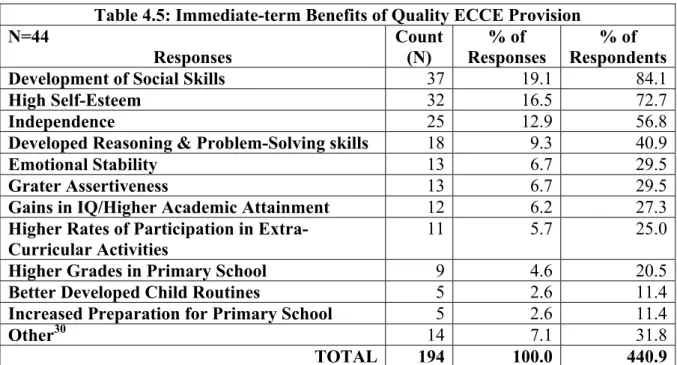
In relation to full-time day-care, research has documented immediate-term findings in relation to children including high self-esteem; emotional stability; higher degrees of social development (positive correlation between day-care attendance and the number of friendships a child develops); low rates of depression; children engaged in more extra-curricular activities; greater assertiveness; and greater leadership abilities (Field, 1991). Field (1991) in her research on the outcomes for children attending quality early education ascribes the development of social proficiency and confidence of children with their peers to the fact that the children have more experience with their peers at an early age, compared to their non-day-care-attending peers. Others, including Sylva et al. (2002) and Leseman (2002), also indicate that children from socially disadvantaged backgrounds can greatly benefit from attending even half-day, structured settings. They suggest that benefits include cognitive and language development, as well as socio-emotional maturity.
In a separate study, Field (1991) found that there were also (although still immediate-term in nature) longer-immediate-term benefits to children attending quality ECCE settings. The study found that children (average age 11.5 years) who had attended ‘full-time stable infant care’ were characterised by their teachers as being more assertive than their peers, displaying higher rates of emotional well-being, acquiring higher grades in maths and being assigned to a programme for gifted children.
While there has been only limited research into the longitudinal impact of early education in the Irish context, Kelleghan and Greaney (1993) reported on a follow-up study of children who had attended the Rutland Street project. Evidence emerged of a connection between child attendance and gains in IQ and academic attainment for children from disadvantaged backgrounds. The authors also identified developed reasoning and problem-solving skills amongst such children compared to those who had not attended the Rutland project.
Much research points to the value of a more socially based provision of early education, which contributes to a child’s disposition to learn, to develop a sense of self-worth and indeed to their general overall development (Laevers, 2003; Marcon, 2002 and 1999). The impact of such developments has also been proven to impact on academic/school performance (Sylva et al., 2004; Sylva et al., 2003).
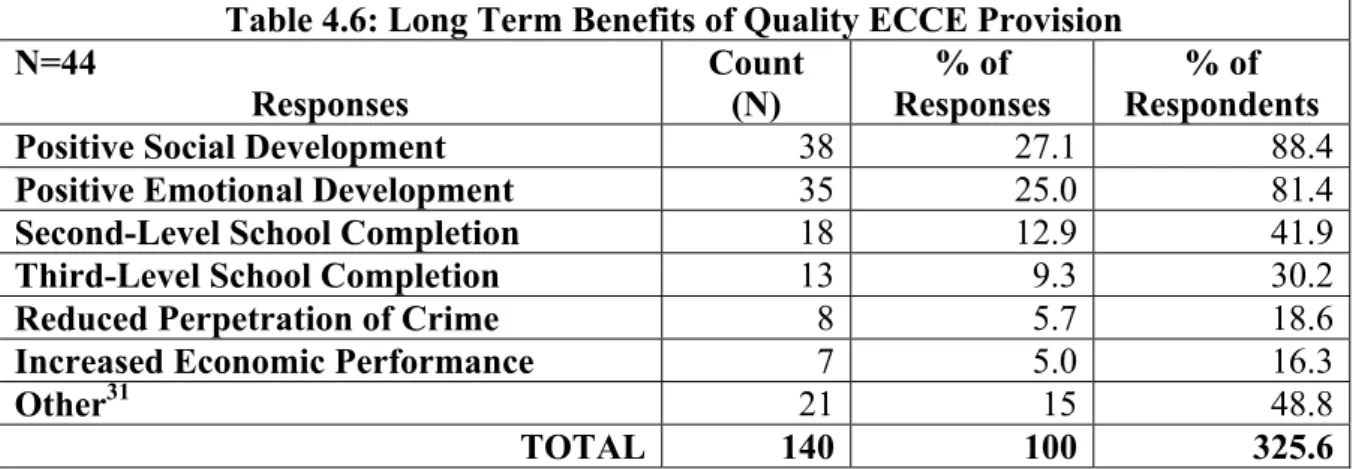
In 2004, the most recent findings from a longitudinal study confirmed the lasting nature of positive impact. The study followed a sample of children who attended a High/Scope Perry Pre-School, and a control sample who did not attend such a programme. The ‘High/Scope Perry Preschool Study’ (Schweinhart, 2004) found that the majority of participants in its study (now average age forty) displayed positive social and emotional development, increased economic performance and reduced perpetration of crime, when compared with their peers who had not attended a similar quality early education setting. Some interesting findings relating to the sample at age 40 years include the following:
1. 65% of programme group attendants graduated from high school, with only 45% of non-programme group attendants graduating.
2. 84% of female programme attendants graduated from high school, whereas only 32% of non-programme female attendants graduated.
3. At age 40, 70% of the programme males were employed, whereas only 50% of the non-programme males were employed.
4. 80% of the programme females were employed, with just 55% of the non-programme counterparts in employment.
5. Annual earnings were also higher for the programme group than it was for the non-programme group ($20,800 vs. $15,300).
6. Of those who reported time spent in prison by the age of 40 years, participants from the programme group had spent fewer months in prison for committing felonies (7% of programme attendants vs. 25% of non-programme attendants). 7. Less programme attendants than non-programme males reported using
sedatives, sleeping pills, or tranquilizers (17% vs. 64%), marijuana or hashish (48% vs. 71%) or heroin (0% vs. 9%).
Other studies, including research carried out by a team led by Laevers (2003) indicate that high quality ECCE settings conducted through suitably trained practitioners can have permanent learning achievements for children throughout life. The benefits of providing quality ECCE have not alone immediate-term and medium-term effects, but indeed durable and long-lasting effects on children who are fortunate enough to access such settings. The Highscope Perry Preschool Study is just one of a number of longitudinal studies reporting such findings. Other longitudinal studies with similar findings include the US Head Start Programme (Schweinhart and Weikart, 1997) and the Carolina Abecedarian Project (Ramey and Campbell, 1991). A central feature of all studies has been that robust impacts (whether short or long term in nature) dependant on the quality of the ECCE setting. Findings such as those outlined above can illustrate the benefits of providing and supporting quality ECCE settings nationally.
2.2.5 Researching Children
There has been extensive debate in the ECCE sector regarding what constitutes quality, however, the voices of parents and children have been less evident than those of researchers and early childhood care and education ‘experts’ and policy-makers. As outlined earlier, this is attributable to the presence of power dynamics present in the sector which presents opportunity to the experts controlling the process of definition and evaluation on the basis of technical expertise (Dahlberg, Moss, and
Pence, 1999; Moss, 1994). Ratification of the UNCRC (1992) and the launch of the National Children’s Strategy (2000) initiated a new era in Irish child policy. The National Children’s Strategy states that children and young people should be given ‘…a voice in matters which affect them and views will be given due weight in accordance with their age and maturity’ (Department of Health and Children, 2000:30). In light of this it is interesting to note that only a small body of research has been completed which facilitates the voice of children, particularly as valued stakeholde