Environmental Regulation:
Co-operation and the Capacity for Control
Andrew Gouldson
Thesis submitted for the degree of PhD London School of Economics
UMI Number: U171659
All rights reserved
INFORMATION TO ALL USERS
The quality of this reproduction is dependent upon the quality of the copy submitted.
In the unlikely event that the author did not send a complete manuscript and there are missing pages, these will be noted. Also, if material had to be removed,
a note will indicate the deletion.
Dissertation Publishing
UMI U171659
Published by ProQuest LLC 2014. Copyright in the Dissertation held by the Author. Microform Edition © ProQuest LLC.
All rights reserved. This work is protected against unauthorized copying under Title 17, United States Code.
ProQuest LLC
789 East Eisenhower Parkway P.O. Box 1346
7tf£Sc.S
F
Environmental Regulation:
Co-operation and the Capacity for Control
Structure Page
Abstract 4
Acknowledgements 5
Links with Previous Research 6
List of Tables and Figures 7
List of Abbreviations 7
Preface 8
Section 1: Conceptual Focus
Chapter 1: Regulation and its Reform 12
Chapter 2: Cooperation and Implementation 30
Section 2: The Empirical Study
Chapter 3: Empirical Focus and Methodological Approach 51
The Case o f Integrated Pollution Control
Chapter 4: The Perspectives of the Regulators 62
Chapter 5: The Perspectives of the Managers of the Regulated Sites 85
The Case o f Local Air Pollution Control
Chapter 6: The Perspectives of the Regulators 111
Chapter 7: The Perspectives of the Managers of the Regulated Sites 137
Section 3: Results, Analysis and Conclusions
Chapter 8: Comparative Analysis and Conceptual Review 163
Chapter 9: Conclusions: The Wider Implications of an 192
Institutional Perspective on Regulation and Implementation
Appendix A: Details of the UK’s Framework for Pollution Control 205
Appendix B: Details of the Interactive Workshop 216
Abstract
This thesis examines the contention that effective regulation has as much to do with the capacity
fo r co-operation between inter-dependent actors as it has to do with the state’s capacity for
control. This contention, and the alternative conception of regulation that it implies, is
significant because it is associated with a tension that runs through many areas of public policy: does cooperation between the public and the private, or between the regulators and the regulated, lead to effective collective action or to regulatory capture?
Following a conceptual examination of the nature of regulation and implementation, the thesis considers the explanatory value of two different perspectives on cooperation and collective action: the rational choice perspective, which suggests that the behaviour of economically responsive actors is shaped by the incentives for cooperation that stem from their inter dependence, and the institutional perspective, which contends that as particular forms of behaviour emerge, evolve and become institutionalised, so the implementation process becomes ’ embedded in particular institutional structures that enable the continuation of existing
approaches whilst restricting the potential for change.
In seeking to examine the explanatory value of these perspectives, the thesis considers the factors shaping the implementation of two frameworks of environmental regulation, namely the frameworks of Integrated Pollution Control and Local Air Pollution Control as applied in England and Wales. Based on a comparative analysis of the factors that shape the nature and influence of each implementation process, the thesis concludes that the explanatory value of the rational choice perspective is fundamentally limited and that the value of the institutional perspective is much more complete.
Acknowledgements
Being conducted on a part-time basis, this thesis has taken several years to complete. Three people have been instrumental in helping me to shape and ultimately to complete the thesis. Firstly, my supervisor, Professor Judith Rees, has read and commented upon numerous drafts, consistently finding the time and the energy to guide the development of the central arguments. The thesis has undoubtedly been made stronger and more incisive as a result of her insight and constructive criticism. Secondly, Professor Yvonne Rydin has read and commented upon various drafts, and the perspective and positive feedback that she has offered has helped me to place the specific research in a broader conceptual context. Thirdly, Professor David Jones has been both patient and supportive, offering understanding and encouragement at critical times.
More broadly, a number of other friends and colleagues have offered support, encouragement and constructive comments over the years. In the early stages of the research, discussions with Joseph Murphy, Ben Vivian, John Lovering and Susan Andreatta helped me to refine the research topic and to engage with different literatures. More recently, Henry Rothstein and Michael Huber have offered comments on various drafts that have allowed me to enhance the focus and fluency of the argument and to emphasise the key points.
Links with Previous Research
The rationale for this thesis emerged from the conclusions of preceding research on the implementation and impact of different forms of environmental regulation in England and Wales and the Netherlands. This research, which was funded by the UK Economic and Social Research Council as Project No L323 25 301 501, was conducted by the author of this thesis, who designed the research project, was grant holder and principal investigator, and Joseph Murphy, who was the research assistant. The results of the ESRC research project are presented in Gouldson and Murphy (1998).
Conceptually, the ESRC project considered the nature of debates on ecological modernisation and the influence that different regulatory styles can have on the development and diffusion of new technologies and techniques. Although it touched upon the influence of cooperative regulatory styles, it did not consider the factors that gave rise to cooperation in the implementation process or the extent to which cooperation led either to collective action or to regulatory capture. By focusing specifically on these factors, the thesis develops entirely new lines of conceptual enquiry from those examined in the preceding ESRC project.
Empirically, the ESRC research project had four components: it considered the influence of two types of environmental regulation (mandatory and voluntary) in two settings (England and Wales and the Netherlands). In accordance with the conceptual framework developed by the author, data in each of these four areas was collected both by the author and by Joseph Murphy. The subsequent data set included raw data that related to the aims of this thesis. Consequently, approximately one quarter of it (i.e. only that relating to mandatory regulation in the form of Integrated Pollution Control (IPC) regulations as applied in England and Wales) was drawn upon as secondary data within this thesis. However, this data was up-dated and extended through a series of follow-up interviews with both the regulators and the regulated firms associated with IPC. To enable a comparative approach to be adopted, a second framework of mandatory environmental regulation (i.e. the framework of Local Air Pollution Control (LAPC) regulations adopted in England and Wales) was selected where primary data was collected and analysed by the author specifically for the purpose of this thesis.
List of Tables Page
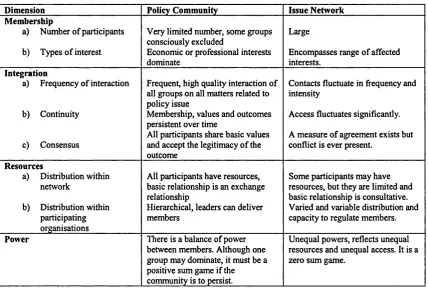
2.1 Forms of Policy Network 38
4.1 Characteristics of IPC Inspectors 63
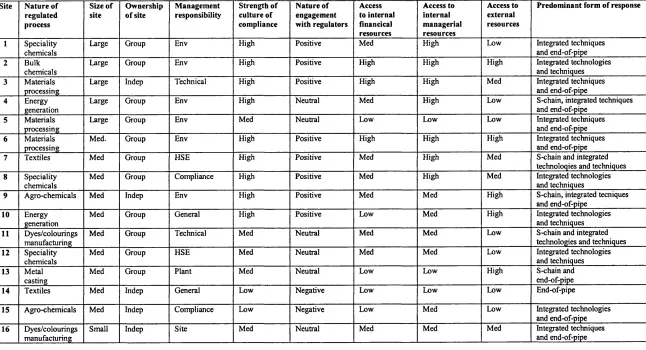
5.1 Characteristics of IPC Regulated Sites 87
6.1 Characteristics of LAPC Inspectors 112
7.1 Characteristics of LAPC Regulated Sites 139
8.1 Hypotheses, Theoretical Perspectives and Analytical Variables 164
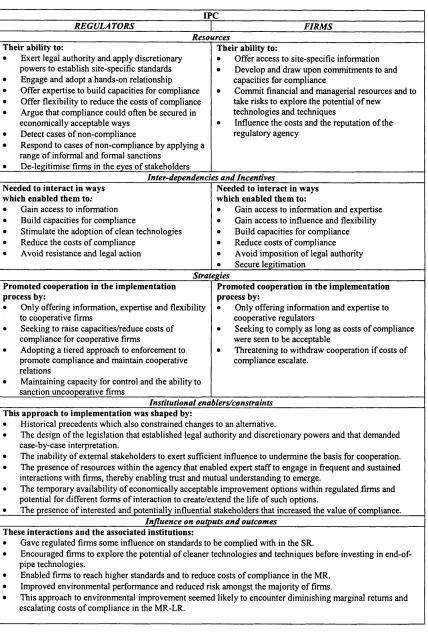
8.2 The Central Analytical Variables in the Case of IPC 165
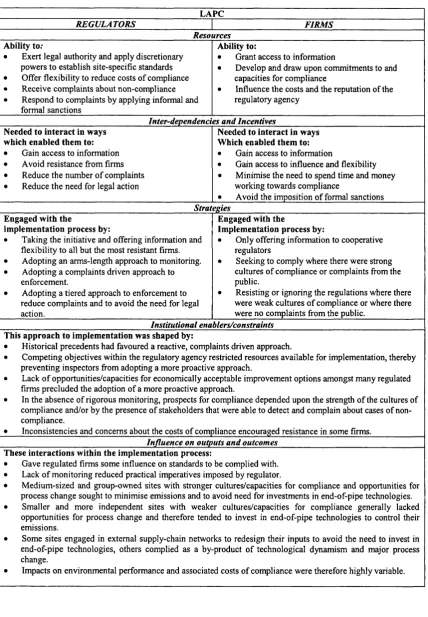
8.3 The Central Analytical Variables in the Case of LAPC 166
A.l The Interpretation of BATNEEC 212
A.2 The Evolving Framework of Industrial Environmental Regulation in the UK 216
List of Figures
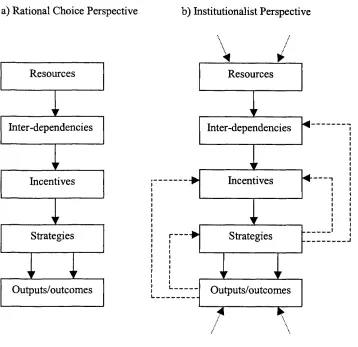
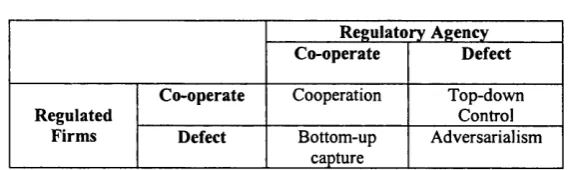
8.1 Perspectives on the Relationship between the Central Analytical Variables 177 8.2 Game Theoretic Perspectives on Interactions in the Implementation Process 182
List of Abbreviations
BAT Best Available Techniques
BATNEEC Best Available Techniques Not Entailing Excessive Cost
BPEO Best Practicable Environmental Option
BPM Best Practicable Means
CIEH Chartered Institute of Environmental Health
DoE Department of the Environment
DETR Department of the Environment, Transport and the Regions DEFRA Department of the Environment, Food and Rural Affairs
DTI Department of Trade and Industry
EA Environment Agency
EHO Environmental Health Officer
EMS Environmental Management System
EPA The 1990 Environmental Protection Act
EQO Environmental Quality Objective
ETBPP Environmental Technology Best Practice Programme
GG Notes General Guidance Notes
HMIP Her Majesty’s Inspectorate of Pollution
IPC Integrated Pollution Control
IPPC Integrated Pollution Prevention and Control
LA Local Authority
LAPC Local Air Pollution Control
NRA National Rivers Authority
PG Notes Process Guidance Notes
PPC Pollution Prevention and Control
SEPA Scottish Environmental Protection Agency
VOC Volatile Organic Compound
PREFACE
Introduction
The traditional conception of regulation, as embodied in the very terminology of 'command and control’, implies that the regulators somehow have the capacity to control the activities of the regulated. However, numerous theoretical analyses and empirical studies have challenged the validity of this conception, arguing that the power and resources of the public sector are limited and that hierarchical relationships between the regulators and the regulated are much less influential than has often been assumed.
Against this backdrop, this thesis sets out to examine the contention that effective regulation has as much to do with the capacity fo r co-operation between inter-dependent actors as it has to do with the state’s capacity fo r control. This contention, and the alternative conception of regulation that it implies, is significant because it is associated with a tension that runs through many areas of public policy and regulatory decision-making. For some, co-operation between the regulators and the regulated can enable problems to be effectively resolved through collective action (Olsen, 1965; Axelrod, 1984,1997; Ostrom, 1990; Glasbergen, 1998; Lahusen, 2000). However, for others 'the very conditions that foster the evolution of co-operation are also the conditions that promote the evolution of [regulatory] capture and indeed corruption’ (Ayres and Braithwaite 1992, p55). It is apparent therefore that cooperation between the regulators and the regulated can lead to conflict between different measures of policy performance: although it can increase the administrative viability and the efficacy of regulation, it can also reduce the accountability and therefore the political acceptability of regulatory decision-making processes.
In seeking to examine the significance of these issues, this thesis focuses particularly on the implementation process and on the relationships between the regulators and the regulated that are at the heart of this process. The focus on implementation is adopted as although regulations
are designed during the formulation stage, the realities of regulation are made during the
at the micro-level therefore, this thesis aims to inform broader debates about the capacities of the state, the nature of public policy and the methods of policy analysis.
Conceptual Focus and Hypotheses
In seeking to understand the origins and influence of co-operation in the implementation process, the thesis considers the relevance and explanatory value of certain economic theories of cooperation and collective action. These theories were selected as the conceptual basis for the thesis because they argue that resource inter-dependencies generate incentives for cooperation. On this basis, the thesis hypothesises that:
i) that implementation processes will be shaped not only by the ability of public sector regulators to resort to the hierarchical application of legal authority but also by the extent to which regulated actors derive influence in the implementation process from their access to a broader range of resources;
ii) that various resource interdependencies will emerge in the implementation process which mean that compliance depends upon co-operation and the exchange of resources as regulatory objectives effectively become 'collective action problems’;
iii) that cooperative interactions within the implementation process will be institutionalised within different forms of network that will influence both the outputs (i.e. the practical nature of the demands made by regulators) and outcomes (i.e. the ways in which the regulated firms responded to these demands) of the implementation process;
iv) that because of these inter-dependencies, the implementation process will display some of the advantages of co-operation (i.e. increases in administrative viability and an enhanced ability to secure compliance through collective action) and some of the disadvantages of regulatory capture (i.e. reduction of standards and loss of accountability).
responsive to different resource allocations and incentives and therefore that the implementation process can be readily changed by altering the nature of these factors. On the other hand, the institutional perspective contends that these inter-dependencies, incentives and strategies are shaped by the broader institutional context within which the implementation process takes place and by the presence of various institutionalised forms of behaviour. As a result, this perspective, which is closely aligned with the principles of new institutional economics, implies that various 'feedback loops’ might generate self-reinforcing forms of behaviour. This suggests that actors can become embedded in particular institutional structures and trajectories and that the implementation process will be hard to change. These different perspectives are significant not only because they might help to explain the presence or absence of cooperation within existing approaches to implementation therefore. They are also significant because they can inform the extent to which cooperation within the implementation process can be encouraged if it is seen to enable collective action or discouraged if it is associated with regulatory capture.
The Structure of the Thesis
Within the discussion that follows, Chapter 1 establishes the basis for the analysis by examining the nature of regulation and the significance of the implementation process in more detail. Chapter 2 then examines the central tenets of different economic theories of cooperation and collective action and their relevance to discussions on regulation, implementation and compliance. On the basis of this conceptual discussion, attention is then focused on the extent to which inter-dependence and the need for co-operation can help to explain the nature and influence of the implementation process empirically. Chapter 3 introduces the empirical focus for this thesis, namely the systems of Integrated Pollution Control (IPC) and Local Air Pollution Control (LAPC) that have been applied in England and Wales since 1990. After discussing the rationale for studying the implementation processes associated with these regulatory frameworks empirically, the chapter revisits the hypotheses outlined above in order to establish more detailed questions for empirical research. It then outlines the methodological issues associated with such empirical research and discusses the particular approaches to data collection and analysis that were applied within the thesis.
regulations. Similarly, Chapter 6 presents the perspectives of the inspectors within the generalist local authorities that are responsible for the implementation of LAPC while Chapter 7 presents the views of the managers of the small and medium sized firms that are affected by these regulations. Thus, there are a number of comparative dimensions to the empirical study as it contrasts the approaches to implementation adopted by specialist/generalist and national/local agencies as they seek to influence the behaviour and performance of large/small firms.
CHAPTER 1
Regulation and its Reform
Structure
> Definitions of Regulation > The Rationality of Regulation > The Search for Better Regulation
> The Nature and Influence of the Implementation Process
> Related Research on the Implementation of Environmental Regulation
The Nature o f the Implementation Process
The Influence o f the Implementation Process
> The Rationale for Further Research on the Implementation Process
Definitions of Regulation
Within the broader context, this thesis is primarily concerned with the narrowest interpretation of regulation, namely the nature of command and control regulation. There are various interpretations of what constitutes command and control regulation. Selznick (1985, p363) states that command and control regulation involves 'sustained and focused control exercised by a public agency over activities that are valued by a community’. Similarly, Ball and Bell (1995, p88) consider that mandatory regulation involves 'the application of rules and procedures by public bodies so as to achieve a measure of control over activities carried on by individuals and firms’. In each instance, command and control regulation is based upon legislation which assigns the public sector the formal authority to exert some degree of control over regulated activities in the private sector by establishing controls. These controls come either in the form of an imperative ‘you must’ or of a prohibitive ‘you must not’.
While the legislative basis for regulation is of course significant, the implementation process is central to any discussion on regulatory practice as the practical substance of any regulatory framework is defined by the nature of the interactions between the regulators and the regulated actors (Rees, 1990). Thus, broadening the definitions of regulation introduced above to take the significance of the implementation process into account, Gouldson and Murphy (1998, p41) define command and control regulation as being:
a system of direct control over market organisations and activities, operated by government and its representatives, which has a legal basis and is operationalised through a range of implementing structures and procedures.
As can be seen, these conceptions of command and control regulation associate it with some degree of public sector control over private sector activities. These conceptions are associated with a hierarchical notion of the implementation process that implies that regulatory agencies must have the capacity to control the behaviour of the targets of regulation if compliance is to be effectively achieved. Before moving on to assess the validity of this hierarchical conception, the discussion will first consider the factors that shape the design of regulation and that motivate and guide the search for better forms of regulation.
The Rationality of Regulation
continuity of service over time and through space, to compensate for inadequate access to information and for unequal bargaining power and to respond to the under-provision or the over-consumption of public goods and to the imposition of externalities (Breyer, 1982, 1990; Kay and Vickers, 1990; Baldwin, 1995a; Majone, 1996; Baldwin, Scott and Hood, 1998).
Whilst it is generally assumed that regulations should serve the collective public interest if they are to be effective, in practice it is widely acknowledged that governments commonly fail to search for, adopt and apply those approaches to regulation that would serve the public interest in the optimal way. Hanf and O’Toole (1992, p i 64) for example argue that:
Recent years have constituted an era of sober realism among those who specialise in the study and practice of governance. Grand hopes and bright visions have given way to reports of multiple policy failures, pernicious unintended consequences, and persistent budget problems... Not so long ago, the standard image was that of the 'can-do’, nearly omnipotent state. More recently, the picture has altered to one of an overloaded and perhaps chronically weakened system of governance, one which [has] but a limited ability to direct the course of the broad-scale action needed to address policy difficulties.
These limited capacities for effective governance, and more particularly for effective regulation, are widely held to be the consequence of a range of factors that bound the rationality of the policy process and that influence the nature of regulatory decision-making in ways that may not always further the public interest. These factors manifest themselves in a range of ways. At the most basic level, problems that might create a justification for regulatory intervention may not be recognised due to limited scientific understanding and imperfect information. Particularly where governments are reluctant to intervene in the absence of an 'objective scientific understanding’ of cause and effect relations, government intervention can become dependent upon and may therefore lag behind advances in scientific understanding (Weale, 1992; Boehmer-Christiansen and Skea, 1990). This is critically important if scientific and technical systems are always one step away from the understanding which would control their current impacts while always being on their way to creating new and possibly more complex problems (Christoff, 1996). Because regulation often lags behind advances in scientific understanding, it has been argued that regulation has a tendency to be reactive and crisis-oriented rather than proactive and precautionary (Janicke, 1997).
possible alternative responses to a problem are rarely if ever available (Simon, 1957; Peters, 2001). Under such conditions, the intended and unintended consequences of particular decisions can seldom be accurately predicted, the functional merits of alternative approaches cannot normally be fully compared and an overall optimum can rarely be identified. Furthermore, particularly under conditions of uncertainty, regulatory decision makers tend to be risk averse and to resort to conventional modes of operation where possible (Rees, 1990). Thus, the potential to explore innovative forms of intervention is often limited, especially where such approaches might require radical changes to administrative structures and institutionalised modes of behaviour. Consequently, regulatory decision-making tends to display a degree of continuity and even path-dependency that limits the potential use of those forms of regulation that are difficult to assimilate into pre-existing structures or trajectories.
Because of the presence of these factors that 'bound’ the rationality of regulatory decision making, it is widely accepted that decision makers tend to pursue only incremental change and to seek a satisfactory rather than an optimum solution (Simon, 1957; Lindblom, 1959, 1979). This is particularly the case where policies have multiple or competing objectives that can lead to fragmentation and conflict both within and between policy areas that often can only be resolved through contestation or compromise. When faced with such a situation, policy makers commonly establish only vague and ambiguous policy objectives whilst delegating responsibility for the pursuit of these poorly articulated objectives to implementing agencies. Indeed, at the extreme, regulations can be adopted largely for symbolic purposes, for example when regulations are adopted by governments that subsequently fail to establish the structures, or assign the resources, that are needed for effective implementation.
The Search for Better Regulation
The search for better regulation is variously taken to include the search for forms of regulation that are politically acceptable and administratively viable and that generate effective, efficient and equitable outcomes through accountable and in some instances participatory decision making process (see Jacobs, 1991; Baldwin, 1995a; Gunningham and Grabosky, 1999). Reflecting the discussion above, it is unlikely that any one approach will satisfy all of these objectives simultaneously and that trade-offs have to be made between the different measures of policy performance. As a result, debates on regulation and its reform are often based on contestation between different actors with contrasting views on what might constitute 'successful’ regulation.
While the different actors commonly offer different prescriptions, the search for better regulation has commonly been based on the perceived weaknesses of traditional approaches to regulation. Majone (1996) for example suggests that the framework of public policy has become increasingly complex as new forms of regulation have been introduced to both encourage and facilitate economic change and to respond to the negative impacts of such change and that this increased complexity has reduced the effectiveness of command and control forms of regulation. Gunningham and Grabosky (1999, pp4-5) go further and argue that those approaches to regulation that rely on the application of command and control instruments are seriously sub- optimal as they 'are not effective in delivering their purported goals; or efficient in doing so at least cost; nor do they perform well in terms of other criteria such as equity, administrative viability or political acceptability’. Thus, they suggest that command and control regulations often perform badly in almost every respect.
Aside from calls for the application of a wider range of policy instruments, there have also been calls for a broader and more inclusive and cooperative conception of the regulatory process based on the direct involvement not only of government, business and other 'targets’ of regulation but also of a range of other interested actors and stakeholders (Ayres and Braithwaite,
1992; Gunningham and Grabosky, 1999). In this way it is argued that regulation can become more responsive to the conditions faced by the private sector and to the concerns of the various stakeholders. Whilst some have argued that such inclusive processes are desirable, not least because they can offer some protection against the prospect of regulatory capture, others have argued that they are becoming an effective necessity. Ayres and Braithwaite (1992), for example, argue that as governments are limited by political and fiscal constraints they may need to secure the support and harness the resources of the private sector to realise public objectives. Similarly, Hancher and Moran (1989) suggest that as private organisations have commonly acquired important attributes of public status through their contribution to social objectives, they should be invited into the public 'regulatory space’ to influence the policy process and regulatory decision making. In essence, Hancher and Moran (1989) recognise the significance
of inter-dependence between the regulators and the targets of regulation and hence the need for
cooperation in regulatory decision-making processes. Through such open, inclusive and cooperative approaches to regulation then it is argued that the draw-backs associated with the centralised and hierarchical imposition of command and control regulations can be reduced, that the capacities and resources of the private sector can be harnessed to improve the efficacy and efficiency of regulation, and that the regulatory process can be made more participatory and accountable (Ayres and Braithwaite, 1992; Gunningham and Grabosky, 1999; Rydin, 1999).
should also seek to enable and facilitate more desirable forms of private activity through public- private partnerships or cooperation.
While these contributions have undoubtedly been influential, throughout the debate on regulation and its reform most of the emphasis has been placed on the design of regulations and on the combination of policy instruments to be adopted. Although authors such as Ayres and Braithwaite (1992) and Gunningham and Grabosky (1999) emphasise the significance of inclusive or participatory forms of regulatory decision-making, within the wider discourse relatively little emphasis has been placed on the central role that the implementation process plays in shaping the performance of policy. But it is possible that the performance of existing frameworks of command and control regulation might yet be enhanced by building a better understanding of the influence that different approaches to implementation can have on the outcomes of the implementation process and therefore on regulatory performance.
The Nature and Influence of the Implementation Process
While a theoretical distinction can be drawn between the political process of policy formulation and the bureaucratic process of policy implementation, in practice it is widely acknowledged that a clear distinction between the formulation and implementation phases is unlikely to exist (Barrett and Fudge, 1981). While the implementation process can be 'preconditioned’ from above, for example through the precise drafting of legislation or the rigid programming of implementation activities, the agencies and officials that are charged with realising regulatory objectives continue to shape the practical substance of regulations by exercising discretion in the way that they interpret, apply and enforce the generic principles of regulation in specific situations (Rees, 1990). Indeed, when faced with limited resources, regulators can use their discretion and the flexibility that it implies to find ways of operationalising regulations within practical constraints. Consequently, an analysis of the influence that discretion plays in the informal interactions that are at the heart of the implementation process is central to an understanding of the practical nature of regulation.
or support and the level of sanction that is applied in cases of non-compliance. It can also allow actors to change the substance of regulation or the style of its delivery. Discretionary elements in the implementation process therefore establish the potential for implementing agencies and individuals to change their strategies or styles as a response to the conditions or incentives that they encounter.
Discretionary elements can be deliberately incorporated into legislation to allow implementing agencies to take decisions at a level and with a degree of specificity that is not available during policy formulation. As Hill (1993) notes, it may be that those top-level decision makers involved in policy formulation do not want, or are not able, to set clear policy goals but would rather leave responsibility for defining the practical nature of policy to those who are expected to implement it. By incorporating discretionary elements into the design of regulations, top-level decision makers can also allow regulations to take into account the diversity and the variability of the conditions that are encountered by both regulators and the targets of regulation (Richardson et al, 1982; Ayres and Braithwaite, 1992; Gunningham and Grabosky, 1999). To this extent discretion may be desirable in the implementation process as it allows regulators the freedom to 'fine tune’ regulations to fit with specific circumstances and to find the most effective ways of meeting regulatory objectives.
While the exercise of discretion in the implementation process may generate some benefits, it can also reduce the democratic basis for decision-making, the accountability of the regulatory agency and the rationality, transparency, predictability, consistency and fairness of regulatory decision-making (Baldwin, 1995b). Many of these concerns stem from the fact that the exercise of discretion in the implementation phase is likely to demand that public interest decisions are taken by non-elected civil servants in an unaccountable process of negotiation with the parties that they regulate. This process of negotiation may not be open to external scrutiny or legal challenge, particularly where negotiations are based upon complex, heterogeneous and dynamic criteria that are not readily monitored or communicated. Furthermore, these negotiations are likely to be based on asymmetrical access to information between the regulator and the regulated (Weale, 1992; Ogus, 1994; Smith, 1997). This commonly means that the implementing agency or individual with discretionary powers has to choose between alternative courses of action on the basis of the potentially incomplete or inaccurate information that has been supplied by the party that they are regulating. This raises the prospect of regulatory capture. As Ogus (1994, p58) notes, regulatory capture may occur in a number of ways:
industries; lack of expertise in the subject-matter may mean that the agency has to recruit its officials from those industries; and the industries may threaten the agency with costly, or even trivial, time wasting appeals should it fail to be 'cooperative’.
It has also been suggested that, intentionally or otherwise, implementing agencies and the individuals within them may be more lenient in their interpretation of the requirements of regulation if they aspire to eventual employment with the bodies they regulate, if such a style of enforcement is more pleasant as it incurs the least resistance or if they are reluctant to impose sanctions on offenders with high social status (Richardson et al, 1982; Makkai and Braithwaite, 1995). Regulated organisations may also be able to influence or resist the demands of regulatory agencies as a consequence of the political leverage that they derive from their economic power (see Blowers, 1984).
Thus, as well as establishing the potential for the efficacy and efficiency of policy to be enhanced over time, the exercise of discretion can also generate uncertainty, allow arbitrary decision making and increase the prospect of regulatory capture. To explore these issues further, this chapter now reviews the central findings of previous research on the implementation of environmental regulation in order to identify and examine the factors that have influenced the nature of the implementation process in different contexts.
Related Research on the Implementation of Environmental Regulation
- The Nature o f Different Approaches to Implementation
influenced’ by interested parties so that they interpret and apply regulatory requirements leniently to accommodate the concerns of the targets of regulation.
Related to this, Hawkins (1984) highlights the potential for regulators to adopt different styles of regulation when he suggests that the implementation and enforcement of environmental regulation can be based either on compulsion, coercion and the imposition of sanctions or on conciliation, compromise and the promotion of compliance. Other authors such as Vogel (1986), Majone (1996) and Hutter (1997) have shown that some approaches to environmental regulation, particularly in the United States, have tended to be based on compulsion and the adoption of sanctions-based strategies. However, Hawkins (1984) suggests that styles of implementation and enforcement are generally conciliatory and compliance-based and that they commonly follow 'a loosely structured but none the less organised process relying heavily upon negotiated conformity, with a gradual increase in pressure being applied to the uncooperative...' (1984, p7). He suggests that since effective compliance-based strategies are likely to be more concerned with preventing harm than with punishing breaches of the law, they are likely to be associated with a lack of formal legal action. However, he also recognises that rather than communicating regulatory success, a lack of legal action is commonly associated with perceptions of regulatory failure and with suspicions of regulatory capture.
The studies by Richardson, Ogus and Burrows (1982) and Hawkins (1984) are both significant as they suggest that a close and co-operative working relationship between regulators and the targets of regulation has the potential to enhance the efficacy of regulation. Importantly, however, they also recognise that such approaches to implementation can reduce the efficacy of regulation by increasing the prospect of regulatory capture whilst also reducing the transparency and the accountability of regulatory decision-making processes. Thus, it is apparent that there may be conflict between different criteria for evaluating policy success, for example in instances where co-operation between regulators and the targets of regulation enhances the efficacy and efficiency of regulation but at the expense of the accountability or equitability of regulatory decision making processes.
pluralistic process of negotiation and compromise, and as such are neither as demanding as those that are primarily concerned with the social and environmental benefits of regulation would want, nor as lenient as those that are primarily concerned with private costs of compliance would prefer. By contrast, conflict theorists argue that regulations reflect the views of the dominant interests in society who are able to exert influence to ensure that regulations do not seriously affect their interests.
Hutter (1997) suggests that these different views of the nature of regulation are reflected in different interpretations of the implementation process, where conflict theorists argue that regulation can be weakened to the point of ineffectiveness, while consensual theorists believe that improvements can be effected, although not always on the scale that some would have wished. Thus, judgements about the success or failure of regulation are likely to be influenced by the perspective taken by those who adjudicate. Nonetheless, despite their different perspectives, both of the theories outlined by Hutter (1997) accept that implementation is an inherently negotiated process and that the practical substance of environmental regulation is determined by the nature of interaction between regulators, the targets of regulation, and in some, but not all, instances, other third parties. The discussion by Hutter therefore reinforces the view that there may be competing rationalities in the policy process and that no single optimum may exist. Instead, particularly where there are multiple or competing objectives for policy and even more so where the articulated objectives for policy are vague or ambiguous, there may be different perspectives on what constitutes successful regulation.
a strategy based mostly on punishment fosters an organised business subculture of resistance to regulation... Punitive enforcement engenders a game of regulatory cat- and-mouse whereby firms defy the spirit of the law by exploiting loopholes, and the state writes more and more specific rules to cover the loopholes.
Consequently, they suggest that a 'pyramid’ of different approaches to implementation and enforcement should be adopted that would subject the targets of regulation to gradually escalating forms of regulatory intervention if they continually refuse to respond to regulatory demands. They argue that such a pyramid of implementation and enforcement would begin by exploiting the benefits of self-regulation and would then move on to explore the potential of enforced self-regulation before resorting to command and control regulation. Where command and control regulation was deemed to be necessary, implementation and enforcement would initially involve the exercise of discretion. Non-discretionary or legalistic approaches to implementation and enforcement would only be adopted in extreme circumstances. Ayres and Braithwaite (1992) therefore argue that responsive approaches to implementation and enforcement would allow regulators to respond to the different motives and forms of behaviour that are likely to be exhibited at various times and in different contexts by the targets of regulation. This is significant because they challenge the view that particular approaches to implementation should be adopted and maintained over time.
publication of information on the regulatory process and its outcomes and by establishing opportunities for other interest groups to replace them if they do not perform adequately.
Significantly, therefore, Ayres and Braithwaite (1992) argue that while there may appear to be competition between different performance measures, as may be the case where co-operation between regulators and the targets of regulation enhances the efficacy and efficiency of regulation but at the expense of the accountability of regulatory decision making, the relations between different performance measures need not be fixed. This raises the possibility that new approaches to implementation can improve the performance of regulation when it is judged from a range of different perspectives using a variety of different criteria for evaluation.
- The Influence o f Different Approaches to Implementation
These conceptual distinctions between various approaches to implementation and enforcement, and the related concerns about the relative significance of co-operation, corruption and capture, are reflected in practice in many instances. Vogel's (1986) study of the different approaches to the implementation and enforcement of environmental regulation adopted in the UK and the USA in the period up to the 1980s has provided a reference point for much of the subsequent comparative research on the nature and influence of different regulatory structures and styles. This may be because the approaches to implementation that Vogel describes appear to lie at opposite ends of a spectrum. As Vogel (1986, p21) states:
community. In Great Britain, by contrast, the relations between the two sectors have been relatively co-operative.
Thus, Vogel (1986) identifies a range of different criteria that can be used to characterise different approaches to regulation and to implementation. Despite the notable differences in the approaches to regulation adopted in the UK and the USA, and whilst recognising that it is difficult to make cross-country comparisons of regulatory performance, Vogel (1986, p23) goes on to suggest that the results of regulation are broadly similar in both countries:
Britain’s emphasis on voluntary compliance has not proved any more - or less - effective in achieving its objectives than the more adversarial and legislative approach adopted by policy makers in the United States. American regulatory policy has been more ambitious, but as a result, it has produced greater resistance from business. British regulatory authorities demand less, but because their demands are perceived as reasonable, industry is more likely to comply with them.
Therefore, it is possible that contrasting approaches to implementation can generate different regulatory outputs (meaning the practical demands that regulators impose upon the targets of regulation) and that the relationship between these outputs and the outcomes (meaning the ways in which regulated actors respond to these demands) of regulation is not fixed. This is significant because it suggests that the performance of different regulatory frameworks cannot be assessed by focusing only on the stringency of the demands that are made by regulators and that effective policy need not only be found where there are demanding standards that are rigidly enforced (Hawkins, 1984). Instead, it highlights the significance of the way that the targets of regulation respond to the practical outputs of the regulatory process and the prospect that the process of implementation, as well as its outputs, can affect the outcomes and impacts of policy. This may be the case where the implementation process serves to persuade the targets of regulation to behave in different ways, thereby avoiding the need for the regulators to impose requirements that compel them to behave differently. Consequently, as well as beginning to classify different approaches to implementation, Vogel’s (1986) study suggests that any assessment of regulatory performance must consider the implementation process, its outputs and outcomes if it is to accurately evaluate regulatory performance.
paints of a flexible, co-operative, secretive and compliance-based approach to the implementation and enforcement of environmental regulation in Britain in the period up to the 1980s is seen by authors such as Allott (1994), Smith (1997) and Skea and Smith (1998) to have been sustained into the 1990s.
In an empirical assessment of the implementation of Integrated Pollution Control regulations, a central pillar of the wider framework of environmental regulation in the UK, Smith (1997) argues that there have been attempts to change both the structure and the style of environmental regulation. He suggests that this framework of environmental regulation sought to introduce more formal regulatory procedures, to encourage the regulator to adopt a more arms-length relationship with regulated firms and to facilitate external scrutiny by ensuring public access to information on regulatory demands and industrial performance. However, reflecting the interpretations of the conflict theorists described by Hutter (1997), Smith (1997) argues that despite its stated intentions, the regulator was unable to break with tradition and to move away from the close, co-operative relationship that had historically characterised the implementation and enforcement of environmental regulation in the UK. The primary reason posited by Smith for this continuity in the style of implementation and enforcement is that the regulator depends on regulated firms for the information it needs to interpret and apply the qualitative principles introduced by the IPC framework. He also suggests that these information dependencies were made more acute by organisational constraints within the regulatory agency and by the lack of political support for effective implementation and enforcement. Consequently, he argues that despite its intention to maintain an arms-length relationship, the regulator was drawn back into an informal process of interaction and negotiation with regulated firms that ultimately allowed industry to set the pace and direction of the controls introduced by IPC. The result of this informal process of interaction and negotiation, according to Smith (1997, p211), is that IPC has suffered an 'implementation deficit’ and that it has not been effective in realising its original intentions.
The results of the study by Gouldson and Murphy (1998), which also considered the implementation of IPC, countered to some degree the central conclusion of Smith (1997) that the style of implementation and enforcement has rendered the regulations weak and ineffective. Focusing on both the implementation and the impact of environmental regulation, Gouldson and Murphy (1998) considered the influence of IPC both on the imperatives and on the capacities for environmental improvement in regulated companies. In relation to the former, they also found that the demands established by IPC through a co-operative and flexible process of interaction and negotiation between the regulator and regulated firms tended to be weak. In this respect they supported the findings of Smith (1997) and reflected aspects of the conflict theorists’ interpretation of the implementation and enforcement process as described by Hutter (1997). Critically, however, Gouldson and Murphy (1998) also found that co-operative interactions between the regulator and regulated firms enabled a process of interactive learning to take place that increased the capacity of regulated firms to improve their environmental performance. They suggest that many companies had subsequently drawn upon these capacities, particularly to exploit economically beneficial areas of environmental improvement. Consequently, they argue that through co-operation, flexibility and discretion, IPC had effectively promoted environmental improvement to some degree but that it had done so by raising the capacity of regulated companies to improve their environmental performance rather than by imposing demanding imperatives. In this respect, as well as reflecting aspects of the conflict theorists’ view, the study also reflects aspects of the consensual theorists’ interpretation of the implementation and enforcement process as described by Hutter (1997).
once the economically attractive opportunities for environmental improvement run out (see Murphy and Gouldson, 2000).
The two studies by Smith (1997) and Gouldson and Murphy (1998) are significant because the comparisons between them serve to highlight the inter-dependence of regulators and the targets of regulation and the influence that the process of interaction between them can have on the outcomes and the impacts of regulation. The study by Gouldson and Murphy (1998) also emphasises the significance of the factors that shape the capacities of the targets of regulation to respond to the outputs of regulation. While Smith (1997) argues that the targets of regulation already control the pace and the direction of change, Gouldson and Murphy (1998) suggest that there is some consensus between regulators and the targets of regulation but that this consensus may break down once the capacity of the targets of regulation to respond to the demands of regulation in a way that is economically acceptable to them has been exhausted. Thus, following Hancher and Moran (1989), both studies suggest that at some point regulatory activity may be confined to those 'regulatory spaces’ where there is a coincidence of public and private interests.
This review of the existing research on the implementation of environmental regulation has highlighted the significance of two main factors. First, it has emphasised the influence of the implementation process on the outputs and outcomes of regulation. Second, it has stressed the importance of interaction between regulators and the targets of regulation during the implementation process and the influence that various inter-dependencies may have on the process of interaction. Therefore, it has emphasised the need to understand the origins of different approaches to implementation and to analyse the influence of different approaches on the outcomes and the impacts and therefore on the performance of environmental regulation.
The Rationale for Further Research on the Implementation Process
Within the context of broader debates on regulation and its reform, the discussion in this chapter has recognised that:
the implementation process exerts a defining influence on the practical substance of regulation;
the activities of regulatory agencies and individuals cannot be fully 'preconditioned’ or programmed from above; instead regulators have to exercise discretion as they choose between the different strategies and styles that might be adopted;
the approaches that are adopted by regulators can vary between those flexible and cooperative approaches to implementation that seek to promote compliance and those legalistic and adversarial approaches that seek to sanction non-compliance;
the different approaches to implementation have different strengths and weaknesses; cooperative approaches have the potential to increase the administrative viability, efficacy and efficiency of regulation but only at the expense of the equitability, accountability and the political acceptability that can be secured though legalistic approaches;
trade-offs may need to be made between different measures of policy performance and that the value that is placed on the different criteria varies according to perspective; consensual theorists emphasise the benefits of cooperation while conflict theorists focus on the potential for regulatory capture.
While this conceptual discussion and empirical review provides a useful foundation for a study of the factors that shape the nature and influence of the implementation process, the existing research in this area has yet to offer a detailed explanation of:
the nature and extent of any inter-dependencies that exist between regulators and regulated actors in the implementation process;
the extent to which these inter-dependencies establish incentives for cooperation in the implementation process;
the factors that shape the ways in which the actors respond to these incentives; the ways in which cooperation affects the outputs and outcomes of regulation.
CHAPTER 2
Co-operation and Implementation
Structure
> Introduction
> Theories of Co-operation and Collective Action > Networks as Institutionalised Forms of Cooperation
Policy Networks
Economic Networks
> Co-operation and the Implementation of Environmental Regulation > The Research Thesis
Introduction
Following the preceding discussion on regulation and implementation, this chapter seeks to build a fuller understanding of the origins and influence of co-operation in the implementation process. Whilst recognising that a wide range of theories on cooperation exist in both the natural and the social sciences, this thesis focuses on the extent to which resource inter-dependencies generate incentives for cooperation. As a result, the discussion focuses on those economic theories that examine the potential for inter-dependent actors to exchange their resources in order to realise their collective objectives. Despite this focus, the discussion also touches upon some of the sociological and behavioural issues relating to co-operation as these are seen to constitute an important part of the institutional context for co-operation.
and therefore more resistant to change. Consequently, each perspective has a different view not only of the origins of cooperation in the implementation process but also of the extent to which it can be promoted where it is seen to enable collective action or prevented where it is seen to engender regulatory capture.
The discussion then moves on to consider the extent to which an analysis of the influence of co operation in the implementation process can be informed by an examination of the policy networks and economic networks concepts. Like the theories of co-operation and collective action, these concepts focus on the influence of inter-relations between inter-dependent actors. However, the networks concept adds to the explanatory value of the theories of cooperation and collective action as it focuses on the influence of different forms of interaction and exchange as institutionalised within different forms of network.
Once the discussion has considered the relevance of these theories to the implementation of environmental regulations, the chapter concludes by proposing a range of hypotheses that are to be tested within the empirical study that follows.
Theories of Co-operation and Collective Action
In an attempt to develop and test an evolutionary theory of co-operation, Axelrod (1984) examines the basis for co-operation by analysing the results of different computer simulations based on the Prisoner’s Dilemma. In common with the starting point for the wider literature on game theory, these simulations assume that two isolated but inter-dependent actors have a choice between cooperating with each other or defecting and pursuing their individual interests. Thus, Axelrod (1984) suggests that the pay-offs for the various combinations of decision are structured as follows:
Actor A
Cooperate Defect
Actor B Cooperate 3;3 5;0
Defect 0;5 i;i
(Benefits A; Benefits B)
found that under some conditions co-operation between self-interested actors could emerge and become stable even in the absence of a central authority such as a coercive government. On the basis that co-operation between actors is seen to be desirable in many instances, particularly when compared to mutual defection or sustained adversarialism, Axelrod’s (1984) theory of co operation is often held to be highly optimistic.
To qualify his optimism about the prospects for co-operation, Axelrod (1984, pl73) identifies two particular preconditions; firstly that co-operation between actors is based on reciprocity, and secondly that what he terms 'the shadow of the future’ is important enough to make this reciprocity stable. Thus, when faced with the incentive structures outlined above, the theory indicates that co-operation is most likely to emerge when actors adopt a reciprocal strategy based on 'tit-for-tat’ so that an actor cooperates when the other actor cooperates and that they defect when the other actor defects. When the interactions between the actors are repeated, and where the outcome of future interactions is seen to be important, the theory suggests that actors will tend towards co-operation. This is the case because with some experimentation and learning, and with ready access to information, it will become apparent that co-operation is in their longer-term mutual interest despite the possibilities for individuals to realise short-term benefits through defection. Once established, the theory also suggests that co-operation can become stable and self-policing, particularly where each actor is reluctant to be the first to defect and where each shows a degree of forgiveness towards the defections of the other as in such instances any conflicts that do break out tend to diminish rather than escalate.
The theory proposed by Axelrod (1984) therefore emphasises the significance of the incentive structures that face each individual actor and of the need for repeated interactions that allow strategic behaviour to emerge. In common with neo-classical theories of exchange, it does not argue that the actors need necessarily interact directly or forge close working relationships with each other, only that each individual actor is aware of their interests and of the behaviour of the other and that they recognise and respond strategically to any incentives for cooperation. In essence then it suggests that individual actors are flexible and responsive and that their behaviour can be easily changed by altering the incentive structures that they encounter.
either be enlarged through incentive-based measures designed to promote co-operation (i.e. to realise public interest objectives) or reduced through measures designed to discourage it (i.e. to protect against capture).
Although Axelrod’s (1984) theory relates primarily to interactions between two actors and to the way that these strategies may spread amongst a larger community, the theory reflects aspects of an analysis of the prospects for collective action amongst groups as developed by Olson (1965). Within this theory, Olson (1965) also argues that co-operation or collective action may emerge where it is in the interests of the associated actors. He argues that there is potential for collective action where the benefits of such action can be appropriated by the actors who choose to pay the associated costs. However, particularly amongst larger groups, Olson (1965, p21) argues that while 'all of the members of the group... have a common interest in obtaining the collective benefit, they have no common interest in paying the cost of providing that collective benefit’. Thus, largely because of the potential for free-riding, Olson (1965) suggests that individually rational strategies may lead to collectively irrational outcomes (see also Ostrom,
1990).
While in some instances these issues of distribution and appropriability may be enough to preclude collective action, Olson (1965) suggests that co-operation or collective action might still emerge in large groups if there is one large actor who values co-operation so much that they are willing to bear most of the associated costs. As the other smaller actors with less of an interest in cooperating can still benefit from the co-operation even though they might not pay the associated costs, Olson (1965, p34-5) argues that 'there is a surprising tendency for the exploitation of the great by the small’, hi essence then Olson’s (1965) analysis suggests that any 'co-operative regulatory spaces’ are likely to be less extensive where there are large groups of actors and that where they exist co-operation may be driven by one actor and exploited by others. In a regulatory setting where the regulatory agency has to cooperate with a large number of regulated actors to realise its objectives, such exploitation may be akin to regulatory capture.
transacting and how these costs are altered by different institutional structures’. A related criticism is made by Rydin and Pennington (2000, p i 60) who suggest that by under emphasising institutional issues such approaches have 'neglected the ability of individuals, who have overcome one set of collective action problems, to build on these arrangements in order to solve further and as yet intractable problems’. In an attempt to respond to these criticisms, various approaches have sought to consider the role that institutions as well as incentives can play in furthering co-operation or collective action.
North (1990, p3) suggests that institutions are 'the rules of the game in a society or, more formally, are the humanly devised constraints that shape human interaction’. However, Ostrom, Schroeder and Wynne (1993, p6) suggest that the institutions that shape the potential for collective action are constituted by the 'people and the patterns of regular, repetitive interactions among them that transform inputs into outputs’. Despite these differences in definition, both North (1990) and Ostrom et al (1993) recognise that institutions can both constrain and enable different forms of social and economic activity and that they play a central role in structuring the incentives for co-operation and collective action. As such Ostrom et al (1993, pl91) argue that institutions represent a form of 'social infrastructure’ that can have a significant impact on the potential for collective action. Indeed, they suggest that because of its value this infrastructure represents a form of 'social capital’ that relates to the 'body of shared knowledge about how to organise people in a productive manner’.
Within these institutionalist approaches, notions of social capital are seen to be particularly significant because they suggest that interactions between individuals are no longer based upon isolated acts of exchange. Rather, interactions between individuals and within groups are likely to be influenced by the shared experiences of the various actors and by the networks of inter relationships and inter-dependencies that bind them together and that evolve over time. Consequently, Rydin and Pennington (2000, p i61) suggest that social capital encompasses such things as the extent of networks between individuals and groups, the density of relationships and knowledge of these relationships within networks and the existence of obligations and expectations regarding these relationships. They also argue that social capital relates to the level of trust between individuals and groups, to the existence of norms of routine behaviour and to the existence and use of effective sanctions to punish free-riding.
potential for further co-operation, co-operative behaviour can become self-reinforcing. In this way, trajectories or path-dependencies can emerge that both shape and are shaped by the interactions between actors. In other words, the institutionalist approach suggests that 'co operative regulatory spaces’ may not simply exist but rather that they can be created and shaped
by the co-evolution of the institutions and incentives that provide the basis for such co operation.
In some settings the evolution of co-operation and the generation of social capital can allow problems to be solved that would have seemed to be intractable at the outset. However, as discussed above, in some settings co-operation may not be desirable, and institutions can evolve to constrain as well as to enable particular forms of behaviour. As a result, institutionalised modes of behaviour, including any cultures, traditions, habits and routines that shape the implementation process, can become embedded to such an extent that change is restricted even where there are incentives for change (see Granovetter, 1985; Grabher, 1993). Consequently, these new institutionalist theories suggest that change may not be frictionless and that actors may not be as free to respond to the incentives that encourage or discourage co-operation as the theories proposed by Axelrod (1984) and Olson (1965) suggest. Although these barriers to change can be expressed economically and incorporated into neo-classical models by representing them as transaction costs, new institutional economics argues that there is a much wider range of sociological or behavioural issues that influence the rationality of economic behaviour that are harder to capture accurately or meaningfully within a neo-classical analysis (see Hodgson, 1988 or North, 1990).
presence of much closer working relationships between actors. This focus aligns these theories with broader institutional rational choice theories and with new institutional forms of economics as discussed by authors such as Hodgson (1988) or North (1990).
Cooperation within Networks
Like the theories of cooperation and collective action, the networks concept is based upon an acknowledgement of the significance of interaction and exchange between interdependent actors. Indeed, the concept reflects aspects of the institutional perspective discussed above as networks can be seen as the 'social infrastructure’ within which cooperation and the exchange of resources takes place. Furthermore, the quality of the relationships and the body of knowledge and trust that exists within these networks is the 'social capital’ that enables collective action to take place. Despite these similarities, however, the networks concept adds to the explanatory value of the theories of cooperation and collective action as it focuses on the influence of different forms of interaction and exchange as institutionalised within different forms of network. In seeking to examine the explanatory value of the networks concept further, the discussion that follows examines the relevance of both the policy networks concept as it focuses on the nature of the interactions that shape the implementation process and the economic networks concept as it considers the ways in which regulated firms engage with and respond to the implementation process.
Policy Networks
As Rhodes (1981) suggests, policy networks are likely to emerge where actors within an area of common policy interest have to exchange resources in order to realise their goals. Indeed, Hanf and O’Toole (1992, p i 69) state that: