Georgia State University
ScholarWorks @ Georgia State University
Nursing Dissertations (PhD) School of Nursing
Fall 12-12-2010
Personal Factors, Perceptions, Influences and Their
Relationship with Adherence Behaviors in Patients
with Diabetes
Glenn E. Hagerstrom Georgia State University
Follow this and additional works at:https://scholarworks.gsu.edu/nursing_diss Part of theNursing Commons
This Dissertation is brought to you for free and open access by the School of Nursing at ScholarWorks @ Georgia State University. It has been accepted for inclusion in Nursing Dissertations (PhD) by an authorized administrator of ScholarWorks @ Georgia State University. For more information, please [email protected].
Recommended Citation
Hagerstrom, Glenn E., "Personal Factors, Perceptions, Influences and Their Relationship with Adherence Behaviors in Patients with Diabetes." Dissertation, Georgia State University, 2010.
ACCEPTANCE
This dissertation, PERSONAL FACTORS, PERCEPTIONS, INFLUENCES AND THEIR RELATIONSHIP WITH ADHERENCE BEHAVIORS IN PATIENTS WITH DIABETES by Glenn Hagerstrom was prepared under the direction of the candidate’s dissertation committee. It is accepted by the committee members in partial fulfillment of the requirements for the degree of Doctor of Philosophy in Nursing in the Byrdine F. Lewis School of Nursing in the College of Health and Human Sciences, Georgia State University.
___________________________________ Cecelia Gatson Grindel, PhD, RN, FAAN Committee Chairperson
___________________________________ Mary Catherine Gebhardt, PhD, RN
Committee Member
___________________________________ Michael P. Eriksen, ScD
Committee Member
___________________________________ Date
This dissertation meets the format and style requirements established by the College of Health and Human Sciences. It is acceptable for binding, for placement in the University Library and Archives, and for reproduction and distribution to the scholarly and lay community by University Microfilms International.
___________________________________ Cecelia Gatson Grindel, PhD, RN, FAAN
Associate Director for Graduate Nursing Programs Byrdine F. Lewis School of Nursing
___________________________________ Barbara C. Woodring, EdD, RN, CPN Professor & Director
NOTICE TO BORROWERS
All dissertations deposited in the Georgia State University Library must be used in accordance with the stipulations prescribed by the author in the preceding statement.
The author of this dissertation is:
Glenn Hagerstrom
100 N. Arlington Ave, 11K Reno, NV 89501
The director of this dissertation is:
Dr. Cecelia Gatson Grindel
Associate Director for Graduate Nursing Programs Byrdine F. Lewis School of Nursing
College of Health and Human Sciences Georgia State University
PO Box 4019
Atlanta, GA 30302-4019
Users of this dissertation not regularly enrolled as students at Georgia State University are required to attest acceptance of the preceding stipulations by signing below. Libraries borrowing this dissertation for the use of their patrons are required to see that each user records here the information requested.
NAME OF USER ADDRESS DATE TYPE OF USE
(EXAMINATION ONLY OR
VITA
Glenn Hagerstrom
ADDRESS: 100 N. Arlington Ave, 11K Reno, NV 89501
EDUCATION: PhD 2010 Georgia State University
Byrdine F. Lewis School of Nursing
Atlanta, GA
MSN 2000 University of Central Florida School of Nursing
Orlando, FL
BSN 1999 University of Central Florida School of Nursing
Orlando, FL
ADN 1994 Valencia Community College
Orlando, FL
BA 1991 Rhode Island College
Providence, RI
PROFESSIONAL EXPERIENCE:
2007 – Present Assistant Professor of Nursing Reno, NV
University of Nevada, Reno
Summer 2005 Nurse Practitioner, Diabetes Education Columbus, GA
Informed Care
2001 – 2002 Nurse Practitioner Lawrenceville, GA Summit Ridge Center for Behavioral Care
2001 -2002 Staff Nurse/Educator, Diabetes Unit Atlanta, GA
Piedmont Hospital
2001 – 2007 Instructor of Nursing Orlando, FL University of Central Florida
1995 – 1999 Staff Nurse, Med-Surg Float Pool Orlando, FL Orlando Regional Healthcare System
Summer 1996 Private Duty Nurse Maitland, FL
Hospice of Central Florida
1995 – 1996 Staff Nurse, Diabetes Unit Orlando, FL Florida Hospital Medical Center
1993 – 1995 Staff Nurse/Educator, Diabetes Unit Orlando, FL
LICENSE/CERTIFICATION:
Registered Professional Nurse (Florida, California, Nevada)
Family Nurse Practitioner (through 2011), American Nurses Credentialing Center
PROFESSIONAL ORGANIZATIONS:
American Association of Diabetes Educators 2010 – Present Northern Nevada Advanced Practice Nursing Association 2007 – Present Western Institute of Nursing 2007 – Present
Nevada Nurses Association 2007 – Present
Canadian Diabetes Association 2002 – Present
Southern Nursing Research Society 2002 – 2007
Georgia Nurses Association 2001 – 2007
Florida Nurses Association 2001 – 2005
Sigma Theta Tau International Honor Society of Nursing 2000 – Present
American Diabetes Association 1999 – Present
PUBLICATIONS (REFERRED JOURNALS):
Grindel, C. G. & Hagerstrom, G. (2009). Nurses nurturing nurses: Outcomes and lessons learned. MedSurg Nursing, 18(3), 183-187, 194.
GRANTS:
2006 Research Grant Award, Sigma Theta Tau International Honor Society of Nursing, Theta Epsilon Chapter, University of Central Florida
AWARDS:
2008 Most Inspirational Faculty Award, University of Nevada, Reno 2007 Unsung Hero Award for Extraordinary and Outstanding Service to
Students, Program, College, and University for 2006-2007, University of Central Florida
2001 Outstanding Graduate Student, University of Central Florida 1999 Outstanding Student, University of Central Florida
ABSTRACT
PERSONAL FACTORS, PERCEPTIONS, INFLUENCES AND THEIR
RELATIONSHIP WITH ADHERENCE BEHAVIORS
IN PATIENTS WITH DIABETES
by
GLENN HAGERSTROM
Problem and significance: Adherence to health-promoting behaviors in a diabetes
self-care regimen is essential for individuals with diabetes and can assist providers and
individuals with diabetes management. The purpose of this research was to explore the
relationship between personal factors (age, length of diabetes diagnosis, perceived health
status, weight), perceived barriers to action (number of barrier days), interpersonal
influences (social support), situational influences (depressive symptoms), and patient
adherence to health-promoting behaviors (blood glucose monitoring, diet, and exercise)
and health outcomes ( A1c and body mass index) in a diabetes self-care regimen.
Methods: A descriptive correlational analysis was performed using baseline data
from the National Health and Nutrition Examination Survey (NHANES) [2007-2008].
Constructs from the Health Promotion Model were used to predict health-promoting
behaviors and health outcomes in diabetes self-management. The 713 participants with
diabetes were primarily Black or Hispanic (57.5%), older (M 62.2 years, SD 12.9), and
married or living with a partner (56.2%). Approximately half of the participants were
female (50.8%); 59% were obese.
experienced per month, the more frequently blood glucose monitoring was performed (R2
= .076, R2adj = .060, F (6, 363) = 4.875, p < .001). The greater the body weight, the more
likely participants were to implement diet management behaviors (R2 = .097, R2adj = .081,
F (7, 413) = 6.209, p < .001). The younger the age and the higher perceived health
status, the more minutes per week were spent in exercise (R2 = .054, R2adj = .038, F (7,
412) = 3.307, p < .01). The older the age and the shorter time since diagnosis, the lower
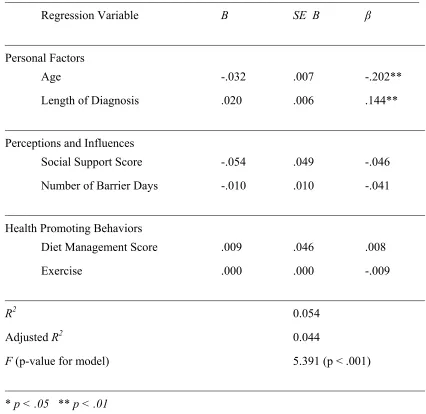
the A1c levels (R2 = .054, R2adj = .044, F (6, 568) = 5.391, p < .001). The younger the
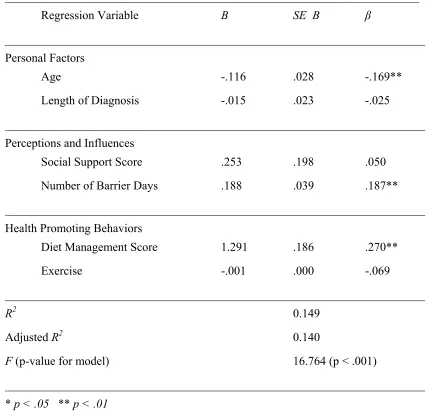
age, the more barrier days per month and the more diet management behaviors reported,
the higher the BMI (R2 = .149, R2adj = .140, F (6, 581) = 16.764, p < .001). Findings
indicate that treatment measures, not preventative, are being practiced, and that predictors
PERSONAL FACTORS, PERCEPTIONS, INFLUENCES AND THEIR
RELATIONSHIP WITH ADHERENCE BEHAVIORS IN PATIENTS WITH
DIABETES
by
GLENN HAGERSTROM
A DISSERTATION
Presented in Partial Fulfillment of Requirements for the
Degree of Doctor of Philosophy in Nursing in the Byrdine F. Lewis School of Nursing in the College of Health and Human Sciences
Georgia State University
Atlanta, Georgia
Copyright by
Glenn Hagerstrom
ACKNOWLEDGEMENTS
Several individuals have contributed to my overall success in the doctoral
program at Georgia State University. I am so grateful to have had the privilege to work
with Dr. Cecelia Grindel. She has been supportive, challenging, and extremely tenacious
in helping me to remain motivated to complete my research. She has guided me through
every step of the exploration of my research topic, and has been invaluable in helping me
to gain the confidence and skill to perform data analysis and interpretation. She has also
been exceedingly patient throughout my dissertation process and has allowed me the
opportunity to take care of other intervening issues before resuming my research
activities. She is a valued colleague and mentor.
I would also like to thank my other committee members, Dr. Cathy Gebhardt and
Dr. Michael Eriksen, for assisting me through the research process. Dr. Gebhardt was
kind enough to “jump right in” and become a member of my dissertation committee
toward the end of the process after a former committee member needed to leave the
university. Dr. Eriksen has continually introduced the public health perspective to my
research objectives, which has been a necessity for my interest in diabetes research. My
committee members offered their support when I initially encountered obstacles with data
collection, and their recommendation that I consider other sources of data was the final
solution that helped me regain the momentum that I needed to complete this research.
I must also express my appreciation to my life partner, Ralph, who has provided
me with continual support throughout my nursing educational pursuits. His enduring
patience and understanding, and his occasional prompting for me to “take a break” has
I would like to also acknowledge the Theta Epsilon Chapter of Sigma Theta Tau
TABLE OF CONTENTS
Section Page
List of Tables……….……… xv
Abbreviations………..….……… xvi
Chapter I. INTRODUCTION………. 1
Statement of the Problem……..………. 2
Purpose of the Study………….………. 3
Significance of the Study……..………. 3
Research Questions………...……….………. 4
Theoretical Framework……….……….………. 5
Major Assumptions of the Health Promotion Model……….. 6
Major Concepts and Definitions……….………. 7
Propositions of the Health Promotion Model……….. 9
Summary……….………. 11
II. REVIEW OF LITERATURE……….…………. 13
Personal Factors………..………. 13
Perceived Barriers to Action………..………. 15
Interpersonal Influences……….………. 16
Situational Influences……….………. 19
Health Promoting Behavior………...………. 20
Summary……….………..…. 24
III. METHODOLOGY………..……….…. 25
Chapter Page
NHANES……….………. 25
Sample……….………. 26
Protection of Human Subjects………..………. 27
Instrument………. 27
Measures………..………. 27
Age………..………. 28
Weight……….. 28
Perceived Health Status.……….………. 28
Length of Diabetes Diagnosis.………. 29
Number of Barrier Days.……….………. 29
Social Support.………. 30
Depressive Symptoms.………..……… 31
Blood Glucose Monitoring Adherence.……...……. 32
Diet Adherence.………...………. 32
Exercise Adherence.……….…………. 33
Body Mass Index.……….………. 34
Hemoglobin A1c.……….……….…………. 34
Data Analysis………..……….…...………. 35
Summary………..………. 35
IV. RESULTS………..………..………. 36
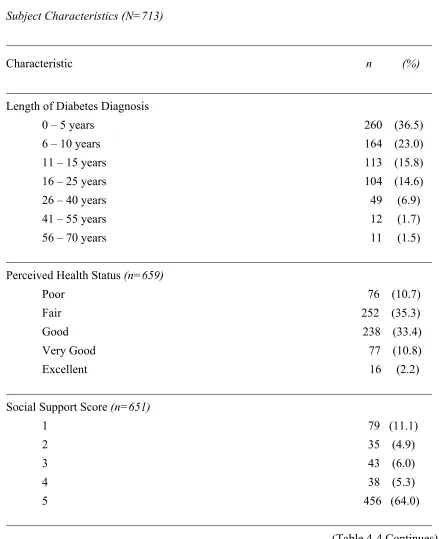
Sample Characteristics………...……….………. 36
Descriptive Statistics for Major Study Variables………....…. 37
Chapter Page
Research Question One……...……….………..…. 49
Research Question Two………...………..………. 49
Research Question Three………..…….………. 51
Research Question Four……….…………..…………..………. 53
Research Question Five………..……….…… 53
Summary………..………. 55
V. DISCUSSION………..………. 57
Relationships--Independent and Dependent Variables…..……... 57
Research Question One……….……….……. 57
Research Question Two………..……. 60
Research Question Three………....……. 63
Research Question Four………..………. 67
Research Question Five………..………. 69
Limitations of the Study………..………..……. 74
Implications for Nursing Practice………..………. 78
Recommendations for Future Research……….…….……. 78
Summary………...………..……. 79
References………..………. 80
Appendix A: Health Promotion Model………..……. 85
Appendix B: Georgia State University IRB Approval…….…..………. 87
LIST OF TABLES
Table Page
4-1 Subject Characteristics………..……… 39
4-2 Bivariate Correlations….……….………. 42
4-3 Subject Characteristics……….………. 44
4-4 Subject Characteristics……….………. 46
4-5 Multiple Linear Regression for Variables Associated with Blood Glucose Monitoring……….……….……… 50
4-6 Multiple Linear Regression for Variables Associated with Diet Management Score……….….……….……….…….…….. 51
4-7 Multiple Linear Regression for Variables Associated with Exercise……….……..……….…………. 52
4-8 Multiple Linear Regression for Variables Associated with Hemoglobin A1c………..….……… 54
ABBREVIATIONS
A1c Hemoglobin A1c
ADA American Diabetes Association
BGM Blood Glucose Monitoring
BMI Body Mass Index
CDC Centers for Disease Control
DCCT Diabetes Control and Complications Trial
HPM Health Promotion Model
IRB Institutional Review Board
NCHS National Center for Health Statistics
NHANES National Health and Nutrition Examination Survey
SAS Statistical Analysis System
SPSS Statistical Package for the Social Sciences
Chapter I
Introduction
In today’s health care environment, individuals with chronic disease are expected
to assume an increasing number of responsibilities involving their own care. The advent
of managed care and its many restrictions have caused the actual time that an individual
can spend with a health care professional to be reduced significantly. The individual is
often required to self-manage a medical condition at home with very little formal
education on the disease or the treatment regimen. Where the treatment of a mild
infection might only involve seven days of oral antibiotic therapy, the treatment of a
chronic disease can become a lifelong, complex regimen of care that requires a thorough
understanding of the disease and continued adherence to the prescribed therapy. Diabetes
is an example of a chronic disease that requires this level of care.
Diabetes mellitus continues to be a significant public health challenge in the U.S.
There are approximately 1,644,000 new cases being diagnosed each year. Changing
demographic patterns of the U.S. are expected to increase the number of people who are
at risk for developing the disease. Presently, there are 23.6 million Americans who have
diabetes, and an estimated 5.7 million of those individuals are unaware that they have the
disease. Diabetes continues to be the seventh leading cause of death in the U.S.,
primarily from the associated cardiovascular disease that results as a complication
(Centers for Disease Control, 2010). The increase in the number of cases of diabetes has
occurred particularly within African-American, Hispanic, and Native American
Compared to other chronic disease treatments, the diabetes self-management
regimen is one of the most complex and challenging, requiring a high level of patient
involvement. The original findings of the Diabetes Control and Complications Trial
(DCCT), the longest and largest prospective study concerning blood glucose levels and
clinical outcomes, have shown that tighter control of blood glucose levels will
dramatically reduce the complications of diabetes (McKay, Feil, Glasgow, & Brown,
1998). These conclusions demonstrate that the adherence to a care regimen, which
should result in better glycemic control, may improve the clinical outcomes of patients
with diabetes. Therefore, adherence to a diabetes care regimen must be strongly
encouraged.
Adherence can be defined as the extent to which a person’s behavior
(medication-taking and lifestyle practices) coincides with medical or health advice (McNabb, 1997).
It is important to note the difference between the terms “adherence” and “compliance”.
Compliance suggests the notion of patients “doing as they are told” while the definition
of adherence recognizes that patients make independent decisions about their self-care
behavior (McNabb). The aim of diabetes treatment is to attain glycemic control
sufficient to reduce the risk of acute and chronic complications (Lustman & Clouse,
2004). Unfortunately, the adherence required for the management regimen associated
with achieving the level of diabetes control defined by the DCCT can be taxing,
overwhelming, and exhausting for patients (Solowiejczyk, 2010).
Statement of the Problem
Adherence to the health-promoting behaviors which are part of the diabetes
factors which affect the likelihood of whether an individual with diabetes will adhere to
their regimen or not. Determining the factors that are associated with adherence to
health-promoting behaviors and to overall health outcomes can assist individuals with
diabetes and their health care providers plan appropriate interventions to ensure optimal
care of the disease. Focusing on individual factors provides a feasible and stepwise
approach that may have a cumulative effect on the overall adherence to health-promoting
behaviors necessary for the maintenance of diabetes.
Purpose of the Study
The purpose of this research was to explore the relationship between personal
factors (age, length of diabetes diagnosis, perceived health status, weight), perceived
barriers to action (number of barrier days), interpersonal influences (social support),
situational influences (depressive symptoms), and patient adherence to health-promoting
behaviors (blood glucose monitoring, diet, and exercise) and overall health outcomes
(hemoglobin A1c and body mass index) in a diabetes self-care regimen.
Significance of the Study
This research is significant because it focused on the various personal factors,
perceptions, and influences which might affect the health-promoting behaviors of an
individual with diabetes. A better understanding of the individual factors which relate to
the adherence required for the diabetes self-care regimen allows the health care provider
to plan more attainable goals for the individual with diabetes. This can facilitate
Research Questions
The research will attempt to answer the following questions:
1. What is the relationship between personal factors (age, length of diabetes
diagnosis, perceived health status), perceived barriers to action (number of
barrier days), interpersonal influences (social support), situational influences
(depressive symptoms), and adherence to blood glucose monitoring?
2. What is the relationship between personal factors (age, length of diabetes
diagnosis, perceived health status, weight), perceived barriers to action (number
of barrier days), interpersonal influences (social support), situational influences
(depressive symptoms), and adherence to diet?
3. What is the relationship between personal factors (age, length of diabetes
diagnosis, perceived health status, weight), perceived barriers to action (number
of barrier days), interpersonal influences (social support), situational influences
(depressive symptoms), and adherence to exercise?
4. What is the relationship between personal factors (age, length of diabetes
diagnosis), perceived barriers to action (number of barrier days), interpersonal
influences (social support), health-promoting behaviors (diet, exercise), and
A1c?
5. What is the relationship between personal factors (age, length of diabetes
diagnosis), perceived barriers to action (number of barrier days), interpersonal
influences (social support), health-promoting behaviors (diet, exercise), and
Theoretical Framework
Nola J. Pender developed one of the most widely used health promotion models in
nursing, hypothesizing that the determinants of health promotion behaviors include
individual perceptions, modifying factors, and other variables which influence the
likelihood of engaging in health-promoting behaviors (Riffle, Yoho, & Sams, 1989). The
concept of adherence was thoroughly explored with Pender’s Health Promotion Model.
The concept of health promotion has been a popular one in nursing practice
(Tomey & Alligood, 1998). Individual risk reduction through health-promoting
behaviors is a significant area of individual patient responsibility. Health-promoting
behaviors are activities in which the patient engages to achieve well-being and
self-actualization, thereby preventing risk factors from developing; such behaviors include
physical activity, nutrition practices, the development of social support, and the use of
stress management techniques (Fleetwood & Packa, 1991). Pender’s theory focuses on
this premise.
The Health Promotion Model (HPM) first appeared in the nursing literature in the
early 1980s. It was originally proposed as a framework for integrating nursing and
behavioral science perspectives on factors influencing health behaviors (Pender,
Murdaugh, & Parsons, 2002). The term “health behavior” was being used with
increasing frequency in health literature as there was a renewed interest in the earlier
work of Halbert Dunn, which focused on high-level wellness and behaviors that were
motivated by a desire to promote personal health and well-being (Pender et al., 2002).
Pender based the HPM on various theories including Bandura’s Social Cognitive Theory
Bandura’s Social Cognitive Theory is a framework most frequently used to design
behavior change interventions and is integrated in Pender’s conceptual model. This
theory has provided a conceptual framework for understanding principles of behavior
change. The theory specifically postulated that environmental factors influence the
behavior of the individual, and at the same time the individual has the capacity to
structure supportive environments and also resist environmental pressures (Cameron &
Best, 1987).
The Health Belief Model, first proposed in the 1960s by Lewin (and later
modified by Becker) as a framework for exploring why some people who are illness-free
take actions to avoid illness, has also been incorporated into the HPM. This model was
viewed as a potentially useful tool to predict those individuals who would or would not
use preventive measures or engage in health-protecting behaviors (Pender et al., 2002).
Elements of this model have been synthesized and extended for nursing’s purposes in
Pender’s revised Health Promotion Model.
Major Assumptions of the Health Promotion Model
The major assumptions of the HPM, which reflect both nursing and behavioral
science perspectives, are as follows (Pender et al., 2002):
• Persons seek to create conditions of living through which they can express their
unique human health potential.
• Persons have the capacity for reflective self-awareness, including assessment of
• Persons value growth in directions viewed as positive and attempt to achieve a
personally acceptable balance between change and stability.
• Individuals seek to actively regulate their own behavior.
• Individuals in all their biophysical complexity interact with the environment,
progressively transforming the environment and being transformed over time.
• Health professionals constitute a part of the interpersonal environment, which
exerts influence on persons throughout their life span.
• Self-initiated reconfiguration of person-environment interactive patterns is
essential to behavior change.
These major assumptions emphasize the active role that an individual has in shaping and
maintaining their own health behaviors and in modifying the environmental context for
health behaviors.
Major Concepts and Definitions
The major concepts utilized in the HPM are separated into three different
categories, as noted along the top of the model in Appendix A. The three categories are
“Individual Characteristics and Experiences”, “Behavior-Specific Cognitions and
Affect”, and “Behavioral Outcome” (Pender et al., 2002). The major concepts in the
“Individual Characteristics and Experiences” category are prior related behavior and
personal factors (biological, psychological, and sociocultural). Prior related behaviors
are defined as those past or baseline behaviors, which relate to the specific aspect of
health being studied. Personal factors are defined as those distinguishing characteristics,
and body mass), psychological (self-esteem and self-motivation), and sociocultural
(ethnicity and education).
The major concepts in the “Behavior-Specific Cognitions and Affect” category
are perceived benefits of action, perceived barriers to action, perceived self-efficacy,
activity-related affect, interpersonal influences, and situational influences. Perceived
benefits of action are defined as the mental representations of the positive or reinforcing
consequences of a behavior. Perceived barriers to action are defined as the real or
imagined perceptions concerning the unavailability or difficulty of a particular action.
Perceived self-efficacy is defined as the judgment of personal capacity to organize and
execute a particular course of action. Activity-related affect is defined as the subjective
feeling states that occur prior to, during, and following an activity. Interpersonal
influences are defined as the cognitions concerning the behaviors, beliefs, or attitudes of
others. Situational influences are defined as those perceptions of options available,
demand characteristics, and aesthetic features of the environment in which a given
behavior is proposed to take place.
The major concepts in the “Behavioral Outcome” category are commitment to a
plan of action, immediate competing demands and preferences, and health
promoting-behavior. Commitment to a plan of action is defined as “that which initiates a behavioral
event”; it propels the individual into and through the behavior. Immediate competing
demands and preferences are defined as alternative behaviors, which interfere with the
courses of action immediately prior to the intended occurrence of a health-promoting
behavior. A health promoting-behavior is defined as a behavior, which is “ultimately
Adherence to a diabetes care regimen could be considered to be the degree that an
individual regularly practices health promoting behaviors. These conceptual definitions
demonstrate the various and numerous aspects that need to be considered when
determining the likelihood of an individual engaging in health promoting or adherence
behaviors.
Propositions of the Health Promotion Model
The theoretical propositions of the HPM are as follows (Pender et al., 2002):
• Prior behavior and inherited and acquired characteristics influence beliefs, affect,
and enactment of health-promoting behavior.
• Persons commit to engaging in behaviors from which they anticipate deriving
personally valued benefits.
• Perceived barriers can constrain commitment to action, a mediator of behavior, as
well as actual behavior.
• Perceived competence or self-efficacy to execute a given behavior increases the
likelihood of commitment to action and actual performance of the behavior.
• Greater perceived self-efficacy results in fewer perceived barriers to a specific
health behavior.
• Positive affect toward a behavior results in greater perceived self-efficacy, which
can, in turn, result in increased positive affect.
• When positive emotions or affect are associated with a behavior, the probability
• Persons are more likely to commit to and engage in health-promoting behaviors
when significant others model the behavior, expect the behavior to occur, and
provide assistance and support to enable the behavior.
• Families, peers, and health care providers are important sources of interpersonal
influence that can increase or decrease commitment to and engagement in
health-promoting behavior.
• Situational influences in the external environment can increase or decrease
commitment to or participation in health promoting behavior.
• The greater the commitment to a specific plan of action, the more likely
health-promoting behaviors are to be maintained over time.
• Commitment to a plan of action is less likely to result in the desired behavior
when competing demands over which persons have little control require
immediate attention.
• Commitment to a plan of action is less likely to result in the desired behavior
when other actions are more attractive and thus preferred over the target behavior.
• Persons can modify cognitions, affect, and the interpersonal and physical
environments to create incentives for health actions.
These propositions demonstrate the multiple factors that can influence an individual to
Summary
Upon reviewing the major concepts and propositions of the HPM, the framework has
great potential for use in adherence behavior research with individuals with diabetes. The
HPM has a logical format that encompasses the existing biological factors and prior
experiences of the individual; the current circumstances, environmental influences, and
beliefs and attitudes of the individual; and the forthcoming behavioral outcomes that may
result from the previous two factors.
The HPM has been tested in over 38 explanatory or predictive studies by various nurse
researchers (Pender et al., 2002). Pender has specifically concentrated her research
interests (using the conceptual model) in the behavior of exercise in adults. Other
examples of research utilizing this model are studies on exercise in adolescents and the
use of hearing protection devices in occupational settings. Although the HPM has been
successfully used in prior research, Pender revised the model in 2002. Additional
constructs included in the latest version were not present in the original version from
1984. The revised model (see Appendix A) should be tested empirically with particular
attention to the newer constructs (Pender et al., 2002). Nevertheless, there is empirical
evidence which already supports the predictive value for health behavior. It is
recommended that rigorous measures of behavior-specific variables be developed (if they
do not already exist) before testing the model with any specific health behavior.
This research will specifically focus on the concepts of personal factors of individuals
(age, length of diabetes diagnosis, perceived health status, weight), perceived barriers to
action (number of barrier days), interpersonal influences (social support), situational
glucose monitoring, diet, exercise), and overall health outcomes ( A1c, body mass index)
in a diabetes self-care regimen. The concepts of prior related behaviors, perceived
benefits of action, perceived self-efficacy, activity-related affect, and immediate
competing demands and preferences were not specifically examined in this study due to
insufficient variable data to adequately represent these concepts. Although some of the
concepts in the HPM were not included in this study, the concepts that were included in
the study should be sufficient to explore potential relationships. The HPM could be used
to research specific determinants of diabetes adherence behaviors. The results of this
research may yield more person-specific interventions for future use in individuals with
Chapter II
Literature Review
This chapter summarizes a review of the research literature that focuses on the
personal factors; perceived barriers to action, interpersonal influences, situational
influences, health-promoting behaviors, and health outcomes related to the management
of diabetes.
Diabetes mellitus continues to be a significant public health challenge in the U.S.
This chronic disease usually requires a combination of treatments including exercise,
diet, and regular blood glucose monitoring. According to Healthy People 2010, the toll
of diabetes on the health status of the U.S. is expected to worsen, especially in
vulnerable, high-risk populations including African Americans, Hispanics, American
Indians or Alaska Natives, Asians or other Pacific Islanders, elderly persons, and
economically disadvantaged persons. It is crucial for individuals living with diabetes to
adhere to a recommended self-care regimen in order to maintain proper metabolic control
of the disease (U.S. Department of Health and Human Services, 2007). The following
examples of research literature illustrate the relationship between various determinant
factors, adherence to health promoting behaviors involved in diabetes self-management,
and overall health outcomes.
Personal Factors
According to the Health Promotion Model, personal factors are categorized as
either biologic, psychological, or sociocultural (Pender et al., 2002). Personal factors
such as age can affect the diabetes care regimen, especially in older patients. Older
social isolation, have a higher frequency of depression, and are often more vulnerable to
episodes of hypoglycemia (Sinclair, 2006). Age is also associated with worsening
complications as aging eyes become more impaired with diabetic retinopathy, and aging
feet become more impaired with diabetic neuropathy. Psychosocial changes associated
with aging include older individuals dealing with multiple losses of family and friends,
and changes in function and roles (Trief, 2007). This can cause diabetes
self-management to be more challenging for the older patient.
Studies have demonstrated a relationship between personal factors and
health-promoting behaviors and health outcomes. This is especially prevalent in the biologic
factors such as age or duration of disease. Although these factors cannot be changed
within an individual, they can sometimes be reliable predictors. Many studies simply
classify these variables as demographic and they are not necessarily the variables of
interest when looking at predictors of adherence or health outcomes. However some
studies have surprisingly found an association between personal factors and health
outcomes, even though they are not always significant.
Vincze, Barner, & Lopez (2004) explored the relationship between personal
factors and adherence to blood glucose monitoring. The personal factors of age, length of
diabetes diagnosis, and perceived health status were included. No significant relationship
was found between these personal factors and adherence to blood glucose monitoring.
Mitchell, Bowker, Majumdar, Toth, & Johnson (2004) explored the relationship
between perceived health status, BGM, and A1c levels. No significant relationship was
Two studies by Rhee et al. (2005) and Lee et al. (2009) explored the relationship
between personal factors and glycemic control, which was defined as A1c levels. Rhee et
al. explored the relationship between age, length of diabetes diagnosis, and A1c levels.
The study obtained significant results. The length of diabetes diagnosis was found to be
positively related to A1c level; the longer the diagnosis the higher the A1c level. Age
was negatively related to A1c level, indicating that the older the individual the lower the
A1c level. Conversely Lee et al. explored the relationship between the same variables
(age, length of diabetes diagnosis, and A1c levels) but no significant relationship was
found. The Rhee et al. study had a sample size of 1560 whereas the Lee et al. study only
had a sample size of 55.
These studies demonstrate that personal factors can be valid predictors of health-
outcomes, but it is not consistently seen in the literature.
Perceived Barriers to Action
According to the HPM, barriers to action have been found to affect intentions to
engage in a particular behavior and to execute the behavior. These barriers may be
imagined or real, and they consist of perceptions concerning the unavailability,
inconvenience, expense, difficulty, or the time-consuming nature of a particular action
(Pender et al., 2002).
Nagelkerk, Reick, & Meengs (2006) provided examples of common barriers to
diabetes self-management. Frequently reported barriers were time constraints, limited
social support, limited coping skills, lack of knowledge related to diet management,
helplessness and frustration from lack of glycemic control, and continued disease
not likely to change; many of these perceived barriers can vary in intensity from day to
day. An individual with diabetes may be able to cope and overcome these barriers on a
“good day”, but on other days these barriers could present a real obstacle to performing
health-promoting behaviors in a diabetes care regimen.
Vincze, et al. (2004) explored the relationship between environmental barriers and
adherence to blood glucose monitoring. These barriers included lifestyle interference and
pain involved in monitoring. A significant relationship was found between these barriers
and a decreased adherence to blood glucose monitoring. This study did not explore the
relationship between barriers and health outcomes. The researchers discussed that blood
glucose monitoring is more of a tool than a treatment in diabetes management, and that it
was unclear if decreased adherence to blood glucose monitoring would yield poor health
outcomes.
Perceived barriers that will interfere with adherence to health-promoting
behaviors is prevalent in the literature (Glasgow, McCaul, & Schafer, 1986; Jones,
Remley, & Engberg, 1996), however, the literature does not routinely explore the
relationship between perceived barriers and health outcomes.
Interpersonal Influences
According to the HPM, interpersonal influences are cognitions concerning the
behaviors, beliefs, or attitudes of others. These cognitions may or may not correspond
with reality. The primary sources of interpersonal influences on health-promoting
behaviors are family, peers, and health care providers. These interpersonal processes
affect the predisposition to engage in health-promoting behaviors (Pender et al., 2002).
Various research studies have been conducted which demonstrate that social
support may benefit individuals with diabetes, particularly in their adherence to their care
regimen. Although many studies report a significant relationship between support and
adherence behaviors, they do not always show a relationship with health outcomes. A
research study, focusing on adolescents with Type 1 diabetes, found that there was
improved metabolic control among those adolescents that reported having more peer
support from their friends (Skinner, Petzing, & Johnston, 1999). The adolescents
reported that their daily diabetes management tasks made it difficult to be spontaneous
and to feel socially acceptable. However, they also reported that their friends and peers
were a major source of emotional support. This support was instrumental in helping the
adolescent feel accepted; thus they were more adherent to their diabetes care needs.
There was a significant increase in adherence behaviors, particularly with their dietary
requirements and daily insulin injections. There was also an improvement in A1c levels,
although the improvement was not significant (Skinner, Petzing, & Johnston, 1999).
Nicklett and Liang (2010) explored the relationship between social support,
regimen adherence, and health outcomes. Regimen specific support was provided to
participants including assistance with diet, exercise, and blood glucose monitoring.
Although a significant positive relationship was found between support and regimen
adherence, there was no significance found between support and health outcomes. The
researchers concluded that, although illness-related support was significantly related to
adherence, this did not necessarily translate to improved or maintained health outcomes
McKay et al. (2001) used the Internet to provide support and encouragement to
individuals with type 2 diabetes in an attempt to increase the participants’ physical
activity. Although the study did reveal an increase in physical activity with those
individuals receiving the support treatment, the findings were not significant. Ruggiero,
Moadsiri, Butler, Oros, Berbaum, Whitman, & Cintron (2010) compared the A1c levels
between groups of individuals with diabetes where one group received additional support
from medical assistant coaches while the other group received the usual treatment
intervention. No significant differences were observed in A1c levels between the two
groups. Sacco, Malone, Morrison, Friedman, & Wells (2009) explored the relationship
between a telephone social support intervention and both health-promoting behaviors and
health outcomes. Diet and exercise adherence were the health-promoting behaviors in
this study, while A1c and BMI were the health outcomes. The social support intervention
was found to have a significant positive relationship on the adherence behaviors of diet
and exercise, but there was no significant relationship found between social support and
the health outcome variables of A1c and BMI. Although the Sacco et al. (2009) study
was conducted over a six month period, there was no significant change in A1c levels or
BMI for the experimental or the control groups.
These examples from the literature demonstrate an association between support
and health promoting behaviors, but the findings were not always significant. They also
demonstrate that no significant relationship has been found between support and health
Situational Influences
According to the HPM, situational influences are personal perceptions and
cognitions of any situation or context which may facilitate or impede a behavior.
Situational influences on health-promoting behaviors would include perceptions of the
options that are available in which a given behavior is proposed to take place (Pender et
al., 2002).
Depression is a condition that may affect or be affected by diabetes. Depression
negatively affects the course of diabetes and is associated with the increased risk of
complications. Depression may exert its effect through poor self-care behaviors such as
overeating, not exercising, or failing to keep medical appointments (Trief, 2007). The
overall depression rate in people with chronic illnesses is 20-70% compared to the
approximate 5% found in the general population. The prevalence of depression in people
with type 2 diabetes has been estimated to be approximately 25% (Madden, 2010).
Identifying and treating depression in diabetes is strongly recommended (Trief). One of
the issues associated with diabetes is that many individuals are not clinically depressed
but still experience feelings that are very close to depression in the course of living with
their disease. This state is sometimes referred to as “diabetes distress”, and is related to
depression but not sufficiently severe to merit a diagnosis of depression (Solowiejczyk,
2010).
Many studies have demonstrated a relationship between depression and decreased
adherence to health-promoting behaviors. In individuals with diabetes, depression has
been associated with poor glycemic control and an increase in the occurrence of diabetes
show that depression can be linked directly to decreased adherence, they do not
necessarily demonstrate a significant link to decreased health outcomes. McKellar, et al.
(2004) explored the relationship between depression, diabetes regimen adherence, and
glucose dysregulation and found that depression has little direct impact on
diabetes-related health outcomes. However, a significant relationship was found between
depression and a decrease in diabetes regimen adherence. The research suggests that
depression may exert an indirect effect on diabetes-related symptoms by interfering with
patients’ ability to adhere to their self-care regimen.
A study by Lee et al. (2009) explored the relationship between depression and
glycemic control, which was defined A1c levels. Adherence behaviors were not explored
in this particular study. No significant relationship was found between depression and
A1c levels in the participants.
Depression can be a transient condition in many individuals where its effects are
worse on some days compared to others. Symptoms of depression can definitely affect
adherence to health-promoting behaviors in diabetes care on a day to day basis, but the
literature does not consistently support depression’s negative effect on overall health
outcomes.
Health Promoting Behavior
According to the HPM, health-promoting behavior is the endpoint or action
outcome in the model. A health-promoting behavior is ultimately directed toward
attaining positive health outcomes for the client. When integrated into a healthy lifestyle,
health promoting behavior results in improved health and better quality of life (Pender et
health-promoting behaviors. Hemoglobin A1c (A1c) and body mass index (BMI) are
frequently reported health outcomes of diabetes management.
Diabetes management includes BGM as a critical component of clinical
decision-making. According to the American Diabetes Association’s 1996 consensus statement on
BGM, healthcare professionals should use this data to make clinical decisions concerning
nutritional and pharmacological management of diabetes and to teach patients how to
make self-care management decisions (Kalergis, Nadeau, Pacaud, Yared, & Yale, 2006).
Exercise has long been recognized as an essential component of diabetes
management. Diabetes practitioners have established exercise as one of the four
cornerstone of care, along with diet, medication, and monitoring. Exercise appears to aid
in the loss of visceral fat. More recent research suggests that exercise may exert
favorable effects on emerging vascular disease risk factors. Exercise may also play a
protective role by increasing patient resilience to the emotional stress and depression
often experienced with diabetes management (Zacker, 2004).
Body Mass Index (BMI) and body fat distribution are both recognized as strong
predictors of obesity-related health risks, notably type 2 diabetes. The BMI scale is used
to classify whether individuals are underweight (<18.5), normal weight (18.5 - 24.9),
overweight (25.0 - 29.9), or obese (30 or greater) (Lau, 2007). Nearly 90% of individuals
with type 2 diabetes are overweight or obese. The American Diabetes Association has
stated that modest weight loss and reduced energy intake will help insulin-resistant
individuals improve their glycemic control (Boucher, Benson, Kovarik, Solem, & Van
Wormer, 2007). Achieving an ideal BMI has been recommended for patients with
(Franz, 2007). A weight loss of as little as 5-10% of initial weight can improve
weight-related complications such as hypertension, dyslipidemia, and type 2 diabetes, even if the
person is still considered overweight. Unfortunately, dieters may not be satisfied with
such modest goals and sometimes conclude that a desirable weight loss is unachievable
(Kazaks & Stern, 2003). Franz (2007) states that although a reduction of BMI has been
associated with an improvement in diabetes, it is unclear if the weight loss itself is
associated with a reduction in A1c levels or if it is from the dietary changes of a decrease
in total energy intake.
Plotnikoff, Karunamuni, Taylor, & Schmidt (2009) explored the relationship between
dietary behaviors, BMI, and exercise. A statistically significant effect was found for both
BMI and exercise for participants who reported more fruit and vegetable consumption.
The practice of the dietary behavior was associated with lower BMI and an increase in
exercise frequency. This study demonstrated that the health-promoting behavior of diet
can be related with another health-promoting behavior and a health outcome.
Williams-Piehota et al. (2009) explored the relationship between age, gender,
support, BMI, and exercise. A significant relationship was found between the predictor
variables and exercise. An increase in exercise was related to being younger, being male,
having a lower BMI, and having support from provider in finding a place to exercise.
Diedrich, Munroe, & Romano (2010) explored the effect of an exercise program on
weight, body fat, A1c levels, and blood pressure. The participants who completed the
program demonstrated a significant decrease in weight, body fat, A1c, and in their
diastolic blood pressure. The participants also demonstrated an increase in their daily
behavior of exercise can be related with the health outcome of A1c, and the loss of
weight and body fat could be interpreted as an improvement in the health outcome of
BMI.
Sometimes a thorough educational program focusing on the self-management
skills involved in diabetes is the best predictor of health-promoting behaviors and health
outcomes. Castillo et al. (2010) explored the effect of a diabetes empowerment education
program on diet, exercise, BGM, depression, and A1c levels. A significant effect was
found on all the variables from the diabetes empowerment program. A significant
increase in dietary behaviors, exercise, and BGM was found while a significant decrease
in reported depression and A1c levels were noted. Vallis, Higgins-Bowser, Edwards,
Murray, & Scott (2005) explored the effect of a diabetes self-management education
program on BGM, diet, exercise, and A1c levels. A significant effect was found on all
the variables from the diabetes self-management education program. A significant
increase in BGM, dietary behaviors, and exercise was found while significant decreases
in A1c levels were noted.
Many research studies have explored various factors which might be associated
with adherence to health-promoting behaviors, but they do not always reach significance.
It is logical that an increase in adherence behaviors in diabetes care should yield an
improvement in health outcomes, but this relationship was not often explored in the
literature or no significant relationship was found. More often the relationship of various
predictors and adherence behaviors are explored or the relationship of predictors and
Summary
These various studies demonstrate that although the relationship between personal
factors, perceived barriers, social support, depression, adherence to diabetes
health-promoting behaviors, and health outcomes have been explored, there are very few studies
which simultaneously explore all of these predictors to determine the individual or
cumulative effect. There is also very little consistency in the study findings except perhaps
for the variable of participant age. Variation in sample sizes, instruments that were used,
and variables that were explored would explain this lack of consistency in the literature.
Research is needed to determine if there is a direct relationship between the predictor
variables and health outcomes, and whether there is a direct relationship between the
Chapter III
Methodology
This chapter describes the methodology involved in the completion of this study.
The following sections are included: study design, sample, protection of human subjects,
instrument, measures, and data analysis.
Study Design
A descriptive correlational analysis was performed utilizing secondary data to
explore the relationship between various determinant factors and patient adherence to
health-promoting behaviors and health outcomes in individuals with diabetes.
Health-promoting behaviors included blood glucose monitoring, diet, and exercise. Health
outcomes included hemoglobin A1c (A1c) measurements and calculated body mass index
(BMI). The data came from the National Health and Nutrition Examination Survey
(NHANES) from 2007-2008. Participants in this study were asked to complete a series
of questionnaires on their personal factors, perceptions of their health, and their various
health practices. Participants also received standardized physical examinations to assess
body measurements including height and weight, and laboratory analysis was performed
to measure A1c levels. The data from an extremely large sample of over 10,000
participants in this study was reduced to a final sample size of 713, which only included
those participants who reported a past diagnosis of diabetes.
NHANES
The NHANES is a program of studies used to assess the health and nutritional
status of adults and children in the U.S. (U.S. Department of Health and Human Services,
The NHANES is a major program of the National Center for Health Statistic (NCHS),
which is part of the Centers for Disease Control and Prevention (CDC). The survey has
become a continuous program which has a changing focus on a variety of health and
nutrition measurements to address emerging needs. The survey examines a nationally
representative sample of about 5000 persons each year. These persons are located in
counties across the country. The sample for the survey is selected to represent the U.S.
population of all ages, and to produce reliable health-related statistics, persons over 60
years and older; African Americans, and Hispanics are over-sampled (U.S. Department of
Health and Human Services, 2007). The data from the NHANES 2007-2008 study was
accessed and downloaded from the NHANES web site located at
http://www.cdc.gov/nchs/nhanes/nhanes2007-2008/nhanes07_08.htm.
Sample
Participants for the NHANES study were recruited from the civilian
noninstitutionalized population of the U.S.. The desired sample size of the final data set
used for this study was one that would ensure a statistical power of 0.80 with a moderate
effect size. To determine a minimum acceptable sample size, Nunnally and Bernstein
(1994) state “you should have 10 subjects per predictor in order to even hope for a stable
prediction equation” (p. 201). Since there were a total of 12 variables in this study, a
target sample size of 120 was established. The complete sample of individuals diagnosed
with diabetes was 713 and the smallest sample size of the multivariate analyses that were
performed for this study was 364, so the minimum sample size for statistical significance
was achieved.
Protection of Human Subjects
Approval of the NHANES study procedures and the verification of the protection
of human subjects for the participants of the study was performed by the Research Ethics
Review Board at the National Center for Health Statistics. Selected individuals who
agreed to participate in the study were asked to sign an Interview Consent Form before
beginning the household survey. Participants were then asked to sign a second informed
consent form before submitting to the health examination component. Approval of the
use of the NHANES data for this study was obtained from the Georgia State University
IRB, as noted in Appendix B.
Instrument
The NHANES study entailed participants completing a health interview
questionnaire and a physical exam that included various body measurements and
laboratory analyses. Health interviews were often administered by laptop computer in
the participant’s home and the physical exam was conducted in mobile trailers that were
brought to the participant’s community.
Measures
The following variables were used in the analysis for this study. They were
obtained from the NHANES data set utilizing the following procedures. These variables
have been categorized in the constructs of the HPM.
Personal Factors
Age. NHANES study participants were asked to self report their age in years.
The age values ranged from 20 to 80 within the 713 participants who identified as being
diagnosed with diabetes. Due to the small number of participants in their 80s, the
participants who reported being over 80 years in age were grouped with the participants
who reported an age of 80 by the NHANES researchers. The total number of participants
within the sample of 713 who were age 80 or over was 72 or 10.1% of the sample. The
variable "age" was used as a personal factor in the study design. Appendix C
demonstrates how the variable information was obtained NHANES dataset.
Weight. NHANES study participants received body measurements including
weight. The weight measurements were reported in kilograms and these values were
used in the direct calculation of body mass index by the NHANES researchers. Weight
measurements were converted from kilograms to pounds by the researcher for reporting
purposes. This conversion was performed by multiplying the kilogram value by a factor
of 2.2 using SPSS 14.0. Weights were reported in pounds and ranged from 92.2 to 444.0
pounds among the 689 participants who self-identified as being diagnosed with diabetes.
The variable "weight" was used as a personal factor in the study design. Appendix C
demonstrates how the variable information was obtained NHANES dataset.
Perceived Health Status. NHANES study participants were asked to rate their
general health condition using a 5-point Likert scale indicating excellent, very good,
good, fair, and poor. These values were reverse scored by the researcher and used to
represent the variable perceived heath status in the study where a value of 1 indicated
poor and a value of 5 indicated excellent. The reported health status values ranged from
The variable "perceived health status" was used as a personal factor in the study design.
Appendix C demonstrates how the variable information was obtained NHANES dataset.
Length of Diabetes Diagnosis. NHANES study participants were asked to report
their age at the time when they were first diagnosed with diabetes. The researcher
calculated length of diabetes diagnosis by subtracting the participants' reported age when
they were diagnosed with diabetes from the participants' reported age. The calculated
length of diabetes diagnosis values ranged from 0 to 70 years in the sample of 713
participants. Participants who reported being diagnosed at the same age that they
completed the NHANES study have a value of 0 years for their length of diabetes
diagnosis. The total number of participants in the sample of 713 with a calculated value
of 0 years for length of diabetes diagnosis is 44 or 6.2%. The variable "length of diabetes
diagnosis" was used as a personal factor in the study design. Appendix C demonstrates
how the variable information was obtained NHANES dataset.
Perceived Barriers to Action
The following variables are categorized under the construct of Perceived Barriers
to Action.
Number of Barrier Days. NHANES study participants were asked to answer four
items in the current health status survey that addressed poor physical health, poor mental
health, inactivity due to poor health, and pain that made usual activities difficult. The
participants were asked to report the total number of days, out of the previous 30 days,
that they experienced problems related to the four items. The researcher calculated the
these four items. The calculated number of barrier day values ranged from 0 to 30 in the
sample of 657 participants who identified as being diagnosed with diabetes. The variable
"number of barrier days" was used as a perceived barrier to action in the study design.
Appendix C demonstrates how the variable information was obtained NHANES dataset.
Interpersonal Influences
The following variables are categorized under the construct of Interpersonal
Influences.
Social Support. NHANES study participants were asked to answer three items in
the social support survey that addressed availability of someone to provide emotional
support, whether the participant felt a need for more support within the past year, and to
rate how much additional support was needed. The researcher calculated the variable
"social support" by weighting the responses of these three items to create a possible score
ranging from 1 through 5, where a value of 1 indicates minimal support and a value of 5
indicates maximal support. Participants who reported having no one to provide
emotional support received a score of 1. Participants who reported having someone to
provide emotional support and who did not feel a need for more support within the past
year received a score of 5. Participants who reported having someone to provide
emotional support and who felt a need for more support within the past year received a
score of either 2, 3, or 4. Participants who reported needing a great deal more support
within the past year received a score of 2, while participants who reported needing only a
moderate or small amount of additional support within the past year received a score of 3
participants who identified as being diagnosed with diabetes. The variable "social
support" was used as an interpersonal influence in the study design. Appendix C
demonstrates how the variable information was obtained NHANES dataset.
Situational Influences
The following variables are categorized under the construct of Situational
Influences.
Depressive Symptoms. NHANES study participants were asked to answer ten
items in the depression survey that addressed level of interest in doing things, feeling
down, sleeping too little or too much, feeling tired, poor appetite, feeling bad, difficulty
in concentrating, moving or speaking too slowly or too fast, feeling they would be better
off dead, and reporting difficulty that the above problems have caused. The participants
were asked to rate the frequency that they experienced the problems in each item within
the previous two weeks using a scale of 0 through 3 indicating none, several, more than
half, and nearly every day. The researcher calculated the variable "depressive symptoms"
by recoding each item response from 0 to 3 to a new value of 1 to 4 and then taking the
sum of the ten items to create a possible score ranging from 10 to 40, where a value of 10
indicates minimal depressive symptoms and a value of 40 indicates maximal depressive
symptoms. The calculated number of depressive symptoms values ranged from 11 to 37
in the sample of 465 participants who identified as being diagnosed with diabetes. The
variable "depressive symptoms" was used as a situational influence in the study design.
Health-Promoting Behavior
The following variables are categorized under the construct of Health-Promoting
Behavior.
Blood Glucose Monitoring Adherence. NHANES study participants were asked
to self report the frequency that they tested their blood glucose level. Most participants
reported this frequency as a "per day" value, however some were also reported as either
"per week", "per month", or "per year". The researcher converted the daily, monthly, and
yearly frequencies into weekly frequencies for consistency and reporting purposes; the
mean weekly frequency that participants tested their blood glucose level was considered
to be their blood glucose monitoring (BGM) adherence. The researcher converted the
daily frequencies into weekly frequencies by multiplying by a factor of 7 using SPSS
14.0. The researcher converted the monthly frequencies into weekly frequencies by
dividing the value by a divisor of 4.34 using SPSS 14.0. The researcher converted the
yearly frequencies into weekly frequencies by dividing the value by a divisor of 52 using
Statistical Package for the Social Sciences 14.0. The calculated BGM adherence values
ranged from .02 to 42 times per week in the sample of 594 participants who identified as
being diagnosed with diabetes. The variable "BGM" was used as a health-promoting
behavior in the study design. Appendix C demonstrates how the variable information
was obtained NHANES dataset.
Diet Adherence. NHANES study participants were asked to answer eleven items
in the weight history survey that addressed their participation in various behaviors related