R E S E A R C H A R T I C L E
Open Access
The herbal formula KH-204 is protective
against erectile dysfunction by minimizing
oxidative stress and improving lipid profiles
in a rat model of erectile dysfunction
induced by hypercholesterolaemia
Hoon Jang
1, Woong Jin Bae
2, Su Jin Kim
1, Hyuk Jin Cho
1, Seung Mo Yuk
1, Dong Seok Han
1, Chang Shik Youn
1,
Eun Bi Kwon
3, Sung Yeoun Hwang
3and Sae Woong Kim
1,4*Abstract
Background:Hypercholesterolaemia (HC) is a major risk factor for ischemic heart disease and is also known to be a risk factor for erectile dysfunction (ED). ED caused by HC is thought to be related to HC-induced oxidative stress damage in the vascular endothelium and erectile tissue. KH-204 is an herbal formula with a strong antioxidant effect. We evaluated the effects of KH-204 on erectile function in a rat model of HC-induced ED.
Methods:Male Sprague-Dawley rats (6 weeks old) were divided into normal control, high-fat and cholesterol diet (HFC), and HFC with KH-204 treatment (HFC + KH) groups (n= 12 each). Normal control group rats were fed normal chow diet. HFC and HFC + KH group rats were fed high-fat and cholesterol diets and treated with or without daily oral doses of KH-204 for 12 weeks. Subsequently, intracavernous pressure (ICP) and mean arterial pressure (MAP) were measured, and lipid profiles, expression of endothelial (eNOS) and neuronal (nNOS) nitric oxide synthase, oxidative stress (8-hydroxy-2-deoxyguanosine), and ratio of smooth muscle cells and collagen fibres were evaluated in the serum and corpora tissue.
Results:Compared to the HFC group, the HFC + KH group showed statistically significant increases in peak ICP and ICP/MAP ratio, expression of eNOS and nNOS, and ratio of smooth muscle cells and collagen fibres (p< 0.05). The HFC + KH group also showed statistically significant decreases in oxidative stress (p< 0.05). Further the lipid profiles of this group were ameliorated compared to those of the HFC group (p< 0.05).
Conclusions:The current study shows that the antioxidant and hypolipidemic effects of KH-204 are effective in ameliorating ED by restoring endothelial dysfunction and suggests that KH-204 may be a potential therapeutic agent for ED by correcting the fundamental cause of ED.
Keywords:Erectile dysfunction, Hypercholesterolaemia, Oxidative stress
* Correspondence:[email protected] 1
Department of Urology, College of Medicine, The Catholic University of Korea, 222 Banpo-daero, Seocho-gu, Seoul 137-701, Republic of Korea 4Department of Urology, College of Medicine, The Catholic University of Korea, 222 Banpo-daero, Seocho-gu, Seoul 06591, South Korea Full list of author information is available at the end of the article
Background
Penile erection is a complex physiological process that oc-curs through a cascade of neurogenic, vascular, and humoral events. To maintain a penile erection for satisfac-tory sexual intercourse, important preconditions are necessary, including proper cavernosal innervation, main-tenance of endothelial function, and well-functioning erectile tissue. Erectile dysfunction (ED), defined as the consistent inability to attain or maintain a penile erection of sufficient quality to permit satisfactory sexual inter-course [1], is a highly prevalent global health problem with considerable impact on the quality of life of middle-aged men [2]. ED can be induced by various causes, including arterial, neurogenic, hormonal, cavernosal, iatrogenic, and psychogenic causes. However, the most common cause is likely related to vascular abnormalities caused by endothe-lial dysfunction and erectile tissue dysfunction [3, 4].
Hypercholesterolaemia (HC) is a metabolic disorder characterized by elevated levels of total cholesterol (TC) in the blood. HC may develop as a consequence of an un-balanced diet, obesity, inherited (genetic) disease (familial hypercholesterolaemia), or another disease (e.g. diabetes). Approximately 30.9 million people (13.1%) were reported to have HC in the United States in 2012 [5].
It is well known that HC is a major risk factor for the development of atherosclerosis and subsequent ischemic heart disease [6]. Elevated serum cholesterol and re-duced high-density lipoprotein cholesterol (HDL-C) levels are also associated with an increased risk of ED [7]. The relationship between ED and HC has been demon-strated by several studies [8, 9]. Although the mechanism underlying the increased ED risk by HC has not been clearly elucidated, many studies reported an association between HC-induced oxidative stress damage in vascular endothelium and erectile tissue and ED [10–12].
KH-204 is an herbal formula composed of Cornus officinalis Sieb. et Zucc, Lycium chinense Miller, Rubus coreanusMiquel,Cuscuta chinensisLam, andSchisandra chinensisBaillon. Several studies have reported that each herb or various combinations of these herbs have a number of beneficial properties, including antioxidant [13–18], anti-inflammatory [15, 19], anti-apoptotic [17, 20, 21], anti-fibrotic [15, 22, 23], and hypolipidemic ef-fects [24, 25] in multiple diseases. These herbs have been widely used in Korea as medicines for many years. Ojayounjonghwon, an herbal formula described in Dong Ui Bo Gam (a representative of Korean traditional medi-cine books), includes four of the above herbs, with the exception of Cornus officinalis Sieb. et Zucc., and has been used for the treatment of late onset hypogonadism (LOH) symptoms, including ED. KH-204 is a new herbal formula that is a modified form of Ojayounjonghwon. Park et al. reported that KH-204 improved erectile func-tion in an aged and diabetic rat model of ED by restoring
or activating the nitric oxide (NO)-cyclic guanosine monophosphate (cGMP) pathway and synergistically acti-vating nitric oxide synthase (NOS) [26]. In addition, Sohn et al. reported that KH-204 improved erectile function in a spontaneous hypertensive rat model of ED by increasing the expression of endothelial-NOS (eNOS) and neuronal-NOS (nneuronal-NOS) [27]. We hypothesized the improvement of erectile function by KH-204 treatment was attributable to its antioxidant effects.
The aim of the present study was to assess the ef-fects of HC on the quality of erections and to evalu-ate the effects of KH-204 treatment in a rat model of ED induced by HC.
Methods
Preparation of KH-204
The major ingredients of KH-204 are fruits obtained from five plants: Cornus officinalis Sieb. et Zucc. (CO; 32%),Lycium chinenseMiller (LC; 32%),Rubus coreanus
Miquel (RC; 16%), Cuscuta chinensis Lam (CC; 16%), and Schisandra chinensis Baillon (SC; 4%). These herbs were purchased from Andong Excellent Medicinal Herbs Distribution Center Co., Ltd. (Andong, Korea), and iden-tified by one of the authors (S.Y. Hwang). Voucher spec-imens (KH204-CO, KH204-LC, KH204-RC, KH204-CC, and KH204-SC) of each plant were deposited at the R&D centre of KEMIMEDI (KMD) Co. Ltd. (Andong, Korea). Each herb (20 kg) was extracted in 200 L of distilled 30% ethanol and refluxed at 98 ± 2 °C for 3 h. The extract was filtered, and the liquid from the filtrates was removed by a rotary evaporator and a spray dryer. KEMIMEDI (KMD) Co. Ltd. (Seoul, Korea), a venture company that develops Oriental herbal medicines, devel-oped this product as a health supplement.
Marker Compounds for Each Plant
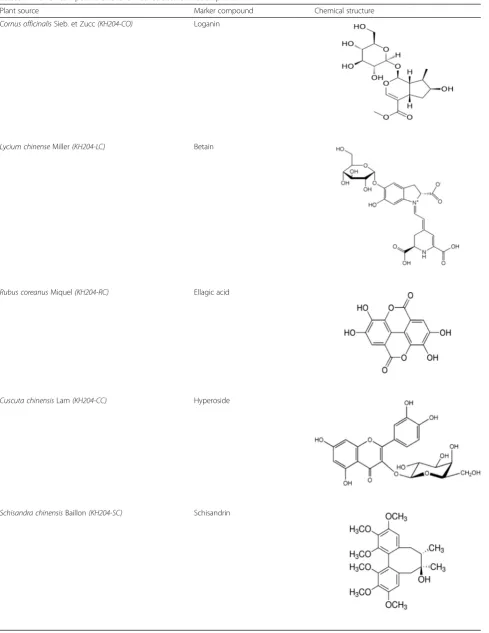
A marker compound for each plant was selected, and their chemical structures are shown in Table 1.
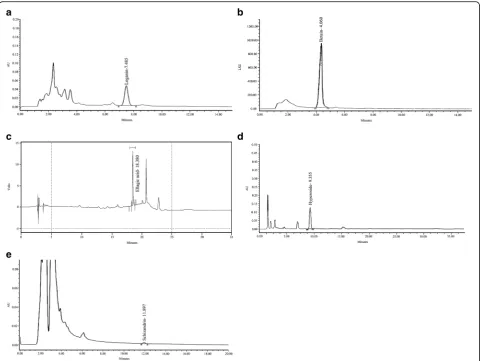
The presence of the marker compound for each plant was confirmed by high-performance liquid chromatog-raphy (HPLC). Each peak in the HPLC profile was iden-tified by comparison with the retention times and UV spectra of standard compounds (Fig. 1).
Animal Groups and Treatment Protocol
Table 1Marker compound and chemical structure in each plant
Plant source Marker compound Chemical structure
Cornus officinalisSieb. et Zucc(KH204-CO) Loganin
Lycium chinenseMiller(KH204-LC) Betain
Rubus coreanusMiquel(KH204-RC) Ellagic acid
Cuscuta chinensisLam(KH204-CC) Hyperoside
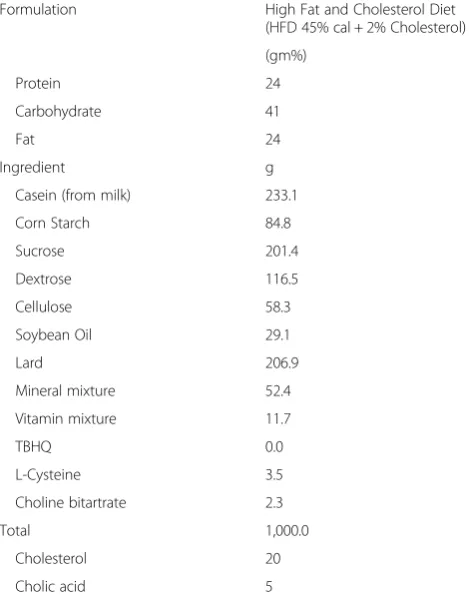
induced by high fat and cholesterol diet; and HFC + KH, HFC rats administered 400 mg/kg of KH-204. Animals were housed three per plastic cage and identified by the presence or absence of ear punches. The lighting of the animal rooms was controlled by artificial light for 12 h from 7 o’clock in the morning to 7 o’clock in the evening, and 18–23 °C room temperature and 40–60% humidity were maintained. All rats in the HFC and HFC + KH groups received a high-fat and cholesterol diet, supplied by Feedlab, (Gyionggi-do, Korea). Rats in the Control group received a normal chow diet for 12 weeks. The for-mulation of the HFC diet is shown in Table 2. Rats in the HFC + KH group received KH-204 (400 mg/kg) for 12 weeks. KH-204 was dissolved in distilled water and ad-ministered orally through an 8 F red Rob-Nel catheter once a day. After 12 weeks, all rats were weighed and underwent intracavernosal pressure (ICP) measurement. After ICP measurement, blood from the internal carotid artery and corporal tissue were sampled.
Serum Level of Total Cholesterol (TC), Low Density Lipoprotein (LDL)/Very Low Density Lipoprotein (VLDL) Cholesterol, High Density Lipoprotein (HDL) Cholesterol, and Triglyceride
To measure serum TC, LDL/VLDL-C, HDL-C, and TG, commercial assay kits [HDL and LDL/VLDL Cholesterol Assay Kit, STA-391 (Cell Biolabs Inc., San Diego, CA, USA); Triglyceride Quantification Colorimetric/ Fluorometric Kit, K622-100, Biovision Inc. (Milpitas, CA, USA)] were used according to manufacturer instructions. Absorbance at 570 nm was read with a PowerWave HT Microplate Spectrophotometer (BioTek Instruments Inc., Winooski, VT, USA). Sample cholesterol concentrations were determined by interpolation from a standard curve.
ICP Measurement
Rats were anaesthetised with an intraperitoneal injection of 0.2 ml tiletamine (Zoletil®). With the rat in the supine pos-ition, the penis was dissected, and the corpus cavernosum
[image:4.595.58.539.87.448.2]and crus of the penis were exposed. A low, midline abdom-inal incision was made to access the pelvis, and the pelvic ganglion lateral to the right prostate was exposed. For the measurement of ICP, a heparinised 23-gauge butterfly nee-dle was inserted in the corpus cavernosum of penile prox-imal portion after the penile skin was degloved and the corpus cavernosum identified. Then, a bipolar electrical stimulator was placed on the ganglion to stimulate the cavernosal nerve for 50 s at 10 V and 2.4 mA for 0.5 ms. Cavernosal nerve stimulation was conducted at least three times and the interval between stimulations was maintained for more than 10 min. Both mean arterial pressure (MAP) and ICP were continuously monitored during electrical stimulation. Systemic MAP was continuously monitored via a 24-gauge polyethyl tube placed in the right carotid ar-tery. Each 23-gauge butterfly needle was inserted in the right and left penile crus for recording ICP. Both the poly-ethyl tube and the butterfly needle were connected to tub-ing diluted with heparin (250 IU/ml). ICP and MAP were recorded via pressure transducers connected to a recorder (Grass model S48K, Grass Instrument Division, Astro-Med, West Warwick, RI, USA). Comparisons were made for ICP/MAP and area under the curve corresponding to the duration of electrical stimulation [28]. After the stimulation test, the corpus cavern-osum was removed and divided in two. The first part
was cryopreserved in liquid nitrogen, and the other part was fixed in formalin.
Masson’s Trichrome Staining
Masson Trichrome staining was performed in paraffin-embedded corporal tissue sections. After ICP, the skin-denuded middle portion of the penile shafts were fixed overnight in 10% formalin, washed, and stored in 70% alco-hol at 4 °C until they were processed for paraffin-embedded tissue sectioning (4μm). After staining, the colour distribu-tion of the muscle tissue was approximated using Adobe Photoshop CS 8.0. The entire colour distribution of the image was calculated and the muscle tissue distribution was selected and expressed as red in colour [28]. There was variation in our calculations due to colour overlays and am-biguity of the colour spectrum in the muscle tissues.
eNOS Expression Test: Western Blot Analysis
Corpora tissue was homogenised in ice-cold lysis buffer containing 20 mM Tris-Cl, pH 8.0, 150 mM NaCl, 1 mM EDTA, 1% Triton X-100, 10 μM leupeptin, 20 μg/ml chy-mostatin, and 2 mM phenylmethanesulphonyl fluoride (PMSF). Following centrifugation at 12,000gfor 20 min at 4 °C, the supernatant was extracted and quantified using the bicinchoninic acid (BCA) protein assay kit (Pierce, Rockford, IL, USA). Proteins were separated by sodium dodecyl sulphate polyacrylamide gel electrophoresis (SDS-PAGE) and electrophoretically transferred to membranes. The membranes were blocked in 5% non-fat milk in Tris-buffered saline containing 0.1% Tween 20 and then probed with anti-eNOS antibody (1:1000; ab5589, Abcam, Cam-bridge, UK), anti-phosphorylated-eNOS (P-eNOS) antibody (1:1000; #9571, Cell Signaling Technology, Beverly, MA, USA), and anti-β-actin antibody (1:10000; SC47778, Santa Cruz Biotechnology, Dallas, TX, USA) as an internal con-trol. After washing, membranes were incubated with horseradish peroxidase-conjugated secondary antibodies (Santa Cruz Biotechnology). Densitometric analysis of band intensity was detected by Luminescent Image Analysis System (LAS-3000; Fujifilm, Tokyo, Japan) and measured using Multi Gauge 3.0 software (Fujifilm) [29].
nNOS Expression Test: Immunohistochemistry
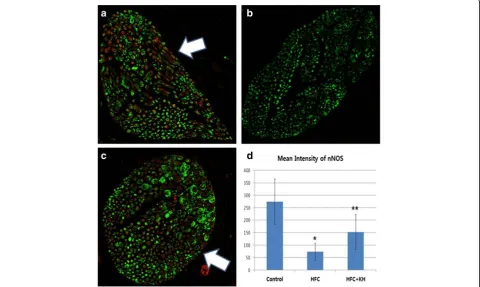
[image:5.595.57.292.101.399.2]The paraffin sections of corpora tissue were immunostained with the following primary antibodies: neuron-specificβ-III tubulin diluted 1:200 (Abcam) and nNOS diluted 1:200 (Santa Cruz Biotechnologies). Sections were mounted with 4,6-diamidino-2-phenylindole (DAPI; Vector laboratories, Inc., Burlingame, CA, USA) to stain the nuclei. Digital im-ages were obtained using a Zeiss LSM 510 Meta confocal microscope (Zeiss, Oberkochen, Germany), and the mean intensity was calculated using Zen 2009 (Zeiss) [30]. Table 2Composition of the high fat and cholesterol diet
Formulation High Fat and Cholesterol Diet
(HFD 45% cal + 2% Cholesterol) (gm%)
Protein 24
Carbohydrate 41
Fat 24
Ingredient g
Casein (from milk) 233.1
Corn Starch 84.8
Sucrose 201.4
Dextrose 116.5
Cellulose 58.3
Soybean Oil 29.1
Lard 206.9
Mineral mixture 52.4
Vitamin mixture 11.7
TBHQ 0.0
L-Cysteine 3.5
Choline bitartrate 2.3
Total 1,000.0
Cholesterol 20
Cholic acid 5
Measurement of 8-Hydroxy-2-deoxyguanosine (8-OHdG) in Corpora Tissue
Oxidative stress in corpora tissues was evaluated by meas-uring the levels of 8-OHdG, oxidatively modified DNA. The DNeasy Blood and Tissue kit (Qiagen, Valencia, CA, USA) and the Total DNA oxidation kit (Highly Sensitive 8-OHdG Check enzyme linked immunosorbent assay (ELISA); Japan Institute for the Control of Aging, Fukuroi, Japan) were used according to the manufacturer’s proto-col. The 8-OHdG standard (0.5–40 ng/ml) or 15–20μg of DNA purified from the testis was incubated for 1 h with a monoclonal antibody against 8-OHdG in a microtiter plate precoated with 8-OHdG. After development of the final colour with the addition of 3,3′,5,5′ -tetramethylben-zidine, absorbance was measured at 450 nm. Tissue sam-ple concentration was calculated from a standard curve and was corrected for DNA concentration [28].
Statistical Analysis
All data are presented as the mean ± standard deviation (SD). Data were analysed using SPSS 15.0 (SPSS Inc., Chicago, IL, USA). Data were evaluated using analysis of variance (ANOVA), with group comparisons made by Scheff’s test. Ap-value less than 0.05 was considered to be statistically significant.
Results
Baseline Data Characteristics
The test results of four (one in the control, two in the HFC, and one in the HFC + KH group) of the total 36
rats were excluded from the baseline data because of anaesthesia-related deaths and/or a failure to catheterize the internal carotid artery.
Body Weight Gain and Serum Lipid Profiles
Body weight gain and serum levels of TC, LDL/VLDL-C, HDL-C, and TG of the three groups are shown in Table 3. Over the course of the experiment, body weight gain was significantly higher in the HFC group than in the control group. Compared with the HFC group, ad-ministration of KH-204 significantly reduced body weight gain. Regarding cholesterol and TG levels, serum TC, LDL/VLDL-C and TG levels increased and HDL-C levels decreased in the HFC group compared with the control group, whereas the lipid profiles in the KH-204 treatment group were significantly improved compared to the HFC group.
In vivo Assessment of Erectile Function
Peak ICP and ICP/MAP ratios decreased in the HFC group compared to the control group and significantly improved in the HFC + KH group. The control and HFC + KH groups had statistically similar peak ICP (p= 0.02) and ICP/MAP ratios (p= 0.13), which were sig-nificantly higher than those of the HFC group (Table 4).
Masson’s Trichrome Staining
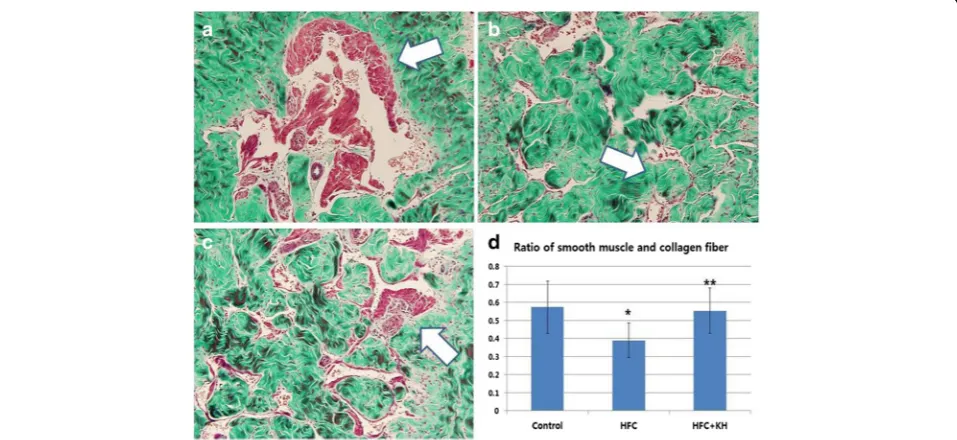
[image:6.595.59.540.468.689.2]Compared to the control group, the HFC group exhib-ited decreased corpora tissue smooth muscle content and increased collagen deposition (Fig. 2a and b). In the
Table 3Body weight gain, lipid profiles, and oxidative stress in each group
Control HFC HFC + KH pvalue
Body Weight Gain (%) 222.57 ± 17.81 255.40 ± 25.94 236.17 ± 20.15 0.008a
0.007b 0.048c Lipid Profiles
Total Cholesterol (μM) 91.71 ± 6.68 168.77 ± 26.66 127.83 ± 8.83 <0.001a
<0.001b <0.001c
LDL/VLDL-Cholesterol (μM) 47.65 ± 5.45 134.66 ± 27.28 87.27 ± 7.54 <0.001a
<0.001b <0.001c
HDL-Cholesterol (μM) 44.06 ± 2.40 34.12 ± 2.83 40.56 ± 2.83 <0.001a
<0.001b <0.001c
Triglyceride (mM) 1.14 ± 0.16 2.76 ± 0.19 1.76 ± 0.27 <0.001a
<0.001b <0.001c
8-OHdG (ng/mL) 2.88 ± 1.03 10.57 ± 1.42 6.06 ± 1.16 <0.001a
<0.001b <0.001c Data are expressed as mean ± standard deviation.HFChigh fat and cholesterol diet,KHKH-204,LDLlow density lipoprotein,VLDLvery low density lipoprotein,
HDLhigh density lipoprotein,8-OHdG8-Hydroxy-2-deoxyguanosine a
One-way ANOVA test, overall comparison b
Comparison between the control and HFC groups c
HFC + KH group, however, smooth muscle content in-creased and collagen content dein-creased compared to the HFC group, and the levels of these parameters were similar to those in the control group (Fig. 2a and c). The mean muscle/collagen ratio ± SD for the control, HFC, and HFC + KH groups were 0.57 ± 0.15, 0.39 ± 0.10, and 0.55 ± 0.13 respectively (Fig. 2d). The muscle/collagen ratio significantly decreased in the HFC group com-pared to the control group, and KH-204 treatment significantly improved the muscle/collagen ratio in HFC rats.
Expression of eNOS in Corpora Tissue
We examined the protein expression of eNOS and P-eNOS in the corpora tissue by Western blot (Fig. 3a). There were no differences in total eNOS protein expression observed among the three groups. However, P-eNOS protein
expression was significantly lower in the HFC group com-pared to the control group (p< 0.01), and this decrease was significantly attenuated in the HFC + KH group. The protein expression of P-eNOS was statistically nonsignificant between the control and HFC + KH groups (p= 0.23), with both groups being significantly higher than the HFC group. The mean densities ± SD of P-eNOS/eNOS for the control, HFC, and HFC + KH groups were 0.50 ± 0.10, 0.27 ± 0.05, and 0.48 ± 0.07, respectively (Fig. 3b).
Expression of nNOS in Corpora Tissue
In the dorsal penile nerve, expression of nNOS was ana-lysed by immunohistochemical staining (Fig. 4a, b and c). The mean intensities ± SD of nNOS-positive areas for the control, HFC, and HFC + KH groups were 267.44 ± 98.61, 67.18 ± 40.38, and 151.5 ± 70.65, respectively (Fig. 4d). The expression of nNOS significantly decreased in the HFC group compared with the control group (p< 0.01), whereas its expression was significantly greater in the HFC + KH group than in the HFC group (p= 0.01) (Fig. 4d).
Measurement of Oxidative Stress in Corpora Tissues Oxidative stress levels in corpora tissues were assessed quantitatively by measuring 8-OHdG in the corpora tissue using ELISA. Oxidative stress was significantly greater in the HFC group than in the control group (p< 0.01). In the HFC + KH group, however, oxidative
[image:7.595.55.291.121.199.2]Fig. 2Masson’s trichrome staining of corpora tissue.a,b,cMasson’s trichrome staining of corpora tissue: smooth muscle is shown in red (white arrow) and collagen is shown in green (Magnification: x200).dRatio of smooth muscle and collagen fibres in corpora tissue. Data are expressed as mean ± standard deviation (SD).*= Significant difference between the control and high fat and cholesterol diet (HFC) groups.**= Significant difference between the HFC and HFC + KH groups
Table 4Intracavernous pressure (ICP) in response to electrical stimulation of the cavernous nerve in rats from each
experimental group
Control HFC HFC + KH pvalue
Peak ICP 105.86 ± 10.38 28.29 ± 8.69 78.75 ± 30.56 <0.001a <0.001b <0.001c ICP/MAP ratio 0.83 ± 0.12 0.27 ± 0.05 0.70 ± 0.25 <0.001a <0.001b <0.001c Data are expressed as mean ± standard deviation
a
One-way ANOVA test, overall comparison b
Comparison between the control and HFC groups c
[image:7.595.59.538.463.683.2]stress significantly decreased compared to the HFC group (p< 0.01) (Table 3).
Discussion
The main findings of the present study were as follows: (1) treatment with KH-204 restored erectile function by improving lipid profiles and decreasing oxidative stress in a rat model of ED induced by HC; (2) treatment with KH-204 activated the protein expression of eNOS and nNOS, leading to an increase in NO bioactivity and an
improvement in erectile function; and (3) KH-204 treat-ment decreased 8-OHdG levels, confirming the antioxi-dant effect of KH-204. Furthermore, the increase in the expression of eNOS, nNOS, and the muscle/collagen ra-tio with KH-204 treatment is consistent with the anra-tioxi- antioxi-dant effect of KH-204.
Although the precise mechanism underlying HC-associated ED has not been clearly elucidated, several studies have reported distinguishing findings in men and animals with HC. These findings included impairment of
Fig. 4Immunostaining of neuronal nitric oxide synthase (nNOS) in the dorsal penile nerve.a,b,cImmunostaining for nNOS (red - white arrow) andβ-III tubulin (green) in the dorsal penile nerve. Magnification: x400.dMean intensity of nNOS expression for the dorsal penile nerve cross section. Data are expressed as mean ± SD.*Significant difference between the control and high fat and cholesterol diet (HFC) groups.**Significant difference between the HFC and HFC + KH groups
[image:8.595.58.539.88.201.2] [image:8.595.58.539.396.683.2]endothelium-dependent and endothelium-independent relaxations of the corpus cavernosum, decreased caverno-sal endothelial cell content, altered smooth muscle cell function, and increased collagen content [10, 31, 32]. These results are thought to be related to oxidative stress damage by HC in the vascular endothelium and erectile tissue [10–12].
HC has been shown to increase the protein expression of nicotinamide adenine dinucleotide phosphate (NAD(P)H) oxidase and to induce eNOS uncoupling in the penis [33]. Activated NAD(P)H oxidase and eNOS uncoupling are known to lead to the formation of vascular super-oxide anions, which induces an imbalance between the formation of superoxide anions and the detoxifi-cation of superoxide anions by antioxidant defence systems. In addition, superoxide anions may directly inactivate NO and decrease its bioavailability. NO is the most important neurotransmitter mediating the relaxation of the smooth muscle layer present in the corpus cavern-osum [13, 19]. NO is an endothelium-derived relaxation factor and plays an important role in the regulation of the bioavailability of NO. NOS exists in three isoforms: nNOS, eNOS, and inducible NOS. NO is produced by eNOS in the endothelium of the corpus cavernosum and penile ar-tery, and it is secreted form nonadrenergic and noncholi-nergic nerve endings [20]. NO and superoxide anions can react to form reactive nitrogen species, such as the highly toxic molecule peroxynitrite. Peroxynitirite may cause oxi-dative damage to DNA, proteins, and lipids, as well as eNOS uncoupling, release of vasoconstrictors, apoptosis, tissue injury, and inflammation [34]. Therefore, oxidative stress promoted by an increase in superoxide anions may impair the expression of eNOS and nNOS [14, 15, 22, 23], reduce eNOS activity and NO production [15–17, 22, 23, 35, 36], increase caveolin-1 expression [21] and its inter-action with eNOS [11], and dysregulate cGMP signal transduction pathways [12]. Taken together, these findings suggest that ED occurs in HC.
In our study, the rats in the HFC group showed de-creased expression of eNOS and nNOS, inde-creased level of 8-OHdG, and decreased muscle/collagen ratio in the corpus cavernosum compared to the control group. These findings suggest that HC due to a high fat and cholesterol diet induced oxidative stress, leading to vas-cular endothelial and corporal tissue damage. This dam-age was detected as decreases in the ICP and ICP/MAP ratio compared to control.
The beneficial effects of KH-204, which are due to its antioxidant properties, have been reported in several studies. Bae, et al. found that KH-204 treatment de-creased the expression of Rho kinase and inde-creased the expression of cGMP in androgen-deprived rat bladder and that KH-204 may prevent deleterious molecular changes in the bladder of a rat model of LOH [37].
Furthermore, in a cryptorchidism-induced rat model, KH-204 treatment alleviated elevations in the levels of heat shock protein and germ cell apoptosis by reducing oxidative stress [38]. In our study, KH-204 treatment prevented the decrease in the expression of eNOS and nNOS and the ratio of muscle/collagen in corpus cavernosum induced by HC, strongly indicating that KH-204 had a preventive effect on HC-associated vascu-lar endothelium and corpora tissue impairment. In par-ticular, decreased 8-OHdG, a predominant marker of oxidative damage to DNA, seemed to indicate that the antioxidant activity of KH-204 prevented oxidative injury under oxidative stress conditions.
Currently, a phosphodiesterase type5 inhibitor (PDE5i) is widely used for treatment of ED. PDE5i acts to block the degradative action of cGMP-specific phosphodiester-ase type5 on cGMP in the smooth muscle cells lining the blood vessels supplying the corpus cavernosum of the penis. The most common cause of ED is thought be related to vascular abnormalities caused by endothelial and erectile tissue dysfunction [3, 4], and we demon-strated that the antioxidant effect of KH-204 led to im-proved erectile function by reducing endothelial and corporal tissue dysfunction from oxidative stress. There-fore, we suggest that KH-204, unlike PED5i, has the po-tential to therapeutically improve ED by correcting the fundamental cause of ED.
In this study, the group treated with KH204 showed decreased TC, LDL/VLDL-C, and TG and increased HDL-C levels compared to the HFC group. We did not examine, however, why the lipid profile was improved by KH-204 treatment. Although some reports have described the antiobesity and hypolipidemic effects of
Lycium chinense Miller and Rubus coreanus Miquel [24, 25], there is little scholarly evidence available that would explain the improvement in lipid profile seen in our study. Thus, further study should be conducted to elucidate the hypolipidemic mechanisms of this formula.
Conclusions
Administration of the herbal formula KH-204 to a rat model of HC-induced ED ameliorated lipid profiles and erectile function parameters, including peak ICP and ICP/MAP ratio, expression of eNOS and nNOS, the muscle/collagen ratio, and the level of 8-OHdG in the corpus cavernosum. We believe that the antioxidant properties and hypolipidemic effect of KH-204 make it an effective treatment option for ED, as it can correct a fundamental cause of ED.
Abbreviations
ANOVA:Analysis of variance; BCA: Bicinchoninic acid; cGMP: Cyclic guanosine monophosphate; DAPI: 4,6-diamidino-2-phenylindole; ED: Erectile dysfunction; ELISA: Enzyme linked immunosorbent assay; eNOS: Endothelial
cholesterol; HFC: High-fat and cholesterol diet; HPLC: High-performance liquid chromatography; ICP: Intracavernous pressure; LDL: Low-density lipoprotein; LOH: Late-onset hypogonadism; MAP: Mean arterial pressure;
NADPH: Nicotinamide adenine dinucleotide phosphate; NIH: National Institutes of Health; nNOS: Neuronal nitric oxide synthase; NO: Nitric oxide;
PED5i: Phosphodiesterase type5 inhibitor; PMSF: Phenylmethanesulphonyl fluoride; SDS-PAGE: Sodium dodecyl sulphate polyacrylamide gel electrophoresis; TC: Total cholesterol; VLDL: Very low-density lipoprotein
Acknowledgements
This work was supported by a grant from the Next Generation BioGreen 21 Program (no. PJ011290012016), Rural Development Administration, Republic of Korea.
Funding
Funder: Rural Development Administration, Republic of Korea. Program: The Next Generation BioGreen 21 Program. Award number: PJ011290012016.
Availability of data and materials
All data generated or analysed during this study are included in this published article.
Authors’contribution
HJ drafted the manuscript, and participated in every part of the experiments. WJB participated in the design of the study and helped in the experiments and drafting of the manuscript. EBK participated in the design, performed biochemical assays, and conducted statistical analysis. SJK, HJC, and SMY participated in the experiments, coordinated among the authors, and helped to draft the manuscript. CSY, DSH and SYH participated in the design of the study and drafting of the manuscript. SWK participated in the design of the study and performed experiments. All of the authors read and approved the final manuscript.
Competing interests
The authors declare that they have no competing interests.
Consent for publication
Not applicable.
Ethics approval and consent to participate
This study was approved by the Institutional Animal Care and Use Committee at the School of Medicine, The Catholic University of Korea (Approval Number: CUMC-2016-0111-01).
Author details
1Department of Urology, College of Medicine, The Catholic University of Korea, 222 Banpo-daero, Seocho-gu, Seoul 137-701, Republic of Korea. 2Catholic Integrative Medicine Research Institute, College of Medicine, The Catholic University of Korea, Seoul, South Korea.3KEMIMEDI, Seoul, South Korea.4Department of Urology, College of Medicine, The Catholic University of Korea, 222 Banpo-daero, Seocho-gu, Seoul 06591, South Korea.
Received: 26 October 2016 Accepted: 17 January 2017
References
1. NIH Consensus Conference. Impotence. NIH consensus development panel on impotence. JAMA. 1993;270(1):83–90.
2. Ayta IA, McKinlay JB, Krane RJ. The likely worldwide increase in erectile dysfunction between 1995 and 2025 and some possible policy consequences. BJU Int. 1999;84(1):50–6.
3. Sullivan ME, Keoghane SR, Miller MA. Vascular risk factors and erectile dysfunction. BJU Int. 2001;87(9):838–45.
4. Selvin E, Burnett AL, Platz EA. Prevalence and risk factors for erectile dysfunction in the US. Am J Med. 2007;120(2):151–7.
5. Writing Group M, Mozaffarian D, Benjamin EJ, Go AS, Arnett DK, Blaha MJ, et al. Executive summary: heart disease and stroke statistics–2016 update: a report from the american heart association. Circulation. 2016;133(4):447–54. 6. Anderson KM, Castelli WP, Levy D. Cholesterol and mortality. 30 years of
follow-up from the Framingham study. JAMA. 1987;257(16):2176–80.
7. Schachter M. Erectile dysfunction and lipid disorders. Curr Med Res Opin. 2000;16 Suppl 1:s9–12.
8. Saltzman EA, Guay AT, Jacobson J. Improvement in erectile function in men with organic erectile dysfunction by correction of elevated cholesterol levels: a clinical observation. J Urol. 2004;172(1):255–8.
9. Miner M, Billups KL. Erectile dysfunction and dyslipidemia: relevance and role of phosphodiesterase type-5 inhibitors and statins. J Sex Med. 2008;5(5):1066–78.
10. Kim SC, Kim IK, Seo KK, Baek KJ, Lee MY. Involvement of superoxide radical in the impaired endothelium-dependent relaxation of cavernous smooth muscle in hypercholesterolemic rabbits. Urol Res. 1997;25(5):341–6. 11. Musicki B, Liu T, Strong T, Jin L, Laughlin MH, Turk JR, et al. Low-fat diet and
exercise preserve eNOS regulation and endothelial function in the penis of early atherosclerotic pigs: a molecular analysis. J Sex Med. 2008;5(3):552–61. 12. Shukla N, Jones R, Persad R, Angelini GD, Jeremy JY. Effect of sildenafil
citrate and a nitric oxide donating sildenafil derivative, NCX 911, on cavernosal relaxation and superoxide formation in hypercholesterolaemic rabbits. Eur J Pharmacol. 2005;517(3):224–31.
13. Lee NH, Seo CS, Lee HY, Jung DY, Lee JK, Lee JA, et al. Hepatoprotective and antioxidative activities of cornus officinalis against acetaminophen-induced hepatotoxicity in mice. Evid Based Complement Alternat Med. 2012;2012:804924.
14. Thandavarayan RA, Giridharan VV, Arumugam S, Suzuki K, Ko KM, Krishnamurthy P, et al. Schisandrin B prevents doxorubicin induced cardiac dysfunction by modulation of DNA damage, oxidative stress and inflammation through inhibition of MAPK/p53 signaling. PLoS One. 2015;10(3):e0119214. 15. Chen P, Pang S, Yang N, Meng H, Liu J, Zhou N, et al. Beneficial effects of
schisandrin B on the cardiac function in mice model of myocardial infarction. PLoS One. 2013;8(11):e79418.
16. Chen N, Ko M. Schisandrin B-induced glutathione antioxidant response and cardioprotection are mediated by reactive oxidant species production in rat hearts. Biol Pharm Bull. 2010;33(5):825–9.
17. Chiu PY, Luk KF, Leung HY, Ng KM, Ko KM. Schisandrin B stereoisomers protect against hypoxia/reoxygenation-induced apoptosis and inhibit associated changes in Ca2 +−induced mitochondrial permeability transition and mitochondrial membrane potential in H9c2 cardiomyocytes. Life Sci. 2008;82(21–22):1092–101.
18. Lee JE, Park E, Lee JE, Auh JH, Choi HK, Lee J, et al. Effects of a Rubus coreanus Miquel supplement on plasma antioxidant capacity in healthy Korean men. Nutr Res Pract. 2011;5(5):429–34.
19. Jiang WL, Zhang SM, Tang XX, Liu HZ. Protective roles of cornuside in acute myocardial ischemia and reperfusion injury in rats. Phytomedicine. 2011; 18(4):266–71.
20. Wang W, Xu J, Li L, Wang P, Ji X, Ai H, et al. Neuroprotective effect of morroniside on focal cerebral ischemia in rats. Brain Res Bull. 2010;83(5):196–201. 21. Sun SL, Guo L, Ren YC, Wang B, Li RH, Qi YS, et al. Anti-apoptosis effect of
polysaccharide isolated from the seeds of Cuscuta chinensis Lam on cardiomyocytes in aging rats. Mol Biol Rep. 2014;41(9):6117–24. 22. Park EJ, Chun JN, Kim SH, Kim CY, Lee HJ, Kim HK, et al. Schisandrin B
suppresses TGFbeta1 signaling by inhibiting Smad2/3 and MAPK pathways. Biochem Pharmacol. 2012;83(3):378–84.
23. Chun JN, Kim SY, Park EJ, Kwon EJ, Bae DJ, Kim IS, et al. Schisandrin B suppresses TGFbeta1-induced stress fiber formation by inhibiting myosin light chain phosphorylation. J Ethnopharmacol. 2014;152(2):364–71. 24. Oh DR, Kim Y, Choi EJ, Hunmi L, Jung MA, Bae D, et al. Antiobesity effects
of unripe Rubus coreanus Miquel and Its Constituents: An in vitro and in vivo characterization of the underlying mechanism. Evid Based Complement Alternat Med. 2016;2016:4357656.
25. Kang MH, Park WJ, Choi MK. Anti-obesity and hypolipidemic effects of Lycium chinense leaf powder in obese rats. J Med Food. 2010;13(4):801–7. 26. Park CS, Ryu SD, Hwang SY. Elevation of intracavernous pressure and
NO-cGMP activity by a new herbal formula in penile tissues of aged and diabetic rats. J Ethnopharmacol. 2004;94(1):85–92.
27. Sohn DW, Kim HY, Kim SD, Lee EJ, Kim HS, Kim JK, et al. Elevation of intracavernous pressure and NO-cGMP activity by a new herbal formula in penile tissues of spontaneous hypertensive male rats. J Ethnopharmacol. 2008;120(2):176–80.
29. Kwon EB, Lee JY, Piao S, Kim IG, Ra JC, Lee JY. Comparison of human muscle-derived stem cells and human adipose-derived stem cells in neurogenic trans-differentiation. Korean J Urol. 2011;52(12):852–7. 30. Jeon SH, Shrestha KR, Kim RY, Jung AR, Park YH, Kwon O, et al. Combination
therapy using human adipose-derived stem cells on the cavernous nerve and Low-energy shockwaves on the corpus cavernosum in a Rat model of post-prostatectomy erectile dysfunction. Urology. 2016;88:226. doi:10.1016/j. urology.2015.10.21. el-9.
31. Kim SC, Seo KK, Kim HW, Lee MY. The effects of isolated lipoproteins and triglyceride, combined oxidized low density lipoprotein (LDL) plus triglyceride, and combined oxidized LDL plus high density lipoprotein on the contractile and relaxation response of rabbit cavernous smooth muscle. Int J Androl. 2000;23 Suppl 2:26–9.
32. Behr-Roussel D, Bernabe J, Compagnie S, Rupin A, Verbeuren TJ, Alexandre L, et al. Distinct mechanisms implicated in atherosclerosis-induced erectile dysfunction in rabbits. Atherosclerosis. 2002;162(2):355–62.
33. Musicki B, Liu T, Lagoda GA, Strong TD, Sezen SF, Johnson JM, et al. Hypercholesterolemia-induced erectile dysfunction: endothelial nitric oxide synthase (eNOS) uncoupling in the mouse penis by NAD(P)H oxidase. J Sex Med. 2010;7(9):3023–32.
34. Touyz RM, Schiffrin EL. Reactive oxygen species in vascular biology: implications in hypertension. Histochem Cell Biol. 2004;122(4):339–52. 35. Azadzoi KM, Goldstein I, Siroky MB, Traish AM, Krane RJ, Saenz De Tejada I.
Mechanisms of ischemia-induced cavernosal smooth muscle relaxation impairment in a rabbit model of vasculogenic erectile dysfunction. J Urol. 1998;160(6 Pt 1):2216–22.
36. Chiu PY, Ko KM. Schisandrin B-induced increase in cellular glutathione level and protection against oxidant injury are mediated by the enhancement of glutathione synthesis and regeneration in AML12 and H9c2 cells. BioFactors. 2006;26(4):221–30.
37. Bae WJ, Ha US, Choi JB, Kim KS, Kim SJ, Cho HJ, et al. Protective effects of KH-204 in the bladder of androgen-deprived rats. World J Mens Health. 2015;33(2):73–80.
38. Bae WJ, Ha US, Kim KS, Kim SJ, Cho HJ, Hong SH, et al. Effects of KH-204 on the expression of heat shock protein 70 and germ cell apoptosis in infertility rat models. BMC Complement Altern Med. 2014;14:367.
• We accept pre-submission inquiries
• Our selector tool helps you to find the most relevant journal
• We provide round the clock customer support
• Convenient online submission
• Thorough peer review
• Inclusion in PubMed and all major indexing services • Maximum visibility for your research
Submit your manuscript at www.biomedcentral.com/submit