S T U D Y P R O T O C O L
Open Access
The Sleep Or Mood Novel Adjunctive therapy
(SOMNA) trial: a study protocol for a randomised
controlled trial evaluating an internet-delivered
cognitive behavioural therapy program for
insomnia on outcomes of standard treatment
for depression in men
Nicole L Cockayne
1, Helen M Christensen
2, Kathleen M Griffiths
3, Sharon L Naismith
1, Ian B Hickie
1,
Frances P Thorndike
4, Lee M Ritterband
4and Nick S Glozier
1*Abstract
Background:Insomnia is a significant risk factor for depression onset, can result in more disabling depressive illness, and is a common residual symptom following treatment cessation that can increase the risk of relapse. Internet-based cognitive behavioural therapy for insomnia has demonstrated efficacy and acceptability to men who are less likely than women to seek help in standard care. We aim to evaluate whether internet delivered cognitive behavioural therapy for insomnia as an adjunct to a standard depression therapeutic plan can lead to improved mood outcomes.
Methods/Design:Male participants aged 50 years or more, meeting Diagnostic and Statistical Manual of Mental Disorders criteria for current Major Depressive Episode and/or Dysthymia and self-reported insomnia symptoms, will be screened to participate in a single-centre double-blind randomised controlled trial with two parallel groups involving adjunctive internet-delivered cognitive behavioural therapy for insomnia and an internet-based control program. The trial will consist of a nine-week insomnia intervention period with a six-month follow-up period. During the insomnia intervention period participants will have their depression management coordinated by a psychiatrist using standard guideline-based depression treatments. The study will be conducted in urban New South Wales, Australia, where 80 participants from primary and secondary care and direct from the local community will be recruited. The primary outcome is change in the severity of depressive symptoms from baseline to week 12. Discussion:This study will provide evidence on whether a widely accessible, evidence-based, internet-delivered cognitive behavioural therapy for insomnia intervention can lead to greater improvements than standard treatment for depression alone, in a group who traditionally do not readily access psychotherapy. The study is designed to establish effect size, feasibility and processes associated with implementing e-health solutions alongside standard clinical care, to warrant undertaking a larger more definitive clinical trial.
Trial registration:Australian and New Zealand Clinical Trials Registry ACTRN12612000985886.
Keywords:Depression, Insomnia, Adjunctive, e-health, Cognitive behavioural therapy, Randomised controlled trial, Men
* Correspondence:[email protected]
1
Healthy Brain Ageing Program, Brain and Mind Research Institute, University of Sydney, 94 Mallett Street, Camperdown, NSW 2050, Australia
Full list of author information is available at the end of the article
Background
Symptoms of insomnia are commonly comorbid with depression, particularly in older adults [1]. In this popu-lation, although advanced sleep phase can occur, insom-nia is the most commonly reported sleep disturbance; this includes complaints of difficulty falling asleep, fre-quent nocturnal awakenings, and early morning wakeful-ness [2,3]. These lead to shorter overall sleep duration, which in turn contributes to chronic patterns of mental ill health [4]. Epidemiological studies suggest that in-somnia is a significant risk factor for depression onset and recurrence in both younger and older samples [5-7]. Insomnia comorbid with depression is indicative of a more severe illness and, despite its implications, tends to be under-treated [5]. In late life depression, sleep disturbance appears to be most prominent at the onset of the episode [8] and has been shown to be a prognostic marker [9,10]. Insomnia may be separate or reflect an inadequately treated episode of Major Depressive Disorder (MDD). Reports of the prevalence of residual insomnia symptoms in those responding to treatment for MDD, range from 30% up to 90% [11]. Importantly, failure to achieve full remission from even the first episode of MDD is a strong predictor of recurrence and chronicity as shown in landmark National Institute of Mental Health studies [12] and confirmed in the STAR-D trial [13]. Fur-ther, insomnia is the most common residual symptom after completion of drug or therapeutic treatment of mood disorder [11,12] occurring in up to two thirds of this group in the STAR-D study [13]. Thus insomnia in elderly people with previous MDD is a strong and independent predictor of recurrent [10] and persisting MDD [9].
The question of whether adjunctive treatment of insomnia can improve the standard treatment of de-pression was addressed in a pilot trial by Manber et al. [14]. They reported that the addition of seven sessions of cognitive behavioural therapy for insomnia (CBTi) to escitalopram resulted in a higher rate of remission of depression (61.5%) than in the control arm (33.3%). The adjunctive therapy was also associated with a greater re-mission from insomnia (50.0%) as compared to control (7.7%) and larger improvement in all diary and actigraphy measures of sleep, except for total sleep time. More recently, Watanabe et al. [15] demonstrated that four weekly face-to-face sessions of CBTi as a supplement to outpatient treatment in psychiatric clinics was associated with higher rates of remission of depression (50.0%) com-pared with treatment as usual (6.0%), with similarly favourable rates of remission for insomnia (50.0% versus 0.0%). This study has since been extended by Wagley et al. [16] using a briefer version of face-to-face CBTi in a broader sample of patients with psychiatric disorders, which has also shown significant reductions in both de-pressive symptoms and sleep quality following treatment.
Men with symptoms of depression and anxiety, par-ticularly in the oldest and youngest age groups seek help far less frequently than women for a given threshold or condition [17]. Whilst help-seeking for depression remains low, over half of people with insomnia seek treatment in primary care [18] making it likely that an insomnia intervention program would be well received and utilised. Internet-based programs have some distinct advantages in the delivery of treatment and prevention ser-vices. Treatment using e-health applications is 20 times more cost effective than face-to-face psychological treat-ment and 50 times more efficient than medication in terms of disability-adjusted life years averted [19]. However, we are not aware of any study evaluating the use of adjunctive internet-based CBTi in older men with depression.
With the development and initial evaluation of Sleep Healthy Using the Internet (SHUTi), members of our team have demonstrated the efficacy of an internet inter-vention for adults with insomnia [20]. This interinter-vention is firmly grounded in the research supporting the effi-cacy of face-to-face CBTi [21], including the primary components of sleep restriction, stimulus control, cogni-tive restructuring, sleep hygiene, and relapse prevention. SHUTi is an interactive, self-help program, which is fully automated and based on principles of self-help. In this community-based study of adults with insomnia [20], participants randomly assigned to receive SHUTi not only experienced significant sleep improvements, but also demonstrated improvements in comorbid psycho-logical symptoms and quality of life, compared to those in a wait-list control group [22].
As such, we hypothesise that providing SHUTi as an adjunct to standard care in older men with comorbid de-pression and insomnia symptoms will improve dede-pression more than an adjunctive controlled website providing insomnia education alone.
Objectives
In older men with major depression, this trial aims to:
1. Investigate the efficacy of SHUTi as an adjunctive treatment to standardbeyondblueguideline-based treatment [23,24] for reducing depression symptom severity;
2. Determine whether adjunctive SHUTi decreases anxiety and insomnia symptom severity;
3. Ascertain whether SHUTi is associated with changes in actigraphy/sleep diary determined sleep in people with comorbid depression and insomnia symptoms; 4. Explore the processes, predictors and mediators of
Methods/Design Trial design
The study is a single-centre double-blind randomised controlled trial (RCT) with two parallel groups involving an internet-delivered CBTi intervention and an insomnia education control condition. The trial consists of a nine-week insomnia intervention period and six-month follow-up period. The intervention will be delivered as an adjunct to standard guideline-based treatment for depression. As such, during the intervention period, participants in both arms will have their depression assessed, and the treat-ment managed, by a psychiatrist in accordance with
clinical practice guidelines [23,24]. At trial entry, and after randomisation, participants will complete baseline clinical, sleep and self-report measures over two-weeks. They will then commence their internet-delivered CBTi program / web-based insomnia education (control) and continue with it over the subsequent nine-weeks. Partic-ipants will be contacted by telephone at Week 4 and Week 8 for trial monitoring purposes. At Week 12, they will commence the post-intervention assessment and will repeat the clinical, sleep and self-report measures collected at baseline. Throughout this period they will have face-to-face sessions with the psychiatrist, their
Allocated to Online Intervention Treatment as adjunctive to depression
treatment: SHUTi(n=40)
Allocated to Online Attention Control as adjunctive to depression treatment:
Insomnia Education(n=40)
t = 1 week
Complete 10/14 sleep diaries with actigraphy and commence SHUTi
(n=?)
Complete 10/14 sleep diaries with actigraphy and commence Insomnia
Education(n=?)
t = 3 weeks
Complete SHUTiand commence post-intervention medical assessment in clinic, online self-report and 14 days of
sleep diaries with actigraphy (n=?)
CompleteInsomnia Educationand commence post-intervention medical assessment in clinic, online self-report and 14 days of sleep diaries with
actigraphy(n=?)
t = 12 weeks
Complete 6-month post-intervention online self-report and 14 days of sleep
diaries (n=?)
Complete 6-month post-intervention online self-report and 14 days of sleep
diaries (n=?)
t = 36 weeks
Loss to follow-up or discontinued (n=?) Randomisation (t =1 week)
Potential participant visits trial website; trial information provided
Online consent to further eligibility screening and assessment Online assessment of eligibility based on inclusion/exclusion
criteria (QIDS, ISI and RLS)
Clinic assessment of eligibility (psychiatric interview) and baseline medical assessment (t = 1 week)
Excluded: No consent Excluded: Subclinical
depressive and/or insomnia symptoms; restless legs indicated
Excluded: No current depression; history of psychosis or hypo/manic
episodes; substance dependence; cognitive
impairment
Telephone assessment of eligibility based on exclusion criteria (psychiatric history; sleep disorders other than insomnia; external factors affecting sleep patterns) Excluded: Psychosis or
hypo/manic episodes; sleep apnea; rotating
shift worker; transmeridian travel
Full informed consent
Complete baseline online self-report and commence 14 days of sleep diaries
with actigraphy (n=?)
Complete baseline online self-report and commence 14 days of sleep diaries
with actigraphy (n=?)
t = 1 week
Telephone monitoring of mood and insomnia symptoms (t = 4 and 8 weeks) (n=?)
Excluded: No full informed
consent
Complete 10/14 sleep diaries with actigraphy (n=?)
Complete 10/14 sleep diaries with actigraphy (n=?)
[image:3.595.58.540.240.716.2]t = 14 weeks
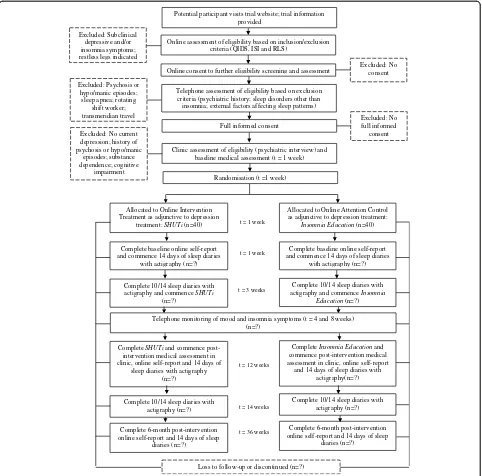
General Practitioner (GP) and other health professionals, as clinically required, to manage their depression. Six months after completion of the post-intervention assess-ment, participants will complete the self-report, psycho-logical and sleep measures. As such there will be three principal occasions of measurement over the full study period: baseline, intervention, and 6-months post-intervention, and the primary endpoint will be a reduction in depressive symptoms at post-intervention (week 12). The total trial period will be nine months. The trial has been registered on the Australian and New Zealand Clinical Trial Registry (ACTRN12612000985886). The trial design is shown graphically in Figure 1.
Study setting
The target population for the SOMNA trial is Australian male adults, aged 50 years and over, who meet diagnos-tic criteria for a current depressive disorder and self-reported sleep disturbance. Participants will be recruited from local primary and secondary care providers, as well as directly from the local community via newspaper and radio advertisements, community organisation newsletters and events. An online recruitment and marketing cam-paign will also be implemented through help-seeking websites and social media.
Eligibility criteria
Participants eligible for the SOMNA trial must comply with all of the following at the point of randomisation:
1. Have a depressive disorder, defined as screening positive (score greater than or equal to 8) on the Quick Inventory of Depression Symptomology Self Report (QIDS-SR) [25] at preliminary screening, and meeting Diagnostic and Statistical Manual of Mental Disorders (DSM-IV) criteria for current Major Depressive Episode and/or Dysthymia at clinical interview using the Structured Clinical Interview for DSM-IV (SCID) [26];
2. Report insomnia symptoms above threshold (score greater than or equal to 8) on the Insomnia Severity Index (ISI) [27] at preliminary
screening; and,
3. Have provided written informed consent before any trial procedures are undertaken.
Participants will be excluded from participating in the SOMNA trial if at the point of randomisation they:
1. Have a prior history of psychosis or hypo/manic episodes, determined either during phone screening or at clinical interview;
2. Have current substance dependence, determined at clinical interview;
3. Score less than 24 on the Mini Mental State Examination (MMSE) [28], determined at clinical interview;
4. Are a rotating shift worker with overnight shifts; 5. Have undertaken transmeridian travel in the past
month, where the time difference is greater than two hours and there has been an inadequate period to readjust to local time (adjustment defined as requiring 48 hours for every one hour time difference);
6. Meet criteria for Restless Legs Syndrome (RLS) as defined using the Cambridge-Hopkins RLS short form diagnostic questionnaire [29];
7. Are at high risk for obstructive sleep apnea (OSA) as defined by the Berlin Questionnaire [30], or have been treated for sleep apnea.
Interventions
All eligible participants will be randomised on a 1:1 basis to receive either SHUTi or the web-based insomnia edu-cation control program.
Active treatment arm: SHUTi
Control arm
The insomnia education control program provides cred-ible sleep health information addressing the impact and prevalence of insomnia, along with common causes and symptoms of insomnia. It provides limited sleep hygiene information pertaining to lifestyle and environmental factors that may affect sleep. While behavioural and cognitive techniques are mentioned in the control pro-gram, unlike SHUTi, the strategies are not obtainable in a tailored, metered, or interactive fashion, but rather the content is presented in a basic text format only. Consideration of the content requires approximately 30 minutes. However, the insomnia education program (but not sleep diaries) is available for further review by participants at any time over the nine-week intervention period.
Clinical treatment for depression
As part of standard treatment for depression, all partic-ipants will undergo a clinical assessment with a psych-iatrist prior to study commencement, whereupon a depression treatment plan will be prepared in accord-ance with clinical practice guidelines [23,24]. This will include watchful waiting, referral to psychotherapy or other interventions such as couple therapy, or medi-cation use under standard collaborative care with the patient’s GP. The assessment will include the Mood Episode and Disorder modules, and the Substance Abuse screens of the SCID, standard clinician rated measures: the 17-item Hamilton Rating Scale for De-pression (HAM-D) [32], and the Hamilton Rating Scale for Anxiety (HAM-A) [33], Mini Mental State Examin-ation [28], Global Assessment of Functioning (GAF) [34], Social and Occupational Functioning Assessment Scale (SOFAS) [35] and Cumulative Illness Rating Scale for Geriatrics (CIRS-G) [36] as well as completion of a full psychiatric and medical history. After two weeks, participants will be required to undergo a clinical review with the psychiatrist, in accordance with their treatment plan. Over the subsequent nine weeks, participants will undergo further psychiatric review and management as clinically required. Standard clinical instruments will be administered to monitor depressive symptoms over this period. If any changes to medication dosage are required, this will be discussed between the patient, trial psychiatrist and/or referring doctor. At the end of the trial period the participant will be referred back to their GP or treating doctor, or if required, managed in the trial clinic until appropriate for discharge.
Participant monitoring and program adherence
While individual completion of SHUTi and the insomnia education control programs will be systematically tracked using methods embedded in the website infrastructure,
their completion (or otherwise) will be achieved without any direct supervision or encouragement from the trial team. Participants will be able to seek technical support as needed (e.g. if a username or password is forgotten) but as this is a trial of an adjunctive insomnia treatment, no specific clinical support will be provided. Further-more, as all participants will be under the clinical care of their treating psychiatrist, safety and general moni-toring will be conducted at each scheduled clinical re-view and follow-up appointment(s). Research assistants will contact all participants by telephone at Week 4 and Week 8 (as indicated in Figure 1) whereby data will be collected against the primary and secondary outcome measures, addressing mood state and insomnia symp-toms. Participants demonstrating deterioration in mood state will be referred to their treating psychiatrist for risk management and follow-up.
Self report measures Primary outcome
The primary outcome is change in severity of self-reported depressive symptoms from baseline to three months, as measured by the Centre for Epidemiological Studies Depression scale (CES-D) [37]. The 20 items in the CES-D measure symptoms of depression over the past week on a 0–3 scale, and provide a summary score ranging from 0 to 60 with higher scores indicating the presence of greater depressive severity. Although origin-ally created for the general population, the CES-D is a reliable and valid measure of depressive symptoms and widely used in clinical populations [38]. A self-report measure, the CES-D will be embedded into each of the formal assessments at baseline, post-intervention and six-month post-intervention follow-up. The change in severity of clinician-rated depressive symptoms over a three-month period, will also be determined using the HAM-D [32]. Considered the gold standard depression assessment tool, the HAM-D is the most widely used clinician-administered scale in clinical trials of anti-depressant treatment. It rates the severity of symptoms observed in depression such as low mood, insomnia, agitation, anxiety and weight loss, with higher scores indicative of more pronounced symptomatology. Mean changes in continuous depressive symptom scores from baseline will be compared between the two randomised groups at three-months. Change scores will be based on summed scores derived from the CES-D and the HAM-D respectively.
Secondary outcomes
The STPI is a self-administered questionnaire designed to measure dispositional anxiety, anger, depression and curiosity in adults i.e. how they“generally feel”. It con-sists of four 10-item subscales with each item rated on a four-point frequency scale. Higher scores are positively correlated with higher levels of dispositional emotional states. The STPI is a widely used measure and has high validity and reliability, particularly for the anxiety and anger scales [39]. Mean changes in total summed scores from baseline to three-month follow-up will be com-pared between the two randomised groups.
Insomnia symptoms will be measured by the Insomnia Severity Index (ISI) [27], which assesses insomnia symp-tom severity, distress and daytime impairment over the past two weeks. Each of the seven items are assessed on a likert-based scale which provide an overall quantitative score ranging from 0 to 28, with higher scores indicative of more severe insomnia. The tool has been shown to be a valid and reliable measure [27] and is sensitive to change following intervention for primary insomnia in older adults [40]. In the current investigation, mean changes in continuous insomnia symptom scores from baseline will be compared between the two randomised groups at three-month follow-up.
Tertiary outcomes
Changes in actigraphic and sleep diary assessed sleep pa-rameters (total sleep time, sleep efficiency, wake after sleep onset, sleep onset latency), hypnotic use, sleep beliefs (Dys-functional Beliefs about Sleep (DBAS); [41]), the clinician rated scales above and self reported health related quality of life (Medical Outcomes Study Short-Form Health Survey; SF-12) will be measured at baseline and post-intervention. In addition, user characteristics predictive of outcome such as demographic, health and lifestyle factors will be de-scribed by treatment group at trial entry and overall at three and six months. Program adherence and drop-out will be monitored throughout the intervention period, and evaluation measures will be measured at post-intervention.
Participant timeline
Potential participants will visit the trial-specific website www.somna.com.au where they will be provided with detailed information about the trial, the procedures and time commitment involved in participation, the random-isation process, and confidentiality, and contact details for the trial team should they want further information. The Participant Information Statement and Consent Form will be published on the website and available for download. Those interested in participating in the trial will undertake an online consent and preliminary eligi-bility screening procedure.
Completion of online consent and preliminary eligibility screening requires potential participants to provide their
full name and contact details, along with their date of birth, gender and confirmation of their regular access to an internet-enabled computer or device and availability to attend the Trial Coordinating Centre on at least four occasions. Potential participants will then be asked gen-eral information pertaining to current sleep habits, and to complete the QIDS-SR, ISI and RLS screening tools. Interested participants are asked to sign the consent form by dragging their mouse to create their signature, thus giving permission to the research team to assess their preliminary screening responses and contact them to conduct an interview over the telephone to further confirm eligibility to participate. This process also creates a unique profile (trial identification number) for the potential participant within the trial website.
Upon submission of the online consent and prelimin-ary screening questionnaire, a member of the SOMNA trial team will assess the potential participant’s eligibility against the trial inclusion criteria. Those that do not meet criteria will receive an email outlining why they have not been selected to participate and will be pro-vided with a resource sheet outlining options for alterna-tive treatment or support for depression and sleep concerns. A research assistant will contact those who meet trial inclusion criteria via telephone, and an inter-view assessment against the trial exclusion criteria will be completed. Participants who do not meet criteria, due to prior diagnosis of psychosis or hypo/manic epi-sodes, high risk or prior diagnosis of sleep apnea, or who report they are a rotating shift worker, will be thanked for their time and will not participate further. If required further referral information will be provided. If potential participants report recent transmeridian travel, they will be invited to undergo all preliminary depres-sion and insomnia screening questions again once they have had opportunity to readjust to the present time zone. Wherever psychiatric history is unclear, partici-pants will be invited to attend for baseline assessment whereby the trial psychiatrist will undertake a compre-hensive clinical interview to confirm diagnosis.
be eligible to commence the active/control intervention. Full informed, written, consent will be obtained prior to any study procedure being undertaken.
Upon completion of the nine-week intervention period, participants will be prompted by automated email to return to the trial website to complete the post-intervention self-report questionnaire. Personalised emails, text message reminders and telephone calls will be made to participants who do not respond to encour-age completion. Participants will also be invited to return to the Trial Coordinating Centre to complete the post-intervention medical assessment, and have the option of completing the online questionnaire at that time too. As per the baseline assessment, they will be provided with an actigraphy watch to wear on their wrist for the subsequent two weeks, and they will be instructed to log into the SOMNA website each day during this period to submit sleep diaries.
A final follow-up assessment will be completed six-months later, although on this occasion only self-report measures will be collected through the study website. Personalised emails, text message reminders and tele-phone calls will be made to participants who do not initially respond. Refer to Figure 1 for further detail re-garding the timeframe for follow-up assessments.
Where participants are unable to complete follow-up self-report assessments online, a hardcopy of the as-sessment will be mailed to them for completion at home. Alternatively, a blinded research assistant may complete the assessment over the telephone. Where a participant discontinues their assigned intervention, all efforts will be made to retain the participant in the trial to enable follow-up data collection and prevent missing data.
Sample size
In older adults, literature suggests depression treatment comprising pharmacotherapy or psychotherapy will elicit medium effects on symptomology. In the secondary ana-lysis of the primary SHUTi trial, the effect of the inter-vention on depressive symptoms was larger than this, with a reported effect size on reducing depressive symp-toms of 0.72 pre and post assessment using the Beck Depression Inventory [22]. Although noting this was detected amongst a community sample with mild de-pressive symptoms, we hypothesise that an adjunctive SHUTi intervention will lead to a small to moderate ef-fect size over and above the efef-fect of standard guideline-based depression treatment in a naturalistic setting. We propose to conduct a randomised controlled trial that will seek to establish the true effect size, along with feasibility of conducting a definitive clinical trial in a large-scale primary care setting that would provide evi-dence on the potential benefit of an adjunctive insomnia
intervention for depression amongst older men. We will attempt to recruit a minimum of 80 participants with 40 per group (36 per group with 10% attrition) for the com-parison of endpoint depression scores between the SHUTi intervention and the control condition.
Recruitment
Trial participants will be recruited into the study on a rolling basis over a period of 18-months. The entire study is expected to be complete within three years.
Allocation
The allocation of participants to study arm will be undertaken by a staff member who is independent of the study operations and has no day-to-day contact with participants. Once full informed consent is obtained and the trial psychiatrist has assessed eligibility and made the decision to enrol a participant, a research assistant will notify the independent staff member to perform the ran-dom allocation. Treatment allocation will be undertaken in accordance with the electronic randomisation schedule, which will be generated by the unblinded trial manager prior to trial commencement, password-protected and saved on a secure network. In addition to documenting each allocation on the randomisation schedule, so as to generate a unique username and password to enable each randomised participant access to their allocated website program, the independent staff member will be required to assign the allocated program to the user’s profile in the trial website.
Sequence generation
The allocation sequence will be generated using a randomly generated number sequence calculated used Re-search Randomizer (http://www.randomizer.org/) prior to trial commencement. The fully replicable sequence will be based on permuted blocks, and eligible participants will be stratified according to presenting depression severity (their summed HAM-D score obtained during the baseline medical assessment and clinical review) to ensure par-ticipants with higher levels of symptoms are distributed equally across both conditions. In accordance with se-verity classification that maximises the sensitivity and specificity of the HAM-D scale, symptom severity will be collapsed into two categories including mild-moder-ate scores <17; moderate-severe scores ≥17 [42]. The allocation sequences within each strata will be pre-generated by the unblinded trial manager and docu-mented in the randomisation schedule prior to trial commencement.
Allocation concealment mechanism
member who performs randomisation and the un-blinded trial manager, not to be provided until the completion of the trial, unless unblinding is required in an emergency. The allocation code assigned to any participant will only be broken by the Chief Investiga-tor or trial manager if the patient’s safety is at risk and it is absolutely necessary to ascertain the website pro-gram they were allocated. Given the low risk of the intervention under study, this scenario is unlikely to eventuate. However, where patient safety is under con-sideration, disabling access to the website program will be the preferred management option in contrast to unblinding.
Blinding (masking)
This is a double-blind clinical trial whereby the study participants and the clinical investigators / trial monitor-ing staff, includmonitor-ing the treatmonitor-ing psychiatrist, will be un-aware of treatment assignment. Only the trial manager, the Internet program system administrator and the trial statistician will have access to unblinded data at the indi-vidual level. However, they will not have any direct ac-cess to trial participants.
Several strategies will be employed to minimise bias through accidental unblinding. Knowledge of treatment allocation will be minimised by virtue of the intervention delivery method being web-based, along with all self-report assessments. Personnel who are unaware of the participant’s treatment allocation will assess all clinical outcomes. On each occasion of clinical assessment, par-ticipants will be reminded that staff must remain blinded to treatment allocation, and as such they should refrain from describing or discussing their website program. In the event that treatment allocation is accidentally re-vealed to a staff member during an assessment, an alter-native assessor, who is blind to allocation, will conduct subsequent follow-up assessments. The trial manager will maintain an unblinding log to record any specific personnel that may be accidentally (or deliberately) un-blinded during the course of the trial, along with the date, scope and reason for doing so.
Data collection methods
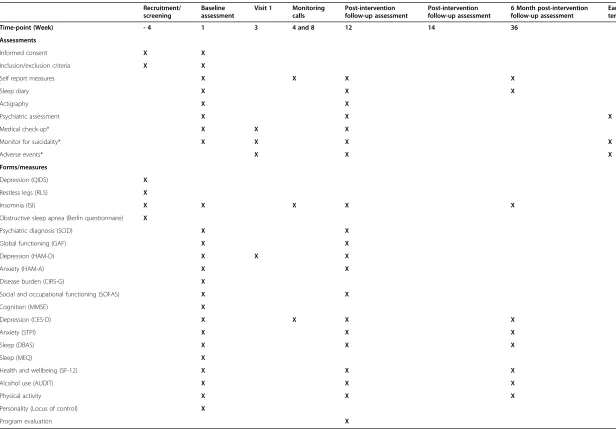
Reasons for exclusion, withdrawal, discontinuation of the website program or the depression treatment plan, or loss-to-follow-up will be recorded. Table 1 provides an overview of the timeframe for all assessments and the measures that are used. All self-report measures, includ-ing sleep diary entries, will be collected via the study website at baseline, three and six-month time-points.
All clinical (medical, psychiatric and actigraphy) data will be collected using standardised instruments and tools by staff trained in the trial protocol and procedures at baseline and three-months. All medical and psychiatry
assessments will be performed at the Trial Coordinating Centre, whereas actigraphy data will be collected via the watch worn by participants in their homes. Clinicians will be given a hardcopy case record form (CRF) in which they will document results, including actigraphy, which will be downloaded when the watch is returned. Clinicians will be required to sign-off on the CRF on completion of each assessment.
Data management
All consenting participants will be allocated a unique identifier at the time of preliminary screening and this identifier will be used exclusively to link all data col-lected as part of the trial. All self-report data will be collected via the secure internet site that delivers both arms of the treatment program (intervention and control). This data will be held on a secure server maintained by the provider of the internet-delivered interventions, BeHealth Solutions, and will only be transferred to the secure master trial database at the Trial Coordinating Centre at trial-end.
All clinical data (medical, psychiatric and actigraphy) will be entered electronically into the master trial data-base by suitably qualified staff, supervised by the trial manager. Data will be entered into a user-friendly Filemaker platform and integrity will be enforced through a variety of mechanisms, including referential data rules, valid values, range checks and consistency checks. The option to choose a value from a list of valid codes will also be available when applicable. The master trial database will be held on a secure server hosted by the Faculty of Medicine, University of Syd-ney. The trial database will be password protected, and only authorised trial personnel will have access. The database will be maintained in accordance with Uni-versity of Sydney Information and Communication Technology policy and procedures. Upon database lock, data will be exported to a statistical software package for subsequent analysis.
Statistical methods
Assessments
Informed consent X X
Inclusion/exclusion criteria X X
Self report measures X X X X
Sleep diary X X X
Actigraphy X X
Psychiatric assessment X X X
Medical check-up* X X X
Monitor for suicidality* X X X X
Adverse events* X X X
Forms/measures
Depression (QIDS) X
Restless legs (RLS) X
Insomnia (ISI) X X X X X
Obstructive sleep apnea (Berlin questionnaire) X
Psychiatric diagnosis (SCID) X X
Global functioning (GAF) X X
Depression (HAM-D) X X X
Anxiety (HAM-A) X X
Disease burden (CIRS-G) X
Social and occupational functioning (SOFAS) X X
Cognition (MMSE) X
Depression (CES-D) X X X X
Anxiety (STPI) X X X
Sleep (DBAS) X X X
Sleep (MEQ) X
Health and wellbeing (SF-12) X X X
Alcohol use (AUDIT) X X X
Physical activity X X X
Personality (Locus of control) X
Program evaluation X
*Additional clinical reviews will be scheduled on an individual basis in accordance with personalised depression treatment plan.
Key to Abbreviated Forms/Measures: QIDS (Quick Inventory of Depressive Symptomatology); RLS (Restless Legs Syndrome Rating Scale); ISI (Insomnia Severity Index); SCID (Structured Clinical Interview for DSM-IV Disorders); GAF (Global Assessment of Functioning); HAM-D (Hamilton Rating Scale for Depression); HAM-A (Hamilton Anxiety Rating Scale); CIRS-G (Cumulative Illness Rating Scale for Geriatrics); MMSE (Mini Mental State Examination); CES-D (Center for Epidemiologic Studies Depression Scale); STPI (State Trait Personality Inventory); DBAS (Dysfunctional Beliefs About Sleep Scale); MEQ (Morning-Eveningness Questionnaire); SF-12 (Short Form 12-Item Survey); AUDIT (Alcohol Use Disorders Identification Test).
BMC
Psychiatr
y
Page
9
o
f
1
[image:9.794.62.678.67.496.2]Data monitoring
The accuracy, completeness and progress of data will be monitored continuously throughout the trial. Each CRF will have a data checklist attached, on which the assess-ments completed and other information will be re-corded. Any missing information or illegible data will be queried with the researcher, clinician or interviewer re-sponsible for its collection. Audits will be undertaken periodically to ensure that all data relating to informed consent, self-report questionnaires, medical and psychi-atric assessment, and actigraphy, are accounted for, and that psychiatric assessments are standardised. All ori-ginal CRFs will be stored securely by trial identification number at the Trial Coordinating Centre.
Following data entry into the master trial database, data will be randomly checked for accuracy and com-pleteness and verified against source data. Approxi-mately 5% of participants will be specifically monitored.
Safety and event monitoring
The intervention under study is considered low-risk, with the only safety concern associated with the active SHUTi intervention related to increased tiredness and its sequelae due to restricted time spent in bed (as per the behavioural treatment for insomnia). This risk is mitigated directly through the program, which does not restrict sleep by fewer than five hours. In light of this, and given that all trial participants will be under the clinical care of their treating psychiatrist throughout the intervention period, an independent Data and Safety Monitoring Committee will not be established.
Harms
During the course of the study, participants will be assessed for both expected and unexpected adverse events (AEs) at each clinical and research assessment time point. Adverse events will be defined as any un-favourable and unintended sign, symptom or disease temporarily associated with the use of the intervention under investigation. Medical conditions or diseases present before starting the intervention will be consid-ered adverse events only if they worsen after starting the trial and that worsening is considered to be related to the study intervention. An AE will also be extended to include any undesirable and unintended effect of re-search occurring in trial participants as a result of the collection of identifiable private information under the research. An AE will be deemed serious if it is deter-mined to be associated, or possibly associated with study involvement, and results in either: death, is life-threatening, requires or prolongs hospitalisation, or results in persistent or significant disability or incap-acity. Expected AEs will include: initial discomfort or embarrassment due to personal or sensitive nature of
research questions; concerns related to internet-based data collection and storage procedures; and initial tired-ness, fatigue and possible concentration problems as a result of sleep restriction techniques to improve sleep habits.
Adverse events will be detected at the Week 3 clinical review and Week 12 follow-up assessment. In addition, research assistants conducting routine monitoring tele-phone interviews at Weeks 4 and 8, will also have capacity to detect AEs.
All AEs (including Serious Adverse Events, or SAEs), regardless of relatedness to the interventions under in-vestigation, will be recorded, classified and graded on an adverse event form. Recording will be completed in a concise manner using standard, acceptable medical terms. All SAEs will be reported to the Human Research Ethics Committee within 72 hours.
Study sponsorship and organisation
The sponsor of the trial is the University of Sydney. SHUTi and the control program will be provided by BeHealth Solutions. The trial is supported by beyond-blue: the national depression and anxiety initiative Na-tional Priority Driven Research Program and funded through a donation from the Movember Foundation. The trial will be coordinated independently of the spon-sor, funder and supplier of the intervention programs, by the Brain & Mind Research Institute, Sydney, Australia and overseen by the Trial Management Committee com-prising the Chief Investigator team.
Ethical considerations
The trial will be undertaken in compliance with the World Medical Association Declaration of Helsinki (re-vised version of Seoul, 2008), international standards of Good Clinical Practice and the applicable regulatory re-quirements in Australia. The design and implementation of the trial has been approved by The University of Syd-ney Human Research Ethics Committee (Reference Number: 2012/2182). All important protocol modifica-tions will be communicated to the Human Research Eth-ics Committee prior to implementation.
Discussion
Abbreviations
ANZCTR:Australian and New Zealand Clinical Trials Registry; AE: Adverse Event; AUDIT: Alcohol Use Disorders Identification Test; CRF: Case Record Form; CBTi: Cognitive Behavioural Therapy for Insomnia; CES-D: Center for Epidemiologic Studies Depression Scale; CIRS-G: Cumulative Illness Rating Scale for Geriatrics; DBAS: Dysfunctional Beliefs About Sleep Scale; DSM-IV: Diagnostic and Statistical Manual of Mental Disorders; GAF: Global Assessment of Functioning; GP: General Practitioner; HAM-A: Hamilton Rating Scale for Anxiety; HAM-D: Hamilton Rating Scale for Depression; ISI: Insomnia Severity Index; MDD: Major Depressive Disorder; MEQ: Morning-Eveningness Questionnaire; MMSE: Mini Mental State Examination; OSA: Obstructive Sleep Apnea; QIDS-SR: Quick Inventory of Depression Symptomology Self Report; RCT: Randomised Controlled Trial; RLS: Restless Legs Syndrome; SAE: Serious Adverse Event; SCID: Structured Clinical Interview for DSM-IV; SF-12: Medical Outcomes Study Short-Form 12-Item Health Survey; SHUTi: Sleep Healthy Using the Internet; SOFAS: Social and Occupational Functioning Assessment Scale; SOMNA: Sleep Or Mood Novel Adjunctive therapy; STAR*D: Sequenced Treatment Alternatives to Relieve Depression Study; STPI: State Trait Personality Inventory.
Competing interests
Helen Christensen is supported by an Australian National Health and Medical Research Council John Cade Fellowship 1056964. Kathleen Griffiths is supported by Australian National Health and Medical Research Council Research Fellowship 1059620. Sharon Naismith is supported by an Australian National Health and Medical Research Council Career Development Award 1008117. Ian Hickie is supported by an Australian National Health and Medical Research Council Research Fellowship 1046899.
Lee Ritterband and Frances Thorndike have equity ownership in BeHealth Solutions, LLC, a company developing and making available products related to the research reported in this publication. Specifically, BeHealth Solutions, LLC, has licensed the SHUTi program and the software platform on which it was built from the University of Virginia. The terms of this arrangement have been reviewed and approved by the University of Virginia in accordance with its conflict of interest policy.
Authors’contributions
NG conceived of the idea for this study, led the design of the study, obtained funding, and contributed to editing and refinement of the manuscript. NC was the Trial Manager for this study, contributed to the overall study design, and drafted the manuscript. HC, KG, SN and IH are all Chief Investigators on the study, contributed to the overall design of the study, and the editing and refinement of the manuscript. LR and FT are Chief Investigators on the study, developed the active intervention program and contributed to the design of the study and the editing and refinement of the manuscript. All authors read and approved the final manuscript.
Acknowledgements
The study is supported bybeyondblue: the national depression and anxiety initiativeNational Priority Driven Research Program and funded through a donation from the Movember Foundation. The authors would like to thank Amelia English, Eleanor Purshouse and Sophie Burgess who assisted with development of trial procedures, and in particular, Mary Grove and Carolyn Caruso of BeHealth Solutions who coordinated the functionality and ongoing support of the internet-based interventions under investigation.
Author details
1Healthy Brain Ageing Program, Brain and Mind Research Institute, University
of Sydney, 94 Mallett Street, Camperdown, NSW 2050, Australia.2Black Dog Institute, University of New South Wales, Prince of Wales Hospital, Hospital Road, Randwick, NSW 2031, Australia.3National Institute for Mental Health Research, The Australian National University, Building 63, Canberra, ACT 0200, Australia.4Behavioral Health and Technology Laboratory, Department of Psychiatry and Neurobehavioral Sciences, The University of Virginia, PO Box 800623, Charlottesville, VA 22908, USA.
Received: 11 January 2015 Accepted: 16 January 2015
References
1. Stewart R, Besset A, Bebbington P, Brugha T, Lindesay J, Jenkins R, et al. Insomnia comorbidity and impact and hypnotic use by age group in a national survey population aged 16 to 74 years. Sleep. 2006;29(11):1391–7. 2. Benca RM, Peterson MJ. Insomnia and depression. Sleep Med.
2008;9 Suppl 1:S3–9.
3. Buysse DJ. Insomnia, depression and aging. Assessing sleep and mood interactions in older adults. Geriatrics. 2004;59(2):47–51. quiz 52. 4. Glozier N, Martiniuk A, Patton G, Ivers R, Li Q, Hickie I, et al. Short sleep
duration in prevalent and persistent psychological distress in young adults: the DRIVE study. Sleep. 2010;33(9):1139–45.
5. Sunderajan P, Gaynes BN, Wisniewski SR, Miyahara S, Fava M, Akingbala F, et al. Insomnia in patients with depression: a STAR*D report. CNS Spectr. 2010;15(6):394–404.
6. Mallon L, Broman JE, Hetta J. Relationship between insomnia, depression, and mortality: a 12-year follow-up of older adults in the community. Int Psychogeriatr. 2000;12(3):295–306.
7. Perlis ML, Smith LJ, Lyness JM, Matteson SR, Pigeon WR, Jungquist CR, et al. Insomnia as a risk factor for onset of depression in the elderly. Behav Sleep Med. 2006;4(2):104–13.
8. Dew MA, Reynolds 3rd CF, Buysse DJ, Houck PR, Hoch CC, Monk TH, et al. Electroencephalographic sleep profiles during depression. Effects of episode duration and other clinical and psychosocial factors in older adults. Arch Gen Psychiatry. 1996;53(2):148–56.
9. Pigeon WR, Hegel M, Unutzer J, Fan MY, Sateia MJ, Lyness JM, et al. Is insomnia a perpetuating factor for late-life depression in the IMPACT cohort? Sleep. 2008;31(4):481–8.
10. Cho HJ, Lavretsky H, Olmstead R, Levin MJ, Oxman MN, Irwin MR. Sleep disturbance and depression recurrence in community-dwelling older adults: a prospective study. Am J Psychiatry. 2008;165(12):1543–50.
11. Carney CE, Segal ZV, Edinger JD, Krystal AD. A comparison of rates of residual insomnia symptoms following pharmacotherapy or cognitive-behavioral therapy for major depressive disorder. J Clin Psychiatry. 2007;68(2):254–60. 12. Judd LL, Paulus MJ, Schettler PJ, Akiskal HS, Endicott J, Leon AC, et al. Does incomplete recovery from first lifetime major depressive episode herald a chronic course of illness? Am J Psychiatry. 2000;157(9):1501–4.
13. Nierenberg AA, Husain MM, Trivedi MH, Fava M, Warden D, Wisniewski SR, et al. Residual symptoms after remission of major depressive disorder with citalopram and risk of relapse: a STAR*D report. Psychol Med. 2010;40(1):41–50. 14. Manber R, Edinger JD, Gress JL, San Pedro-Salcedo MG, Kuo TF, Kalista T.
Cognitive behavioral therapy for insomnia enhances depression outcome in patients with comorbid major depressive disorder and insomnia. Sleep. 2008;31(4):489–95.
15. Watanabe N, Furukawa TA, Shimodera S, Morokuma I, Katsuki F, Fujita H, et al. Brief behavioral therapy for refractory insomnia in residual depression: an assessor-blind, randomized controlled trial. J Clin Psychiatry. 2011;72(12):1651–8. 16. Wagley JN, Rybarczyk B, Nay WT, Danish S, Lund HG. Effectiveness of
abbreviated CBT for insomnia in psychiatric outpatients: sleep and depression outcomes. J Clin Psychol. 2013;69(10):1043–55.
17. Burgess PM, Pirkis JE, Slade TN, Johnston AK, Meadows GN, Gunn JM. Service use for mental health problems: findings from the 2007 National Survey of Mental Health and Wellbeing. Aust N Z J Psychiatry. 2009;43(7):615–23. 18. Aikens JE, Rouse ME. Help-seeking for insomnia among adult patients in
primary care. J Am Board Fam Pract. 2005;18(4):257–61.
19. Andrews G, Sanderson K, Corry J, Lapsley HM. Using epidemiological data to model efficiency in reducing the burden of depression*. J Ment Health Policy Econ. 2000;3(4):175–86.
20. Ritterband LM, Thorndike FP, Gonder-Frederick LA, Magee JC, Bailey ET, Saylor DK, et al. Efficacy of an Internet-based behavioral intervention for adults with insomnia. Arch Gen Psychiatry. 2009;66(7):692–8.
21. Morin CM, LeBlanc M, Daley M, Gregoire JP, Merette C. Epidemiology of insomnia: prevalence, self-help treatments, consultations, and determinants of help-seeking behaviors. Sleep Med. 2006;7(2):123–30.
22. Thorndike FP, Ritterband LM, Gonder-Frederick LA, Lord HR, Ingersoll KS, Morin CM. A randomized controlled trial of an internet intervention for adults with insomnia: effects on comorbid psychological and fatigue symptoms. J Clin Psychol. 2013;69(10):1078–93.
24. Ellis PM, Smith DA. Treating depression: the beyondblue guidelines for treating depression in primary care. Medical J Aust. 2002;176(Suppl):S77–83. 25. Rush AJ, Trivedi MH, Ibrahim HM, Carmody TJ, Arnow B, Klein DN, et al. The
16-Item Quick Inventory of Depressive Symptomatology (QIDS), clinician rating (QIDS-C), and self-report (QIDS-SR): a psychometric evaluation in patients with chronic major depression. Biol Psychiatry. 2003;54(5):573–83. 26. First MB, Spitzer RL, Gibbon M, Williams JBW. Structured Clinical Interview for DSM-IV-TR Axis I Disorders, Research Version, Patient Edition. (SCID-I/P). New York: Biometrics Research, New York State Psychiatric Institute; 2002. 27. Bastien CH, Vallieres A, Morin CM. Validation of the Insomnia Severity Index
as an outcome measure for insomnia research. Sleep Med. 2001;2(4):297–307. 28. Folstein MF, Folstein SE, McHugh PR. Mini-mental state. A practical method
for grading the cognitive state of patients for the clinician. J Psychiatr Res. 1975;12(3):189–98.
29. Allen RP, Burchell BJ, MacDonald B, Hening WA, Earley CJ. Validation of the self-completed Cambridge-Hopkins questionnaire (CH-RLSq) for ascertainment of restless legs syndrome (RLS) in a population survey. Sleep Med. 2009;10(10):1097–100.
30. Netzer NC, Stoohs RA, Netzer CM, Clark K, Strohl KP. Using the Berlin Questionnaire to identify patients at risk for the sleep apnea syndrome. Ann Int Med. 1999;131(7):485–91.
31. Thorndike FP, Saylor DK, Bailey ET, Gonder-Frederick L, Morin CM, Ritterband LM. Development and perceived utility and impact of an Internet intervention for insomnia. E J Appl Psychology. 2008;4(2):32–42.
32. Hamilton M. A rating scale for depression. J Neurol Neurosurg Psychiatry. 1960;23:56–62.
33. Hamilton M. The assessment of anxiety states by rating. Br J Med Psychol. 1959;32(1):50–5.
34. American Psychiatric Association. Diagnostic and statistical manual of mental disorders: DSM-IV [Internet]. 4th ed. Washington DC: American Psychiatric Association; 2000.
35. Goldman HH, Skodol AE, Lave TR. Revising axis V for DSM-IV: a review of measures of social functioning. Am J Psychiatry. 1992;149(9):1148–56. 36. Miller MD, Paradis CF, Houck PR, Mazumdar S, Stack JA, Rifai AH, et al.
Rating chronic medical illness burden in geropsychiatric practice and research: application of the Cumulative Illness Rating Scale. Psychiatry Res. 1992;41(3):237–48.
37. Radloff LS. The CES-D Scale. A self report depression scale for research in the general population. Appl Psychol Meas. 1977;1(3):385–401. 38. Zich JM, Attkisson CC, Greenfield TK. Screening for depression in primary
care clinics: the CES-D and the BDI. Int J Psychiatry Med. 1990;20(3):259–77. 39. Spielberger CD. Revised State-Trait Personality Inventory. Palo Alto, CA: Mind
Garden; 1995.
40. Morin CM, Colecchi C, Stone J, Sood R, Brink D. Behavioral and pharmacological therapies for late-life insomnia: a randomized controlled trial. JAMA. 1999;281(11):991–9.
41. Morin CM, Stone J, Trinkle D, Mercer J, Remsberg S. Dysfunctional beliefs and attitudes about sleep among older adults with and without insomnia complaints. Psychol Aging. 1993;8(3):463–7.
42. Zimmerman M, Martinez JH, Young D, Chelminski I, Dalrymple K. Severity classification on the Hamilton Depression Rating Scale. J Affect Disord. 2013;150(2):384–8.
Submit your next manuscript to BioMed Central and take full advantage of:
• Convenient online submission
• Thorough peer review
• No space constraints or color figure charges
• Immediate publication on acceptance
• Inclusion in PubMed, CAS, Scopus and Google Scholar
• Research which is freely available for redistribution