Societies?
Original Citation
Nikitas, Alexandros, Michalakopoulos, Nikitas and Wallgren, Pontus (2014) BikeSharing: Is Safety
an Issue Adversely Affecting its Potential for Being Embraced by Urban Societies? In: 3rd
International Cycling Safety Conference, 18th 19th November 2014, Gothenburg, Sweden.
This version is available at http://eprints.hud.ac.uk/id/eprint/24961/
The University Repository is a digital collection of the research output of the
University, available on Open Access. Copyright and Moral Rights for the items
on this site are retained by the individual author and/or other copyright owners.
Users may access full items free of charge; copies of full text items generally
can be reproduced, displayed or performed and given to third parties in any
format or medium for personal research or study, educational or notforprofit
purposes without prior permission or charge, provided:
•
The authors, title and full bibliographic details is credited in any copy;
•
A hyperlink and/or URL is included for the original metadata page; and
•
The content is not changed in any way.
For more information, including our policy and submission procedure, please
contact the Repository Team at: [email protected].
Proceedings, International Cycling Safety Conference 2014 18-19 November 2014, Göteborg, Sweden
ABSTRACT
Using bicycles on an ‘as-needed’ basis, usually for a small rental fee and without the externali-ties and obligations linked to bicycle ownership, is what makes public bicycles a societally af-fordable medium to enhance the transition to a more sustainable urban transport paradigm. However, despite its distinctive character in terms of its potential to be a mechanism trans-forming in some degree urban mobility to a shared responsibility regime, bike-sharing still fac-es some of the same safety concerns associated with ordinary bicycle ridership. The most common problem for cyclists’ wellbeing is that the traffic system is designed predominately from a car-user perspective. Even the cities that have recently implemented public bicycle pro-grammes, and therefore showed some extra care to provide fitting urban conditions for them, have not yet achieved to fully eclipse car-orientation as the prime cornerstone of their devel-opment norms. This means that transport systems worldwide do not necessarily take fully into account the main characteristics of cyclists reflecting safety themes: a cyclist is vulnerable (in a crash), flexible (in behaviour), instable (may fall off the bike), inconspicuous (difficult to see), has differing abilities (due to a wide range of the population), is conscious of effort (i.e., highly motivated to minimize energy expenditure), and sometimes seen as intruders in the traffic sys-tems, rather than as an integral part. This work refers to the results of a research scheme that meant to examine road users’ attitudes directly reflecting public acceptability towards two bike-sharing schemes in Drama (Greece, 50.000 residents) and Gothenburg (Sweden, 500.000 residents). Although safety was not the principal initiative for doing this dual study, one key conclusion was that many people could not embrace bike-sharing due to their perceptions that bicycle represents in general an unsafe travel mode and that their cities provide only limited road safety for cyclists.
Keywords: bike-sharing, public bicycles, public acceptability, attitudes, safety.
Bike-Sharing: Is Safety an Issue Adversely Affecting its Potential for Being
Embraced by Urban Societies?
A. Nikitas
1, N. Michalakopoulos
2, P. Wallgren
11
Division of Design and Human Factors, Department of Product and Production
Chalmers University of Technology Hörsalsvägen 5, 412 96 Göteborg, Sweden,
e-mail: [email protected] e-mail: [email protected]
2
2
1 INTRODUCTION
The last decade has seen a substantial increase in the perception of the bicycle as a realistic transport alternative to the car [1] meaning that cycling-related infrastructure and services are receiving more and more attention from urban policymakers. At the same time, the notion of a sharing economy (defined as the shared use of resources among individuals, including vehicles in a transportation network among others) has been rapidly embraced across the globe as a means of strengthening local economies and creative synergies within urban societies. The shared-use of mobility innovation mechanisms, in particular, offers the potential to lower a user's transportation costs; reduce the need for parking spaces in a community; improve over-all air quality; and facilitate access to and encourage use of other transportation modes such as rail transit [2]. Bike-sharing therefore is a timely innovation that provides a realistic answer to both these contemporary urban development necessities; the necessity to invest on cycling and its significant pro-environmental value and the necessity to promote a culture of sharing for cities looking to craft resource-efficient pathways to prosperity.
Originally a concept from the revolutionary 1960s, bike-sharing’s growth had been slow until the development of better methods of tracking bikes with improved technology [3]. Now, that with the intervention of GPS technology this is a non-issue, an excess of 500 public bicycle schemes of variable types and sizes operate in almost 50 countries worldwide [4]. Despite its vast potential as a medium designed to extend the reach of public transit services to final des-tinations in a way that prioritises people over cars, bike-sharing still faces some of the same safety concerns associated with ordinary bicycle ridership and then some more.
The principal safety problem for cyclists, and thus for the users of any public bicycle scheme, is that the traffic system is designed predominately from a car-user perspective giving little or no dedicated consideration to less popular or space-occupying modes. Even the cities that have recently implemented bike-sharing programmes, and therefore showed some extra care to provide fitting urban conditions for them, have not yet achieved to fully eclipse strong car-oriented urban development norms besides very few exceptions. This means that in general transport systems worldwide do not necessarily take fully into account the main characteristics of cyclists reflecting safety themes: a cyclist is vulnerable (in a crash), flexible (in behaviour), instable (may fall off the bike), inconspicuous (difficult to see), has differing abilities (due to a wide range of the population), is conscious of effort (i.e., highly motivated to minimize energy expenditure), and sometimes seen as intruders in the traffic systems, rather than as an integral part [5].
Nevertheless, even in the unlikely scenario that a transport system has catered for all these generic problems of cycling, both in real terms but also in terms of convincing road users psy-chologically and cognitively that there are no dangers related to cycling, bike-sharing could still have some mode-specific safety issues due to its distinctive public character; issues that can make people perceive bike-sharing as an unsafe activity. For example, the inability to provide bicycle helmets in conjunction with the rented vehicles in most bike-sharing schemes around the world is a serious drawback in any attempt to create the image (and thus the perception to potential users) that these schemes do satisfy in full safety requirements. Since there is con-crete evidence that wearing a bicycle helmet significantly reduces the risk of head injury [6] people could be more likely to consider a public bicycle programme safe if helmet rentals were a fixed function of the overall scheme especially when considering that a lot of the programme users would not have a bicycle helmet of their own.
3
2 STUDYING THE CASES OF DRAMA AND GOTHENBURG
In order to be able to identify and subsequently discuss thoroughly public attitudes towards bike-sharing, the use of specific city scenarios that could give a pragmatic and meaningful tude object to those perceptions, should be employed. The present study looked into the atti-tudes and system user experiences (the latter only when it was applicable) that could define the design (or re-design) criteria for two public bicycle schemes in two cities of different size, economies, topological and cultural characteristics. These cities are Drama (Greece) and Gothenburg (Sweden). The systems discussed are currently on very dissimilar operational phases; Drama is still in the process of bidding for funding and trying to decide on the precise requirements for the introduction of such a scheme while Gothenburg has already in place a successful system that has expanded massively in its four years of operation due to its popular-ity and the commitment of the cpopular-ity planners in making it a mainstream alternative to car.
2.1 Introducing the city of Drama and its ambition to introduce a bike-sharing scheme
Drama is a city situated in North East Greece next to the Greek-Bulgarian borders. Drama is 670 km away from Athens but it is relatively close to Greece’s second largest metropolitan centre Thessaloniki (158 km). The closest seaport and airport are located in Kavala and Chrisoupolis 37 km and 68 km away from Drama respectively. Drama has a city-based popula-tion of 45,828 residents but the overall municipality populapopula-tion, which includes 14 suburban communities in close vicinity from the main city, is 58,944 inhabitants [7]. Until recently, the economy of Drama relied heavily on the local textile-clothing and paper production industries. However, these industrial production entities have either ceased their operations or moved across the border to Bulgaria being victims of the Greek financial crisis and the steep competi-tion from antagonists from abroad. This is something that has affected adversely the local economy reducing significantly employment opportunities and making people more suscepti-ble to poverty and social exclusion. More specifically, the Gross Domestic Product per person in Drama for 2009 was only 11,700 euros and was one of the lowest in Greece. Lately, there have been efforts to take advantage of the rich local natural environment and to develop an economy based on eco-tourism since the biggest forests and natural springs of the Balkans are situated in the wider area of Drama. This is something that in the longer term creates the need for commitment to a more sustainable resource management strategy with mobility being one of those resources.
Despite its manageable size Drama has been dealing with persistent traffic congestion prob-lems. Currently bus services are the only means of public transport; however these are used almost exclusively by students and older people. Bicycle use has been growing slowly but steadily during the last few years. This is due to the realisation that more sustainable lifestyles should be adopted if environmental degradation is to be avoided and also due to financial rea-sons since it is considerably cheaper to run a bicycle than a car in the era of the Greek financial recession. Nonetheless, cycling is not yet established as a mainstream travel option for the city something that according to the results of this study is clearly associated with the lack of in-vestment on bicycle infrastructure and the, thus far, very limited political support to promote cycling as a mode that is not only leisure-related [8].
4
2.2 Introducing the city of Gothenburg and its popular Styr & Ställ
Gothenburg is the second largest city in Sweden and the fifth largest in the Nordic countries by population. More specifically, it has a city-based population of 519,400 citizens but the resi-dents of Gothenburg’s broader metropolitan area are almost one million. Gothenburg is situ-ated on the Southwestern coast of Sweden and has a strategic geographical position in Scandi-navia, being approximately half way between Copenhagen and Oslo. Due to the Gothenburg's advantageous positioning, trade and shipping have always played a major role in the city's economic history, and they continue to do so since Gothenburg’s port is the largest harbour in Scandinavia. It should be noted however that due to antagonists from abroad shipping espe-cially has regressed considerably over the last decades. Volvo was founded in Gothenburg in 1927 and is perhaps the most integral piece of the city’s second pillar of economic prosperity, which is manufacturing, followed by other mega-companies like SKF and Ericsson. Gothenburg is also home to approximately 35,000 students, as the city hosts two higher education institu-tions; the University of Gothenburg and Chalmers University of Technology. The city is served by Göteborg Landvetter Airport, located 30 km southeast of the city centre, and by Göteborg City Airport, located 15 km from the city centre.
Gothenburg is a city providing a wide range of transport options to its residents and visitors. With over 80 km of double tracks, the blue iconic tram of the city is the largest light rail net-work in Scandinavia and together with the bus netnet-work form the basis of the public transport system. There are also daily boat and ferry services catering the needs of a city that is defined (even in terms of its own name) by river Göta. In early 2013, a road pricing scheme was intro-duced in the city centre to regulatory enforce, in some respect, modal change, while parking pricing is another measure that has been spread to all central and residential areas of Gothen-burg for many years now [9].
With over 600 km cycling routes, Gothenburg provides an extensive bike road network that makes cycling a valid transport option for the city’s road users. This is eased by the fact that because of the moderating influence of the warm Gulf Stream, Gothenburg enjoys milder weather conditions than most other cities with similar high northern latitude. Gothenburg has already in place Styr & Ställ, which is a self-service bike rental system, spread across 60 sta-tions throughout the city centre with approximately 1000 bicycles. The system can be accessed 24 hours a day and seven days a week. It is available between 1st of March to 31st of October. Technical support is open at working hours every weekday. In order to access the system, cus-tomers have to subscribe to a 3-day pass (10 SEK), a season pass (75 SEK) or special business subscription. The usage is free for the first 30 minutes to allow people to pilot the system without any cost. The scheme is financed by the revenue generated from its users and from the commercial billboards placed throughout the city.
The scheme launched its operations in August 2010 consisting of 300 bicycles and 20 stations and by the end of its first season it expanded to 500 bicycles in 40 stations. In 2011 the num-ber of bicycles increased to 700 and between the 1st of April and 30th of June there were 1087 season subscriptions and 6960 three-day passes issued. Around 70,000 movements took place on a weekly basis at that time; movement is any case a bike is rented, returned or moved by the service staff from one station to another [10]. In year 2012 this service was integrated to the services provided by the Västtrafik card, which is the equivalent of a one-for-all public transport pass for Gothenburg, eliminating the need for a separate card for Styr & Ställ. During 2012 there were over 202,000 rentals and 18,000 subscribers. In 2013 the number of rental stations increased to 57 and the number of bicycles to 1000 while in the 2014 season three more stations are in operation.
5
3 RESEARCH METHODOLOGY
A primarily quantitative survey was the methodological tool that was selected in order to iden-tify attitudes towards bicycle use, bike-sharing and its potential (Drama) or actual (Gothen-burg) usefulness and embracement from the public for both cities. A more qualitative research approach was deemed not to be applicable for the means of the study due to the researchers’ strong focus on collecting data with a stronger generalization merit so that the results pro-duced could be in some extent reflecting how favourably some people in Drama and Gothen-burg view cycling in general and public bicycles in particular.
3.1 Questionnairestructure
6
3.2 Distribution and sampling
The questionnaire was available to the public of Drama in an online form and via one-page hard copies. This dual diffusion approach was decided since this research study was aiming to get a sample size that could be representative of Drama’s population by maximising data col-lection opportunities and therefore improving the response rate. The empirical knowledge and prior experience of the first author about studying attitudes of Drama’s population was sug-gesting that none of the two options (i.e. online survey and postal survey) could solely provide a sample size reflecting the needs of the study since: i) many people in Drama and especially people aged 50 and over are not particularly engaged with internet activities and ii) due to lack of Universities in the region there is not yet a research-friendly philosophy established to allow for an academic-driven postal survey to have response rates comparable to the likes of other countries or cities [8].
The online survey was accessible through the official webpage of the Municipality of Drama and was disseminated electronically through social media, while paper-based questionnaires were posted together with the City’s water and sewage bill letters to an excess of 3000 house-holds in Drama. The paper-based questionnaires were set to be returned to special collection boxes available in the City Hall’s reception, the offices of the city-run company for the local ‘water and sewage issues’ (D.E.I.A.D.), the Citizens’ Helping Desk of the City (K.E.P.) and the of-fice of the Local Centre for Labouring Representation. The addresses for the postal survey were randomly chosen from D.E.I.A.D. administrators and were distributed evenly between the different parts of the city, so that the sample would be more representative in geograph-ical terms.
The distribution of the questionnaire in Gothenburg was on the other hand a far more straight-forward choice and was conducted solely via an online survey accessible from Chalmers Uni-versity of Technology official webpage. Circulating the online questionnaire was amplified by using social media and e-mails. A hard-copy distribution was considered avoidable due to the considerably bigger size of the second study locality, the much bigger familiarity of the people in Gothenburg with online surveys and financial, time and management constraints.
The city of Drama generated 640 useable responses: 257 coming from the online survey and 383 that were reflecting the hard-copy questionnaire collection. There were also 31 partially completed online questionnaires and 40 non-usable postal questionnaires returned that were excluded from the analysis purposes, since a full completion of the questionnaire was set as a prerequisite for participation. The city of Gothenburg generated 535 useable responses and 23 partially completed questionnaires.
4 RESULTS AND DISCUSSION
The complete set of results of this dual study intends to enhance the development of a thor-ough theoretical and empirical understanding of the attitudes of the residents of Drama and Gothenburg reflecting directly or indirectly public acceptability towards cycling and bike-sharing. This paper nonetheless aims to focus solely to the attitudes that refer to safety issues and identify safety-related barriers that could be keeping road users away from embracing, not just these local public bicycle applications, but bike-sharing as a notion per se.
4.1 Identifying the Sample’s Characteristics
7
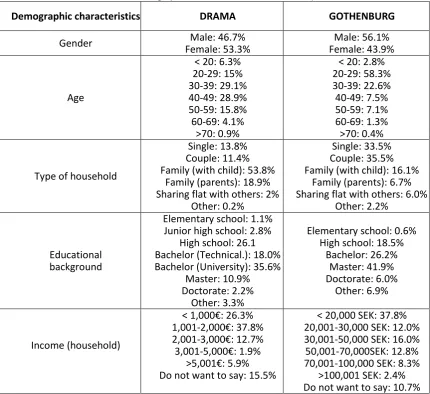
[image:8.595.83.514.137.531.2]Table 1 provides a synopsis of the demographic profiles of the two samples in terms of gender, age, type of household, education background and household income.
Table 1. Demographic characteristics of the two samples.
Demographic characteristics DRAMA GOTHENBURG
Gender Female: 53.3% Male: 46.7% Female: 43.9% Male: 56.1%
Age
< 20: 6.3% 20-29: 15% 30-39: 29.1% 40-49: 28.9% 50-59: 15.8% 60-69: 4.1% >70: 0.9%
< 20: 2.8% 20-29: 58.3% 30-39: 22.6% 40-49: 7.5% 50-59: 7.1% 60-69: 1.3% >70: 0.4%
Type of household
Single: 13.8% Couple: 11.4% Family (with child): 53.8%
Family (parents): 18.9% Sharing flat with others: 2%
Other: 0.2%
Single: 33.5% Couple: 35.5% Family (with child): 16.1%
Family (parents): 6.7% Sharing flat with others: 6.0%
Other: 2.2%
Educational background
Elementary school: 1.1% Junior high school: 2.8%
High school: 26.1 Bachelor (Technical.): 18.0% Bachelor (University): 35.6%
Master: 10.9% Doctorate: 2.2%
Other: 3.3%
Elementary school: 0.6% High school: 18.5%
Bachelor: 26.2% Master: 41.9% Doctorate: 6.0%
Other: 6.9%
Income (household)
< 1,000€: 26.3% 1,001-2,000€: 37.8% 2,001-3,000€: 12.7% 3,001-5,000€: 1.9%
>5,001€: 5.9% Do not want to say: 15.5%
< 20,000 SEK: 37.8% 20,001-30,000 SEK: 12.0% 30,001-50,000 SEK: 16.0% 50,001-70,000SEK: 12.8% 70,001-100,000 SEK: 8.3%
>100,001 SEK: 2.4% Do not want to say: 10.7%
8
[image:9.595.74.522.193.616.2]Table 2 provides a synopsis of the respondents’ profiles in terms of some of their basic travel behaviour characteristics and attitudes towards transport and bike-sharing. Again the table re-fers separately to the samples of Drama and Gothenburg to allow for comparisons. It should be noted that the terms “regularly“ and “sometimes“ that are used to report frequencies cor-respond to the combination sets of responses of “daily“ and “few times a week“ the former and “once a week“ and “at least once a month“ the latter.
Table 2. Behavioural/Attitudinal characteristics of the two samples.
Behavioural /Attitudinal
characteristics DRAMA GOTHENBURG
Frequency of driving a car
Regularly: 71.1% Sometimes: 6.6% Rarely/Never: 22.3% Regularly: 19.4% Sometimes: 26.9% Rarely/Never: 53.7%
Frequency of cycling
Regularly: 19.2% Sometimes: 11.6% Rarely/Never: 69.2% Regularly: 52.4% Sometimes: 19.9% Rarely/Never: 27.6%
Primary means of travel-ing to the most frequent
destination
Car (driver): 48.8% Car (passenger): 5.6%
Motorcycle: 6.6% Bus: 4.8% Cycling: 4.8% Walking: 29.4%
Car (driver): 5.8% Car (passenger): 0.9%
Motorcycle: 0.0% Bus/Tram: 37.5%
Train: 4% Cycling: 30.5% Walking: 21.4%
Primary factor for choosing transport mode Cost: 9.2% Comfort: 41.4% Availability: 15.5% Time: 25.5%
Environmental awareness: 8.4%
Cost: 14.5% Comfort: 22.6% Availability: 28.6%
Time: 26.1%
Environmental awareness: 7.2%
Bicycle ownership Yes: 58.3% No: 41.7% Yes: 78.8% No: 21.2%
Frequency of using bike-sharing* Regularly: 46.9% Sometimes: 21.5% Rarely/Never: 31.6% Regularly: 7.6% Sometimes: 5.6% Rarely/Never: 86.4%
Way of utilising a bike-sharing scheme*
Main travel mode: 15.6% Main travel alternative: 26.4%
Secondary alternative: 27.7% Exercise and joy: 18.6%
Do not use: 11.7%
Main travel mode: 2.8% Main travel alternative: 5.5% Secondary alternative: 21.6%
Exercise and joy: 0.4% Do not use: 69.8% Bike-sharing should be
introduced in Drama / Bike-sharing is good for
Gothenburg
Strongly agree: 56.7% Agree: 30.2% Neutral: 10.7% Disagree: 1.3% Strongly disagree:1.3%
Strongly agree: 71.2% Agree: 21.2% Neutral: 6.2% Disagree: 0.7% Strongly disagree: 0.7%
*for Drama these are figures referring to the respondents’ perceived usage of the scheme if this was in-troduced in the city; while for Gothenburg reflects usage during the 2014 bike-sharing season.
9
to use frequently Styr & Ställ or to utilise it as anything else than a secondary alternative. The most straightforward evaluation question of the questionnaire for Drama was referring to whether bike-sharing should be introduced in the city while for Gothenburg the question was framed to ask respondents if they consider the existing scheme to be good for the city. In both cases people were extremely sympathetic to the measure.
4.2 Safety as a criterion for embracing bike-sharing
[image:10.595.149.442.392.541.2]Despite the fact that this study was not intended to be focusing extensively on the theme of road safety it was unavoidable to consider this when looking to develop an understanding of the attitudes reflecting the public acceptability of bike-sharing. This is because danger, or fear of involvement in an accident, remains the key reported deterrent to widespread cycle use [16] and therefore evidently to the success of bike-sharing schemes. Each of the two question-naires therefore had two questions referring to road safety; one direct and one indirect. The first set of questions for Drama and Gothenburg was part of the survey section themed as views on bicycles and cycling. It was asking respondents to choose an answer that best ex-pressed their views on whether “bicycle is an unsafe mode“ (Drama’s survey) or whether “cy-cling is safe“ (Gothenburg’s survey) varying from strongly agree to strongly disagree (5-point Likert scale). The exact wording of the question was decided based on the less cognitively chal-lenging way to express the statement in Greek and Swedish respectively and that is why there is a difference between the two. However, the attitude object of the question is arguably the same (there is almost no room for different interpretations of its meaning) and it was set to gather data on whether cycling is appreciated by the respondents of the surveys as a potential-ly dangerous travel mode or not. Figure 1 and Figure 2 illustrate the two sets of results.
Figure 1. Bicycle is an unsafe mode (survey results from Drama).
[image:10.595.148.443.586.737.2]10
Both sets of results indicate that the respondents had no particularly strong views about whether bicycle/cycling is safe or not. All the responses containing the word “strong“ used ei-ther in a positive or negative context gained small attention. On the contrary, in both cities ap-proximately one third of the respondents provided a neutral reply possibly feeling that safety is something mostly depending on the individual cyclist and one’s overall ability to ride safely a bike within a city or perhaps being unable to decide if cycling is an activity so risky that could be classified as truly unsafe. In general, in both samples there were more respondents feeling that cycling is safe than those who thought that it is unsafe. The Swedish respondents were more likely than the Greek respondents to think than cycling is safe although this difference was not that significant (46.3% against 38%). This was something anticipated, nonetheless, in some degree since the Swedish respondents being more likely to own a bicycle and to cycle in a regular basis were more acclimatized to the dangers of bicycle use and could downplay them easier than others who did not have extensive daily cycling experiences (as most Greek re-spondents self-reported).
In the sample representing Gothenburg the younger an age group was the more likely the re-spondents consisting it were to believe that cycling was safe (χ2 = 38.999; df = 24; p < 0.05). There were no statistically significant gender differences (χ2 = 5.999; df = 4; p = 0.199) and no statistically significant differences referring to any of the other demographic or travel behav-iour parameters listed in Table 1 and Table 2. The only other statistically significant finding that can be reported was the one about the correlation with the attitude referring to whether a particular respondent was likely to believe that Styr & Ställ was good for the city. Respondents that self-report compliance with this notion were more likely to believe that cycling was safe (χ2 = 61.038; df = 16; p < 0.05) although it should be noted that the sample groups against this notion were rather small.
In the sample representing the potential bike-sharing users from Drama there were no age-specific differences of statistical significance (χ2 = 22.225; df = 24; p = 0.566) nor gender-specific ones (χ2 = 2.958; df = 4; p = 0.565). Nonetheless, household income had a statistically significant correlation with the perception regarding cycling’s respective safety (χ2 = 29.901; df = 20; p < 0.01). People earning 5,001€ and more and the ones not wanting to disclose their household income were far more likely to agree or strongly agree than all others that bicycle was an unsafe mode. The frequency with which people self-declared that they will be using an eventual bike-sharing scheme was also strongly correlated with the perception regarding cy-cling’s respective safety (χ2 = 44.956; df = 20; p < 0.05). The respondents less likely to self-report an eventual use of the scheme were the ones most likely to believe that riding a bicycle is an unsafe travel option. The final statistically significant finding was the one referring to the correlation with the attitude set to frame whether a particular respondent was likely to believe that bike-sharing should be introduced in Drama (χ2 = 35.808; df = 16; p < 0.05). Respondents that self-reported compliance with this notion were more likely to believe that cycling was safe although it should be noted that the sample groups against this notion were rather small. This last finding combined with the correlation reported in Gothenburg’s sample relating the per-ceived goodness of bike-sharing for the city with the perper-ceived safety of cycling means that people who tend to believe that bike-sharing is a needed function for the wellbeing of their urban society are more likely to consider cycling a less dangerous travel alternative.
11
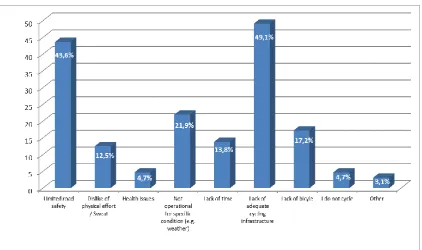
[image:12.595.86.509.127.377.2]them hesitant to adopt a more cycle-oriented travel behaviour. Figure 3 and Figure 4 illustrate the two sets of results referring to Drama and Gothenburg respectively.
Figure 3. Reasons for not cycling regularly and not being willing to eventually bike-share (survey results from Drama).
Figure 4. Reasons for not using bike-sharing more regularly or at all (survey results from Gothenburg).
[image:12.595.89.509.430.697.2]12
The main reasons according to the respondents of Drama for being reluctant to cycle and po-tentially to use public bicycles are principally associated with the lack of cycling-oriented or bike-friendly urban infrastructure and the feeling that currently there is only limited road safe-ty for cyclists. Almost one in every two respondents made the case for each of these two spe-cific answers making clear that physical and cognitive barriers associated with the way a cyclist is hospitalized in one’s respective urban environment constitute the key in giving up the ideas of cycling and bike-sharing. More specifically, and since this paper is set to embrace the theme of road safety, one could claim that the two factors, in which these two most popular respons-es refer to, are very much linked to each other. Better and more focused road infrastructure suiting the special needs of cyclists (or at least not fully disregarding them) could improve road safety conditions both in real terms but also in the way people perceive these safety-related conditions.
It is true that only recently the construction of bike lanes, bike roads and bicycle racks has been initiated in the city of Drama; therefore these specific attitudes are well justified [8]. The reality is that although cycling has been ignored almost entirely thus far from policymakers and has not as yet been classified as a truly mainstream travel mode that deserves investing on, bike-sharing was viewed very positively by the respondents of this work. This highlights the vast potential that this mode has if politicians decide to fund infrastructure that supports the needs of cyclists, and therefore improve road safety conditions both in real terms but also in the way people feel about them. If this important safety-enhancing precondition could be sat-isfied bike-sharing could in turn become a worthwhile investment for Drama capable of pro-moting a transition to an increased bicycle usage for the city.
The respondents of Gothenburg on the other hand, having a far superior city in terms of being able to access a number of well-developed alternatives to private car usage and a better over-all road transport network already supporting cycling in multiple ways, were not that likely to choose “limited road safety“ as one of their two answers. Only 14.9% of the respondents an-swered that limited road safety could act as an obstacle for them in using bike-sharing. Never-theless one of the most frequent answers, which the respondents gave when asked about the reasons they could lead them to self-exclude themselves from using Styr & Ställ, was the one referring to the “lack of good bike-sharing related infrastructure (e.g. rental stations)“. The term “good“ in this specific context could well mean among other attributes (e.g. comfortable, conveniently located, aesthetically pleasing, accessible) that could contribute in defining the perceived goodness of the scheme “safe“. “Lack of good public bicycles“ was another reason for not employing the regular use of Styr & Ställ that could be again linked with road safety if “good“ in a number of cases and for some respondents is partially equivalent to “safe“ among other things. This means that even a rather advanced and rapidly expanding, due to its popu-larity, bike-sharing scheme could be perceived into some extent by more than a few people as an unsafe system or perhaps as part of an overall unsafe road transport system.
5 CONCLUSIONS
13
REFERENCES
[1]L. Dell’Olio, A. Ibeas and J. L. Moura, “Implementing bike-sharing systems”, Proceedings of the ICE – Municipal Engineer164 (2011), pp. 89-101.
[2]P. DeMaio, “Bike-sharing: History, impacts, models of provision, and future”, Journal of Public Transportation12 (2009), pp. 41-56.
[3]M. Barth and S. A. Shaheen, “Shared-use vehicle dystems: Framework for classifying car-sharing, station cars, and combined approaches“, Transportation Research Record: Journal of the Transportation Research Board1791 (2002), pp. 105-112.
[4] A. Nikitas, P. Wallgren and U. Rahe, “Public bicycles: how the concept of human-oriented “mobility sharing” technology can influence travel behaviour norms and reshape design education.“ in the Proceedings of the 16th International Conference on Engineering and Product Design Education Conference "Design Education & Human Technology Relations", 4-5 September, 2014, University of Twente, Enschede, The Netherlands.
[5]F. Wegman, F. Zhang and A. Dijkstra, “How to make more cycling good for road safety”,
Accident Analysis and Prevention44 (2012), pp. 19-29.
[6]D. L. Robinson, “Head injuries and bicycle helmet laws“, Accident Analysis and Prevention
28 (1996), pp. 463-475.
[7]The Municipality of Drama’s Official Web-Portal. Available at:
http://www.dimos-dramas.gr/portaldrama/homepage/DimosDramas [Accessed 15 July 2014].
[8]A. Nikitas, P. Wallgren and U. Rahe, (submitted to the Special Issue of Transport Policy: Shared-Use Mobility Innovation in the Sharing Economy on June 30th). “Understanding bike-sharing dynamics in an era of economic crisis: A story of Greek Drama“.
[9]A. Nikitas A., U. Rahe U. and T. Karjalainen, “Innovative bike-sharing design as a research and educational platform for promoting more livable urban futures“. 5th International Con-gress of International Association of Societies of Design Research, 26-30 August, 2013, To-kyo, Japan.
[10] Göteborgs Stad, “Trafik- och resandeutveckling 2011“, Gothenburg, 2012. Available at: http://www2.trafikkontoret.goteborg.se/resourcelibrary/Trafikrapport_2011.pdf [Accessed 10 July 2014].
[11] Styr & Ställ Göteborg official website, “Safety: Road safety guidelines“. Available at:
http://en.goteborgbikes.se/Safety [Accessed 05 September 2014].
[12] B. Maheux, C. Legault, and J. Lambert, “Increasing response rates in physicians' mail sur-veys: An experimental study“, American Journal of Public Health, 79 (1989), pp. 638-639. [13] P. H. Shiono, and M. A. Klebanoff, “The effect of two mailing strategies on the response to
a survey of physicians“, American Journal of Epidemiology, 134 (1991), pp. 539-542.
[14] S. D. Halpern, P. A. Ubel, J. A Berlin and D. A. Asch, “A randomized trial of $5 versus $10 monetary incentives, envelope size, and candy to increase physician response rates to mailed questionnaires“, Medical Care, 40 (2002), pp. 834–39.
[15] E. Gilbart and N. Kreiger, “Improvement in cumulative response rates following implemen-tation of a financial incentive“, American Journal of Epidemiology, 48 (1998), pp. 97-99. [16] H. McClintock and J. Cleary, “Cycle facilities and cyclists’ safety: Experience from Greater
Nottingham and lessons for future cycling provision“, Transport Policy, 3 (1996), pp. 67-77. [17] T. Assum, “Attitudes and road accident risk“, Accident Analysis and Prevention29 (1997),