2016 International Conference on Wireless Communication and Network Engineering (WCNE 2016) ISBN: 978-1-60595-403-5
A Grid-based Scheduling Method of Manufacturing
Resources for Networked Manufacturing
Juan LI, Jing ZHANG, Xin ZHOU
and
Xiao-yan DENG
Office College of Chinese Armed Police, Chengdu, 610213 China
Keywords: Networked manufacturing, Resources scheduling, Grid-based.
Abstract. To optimize allocation of the networked manufacturing resources and improve the networked manufacturing system’s productivity, one method of manufacturing resources scheduling was proposed based on routing and forwarding algorithm grid-based. At the same time, networked manufacturing mode manufacturing resources optimizing framework grid-based and scheduling architecture grid-based were established to analyze the mechanism of manufacturing resources scheduling. Then, a grid-based scheduling model of manufacturing resources for networked manufacturing was constructed by means of open loop and closed loop queuing network methods. Finally, the least task priority and the minimum expected waiting time optimizing strategies were proposed to realize manufacturing resources scheduling. The method can provide a new approach to enhance the efficiency of networked manufacturing process, and extend the knowledge of manufacturing resources optimizing and heighten the automation level of networked manufacturing process.
Introduction
With the globalization of economy and the rapid development of information technology, the stringent market competition and individualization requirements make today’s manufacturing enterprises facing drastic challenges, and the great changes of production management mode have being taking place. The variety of enterprise environment needs the production system to be an agile and double-quick system[1-2]. To adapt the enterprise environment changes, the networked manufacturing based of networked manufacturing theory is just one type of production organization nodes which can improve the enterprise’s agility and response quickly to the customer’s requirements. As the network technology and advanced manufacturing technology advancing, networked manufacturing is becoming the main trend in manufacturing industry[3-4].
The Characteristic of Networked Manufacturing Resources Scheduling
Under network manufacturing, all candidates locate in different places and possess different manufacturing capacity and cost. Hence, it is necessary to find the most economic partnering corporation as well as the most reasonable scheduling. For different market opportunities, coordinator of corporation alliance would choose the most suitable partners from candidates and allocate tasks, such that to meet the market requirements most probably. Hence, the supply chain scheduling under network manufacturing is a breakthrough of the localized optimization under traditional manufacturing environment. It guarantees the realization of final market opportunities, and optimizes overall interest in a most effective way. The composition structure of Manufacturing resources in cloud: Local enterprise, Local Workshop, Nonlocal enterprise, Scattered.
Networked manufacturing scheduling problems have a set of characteristics that need specification for problem identification. These characteristics can be organized into classes and represented through a classification nomenclature or notation. A variety of classification schemes and notations have been put forward. One class of characteristics of problems, frequently referred as class α, specifies the manufacturing scheduling environment, essentially identifying production system requirements and structure and the number of machines or processors that can be available. Another, the β class, deals mainly with characterization of jobs, production resources and processing requirements. These are normally related with production resources. These resources, in addition to machines, may include operators, tools, handling devices and buffers. The latter are usually seen as auxiliary resources. The third, the γ class, specifies the optimization criteria. Typical examples of these are minimization of total or mean flow time, maximum completion time or makes plan and maximum lateness of jobs. Sometimes measures based on multi criteria also need to be specified.
The Grid-based Scheduling Model of Manufacturing Resources
Resources Scheduling Method Based on Routing and Forwarding Algorithm Grid-based
The definition of grid is as follows: grid is an integrated supporting environment both for the share and integration of resources in enterprise and social and for the cooperating operation and management of the enterprises. Based on the grid and relative advanced computer and information technologies, grid shields the heterogeneousness and the regional distribution of resources by the way of encapsulating and integrating of the design, manufacture, management, information, technology, intelligence and software resources separated in different enterprises and social groups.
The aim of manufacturing grid-based is to effectively organize all kinds of resources separated in different regions, enterprises, organizations, and individuals. Through the services provided by manufacturing grid-based, users can obtain various manufacturing services as conveniently as obtain information from the Internet nowadays. Under the support of manufacturing grid-based, the specialized application system faced special manufacturing demand of the enterprises can be established, and the cooperation of design, manufacturing, business of the enterprises can be achieved.
To quick searching manufacturing resources for networked manufacturing, one method of manufacturing resources scheduling was proposed based on Routing and forwarding algorithm grid-based. In routing and forwarding algorithm grid-based, manufacturing resource information table is saved in each manufacturing resource node. But, this manufacturing resource information table will not include all manufacturing resources information, and only transmitting way information of include manufacturing resources. When a enterprise or workshop find or search a manufacturing resource, transmitting way information can be acquired at firstly time. Searching way and direction of manufacturing resources can be gain at the same time.
The process of manufacturing resources scheduling method based on Routing and forwarding algorithm grid-based includes:
manufacturing resource node to this node, and if the availability is incorrect, the process transfers to step two.
(2) Transmitting manufacturing resource node set S is found by manufacturing resources task node in information table of manufacturing resources node, and this manufacturing resource node is identified.
(3) If transmitting manufacturing resource node set S is not null, the first manufacturing resource node is selected, and this node is deleted in set S. and found by manufacturing resources task node in information table of manufacturing resources node, and this manufacturing resource node is identified. The process transfers to step four. If transmitting manufacturing resource node set S is null, the algorithm is finished.
[image:3.595.77.520.243.391.2](4) If all manufacturing resources node are identified, the process transfers to step three. If not, the process transfers to step one.
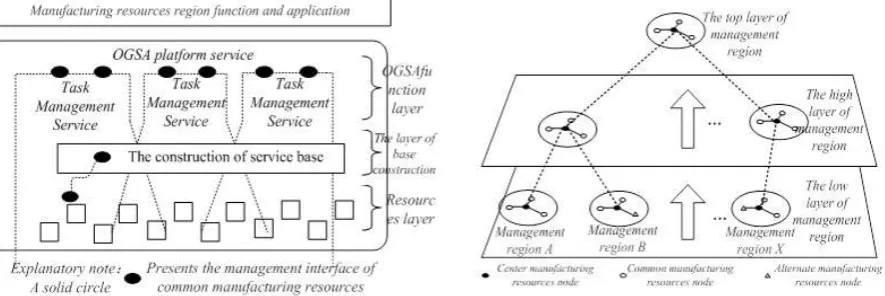
Figure 1. Resources optimizing framework grid-based. Figure 2. Manufacturing resources scheduling architecture.
Figure 1 shows manufacturing resources optimizing framework grid-based for networked manufacturing. Manufacturing resources is directly managed by local management interface in resources layer of manufacturing resources optimizing framework. Non associated resources are directly managed by privately-owned management interface. The management function includes monitor (such as manufacturing resources is acquire and implement by routing and forwarding algorithm grid-based), installment, control (such as the status of manufacturing resources is set), find, and so on. The action of manufacturing resources is managed to establish management basis and integrate different type manufacturing resources in foundation construction layer of manufacturing resources optimizing framework.
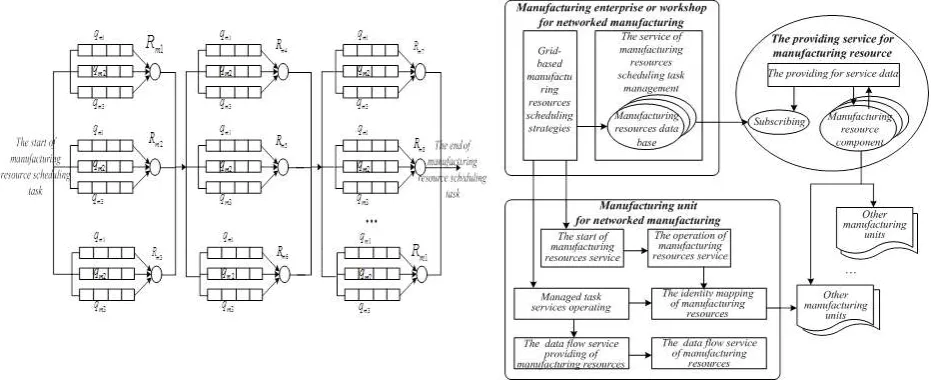
Figure 3. The grid-based scheduling model of
[image:4.595.65.531.76.266.2]manufacturing resources.
Figure 4. The operation framework grid-based of
manufacturing resources scheduling.
The Queuing Network Grid-based Scheduling Model
The queuing network grid-based is directed graph:
(1, 2, 3,.. ), ( )
G V m E V V (1)
Where node V presents the service station for provide service, and a service station includes a queuing and one or some services. A node represents manufacturing resources node. Arc E presents the net topology, and shows the way of task flow. An arc represents among connected relation Transfer mode and manufacturing resources node.
Based on the service priority, service demand, characteristic of way, and so on, queuing network grid-based is includes open loop queuing network, closed loop queuing network, and mixed queuing network. Open loop queuing network includes an input arc and at the least. The input arc come from outside manufacturing resources nodes, and output arc go outside manufacturing resources nodes. Closed loop queuing network is includes output arc, and task number is constant. All manufacturing resources nodes are closed loop implemented. In mixed queuing network, some manufacturing resources nodes are closed loop implemented, and other manufacturing resources nodes are open loop implemented.
For comprehensively schedule manufacturing resources for networked manufacturing, and optimizing the performance of manufacturing resources, and manufacturing resources schedule and task management should be combined. By means of open loop and closed loop queuing network methods, a grid-based scheduling model of manufacturing resources for networked manufacturing was constructed to analyze the mechanism of manufacturing resources scheduling.
Figure 4 illustrates grid-based scheduling model of manufacturing resources for networked manufacturing.
manufacturing resources node service will be transmitted to other nodes after a task implement service in a node. For example, when a manufacturing resources distribution task is executed, manufacturing resources node original data information is acquired at first. Then, available manufacturing resources will be waited. Finally, manufacturing resources to implement distribution task after the execute permissions is gained.
Grid-based Manufacturing Resources Scheduling Strategies
Because the environment of networked manufacturing is complex and dynamic, and some user task is complicated, some manufacturing resources provide service for a task at some time. As a result, there is need a manufacturing resources scheduling strategies to rationally manage manufacturing resources task.
The manufacturing resources scheduling strategies is to distribute task into available manufacturing resources, so that manufacturing resources can achieve load balancing among manufacturing resources when task priority is not took into account. For realizing maximum throughput capacity and maximum response time among manufacturing resources,
nmanufacturing resources need be utmost concurrency operated and achieve load balancing.
(1) The least task priority optimizing strategies
The least task priority optimizing strategies is to select least task manufacturing resources as object of distribution task, and that is the shortest manufacturing resources will acquire opportunity to obtain distribution task. The distribution task number should the less than superior limit the
buffer space of manufacturing resources node. The condition of manufacturing resources node Ri
can be shown as:
( k) min( ( 1), ( 2),... ( n)) and ( i)< k
j k Q R Q R Q R Q R Q R b
(2)
(2) The minimum expected waiting time optimizing strategies
The minimum expected waiting time optimizing strategies is to select minimum expected waiting
time as object of distribution task. The condition of manufacturing resources node i
R can be
shown as:
1
( ) ( , ) ( / )
m
j k i i j
i
ET R Q R C C
(3)
Where Ci/j presents the service time of the ith distribution task of in jth manufacturing
resources node.
The condition of manufacturing resources node Ri can be also shown as:
( k) min( ( ),1 ( 2),... ( n)) and ( )<i k
j k ET R ET R ET R ET R Q R b
(4)
scheduling for networked manufacturing. The operation framework grid-based of manufacturing resources scheduling for networked manufacturing is shown as Figure 5.
The status information of clustering resources can be provided and beginning and ending services can be managed by networked manufacturing environment. It is direct relation between resources and users. The abstract function of task and safe conduct of operation task can be provided by workshop manufacturing environment. The service of manufacturing resources can received the demand of resources scheduling and application, and can manage service data by means of status and condition of resources. Based on the least task priority and the minimum expected waiting time optimizing strategies, the scheduling from task to manufacturing resources (includes task construction, task activation, task operation, task update, and so on). When a user applies a task, this task will be distributed into manufacturing resources task queue by the model grid-based of manufacturing resources scheduling for networked manufacturing. This manufacturing resources task queue is to manage safe mapping of task, the identification of task, the smooth operation of task. The manufacturing resources scheduling task can be directed to corresponding manufacturing resource. If the manufacturing resources non-existent, manufacturing resources scheduling task can be directed to other manufacturing resources to assure the steady operation of manufacturing process
Conclusion
This paper present a method of manufacturing resources scheduling was proposed based on routing and forwarding algorithm grid-based. At the same time, networked manufacturing mode manufacturing resources optimizing framework grid-based and networked manufacturing mode manufacturing resources scheduling architecture grid-based were established to analyze the mechanism of manufacturing resources scheduling. Then, a grid-based scheduling model of manufacturing resources for networked manufacturing was constructed by means of open loop and closed loop queuing network methods to research the process of manufacturing resources scheduling. Finally, the least task priority and the minimum expected waiting time optimizing were strategies proposed to realize manufacturing resources scheduling. This thesis presents a networked MES solution, where a manufacturing resource integration execution system is developed to support networked manufacturing for virtual manufacturing organizations. The method can provide a new approach to enhance the efficiency of networked manufacturing process, and extend the knowledge of manufacturing resources optimizing. It will optimize allocation of the networked manufacturing resources and improve the networked manufacturing system's productivity.
References
[1].Yu’an He, Tao Yu, Lilan Liu, Haiyang Sun.Research on Manufacturing Resource Discovery and Scheduling in Manufacturing Grid Knowledge Enterprise: Intelligent Strategies in Product Design[C], Manufacturing, and Management IFIP International Federation for Information Processing, 2006, 207: 902-907.
[2].Hong Deng, Li Chen, Cheng-tao Wang, Qian-ni Deng.Multilevel manufacturing system of virtual enterprise based on manufacturing grid and strategies for member enterprise selection and task assignment[J]. Journal of Shanghai University, 2008, 12: 330-338.
[4].M. L. R. Varela, G. D. Putnik, M. M. Cruz-Cunha, Web-Based Technologies Integration for Distributed Manufacturing Scheduling in a Virtual Enterprise[J], International Journal of Web Portals, 2012, 4: 19-39.
[5].M. L. R. Varela, S. Carmo-Silva, An Ontology for a Model of Manufacturing Scheduling Problems to be Solved on the Web. Innovation in Manufacturing Networks[C], 8th IFIP Int. Conference on Information Technology for Balanced Automation Systems. Springer, 2008.
[6].M. L. R. Varela, R. A. Ribeiro. Distributed Manufacturing Scheduling Based on a Dynamic Multi-Criteria Decision Model,Recent Developments and New Directions in Soft Computing[M]. Zadeh L.A., Abbasov A. M., Yager R. R., Shahbazova, Sh. N., Reformat M. Z. (Eds.), Studies in Fuzziness and Soft Computing, 2014.
[7].Yushun FAN, Dazhe Zhao, Liqin Zhang, Shuangxi Huang, Bo Liu, Manufacturing Grid: Needs, oncept and Architecture[J]. Grid and Cooperative Computing Lecture Notes in Computer Science, 2004, 3032: 653-656.
[8].Deng Hong, Chen Li, Wang Chentao, Deng Qianni. A grid-based scheduling system of manufacturing resources for a virtual enterprise[J]. The International Journal of Advanced Manufacturing Technology, 2006, 28: 137-141.