The London School of Economics
and Political Science
The practice of Risk Oversight
since the Global Financial Crisis:
Closing the stable door?
Maria Zhivitskaya
A thesis submitted to the
Department of Accounting of the London School
of Economics and Political Science for the
Declaration
I certify that the thesis I have presented for examination for the PhD degree of the London School of Economics and Political Science is solely my own work other than where I have clearly indicated that it is the work of others (in which case the extent of any work carried out jointly by me and any other person is clearly identified in it).
The copyright of this thesis rests with the author. Quotation from it is permitted, provided that full acknowledgement is made. This thesis may not be reproduced without my prior written consent.
I warrant that this authorisation does not, to the best of my belief, infringe the rights of any third party.
Abstract
This thesis examines the emergence of risk oversight since the global financial crisis, considering how different actors construct the idea of oversight and examining multi-level accountabilities that make it an organisational reality. The practice of oversight is assessed by 61 interviews and 17 weeks of field immersion in major financial institutions in London. The research questions are: ‘How does the practice of risk oversight differ from management?’, ‘How has the concept of oversight evolved?’, ‘Where exactly within financial organisations does risk oversight happen?’, and ‘How do Risk Committee members operationalise their risk oversight role?’ Tentative conclusions are also drawn on the extent to which enhancements in risk oversight since the crisis have strengthened financial institutions’ ability to manage risk.
CONTENTS
CHAPTER 1: Introduction ... 9
CHAPTER 2: Literature Review ... 14
CHAPTER 3: Methodology ... 39
CHAPTER 4: The Emergence of Responsible Oversight ... 58
CHAPTER 5: Board Risk Oversight ... 92
CHAPTER 6: Risk Oversight in Management ... 145
CHAPTER 7: Information Intermediaries ... 172
CHAPTER 8: Discussion ... 206
Appendices ... 215
EXPANDED CONTENTS
CHAPTER 1: Introduction ... 9
1.1. Summary and Research Questions ... 11
CHAPTER 2: Literature Review ... 14
2.1. Agency Perspective ... 21
2.2. Regulation Theories ... 27
2.3. Corporate Governance and Audit Committees ... 31
2.4. Conclusion ... 37
CHAPTER 3: Methodology ... 39
3.1. Introduction ... 39
3.2. Document Analysis ... 41
3.3. Field Immersions ... 44
3.4. Interviews ... 48
3.5. Identifying Themes ... 56
CHAPTER 4: The Emergence of Responsible Oversight ... 58
4.1. Introduction ... 58
4.2. Corporate Governance in the UK ... 62
4.3. Global Financial Crisis ... 69
4.4. Walker Review ... 72
4.5. Individual Responsibilisation ... 77
4.6. Conclusion ... 89
CHAPTER 5: Board Risk Oversight ... 92
5.1. Introduction ... 92
5.3. Role Ambiguity and Conflict ... 110
5.4. Accountability and Key Relationships ... 119
5.5. Conclusion ... 142
CHAPTER 6: Risk Oversight in Management ... 145
6.1. The Three Lines of Defence (TLD) ... 145
6.2. Ambiguity in Definitions ... 153
6.3. Operational Challenges of the TLD Framework ... 163
6.4. Conclusion ... 170
CHAPTER 7: Information Intermediaries ... 172
7.1. Introduction ... 172
7.2. Information Intermediaries ... 178
7.3. Strategic Role of NEDs ... 184
7.4. Practice Challenges ... 198
7.5. Conclusion ... 203
CHAPTER 8: Discussion ... 206
8.1. Contribution and Summary of Findings ... 206
8.2. Practice Implications, Limitations, Future Research ... 211
Appendices ... 215
Appendix I: TLD interview questions ... 215
Appendix II: Interview questions for NEDs ... 216
Appendix III: List of Publications ... 217
Tables and Figures
Figure 2.1: Oversight vs Management ... 16
Figure 2.2: Chapter Structure Overview ... 19
Table 3.1: List of Interviewees within the Investment Bank ... 50
Table 3.2: List of Interviewees within the Insurance Firm ... 51
Table 3.3: List of NED Interviewees ... 52
Figure 4.1: Regulatory Convergence ... 60
Table 4.1: Documents Timeline ... 61
Figure 4.2: Risk Appetite Framework ... 85
Table 4.2: Main Categories of risk in a typical bank and their measurability ... 86
Table 5.1: Risk and Audit Committee Charters ... 106
Table 6.1: Three Lines of Defence Examples and Approach ... 146
Figure 6.1: PwC TLD Framework ... 155
Figure 6.2: KPMG TLD Framework ... 155
Figure 6.3: EY TLD Framework ... 156
Figure 6.4: Deloitte TLD Framework ... 156
Table 6.2: Summary of Big Four representations ... 157
Figure 6.5: Three Lines of Defence According to McKinsey ... 158
Figure 6.6: Three Lines of Defence According to McKinsey in 2014 ... 159
Figure 7.1: FSA’s operational risk framework ... 187
Acknowledgements
First and foremost I would like to thank my supervisors Professor Michael Power and Dr. Matthew Hall for their continuous support and advice during the past four years, as well as the London School of Economics Accounting Department full PhD scholarship that made my research possible.
I am immensely grateful to the interviewees that were very generous with their time and the two firms that kindly allowed me to observe them.
A special thank you to Sir Howard Davies – I learned more from our conversations than I could possibly describe, and this PhD would not be what it is without his help in accessing interviewees.
I would also like to thank my parents and Tobias Prinz who were often more
confident in me than I was. Thank you to David Kendix for the countless lunches and insightful discussions, and Sarantos Kaptanis for teaching me about academia and always being there for me.
Finally I am thankful to Andy Krasny, Victoria Tuomisto, João Oliveira, Jan Sramek,
CHAPTER
1:
I
NTRODUCTION
“The growth of risk management is often stimulated by what appear to be its failures” (Mikes, 2011).
Despite its failures during the global financial crisis, recent years have seen an explosion of interest in risk management and risk oversight (Power, 2007; Arena, Arnaboldi, & Azzone, 2010) – “it is not an exaggeration to view risk management as one of today’s most significant sense-making referents that actors use in the field to develop understandings of action and inaction” (Gendron, 2014). Risk oversight is “a defining feature of improving consistency in risk management” (Ashby, Palermo, & Power, 2012), but academics “are pointing to failures in the overall risk oversight processes” (Beasley, Frigo, Fraser, & Simkins, 2010).
What is risk oversight?
An in-depth exploration of the risk oversight phenomenon in the practice of large financial institutions in the UK is presented at the levels of (1) regulation, (2) boards, and (3) firms themselves. The study is supported by two 8 and 9 week-long field immersions and 67 interviews, mostly conducted in London.
London is an appropriate place to conduct this study because it is one of the world’s two leading international financial centres1 (ZYen, 2015), and was thus strongly affected by the global financial crisis of the late 2000s.
This thesis gives a top-down exploration of the practice of oversight: first from the regulatory perspective (primarily using document analysis), then Board-level oversight (based on interviews), followed by the ‘Three Lines of Defence’ (TLD)2 organisational structures (based on regulatory and consultancy documents), and finally explaining Information Intermediaries (with the help of interviews within organisations). Chapters about Regulation and Organisational Structures (TLD) are more descriptive, while those on Boards and Information Intermediaries are more analytical. The combination of documentary and interview-based evidence allows a comprehensive discussion of risk oversight.
The empirical chapters are organised as two pairs of studies that shine light on each other: Regulators (Ch4) – Boards (Ch5), and TLD (Ch6) – Information flows (Ch7). These pairs belong to each other because boards are key actors in realising regulatory goals, and information flow processes are a way of operationalising TLD. Furthermore, boards oversee TLD with the help of information flows. Chapter 4 on Regulators and 6 on TLD are primarily based on analysis of documents and
1 According to the 2013 ZYen Global Financial Centers Index - it has been ranked
second after New York based on the 2014 and 2015 ZYEn Global Financial Centers Indexes.
2 Three Lines of Defence is a frequently accepted framework of risk oversight in
show an evolution of regulatory focus on boards and of TLD as an oversight structure. Chapter 5 on Boards and 7 on Information flows show the practice reality of those two areas, and are primarily based on interviews and observations.
1.1.SUMMARY AND RESEARCH QUESTIONS
The use of the relevant academic literature is an essential component of academic writing (Brodkey, 1987). Most of the academic background is given in in the second chapter, and the four empirical chapters include relevant academic references throughout, not as separate sections within each chapter.
After laying out the theoretical foundation (Ch2) and methodological tools (Ch3) to tackle the research questions, Chapter 4 presents an overview of regulatory developments and their historical context over the past three decades in the UK, which has particular relevance to the foundational aspect of practice, as it is then up to practitioners to interpret the guidance.
Chapter 5, at the core of the thesis, looks into the meaning of the Board’s oversight role, and asks “How do risk committee members understand and operationalize their risk oversight role?” Accountabilities and ambiguities that arise in the process are examined with the help of 15 interviews with Non-Executive Directors (NED3s), with a focus on how they understand their oversight role and how they balance a number of various accountability relationships (with shareholders, regulators, and management). Role ambiguity is a major part of this discussion, with a specific focus on directors’ sense-making of how they operationalise their roles.
Chapter 6 asks, “How is Risk Oversight operationalised at the organisational level?” and demonstrates the practice of the “Three Lines of Defence” (TLD) risk oversight and management framework. Practitioner representations and interviews show that the framework imposes structures that allow some scope for interpretation by practitioners. The representations of framework are not decoupled, and practitioners are reacting to these representations: Power discusses “the significance of ideas and concepts in structuring practices”, and asserts that “[i]deas are not something apart from practice - concepts and classifications are the ideational building blocks of the practice domain” (Power, 2007). Based on this assertion, one key principle that permeates this research is that since ideas are interlinked with practice, in order to truly understand the development of either, it is beneficial to look at both. Operational challenges are at the core of this chapter. Due to the pervasive institutionaliation of the risk management discipline (Power, 2004, 2009), models like TLD commonly attempt to describe the current state of the regime, but lead to a variety of possible modes of interaction between the practitioners across and within these lines, thus resulting in blurred boundaries.
3 Note: Non-Executive Director is the UK term, while in the US the role is called an
Chapter 7 examines the role of information flows in risk oversight process and asks “How do the NEDs involved in Risk Oversight get the information they need?” The chapter investigates the answer through two field observations and 46 interviews: it introduces and explains the role of information intermediaries who help link the whole system together by translating data into relevant information. This chapter demonstrates the interactive and iterative nature of information flows and breaks down the information process into the development, communication, and monitoring stages. It investigates practical manifestations of risk appetite and concludes that it is at the core of TLD because all these lines are ultimately defending the firm against the risk of exceeding risk appetite, with potentially costly consequences. This chapter is more speculative than the others, and raises a number of questions that could be addressed in more depth by future research.
CHAPTER
2:
L
ITERATURE
R
EVIEW
The realist approach to risk prevalent in economics or medicine, for example, treats risk as “objective, measurable, assessable and independent of the related social processes” (Andersen, Garvey, & Roggi, 2014). This thesis takes a social constructivist approach and implies that “practices and activities are seen as dangerous, or risky, through a process of developing shared meanings among people within an organisation or across a community” (Andersen et al., 2014), and indeed the way risk is viewed is influenced by organisational processes and actors. I use a similar approach to investigating board risk committees as Gendron did when examining Audit Committees as “constructed in the eyes of individuals who attend meetings” (Gendron & Bédard, 2006). The answers to the research questions, therefore, are descriptive of the actors’ perceptions about their roles. This chapter explains which academic perspectives were chosen to shed light on the abovementioned research questions.
“What we might call ‘first-order’ risk objects are increasingly subsumed within a model of management process, which in turn constructs them as ‘auditable’ risk objects” (Power, 2007). Not focusing on risks themselves allows to have an agnostic attitude to whether those ‘first-order’ risks exist and how they could be mitigated, and instead to focus on the second-order construction and oversight of those risks, as well as the actors’ construction of meaning, in line with Bhimani’s observation: “Concepts like risk and governance are ultimately social constructs shaped by the contexts they inhabit” (Bhimani, 2009).
A lot of the concepts dealt with throughout the thesis could be best understood within the context of their evasiveness and lack of clear definitions. To demonstrate, Andersen et al. (2014) observe:
“Risk appetite, risk appetite framework, risk tolerance, risk culture, risk limits, and risk capacity are newer terms in the risk-taking lexicon that have come into vogue recently […] the precise meaning and metrics of these terms are evolving and thus there is still considerable inconsistency in their use” (Andersen et al., 2014).
Corporate governance, despite being an ambiguous term itself, organises risk management and oversight:
“Corporate governance considers the role of the board in its fiduciary role towards the official owners, the shareholders, and their obligations to fend off major disasters while optimising the value-creating potential of the enterprise” (Andersen et al., 2014).
The OECD researchers state that “Corporate governance involves a set of relationship between a company’s management, its board, its shareholders and other stakeholders” (OECD, 2004). According to Cadbury, corporate governance is “a system by which companies are directed and controlled” (Cadbury, 1992), and according to Walker “The role of corporate governance is to protect and advance the interests of shareholders through setting the strategic direction of a company and appointing and monitoring capable management to achieve this” (Walker, 2009). Despite the numerous definitions of what corporate governance means, “there is a general agreement that governing a corporation and managing a corporation are distinct activities” (Andersen et al., 2014).
FIGURE 2.1:OVERSIGHT VS MANAGEMENT
In Andersen’s et al. representation of corporate governance, unlike management, governance is responsible for oversight and supervision: “Effective oversight of risk-taking is an important governance function and will remain a key responsibility of the board” (Andersen et al., 2014). In terms of governance structures, the empirical focus of the thesis is on oversight by the board risk committee, and on the risk management frameworks within the organisation itself.
“Oversight” is a broad term (Acheson, 2004), one which encompasses a wide range of activities and agents. One of the purposes of this research is to shed some light on this broad concept of oversight and show the ways it manifests itself in practice through the actors’ sense-making. This chapter therefore explores the possible ways academic literature might help shape a framework that will direct this research towards finding the answers to those questions, as well as explaining the research methods used.
While investigating the literature, the goal was not to find how the term ‘oversight’ is used directly within different academic domains, but rather to identify literatures that focus on issues similar to oversight, and analyse how their discourses might be helpful to understanding how oversight is perceived and practiced by actors in the field. The objective of this chapter is thus to position the rest of the thesis within current academic debates and to draw out the relevance that these literatures have to understanding the practice of oversight.
Agency perspective is particularly relevant to and useful for my research, because this thesis describes a number of complex explicit and implicit contractual arrangements between different levels of oversight within the financial sector – “levels of oversight” is an analytical term used in this thesis to describe the oversight relationships between regulators and the board (Chapter 4) at the highest level, between the board and managers (Chapter 5), and levels of risk oversight employees within the business (Chapter 6). Agency perspective is helpful in thinking about different levels of principal and agent relationships which interact with each other.
The agency perspective is used as an appropriate framework for understanding complicated interactions, while accepting its limitations as a concept whose origin lies in economic theory, and thus acknowledging that “agency theory models are not intended to be literal descriptions of the world” (Lambert, 2006). However, despite not giving a literal description of practice, agency theory provides a helpful broad framework for positioning the specific issues addressed in this research. And, additionally, I fill out and supplement this broad conception of the agency view-point with two strands of literature and thinking more directly relevant to the areas of study - the enforced self-regulation literature and the literature on audit committee effectiveness. In these settings agency theory is a helpful general perspective in understanding how the concept of oversight manifests itself in practice.
and audit committee literatures were selected due to their direct fit with the empirical material about oversight.
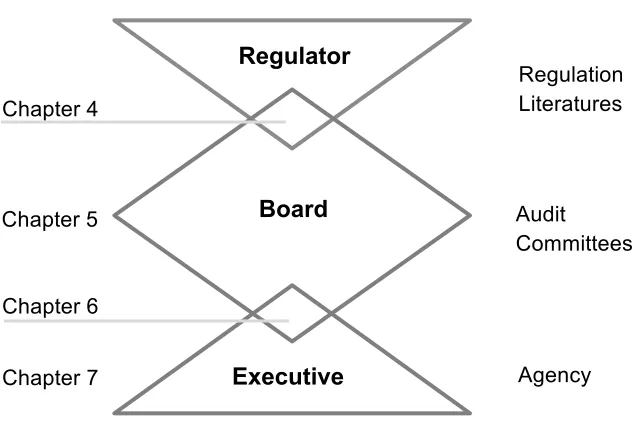
Figure 2.2 is an adaptation of the Andersen’s model to this research and demonstrates how the use of the abovementioned academic perspective is connected. In addition to the board (especially risk and audit committees) who oversee the firm’s management, the role of the financial regulators and their oversight of the board is also considered. Agency language is used throughout the thesis in order to simplify the complicated relationships between varieties of actors; however contribution to the agency theory is not the objective of this thesis. Some of the relationships discussed have principal-agent attributes are: regulators – board members, board members – executives, executives – employees in their firms.
FIGURE 2.2:CHAPTER STRUCTURE OVERVIEW
Source: Own representation, inspired by “Managing risk and opportunity”, page 21 Andersen et al (2014)
Chapter 7 Chapter 5
Regulator
Executive Board
Chapter 4
Chapter 6
Agency Audit
[image:19.595.139.459.434.647.2]The literature review is organised the following way: first agency perspective is discussed because it is the foundation which provides a framework that will be used in every chapter throughout the thesis, and then elements of regulation and audit committee literatures are discussed, as the ones more accurately appropriate to the studies of regulation and board risk committees.
Chapter 4 investigates the ‘principal-agent’- like regulatory oversight of the board, with a specific focus on the regulation of risk oversight. Regulation literatures are used in this section. Chapter 5 looks at the Board’s role through the lens of Audit Committee literature, drawing the parallel between the Risk and Audit committees. Chapter 6 examines the governance framework within financial institutions, and the agency interaction between the managers and the board. Finally, Chapter 7 is about information flows and agents who operationalise it, therefore agency ideas apply most directly.
2.1. AGENCY PERSPECTIVE
“The [agency] model is arguably the most popular model in use by accounting researchers today as evidenced by the body of extant accounting literature. […] Its basic propositions are easy to understand, intuitively appealing, and empirically tractable” (Cohen & Holder-Webb, 2006).
According to Kaplan and Atkinson, there are two principal-agent relationships in a typical firm (Kaplan & Atkinson, 1998): one is between the shareholders and managers (Jensen & Meckling, 1976), and another is at the institutional level - between top managers and individual divisions within the firm (Gupta & Govindarajan, 1991). Kaplan and Atkinson do not mention the Boards as intermediate layer of agency relationships. It is suggested, however, that a ‘principal-agent’ – like interaction between non-executives and the regulators is also a relevant one – despite not strictly working for the regulators, boards interact with regulators on behalf of the firm in making regulatory oversight possible.
2.1.1. BACKGROUND
Although agency theory was originally developed as an economic model4 of behaviour (Jensen & Meckling, 1976; Ross, 1973), it has over time become a more general and widely accepted empirical phenomenon as evidenced by the analytical assertion that agency theory became an “industry that explores every permutation and combination of agency experience in the corporate form” (Shapiro, 2005). This agency experience is manifested by the fact that “[a]n agency relationship exists when one or more individuals (called principals) hire others (called agents) in order to delegate responsibilities to them” (Baiman, 1990). The term “hiring” is quite specific, but it is worth noting at this point that agency relationships can also be observed in most other manager-subordinate relationships.
Looking back to Eisenhardt as the starting point, the reason agency theory is relevant to the investigation of the phenomenon of “oversight” is that the agency problem “arises when (a) the desires or goals of principal and agent conflict and (b) it is difficult or expensive for the principal to verify what the agent is actually doing” (Eisenhardt, 1989). There are several oversight relationships that could be observed in the financial organisations, each of which has aspects of principal-agent interaction.
A primary way this research differs from standard agency theory, is that agency theory often describes the goals of the principals and agents as conflicting, and entails an assumption that portrays agents as lazy and purposefully elusive: indeed, “standard agency theory has often been criticized because of its
4 For further discussion of economic foundations of accounting-related topics see:
presumptions about human behaviour” (Kunz & Pfaff, 2002). While extent to which the goals of principals and agents diverge is not the focus of the empirical chapters, the focus here is on the nature of the interactions themselves, and on the places where these interactions happen in practice.
One of the assumptions borrowed from agency theory is that since there are a number of complicated information flows in the financial services institutions that make oversight happen, it is difficult or expensive to oversee and verify all the information used during the oversight process.
“Common to all principal-agent models is an information asymmetry assumption” (Baiman, 1990). Risk oversight provides a clear example of this information asymmetry in the agency relationship, because from the perspective of organisational design, oversight can be seen as being about agents giving appropriate information to the principals in order to help the principals execute their role. The agents have more information about the issue than the principals because they are closer to, and more directly involved in, the business process, but principals need this information in order to manage and monitor the agents well. This information asymmetry aspect of the theory is very relevant to accounting research, because accounting and risk management tools are a part of overcoming this problem.
2.1.2. INFORMATION ASYMMETRY
Information flows and knowledge transfer between the agents and principals, as well as amongst the agents themselves, plays an important part in reality of the information asymmetry problem. Jensen and Meckling differentiate between specific and general knowledge, and define specific knowledge as “knowledge that is costly to transfer among agents and general knowledge as knowledge that is inexpensive to transmit. Because it is costly to transfer, getting specific knowledge used in decision-making requires decentralizing many decision rights” (Jensen & Meckling, 1995).
Furthermore, “[t]he cost of transferring knowledge depends on factors such as the nature of the knowledge, the organizational environment, and technology. […] Transfer, as we use it, means effective transfer, not merely communication. The recipient of knowledge is presumed to understand the message well enough to act on it” (Jensen & Meckling, 1995). Understanding effective information transfer, according to the actors involved, will be especially relevant to Chapter 5, as it looks at different functions of the risk management process within organisations, and Chapter 7 that investigates how information providers within firms help non-executives, who are likely to have more general instead of very specific knowledge, to perform their role.
Information asymmetry can create a so-called ‘moral hazard’ whereby “individuals engage in risk sharing under condition such that their privately taken actions affect the probability distribution of the outcome” (Hölmstrom, 1979), and might therefore take more risks since the burden is shared. Overcoming the agency problem is not merely about minimising information asymmetry and moral hazard, but also about the alignment of incentives monitoring practices associated with it (Andersen et al., 2014).
2.1.3. MONITORING
Another central problem in agency situations such as oversight is the cost of oversight in agency relationships, “It is generally impossible for the principal or the agent at zero cost to ensure that the agent will make optimal decisions from the principal’s viewpoint” (Jensen & Meckling, 1976). This problem is especially significant in complicated financial institutions where both the number and the technical complexity of transactions are of such magnitude that only a few people close to these transactions might be able to understand them (and even then, might not understand them entirely). In such institutions, a considerable amount of information, as well as understanding its impact, might be private to certain groups of agents alone.
boards and the mangers. Hilb (2005) distinguishes between strategic and monitoring dimensions of corporate governance, and explains that strategic dimension could be most helpfully addressed with the use of stewardship and role theories, while agency and stakeholder theories are best for understanding the monitoring dimension (Hilb, 2012).
Simons characterises management control systems as “more than devices of constraint and monitoring: management control systems are the formalized procedures and systems that use information to maintain or alter patterns in organizational activity” (Simons, 1990). Therefore, according to this definition, information is not just a passive object that plays a part in the oversight process, but it also has an instrumental performative role in forming organisational behaviour. Chapter 6 discusses dome of the effects that information flows within the Three Lines of Defence organisational structure have on shaping the way risk oversight is operationalised in practice.
2.2. REGULATION THEORIES
The application of a principal-agent framework to the study of regulation, originally proposed by Loeb and Magat (Loeb & Magat, 1979) in the Journal of Law and Economics, allows examination of key aspects of the problem such as information asymmetry. Debates about regulation could be seen as having many fundamental overlaps with the agency literature: there are principals (regulators) who monitor the agents (regulated). Regulators themselves, however, are also agents acting on behalf of the government and the public.
This thesis treats regulators as proxy principals and does not deal with the “who guards the guards” problem in depth; the assumption here is of the benevolent regulator, i.e. the “regulator who seeks to maximise total surplus (consumers’ plus firms’ plus taxpayers’) in society” (Laffont & Tirole, 1993)5.
2.2.1. PRINCIPLES-BASED REGULATION
This thesis selectively uses certain aspects of regulation literature primarily in order to explain the changes in risk oversight imposed by micro-prudential regulators on firms. Furthermore, in later sections regulation theory explains the role of non-executive directors as pseudo-regulators: “Regulating the ‘risk society’ is a burgeoning academic and policy area and there are signs that existing systems of regulation, for example UK financial services, are coupling the correction of market failure with the management of risk as their organising principles” (Black, 2002).
5 For an exploration of the problem of the self–interested regulator see parts V and VI
Focusing on UK-based financial institutions and regulators, the two useful concepts are principles-based and risk-based regulation (Baldwin & Black, 2008; Baldwin, Cave, & Lodge, 2010; Black, 2004; Walker, 2009). These two concepts help demonstrate the way micro-prudential regulation6 evolved over time: e.g. Baldwin et al in The Oxford Handbook of Regulation explain that “Principles-based regulation, and in particular its associations with firm judgment and with industry guidance, has strong resonances with the self-regulation techniques which enrol market actors in the regulatory process and which are a longstanding but disputed feature of regulatory landscape: […] financial market regulation in recent years has seen a move away from self-regulation and towards greater centralization” (Baldwin et al., 2010).
The mechanism of micro-prudential regulation is based on the assumption that the regulators issue rules (which create mandatory binding obligations) and guidance (which explains how to comply with the rules and is non-binding) relating to the desired behaviour by the firms. These rules and guidance are used by regulators who oversee how firms comply with all of them, bearing in mind that should the firms not comply, they may be punished. Regulatory oversight thus manifests itself at the end of the regulatory process, where the corrective action taken as a result involves telling the firms to alter their behaviour: regulatory oversight could therefore be seen as a form of externally influencing the firm’s own management process.
6 Macro-prudential regulation looks at the way firms interact with each other in
2.2.2. ENFORCED SELF-REGULATION
The concept of 'Enforced self-regulation' (Baldwin et al., 2010) adds to agency literature because it “characterizes the potentially cooperative relationship between regulator and regulated” (Power, 2007), where regulatory activities then focus on the “oversight of the self-regulatory activities” (Lodge, 2014). Therefore, when regulators allow organisations to self-regulate, they need to determine a way of seeing into each organisation in order to enforce this self-regulation and to check how the organisation self-regulates. This gives internal control systems, a special case of self-regulation, “a central role” (Power, 2004) and means that firm-focused research helps to understand the practice of enforced self-regulation. While it might seem that it is at the opposite end of the spectrum from any governmental regulation, Sinclair argues that there can be a “spectrum of coexisting policy choices” (Sinclair, 1997). According to its proponents, self-regulation is a more responsive and context-driven kind of regulation (Schulz & Held, 2004), and might result in regulated institutions being more prone to “buy into” the ideas and thus avoid regulatory arbitrage (Fleischer, 2010). Those who oppose it base their arguments on the “powerful distrust of profit seeking private enterprises regulating their own business activities” (Omarova, 2011).
In order to develop their own systems for compliance with the rather vague definitions of a self-enforced regulatory regime, financial institutions increased the size of their internal compliance functions and hired external consultants (Power, Ashby, & Palermo, 2013). While the loose definitions and requirements given by the regulators could have led to a variation in the level of compliance, these variations might have been flattened out and made more uniform by the presence of consultants (e.g. the consultancy arms of the big 4 accounting firms) who have a strong influence on the process of interpreting and ‘translating’ regulatory requirements.
counterintuitive”, but argues that what is needed is a new self-regulatory regime “which would focus explicitly on the issue of systemic risk prevention and impose the responsibility of protecting the public from financial crises directly on the financial services industry” (Omarova, 2011).
The enforced self-regulation approach “requires organizational self-regulatory arrangements to be verifiable. There must be a regulatory correlate visible and auditable at the organization level – and this is how the internal control system has become a key resource for this kind of regulatory style” (Power, 2013). Due to the strong emphasis on the internal risk regulatory mechanisms, enforced self-regulation “could be seen as a form of subcontracting regulatory functions to private actors” (Hutter, 2001). The role of the government can be seen in that case as “regulation of self-regulation” (Schulz & Held, 2004) or “meta-regulation” (Black, 2001).
This thesis looks at the regulation of risk at the entity-level within financial institutions and at the corporate governance that is in place to support the risk management and oversight processes. Hood et al observe that risk regulation regimes entail three components: “standard setting, information gathering and behaviour modification” (Hood, Rothstein, & Baldwin, 2001); in terms of the practical implementation of this pattern, regulators need the support of businesses in order to provide them with information required for oversight.
functionality, and philosophies coming out of regulation theories can be used to characterise the activities boards engage in as they oversee management. As transmitters of self-regulation between the firms and regulators, non-executive directors are heading risk oversight within the firms, and crucially both they and the regulators are relying on information intermediaries within the firms (Chapter 7) in order to make it possible.
Regulatory interactions with the board risk committees will be discussed in Chapters 4 and 5. The next section focuses on the literature that is mostly directly helpful in understanding boards and the board risk committees.
2.3. CORPORATE GOVERNANCE AND AUDIT COMMITTEES
Corporate governance literature conceptualises the role of the board in various ways, focusing e.g. on the board’s role to monitor (Fama, 1980) and control (Baysinger & Hoskisson, 1990) management in the classic agency sense where management is seen as opportunistic and it is thus the role of the board to protect shareholder value; or to support (Huse, 2007) managers who already intrinsically want to do a good job (Donaldson, 1990) in the stewardship theory sense (Donaldson & Davis, 1991). Daily et al explain that stewardship theory serves “both as a complement and a contrast to agency theory” (Daily, Dalton, & Cannella, 2003). Spira and Bender compare and contrast the work of audit and remuneration and discuss the tension between strategic and monitoring aspects within the NED role on these committees - they find that these roles are not as strictly opposed to each other as some commentators suggest. They also note that "Structure and composition of board sub-committees can be mandated: conduct and relationships cannot" (Spira & Bender, 2004).
Roberts et al. study work and relationships of the non-executives though in-depth interviews and find that this traditional theoretical distinction “between agency and stewardship theory, and control versus collaboration models of the board do not adequately reflect the lived experience of non-executive directors and other directors on the board”. To solve this mismatch between theory and their findings, they use “accountability as a central concept in the explanation of how boards operate” (Roberts, McNulty, & Stiles, 2005). ‘Accountability’ is interpreted as an aspect of the principal-agent interaction, where boards are accountable to a number of entities including the regulators.
rather delicate balance” (Daily et al., 2003), thus the boundaries of the NED role are a relevant focus of research.
2.3.1. BOUNDARIES OF THE BOARD RISK COMMITTEES
Gieryn explains “demarcation” as “ideological efforts by scientists to distinguish their work and its products from non-scientific intellectual activities. The focus is on boundary-work of scientists: their attribution of selected characteristics to the institution of science […] for purposes of constructing a social boundary that distinguishes some intellectual activities as "non-science"” (Gieryn, 1983). Chapter 5 shows the way NEDs define their oversight role on the boundary between risk oversight and risk management. Mikes applies Gieryn’s work on boundaries (Gieryn, 1983) to the realm of risk management practice and distinguishes risk experts based on their approach to calculative cultures. They can be divided into two camps: either quantitative enthusiasts or quantitative sceptics. Mikes states that “experts try to define what is and is not their remit, often with respect to competing or complementary fields of expertise” (Mikes, 2011). Based on that observation about role definitions and on the fact that risk and audit are often spoken about together, investigation of the audit committee literature can be a helpful way of thinking about risk committees.
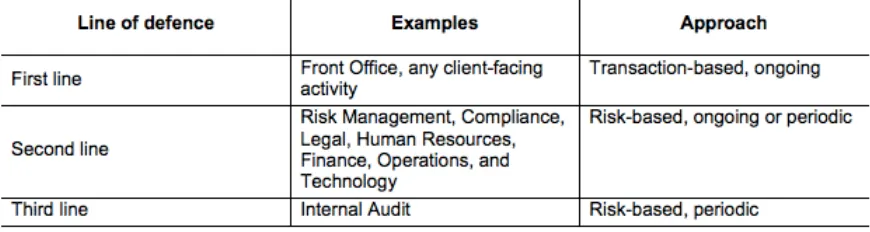
Mikes explains that “’professions’ originally emerged as a demarcation problem, i.e. a problem of boundaries between “special” and ordinary occupations” (Mikes, 2011), and shows that while Abbott (Abbott, 1988) looks at the actual characteristics of the professions that make them different from others, Gieryn uses the notion of boundaries (Gieryn, 1983) to “emphasize its rhetorical, discursive nature: how does group X define itself through descriptions of how they are not like groups Y and Z?” (Mikes, 2011). According to Zietsma and Lawrence, boundary work researchers have focused either on “professional/occupational boundaries” (Abbott, 1988; Zietsma & Lawrence, 2010) or “ways in which actors work to establish coordination across boundaries” (Carlile, 2002; Zietsma & Lawrence, 2010). The Three Lines of Defence framework involves separate groups coordinating various tasks and working together: business units, risk managers, and internal auditors. The way their roles are defined and operationalised is discussed in Chapter 6.
2.3.2. AUDIT COMMITTEES
Gendron and Bedard observe in 2006 that “The audit committee (AC) is one of the main corporate governance mechanisms upon which are predicated stakeholders hopes in constraining the behaviour of corporate managers” (Gendron & Bédard, 2006). They advocate for qualitative studies of audit committee (AC) effectiveness and explain that “macro perspectives on AC effectiveness can only provide meagre insights on a variety of fundamental issues such as: the way in which attendees of AC meetings make sense of AC effectiveness; the extent to which meanings of AC effectiveness differ significantly across attendees; and the way in which these meanings are produced” (Gendron & Bédard, 2006). Methodology chapter that follows explains the way the same principle has been applied to studying risk committees and the organisations they oversee, keeping in mind the concepts of accountability and oversight as constructs of the actors who perform them.
The earlier increased focus on the oversight responsibilities of audit committees has been discussed widely, often as a relationship between the audit committee inputs and financial reporting outputs7. Beasley et al. interviewed 42 members of board audit committees, and framed their findings as a tension between tension between the agency theory “view of the audit committee as an independent monitor of management versus the institutional theory view that audit committees may often be primarily ceremonial in nature, with a focus on providing symbolic legitimacy but not necessarily vigilant monitoring” (Beasley, Carcello, Hermanson, & Neal, 2009) – they found that “members strive to provide effective monitoring of financial reporting and seek to avoid serving on ceremonial audit committees”.
7 See “The Audit Committee Oversight Process” (2009) by Beasley et al for an
Gendron and Bedard (2006) find that audit committee effectiveness is constructed through “ceremonial features of meetings”, “reflective interpretations of the substance of meetings” and “reflective interpretations of informal practices” (Gendron & Bédard, 2006). When studying oversight and construction of accountability, the separation between ceremonial and reflective features can also be relevant. Gendron and Bedard’s paper “focuses on the micro-production of meaning within the small circle of people who attend AC meetings. We did not examine how meanings of AC effectiveness are constituted beyond this circle, in the eyes of outsiders” (Gendron & Bédard, 2006). ‘Micro-production’ of meanings of oversight and accountability, is also the focus of my study. However, the research object here – oversight – is explored not just from the way it is constructed by the board members (Chapter 5), but also from the perspective of regulators (Chapter 4), and risk governance frameworks within the firm (Chapter 6).
2.4. CONCLUSION
Agency perspective is used throughout the thesis as a reference point in understanding the risk oversight interactions, but the aim is not to contribute to agency theory itself, but rather to use it to see how oversight plays out in practice.
This chapter has explained three areas of literature used to construct the academic framework for the empirical findings that follow. Oversight is seen primarily as an agency problem, so the agency perspective is examined as the broadest conceptualisation of oversight relationships. Agency presents a general framing resource to the problems of oversight. Making it more specific, the aspects of regulation theory highlighted could also be seen as a subset of the agency problem – for example, enforced self-regulation involves regulators enlisting parties they regulate in helping them perform their role. Regulation literature is used as a particularly focal reference point when illuminating the increasing regulatory focus on individual responsibility in relation to risk oversight in Chapter 4.
Narrowing the focus further towards the board risk committees, one of the main areas of research in this thesis, parallels are drawn with the literature on audit committees. Audit committee literature is discussed because of the assumption that despite the differences that will be explained in Chapter 5, a lot of the knowledge about audit committees will be transferrable to the less researched domain of risk committees. Underlying aspects of agency relationships will be discussed throughout the thesis, but more precisely Chapter 6 will focus on corporate governance and Chapter 7 on information problems.
CHAPTER
3:
M
ETHODOLOGY
3.1. INTRODUCTION
A frequently voiced concern in management accounting literature is the ‘relevance gap’ between research and practice (Aram & Salipante, 2003; Pettigrew, 1997; Roberts et al., 2005). Hall notes that “Accounting research, and management research more generally, has been criticised for becoming far too removed from the practices and activities it seeks to investigate and illuminate” (Hall, 2010). This thesis seeks to bridge the gap between research and practice by basing research on practitioner sense-making about the field and their roles – therefore rooting theory observations in findings from the field.
A number of authors have urged accounting and management researchers to adopt qualitative approaches (Ferreira & Merchant, 1992; Vaivio, 2008). The broad objective of this research is to understand the concept of ‘risk oversight’ as operationalised by practitioners, and a decision was made early on that using qualitative research methods would be the most appropriate way to address the questions involved, in line with Gendron and Bendrand’s suggestion to note “the significance of actors reflectivity in constituting social realities” (Bédard & Gendron, 2010).
based on the latter attitude towards collecting qualitative ground-up data with mixed qualitative research (Flick, 2014), using several methods: Analysis of Regulatory and Practitioner Documents (Bauer & Gaskell, 2000), Immersion in the Field (Delamont, 2004; DeWalt & DeWalt, 2010; Jorgensen, 1989; Kawulich, 2005) and Semi-Structured (Gillham, 2005) interviews.
The research aims to illuminate practice, and analyse the micro-practices that work together to provide organisational risk oversight. In order to answer the research questions: ‘How does the practice of risk oversight differ from management?’, ‘How do various actors operationalise their risk oversight roles?’ and ‘How do information flows shape oversight?’, data has been collected from three categories of qualitative sources: (1) documents, (2) field immersions, and (3) interviews. To my knowledge a comprehensive study of this kind has not been done before, due to the depth of data collected from a number of difficult-to-access qualitative sources. Documents were used to trace the evolution of concepts, interviews to understand how practitioners make sense of their roles, and field immersions to see how information flows happen. Chapter 4 is based on content analysis of regulatory documents produced by the Financial Services Authority – the main UK financial institutions regulator in the relevant period. Chapter 5 relies on a combination of interview materials and publications by regulators and consultants. Chapter 6 builds primarily on document analysis, while Chapter 7 is more rooted in the interviews. The two field immersions within firms as well as attendance at many academic and practitioner conferences are primarily used in support of interview and documentary material.
hypotheses that might not have been apparent in advance” (Barker, Hendry, Roberts, & Sanderson, 2012). This lack of a hypothesis is partially creditable for the emergence of the object of analysis: ‘risk oversight’ as the narrow space for further research, as shown below. While the second participant observation and the interviews were more focused on different aspects of risk oversight, they were not conducted to test hypotheses. The rest of this chapter explains the process of data collection and analysis in more detail.
3.2. DOCUMENT ANALYSIS
Some argue that content analysis is “the most important research technique in social sciences. It seeks to analyse data within a specific context in view of the meaning someone – a group or a culture – attributes to them” (Krippendorff, 1989). Borrowing from communications research studies, content analysis can be used for many purposes that were classified e.g. by Berelson 1952, including describing trends in communication content and revealing the focus of institutional attention (Berelson, 1952). Document analysis conducted as a part of this research was more interpretative and discursive than pure content analysis, but the choice of the method was informed by the literature on content analysis.
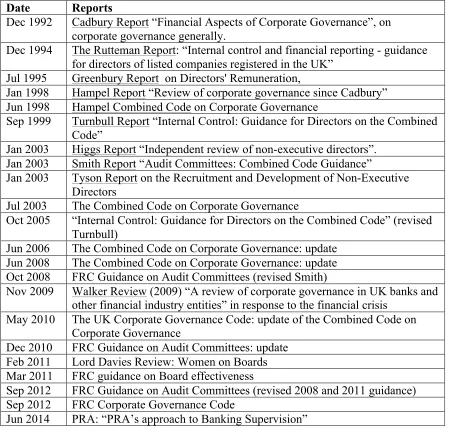
Due to the choice of the financial industry as a focus of my study, content analysis has been conducted of each publicly available on their website document produced by the Financial Services Authority (and later Prudential Regulation Authority and Financial Reporting Council), and also selectively looked at the documents produced by other regulatory bodies and consulting firms.
In order to analyse all publicly available regulatory documents since the foundation of the Financial Services Authority, the data base on their website was thoroughly investigated, and every single document was searched for key words ‘risk’ and ‘oversight’, with a specific focus on the conjunction ‘risk oversight’, and read the context within which each those terms appeared, as well as copied these paragraphs into a separate timeline. This process allowed observing changes in the regulatory attitudes and opinions about risk oversight. A disadvantage of that approach is that there is a danger of not picking up content when synonyms are used instead of the chosen search words, but the volume of the documents dictated that approach.
Coding of findings, or in other words looking for patterns and common themes, was conducted iteratively as the research went on, in a grounded theory fashion: grounded theory recommends analysis from the onset of the study on because “it directs the next interviews and observations” (Corbin & Strauss, 1990). The reason for that choice in terms of document content analysis was that a chronological timeline was followed, and therefore whenever one of the key terms emerged a description of the context in which it was used was noted. Manual process was used instead of textual analysis software, highlighting the key words within paragraphs that were useful in understanding the regulatory approach to risk and risk oversight. Despite the systematic nature of the identification process of the key themes, it is necessarily limiting due to the fact my personal view of finding significance went into this process, in line with the grounded theory approach.
conveniently (Stempel, 1952) was implemented. Due to an overwhelming supply of available information about it, the sample was limited to the documents produced by selected leading consultancy and professional bodies as examples of thinking, with an attempt to select those who are likely to be most influential.
The purpose of the selected documents was to demonstrate the way practitioners represent their understandings about how the framework is intended to be operationalised in practice. The institutions to focus on were chosen based on their potential perceived impact on the firms under investigation. The assumption made was that the major consultancies would have more impact and should therefore be given more attention in my research.
Specifically, consideration is given to the output of the three major strategy consultants – McKinsey, BCG and Bain, and the Big 4 auditing firms: PwC, KPMG, EY, and Deloitte. Among the professional bodies, the publications of the Institute of Risk Management (IRM), the Institute of International Finance (IIF), and the Chartered Institute of Internal Auditors (IIA) are also examined. While there are clear methodological drawbacks to not using a wider array of institutions, the focus on financial services regulation is justifiable by the fact that the institutions observed and the interviews conducted were all in the financial sector.
3.3. FIELD IMMERSIONS
The practice of risk oversight could be superficially addressed by looking at the macro-level of an organisation through its corporate charts and structures (that are part of sense-making), but this research focuses on the operationalisation of oversight at the level of practice by the actors. This gives rise to the need to observe the practice of oversight at the level of individuals.
In order to avoid the criticism that “Because they are at arm’s length from actual practice, [researchers] often fail to reflect the way business works in real life” (Bennis & O’Toole, 2005), following e.g. Mikes (2009), access to two organisations was secured, involving two extended periods in the field exploring those organisations in depth. These observations enabled immersion in the field with the aim of understanding how risk is operationalised within these two financial institutions in practice, as well as gaining trust of and access to interviewees. Spradley explains that “Participation allows you to experience activities directly” (Spradley, 1980), and Stake says that observations are useful because of “revealing actual experience” (Stake, 2013), but warns that the results of observations within one firm are not broadly generalisable, which is a significant limitation necessary in the grounded theory approach to research.
The immersion in the field had aspects of participant observations, but primarily used to build confidence in the rest of the research and discover interesting aspects to focus on as well as improve the quality of interview findings. During both immersion periods, all the necessary pre-employment checks, compliance training, and then job-related tasks that one would expect from a regular intern were carried out. Some ethnographic theorists warn that the researcher might be seen as an outsider (Bartunek & Louis, 1996) and face difficulties of access once on site (Walsh, 1998), but that has not proven to be the case in my experience, possibly because of my close involvement in the work process.
3.3.1. FIRST (EXPLORATORY) FIELD IMMERSION
The first immersion consisted of an eight-week work engagement that was conducted in August and September 2012 in the risk management function at one of the world’s top 5 investment banks, employing over 50,000 people globally, and holding over $700 billion in assets. The Risk Management function in that organisation (which is also quite representative of other risk management functions across the financial industry), was split into three silos of Market, Credit, and Operational Risk.
I reported into the Managing Director of the “Portfolio Analysis” group, who reported directly to the EMEA CRO, who in turn reported to the global CRO based in New York. My responsibilities included carrying out quantitative analysis of value at risk8 (VaR) measurements using Excel and similar internal firm tools and databases. The role included analysing the bank's market position by discovering reasons for the deviations from what might have been expected in light of historical data as well as coming up with forecasts after using complex modelling techniques related to value at risk (VAR). I presented the output of my analysis to my manager via emails, Word reports and PowerPoint presentations that went into the board management information packs for both the EMEA and Global level. I was directly involved in the process of creation of the group’s statements and reports that gave me a thorough high-level overview of a risk function within a bank.
The first field immersion was crucial to this research in order to explore the risk management field in practice and formulate the direction of consequent research. The findings from this participant observation triggered my interest in “risk oversight” as a phenomenon, because even though they themselves did not use that term, with an analytical distance I observed that the function I worked for, the “Portfolio Analysis” group was designed to facilitate risk oversight between the three silos of risk and the top management and the board above them by providing them with an overview of the business’ risk management profile, which has not been done as methodically prior to the introduction of this function.
8 Definition of VAR: “For a given time horizon t and confidence level p, the value at
3.3.2. SECOND (OVERSIGHT) FIELD IMMERSION
The second period of observations, conducted a year later, was more focused on observing manifestations and actors involved in risk oversight and management information production. It consisted of a 9-week project within a risk management function at a major global insurance firm in August, September and October 2013. The firm has over 24 million customers and £500 billion of assets under management. The risk management function in that firm included a separate “Risk Oversight” group, and I was able to interview all the employees working in that group among other people across the risk management department.
My role there was more of an ‘expert’ and as such I reported directly to the Global Chief Risk Officer and his two vice-heads. I worked on a number of projects for each of them, which provided me with broad exposure to high-level strategic decisions, although as a trade-off it came at the price of making it harder to observe the micro-level interactions between the risk managers who were working in lower roles within the department. The reports were much more qualitative than those in the first institution - I did not conduct any Value at Risk calculations, and my work was focused on the corporate governance of the risk department and their management information flows.
As the goal of both participant observations was to describe the practice of risk management and oversight without “imposing a priori a specific theoretical lens” (Anderson & Widener, 2006), I was observing as much as I could and attended as many meetings as was possible during the time I had, which was necessarily limited as this was carried alongside doing my actual job at the company.
two roles: having both to work full-time for these firms, performing the tasks of a regular employee, and keeping some distance while observing them in my academic capacity.
The findings of this thesis are therefore not strictly ethnographic, because the primary purpose of the field immersions and observations was two-fold: to gain access to people I have interviewed and to provide background knowledge from the field in order to make interpretations about interview material and give deeper sense of practice. In addition to this, participant observations were intended as a means to improve the quality of the interviews since by the time I conducted interviews within the firms I had already established rapport with the interviewees, having worked together with them for several weeks – and one of the key advantages of participant observation is that it enables “researchers to know what questions to ask” (Bernard, 2011). It has also improved the interviews I conducted in other institutions because of my deeper understanding of the field.
3.4. INTERVIEWS
These less formal interactions and observations also fed into increased knowledge of the field and resulted in my ability to ask better questions.
In addition to an immense number of informal conversations with practitioners both during my participant observations and at the outside events and conferences, I conducted 67 semi-structured interviews: each interview lasting between 25 and 97 minutes, 60 of them were transcribed and recorded, detailed notes were taken during the remaining 6 interviews. Interviewees included those working in risk management divisions in at the two firms where the participant observations were held as well as staff from other major financial institutions. In terms of the hierarchical levels, interviewees included: several CROs of largest banks and insurance firms, Managing and Executive Directors, Vice Presidents, Associates and Analysts, which gave me a clear view of the full spectrum of risk management and regulation across various levels of seniority and experience within the industry.
The transcribed and recorded interviews could be divided into three categories: (1) 24 within the financial institution where the first participant observation was conducted and several from other similar institutions, (2) 21 within the insurance firm which was the site the second field immersion, and from similar firms, and (3) 15 Non-executive directors from major financial institutions, including a senior-level regulator and a consultant who work on issues related to NEDs. The goal was not to compare these groups, or insurance and banks, but rather to discover the way risk oversight is operationalised within various financial institutions, without a particularly narrow focus on particular aspects of industries where these interviews were conducted.
expertise of informants, pursue emerging insights about processes for which there is, as yet, little systematic empirical evidence, and corroborate suspect information” (Sauder & Espeland, 2009). These interviews provided background knowledge to the functioning of risk management divisions in practice.
TABLE 3.1:LIST OF INTERVIEWEES WITHIN THE INVESTMENT BANK
Code Position Firm Mins
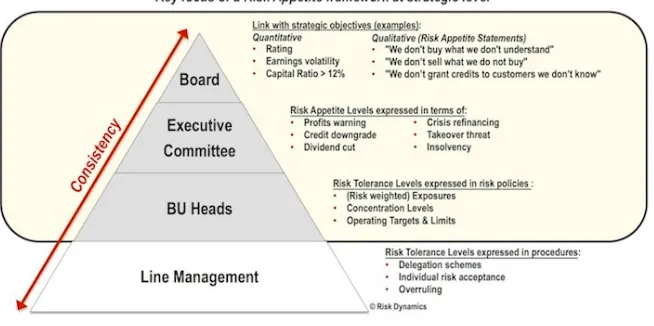
The second category of interviewees was mostly carried out within an insurance firm where the second participant observation was conducted, and other firms of similar size. These interviews were semi-structured and the goal was to discover attitudes to and understandings of the Three Lines of Defence corporate governance framework (which was discovered when investigating risk oversight within the firms – more information on that in Chapter 6), about interaction between the lines and Information Flows: findings from these interviews are primarily discussed in Chapters 6 and 7.
TABLE 3.2:LIST OF INTERVIEWEES WITHIN THE INSURANCE FIRM
Code Position Firm Mins
Insurance_1 Head of Capital Management Top Insurance firm 48 Insurance_2 Internal Audit Director Top Insurance firm 40
Insurance_3 Audit Top Insurance firm 33
Insurance_4 Analyst in ERM group Top Insurance firm 47 Insurance_5 Head of Insurance Risk and Model Oversight Top Insurance firm 74
Insurance_6 Head of ERM Top Insurance firm 41
Insurance_7 ERM team Top Insurance firm 25
Insurance_8 Variable Annuities Top Insurance firm 48 Insurance_9 Head of Risk Oversight Top Insurance firm 26 Insurance_10 Head of Internal Audit Finance Top Insurance firm 37 Insurance_11 Manager of Capital Management Top Insurance firm 35 Insurance_12 Ex-CRO, head of Investment Top Insurance firm 21
Insurance_13 Vice-CRO Top Insurance firm 25
Insurance_14 Head of Risk: Model side Top Insurance firm 47 Insurance_15 Head of Internal Audit Top Insurance firm 42 Insurance_16 Head of Risk Oversight Top Insurance firm 64 Insurance_17 Head of Market Risk Top Insurance firm 43
Insurance_18 CRO Top Insurance firm 34
To complete the discussion of risk oversight, 15 interviews were conducted with the risk committee chairmen and board members of some of the largest financial institutions, primarily based in London, each of them lasting 47 minutes on average. Only one of these interviewees was on the boards of the institutions in which the field immersions were carried out. One CRO, strategy consultant, and regulator are included in this list due to the nature of topics discussed with them.
TABLE 3.3:LIST OF NEDINTERVIEWEES
Code Position Firm Mins
Interviewee_1 Chair Risk Committee Top 10 Bank 23 Interviewee_2 Chair Audit Committee FTSE100 Insurance 42 Interviewee_3 Ex-CRO, Risk Co member FTSE200 Insurance 55 Interviewee_4 Chairman Top 10 Insurance 51 Interviewee_5 Chair Risk Committee FTSE100 Insurance 46 Interviewee_6 Chair Risk Committee Top 10 Insurance 36
Interviewee_7 CRO FTSE100 Bank 67
Interviewee_8 Chair Risk Committee European Retail Bank 55 Interviewee_9 Chair Risk Committee FTSE100 Bank 45 Interviewee_10 Chair Risk Committee Top 10 UK Bank 34 Interviewee_11 Member Risk Committee Top 10 Bank 49 Interviewee_12 Chair Risk Committee Top 10 Bank 53 Interviewee_13 Member Risk Committee Top 10 Bank 34
Interviewee_14 Partner Consultancy 32
Interviewee_15 Ex-Chairman UK Regulator 26
an interview within the first cohort was 41 minutes (37 minutes within the investment bank where the first field immersion was conducted, 34 minutes adjusted for the outlier longest interview). Within an insurance firm, the average length of an interview was 45 minutes (41 excluding the outlier).
There are two factors that might explain why the interviews were on average 8 minutes shorter within the investment bank than the insuranc