R E S E A R C H A R T I C L E
Open Access
Association of the 5HTR2A gene with suicidal
behavior: CASE-control study and updated
meta-analysis
Thelma Beatriz González-Castro
1, Carlos Tovilla-Zárate
2,7*, Isela Juárez-Rojop
1, Sherezada Pool García
3,
Martha Patricia Velázquez-Sánchez
3, Alma Genis
4, Humberto Nicolini
4and Lilia López Narváez
5,6Abstract
Background:The polymorphism rs6313 (T102C) has been associated with suicidal behavior in case–control and meta-analysis studies, but results and conclusions remain controversial. The aim of the present study was to examine the association between T102C with suicidal behavior in a case–control study and, to assess the combined evidence–this case–control study and available data from other related studies–we carried out a meta-analysis.
Methods:We conducted a case–control study that included 161 patients with suicide attempts and 244 controls; we then performed a meta-analysis. The following models were evaluated in the meta-analysis: A) C allele vs T allele; B) T allele vs C allele; C) Caucasian population, D) Asian population, and E) suicide attempters with schizophrenia.
Results:We found an association between attempted suicide and control participants for genotype
(χ2=6.28, p=0.04, df=2) and allele (χ2=6.17, p=0.01, df=1, OR 1.48 95% IC: 1.08-2.03) frequencies in the case–control study. The meta-analysis, comprising 23 association studies (including the present one), showed that the rs6313 polymorphism is not associated with suicidal behavior for the following comparisons:T allele vs C allele (OR: 1.03; 95% CI 0.93-1.13; p(Z)=0.44); C allele vs T allele: (OR:0.99; 95% CI: 0.90-1.08; p(Z)=0.22); Caucasians
(OR:1.09; 95% CI: 0.96-1.23), and Asians (OR:0.96; 95% CI: 0.84-1.09).
Conclusion:Our results showed association between the rs6313 (T102C) polymorphism and suicidal behavior in the case–control study. However, the meta-analysis showed no evidence of association. Therefore, more studies are necessary to determine conclusively an association between T102C and suicidal behavior.
Background
Suicidal behavior is a major health problem worldwide. Several recent studies have been carried out that support a possible relationship between genetic factors and suicidal behavior [1,2]. Historically, evidence for the involvement of serotonin (5-HT) in suicide originated from findings of low 5-hydroxyindoleacetic acid concentration (5-HIIA) in cerebrospinal fluid (CSF) of depressed suicide attempters and in brain stems of completed suicides [3-5]. These studies provided evidence for altered serotonergic neural
transmission in the pathogenesis of suicidal behavior [6,7]. In consequence, genes pertaining to the serotonergic system have been proposed as candidates to establish bio-logical correlates between suicidal behavior and the sero-tonergic system [8-12].
Fourteen known serotonin receptor subtypes are involved in serotonin action [13]. One candidate gene in the study of suicidal behavior is the gene encoding the serotonin 2A receptor. There is evidence that the density of serotonin 2A receptors is upregulated in parietal cor-tical regions of depressed suicide victims and this in-crease has been suggested to be at least partly regulated genetically [14]. The 5HTR2A gene is located on chromosome 13 (13q14-q21); it spans 20 kb and contains 3 exons; more than 200 SNPs have been identi-fied along the gene [13,15]. Mainly, the polymorphisms * Correspondence:[email protected]
2
División Multidisciplinaria de Comalcalco, Universidad Juárez Autónoma de Tabasco, Comalcalco, Tabasco, México
7
División Académica Multidisciplinaria de Comalcalco, Ranchería Sur, Cuarta Sección, C.P. 86650, Comalcalco, Tabasco, México
Full list of author information is available at the end of the article
© 2013 Gonzalez et al.; licensee BioMed Central Ltd. This is an Open Access article distributed under the terms of the Creative Commons Attribution License (http://creativecommons.org/licenses/by/2.0), which permits unrestricted use, distribution, and reproduction in any medium, provided the original work is properly cited.
A-1438G (rs6311), T102C (rs6313) and His452Tyr (rs6314) have been studied in relation to suicidal behav-ior. Moreover, a recent report has studied all SNPs in 5HTR2A [16]. One of the most remarkable single nu-cleotide polymorphisms of the 5HTR2A gene is T102C (rs6313). Several genetic studies have shown an associ-ation between 5HTR2A and suicidal behavior [17,18]. Similarly, this common variant has been studied not only in relation to suicidal behavior, but also in associ-ation with other diseases such as schizophrenia [19-21], alcoholism [22], and depression [23].
To our knowledge, up to the present moment, there are no association studies of 5HTR2A and suicidal behavior in the Mexican population. Therefore, we examined the asso-ciation between 5HTR2A and suicidal behavior in this population. This work focuses on investigating the genetic basis of suicide attempters by assessing the rs6313 geno-type. Finally, we used the combined evidence to carry out a meta-analysis of all published data.
Methods
Case–control study
A total of 161 patients were consecutively recruited from the outpatient service of the General Hospital of Comalcalco in the state of Tabasco, Mexico. These patients had attempted suicide between January and December 2011. In addition, 247 unrelated controls participated in this study. They were recruited from the Blood Donor Center of the General Hospital of Comalcalco and from the general population of the Comalcalco city area in the state of Tabasco, México. Subjects were physically healthy on medical evaluation; none manifested psychiatric problems, as assessed in brief interviews by psychiatrists. To reduce ethnic vari-ation and stratificvari-ation effects, only Mexican subjects descending from Mexican parents and grandparents participated in this study. However, no structured meth-ods were used to assess genetic heterogeneity.
Ethics statement
After they were given a verbal and written explanation of the research objectives, all subjects signed an informed consent to participate in the study; they did not receive any economical remuneration. This study complied with the principles convened in the Helsinki Declaration. In addition, this study was approved by the DAMC-UJAT Ethics and Research Committee (P.O.A. 20110237).
Clinical evaluation
Suicide attempt patients were evaluated by a trained psychiatrist or clinical psychologists with at least a mas-ter's degree level, using the Structured Clinical Interview for DSM-IV Axis-I and II diagnoses, in the Spanish ver-sion. We defined suicide attempt as a self-harm behavior
with at least some intent to end one’s life [24]. Subjects were excluded when self-injury behaviors were deter-mined to have no suicidal intention or ideation, based on the Assessment of suicidal intention: the Scale for suicide ideation in the Spanish version [25].
Genotype assays
Genomic DNA was extracted from peripheral blood leukocytes using a modified version of the protocol by Lahiri [26]. The 5HTR2A T102C (rs6313) genotypes were analyzed in all patients using a polymerase chain reaction (PCR) end-point method. The final volume of the PCR reaction was 5 μL and consisted of 20 ng genomic DNA, 2.5 Fluorescence Labeling (FL) TaqMan Master Mix, and 2.5 FL 20x Assay. The amplification was performed in 96-well plates using the TaqMan Uni-versal Thermal Cycling Protocol. After the PCR end-point was reached, fluorescence intensity was measured with the 7500 Real-Time PCR system using SDS v2.1 software (Applied Biosystems). All genotyping was per-formed blind to patient outcome. As a quality control in our genotyping analyses we used random blind duplicates.
Statistical analysis
Hardy-Weinberg equilibrium was tested using Pearson's goodness-of-fit chi-squared test. Chi-squared test or Fisher's Exact test was used to compare genotype and al-lele frequencies between groups. The power to detect associations given the sample size was analyzed by using the Quanto 1.2 software. The power of the analysis was 0.43 (minor allele frequency= 0.3, type of model: domin-ant, effect size: 1.5). The level of significance was set at p=0.05.
Meta-analysis
This meta-analysis followed the Preferred Reporting Items for Systematic Reviews and Meta-Analyses (PRISMA) cri-teria [27].
Identification and selection of publications
contain independent data, (4) to be case–control associ-ation studies in which the frequencies of three genotypes were clearly stated or could be calculated, (5) the use of healthy individuals as controls, and (6) to provide suffi-cient data to enable the estimation of an odds ratio with 95% confidence interval.
Two investigators (González-Castro TB and Tovilla-Zárate CA) working independently screened each of the titles, abstracts and full texts to determine their inclu-sion. The results were compared and disagreements were resolved by consensus.
Data extraction
The same authors mentioned in the last paragraph care-fully extracted the information from all the included publications; they worked in an independent manner and in accordance with the inclusion criteria listed above. The following data were obtained from each of the studies: authors, year of publication, region, number of cases and controls, age, and ethnical origin of the par-ticipants. The outcomes of the meta-analysis were built by taking into consideration the following categories: a) exposed sick, b) exposed not-sick, c) not-exposed sick and d) not-exposed not-sick. The “sick” term refers to subjects exhibiting suicidal behavior and the “exposed” term to the allele of risk.
Data analysis
For the meta-analysis procedures, we used the EPIDAT 3.1 program (http://dxsp.sergas.es). This software is freely available for epidemiologic analysis of tabulated data. Data were analyzed with the random-effects model following the reports in the literature [2,28,29]. Sample heterogen-eity was analyzed with the Dersimonian and Laird’s Q test. Q test results were complemented with graphs to help the visualization of those studies favoring heterogeneity. The results of the meta-analysis are expressed as an odds ratio (OR). To address the problem of publication bias, funnel plots were calculated with the EPIDAT 3.1 software. This plotting standardizes the effect of each of the published studies on the vertical axis and its correspondent precision on the horizontal axis. Finally, a chi-squared (χ2) analysis was used to calculate the Hardy-Weinberg equilibrium to assess genotype distribution.
Results
Case–control study
In the present study a total of 161 patients (61 males, 100 females) were recruited; mean age was 25.5 (9.56) years old (range: 14–56 years of age). Control subjects consisted of 244 volunteers (82 males, 162 females); mean age was 33.1 (13.0) years old (range: 14–61 years of age). Both groups (cases p=0.06 and controls p=0.06) showed Hardy-Weinberg equilibrium for the analyzed
genetic variability. From the 161 suicide attempters, 11 (7%) exhibited the T102T genotype, 80 (50%) the T102C, and 70 (43%) the C102C type. On the other hand, in the control group, 9 individuals (4%) presented the T102T genotype, 100 (41%) the T102C type, and 135 (55%) the C102C type. We observed significant differences in genotype (χ2=6.28, p=0.04, df=2) and allele (χ2=6.17, p=0.01, df=1, OR 1.48 95% IC: 1.08-2.03) frequencies be-tween patients and the control group.
Meta-analysis study
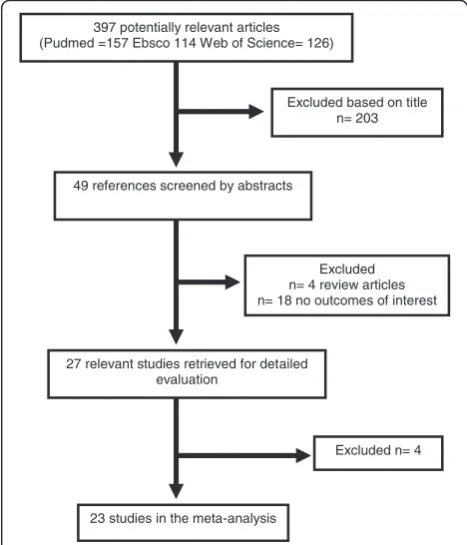
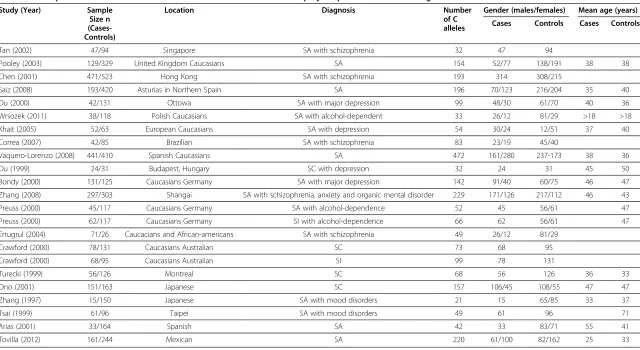
The selection process in this study is detailed in Figure 1. With regard to the literature search, a total of 397 studies were identified, but only 23 were used in this meta-analysis, including our case–control study [14,20-23,30-40]; this involved 2566 cases and 3989 controls (Table 1). In addition, 612 cases from a more recent meta-analysis and 1129 controls were incorporated as well [41]. Overall, the meta-analysis included 13 studies in Caucasian populations, 6 studies comprising Asian populations and 4 from other ethnic origins.
We measured the Hardy-Weinberg equilibrium in all genotyped populations. Both patients and controls were in equilibrium (p>0.05), with the exception of the con-trol group in Du et al. (p=0.004), Turecki et al. (0.009) and Crawford et al. (0.01) [14,30,35], as well as the patients in Zhang et al. (p=0.04) [38]. When we explored all populations in a combined way we still encountered
397 potentially relevant articles (Pudmed =157 Ebsco 114 Web of Science= 126)
Excluded based on title n= 203
49 references screened by abstracts
Excluded n= 4 review articles n= 18 no outcomes of interest
27 relevant studies retrieved for detailed evaluation
Excluded n= 4
[image:3.595.304.538.433.706.2]23 studies in the meta-analysis
Figure 1Flow-chart showing the different phases of the meta-analysis.
González-Castroet al. BMC Psychiatry2013,13:25 Page 3 of 10
Table 1 Descriptive characteristics from 23 studies on the role of theT102C polymorphism of the 5HTR2A gene in suicidal behavior
Study (Year) Sample
Size n (Cases-Controls)
Location Diagnosis Number
of C alleles
Gender (males/females) Mean age (years)
Cases Controls Cases Controls
Tan (2002) 47/94 Singapore SA with schizophrenia 32 47 94
Pooley (2003) 129/329 United Kingdom Caucasians SA 154 52/77 138/191 38 38
Chen (2001) 471/523 Hong Kong SA with schizophrenia 193 314 308/215
Saiz (2008) 193/420 Asturias in Northern Spain SA 196 70/123 216/204 35 40
Du (2000) 42/131 Ottowa SA with major depression 99 48/30 61/70 40 36
Wrsozek (2011) 38/118 Polish Caucasians SA with alcohol-dependent 33 26/12 81/29 >18 >18
Khait (2005) 52/63 European Caucasians SA with depression 54 30/24 12/51 37 40
Correa (2007) 42/85 Brazilian SA with schizophrenia 83 23/19 45/40
Vaquero-Lorenzo (2008) 441/410 Spanish Caucasians SA 472 161/280 237-173 38 36
Du (1999) 24/31 Budapest, Hungary SC with depression 32 24 31 45 50
Bondy (2000) 131/125 Caucasians Germany SA with major depression 142 91/40 60/75 46 47
Zhang (2008) 297/303 Shangai SA with schizophrenia, anxiety and organic mental disorder 229 171/126 217/112 46 43
Preuss (2000) 45/117 Caucasians Germany SA with alcohol-dependence 52 45 56/61 47
Preuss (2000) 62/117 Caucasians Germany SI with alcohol-dependence 66 62 56/61 47
Ertugrul (2004) 71/26 Caucacians and African-americans SA with schizophrenia 49 26/12 81/29
Crawford (2000) 78/131 Caucasians Australian SC 73 68 95
Crawford (2000) 68/95 Caucasians Australian SI 99 78 131
Turecki (1999) 56/126 Montreal SC 68 56 126 36 33
Ono (2001) 151/163 Japanese SC 157 106/45 108/55 47 47
Zhang (1997) 15/150 Japanese SA with mood disorders 21 15 65/85 33 37
Tsai (1999) 61/96 Taipei SA with mood disorders 49 61 96 71
Arias (2001) 33/164 Spanish SA 42 33 83/71 55 41
Tovilla (2012) 161/244 Mexican SA 220 61/100 82/162 25 33
SA: Suicide attempters; SC: Suicide completers; SI: Suicide ideation.
et
al.
BMC
Psychiatr
y
2013,
13
:25
Page
4
o
f
1
0
ntral.com/1
471-244X/13
1 2 3 4 5 6 7 8 9 Study (Year) n
Zhang (1997) 330
Du (1999) 110
Tsai (1999) 314
Turecki (1999) 250
Bondy (2000) 512
Du (2000) 418
Preuss (2000) 324
Preuss (2000) 358
Crawford (2000) 326
Crawford (2000) 418
Arias (2001) 394 Chen (2001) 1674
Tan (2002) 282
Pooley (2003) 142
Ertugrul (2003) 142
Vadim (2005) 234
Correa (2007) 258 Zhang (2007) 1084
Vaquero-Lorenzo (2008) 1702
Wrzosek (2011) 277
Tovilla (2012) 810
Random effects 11133
Weight(%) 2.71 2.73 4.69 4.12 5.56 5.13 4.51 4.90 4.81 5.13 4.13 6.53 4.28 5.97 3.34 4.34 4.30 6.36 6.67 3.85 5.83 OR CI(95.0%) 2.63(1.16,5.93) 0.88(0.39,1.98) 1.16(0.73,1.86) 5.40(3.11,9.34) 0.96(0.67,1.36) 1.81(1.21,2.72) 1.15(0.70,1.88) 0.95(0.61,1.48) 0.64(0.41,1.01) 1.81(1.21,2.72) 1.31(0.76,2.28) 0.87(0.70,1.08) 1.04(0.62,1.77) 0.90(0.67,1.21) 1.25(0.63,2.47) 1.21(0.72,2.02) 0.86(0.51,1.46) 0.91(0.71,1.15) 1.22(1.00,1.47) 0.89(0.49,1.62) 0.68(0.50,0.94) 1.14(0.96,1.35)
Study (year) n
Du (1999) 110
Tsai (1999) 314
Bondy(2000) 512
Du (2000) 418
Preuss (2000) 324
Preuss (2000) 358
Crawford (2000) 326
Crawford (2000) 418
Arias (2001) 304
Chen (2001) 1674
Tan (2002) 282
Pooley (2003) 916
Ertugrul(2003) 142
Vadim (2005) 234 Correa (2007) 258
Zhang (2007) 1084
Vaquero-Lorenzo (2008) 1702
Wrzosek (2011) 277
Tovilla (2012) 810
Random effects11133
0.4 0.6 0.8 1 1.2 1.4 1.6 1.8 2 2.2 2.4 Weight(%) 2.71 2.73 4.12 5.56 5.13 4.51 4.90 4.81 5.13 4.13 6.53 4.28 5.97 3.34 4.34 4.30 6.36 6.67 5.83 OR CI(95%) 0.88(0.39,1.98) 1.16(0.73,1.86) 0.96(0.67,1.36) 1.81(1.21,2.72) 1.15(0.70,1.88) 0.95(0.61,1.48) 0.64(0.41,1.01) 1.81(1.21,2.72) 1.31(0.76,2.28) 0.87(0.70,1.08) 1.04(0.62,1.77) 0.90(0.67,1.21) 1.25(0.63,2.47) 1.21(0.72,2.02) 0.86(0.51,1.46) 0.91(0.71,1.15) 1.22(1.00,1.47) 0.89(0.49,1.62) 0.68(0.50,0.94) 1.14(0.96,1.35)
Study (year) n
Turecki (1999) 250
Bondy (2000)
Du (2000) 418
Preuss (2000) 324
Preuss (2000) 358
Crawford (2000) 326
Crawford (2000) 418
Arias (2001) 394
Ertugrul (2003) 142
Pooley (2003) 916
Vadim (2005)n 324
Vaquero-Lorenzo (2008) 1702
Saiz (2008) 1226
Wrzosek (2011) 277
Random effects 7497
2 4 6 8 10 12 Weight (%) 6.15 7.96 7.43 6.66 7.15 7.04 7.43 6.17 5.12 8.44 6.45 9.25 8.88 5.80 OR CI(95%) 5.40(3.11,9.34) 0.96(0.67,1.36) 1.81(1.21,2.72) 1.15(0.70,1.88) 0.95(0.61,1.48) 0.64(0.41,1.01) 1.81(1.21,2.72) 1.31(0.76,2.28) 1.25(0.63,2.47) 0.90(0.67,1.21) 1.21(0.72,2.02) 1.22(1.00,1.47) 0.84(0.66,1.07) 0.89(0.49,1.62) 1.21(0.97,1.51)
A
B
C
Study (year) n
Zhang (1997) 330
Du (1999) 110
Tsai (1999) 314
Chen (2001) 1674
Ono (2001) 628
Tan (2002) 282
Zhang (2007) 1084
Random effects 4422
Weight(%) 4.21 4.26 10.83 27.83 18.77 9.01 25.05
OR CI (95%)
2.63(1.16,5.93) 0.88(0.39,1.98) 1.16(0.73,1.86) 0.87(0.70,1.08) 1.16(0.85,1.59) 1.04(0.62,1.77) 0.91(0.71,1.15) 1.02(0.86,1.22)
[image:5.595.58.544.85.687.2]1 2 3 4 5
D
Figure 2Odds ratios and forest plots of all models in overall studies. A) C allele vs T allele;B) T allele vs C allele;C) Caucasian population, andD) Asian population.
González-Castroet al. BMC Psychiatry2013,13:25 Page 5 of 10
them in equilibrium with p=0.19 and p=0.92 for controls and cases, respectively.
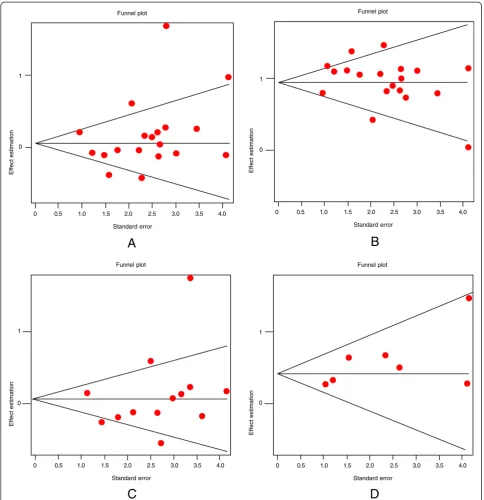
Figure 2 shows the pooled OR derived from all stud-ies indicating a non-significant association of the C allele in the T102C polymorphism with suicidal behav-ior (Random effects: OR:1.14; 95% CI 0.96-1.35; p(Z) =0.07). We observed heterogeneity in all studies (Q=75.03 df=20; p=<0.0001). The Egger's test provided
no evidence of publication bias (t=1.37, df=19; p=0.18) (Figure 3A). Therefore, we carried out a second ana-lysis, which excluded studies based on the heterogen-eity curve and sensitivity analysis. As a result, the reports by (Crawford et al. [35], Zhang et al. [38], Du et al. [30], Turecki et al. [14] and ours were excluded. However, we could not find an association either (OR: 1.03; 95% CI 0.93-1.13; p(Z)=0.44).
0 0.5 1.0 1.5 2.0 2.5 3.0 3.5 4.0 Standard error
1
0
Funnel plot
Ef
fe
c
t es
tima
tio
n
0 0.5 1.0 1.5 2.0 2.5 3.0 3.5 4.0 Standard error
Ef
fe
c
t e
s
tima
tio
n
1
0
Funnel plot
Funnel plot
0 0.5 1.0 1.5 2.0 2.5 3.0 3.5 4.0 Standard error
Ef
fe
c
t es
tima
tio
n
1
0
1
0
Ef
fe
c
t es
tima
tio
n
Funnel plot
0 0.5 1.0 1.5 2.0 2.5 3.0 3.5 4.0 Standard error
A
B
[image:6.595.56.541.88.589.2]C
D
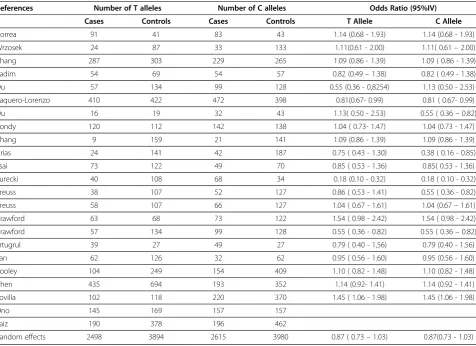
Given that our results in the association study sug-gested an association with the T allele, we performed a meta-analysis using the allelic model for this allele (Table 2). We did not encounter any association between the T allele and suicidal behavior (Random effects; OR: 0.87; 95% CI 0.73-1.03; p(Z)=0.07). We also found heterogeneity in all studies (Q=75.03 df=20; p=<0.0001). The Egger's test indicated no evidence of publication bias (t=−1.37, df=19; p=0.18; Figure 3B). A second ana-lysis was performed, which only included studies based on the heterogeneity curve and sensitivity analysis (Random effects: OR: 0.99; 95% CI: 0.90-1.08; p(Z)=0.22). The Egger's test gave no evidence of publication bias (t=−0.1726, df=12; p=0.86).
In addition, we performed an analysis in two popula-tion groups: Caucasian (Fixed effects; OR: 1.14; 95% CI: 1.03-1.25, Random effects OR: 1.21; 95% CI: 0.97-1.57 with heterogeneity; Egger's test Figure 3C, OR: 1.09; 95% CI: 0.96-1.23 without heterogeneity; Table 3) and Asian (OR: 0.96; 95% CI: 0.84-1.09 without heterogen-eity; Egger's test Figure 3D). Again in this case, we could not find any association with suicidal behavior. Finally,
in an analysis including only studies of suicide attempt patients with schizophrenia, the results were also nega-tive (Random effects; OR: 0.91; 95% CI: 0.79-1.06 with-out heterogeneity).
Discussion
[image:7.595.61.538.110.456.2]In this study, we explored the association of the T102C (rs6313) polymorphism of the 5-HTR2A gene with sui-cidal behavior. First, a case–control study was con-ducted. Subsequently, we performed a meta-analysis to assess the current evidence of association between Table 2 Meta-analysis of case–control studies on the role of the T and C alleles in the T102C polymorphism of the 5HTR2A gene in individuals with suicidal behavior
References Number of T alleles Number of C alleles Odds Ratio (95%IV)
Cases Controls Cases Controls T Allele C Allele
Correa 91 41 83 43 1.14 (0.68 - 1.93) 1.14 (0.68 - 1.93)
Wrzosek 24 87 33 133 1.11(0.61 - 2.00) 1.11( 0.61–2.00)
Zhang 287 303 229 265 1.09 (0.86 - 1.39) 1.09 ( 0.86 - 1.39)
Vadim 54 69 54 57 0.82 (0.49–1.38) 0.82 ( 0.49 - 1.38)
Du 57 134 99 128 0.55 (0.36 - 0,8254) 1.13 (0.50 - 2.53)
Vaquero-Lorenzo 410 422 472 398 0.81(0.67- 0.99) 0.81 ( 0.67- 0.99)
Du 16 19 32 43 1.13( 0.50 - 2.53) 0.55 ( 0.36–0.82)
Bondy 120 112 142 138 1.04 ( 0.73- 1.47) 1.04 (0.73 - 1.47)
Zhang 9 159 21 141 1.09 (0.86 - 1.39) 1.09 (0.86 - 1.39)
Arias 24 141 42 187 0.75 ( 0.43 - 1.30) 0.38 ( 0.16 - 0.85)
Tsai 73 122 49 70 0.85 ( 0.53 - 1.36) 0.85( 0.53 - 1.36)
Turecki 40 108 68 34 0.18 (0.10 - 0.32) 0.18 ( 0.10 - 0.32)
Preuss 38 107 52 127 0.86 ( 0.53 - 1.41) 0.55 ( 0.36 - 0.82)
Preuss 58 107 66 127 1.04 ( 0.67 - 1.61) 1.04 (0.67–1.61)
Crawford 63 68 73 122 1.54 ( 0.98 - 2.42) 1.54 ( 0.98 - 2.42)
Crawford 57 134 99 128 0.55 ( 0.36 - 0.82) 0.55 ( 0.36–0.82)
Ertugrul 39 27 49 27 0.79 ( 0.40 - 1,56) 0.79 (0.40 - 1.56)
Tan 62 126 32 62 0.95 ( 0.56 - 1.60) 0.95 (0.56 - 1.60)
Pooley 104 249 154 409 1.10 ( 0.82 - 1.48) 1.10 (0.82 - 1.48)
Chen 435 694 193 352 1.14 (0.92- 1.41) 1.14 (0.92 - 1.41)
Tovilla 102 118 220 370 1.45 ( 1.06 - 1.98) 1.45 (1.06 - 1.98)
Ono 145 169 157 157
Saiz 190 378 196 462
Random effects 2498 3894 2615 3980 0.87 ( 0.73–1.03) 0.87(0.73 - 1.03)
Table 3 Results of Caucasian and Asian populations with suicidal behavior
OR CI (95%)
Overall studies with heterogeneity 1.14 (0.96,1.35)
Overall studies without heterogeneity 1.03 (0.93,1.13)
Caucasians with heterogeneity 28.3704 (16.91,47.57)
Caucasians without heterogeneity 1.09 (0.96,1.23)
Asians with heterogeneity 1.02 (0.86,1.22)
Asians without heterogeneity 0.96 (0.84,1.09)
González-Castroet al. BMC Psychiatry2013,13:25 Page 7 of 10
[image:7.595.306.541.641.733.2]rs6313 and suicidal behavior. In the first part, we found an association between rs6313 and suicidal behavioral in a Mexican sample. To our knowledge, this is the first study addressing the genetic association between the T102C allele and suicidal behavior in a Mexican population.
The genetic analysis revealed a slight preponderance of the T allele in the cases group. In 2000, Du et al. described an association between the 102C allele and ideation suicide [30]. Since 2000, growing interest on this issue prompted a variety of studies in Caucasian and Asian populations dealing with 5HTR2A and suicidal behavior. Although many studies have reported this association [21,22,33,42], there are other reports that have not encountered an association of either the T or C allele in rs6313 of 5HTR2A [20,23,31,32,35,38,43] with suicidal be-havior. The slight preponderance of the T allele is in agree-ment with other reports in the literature. In 1999, Tsai et al. [34] reported that the allele frequency of 102T is higher than that of 102C in both patient and control groups. Recently, Saiz et al. [36] found an excess of the 102T allele in a group of 193 patients and a control group of 420 individuals when comparing non-impulsive suicide attempts with impulsive suicide attempts. This evidence suggests that the rs6313 polymorphism of the 5-HTR2A gene may be involved in suicidal behavior. However, no conclusive outcomes have yet been attained. In agreement, our results in the Mexican population suggest that allele 102T of 5HTR2A could be associated with suicidal behavior.
There are several possible explanations for the discrep-ancies in the results regarding this association. First, there are differences in the populations of patients. For example, Du et al. [30] and other authors [13,23] have studied patients with major depression and suicidal be-havior; Wrzosek et al. studied patients with attempted suicides and alcohol dependence [22]; other studies have analyzed suicidal behavior in patients with schizophrenia [20], and finally, there are studies such as ours that have analyzed only suicide attempters [8,31,36]. Second, there are differences in genetic heterogeneity. Several authors have shown that allele frequencies of the T102C poly-morphism may be ethnic-dependent [34,36,44]. How-ever, our sample was made of a relatively homogenous Mexican population, because only patients of the state of Tabasco with parents and grandfathers born in Tabasco were included in this study. In consequence, we considered necessary to carry out a meta-analysis of all the published evidence concerning rs6313 and suicidal behavior.
In the current meta-analysis we utilized the allelic model and ethnicity groups. There are two previous meta-analyses -the last including 25 studies- that have explored the association between rs6313 and suicidal behavior
[41,45]. Both meta-analyses reported no association be-tween rs6313 and suicidal behavior. However, several additional case–control studies concerning this relation-ship and using larger samples have been recently reported, but they are not included in the above-mentioned meta-analyses. Therefore, to get a more comprehensive estimation we included our case–control study.
We performed a meta-analysis for the C (OR: 1.14; 95% CI 0.96-1.35) and T (OR: 0.99; 95% CI: 0.90-1.08) alleles separately; however, no association was observed. The results suggest no association between rs6313 (T102C) and suicidal behavior. One possibility for this lack of asso-ciation may lie in the different criteria used in the selec-tion of patients. In addiselec-tion, samples sizes of several of the studies included in our meta-analysis are in the low range compared with genetic studies for other diseases [7,46].
There is the possibility that the C allele may be regarded as a factor risk in the Caucasian population, because in a first analysis we observed an association when we considered a fixed effects with heterogeneity. However, we adopted the random effects, which accounts for additional sources of inter-study variation when heterogeneity exists. This model is more conservative than the fixed effects, since the latter assumes the same true genetic effects, whereas the former assumes normally distributed effects and parametrizes inter-studies variation [41]. When we performed a second analysis, in which the studies giving rise to heterogeneity were discarded, no association was observed between rs6313 and suicidal behavior in a Caucasian population. Therefore, future studies on suicidal behavior comprising larger samples are important to determine this association. Similarly, the accuracy of the phenotype definition in the associ-ation studies is a relevant issue [41]. However, it is ne-cessary to take into consideration other aspects such as different inheritance patterns and gene X environment interaction [16].
Finally, we recognize some limitations in the present study; 1) the sample size of the case–control study is small and may not have sufficient power to detect an association between suicidal behavior and small effects polymorphism. In relation to our meta-analysis, there are also some con-siderations to bear in mind: first; included studies were limited to published articles; second, we did not perform sub-analyses including attempted or completed suicide; third, we did not carry out a subgroup analysis based on gender, and fourth, we did not report psychopathologies related to suicide attempters.
Conclusions
meta-analysis provides pooled data on a substantial number of cases and controls that may provide a better understand-ing in the association between rs6313 and suicidal be-havior. However, more comprehensive studies and larger samples are necessary to determine conclusively the presence of this association.
Abbreviations
PRISMA: Preferred Reporting Items for Systematic Reviews and Meta-Analyses; DSM-IV: Diagnostic and Statistical Manual of Mental Disorders-IV; SA: Suicide attempters; SC: Suicide completers; SI: Suicide ideation.
Competing interests
The authors declare not to have any competing interests.
Authors’contributions
TZC and GCTB conceived the study, participated in its design, and helped to draft the manuscript. TZC, JRI, LNL and NH helped to perform the statistical analysis and to draft the manuscript. PGS and VSMP recruited participants and helped with data integration and analysis. GA, TZC and HN coordinated and supervised the integration of data. All authors read and approved the final manuscript.
Acknowledgements
The authors gratefully acknowledge our research volunteers who helped to recruit the participants in this study; we are also grateful to Andrea Torres who made all the genotype essays. The collection of data and the genotyping of subjects were carried out thanks to the support of grants from the UJAT-DAMC-2012-02 and CONACYT CB-2012-01-177459.
Author details
1División Académica de Ciencias de la Salud, Universidad Juárez Autónoma
de Tabasco, Villahermosa, Tabasco, México.2División Multidisciplinaria de Comalcalco, Universidad Juárez Autónoma de Tabasco, Comalcalco, Tabasco, México.3Hospital General de Comalcalco, Tabasco, Secretaría de Salud, Comalcalco, Tabasco, México.4Grupo de Estudios Médicos y Familiares
Carracci, México, DF, México.5CIGEN, Centro de Investigación Genómica, Comalcalco, Tabasco, México.6Hospital General de Yajalón, Yajalón, Chiapas,
México.7División Académica Multidisciplinaria de Comalcalco, Ranchería Sur, Cuarta Sección, C.P. 86650, Comalcalco, Tabasco, México.
Received: 3 October 2012 Accepted: 11 January 2013 Published: 12 January 2013
References
1. Murphy TM, Ryan M, Foster T, Kelly C, McClelland R, O'Grady J, Corcoran E, Brady J, Reilly M, Jeffers A,et al:Risk and protective genetic variants in suicidal behaviour: association with SLC1A2, SLC1A3, 5-HTR1B &NTRK2 polymorphisms.Behav Brain Funct2011,7:22.
2. Tovilla-Zarate C, Juarez-Rojop I, Ramon-Frias T, Villar-Soto M, Pool-Garcia S, Medellin BC, Genis Mendoza AD, Narvaez LL, Humberto N:No association between COMT val158met polymorphism and suicidal behavior: meta-analysis and new data.BMC Psychiatry2011,11:151.
3. Roy A, Agren H, Pickar D, Linnoila M, Doran AR, Cutler NR, Paul SM:
Reduced CSF concentrations of homovanillic acid and homovanillic acid to 5-hydroxyindoleacetic acid ratios in depressed patients: relationship to suicidal behavior and dexamethasone nonsuppression.Am J Psychiatry
1986,143(12):1539–1545.
4. Traskman L, Asberg M, Bertilsson L, Sjostrand L:Monoamine metabolites in CSF and suicidal behavior.Arch Gen Psychiatry1981,38(6):631–636. 5. Asberg M, Traskman L, Thoren P:5-HIAA in the cerebrospinal fluid. A
biochemical suicide predictor?Arch Gen Psychiatry1976,33(10):1193–1197. 6. Savitz JB, Cupido CL, Ramesar RS:Trends in suicidology: personality as an
endophenotype for molecular genetic investigations.PLoS Med2006,
3(5):e107.
7. Angles MR, Ocana DB, Medellin BC, Tovilla-Zarate C:No association between the HTR1A gene and suicidal behavior: a meta-analysis.
Rev Bras Psiquiatr2012,34(1):38–42.
8. Saiz PA, Garcia-Portilla P, Paredes B, Corcoran P, Arango C, Morales B, Sotomayor E, Alvarez V, Coto E, Florez G,et al:Role of serotonergic-related
systems in suicidal behavior: Data from a case–control association study.
Prog Neuropsychopharmacol Biol Psychiatry2011,35(6):1518–1524. 9. Mann JJ, Arango VA, Avenevoli S, Brent DA, Champagne FA, Clayton P,
Currier D, Dougherty DM, Haghighi F, Hodge SE,et al:Candidate endophenotypes for genetic studies of suicidal behavior.Biol Psychiatry
2009,65(7):556–563.
10. Benko A, Lazary J, Molnar E, Gonda X, Tothfalusi L, Pap D, Mirnics Z, Kurimay T, Chase D, Juhasz G,et al:Significant association between the C(−1019)G functional polymorphism of the HTR1A gene and impulsivity.Am J Med Genet B Neuropsychiatr Genet2010,153B(2):592–599.
11. Zalsman GIL, Patya M, Frisch A, Ofek H, Schapir L, Blum I, Harell D, Apter A, Weizman A, Tyano S:Association of polymorphisms of the serotonergic pathways with clinical traits of impulsive-aggression and suicidality in adolescents: A multi-center study.World J Biol Psychiatry2011,12(1):33–41. 12. Vang FJ, Lindstrom M, Sunnqvist C, Bah-Rosman J, Johanson A,
Traskman-Bendz L:Life-time adversities, reported thirteen years after a suicide attempt: relationship to recovery, 5HTTLPR genotype, and past and present morbidity.Arch Suicide Res2009,13(3):214–229.
13. Yoon HK, Kim YK:TPH2–703G/T SNP may have important effect on susceptibility to suicidal behavior in major depression.Prog Neuropsychopharmacol Biol Psychiatry2009,33(3):403–409.
14. Turecki G, Briere R, Dewar K, Antonetti T, Lesage AD, Seguin M, Chawky N, Vanier C, Alda M, Joober R,et al:Prediction of level of serotonin 2A receptor binding by serotonin receptor 2A genetic variation in postmortem brain samples from subjects who did or did not commit suicide.Am J Psychiatry1999,156(9):1456–1458.
15. Norton N, Owen MJ:HTR2A: association and expression studies in neuropsychiatric genetics.Ann Med2005,37(2):121–129.
16. Ben-Efraim YJ, Wasserman D, Wasserman J, Sokolowski M:Family-based study of HTR2A in suicide attempts: observed gene, gene x environment and parent-of-origin associations.Mol Psychiatry2012,3(10):86.
17. Correa H, De Marco L, Boson W, Viana MM, Lima VF, Campi-Azevedo AC, Noronha JC, Guatimosim C, Romano-Silva MA:Analysis of T102C 5HT2A polymorphism in Brazilian psychiatric inpatients: relationship with suicidal behavior.Cell Mol Neurobiol2002,22(5–6):813–817.
18. Etain B, Rousseva A, Roy I, Henry C, Malafosse A, Buresi C, Preisig M, Rayah F, Leboyer M, Bellivier F:Lack of association between 5HT2A receptor gene haplotype, bipolar disorder and its clinical subtypes in a West European sample.Am J Med Genet B Neuropsychiatr Genet2004,15(1):29–33. 19. Correa H, Nicolata R, Teixeira A, De Marco LA, Romano-Silva MA:
Association study of the T102C 5-HT2A polymorphism in schizophrenia: Diagnosis, psychopathology ans suicidal behavior.Am J Med Genet B Neuropsychiatr Genet2006,141B(7):802–802.
20. Ertugrul A, Kennedy JL, Masellis M, Basile VS, Jayathilake K, Meltzer HY:No association of the T102C polymorphism of the serotonin 2A receptor gene (HTR2A) with suicidality in schizophrenia.Schizophr Res2004,
69(2–3):301–305.
21. Correa H, De Marco L, Boson W, Nicolato R, Teixeira AL, Campo VR, Romano-Silva MA:Association study of T102C 5-HT(2A) polymorphism in schizophrenic patients: diagnosis, psychopathology, and suicidal behavior.Dialogues Clin Neurosci2007,9(1):97–101.
22. Wrzosek M, Lukaszkiewicz J, Serafin P, Jakubczyk A, Klimkiewicz A, Matsumoto H, Brower KJ, Wojnar M:Association of polymorphisms in HTR2A, HTR1A and TPH2 genes with suicide attempts in alcohol dependence: a preliminary report.Psychiatry Res2011,190(1):149–151. 23. Khait VD, Huang YY, Zalsman G, Oquendo MA, Brent DA, Harkavy-Friedman
JM, Mann JJ:Association of serotonin 5-HT2A receptor binding and the T102C polymorphism in depressed and healthy Caucasian subjects.
Neuropsychopharmacology2005,30(1):166–172.
24. Mann JJ:Neurobiology of suicidal behaviour.Nat Rev Neurosci2003,
4(10):819–828.
25. Beck AT, Kovacs M, Weissman A:Assessment of suicidal intention: the Scale for Suicide Ideation.J Consult Clin Psychol1979,47(2):343–352. 26. Lahiri DK, Nurnberger JI Jr:A rapid non-enzymatic method for the
preparation of HMW DNA from blood for RFLP studies.Nucleic Acids Res
1991,19(19):5444.
27. Swartz MK:The PRISMA statement: a guideline for systematic reviews and meta-analyses.J Pediatr Health Care2011,25(1):1–2.
28. Tovilla-Zarate C, Camarena B, Apiquian R, Nicolini H:Association study and meta-analysis of the apolipoprotein gene and schizophrenia.Gac Med Mex2008,144(2):79–83.
González-Castroet al. BMC Psychiatry2013,13:25 Page 9 of 10
29. Kavvoura FK, Ioannidis JP:Methods for meta-analysis in genetic association studies: a review of their potential and pitfalls.Hum Genet
2008,123(1):1–14.
30. Du L, Bakish D, Lapierre YD, Ravindran AV, Hrdina PD:Association of polymorphism of serotonin 2A receptor gene with suicidal ideation in major depressive disorder.Am J Med Genet2000,96(1):56–60.
31. Vaquero-Lorenzo C, Baca-Garcia E, Diaz-Hernandez M, Perez-Rodriguez MM, Fernandez-Navarro P, Giner L, Carballo JJ, Saiz-Ruiz J, Fernandez-Piqueras J, Baldomero EB,et al:Association study of two polymorphisms of the serotonin-2A receptor gene and suicide attempts.Am J Med Genet B Neuropsychiatr Genet2008,147B(5):645–649.
32. Bondy B, Kuznik J, Baghai T, Schule C, Zwanzger P, Minov C, de Jonge S, Rupprecht R, Meyer H, Engel RR,et al:Lack of association of serotonin-2A receptor gene polymorphism (T102C) with suicidal ideation and suicide.
Am J Med Genet2000,96(6):831–835.
33. Arias B, Gasto C, Catalan R, Gutierrez B, Pintor L, Fananas L:The 5-HT(2A) receptor gene 102T/C polymorphism is associated with suicidal behavior in depressed patients.Am J Med Genet2001,105(8):801–804.
34. Tsai SJ, Hong CJ, Hsu CC, Cheng CY, Liao WY, Song HL, Lai HC: Serotonin-2A receptor polymorphism (102T/C) in mood disorders.Psychiatry Res
1999,87(2–3):233–237.
35. Crawford J, Sutherland GR, Goldney RD:No evidence for association of 5-HT2A receptor polymorphism with suicide.Am J Med Genet2000,
96(6):879–880.
36. Saiz PA, Garcia-Portilla MP, Paredes B, Arango C, Morales B, Alvarez V, Coto E, Bascaran MT, Bousono M, Bobes J:Association between the A-1438G polymorphism of the serotonin 2A receptor gene and nonimpulsive suicide attempts.Psychiatr Genet2008,18(5):213–218.
37. Preuss UW, Koller G, Bahlmann M, Soyka M, Bondy B:No association between suicidal behavior and 5-HT2A-T102C polymorphism in alcohol dependents.Am J Med Genet2000,96(6):877–878.
38. Zhang J, Shen Y, He G, Li X, Meng J, Guo S, Li H, Gu N, Feng G, He L:Lack of association between three serotonin genes and suicidal behavior in Chinese psychiatric patients.Prog Neuropsychopharmacol Biol Psychiatry
2008,32(2):467–471.
39. Ono H, Shirakawa O, Nishiguchi N, Nishimura A, Nushida H, Ueno Y, Maeda K:Serotonin 2A receptor gene polymorphism is not associated with completed suicide.J Psychiatr Res2001,35:173–176.
40. Du L, Faludi G, Palkovits M, Demeter E, Bakish D, Lapierre YD, Sotonyi P, Hrdina PD:Frequency of long allele in serotonin transporter gene is increased in depressed suicide victims.Biol Psychiatry1999,46(2):196–201. 41. Li D, Duan Y, He L:Association study of serotonin 2A receptor (5-HT2A)
gene with schizophrenia and suicidal behavior using systematic meta-analysis.Biochem Biophys Res Commun2006,340(3):1006–1015.
42. Paredes B, Alejandra SP, Paz G-PM, Morales B, Mercedes P, Fernandez I, Ivan G, Victoria A, Eliecer C, María B,et al:Asociación entre el polimorfismo A-1438G del gen del receptor de serotonina 2A (5HT2A) e impulsividad del comportamiento suicida.Emergencias2008,20:93–100.
43. Ono H, Shirakawa O, Nishiguchi N, Nishimura A, Nushida H, Ueno Y, Maeda K:Serotonin 2A receptor gene polymorphism is not associated with completed suicide.J Psychiatr Res2001,35(3):173–176.
44. Abdolmaleky HM, Faraone SV, Glatt SJ, Tsuang MT:Meta-analysis of association between the T102C polymorphism of the 5HT2a receptor gene and schizophrenia.Schizophr Res2004,67(1):53–62.
45. Anguelova M, Benkelfat C, Turecki G:A systematic review of association studies investigating genes coding for serotonin receptors and the serotonin transporter: II. Suicidal behavior.Mol Psychiatry2003,
8(7):646–653.
46. Forero DA, Arboleda GH, Vasquez R, Arboleda H:Candidate genes involved in neural plasticity and the risk for attention-deficit hyperactivity disorder: a meta-analysis of 8 common variants.J Psychiatry Neurosci
2009,34(5):361–366.
doi:10.1186/1471-244X-13-25
Cite this article as:González-Castroet al.:Association of the 5HTR2A gene with suicidal behavior: CASE-control study and updated meta-analysis.BMC Psychiatry201313:25.
Submit your next manuscript to BioMed Central and take full advantage of:
• Convenient online submission
• Thorough peer review
• No space constraints or color figure charges
• Immediate publication on acceptance
• Inclusion in PubMed, CAS, Scopus and Google Scholar
• Research which is freely available for redistribution