Technology (IJRASET)
Automatic Microbiological Stainer
Priyadharshini.R1, Vasanthkumar.U2, Ramya.S3, Narayanaraja.J4, Mr.Manivannan.L5
1
B.E/EEE Final Year, Knowledge Institute of Technology, Tamilnadu, India.
2
Assistant Professor/EEE, Knowledge Institute of Technology, Tamilnadu, India.
Abstract - Most of the research work is being focused on providing automation in all domains especially in the field of medical. This research paper focuses on replacing the manual work in the clinical laboratories for the process of testing or staining the patient’s sample to identify the infected bacteria depending upon the nature of disease and this staining procedure is recommended by World Health Organization (WHO). According to the statistical data from Epidemiological Analysis Program, 78.3% of sputum samples were received for diagnosing TB disease and the rest of the samples for other bacterial infections. The Zihel-Neelsen (Z-N) staining method is used to diagnose Tuberculosis (TB) disease caused by Mycobacterium tuberculosis and Mycobacterium leprae are commonly called as Acid Fast Bacilli (AFB) and Gram staining is used for identifying only the infected bacteria type (positive or negative). During examining those samples, the laboratory technicians (even if experienced) may commit mistakes due to the excess of samples count, fatigue and anxiety. This would lead to have wrong analysis while diagnosing the samples. The proposed idea employs the feasible Automatic Microbiological Stainer (AMS) to overcome the complications are being faced by technicians in the staining processes.
Keywords: Tuberculosis, Atmega2560 controller, Gram stain, Servo motor, DC pumping motor.
I. INTRODUCTION
According to World Health Organization (WHO), Tuberculosis (TB) is an infectious bacterial disease caused by Mycobacterium Tuberculosis (M-TB), which most commonly affects the lungs (known as Pulmonary TB) and sometimes outside of the lungs (known as Extra-Pulmonary TB). It is transmitted from person to person via cough propelled droplets. As Tuberculosis remains a major public health problem in India, every year approximately 18 lakhs people are affected by TB and about 4 lakhs are died from it. India accounts for one fifth of global incidence of TB and tops the list of 22 high TB burden countries. Unless sustained and appropriate action is taken, approximately 20 lakhs people in India are estimated to die in next five years. The TB patients are being diagnosed by the process so called AFB or Z-N staining process. In addition, gram staining also a manual testing process to identify the type of infected bacteria. Even though the healthcare system is functioning efficiently in making the people free from any physical disabilities and mental distractions, there is a very serious concern looking into the medical field as it sometime fails to apply the engineering system. In order to aware the people, the National Academy of Engineering (NAE) and the Institute of Medicine (IOM) recently recommended the systematic application of engineering approaches to reform health care delivery system. This recommendation has driven to propose the concept of designing the device for doing the Z-N and gram staining process automatically.
II. LITERATURE SURVEY
Kusworo Adi, Rahmad Gernowo, Aris Sugiharto, K. Sofjan F, Adi P, Ari B [1], “Tuberculosis (TB) Identification In The
Ziehl-Neelsen Sputum Sample In NTSC Channel and Support Vector Machine (SVM) Classification”. In this research paper, an algorithm is used to identify and count the number of tuberculosis bacteria using microscope imaging. Initially Image segmentation is developed by transforming RGB color model to NTSC. The grayscale image is obtained by extracting the saturation component in NTSC image. Then this image is converted into binary image through threshold process and finally the segmented image is identified using Support Vector Machine algorithm. The result of this automatic counting is equal to the manual counting result. This paper focuses only to automate the microscopic examination of AFB bacteria not for the entire process of tuberculosis.
Technology (IJRASET)
P.Sadaphal, J.Rao, G.W.Comstock, M.F.Beg [3], “Image Processing Techniques for Identifying Mycobacterium Tuberculosis in Ziehl-Neelsen Stains”. In this method, a computational algorithmic technique is used in digital images which recognize the ZN stained bacilli. Here, Bayesian colour segmentation process is involved to forecast the pixel representation of the TB object by using prior knowledge about ZN stain colour. Then, processing the morphological structure of the sample for detecting TB object or Non-TB object. The final result is based on the axis length ratio, eccentricity and colour of the affected Non-TB bacilli. In general, the targeted TB object is blue and green in colour and non-TB object is red in colour. Finally, sensing and counting the targeted TB has to be done in the sample. This paper is more beneficial for counting the TB bacilli at the final stage of testing but not for examining the sample.
Chayadevi ML, Raju GT[4], “Data Mining, Classification and Clustering with Morphological features of Microbes”. In this paper, initially color histograms thresholding method is used to classify the bacterial images such as gram positive and gram negative. Separate image data repository has to be made and it is necessary to be preprocessed to eliminate blur, irregular images. By using grayscale morphology noise filtration, uneven background correction and gray level feature extracted has to be done. The features like erosion, reconstruction and dilation with binarization and thresholding has been performed for edge detection using contour freeman algorithm. To identify the intensity of infection, clustering of bacteria is performed using SOM and k-means algorithm. Experimental results with self-organizing map showing bacterial cluster patterns which are better than the statistical approach. The results of bacterial clusters may be used in the areas of medical image analysis. This method will assist the doctors in deciding the intensity of the diseases.
III. EXISTING SYSTEM
A. Conventional Method of Testing For TB
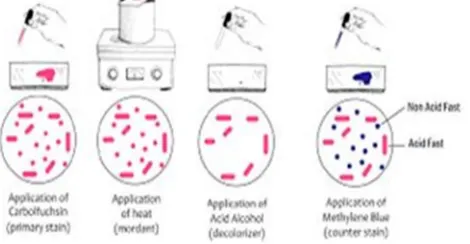
[image:3.612.193.428.383.505.2]Z-N staining is used to identify whether the patient is affected with TB or not. In conventional methodology, the staining or testing process done manually by technicians in clinical laboratories. The procedure used in the staining process is recommended by WHO. After completion of this testing process, the infected bacteria (AFB) can be viewed and count through the fluorescent microscope. Based on the count of bacteria, the doctor can perfectly prefer the resistant drug to kill that infected bacteria.
[image:3.612.191.425.387.636.2]Fig 1: Image of manual testing of Z-N method
Fig 2: Image of AFB (red) and non AFB (blue)
B. Gram Staining Process
Technology (IJRASET)
[image:4.612.201.411.88.224.2]achieved by using gram staining method. The positive and negative type bacilli have further sub categories.
Fig 3: Manual process of Gram staining process
This gram staining method is a part of bacterial identification process. To find the infected bacteria exactly, more biochemical tests have to be carried out based on gram staining result. In addition, gram staining is mandatory in all kinds of bacterial identification testing except TB. Normally in all the clinical laboratories more than 100 samples per day are being tested for the identification of infected bacteria. Hence, there is a necessity to increase the manpower to complete the testing at right time.
In designated clinical laboratories, the staining process is being done manually. During this process, the laboratory technicians are facing the problems such as improper time management, handling of large samples at a time, lacking of accuracy, skin and nose irritation etc. To overwhelm above mentioned difficulties, an automatic device has been proposed for performing the staining process during TB diagnosis and identification of bacteria type. The proposed device can be handled easily by the technicians and the cost is affordable. Moreover, many samples can be handled simultaneously with proper time management and good precision.
IV. PROPOSED SYSTEM
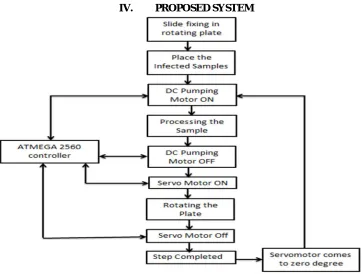
Fig 3: Block Diagram of proposed AMS Device
[image:4.612.129.492.369.643.2]Technology (IJRASET)
[image:5.612.159.428.83.307.2]C. Tuberculosis Identification
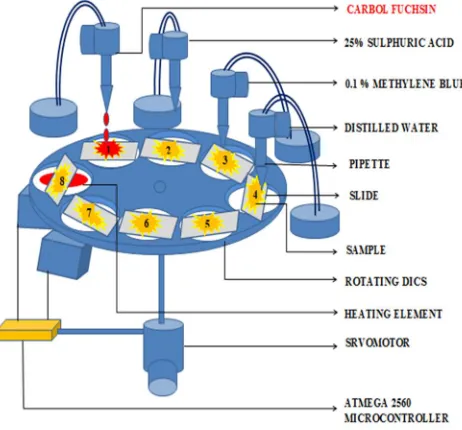
Fig 4: AMS device with Z-N staining
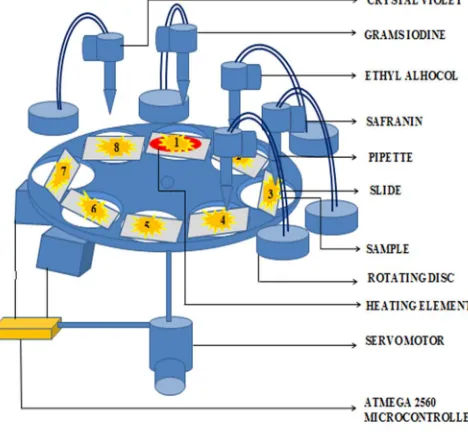
The proposed Automatic Microbiological Stainer (AMS) device consists of ATMEGA2560 microcontroller being responsible to perform all the functions, the disc type holder, can be driven by servo motor and is used for holding the slides, the pipette and storage arrangement of all kinds of reagents involved, IR sensors which placed on each pipette for sensing the presence of slide, and electric heater for heating the sample when it is required. Totally there are eight steps involved in Zihel – Neelsen (Z – N) staining method has to be carried out to complete the entire process of TB identification. Once the operation is started, it should not be interrupted (adding or removing extra slides) until the completion of process. This AMS device performs only one step at a time for all the slides as revolution manner.
The Fig.4 demonstrates the operation of AMS device with eight testing samples. The sample of infected persons normally taken in the slides can be placed in each holder simultaneously.
[image:5.612.189.420.486.701.2]Technology (IJRASET)
The heating of all the slides (Step 1) could be done for 3 to 4 seconds when the heating element of IR sensor is enabled. Then, Carbol Fuchsin pipette is enabled, 1% Carbol Fuchsin reagent (a mixture of phenol and basic fuchsin) is added to all the samples
(Step 2) and gently heated up the slides with the help of electric heater for 2 – 3 seconds (Step 3). After heating, the samples
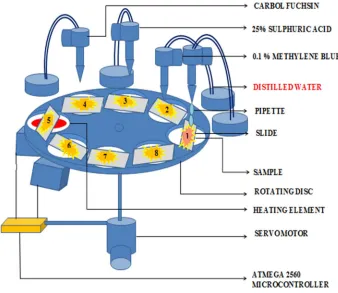
[image:6.612.133.471.225.518.2]normally appeared in red colour can be rinsed with distilled water (Step 4) for clearance which would help for carrying out the further steps. Later 25% Sulphuric Acid reagent is poured (Step 5) onto the sample (which acts as a decolouriser) and then leaves it for 2-4 minutes and then it is washed (Step 6) gently with tap water. A properly decolourised slide will appear light pink in colour. The final step of AMS device is poured with 0.1 % methylene blue reagent (Step 7) onto the slide and leave the same for 30 seconds and then cleaned (Step 8) with distilled water. For every step, the rotating disc has to rotate 360 degree with the control of stepper motor. Hence, all the samples have to be processed. Once the slide is dried out, then it can be viewed using a drop of immersion oil under microscope with the help of technicians. If the microorganism (Bacteria) appears pink in colour, it shows that the patient is affected with TB diseases or else the patient is not affected with TB.
Fig 6: Rinsing the samples (Step 4, 6, 8)
D. Identification of Types of Bacteria(Positive or Negative) – Gram Staining
Technology (IJRASET)
Fig 7: AMS device with Gram Staining
V. CONCLUSION
Development of technology is the crucial objective of all researchers. Particularly in the medical field, there is a massive advancement in all sectors like dental, surgery, emergency caring unit etc., for the betterment of people. However in present days, the identification of TB affected bacteria is carried out only by lab technicians and they experienced very stressed while handling more samples simultaneously. The proposed Automatic Microbiological Stainer (AMS) overcomes all the difficulties present in the manual staining process by replacing it into a programmed manner. As a result, the proposed idea is making the excellence in the field of microbiology and medical. Multi samples testing, no grogginess and better time management are the refinements of this AMS. This device gives additional support to technicians in the microbiological laboratory.
REFERENCES
[1] Kusworo Adi, Rahmad Gernowo, Aris Sugiharto, K.Sofjan, Adi P, Ari B, “Tuberculosis (TB) Identification in the Ziehl-Neelsen Sputum Sample in NTSC
Channel and Support Vector Machine (SVM) Classification,” International Journal of Innovative Research in Science, Engineering and Technology, Vol. 2, Issue 9, September 2013, ISSN: 2319-8753.
[2] Amarja Adgaonkar, Aditi Atreya, Akshay D. Mulgund, Jhi R. Nath, “Identification of Tuberculosis bacilli using Image Processing,” International Journal
Computer Applications (IJCA)(0975-8887) International Conference on Electronics & Computing Technologies, ICONECT-2014.
[3] P. Sadaphal, J. Rao, G.W. Comstock, M.F. Beg, “Image processing Technique for Identifying Mycobacterium Tuberculosis in Ziehl-Neelsen Stains,”
International Journal Tuberculosis Lung Disease” 12(5):579-582, 2008.
[4] Chayadevi ML, Raju GT, “Data Mining, Classification and Clustering with Morphological features of Microbes,” International Journal of Computer
Application (0975-8887), Volume 52-NO.4, August 2012.
[5] Zingue Dezemon, Claude Mabo Muvunyi, Out Jacob, Staining Technique for Detection of Acid Fast Bacilli: What hope does fluorescein-diacetate (FDA)
vitality staining technique represent for the monitoring of tuberculosis treatment in resource limited settings,” International Research Journal of Bacteriology, ISSN 2055-0901.
[6] Maria Rosarys Martinez, Misleidis Sardinas, Grechen Garcia, Lilian M. Mederos, Raul Diaz, “Evaluation of BacT/ALERT 3D System for Mycobacteria
Isolates,” Journal of Tuberculosis Research, 2014, 2, 59-64.
[7] Shafeena Basheer, Jayakrishna V., Akas G. Kamal, “Computer Assisted X-ray Analysis System for De-tection of Onset of Tuberculosis,” International Journal
Technology (IJRASET)
BIOGRAPHIES
PRIYADHARSHINI.R is pursuing Bachelor of Engineering in the discipline of Electrical and Electronics Engineering at Knowledge Institute of Technology, Salem, under Anna University, Chennai, India. She has presented number of technical papers in symposium. She is acting as a student member of various clubs and forums like Robotics and Intelligence Machines (RIM) club, Green club, i-can Club, and Instrumentation and Control Engineers (ICE) club. She received YOUNG SCIENTIST AWARD for her biomedical project during the year 2014. She also published an International Journal and presented a paper at National Conference. Presently she is doing minor research works on various fields like Biomedical Instrumentation, Robotics etc.
VASANTHKUMAR.U is pursuing Bachelor of Engineering in the discipline of Electrical and Electronics Engineering at Knowledge Institute of Technology, Salem, under Anna University, Chennai, India. He has presented many technical papers in various colleges during symposium. He has won first prize with cash award of Rs.30,000 at National Level for the project titled as “Advanced Line Following Robot using Bar Addressing Techniques” in e-yantra ideas competition 2015 conducted by IIT – Bombay. He is the member of various technical clubs like Robotics and Intelligence Club, Instrumentation and Control Engineers Club of Knowledge Institute of Technology. He has presented number of technical papers at National conferences. Presently he is doing minor research works on various fields like Biomedical, Robotics etc.
RAMYA.S is pursuing Bachelor of Engineering in the discipline of Electrical and Electronics Engineering at Knowledge Institute of Technology, Salem, under Anna University, Chennai, India. She has presented number of technical papers in various colleges during national level symposium. She is the acting student member of various cells and forums like Robotics Intelligent Club, Green club and Science club. She won prizes for project contest. She received YOUNG SCIENTIST AWARD for her biomedical project. Presently she is doing minor research works on various fields like space science, embedded systems Biomedical Instrumentation and Robotics etc. She is highly appreciated by the Head of the Department.
NARAYANARAJA J is pursuing Bachelor of Engineering in the discipline of Electrical and Electronics Engineering at Knowledge Institute of Technology, Salem, under Anna University, Chennai, India. He got selected one among the top 10 in ICTACT youth talk contest at regional level 2014 in the Salem region. He won First place for his paper presentation in inter and intra college competition. He is the member of various technical clubs like Robotics and Intelligence Machines (RIM) Club, Instrumentation and Control Engineers (ICE) Club of Knowledge Institute of Technology. He organized many programs and events for external participants as an active member of these clubs. He has presented number of technical papers at National level conferences. Presently, he is doing minor research works on various fields like App development, Robotics, PLC, SCADA etc. He is highly appreciated by head of the department.