2018 2nd International Conference on Applied Mathematics, Modeling and Simulation (AMMS 2018) ISBN: 978-1-60595-580-3
Construction of Science and Technology Information Management
System Based on Knowledge Service
Ye ZHAO
*, Yang WANG, Ying-chun CHEN and Peng-tao HU
No. 17, Central Remin Road, Xia Shan District, Zhanjiang, China
*Corresponding author
Keywords: Knowledge service, Scientific and technological information, Management system, Construction.
Abstract. In order to provide knowledge service, it is put forward to establish a scientific and technological information management system. Followed by advanced, open, compatible, scalable, economical, reliable and safe technical indicators in overall design, the system is a system of scientific information formation, collection, sorting, cataloguing, storage, borrowing, mining, analysis and development and utilization, and providing knowledge service. It is mainly composed of input module, output module, processing module, analysis module, management module. Security, expansibility is the technology key of the entire system.
Introduction
The construction of science and technology information management system based on knowledge service must be considered from two aspects: knowledge service and information management. Wu Zhendanet al.[1] think that knowledge service is based on the knowledge ability of searching, organizing, analyzing and reorganizing information knowledge, according to user's problems and environment, integrate with users to solve problems, and provide services for effective knowledge application and knowledge innovation. Wang Youcui[2] proposes that knowledge management involves knowledge discovery, knowledge exchange, and knowledge application. Therefore, based on the concept of knowledge service, Yang Liying et al[3] design and implement a scientific research information management system based on the B/S model. Based on the library literature management system business process, Wu Dan[4] establishes a book information management system composed of functional modules such as user management, document retrieval, reader management, document management, lending information management, reports, and help. Feng Yuan et al[5] build an information management system for scientific research institutions using key technologies such as ASP.NET's page objects, Web paging, and security guarantees. Based on the MVC model, Zhang Lv[6] designs an information management system for scientific research using object-oriented languages JAVA and JSP. This paper analyzes the current situation of information management systems and proposes the establishment of a science and technology information management system based on knowledge services.
on knowledge service. The system is based on scientific information organization, control, and utilization processes. It is a management system that forms, collects, organizes, catalogues, stores, lends, mines, analyzes, develops, and provides knowledge services. It can achieve unified collection of information scattered on different carriers and different formats of scientific research project, scientific and technological achievements information, standard information, scientific papers, electronic journals, book materials, academic exchange conference documents, small data rooms technical information, and relevant scientific and technological data acquired by scientific and technical cadres. Moreover, all the information can be stored in digital form and delivered in a networked manner to achieve effective integration, distributed storage, integrated management, and resource sharing of various types of scientific and technological information, so as to satisfy readers' needs for obtaining information and utilizing knowledge to the greatest extent. It provides users with faster services and more knowledge services.
Overall System Design
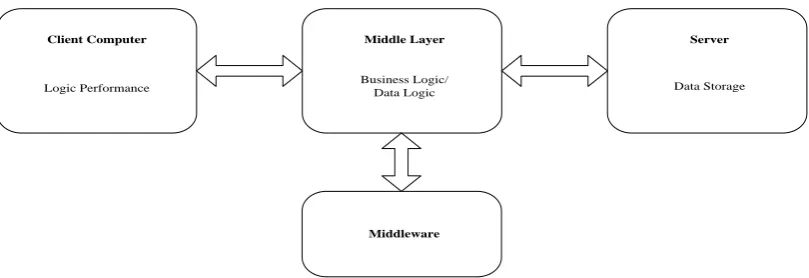
The science and technology information management system based on knowledge service follows advanced, open, compatible, scalable, economical, reliable and safe technical indicators in overall design. The entire system is reasonable, easy to navigate, simple to operate, and it has advanced technology, and it is easy to expand. It can not only satisfy the current scientific and technological information processing requirements, but also meet the needs of the long-term development of scientific and technological information management. The system development and application mode adopts a three-tier system structure of client application + web server + database server, which realizes the separation of user interface and business logic, and is easy to maintain and upgrade. The client only needs to install a browser. The Web server uses an Apache server. The database server uses a large-scale relational database management system Oracle. The operating system uses Linux. Java and JSP are used as the client's development language. Jbuilder2005 is the development environment. In the process of product selection and technology development, the system selects market-leading, mature, cost-effective Internet software development tools - Java Bean, JSP, Oracle, Linux, Apache, etc., so that the system ensures a complete open system structure and technology system. The system architecture is shown in Figure 1:
Client Computer Middle Layer
Business Logic/ Data Logic Logic Performance
Server
Data Storage
[image:2.595.96.501.501.640.2]Middleware
Figure 1. Architecture of science and technology information management system.
The science and technology information management system based on knowledge service mainly includes four parts, which are the collection, analysis, storage and release of scientific and technological information. Its features include (1) establishing organic organization of scientific and technological information to form a unified format; (2) conducting various correlation analysis on scientific and technological information; (3) creating a long-term technology information access and access strategy; (4) providing organic applications for different customers inside and outside the company, including managers and technicians; (5) making part of the data accessible to internal authorized customers.
Main Research Contents
The main research contents of the system are as follows.
Standardization of Data
Standardization technology has greater flexibility and greater compatibility, which can significantly reduce the cost of informationization. The data organization format of the S&T information management system is formed on the basis of reference to the national standard information classification coding, unified coding character set, data element representation, information security architecture, open system interconnection conformance testing, and Chinese information processing.
Security Design
The system includes a user table and a permission table, which can restrict the system functions of different users and the access rights to data. The user password field in the user table uses information encryption technology. Multiple user interfaces can be set up at the same time through impeccable user rights security management functions. At the same time, according to the different permissions settings, the development interface can be separated from the application interface, greatly improving the system's security performance.
Input Module
Users can input scientific and technical information in a simple and flexible interface, such as research project guide information, task books in the research process of scientific research projects, project opening reports (plan design), pre-project study, mid-term evaluation, late-stage study, various important reports of electronic documents of project acceptance, equipment profile picture information, information on the use of video equipment, demonstration reports, research reports, supervision reports, operating instructions and other important documents of electronic documents, scientific research project statistics and so on.
Output Module
The output module can manage data (modification, preservation, maintenance, and backup) on the information in the database. Based on the initial report framework, users can take out the latest data or historical data from the database according to their actual needs for processing, then import the information table data, and finally generate a variety of reports for analog display and printing. The design concept of the common report makes the report format have good expandability and variability, that is, although the format of the report, the source of the data, and the calculation method, the components of the report can be modified in the application program, it will not affect the report data. Therefore, it can adapt to various changes and meet the personalized output of scientific and technological information.
Processing Module
can be quantificationally calculated and searched. User can dynamically set field category (calculate or search),define calculation formula(also pre-build data processing math model)or search condition, carry out individuation process and can ensure the consistency of the data and reduce redundancy. Scientific and technological information management database can be built in a system. Scientific and technological information can be basically managed, including adding, browsing and amending and storage function. The user can sore the daily collected scientific information in a certain format and coding them into the information library. When needed, information retrieval, information query, information rearrangement, information statistics, information output and printing copy can be completed quickly to realize the efficient automation of scientific and technological information management.
Analysis Module
On the basis of scientific and technological information processing, a large number of scientific and technological information can be filtered, summarized, refined, and some information can be produced which is conducive to the management of scientific and technological information and the decision-making of leaders, which is reflected in words, forms and graphs. The system also has the functions of sorting, checking, comparing judgment and comprehensive analysis. Analysis function includes general data statistics, general data query and general graphs analysis. In general data statistics, the statistical items can be entered. Classified statistics, numerical data and comprehensive information statistics can be done. General data query can make users design their own query conditions. The system can converts it into SQL statements to query information. In general graphs analysis, the system analyzes the data in graphical manner. Users can freely design exquisite graphics to obtain various forms of statistical graphics, such as three-dimensional histogram, line graph, three-dimensional pie chart.
Management Module
This is the management module designed for the system administrator, including database management, file management, user permission management, etc. In database management, users can amend, delete, add information items required by scientific technology management, can regularly maintain the database to achieve dynamically build database for convenient management. In file management can help users timely complete the backup and recovery of important data. In user permission management, The system administrator limits access by setting role for each user and password, i.e the system administrator uses a function module authorization way to manage the operation of the user for their duties clearly and to prevent unauthorized operation from causing damage.
Key Technology for System Building
Security, expansibility is the technology key of the entire system.
Security Techniques
System Security Configuration. System security configuration is the basis of software security. We use Unix or Linux operating system instead of Windows operating system as the support platform and use Apache as Web server to provide a service for the static page request of the site. And we use Tomcat server as Servlet/JSP plug-ins to display the dynamic page of the site. The advantages of adopting apache->tomcat structure are mainly reflected in better expansibility and security. Database server is in the unit intranet and separated by a web server and a firewall, which can ensure that the external network cannot directly access the data in the database.
encrypted access to resources based on custom encryption schemes, timely conversion of accessed resources, including dynamic output from servlet and JSP.
Information Security. The core and key issue of information systems is information security. Some of the transmitted scientific and technological information has confidentiality requirements. If a research report is intercepted and captured in the process of dissemination, it may be leaked. Therefore, an encryption algorithm is used for encryption in the transmission of scientific information and user passwords. The confirmed technological information is generally not allowed to be modified to ensure the accuracy of the information. If it is indeed due to a wrong information and needs to be modified, it requires a supervisory authority.
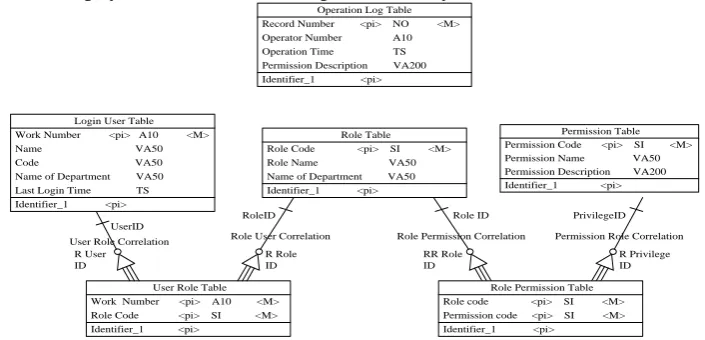
[image:5.595.120.473.269.439.2]Authority Management. The software uses advanced role-based access control methods to refine permissions to page controls. Permissions are divided into rights management and access control. Rights management refers to the distribution and management of rights. Access control refers to the inspection and application of rights.
Figure 2 shows the physical structure of the permission system database:
Operation Log Table Record Number <pi> NO <M> Operator Number A10 Operation Time TS Permission Description VA200 Identifier_1 <pi>
Login User Table Work Number <pi> A10 <M> Name VA50 Code VA50 Name of Department VA50
Identifier_1 <pi> Last Login Time TS
Role Table Role Code <pi> SI <M> Role Name VA50
Identifier_1 <pi> Name of Department VA50
Permission Table Permission Code <pi> SI <M> Permission Name VA50
Identifier_1 <pi> Permission Description VA200
User Role Table Work Number <pi> A10 <M>
Identifier_1 <pi> User Role Correlation
Role Permission Table Role code <pi> SI <M> Permission code <pi> SI <M> Identifier_1 <pi>
UserID R User ID PrivilegeID R Privilege ID RR Role ID Role ID RoleID R Role ID
Role User Correlation Role Permission Correlation Permission Role Correlation
[image:5.595.96.465.463.602.2]Role Code <pi> SI <M>
Figure 2. Physical Structure of the Permission System Database.
The authority management subsystem is designed as Figure 3:
Jsp Authority View Role Management Role Permission Setting Login User Management User Role Setting EJB Authority EJB Role EJB Role Permission EJB User EJB
User Role EJB
[image:5.595.115.471.630.754.2]Database Authority Table Role Table Role Permission Correlation Table User Table User Role Correlation Table Authority Management System
Figure 3. Architecture of Authority Management Subsystem Software.
The structure of authority control subsystem software is shown in Figure 4:
Permission Control System
Log in Log in EJB
Page Groups
Page Control Tag
Page Segment Control Tag
Database
Session
As can be seen from the above, the authority management subsystem is divided into five functional modules: permission view, role management, role permission settings, login user management and user role setting; the authority control subsystem is divided into two functional modules: login check and page group control.
Expansibility Technology
The use of component technology enables application programs to be separated from specific technologies and form loose coupling, thereby solving the contradiction of the business object layer of the distributed application system and improving the system's expansibility. The system is planned to develop in Java language. The system can run on various platforms and can connect with other platforms through JDBC to completely solve the problem of system expansibility. Java Server Pages technology and Servlets provide client tiers with middle-tier functions for easily accessible Internet-style services. JSP technology makes it easier to provide dynamic page services to any browser user. Servlets allow developers based on Java technology to have greater freedom to provide completely dynamic services in the Java language.
Conclusion
The construction of a science and technology information management system based on knowledge service aims to further enrich scientific and technological information resources and promote the automation, digitization, standardization, and information construction of the unit's scientific and technological information management, and provide various scientific and technological information in a more convenient, accurate, faster, and comprehensive way. On the premise of ensuring information security, it realizes the sharing of scientific and technological information resources, improves the development and utilization of scientific and technological information, the level of excavation, and the ability to guarantee information services, so as to satisfy people's needs for obtaining information and utilizing knowledge to the greatest extent.
References
[1] Zh. D. Wu, J. G Xiao, “Library Service Quality Construction Based on Knowledge Service[J],” Modern Artillery Newspaper, Vol. 24, no 2, pp. 63-64, 2008.
[2] Y. C. Wang, “New Theory of Information Management, Knowledge Management and Competitive Intelligence[J],” Modern Information, no 7, pp. 8-9, 2007.
[3] L. Y. Yang, “Design and implementation of scientific research information management system for college teachers[D],” Jilin: Jilin University, 2016.
[4] D. Wu, “Design and Implementation of University Library Information Management System[J],” Journal of Anshan Teachers College, Vol. 17, no 6, pp. 62-65, 2015.
[5] Y. Feng, L. Han, Q. J. Tan, Z. Y. Cai, “Computer Era [J],” no 1, pp. 63-68, 2013.