Spring 2016
Missing White Woman Syndrome: An Empirical
Analysis of Race and Gender Disparities in Online
News Coverage of Missing Persons
Zach Sommers
Follow this and additional works at:
https://scholarlycommons.law.northwestern.edu/jclc
This Criminology is brought to you for free and open access by Northwestern University School of Law Scholarly Commons. It has been accepted for inclusion in Journal of Criminal Law and Criminology by an authorized editor of Northwestern University School of Law Scholarly Commons.
Recommended Citation
Zach Sommers,Missing White Woman Syndrome: An Empirical Analysis of Race and Gender Disparities in Online News Coverage of Missing Persons, 106 J. Crim. L. & Criminology (2016).
Copyright © 2017 by Zach Sommers Printed in U.S.A.
275
MISSING WHITE WOMAN SYNDROME: AN
EMPIRICAL ANALYSIS OF RACE AND
GENDER DISPARITIES IN ONLINE NEWS
COVERAGE OF MISSING PERSONS
ZACH SOMMERS*
At any given time, there are tens of thousands of Americans categorized as “missing” by law enforcement. However, only a fraction of those individuals receive news coverage, leading some commentators to hypothesize that missing persons with certain characteristics are more likely to garner media attention than others: namely, white women and girls. Empirical investigation into this theory is surprisingly sparse and also limited in multiple ways. This paper aims to fill those voids by empirically exploring whether that inequality, dubbed “Missing White Woman Syndrome,” truly exists. Based on a multi-method approach using Federal Bureau of Investigation data and data culled from four major online news sources, the results indicate not only that there are, in fact, race and gender disparities consistent with Missing White Woman Syndrome, but that they manifest themselves in two distinct ways: (1) disparities in the threshold issue of whether a missing person receives any media attention at all; and (2) disparities in coverage intensity among the missing persons that do appear in the news. The paper concludes with an examination of the theoretical and practical implications of the results and a discussion of possible future directions for research.
TABLE OF CONTENTS
INTRODUCTION ... 277
I.PRIOR LITERATURE:DEMOGRAPHIC DISPARITIES IN MEDIA COVERAGE OF ABDUCTION AND CRIME MORE GENERALLY ... 281
A. Race in Media Coverage of Crime: The Benefits of Whiteness ... 282
B. Gender and Intersectionality in Media Coverage of Crime ... 284
C. Theories Explaining Race and Gender Disparities in News Coverage of Crime ... 286
II.DATA AND METHODOLOGY ... 290
A. Stage I Analysis: Who Garners Missing Person Media Coverage? ... 291
1. Subset of Missing Persons Covered by Internet News Sites ... 291
2. Overall Missing Person Data: FBI Missing Person File ... 294
3. Comparative Analysis of Missing Individuals in the Media and Overall Missing Person Population ... 295
B. Stage II Analysis: Do Certain Groups Receive a Higher Intensity of News Coverage? ... 296
III.RESULTS ... 297
A. Stage I: Race Across Individuals ... 297
B. Stage I: Gender Across Individuals ... 299
C. Stage I: The Intersection of Race and Gender Across Individuals ... 300
D. Stage II: Race And Coverage Intensity ... 301
E. Stage II: Gender and Coverage Intensity ... 303
F. Stage II: The Intersection of Race and Gender and Coverage Intensity ... 304
G. Stage II: Regression Analysis and Coverage Intensity ... 305
IV.DISCUSSION ... 309
INTRODUCTION
On Sunday morning, November 3, 2013, Aaron Hubbard went to church.1 It was the last time his family would see him alive.2 A few hours later, Chicago police received a report that Hubbard had been kidnapped.3 According to witnesses, Hubbard, a seventeen-year-old high school student, was attacked and thrown into a truck that quickly drove away.4 After eight days of searching, police found Hubbard’s decomposing body in an abandoned building not far from where the abduction had occurred.5 A handful of short news stories documented the story in Hubbard’s hometown of Chicago,6 but the case received no coverage on a regional or national scale.
Three months earlier, in August, California native Hannah Anderson disappeared, triggering a massive manhunt for her and her alleged kidnapper.7 The incident sparked a media firestorm, with news agencies across the country covering the sixteen-year-old’s disappearance.8 Local
1
Erica Demarest, Three Teenage Friends Found Slain Within 10 Days in West Englewood, DNAINFO (Nov. 13, 2013, 6:27 AM), http://www.dnainfo.com/chicago/ 20131113/west-englewood/three-teenage-friends-murdered-within-10-days-west-englewood.
2 Id. 3
Id.; Carlos Sadovi & Jeremy Gorner, Teen Kidnapped Week Ago Found Shot to Death, CHI. TRIB. (Nov. 12, 2013), http://articles.chicagotribune.com/2013-11-12/news/chi-man- shot-in-the-uptown-neighborhood-20131111_1_west-englewood-south-winchester-avenue-sedevic.
4
Demarest, supra note 1.
5 Id. 6
See, e.g., id.; Michael Lansu, Authorities: Friends Aaron Hubbard, Corderro Brown Found Shot Dead in Separate West Englewood Stairwells, CHI.SUN-TIMES (Nov. 12, 2013), http://homicides.suntimes.com/2013/11/12/aaron-hubbard-corderro-brown-found-shot-dead-in-separate-west-englewood-stairwells; Sadovi & Gorner, supra note 3.
7
See Miguel Marquez & Michael Martinez, Oregon Police Issue Amber Alert for Missing California Children, CNN (Aug. 8, 2013, 6:43 AM), http://www.cnn.com/2013/08/ 07/justice/california-amber-alert.
8
and national media outlets tracked the investigation,9 with CNN.com alone publishing more than twenty print stories and over thirty video segments on the developments.10 One week later, the Federal Bureau of Investigation (FBI) found Anderson alive and killed her captor.11
Much about the two cases was similar. The incidents, which occurred within a few months of each other, both involved abducted teenagers who were located about one week later. Why, then, was there such a huge disparity in the amount of media attention paid to the two cases? Perhaps it was because a suspect was identified early on in Anderson’s case,12 whereas the initial investigation into Hubbard’s disappearance was less successful.13 Or, alternatively, maybe geography played a role. National or regional news agencies might deem an abduction in Chicago as less newsworthy than one in southern California. But what if the disparity resulted from the simple fact that at the time, Hubbard was a young black man and Anderson was a young white woman?
Many bloggers and commenters have argued that there are widespread and systematic race and gender disparities in the amount of media coverage dedicated to abduction or missing persons cases like those of Hubbard and Anderson.14 They have termed the phenomenon “Missing White Woman Syndrome,” or alternatively “Missing White Girl Syndrome,” based on the belief that white women15 tend to disproportionately receive the most amount of news coverage.16 Academics have joined the fray in theorizing
9
See, e.g., Anderson, supra note 8; Newcomb & Shaw, supra note 8; Perry & Branson-Potts, supra note 8; Spagat, supra note 8; Wolski, supra note 8.
10
Data available upon request from author.
11
Greg Botelho & Holly Yan, Grief to Euphoria: California Teen Rescued After Suspect DiMaggio Killed in Idaho, CNN (Aug. 11, 2013), http://www.cnn.com/2013/08/11/ justice/california-amber-alert.
12
See Anderson, supra note 8 (reporting on the issued Amber Alert).
13
See Lansu, supra note 6.
14
See, e.g., John Ridley, Missing White Girl Syndrome Ends Here, HUFFINGTON POST
(June 11, 2007, 2:43 PM), http://www.huffingtonpost.com/john-ridley/missing-white-girl-syndro_b_51632.html; see also A. Barton Hinkle, What the Hannah Graham Disappearance Says About U.S. Culture and the Media, REASON.COM (Oct. 2, 2014), http://reason.com/ archives/2014/10/06/what-the-hannah-graham-disappearance-say.
15
Throughout this paper, the terms “women” and “men” are used when referring to the gender of missing persons. While some observant readers will note that sometimes these nouns are referring to populations or datasets that include both children and adults, use of the words “female” and “male” as nouns has grown more unpopular. See, e.g.,Kara Brown, The Problem with Calling Women ‘Females’, JEZEBEL (Feb. 5, 2015, 2:40 PM), http://jezebel. com/the-problem-with-calling-women-females-1683808274. Thus, I use the terms “women” and “men” in a broader sense that sometimes encompasses girls and boys.
16
and trying to understand why these perceived disparities exist.17 However, even with those theoretical contributions, surprisingly little work has been done to actually establish empirically that the disparity is real. The two articles most directly examining the issue in the American context are limited only to missing juveniles, rather than missing persons of all ages.18 Other, more tangential studies have instead focused primarily on race and crime more broadly while also largely ignoring Internet news as a medium.19 As a result, that literature only indirectly speaks to Missing White Woman Syndrome (MWWS), and more commonly only to its race component.20 Additionally, there is a tendency among crime and media studies of all types to focus on the threshold question of who receives any coverage at all while disregarding the issue of differing levels of coverage intensity, or the amount of coverage that different victims in the media receive.21
This article aims to remedy those deficiencies by: (1) further extending the crime and media literature to the specific realm of abduction; (2) using an intersectional approach to test both the race and gender components of MWWS across both juveniles and adults; (3) examining Internet news, rather than TV news or newspapers; and (4) using two different units of measurement to investigate disparities in both the reception of any media coverage at all and differing levels of coverage intensity. Conducting these tests consisted first of compiling all articles about missing persons published on four prominent news websites during the calendar year 2013.22
Gwen Ifill. Tracy Everbach, Women’s (mis) Representation in News Media, in MEDIA
DISPARITY: A GENDER BATTLEGROUND 15, 21 (Cory L. Armstrong ed., 2013). Many commentators also believe that age and physical looks play a role as well in the determination of a missing person’s newsworthiness. See, e.g., Ridley, supra note 14. This article considers the role of age, but the issue of physical attractiveness is beyond its scope. Future empirical work addressing the understudied effect of attractiveness in this area would be a useful addition to the literature.
17
See, e.g., Eduardo Bonilla-Silva, The Invisible Weight of Whiteness: The Racial Grammar of Everyday Life in Contemporary America,35ETHNIC &RACIAL STUD.173,177– 78(2012).
18
See, e.g., Seong-Jae Min & John C. Feaster, Missing Children in National News Coverage: Racial and Gender Representations of Missing Children Cases, 27COMM.RES. REP. 207 (2010); Clara Simmons & Joshua Woods, The Overrepresentation of White Missing Children in National Television News, 32 COMM.RES.REP. 239, 240 (2015).
19
See, e.g., Travis L. Dixon et al., The Portrayal of Race and Crime on Television Network News, 47 J.BROADCASTING &ELECTRONIC MEDIA 498 (2003); Daniel Romer et al.,
The Treatment of Persons of Color in Local Television News: Ethnic Blame Discourse or Realistic Group Conflict?, 25 COMM.RES. 286 (1998); Min and Feaster, supra note 18.
20
See, e.g.,Dixon et al., supra note 19.
21
For one notable exception, see Simmons & Woods, supra note 18, at 242.
22
These news website data provide a population of missing persons that received online news coverage that can be compared and contrasted with the overall population of missing persons in the United States, as collated by the FBI. Furthermore, the media data can also be evaluated using multiple regression analysis to explore differences in the intensity of coverage that missing persons in the news receive. The results of these two analytic steps suggest that there is indeed empirical evidence to support the perceptions of demographic disparities in abduction news coverage that manifest themselves in two distinct ways. Not only are missing blacks and missing men less likely at the outset to garner media coverage than other types of missing persons, but they also receive a lower intensity of coverage when their stories are, in fact, picked up by news outlets. In other words, there is a two-stage discrepancy that limits the amount of coverage certain types of missing persons receive.
This article is organized as follows. Part I reviews the relevant prior literature in the area, beginning in Part I.A with the empirical research that has focused on race. Although limited research on media coverage disparities in abduction cases exists, there is a rich body of work concerning racial disparities in coverage of crime more broadly. Next, Part I.B presents the even more limited empirical evidence focused on gender and intersectional disparities in news coverage of crime. Lastly, Part I.C surveys the theories that have been put forth to explain the findings in these areas.
Part II describes the data and methodology. This section details the data collection process used to scrape the Internet data, describes the FBI data used as a comparison, and outlines the analytic techniques used to examine the data. Part III presents the results of the two-stage analysis. First, the results of a comparative analysis on the individual level between the Internet data and the FBI data are explained. Then, the results of a second, slightly different comparative analysis, along with a multiple regression analysis, are presented to explore differences in coverage intensity. Part IV discusses the findings and their theoretical implications. Lastly, Part V concludes, discusses limitations, and presents possible future directions for research in this area.
I.PRIOR LITERATURE:DEMOGRAPHIC DISPARITIES IN MEDIA COVERAGE OF ABDUCTION AND CRIME MORE GENERALLY
The existing literature pertaining to MWWS is conspicuously underdeveloped. Very little empirical data exist to support the idea that certain kinds of missing persons are more likely to receive media attention than others. Moreover, the few studies that have been conducted in the area limit their examination only to children23 or focus on local, non-American contexts.24 The literature is far more comprehensive when expanding the scope of the subject matter to crime more generally, although it is still sparse when it comes to Internet news, the intersection of race and gender, and coverage intensity.
The issue of coverage intensity is a particularly important one, as there is a significant difference between a case that is the subject of a single news story and a high-profile case that dominates the news, or a “signal crime.”25 Signal crimes that receive extensive news coverage are much more visible than cases that only receive a stray news story or two, and thus are likely to have a greater influence on the perceptions and beliefs of viewers and readers. As a result, examining coverage intensity, in addition to the threshold issue of who receives any media attention at all, allows for a more comprehensive and nuanced illustration of the types of disparities hypothesized by MWWS.
Although the literature relating to MWWS is limited in multiple respects, there is a wealth of work investigating the broader issue of the effect of race on the threshold question of who receives any newspaper or TV crime coverage.26 Part I.A of this article provides an overview of the empirical trends found in the narrow literature on media, race, and abduction before turning to the empirical trends that have emerged in the
23
See Min & Feaster, supra note 18; Simmons & Woods, supra note 18; Scripps Howard News Service, News Coverage Ignoring Missing Minority Children, THE
GAINESVILLE SUN (Dec. 2, 2005, 6:01 AM), http://www.gainesville.com/article/20051202/ WIRE/212020316?p=all&tc=pgall&tc=ar.
24
See Kristen Gilchrist, “Newsworthy” Victims: Exploring Differences in Canadian Local Press Coverage of Missing/Murdered Aboriginal and White Women, 10 FEMINIST
MEDIA STUD. 373 (2010); see also Yasmin Jiwani & Mary Lynn Young, Missing and Murdered Women: Reproducing Marginality in News Discourse, 31 CAN.J.COMM. 895 (2006).
25
Martin Innes, ‘Signal Crimes’: Detective Work, Mass Media, and Constructing Collective Memory, in CRIMINAL VISIONS:MEDIA REPRESENTATIONS OF CRIME AND JUSTICE
51, 52 (Paul Mason ed., 2013).
26
broader literature focusing on media, race, and all types of violent crime. Next, Part I.B considers the data related to the role of gender—both independently and in its intersection with race—in media coverage of crime. Finally, Part I.C presents the theoretical contributions and explanations of the empirical scholarship in this area.
A. RACE IN MEDIA COVERAGE OF CRIME: THE BENEFITS OF WHITENESS
For the most part, researchers in this area have dedicated their energies to the broader nexus of race, media, and crime rather than race, media, and abduction. Still, there is some evidence to suggest that missing whites are more likely to garner media attention than their non-white counterparts.27
A study done by the Scripps Howard News Service analyzed CNN and Associated Press (AP) news reports pertaining to child abductions from 2000 to 2004.28 The study found that the 162 AP stories and 43 CNN reports dramatically overrepresented white children.29 To establish a baseline racial composition for comparison, the researchers used data from the Department of Justice and the National Center for Missing and Exploited Children to estimate that between 53% and 54% of missing children from that timeframe were white.30 In contrast, 67% of the AP reports and an even higher 76% of CNN stories focused on white children.31 As a result, there were disproportionately fewer stories highlighting black and Hispanic children.32
Similarly, Professors Seong-Jae Min and John C. Feaster found that missing black children were underrepresented in their sample of 161 nationally broadcast television news segments when compared to the racial composition of the overall missing children population,33 a finding that a later study replicated.34 These three studies lay a foundation for establishing empirical evidence in support of MWWS, but they only address the juvenile subset of the missing persons population. Likewise, they do not fully disentangle the issues of individuals appearing in the news and the intensity with which they are covered.
27
See Min & Feaster, supra note 18, at 212; Simmons & Woods, supra note 18, at 242, 244; Scripps Howard News Service, supra note 23.
28
Scripps Howard News Service, supra note 23.
29 Id. 30
Id. 31
Id. 32
Id. 33
Min & Feaster, supra note 18, at 212.
34
When considering the evidence in the broader criminal context, a comparable pattern emerges. Numerous studies have concluded that whites are more likely than non-whites to appear in news stories as victims of crime.35 These findings hold even when accounting for how often different racial groups are actually victimized by crime; in other words, whites’ disproportionate overrepresentation and non-whites’ disproportionate underrepresentation in news coverage cannot be explained by differences in real-world victimization rates.36 Furthermore, there is limited evidence that suggests that stories of white victims with black perpetrators are even more likely to receive media attention.37
Even when only considering perpetrators, rather than a victim-perpetrator interplay, scholars have often concluded that the media treats racial groups differently.38 In general, persons of color are more likely than their white counterparts to be portrayed as perpetrators in news stories,39 with one study finding that “violent crime committed by blacks was the largest category of local news” among all types of stories.40 The nature and tone of coverage of criminal suspects also differs. One study found that black and Hispanic perpetrators were substantially more likely than whites to be shown victimizing strangers.41 Researchers have also demonstrated that black suspects are more likely than their white counterparts to be presented in what the authors deem “threatening” manners: in mug shots or while being physically restrained in some way by the police.42 Intra-race
35
Dixon et al., supra note 19, at 511 (finding that whites were 1.69 times more likely than blacks to appear as victims of crime in a sample of national network TV news segments); Romer et al., supra note 19, at 296 (asserting that local TV news stations broadcast stories about white victims of crime at a higher rate than would be expected given the number of stories detailing white perpetrators of crime); John W.C. Johnstone et al.,
Homicide Reporting in Chicago Dailies, 71 JOURNALISM Q.860, 867 (1994) (concluding that two daily newspapers in Chicago were between two and four times more likely to report on a murder if the victim were white, rather than black or Hispanic).
36
Dixon et al., supra note 19, at 51415; Romer et al., supra note 19 at 29798.
37
Entman, supra note 26, at 337 (determining that “white victimization by blacks appeared to have especially high priority”).
38
See, e.g.,Romer et al., supra note 19, at 286.
39
Id. at 297.
40
Entman, supra note 26, at 336. But see Dixon et al., supra note 19, at 511 (finding that whites were actually more likely to be presented as perpetrators than blacks).
41
Ted Chiricos & Sarah Eschholz, The Racial and Ethnic Typification of Crime and the Criminal Typification of Race and Ethnicity in Local Television News, 39 J.RES.CRIME & DELINQ.400,412(2002).
42
comparisons, in addition to inter-race comparisons, also reveal disparities. Within news stories on crime, minorities are more likely to be presented as perpetrators than as victims or law enforcement officers.43
B. GENDER AND INTERSECTIONALITY IN MEDIA COVERAGE OF CRIME
Although there is substantial literature on race in media representations of crime, there is much less work surveying the role of gender. That gap in the literature mirrors a broader historical tendency for criminological research to overlook the role of women and girls. Scholars traditionally were more interested in explaining men’s roles as crime perpetrators and victims.44 In recent decades, that trend has begun to reverse.45 Increasingly, studies have focused on women as both offenders and victims.46 Some criminologists have taken ideas traditionally applied to male offenders and deployed them as explanations for female offending.47 Or, alternatively, when that strategy has proven inadequate, researchers have reformulated and added to those ideas to make their application more suitable to female perpetrators.48 With respect to female victimization, research can be difficult because the crimes most commonly committed against women, such as sexual or domestic abuse, are “some of the most invisible and under-reported crimes.”49
Based on those developments, we might expect female missing persons in the news to be underrepresented when compared to male missing persons. However, recent work on gender, media, and crime has suggested that women and girls are, in fact, overrepresented as victims.50
usually included “glowering mug shots” of the suspect or video of the individual being escorted by police while in handcuffs).
43
Dixon et al., supra note 19, at 512 (finding that blacks were twice as likely to appear on TV news as perpetrators than as victims, and seventeen times more likely to be shown as perpetrators than as police officers); Romer et al., supra note 19, at 29798 (calculating that non-white individuals were shown as perpetrators (around 63%) far more often than they were shown as victims (around 22%)).
44
Lorine A. Hughes, The Representation of Females in Criminological Research, 16 WOMEN &CRIM.JUST. 1, 21 (2005) (reporting “a glaring and persistent deficiency of female representation in criminological research” during the twentieth century).
45
See, e.g.,JOANNE BELKNAP, THE INVISIBLE WOMAN:GENDER,CRIME, AND JUSTICE 4 (4th ed. 2014).
46
See, e.g., id. at 45.
47
Id. at 4 (citing other theorists who have pursued this strategy); see, e.g.,EILEEN B. LEONARD,WOMEN,CRIME, AND SOCIETY (1982).
48
BELKNAP, supra note 45, at 4.
49
Id. at5.
50
Consequently, the available empirical data are generally consistent with the gender component of MWWS.
But Missing White Woman Syndrome is, by definition, an intersectional theory.51 It combines the two elements of race and gender while also at times incorporating issues of class and age. So how do the findings in the literature change when using an intersectional approach to consider gender in conjunction with race? Given that MWWS has not been the subject of much empirical investigation, it is unsurprising that the broader literature in crime and the media has not tended to focus on that kind of intersectional inquiry. As seen in Part I.A, the bulk of the empirical work on crime in the news has emphasized differences by race.52
In the most direct examinations of the intersectionality of MWWS, Min and Feaster concluded that non-African American girls were overrepresented in TV news segments depicting kidnapping cases,53 although a follow-up study failed to replicate this finding.54 Bonilla-Silva found that black and Latina missing or murdered women “seldom” appeared on network crime shows, and also that those who did were far less likely to be described as “beautiful” than white women.55 Likewise, Gilchrist demonstrated that three missing or murdered white women from Ontario received six times as much news coverage as three missing or murdered Aboriginal women from Saskatchewan.56 Thus, although more generalizable corroborating evidence is still needed, there are some data that support the intersectional element of MWWS, or the idea that missing white women are more likely to appear in the news than other missing
RAY SURETTE, MEDIA, CRIME, AND CRIMINAL JUSTICE 57 (2010) (stating that the media “overrepresent[s] young women in excess of their real victimization rates”); Maria Elizabeth Grabe, Television News Magazine Crime Stories: A Functionalist Perspective, 16 CRITICAL
STUD. MASS COMM. 155,166 (1999) (showing that women made up a disproportionate number of victims in TV news crime stories). But see Min & Feaster, supra note 18, at 213 (finding that girls were underrepresented as victims in the news when compared to actual victimization rates).
51
For a more detailed discussion and definition of the theory of intersectionality, see
infra Part I.C.
52
See supra Part I.A.
53
Min & Feaster, supra note 18, at 21213. Because of limitations of the FBI dataset used as their point of comparison, the authors were limited to a dichotomous race variable of African American/non-African American. This paper makes use of the same FBI dataset and faces similar limitations. See infra note 114.
54
Simmons & Woods, supra note 18, at 24344 (finding girls across all races to be underrepresented in one time period and neither over- nor underrepresented in a second time period).
55
Bonilla-Silva, supra note 17, at 177.
56
persons.
C. THEORIES EXPLAINING RACE AND GENDER DISPARITIES IN NEWS COVERAGE OF CRIME
As detailed above in Part I.A, the existing scholarship exploring crime and the news reveals a pattern of disparities in news coverage based on race. Academics have consequently attempted to theorize and explain that pattern.57 Some have posited that the disproportionate focus on crimes with white victims and non-white perpetrators can be explained by ethnic blame discourse, in which an in-group (whites) blames an out-group (non-whites) for its problems.58 Others have argued that disproportionately emphasizing people of color as criminal perpetrators in the news is more reflective of group contact theory, which is characterized by intergroup competition—in this case, between whites and non-whites—over both tangible and intangible resources.59
While both of these theories are compelling in some ways, neither is a completely satisfactory explanation of disparities in coverage of missing person cases specifically. Media reports on these cases are unique in that they often focus heavily on the victim, rather than the perpetrator, who commonly has not yet been identified at the time of coverage.60 This shift in focus likely results from the fact that in many open abduction cases, little is initially known about the situation aside from the missing person and her characteristics.61 The relative lack of substantial physical evidence also distinguishes open abduction cases from other violent crimes like homicide; in short, with abduction, there is no body. Thus, the suspect-victim interplay present in both ethnic blame discourse and group contact theory is less
57
See, e.g., Lawrence Bobo, Attitudes Toward the Black Political Movement: Trends, Meaning, and Effects on Racial Policy Preferences, 51 SOC. PSYCHOL. Q. 287 (1988); Bonilla-Silva, supra note 17; Romer et al., supra note 18.
58
See, e.g.,Romer et al., supra note 19, at 30102.
59
See, e.g.,Bobo, supra note 57, at 288.
60
See, e.g., Brad Lendon, Search on for Woman Kidnapped from Gas Station, CNN (Apr. 29, 2013, 1:59 PM), http://www.cnn.com/2013/04/29/justice/michigan-woman-abducted; Julia Lull & Leigh Remizowski, Authorities: Letter from Missing New Hampshire Teen Appears to be Genuine, CNN (Dec. 7, 2013, 10:05 AM), http://www.cnn.com/2013/12/ 06/us/missing-teen-letter-home.
61
See, e.g., Man, 57, Missing from Northwest Side Home, CHI.TRIB. (July 23, 2013), http://articles.chicagotribune.com/2013-07-23/news/chi-man-57-missing-from-northwest-side-home-20130722_1_northwest-side-kilbourn-park-neighborhood-diversey-harbor;
relevant in this realm and more suited to the broader issue of crime in the media.
Professor Eduardo Bonilla-Silva offers a more suitable theory for the racial component of MWWS using his original concept of “racial grammar” to explain racism in its modern, subtler form.62 He defines racial grammar as white supremacy that is normalized by implicit or even invisible standards.63 These standards “reproduce racial order as just the way things are.”64 In other words, racial grammar reinforces the status quo, and does so in several different ways. To fully explain the concept, he turns in part to racial disparities in news coverage of abductions.65 Although he operates with a necessarily limited empirical foundation because of the sparse data currently available in this realm, Bonilla-Silva argues that missing whites dominate the news because others see them as “universal beings.”66 Put another way, people are, at least theoretically, able to identify more easily with and care more about missing whites than they are missing individuals of color. Thus, this subtle standard of placing a premium on white lives in the news helps maintain a racial hierarchy with whites at the top.
Other researchers have focused more on the gender disparities in reporting on crime, but also have returned to the idea of a social hierarchy.67 From a theoretical standpoint, female missing persons being disproportionately shown on the news is not altogether surprising. Researcher Sarah Stillman argues that news stories about missing women take advantage of the classic trope of “damsels in distress,” in which a helpless girl or woman must be saved by a man.68 The concept of a damsel in distress is so engrained in Western culture that audiences readily accept women and girls as victims.69 Stillman finds the phenomenon especially troubling because of its exploitative nature: news corporations use the stories of abduction, which are often associated with fears of rape and sexual abuse, to cash in on the victims’ bodies.70
Yet Stillman also recognizes that only a certain subset of the female
62
Bonilla-Silva, supra note 17, at 174.
63 Id. 64
Id. 65
Id. at 17778, 18182.
66
Id. at 178.
67
See, e.g.,Sarah Stillman, ‘The Missing White Girl Syndrome’: Disappeared Women and Media Activism, 15 GENDER &DEV.491 (2007).
68
Stillman, supra note 67, at 492.
69
Id. at 494.
population is eligible to be considered a damsel in distress.71 Noting that the victims that receive coverage are typically white, attractive, and wealthy, she posits, much like Bonilla-Silva, that the neglect of stories about other types of missing persons makes clear that there is a hierarchy in the value of abductees’ lives.72 Moreover, this hierarchy indicates that a more nuanced theoretical framework, such as an intersectional framework, is necessary to fully explain MWWS.
Intersectionality is the idea that members of multiple historically marginalized groups are subject to a unique type of subordination.73 For example, black women are members of both a marginalized racial group and a marginalized gender group. Crucially, though, black women have an “intersectional experience [that] is greater than the sum of racism and sexism.”74 In other words, like white women, black women are subject to sexism, but the form of that sexism differs for black women because of the compounding effects of racial discrimination.75 Likewise, the racism faced by black women differs from the experiences of black men because of the effects of sexism. Thus, to fully understand the manifestations of racism or sexism, researchers must account for the unique challenges faced by individuals in multiple intersecting groups that have been marginalized.
Some thinkers have endeavored to explain news coverage disparities using that exact type of framework, taking into account the intersection of race and gender.76 For example, some have argued that the tone of media coverage of black female victims differs in that these women are more likely to be blamed for purportedly putting themselves in harm’s way, either knowingly or unknowingly.77 Victim blaming in this context suggests that these victims are not only less innocent, but also less worthy of rescue. Other observers lament the lack of publicity given to black female victims of police brutality, attributing the silence to a tradition of “sexism and patriarchy” in both the black community and American society
71
Id. at 492.
72
Id. at 491.
73
See, e.g., ANGELA DAVIS,WOMEN,RACE,&CLASS (1983); PATRICIA HILL COLLINS, BLACK FEMINIST THOUGHT: KNOWLEDGE CONSCIOUSNESS, AND THE POLITICS OF
EMPOWERMENT (2009);Kimberle Crenshaw, Demarginalizing the Intersection of Race and Sex: A Black Feminist Critique of Antidiscrimination Doctrine, Feminist Theory, and Antiracist Politics, 1989 U.CHI.LEGAL F., 139, 140 (1989).
74
Crenshaw, supra note 73, at 140.
75
BETH E.RICHIE, ARRESTED JUSTICE: BLACK WOMEN, VIOLENCE, AND AMERICA’S
PRISON NATION 128(2012).
76
See, e.g.,Marian Meyers, African American Women and Violence: Gender, Race, and Class in the News, 21 CRITICAL STUD.MEDIA COMM.95(2004).
77
at large.78
Taking a somewhat different approach, Grabe hypothesizes that white women, and particularly young and wealthy white women, are disproportionately highlighted in the news as crime victims because of their status as the biggest competition in the workplace for white men.79 She suggests that by consistently portraying white women as victims of crime, especially of crime occurring in places of employment, they might be deterred from seeking the same employment opportunities as men because of the perceived dangers of the workplace.80 As a result, the news stories serve as a reinforcing mechanism for a gendered hierarchy, with men at the top.81
Bonilla-Silva and Professor Yvonne Jewkes, on the other hand, both hypothesize that coverage disparities are the result of determinations of what—or who—is and is not newsworthy.82 As part of that determination in the Canadian context, researchers have described how “Aboriginal women [are positioned] in the lowest rungs of the social order, thereby making them expendable and invisible, if not disposable.”83 Therefore, the Canadian media disproportionately ignore crimes against those women.84 In contrast, white women occupy the peak of the social order and are, in turn, spotlighted by the media.85 Gilchrist builds upon this idea of a social hierarchy within different subgroups of women, but in more explicitly normative terms.86 She agrees that disproportionate news coverage of cases involving the victimization of certain types of women reinforces a social hierarchy by suggesting that those women are innocent, valuable, and worth saving.87 But she also describes how those disparities reflect the strand of intersectional thought that argues that women are often categorized into a
78
Kali Nicole Gross, Silence on Black Female Victims Weakens Fight Against Police Brutality, THE HUFFINGTON POST (Apr. 19, 2015, 6:21 PM), http://www.huffingtonpost.com/ kali-nicole-gross/silence-on-black-female-victims_b_7092128.html.
79
Grabe, supra note 50, at 166.
80 Id. 81
Id. 82
YVONNE JEWKES, MEDIA AND CRIME 52 (2004) (“If the [missing] individual in question is young, female, white, middle-class and conventionally attractive, the media are more likely to cover the case than if the missing person is, say, a working-class boy or an older woman.”); Bonilla-Silva, supra note 17, at 177 (describing the fact that kidnapping stories sell, but that such stories differ in their ability to garner interest).
83
Jiwani & Young, supra note 24, at 912.
84
Id. at 897.
85
Gilchrist, supra note 24, at379.
86
Id. at 375.
simple dichotomy of “good” or “bad” based on how well they fit societal gender norms.88 Predictably, white women are traditionally more likely to be placed in the “good” category, which is reflected in their overrepresentation as crime victims in the news.89
In short, many of the theories explaining race- and gender-based disparities in news coverage of crime assert that the disparities both reflect and reinforce social hierarchies.90 Women and girls are more readily accepted as victims that need saving,91 and white women and girls in particular are more easily seen as “universal” victims with whom all viewers and readers can identify.92 Their outsized presence in the news as crime victims implies that they are inherently good and innocent. Conversely, the lack of media attention trained on victims of color denotes that their lives are less valuable and less of a priority for rescue. This intersectional toolkit helps to more fully explain and contextualize MWWS and can be used to help situate the findings of this study.
II.DATA AND METHODOLOGY
The data analysis consists of two stages to examine two different types of disparity in media coverage. Stage I addresses disparities in who receives media attention to any degree. In this stage of analysis, the missing individuals who appear in online news stories are compared to the overall missing person population, per data collated by the FBI. For the purposes of this stage of analysis, the unit of analysis was defined as a unique individual, meaning that multiple articles about the same person were combined into one data point.
Stage II of the analysis uses two steps to probe the issue of disparities in the intensity of news coverage received by individuals in the media subset. First, a slightly different comparison with the FBI data can be used to investigate the demographics of the subjects of every article, rather than the demographics of each unique individual. In this stage of the analysis, rather than defining each data point as a unique individual, each instance of a missing person appearing in an article constitutes a data point. In other words, a boy appearing in five separate articles would appear five times in the dataset.93 This weighted comparison illustrates general trends in the
88 Id.
89 Id. 90
See id. at 379;Grabe, supra note 50; Jiwani & Young, supra note 24, at 912; Meyers,
supra note 76, at111.
91
Stillman, supra note 67, at 492.
92
Bonilla-Silva, supra note 17, at 182.
93
amount of coverage each individual receives. For example, if this comparison reveals a population that is a higher percentage white than the Stage I analysis, the finding would indicate that whites are receiving a disproportionate amount of coverage even among the missing persons in the news. The second step of Stage II approaches the same issue from a different methodological perspective. Using the same media population used in Stage I, the Stage II analysis uses multiple regression to explore the effect of different factors on the number of articles produced about each individual.
These two stages of analysis together help paint a fuller picture of news coverage of missing persons. They shed light on both the threshold issue of who gains any attention in the news and the subsequent issue of how much attention news corporations give to those individuals who pass through that threshold. Part II.A describes the data and methodology used in Stage I of the analysis, and Part II.B explains the techniques used in Stage II.
A. STAGE I ANALYSIS: WHO GARNERS MISSING PERSON MEDIA COVERAGE?
1. Subset of Missing Persons Covered by Internet News Sites
To create the dataset of missing persons who received news coverage, four prominent websites were searched for any relevant news articles from the year 2013. The websites included one national news outlet (CNN) and three major news outlets in large cities with different racial compositions
(The Minneapolis Star Tribune, The Chicago Tribune, and The Atlanta
Journal-Constitution).94 The combination of national and local sites
provides more comprehensive data than either type could solely on its own,
94
preempting any claims that one type of news source was more prone to coverage disparities than the other.95 CNN was chosen as the national site because it consistently ranks as one of the two most trafficked online news websites.96 The three cities were chosen for two primary reasons. First, because abduction statistics are not tallied in any sort of systematic way, abduction rates are not available by city. Overall violent crime rates, however, are available by city through the FBI’s Uniform Crime Reports (UCR).97 Per the UCR, Chicago, Atlanta, and Minneapolis all have above-average violent crime rates for large cities,98 ensuring that all three metropolitan areas have a large and varied collection of abduction cases for news agencies to filter through.99 The second reason for selecting these cities was to add a degree of racial and cultural diversity among the urban areas.100 Chicago and Minneapolis are relatively close geographically, yet have significantly different racial makeups—Minneapolis has a far higher proportion of white residents.101 Atlanta has an even larger percentage of black residents than Chicago,102 while also expanding the dataset to a part
95
For instance, in response to the Scripps Howard News Service study (seesupra note 23), an Associated Press managing editor claimed that disparities might be smaller for news on a more local level. Thomas Hargrove & Ansley Haman, Media Focus on White, Wealthy in Missing-Child Cases, SEATTLE POST-INTELLIGENCER (Nov. 23, 2005, 10:00 PM), http://www.seattlepi.com/national/article/Media-focus-on-white-wealthy-in-missing-child-1188288.php.
96
PEW RESEARCH CENTER, STATE OF THE NEWS MEDIA 2015 11 (2015), http://www.journalism.org/files/2015/04/FINAL-STATE-OF-THE-NEWS-MEDIA1.pdf; Kenneth Olmstead, Amy Mitchell, & Tom Rosenstiel, The Top 25, PEW RESEARCH CENTER
(May 9, 2011) http://www.journalism.org/2011/05/09/top-25; Jane Sasseen, Kenny Olmstead, & Amy Mitchell, Digital: By the Numbers, PEW RESEARCH CENTER (2013), http://www.stateofthemedia.org/2013/digital-as-mobile-grows-rapidly-the-pressures-on-news-intensify/digital-by-the-numbers.
97
THE FEDERAL BUREAU OF INVESTIGATION,CRIMINAL JUSTICE INFORMATION SERVICES
DIVISION, CRIME IN THE UNITED STATES BY METROPOLITAN STATISTICAL AREA (2014), https://ucr.fbi.gov/crime-in-the-u.s/2014/crime-in-the-u.s.-2014/tables/table-6.
98
“Large cities” here is defined as having a population of 250,000 or more.
99
See THE FEDERAL BUREAU OF INVESTIGATIONS, CRIMINAL JUSTICE INFORMATION
SERVICES DIVISION,supra note 97.
100
For a discussion of the impact of the demographics of these three cities on the results of the analysis, see infra note 130.
101
According to the 2010 U.S. Census, Minneapolis is 63.8% white, 18.6% black, and 10.5% Latino/a, while Chicago is 45.0% white, 32.9% Black, and 28.9% Latino/a. UNITED
STATES CENSUS BUREAU, STATE & COUNTY QUICKFACTS (2010), http://www.census.gov/ quickfacts/table/PST045215/2743000; UNITED STATES CENSUS BUREAU,STATE &COUNTY
QUICKFACTS (2010), http://www.census.gov/quickfacts/table/PST045215/1714000.
102
of the country with a significantly different culture than the Midwest. To compile the data, a set of thirteen comprehensive search terms103 was used on each of the four sites’ search functions. I then manually filtered out unrelated articles that did not concern missing persons or abductions, but happened to contain one or more of the search terms.104 In addition, I disregarded stand-alone articles that described a person who had already been found after going missing, but who had turned out not to have been abducted.105
Once the articles were compiled, they were coded on a variety of dimensions, including race,106 age,107 and gender of the victim. The race
103
The terms were: “abducted,” “abduction,” “abducting,” “Amber alert,” “kidnapped,” “kidnapping,” “missing boy,” “missing child,” “missing girl,” “missing juvenile,” “missing man,” “missing person,” and “missing woman.”
104
Articles largely unrelated to abductions that made passing mention of a missing person case also did not qualify for inclusion into the dataset. To be eligible, a missing person case had to be the subject of at least two sentences in the article. Other, less relevant articles were also excluded. For example, I did not include stories about individuals missing after natural disasters or articles about people missing of their own volition. In addition, a handful of articles about faked or attempted abductions were filtered out. Broad stories about a series of unidentifiable abductions also were excluded from the analysis. This type of story might describe a gang that used to kidnap rival drug dealers without going into specifics of any individual case. Lastly, I omitted the few cases in which an individual was legally charged with kidnapping for actions that do not fit traditional definitions of abduction. For example, if an intruder detained an individual in her own bedroom for a short while, the intruder might be charged with kidnapping despite the fact that the victim was not carried away. Such cases are not part of this analysis.
105
Of course, some of the individuals that are a part of the dataset turned out to have gone missing without being abducted. To be included in those circumstances, at least one article had to have been published while the individual was still missing. For a stand-alone article that described a missing person who had already been found to be eligible, the article had to specify that the recovered individual had been the victim of an abduction. Reframing the issue, for a case to be eligible, it had to be treated as a potential abduction at some point during the news coverage.
106
Most of the coding was relatively straightforward and lifted directly from information provided in the article. Many of the articles, though, do not explicitly identify the victim’s race. In these cases, I conducted Internet searches of missing person databases and other news agency websites to try and obtain race-identifying information. That was not possible for all cases, unfortunately—for the remaining cases, I used pictures of the missing person, if available, to code race. For those stories in which race was not stated and could not be coded, the individual’s race was coded as unknown. These individuals either were presented without names (e.g., “a 13-year-old boy”) or pictures to allow for coding. For the eighty-seven individuals whose race was coded, two additional coders also independently classified each individual using a picture to ensure an adequate level of inter-rater reliability. Comparing the three classifications results in a kappa coefficient of 0.78, indicating that the coding system was sufficiently reliable.
107
categories employed were “Black,” “Hispanic,”108 “White,” and “Other.”109 Consequently, the resulting dataset contained demographic details for the entire population of missing persons who received media coverage from any of these news sites in 2013. The search results produced a population of 445 unique missing persons who received news coverage across 1,093 distinct articles.
2. Overall Missing Person Data: FBI Missing Person File
In order to contextualize the media coverage findings resulting from the process described above in Part II.A.1, some sort of baseline group is needed for comparison. To that end, data were acquired from the FBI’s National Crime Information Center (NCIC). The NCIC aggregates missing person information from police departments across the country into its Active Missing Person File, which is a comprehensive list of Americans currently classified as missing. Upon request, the NCIC provided a demographic breakdown of the file as of January 1, 2014, including summary statistics organized by age, race,110 and gender.111 The active file at that time contained 84,136 individuals.112 These data serve as the statistical baselines113 with which the media coverage population can be
108
Academics and non-academics alike have long discussed the distinction of race and ethnicity and which category is a more appropriate classification for a Hispanic or Latino/a background. The media, though, overwhelmingly treats Latino/a or Hispanic individuals as a distinct racial group, and for that reason this analysis does so as well.
109
The Other category consisted of individuals initially coded as Asian, Native American, or some combination of multiple categories. Those groups were later collapsed into the catch-all Other category because of their small sample size.
110
Unfortunately, race is not broken down by gender anywhere in the dataset, which means that direct comparisons cannot be made between specific subgroups within those two demographics (e.g., white women vs. black men). This limitation is suboptimal but can be worked around, as discussed more fully in Part III and Part IV.
111
Despite extensive efforts, the NCIC would not provide the file itself or any individual-level data, even if de-identified. That information is available only to law enforcement personnel.
112
Another option for the baseline statistics would have been to use the demographics of all individuals added to the file during the year 2013. The downside to that comparison group is that news agencies did not restrict themselves to covering individuals who only disappeared in 2013—older cases also received a significant amount of attention. On the other hand, the Active File might exhibit some survivor bias if certain demographics are more likely to stay on the file for long periods of time. Nevertheless, the Active File seemed more appropriate because it spanned more than just one year’s worth of missingness. Fortunately, both options produce similar baseline rates, so the issue is not a crucial one.
113
compared.114
3. Comparative Analysis of Missing Individuals in the Media and Overall Missing Person Population
To test for race and gender disparities between missing persons in the news and the FBI’s overall missing person population, the race and gender makeup of the individuals found in the two datasets was compared. To test whether the measured differences would be expected due to chance, a z-test was used for two population proportions. For both race and gender, the formula was as follows:
in which p1 was the gender or race proportion from the FBI population and
p2 was the proportion from the media coverage population. The comparisons using the z-test shed light on the issue of whether certain
that when people of color go missing, loved ones might be less likely to contact police, who in turn might be less likely to file a report even when they are contacted. See Rani Molla,
America’s Missing Persons by Age, Race and Gender, WALL ST. J. (Oct. 10, 2014, 9:54 AM), http://blogs.wsj.com/numbers/americas-missing-persons-by-age-race-and-gender-1814. As a result, the findings of this paper might actually be conservative estimates if the baseline rates of abduction for people of color are higher than those reported by the FBI data.
114
The racial classification system used by the NCIC is problematic, however. Individuals are coded as “Asian,” “Black,” “Indian,” “Unknown,” or “White.” Conspicuously, none of these categories take Latino/a or Hispanic ethnicity into account, and instead all individuals identified as such are included in the “White” category. As a result, as seen in both the Min and Feaster study and the Simmons and Woods study that made use of the same data, the only direct comparisons that can accurately be made are between black and non-black missing persons. Min & Feaster, supra note 18, at 211; Simmons & Woods,
supra note 18, at 241–42; see also supra note 53 and accompanying text.
groups of missing persons are more likely to receive any amount of news coverage.
B. STAGE II ANALYSIS: DO CERTAIN GROUPS RECEIVE A HIGHER INTENSITY OF NEWS COVERAGE?
The second stage of analysis consists of a two-step process designed to determine whether the intensity or amount of coverage differed for missing persons who garnered media attention in Stage I. The first step utilizes a comparison with the same media and FBI data described in Part II.A.1 and Part II.A.2 with one small change. Rather than focusing on the individuals in the media data, this comparison explores every article in the dataset. As discussed previously,115 the unit of analysis in this comparison is the subject(s) of each news article, even if duplicative with other articles’ subjects. Consequently, there are 1,671 data points in Stage II.116
As in Stage I of the analysis, a z-test was used to compare the findings of the comparison. The same formula was used:
in which p1 was again the gender or race proportion from the FBI
population and p2 was the proportion from the news article subjects.
Comparing these findings to those in Stage I of the analysis allow for inferences as to how the amount of news coverage differs across groups.
The second step of this analytic stage approaches the problem using regression. Pooled binomial regression models explore the effect of race and gender on the number of articles published about each individual missing person included in the media population of the Stage I analysis while controlling for a variety of factors.117 The first model controls for
115
Seesupra note 93 and accompanying text.
116
As discussed previously in Part II.A.2, the media data include 445 missing persons and 1,093 distinct articles. Some articles discuss multiple missing persons, however, which resulted in the increased sample size in Stage II.
117
age, while the second, more complex model also controls for racial composition and economic characteristics of the missing person’s hometown. These controls are included to help rule out alternative explanations based on geography. By incorporating these hometown features, the model can account for the possibility that the racial makeup or relative wealth of a missing person’s hometown118 might affect the amount of coverage that he receives.119 Finally, a third and separate model examines the interaction effect between race and gender when using the same controls. This model allows for comparisons of coverage intensity across specific race and gender groups, such as white women versus black men. The results of all of the models can subsequently be used to confirm the trends in coverage intensity seen in the first step of Stage II of the analysis.
III.RESULTS
A. STAGE I: RACE ACROSS INDIVIDUALS
Table 1 contains the race statistics of all individuals in the overall media coverage population, as well as the comparison base rates from the FBI data.
dataset.
118
Hometowns were defined as the place of residence of the individual at the time of disappearance and were coded from the articles in the dataset. If the hometown was not documented in any of the articles, Internet searches of other news sites quickly revealed the information in all cases but one. That case was excluded from this portion of the analysis, along with cases of three individuals who lived in other countries.
Once the hometown had been identified, I used 2010 U.S. Census data to code the relevant information about the hometowns. For the economic measure, I used each locality’s median household income, while the race measure consisted of the percentage of the population that identified as white, black, and Hispanic. The racial demographics are not a perfect match for the media data, as the Census treats Hispanic heritage as an ethnicity, not a race. Nevertheless, the data still provide a good representation of the racial makeup of each locality.
119
Table 1. Racial Composition of Individuals in Media and FBI Populations
Race Media FBI
Black Hispanic Other White 22.97% (85) 12.43% (46) 4.05% (15) 60.54% (224)
35.25% (27,797) ---
4.43% (3,489) 60.32% (47,560)
n (Media) = 370 n (FBI) = 78,846
The table illustrates that the media population contains a disproportionately low number of black individuals when compared to the FBI population, as confirmed by a one-tailed z-test (z = 4.94, p < .001). Likewise, non-blacks120 are overrepresented in the media population to a statistically significant extent (z = -4.94, p < .001).
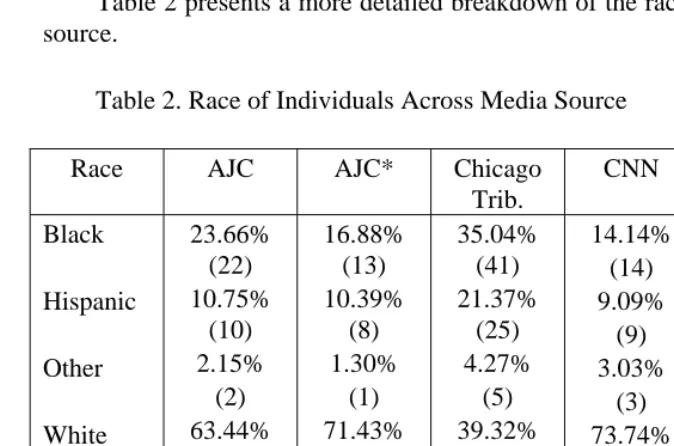
[image:25.612.84.421.341.564.2]Table 2 presents a more detailed breakdown of the race data by media source.
Table 2. Race of Individuals Across Media Source
Race AJC AJC* Chicago
Trib. CNN Minn. Star Black Hispanic Other White 23.66% (22) 10.75% (10) 2.15% (2) 63.44% (59) 16.88% (13) 10.39% (8) 1.30% (1) 71.43% (55) 35.04% (41) 21.37% (25) 4.27% (5) 39.32% (46) 14.14% (14) 9.09% (9) 3.03% (3) 73.74% (73) 10.48% (11) 9.52% (10) 7.62% (8) 72.38% (76)
n (AJC) = 93 n (AJC*) = 77
n (Chicago Tribune) = 117 n (CNN) = 99
120
This category for the media subset is the combination of white, Hispanic, and other individuals, whereas for the FBI data it is the combination of white and other individuals.
n (Minn. Star Tribune) = 105
Per Table 2, CNN, The Minneapolis Star Tribune, and the AJC* subset121 are the three sources with the highest percentage of white missing persons. The Chicago Tribune, on the other hand, has a much more balanced racial composition of individuals.
B. STAGE I: GENDER ACROSS INDIVIDUALS
Table 3 contains the gender breakdown by individual across both the media subset and the FBI population.
Table 3. Gender Composition of Individuals in Media and FBI Populations
Gender Media FBI Female
Male
56.11% (248) 43.89% (194)
48.48% (40,783) 51.52% (43,348)
n (Media) = 442 n (FBI) = 84,131
With respect to gender, Table 3 demonstrates that women are overrepresented in the media population when compared to the women in the FBI Active Missing Person File (z = -3.20, p < .001). Predictably, men see a reciprocal underrepresentation (z = 3.20, p < .001).
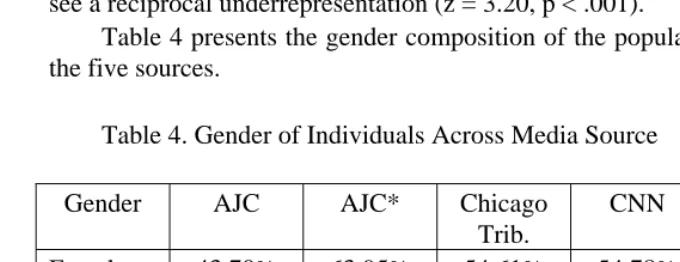
[image:26.612.81.421.454.585.2]Table 4 presents the gender composition of the populations in each of the five sources.
Table 4. Gender of Individuals Across Media Source
Gender AJC AJC* Chicago Trib.
CNN Minn. Star Female
Male
43.70% (52) 56.30%
(67)
63.95% (55) 36.05%
(31)
54.61% (77) 45.39%
(64)
54.78% (63) 45.22%
(52)
62.71% (74) 37.29%
(44)
n (AJC) = 119 n (AJC*) = 86
121
n (Chicago Tribune) = 141 n (CNN) = 115
n (Minn. Star Tribune) = 118
Table 4 makes clear that women are most heavily represented in the
AJC* subset and the Star Tribune. The AJC is the only source that covered more missing men than women.
C. STAGE I: THE INTERSECTION OF RACE AND GENDER ACROSS INDIVIDUALS
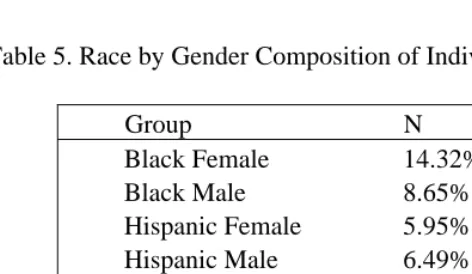
[image:27.612.139.375.263.400.2]Table 5 presents the subgroup composition across race and gender for the media data.
Table 5. Race by Gender Composition of Individuals in Media Data
Group N Black Female
Black Male Hispanic Female Hispanic Male Other Female Other Male White Female White Male
14.32% (53) 8.65% (32) 5.95% (22) 6.49% (24) 2.97% (11) 1.08% (4) 32.97% (122) 27.57% (102)
Total n = 370
Unfortunately, because the FBI data are not broken down into race and gender combinations,122 they do not allow for difference in proportion tests for specific race by gender groups, like white women. The overrepresentation of both non-blacks and women provides some circumstantial evidence to imply that white women are also overrepresented, but only indirectly. However, given the differences across race and gender, there is another reasonable (if hypothetical) basis for assuming that the predicted difference would be found if the data were available. As seen in Table 5, white women comprised the largest subgroup in the media coverage data at 32.97%. The Active Missing Person File, on the other hand, is 48.48% female and 60.32% white. If the overall gender
122
composition of the File mapped onto the white category of the File, which is obviously not a certainty, the FBI data would be made up of 29.24% white women. Using that hypothetical proportion, the disparity would approach, but not quite reach, statistical significance per a z-test (z = -1.57, p < .06). Keep in mind, though, that the FBI’s white category includes all individuals of Latino/a ethnicity,123 thus inflating the proportion.124 Therefore, with a couple (major) assumptions, there is some evidence to suggest that white women might be overrepresented in the media. Part III.G puts forth a more direct examination of the intersection of race and gender.
D. STAGE II: RACE AND COVERAGE INTENSITY
Stage II shifts the analysis to coverage intensity using comparisons of all article subjects and the FBI data. Table 6 presents the differences in racial compositions across the two groups.
Table 6. Coverage Intensity: Race of Article Subjects as Compared to FBI Population
Race Media FBI
Black Hispanic Other White
12.73% (196) 18.44% (284) 1.69% (26) 67.73% (1,034)
35.25% (27,797) ---
4.43% (3,489) 60.32% (47,560)
n (Media) = 1,540 n (FBI) = 78,846
When using articles as the unit of analysis rather than individuals, the media coverage sample drops from 22.97% black to 12.73%. Predictably, the difference in proportions of articles about blacks in the media coverage population and FBI population is highly significant using another one-tailed z-test (z = 18.84, p < .001). Interestingly, the difference for articles about whites also becomes significant, even with the FBI’s expanded definition of whiteness (z = -5.89, p < .001). That difference would only grow in magnitude if Hispanic individuals were not uniformly included in the FBI’s
123
See supra Part II.A.2.
124
Estimates of the proportion of missing children who are white have generally fallen around 53–54%, further suggesting that the FBI’s figure is inflated for whites. See supra
“White” category. Therefore, even though the comparison is inexact, the results imply that whites benefit from increased coverage intensity. As a final note, the proportion of Hispanic individuals actually increases from Stage I to Stage II,125 which is largely the result of one major outlier.126
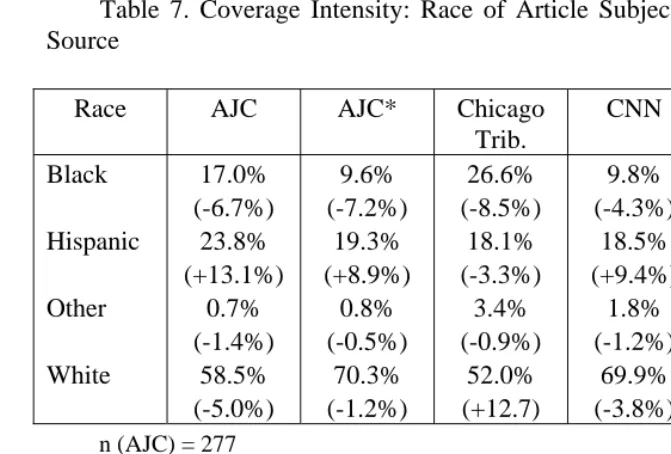
[image:29.612.82.418.202.429.2]Table 7 illustrates the racial composition of article subject(s) by news source, along with the percentage point difference in each category compared to the individual level analysis (Table 2).
Table 7. Coverage Intensity: Race of Article Subjects Across Media Source
Race AJC AJC* Chicago
Trib. CNN Minn. Star Black Hispanic Other White 17.0% (-6.7%) 23.8% (+13.1%) 0.7% (-1.4%) 58.5% (-5.0%) 9.6% (-7.2%) 19.3% (+8.9%) 0.8% (-0.5%) 70.3% (-1.2%) 26.6% (-8.5%) 18.1% (-3.3%) 3.4% (-0.9%) 52.0% (+12.7) 9.8% (-4.3%) 18.5% (+9.4%) 1.8% (-1.2%) 69.9% (-3.8%) 8.8% (-1.7%) 14.0% (+4.7%) 2.3% (-5.3%) 74.9% (+2.6%)
n (AJC) = 277 n (AJC*) = 363
n (Chicago Tribune) = 177 n (CNN) = 336
n (Minn. Star Tribune) = 387
Percent Point Difference from Individuals to Articles in Parentheses
This table helps explain which sources are driving the race disparities in articles. Again, the AJC* subset, CNN, and Star Tribune are responsible for heavily white distributions. Breaking down the shifts from individuals to articles is made easier by the parentheticals in Table 7, which present each source’s raw percentage point difference between Table 2 and Table 7. In other words, a positive value in the parentheses indicates that a given group is the subject of more articles per person than would be expected with an even distribution of articles. Interestingly, only two sources see an
125
This difference can be seen by comparing Table 1 and Table 6.
126
increase from individuals to articles in their percentage white: The Chicago
Tribune and The Minneapolis Star Tribune. The overall increase in this
regard seen in Table 6 seems to be driven by the Chicago Tribune. The decline in black representation is more evenly distributed, with all five sources seeing a decrease in black representation in articles as compared to individuals.
E. STAGE II: GENDER AND COVERAGE INTENSITY
Table 8 shows that women are considerably overrepresented as the subjects of articles.
Table 8. Gender of Article Subjects as Compared to FBI Population
Gender Media FBI Female
Male
73.36% (1,217) 26.64% (442)
48.48% (40,783) 51.52% (43,348)
n (Media) = 1,659 n (FBI) = 84,131
The gender differences expand when looking at coverage intensity, as women represent 73.36% of the population, up from 56.11% in the Stage I analysis. The difference between the article subject composition and the FBI data composition is highly significant (z = -20.08, p < .001).
[image:30.612.87.435.438.592.2]Table 9 provides a similar visual breakdown by source for gender as seen before for race.
Table 9. Gender of Article Subjects Across Media Source
Gender AJC AJC* Chicago Trib.
CNN Minn. Star
Female
Male
60.3% (+16.6%)
39.7% (-16.6%)
81.6% (+17.7%)
18.4% (-17.7%)
59.4% (+4.8%) 40.6% (-4.8%)
76.3% (+21.5%)
23.7% (-21.5%)
80.7% (+17.9%)
19.4% (-17.9%)
N (AJC) = 315 n (AJC*) = 375
n (Chicago Tribune) = 212 n (CNN) = 354
Percent Point Difference from Individuals to Articles in Parentheses
The table demonstrates that each of the five sources published a disproportionately high number of articles about women. With the exception of The Chicago Tribune, each source sees a sizeable increase of at least sixteen percentage points in female representation in articles.
F. STAGE II: THE INTERSECTION OF RACE AND GENDER AND COVERAGE INTENSITY
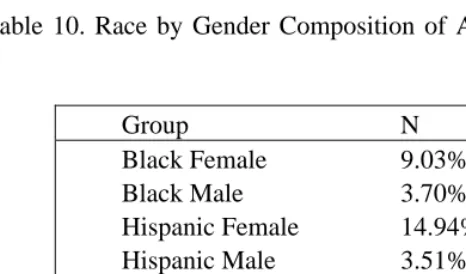
[image:31.612.140.373.260.397.2]Table 10 breaks down the article subject population by race and gender.
Table 10. Race by Gender Composition of Article Subjects in Media Data
Group N Black Female
Black Male Hispanic Female Hispanic Male Other Female Other Male White Female White Male
9.03% (139) 3.70% (57) 14.94% (230) 3.51% (54) 1.17% (18) 0.52% (8) 49.74% (766) 17.40% (268)
Total n = 1,540
G. STAGE II: REGRESSION ANALYSIS AND COVERAGE INTENSITY
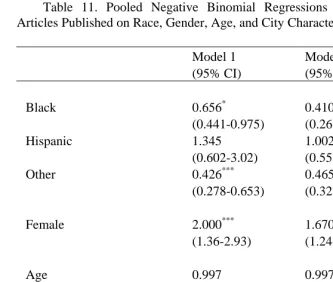
Table 11 contains the results for the first two pooled negative binomial regression models using the same population of abductees in the news that was used in the Stage I and previous Stage II analyses. The first model assesses the effect of race and gender, controlling for age, on the number of articles per person across all five sources, and the second model incorporates the hometown race and income variables.127 Exactly 361 individuals had discernible race, gender, age, and hometown information, and there were 208 distinct hometowns.128
Table 11. Pooled Negative Binomial Regressions of Number of Articles Published on Race, Gender, Age, and City Characteristics
Model 1
(95% CI)
Model 2 (95% CI)
Black 0.656*
(0.441-0.975)
0.410*** (0.268-0.627)
Hispanic 1.345
(0.602-3.02)
1.002 (0.556-1.81) Other
Female
0.426*** (0.278-0.653)
2.000*** (1.36-2.93)
0.465*** (0.322-0.671)
1.670** (1.24-2.26)
Age 0.997
(0.992-1.00)
0.997
(0.992-1.002)
AJC 486.25***
(115.88-2040.49)
371.63*** (90.42-1527.48)
127
Dummy variables for each media source were also included as part of the pooling procedure, and each individual had one data point for each of the five sources. To account for the fact that the same individuals often appeared across sources, standard errors were clustered by individual.
128