International Journal of Emerging Technology and Advanced Engineering
Website: www.ijetae.com (ISSN 2250-2459, Volume 2, Issue 6, June 2012)177
DAUGHMAN‟S ALGORITHM METHOD FOR IRIS
RECOGNITION-A BIOMETRIC APPROACH
Prateek Verma
1, Maheedhar Dubey
2, Praveen Verma
3,Somak Basu
41Assistant Professor , Shri Shankaracharya Engineering College, Bhilai ,Chhattisgarh, India
2Assistant Professor, Chhatrapati Shivaji Institute of Technology,Durg, Chhattisgarh,India
3
Engineer, NTPC Limited, Sipat, Bilaspur, Chhattisgarh, India
4Assistant Professor, Shri Shankaracharya College of Engineering & Technology, Bhilai, Chhattisgarh, India
Abstract— Iris recognition is considered to be the most
reliable and accurate biometric identification system available. Iris recognition system captures an image of an individual’s eye, the iris in the image is then meant for the further segmentation and normalization for extracting its feature. The performance of iris recognition systems depends on the process of segmentation. Segmentation is used for the localization of the correct iris region in the particular portion of an eye and it should be done accurately and correctly to remove the eyelids, eyelashes, reflection and pupil noises present in iris region. In our paper we are using Daughman’s Algorithm segmentation method for Iris Recognition. Iris images are selected from the CASIA Database, then the iris and pupil boundary are detected from rest of the eye image, removing the noises. The segmented iris region was normalized to minimize the dimensional inconsistencies between iris regions by using Daugman’s Rubber Sheet Model. Then the features of the iris were encoded by convolving the normalized iris region with 1D Log-Gabor filters and phase quantizing the output in order to produce a bit-wise biometric template. The Hamming distance was chosen as a matching metric, which gave the measure of how many bits disagreed between the templates of the iris.
Index Terms —Daughman’s Algorithm, Daugman’s
Rubber Sheet Model, Hamming Distance, Iris Recognition, segmentation.
I. INTRODUCTION
Imagine how convenient it would be to activate the security alarm at your home with the touch of a finger, or to enter your home by just placing your hand on the door handle. How would you like to walk up to a nearby ATM which will scan your iris so you can withdraw money without ever inserting a card or entering a PIN You will basically be able to gain access to everything you are authorized to, by presenting yourself as your identity. This scenario might not be as far off as we might expect. In the near future, we may no longer use passwords and PIN numbers to authenticate ourselves. These methods have proven to be in secure and unsafe time and time again. Technology has introduced a much smarter solution to us: Biometrics. Biometric authentication will help in enhancing the security infrastructure against some of these threats.
After all, physical characteristics are not something that can be lost, forgotten or passed from one person to another. They are extremely hard to forge and a would-be criminal would think twice before committing a crime involving biometrics. The concept of Iris Recognition was first proposed by Dr. Frank Burch in 1939.It was first implemented in 1990 when Dr. John Daugman created the algorithms for it. These algorithms employ methods of pattern recognition and some mathematical calculations for iris recognition. Iris recognition is a method of biometric authentication that uses pattern-recognition techniques based on high-resolution images of the irises of an individual's eyes. Iris is a muscle within the eye that regulates the size of pupil, controlling the amount of light that controls the eye.
II. FEATURES OF IRIS
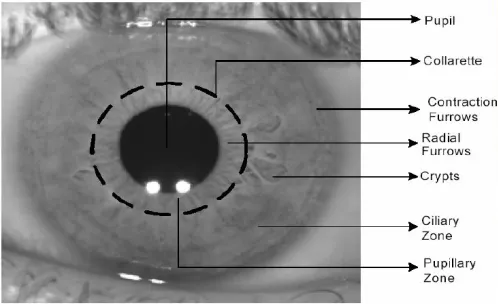
[image:1.612.324.573.563.715.2]It is the colored portion (brown or blue) of the eye that regulates the size of the pupil. The coloration and structure of two irides is genetically linked but the details of patterns are not. They have stable and distinctive features for personal identification. They are stable with age. Extremely data rich physical structure having large number of features. Its inherent isolation and protection from the external environment. The impossibility of surgically modifying it without unacceptable risk to vision.
International Journal of Emerging Technology and Advanced Engineering
Website: www.ijetae.com (ISSN 2250-2459, Volume 2, Issue 6, June 2012) [image:2.612.87.245.132.274.2]178 III. IRIS RECOGNITION SYSTEM
Fig 3.1 Block Diagram of Stages in Iris Recognition A. Image Acquisition
[image:2.612.328.570.133.295.2]It deals with capturing of a high quality image of the iris. Concerns on the image acquisition rigs, Obtain images with sufficient resolution and sharpness. Good contrast in the iris pattern with proper illumination.Well centered without unduly constraining the operator. Distance up to 3 meter. Near-infrared camera or LED
Fig 3.1.1: Graph showing proper capture of image. B. Iris Localization
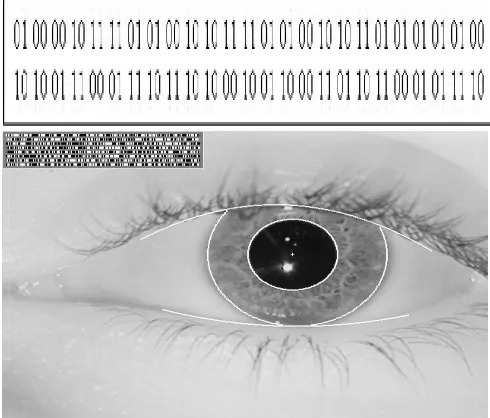
[image:2.612.50.285.385.552.2]Iris localization is a process to isolate the iris region from the rest of the acquired image. Iris can be approximated by two circles, one for iris/sclera boundary and another for iris/pupil boundary.
Figure 3.2.1: Localization of iris and pupil boundary. C.Feature Extraction
Feature encoding was implemented by convolving the normalized iris pattern with 1D Log-Gaber wavelet.2D normalized patterns are broken up into a number of 1D signal. Each row corresponds to a circular ring on the iris region. The angular direction is taken rather than the radial one, which corresponds to columns of normalized pattern. The features are extracted in codes of 0 and 1.
[image:2.612.323.568.416.625.2]International Journal of Emerging Technology and Advanced Engineering
Website: www.ijetae.com (ISSN 2250-2459, Volume 2, Issue 6, June 2012)179
D. Template Matching
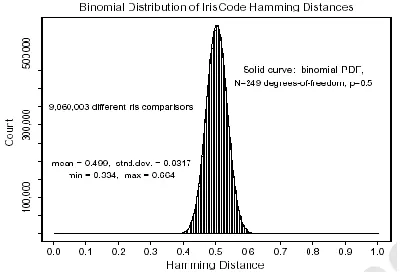
[image:3.612.74.274.226.363.2]For matching, the Hamming distance was chosen as a metric for recognition. The result of this computation is then used as the goodness of match, with smaller values indicating better matches. If two patterns are derived from same iris, the hamming distance between them will be close to 0 due to high correlation.
Fig 3.4.1: Binomial Distribution of iris code Hamming Distances.
IV. DATABASE (CASIA-CHINESE ACADEMY OF SCIENCES
INSTITUTE OF AUTOMATION)
The Chinese Academy of Sciences - Institute of Automation (CASIA) eye image database contains 756 grayscale eye images with 108 unique eyes or classes and 7 different images of each unique eye. Images from each class are taken from two sessions with one month interval between sessions. The images were captured especially for iris recognition research using specialized digital optics developed by the National Laboratory of Pattern Recognition, China. The eye images are mainly from persons of Asian descent, whose eyes are characterized by irises that are densely pigmented, and with dark eyelashes. Due to specialized imaging conditions using near infra-red light, features in the iris region are highly visible and there is good contrast between pupil, iris and sclera regions.
V. METHODOLOGY
A. Segmentation
A.1. Daugman’s algorithm
This is by far the most cited method in the iris recognition literature. It is licensed to Iridium Technologies1 who turned it into the basis of 99.5% of the commercial iris recognition systems. It was proposed in 1993 and was the first method effectively implemented in a working biometric system. The author assumes both pupil and iris with circular form and the integro-differential operator.
We implemented two pre-process operations with the purpose of image contrast enhancement, hoping that they could contribute to the improvement of the results:
Histogram Equalization :- This operation improves the contrast between each eye‟s regions, which potentially will facilitate the segmentation task.
Binarization :- The image binarization - based on a threshold - is a very common operation that maximizes the separability between the iris regions and the remaining ones.
This process has, however, one major disadvantage: it is highly dependent of the chosen threshold, and as image characteristics change, the results may seriously deteriorate. Moreover, the binarization compromises one of the Daugman‟s method Daugman's algorithm is based on applying an integro-differential operator to find the iris and pupil contour.
Where X0, Y0, ro: the centre and radius of coarse circle (for each of pupil and iris). Gσ(r): Gaussian function. Δr: the radius range for searching for. I(X, Y): the original iris image. Gσ(r) is a smoothing function, the smoothed image is then scanned for a circle that has a maximum gradient change, which indicates an edge. The above algorithm is done twice, first to get the iris contour then to get the pupil contour. It worth mentioning here the problem is that the illumination inside the pupil is a perfect circle with very high intensity level (nearly pure white). Therefore, we have a problem of sticking to the illumination as the max gradient circle. So a minimum pupil radius should be set. Another issue here is in determining the pupil boundary the maximum change should occur at the edge between the very dark pupil and the iris, which is relatively darker than the bright spots of the illumination. Hence, while scanning the image one should take care that a very bright spot value could deceive the operator and can result in a maximum gradient. This simply means failure to localize the pupil.
A.2. Optimized Daugman's Algorithm:-
International Journal of Emerging Technology and Advanced Engineering
Website: www.ijetae.com (ISSN 2250-2459, Volume 2, Issue 6, June 2012) [image:4.612.325.565.294.565.2]180 Another solution we considered is to treat the illumination by Truncating pixels higher than a certain threshold – bright spots – to black. But this method failed in many images, this is because when the spot hits the pupil the illumination spreads on the pupil so as we treat the illumination spots it will leave behind a maximum change edges that cannot be determined and the operator will consider it the pupil boundary. The sequence of the Algorithm procedure is cleared in the flowchart shown below.The false acceptance rate for the iris recognition system is 1 in 1.2 million, statistically better than the average fingerprint recognition system. The real benefit is in the false rejection rate, a measure of authenticated users who are rejected. Fingerprint scanners have a three percent false rejection rate, whereas iris scanning systems boast rate at the 0% level.
Figure 5.2.1: Flow Diagram showing Daugman’s algorithm.
B. Upper and Lower Eyelid Detection
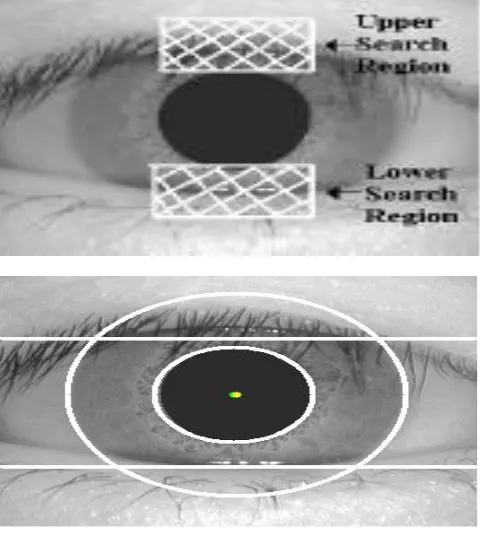
Similar to iris outer boundary localization, the proposed method selects two search regions to detect upper and lower eyelids. The upper and lower search regions are labeled as in Figure. The pupil centre, iris inner and outer boundaries are used as reference to select the two search regions. The search regions are confined within the inner and outer boundaries of the iris. The width of the two search regions is same with diameter of the pupil. Sobel edge detection is applied to the search regions to detect the eyelids. In order to reduce the false edges detection caused by eyelashes, Sobel kernel is tuned to the horizontal direction.
Fig 5.2.1(a) Upper and lower search regions of the iris image. (b) Upper and lower eyelids detection.
[image:4.612.61.277.328.709.2]International Journal of Emerging Technology and Advanced Engineering
Website: www.ijetae.com (ISSN 2250-2459, Volume 2, Issue 6, June 2012) [image:5.612.324.563.129.333.2]181 The eyelid boundaries are normally occluded by the eyelashes. Therefore, eyelid boundaries are modeled with straight lines approximation.
Fig 5.2.2: Removal of Eyelid Noises C. Normalization
Once the iris region is successfully segmented from an eye image, the next stage is to transform the iris region so that it has fixed dimensions in order to allow comparisons. The dimensional inconsistencies between eye images are mainly due to the stretching of the iris caused by pupil dilation from varying levels of illumination. Other sources of inconsistency include, varying imaging distance, rotation of the camera, head tilt, and rotation of the eye within the eye socket. The normalisation process will produce iris regions, which have the same constant dimensions, so that two photographs of the same iris under different conditions will have characteristic features at the same spatial location. Another point of note is that the pupil region is not always concentric within the iris region, and is usually slightly nasal. This must be taken into account if trying to normalise the „doughnut‟ shaped iris region to have constant radius. Some methods of normalisation are discussed below.
Fig 5.3.1(a): Input eye image Fig 5.3.2(b): Normalised eye image
VI. RESULTS &DISCUSSION
The automatic segmentation model using Daugman‟s Integro-differential proved to be successful. The CASIA database provided good segmentation, since those eye images had been taken specifically for iris recognition research and boundaries of iris pupil and sclera were clearly distinguished. For the CASIA database, the Daugman‟s Algorithm based segmentation technique managed to correctly segment the iris region from 3 out of 4 eye images, which corresponds to a success rate of around 83% Using Integro-differential equations and Hough transform methods on locating the pupil and limbus assumes that the boundaries are perfect circles. Although the approaches are different, all these methods consider pupil and limbus as circular curves. It has been noticed that the circular assumption of the contours can lead to inappropriate boundary detection. The above methods of segmentation resulted in false detection due to noises such as strong boundaries of upper and lower eyelids. The strong eyelid boundaries and presence of eyelashes affected the limbus localization significantly.
[image:5.612.49.296.174.474.2]International Journal of Emerging Technology and Advanced Engineering
Website: www.ijetae.com (ISSN 2250-2459, Volume 2, Issue 6, June 2012) [image:6.612.329.556.74.677.2]182 The eyelash detection system implemented for the CASIA database also proved to be successful in isolating most of the eyelashes occurring within the iris region as shown in. A slight problem was that areas where the eyelashes were light, such as at the tips were not detected. However, these undetected areas were small when compared with the size of the iris region.
[image:6.612.331.556.128.334.2]Fig 6.1.1: Output displayed in command window.
[image:6.612.47.292.219.448.2]Fig 6.1.2: Input Iris Image taken from database.
Fig 6.1.3: Original Image is resized into a smaller image
Fig 6.1.4: Complemented Image of the resized image
[image:6.612.49.279.475.664.2] [image:6.612.333.554.489.668.2]International Journal of Emerging Technology and Advanced Engineering
Website: www.ijetae.com (ISSN 2250-2459, Volume 2, Issue 6, June 2012) [image:7.612.322.566.119.279.2]183
[image:7.612.51.287.130.290.2]Fig 6.1.6: The specular reflections are removed using morphological operator
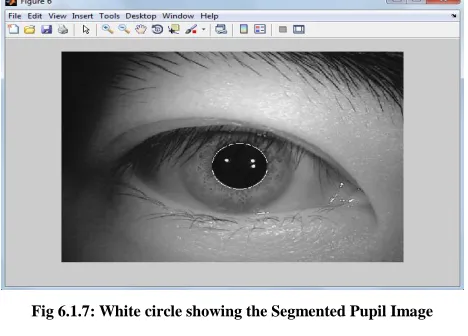
Fig 6.1.7: White circle showing the Segmented Pupil Image
[image:7.612.52.286.326.494.2]Fig 6.1.8: White circle showing the Segmented Iris region
Fig 6.1.9: Complete Segmentation of Iris and Pupil region
VII. CONCLUSION
This paper has presented an iris recognition system, in which segmentation was done using Daugman‟s algorithm. The comparison was done in the Segmentation stage and based on accuracy and higher efficiency rate. This comparison was made in order to evaluate the impact of different segmentation methods on the overall performance of the recognition process. Properly detecting the inner and outer boundaries of iris texture is important for all iris recognition systems.
[image:7.612.51.287.459.642.2]International Journal of Emerging Technology and Advanced Engineering
Website: www.ijetae.com (ISSN 2250-2459, Volume 2, Issue 6, June 2012)184 REFERENCES
[1] Prateek Verma, Maheedhar Dubey, Praveen Verma , “Comparison of Various Segmentation Techniques in Iris Recognition” LAMBERT ACADEMIC PUBLISHING (LAP), GmbH & co. KG,
Dudweiler Landstrabe, Saarbrücken, ISBN 13: 978-3-6 59-13597-2, Germany, MAY-2012.
[2] Segmentation Techniques for Iris Recognition System, Iinternational Journal of Scientific & Engineering Res V
volvolume 2, Issue 4, April-2011 , ISSN 2229-5518 IJSER © @ 2011 BY Surjeet Singh, Kulbir Singh.
[3] J. Daugman. How iris recognition works. Proceedings of 2002 International Conference on Image Processing, Vol. 1, 2002.
[4] Chinese Academy of Sciences – Institute of Automation. Database of 756 Greyscale Eye Images. http://www.sinobiometrics.com Version 1.0, 2003
[5] “Recognition of Human Iris Patterns for Biometrics Identification”-This project is submitted for the Bachelor of Engineering degree of the School of Computer Science and Software Engineering, The University of Western Australia, 2003 BY LIBOR MASEK
[6] “An Segmentation Method for Iris Recognition System”, Computer Vision and Intelligent Systems (CVIS) Group University Tunku Abdul Rahman, Malaysia,2006 BY RICHARD YEW FATT NG,KAI MING MOK
[7] “Iris Biometric Recognition for Person Identification in Security System”-International Journal of Computer Applications (0975 – 8887) Volume24–No.9, June2011 BY Dr.L.M.WAGHMARE, Vanaja Roselin.E.Chirchi , E.R.Chirchi
[8] “Accurate and Fast Iris Segmentation”-International Journal of Engineering Science and Technology Vol. 2(6), 2010, 1492-1499 BY G. ANNAPOORANI, R. KRISHNAMOORTHI, P. GIFTY JEYA
[9] Daugman, John (January 2004). "How iris recognition works" (PDF). IEEE Transactions on Circuits and Systems for Video Technology 14 (1): 21–30. doi:10.1109/TCSVT.2003.818350. http://www.cl.cam.ac.uk/users/jgd1000/irisrecog.pdf.
[10]Daugman, John (2003). "The importance of being random: statistical principles of iris recognition" (PDF). Pattern Recognition 36 (2):
279–291. doi:10.1016/S0031-3203(02)00030-4.
http://www.cl.cam.ac.uk/~jgd1000/patrec.pdf.
[11]Daugman, John (June 2005). "Results from 200 billion iris cross-comparisons". Technical Report UCAM-CL-TR-635. University of
Cambridge Computer Laboratory.
http://www.cl.cam.ac.uk/TechReports/UCAM-CL-TR-635.html.
[12]Zhaofeng He, Tieniu Tan, Zhenan Sun and Xianchao Qiu (15 July 2008). "Towards Accurate and Fast Iris Segmentation for Iris Biometrics". IEEE Trans Pattern Anal Mach Intell 31 (9): 1670–84.
doi:10.1109/TPAMI.2008.183. PMID 19574626.
http://www.cbsr.ia.ac.cn/users/zfhe/publications.html.
International Journal of Emerging Technology and Advanced Engineering
Website: www.ijetae.com (ISSN 2250-2459, Volume 2, Issue 6, June 2012)185 Prateek Verma, completed Bachelor of Engineering in Electronics & Telecommunication Engineering, currently working as an Assistant Professor in Electronics & Telecommunication Department at Shri Shankaracharya Engineering College, Bhilai , Chhattisgarh, India. . He has published different research papers in International Journals and participated in various International Conferences. He has published a book published by an International Publisher of Germany. He has also worked as an Assitant System Engineer in TATA Consultancy Services.
Maheedhar Dubey, completed Master of Engineering in VLSI Design, currently working as an Assistant Professor in Electronics & Telecommunication Department in Chhatrapati Shivaji Institute of Technology, Durg, Chhattisgarh, India. He has presented different research papers in conferences in different organizations & attended various workshops also. He is the member of five professional societies like IEI, ISTE, IETE, ISCA, IEEE. He has published 3 books in Jainam Publication, Bhilai, Chhattisgarh, India. He has guided many UG & PG students for their projects.
Praveen Verma, completed Bachelor of Engineering in Electronics & Telecommunication Engineering, currently working as an Engineer in National Thermal Power Corporation Limited, Sipat, Bilaspur, Chhattisgarh, India. He has completed his MBA from Sikkim Manipal University. He has published different research papers in International Journals and participated in various International Conferences. He has published a book published by an International Publisher of Germany. He has guided many UG students for their projects, while working as a lecturer in Disha Institute of Management & Technology, Raipur, Chhattisgarh, India. Previous Work Experience of 1.5 Years in Disha Institute of Management & Technology, Raipur, Chhattisgarh, India.