PERFORMANCE AND EMISSIONS OF COMPRESSION IGNITION ENGINE FUELED WITH PREHEATED BLEND OF VEGETABLE OIL
MOHAMAD MOKHSEN B SUFFIAN
This project is submitted in
fulfilment of the requirement for the award of the Master of Mechanical Engineering with Honours
Faculty of Mechanical and Manufacturing Engineering Universiti Tun Hussein Onn Malaysia
ABSTRACT
ABSTRAK
LIST OF CONTENTS
CHAPTER CONTENT PAGE
TITLE
viii
DECLARATION ii
DEDICATION iii
ACKNOWLEDGEMENT iv
ABSTRACT v
ABSTRAK vi
CONTENTS vii
LIST OF TABLES x
LIST OF FIGURES xi
LIST OF SYMBOLS xiii
LIST OF APPENDICES xiv
CHAPTER 1 INTRODUCTION 1
1.1 Introduction
1.2 Problem statement 4
1.3 Objective 5
1.4 Scope of study 5
CHAPTER 2 LITERATURE REVIEW 4
2.1 Introduction 4
2.2 Compression Ignition Engine 4
2.3 Fuel and Air Mixing 5
2.4 Alternative fuel 6
2.4.1 Biodiesel 6
2.4.1.1 Advantages of Biodiesel 7 2.4.1.2 Disadvantages of Biodiesel 7
2.4.2 Biodiesel Standard 8
2.4.3 Straight Vegetable Oil (SVO) 9
2.5 Performance 10
2.5.1 Brake Power 10
2.5.2 Brake Thermal Efficiency 11
2.5.3 Flywheel Torque 12
2.6 Engine Emission 12
2.6.1 Smoke Opacity 13
2.6.2 Carbon Monoxide (CO) 13
2.6.3 Carbon Dioxide (CO2) 14
2.6.4 Oxygen (O2) 14
2.6.5 Hydrocarbon (HC) 14
2.6.6 Nitrogen Oxide (NOX) 15
2.7 Case Study
2.7.1 Study on Isuzu 4FB1 Engine 16 2.7.2 Study on John Deere 4276T Engine 18
CHAPTER 3 METHODOLOGY 21
3.1 Introduction 21
3.2 Methodology flow chart 21
3.3 Material preparation 23
3.3.2 Diesel 24
3.3.3 Vehicle 25
3.3.4 Dynapack Chassis Dynamometer Machine 26
3.3.5 Modified Hub 27
3.3.6 Autocheck 5-Channel Gas Emission 27 Analyzer
3.3.7 Autocheck Smoke Opacity Meter 29
3.3.8 Drager MSI EM200-E 31
3.3.9 Blending process 32
3.4 Pre-heater 33
3.5 Alternative fuel Properties Test 34 3.5.1 Density (EN ISO 3675/EN ISO 12185) 34
3.5.2 Kinematic viscosity 35
3.5.3 Water content 36
3.5.4 Flash point 36
3.5 Straight Vegetable Oil (SVO) 37
Blends of S5, S10, and S153.6
3.6.1 Mixture according to the volume 38 3.7 Fuel Supply System of biodiesel and diesel 38
fuel to the engine
CHAPTER 4 RESULT AND DISCUSSION 41
4.1 Introduction 41
4.4 Engine performances 46 4.4.1 Performance comparison with 46
dynamometer of 0% of load
4.4.2 Performance comparison with 47 dynamometer of 50% of load
4.4.3 Performance comparison with 48 dynamometer of 100% of load
4.5 Engine Emission analysis 49
4.5.1 Emission comparison with 49 dynamometer of 0% of load
4.5.2 Emission comparison with 51 dynamometer of 50% of load
4.5.3 Emission comparison with 53 dynamometer of 100% of load
CHAPTER 5 CONCLUSION AND RECOMMENDATION 55
5.1 Introduction 55
5.2 Conclusion 55
5.3 Recommendation 56
REFERENCES 58
LIST OF TABLES
2.1 American Society for Testing and Material (ASTM) 9 and Euro standard
2.2 Test sequence and fuels composition 16 2.3 Specification of diesel engine being 16
2.4 Specifications of test engine 18
2.5 List of emission analyzers used in the tests 19
3.1 Diesel properties 24
3.2 Engine specifications 25
3.3 The specification of Dynapack chassis dynamometer 26 3.4 The specification of Autocheck 5-Channel gas 28
emission analyzer
3.5 The specification of Autocheck smoke opacity meter 29 3.6 The specification of Drager MSI EM200-E 31
4.1 The result of properties test for all types of fuel at 42 ambient temperature
LIST OF FIGURES
2.1 Graph of ignition delay 5
2.2 Brake specific fuel consumption for different fuel blends 11
2.3 NOx emission for different fuels 15
2.4 Brake power versus engine speed 17
2.5 NOx and CO concentration versus engine speed 17
2.6 Comparisons of predicted results and experimental results 19
3.1 The Methodology Flowchart 22
3.2 The methodology flowchart for biodiesel blending 23
3.3 Ordinary Diesel 24
3.4 Mitsubishi Pajero 25
3.5 Dynapack Chassis Dynamometer Machine 26
3.6 Modified Hub 27
3.7 Autocheck 5-Channel Gas Emission Analyzer 27
3.8 Autocheck Smoke Opacity Meter 29
3.9 Drager MSI EM200-E 31
3.10 Blending machine 32
3.11 Prosedure for blending process 32
3.12 Pre-heater 33
3.13 Mettler Toledo density test 34
3.14 Viscolite 700 Portable Viscometer (model VL700-15) 35 3.15 Process determined the water contentof CPO biodiesel 36
3.17 Schematic diagram for engine fuel supply system 38 3.18 Sample of Oil filter (Automotive Laboratory, UTHM) 39 3.19 Dynamometer assembley for performance testing 39
4.1 Performance for 0% load of dynamometer 46
4.2 Performance for 50% load of dynamometer 47
4.3 Performance for 100% load of dynamometer 48
LIST OF SYMBOLS AND ABBREVIATIONS
Symbols Description
% Percentages
FFA Free fatty acid
CPO Coconut palm oil
SVO Straight Vegetable Oil
OD Ordinary diesel
HC Hydrocarbon
O2 Oxygen
CO2, Carbon dioxide
NOx Nitrogen oxides
CO Carbon monoxide
HHV Higher heating value
EMA Engine Manufacturers Association
PM Particulate matter
FCR Fuel consumption rate
BP Brake power
CI Compression ignition
kW Kilowatt
POD Palm oil diesel
DI Direct engine
RPM Revolution per minute
CHAPTER 1
INTRODUCTION
1.1 Introduction
In the modern era of the world now days, fuel has become the most important thing that countries would invade others just to gain access of the world fuel reserved. This is why alternative fuel is introduced to fill the demand of fossil fuel. There are several aspect that are considered in developed the biodiesel fuel to reduce the engine emission and many more. Straight Vegetable oil is an alternative diesel fuel that is produced from renewable resources. Vegetable oils have become more attractive recently because of their environmental benefits. It is biodegrable and nontoxic, has low emission profiles. However, it is not competitive with petroleum fuel now because of its high viscosity and prices. The advantages of the biodiesel are can reducing dependence on natural resource on diesel, can leveraging limited supplies of fossil fuels, can reduce greenhouse gas emissions and it can help reduce air pollution and related public health risks.
petro-diesel or additives can be added to biopetro-diesel fuel. Biopetro-diesel also can be blended at any level with petroleum diesel. It can be used in diesel engines with little or no modifications.
Straight vegetable oil can be used in the unmodified diesel engine because it operates on the principle of compression ignition whereby air is compressed by raising its temperature above the igniting-point of the fuel, and then the fuel is sprayed into the combustion chamber. This simple process allows the diesel engine to run on thick fuels. Since straight vegetable oil is chemically similar to petro-diesel fuel, it can be pour right into the fuel tank of any diesel vehicles. Biodiesel also can be sold at any fuel station, same as the other fuel in the market today.
1.2 Problem Statement
1.3 Objective
The objective of this study is to investigate the effect of Straight Vegetable Oil in normal and Preheated condition on compression ignition engine and to compare with crude palm oil.
1.4 Scope of Study
The scopes of this study are as follows:
i. The biodiesel that was used is SVO biodiesel taken from grocery store.
ii. The properties tests that were considered included density, kinematic viscosity, water content and flash points.
iii. The testing used several types of fuels which are Ordinary Diesel (ND), S5, S10 and S15.
iv. 2500 cc engine of Mitsubishi Pajero is used for experiment
v. The performance test that was considered are in terms of flywheel torque, brake power and engine emission (in term of hydrocarbon (HC), oxygen (O2), carbon dioxide (CO2), carbon monoxide (CO) and smoke opacity).
1.5 Importance of Study
CHAPTER 2
LITERATURE REVIEW
2.1 Introduction
This chapter reviews the previous study of Biodiesel. Topic that highlighted here is the properties of biodiesel fuels, its advantages and disadvantages and the performance of engine which are included the flywheel torque, and brake power. This chapter also discuss about the engine emissions which are included of hydrocarbon (HC), oxygen (O2), carbon dioxide (CO2), carbon monoxide (CO) and smoke opacity. Preheated for performance and emission also discuss in this chapter from previous study.
2.2 Compression Ignition Engine
Ignition dwell is defined as the interval between end of fuel injection and start of combustion in early injection diesel combustion. The ignition delay in a diesel engine is generally seen as consisting of two different consecutive although overlapping phases: the physical and the chemical ignition delay [2]. As is commonly accepted, the physical ignition delay corresponds to the mixture formation, and the chemical delay to the time necessary to get an exponential increase in the chemical reaction rate.
Figure 2.1: Graph of ignition delay [2]
2.3 Fuel and Air Mixing
2.4 Alternative fuel
In this new era of the world fuel has become limited and new type of fuel is needed to overcome the limited of fossil duel. One of the alternative fuel now days is bio fuels. Bio fuels based on vegetable oils offer the advantage being a sustainable, annually renewable source of automobile fuel. Despite years of improvement attempts, the key issue in using vegetable oil-based fuels is oxidation stability, stoichiometric point, bio fuel composition, antioxidants on the degradation and much oxygen with comparing to diesel gas oil. Thus, the improvement of emissions exhausted from diesel engines fueled by biodiesel derived from vegetable oil is urgently required to meet the future stringent emission regulations [4]. The key issue in using vegetable oil-based fuels is oxidation stability, stoichiometric point, bio-fuel composition, antioxidants on the degradation and much oxygen with comparing to diesel gas oil.
2.4.1 Biodiesel
2.5.1.1 Advantages of Biodiesel
There is a few advantaged of biodiesel. The higher cetane premium fuels tested in this study (CN > 60), gave the lowest overall fuel consumption, HC and CO emissions. Hydrogenated vegetable oil (HVO) component offered further emissions advantages when blended at B5 level into a high cetane fuel, as well as giving significant emissions benefits at B20 level over standard European EN590 diesel [3]. NOx emission of pure biodiesel is lower than baseline of diesel at about 10% EGR rate [6]. Compatibility with current fleet of diesel-powered vehicles, where any major adjustments to the engines and related hardware components are not necessary. Furthermore, the uses of biodiesel fuels has the added advantages of having minimal sulphur and aromatic contents, higher flash point and cetane number as well as improved lubricate [7]. The biodiesel impacts on exhaust emissions vary depending on the type of biodiesel and on the type of conventional diesel. The commercial biodiesel fuel significantly reduced particulate matter (PM) exhaust emissions (75–83%) compared to the petro diesel base fuel [6]. The biggest advantage of biodiesel is environmentally friendliness that it has over gasoline and petroleum diesel [6]. Biodiesel has a higher cetane number than petroleum diesel fuel, no aromatics, and contains 10–11% oxygen by weight. These characteristics of biodiesel reduce the emissions of carbon monoxide (CO), hydrocarbons (HC), and particulate matter (PM) in the exhaust gas compared with diesel fuel [7]
2.4.1.2 Disadvantages of Biodiesel
emissions of biodiesel increase because of combustion and some fuel characteristics. When a higher percentage of biodiesel is used in the diesel engine during cold weather, it thickens more than diesel fuel and special systems may be required [9]
2.4.2 Biodiesel Standard
[image:19.612.136.519.392.717.2]The Table 2.1, explained that biodiesel has been produced on industrial scale in the European Union since 1992, in the United States of America since 1993. Annually they have produced almost 6900 and 7100 million liters of biodiesel. So, there is standards specification to be met for biodiesel itself [11]. The bio-fuel must meet the EN-14214 specification in Europe and American society of testing and materials (ASTM) D-6751 specifications in the USA. Meanwhile, it has been reported that biodiesel blends up to 5% should not cause engine and fuel system problems [12]
2.4.3 Straight Vegetable Oil (SVO)
SVO has been a recurring subject of study as a fuel for compression ignition engines. The process of producing SVO is very scalable as it has low energy consumption per output ratio. With simple engine applications, SVO could be used in 3rd world domestic situations, producing electricity to help children study, refrigeration for food safety, and transportation. Farmers could reduce reliance upon fossil fuels by using SVO in farm equipment, including irrigation and tractors, thereby lowering the impact on local food prices [13].
Vegetable oils mainly contain triglycerides (90% to 98%) and small amounts of mono and di-glycerides. Triglycerides contain three fatty acid molecules and a glycerol molecule. They contain significant amounts of oxygen. Commonly found fatty acids in vegetable oils are stearic, palmitic, oleic, linoleic and linolenic acid [4]. Due to the agricultural origin, they are able to reduce net CO2 emissions [14].
2.5 Performance
Performance will be determined in this chapter from the previous study for preheated Straight Vegetable Oil (SVO). Performance that is considered is in term of brake thermal efficiency, brake power and torque. The use of higher percentage biodiesel blends requires engine recalibration, as it affects engine performance, combustion patterns and emissions. Previous work has shown that the combustion of 50:50 blends of biodiesel fuels (first generation RME and next generation synthetic fuel) can give diesel fuel-like performance (i.e. incylinder pressure, fuel injection and heat release patterns). This means engine recalibration can be avoided, plus a reduction in all the regulated emissions. Using a 30% biodiesel blend (with different first and next generation proportions) mixed with Diesel may be a more realistic future fuel.
2.5.1 Brake Power
According to the literature, brake power output is not affected by oxygen enrichment, unless the fuel quantity injected is also increased, keeping constant oxygen to fuel ratio or by using high fuel flow rates. The studies in the Yanmar L70EE-DE, where fuel flow rate remained constant, confirmed this observation [16]. Usually, the brake power of the engine with standard diesel was higher than for any biodiesel. This is because the biodiesels have lower calorific values than that of standard diesel. However, difference in brake power and brake torque between standard diesel and the biodiesels were very small in most cases [16]. It is clear from the figure that as the load increases, the BSFC decreases for all fuel blends. The figure indicates marginally higher BSFC with
Figure 2.2 shows the BSEC versus BMEP for all selected diesel – biodiesel fuel blends and neat diesel. It is clear from the figure that as the load increases, the BSEC decreases for all fuel blends.
Figure 2.2: Brake specific fuel consumption for different fuel blends [16]
2.5.2 Brake Thermal Efficiency
[image:22.612.221.394.541.682.2]The brake thermal efficiency of CI engine is lower than that of the corresponding diesel fuel at all the engine speed. Thermal efficiency of preheated biodiesel oil was found slightly lower than diesel. The possible reason may be higher fuel viscosity. Higher fuel viscosity results in poor atomization and larger fuel droplets followed by inadequate mixing of vegetable oil droplets and heated air. Fig 2.3 gives the percentage change of brake thermal efficiency with the engine speed [17].
2.5.3 Flywheel Torque
An experimental study on preheating raw rapeseed oil shows that the torque was almost not affected with preheating. As expected there is slight increase in torque with the increase in temperature. The average torque differences with preheating were 1.2%, 0.8% and 0.14% for DF, O20 and O50, respectively [18]. The performance of engine is greatly influenced by sources of biodiesel, for example engine fuelled with palm oil bio-diesel is more efficient than biobio-diesel produced from tallow and canola oil. Blends of biodiesel with petroleum fuel are widely used in diesel engine although the high viscosity of the fuels causes fuel flow and ignition problems in unmodified CI (compression ignition) engines and also decreases in power output. The decrease in output torque at these two modes also affects the power output of the engine, since torque and power are directly proportional when the engine speed is fixed. As a result, the power output also decreases by 4 to 5%. Decrease in power and torque is due to their lower energy content of biodiesel. Lower energy content shows lower energy characteristics [18]
2.6 Engine Emission
In this study, the engine emissions that are considered included smoke opacity, carbon monoxide (CO), carbon dioxide (CO2), oxygen (O) Nitrogen oxide (NOx) and
hydrocarbon (HC).Ideally a compression ignition (CI) fuel would produce low
2.6.1 Smoke Opacity
The diesel engine smoke formation generally occurs in the rich zone at high temperature, particularly within the core region of fuel spray. At all loads, smoke emissions for the blend decreased significantly when compared with those of standard diesel. The significant reduction in smoke emission may be due to the presence of oxygen in biodiesel blend. Smoke is mainly produced in the diffusive combustion phase [14].Besides that, the smoke emission of biodiesel at all loads was lower than that of diesel. This is due to the higher oxygen content and absence of sulphur content in biodiesel. The oxygen content of biodiesel ensures post flame oxidation and increase in flame speed during the air fuel interactions which results in complete hydrocarbon oxidation. The reduction of smoke level of biodiesel is usually due to its oxygen content and small particle diameter of the injected fuel at high injection pressure [19].
2.6.2 Carbon Monoxide (CO)
2.6.3 Carbon Dioxide (CO2)
CO2 occurs naturally in the atmosphere and is a normal product of combustion. Ideally, combustion of a hydrocarbon fuel should produce only carbon dioxide and water (H2O). When the ethanol amount increased in the fuel mixture, the CO and unburned HC concentration in the exhaust decreased. The CO2 concentrations have an opposite behavior when compared with the CO concentrations, and this is due to improving the combustion process as a result of the oxygen content in the ethanol [16].
2.6.4 Oxygen (O2)
The oxygen content in the biodiesel results in better combustion and increases the combustion chamber temperature, which leads to higher NOx emissions, especially at high engine loads. The significant improvement in reduction of NOx and a minor increase in CO were identified use of selective catalytic reduction [15].
2.6.5 Hydrocarbon (HC)
The concentration of HC emissions is closely related to many designs and operating variables. Combustion chamber and induction system design are two important design variables while air–fuel ratio, speed and load are main operating variables [20]. Displacement, combustion chamber shape, bore diameter, stroke and compression ratio affect the surface to volume ratio and HC emission. The higher the compression ratio and higher surface to volume ratio caused to the higher the HC emissions. This results from the lower cylinder temperature at the end of the expansion stroke. The lower cylinder temperature resulted an incomplete combustion of the remaining fuel [21].
2.6.6 Nitrogen Oxide (NOX)
[image:26.612.213.415.333.454.2]The NOx emissions of diesel engine fueled with diesel biodiesel blends and diesel fuel at selected operating conditions are shown in Figure 2.4 [22]. In a DI natural aspirated 4- stroke diesel engine, NOx emissions are sensitive to oxygen content, adiabatic flame temperature and spray characteristics. The fuel spray properties depend on droplet size, droplet momentum and degree of mixing with air and penetration rate, evaporation rate and radiant heat transfer rate. A change in any of those properties may change the NOx production [23]. Furthermore, fuel chemistry effects in the flame region could account for a change in NOx production. The emissions of the blends increases up to 21.88 percent with increasing biodiesel content at the same load but rate of Nox emissions decreases with increasing brake load for all diesel- biodiesel fuel blends.
Figure 2.3: NOx emission for different fuels [22]
2.7 Case study
2.7.1 Study on Isuzu 4FB1 Engine
[image:27.612.166.452.179.281.2]The test is done to know the performance and engine emission when use the additive. Table 2.2 and Table 2.3 show the specification of diesel engine being used and the test sequence and the fuels composition [18].
[image:27.612.119.535.291.691.2]Table 2.2: Test sequence and fuels composition [18]
Table 2.3: Specification of diesel engine being [18]
Engine Isuzu
Model 4FB1
Type Water-cooled, four strokes
Combustion Indirect injection (IDI) and naturally aspirated
Number of cylinders 4
Bore × Stroke 84 × 82 mm
Displacement 1817 cc
Compression ratio 21:1
Nominal rated power 39 kW=5000 rpm
Maximum torque speed 1800–3000 rpm
From Figure 2.4, the brake power increases with increasing POD blend concentration over the speed range compared to OD. Fuel B produced the maximum brake power (12:4 kW) at 1600 rpm followed by fuel A (11:44 kW) and fuel OD (10:48 kW). The reason of increasing brake power with increasing POD in blends is the effect of addition of corrosion inhibitor in POD blends that influences conversion of heat energy to work or increases fuel conversion efficiency through the complete combustion. On average, fuel B produced 10–15% higher brake power than OD. This is the effect of additive that enhances POD in producing higher power.
Figure 2.4: Brake power versus engine speed [18]
[image:28.612.194.456.589.680.2]Figure 2.5 show the NOx and CO concentration versus engine speed graph. When raising the POD blend from 7.5% to 15%, it decreased the exhaust NOx level from 147 to 135 ppm at 1200 rpm. The difference was mainly due to the reduction in combustion temperature caused by POD blends and that can be found elsewhere. It can be attributed to the fact that POD blend produces lower heat release rate at premix combustion phase, which lowers the peak combustion temperature, hence reduces NOx emissions. The reasons for the production at lower combustion temperature by vegetable oil, as well as by POD, are their chemical bond/properties (in saturated fatty acid) together with the effect of fuel additive that limits the formulation of ions which catalyze oxidation processes.
2.7.2 Study on John Deere 4276T Engine
Experiments were performed on a John Deere 4276T, four-cylinder, four-stroke, turbocharged direct-injection (DI) diesel-engine. A 112 kW General Electric (Schenectady, NY) model TLC 2544 direct-current dynamometer, assembled on the engine, was used. An electronic scale and a stopwatch were used to measure the fuel flow rate, and the intake airflow rate was measured using a laminar-flow element. The fuels were tested at full load (100%) at 1400-rpm engine speed, where the engine torque was 257.7 Nm.
[image:29.612.104.545.359.704.2]Table 2.4, Table 2.5 and Table 2.6 shows the specifications of test engine, the list of emission analyzers used in the tests, the statistical values of predictions and comparisons of predicted results and experimental results during done the experiment.
Table 2.4: Specifications of test engine [7].
Make and model John Deere 4276T
Motor type Four-stroke, turbocharged diesel engine
Number of cylinders Four-cylinder
Compression ratio 16.8:1
Bore and stroke 106.5 mm/127.0 mm
Connecting-rod length 202.9 mm
Maximum engine power 57.1 kW@2100 rpm
Maximum torque 305.0 Nm@1300 rpm
Type of injection pump Distributor-type
Table 2.5: List of emission analyzers used in the tests [7]
Analyzer Model Type
Smoke meter Robert Bosch GMBH-ETD02050
NO/NOx analyzer Beckman Industrial Corp. 955
HC analyzer J.U.M. Engineering, VE7
CO2 analyzer Rosemount Analytical, Inc., 880A
CO analyzer Rosemount Analytical, Inc., 880A
[image:30.612.108.545.100.327.2]O2 monitor Rosemount Analytical, Inc., 755R
Table 2.6: Statistical values of predictions [7]
[image:30.612.137.506.362.629.2]CHAPTER 3
METHODOLOGY
3.1 Introduction
In this chapter, data will be taken to determine the performance of SVO biodiesel. This project will be using compression-ignition engion at various low and high condition of load. Result of data that gained from this will be compared with the ordinary diesel, crude palm oil in normal temperature and preheated condition of 60°C and straight vegetable oil in normal temperature and preheated of 60°C.
All the equipment and materials used in this study also will be explained in this study. Discussion of the data that gained is done in chapter 4 to give reader more understanding about this project. Density, Kinematic viscosity, water content and flash point will be considered for this experiment. Brake power and flywheel torque is considered for the performance and for emission the properties that is measured is CO, CO2,O2, HC and smoke opacity.
3.2 Methodology flow chart
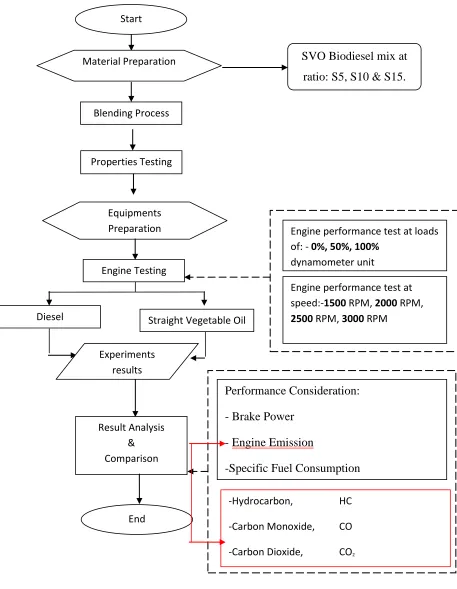
Figure 3.1: The Methodology Flowchart Properties Testing Result Analysis & Comparison End Material Preparation Blending Process Engine Testing
Straight Vegetable Oil Diesel
Performance Consideration: - Brake Power
- Engine Emission
-Specific Fuel Consumption - F/wheel Torque
-Hydrocarbon, HC -Carbon Monoxide, CO -Carbon Dioxide, CO2
-Oxygen, O2
-Smoke Opacity, Start
SVO Biodiesel mix at ratio: S5, S10 & S15.
Equipments Preparation
Engine performance test at speed:-1500 RPM, 2000 RPM,
2500 RPM, 3000 RPM
Engine performance test at loads of: - 0%, 50%, 100%
dynamometer unit
_________________________________________
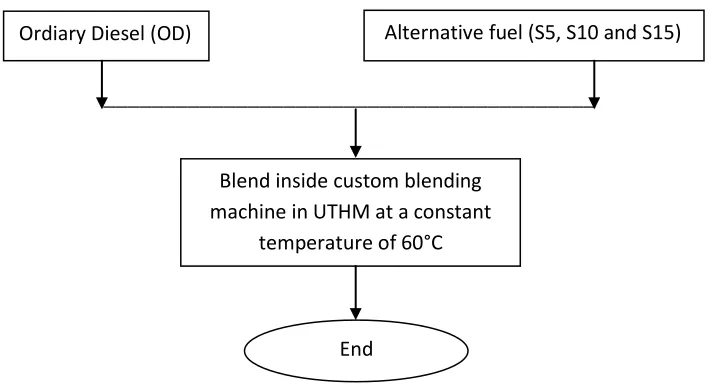
Figure 3.2 The methodology flowchart for biodiesel blending
3.3.1 Material Preparation
The blending of straight vegetable oil fuel that is being use are S5, S10 and S15. This is the fuel that we can get from ordinary grocery store. We will be also using a diesel engine to test the fuel for performance in term of brake power and engine emission. The alternative fuel will also be prepared accordingly. The straight vegetable oil that being used is a blending of vegetable oil with other fuel such as diesel and the mixture would bring the viscosity close to diesel fuel specification.
Performance curves will be developed for a diesel engine fueled by S5, S10 and S15. The engine to be tested shall be representative of the manufacturer’s production units, and the fuel used shall conform to the manufacturer specifications. To define the power curve, data should be recorded for five or more evenly spaced operating speeds between the lowest stable speed and the maximum speed recommended by the manufacturer. The engine will be loaded for tests with a water cooled eddy current absorption dynamometer 0%, 5% and 100% load. Dynamometer load being controlled using a controller. The throttle will then be increased until the engine reaches full open throttle. Once full open throttle is obtained, a load will be applied to the engine. The load is increased to the highest possible load at which the engine remains at maximum
Alternative fuel (S5, S10 and S15) Ordiary Diesel (OD)
Blend inside custom blending machine in UTHM at a constant
temperature of 60°C
speed, which is about 3000 revolutions per minute (rpm). Once engine speed and torque measurements have been stable for two minutes, all data is collected for two minutes. The load on the engine then being increased, while full open throttle is maintained, until the engine speed decreases to a desired level. Tests are to be completed for four evenly spaced engine speed intervals (1500, 2000, 2500 and 3000 rpm).
3.3.2 Diesel
A sample of the OD is shown in Figure 3.3. This ordinary diesel is the fuel that we can from ordinary petrol station. This kind of diesel will be call ordinary diesel (OD) in this experiment. Properties for diesel that being use shown in table 3.1. This experiment used ordinary diesel (OD) for comparison and the diesel were gathered from the nearest Petron station locates at Parit Raja, Batu Pahat.
Table 3.1 : Diesel properties
Product Name Petron Diesel Manufacturer Petron Corporation Chemical Family Petroleum Hydrocarbons
Product type Petroleum Distillate with Performance Addative Flash Point, PM, ˚C 72
Auto Ignition Temp, ˚C 220
Hazardous Ingredients The product predominantly consists of aliphatic, alicyclic and aromatic hydrocarbons. In general, the product is combustible and may contain carcinogenic component.
[image:35.612.109.546.366.704.2].
REFERENCES
[1] Tanaka Kengo, Endo Hiroyuki, Imamichi Akira, Oda Yuji, takeda yoshinaka (Mitsubishi Mot. Corp.), Study of Homogeneous Charge Compression Ignition Using a Rapid Compression Machine, 2000
[2] Amir Khalid, Shahrul Azmir Osman, Md Norrizam Mohamad Jaat, Norrizal Mustaffa,, Siti Mariam Basharie, B. Manshoor, ,Automotive Research Group (ARG), Centre for Energy and Industrial Environment Studies (CEIES), Universiti Tun Hussein Onn Malaysia, Parit Raja, Batu Pahat, 86400 Johor, Malaysia, Performance and Emissions Characteristics of Diesel Engine Fuelled byBiodiesel Derived from Palm Oil, 2012
[3] Affiliation, D. L. Lance BP, Goodfellow, J. Williams BP Oil International Ltd, W. Bunting BP Japan, I. Sakata Toyota Motor Corp. The Impact of Diesel and Biodiesel Fuel Composition on a Euro V HSDI Engine with Advanced DPNR Emissions Control
[4] Kengo Tanaka, Hiroyuki Endo, Akira Imamichi and Yuji Oda, Mitsubishi Heavy Industries, Ltd. Yoshinaka Takeda and Taizo Shimada, Mitsubishi Motors Corporation Homogeneous charge compression ignition of diesel fuel, 1996
[6] Ayhan Demirbas (2009), Progress and Recent Trends in Biodiesel Fuels, Energy Conversion and Management 50, 14–34 34. 198-223.
[7] Mustafa Canakci, Ahmet Erdil & Erol Arcaklioglu (2006), Performance and Exhaust Emissions of a Biodiesel Engine, Applied Energy, 83 594–605.
[8] Ertan Alptekin, M.C., (2008). Determination of the density and the viscosities of biodiesel-diesel fuel blends. Renewable Energy, pp. 2623-2630.
[9] Syndi L. Nettles-Anderson and Daniel B. Olsen, Engines and Energy Conversion Laboratory, Colorado State University Survey of Straight Vegetable Oil Composition Impact on Combustion Properties
[10] P. P. Sonune, H. S. Farkade International Journal of Engineering and Innovative Technology (IJEIT) Volume 2, Issue 3, Performance and Emissions of CI Engine Fuelled With Preheated Vegetable Oil and Its Blends, September 2012
[11] Peter L. Perez & Andre L. Boehman (2010), Performance of a Single-Cylinder Diesel Engine using Oxygen Enriched Intake Air at Simulated High Altitude Conditions, Aerospace Science and Technology, 14 83–94.
[12] Abdullah Abuhabaya, John Fieldhouse & Rob Brown (2011), The Effects of Using Bio-diesel as Fuel on Compression Ignition (CI) Engine and Its Production from Vegetable Oils, International Conference on Environmental, Biomedical and Biotechnology, IPCBEE vol.16 (2011) © (2011)IACSIT Press, Singapoore
[14] S. Jaichandar , K. Annamalai (2012) Effects of Open Combustion Chamber Geometries On Performance of Pongamia Biodiesel in a DI Diesel Engine.
[15] A.P. Sathiyagnanam & C.G. Saravanan (2011), Experimental Studies on the Combustion Characteristics and Performance of A Direct Injection Engine Fueled with Biodiesel/Diesel Blends with SCR, Proceedings of the World Congress on Engineering 2011 Vol III ,WCE 2011, July 6 - 8, 2011, London, U.K.
[16] Cenk Sayin & Mustafa Canakci (2009), Effects of Injection Timing on the Engine Performance and Exhaust Emissions of a Dual-fuel Diesel Engine, Energy Conversion and Management 50, 203–213.
[17] Talal F. Yusaf, D.R. Buttsworth, Khalid H. Saleh & B.F. Yousif (2011), CNG-Diesel Engine Performance and Exhaust Emission Analysis with The Aid of Artificial Neural Network, Applied Energy 87, 1661–1669.
[18] M.A. Kalam,H.H. Masjuki (2002), Biodiesel from Palm Oil - An Analysis of Its Properties and Potential, Biomass and Bioenergy, 23, 471 – 479.
[19] Brandon T. Tompkins, Jason Esquivel and Timothy J. Jacobs, Texas A&M University Performance Parameter Analysis of a Biodiesel-Fuelled Medium Duty Diesel Engine
[21] Magín Lapuerta, Octavio Armas and José Rodríguez-Fernández University of Castilla-La Mancha, Spain, Effect of the Degree of Unsaturation of Biodiesel Fuels on NOx and Particulate Emission”
[21] Magdi K. Khair, Hannu Jääskeläinen
http://www.dieselnet.com/tech/diesel_comb.php
[22] Vehicle technology program, University of Birmingham, Straight vegetable oil as a diesel fuel?, Energy Efficiency & enewable energy,2010
![Figure 2.1: Graph of ignition delay [2]](https://thumb-us.123doks.com/thumbv2/123dok_us/8770553.898687/16.612.219.432.205.342/figure-graph-of-ignition-delay.webp)
![Table 2.1: American Society for Testing and Material (ASTM) and Euro standard [12]](https://thumb-us.123doks.com/thumbv2/123dok_us/8770553.898687/19.612.136.519.392.717/table-american-society-testing-material-astm-euro-standard.webp)
![Fig 2.3: Changes in the Brake Thermal Efficiency with Engine Speed [17]](https://thumb-us.123doks.com/thumbv2/123dok_us/8770553.898687/22.612.221.394.541.682/fig-changes-brake-thermal-efficiency-engine-speed.webp)
![Figure 2.3: NOx emission for different fuels [22]](https://thumb-us.123doks.com/thumbv2/123dok_us/8770553.898687/26.612.213.415.333.454/figure-nox-emission-different-fuels.webp)
![Table 2.2: Test sequence and fuels composition [18]](https://thumb-us.123doks.com/thumbv2/123dok_us/8770553.898687/27.612.166.452.179.281/table-test-sequence-and-fuels-composition.webp)
![Figure 2.5: NOx and CO concentration versus engine speed [18]](https://thumb-us.123doks.com/thumbv2/123dok_us/8770553.898687/28.612.194.456.589.680/figure-nox-concentration-versus-engine-speed.webp)
![Table 2.4: Specifications of test engine [7].](https://thumb-us.123doks.com/thumbv2/123dok_us/8770553.898687/29.612.104.545.359.704/table-specifications-of-test-engine.webp)
![Table 2.5: List of emission analyzers used in the tests [7]](https://thumb-us.123doks.com/thumbv2/123dok_us/8770553.898687/30.612.137.506.362.629/table-list-emission-analyzers-used-tests.webp)